
Lesson 3: Treatment Planning for Co-occurring Disorders
Treatment planning is a critical component in the management of individuals with co-occurring disorders, also known as dual diagnosis. These individuals experience both a mental health disorder and a substance use disorder simultaneously, creating complex clinical, psychological, and social needs that require coordinated and structured intervention.
Unlike single-condition treatment approaches, treatment planning for co-occurring disorders demands an integrated, flexible, and person-centred framework. Professionals must consider how both conditions interact, influence each other, and impact the individual’s overall functioning. A well-developed treatment plan does not simply aim to reduce symptoms; it aims to support long-term recovery, stability, and improved quality of life.
In modern healthcare systems, treatment planning is guided by evidence-based practice, multidisciplinary collaboration, risk assessment, and continuous review. This lesson explores how integrated treatment plans are developed and examines the key resources and strategies used in managing concurrent mental health and substance use issues.
1. Develop Integrated Treatment Plans for Individuals with Co-occurring Disorders
Understanding Integrated Treatment Planning
Integrated treatment planning refers to a structured, coordinated, and holistic approach in which both mental health disorders and substance use disorders are treated simultaneously within a single, unified care framework. This model is widely recognised in modern healthcare systems as the most effective approach for individuals experiencing co-occurring disorders, as it acknowledges the strong bidirectional relationship between psychological distress and substance misuse.
Unlike traditional fragmented care models where mental health and addiction services operate separately integrated treatment ensures that both conditions are addressed in parallel. This is critical because treating one condition in isolation often leads to incomplete recovery, relapse, or worsening of the untreated disorder. For example, treating depression without addressing alcohol dependence may result in continued substance use, which further intensifies depressive symptoms and undermines therapeutic progress.
From an industry perspective, integrated treatment is aligned with international best practice guidelines, including biopsychosocial models of care and recovery-oriented frameworks. It is increasingly considered a standard requirement in mental health and addiction services due to its proven effectiveness in improving long-term outcomes.
A key characteristic of integrated treatment planning is its dynamic nature. It is not a fixed document but a continuously evolving process that adapts to changes in the individual’s mental health status, substance use patterns, social environment, and recovery progress.
Key Principle of Integrated Care
The foundation of integrated treatment planning can be summarised as:“Treat the person as a whole, not the disorders in isolation.”
This principle reflects a shift from symptom-focused care to person-centred, recovery-oriented practice. It emphasises that mental health, physical health, emotional wellbeing, and social functioning are interconnected and must be addressed collectively.
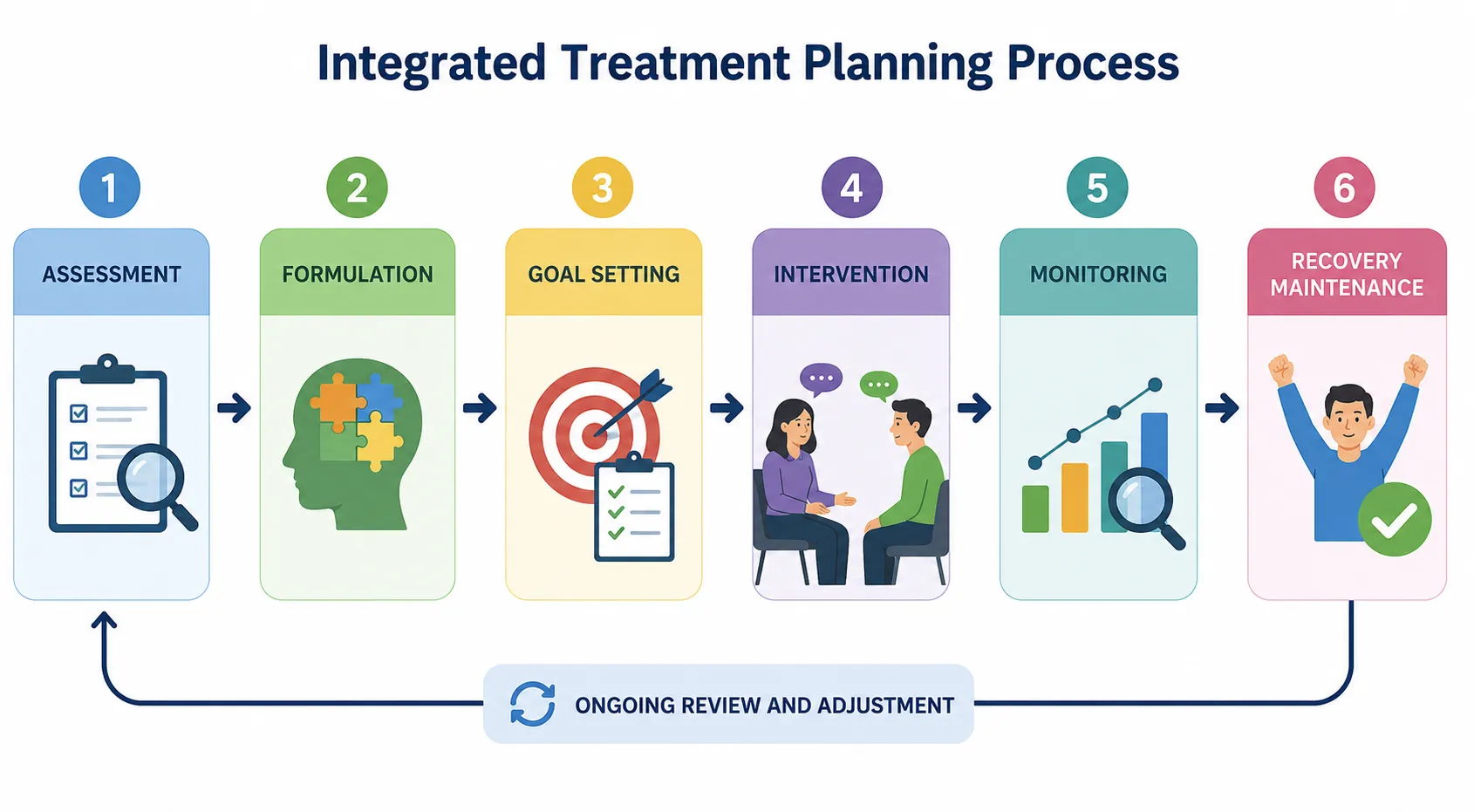
Core Components of an Integrated Treatment Plan
A high-quality integrated treatment plan is structured, evidence-based, and personalised. It typically consists of several interconnected components that work together to support recovery.
1. Comprehensive Assessment and Holistic Understanding
The assessment stage forms the foundation of treatment planning. It involves gathering detailed information about the individual’s psychological, behavioural, physical, and social circumstances.
Key assessment domains include:
- Mental health symptoms, diagnosis, and severity
- Substance use history (type, frequency, duration, dependency level)
- Physical health status and medical history
- Emotional wellbeing and coping strategies
- Social environment (housing, employment, relationships)
- Risk factors such as self-harm, overdose, and safeguarding concerns
A critical feature of integrated assessment is that it must be ongoing rather than a single event. Symptoms may fluctuate due to withdrawal, relapse, or emotional triggers, requiring continuous monitoring.
Industry Insight
In modern clinical settings, structured tools such as dual diagnosis screening instruments and biopsychosocial assessments are used to improve diagnostic accuracy and reduce missed diagnoses.
2. Dual Diagnosis Formulation
Formulation goes beyond diagnosis by explaining why the individual developed co-occurring disorders and how the conditions interact.
A strong formulation identifies:
- Predisposing factors (e.g., trauma, genetics)
- Precipitating factors (e.g., job loss, relationship breakdown)
- Perpetuating factors (e.g., substance use maintaining depression)
- Protective factors (e.g., family support, motivation for change)
Example of Interaction Cycle
- Depression leads to alcohol use for emotional relief
- Alcohol temporarily reduces distress but disrupts brain chemistry
- Depressive symptoms worsen over time
- Increased depression leads to increased alcohol consumption
This cycle demonstrates why integrated intervention is essential.
3. Goal Setting and Recovery Planning
Effective treatment planning requires clear, structured, and measurable goals. In dual diagnosis cases, goals must address both mental health recovery and substance use reduction simultaneously.
Goals are typically divided into three categories:
- Short-term goals (stabilisation and immediate risk reduction)
- Medium-term goals (symptom management and behaviour change)
- Long-term goals (recovery maintenance and social reintegration)
Example Goal Framework
- Short-term: Stabilise mood and reduce alcohol intake within 4 weeks
- Medium-term: Improve emotional regulation and reduce cravings within 3 months
- Long-term: Achieve sustained recovery and return to employment within 12 months
This structured progression ensures measurable recovery outcomes.
4. Intervention Planning (Integrated Therapeutic Approaches)
Intervention planning involves selecting evidence-based strategies that address both conditions simultaneously.
Common integrated interventions include:
- Cognitive Behavioural Therapy (CBT)
- Motivational Interviewing (MI)
- Medication-assisted treatment (e.g., antidepressants, detox medications)
- Relapse prevention therapy
- Psychoeducation on dual diagnosis
- Trauma-focused interventions
Critical Analysis
Research shows that combined interventions are significantly more effective than single-modality treatments. For example, CBT alone may reduce depressive symptoms, but without addiction treatment support, relapse risk remains high. Similarly, detoxification without psychological intervention often leads to repeated substance use.
5. Risk Management and Safety Planning
Individuals with co-occurring disorders are at increased risk of:
- Suicide and self-harm
- Substance overdose
- Severe relapse episodes
- Physical health deterioration
- Social crises (homelessness, legal issues)
A robust treatment plan must therefore include structured risk management procedures.
Key Risk Strategies
- Crisis intervention plans
- Emergency contact pathways
- Regular mental state and risk assessments
- Relapse warning identification systems
- Safety planning documentation
Integrated Treatment Plan Structure
| Component | Purpose in Recovery |
|---|---|
| Assessment | Identify full clinical and social needs |
| Formulation | Understand interaction between conditions |
| Goal Setting | Define measurable recovery outcomes |
| Intervention | Deliver coordinated treatment |
| Risk Management | Ensure safety and stabilisation |
| Review | Adapt treatment based on progress |
Multidisciplinary Collaboration in Integrated Treatment Planning
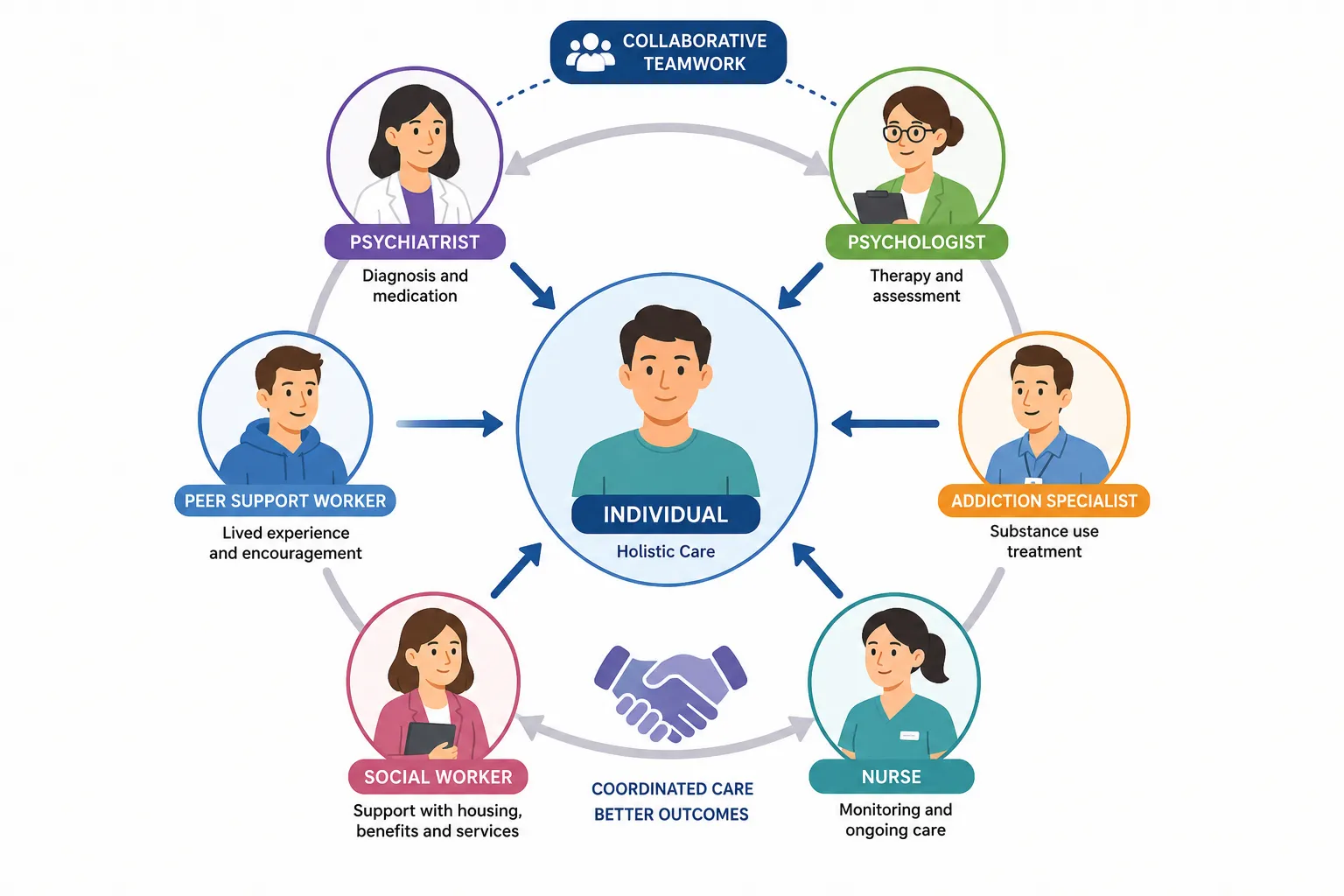
Integrated care depends heavily on collaboration between professionals from different disciplines. No single professional can fully address the complexity of co-occurring disorders.
Key Professionals Involved
- Psychiatrists – diagnosis and medication management
- Psychologists – psychological therapies and assessments
- Addiction specialists – substance use treatment
- Social workers – safeguarding, housing, welfare support
- Nurses – monitoring and ongoing clinical care
- Peer support workers – lived experience guidance and engagement support
Each role contributes a unique perspective, ensuring a holistic and coordinated care approach.
Industry Practice Insight
In many healthcare systems, multidisciplinary team (MDT) meetings are mandatory for dual diagnosis cases. These meetings ensure:
- Shared decision-making
- Consistent treatment planning
- Reduced service duplication
- Improved continuity of care

Case Study: Integrated Treatment Planning in Practice
Case Scenario
David, a 40-year-old male, presents with severe depression and long-term alcohol dependence. He reports daily alcohol consumption following divorce and job loss. His emotional state includes persistent sadness, low motivation, and social withdrawal.
Assessment Findings
- Moderate to severe depressive disorder
- Alcohol dependence syndrome
- Social isolation and unemployment
- High relapse risk
- Reduced self-care and motivation
Integrated Treatment Plan
1. Mental Health Intervention
- Weekly CBT sessions focusing on negative thought patterns
- Antidepressant medication prescribed and monitored by psychiatrist
2. Substance Use Intervention
- Structured alcohol reduction programme
- Relapse prevention counselling
- Detoxification support if clinically required
3. Social and Functional Support
- Referral to employment support services
- Housing and financial stability assessment
- Engagement in community recovery groups
4. Risk Management
- Weekly risk assessments
- Suicide and self-neglect monitoring
- Emergency crisis response plan
Outcome Analysis
David’s progress improved significantly only after integrated treatment was introduced. Previous attempts focusing solely on alcohol reduction were unsuccessful because underlying depressive symptoms remained untreated. This demonstrates a key principle in dual diagnosis care: effective recovery depends on treating both conditions simultaneously rather than sequentially.
Critical Reflection (Industry Perspective)
This case highlights a common issue in clinical practice: fragmented treatment approaches often fail in complex dual diagnosis cases. Integrated care improves outcomes by addressing root causes rather than isolated symptoms. It also demonstrates the importance of coordinated multidisciplinary intervention and continuous reassessment.
Integrated treatment planning is essential for individuals with co-occurring disorders due to the complex and interconnected nature of mental health and substance use conditions. Effective planning requires comprehensive assessment, structured formulation, realistic goal setting, coordinated interventions, and ongoing risk management.
Multidisciplinary collaboration ensures that all aspects of an individual’s needs are addressed, including psychological, medical, and social factors. Evidence strongly supports integrated care models as the most effective approach for improving recovery outcomes and reducing relapse risk.
Ultimately, successful treatment planning is not just about managing symptoms but about enabling long-term recovery, stability, and improved quality of life through a coordinated, person-centred approach.
2. Identify Resources and Strategies for Managing Concurrent Mental Health and Substance Use Issues
Understanding Resources in Dual Diagnosis Care
Effective management of co-occurring disorders requires a structured combination of clinical, social, and community-based resources. Individuals experiencing both mental health disorders and substance use disorders often present with complex and interconnected needs that cannot be addressed through a single service or intervention alone. As a result, a multi-layered system of support is required to promote stability, recovery, and long-term wellbeing.
From an international healthcare perspective, dual diagnosis management is increasingly viewed through a biopsychosocial lens, meaning that biological treatment (medication and medical care), psychological intervention (therapy and counselling), and social support (housing, employment, relationships) must all be addressed simultaneously. Without this integrated approach, recovery outcomes are often inconsistent and relapse rates remain high.
Resources can be broadly categorised into formal resources, which include healthcare and statutory services, and informal resources, which include community networks, peer support systems, and family-based interventions. Both categories play a vital role in stabilising individuals and supporting sustained recovery.
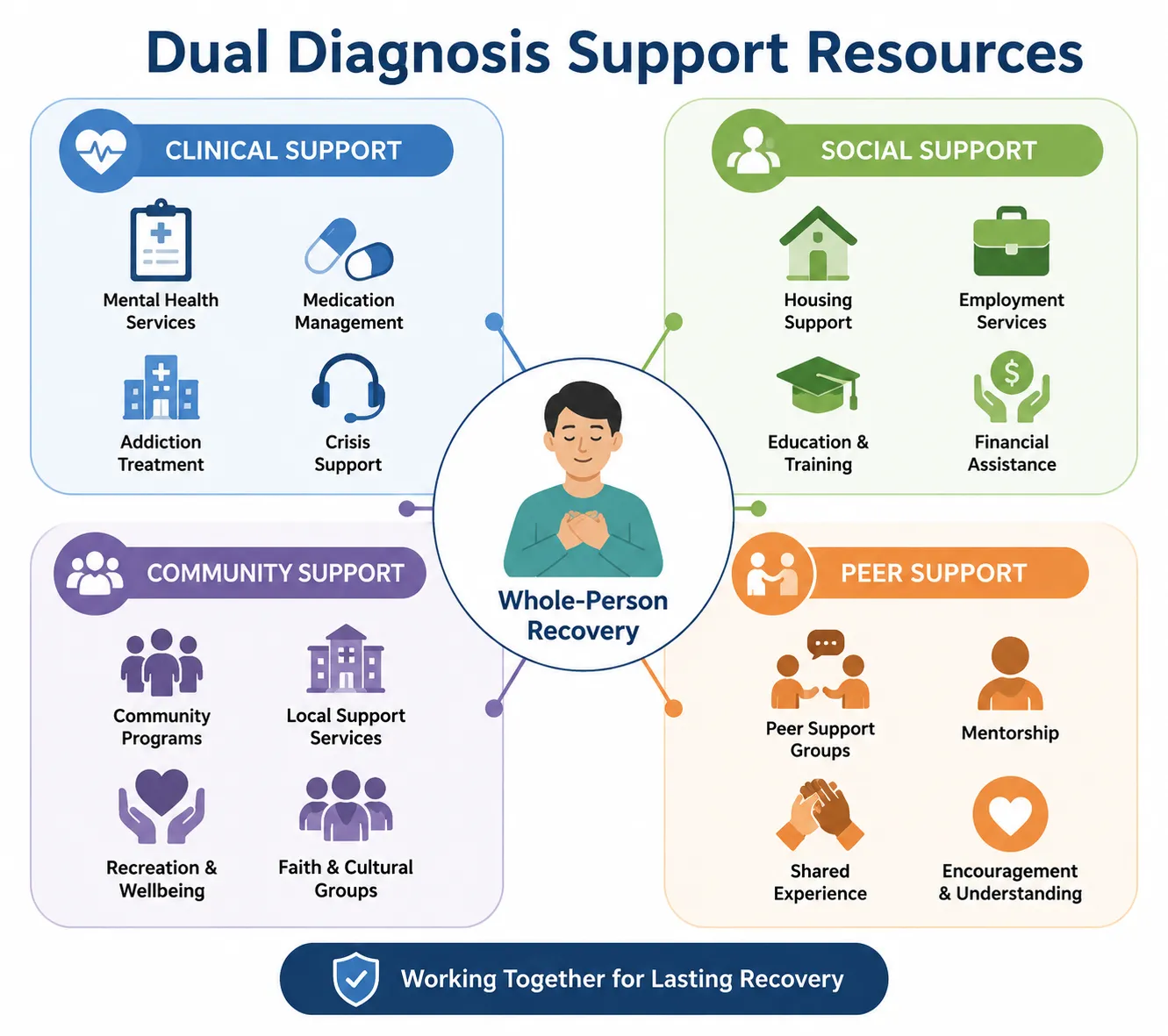
Healthcare-Based Resources in Dual Diagnosis Management
1. Mental Health Services
Mental health services form the clinical backbone of dual diagnosis care. These services are responsible for assessment, diagnosis, treatment planning, crisis management, and long-term psychological support.
Common mental health service provisions include:
- Community Mental Health Teams (CMHTs)
- Inpatient psychiatric units
- Outpatient therapy services
- Crisis intervention and emergency psychiatric care
These services are essential in stabilising acute symptoms such as severe depression, psychosis, anxiety disorders, and suicidal ideation. In dual diagnosis cases, mental health services must also consider the impact of substance use on symptom presentation, particularly when intoxication or withdrawal complicates diagnosis.
Industry Insight
In modern practice, mental health services increasingly adopt integrated care pathways where substance use screening is embedded into psychiatric assessments. This reduces misdiagnosis and ensures early identification of co-occurring disorders.
2. Addiction Treatment Services
Addiction services focus specifically on substance use reduction, detoxification, rehabilitation, and relapse prevention. These services are critical in breaking the cycle of dependency that often worsens mental health symptoms.
Key addiction resources include:
- Detoxification programmes (medical or community-based)
- Residential rehabilitation centres
- Outpatient substance misuse counselling
- Harm reduction programmes
Detoxification is often the first stage of treatment, particularly for individuals dependent on alcohol, opioids, or sedatives. However, detox alone is not sufficient for recovery, as underlying psychological issues must also be addressed.
Critical Analysis
A major limitation in many healthcare systems is the separation of addiction and mental health services. This division can result in fragmented care, where individuals receive substance treatment without psychological support, or vice versa. Integrated dual diagnosis services significantly improve outcomes by addressing both conditions simultaneously.
3. Primary Healthcare Services (GPs and Community Clinics)
Primary healthcare professionals, particularly General Practitioners (GPs), often serve as the first point of contact for individuals experiencing co-occurring disorders. Their role includes early identification, initial intervention, medication management, and referral to specialist services.
GPs play a crucial role in:
- Early screening for mental health and substance use issues
- Prescribing and monitoring medication
- Coordinating referrals to specialist mental health or addiction services
- Providing ongoing monitoring and follow-up care
Because GPs operate within community settings, they are often more accessible than specialist services, making them essential in early intervention strategies.
Community and Social Resources
1. Housing Support Services
Stable housing is one of the most significant determinants of recovery success. Individuals experiencing homelessness or unstable accommodation are at significantly higher risk of relapse, disengagement from services, and worsening mental health symptoms.
Housing-related support includes:
- Emergency shelters and temporary accommodation
- Supported housing programmes for vulnerable adults
- Housing benefit assistance and tenancy support
Practical Application
Supported housing models that combine accommodation with onsite mental health and addiction support have been shown to improve recovery outcomes by providing both stability and structured care.
2. Employment and Education Services
Employment and education are critical components of long-term recovery. They provide structure, purpose, financial stability, and improved self-esteem.
Support services may include:
- Vocational rehabilitation programmes
- Job coaching and employability training
- Educational re-entry programmes
- Skills development workshops
Industry Perspective
Research consistently shows that individuals in recovery who gain stable employment are more likely to maintain abstinence and experience improved mental health outcomes. Employment is therefore not just an economic factor but a therapeutic element in recovery planning.
3. Peer Support Networks
Peer support is a highly effective and increasingly recognised component of dual diagnosis recovery. These networks are based on individuals with lived experience supporting others through similar challenges.
Benefits include:
- Reduced stigma and isolation
- Increased trust and engagement
- Emotional validation and understanding
- Practical recovery guidance
Peer support may be delivered through group meetings, recovery communities, or one-to-one mentoring programmes.
Categories of Resources and Their Functions
| Resource Type | Function in Recovery |
|---|---|
| Mental health services | Clinical diagnosis and therapy |
| Addiction services | Detox and substance misuse treatment |
| Primary care services | Early intervention and monitoring |
| Housing services | Stability and safety |
| Employment services | Reintegration and financial independence |
| Peer support networks | Emotional support and engagement |
Strategies for Managing Co-occurring Disorders
1. Harm Reduction Approach
Harm reduction is a practical and evidence-based strategy that focuses on minimising the negative consequences of substance use rather than requiring immediate abstinence.
This approach is particularly useful for individuals who are not yet ready or able to stop substance use entirely.
Examples include:
- Controlled reduction in alcohol consumption
- Needle exchange programmes
- Safe consumption education
- Overdose prevention training
Critical Evaluation
While harm reduction is sometimes criticised for not promoting full abstinence, research shows that it significantly reduces mortality, improves engagement with services, and increases the likelihood of eventual recovery. It is therefore considered an essential component of modern dual diagnosis care.
2. Motivational Interviewing (MI)
Motivational Interviewing is a collaborative, person-centred communication technique designed to explore and resolve ambivalence toward behavioural change.
Key principles include:
- Enhancing motivation for change
- Reducing resistance to treatment
- Strengthening self-efficacy
- Supporting autonomy and decision-making
Practical Example
A client with alcohol dependence may initially deny the impact of drinking on their mental health. Through motivational interviewing, the practitioner helps the individual explore inconsistencies between their goals (e.g., stable employment) and their current behaviour, gradually increasing motivation for change.
3. Cognitive Behavioural Strategies (CBT-Based Interventions)
Cognitive Behavioural Therapy is widely used in dual diagnosis treatment because it addresses both thought patterns and behavioural responses.
CBT helps individuals:
- Identify negative or distorted thinking patterns
- Develop healthier coping strategies
- Manage cravings and triggers
- Improve emotional regulation
Industry Relevance
CBT is considered a gold-standard intervention in many international mental health frameworks due to its strong evidence base and adaptability across different populations.
4. Relapse Prevention Strategies
Relapse prevention is a structured approach designed to reduce the likelihood of return to substance use or deterioration in mental health symptoms.
Key elements include:
- Identification of personal triggers
- Development of coping strategies
- Crisis planning and early warning signs
- Strengthening support systems
Example
A person recovering from cocaine misuse may identify stress and social isolation as relapse triggers. A relapse prevention plan may include structured daily routines, peer support attendance, and access to crisis intervention services.
5. Trauma-Informed Care
A significant proportion of individuals with co-occurring disorders have experienced trauma, including childhood abuse, neglect, domestic violence, or significant life events.
Trauma-informed care ensures that services:
- Prioritise emotional safety
- Avoid re-traumatisation
- Build trust through consistency
- Empower individuals in decision-making
Critical Insight
Failure to recognise trauma can result in disengagement from services and increased relapse risk. Trauma-informed practice is therefore essential for effective long-term recovery.
Case Study: Integrated Resource Application in Practice
Case Scenario
Sarah, a 28-year-old woman, presents with generalised anxiety disorder and cocaine misuse. She is currently unemployed and living in temporary accommodation. She reports using cocaine to cope with stress and emotional distress.
Intervention Plan Using Integrated Resources
- Mental Health Services: CBT for anxiety management and emotional regulation
- Addiction Services: Structured rehabilitation and relapse prevention programme
- Housing Support: Transition into supported accommodation
- Peer Support: Engagement in recovery community groups
- Employment Services: Gradual vocational rehabilitation programme
Outcome Analysis
Within six months, Sarah demonstrated significant improvement in emotional stability and reduction in substance use. Housing stability played a critical role in reducing relapse risk, while CBT improved her coping mechanisms. Peer support increased engagement and reduced isolation.
Critical Evaluation
This case highlights that clinical treatment alone is insufficient. Recovery success was achieved through coordinated use of multiple resources addressing psychological, social, and environmental factors simultaneously.
Critical Industry Analysis
Modern healthcare systems increasingly recognise that dual diagnosis cannot be effectively treated through isolated clinical interventions alone. Social determinants such as housing, employment, and community support play a decisive role in recovery outcomes.
However, service fragmentation remains a significant challenge in many regions. Limited funding, long waiting times, and poor communication between services can reduce treatment effectiveness. Integrated care models that combine healthcare, social services, and community-based support demonstrate significantly better outcomes, but require strong coordination and resource investment.
From a policy perspective, improving dual diagnosis outcomes requires not only clinical innovation but also systemic reform that strengthens collaboration across sectors.
Managing co-occurring disorders requires a comprehensive combination of clinical, social, and community-based resources alongside evidence-based psychological and behavioural strategies. Effective treatment involves integrating mental health services, addiction support, primary care, housing, employment, and peer networks into a coordinated system of care.
Strategies such as harm reduction, motivational interviewing, CBT, relapse prevention planning, and trauma-informed care are essential in supporting individuals with dual diagnosis. The most effective outcomes occur when these strategies are combined within a structured, person-centred, and integrated care framework.
Ultimately, successful management of co-occurring disorders depends on recognising that recovery is not solely a medical process but a holistic journey influenced by psychological resilience, social stability, and sustained support systems.
Conclusion
Effective treatment planning for co-occurring disorders relies on a structured, integrated, and person-centred approach that recognises the complex interaction between mental health conditions and substance use disorders. Rather than treating each condition separately, best practice requires coordinated assessment, clear goal setting, evidence-based interventions, and continuous risk monitoring to support sustainable recovery.
Successful outcomes are strongly influenced by multidisciplinary collaboration and the effective use of healthcare, social, and community resources. Approaches such as harm reduction, motivational interviewing, cognitive behavioural strategies, relapse prevention planning, and trauma-informed care play a vital role in improving engagement, reducing relapse risk, and supporting long-term stability.
Ultimately, effective treatment planning goes beyond symptom management. It focuses on empowering individuals to rebuild their lives, strengthen resilience, improve social functioning, and achieve meaningful, long-term recovery within a supportive and well-coordinated care system.