
Lesson 3: Relapse Prevention
Relapse prevention is a critical component of addiction recovery and mental health treatment. It focuses on helping individuals identify early warning signs, manage triggers, and develop effective coping strategies to maintain long-term sobriety. In addiction treatment services, relapse is not viewed as failure but as part of the recovery process that requires structured planning and ongoing support.
Understanding relapse prevention is essential in healthcare, counselling, rehabilitation, probation services, and community support settings. Professionals use relapse prevention strategies to help individuals maintain behavioural change, strengthen emotional resilience, and reduce the risk of returning to substance use. This knowledge is vital for ensuring sustainable recovery outcomes and improving long-term wellbeing.
By the end of this lesson, learners will be able to:
- Identify triggers and risk factors that contribute to relapse
- Understand psychological, social, and environmental causes of relapse
- Apply relapse prevention strategies in addiction recovery
- Develop support mechanisms to maintain long-term recovery
- Evaluate the effectiveness of relapse prevention techniques
- Demonstrate understanding of structured recovery maintenance planning
1: Identifying Triggers and Risk Factors for Relapse in Addiction Recovery
Understanding Relapse in Addiction
Relapse is a critical concept in addiction recovery and refers to the return to substance use following a period of abstinence or controlled use. In professional practice, relapse is not considered a single isolated event but rather a progressive process that develops over time through emotional, cognitive, and behavioural changes.
Modern addiction theory recognises relapse as a continuum rather than a sudden failure. Individuals often experience early warning signs such as emotional instability, increased cravings, and distorted thinking patterns before actual substance use occurs. This understanding is essential for practitioners because it allows early identification and timely intervention, significantly reducing the risk of full relapse.
Relapse is influenced by a complex interaction of internal and external factors, including:
- Emotional distress and psychological vulnerability
- Environmental exposure to substances
- Social influences and peer pressure
- Cognitive distortions and negative thinking patterns
From an industry perspective, relapse prevention is a core component of recovery-oriented systems of care, ensuring that clients receive continuous support beyond initial treatment phases.
Why Understanding Relapse is Important in Practice
In addiction treatment services, understanding relapse is essential for improving recovery outcomes and reducing service re-admission rates. Practitioners who can identify early warning signs are better positioned to implement timely interventions.
Key Importance in Professional Settings
- Enables early intervention before full relapse occurs
- Improves long-term recovery success rates
- Reduces healthcare and rehabilitation costs
- Strengthens client engagement and accountability
- Supports evidence-based care planning
Critical Analysis
Research in addiction psychology shows that relapse often occurs when coping mechanisms are insufficient to manage stressors or triggers. Therefore, relapse prevention is not only about avoiding substances but also about strengthening emotional regulation, resilience, and decision-making capacity.
Stages of Relapse: A Progressive Model
Relapse typically develops in three interconnected stages. Understanding these stages helps practitioners design targeted interventions based on the client’s current psychological state.
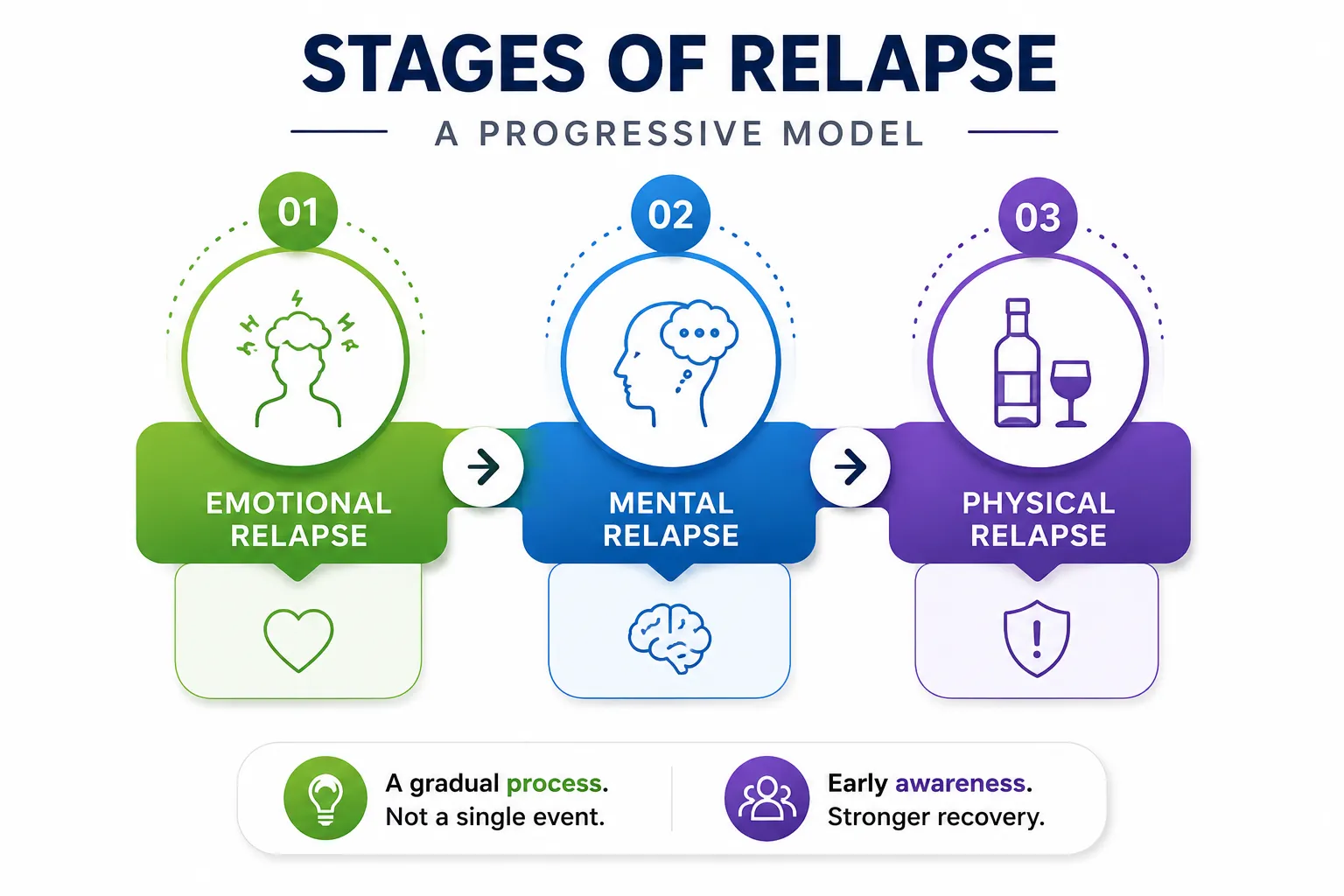
1. Emotional Relapse
Emotional relapse occurs when individuals are not consciously thinking about using substances but their emotional and behavioural patterns begin to create vulnerability.
Key Characteristics
- Suppression of emotions rather than expression
- Increased stress, anxiety, or emotional exhaustion
- Poor self-care routines (sleep, diet, hygiene)
- Withdrawal from support systems and recovery groups
Clinical Interpretation
At this stage, the risk is often overlooked because there is no active craving. However, emotional instability lays the foundation for later relapse stages. Early intervention at this point is highly effective.
2. Mental Relapse
Mental relapse involves an internal conflict between the desire to remain in recovery and the temptation to return to substance use.
Key Characteristics
- Cravings and intrusive thoughts about substance use
- Romanticising past substance use experiences
- Minimising negative consequences of addiction
- Internal struggle between “wanting to use” and “wanting to stay clean”
Clinical Interpretation
This stage is psychologically complex and often requires cognitive interventions such as CBT and motivational interviewing to challenge distorted thinking patterns.
3. Physical Relapse
Physical relapse is the final stage where the individual returns to substance use.
Key Characteristics
- Actual consumption of drugs or alcohol
- Loss of behavioural control
- Breakdown of recovery routines and support engagement
Clinical Interpretation
At this stage, immediate intervention is required, often involving crisis support, reassessment, and revised treatment planning.
Key Triggers for Relapse
Triggers are internal or external stimuli that increase the likelihood of returning to substance use. Identifying triggers is a fundamental skill in addiction counselling and recovery planning.
1. Emotional Triggers
Emotional states are among the strongest predictors of relapse.
- Chronic stress and anxiety
- Depression and loneliness
- Anger, frustration, or emotional overwhelm
Impact:
Emotional instability weakens coping capacity and increases reliance on substances as a coping mechanism.
2. Environmental Triggers
Environmental cues play a significant role in reinforcing addictive behaviour.
- Exposure to substance-using environments
- Attendance at social events involving drugs or alcohol
- Easy access to substances
Impact:
Environmental exposure increases temptation and reduces behavioural control.
3. Social Triggers
Social relationships significantly influence recovery outcomes.
- Peer pressure from substance-using friends
- Conflict within family or relationships
- Social isolation or lack of support
Impact:
Negative social environments can normalise substance use and undermine recovery efforts.
4. Psychological Triggers
Psychological vulnerability increases relapse risk.
- Low self-esteem and self-worth
- Negative thinking patterns and cognitive distortions
- Trauma-related memories or unresolved psychological issues
Impact:
These triggers affect emotional regulation and decision-making processes.
Risk Factors for Relapse in Addiction Recovery
| Risk Factor Type | Description | Impact on Recovery |
|---|---|---|
| Emotional Factors | Stress, anxiety, depression, emotional instability | Reduces coping ability and increases vulnerability |
| Social Factors | Peer pressure, conflict, isolation | Encourages exposure to substance-using environments |
| Environmental Factors | Availability of substances, high-risk locations | Increases temptation and accessibility |
| Psychological Factors | Trauma, negative thinking, low self-esteem | Weakens emotional resilience and decision-making |
Critical Analysis of Relapse Risk Factors
Relapse risk factors rarely occur in isolation. In most cases, multiple triggers interact simultaneously, creating a cumulative effect that increases vulnerability. For example, emotional stress combined with social isolation significantly increases relapse probability compared to a single trigger alone.
From an evidence-based practice perspective, effective relapse prevention requires:
- Multi-dimensional assessment approaches
- Continuous monitoring of psychological wellbeing
- Integration of cognitive and behavioural interventions
- Strong support systems across personal and professional networks
This highlights the importance of holistic treatment planning rather than focusing on a single cause of relapse.
Practical Workplace Application
Scenario: Community Addiction Support Service
A community addiction worker is supporting a client who recently completed detoxification and rehabilitation.
Observed Situation
- Client reports increased stress at home
- Withdrawal from peer support meetings
- Signs of emotional instability and isolation
Identified Triggers
- Emotional triggers: stress, anxiety, isolation
- Social triggers: reduced engagement with support systems
Intervention Strategy
The practitioner implements a structured relapse prevention approach:
- Increased frequency of counselling sessions
- Introduction of stress management and coping strategies
- Re-engagement with peer support groups
- Development of a structured daily routine
Outcome
- Early identification prevents progression to mental and physical relapse
- Client regains emotional stability
- Engagement with recovery services improves
- Long-term recovery resilience is strengthened
Learning Insight
This case demonstrates that early identification of triggers is significantly more effective than crisis intervention after relapse has occurred.
Comparison Table: Emotional vs Mental vs Physical Relapse
| Stage | Nature | Key Indicators | Intervention Focus |
|---|---|---|---|
| Emotional Relapse | Psychological vulnerability | Stress, isolation, poor self-care | Emotional support and coping strategies |
| Mental Relapse | Internal conflict | Cravings, romanticising use | Cognitive restructuring and motivation |
| Physical Relapse | Behavioural return to substance use | Actual use of substances | Crisis intervention and treatment review |
Key Takeaways
- Relapse is a gradual process, not a single event
- Emotional, mental, and physical stages define relapse progression
- Triggers include emotional, social, environmental, and psychological factors
- Multiple risk factors often interact to increase relapse vulnerability
- Early identification and intervention significantly improve recovery outcomes
- Effective relapse prevention requires a holistic, person-centred approach
Understanding triggers and risk factors for relapse is essential in addiction recovery practice. Relapse develops through a progressive process involving emotional, mental, and physical stages, each influenced by internal and external triggers. Emotional stress, social pressure, environmental exposure, and psychological vulnerability all contribute to relapse risk and must be carefully assessed in treatment planning.
Effective relapse prevention depends on early identification, structured intervention, and continuous support. By applying evidence-based strategies and maintaining a holistic approach, practitioners can significantly reduce relapse risk and support long-term recovery. Ultimately, recognising and managing relapse triggers empowers individuals to maintain stability, strengthen resilience, and achieve sustained recovery outcomes.
2: Implementing Relapse Prevention Strategies and Support Mechanisms to Sustain Long-Term Recovery
Understanding Relapse Prevention Strategies
Relapse prevention strategies are structured, evidence-based interventions designed to help individuals maintain long-term recovery from addiction by managing triggers, strengthening coping mechanisms, and reducing vulnerability to high-risk situations. In addiction treatment practice, relapse prevention is not considered a single technique but a comprehensive framework that integrates cognitive, behavioural, emotional, and social interventions.
Relapse prevention is grounded in the understanding that recovery is an ongoing process rather than a fixed achievement. Individuals in recovery often face fluctuating motivation levels, environmental pressures, and psychological challenges. Therefore, structured relapse prevention planning is essential to ensure continuity of care and long-term stability.
From an industry perspective, relapse prevention is a core component of aftercare services, rehabilitation programmes, and community-based addiction support systems. It reduces re-admission rates, improves treatment outcomes, and enhances client independence.
Key Principles of Relapse Prevention
Effective relapse prevention is based on the following principles:
- Recovery is continuous, not time-limited
- Early identification of risk reduces relapse probability
- Coping skills must be actively developed and reinforced
- Support systems are essential for sustained recovery
- Personalised strategies are more effective than generic approaches
Critical Importance of Relapse Prevention in Practice
Relapse prevention plays a vital role in reducing long-term addiction recurrence. Without structured prevention strategies, individuals are significantly more vulnerable to environmental triggers, emotional distress, and social pressures.
Industry Relevance
In professional addiction services, relapse prevention is used to:
- Reduce treatment failure rates
- Support long-term rehabilitation success
- Improve client reintegration into society
- Strengthen continuity of care after discharge
- Enhance overall mental health outcomes
Critical Analysis
Research shows that relapse is often linked to poor coping skills rather than lack of motivation alone. This highlights the importance of skill-based interventions such as cognitive restructuring, emotional regulation, and behavioural planning. Effective relapse prevention therefore requires a multi-dimensional approach rather than reliance on abstinence-focused strategies alone.
Key Relapse Prevention Strategies
Relapse prevention strategies are typically categorised into cognitive, behavioural, emotional, and social domains. Each category targets a specific dimension of addiction vulnerability.
1. Cognitive Relapse Prevention Strategies
Cognitive strategies focus on changing the thought patterns that contribute to substance use behaviours. Many individuals in recovery experience distorted thinking, such as minimising past consequences or overestimating coping abilities.
Key Cognitive Strategies
- Identifying negative or distorted thinking patterns
- Challenging irrational beliefs about substance use
- Developing positive self-talk and affirmations
- Strengthening problem-solving and decision-making skills
Practical Application
In CBT-based relapse prevention sessions, clients are encouraged to:
- Recognise “high-risk thoughts” such as “one drink won’t hurt”
- Replace them with rational alternatives like “one use can lead to relapse”
- Practice structured thinking exercises to strengthen self-control
2. Behavioural Relapse Prevention Strategies
Behavioural strategies focus on modifying actions and routines that increase relapse risk. Addiction is often reinforced through habitual behaviours, making behavioural restructuring essential.
Key Behavioural Strategies
- Avoiding environments associated with substance use
- Developing structured daily routines
- Engaging in productive activities (work, exercise, hobbies)
- Practising refusal skills in high-risk situations
Critical Insight
Behavioural change is more sustainable when supported by environmental restructuring. Simply avoiding substances is not enough; individuals must replace harmful routines with structured, meaningful activities.
3. Emotional Regulation Strategies
Emotional instability is one of the strongest predictors of relapse. Many individuals use substances as a coping mechanism for stress, trauma, or emotional discomfort.
Key Emotional Strategies
- Stress management techniques
- Breathing and relaxation exercises
- Mindfulness and grounding practices
- Emotional awareness and expression training
Practical Application
Clients are often taught:
- 5–10 minute mindfulness routines during cravings
- Deep breathing techniques during emotional distress
- Journaling to process emotional triggers
4. Social Relapse Prevention Strategies
Social environments play a major role in recovery outcomes. Positive social networks can support recovery, while negative influences can increase relapse risk.
Key Social Strategies
- Participation in support groups (e.g., recovery meetings)
- Family involvement in recovery planning
- Peer mentoring and sponsorship programmes
- Building non-using social relationships
Industry Application
Community rehabilitation programmes often integrate peer support systems to reduce isolation and increase accountability among clients.
Comparison of Relapse Prevention Strategies
| Strategy Type | Focus Area | Key Function | Example Application |
|---|---|---|---|
| Cognitive | Thinking patterns | Change harmful beliefs | Challenging cravings-related thoughts |
| Behavioural | Daily habits | Replace risky behaviours | Structured routines |
| Emotional | Emotional control | Manage stress and anxiety | Mindfulness exercises |
| Social | Relationships | Strengthen support systems | Peer group participation |
Support Mechanisms in Relapse Prevention
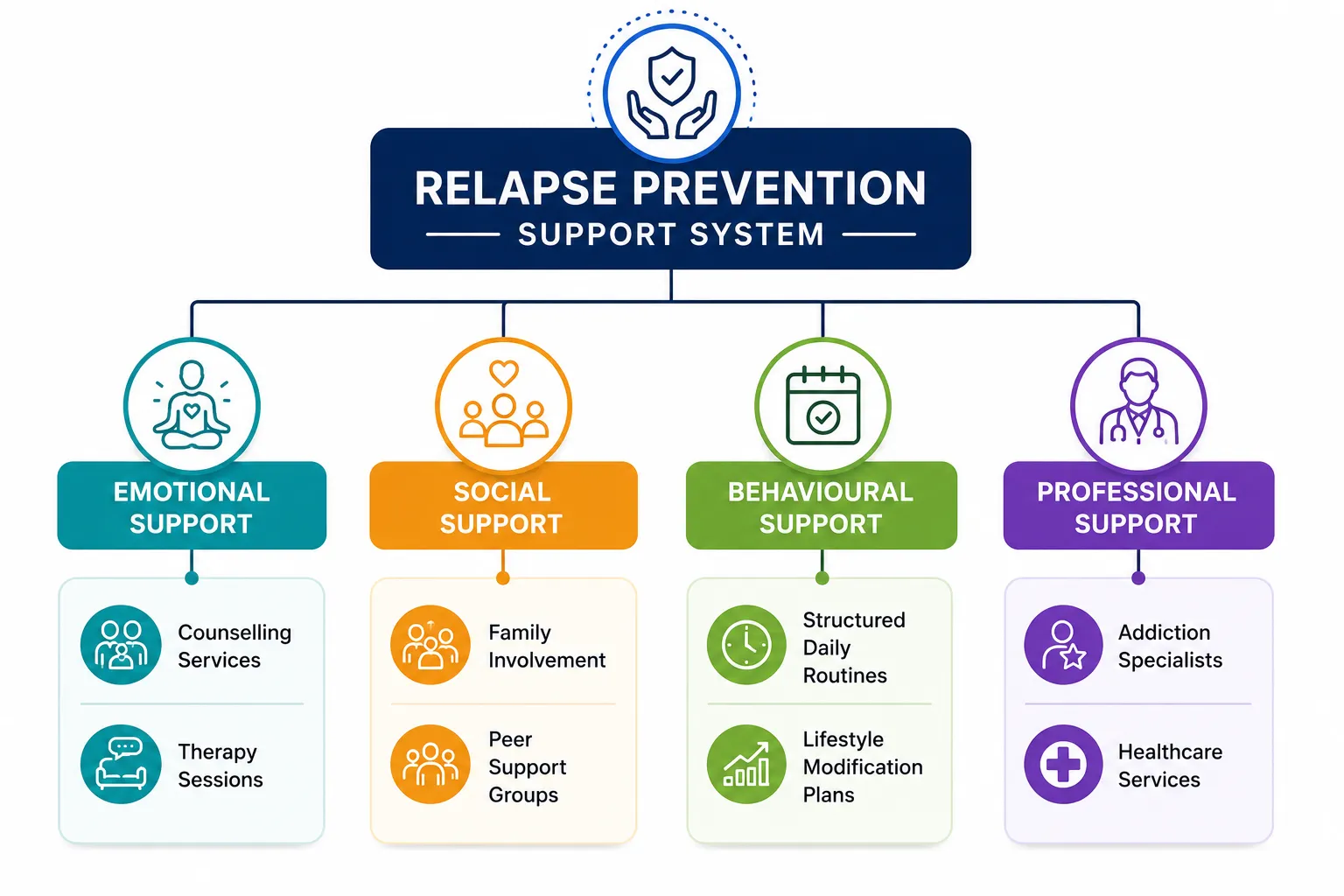
Support mechanisms are structured systems that provide ongoing assistance to individuals in recovery. These systems ensure that relapse prevention is not solely dependent on individual effort but is supported by professional and social networks.
Types of Support Mechanisms
- Professional Support
Includes trained specialists such as counsellors, psychologists, and addiction professionals who provide clinical guidance, therapy, and structured recovery support. - Peer Support Systems
Involves recovery groups and individuals with lived experience who offer encouragement, shared understanding, and motivational support throughout recovery. - Family Support Networks
Focuses on emotional encouragement and practical assistance from family members to strengthen stability and promote sustained recovery. - Community Services
Includes rehabilitation centres, outreach programmes, and local support organisations that provide ongoing recovery resources and structured care pathways
Critical Analysis of Support Systems
Support systems significantly increase recovery success rates. However, their effectiveness depends on accessibility, consistency, and client engagement. In many cases, lack of family involvement or limited access to services can reduce the effectiveness of relapse prevention strategies.
This highlights the importance of multi-agency collaboration in addiction treatment, ensuring that clients receive continuous support across different environments.
Relapse Prevention Support System

Process Flow: Relapse Prevention Implementation
Identify Triggers
↓
Assess Risk Level
↓
Develop Coping Strategies
↓
Establish Support Systems
↓
Implement Prevention Plan
↓
Monitor Progress
↓
Review and Adjust Plan
Workplace Application Example
In a residential rehabilitation centre, a client preparing for discharge is assessed as high risk for relapse due to limited family support and high stress levels.
Intervention Plan
- Weekly therapy sessions for emotional support
- Daily structured routine development
- Engagement in peer support groups
- Emergency coping plan for cravings
Outcome
- Increased emotional stability
- Improved coping confidence
- Reduced relapse vulnerability
- Successful transition into community living
Case Study: Relapse Prevention in Practice
Background
A 40-year-old male recovering from opioid addiction completes a structured rehabilitation programme.
Situation
After returning home, he experiences isolation and emotional stress.
Challenge
Increased risk of relapse due to lack of structured support and emotional instability.
Intervention
- Identification of emotional and social triggers
- CBT-based coping strategy training
- Enrollment in community recovery group
- Family counselling sessions
Outcome
- Sustained abstinence maintained
- Improved emotional regulation
- Stronger social support engagement
Learning Point
Relapse prevention is most effective when cognitive, behavioural, emotional, and social strategies are integrated into a structured support system.
Key Takeaways
- Relapse prevention is a structured and ongoing process
- Cognitive, behavioural, emotional, and social strategies are essential
- Support mechanisms improve long-term recovery success
- Early intervention reduces relapse severity and frequency
- Integrated approaches are more effective than isolated strategies
- Continuous monitoring and adaptation are essential
Conclusion
Relapse prevention strategies and support mechanisms are vital for achieving sustainable and long-term recovery from addiction. By effectively addressing cognitive distortions, behavioural patterns, emotional regulation, and social influences, practitioners can significantly reduce the risk of relapse and support individuals in maintaining positive behavioural change.
A well-structured and coordinated approach that combines individual coping strategies with strong professional, peer, and family support systems ensures more effective recovery outcomes. When applied consistently, these interventions empower individuals to build resilience, maintain recovery progress, and achieve lasting improvements in their mental health and overall wellbeing.