
Lesson 2: Understanding Co-occurrence
Mental health disorders and substance abuse are two major public health concerns that affect millions of people worldwide. While each condition can significantly impact an individual’s wellbeing, many people experience both challenges simultaneously. This combination is commonly referred to as co-occurring disorders or dual diagnosis. Understanding the relationship between mental health disorders and substance misuse is essential for professionals working in health, social care, counselling, community support, and rehabilitation services.
Individuals with co-occurring disorders often face more complex challenges than those experiencing a single condition. Mental health symptoms can contribute to substance misuse, while substance abuse can worsen or trigger mental health problems. This interconnected relationship can create a cycle that affects physical health, emotional wellbeing, relationships, employment, education, and overall quality of life.
This lesson examines the relationship between substance abuse and mental health disorders, explores the causes and consequences of co-occurring conditions, and analyses the challenges associated with treatment and recovery.
Understanding Co-occurring Disorders
What Are Co-occurring Disorders?
Co-occurring disorders occur when an individual experiences both a mental health disorder and a substance use disorder at the same time. The conditions may develop simultaneously or one condition may emerge before the other.
A person may experience:
- Depression and alcohol dependence
- Anxiety disorder and prescription drug misuse
- Bipolar disorder and stimulant addiction
- Schizophrenia and cannabis misuse
- Post-traumatic stress disorder (PTSD) and opioid dependence
The presence of both conditions creates additional challenges because each disorder can influence the development, severity, and treatment of the other.
Understanding Dual Diagnosis
The term dual diagnosis is commonly used within healthcare and mental health services to describe individuals who have both a diagnosed mental health condition and a substance use disorder.
Dual diagnosis does not refer to a specific illness. Instead, it describes the coexistence of two separate but interconnected conditions requiring integrated assessment and treatment.
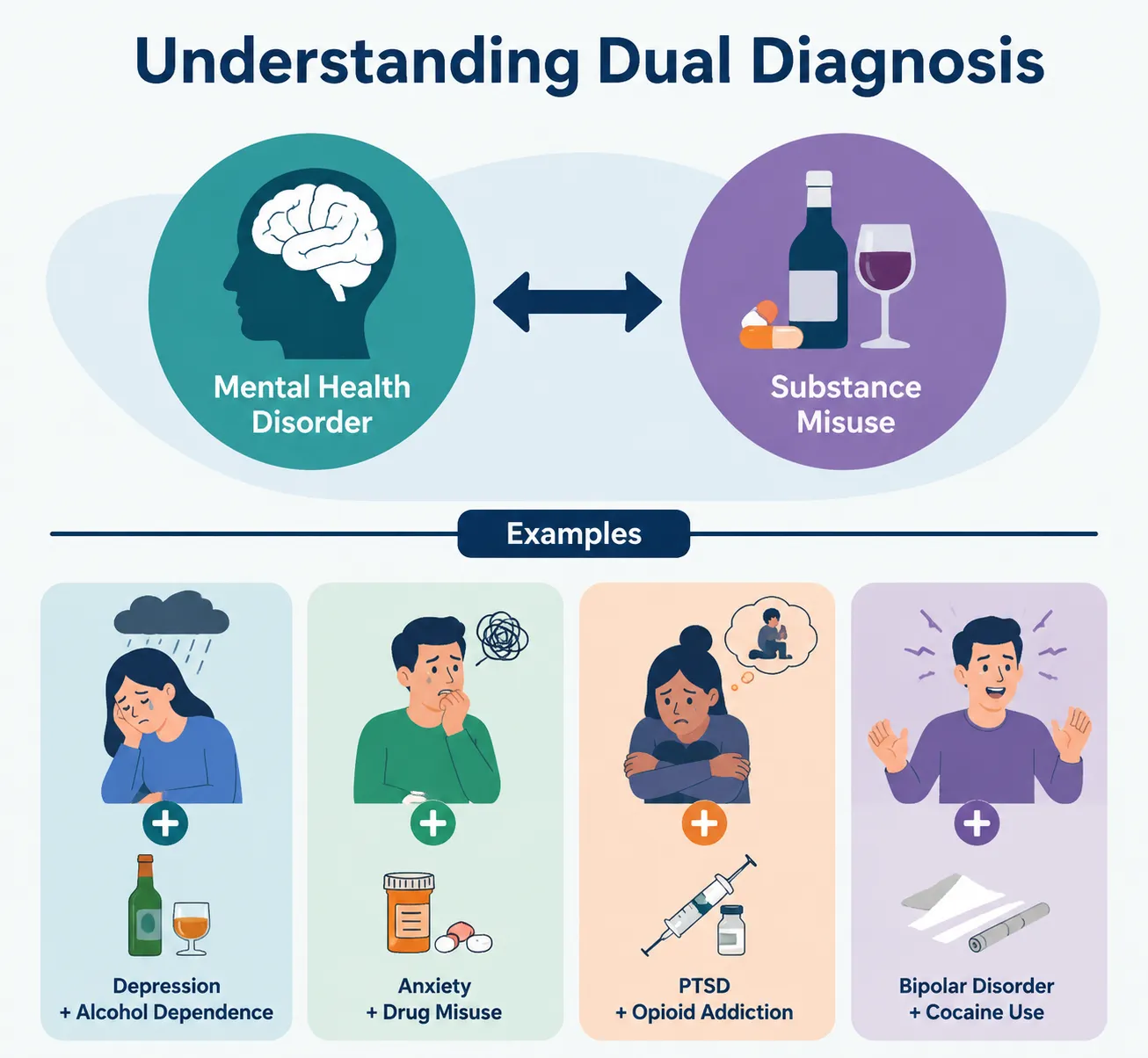
1. Analyze the Relationship Between Substance Abuse and Mental Health Disorders (Dual Diagnosis)
Understanding Co-occurring Disorders
Co-occurring disorders, commonly referred to as dual diagnosis, occur when an individual experiences both a mental health disorder and a substance use disorder at the same time. These conditions may develop simultaneously, or one condition may emerge before the other. Regardless of which condition appears first, they frequently become interconnected, creating a complex relationship that affects an individual’s emotional wellbeing, physical health, social functioning, and overall quality of life.
Mental health disorders such as depression, anxiety disorders, bipolar disorder, schizophrenia, personality disorders, and post-traumatic stress disorder (PTSD) are frequently associated with substance misuse. Similarly, prolonged misuse of alcohol, prescription medications, and illicit drugs can contribute to the development or worsening of psychological and behavioural difficulties. This interaction often creates a cycle in which each condition reinforces the other, making assessment, treatment, and recovery more challenging.
The concept of co-occurrence is particularly important within health and social care practice because individuals experiencing dual diagnosis often require more comprehensive support than those experiencing a single condition. Professionals must understand not only the symptoms of mental illness and substance misuse but also how these conditions interact and influence each other over time. Failure to recognise both conditions may result in incomplete treatment plans, increased relapse rates, and poorer long-term outcomes.
The Complex Relationship Between Mental Health and Substance Abuse
The relationship between mental health disorders and substance abuse is complex and multifaceted. Research indicates that there is rarely a single explanation for why these conditions occur together. Instead, biological, psychological, and social factors often combine to increase an individual’s vulnerability to both mental illness and substance misuse.
In some situations, a mental health disorder develops first and leads to substance misuse as the individual attempts to cope with emotional distress. In other cases, prolonged substance abuse alters brain chemistry and contributes to the onset of mental health symptoms. There are also circumstances where both conditions develop simultaneously because of shared risk factors such as trauma, genetic predisposition, or adverse social conditions.
This complexity highlights the importance of adopting a holistic approach when examining dual diagnosis. Rather than focusing on one condition in isolation, professionals must consider the broader context of an individual’s experiences, behaviours, relationships, and environment.
How Mental Health Disorders Can Lead to Substance Abuse
One of the most widely recognised explanations for the relationship between mental illness and substance misuse is the self-medication theory. This theory suggests that individuals may use alcohol or drugs to manage distressing symptoms associated with mental health disorders.
For example, individuals experiencing anxiety may consume alcohol because it temporarily creates feelings of relaxation and confidence. People living with depression may misuse stimulants to increase energy levels and reduce feelings of hopelessness. Individuals affected by PTSD may use substances to suppress traumatic memories, emotional pain, or intrusive thoughts.
Although substances may initially provide temporary relief, they do not address the underlying mental health condition. Over time, tolerance often develops, meaning that larger amounts of the substance are required to achieve the same effect. This can lead to dependency, addiction, and worsening mental health symptoms.
Practical Example: Self-Medication and Anxiety
A young professional experiences severe social anxiety and finds it difficult to participate in meetings, presentations, and workplace social events. To reduce feelings of nervousness, they begin drinking alcohol before attending social gatherings. Initially, alcohol appears to increase confidence and reduce anxiety.
However, as reliance on alcohol grows, the individual becomes dependent on drinking to function in social situations. Anxiety symptoms become more severe when alcohol is unavailable, and concerns about alcohol use create additional emotional distress. Eventually, the individual develops both alcohol dependence and an anxiety disorder.
This example demonstrates how attempts to manage mental health symptoms through substance use can unintentionally contribute to the development of a co-occurring disorder.
How Substance Abuse Can Lead to Mental Health Disorders
The relationship between substance abuse and mental health disorders is not one-directional. Substance misuse itself can contribute to the development, progression, or worsening of psychological conditions.
Psychoactive substances affect neurotransmitters within the brain that regulate mood, emotions, behaviour, memory, and decision-making. Long-term misuse can disrupt normal brain functioning, increasing vulnerability to mental health difficulties.
For example, alcohol is a depressant that affects the central nervous system. While it may initially produce feelings of relaxation, prolonged alcohol misuse is associated with depression, anxiety, memory impairment, and mood instability. Similarly, stimulant drugs such as cocaine and methamphetamine can contribute to paranoia, panic attacks, aggression, and psychotic symptoms.
Impact of Commonly Misused Substances on Mental Health
| Substance | Potential Mental Health Effects |
|---|---|
| Alcohol | Depression, anxiety, mood instability |
| Cannabis | Paranoia, psychotic symptoms |
| Cocaine | Anxiety, panic attacks, paranoia |
| Methamphetamine | Hallucinations, aggression, psychosis |
| Opioids | Depression, emotional withdrawal |
| Benzodiazepines | Dependence, rebound anxiety, mood disturbances |
The longer substance misuse continues, the greater the likelihood that psychological symptoms will develop or intensify. This often makes it difficult to determine whether symptoms are caused by substance use, an underlying mental health disorder, or a combination of both.
Shared Risk Factors Contributing to Co-occurring Disorders
Mental health disorders and substance use disorders frequently arise from similar underlying causes. These shared risk factors help explain why co-occurrence is relatively common across different populations.
Biological Factors
Biological influences play an important role in determining susceptibility to both addiction and mental illness. Genetic factors can affect how individuals respond to stress, regulate emotions, and experience reward and pleasure.
Research has shown that individuals with a family history of depression, bipolar disorder, schizophrenia, alcoholism, or substance dependence may have an increased likelihood of developing co-occurring disorders. Neurological differences and imbalances in neurotransmitters such as dopamine and serotonin can also contribute to vulnerability.
Psychological Factors
Psychological experiences significantly influence both mental health and substance use behaviours. Individuals who have experienced trauma, abuse, neglect, or prolonged stress may be more vulnerable to developing emotional difficulties and unhealthy coping mechanisms.
Common psychological risk factors include:
- Childhood trauma
- Emotional abuse
- Physical abuse
- Neglect
- Chronic stress
- Low self-esteem
- Poor emotional regulation
- Unresolved grief
These experiences can increase emotional distress and reduce an individual’s ability to cope effectively, making substance use more likely.
Social and Environmental Factors
Social circumstances can also contribute significantly to dual diagnosis. Environmental stressors often increase vulnerability to both mental illness and substance misuse.
Examples include:
- Poverty
- Unemployment
- Homelessness
- Social isolation
- Family conflict
- Exposure to violence
- Peer pressure
- Limited access to support services
When multiple risk factors are present, the likelihood of developing co-occurring disorders increases considerably.
The Bidirectional Relationship Between Mental Health Disorders and Substance Abuse
Mental health disorders and substance abuse are often described as having a bidirectional relationship. This means that each condition can contribute to the development, progression, and worsening of the other.
For example, an individual experiencing depression may misuse alcohol to relieve emotional pain and feelings of hopelessness. However, alcohol misuse can further intensify depressive symptoms by affecting brain chemistry, sleep quality, and emotional regulation. As depression worsens, alcohol consumption may increase, creating a self-perpetuating cycle.
Similarly, an individual with an anxiety disorder may misuse sedatives to manage feelings of fear and tension. Over time, dependence may develop, and withdrawal symptoms can trigger even greater anxiety, reinforcing continued substance use.
The Two-Way Relationship Between Mental Health and Substance Abuse
| Mental Health Disorders May Lead To | Substance Abuse May Lead To |
|---|---|
| Self-medication behaviours | Changes in brain chemistry |
| Increased vulnerability to addiction | Anxiety and depression |
| Social withdrawal | Cognitive impairment |
| Emotional distress | Mood instability |
| Reduced resilience | Psychological disorders |
| Poor coping strategies | Increased emotional vulnerability |
This two-way interaction demonstrates why treating only one condition often produces limited success. If one disorder remains untreated, it may continue to contribute to the persistence of the other.
The Wider Impact of Co-occurring Disorders
The consequences of dual diagnosis extend beyond symptoms of mental illness and substance misuse. Individuals often experience challenges across multiple areas of life, affecting their overall wellbeing and ability to function independently.
Physical Health Impact
Substance misuse can contribute to liver disease, cardiovascular problems, respiratory conditions, weakened immunity, and nutritional deficiencies. When combined with mental health difficulties, these physical health concerns can significantly reduce quality of life.
Psychological Impact
Individuals with co-occurring disorders often experience worsening symptoms, emotional instability, impaired concentration, low self-esteem, and an increased risk of self-harm or suicide.
Social Impact
Relationships may become strained due to behavioural changes, communication difficulties, and loss of trust. Social isolation, family conflict, educational disruption, and employment challenges are common consequences.
Economic Impact
Co-occurring disorders can result in reduced productivity, unemployment, financial instability, increased healthcare costs, and reliance on social support services.
Areas Affected by Co-occurring Disorders
| Area of Life | Potential Consequences |
|---|---|
| Physical Health | Chronic illness, injury, poor nutrition |
| Mental Health | Increased symptom severity |
| Relationships | Conflict and social isolation |
| Employment | Reduced productivity, unemployment |
| Education | Poor performance and disengagement |
| Finances | Debt and financial insecurity |
Case Study: Dual Diagnosis in Practice
Michael, aged 35, experienced prolonged depression following the loss of his employment. Feelings of hopelessness, low self-worth, and uncertainty about the future gradually affected his daily functioning and relationships. In an attempt to cope with these emotions, he began drinking alcohol more frequently.
Initially, alcohol appeared to provide temporary relief from his emotional distress. However, over time, his drinking increased and developed into alcohol dependence. As alcohol consumption intensified, his depressive symptoms became more severe. He withdrew from family and friends, experienced financial difficulties, and struggled to maintain motivation for seeking employment.
When Michael eventually sought professional support, clinicians identified both major depressive disorder and alcohol use disorder. His treatment plan required an integrated approach involving psychological therapy, addiction counselling, medical support, and social rehabilitation services.
Case Analysis
Michael’s experience highlights several important aspects of co-occurring disorders:
- Depression contributed to the development of alcohol misuse.
- Alcohol dependence worsened depressive symptoms.
- Social and financial difficulties reinforced both conditions.
- Recovery required treatment of both disorders simultaneously.
- Addressing only one condition would have increased the risk of relapse.
This case demonstrates why co-occurring disorders should be viewed as interconnected conditions rather than separate problems. Effective intervention requires professionals to understand the relationship between mental health and substance misuse and to provide coordinated, person-centred support.
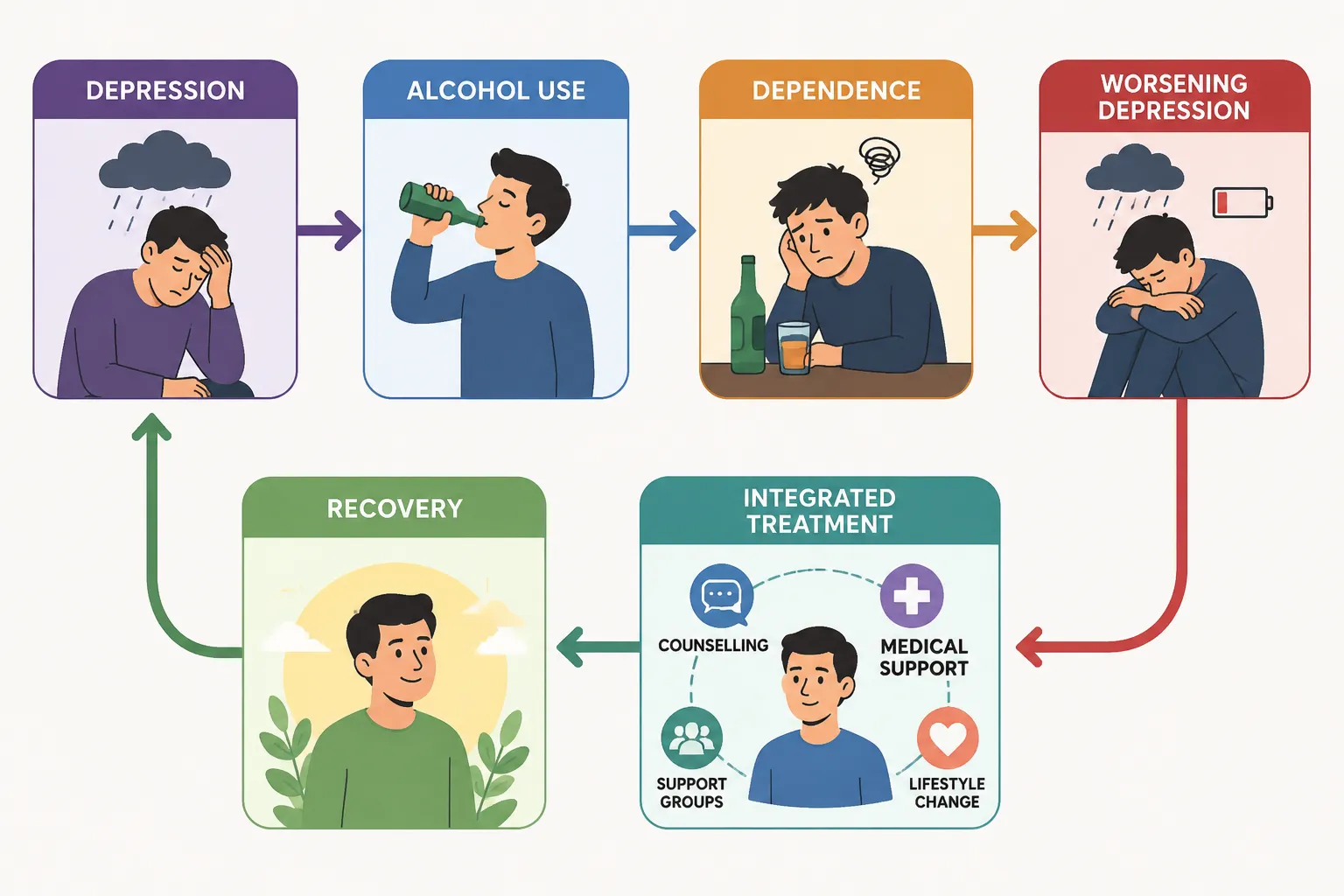
The relationship between substance abuse and mental health disorders is complex, dynamic, and deeply interconnected. Mental health conditions may contribute to substance misuse through self-medication behaviours, while prolonged substance abuse can alter brain functioning and increase vulnerability to psychological disorders. Shared biological, psychological, and social risk factors further explain why these conditions frequently occur together.
The bidirectional nature of dual diagnosis means that each condition can influence and worsen the other, creating a cycle that can be difficult to break without professional intervention. Understanding this relationship is essential for health and social care professionals, as effective assessment, treatment, and support depend upon recognising both conditions and addressing them through integrated, holistic approaches.
2. Discuss the Challenges and Considerations in Treating Individuals with Co-occurring Disorders
The Complexity of Treating Dual Diagnosis
Treating individuals with co-occurring disorders presents one of the most complex challenges in modern healthcare practice. Dual diagnosis refers to the simultaneous presence of a mental health disorder and a substance use disorder, both of which interact in ways that significantly complicate assessment, diagnosis, treatment planning, and recovery outcomes. Unlike single-condition cases, co-occurring disorders are not linear in nature; instead, they are dynamic, cyclical, and mutually reinforcing.
A key clinical challenge is that mental health symptoms and substance use behaviours often overlap, making it difficult to identify which condition is primary. For example, depressive symptoms may result from alcohol dependence, while alcohol misuse may develop as a coping mechanism for depression. This bidirectional relationship requires professionals to adopt a holistic, systems-based approach rather than focusing on isolated symptoms.
Historically, treatment systems were divided into two separate sectors: mental health services and addiction services. Individuals were often required to achieve sobriety before accessing psychiatric care, or conversely, to stabilise mental health symptoms before addiction treatment could begin. This fragmented model frequently resulted in poor outcomes, repeated relapse cycles, and disengagement from services. Modern clinical frameworks now recognise that separation of care is ineffective for dual diagnosis populations.
Contemporary best practice emphasises integrated care models that treat both conditions simultaneously. This shift reflects growing evidence that coordinated intervention improves long-term recovery, reduces relapse rates, and enhances quality of life.
Challenges in Assessment and Diagnostic Accuracy
One of the most significant barriers in treating co-occurring disorders is achieving an accurate and timely diagnosis. Symptoms of mental illness and substance use disorders often mimic or mask each other, particularly during acute phases of intoxication or withdrawal.
For example, anxiety may be caused by a primary anxiety disorder, stimulant use, or alcohol withdrawal. Similarly, hallucinations may indicate schizophrenia, but they may also be substance-induced psychosis. Without careful assessment, there is a high risk of misdiagnosis, leading to inappropriate treatment planning.
Diagnostic Overlap in Co-occurring Disorders
| Clinical Symptom | Possible Mental Health Cause | Possible Substance-Related Cause |
|---|---|---|
| Depression | Major depressive disorder | Alcohol or sedative misuse |
| Anxiety | Generalised anxiety disorder | Stimulant use or withdrawal |
| Hallucinations | Schizophrenia spectrum disorder | Drug-induced psychosis |
| Mood instability | Bipolar disorder | Substance intoxication or withdrawal |
| Sleep disturbance | Anxiety/depression | Substance withdrawal effects |
Accurate diagnosis requires longitudinal assessment rather than single-point evaluation. Clinicians often need to observe symptom patterns over time, conduct structured interviews, review medical history, and gather collateral information from family or support networks. In complex cases, multidisciplinary collaboration is essential to ensure diagnostic clarity.
From an industry perspective, misdiagnosis not only delays recovery but also increases healthcare costs and service demand due to repeated admissions, relapse episodes, and ineffective interventions.
Challenges in Treatment Engagement and Retention
Engaging individuals with co-occurring disorders in treatment is another major challenge. Many individuals do not initially recognise the severity of either condition, particularly when substance use is perceived as a coping mechanism. Denial, ambivalence, and low treatment readiness are common barriers.
Stigma also plays a significant role. Individuals may fear being judged for substance use or mental illness, which can discourage disclosure and reduce help-seeking behaviour. Past negative experiences with healthcare systems may further reduce trust and willingness to engage.
In addition, structural and social barriers significantly impact engagement. These include:
- Homelessness or unstable housing
- Financial insecurity
- Lack of transportation
- Unemployment
- Family breakdown
- Limited access to community services
These factors create a cycle in which individuals are unable to maintain consistent contact with services, leading to interrupted care and increased risk of relapse.
Practical Application
In practice, outreach-based interventions such as mobile mental health teams, community addiction services, and peer-support programmes are often more effective than clinic-based models alone. These approaches reduce barriers to access and improve continuity of care.
Professionals must also adopt motivational interviewing techniques, trauma-informed communication, and non-judgemental engagement strategies to build trust and encourage long-term participation.
The Challenge of Relapse and Recovery Instability
Relapse is a central consideration in dual diagnosis treatment. Recovery from co-occurring disorders is rarely linear; instead, individuals often experience cycles of improvement, setback, and readjustment. This pattern does not indicate treatment failure but reflects the chronic and relapsing nature of both mental health and substance use disorders.
Relapse may be triggered by multiple factors, including:
- Acute stress or life crises
- Exposure to substance-using environments
- Emotional dysregulation
- Untreated trauma
- Relationship conflict
- Loss of support systems
Importantly, relapse risk is significantly higher when only one condition is treated. For example, treating depression without addressing alcohol dependence increases the likelihood that alcohol use will continue to worsen mental health symptoms.
Professionals must therefore view relapse as a clinical indicator rather than a failure, using it as an opportunity to reassess treatment plans, strengthen coping strategies, and adjust interventions.
The Importance of Integrated Treatment Models
Integrated treatment is widely recognised as the most effective approach for co-occurring disorders. This model involves the simultaneous treatment of mental health and substance use disorders within a coordinated care framework.
Integrated care may include psychiatric support, psychological therapies, addiction treatment, medication management, social support, and relapse prevention strategies delivered in a unified system rather than fragmented services.
Comparison of Traditional vs Integrated Treatment
| Traditional Model | Integrated Model |
|---|---|
| Separate mental health and addiction services | Combined, coordinated treatment |
| Fragmented communication | Shared care planning |
| Sequential treatment approach | Simultaneous intervention |
| Higher relapse rates | Reduced relapse risk |
| Inconsistent follow-up | Continuous care pathway |
Evidence consistently shows that integrated models improve engagement, reduce hospital admissions, and enhance long-term recovery outcomes. From a policy and service delivery perspective, integrated care also improves efficiency by reducing duplication of services and improving resource allocation.
Trauma-Informed Care as a Core Consideration
A significant proportion of individuals with co-occurring disorders have experienced trauma, including childhood abuse, neglect, domestic violence, or adverse life events. Trauma plays a critical role in shaping coping behaviours, emotional regulation, and vulnerability to both mental illness and substance misuse.
Trauma-informed care focuses on understanding the impact of trauma and ensuring that services do not unintentionally re-traumatise individuals. This approach is built on key principles such as safety, trust, empowerment, collaboration, and choice.
Industry Application
In practice, trauma-informed care influences how services are delivered. For example, clinicians avoid confrontational approaches, prioritise emotional safety, and encourage gradual disclosure rather than forced questioning. This increases engagement and reduces dropout rates, particularly in high-risk populations.
Multidisciplinary Collaboration in Practice
Effective treatment of co-occurring disorders requires coordinated input from multiple professionals. No single discipline can address the full complexity of dual diagnosis, which spans psychological, medical, behavioural, and social domains.
Multidisciplinary Team Roles
| Professional Role | Key Contribution |
|---|---|
| Psychiatrist | Diagnosis, medication management |
| Psychologist | Therapy and behavioural interventions |
| Addiction specialist | Substance use treatment planning |
| Social worker | Safeguarding and social support |
| Nurse | Health monitoring and care coordination |
| Peer support worker | Lived experience support and engagement |
Multidisciplinary collaboration ensures continuity of care and reduces gaps in treatment. It also allows for shared decision-making, which improves patient outcomes and strengthens recovery pathways.
Supporting Long-Term Recovery and Social Reintegration
Recovery in co-occurring disorders extends beyond symptom reduction. It involves rebuilding identity, restoring functioning, and reintegrating individuals into society. Long-term recovery is influenced by both clinical treatment and broader social determinants of health.
Key recovery factors include:
- Stable housing and living conditions
- Access to meaningful employment or education
- Supportive relationships and social networks
- Ongoing mental health and addiction support
- Financial stability
- Access to community resources
Critical Analysis
From an industry perspective, recovery should be viewed as a continuum rather than an endpoint. Individuals may require long-term or lifelong support depending on the severity of both conditions. Sustainable recovery is more likely when services adopt a holistic model that integrates healthcare with social and community support systems.
Treating individuals with co-occurring disorders presents complex challenges that require advanced clinical understanding, integrated service delivery, and multidisciplinary collaboration. The overlapping nature of mental health disorders and substance use disorders creates diagnostic difficulties, engagement barriers, and increased relapse risk. Traditional fragmented service models are no longer considered effective, as they fail to address the interconnected nature of dual diagnosis.
Modern practice emphasises integrated, trauma-informed, and person-centred care approaches that treat both conditions simultaneously while addressing underlying social and psychological factors. Long-term recovery depends not only on clinical treatment but also on stable housing, social support, and continuous access to care. By adopting these approaches, professionals can significantly improve outcomes, reduce relapse, and support meaningful recovery journeys for individuals with co-occurring disorders.
Conclusion
Co-occurring disorders occur when an individual experiences both a mental health disorder and a substance use disorder simultaneously. These conditions share common risk factors and often have a bidirectional relationship, meaning that each can contribute to the development and worsening of the other. Mental health difficulties may encourage substance misuse through self-medication, while prolonged substance abuse can trigger or intensify psychological symptoms.
Treating individuals with dual diagnosis presents significant challenges, including difficulties in diagnosis, treatment engagement, relapse prevention, and recovery planning. Effective support requires integrated, person-centred approaches that address both conditions together. Through multidisciplinary collaboration, trauma-informed care, and long-term recovery support, professionals can help individuals achieve improved wellbeing, greater independence, and sustainable recovery outcomes.