
Lesson 2: Impact of Addiction
Addiction is a complex condition that has far-reaching consequences beyond the individual who is affected. It influences not only a person’s physical and mental health but also disrupts emotional stability, decision-making abilities, and everyday functioning. Over time, addiction can weaken relationships, reduce productivity, and create long-term challenges that affect every aspect of life.
This lesson explores the wide-ranging impact of addiction on individuals, families, and communities, highlighting how it contributes to emotional distress, financial difficulties, and social disruption. It also examines societal attitudes towards addiction and how these perceptions can either support recovery or create barriers to treatment and rehabilitation.
1. Impact of Addiction on Individuals, Families, and Communities
Impact on Individuals
Physical Impact on Individuals 
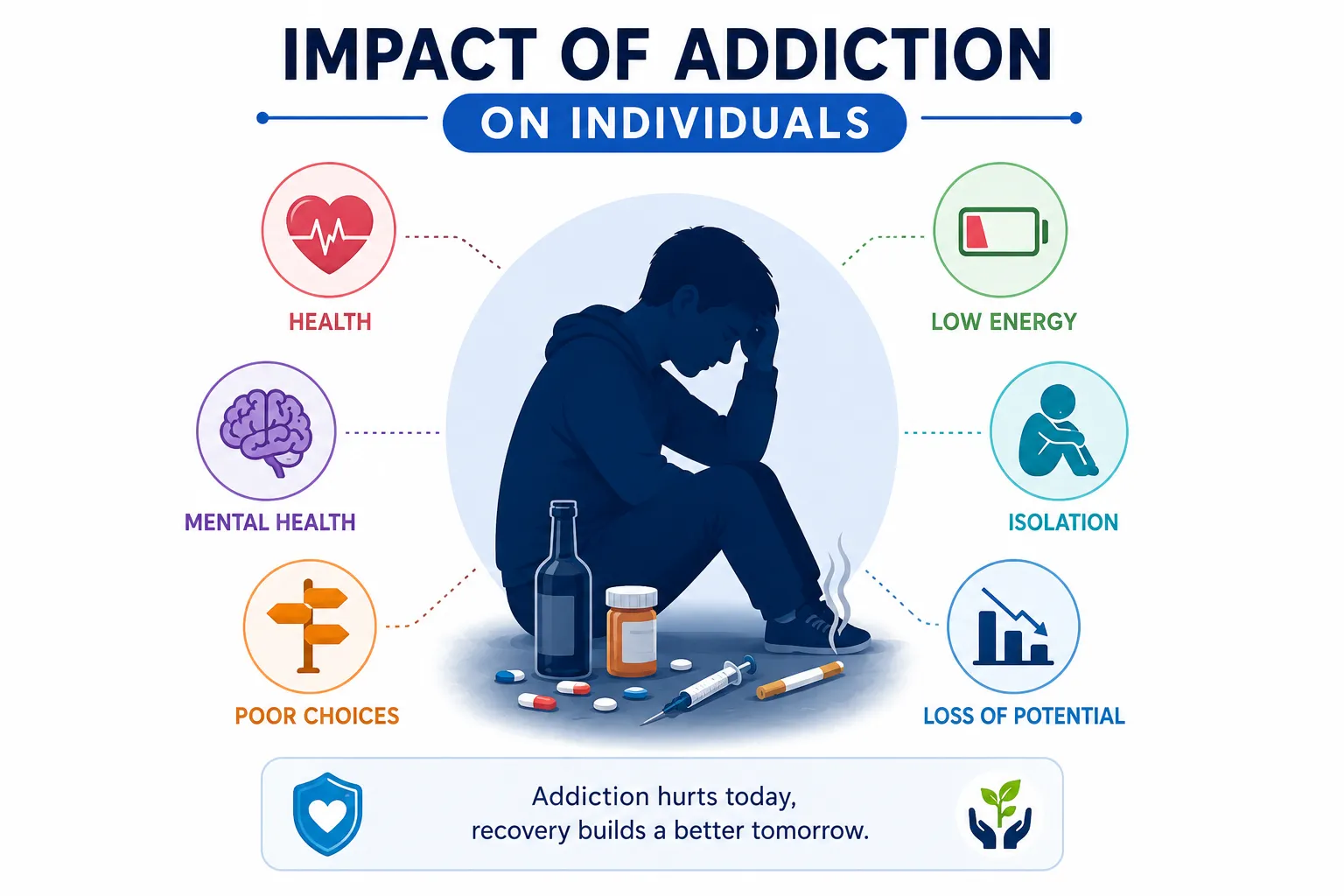
Key Physical Effects
- Damage to vital organs such as the liver, heart, lungs, kidneys, and brain
- Increased risk of chronic diseases such as cancer, stroke, and cardiovascular disorders
- Weakening of the immune system, leading to frequent infections and illnesses
- Disruption of sleep patterns, causing insomnia or excessive sleepiness
- Loss of energy, fatigue, and physical weakness
- Poor personal hygiene and self-care due to lack of motivation
Long-Term Physical Consequences
- Permanent organ damage
- Reduced life expectancy
- Increased risk of overdose or sudden health collapse
- Severe deterioration in physical appearance and health condition
Psychological Impact on Individuals
Key Psychological Effects
- Anxiety, depression, and emotional instability
- Increased stress levels and inability to cope with pressure
- Reduced concentration and memory loss
- Poor judgment and decision-making ability
- Strong cravings and obsessive thoughts about substance use
Long-Term Psychological Consequences
- Development of severe mental health disorders
- Loss of self-control and emotional regulation
- Increased risk of suicidal thoughts in severe cases
- Dependence on substances for emotional relief
Behavioural Impact on Individuals
Key Behavioural Effects
- Engaging in risky behaviours such as unsafe driving or illegal activities
- Increased aggression, irritability, or mood swings
- Neglect of personal, academic, or professional responsibilities
- Social withdrawal and isolation from family and friends
- Financial problems due to excessive spending on substances
Long-Term Behavioural Consequences
- Breakdown of social identity and relationships
- Loss of employment or educational opportunities
- Increased involvement in criminal behaviour
- Complete loss of control over daily life routines
2. Impact of Addiction on Families
Emotional Impact on Families
Key Emotional Effects
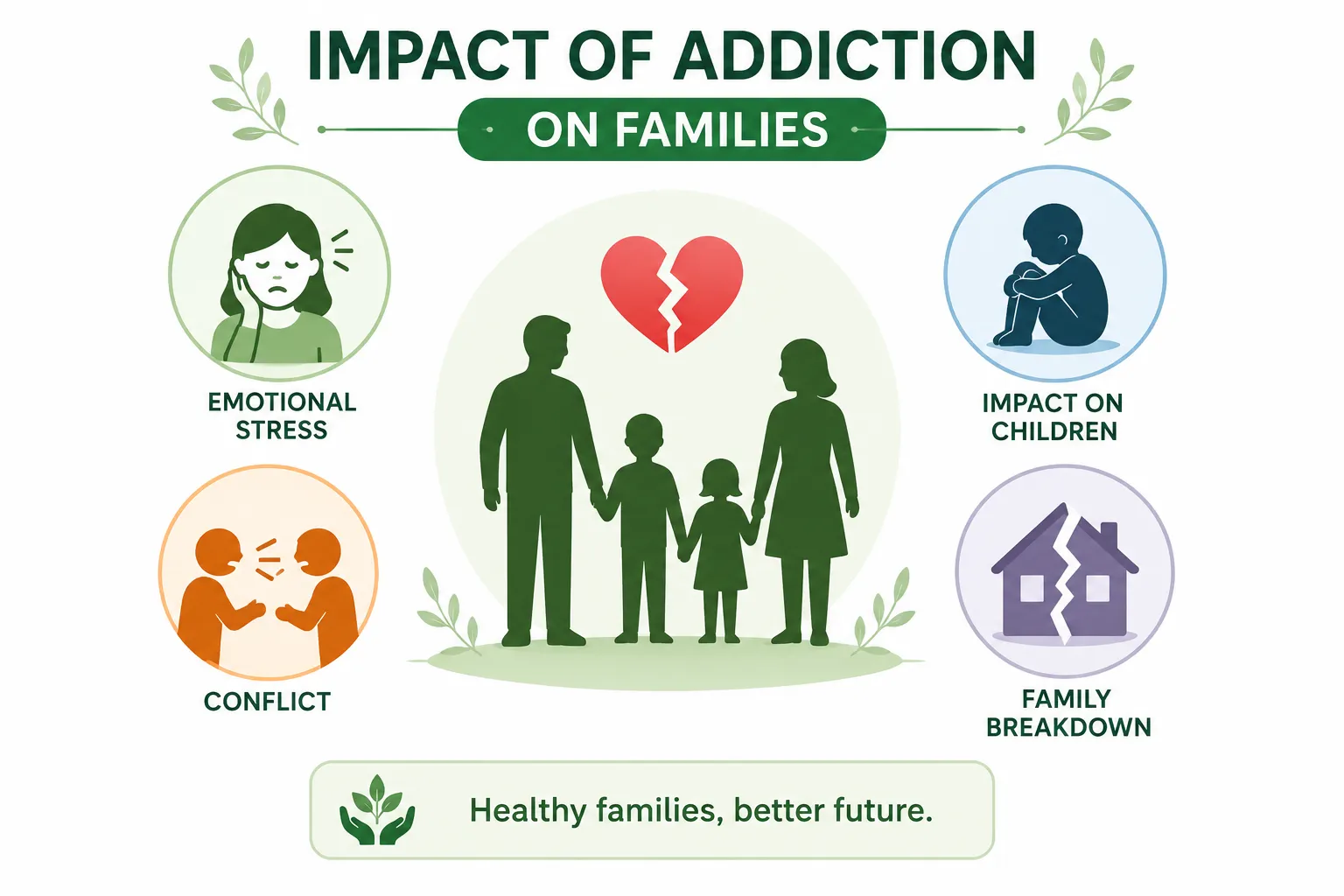
Breakdown of Trust Between Family Members
- Addiction often leads to secrecy, dishonesty, and broken promises
- Family members may no longer trust the addicted individual’s behaviour or statements
Explanation
- Trust is a core foundation of family relationships
- Repeated deception damages emotional bonds
- Family members may become emotionally distant over time
Constant Fear, Worry, and Emotional Distress
- Families often live with ongoing uncertainty and stress
Examples of Fear
- Fear of overdose or health emergencies
- Fear of legal issues or police involvement
- Fear of financial collapse
Impact
- Emotional exhaustion
- Difficulty focusing on daily life
- Continuous mental pressure on all family members
Feelings of Shame, Guilt, and Embarrassment
- Families may feel ashamed due to social stigma
- Some members may blame themselves for the situation
Explanation
- Societal judgment increases emotional burden
- Families may hide the problem from others
- This prevents them from seeking help or support
Frequent Arguments and Household Conflict
- Addiction often leads to tension and disagreements at home
Effects
- Increased anger and frustration
- Constant misunderstandings
- Emotional instability within the household
Long-Term Emotional Consequences
Emotional Burnout Among Family Members
- Continuous stress leads to emotional exhaustion
Explanation
- Family members may feel mentally drained
- They lose emotional strength to cope with ongoing problems
Breakdown of Family Unity and Support Systems
- Addiction weakens emotional bonding within the family
Effects
- Reduced cooperation among members
- Loss of mutual support
- Fragmentation of family structure
Psychological Trauma in Children
- Children are highly affected by unstable home environments
Effects on Children
- Anxiety and fear
- Emotional insecurity
- Difficulty trusting others
- Behavioural problems
Long-Lasting Emotional Instability
- Even after recovery, emotional damage may remain
Explanation
- Past conflicts and trauma leave lasting effects
- Families may struggle to rebuild emotional stability
Social Impact on Families
Key Social Effects
Poor Communication Between Family Members
- Addiction reduces healthy communication patterns
Explanation
- Conversations become conflict-driven or avoided completely
- Misunderstandings increase within the household
Social Isolation Due to Stigma
- Families may be judged by society and feel excluded
Effects
- Avoiding social gatherings
- Reduced interaction with friends and relatives
- Feeling isolated and unsupported
Neglect of Children and Family Responsibilities
- Addiction can reduce attention to parenting roles
Effects on Children
- Lack of supervision
- Emotional neglect
- Poor academic performance
Exposure to Domestic Violence or Abuse
- In severe cases, addiction may lead to unsafe environments
Possible Situations
- Verbal abuse and shouting
- Physical violence
- Emotional manipulation
Long-Term Social Consequences
Breakdown of Family Reputation
- Families may lose respect in their community due to stigma
Weak Social Support Networks
- Friends and relatives may distance themselves
- Families lose access to emotional and practical support
Behavioural and Emotional Problems in Children
- Anxiety
- Depression
- Aggressive behaviour
- Social withdrawal
Intergenerational Addiction Risk
- Children may be more likely to develop addiction in adulthood
Explanation
- Exposure normalises substance use
- Lack of guidance increases vulnerability
Financial Impact on Families
Key Financial Effects
Loss of Income Due to Unemployment or Reduced Productivity
- Addiction affects job performance and attendance
Effects
- Job loss
- Reduced working capacity
- Irregular income
High Expenditure on Substances
- A large portion of income is spent on maintaining addiction
Effects
- Reduced savings
- Financial imbalance
- Neglect of essential needs
Accumulation of Debt and Financial Instability
- Families may borrow money to cope with expenses
Effects
- Loans and credit debt
- Financial stress
- Risk of bankruptcy
Difficulty Managing Household Expenses
- Basic needs become difficult to afford
Examples
- Rent delays
- Utility bill issues
- Food insecurity
Long-Term Financial Consequences
Poverty and Financial Insecurity
- Long-term addiction can push families into poverty
Loss of Property or Assets
- Families may sell valuable possessions to survive financially
Reduced Access to Education and Healthcare
- Children and family members may miss essential services
Intergenerational Financial Hardship
- Financial struggles may continue across generations
Explanation
- Children grow up in unstable environments
- Poverty cycles become difficult to break
3. Impact of Addiction on Communities
Public Health Impact
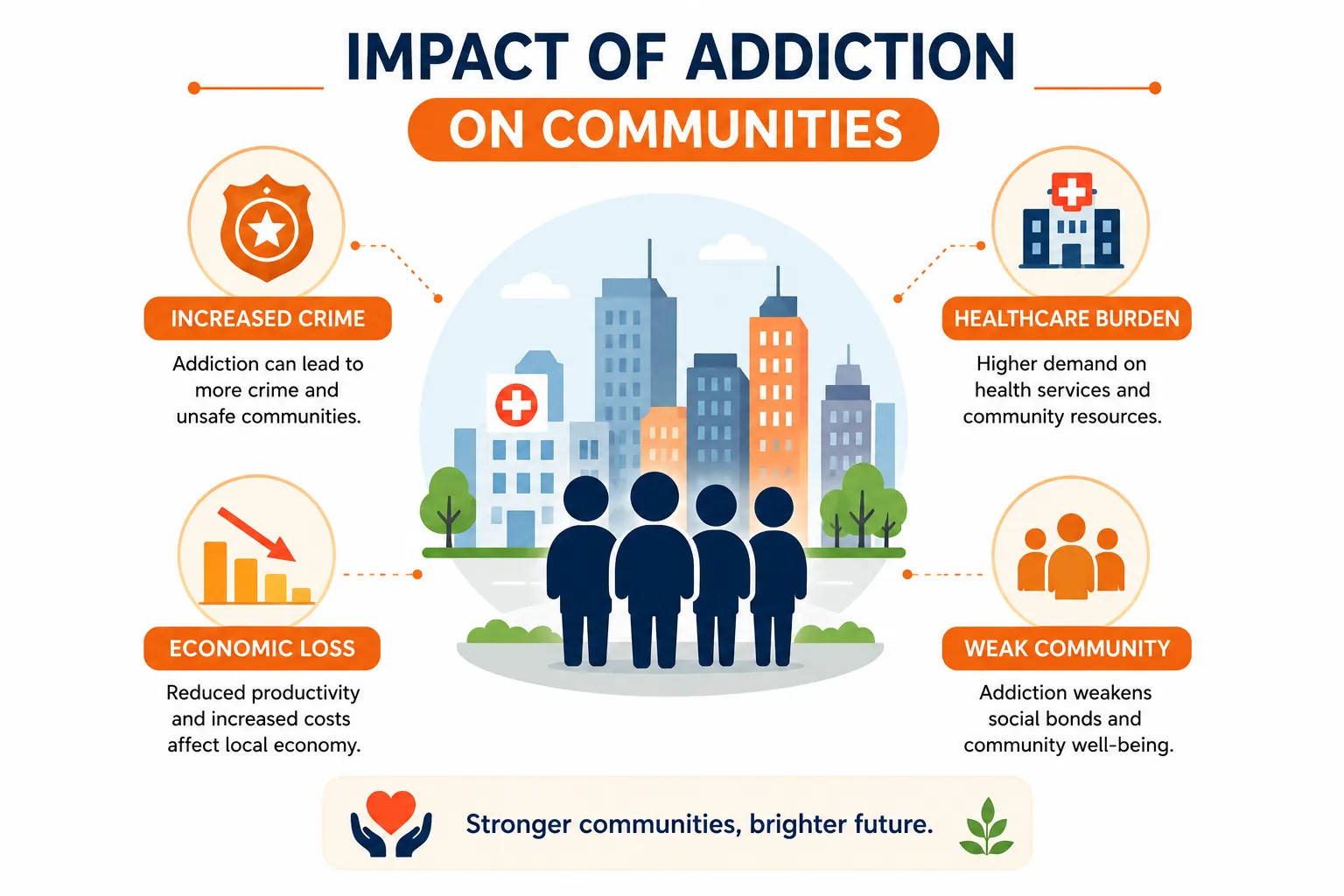
Key Effects
- Increased demand for hospitals and rehabilitation centres
- Rising mental health disorders
- Spread of infectious diseases
- Higher overdose deaths
- Need for long-term treatment
Long-Term Public Health Consequences
- Overburdened healthcare systems
- Increased government spending
- Lower community health standards
- Reduced healthcare capacity
Crime and Safety Impact
Key Effects
- Drug-related crimes
- Theft and robbery
- Unsafe public environments
- Pressure on law enforcement
- Violence and accidents
Long-Term Safety Consequences
- Reduced public safety
- Higher incarceration rates
- Increased fear in society
- Ongoing crime cycles
Economic Impact on Communities
Key Effects
- Reduced productivity
- Increased unemployment
- Higher public spending
- Loss of skilled workers
- Workplace inefficiency
Long-Term Economic Consequences
- Slower economic growth
- Financial burden on government
- Reduced national productivity
- Lower investment opportunities
Addiction has a serious and interconnected impact on individuals, families, and communities. It damages health, relationships, emotional stability, and economic systems. Understanding these effects is essential for prevention, treatment, and recovery strategies.
2. Societal Attitudes Towards Addiction and Their Implications
Societal attitudes towards addiction play a very important role in shaping how individuals experiencing addiction are treated, supported, and understood within a community. These attitudes are formed by cultural beliefs, awareness levels, education, and social norms. In many cases, societal perception can either support recovery or create barriers that make it more difficult for individuals to seek help.
Understanding these attitudes is essential for learners studying addiction because it highlights the importance of reducing stigma, promoting awareness, and improving access to treatment and rehabilitation services.
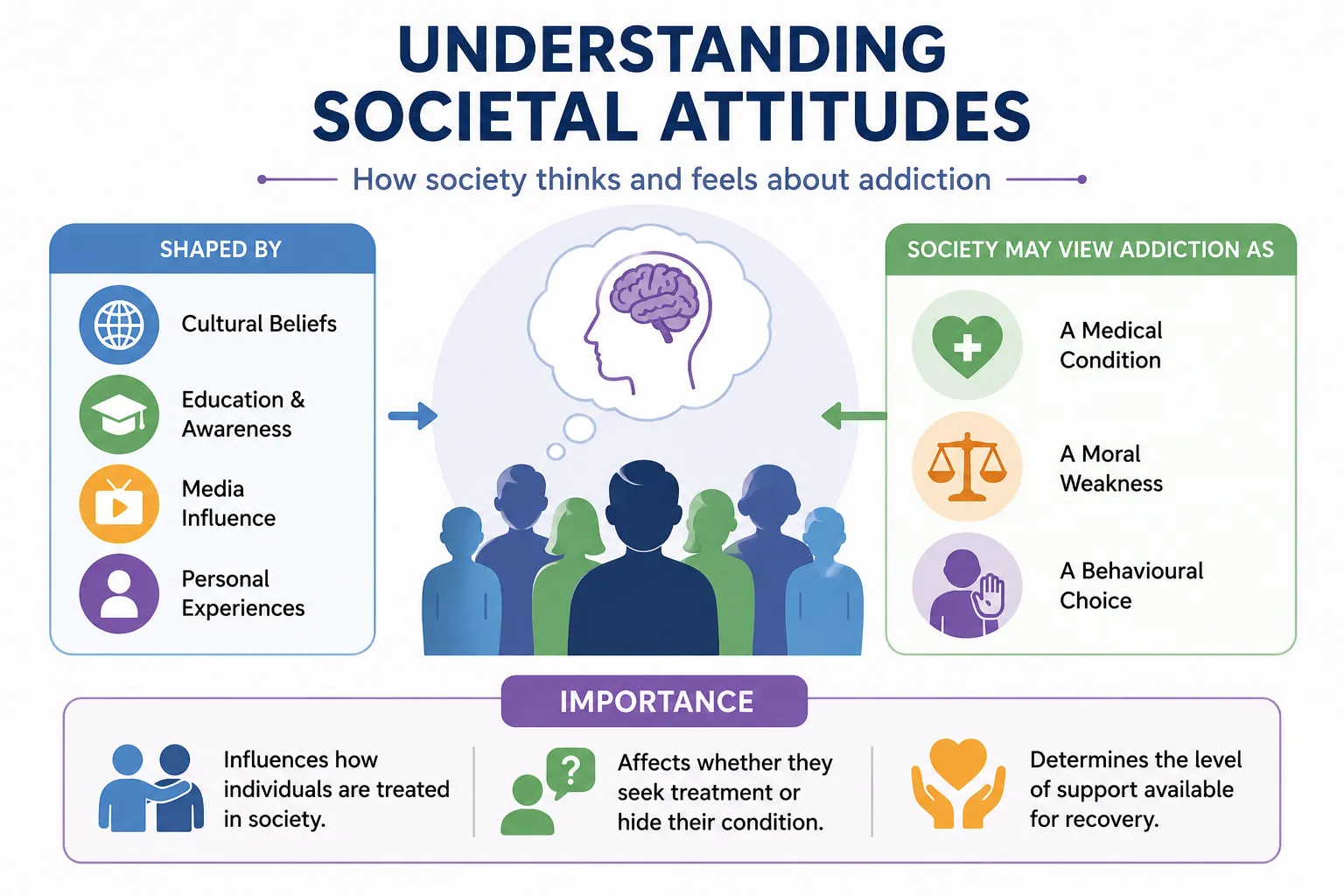 Explanation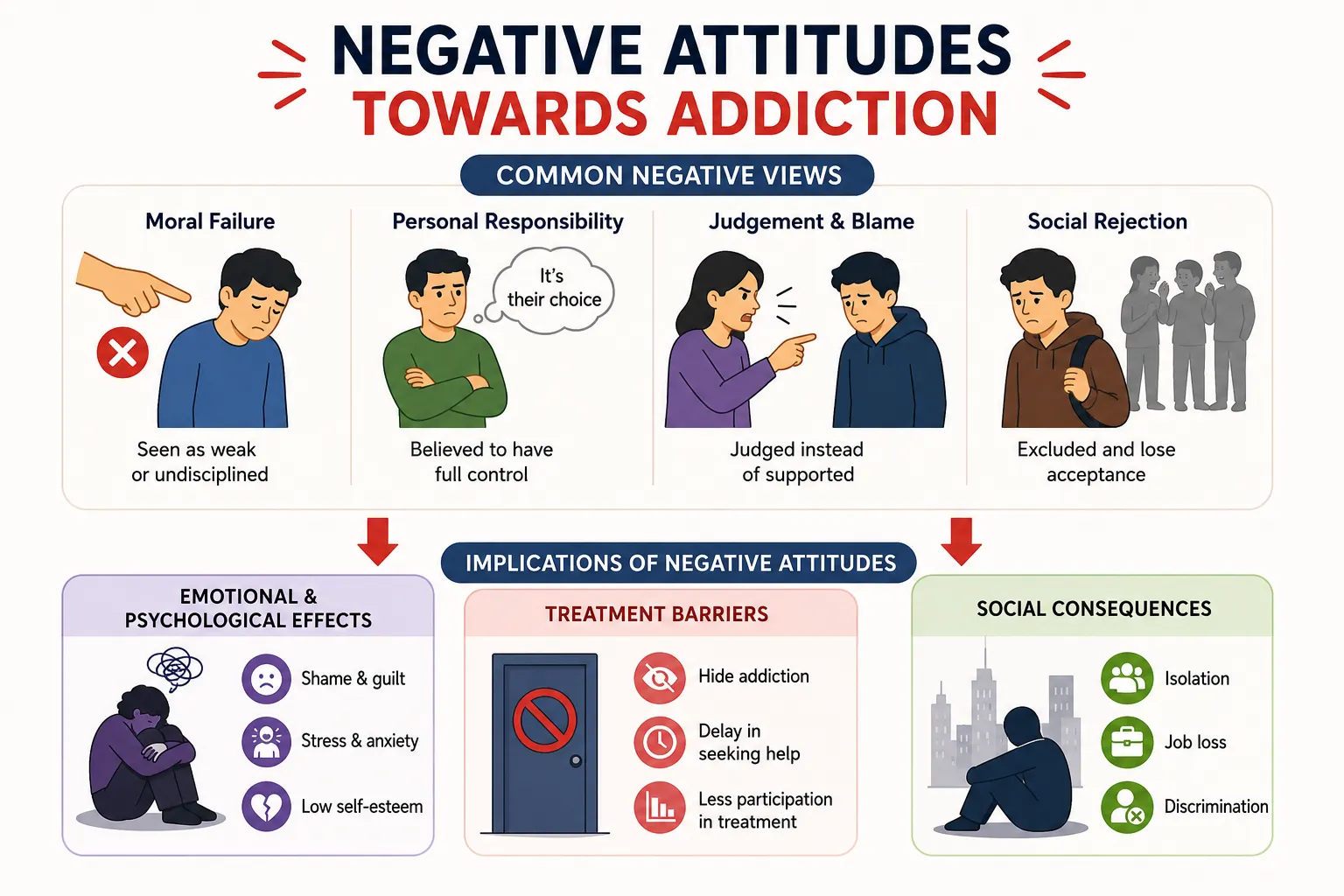
3. Positive and Supportive Attitudes
Positive and supportive attitudes towards addiction are essential for promoting recovery, reducing stigma, and improving overall mental health outcomes. These attitudes focus on understanding addiction as a medical condition and creating an environment where individuals feel safe to seek help without fear of judgment.
Key Features of Positive Attitudes
Addiction as a Health Condition
Meaning
- Addiction is recognised as a medical and psychological disorder
- It is not a moral weakness or personal failure
- It affects brain functioning, behaviour, and emotional control
Explanation
- Addiction causes changes in brain chemistry, especially in reward and motivation systems
- These changes affect decision-making and self-control
- Individuals require structured treatment, counselling, and medical support
- It is similar to other long-term health conditions such as diabetes or heart disease
Encouragement of Treatment
Encouraging individuals to seek professional help and medical support for addiction recovery.
Key Actions
Rehabilitation Referral
- Directing individuals to rehabilitation centres for structured treatment
- Providing detoxification and recovery programs
Counselling Support
- Psychological therapy sessions
- Emotional guidance and behavioural therapy
Medical Treatment
- Medication to manage withdrawal symptoms
- Supervised medical care during recovery
Community Programs
- Support groups and awareness initiatives
- Local recovery and rehabilitation networks
Emotional and Social Support
Meaning
Providing care, understanding, and acceptance to individuals recovering from addiction.
Support Systems
Family Support
- Emotional encouragement from family members
- Helping individuals stay motivated during recovery
Peer Support Groups
- Interaction with others facing similar challenges
- Sharing experiences and coping strategies
Community Support
- Social acceptance and reduced stigma
- Community-based rehabilitation assistance
Healthcare Providers
- Professional counselling and medical supervision
- Continuous monitoring of recovery progress
Awareness and Education
Meaning
Increasing public knowledge about addiction, its causes, effects, and recovery process.
Key Approaches
Awareness Campaigns
- Public campaigns to educate society
- Promoting understanding of addiction as a health issue
Media Education
- Responsible reporting about addiction
- Reducing stigma through awareness content
Workshops and Training
- Educational seminars in schools and communities
- Mental health awareness programs
Public Programs
- Government and NGO initiatives
- Community outreach programs
Benefits of Positive Attitudes
Positive attitudes create strong improvements in both individual recovery and societal well-being.
Increased Willingness to Seek Treatment
Effects
- Individuals feel safe and supported
- Fear of judgment is reduced
- Early intervention becomes more common
- Higher chances of successful recovery
Improved Recovery Outcomes
Effects
- Better rehabilitation success rates
- Reduced relapse risk
- Improved mental and physical health
- Stronger long-term recovery stability
Reduced Stigma and Discrimination
Effects
- Greater social acceptance of individuals with addiction
- Improved dignity and respect
- Reduced discrimination in workplaces and society
- More open discussion about addiction
Stronger Community Support Systems
Effects
- Communities actively support recovery efforts
- Better availability of treatment services
- Cooperation between healthcare and social services
- Stronger rehabilitation networks
Better Reintegration into Society
Effects
- Individuals return to work and daily life
- Improved confidence and independence
- Better social relationships
- Reduced chances of relapse due to support
Positive and supportive attitudes towards addiction are essential for effective recovery. They promote understanding, reduce stigma, encourage treatment, and help individuals rebuild their lives. By viewing addiction as a health condition and providing proper support, society can create a healthier and more inclusive environment for recovery.
Comparison of Negative vs Positive Attitudes
| Aspect | Negative Attitudes | Positive Attitudes |
|---|---|---|
| View | Moral failure | Medical condition |
| Response | Blame | Support |
| Treatment | Delayed | Early |
| Outcome | Worsening | Recovery |
Wider Impact of Positive Attitudes
- Better public health
- Reduced crime
- Strong mental health awareness
- Inclusive society
- Lower healthcare burden