Lexiton International
Lexiton International Welcome to Lexiton International
ICTQual Level 3 Award in Addictions, Substance Abuse and Mental Health Treatment
Section 1: Unit No 1: Introduction to Addictions and Substance Abuse
Section 2: Unit No 2: Mental Health Disorders and Co-occurring Conditions
Section 3: Unit No 3: Counseling Skills and Techniques
Lesson 1: Communication Skills Quiz No 1: Communication Skills Lesson 2: Empathy and Non-Judgmental Support Quiz No 2: Empathy and Non-Judgmental Support Lesson 3: Crisis Intervention Quiz No 3: Crisis Intervention
Section 4: Unit 4: Treatment Approaches and Interventions
Section 5: Unit No 5: Ethical and Legal Considerations in Addiction Counseling
Section 6: Unit 6: Role of Community Resources
Section 7: Unit 7: Personal and Professional Development
Lesson 8

Lesson 2: Empathy and Non-Judgmental Support

Empathy and non-judgmental support are fundamental components of effective counselling practice. They enable counsellors to establish meaningful therapeutic relationships, understand clients’ experiences from their perspective, and create an environment where individuals feel safe to explore personal challenges. In addiction and mental health settings, many clients experience feelings of shame, guilt, stigma, fear, or social isolation. These experiences can make it difficult for them to seek help, trust professionals, or engage openly in counselling. By demonstrating empathy and maintaining a non-judgmental attitude, counsellors can reduce these barriers and encourage meaningful participation in the therapeutic process.

Person-centered approaches further strengthen counselling effectiveness by placing the client at the centre of the helping relationship. Rather than directing or controlling the counselling process, counsellors work collaboratively with clients to understand their unique needs, strengths, concerns, and goals. This approach recognises that every individual possesses the capacity for growth, self-awareness, and positive change when provided with appropriate support and understanding. This lesson explores the principles and practical application of empathy, non-judgmental support, and person-centered counselling approaches in addiction and mental health settings.
1. Practice Empathy and Non-Judgmental Attitudes in Counseling Interactions

Empathy and non-judgmental support are fundamental skills in professional counselling practice. They form the foundation of effective therapeutic relationships and enable counsellors to provide meaningful support to individuals experiencing emotional, psychological, behavioural, or social challenges. In addiction and mental health settings, clients often seek support while experiencing feelings of shame, guilt, fear, anxiety, low self-esteem, or social isolation. Many have encountered criticism, discrimination, stigma, or misunderstanding from family members, employers, healthcare professionals, or society. These experiences can create barriers to trust and make it difficult for individuals to engage openly in counselling.

To overcome these barriers, counsellors must create a safe, respectful, and supportive environment where clients feel accepted and valued. Empathy enables counsellors to understand clients’ experiences from their perspective, while a non-judgmental attitude ensures that individuals are treated with dignity regardless of their circumstances, behaviours, beliefs, or personal history. Together, these skills strengthen therapeutic relationships, encourage open communication, and support positive counselling outcomes.

This lesson explores the principles of empathy and non-judgmental support, examines their importance within counselling interactions, and explains how these approaches can be applied effectively when working with individuals experiencing addiction and mental health challenges.

Understanding Empathy in Counselling

Empathy is the ability to understand and appreciate another person’s thoughts, feelings, experiences, and perspectives from their point of view. Within counselling practice, empathy involves entering the client’s emotional world without losing professional objectivity. It requires counsellors to recognise emotions, understand personal experiences, and communicate genuine understanding in a respectful and supportive manner.

Empathy is far more than simply listening to what a client says. It involves understanding the meaning behind words, recognising emotional cues, and responding in ways that help clients feel heard, valued, and understood. Effective empathy creates an atmosphere of trust and acceptance, allowing clients to discuss sensitive issues more openly and honestly.

A key feature of empathy is that it does not require agreement with a client’s behaviour or decisions. Instead, it focuses on understanding the emotions, experiences, and circumstances that influence those behaviours. For example, a counsellor working with a client experiencing substance misuse may not approve of harmful behaviours associated with addiction. However, the counsellor can still understand the trauma, stress, grief, or social pressures that contributed to those actions.

Empathy is particularly important because it helps counsellors:

  • Build strong therapeutic relationships.
  • Demonstrate acceptance and respect.
  • Encourage emotional expression.
  • Strengthen trust and rapport.
  • Promote self-awareness and insight.
  • Support personal growth and recovery.
  • Reduce feelings of isolation and shame.

When clients feel genuinely understood, they are more likely to participate actively in counselling and engage positively in the therapeutic process.

The Importance of Empathy in Counselling Practice

Empathy is widely recognised as one of the most powerful therapeutic tools available to counsellors. Research consistently demonstrates that empathy contributes significantly to successful counselling outcomes by improving communication, strengthening therapeutic relationships, and encouraging emotional exploration.

Clients entering counselling often feel misunderstood or judged by others. Some may have spent years hiding emotions or struggling to discuss personal difficulties. An empathetic counselling approach creates an environment where individuals feel safe enough to explore these concerns without fear of criticism.

The benefits of empathy include:

  • Strengthening trust and rapport.
  • Encouraging emotional disclosure.
  • Supporting self-awareness and reflection.
  • Enhancing communication and understanding.
  • Reducing feelings of loneliness and isolation.
  • Improving treatment engagement.
  • Supporting emotional healing and recovery.
  • Promoting long-term wellbeing.

In addiction and mental health counselling, empathy is particularly valuable because many clients experience stigma, shame, guilt, and low self-esteem. An empathetic response helps reduce these barriers and encourages clients to participate more actively in their treatment and recovery journey.

Workplace Relevance of Empathy

Empathy is recognised internationally as a core competency across counselling, healthcare, social care, education, community services, and addiction recovery programmes.

Professionals who demonstrate empathy are more likely to:

  • Develop positive relationships with service users.
  • Improve client satisfaction.
  • Increase engagement in support services.
  • Promote collaborative working relationships.
  • Achieve more effective therapeutic outcomes.

For this reason, empathy remains one of the most sought-after interpersonal skills within helping professions.

Empathy, Sympathy, and Compassion

Although empathy, sympathy, and compassion are often discussed together, they represent different approaches to understanding and responding to another person’s difficulties. Understanding these distinctions is important for professional counselling practice.

Empathy, Sympathy, and Compassion

ConceptMeaningProfessional Application
EmpathyUnderstanding another person’s feelings and experiences from their perspectiveBuilds trust, understanding, and therapeutic connection
SympathyFeeling sorry for another person’s difficultiesMay unintentionally create emotional distance
CompassionUnderstanding suffering and wanting to help relieve itEncourages supportive action and practical assistance

Empathy is generally regarded as the most effective counselling approach because it promotes understanding while maintaining client autonomy and empowerment.

Comparison Example

Consider a client who has relapsed after several months of recovery from alcohol dependency.

Sympathetic Response:

“I feel sorry that this happened to you.”

Empathetic Response:

“It sounds like you’re feeling disappointed and frustrated after working so hard towards recovery.”

Compassionate Response:

“I understand how difficult this is. Let’s explore what happened and identify ways to support your recovery moving forward.”

This example demonstrates that empathy focuses on understanding the client’s experience, while compassion combines understanding with practical support.

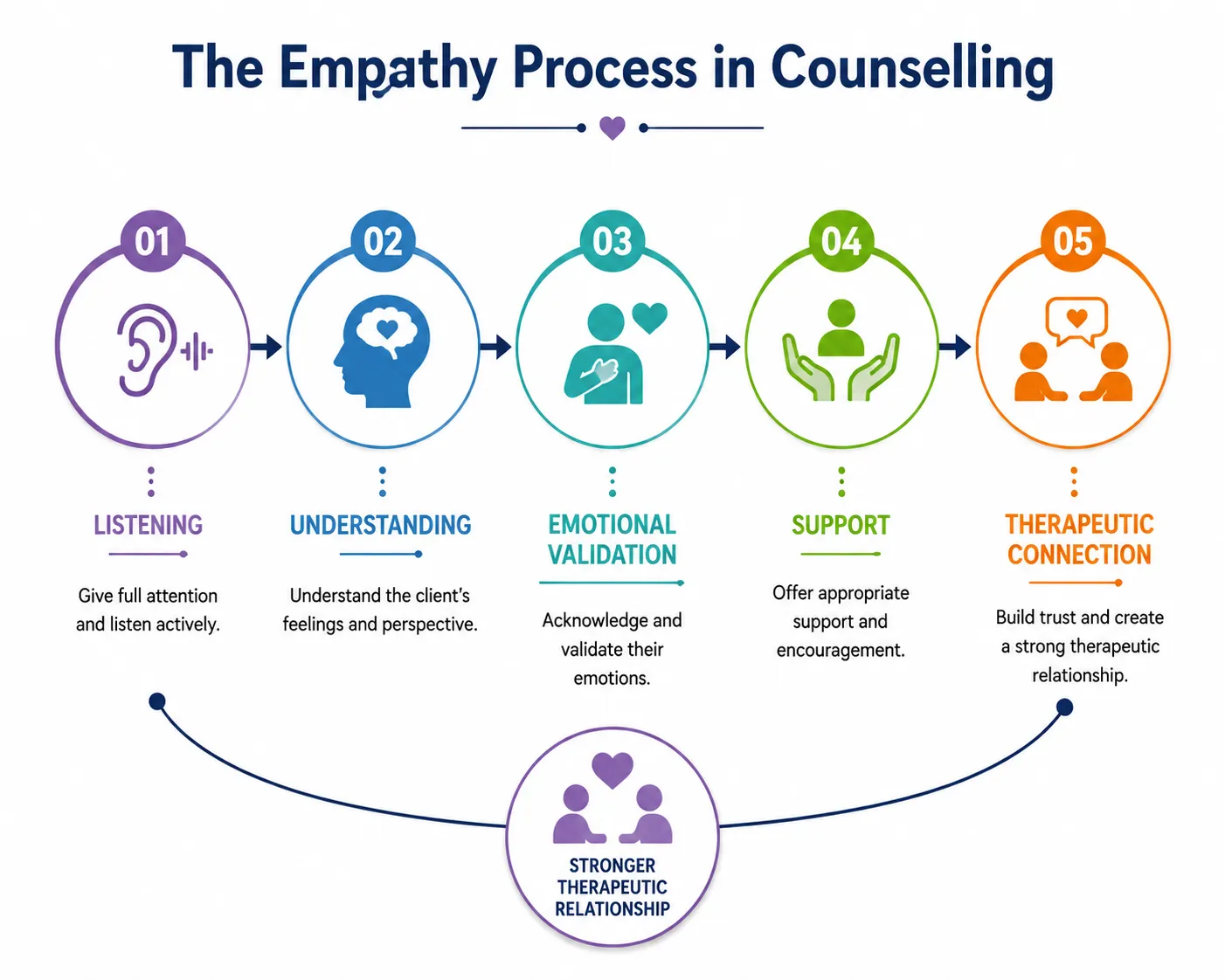
The empathy process in counselling
Demonstrating Empathy in Counselling Interactions

Empathy must be actively demonstrated throughout counselling interactions. Clients need to see and feel that their experiences and emotions are being understood. Effective empathy is communicated through both verbal and non-verbal behaviours.

Active Listening

Active listening is the foundation of empathetic communication. It involves giving full attention to the client and demonstrating genuine interest in what is being communicated.

Effective active listening includes:

  • Maintaining appropriate eye contact.
  • Minimising distractions.
  • Avoiding interruptions.
  • Observing body language.
  • Listening for emotional content.
  • Using verbal encouragers such as “I understand” or “Please continue.”

Active listening communicates respect and encourages clients to continue sharing information.

Reflective Responses

Reflective responses involve identifying and communicating the emotions expressed by the client.

Example:

Client:
“I feel like I’ve failed everyone around me.”

Counsellor:
“It sounds as though you’re carrying a great deal of disappointment and guilt.”

Reflective responses help clients feel understood and encourage deeper emotional exploration.

Emotional Validation

Validation acknowledges that a client’s feelings are understandable given their experiences and circumstances.

Examples include:

  • “Given everything you’ve been dealing with, it’s understandable that you feel overwhelmed.”
  • “Many people in a similar situation would feel frustrated.”

Validation does not mean agreement. Instead, it communicates understanding and acceptance.

Appropriate Use of Silence

Silence can be a powerful counselling technique. It provides clients with time to think, process emotions, and formulate responses.

Appropriate use of silence demonstrates:

  • Patience.
  • Respect.
  • Emotional presence.
  • Willingness to listen.

Skilled counsellors understand that silence can often be as meaningful as spoken communication.

Understanding Non-Judgmental Support

Non-judgmental support involves accepting clients without criticism, prejudice, assumptions, or negative labelling. It requires counsellors to respect individuals regardless of their personal history, beliefs, behaviours, addiction issues, mental health conditions, lifestyle choices, or life circumstances.

Many individuals seeking counselling have experienced judgement from family members, employers, healthcare professionals, and society. Such experiences can create barriers to trust, engagement, and recovery.

A non-judgmental approach helps clients feel:

  • Accepted and respected.
  • Safe discussing sensitive concerns.
  • Valued as individuals.
  • Comfortable expressing emotions.
  • More willing to engage in counselling.

Counsellors who practise non-judgmental support focus on understanding rather than blaming, supporting rather than criticising, and exploring rather than condemning.

The Impact of Judgment in Counselling

Judgmental attitudes can significantly damage counselling relationships and reduce the effectiveness of therapeutic interventions.

Potential consequences include:

  • Reduced trust and rapport.
  • Increased defensiveness.
  • Limited disclosure of important information.
  • Reduced participation in counselling.
  • Resistance to treatment.
  • Premature termination of support services.

Clients who feel judged are less likely to discuss sensitive concerns honestly, making it more difficult to identify needs and provide effective support.

Judgmental and Non-Judgmental Responses

Judgmental ResponseNon-Judgmental Response
“You should know better.”“Can you help me understand what happened?”
Focuses on blameFocuses on understanding
Creates defensivenessEncourages openness
Reduces trustBuilds trust
Discourages engagementPromotes participation

This comparison highlights how communication style can directly influence client engagement and counselling outcomes.

Recognising Personal Biases and Assumptions

Every individual develops beliefs, values, attitudes, and assumptions based on personal experiences and cultural influences. While these perspectives are normal, counsellors must recognise how personal biases may affect professional practice.

Sources of bias may include:

  • Cultural background.
  • Religious beliefs.
  • Personal experiences.
  • Family values.
  • Social attitudes.
  • Media influences.
  • Stereotypes and misconceptions.

Failure to recognise bias can affect objectivity and reduce the quality of support provided to clients.

Professional counsellors therefore engage in:

  • Reflective practice.
  • Professional supervision.
  • Continuous learning.
  • Cultural competence development.
  • Self-awareness exercises.

These activities help ensure that personal opinions do not interfere with client-centred counselling.

Maintaining a Non-Judgmental Attitude

Maintaining a non-judgmental attitude requires ongoing commitment and professional self-awareness. Counsellors must continuously evaluate their attitudes and challenge assumptions that may influence interactions with clients.

Effective strategies include:

  • Practising active listening.
  • Reflecting on personal beliefs and values.
  • Respecting cultural diversity.
  • Using inclusive language.
  • Focusing on client strengths.
  • Maintaining professional boundaries.
  • Demonstrating empathy consistently.
  • Seeking supervision and support.

By applying these strategies, counsellors create an environment where clients feel respected, accepted, and empowered.

Challenges to Empathy and Non-Judgmental Practice

Although empathy and acceptance are essential counselling skills, maintaining them consistently can be challenging, particularly in emotionally demanding environments.

Common challenges include:

Emotional Fatigue

Repeated exposure to emotionally difficult situations can affect a counsellor’s ability to remain fully engaged.

Compassion Fatigue

Providing ongoing support to individuals experiencing distress may lead to emotional exhaustion.

Countertransference

Personal experiences and emotions may influence a counsellor’s reactions to certain clients or situations.

Personal Value Conflicts

Counsellors may occasionally encounter clients whose beliefs or behaviours differ significantly from their own values.

High Caseloads

Heavy workloads can reduce the emotional energy available for effective therapeutic engagement.

Exposure to Trauma

Listening to traumatic experiences can affect counsellors if appropriate support and supervision are not available.

To manage these challenges, counsellors utilise:

  • Clinical supervision.
  • Reflective practice.
  • Continuing professional development.
  • Peer support.
  • Self-care strategies.
  • Healthy work-life balance.

Case Study: Using Empathy in Addiction Counselling

Sarah seeks counselling following several unsuccessful attempts to stop drinking. She feels ashamed of her addiction and believes that others view her as irresponsible and incapable of change. Previous experiences with healthcare professionals have left her feeling criticised and misunderstood.

Rather than focusing solely on Sarah’s alcohol use, the counsellor adopts an empathetic and non-judgmental approach. Through active listening, reflective responses, emotional validation, and patient exploration of her experiences, the counsellor seeks to understand the factors contributing to her addiction.

During counselling sessions, Sarah begins discussing the stress, family conflict, grief, and emotional difficulties that have influenced her drinking behaviour. The counsellor acknowledges her feelings without judgement and helps her recognise the challenges she has been facing.

As trust develops, Sarah becomes increasingly willing to discuss sensitive issues and participate in treatment planning. Feeling understood rather than criticised improves her confidence and motivation to pursue recovery. She begins setting realistic goals and engaging more actively in support services.

This case demonstrates how empathy and non-judgmental support can strengthen therapeutic relationships, encourage emotional disclosure, and promote recovery-focused engagement.

Empathy and non-judgmental support are essential components of effective counselling practice and play a critical role in building therapeutic relationships. Empathy enables counsellors to understand clients’ experiences, emotions, and perspectives while maintaining professional objectivity. Through active listening, reflection, emotional validation, and respectful communication, counsellors can create supportive environments where clients feel heard, understood, and valued.

A non-judgmental attitude further strengthens counselling effectiveness by reducing barriers to engagement and encouraging openness. Clients who feel accepted and respected are more likely to discuss sensitive concerns honestly, participate actively in counselling, and commit to positive change. By combining empathy with non-judgmental practice, counsellors can establish meaningful therapeutic relationships that promote trust, emotional wellbeing, personal growth, and long-term recovery.

2. Apply Person-Centered Approaches to Understand and Address Clients’ Needs and Concerns

Person-centered counselling is one of the most influential and widely applied approaches in modern counselling practice. It focuses on the belief that every individual possesses the capacity for growth, self-awareness, and positive change when provided with the right environment and support. Unlike directive approaches that place the counsellor in the role of an expert who provides solutions, person-centered counselling views the client as the expert on their own life experiences. The counsellor’s role is to facilitate self-discovery, encourage reflection, and create conditions that enable clients to identify their own solutions and make informed decisions.

This approach is particularly relevant in addiction recovery, mental health support, community services, healthcare, education, and social care settings. Individuals facing emotional distress, addiction, trauma, anxiety, depression, or life challenges often benefit from being treated as active participants in their recovery rather than passive recipients of advice. By promoting empathy, acceptance, collaboration, and respect, person-centered approaches help clients develop confidence, resilience, and greater control over their lives.

Understanding and applying person-centered principles enables counsellors to address clients’ needs more effectively, strengthen therapeutic relationships, and support long-term personal development and wellbeing.

Introduction to Person-Centered Counselling

Person-centered counselling was developed by the American psychologist Carl Rogers and remains one of the most influential approaches in counselling and psychotherapy. Rogers believed that individuals have an innate tendency towards growth and self-improvement, often referred to as self-actualisation. According to this theory, people can move towards healthier and more fulfilling lives when they are provided with acceptance, understanding, and genuine support.

Rather than directing conversations or prescribing solutions, person-centered counsellors create an environment that encourages clients to explore their thoughts, feelings, behaviours, and experiences. This approach respects the client’s ability to understand their own circumstances and identify meaningful solutions.

The person-centered model is based on several important assumptions:

  • Every individual has inherent worth and value.
  • People possess the capacity for growth and positive change.
  • Clients are experts on their own experiences.
  • Personal insight can lead to meaningful behavioural change.
  • Supportive relationships facilitate self-discovery.
  • Acceptance and understanding promote emotional wellbeing.

In practical counselling settings, person-centered practice helps clients feel empowered rather than controlled, creating opportunities for deeper engagement and more sustainable outcomes.

Key Characteristics of Person-Centered Counselling

Person-centered counselling is characterised by several distinctive features:

  • Client-led exploration of issues and concerns.
  • Collaborative therapeutic relationships.
  • Respect for client autonomy and decision-making.
  • Emphasis on personal strengths and capabilities.
  • Non-judgmental communication.
  • Focus on emotional understanding and self-awareness.
  • Encouragement of self-reflection and personal responsibility.

These characteristics make the approach particularly effective when working with clients experiencing addiction, mental health difficulties, low self-esteem, trauma, or significant life transitions.

Core Principles of Person-Centered Practice

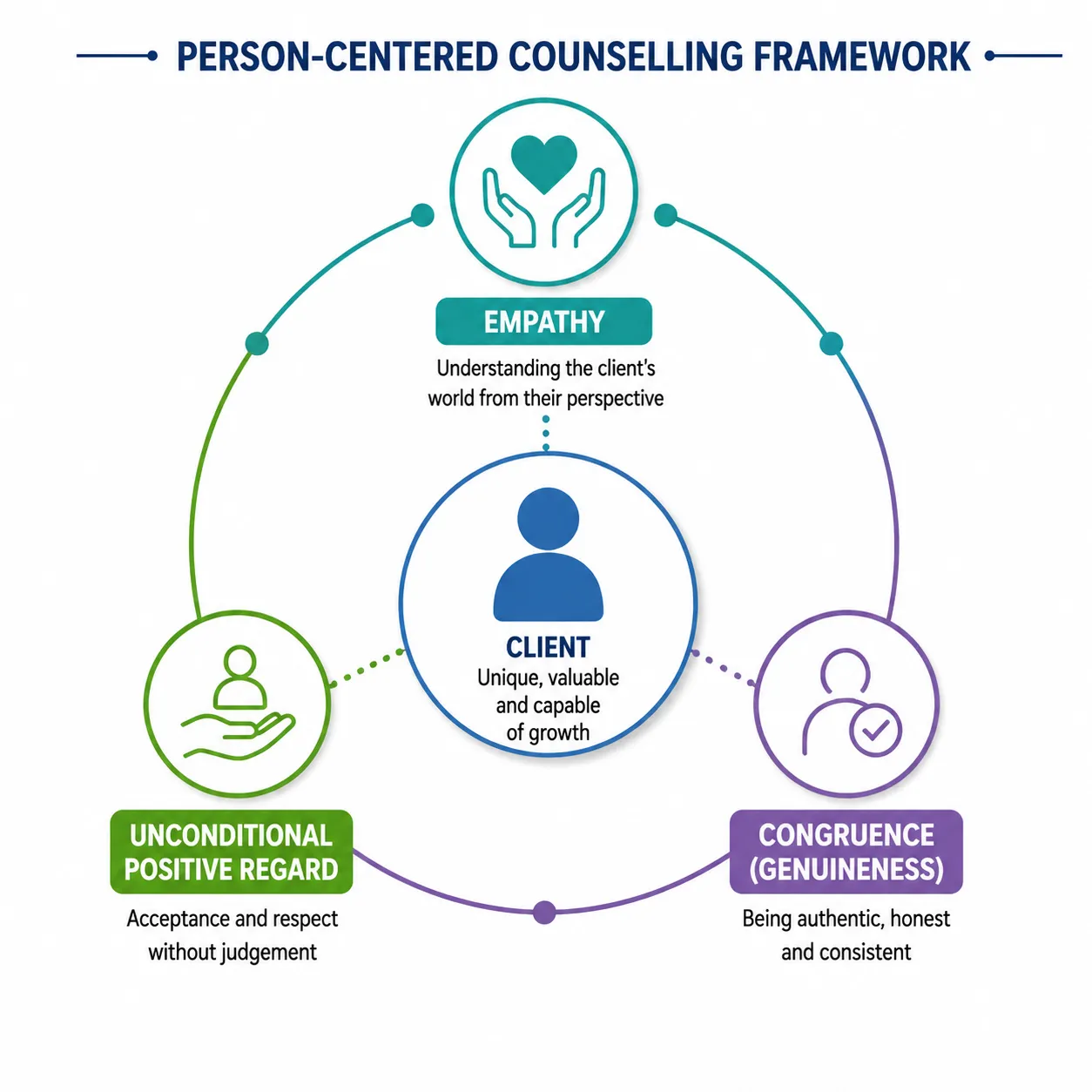
The effectiveness of person-centered counselling is built upon three core conditions identified by Carl Rogers. These conditions create an environment where clients feel safe, respected, and supported.

Empathy

Empathy involves understanding a client’s experiences, emotions, and perspectives from their point of view. It requires counsellors to listen attentively, recognise emotional experiences, and communicate genuine understanding.

An empathetic counsellor:

  • Listens without interrupting.
  • Acknowledges emotions accurately.
  • Demonstrates genuine interest.
  • Reflects feelings and experiences.
  • Creates emotional safety.

Empathy helps clients feel understood and encourages open communication.

Unconditional Positive Regard

Unconditional positive regard refers to accepting clients without judgement regardless of their thoughts, emotions, behaviours, or life circumstances.

This principle does not require counsellors to approve of harmful behaviour. Instead, it means recognising the value and dignity of the individual while supporting positive change.

Unconditional positive regard involves:

  • Accepting clients as individuals.
  • Respecting differences and diversity.
  • Avoiding criticism and blame.
  • Demonstrating genuine care and respect.
  • Supporting client self-worth.

When clients feel accepted, they are more likely to explore difficult issues honestly and openly.

Congruence (Genuineness)

Congruence refers to authenticity and honesty within the therapeutic relationship. Counsellors remain genuine rather than hiding behind a professional façade.

Congruent counsellors:

  • Communicate honestly.
  • Behave consistently.
  • Demonstrate authenticity.
  • Build credibility through transparency.
  • Develop trusting relationships.

Clients often respond positively when counsellors are genuine because it helps create a more authentic therapeutic connection.

Core Conditions of Person-Centered Counselling

Core ConditionDescriptionImpact on Clients
EmpathyUnderstanding client experiences and emotionsEncourages trust and openness
Unconditional Positive RegardAcceptance without judgementPromotes confidence and self-worth
CongruenceAuthenticity and honestyBuilds credibility and trust

Person centered counselling framework

Understanding Client Needs and Concerns

A central feature of person-centered practice is recognising that every client is unique. Counsellors must therefore avoid making assumptions and instead seek to understand each individual’s experiences, challenges, strengths, and aspirations.

Understanding client needs involves exploring multiple dimensions of a person’s life.

Emotional Needs

Clients may seek support because they are experiencing:

  • Anxiety.
  • Sadness.
  • Grief.
  • Anger.
  • Loneliness.
  • Fear.
  • Low self-esteem.

Understanding emotional needs helps counsellors provide appropriate support and validation.

Psychological Concerns

Psychological concerns may include:

  • Depression.
  • Trauma.
  • Stress.
  • Addiction.
  • Relationship difficulties.
  • Self-confidence issues.

Recognising these concerns enables counsellors to tailor support to individual circumstances.

Social Influences

Social environments can significantly influence wellbeing.

Examples include:

  • Family relationships.
  • Employment challenges.
  • Financial difficulties.
  • Peer influences.
  • Social isolation.
  • Community support networks.

Understanding these influences provides a broader perspective on client experiences.

Personal Strengths

Person-centered counselling focuses not only on problems but also on strengths.

Potential strengths may include:

  • Resilience.
  • Determination.
  • Creativity.
  • Problem-solving abilities.
  • Supportive relationships.
  • Previous achievements.

Identifying strengths helps clients recognise their capabilities and resources.

Recovery Goals and Aspirations

Counsellors collaborate with clients to explore:

  • Personal goals.
  • Recovery objectives.
  • Lifestyle changes.
  • Educational aspirations.
  • Career ambitions.
  • Relationship goals.

Understanding client aspirations supports meaningful and achievable planning.

Promoting Client Autonomy and Self-Determination

Autonomy refers to an individual’s right and ability to make decisions about their own life. Self-determination involves taking ownership of choices, actions, and personal development.

Person-centered counselling strongly emphasises client autonomy because lasting change is more likely when individuals actively participate in decision-making.

Counsellors support autonomy by:

  • Encouraging self-reflection.
  • Exploring options collaboratively.
  • Respecting client choices.
  • Providing information rather than instructions.
  • Supporting informed decision-making.
  • Encouraging responsibility for personal goals.

Practical Example

A client experiencing alcohol dependency may ask the counsellor whether they should attend a residential treatment programme.

A directive approach might involve telling the client what to do.

A person-centered approach would involve:

  • Exploring the client’s concerns.
  • Discussing available options.
  • Identifying advantages and disadvantages.
  • Encouraging personal reflection.
  • Supporting independent decision-making.

This process empowers the client to make informed choices that align with their values and circumstances.

Applying Person-Centered Approaches in Addiction Counselling

Addiction counselling often involves helping individuals address complex emotional, behavioural, social, and psychological issues. Person-centered approaches are particularly effective because they reduce resistance and encourage engagement.

Key applications include:

Exploring Motivation for Change

Rather than imposing goals, counsellors help clients explore their own reasons for seeking recovery.

Questions may include:

  • What would you like to change?
  • How is addiction affecting your life?
  • What are your hopes for the future?

Identifying Strengths and Resources

Clients are encouraged to recognise:

  • Personal achievements.
  • Existing coping strategies.
  • Supportive relationships.
  • Recovery successes.

Developing Recovery Goals

Recovery goals should be:

  • Realistic.
  • Meaningful.
  • Achievable.
  • Client-led.

Building Confidence and Resilience

Counsellors help clients recognise their ability to overcome challenges and maintain progress.

This approach encourages ownership of recovery and reduces dependence on external direction.

Applying Person-Centered Approaches in Mental Health Counselling

Mental health counselling benefits significantly from person-centered approaches because they promote understanding, acceptance, and collaboration.

Clients experiencing mental health difficulties often need opportunities to explore emotions and experiences without fear of judgement.

Person-centered counselling encourages:

  • Emotional expression.
  • Self-awareness.
  • Personal growth.
  • Increased confidence.
  • Development of coping strategies.
  • Greater self-acceptance.

Practical Scenario

A client experiencing anxiety may believe they are incapable of handling stressful situations.

Rather than challenging this belief directly, a person-centered counsellor encourages exploration by asking:

  • What experiences have contributed to these feelings?
  • Have there been times when you successfully managed stress?
  • What personal strengths helped you during those situations?

This approach encourages insight and empowers the client to recognise existing abilities.

Benefits of Person-Centered Approaches

Person-centered counselling offers numerous benefits for clients and practitioners.

Benefits include:

  • Stronger therapeutic relationships.
  • Increased client engagement.
  • Improved self-awareness.
  • Greater confidence and self-esteem.
  • Enhanced motivation for change.
  • Increased autonomy and independence.
  • Better long-term outcomes.
  • Reduced resistance to treatment.

These benefits explain why person-centered principles are widely used across counselling, healthcare, education, social care, and addiction recovery services.

Comparison: Directive and Person-Centered Approaches

Different counselling approaches vary in the level of control exercised by the practitioner.

Directive and Person-Centered Counselling Approaches

Directive ApproachPerson-Centered Approach
Counsellor leads decisionsClient participates actively
Focus on expert adviceFocus on collaboration
Structured guidanceFlexible exploration
Practitioner-driven goalsClient-driven goals
Less emphasis on autonomyStrong emphasis on autonomy
Solutions provided by practitionerSolutions identified by client

This comparison highlights how person-centered practice places greater emphasis on client empowerment and participation.

Case Study: Person-Centered Support in Mental Health Counselling

David seeks counselling for anxiety and low self-esteem. He frequently doubts his abilities and relies heavily on others to make decisions on his behalf. This dependency affects his confidence and contributes to ongoing emotional distress.

Rather than offering immediate solutions or directing his choices, the counsellor adopts a person-centered approach. Through active listening, empathy, open-ended questioning, and reflective responses, David is encouraged to explore his thoughts, feelings, and experiences.

During sessions, the counsellor helps David identify situations where he has successfully managed challenges in the past. Attention is given to recognising strengths, achievements, and coping abilities that David had previously overlooked.

As counselling progresses, David begins making decisions more independently and develops greater confidence in his abilities. His self-awareness increases, and he becomes more willing to take responsibility for personal goals and future plans.

This case demonstrates how person-centered counselling empowers clients to discover their own strengths and solutions rather than relying solely on external advice.

Person-centered counselling is a highly effective and widely respected approach that places the client at the centre of the therapeutic process. By recognising each individual’s capacity for growth, self-awareness, and positive change, counsellors create supportive environments where clients can explore experiences, identify strengths, and develop meaningful solutions to personal challenges.

The core conditions of empathy, unconditional positive regard, and congruence form the foundation of successful person-centered practice. These principles promote trust, acceptance, authenticity, and collaboration while supporting emotional wellbeing and personal development. Through understanding client needs, encouraging autonomy, and empowering decision-making, counsellors help individuals take ownership of their recovery and future goals.

In addiction recovery, mental health support, healthcare, social care, and community services, person-centered approaches continue to play a vital role in promoting engagement, resilience, confidence, and long-term positive outcomes. By applying these principles consistently, counsellors can build meaningful therapeutic relationships that support lasting personal growth and improved quality of life.

Conclusion

Empathy and non-judgmental support form the foundation of high-quality counselling practice, enabling professionals to build safe, respectful, and supportive therapeutic environments. Through active listening, emotional validation, and acceptance, counsellors help clients feel genuinely understood and valued, which strengthens trust and encourages open communication. These skills are particularly important when working with individuals experiencing addiction, mental health challenges, or emotional distress, where fear of judgement or stigma may otherwise prevent engagement.

Person-centered approaches further enhance counselling effectiveness by placing the client at the centre of the therapeutic process. By applying core principles such as empathy, unconditional positive regard, and congruence, counsellors are able to develop a deeper understanding of clients’ unique experiences, needs, and concerns. This approach promotes autonomy, builds resilience, and supports clients in identifying their own strengths and solutions.

Overall, the integration of empathy, non-judgmental attitudes, and person-centered practice leads to stronger therapeutic relationships and more meaningful counselling outcomes. These approaches not only support immediate emotional wellbeing but also contribute to long-term personal growth, recovery, and sustained positive change.

W:H: