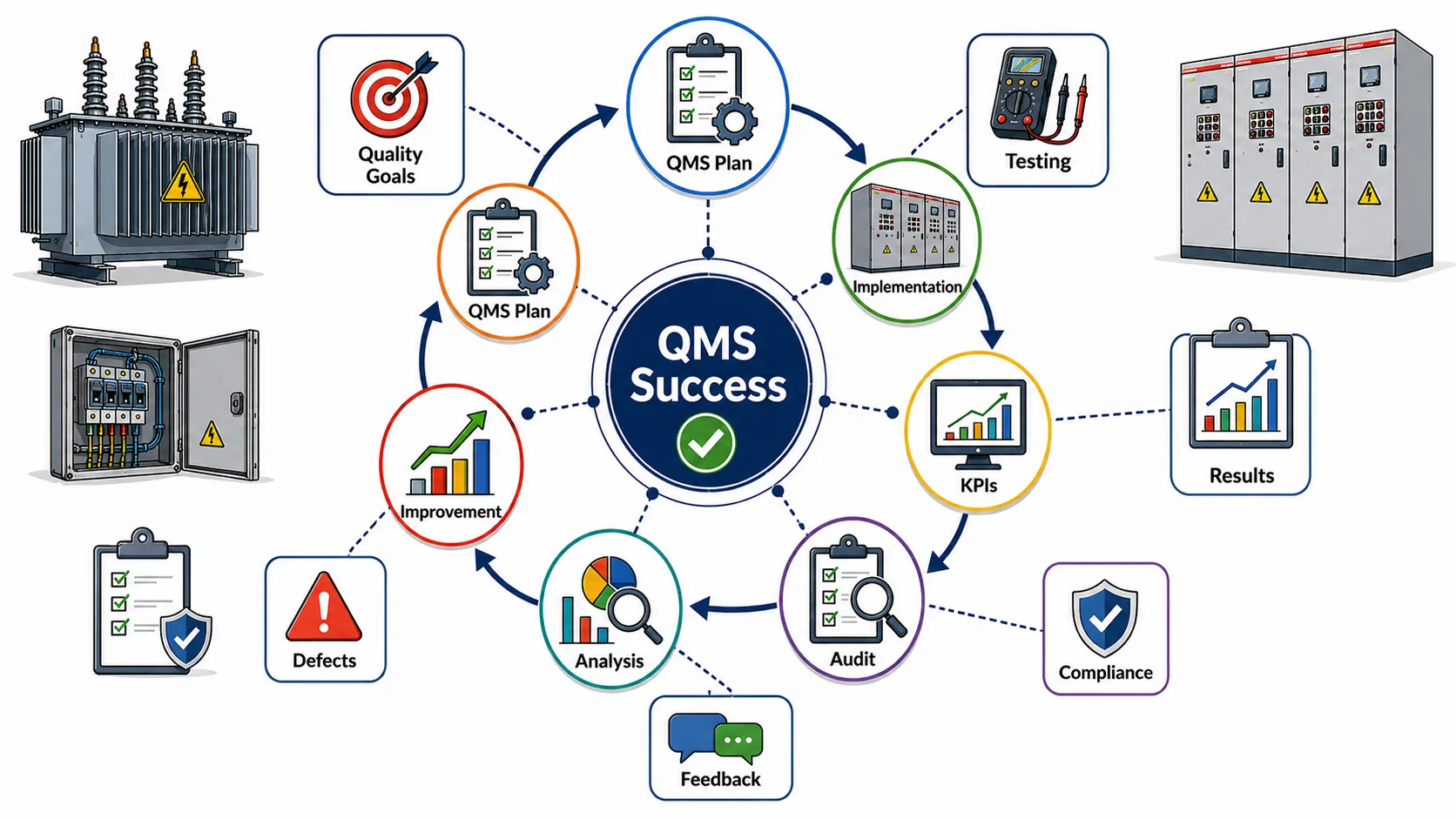
Lesson 2: Design and implement advanced quality management systems for electrical projects.
International quality standards are fundamental to achieving reliability, safety, consistency, and performance excellence within modern electrical engineering projects. As electrical systems become increasingly complex across construction, power generation, renewable energy, manufacturing, utilities, and industrial infrastructure sectors, organisations require structured approaches to manage quality, control risks, and ensure compliance with technical and regulatory requirements. Standards such as ISO 9001 Quality Management Systems provide a globally recognised framework that enables organisations to establish effective quality processes, improve operational efficiency, enhance customer satisfaction, and support continual improvement throughout the entire project lifecycle.
This lesson critically evaluates the principles, requirements, and practical application of international quality standards within the electrical engineering sector. It examines how quality management systems influence key project activities, including engineering design, procurement, installation, inspection, testing, commissioning, and maintenance. Learners will explore the importance of process-based management, risk-based thinking, evidence-based decision-making, customer focus, leadership commitment, and continual improvement in developing effective quality management systems for electrical projects.
The lesson also investigates how organisations apply international quality standards to address real-world engineering challenges, improve project performance, reduce defects, strengthen supplier control, and maintain accurate documentation. Through practical examples and workplace applications, learners will develop a deeper understanding of how quality management frameworks support successful electrical project delivery, regulatory compliance, and long-term asset reliability in an increasingly competitive global engineering environment
1. Formulate a Comprehensive Plan for an Advanced Quality Management System (QMS) Tailored to a Specific Electrical Project
Introduction to Advanced Quality Management Systems in Electrical Projects
A comprehensive Quality Management System (QMS) is a fundamental requirement for achieving consistent quality, regulatory compliance, operational efficiency, and long-term reliability in complex electrical engineering projects. Modern electrical projects involve multiple technical disciplines, international suppliers, specialist contractors, advanced equipment, and strict performance requirements. Without a structured quality management framework, organisations may experience design inconsistencies, installation defects, testing failures, documentation errors, project delays, and increased operational risks.
An advanced QMS provides a systematic approach for planning, controlling, monitoring, and improving all activities that influence project quality. Unlike traditional inspection-focused approaches, an advanced QMS integrates quality principles into every stage of the project lifecycle, including feasibility studies, engineering design, procurement, manufacturing, installation, inspection, testing, commissioning, and handover. The objective is not only to identify defects but also to prevent failures through effective planning, risk management, process control, and continual improvement.
For electrical engineering projects such as high-voltage substations, renewable energy facilities, industrial power systems, smart grid developments, and large commercial electrical installations, the QMS must be specifically tailored according to project complexity, stakeholder expectations, technical specifications, regulatory requirements, and operational objectives. A well-designed QMS ensures that quality requirements are clearly defined, responsibilities are assigned, risks are controlled, and performance is continuously evaluated throughout the project lifecycle.
Understanding the Concept of a Project-Specific Quality Management System
Definition of an Advanced QMS
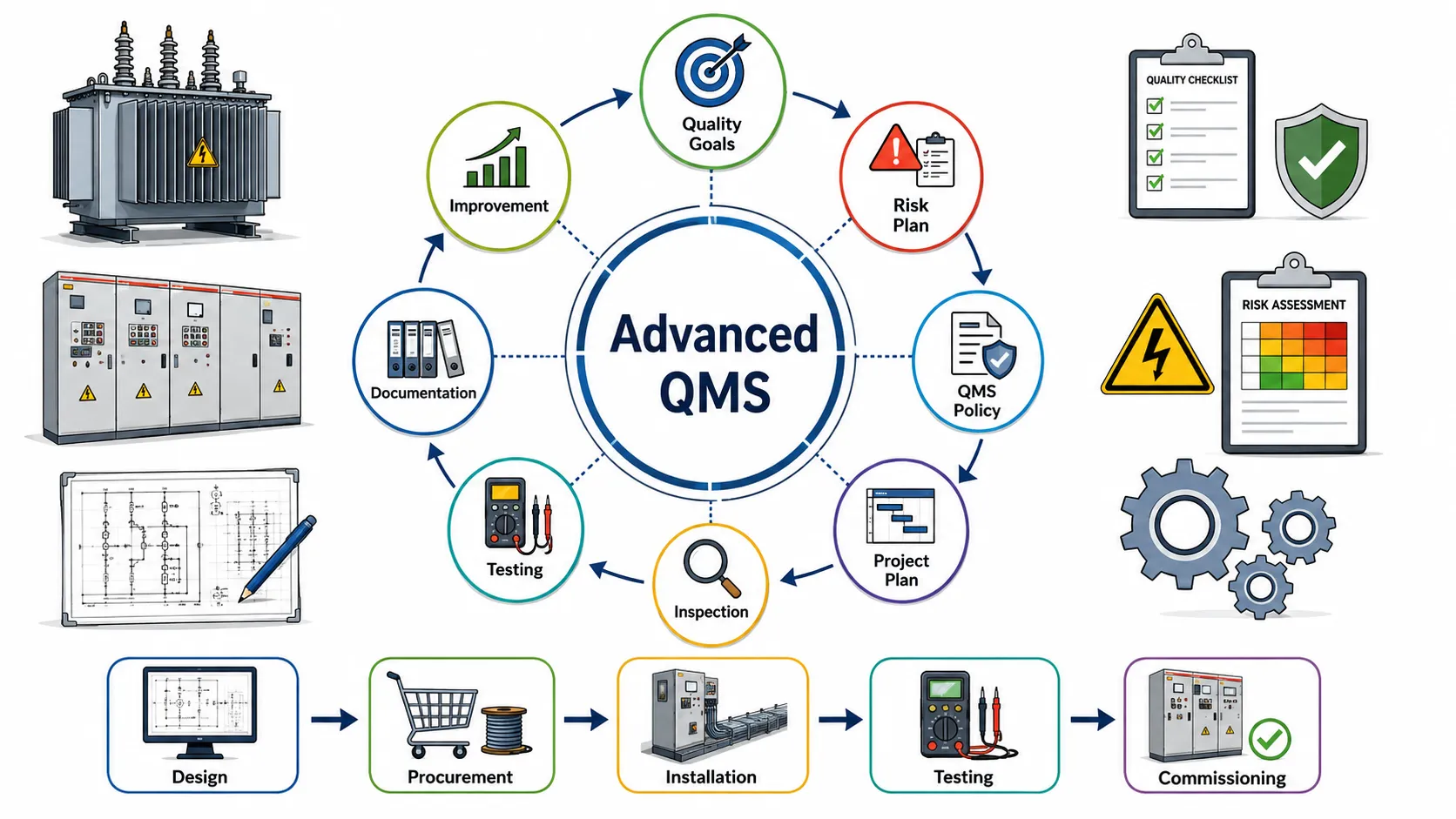
An advanced Quality Management System is an integrated framework of policies, procedures, processes, resources, responsibilities, and performance monitoring methods designed to ensure that project activities consistently achieve defined quality requirements.
In electrical engineering projects, an advanced QMS combines international quality principles with project-specific controls to manage technical, operational, and contractual requirements.
A project-specific QMS typically includes:
- Quality policies and objectives.
- Project Quality Plan (PQP).
- Quality control procedures.
- Inspection and Test Plans (ITPs).
- Risk management processes.
- Document control systems.
- Supplier quality management.
- Competency management.
- Audit programmes.
- Non-conformance management.
- Corrective and preventive actions.
- Performance measurement systems.
The purpose of developing a tailored QMS is to ensure that quality requirements are embedded into project execution rather than addressed only after problems occur.
Importance of Developing a Tailored QMS for Electrical Projects
Every electrical engineering project has unique characteristics based on its design complexity, location, technology, stakeholders, and operational requirements. Therefore, applying a generic quality system without modification may not effectively address project-specific risks and challenges.
A tailored QMS enables organisations to:
- Align quality processes with project objectives.
- Control technical risks effectively.
- Improve coordination between stakeholders.
- Ensure compliance with international standards.
- Reduce defects and rework.
- Improve inspection efficiency.
- Enhance supplier performance.
- Maintain accurate project records.
- Support successful commissioning.
- Improve customer confidence.
For example, a high-voltage substation project requires different quality controls compared with a commercial building electrical installation. While both projects require quality management, the substation project may require additional controls for protection systems, transformer testing, switchgear inspections, factory acceptance tests, and commissioning procedures.
Establishing the Foundation of an Advanced QMS
Defining Project Quality Objectives
The first stage in formulating an advanced QMS is establishing clear and measurable quality objectives. These objectives provide direction for all project participants and define the expected quality outcomes.
Quality objectives should be aligned with:
- Client requirements.
- Contract specifications.
- Regulatory obligations.
- International standards.
- Engineering performance criteria.
- Safety expectations.
- Operational reliability targets.
Effective quality objectives may include:
- Achieving zero critical non-conformities during commissioning.
- Completing inspections according to approved schedules.
- Ensuring 100% traceability of critical electrical materials.
- Achieving compliance with applicable IEC and ISO standards.
- Reducing installation defects through preventive quality controls.
- Completing project handover documentation accurately and on time.
Clear quality objectives allow project teams to measure performance and identify improvement opportunities.
Developing the Project Quality Plan (PQP)
The Project Quality Plan is the central document of an advanced QMS. It explains how quality requirements will be achieved, monitored, and controlled throughout the electrical project.
A comprehensive Project Quality Plan should define:
- Project scope and quality requirements.
- Applicable standards and regulations.
- Organisational responsibilities.
- Quality control procedures.
- Inspection requirements.
- Testing procedures.
- Documentation requirements.
- Risk management methods.
- Audit arrangements.
- Non-conformance procedures.
- Communication processes.
The PQP ensures that all project stakeholders understand their quality responsibilities and follow consistent procedures.
Key Components of an Advanced Electrical Project QMS
Quality Policy and Governance Structure
A strong quality policy establishes the organisation’s commitment to achieving project excellence. It communicates expectations regarding compliance, continual improvement, customer satisfaction, and technical performance.
An effective quality governance structure defines:
- Project quality manager responsibilities.
- QA/QC engineer roles.
- Inspection authority.
- Approval responsibilities.
- Reporting relationships.
- Escalation procedures.
- Decision-making authority.
Clear governance prevents confusion and ensures that quality issues are addressed promptly.
Process-Based Quality Management Approach
Advanced QMS implementation follows a process-based approach where project activities are managed as interconnected processes rather than isolated tasks.
Electrical project processes typically include:
- Engineering design review.
- Material procurement.
- Supplier approval.
- Equipment inspection.
- Installation activities.
- Testing and commissioning.
- Documentation handover.
- Maintenance planning.
Each process should have:
- Defined inputs.
- Required resources.
- Responsible personnel.
- Control measures.
- Expected outputs.
- Performance indicators.
This approach improves consistency and enables better monitoring of project performance.
Risk-Based Planning for Electrical Quality Management
Risk management is a critical element of an advanced QMS because electrical projects involve significant technical and operational uncertainties.
Quality risks may include:
- Incorrect equipment selection.
- Design coordination errors.
- Material non-conformance.
- Supplier delays.
- Installation defects.
- Testing failures.
- Inadequate workforce competence.
- Documentation errors.
- Regulatory changes.
- Commissioning problems.
A structured risk management process includes:
Risk Identification
Project teams identify potential events that could affect quality performance.
Examples include:
- Transformer delivery delays.
- Cable installation problems.
- Protection system configuration errors.
- Testing equipment failures.
Risk Assessment
Each risk is evaluated according to:
- Probability of occurrence.
- Potential impact.
- Severity level.
- Quality consequences.
Risk Control Measures
Preventive actions are developed, such as:
- Additional inspections.
- Alternative suppliers.
- Technical reviews.
- Additional training.
- Increased supervision.
- Enhanced testing requirements.
Risk-based planning allows organisations to focus resources on the areas with the highest potential impact.
Developing Inspection and Test Management Procedures
Inspection and testing are essential elements of electrical quality control. An advanced QMS establishes structured procedures to verify that materials, equipment, and installation activities meet specified requirements.
Inspection and Test Plans (ITPs) define:
- Inspection stages.
- Testing requirements.
- Acceptance criteria.
- Responsible personnel.
- Hold points.
- Witness points.
- Documentation requirements.
Typical electrical inspection activities include:
- Incoming material inspections.
- Cable inspections.
- Switchgear verification.
- Transformer checks.
- Earthing system inspections.
- Protection system testing.
- Functional testing.
- Commissioning verification.
A well-developed ITP ensures that quality verification occurs at appropriate stages rather than relying only on final inspection.
Practical Example: QMS Planning for a High-Voltage Substation Project
A utility organisation planned the construction of a 220 kV electrical substation requiring power transformers, GIS switchgear, protection systems, control panels, and communication networks. Due to the complexity and critical operational requirements, the organisation developed a project-specific advanced QMS before construction activities began.
The QMS included:
- A detailed Project Quality Plan.
- Supplier qualification procedures.
- Factory Acceptance Testing requirements.
- Material traceability controls.
- Installation inspection procedures.
- Electrical testing schedules.
- Commissioning quality checks.
- Digital document management.
During project execution, the QMS enabled early identification of equipment documentation issues and installation inconsistencies. Corrective actions were implemented before commissioning, reducing delays and improving overall project reliability.
Benefits of Formulating an Advanced QMS
A properly designed QMS provides significant advantages throughout the electrical project lifecycle.
Key benefits include:
- Improved quality consistency.
- Reduced project risks.
- Better compliance with international standards.
- Enhanced stakeholder coordination.
- Improved supplier control.
- Reduced defects and rework.
- More effective inspections.
- Reliable project documentation.
- Improved commissioning performance.
- Increased customer confidence.
- Better operational reliability.
An advanced QMS transforms quality management from a reactive inspection activity into a proactive project control strategy.
Implementing and Maintaining an Advanced Quality Management System for Electrical Projects
An advanced Quality Management System (QMS) becomes effective only when it is properly implemented, monitored, and continuously improved throughout the electrical project lifecycle. Developing the QMS framework is the initial stage, but successful project outcomes depend on how effectively quality processes are integrated into daily engineering activities. Electrical projects involve multiple organisations, technical interfaces, suppliers, contractors, and regulatory requirements; therefore, the QMS must provide clear control mechanisms that support collaboration, traceability, and consistent decision-making.
A mature QMS ensures that every project activity, from engineering design approval to final commissioning, is performed according to approved procedures and measurable quality objectives. It establishes a proactive approach where potential issues are identified early, risks are controlled, and improvements are continuously implemented.
Implementing Quality Management Procedures and Controls
Document Control and Information Management
Effective document control is a critical component of an advanced QMS because electrical engineering projects generate extensive technical documentation throughout their lifecycle. Accurate documentation ensures that project teams work with approved information and that quality records remain available for verification, auditing, maintenance, and future modifications.
Electrical project documentation typically includes:
- Engineering drawings.
- Technical specifications.
- Design calculations.
- Material approval documents.
- Manufacturer certificates.
- Inspection reports.
- Testing records.
- Calibration certificates.
- Method statements.
- Risk assessments.
- Non-conformance reports.
- Corrective action records.
- Commissioning reports.
- As-built drawings.
- Operation and maintenance manuals.
A robust document control process should ensure:
- Correct document identification.
- Controlled revision management.
- Approval before use.
- Secure storage.
- Easy accessibility.
- Traceability of changes.
- Protection against unauthorised modification.
- Proper document retention.
Digital document management systems are increasingly used in electrical projects to improve efficiency, reduce errors, and provide real-time access to quality information.
Supplier Quality Management
Electrical projects depend heavily on external suppliers for critical equipment such as transformers, switchgear, cables, protection systems, control panels, and instrumentation. Therefore, supplier quality management is an essential part of an advanced QMS.
A comprehensive supplier management process ensures that suppliers consistently provide materials and equipment that meet project requirements.
Supplier quality management activities include:
- Supplier prequalification.
- Technical capability assessment.
- Review of previous performance.
- Factory audits.
- Approval of manufacturing processes.
- Verification of quality certifications.
- Inspection of supplied materials.
- Factory Acceptance Testing (FAT).
- Supplier corrective action monitoring.
- Continuous supplier performance evaluation.
Effective supplier management reduces risks such as:
- Non-compliant equipment.
- Manufacturing defects.
- Delivery delays.
- Missing documentation.
- Installation problems.
- Commissioning failures.
For example, during a large solar power project, supplier evaluation procedures may identify weaknesses in inverter manufacturing quality before procurement approval, preventing future operational failures.
Competency Management and Workforce Development
The success of an advanced QMS depends on the knowledge, skills, and experience of personnel involved in electrical project activities. Competent engineers, inspectors, technicians, and supervisors are essential for maintaining quality standards.
A competency management system should identify:
- Required technical skills.
- Professional qualifications.
- Training requirements.
- Experience levels.
- Role responsibilities.
- Performance expectations.
Workforce development activities include:
- Quality awareness training.
- Electrical safety training.
- Inspection technique training.
- Testing procedure training.
- Manufacturer-specific training.
- Internal quality workshops.
- Professional development programmes.
- Technical mentoring.
Competent personnel improve quality performance by reducing human errors, improving decision-making, and ensuring correct application of engineering procedures.
Quality Auditing and Performance Evaluation
Auditing is an essential method for verifying whether the QMS is operating effectively. Internal and external audits provide objective evidence regarding compliance, process performance, and improvement opportunities.
An advanced audit programme evaluates:
- Compliance with ISO 9001 requirements.
- Effectiveness of project procedures.
- Implementation of quality objectives.
- Supplier performance.
- Documentation accuracy.
- Inspection effectiveness.
- Corrective action effectiveness.
Quality audit process includes:
- Audit planning.
- Selection of audit criteria.
- Preparation of audit checklist.
- Evidence collection.
- Personnel interviews.
- Process observation.
- Identification of findings.
- Corrective action planning.
- Follow-up verification.
Regular audits help organisations identify weaknesses before they affect project performance.
Non-Conformance Management and Corrective Actions
Non-conformance management is a fundamental element of an advanced QMS. Electrical projects may experience quality deviations due to design errors, incorrect installation, defective materials, or testing failures. Effective management ensures that these issues are controlled and prevented from recurring.
A structured non-conformance process includes:
Identification
Quality issues are identified through:
- Inspections.
- Testing activities.
- Audits.
- Client observations.
- Commissioning activities.
Evaluation
The organisation determines:
- Severity of the issue.
- Impact on performance.
- Required corrective action.
- Responsibility for resolution.
Corrective Action
Actions may include:
- Repair or replacement.
- Procedure modification.
- Additional training.
- Supplier improvement.
- Increased inspection frequency.
Verification
The effectiveness of corrective actions is verified before project continuation.
This approach ensures that quality problems become opportunities for improvement rather than repeated failures.
Key Performance Indicators (KPIs) for QMS Monitoring
Performance measurement allows organisations to evaluate whether the QMS is achieving project objectives. KPIs provide measurable information about quality performance and support evidence-based decision-making.
Common electrical project quality KPIs include:
- Number of non-conformities.
- Defect frequency.
- Inspection acceptance rate.
- Rework percentage.
- Testing success rate.
- Supplier performance score.
- Audit findings.
- Corrective action completion time.
- Customer satisfaction level.
- Commissioning performance.
- Documentation completion rate.
Regular KPI reviews enable management teams to identify trends, allocate resources effectively, and implement improvement strategies.
Comparison Table: Advanced QMS Components for Electrical Projects
| QMS Component | Definition | Application in Electrical Projects | Key Benefit |
|---|---|---|---|
| Project Quality Plan | A document defining how project quality requirements will be achieved | Establishes quality objectives, responsibilities, and control methods | Provides structured quality direction |
| Inspection and Test Plan | A planned schedule of inspection and testing activities | Controls verification of materials, installation, and commissioning | Reduces defects and failures |
| Risk Management | Process of identifying and controlling quality risks | Manages design, supplier, installation, and testing risks | Improves project resilience |
| Document Control | System for managing technical information and records | Controls drawings, reports, certificates, and approvals | Ensures traceability |
| Supplier Management | Process for evaluating and controlling suppliers | Ensures equipment quality and reliable supply chains | Reduces procurement risks |
| Quality Auditing | Systematic review of QMS effectiveness | Verifies compliance and identifies improvements | Supports continual improvement |
| Corrective Action | Process for eliminating causes of quality problems | Addresses defects and prevents recurrence | Improves long-term performance |
Practical Implementation Example: Industrial Electrical Facility Project
A manufacturing organisation planned the construction of a large industrial facility requiring complex electrical distribution systems, automated controls, emergency power systems, and monitoring infrastructure. Due to the critical nature of production operations, the organisation developed an advanced QMS tailored specifically to project requirements.
The QMS included:
- Project-specific quality objectives.
- Detailed inspection procedures.
- Approved supplier lists.
- Electrical testing requirements.
- Digital document management.
- Competency verification.
- Regular quality audits.
- Performance monitoring.
During construction, inspections identified inconsistencies in cable installation practices between different subcontractors. The QA/QC team investigated the issue, reviewed installation procedures, provided additional training, and increased inspection frequency. These actions improved installation quality and reduced potential commissioning delays.
At the commissioning stage, comprehensive testing records, inspection reports, and quality documentation supported successful project handover. The structured QMS approach improved reliability, reduced rework, and increased client confidence in the completed electrical systems.
Case Study: Advanced QMS Implementation in a Renewable Energy Project
A global renewable energy company developed a large-scale solar power plant involving photovoltaic modules, inverters, transformers, medium-voltage switchgear, monitoring systems, and grid connection infrastructure. The project involved multiple international suppliers and construction contractors, creating significant quality management challenges.
Before project commencement, the organisation developed an advanced QMS aligned with international quality principles. The system included supplier qualification procedures, risk assessments, inspection schedules, testing requirements, digital documentation controls, and performance monitoring processes.
During procurement, supplier assessments identified potential risks related to equipment certification and manufacturing consistency. Additional factory inspections and documentation reviews were introduced before equipment approval. During installation, quality inspections monitored module installation, cable routing, earthing systems, and electrical connections.
Unexpected weather conditions caused construction delays and affected installation schedules. The QMS enabled the project team to adapt inspection plans, prioritise critical activities, and maintain quality controls despite changing conditions.
During commissioning, electrical testing confirmed that systems met required performance criteria. Complete quality documentation, including inspection records, test reports, and compliance certificates, supported successful project handover.
The implementation of the advanced QMS resulted in:
- Improved project coordination.
- Reduced installation defects.
- Enhanced supplier performance.
- Better documentation control.
- Successful commissioning.
- Increased operational reliability.
- Improved stakeholder confidence.
Conclusion
Formulating and implementing an advanced Quality Management System tailored to a specific electrical project provides organisations with a structured approach to achieving quality excellence, regulatory compliance, and operational reliability. A successful QMS integrates quality principles into every stage of the project lifecycle, including design, procurement, installation, inspection, testing, commissioning, and handover.
An effective electrical project QMS requires clear quality objectives, robust documentation control, supplier management, competency development, risk-based planning, auditing, performance measurement, and continual improvement processes. By adapting quality systems according to project requirements, organisations can manage complex engineering challenges while maintaining consistent quality performance.
For modern electrical engineering projects, an advanced QMS is not only a compliance requirement but also a strategic tool that improves efficiency, reduces risks, enhances customer confidence, and supports the successful delivery of safe, reliable, and high-performing electrical infrastructure.
2. Design QMS Processes That Effectively Manage Complex and Interacting Factors Within Electrical Engineering
Introduction to Designing Advanced QMS Processes for Complex Electrical Projects
Modern electrical engineering projects involve highly interconnected activities, advanced technologies, multiple stakeholders, international suppliers, strict regulatory requirements, and rapidly changing technical conditions. Projects such as high-voltage substations, renewable energy plants, industrial automation systems, smart grids, and large commercial electrical installations require quality management processes that can effectively coordinate multiple technical and operational factors. A traditional quality control approach based only on final inspection is no longer sufficient because quality performance depends on how effectively different project processes interact throughout the entire engineering lifecycle.
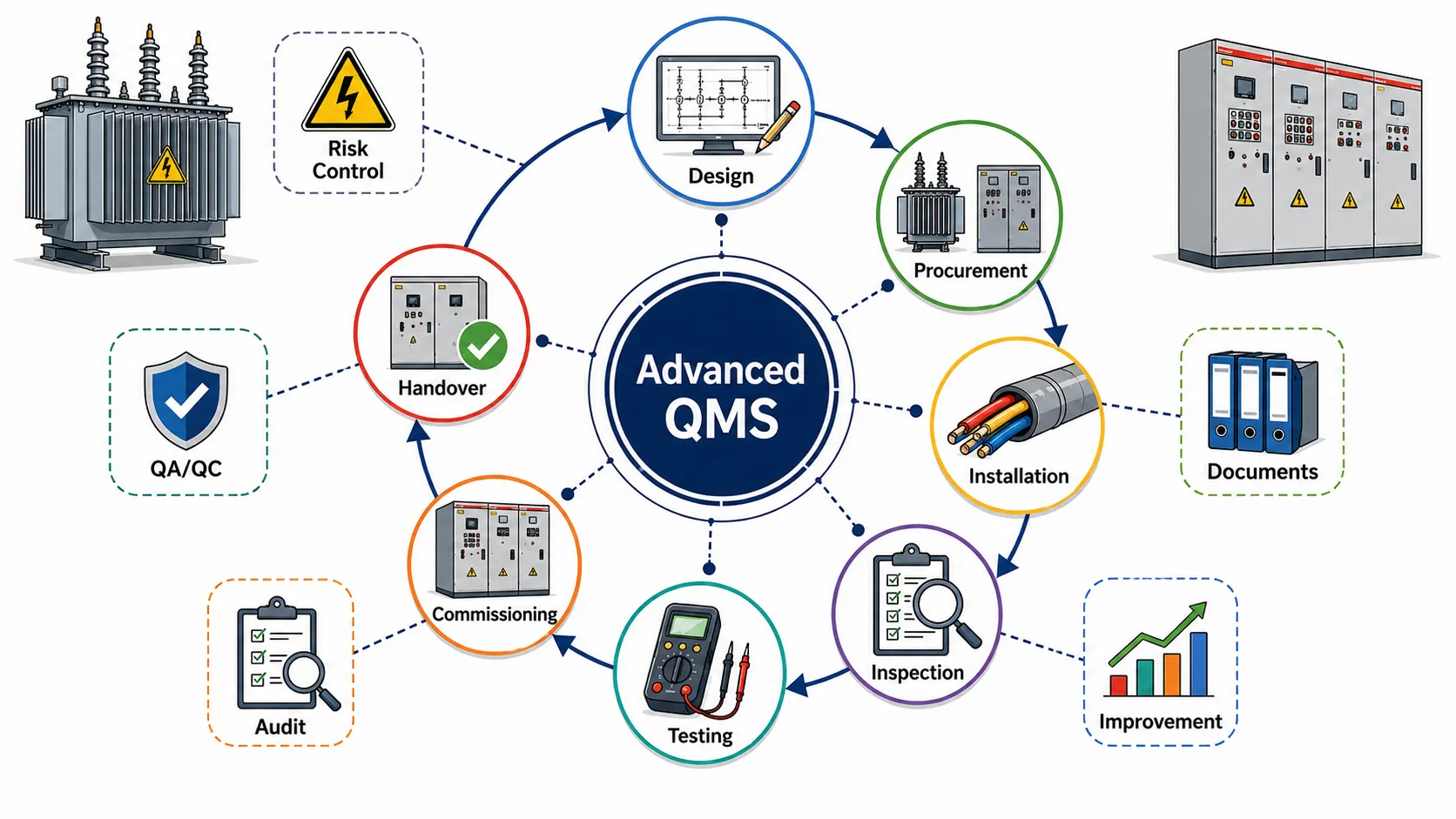
Designing an advanced Quality Management System (QMS) for complex electrical engineering requires a systematic understanding of process relationships, project risks, technical interfaces, and stakeholder expectations. A well-designed QMS ensures that engineering activities such as design development, procurement, installation, inspection, testing, commissioning, and handover operate as connected processes rather than isolated tasks. The objective is to create a controlled environment where quality risks are identified early, information flows efficiently, responsibilities are clearly defined, and continuous improvement becomes part of project delivery.
An effective electrical engineering QMS must be aligned with international quality principles such as ISO 9001 Quality Management Systems, which emphasise process-based management, risk-based thinking, customer focus, evidence-based decision-making, leadership commitment, and continual improvement. By designing integrated QMS processes, organisations can manage technical complexity, reduce project uncertainties, improve reliability, and achieve consistent quality outcomes across different engineering environments.
Understanding Complex and Interacting Factors in Electrical Engineering Projects
Definition of Complex Engineering Factors
Complex factors in electrical engineering refer to multiple technical, organisational, environmental, and operational elements that influence project quality and performance. These factors are interconnected, meaning that changes or failures in one area can significantly affect other project activities.
For example, a delay in equipment delivery may affect installation schedules, testing activities, commissioning dates, and client acceptance. Similarly, a design modification may require changes in procurement, installation procedures, documentation, and testing requirements.
Common complex factors include:
- Engineering design requirements.
- Equipment specifications.
- Regulatory compliance.
- Supplier performance.
- Material availability.
- Installation conditions.
- Workforce competence.
- Testing requirements.
- Project scheduling.
- Environmental conditions.
- Stakeholder communication.
- Documentation management.
- Safety requirements.
- Operational reliability.
A robust QMS must recognise these relationships and establish processes that allow effective coordination between different project elements.
Importance of Process-Based QMS Design
A process-based QMS focuses on managing activities as interconnected systems rather than separate departments or tasks. This approach ensures that every process has clearly defined inputs, outputs, responsibilities, controls, and performance measures.
In electrical engineering projects, process-based management improves:
- Communication between engineering teams.
- Coordination between contractors and suppliers.
- Traceability of technical information.
- Control of quality risks.
- Consistency of project execution.
- Decision-making effectiveness.
- Compliance with project requirements.
Instead of treating design, procurement, installation, and testing as independent activities, an integrated QMS connects them through controlled procedures and communication pathways.
Key Principles for Designing Integrated QMS Processes
Process Identification and Mapping
The first step in designing an advanced QMS is identifying all major project processes and understanding their interactions.
Electrical engineering project processes typically include:
Engineering Design Process
The design process establishes technical requirements and defines system performance expectations.
Key activities include:
- Requirement analysis.
- Electrical calculations.
- Equipment selection.
- Design verification.
- Design approval.
- Design change control.
Procurement Process
The procurement process ensures that electrical materials and equipment meet technical and quality requirements.
Key activities include:
- Supplier evaluation.
- Technical specification review.
- Material approval.
- Factory inspections.
- Delivery monitoring.
- Certification verification.
Construction and Installation Process
This process ensures that electrical systems are installed according to approved designs and standards.
Key activities include:
- Installation planning.
- Method statement approval.
- Site inspections.
- Installation supervision.
- Work verification.
- Defect management.
Testing and Commissioning Process
Testing and commissioning verify that electrical systems operate safely and meet performance requirements.
Key activities include:
- Testing procedures.
- Equipment calibration.
- Functional testing.
- Protection system verification.
- Performance assessment.
- Final acceptance.
Handover and Documentation Process
The final process ensures that project information is transferred accurately to the client or operational team.
Key activities include:
- As-built documentation.
- Test certificates.
- Operation manuals.
- Maintenance records.
-
Final quality reports.

Managing Process Interactions Within Electrical Projects
The effectiveness of a QMS depends on how well different processes interact with each other. Poor coordination between processes can create quality failures, delays, and additional costs.
For example:
- Design errors may affect procurement decisions.
- Procurement delays may affect installation schedules.
- Installation problems may affect testing activities.
- Testing failures may delay commissioning.
- Documentation errors may affect operational handover.
A well-designed QMS establishes communication channels and control mechanisms between these processes.
Effective process interaction methods include:
- Defined process responsibilities.
- Clear communication procedures.
- Integrated project management systems.
- Regular coordination meetings.
- Controlled document exchange.
- Interface management procedures.
- Performance monitoring.
- Change management systems.
Developing Quality Controls for Engineering Interfaces
Electrical projects contain multiple technical interfaces where different systems, contractors, and disciplines interact. These interfaces represent significant quality risks and require specific controls.
Examples of engineering interfaces include:
- Electrical design and civil works.
- Equipment manufacturing and installation.
- Electrical installation and testing.
- Protection systems and control systems.
- Construction activities and commissioning.
Effective interface management includes:
- Defining responsibilities clearly.
- Establishing approval processes.
- Reviewing technical compatibility.
- Conducting interface meetings.
- Monitoring design changes.
- Maintaining communication records.
- Resolving conflicts early.
Effective interface management prevents quality problems caused by misunderstandings between different project teams.
Risk-Based QMS Process Design
Risk-based thinking is a fundamental principle of advanced quality management systems. Instead of reacting to failures after they occur, organisations identify potential risks and implement preventive controls.
Electrical engineering projects contain various quality risks, including:
- Incorrect design assumptions.
- Equipment incompatibility.
- Supplier quality issues.
- Installation errors.
- Testing failures.
- Inadequate documentation.
- Human errors.
- Regulatory changes.
Risk management process includes:
Risk Identification
Project teams identify potential threats that may affect quality outcomes.
Examples:
- Transformer manufacturing delays.
- Cable installation challenges.
- Protection system configuration errors.
Risk Assessment
Risks are evaluated based on:
- Probability.
- Impact.
- Severity.
- Consequences.
Risk Control
Control measures are developed, including:
- Additional inspections.
- Technical reviews.
- Alternative suppliers.
- Increased supervision.
- Additional testing.
Risk Monitoring
Risks are continuously reviewed throughout the project lifecycle.
Integrating Quality Assurance and Quality Control Processes
An advanced QMS must balance both quality assurance and quality control activities.
Quality Assurance (QA)
Quality assurance focuses on preventing quality problems through effective systems and processes.
QA activities include:
- Procedure development.
- Quality planning.
- Internal audits.
- Training programmes.
- Process reviews.
- Supplier assessments.
Quality Control (QC)
Quality control focuses on identifying defects through inspection and testing.
QC activities include:
- Material inspection.
- Installation inspection.
- Electrical testing.
- Verification activities.
- Defect identification.
- Compliance checks.
An integrated approach ensures that organisations not only detect problems but also prevent them from occurring.
Designing Documentation and Information Flow Processes
Documentation management is essential for controlling complex electrical engineering projects. Poor information management can result in incorrect installations, outdated drawings, testing failures, and compliance issues.
An effective QMS should establish controlled information processes.
Important documentation controls include:
- Document approval procedures.
- Revision control.
- Access management.
- Record retention.
- Technical review.
- Distribution control.
- Digital storage systems.
Electrical project documentation should provide complete traceability from initial design through final commissioning.
Practical Example: Integrated QMS Process Design for a High-Voltage Infrastructure Project
A national electricity provider planned the construction of a new high-voltage transmission facility involving substations, transformers, protection systems, and advanced monitoring equipment. Due to the complexity of the project, the organisation developed an integrated QMS process structure.
The QMS connected:
- Engineering design reviews.
- Supplier qualification.
- Equipment inspections.
- Installation controls.
- Testing procedures.
- Commissioning activities.
- Documentation management.
During construction, a design modification was required due to updated operational requirements. Because the QMS included effective change management procedures, the design team, procurement department, and installation contractors were able to coordinate changes without affecting quality performance.
The integrated process approach reduced communication problems, improved documentation accuracy, and supported successful project completion.
Key Benefits of Integrated QMS Process Design
Designing QMS processes that effectively manage complex and interacting factors provides several advantages:
- Improved project coordination.
- Reduced quality risks.
- Better technical communication.
- Enhanced process visibility.
- Improved decision-making.
- Reduced rework.
- Increased regulatory compliance.
- Better supplier control.
- Improved testing reliability.
- Stronger customer confidence.
- More effective project monitoring.
-
Improved operational performance.
Advanced Implementation Strategies for Integrated QMS Processes in Electrical Engineering Projects
Integrating Digital Technologies into Advanced QMS Processes
The increasing complexity of electrical engineering projects requires organisations to adopt advanced digital solutions that improve quality monitoring, information management, and decision-making. Digital transformation has become an essential element of modern Quality Management Systems because traditional paper-based quality processes often struggle to manage large volumes of technical information, multiple project interfaces, and rapidly changing engineering requirements.
Digital QMS solutions enable organisations to create connected quality environments where project teams can access accurate information, monitor performance indicators, track non-conformities, and manage corrective actions in real time.
Digital quality management tools include:
Cloud-based document management systems.
Electronic inspection applications.
Digital Inspection and Test Plans (ITPs).
Building Information Modelling (BIM).
Project collaboration platforms.
Quality dashboards.
Mobile reporting applications.
Automated approval workflows.
Data analytics systems.
Digital commissioning records.
Benefits of digital QMS implementation include:
Improved document accuracy.
Faster communication between stakeholders.
Real-time quality monitoring.
Better traceability of engineering activities.
Reduced administrative errors.
Faster corrective action management.
Improved audit readiness.
Enhanced project transparency.
For example, during a large electrical infrastructure project, digital inspection systems allow QA/QC teams to record installation defects immediately, attach photographs, assign corrective actions, and monitor closure status without delays.
Managing Supplier and Contractor Interfaces Through QMS Processes
Electrical engineering projects frequently involve multiple suppliers, subcontractors, manufacturers, and specialist contractors. These external parties significantly influence project quality performance; therefore, advanced QMS processes must include effective interface management.
Poor supplier coordination can result in:
Incorrect equipment specifications.
Delayed material delivery.
Missing certification documents.
Installation errors.
Testing failures.
Commissioning delays.
A structured supplier and contractor management process ensures that all external organisations operate according to project quality requirements.
Effective supplier quality management processes include:
Supplier prequalification.
Technical capability assessment.
Quality system evaluation.
Manufacturing process review.
Factory Acceptance Testing (FAT).
Supplier audits.
Incoming material inspections.
Performance monitoring.
Corrective action management.
Contractor interface controls include:
Defined quality responsibilities.
Approved work procedures.
Regular coordination meetings.
Shared documentation systems.
Inspection coordination.
Clear communication channels.
Performance reviews.
Strong interface management ensures that every organisation involved in the project contributes effectively to achieving quality objectives.
Developing Advanced Change Management Processes
Electrical engineering projects frequently experience changes due to design improvements, regulatory updates, technological developments, client requirements, or unexpected site conditions. Without effective change management, modifications can negatively affect quality, cost, schedule, and safety.
An advanced QMS must include a controlled change management process to ensure that modifications are properly evaluated and implemented.
Change management process includes:
Change Identification
Changes may originate from:
Client requests.
Engineering improvements.
Regulatory requirements.
Site conditions.
Supplier recommendations.
Risk mitigation actions.
Change Evaluation
Each proposed change should be assessed for:
Technical impact.
Quality impact.
Safety implications.
Cost consequences.
Schedule effects.
Documentation requirements.
Change Approval
Changes should only proceed after:
Technical review.
Stakeholder approval.
Quality verification.
Risk assessment.
Change Implementation
Implementation requires:
Updating drawings.
Revising procedures.
Communicating changes.
Training affected personnel.
Monitoring effectiveness.
Effective change management ensures that project flexibility does not compromise quality performance.
Quality Performance Monitoring and Continuous Improvement
A high-performing QMS requires continuous evaluation to determine whether processes are achieving expected outcomes. Performance monitoring provides objective evidence that supports improvement decisions.
Organisations should establish measurable quality indicators that reflect project performance.
Important QMS performance indicators include:
Number of quality non-conformities.
Inspection rejection rates.
Rework percentage.
Testing success rate.
Supplier performance ratings.
Audit findings.
Corrective action completion time.
Customer satisfaction results.
Documentation accuracy.
Commissioning performance.
Continuous improvement methods include:
Root cause analysis.
Corrective action programmes.
Preventive improvement strategies.
Process optimisation.
Internal audits.
Management reviews.
Employee feedback.
Technical improvement initiatives.
Continuous improvement ensures that QMS processes become more effective as project experience and organisational knowledge increase.
Integrating Health, Safety, and Environmental Considerations into QMS
Although quality management focuses on achieving project requirements, advanced electrical engineering QMS processes must also consider health, safety, and environmental factors. Poor quality decisions can create safety risks, equipment failures, and environmental impacts.
Integrated management approaches combine:
Quality management systems.
Occupational health and safety systems.
Environmental management systems.
Integration benefits include:
Reduced operational risks.
Improved compliance.
Better resource efficiency.
Enhanced stakeholder confidence.
Improved project sustainability.
For example, selecting inappropriate electrical materials may not only create quality problems but may also increase safety hazards and environmental concerns during operation.
Comparison Table: Advanced QMS Process Management in Electrical Engineering
QMS Process Area Definition Electrical Engineering Application Key Benefit Process Integration Connecting related project activities into a controlled system Linking design, procurement, installation, testing, and commissioning Improved coordination and consistency Interface Management Controlling interactions between different teams and organisations Managing contractor, supplier, and engineering interfaces Reduced communication failures Change Management Controlling modifications through structured procedures Managing design revisions and technical changes Prevents uncontrolled quality impacts Digital Quality Management Using technology to monitor and control quality activities Digital inspections, records, and reporting systems Faster information access and improved traceability Risk-Based Management Identifying and controlling potential quality risks Managing equipment, design, and installation risks Reduces project uncertainty Performance Monitoring Measuring QMS effectiveness using indicators Tracking defects, inspections, audits, and improvements Supports evidence-based decisions Practical Example: QMS Process Integration in a Smart Grid Project
A utility organisation developed a smart grid electrical infrastructure project involving advanced monitoring systems, automated substations, communication networks, and renewable energy integration. The project involved multiple international suppliers, software providers, electrical contractors, and regulatory stakeholders.
Due to the complexity of the project, the organisation designed an integrated QMS that connected engineering, procurement, construction, testing, and operational processes.
The QMS included:
Digital quality management platforms.
Integrated design review procedures.
Supplier quality evaluation.
Real-time inspection reporting.
Risk monitoring systems.
Performance dashboards.
Structured change management.
During implementation, a supplier proposed a modification to a monitoring device due to component availability issues. The QMS change management process required technical evaluation, risk assessment, client approval, and updated documentation before implementation.
The structured process prevented compatibility problems and ensured that the modified equipment met project requirements.
During commissioning, digital quality records allowed engineers to quickly verify installation status, testing results, and compliance documentation. The project achieved successful completion with improved reliability and reduced quality risks.
Case Study: Integrated QMS Management for a Large Electrical Power Plant Project
A major energy company initiated the construction of a large-scale power generation facility requiring complex electrical systems, including generators, transformers, protection systems, control equipment, and distribution networks. Due to the technical complexity and involvement of multiple international contractors, an advanced integrated QMS was developed.
The organisation identified several critical quality challenges:
Multiple contractor interfaces.
Complex equipment supply chains.
Strict regulatory requirements.
High reliability expectations.
Extensive commissioning activities.
The QMS was designed around interconnected processes covering engineering design, procurement, construction, testing, and operational handover.
During the design phase, multidisciplinary reviews ensured that electrical systems were coordinated with mechanical, civil, and control requirements. During procurement, supplier assessments verified manufacturing capability and compliance with technical specifications.
During construction, digital inspection systems provided real-time visibility of installation quality. Inspection findings were recorded electronically, allowing responsible teams to respond quickly.
During testing and commissioning, detailed quality records supported verification of equipment performance. Any identified issues were managed through structured non-conformance and corrective action procedures.
The integrated QMS approach delivered several improvements:
Reduced installation defects.
Improved communication between contractors.
Faster approval processes.
Enhanced documentation accuracy.
Improved commissioning efficiency.
Stronger operational reliability.
The project demonstrated that advanced QMS processes are essential for managing complex electrical engineering environments where multiple technical and organisational factors interact.
Key Benefits of Advanced Integrated QMS Processes
Designing and implementing effective QMS processes provides significant benefits for electrical engineering organisations.
Operational Benefits
Improved project coordination.
Better resource utilisation.
Reduced delays.
Enhanced process efficiency.
Improved workflow management.
Quality Benefits
Reduced defects.
Improved compliance.
Better inspection effectiveness.
Enhanced testing reliability.
Stronger corrective action processes.
Organisational Benefits
Improved quality culture.
Better decision-making.
Increased stakeholder confidence.
Improved audit performance.
Enhanced competitiveness.
Technical Benefits
Improved engineering reliability.
Better equipment performance.
Stronger documentation control.
Improved lifecycle management.
Conclusion
Designing QMS processes that effectively manage complex and interacting factors within electrical engineering requires a structured, integrated, and adaptive approach. Modern electrical projects involve multiple technical systems, stakeholders, suppliers, and operational challenges; therefore, quality management processes must be designed to support coordination, risk control, information flow, and continuous improvement.
An advanced QMS connects engineering design, procurement, installation, inspection, testing, commissioning, and handover activities through clearly defined processes and performance controls. By implementing digital quality systems, effective supplier management, controlled change processes, risk-based thinking, and continuous improvement strategies, organisations can achieve higher levels of quality performance.
For complex electrical engineering projects, an effective QMS is not only a method of ensuring compliance with international standards but also a strategic framework that improves reliability, efficiency, safety, and long-term project success.
3. Implement Customized QMS Procedures in a Practical, Real-World Electrical Project Environment
Introduction to Customized QMS Implementation in Electrical Engineering Projects
Implementing a customized Quality Management System (QMS) within a real-world electrical engineering project requires more than adopting standard quality procedures. Each electrical project has unique technical requirements, operational challenges, stakeholder expectations, regulatory obligations, and performance objectives. Therefore, organisations must adapt their quality management approach according to the specific characteristics of the project, ensuring that quality procedures directly support successful project delivery.
Electrical engineering projects such as power plants, substations, renewable energy facilities, industrial electrical systems, and infrastructure developments involve complex interactions between design teams, suppliers, contractors, testing engineers, and commissioning specialists. A customized QMS provides a structured framework that ensures every project activity is planned, controlled, monitored, and improved according to defined quality requirements.
A practical QMS implementation integrates international quality principles, such as those established in ISO 9001 Quality Management Systems, with project-specific procedures. This approach ensures that quality management is not limited to documentation but becomes an active operational process throughout the project lifecycle. From design approval and procurement activities to installation inspections, testing procedures, and final handover, customized QMS procedures help organisations achieve reliable, safe, and compliant electrical project outcomes.
Understanding Customized QMS Procedures
Definition of Customized QMS Procedures
Customized QMS procedures are project-specific quality processes developed by adapting general quality management principles to meet the unique requirements of a particular electrical engineering project.
Unlike generic quality systems, customized QMS procedures consider:
- Project scope.
- Technical specifications.
- Client requirements.
- Regulatory standards.
- Equipment complexity.
- Construction environment.
- Risk profile.
- Stakeholder expectations.
- Operational requirements.
The purpose of customization is to ensure that quality controls are practical, relevant, and directly connected to project activities.
For example, a QMS developed for a high-voltage substation project will require detailed procedures for transformer inspection, protection system testing, switchgear verification, and commissioning activities. In contrast, a commercial building electrical installation may focus more on wiring inspections, distribution board testing, compliance verification, and installation quality checks.
Importance of Customized QMS in Real-World Electrical Projects
Electrical projects operate in environments where quality failures can create serious consequences, including equipment damage, operational failures, safety risks, financial losses, and regulatory issues. A customized QMS enables project teams to identify potential problems early and establish effective controls.
A project-specific QMS helps organisations to:
- Achieve consistent quality performance.
- Meet client expectations.
- Control technical risks.
- Improve project coordination.
- Reduce installation defects.
- Improve inspection efficiency.
- Maintain compliance with international standards.
- Enhance documentation accuracy.
- Improve supplier performance.
- Support successful commissioning.
- Reduce project delays.
- Improve operational reliability.
A well-implemented QMS ensures that quality requirements are integrated into daily project activities rather than being treated as separate administrative tasks.
Developing a Project-Specific QMS Implementation Strategy
The first stage of implementing a customized QMS is developing a clear strategy that defines how quality requirements will be achieved throughout the project lifecycle.
A successful implementation strategy should consider:
- Project objectives.
- Quality expectations.
- Applicable standards.
- Organisational responsibilities.
- Resource requirements.
- Risk management approaches.
- Monitoring methods.
- Improvement processes.
Key steps in QMS implementation include:
- Understanding project requirements.
- Identifying quality risks.
- Defining quality responsibilities.
- Developing project procedures.
- Establishing inspection requirements.
- Creating documentation systems.
- Training project personnel.
- Monitoring performance.
- Reviewing effectiveness.
A structured implementation strategy ensures that all project participants understand their role in maintaining quality standards.
Establishing Project Quality Requirements
Before implementing QMS procedures, organisations must identify and analyse all quality requirements associated with the electrical project.
These requirements may come from:
- Client specifications.
- Contract documents.
- Engineering drawings.
- International standards.
- National regulations.
- Manufacturer requirements.
- Safety procedures.
- Testing requirements.
Quality requirement assessment includes:
- Reviewing technical specifications.
- Identifying mandatory standards.
- Defining acceptance criteria.
- Establishing inspection requirements.
- Determining testing procedures.
- Identifying documentation needs.
For example, an electrical substation project may require compliance with IEC standards, manufacturer recommendations, utility requirements, and national grid regulations. These requirements must be incorporated into the project QMS procedures.
Implementing Customized Quality Planning Procedures
A Project Quality Plan (PQP) is one of the most important documents used to implement customized QMS procedures. It explains how quality requirements will be controlled throughout project execution.
A customized Project Quality Plan should include:
- Project quality objectives.
- Quality organisation structure.
- Roles and responsibilities.
- Applicable standards.
- Inspection procedures.
- Testing requirements.
- Documentation controls.
- Audit schedules.
- Risk management methods.
- Non-conformance procedures.
- Corrective action processes.
The PQP ensures that quality activities are planned before project execution begins.
Integrating QA/QC Procedures into Electrical Project Activities
A customized QMS must clearly define how quality assurance and quality control activities will be applied throughout the project.
Quality Assurance Implementation
Quality assurance focuses on preventing quality problems through effective systems and procedures.
QA procedures include:
- Quality planning.
- Process reviews.
- Internal audits.
- Supplier assessments.
- Training programmes.
- Procedure verification.
- Management reviews.
Quality Control Implementation
Quality control focuses on verifying that project activities meet defined requirements.
QC procedures include:
- Material inspections.
- Installation inspections.
- Electrical testing.
- Equipment verification.
- Calibration checks.
- Compliance inspections.
- Commissioning verification.
An effective customized QMS combines both approaches to prevent defects and ensure successful project outcomes.
Implementing Customized Inspection and Testing Procedures
Inspection and testing procedures must be adapted according to project complexity, equipment type, and risk level.
A customized Inspection and Test Plan (ITP) defines:
- Inspection stages.
- Testing requirements.
- Acceptance criteria.
- Responsible personnel.
- Hold points.
- Witness points.
- Required documentation.
Electrical inspection activities may include:
- Cable installation inspection.
- Transformer inspection.
- Switchgear verification.
- Earthing system checks.
- Protection system testing.
- Control panel inspection.
- Functional testing.
- Final commissioning checks.
Customized inspection procedures ensure that critical quality requirements are verified at the appropriate stages.
Practical Example: Customized QMS Implementation for a Solar Power Plant Project
A renewable energy organisation developed a large-scale solar power project involving photovoltaic panels, inverters, transformers, monitoring systems, and grid connection equipment. Due to the complexity of the project and involvement of multiple international suppliers, a customized QMS was developed.
The project-specific QMS included:
- Supplier qualification procedures.
- Equipment inspection requirements.
- Installation quality controls.
- Testing procedures.
- Digital documentation management.
- Commissioning checklists.
- Performance monitoring systems.
During installation, quality inspections identified inconsistencies in cable routing and connection practices between different contractor teams. The QMS procedures allowed the project team to investigate the issue, update installation guidelines, provide additional training, and increase inspection frequency.
As a result, installation quality improved, commissioning risks were reduced, and the project achieved successful operational handover.
Implementing Risk Management Within Customized QMS Procedures
Risk management is a fundamental component of practical QMS implementation because electrical projects involve technical uncertainties and operational challenges.
A customized QMS should include procedures for identifying, assessing, controlling, and monitoring project risks.
Electrical project quality risks may include:
- Incorrect equipment selection.
- Design coordination errors.
- Supplier delays.
- Material defects.
- Installation failures.
- Testing problems.
- Documentation errors.
- Lack of technical competence.
- Environmental challenges.
Risk management procedures include:
- Risk identification workshops.
- Risk assessment matrices.
- Preventive action plans.
- Technical reviews.
- Additional inspections.
- Contingency planning.
- Continuous monitoring.
Effective risk management allows project teams to respond proactively rather than reacting after quality failures occur.
Managing Project Documentation and Quality Records
Documentation control is essential for maintaining traceability and demonstrating compliance with quality requirements.
Customized QMS documentation procedures should define:
- Document approval methods.
- Revision control.
- Distribution processes.
- Storage requirements.
- Access control.
- Record retention periods.
Important quality records include:
- Inspection reports.
- Test certificates.
- Calibration records.
- Material certificates.
- Non-conformance reports.
- Corrective action records.
- Commissioning documents.
- Handover records.
Accurate documentation supports audits, client approval, future maintenance, and operational reliability.
Key Benefits of Implementing Customized QMS Procedures
A customized QMS provides significant benefits for electrical engineering projects:
- Improved quality control.
- Better project coordination.
- Reduced technical risks.
- Enhanced compliance.
- Improved stakeholder communication.
- Reduced defects and rework.
- Better supplier management.
- Increased documentation accuracy.
- Improved commissioning performance.
- Greater customer satisfaction.
-
Enhanced operational reliability.
Advanced Implementation of Customized QMS Procedures in Real-World Electrical Project Environments
Integrating Supplier and Contractor Quality Control Procedures
Electrical engineering projects commonly involve multiple suppliers, manufacturers, subcontractors, and specialist contractors. The quality performance of these external stakeholders directly affects the reliability, safety, and operational success of the final electrical system. Therefore, a customized QMS must include effective supplier and contractor quality control procedures that align external activities with project quality objectives.
A practical supplier quality management system ensures that all purchased materials, equipment, and services meet defined technical and quality requirements before integration into the project.
Supplier Quality Management Procedures
Customized supplier control procedures should include:
- Supplier prequalification assessments.
- Review of supplier quality certifications.
- Evaluation of technical capability.
- Assessment of previous project performance.
- Manufacturing process reviews.
- Factory Acceptance Testing (FAT).
- Supplier audits.
- Material inspection procedures.
- Delivery quality verification.
- Corrective action monitoring.
For electrical projects involving critical equipment such as transformers, switchgear, protection relays, and control systems, supplier quality control is essential because defects discovered during installation or commissioning can result in significant delays and financial losses.
Contractor Quality Management Procedures
Electrical construction projects often involve multiple contractors performing installation, testing, and commissioning activities. Customized QMS procedures must clearly define contractor responsibilities and quality expectations.
Contractor controls include:
- Approved work procedures.
- Method statement reviews.
- Competency verification.
- Site inspection requirements.
- Daily quality reporting.
- Installation verification.
- Testing supervision.
- Performance monitoring.
Effective contractor management ensures that all project participants follow consistent quality standards and approved procedures.
Implementing Digital Quality Management Systems
Modern electrical projects generate large volumes of technical information, including drawings, inspection records, testing reports, certificates, and commissioning documents. Traditional paper-based systems may create delays, document errors, and communication problems.
Digital QMS implementation improves the efficiency and reliability of quality processes by providing real-time access to accurate project information.
Digital QMS Applications Include:
- Electronic document control systems.
- Mobile inspection applications.
- Cloud-based quality platforms.
- Digital Inspection and Test Plans.
- Online approval workflows.
- Quality dashboards.
- Automated reporting systems.
- Digital defect tracking.
Benefits of Digital QMS Implementation:
- Faster quality reporting.
- Improved document traceability.
- Reduced paperwork errors.
- Better communication between teams.
- Real-time monitoring of quality activities.
- Improved audit preparation.
- Faster corrective action management.
For example, during a large electrical infrastructure project, inspectors can use mobile applications to record installation defects, attach photographs, assign corrective actions, and track completion status without delays.
Implementing Non-Conformance Management Procedures
Non-conformance management is a critical component of customized QMS implementation. Electrical projects may experience quality deviations due to design issues, material defects, incorrect installation, or testing failures.
A structured non-conformance process ensures that quality problems are properly identified, controlled, corrected, and prevented from recurring.
Non-Conformance Management Process
Identification of Non-Conformance
Quality issues may be identified through:
- Site inspections.
- Testing activities.
- Internal audits.
- Supplier inspections.
- Client observations.
- Commissioning activities.
Examples include:
- Incorrect cable installation.
- Damaged equipment.
- Missing documentation.
- Failed testing results.
- Incorrect material usage.
Evaluation and Classification
Each non-conformance should be assessed according to:
- Severity level.
- Technical impact.
- Safety implications.
- Project consequences.
- Required corrective action.
Non-conformities may be classified as:
- Critical.
- Major.
- Minor.
Corrective Action Implementation
Corrective actions may include:
- Repairing defective work.
- Replacing non-compliant materials.
- Updating procedures.
- Providing additional training.
- Improving inspection controls.
- Revising supplier requirements.
Verification and Closure
The effectiveness of corrective actions must be verified before closing the non-conformance.
This ensures that the same problem does not occur again during future project activities.
Implementing Quality Audits and Management Reviews
Auditing is essential for evaluating whether customized QMS procedures are effectively implemented in practical project environments. Audits provide objective evidence regarding compliance, performance, and improvement opportunities.
Types of Quality Audits
Internal Audits
Internal audits evaluate whether project teams are following approved quality procedures.
They assess:
- Process compliance.
- Documentation accuracy.
- Inspection effectiveness.
- Corrective action status.
Supplier Audits
Supplier audits verify whether manufacturers and suppliers maintain required quality standards.
They evaluate:
- Manufacturing processes.
- Testing procedures.
- Quality records.
- Production controls.
Project Quality Audits
Project audits review overall QMS effectiveness during project execution.
They focus on:
- Quality objectives.
- Risk controls.
- Contractor performance.
- Client requirements.
Management Review Activities
Management reviews evaluate QMS performance and identify improvement requirements.
Review inputs may include:
- Audit results.
- Quality performance indicators.
- Customer feedback.
- Non-conformance trends.
- Supplier performance.
- Risk assessments.
Management reviews ensure that the QMS remains effective throughout the project lifecycle.
Monitoring QMS Performance Through Key Performance Indicators (KPIs)
A customized QMS requires measurable performance indicators to evaluate whether quality objectives are being achieved.
KPIs provide evidence-based information that supports decision-making and continuous improvement.
Common Electrical Project Quality KPIs
KPI Definition Electrical Project Application Key Benefit Non-Conformance Rate Measures the number of identified quality failures Tracks installation and equipment defects Reduces repeated problems Inspection Acceptance Rate Percentage of activities approved during inspection Evaluates installation quality performance Improves quality consistency Rework Percentage Measures repeated work due to defects Identifies inefficient processes Reduces project cost Testing Success Rate Measures successful completion of testing activities Evaluates equipment reliability Improves commissioning performance Supplier Performance Score Evaluates supplier quality and reliability Controls external quality risks Improves procurement decisions Corrective Action Closure Time Measures time taken to resolve quality issues Monitors improvement efficiency Improves response speed Regular KPI monitoring allows project teams to identify weaknesses and implement improvement strategies.
Comparison of Traditional and Customized QMS Approaches
Quality Approach Traditional QMS Customized QMS Quality Focus General quality requirements Project-specific quality objectives Risk Management Reactive approach Preventive risk-based approach Documentation Standard records Tailored documentation system Inspection Process Final inspection focused Continuous process monitoring Supplier Control Limited evaluation Detailed supplier management Improvement Occasional changes Continuous improvement process Technology Use Manual systems Digital quality platforms A customized QMS provides greater flexibility and effectiveness because it directly addresses project-specific challenges.
Practical Case Study: Customized QMS Implementation in a High-Voltage Substation Project
A utility organisation initiated a high-voltage substation development project involving transformers, GIS switchgear, protection systems, control equipment, and advanced monitoring technologies. Due to the critical nature of the facility, the organisation developed a customized QMS specifically for the project.
The main quality challenges included:
- Multiple international suppliers.
- Complex equipment interfaces.
- Strict commissioning requirements.
- High reliability expectations.
- Large documentation requirements.
The customised QMS included:
- Project Quality Plan.
- Supplier approval procedures.
- Factory Acceptance Testing requirements.
- Installation inspection procedures.
- Digital quality reporting.
- Testing verification processes.
- Commissioning quality controls.
During the construction phase, inspection activities identified inconsistent cable termination practices among subcontractors. The QMS corrective action procedure was activated.
Actions implemented included:
- Root cause investigation.
- Review of installation procedures.
- Additional workforce training.
- Increased inspection frequency.
- Updated quality checklists.
During commissioning, all electrical systems were tested according to approved procedures. Complete quality documentation supported successful client acceptance and operational handover.
The customized QMS provided:
- Reduced installation defects.
- Improved contractor coordination.
- Better documentation control.
- Faster issue resolution.
- Improved project reliability.
Key Benefits of Implementing Customized QMS Procedures
Implementing customized QMS procedures in real-world electrical projects provides significant advantages:
Quality Improvement Benefits
- Improved consistency of project activities.
- Reduced defects and failures.
- Better inspection effectiveness.
- Enhanced testing reliability.
- Improved compliance with technical requirements.
Operational Benefits
- Better coordination between teams.
- Improved workflow management.
- Faster problem resolution.
- Reduced project delays.
- More efficient resource utilisation.
Business Benefits
- Increased customer confidence.
- Reduced project costs.
- Improved organisational reputation.
- Stronger supplier relationships.
- Enhanced competitiveness.
Technical Benefits
- Improved equipment reliability.
- Better lifecycle performance.
- Improved traceability.
- Enhanced commissioning outcomes.
- Stronger maintenance support.
Conclusion
Implementing customized QMS procedures within a practical electrical project environment requires a structured approach that combines international quality principles with project-specific requirements. Electrical engineering projects involve complex technical systems, multiple stakeholders, and significant operational risks; therefore, quality management procedures must be adaptable, controlled, and continuously improved.
A successful customized QMS integrates supplier management, contractor control, digital documentation, inspection processes, testing procedures, audits, performance monitoring, and corrective action systems. By tailoring quality procedures according to project requirements, organisations can improve reliability, reduce risks, achieve compliance, and deliver high-quality electrical infrastructure.
In modern electrical engineering environments, a customized QMS is not only a method for controlling quality but also a strategic framework that supports successful project execution, operational excellence, and long-term asset performance.
4. Evaluate the Success of the Implemented QMS in Achieving Advanced Project Quality Goals
Introduction to Evaluating QMS Effectiveness in Electrical Engineering Projects
The successful implementation of a Quality Management System (QMS) does not only depend on establishing procedures and documentation; it must also be evaluated to determine whether it achieves the intended quality objectives and improves overall project performance. In complex electrical engineering projects, an effective QMS should demonstrate measurable improvements in quality control, risk reduction, process efficiency, compliance, stakeholder satisfaction, and operational reliability.
Electrical projects such as high-voltage substations, renewable energy facilities, industrial power systems, and large infrastructure developments require continuous evaluation of quality performance because project success depends on the reliability and accuracy of multiple interconnected activities. Design accuracy, procurement quality, installation standards, testing procedures, commissioning performance, and documentation control must all operate effectively to achieve advanced project quality goals.
Evaluating QMS success involves analysing quality data, reviewing performance indicators, conducting audits, assessing stakeholder feedback, and comparing actual project outcomes against predefined quality objectives. This evaluation process enables organisations to determine whether implemented QMS procedures are delivering measurable value and supporting continual improvement throughout the project lifecycle.
An effective QMS evaluation approach transforms quality management from a compliance activity into a strategic performance improvement tool. It provides evidence that quality processes are working effectively and identifies opportunities for further enhancement.
Understanding QMS Success Evaluation
Definition of QMS Effectiveness Evaluation
QMS effectiveness evaluation is the systematic process of assessing whether a Quality Management System is achieving its planned objectives, controlling project risks, improving processes, and delivering consistent quality outcomes.
In electrical engineering projects, QMS evaluation determines whether:
- Quality objectives have been achieved.
- Project requirements are being fulfilled.
- Processes are operating effectively.
- Defects and failures are reduced.
- Stakeholder expectations are satisfied.
- Continuous improvement is occurring.
A successful QMS should demonstrate measurable improvements rather than only maintaining documentation compliance.
Importance of Evaluating QMS Performance
Electrical engineering projects involve significant technical complexity, financial investment, and operational risks. Without effective evaluation, organisations may not identify weaknesses within their quality systems until problems occur.
Regular QMS evaluation helps organisations to:
- Verify achievement of quality objectives.
- Identify process weaknesses.
- Improve project performance.
- Reduce quality-related costs.
- Strengthen risk management.
- Improve decision-making.
- Enhance customer confidence.
- Maintain compliance with international standards.
For example, a power distribution project may achieve successful commissioning, but QMS evaluation can determine whether the success resulted from effective processes or temporary corrective actions. This information helps organisations improve future projects.
Establishing Criteria for QMS Success Evaluation
Defining Advanced Project Quality Goals
The first step in evaluating QMS success is establishing clear and measurable quality goals. These goals provide a benchmark against which actual project performance can be assessed.
Advanced electrical project quality goals may include:
- Zero critical defects during commissioning.
- Compliance with international standards.
- Reduced installation errors.
- Improved testing accuracy.
- Timely completion of quality activities.
- Complete documentation handover.
- Improved supplier performance.
- Enhanced customer satisfaction.
Quality goals should be:
- Specific.
- Measurable.
- Achievable.
- Relevant.
- Time-based.
Clearly defined goals allow project teams to determine whether the QMS has achieved the expected outcomes.
Measuring Quality Performance Through Key Performance Indicators (KPIs)
Key Performance Indicators (KPIs) are essential tools for evaluating QMS effectiveness. They provide measurable information about whether quality processes are achieving project objectives.
Electrical engineering projects commonly use KPIs to monitor:
- Defect rates.
- Inspection performance.
- Testing results.
- Supplier quality.
- Documentation accuracy.
- Corrective action performance.
- Audit results.
Important QMS Performance Indicators Include:
Non-Conformance Rate
Measures the number of identified quality failures during project execution.
A successful QMS should demonstrate:
- Reduction in repeated defects.
- Faster resolution of issues.
- Improved process control.
Inspection Acceptance Rate
Evaluates the percentage of activities approved during inspection without requiring corrective action.
High acceptance rates indicate:
- Effective planning.
- Competent workforce.
- Clear procedures.
- Strong quality control.
Rework Percentage
Measures the amount of work requiring correction or replacement due to quality issues.
Lower rework levels demonstrate:
- Improved installation practices.
- Better process control.
- Reduced project waste.
Testing Success Rate
Evaluates the effectiveness of electrical testing activities.
Examples include:
- Transformer testing.
- Cable testing.
- Protection system verification.
- Functional testing.
High testing success rates indicate reliable equipment installation and effective quality processes.
Evaluating QMS Through Internal and External Audits
Auditing is one of the most effective methods for evaluating whether a QMS is achieving advanced project quality goals. Audits provide independent verification of process compliance and effectiveness.
Internal Quality Audits
Internal audits evaluate whether project teams are following approved QMS procedures.
Audit activities include:
- Reviewing quality documentation.
- Examining inspection records.
- Checking compliance with procedures.
- Interviewing project personnel.
- Observing work practices.
Internal audits help identify:
- Process weaknesses.
- Documentation gaps.
- Training requirements.
- Improvement opportunities.
External Audits
External audits may be conducted by:
- Clients.
- Certification bodies.
- Regulatory authorities.
- Independent quality organisations.
External audits provide objective confirmation that quality systems meet required standards.
Assessing Compliance with International Quality Standards
A successful QMS must demonstrate alignment with relevant international standards, particularly quality management principles established within ISO 9001.
Evaluation should consider whether the organisation effectively applies:
Customer Focus
Assessment should determine whether:
- Client requirements are understood.
- Project outcomes meet expectations.
- Feedback is collected and addressed.
Process Approach
Evaluation should verify whether:
- Project activities are managed systematically.
- Process interactions are controlled.
- Responsibilities are clearly defined.
Risk-Based Thinking
Assessment should examine whether:
- Quality risks are identified.
- Preventive controls are implemented.
- Risks are monitored throughout the project.
Continual Improvement
Evaluation should determine whether:
- Improvement opportunities are identified.
- Corrective actions are effective.
- Processes become more efficient over time.
Evaluating Project Quality Documentation and Traceability
Quality documentation provides evidence that project activities have been performed according to approved requirements. Effective documentation control is a key indicator of QMS success.
Evaluation should assess:
- Accuracy of quality records.
- Availability of inspection reports.
- Completeness of testing certificates.
- Revision control effectiveness.
- Traceability of materials and equipment.
Electrical project documentation may include:
- Inspection and Test Plans (ITPs).
- Material certificates.
- Calibration records.
- Test reports.
- Non-conformance reports.
- Corrective action records.
- Commissioning documents.
- As-built drawings.
Complete and accurate documentation supports:
- Regulatory compliance.
- Client approval.
- Future maintenance.
- Operational reliability.
Assessing Risk Management Effectiveness
A successful QMS should reduce the impact of project risks through proactive identification and control.
Risk evaluation should analyse whether the QMS effectively manages:
- Design risks.
- Procurement risks.
- Installation risks.
- Testing risks.
- Commissioning risks.
- Documentation risks.
Effective risk management outcomes include:
- Reduced unexpected failures.
- Improved project planning.
- Faster problem resolution.
- Better resource allocation.
- Increased project reliability.
For example, during a high-voltage installation project, early identification of equipment compatibility risks through QMS processes can prevent commissioning failures and costly modifications.
Practical Example: Evaluating QMS Success in a Substation Project
A utility company implemented a customized QMS for a high-voltage substation construction project. The project quality goals included reducing installation defects, achieving successful testing results, maintaining documentation accuracy, and completing commissioning without major quality issues.
During project execution, QMS performance was evaluated using:
- Inspection acceptance rates.
- Non-conformance records.
- Testing results.
- Audit findings.
- Supplier performance reports.
The evaluation showed:
- Reduced installation defects compared with previous projects.
- Faster corrective action completion.
- Improved supplier documentation quality.
- Successful completion of commissioning tests.
- Complete handover documentation.
The evaluation confirmed that the implemented QMS successfully supported project quality objectives and improved overall project performance.
Key Benefits of Evaluating QMS Success
Regular evaluation of QMS effectiveness provides several benefits:
Quality Improvement Benefits
- Improved process consistency.
- Reduced defects.
- Better compliance.
- Enhanced testing reliability.
- Improved project outcomes.
Operational Benefits
- Better resource management.
- Improved workflow efficiency.
- Faster problem identification.
- Reduced delays.
Management Benefits
- Evidence-based decision-making.
- Improved strategic planning.
- Better risk visibility.
- Enhanced performance monitoring.
Customer Benefits
- Increased confidence.
- Improved reliability.
- Better project delivery.
-
Higher satisfaction levels.
Advanced Evaluation of QMS Effectiveness in Achieving Electrical Project Quality Goals
Evaluating Stakeholder Satisfaction and Project Performance Outcomes
A successful Quality Management System must demonstrate that it creates value not only through internal process improvements but also through improved stakeholder satisfaction and project performance. Electrical engineering projects involve multiple stakeholders, including clients, consultants, contractors, suppliers, regulatory authorities, and operational teams. Each stakeholder has specific expectations regarding quality, reliability, compliance, cost control, and project delivery.
Evaluating stakeholder satisfaction provides important evidence regarding whether the implemented QMS has achieved its intended objectives.
Stakeholder evaluation may include:
- Client satisfaction surveys.
- Contractor performance reviews.
- Supplier feedback analysis.
- Regulatory compliance assessments.
- Operational team feedback.
- Project completion reviews.
A successful QMS should result in:
- Improved communication.
- Reduced quality complaints.
- Faster issue resolution.
- Higher confidence in project outcomes.
- Better coordination between project participants.
For example, in an industrial electrical installation project, client satisfaction may improve when the QMS ensures accurate documentation, reliable testing results, timely defect resolution, and successful system commissioning.
Evaluating Cost Efficiency and Quality Improvement Benefits
One of the key indicators of QMS success is its ability to improve quality while reducing unnecessary project costs. An effective QMS prevents defects rather than only correcting failures after they occur.
Quality-related costs may include:
Prevention Costs
Costs associated with avoiding quality problems.
Examples:
- Quality planning.
- Training programmes.
- Supplier evaluations.
- Process improvements.
Appraisal Costs
Costs associated with verifying quality performance.
Examples:
- Inspections.
- Testing activities.
- Audits.
- Quality reviews.
Failure Costs
Costs resulting from quality problems.
Examples:
- Rework.
- Equipment replacement.
- Project delays.
- Additional testing.
- Client complaints.
A successful QMS reduces failure costs by improving prevention and control processes.
Benefits of improved quality cost management include:
- Reduced rework expenses.
- Improved resource utilisation.
- Lower material waste.
- Reduced project delays.
- Better financial performance.
For example, implementing improved cable installation inspection procedures may require additional early inspection resources, but it prevents expensive cable replacement and commissioning delays later in the project.
Evaluating Continuous Improvement Performance
Measuring Improvement After QMS Implementation
Continuous improvement is a fundamental principle of effective quality management systems. Evaluating improvement performance determines whether the QMS continues to deliver increasing value throughout the project lifecycle.
Improvement evaluation should consider:
- Reduction in repeated defects.
- Improved process efficiency.
- Better inspection performance.
- Reduced corrective action frequency.
- Improved workforce competence.
- Enhanced supplier performance.
Organisations should compare current project performance with:
- Previous projects.
- Initial quality objectives.
- Industry benchmarks.
- Client expectations.
Using Corrective and Preventive Actions for Improvement
Corrective and preventive actions provide evidence that the QMS can identify problems and improve processes.
A successful corrective action system should include:
Problem Identification
Quality issues are identified through:
- Inspections.
- Audits.
- Testing failures.
- Client feedback.
- Performance monitoring.
Root Cause Analysis
The organisation investigates the underlying causes rather than treating only the visible problem.
Common analysis methods include:
- Five Whys Analysis.
- Cause-and-effect analysis.
- Process review.
Action Implementation
Improvement actions may include:
- Updating procedures.
- Revising inspection requirements.
- Providing additional training.
- Improving supplier controls.
- Modifying project workflows.
Effectiveness Verification
The organisation confirms whether implemented actions successfully prevented recurrence.
Evaluating Digital QMS Performance
Modern electrical projects increasingly use digital quality management platforms to improve monitoring, reporting, and decision-making. Evaluation of digital QMS performance determines whether technology is improving project quality outcomes.
Digital QMS evaluation areas include:
- Document accessibility.
- Inspection reporting speed.
- Data accuracy.
- Approval workflow efficiency.
- Quality dashboard performance.
- Real-time monitoring capability.
Successful digital QMS outcomes include:
- Faster quality reporting.
- Improved document traceability.
- Reduced administrative errors.
- Better communication between teams.
- Improved audit preparation.
For example, a large renewable energy project using digital inspection systems can track thousands of installation activities, identify defects quickly, and verify corrective action completion in real time.
Comparison Table: Methods for Evaluating QMS Success in Electrical Projects
Evaluation Method Definition Application in Electrical Projects Key Benefit KPI Monitoring Measuring performance using defined quality indicators Tracking defects, testing success, inspection results, and rework Provides measurable quality performance data Quality Audits Systematic review of QMS compliance and effectiveness Evaluating procedures, records, and project practices Identifies improvement opportunities Customer Feedback Analysis Evaluating stakeholder satisfaction and expectations Reviewing client comments and project acceptance results Improves customer confidence Risk Performance Review Assessing effectiveness of risk controls Monitoring technical and operational project risks Reduces unexpected failures Corrective Action Review Evaluating effectiveness of improvement actions Preventing repeated defects and quality issues Supports continual improvement Documentation Assessment Reviewing quality records and traceability Checking inspection reports, certificates, and commissioning records Ensures compliance and reliability Practical Case Study: Evaluation of QMS Success in a Renewable Energy Electrical Project
A global renewable energy organisation developed a large-scale solar power facility requiring photovoltaic systems, inverters, transformers, medium-voltage equipment, protection systems, and grid connection infrastructure. Due to the complexity of the project, a customized QMS was implemented to achieve advanced quality goals.
The project quality objectives included:
- Achieving reliable electrical system performance.
- Reducing installation defects.
- Maintaining compliance with international standards.
- Completing commissioning successfully.
- Providing complete project documentation.
QMS Evaluation Approach
The organisation evaluated QMS success through:
Performance Measurement
Quality KPIs were monitored throughout construction.
Indicators included:
- Inspection acceptance rates.
- Number of defects.
- Testing performance.
- Corrective action completion time.
- Supplier quality performance.
Audit Evaluation
Regular internal audits assessed:
- Compliance with procedures.
- Effectiveness of inspections.
- Documentation accuracy.
- Contractor performance.
Stakeholder Evaluation
Feedback was collected from:
- Client representatives.
- Engineering consultants.
- Contractors.
- Operations teams.
Evaluation Results
The QMS evaluation demonstrated:
- Reduction in installation defects.
- Improved supplier performance.
- Faster corrective action completion.
- Better coordination between contractors.
- Successful electrical testing results.
- Complete documentation handover.
The evaluation confirmed that the implemented QMS successfully achieved advanced project quality goals and supported reliable project delivery.
Challenges in Evaluating QMS Effectiveness
Although QMS evaluation provides significant benefits, organisations may face challenges when assessing quality performance.
Common challenges include:
Incomplete Quality Data
Poor record management can make it difficult to accurately evaluate performance.
Solutions include:
- Improving documentation procedures.
- Using digital quality systems.
- Training personnel in record management.
Resistance to Improvement
Some project teams may resist changes introduced through QMS evaluation.
Solutions include:
- Quality awareness training.
- Strong leadership support.
- Clear communication of benefits.
Difficulty Measuring Long-Term Benefits
Some QMS improvements may only become visible after project completion.
Solutions include:
- Lifecycle performance monitoring.
- Post-project reviews.
- Operational feedback analysis.
Key Benefits of Effective QMS Evaluation
Evaluating the success of an implemented QMS provides long-term advantages for electrical engineering organisations.
Project Quality Benefits
- Improved reliability of electrical systems.
- Reduced defects and failures.
- Better compliance with requirements.
- Enhanced testing performance.
- Improved commissioning success.
Operational Benefits
- Improved workflow efficiency.
- Better resource allocation.
- Reduced project interruptions.
- Faster problem resolution.
Organisational Benefits
- Stronger quality culture.
- Improved decision-making.
- Better future project planning.
- Enhanced professional reputation.
Client Benefits
- Increased confidence.
- Improved system reliability.
- Better project transparency.
- Higher satisfaction levels.
Conclusion
Evaluating the success of an implemented Quality Management System is essential for determining whether quality processes are achieving advanced project goals within electrical engineering environments. A successful QMS must demonstrate measurable improvements in quality performance, risk control, compliance, efficiency, and stakeholder satisfaction.
Effective evaluation requires the use of performance indicators, audits, stakeholder feedback, documentation reviews, corrective action analysis, and continuous improvement assessments. These methods provide objective evidence regarding QMS effectiveness and highlight opportunities for further enhancement.
In complex electrical engineering projects, a well-evaluated QMS becomes a strategic tool that supports reliable project delivery, reduces technical risks, improves operational performance, and ensures long-term asset quality. Through continuous monitoring and improvement, organisations can maintain high-quality standards and achieve sustainable excellence in electrical project management.