
Lesson 2: Apply Cognitive Restructuring Techniques
Cognitive restructuring is one of the core techniques used in Cognitive Behavioural Therapy (CBT) to help individuals identify, evaluate, and modify negative or distorted thinking patterns. It plays a central role in transforming unhelpful automatic thoughts into more balanced and realistic interpretations, which directly influences emotional responses and behaviours.
In modern psychological practice, cognitive restructuring is widely applied across clinical psychology, counselling, mental health nursing, and organisational wellbeing services. It is particularly effective in treating anxiety, depression, stress-related conditions, and low self-esteem, making it a foundational skill for CBT practitioners.
In workplace settings, cognitive restructuring techniques are used in employee support programmes, stress management workshops, coaching sessions, and leadership development training. Employees facing workplace pressure, negative self-perception, or performance anxiety benefit significantly from structured thought-challenging approaches.
Learners need to understand cognitive restructuring because it forms the foundation of cognitive change in CBT practice. Mastering this technique enables practitioners to help clients break cycles of negative thinking and develop healthier, more adaptive thought patterns that improve emotional wellbeing.
By the end of this lesson, learners will be able to:
- Define cognitive restructuring within CBT practice
- Describe methods used to challenge negative thinking patterns
- Explain how alternative balanced thoughts are developed
- Apply structured cognitive restructuring techniques in practical settings
- Understand the psychological principles behind cognitive change
1. Define Cognitive Restructuring within CBT Practice
Cognitive restructuring is one of the most fundamental techniques within Cognitive Behavioural Therapy (CBT). It provides a structured method for identifying and modifying unhelpful thinking patterns that contribute to emotional distress and maladaptive behaviour. Understanding this technique is essential for developing effective therapeutic skills in both clinical and non-clinical settings.
Industry Relevance
In modern mental health services, cognitive restructuring is widely used in counselling, psychotherapy, clinical psychology, and occupational wellbeing programmes. It is an evidence-based intervention that supports treatment of anxiety, depression, stress-related disorders, and emotional regulation difficulties. Its structured nature makes it highly suitable for professional therapeutic environments.
Workplace Application
In workplace settings, cognitive restructuring is applied in employee support programmes, leadership coaching, stress management interventions, and organisational wellbeing strategies. Employees facing performance anxiety, workplace stress, or negative self-perception benefit significantly from structured cognitive interventions that improve thinking patterns and emotional resilience.
Definition / Key Concepts
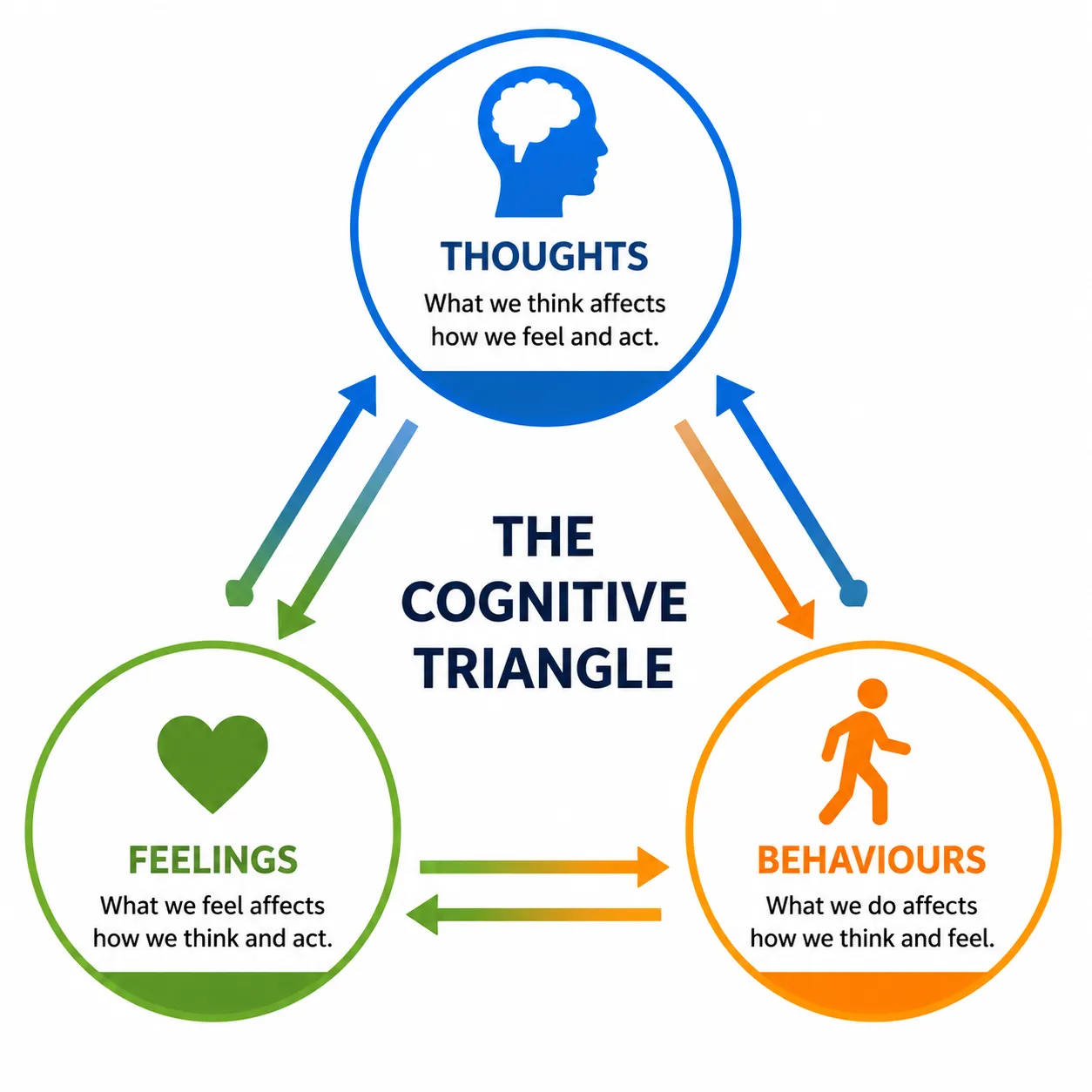
Cognitive restructuring is a structured Cognitive Behavioural Therapy (CBT) technique used to identify, challenge, and modify irrational, negative, or distorted thought patterns and replace them with more balanced, realistic, and adaptive thoughts. It is based on the core CBT principle that emotional distress is not caused directly by events themselves, but by how individuals interpret and evaluate those events.
Key Concepts of Cognitive Restructuring
- Automatic thoughts: Spontaneous, immediate thoughts that arise in response to situations
- Cognitive distortions: Biased or inaccurate thinking patterns such as catastrophising or overgeneralisation
- Rational vs irrational thinking: Distinguishing realistic thoughts from distorted interpretations
- Thought evaluation process: Systematic analysis of thinking patterns for accuracy and evidence
- Balanced thinking development: Creating realistic and adaptive alternative thoughts
Core Principles
- Thoughts influence emotions and behaviours
- Negative thinking patterns can be identified and changed
- Reality testing improves cognitive accuracy
- Reframing thoughts leads to improved emotional responses
Types / Classification of Cognitive Restructuring
Cognitive restructuring can be systematically understood through a series of structured stages. Each stage represents a progressive step in helping individuals move from distorted thinking patterns toward more balanced, realistic, and adaptive cognitive responses. These stages are commonly applied in CBT practice to ensure a clear therapeutic flow and measurable cognitive change.
1. Cognitive Identification Stage
This initial stage focuses on recognising and bringing awareness to automatic negative thoughts that occur in response to specific situations. Clients are guided to notice rapid, often unconscious thoughts that influence emotional reactions and behaviour.
At this stage, emphasis is placed on identifying:
- Automatic thoughts that arise immediately in challenging situations
- Recurring negative thinking patterns
- Cognitive distortions such as catastrophising, overgeneralisation, or black-and-white thinking
The purpose of this stage is to increase self-awareness and help clients understand how their thinking patterns contribute to emotional distress.
2. Cognitive Evaluation Stage
In this stage, individuals critically assess the accuracy, validity, and logic of their identified thoughts. The focus is on examining whether these thoughts are based on facts or distorted interpretations.
Clients are encouraged to:
- Evaluate evidence supporting their thoughts
- Identify evidence that contradicts their thoughts
- Analyse whether their thinking is realistic or biased
- Question assumptions and mental interpretations
This stage promotes objective thinking and reduces the influence of emotionally driven or irrational beliefs.
3. Cognitive Modification Stage
Cognitive modification involves actively replacing negative or distorted thoughts with more balanced, rational, and constructive alternatives. This is a key transformational phase in CBT practice.
During this stage, clients learn to:
- Reframe negative thoughts into realistic perspectives
- Develop alternative interpretations of situations
- Replace extreme thinking with balanced statements
- Strengthen adaptive and solution-focused thinking
The goal is not to eliminate thoughts but to reshape them into healthier cognitive patterns that support emotional stability.
4. Cognitive Reinforcement Stage
The final stage focuses on strengthening and maintaining newly developed balanced thinking patterns through continuous practice and repetition. This ensures long-term behavioural and emotional change.
Key activities include:
- Practising balanced thinking in real-life situations
- Reinforcing positive cognitive habits through repetition
- Monitoring progress and identifying setbacks
- Applying learned techniques consistently in daily life
This stage is essential for preventing relapse into old thinking patterns and ensuring sustainable cognitive change over time.
Importance
Cognitive restructuring is important because it forms the foundation of cognitive change in CBT practice. It enables individuals to understand how their thinking patterns directly influence emotional and behavioural responses.
Key importance includes:
- Helps identify root causes of emotional distress
- Promotes self-awareness of thinking patterns
- Supports structured therapeutic intervention
- Enables measurable psychological change
- Strengthens emotional regulation skills
Benefits
Cognitive restructuring provides multiple psychological and practical benefits:
- Reduces symptoms of anxiety and depression
- Improves emotional stability and resilience
- Enhances self-awareness and reflective thinking
- Strengthens problem-solving abilities
- Promotes positive behavioural change
- Improves workplace performance and confidence
- Supports long-term cognitive flexibility
Cognitive restructuring is grounded in the theoretical framework of Cognitive Behavioural Therapy, particularly the cognitive model developed by Aaron Beck. This model explains that distorted thinking patterns are central to emotional distress and maladaptive behaviour.
Theoretical Principles
- Cognitive Theory (Beck): Emotions are influenced by interpretations of events
- Information Processing Theory: Individuals process information based on existing beliefs
- Learning Theory: Thinking patterns can be learned and unlearned through structured practice
Process of Cognitive Restructuring
Step 1 → Identify Automatic Negative Thought
Step 2 → Recognise Cognitive Distortion
Step 3 → Evaluate Evidence For and Against Thought
Step 4 → Challenge Unhelpful Thinking
Step 5 → Develop Balanced Alternative Thought
Step 6 → Apply and Reinforce New Thinking Pattern
Features of Cognitive Restructuring
- Structured and systematic approach
- Evidence-based psychological technique
- Collaborative between therapist and client
- Goal-oriented intervention
- Focused on present thinking patterns
Advantages
- Highly effective for emotional disorders
- Easy to integrate with other CBT techniques
- Promotes long-term cognitive change
- Enhances self-management skills
Limitations
- Requires consistent practice for effectiveness
- May be challenging for clients with severe cognitive impairment
- Depends on client engagement and motivation
- Not suitable as a standalone intervention in complex trauma cases
Critical Analysis
While cognitive restructuring is one of the most effective CBT techniques, its success depends on the client’s ability to reflect on thoughts objectively. In some cases, deeply rooted beliefs may resist change, requiring additional therapeutic methods such as behavioural activation or exposure therapy. Therefore, cognitive restructuring is most effective when integrated within a broader CBT framework rather than used in isolation.
Practical Applications
Industry Examples
- Clinical psychologists using cognitive restructuring to treat depression
- School counsellors addressing student anxiety and low self-esteem
- Corporate wellness programmes managing employee stress and burnout
- Rehabilitation centres supporting behavioural change in addiction recovery
Workplace Scenarios
- An employee with performance anxiety learns to replace “I will fail” with balanced thinking
- A manager experiencing stress reframes workload challenges as manageable tasks
- A team member improves confidence through structured thought evaluation exercises
Real-Life Applications
Cognitive restructuring is widely used in everyday counselling sessions, online therapy platforms, and self-help mental health programmes. It helps individuals manage negative thinking patterns in daily life situations such as relationships, academic pressure, and workplace stress.
Table: Key Concepts of Cognitive Restructuring
| Concept | Description | Purpose |
|---|---|---|
| Automatic Thoughts | Immediate thoughts triggered by situations | Identify thinking patterns |
| Cognitive Distortions | Biased or irrational thinking errors | Recognise inaccurate thinking |
| Thought Evaluation | Analysis of evidence for thoughts | Improve thinking accuracy |
| Rational Thinking | Logical and evidence-based thoughts | Replace distortions |
| Balanced Thinking | Realistic and adaptive thoughts | Support emotional stability |
Case Study
Background
A 30-year-old employee reports persistent anxiety and low confidence in workplace meetings.
Situation
The client frequently thinks, “I am not good enough to contribute ideas,” leading to avoidance of speaking during meetings.
Analysis
- Automatic thought: “I will say something wrong”
- Cognitive distortion: Overgeneralisation and negative prediction
- Emotional response: Anxiety and fear
- Behaviour: Avoidance of participation
Intervention
- Identify negative automatic thoughts
- Apply cognitive restructuring worksheets
- Challenge distorted beliefs using evidence-based questioning
- Develop balanced thought: “I may make mistakes, but my input is still valuable”
Result
The client gradually begins participating in meetings with reduced anxiety and improved confidence in communication.
Case Study Conclusion
Cognitive restructuring effectively transformed negative thinking patterns into balanced thoughts, resulting in improved emotional regulation and workplace performance.
Key Takeaways
- Cognitive restructuring is a core CBT technique focused on changing distorted thinking
- It is based on the principle that thoughts influence emotions and behaviours
- The process involves identifying, challenging, and replacing negative thoughts
- It is widely used in clinical, educational, and workplace settings
- Consistent practice leads to improved emotional and behavioural outcomes
Cognitive restructuring is a foundational CBT technique that enables individuals to identify and modify unhelpful thinking patterns. By systematically challenging distorted thoughts and replacing them with balanced alternatives, it promotes healthier emotional responses and improved behavioural outcomes. Its structured, evidence-based approach makes it highly effective across clinical, educational, and workplace environments, supporting long-term psychological resilience and wellbeing.
2. Methods Used to Challenge Negative Thinking Patterns
Challenging negative thinking patterns is a core skill within Cognitive Behavioural Therapy (CBT), enabling individuals to identify and modify distorted cognitive processes that contribute to emotional distress. These methods provide structured tools to help clients question unhelpful beliefs and develop more balanced and realistic thinking.
Industry Relevance
In modern psychological practice, these methods are widely applied across clinical psychology, counselling services, school-based interventions, and organisational mental health programmes. They are essential for treating anxiety, depression, stress-related disorders, and low self-esteem, making them a fundamental component of CBT-based interventions.
Workplace Application
In workplace environments, these techniques are used in employee assistance programmes, coaching sessions, leadership development, and stress management workshops. Employees facing performance anxiety, workplace stress, or communication challenges benefit from structured cognitive interventions that improve thinking clarity and emotional resilience.
Definition / Key Concepts
Methods used to challenge negative thinking patterns refer to structured CBT-based strategies designed to help individuals identify, evaluate, and modify distorted or irrational thoughts. These methods encourage critical thinking, evidence-based reasoning, and cognitive flexibility.
Core Concepts Include
- Automatic negative thoughts
- Cognitive distortions
- Evidence-based thinking
- Thought evaluation
- Cognitive flexibility
- Behavioural validation
The overall aim is to replace unhelpful thinking patterns with balanced and realistic interpretations of experiences.
Types / Classification
CBT methods for challenging negative thinking can be broadly classified into:
1. Cognitive-Based Methods
- Socratic questioning
- Cognitive reframing
- Evidence examination
2. Behavioural-Based Methods
- Behavioural experiments
- Real-life testing of beliefs
3. Structured Recording Methods
- Thought records
- Self-monitoring tools
Each category plays a different role in helping clients understand and change their thinking patterns.
Importance
These methods are essential because they:
- Help identify irrational thought patterns
- Improve emotional regulation
- Encourage self-awareness and reflection
- Strengthen problem-solving ability
- Reduce psychological distress
- Support structured therapeutic change
Without these methods, clients may remain trapped in automatic negative thinking cycles that reinforce emotional difficulties.
Benefits
Using structured methods to challenge negative thinking provides multiple benefits:
- Improved emotional stability
- Reduced anxiety and depressive symptoms
- Enhanced cognitive clarity
- Increased self-confidence
- Better decision-making skills
- Stronger coping mechanisms
- Long-term behavioural improvement
CBT methods for challenging negative thinking are grounded in cognitive and behavioural theories, particularly Aaron Beck’s Cognitive Theory, which explains that emotional distress is influenced by distorted thinking patterns.
1. Socratic Questioning
Socratic questioning is a guided dialogue technique that encourages clients to critically evaluate their thoughts through structured questioning.
Common questions include:
- What evidence supports this thought?
- Is there an alternative explanation?
- What would I say to a friend in this situation?
This method helps clients shift from emotional reasoning to logical analysis.
2. Thought Records
Thought records are structured tools used to document and analyse thoughts in a step-by-step format.
Process:
Situation → Automatic Thought → Emotion → Evidence For → Evidence Against → Balanced Thought
They help clients break down complex emotional reactions into manageable cognitive components.
3. Cognitive Reframing
Cognitive reframing involves changing the interpretation of a situation to create a more balanced and realistic perspective.
Example:
- Negative Thought: “I always fail.”
- Balanced Thought: “I have faced challenges, but I have also succeeded in many situations.”
This method promotes cognitive flexibility and reduces extreme thinking.
4. Behavioural Experiments
Behavioural experiments test the validity of negative beliefs through real-life actions.
Example:
A client believes, “People will judge me if I speak in meetings.”
They are encouraged to gradually participate in discussions to test this belief.
This method provides experiential evidence to challenge cognitive distortions.
5. Evidence Examination Technique
This method involves systematically listing evidence that supports and contradicts a thought to evaluate its accuracy.
It helps clients move away from assumptions and towards fact-based thinking.
Critical Analysis
While these methods are highly effective, their success depends on client engagement, consistency, and cognitive readiness. Some individuals may struggle to challenge deeply rooted beliefs due to emotional intensity or long-standing thought patterns. In such cases, combining multiple methods within a structured CBT framework enhances effectiveness.
Additionally, over-reliance on cognitive techniques without behavioural reinforcement may limit long-term change, highlighting the importance of integrated CBT practice.
Practical Applications
Industry Examples
- Clinical psychologists using thought records for depression treatment
- School counsellors applying cognitive reframing for student anxiety
- Corporate trainers using Socratic questioning for workplace stress management
- Rehabilitation centres using behavioural experiments for behavioural change
Workplace Scenarios
- An employee challenges the thought “I am not good enough” using evidence-based reflection
- A manager uses cognitive reframing to handle performance pressure
- A team member reduces presentation anxiety through behavioural experiments
- A staff member uses thought records to manage workplace stress
Real-Life Applications
These methods are widely used in therapy sessions, online counselling platforms, and self-help programmes. Individuals apply them in daily life to manage stress, improve relationships, and make better decisions based on rational thinking rather than emotional assumptions.
Table: Methods of Challenging Negative Thinking
| Method | Purpose | Example |
|---|---|---|
| Socratic Questioning | Explore validity of thoughts | Asking evidence-based questions |
| Thought Records | Track and analyse thoughts | Writing automatic thoughts step-by-step |
| Cognitive Reframing | Change perspective | Turning negative beliefs into balanced thoughts |
| Behavioural Experiments | Test beliefs in real life | Speaking in public situations to test fear |
| Evidence Examination | Compare facts objectively | Listing evidence for and against thoughts |
Case Study
Background
A 27-year-old employee experiences persistent anxiety and avoidance of workplace communication due to fear of judgment.
Situation
The client believes, “If I speak in meetings, I will embarrass myself.”
Analysis
- Cognitive distortion: Catastrophising
- Emotional response: Anxiety and fear
- Behaviour: Avoidance of participation
Solution
- Apply Socratic questioning to evaluate belief accuracy
- Use thought records to document thinking patterns
- Conduct behavioural experiments through small speaking tasks
- Apply cognitive reframing to develop balanced thoughts
Result
The client gradually becomes more confident in meetings and actively participates without excessive anxiety. Negative beliefs significantly reduce over time.
Case Study Conclusion
The structured application of CBT methods effectively challenged and modified negative thinking patterns, leading to improved emotional regulation and workplace performance.
Key Takeaways
- Negative thinking patterns can be effectively challenged using structured CBT methods
- Techniques include Socratic questioning, thought records, reframing, behavioural experiments, and evidence examination
- Each method targets specific aspects of cognition and behaviour
- These methods improve emotional wellbeing and cognitive flexibility
- Consistent application leads to long-term psychological improvement
Methods used to challenge negative thinking patterns are essential components of Cognitive Behavioural Therapy, enabling individuals to critically evaluate and modify unhelpful thoughts. By combining cognitive, behavioural, and structured recording techniques, practitioners can support meaningful psychological change. These methods are widely applicable in clinical, educational, and workplace settings, making them a vital part of effective mental health interventions and long-term emotional resilience building.
3. Explain How Alternative Balanced Thoughts are Developed
The development of alternative balanced thoughts is a core cognitive process within Cognitive Behavioural Therapy (CBT). It enables individuals to move away from automatic negative thinking patterns and replace them with rational, evidence-based, and emotionally stable interpretations. This process is essential for improving emotional regulation and reducing psychological distress.
Industry Relevance
In modern mental health practice, balanced thought development is widely applied in counselling, clinical psychology, psychotherapy, and workplace wellbeing programmes. It is a key intervention used for managing anxiety, depression, stress, and cognitive distortions, making it an essential CBT skill for practitioners across healthcare and organisational settings.
Workplace Application
In workplace environments, balanced thinking techniques are used in stress management programmes, employee coaching, leadership development, and performance improvement interventions. Employees facing workplace pressure, communication challenges, or self-doubt benefit significantly from structured cognitive restructuring approaches.
Definition / Key Concepts
Balanced thoughts are realistic, flexible, and evidence-based interpretations of situations that are developed after critically evaluating and restructuring negative or distorted thinking patterns. They represent a healthier cognitive alternative to automatic negative thoughts and support improved emotional and behavioural responses.
Core Concepts Include
- Automatic negative thoughts
- Cognitive distortions
- Evidence-based thinking
- Cognitive flexibility
- Rational interpretation
- Emotional regulation
Balanced thinking is not about positive thinking, but about realistic thinking based on facts and evidence.
Types / Classification of Balanced Thoughts
Balanced thoughts in Cognitive Behavioural Therapy (CBT) are developed through structured cognitive approaches that help individuals replace distorted thinking with more realistic, flexible, and evidence-based interpretations. These approaches support emotional regulation by encouraging logical evaluation of thoughts rather than emotionally driven assumptions.
1. Evidence-Based Balanced Thinking
Evidence-based balanced thinking focuses on developing thoughts that are directly supported by factual information and objective evidence rather than assumptions or emotional reactions. In this approach, individuals are encouraged to examine real-life facts, past experiences, and observable outcomes before forming conclusions about a situation.
This method helps clients separate facts from opinions and reduces the influence of cognitive distortions such as catastrophising or overgeneralisation. By grounding thoughts in evidence, individuals are able to develop more accurate and stable interpretations of events, leading to improved emotional control and reduced psychological distress.
2. Reframed Balanced Thinking
Reframed balanced thinking involves consciously shifting the perspective of a situation to reduce emotional intensity and promote a more constructive interpretation. Instead of focusing on negative or threatening meanings, individuals are guided to view situations from alternative, more balanced angles.
This approach does not deny difficulties but encourages a more realistic and manageable interpretation of challenges. For example, a setback can be reframed as a learning opportunity rather than a failure. This shift in perspective helps reduce anxiety, frustration, and self-criticism while promoting emotional resilience and adaptive coping.
3. Alternative Interpretation Thinking
Alternative interpretation thinking focuses on generating multiple possible explanations for a single situation rather than accepting a single negative assumption. This method helps individuals recognise that their initial interpretation may not be the only or most accurate explanation.
By exploring different viewpoints, clients develop cognitive flexibility and reduce rigid thinking patterns. For example, instead of assuming “my colleague is ignoring me,” alternative interpretations could include “they may be busy or distracted.” This approach reduces emotional distress by broadening thinking patterns and encouraging more balanced reasoning.
4. Rational Self-Talk Development
Rational self-talk development involves creating structured and supportive internal dialogue that replaces irrational, negative, or distorted thoughts. This technique helps individuals consciously modify how they speak to themselves in response to challenging situations.
Through rational self-talk, clients learn to replace statements like “I cannot handle this” with more balanced alternatives such as “This is difficult, but I can manage it step by step.” Over time, this practice strengthens emotional regulation, builds confidence, and promotes healthier cognitive habits. It also supports long-term behavioural change by reinforcing positive and realistic thinking patterns.
Importance
Developing balanced thoughts is important because it:
- Reduces emotional distress and anxiety
- Improves cognitive flexibility and reasoning
- Breaks negative thinking cycles
- Enhances self-awareness and reflection
- Strengthens coping mechanisms
- Supports long-term behavioural change
Without balanced thinking, individuals remain vulnerable to cognitive distortions and emotional instability.
Benefits
Balanced thought development provides multiple psychological and practical benefits:
- Improved emotional regulation
- Reduced anxiety and depressive symptoms
- Increased confidence and self-esteem
- Better decision-making ability
- Enhanced resilience under stress
- Improved interpersonal communication
- Greater workplace performance and productivity
The development of balanced thoughts is grounded in Cognitive Behavioural Theory, particularly Aaron Beck’s cognitive model, which explains that emotional distress is influenced by distorted interpretations of reality.
Process of Developing Balanced Thoughts
Step 1 → Identify Automatic Negative Thought
Step 2 → Examine Evidence For and Against
Step 3 → Challenge Cognitive Distortions
Step 4 → Generate Alternative Perspective
Step 5 → Form Balanced Thought
Step 6 → Evaluate Emotional Impact
This structured process ensures that thinking patterns are systematically re-evaluated and corrected.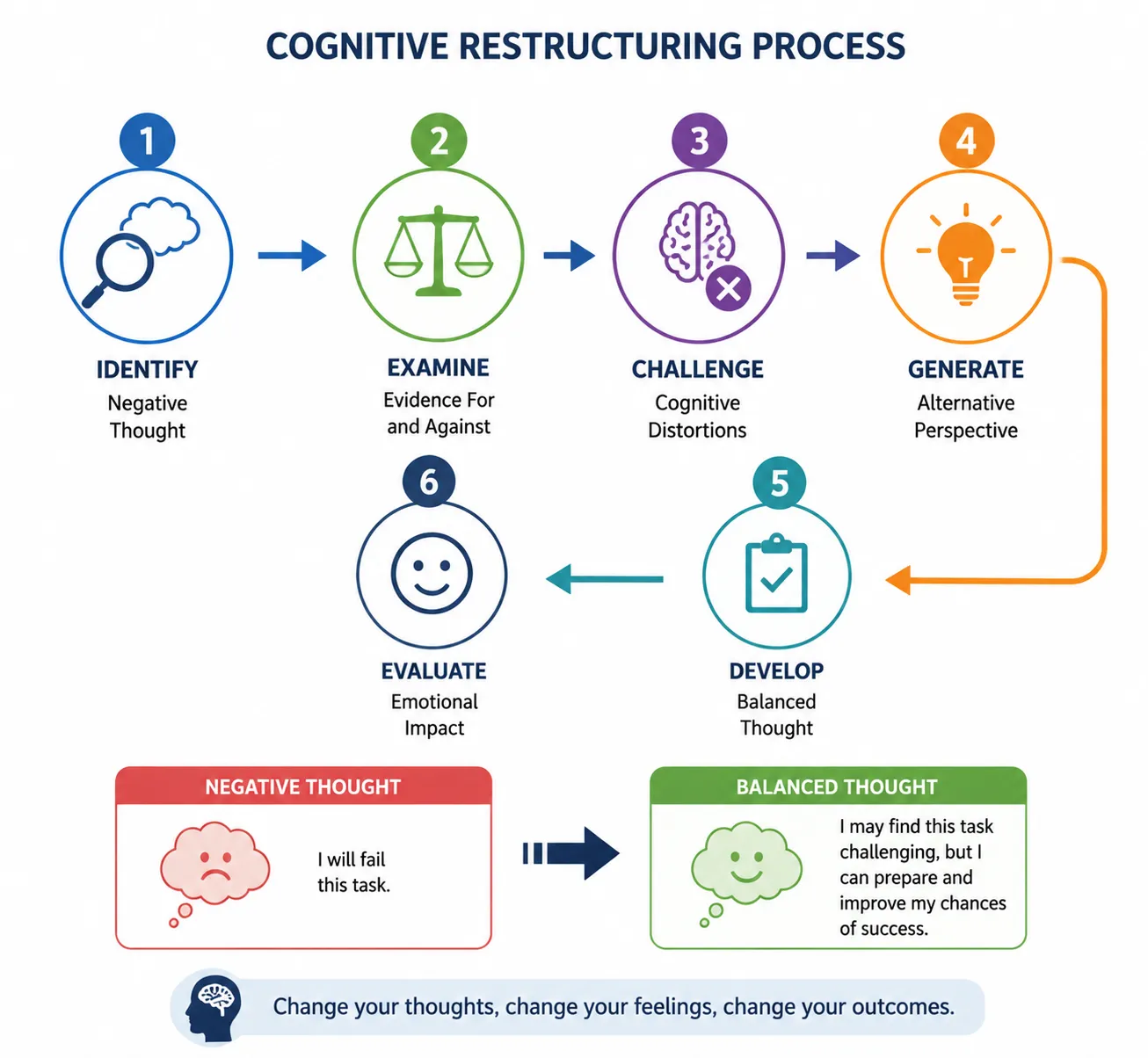
Characteristics of Balanced Thoughts
- Realistic and evidence-based
- Emotionally stable and non-extreme
- Flexible and adaptable to context
- Free from absolute language such as “always” or “never”
- Constructive and solution-focused
Example Transformation
Negative Thought:
“I will fail this task.”
Balanced Thought:
“I may find this task challenging, but I can prepare and improve my chances of success.”
This transformation demonstrates how distorted thinking is replaced with a realistic and supportive interpretation.
Critical Analysis
Although balanced thinking is highly effective, its success depends on cognitive awareness, motivation, and consistent practice. Some individuals may initially struggle to replace deeply rooted negative beliefs, especially in cases of long-standing anxiety or depression. Therefore, balanced thought development is most effective when combined with other CBT techniques such as behavioural experiments and thought records.
Additionally, practitioners must ensure that balanced thinking does not shift into unrealistic positivity, as CBT emphasises realism rather than forced optimism.
Practical Applications
Industry Examples
- Clinical psychologists using balanced thinking to treat anxiety disorders
- School counsellors helping students manage exam stress
- Corporate trainers supporting employees with performance anxiety
- Rehabilitation centres assisting behavioural change in recovery programmes
Workplace Scenarios
- An employee reframes “I am not capable” into “I am still learning and improving”
- A manager reduces stress by developing realistic expectations about workload
- A team member improves communication confidence through balanced self-talk
Real-Life Applications
Balanced thinking is widely applied in everyday counselling, digital therapy platforms, and self-help interventions. Individuals use it to manage relationship conflicts, academic pressure, and daily stressors more effectively.
Table: Cognitive Restructuring Process Summary
| Step | Process | Purpose |
|---|---|---|
| Identify | Recognise automatic negative thoughts | Increase awareness of thinking patterns |
| Analyse | Examine evidence for and against | Improve objectivity |
| Challenge | Identify cognitive distortions | Reduce irrational thinking |
| Generate | Create alternative perspectives | Develop flexible thinking |
| Develop | Form balanced thoughts | Replace negative cognition |
| Evaluate | Assess emotional impact | Strengthen emotional regulation |
Cognitive Restructuring Framework
- Identify negative thoughts
- Challenge cognitive distortions
- Evaluate evidence objectively
- Generate alternative interpretations
- Develop balanced thoughts
- Improve emotional response
Case Study
Background
A 32-year-old employee experiences anxiety and low confidence during workplace presentations.
Situation
The client believes, “I always make mistakes when speaking in meetings.”
Challenge
The therapist must help the client identify cognitive distortions and develop balanced thinking patterns to improve confidence and performance.
Analysis
- Cognitive distortion: Overgeneralisation (“always”)
- Emotional response: Anxiety and fear
- Behavioural response: Avoidance of presentations
Solution
- Use thought records to identify negative beliefs
- Apply Socratic questioning to challenge assumptions
- Conduct behavioural experiments through gradual exposure
- Develop balanced thoughts to replace irrational beliefs
Result
The client begins participating in meetings with reduced anxiety, improved confidence, and increased engagement. Negative self-talk significantly decreases over time.
Case Study Conclusion
The structured development of balanced thoughts through cognitive restructuring resulted in measurable emotional improvement and enhanced workplace performance, demonstrating the effectiveness of CBT-based interventions.
Key Takeaways
- Balanced thoughts are realistic and evidence-based interpretations
- They are developed through a structured cognitive restructuring process
- They replace distorted thinking patterns with flexible reasoning
- They improve emotional regulation and behavioural outcomes
- They are widely used in clinical and workplace settings
The development of alternative balanced thoughts is a fundamental process in Cognitive Behavioural Therapy that enables individuals to replace distorted thinking with realistic and adaptive interpretations. Through structured evaluation, cognitive challenge, and reframing techniques, individuals gain improved emotional stability and behavioural control. This approach is highly effective across clinical, educational, and workplace environments, supporting long-term psychological resilience and wellbeing.
Conclusion
Cognitive restructuring is a core and highly effective technique within Cognitive Behavioural Therapy (CBT) that focuses on transforming negative, irrational, and distorted thinking patterns into more balanced, realistic, and constructive thoughts. It provides a structured method for helping individuals understand how their thoughts influence emotions and behaviours in everyday situations. By guiding clients to identify and challenge unhelpful cognitions, practitioners support meaningful psychological change. This process plays a vital role in improving emotional awareness and cognitive flexibility. As a result, individuals develop healthier and more adaptive ways of interpreting life experiences.
Through consistent application of cognitive restructuring, individuals achieve greater emotional stability and improved behavioural responses across different contexts. The technique strengthens psychological resilience by reducing the impact of negative thinking patterns and promoting rational decision-making. It is widely applied in clinical, educational, and workplace environments to address anxiety, stress, and self-esteem issues. Its structured nature ensures that progress can be measured and reinforced over time. Overall, cognitive restructuring remains a foundational CBT skill that supports long-term mental wellbeing and sustainable personal development.