
Lesson 1: Evaluate the role of sustainability in electrical QA/QC practices.
Sustainability has become a critical component of modern electrical engineering and Quality Assurance/Quality Control (QA/QC) practices, influencing how organisations design, deliver, inspect and maintain electrical systems. This lesson explores the relationship between sustainability principles and electrical QA/QC operations, focusing on how quality management processes can support environmental responsibility, resource efficiency, operational reliability and long-term value creation. Learners will examine how sustainable practices are integrated into quality planning, inspection activities, testing procedures, material selection, supplier management and lifecycle performance evaluation within complex electrical projects.
Effective electrical QA/QC practices play an essential role in achieving sustainability objectives by preventing defects, reducing material waste, improving energy efficiency and ensuring that electrical systems perform reliably throughout their operational life. This lesson develops an understanding of how QA/QC professionals evaluate sustainability performance, identify improvement opportunities and apply sustainable quality approaches that align with organisational goals and industry expectations. By analysing the role of sustainability in electrical QA/QC, learners will gain the knowledge required to support responsible engineering decisions, enhance quality management systems and contribute to more efficient, resilient and environmentally conscious electrical operations.
1: Critically Analyse the Core Principles of Sustainability as They Apply Specifically to Complex Electrical QA/QC Operations
Sustainability has become a fundamental consideration within modern electrical engineering quality management systems. In complex electrical projects, Quality Assurance and Quality Control (QA/QC) activities are no longer limited to ensuring compliance with technical specifications, drawings and inspection requirements. Contemporary QA/QC practices must also consider environmental responsibility, efficient resource utilisation, long-term system performance, social responsibility and lifecycle value. Sustainability principles provide a framework for achieving reliable electrical outcomes while reducing waste, improving efficiency and supporting responsible engineering practices.
Electrical QA/QC operations have a significant influence on sustainability because quality decisions made during design, procurement, installation, testing and commissioning directly affect the environmental and operational performance of electrical assets. Poor-quality workmanship, incorrect material selection, inadequate testing and ineffective quality controls can result in energy losses, premature equipment failure, unnecessary replacement, increased waste generation and higher operational costs. Therefore, integrating sustainability principles into QA/QC systems enables organisations to prevent failures, optimise resources and improve the overall lifecycle performance of electrical installations.
Critically analysing sustainability within complex electrical QA/QC operations requires an understanding of how environmental, economic and social factors interact with quality management processes. Senior QA/QC professionals must evaluate whether quality systems support sustainable outcomes by analysing performance data, assessing resource efficiency, reviewing compliance requirements and identifying opportunities for continuous improvement. Sustainable QA/QC is not simply an environmental initiative; it is a strategic approach that improves reliability, reduces risks and enhances organisational performance.
In advanced electrical engineering environments, sustainability and quality management are closely connected. A well-designed quality system supports sustainability by preventing defects, reducing rework, improving energy efficiency and ensuring that electrical systems operate effectively throughout their intended lifecycle. This approach transforms QA/QC from a compliance-based function into a strategic tool for achieving sustainable engineering excellence.
Understanding Sustainability in Electrical QA/QC Operations
Sustainability in electrical QA/QC operations refers to the integration of environmental, economic and social considerations into quality management activities to ensure that electrical systems deliver reliable performance while minimising negative impacts.
Traditional QA/QC approaches mainly focus on:
- Meeting technical specifications.
- Preventing defects.
- Ensuring compliance.
- Verifying installation quality.
However, sustainable QA/QC expands this approach by considering:
- Long-term asset performance.
- Energy efficiency.
- Responsible material selection.
- Waste reduction.
- Environmental impact.
- Workforce safety and competency.
- Lifecycle management.
A sustainable electrical QA/QC system ensures that quality decisions create value throughout the entire lifecycle of electrical assets rather than focusing only on short-term project completion.
For example, selecting a high-quality electrical component may involve a higher initial investment, but it can provide:
- Longer service life.
- Reduced maintenance requirements.
- Lower energy consumption.
- Improved operational reliability.
This demonstrates that sustainability and quality objectives are interconnected.
Key Concepts and Definitions of Sustainability in Electrical QA/QC
| Key Concept | Definition | Application in Electrical QA/QC Operations |
|---|---|---|
| Sustainability | The practice of meeting current needs while protecting resources for future requirements | Developing responsible electrical quality strategies |
| Sustainable QA/QC | Quality practices that integrate environmental, economic and social considerations | Improving quality while reducing negative impacts |
| Lifecycle Management | Managing electrical assets from design through operation and disposal | Ensuring long-term reliability and performance |
| Resource Efficiency | Effective use of materials, energy and resources | Reducing waste and improving productivity |
| Energy Efficiency | Achieving required electrical performance with reduced energy consumption | Improving system sustainability |
| Sustainable Procurement | Selecting materials and suppliers based on quality and environmental factors | Ensuring responsible component selection |
| Circular Economy | Reducing waste through reuse, recovery and recycling approaches | Managing electrical materials responsibly |
| Environmental Responsibility | Minimising negative effects on the environment | Controlling waste and resource usage |
| Social Sustainability | Supporting people, safety and workforce development | Improving competency and workplace practices |
| Continuous Improvement | Ongoing enhancement of processes and performance | Strengthening sustainable QA/QC systems |
Core Principles of Sustainability Applied to Electrical QA/QC
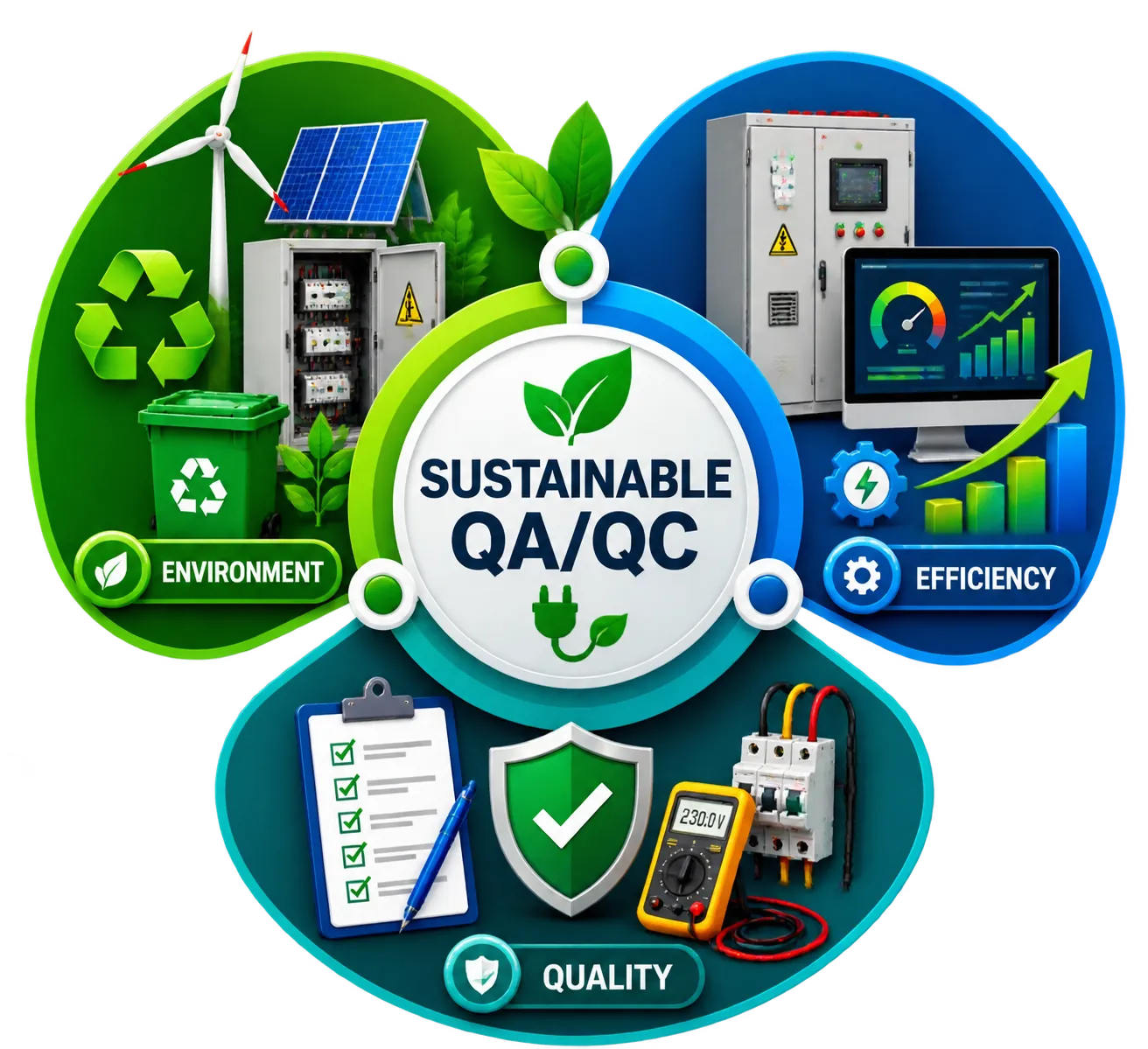
Sustainability within electrical QA/QC operations is based on several principles that guide decision-making throughout engineering projects. These principles ensure that quality processes contribute to responsible, efficient and reliable electrical systems.
Environmental Sustainability in Electrical QA/QC Practices
Environmental sustainability focuses on reducing the environmental impact of electrical engineering activities while maintaining required quality standards.
Electrical projects involve significant resource consumption through:
- Raw material usage.
- Manufacturing processes.
- Transportation activities.
- Installation operations.
- Maintenance requirements.
QA/QC professionals contribute to environmental sustainability by ensuring that activities are completed correctly the first time.
Effective quality control reduces:
- Material waste.
- Rework activities.
- Equipment replacement.
- Unnecessary energy consumption.
Key environmental sustainability practices include:
- Verifying material specifications before installation.
- Ensuring correct equipment selection.
- Monitoring installation quality.
- Preventing repeated corrective work.
- Maintaining accurate quality records.
For example, incorrect cable installation may result in:
- Increased material consumption.
- Additional labour requirements.
- Project delays.
- Increased environmental impact.
A strong QA/QC process identifies such issues early and prevents unnecessary resource consumption.
Resource Efficiency and Waste Reduction
Resource efficiency is a major sustainability principle within electrical QA/QC operations. It focuses on achieving maximum value from materials, equipment and human resources.
Electrical projects use various resources, including:
- Copper conductors.
- Electrical panels.
- Transformers.
- Switchgear.
- Protection equipment.
- Testing instruments.
Poor quality practices can create significant waste through:
- Incorrect installation.
- Damaged materials.
- Failed testing.
- Unplanned replacement.
QA/QC systems support resource efficiency through:
- Accurate inspection procedures.
- Effective material verification.
- Competency-based installation.
- Early defect identification.
Benefits of resource-efficient QA/QC practices include:
- Reduced project waste.
- Lower operational costs.
- Improved productivity.
- Better environmental performance.
Energy Efficiency and Electrical Quality Performance
Energy efficiency is a critical sustainability objective within electrical engineering. QA/QC activities directly influence how efficiently electrical systems operate.
Electrical quality problems can result in:
- Increased power losses.
- Poor equipment performance.
- Higher operational costs.
- Reduced system reliability.
QA/QC professionals support energy efficiency by ensuring:
- Correct equipment installation.
- Accurate testing and commissioning.
- Proper protection system operation.
- Compliance with design requirements.
Examples of sustainable QA/QC activities include:
- Testing electrical systems before operation.
- Verifying equipment ratings.
- Checking electrical connections.
- Monitoring performance indicators.
A properly installed and tested electrical system consumes resources more efficiently and provides improved long-term value.
Economic Sustainability and Lifecycle Value
Economic sustainability focuses on achieving long-term value while managing resources effectively.
In electrical QA/QC operations, economic sustainability involves evaluating:
- Initial investment.
- Maintenance requirements.
- Operational efficiency.
- Asset lifespan.
A low-cost decision may create higher future costs if it results in:
- Frequent failures.
- Increased maintenance.
- Reduced reliability.
Sustainable economic decisions consider the complete lifecycle of electrical systems.
QA/QC professionals support economic sustainability by:
- Selecting reliable materials.
- Preventing defects.
- Improving installation quality.
- Reducing rework.
Lifecycle-focused quality management improves:
- Asset durability.
- Operational efficiency.
- Financial performance.
Sustainable Procurement and Supplier Quality Management
Supplier selection has a major influence on sustainability outcomes. Electrical organisations depend on suppliers for materials, equipment and technical components.
Sustainable procurement ensures suppliers provide:
- Quality-certified products.
- Reliable performance.
- Environmentally responsible materials.
- Consistent compliance.
QA/QC teams should evaluate suppliers through:
- Supplier audits.
- Material verification.
- Quality performance reviews.
- Compliance assessments.
Poor supplier quality can create sustainability challenges, including:
- Increased waste.
- Additional transportation.
- Replacement requirements.
- Project delays.
Strong supplier quality management supports both sustainability and project success.
Social Sustainability in Electrical QA/QC Operations
Social sustainability focuses on people, safety, skills development and responsible workplace practices.
Electrical projects depend on competent professionals who understand quality requirements and sustainable practices.
QA/QC systems support social sustainability through:
- Training programmes.
- Competency assessments.
- Safety inspections.
- Knowledge sharing.
A skilled workforce contributes to sustainability by:
- Reducing installation errors.
- Improving productivity.
- Supporting safe working practices.
- Maintaining consistent quality.
Organisations with strong quality cultures encourage employees to take responsibility for sustainable outcomes.
Integrating Sustainability into Quality Management Systems
Sustainability should be embedded within existing QA/QC frameworks rather than treated as a separate activity.
Integration areas include:
Quality Planning
Sustainability considerations should be included during project planning.
Activities include:
- Identifying environmental risks.
- Selecting suitable materials.
- Establishing sustainability objectives.
Inspection and Testing
Inspection processes should evaluate:
- Installation quality.
- Equipment efficiency.
- Long-term reliability.
Documentation Control
Quality records should include:
- Material certificates.
- Testing results.
- Sustainability performance information.
Auditing Processes
Quality audits should assess:
- Sustainability compliance.
- Resource efficiency.
- Process effectiveness.
Sustainability-Based Risk Management
Sustainability principles improve risk management by encouraging organisations to consider long-term consequences.
Sustainable risk assessment includes:
- Technical risks.
- Environmental risks.
- Operational risks.
- Safety risks.
Examples include:
- Equipment failure causing energy waste.
- Poor material selection reducing asset life.
- Incorrect installation increasing maintenance needs.
QA/QC professionals should identify these risks early and introduce preventive controls.
Practical Example: Sustainable QA/QC Approach in Electrical Installation
Project Background
A large commercial electrical installation project experiences increased material waste and repeated installation defects.
Quality Analysis
The QA/QC team reviews:
- Inspection reports.
- Non-conformance records.
- Material usage data.
- Testing results.
Identified Issues
The analysis identifies:
- Incorrect material handling.
- Poor installation practices.
- Weak verification processes.
Sustainability-Based Improvements
The organisation introduces:
- Improved inspection planning.
- Better material control.
- Additional workforce training.
- Digital quality monitoring.
Results
The project achieves:
- Reduced material waste.
- Improved installation quality.
- Better resource utilisation.
- Increased stakeholder confidence.
Case Study: Implementing Sustainable QA/QC Practices in Electrical Infrastructure
Background
An electrical infrastructure organisation experienced repeated equipment failures and increased maintenance requirements.
Investigation Process
The QA/QC team analysed:
- Equipment performance data.
- Failure records.
- Supplier quality information.
- Maintenance history.
Findings
The organisation identified:
- Poor component selection.
- Inconsistent installation standards.
- Limited lifecycle consideration.
Improvement Actions
The organisation implemented:
- Sustainable procurement procedures.
- Improved supplier evaluation.
- Enhanced inspection requirements.
- Lifecycle-based quality planning.
Outcomes
The organisation achieved:
- Reduced equipment failures.
- Improved system reliability.
- Lower maintenance costs.
- Better sustainability performance.
Case Study Conclusion
This case demonstrates that integrating sustainability principles into QA/QC operations improves both environmental performance and technical reliability. Sustainable quality practices create long-term benefits by reducing waste, improving efficiency and strengthening organisational capability.
Key Benefits of Sustainable Electrical QA/QC Practices
Applying sustainability principles within electrical QA/QC operations provides significant advantages:
- Reduced material waste.
- Improved energy efficiency.
- Enhanced electrical system reliability.
- Lower maintenance requirements.
- Reduced operational costs.
- Improved compliance performance.
- Stronger stakeholder confidence.
- Better resource utilisation.
- Improved organisational reputation.
- Long-term asset value.
Key Learning Points
Learners should understand that:
- Sustainability is an essential element of modern electrical QA/QC management.
- Quality decisions directly influence environmental and operational outcomes.
- Resource efficiency reduces waste and improves performance.
- Energy efficiency is connected with electrical quality.
- Lifecycle thinking supports sustainable engineering decisions.
- Supplier quality management influences sustainability outcomes.
- Competent employees support sustainable quality practices.
- Risk management should include sustainability considerations.
- Continuous improvement strengthens sustainable performance.
- Effective QA/QC systems support responsible electrical engineering.
Conclusion
Critically analysing sustainability principles within complex electrical QA/QC operations enables organisations to achieve reliable, efficient and responsible engineering outcomes. Sustainability is not limited to environmental protection; it represents a comprehensive approach that integrates quality, efficiency, safety and long-term value.
By embedding sustainability into QA/QC processes, electrical engineering organisations can reduce waste, improve system performance, enhance compliance and develop resilient quality management systems. Sustainable QA/QC practices provide the foundation for achieving continuous improvement and long-term success within the electrical sector.
2: Evaluate the Environmental and Operational Impact of Current Electrical QA/QC Practices Within a Large-Scale Project
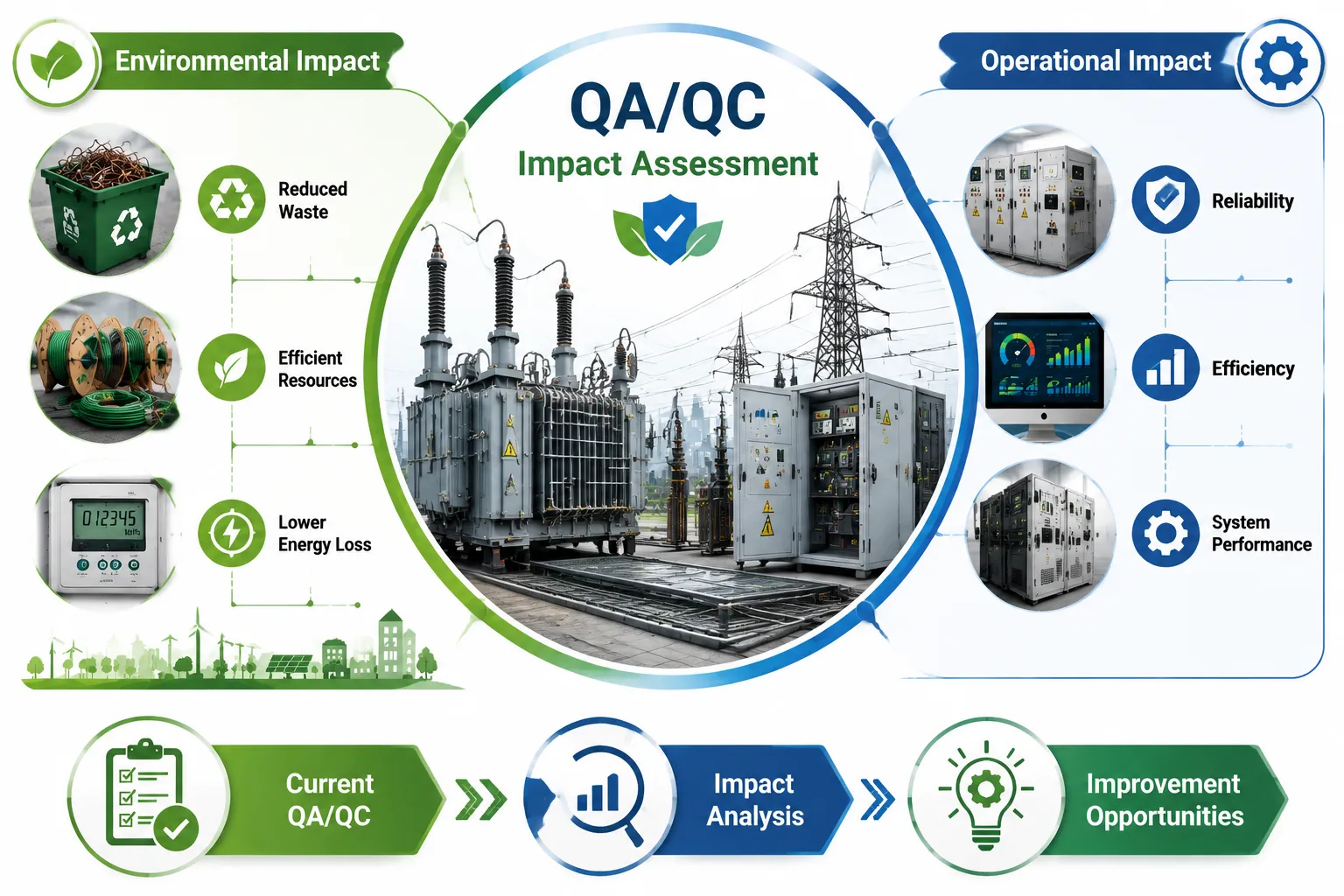
Modern large-scale electrical projects involve complex engineering systems, extensive material usage, multiple contractors, advanced technologies and strict performance requirements. Within these environments, current Quality Assurance and Quality Control (QA/QC) practices have a significant influence on both environmental sustainability and operational performance. Effective QA/QC systems help organisations prevent failures, optimise resource utilisation, improve energy efficiency and ensure that electrical assets perform reliably throughout their lifecycle.
Evaluating the environmental and operational impact of existing electrical QA/QC practices requires a detailed understanding of how quality processes influence project outcomes. QA/QC activities such as design verification, material inspection, installation checks, testing, commissioning and documentation control directly affect sustainability performance and operational efficiency. Poorly managed quality processes can increase material waste, energy consumption, project delays and maintenance requirements, while effective QA/QC practices can reduce environmental impact and improve overall project reliability.
In large-scale electrical projects, sustainability evaluation requires professionals to analyse current practices and determine whether they support responsible resource management, operational efficiency and long-term asset performance. This involves reviewing quality data, analysing performance indicators, assessing environmental consequences and identifying opportunities for improvement.
Electrical QA/QC professionals must therefore evaluate not only whether systems comply with technical requirements but also whether quality practices contribute positively to environmental protection, operational reliability and organisational sustainability objectives.
Understanding the Relationship Between QA/QC Practices and Sustainability Performance
Electrical QA/QC practices influence sustainability because quality management decisions affect how efficiently resources are used and how effectively electrical systems operate.
A high-performing QA/QC system contributes to sustainability by:
- Preventing installation errors.
- Reducing material waste.
- Improving equipment reliability.
- Minimising rework.
- Supporting energy-efficient operation.
- Extending asset lifecycle.
Conversely, ineffective QA/QC practices may create environmental and operational challenges, including:
- Increased waste generation.
- Additional transportation requirements.
- Higher energy consumption.
- Equipment failures.
- Increased maintenance activities.
For example, if electrical equipment is installed incorrectly and fails during operation, the organisation may need to replace components, consume additional materials and perform corrective work. This creates unnecessary environmental impact and operational disruption.
Therefore, evaluating current QA/QC practices requires consideration of both immediate project performance and long-term sustainability outcomes.
Key Concepts and Definitions of Environmental and Operational Impact Evaluation
| Key Concept | Definition | Application in Electrical QA/QC Projects |
|---|---|---|
| Environmental Impact | The effect of project activities on natural resources and the environment | Evaluating waste, energy use and material consumption |
| Operational Impact | The effect of quality practices on system performance and project efficiency | Assessing reliability, productivity and lifecycle performance |
| QA/QC Practice | Structured activities used to ensure quality requirements are achieved | Inspection, testing and verification processes |
| Sustainability Assessment | Evaluation of environmental, economic and social performance | Measuring responsible project delivery |
| Resource Efficiency | Optimising the use of materials, energy and resources | Reducing waste during electrical installation |
| Lifecycle Performance | The long-term effectiveness of electrical assets | Improving reliability and reducing maintenance |
| Quality Performance Indicator | A measurable value used to evaluate quality outcomes | Monitoring defects, failures and compliance |
| Rework Reduction | Minimising repeated work caused by quality failures | Improving efficiency and reducing waste |
| Environmental Compliance | Meeting required environmental obligations | Ensuring responsible project execution |
| Operational Reliability | Ability of electrical systems to perform consistently | Maintaining safe and efficient operation |
Evaluating Current Electrical QA/QC Practices in Large-Scale Projects
A comprehensive evaluation begins with analysing existing QA/QC processes and determining their effectiveness.
Large-scale electrical projects typically include:
- Electrical design verification.
- Procurement quality checks.
- Material inspections.
- Installation inspections.
- Testing and commissioning.
- Quality documentation management.
- Defect monitoring.
- Corrective action processes.
Each of these activities influences environmental and operational outcomes.
Design Quality Verification and Sustainability Impact
Design verification is one of the earliest opportunities to improve sustainability performance.
Effective design QA/QC ensures:
- Correct equipment selection.
- Appropriate system sizing.
- Efficient energy performance.
- Reduced future modifications.
Poor design quality can result in:
- Over-designed systems.
- Excessive material usage.
- Increased operational costs.
- Reduced energy efficiency.
QA/QC evaluation should consider whether design processes include:
- Energy efficiency requirements.
- Lifecycle considerations.
- Sustainable material selection.
- Future maintenance needs.
A well-controlled design process reduces future environmental and operational problems.
Material Inspection and Environmental Impact
Material quality control has a direct relationship with sustainability.
Large electrical projects require significant quantities of:
- Cables.
- Switchgear.
- Transformers.
- Control equipment.
- Electrical accessories.
Effective material inspection prevents:
- Incorrect material selection.
- Damaged component installation.
- Premature equipment failure.
Environmental benefits include:
- Reduced material waste.
- Fewer replacements.
- Lower transportation requirements.
Operational benefits include:
- Improved equipment reliability.
- Reduced installation delays.
- Better system performance.
QA/QC teams should evaluate:
- Supplier quality performance.
- Material certification.
- Storage conditions.
- Traceability records.
Installation Quality Control and Operational Performance
Installation quality has a major impact on electrical system performance.
Poor installation practices may result in:
- Electrical faults.
- Safety risks.
- Reduced equipment efficiency.
- Increased maintenance requirements.
Effective installation QA/QC includes:
- Workmanship inspections.
- Installation verification.
- Compliance checks.
- Progressive quality monitoring.
Benefits include:
- Improved reliability.
- Reduced defects.
- Faster commissioning.
- Lower operational risks.
For example, incorrect cable termination can cause overheating, energy losses and equipment damage. Early quality inspection prevents these issues.
Testing and Commissioning Quality Evaluation
Testing and commissioning activities confirm whether electrical systems operate according to requirements.
Effective testing processes evaluate:
- Electrical performance.
- Safety functions.
- Protection systems.
- Equipment operation.
Poor testing practices may result in:
- Hidden defects.
- Unexpected failures.
- Operational interruptions.
Sustainable testing approaches include:
- Accurate measurement.
- Proper calibration.
- Complete documentation.
- Performance verification.
These activities improve both environmental and operational outcomes by ensuring efficient system operation.
Documentation Control and Sustainability Performance
Quality documentation provides evidence that electrical systems have been properly designed, installed and tested.
Effective documentation management supports sustainability through:
- Improved traceability.
- Reduced repeated inspections.
- Better maintenance planning.
Poor documentation can cause:
- Incorrect maintenance decisions.
- Increased operational risks.
- Unnecessary replacement activities.
Modern QA/QC systems increasingly use:
- Digital inspection records.
- Electronic approvals.
- Automated reporting platforms.
These approaches reduce paper usage and improve information accuracy.
Environmental Impact Assessment of Current QA/QC Practices
Evaluating environmental impact requires analysing how existing quality processes influence resource consumption and waste generation.
Important evaluation areas include:
Material Waste
QA/QC practices affect material waste through:
- Defect prevention.
- Installation accuracy.
- Storage control.
Poor quality performance increases:
- Scrap materials.
- Replacement requirements.
- Disposal activities.
Energy Consumption
Electrical quality practices influence operational energy efficiency.
Poor-quality systems may cause:
- Energy losses.
- Reduced equipment efficiency.
- Increased operational consumption.
Resource Utilisation
Efficient QA/QC ensures:
- Proper material usage.
- Reduced rework.
- Better workforce productivity.
Waste Management
Quality processes should support:
- Responsible disposal.
- Recycling opportunities.
- Material recovery.
Operational Impact Assessment of Current QA/QC Practices
Operational evaluation focuses on how QA/QC activities influence project delivery and long-term system performance.
Important areas include:
Project Efficiency
Effective QA/QC improves:
- Workflow control.
- Installation accuracy.
- Project scheduling.
Poor QA/QC may cause:
- Delays.
- Rework.
- Increased costs.
System Reliability
Quality practices directly influence:
- Equipment lifespan.
- Electrical safety.
- Operational continuity.
Maintenance Requirements
Higher quality installations require:
- Less corrective maintenance.
- Fewer repairs.
- Lower operational disruption.
Stakeholder Confidence
Strong QA/QC performance improves confidence among:
- Clients.
- Contractors.
- Regulatory bodies.
- Management teams.
Identifying Weaknesses in Current QA/QC Practices
A detailed evaluation should identify areas where current practices fail to support sustainability and operational objectives.
Common weaknesses include:
Reactive Quality Management
Some organisations respond to failures after they occur rather than preventing problems.
Impacts include:
- Increased waste.
- Higher costs.
- Reduced efficiency.
Limited Sustainability Integration
Some QA/QC systems focus only on compliance without considering:
- Environmental impact.
- Lifecycle performance.
- Resource efficiency.
Poor Data Analysis
Without effective analysis, organisations may fail to identify:
- Repeated defects.
- Performance trends.
- Improvement opportunities.
Ineffective Supplier Management
Weak supplier controls may result in:
- Poor material quality.
- Increased failures.
- Additional waste.
Practical Example: Evaluating QA/QC Practices in a Large Electrical Infrastructure Project
Project Background
A large-scale electrical infrastructure project experiences increasing material waste and commissioning delays.
Existing QA/QC Practices
The organisation uses:
- Manual inspection records.
- Traditional testing procedures.
- Limited performance analysis.
Evaluation Findings
The QA/QC review identifies:
- Repeated installation defects.
- Delayed corrective actions.
- Poor material traceability.
Environmental Impact
The issues create:
- Increased material waste.
- Additional transportation.
- Higher resource consumption.
Operational Impact
The problems cause:
- Commissioning delays.
- Increased maintenance requirements.
- Reduced stakeholder confidence.
Improvement Actions
The organisation introduces:
- Digital QA/QC monitoring.
- Improved inspection planning.
- Supplier quality assessments.
- Sustainability performance tracking.
Results
The project achieves:
- Reduced waste.
- Improved quality consistency.
- Faster commissioning.
- Better operational reliability.
Case Study: Sustainability Evaluation of Electrical QA/QC Practices
Background
A multinational electrical contractor manages a major power distribution project. The organisation identifies concerns regarding increasing maintenance requirements and resource consumption.
Evaluation Process
The QA/QC team reviews:
- Inspection records.
- Testing results.
- Defect reports.
- Energy performance data.
Findings
The analysis identifies:
- Poor installation consistency.
- Inadequate supplier monitoring.
- Limited sustainability evaluation.
Strategic Improvements
The organisation implements:
- Enhanced quality inspections.
- Sustainable procurement procedures.
- Digital quality tracking systems.
- Improved workforce training.
Outcomes
The improvements result in:
- Reduced operational failures.
- Lower material waste.
- Improved energy performance.
- Enhanced project sustainability.
Case Study Conclusion
The case demonstrates that evaluating environmental and operational impacts of QA/QC practices enables organisations to identify weaknesses and implement improvements that enhance both sustainability and performance.
Key Benefits of Evaluating QA/QC Environmental and Operational Impacts
Effective evaluation provides:
- Improved sustainability performance.
- Reduced environmental impact.
- Better resource utilisation.
- Lower operational costs.
- Reduced project risks.
- Improved electrical reliability.
- Enhanced compliance performance.
- Reduced rework activities.
- Improved stakeholder confidence.
- Stronger continuous improvement capability.
Key Learning Points
Learners should understand that:
- QA/QC practices directly influence sustainability outcomes.
- Environmental and operational impacts must be evaluated together.
- Effective inspections reduce waste and improve reliability.
- Quality failures create environmental and financial consequences.
- Digital quality systems improve monitoring and traceability.
- Sustainable procurement supports long-term quality performance.
- Lifecycle thinking improves electrical asset management.
- Data analysis supports better improvement decisions.
- Large-scale projects require integrated sustainability evaluation.
- Strong QA/QC systems contribute to responsible engineering practices.
Conclusion
Evaluating the environmental and operational impact of current electrical QA/QC practices enables organisations to understand how quality processes influence sustainability and project performance. Effective QA/QC systems reduce waste, improve reliability, support energy efficiency and enhance lifecycle value.
By critically analysing existing practices, electrical engineering organisations can identify weaknesses, implement sustainable improvements and develop quality management systems that support efficient, responsible and resilient project delivery.
3: Formulate Practical Methods to Seamlessly Integrate Sustainable Practices into Established Electrical Quality Control Procedures
Sustainability integration within electrical Quality Control (QC) procedures requires a structured approach that connects environmental responsibility, operational efficiency and quality performance. In modern electrical engineering projects, sustainability cannot be treated as an independent activity separate from quality management. Instead, it must become an integral part of established inspection, testing, verification and monitoring processes to ensure electrical systems achieve reliable performance while reducing environmental impact.
Established electrical quality control procedures traditionally focus on preventing defects, verifying compliance and ensuring that installations meet technical requirements. However, sustainable quality control expands these objectives by considering resource efficiency, energy performance, lifecycle value, responsible material usage and long-term operational reliability. By embedding sustainability principles into existing QC frameworks, organisations can achieve improved quality outcomes while supporting environmental and operational goals.
The successful integration of sustainable practices requires careful evaluation of current procedures, identification of improvement opportunities and development of practical methods that do not disrupt project delivery. Electrical QA/QC professionals must understand how sustainability can be incorporated into existing workflows such as material inspection, installation verification, testing, commissioning and documentation management.
Practical sustainability integration ensures that quality control activities contribute to:
- Reduced material waste.
- Improved energy efficiency.
- Better asset reliability.
- Lower operational costs.
- Enhanced environmental compliance.
- Stronger organisational performance.
Understanding Sustainable Integration Within Electrical Quality Control
Sustainable integration refers to the process of incorporating environmental, economic and social sustainability principles into existing quality control activities.
Rather than creating separate sustainability procedures, organisations should enhance current QC processes by adding sustainability-focused requirements.
For example:
A traditional cable inspection process may verify:
- Cable size.
- Manufacturer approval.
- Installation condition.
A sustainable quality control approach may additionally evaluate:
- Material efficiency.
- Waste reduction.
- Installation practices that improve energy performance.
- Lifecycle reliability.
This approach ensures sustainability becomes part of normal quality activities rather than an additional administrative requirement.
Key Concepts and Definitions of Sustainable Quality Control Integration
| Key Concept | Definition | Application in Electrical Quality Control |
|---|---|---|
| Sustainable Quality Control | Quality processes that consider environmental, economic and operational impacts | Improving electrical systems through responsible QC practices |
| Sustainability Integration | Incorporating sustainability principles into existing procedures | Adding environmental considerations to inspections |
| Green Quality Management | Managing quality while reducing environmental impact | Reducing waste and improving efficiency |
| Resource Optimisation | Using materials, energy and resources effectively | Minimising unnecessary consumption |
| Sustainable Inspection | Quality verification considering lifecycle and environmental factors | Evaluating installation sustainability |
| Lifecycle Quality Management | Managing quality throughout an asset’s operational life | Improving long-term electrical reliability |
| Environmental Performance Indicator | Measurement used to evaluate sustainability outcomes | Tracking waste and energy performance |
| Digital Quality Management | Using technology to improve quality processes | Supporting paperless inspections |
| Preventive Quality Control | Actions preventing defects before occurrence | Reducing rework and resource waste |
| Sustainability Audit | Review of sustainability performance within processes | Evaluating improvement effectiveness |
Importance of Integrating Sustainability into Existing QC Procedures
Integrating sustainability into established electrical quality control procedures provides organisations with a more comprehensive approach to quality management.
Traditional QC systems may successfully identify defects, but sustainable QC systems also consider:
- Why defects occur.
- How resources are affected.
- What long-term impact decisions create.
- How processes can become more efficient.
The integration of sustainability improves decision-making by allowing quality teams to consider both immediate and future consequences.
Benefits include:
- Improved project efficiency.
- Reduced environmental impact.
- Better resource management.
- Increased operational reliability.
- Enhanced stakeholder confidence.
For large-scale electrical projects, sustainability integration is particularly important because small quality improvements can create significant long-term benefits.
Method 1: Integrating Sustainability Requirements into Quality Planning
Quality planning is the first opportunity to introduce sustainability principles into electrical projects.
Existing quality plans should be expanded to include sustainability objectives.
Traditional quality planning focuses on:
- Technical requirements.
- Inspection activities.
- Testing requirements.
- Documentation control.
Sustainable quality planning should also include:
- Environmental objectives.
- Resource efficiency targets.
- Waste reduction strategies.
- Energy performance expectations.
Practical integration methods include:
- Adding sustainability criteria to quality plans.
- Defining environmental performance indicators.
- Including lifecycle considerations during planning.
- Establishing sustainability responsibilities.
For example, an electrical project quality plan may include requirements for:
- Reducing cable waste.
- Improving material storage.
- Monitoring energy efficiency during commissioning.
Method 2: Sustainable Material Inspection and Verification
Material inspection procedures provide an effective opportunity to integrate sustainability.
Electrical projects require significant quantities of materials, and poor material management can create environmental and operational problems.
Sustainable material control should evaluate:
- Material quality.
- Supplier performance.
- Certification requirements.
- Environmental considerations.
Practical approaches include:
- Verifying material quantities before delivery.
- Reducing unnecessary ordering.
- Checking supplier sustainability documentation.
- Ensuring correct storage conditions.
Benefits include:
- Reduced material waste.
- Fewer replacements.
- Improved supplier reliability.
- Better lifecycle performance.
For example, selecting durable electrical components may reduce future replacement requirements and minimise resource consumption.
Method 3: Enhancing Inspection Procedures with Sustainability Criteria
Inspection processes can be improved by including sustainability considerations alongside technical requirements.
Existing inspections should evaluate:
- Installation quality.
- Compliance.
- Resource efficiency.
- Long-term performance.
Sustainable inspection methods include:
- Checking correct material usage.
- Identifying unnecessary waste.
- Verifying energy-efficient installation practices.
- Confirming equipment suitability.
Examples:
During cable installation inspections, inspectors can evaluate:
- Correct cable routing.
- Avoidance of excessive material usage.
- Proper installation practices preventing future failures.
This approach improves both quality and sustainability outcomes.
Method 4: Sustainable Testing and Commissioning Practices
Testing and commissioning activities are essential for verifying electrical performance.
Sustainability can be integrated by ensuring testing confirms:
- Energy efficiency.
- System reliability.
- Correct equipment operation.
- Long-term performance.
Practical methods include:
- Using calibrated testing equipment.
- Recording energy performance data.
- Identifying efficiency issues early.
- Verifying protection system effectiveness.
Effective commissioning reduces future operational problems and improves asset sustainability.
Method 5: Reducing Waste Through Preventive Quality Control
Preventive quality control is one of the most effective methods for supporting sustainability.
Preventing defects reduces:
- Material waste.
- Labour waste.
- Energy consumption.
- Additional transportation.
Practical preventive methods include:
- Early design reviews.
- Installation monitoring.
- Competency verification.
- Progressive inspections.
Instead of correcting problems after completion, preventive QC identifies risks before they create waste.
Method 6: Integrating Sustainable Procurement into Quality Procedures
Procurement decisions strongly influence sustainability performance.
Quality procedures should include supplier sustainability evaluation.
Supplier assessment should consider:
- Product quality.
- Environmental responsibility.
- Delivery reliability.
- Compliance performance.
Practical methods include:
- Adding sustainability criteria to supplier evaluations.
- Reviewing supplier certifications.
- Monitoring supplier quality trends.
- Conducting supplier audits.
A sustainable supplier management system improves:
- Product reliability.
- Resource efficiency.
- Project performance.
Method 7: Using Digital Tools to Support Sustainable Quality Control
Digital transformation provides opportunities to improve sustainability within QC procedures.
Digital quality tools can reduce:
- Paper usage.
- Data duplication.
- Reporting delays.
Examples include:
- Digital inspection applications.
- Electronic checklists.
- Cloud-based quality records.
- Automated reporting dashboards.
Benefits include:
- Improved data accuracy.
- Faster decision-making.
- Better traceability.
- Reduced administrative waste.
Digital systems also support sustainability by improving monitoring of quality performance indicators.
Method 8: Developing Sustainability Competency Among Quality Personnel
Successful sustainability integration depends on workforce understanding and capability.
QA/QC personnel should understand:
- Sustainability principles.
- Environmental impacts of quality decisions.
- Resource efficiency methods.
- Sustainable inspection practices.
Training programmes should include:
- Sustainable quality procedures.
- Waste reduction methods.
- Energy efficiency awareness.
- Lifecycle thinking.
Benefits include:
- Improved employee engagement.
- Better decision-making.
- Stronger sustainability culture.
Method 9: Sustainability-Focused Auditing and Monitoring
Quality audits should include sustainability evaluation.
Traditional audits assess:
- Procedure compliance.
- Documentation.
- Technical performance.
Sustainable audits should also examine:
- Resource efficiency.
- Waste management.
- Energy performance.
- Environmental practices.
Audit questions may include:
- Are materials being used efficiently?
- Are defects creating unnecessary waste?
- Are sustainable practices followed?
This helps organisations identify improvement opportunities.
Method 10: Establishing Sustainability Performance Indicators
Measurement is essential for successful sustainability integration.
Organisations should establish indicators such as:
- Material waste percentage.
- Rework frequency.
- Energy performance results.
- Equipment reliability.
- Corrective action trends.
Performance indicators allow organisations to:
- Monitor progress.
- Identify weaknesses.
- Measure improvement success.
Managing Challenges During Sustainability Integration
Integrating sustainability into existing QC procedures may create challenges.
Common challenges include:
Resistance to Change
Employees may view sustainability requirements as additional workload.
Solutions:
- Provide training.
- Explain benefits.
- Involve employees.
Limited Resources
Organisations may face budget or technology limitations.
Solutions:
- Prioritise high-impact improvements.
- Implement gradually.
- Use existing systems effectively.
Lack of Sustainability Knowledge
Some teams may understand quality but lack sustainability awareness.
Solutions:
- Develop competency programmes.
- Provide practical guidance.
Practical Example: Sustainable QC Integration in an Electrical Construction Project
Project Background
A large commercial electrical project aims to reduce waste and improve operational efficiency.
Existing QC Challenges
The project experiences:
- Excess material waste.
- Repeated installation defects.
- Poor documentation control.
Sustainability Integration Strategy
The organisation introduces:
- Sustainable inspection criteria.
- Digital quality records.
- Improved material verification.
- Workforce sustainability training.
Results
The project achieves:
- Reduced material waste.
- Improved installation accuracy.
- Faster quality reporting.
- Better environmental performance.
Case Study: Implementing Sustainable Quality Control Procedures
Background
An electrical engineering organisation manages multiple infrastructure projects and identifies increasing material waste and operational inefficiencies.
Evaluation Process
The QA/QC team reviews:
- Inspection results.
- Waste records.
- Supplier performance.
- Project quality data.
Identified Issues
The organisation discovers:
- Inefficient material usage.
- Limited sustainability monitoring.
- Reactive defect management.
Improvement Actions
The organisation implements:
- Sustainability-based inspection procedures.
- Digital monitoring systems.
- Supplier sustainability assessments.
- Preventive quality controls.
Outcomes
The organisation achieves:
- Reduced waste generation.
- Improved quality performance.
- Lower operational costs.
- Stronger sustainability compliance.
Case Study Conclusion
The case demonstrates that sustainability can be successfully integrated into existing electrical quality control procedures without replacing established systems. By improving current processes and adding sustainability considerations, organisations can achieve better quality and environmental outcomes simultaneously.
Key Benefits of Sustainable Quality Control Integration
Integrating sustainable practices into electrical QC procedures provides:
- Reduced material waste.
- Improved electrical system reliability.
- Enhanced energy efficiency.
- Lower operational costs.
- Better compliance performance.
- Improved supplier management.
- Stronger quality culture.
- Reduced environmental impact.
- Better lifecycle performance.
- Increased stakeholder confidence.
Key Learning Points
Learners should understand that:
- Sustainability should be integrated into existing QC systems.
- Quality and sustainability objectives are interconnected.
- Preventive quality control reduces environmental impact.
- Sustainable inspections improve long-term performance.
- Digital tools support efficient quality management.
- Sustainable procurement improves project outcomes.
- Workforce competency supports sustainability success.
- Performance indicators measure sustainability progress.
- Auditing helps maintain sustainable practices.
- Integrated sustainability approaches strengthen electrical QA/QC systems.
Conclusion
Formulating practical methods to integrate sustainable practices into established electrical quality control procedures enables organisations to achieve improved quality performance while reducing environmental impact. Sustainability integration requires a balanced approach that combines technical excellence, resource efficiency, responsible decision-making and continuous improvement.
By embedding sustainability principles into planning, inspection, testing, procurement, documentation and auditing processes, electrical engineering organisations can create more efficient, reliable and environmentally responsible quality management systems. Sustainable quality control is therefore a critical component of future-focused electrical engineering practices.
4: Assess the Effectiveness of Sustainable QA/QC Practices in Minimising Waste and Improving Overall Resource Efficiency
Sustainable Quality Assurance and Quality Control (QA/QC) practices play an increasingly important role in improving resource efficiency and reducing waste within complex electrical engineering projects. As electrical systems become larger, more advanced and more integrated with sustainable development objectives, organisations must evaluate whether their quality management processes are effectively reducing unnecessary resource consumption while maintaining technical excellence.
In large-scale electrical projects, waste is not limited to physical materials. It also includes wasted labour hours, repeated inspections, unnecessary energy consumption, excessive documentation, failed testing activities and inefficient processes. Sustainable QA/QC practices aim to minimise these losses by improving planning, preventing defects, optimising resource utilisation and ensuring that electrical installations achieve reliable long-term performance.
Assessing the effectiveness of sustainable QA/QC practices requires a systematic evaluation of quality processes, performance indicators, environmental impacts and operational outcomes. Senior QA/QC professionals must determine whether implemented sustainability measures are achieving measurable improvements and whether they contribute to efficient project delivery.
Effective sustainable QA/QC systems create value by preventing problems before they occur rather than simply correcting failures after completion. Through preventive quality management, digital monitoring, improved inspection methods and lifecycle-focused decision-making, organisations can reduce waste, improve productivity and enhance the overall sustainability performance of electrical operations.
Understanding Sustainable QA/QC Effectiveness Assessment
Assessing sustainable QA/QC effectiveness involves evaluating how successfully quality management practices contribute to waste reduction and efficient resource utilisation.
A sustainable QA/QC assessment examines whether quality processes are achieving:
- Reduced material waste.
- Improved energy efficiency.
- Lower rework requirements.
- Better workforce productivity.
- Improved equipment reliability.
- Reduced environmental impact.
- Enhanced operational performance.
Traditional QA/QC evaluation often focuses on whether a project meets technical specifications. However, sustainable assessment expands this approach by considering the wider impact of quality activities.
For example:
A conventional QA/QC approach may identify that a cable installation meets technical requirements.
A sustainable QA/QC approach additionally evaluates:
- Whether cable quantities were optimised.
- Whether installation waste was minimised.
- Whether the system will operate efficiently.
- Whether the installation supports long-term reliability.
This broader evaluation approach ensures that quality management contributes to sustainability objectives.
Key Concepts and Definitions of Sustainable QA/QC Assessment
| Key Concept | Definition | Application in Electrical QA/QC |
|---|---|---|
| Sustainable QA/QC Effectiveness | The ability of quality practices to achieve technical and sustainability objectives | Measuring quality improvement and waste reduction |
| Waste Reduction | Minimising unnecessary use of materials, energy and resources | Reducing rework and material losses |
| Resource Efficiency | Maximising value from available resources | Improving labour, material and energy utilisation |
| Preventive Quality Control | Actions taken to avoid defects before they occur | Preventing failures during installation |
| Sustainability Performance Indicator | A measurable value showing sustainability progress | Monitoring waste and efficiency improvements |
| Lifecycle Assessment | Evaluation of asset performance throughout its operational life | Improving long-term electrical system value |
| Rework Reduction | Minimising repeated work caused by quality failures | Improving project efficiency |
| Digital Quality Monitoring | Using technology to track quality performance | Improving data accuracy and decision-making |
| Continuous Improvement | Ongoing enhancement of processes and systems | Maintaining sustainable performance |
| Environmental Efficiency | Reducing negative environmental impacts while maintaining performance | Supporting responsible engineering practices |
Importance of Evaluating Sustainable QA/QC Practices
Evaluation is essential because organisations need to confirm whether sustainability initiatives are delivering measurable benefits.
Without proper assessment, organisations may:
- Invest in ineffective solutions.
- Continue inefficient practices.
- Miss opportunities for improvement.
- Fail to identify waste sources.
Effective evaluation allows organisations to understand:
- Which quality practices provide the greatest sustainability benefits.
- Where additional improvements are required.
- How resources are being consumed.
- Whether sustainability targets are being achieved.
In electrical projects, evaluation provides evidence that quality improvement activities are creating environmental and operational value.
Identifying Waste Sources in Electrical QA/QC Operations
Waste within electrical QA/QC operations can occur in many forms.
Material Waste
Material waste is one of the most visible forms of waste in electrical projects.
Examples include:
- Excess cable cutting.
- Damaged electrical components.
- Incorrect material ordering.
- Failed installations requiring replacement.
Sustainable QA/QC practices reduce material waste through:
- Accurate planning.
- Improved material verification.
- Better installation supervision.
- Early defect identification.
Benefits include:
- Reduced disposal requirements.
- Lower material costs.
- Improved environmental performance.
Rework Waste
Rework occurs when completed activities must be repeated due to quality failures.
Common causes include:
- Incorrect installation.
- Poor workmanship.
- Inadequate inspection.
- Design misunderstandings.
Rework creates:
- Additional labour requirements.
- Increased material consumption.
- Project delays.
- Additional energy usage.
Sustainable QA/QC reduces rework by:
- Implementing preventive inspections.
- Improving competency management.
- Strengthening quality planning.
Time and Labour Waste
Poor quality processes can result in inefficient use of workforce resources.
Examples include:
- Repeated inspections.
- Waiting for approvals.
- Correcting preventable errors.
Effective QA/QC improves labour efficiency through:
- Clear procedures.
- Better coordination.
- Accurate documentation.
Energy Waste
Electrical system quality directly affects energy performance.
Poor-quality installations may cause:
- Electrical losses.
- Reduced equipment efficiency.
- Increased operational consumption.
Sustainable QA/QC practices support energy efficiency by ensuring:
- Correct installation.
- Proper testing.
- Reliable system performance.
Evaluating Preventive Quality Control Effectiveness
Preventive quality control is one of the most effective approaches for reducing waste.
Preventive methods focus on identifying potential problems before they create failures.
Examples include:
- Design reviews.
- Material verification.
- Competency checks.
- Progressive inspections.
- Testing before final completion.
The effectiveness of preventive QC can be evaluated through:
- Reduction in defects.
- Reduced corrective actions.
- Improved first-time quality performance.
- Lower rework levels.
A successful preventive approach reduces waste because problems are controlled before resources are unnecessarily consumed.
Assessing Material Efficiency Through QA/QC Practices
Material efficiency is a major indicator of sustainable project performance.
QA/QC teams evaluate whether materials are being used effectively through:
- Material tracking systems.
- Installation inspections.
- Storage management.
- Supplier performance monitoring.
Effective material management ensures:
- Correct quantities are ordered.
- Materials are protected from damage.
- Installation errors are reduced.
For example, accurate cable management prevents excessive cutting waste and improves project sustainability.
Evaluating the Role of Inspection and Testing in Resource Efficiency
Inspection and testing activities significantly influence sustainability outcomes.
Effective inspection ensures:
- Problems are detected early.
- Systems meet performance requirements.
- Future failures are prevented.
Sustainable inspection practices include:
- Risk-based inspection planning.
- Digital inspection records.
- Condition monitoring.
- Efficient testing schedules.
Poor inspection practices may result in:
- Late defect discovery.
- Increased corrective work.
- Additional resource consumption.
Therefore, inspection effectiveness should be measured through:
- Defect detection rates.
- Reduced failures after completion.
- Improved commissioning performance.
Digital Tools for Measuring Sustainable QA/QC Performance
Digital transformation has improved the ability of organisations to measure sustainability performance.
Digital QA/QC systems provide:
- Real-time quality information.
- Automated reporting.
- Performance dashboards.
- Improved traceability.
Examples include:
- Digital inspection applications.
- Electronic checklists.
- Cloud-based quality platforms.
- Data analytics systems.
Benefits include:
- Reduced paperwork waste.
- Faster decision-making.
- Improved accuracy.
- Better resource monitoring.
Digital tools allow organisations to identify trends and evaluate whether sustainability objectives are being achieved.
Sustainability Performance Indicators for QA/QC Evaluation
Organisations require measurable indicators to assess effectiveness.
Important sustainability-related QA/QC indicators include:
Defect Reduction Rate
Measures whether quality improvements are reducing failures.
Benefits:
- Shows effectiveness of preventive controls.
- Identifies improvement success.
Rework Percentage
Measures the amount of repeated work.
Lower rework indicates:
- Better planning.
- Improved workmanship.
- Reduced waste.
Material Waste Ratio
Measures unused or discarded materials.
Improvement indicates:
- Better resource planning.
- Improved installation control.
Energy Performance Results
Measures electrical system efficiency.
Improvement indicates:
- Better installation quality.
- Improved operational sustainability.
Corrective Action Effectiveness
Evaluates whether solutions prevent repeated issues.
Effective corrective actions indicate:
- Strong root cause analysis.
- Sustainable improvement.
Improving Resource Efficiency Through Continuous Improvement
Continuous improvement ensures sustainable QA/QC practices continue developing over time.
The improvement process includes:
Monitoring Performance
Organisations review:
- Quality data.
- Sustainability indicators.
- Operational results.
Identifying Opportunities
Teams analyse:
- Waste sources.
- Process weaknesses.
- Improvement possibilities.
Implementing Improvements
Actions may include:
- Updating procedures.
- Improving training.
- Introducing technology.
Reviewing Outcomes
Organisations evaluate:
- Whether targets were achieved.
- Whether further improvements are required.
Practical Example: Evaluating Sustainable QA/QC Performance in an Electrical Project
Project Background
A large industrial electrical project experiences increasing material waste and commissioning delays.
Existing Situation
The organisation identifies:
- High cable wastage.
- Repeated installation corrections.
- Delayed quality approvals.
QA/QC Evaluation
The quality team analyses:
- Inspection reports.
- Material usage records.
- Defect trends.
- Testing results.
Findings
The evaluation identifies:
- Weak installation planning.
- Poor material control.
- Limited preventive inspections.
Sustainable Improvements
The organisation introduces:
- Improved material planning.
- Digital inspection systems.
- Enhanced workforce training.
- Risk-based quality monitoring.
Results
The project achieves:
- Reduced material waste.
- Lower rework requirements.
- Improved installation quality.
- Better resource efficiency.
Case Study: Measuring Sustainable QA/QC Improvements in Electrical Infrastructure
Background
An electrical infrastructure organisation wanted to improve sustainability performance while maintaining strict quality requirements.
Evaluation Approach
The QA/QC team assessed:
- Waste generation.
- Defect frequency.
- Maintenance requirements.
- Energy performance.
Identified Challenges
The organisation identified:
- Excessive material waste.
- Inefficient inspection processes.
- Limited performance monitoring.
Improvement Actions
The organisation implemented:
- Digital quality tracking.
- Sustainable material management.
- Improved inspection procedures.
- Continuous improvement reviews.
Outcomes
The organisation achieved:
- Reduced waste generation.
- Improved operational efficiency.
- Better asset reliability.
- Stronger sustainability performance.
Case Study Conclusion
The case demonstrates that sustainable QA/QC practices can significantly improve resource efficiency when they are supported by effective measurement, monitoring and continuous improvement strategies.
Key Benefits of Sustainable QA/QC Practices
Effective sustainable QA/QC practices provide:
- Reduced material waste.
- Lower project costs.
- Improved resource utilisation.
- Increased electrical system reliability.
- Reduced environmental impact.
- Better energy performance.
- Improved compliance.
- Reduced rework.
- Enhanced productivity.
- Stronger organisational sustainability.
Key Learning Points
Learners should understand that:
- Sustainable QA/QC effectiveness must be measured through evidence.
- Waste reduction is a key indicator of quality performance.
- Preventive quality control improves sustainability outcomes.
- Digital systems support better evaluation.
- Resource efficiency improves project performance.
- Quality failures create environmental and operational consequences.
- Performance indicators help measure improvement success.
- Continuous improvement maintains sustainability progress.
- Lifecycle thinking strengthens electrical asset management.
- Sustainable QA/QC creates long-term organisational value.
Conclusion
Assessing the effectiveness of sustainable QA/QC practices enables organisations to understand how quality management contributes to waste reduction and resource efficiency. Through effective evaluation, electrical engineering organisations can identify improvement opportunities, optimise processes and strengthen sustainability performance.
Sustainable QA/QC practices provide significant benefits by reducing defects, improving resource utilisation, enhancing operational reliability and supporting responsible project delivery. By continuously monitoring performance and implementing evidence-based improvements, organisations can achieve higher quality standards while reducing environmental impact and improving long-term efficiency.