
Leson No 1: Introduction to Quality Control and Quality Assurance in Civil Engineering
Quality Control (QC) and Quality Assurance (QA) are essential components of successful civil engineering and construction projects. As a QA/QC Construction Specialist, understanding these principles is critical for ensuring that construction activities, materials, workmanship, and project processes comply with approved specifications, industry standards, and client requirements. This lesson introduces the fundamental concepts of construction quality management, explaining how QA focuses on preventing defects through planned systems and procedures, while QC ensures that completed work meets defined quality standards through inspection, testing, and verification.
In this lesson, learners will explore the role of QA/QC in civil engineering projects, including quality planning, inspection processes, testing methods, documentation control, and compliance monitoring. They will understand how professional QA/QC teams identify potential quality risks, implement corrective actions, and support continuous improvement throughout the construction lifecycle. By developing a strong foundation in Quality Control and Quality Assurance practices, learners will gain the knowledge required to contribute effectively to construction quality management, reduce defects, improve project performance, and achieve reliable engineering outcomes.
This lesson is designed for aspiring QA/QC inspectors, civil engineering professionals, construction supervisors, site engineers, and individuals seeking practical knowledge of construction quality management systems. It provides industry-focused understanding of how quality assurance and quality control processes are applied on real-world civil engineering projects to maintain safety, durability, compliance, and construction excellence.
1. Understand the core principles of Quality Control (QC) and Quality Assurance (QA) in civil engineering, including their importance in ensuring the quality and safety of construction projects.
Introduction to QA/QC in Construction
Quality Assurance (QA) and Quality Control (QC) are essential practices in the construction industry that help ensure buildings, roads, bridges, and other civil engineering projects are completed according to approved requirements, safety standards, and client expectations. In civil engineering, quality management focuses on making sure that construction materials, processes, and completed works achieve the required level of performance, durability, and reliability.
QA/QC activities begin from the planning stage and continue throughout the construction process. They involve reviewing project requirements, checking materials, monitoring construction activities, performing inspections, conducting tests, and maintaining quality records. Effective QA/QC practices help reduce construction errors, prevent defects, improve safety, and ensure successful project completion.
Definition of Quality in Civil Engineering
Quality in civil engineering refers to the ability of a construction project, material, or activity to meet specified requirements and perform its intended function effectively. A quality construction project should comply with approved drawings, technical specifications, construction standards, and safety requirements.
Quality does not only mean that a structure looks good; it also includes strength, stability, durability, accuracy, and long-term performance.
Examples of construction quality include:
- Using approved and tested construction materials.
- Following correct construction methods.
- Achieving required concrete strength.
- Maintaining accurate dimensions and alignment.
- Completing work according to project specifications.
Meaning of Quality Assurance (QA)
Quality Assurance (QA) is a planned approach used to prevent quality problems before they occur. It focuses on establishing proper procedures, guidelines, and processes that help construction teams complete work correctly.
QA activities include:
- Preparing quality plans and procedures.
- Reviewing project specifications.
- Selecting approved materials and suppliers.
- Providing guidance on correct construction methods.
- Monitoring whether quality procedures are followed.
The main objective of QA is to create a system that supports consistent quality throughout the construction project.
Meaning of Quality Control (QC)
Quality Control (QC) is the process of checking and verifying construction work to ensure it meets the required standards. QC involves inspections, measurements, testing, and identification of defects during construction activities.
QC activities include:
- Inspecting construction materials.
- Checking workmanship quality.
- Performing concrete and soil tests.
- Recording inspection results.
- Identifying and correcting construction issues.
The main purpose of QC is to confirm that completed work meets the required quality requirements.
Difference Between QA and QC
| Quality Assurance (QA) | Quality Control (QC) |
|---|---|
| Focuses on preventing problems. | Focuses on identifying problems. |
| Process-based approach. | Inspection-based approach. |
| Develops procedures and quality systems. | Checks construction work and materials. |
| Takes place before and during construction. | Mainly performed during construction activities. |

Importance of QA/QC in Construction Projects
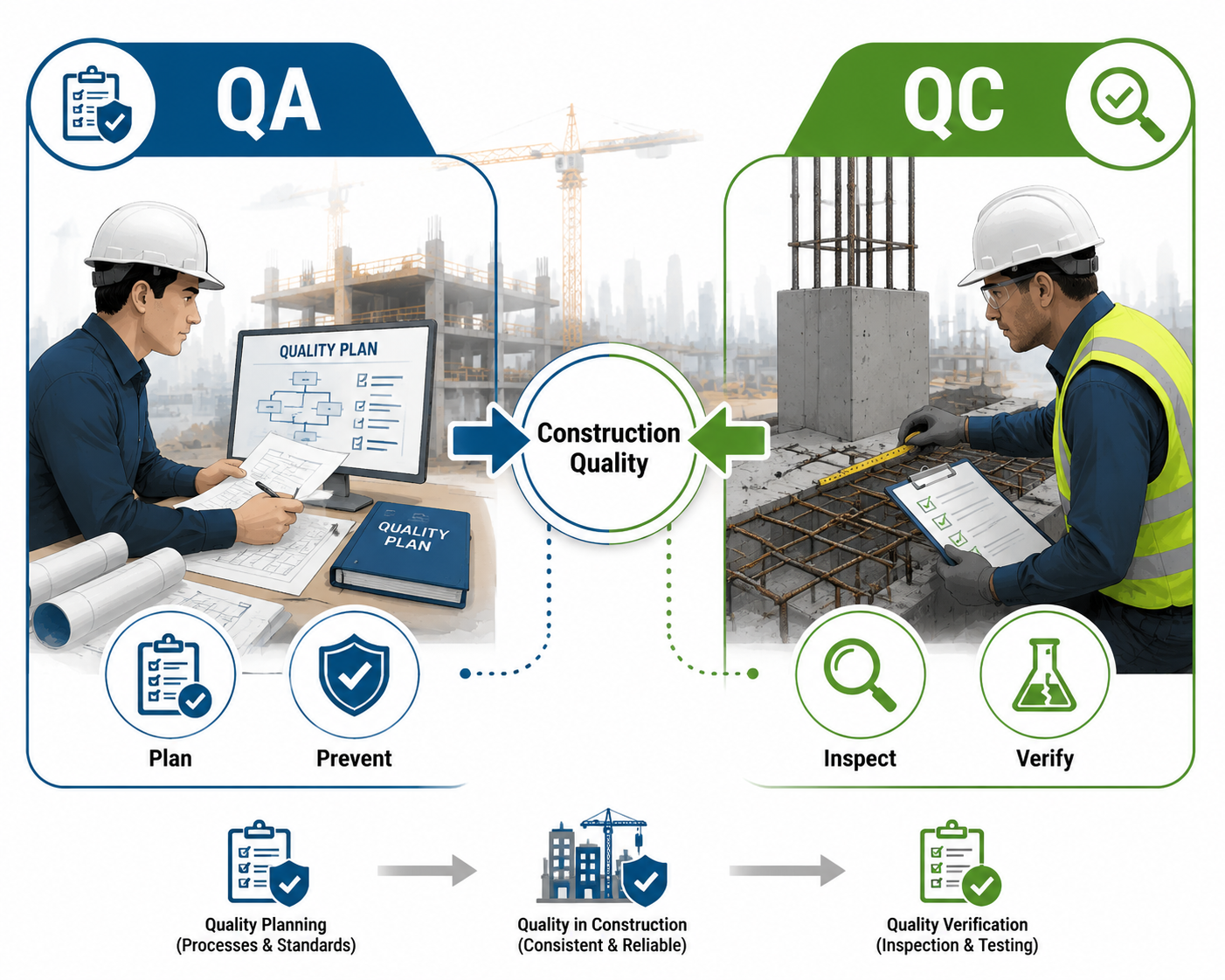
QA/QC is important because it helps ensure construction projects are safe, durable, and completed according to requirements. Proper quality management reduces defects, avoids costly repairs, and improves customer satisfaction.
Key benefits include:
- Improved construction safety.
- Reduced material waste and rework.
- Better compliance with project specifications.
- Improved project efficiency.
- Increased confidence among clients and stakeholders.
Role of a QA/QC Inspector
A QA/QC Inspector is responsible for monitoring construction activities and ensuring that work follows approved quality requirements. The inspector works with engineers, contractors, and site teams to maintain construction standards.
Main responsibilities include:
- Inspecting construction activities.
- Checking materials before use.
- Reviewing drawings and specifications.
- Completing inspection reports.
- Identifying defects and non-conformities.
- Ensuring corrective actions are completed.
Basic Principles of Construction Quality Management
The basic principles of quality management in construction include:
- Planning quality requirements before work begins.
- Using approved materials and correct methods.
- Regular inspection and testing.
- Maintaining accurate documentation.
- Identifying and correcting problems quickly.
- Continuously improving construction practices.
Simple Practical Example
During concrete construction, QA ensures that the correct concrete mix design, procedures, and specifications are prepared before work starts. QC then checks the concrete delivery, performs slump tests, takes concrete samples, and verifies that the final concrete strength meets project requirements.
By applying QA and QC principles, construction teams can deliver safer, stronger, and more reliable civil engineering projects.
QA/QC Processes and Procedures in Civil Engineering
Quality Assurance (QA) and Quality Control (QC) processes provide a structured approach for maintaining construction quality throughout a civil engineering project. These processes help construction teams ensure that materials, workmanship, and completed activities meet approved specifications, drawings, and project requirements. A proper QA/QC system supports defect prevention, improves construction efficiency, and helps deliver safe and reliable structures.
Basic Quality Planning
Quality planning is the first step in the QA/QC process. It involves identifying project quality requirements and preparing procedures to achieve the expected standards. A quality plan explains how inspections, testing, documentation, and quality checks will be managed during construction.
Basic quality planning activities include:
- Reviewing project drawings and specifications.
- Identifying required quality standards.
- Preparing inspection and testing schedules.
- Assigning quality responsibilities.
- Defining methods for recording quality information.
For example, before starting concrete works, the quality team reviews concrete specifications, reinforcement details, testing requirements, and inspection points.
Understanding Inspection Procedures
Inspection procedures are methods used to check whether construction activities are completed correctly. QA/QC inspectors follow inspection procedures to monitor work progress and identify any issues before they affect the project.
Inspection activities may include:
- Checking construction work against approved drawings.
- Measuring dimensions and levels.
- Observing construction methods.
- Verifying material usage.
- Recording inspection results.
Regular inspections help maintain consistent quality and reduce the possibility of defects.
Construction Material Inspection
Material inspection ensures that construction materials meet required quality standards before they are used on site. Poor-quality materials can affect the strength, safety, and durability of a structure.
Material inspection includes:
- Checking delivery documents and certificates.
- Inspecting material condition.
- Confirming approved suppliers.
- Verifying storage conditions.
Common materials inspected include:
- Cement and concrete materials.
- Reinforcement steel.
- Bricks and blocks.
- Aggregates.
- Waterproofing products.
For example, reinforcement steel is checked for correct size, condition, and compliance before installation.
Basic Testing Methods
Testing is an important part of Quality Control because it provides evidence that materials and construction work meet required standards.
Common basic construction tests include:
- Concrete slump test to check workability.
- Concrete cube test to measure strength.
- Soil compaction test to check ground stability.
- Material tests to verify quality.
Testing results are recorded and compared with project requirements to confirm acceptance.
Site Inspection Activities
Site inspections involve monitoring construction activities to ensure work is performed correctly. QA/QC inspectors regularly visit construction areas to check workmanship and compliance.
Site inspection activities include:
- Checking reinforcement placement before concrete pouring.
- Inspecting formwork installation.
- Monitoring concrete placement.
- Checking finishing quality.
- Identifying safety and quality issues.
Quality Documentation
Quality documentation provides evidence that construction activities have been completed according to requirements. Proper records support project monitoring and future reference.
Important quality documents include:
- Inspection reports.
- Material approval records.
- Test reports.
- Site observation reports.
- Quality checklists.
- Non-conformance reports.
Accurate documentation improves communication between contractors, engineers, and clients.
Inspection Checklists
Inspection checklists are simple tools used by QA/QC teams to ensure important quality points are checked during construction activities.
A checklist may include:
- Required materials available.
- Work completed according to drawings.
- Measurements verified.
- Testing completed.
- Approval received before next activity.
Checklists help inspectors maintain consistency and avoid missing important inspection points.
Non-Conformance Reporting
A Non-Conformance Report (NCR) is prepared when construction work does not meet specified requirements. It identifies the problem and helps ensure corrective action is taken.
Examples of non-conformities include:
- Incorrect dimensions.
- Failed material tests.
- Poor workmanship.
- Use of unapproved materials.
The NCR process helps construction teams identify problems, investigate causes, and prevent repetition.
Corrective Actions
Corrective actions are steps taken to fix identified quality problems. After a defect or non-conformance is identified, the responsible team develops a solution and verifies that the issue has been properly resolved.
Corrective actions may include:
- Repairing defective work.
- Replacing unsuitable materials.
- Repeating failed tests.
- Improving construction methods.
Practical Construction Example
During a building project, a QA/QC inspector identifies that concrete cube test results are below the required strength. A non-conformance report is issued, the cause is investigated, and corrective actions are implemented. The team reviews the concrete mix, improves procedures, and performs additional testing to confirm compliance.
Through effective QA/QC processes and procedures, civil engineering projects can achieve better quality, improved safety, reduced defects, and successful completion according to project requirements.
Practical Application, Case Study, Benefits and Summary of QA/QC in Civil Engineering
Quality Assurance (QA) and Quality Control (QC) principles are applied every day on construction sites to ensure that materials, processes, and completed works meet required quality standards. QA/QC professionals use inspections, testing, documentation, and corrective actions to identify potential problems and maintain construction quality throughout the project lifecycle.
Real Construction Site Case Study
A construction company was developing a multi-storey commercial building project. During the concrete construction stage, the QA/QC team was responsible for ensuring that concrete works met the required project specifications.
Before concrete placement, the QA/QC inspector reviewed the approved drawings, checked reinforcement installation, verified formwork condition, and confirmed that approved materials were being used. During concrete pouring, the QC team performed slump tests and collected concrete samples for strength testing.
After laboratory testing, some concrete cube results showed lower strength than the required specification. The QA/QC team immediately prepared a Non-Conformance Report (NCR) and investigated the possible causes. The investigation identified that improper concrete handling and insufficient monitoring during placement had affected the quality.
The project team implemented corrective actions, including improving concrete placement procedures, providing additional supervision, and conducting further testing. After these actions were completed, the concrete quality was verified and approved.
This example demonstrates how effective QA/QC practices help identify issues early, prevent future defects, and ensure that construction work meets safety and quality requirements.
Common Quality Problems and Solutions
Construction projects may face different quality challenges. QA/QC teams play an important role in identifying these issues and applying suitable solutions.
Common problems include:
- Poor workmanship due to incorrect construction methods.
- Use of materials that do not meet project requirements.
- Failure to follow approved drawings and specifications.
- Incorrect measurements or alignment issues.
- Incomplete quality documentation.
- Failed material testing results.
Possible solutions include:
- Providing proper supervision and training.
- Using approved suppliers and tested materials.
- Conducting regular site inspections.
- Following inspection checklists.
- Recording and reviewing quality information.
- Implementing corrective actions.
Benefits of Effective QA/QC Practices
Effective QA/QC practices provide many benefits for construction projects and organisations.
Key benefits include:
- Improved construction quality and reliability.
- Reduced defects, repairs, and project delays.
- Better control of construction materials and processes.
- Increased safety and structural performance.
- Improved client satisfaction and confidence.
- Better compliance with project specifications.
- Improved communication between project teams.
A strong QA/QC system helps complete projects correctly the first time and reduces unnecessary costs caused by quality failures.
Career Relevance
Knowledge of QA/QC is valuable for individuals working or planning to work in the construction and civil engineering industry. Professionals with QA/QC skills can support construction teams in maintaining standards, performing inspections, and managing quality records.
This knowledge is useful for roles such as:
- QA/QC Inspector.
- Site Supervisor.
- Civil Engineering Technician.
- Construction Quality Assistant.
- Site Engineer.
Understanding basic QA/QC principles helps learners develop practical skills required for construction quality monitoring and professional growth.
Key Learning Summary
In this lesson, learners have developed an understanding of:
- The importance of Quality Assurance and Quality Control in civil engineering.
- The difference between QA processes and QC inspections.
- Basic quality planning and inspection procedures.
- Construction material inspection and testing methods.
- Quality documentation and reporting practices.
- Non-conformance identification and corrective actions.
- Practical application of QA/QC principles on construction sites.
Quality Control and Quality Assurance are essential elements of successful civil engineering projects. They ensure that construction activities are completed safely, efficiently, and according to required standards. By applying proper planning, inspection, testing, and documentation procedures, QA/QC professionals help prevent defects, improve project performance, and maintain construction quality.
For learners completing the LICQual Level 3 Certificate in Quality Control and Quality Assurance (QA/QC) in Civil Engineering, developing these fundamental skills provides a strong foundation for supporting quality management activities and building a career in the construction industry.
2. Recognize the differences between QA and QC, and how each contributes to the successful delivery of civil engineering projects
Introduction to QA and QC in Civil Engineering Construction
Quality Assurance (QA) and Quality Control (QC) are two essential elements of construction quality management that work together to ensure civil engineering projects are completed safely, efficiently, and according to approved requirements. Although both terms are often used together as QA/QC, they represent different approaches to managing quality in construction.
As a QA/QC Construction Specialist, understanding the difference between QA and QC is important because each function has a specific role in achieving successful project delivery. Quality Assurance focuses on preventing quality problems by establishing effective systems, procedures, and processes before and during construction activities. Quality Control focuses on identifying, measuring, and correcting quality issues through inspection, testing, and verification of completed work.
In civil engineering projects, such as buildings, roads, bridges, and infrastructure developments, both QA and QC are necessary to maintain structural safety, improve workmanship, reduce defects, and ensure compliance with project specifications. A project cannot achieve consistent quality through inspection alone; it requires proper planning, monitoring, and continuous improvement.
Understanding Quality Assurance (QA) in Civil Engineering
Quality Assurance is a planned and systematic approach used to ensure that construction processes are properly designed, managed, and followed. QA focuses on preventing errors before they occur by creating clear procedures and quality management practices.
The main purpose of QA is to establish confidence that construction activities will produce the required quality results. Instead of waiting for defects to appear, QA identifies possible risks and develops methods to avoid them.
A QA system usually starts during the early stages of a project and continues throughout construction. It involves reviewing requirements, preparing quality plans, establishing procedures, and ensuring that all project teams understand their quality responsibilities.
Key Activities of Quality Assurance
The main activities performed under Quality Assurance include:
- Developing project quality plans.
- Reviewing construction drawings and specifications.
- Establishing inspection and testing procedures.
- Selecting approved materials and suppliers.
- Defining quality responsibilities for project teams.
- Providing guidance on correct construction methods.
- Conducting quality audits.
- Monitoring compliance with project requirements.
For example, before starting concrete construction, the QA team ensures that approved concrete specifications, material requirements, testing procedures, and inspection points are clearly defined. This preparation helps prevent problems during actual construction.
Importance of Quality Assurance in Project Delivery
Quality Assurance contributes to successful project delivery by creating a controlled construction environment where quality expectations are clearly defined.
The benefits of QA include:
- Prevention of construction defects.
- Improved consistency in construction activities.
- Better understanding of project requirements.
- Reduced risks and unexpected quality issues.
- Improved coordination between contractors and engineers.
- Better compliance with standards and specifications.
A strong QA system helps construction organisations complete work correctly from the beginning, reducing the need for expensive repairs and modifications.
Understanding Quality Control (QC) in Civil Engineering
Quality Control is the practical process of checking and verifying construction activities to ensure that completed work meets specified requirements. QC focuses on identifying problems during construction through inspections, measurements, and testing.
While QA creates the system for achieving quality, QC confirms whether the actual construction work meets the required standards.
A QC inspector works directly on construction sites to monitor activities, check materials, verify workmanship, and record quality results.
Key Activities of Quality Control
Quality Control activities include:
- Inspecting construction materials before use.
- Checking workmanship during construction.
- Performing laboratory and field tests.
- Measuring dimensions and alignment.
- Reviewing completed work against drawings.
- Identifying defects and non-conformities.
- Preparing inspection reports.
- Confirming corrective actions.
For example, during road construction, a QC inspector checks soil compaction, aggregate quality, asphalt temperature, and pavement thickness to confirm that construction meets project specifications.
Importance of Quality Control in Project Delivery
Quality Control ensures that construction outputs meet the required quality standards before approval.
The benefits of QC include:
- Early identification of construction problems.
- Verification of material and workmanship quality.
- Reduction of defects and rework.
- Improved safety and reliability of structures.
- Evidence of compliance through inspection records.
- Improved confidence among clients and stakeholders.
QC provides measurable information about construction performance and helps project teams make informed decisions.
Difference Between Quality Assurance (QA) and Quality Control (QC)
Although QA and QC have the same overall goal of achieving quality, their approaches are different. QA is focused on processes, while QC is focused on products and completed work.
| Quality Assurance (QA) | Quality Control (QC) |
|---|---|
| QA is a preventive approach that focuses on avoiding quality problems. | QC is a corrective approach that focuses on identifying and fixing quality problems. |
| Focuses on construction processes and procedures. | Focuses on inspection and testing of construction outputs. |
| Establishes quality standards and guidelines. | Checks whether standards have been achieved. |
| Takes place mainly during planning and process development. | Takes place mainly during construction activities. |
| Includes quality plans, audits, and procedures. | Includes inspections, tests, measurements, and reports. |
| Responsible for improving construction methods. | Responsible for verifying construction results. |
How QA and QC Work Together in Civil Engineering Projects
QA and QC are not separate activities; they are connected parts of a complete construction quality management system. Successful projects require both prevention and verification.
The relationship between QA and QC can be explained as:
- QA creates the procedures needed to achieve quality.
- QC checks whether those procedures are producing acceptable results.
- QA identifies possible risks before construction begins.
- QC identifies actual issues during construction.
- QA improves processes based on lessons learned from QC findings.
For example, if QC identifies repeated concrete defects during inspections, the QA team reviews construction procedures and improves the quality process to prevent similar issues in the future.
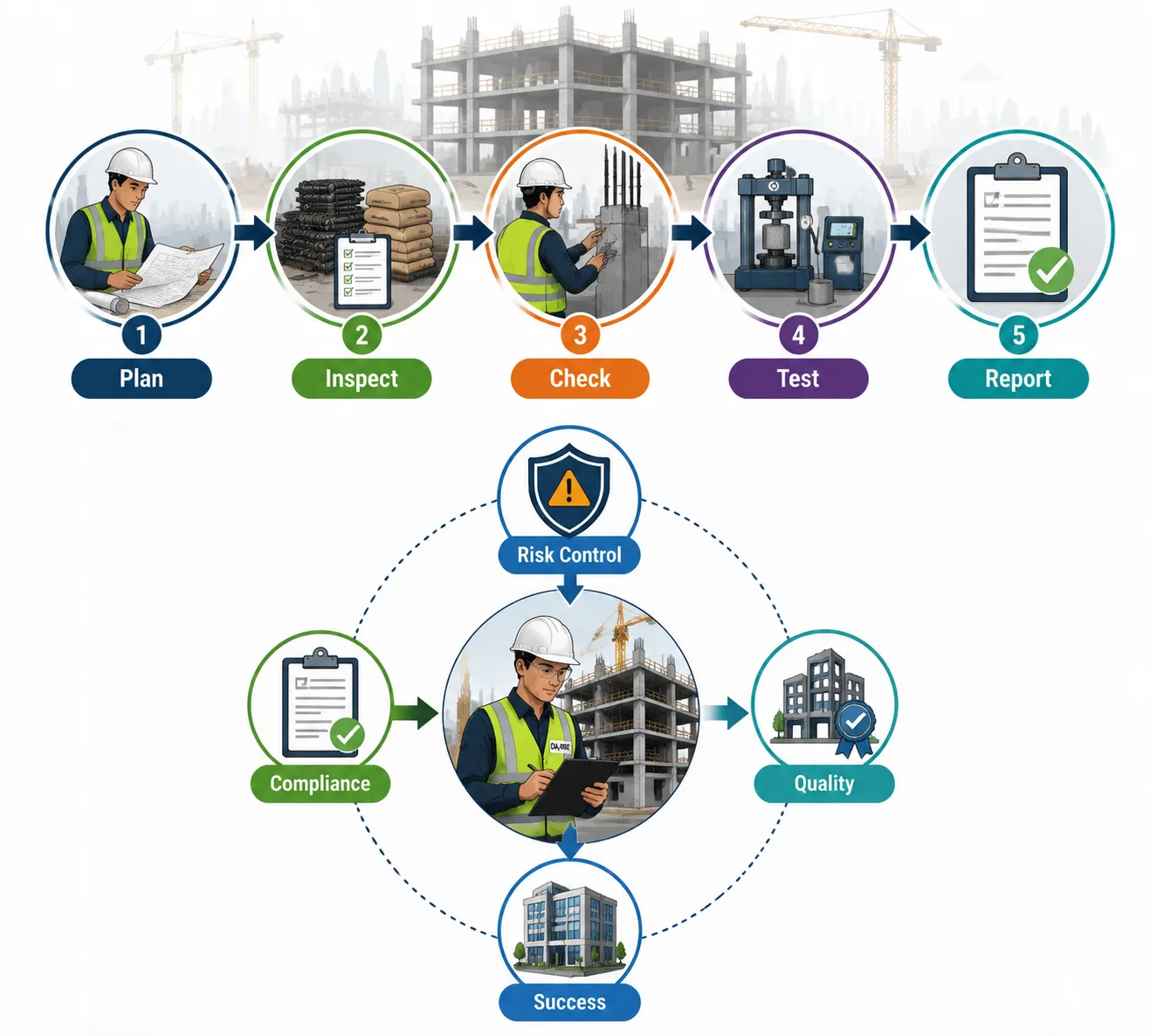
QA/QC Process for Successful Project Delivery
A successful civil engineering project follows a structured QA/QC process from start to completion.
Step 1: Understanding Project Requirements

Before construction begins, QA/QC professionals review:
- Engineering drawings.
- Technical specifications.
- Contract requirements.
- Material standards.
- Testing requirements.
This ensures that all project participants understand expected quality standards.
Step 2: Quality Planning
The QA team prepares quality procedures that define how construction quality will be maintained.
Quality planning includes:
- Inspection schedules.
- Testing requirements.
- Documentation procedures.
- Approval processes.
Step 3: Material Verification
Before materials are used, QC teams confirm that they meet project requirements.
Activities include:
- Checking material certificates.
- Inspecting delivered materials.
- Performing required tests.
Step 4: Construction Inspection
QC inspectors monitor construction activities to verify correct implementation.
Examples include:
- Checking reinforcement placement.
- Inspecting formwork installation.
- Monitoring concrete placement.
- Checking finishing quality.
Step 5: Documentation and Reporting
Quality records are maintained to provide evidence of compliance.
Documents include:
- Inspection reports.
- Test results.
- Material approvals.
- Non-conformance reports.
Step 6: Corrective Action and Improvement
When quality issues occur, teams identify the cause and implement solutions.
Corrective actions may include:
- Repairing defective work.
- Replacing unsuitable materials.
- Improving construction methods.
- Providing additional training.
Practical Construction Example: QA and QC Application
A contractor is constructing a reinforced concrete building.
During the QA stage:
- The quality team reviews concrete specifications.
- Approved suppliers are selected.
- Inspection procedures are prepared.
- Testing requirements are established.
During the QC stage:
- Concrete materials are inspected.
- Slump tests are performed.
- Concrete samples are collected.
- Finished concrete work is inspected.
If a concrete strength test fails, QC identifies the issue and prepares a report. QA then reviews the process to determine whether improvements are required in material selection, procedures, or supervision.
This example shows that QA prevents problems through proper planning, while QC detects and manages issues through inspection and testing.
Career Importance of Understanding QA and QC
Understanding the difference between QA and QC is important for individuals working in construction quality roles. Civil engineering companies require professionals who can support quality inspections, maintain records, and help ensure construction standards are achieved.
Knowledge of QA/QC helps learners develop skills required for roles such as:
- QA/QC Inspector.
- Construction Quality Assistant.
- Site Supervisor.
- Civil Engineering Technician.
- Quality Control Technician.
Quality Assurance and Quality Control are essential components of successful civil engineering project delivery. QA focuses on preventing quality issues by developing effective systems and procedures, while QC focuses on verifying construction quality through inspection, testing, and monitoring.
A professional QA/QC approach ensures that construction projects are completed safely, efficiently, and according to approved standards. By understanding the differences between QA and QC and how they work together, learners can develop a strong foundation in construction quality management and contribute effectively to successful civil engineering projects.
3. Developing Foundational Knowledge of the Roles of QA/QC in Managing Risks, Compliance, and Overall Quality of Civil Engineering Works
Introduction to the Role of QA/QC in Civil Engineering Quality Management
Quality Assurance (QA) and Quality Control (QC) play a vital role in managing construction risks, maintaining compliance, and ensuring the overall quality of civil engineering works. In modern construction projects, achieving quality is not only about completing activities according to drawings; it requires proper planning, monitoring, inspection, testing, and continuous improvement throughout the project lifecycle.
As a QA/QC Construction Specialist, understanding the role of quality management is essential because construction projects involve many risks related to materials, workmanship, safety, cost, and performance. A strong QA/QC system helps identify potential problems before they affect project outcomes and ensures that construction activities are completed according to approved specifications, standards, and client expectations.
For Level 3 learners, developing foundational knowledge of QA/QC means understanding how quality professionals support construction teams, monitor site activities, maintain documentation, and contribute to successful project delivery. QA/QC professionals act as a connection between project requirements and actual construction performance, ensuring that quality standards are achieved at every stage.
Understanding Risk Management in Civil Engineering Construction
Construction projects involve various risks that can affect quality, safety, cost, and completion time. Risk management is the process of identifying possible problems, evaluating their impact, and taking actions to reduce or prevent them.
QA/QC teams contribute to risk management by identifying quality-related risks and ensuring proper controls are implemented during construction.
Common construction quality risks include:
- Use of poor-quality or unapproved materials.
- Incorrect construction methods.
- Lack of proper inspection.
- Failure to follow project specifications.
- Poor workmanship.
- Inadequate documentation.
- Incorrect measurements or installation errors.
A QA/QC professional helps reduce these risks by applying inspection procedures, monitoring construction activities, and ensuring that corrective actions are taken when problems occur.
Role of QA in Construction Risk Management
Quality Assurance focuses on preventing risks by creating systems and procedures that guide construction activities. QA ensures that project teams understand quality requirements before work begins.
The role of QA in risk management includes:
- Developing quality plans for construction activities.
- Identifying possible quality risks during project planning.
- Establishing procedures to control construction processes.
- Ensuring workers follow approved methods.
- Reviewing supplier and material approval processes.
- Supporting continuous improvement.
For example, before starting concrete works, the QA team reviews concrete specifications, approved suppliers, testing requirements, and inspection procedures. This reduces the risk of concrete failure during construction.
Role of QC in Construction Risk Management
Quality Control focuses on identifying risks during construction through inspections, testing, and verification activities. QC professionals monitor actual construction performance and confirm whether work meets required standards.
The role of QC in risk management includes:
- Inspecting construction materials.
- Monitoring workmanship quality.
- Performing field and laboratory tests.
- Identifying defects and non-conformities.
- Recording inspection findings.
- Ensuring corrective actions are completed.
For example, if a QC inspector identifies incorrect reinforcement placement before concrete pouring, the issue can be corrected immediately, preventing future structural problems.
QA/QC Role in Ensuring Compliance in Civil Engineering Projects
Meaning of Compliance in Construction
Compliance means ensuring that construction activities follow approved requirements, including project specifications, engineering drawings, safety requirements, and applicable construction standards.
Compliance is important because civil engineering projects must achieve specific levels of safety, performance, and durability.
QA/QC teams support compliance by verifying that:
- Materials meet approved requirements.
- Construction methods follow specifications.
- Inspection procedures are completed.
- Quality records are maintained.
- Testing requirements are fulfilled.
QA Contribution to Construction Compliance
Quality Assurance ensures that systems are established to achieve compliance before construction work begins.
QA compliance activities include:
- Reviewing contract requirements.
- Preparing quality management procedures.
- Developing inspection and testing plans.
- Establishing documentation requirements.
- Ensuring teams understand project standards.
QA creates a controlled environment where construction activities can be performed consistently and correctly.
QC Contribution to Construction Compliance
Quality Control confirms that construction activities comply with approved requirements through practical checks and measurements.
QC compliance activities include:
- Inspecting completed work.
- Testing construction materials.
- Checking dimensions and alignment.
- Reviewing workmanship quality.
- Preparing inspection reports.
QC provides evidence that construction work has achieved the required quality level.
Relationship Between QA/QC and Construction Quality
QA/QC directly influences the overall quality of civil engineering works. Without effective quality management, construction projects may experience defects, delays, increased costs, and safety issues.
The relationship can be explained as:
| Quality Area | QA Role | QC Role |
|---|---|---|
| Planning | Creates quality procedures and plans | Uses plans during inspection activities |
| Materials | Establishes approval requirements | Checks and tests materials on site |
| Construction Activities | Defines correct processes | Verifies actual workmanship |
| Documentation | Establishes record requirements | Completes inspection and test records |
| Defects Management | Improves procedures to prevent problems | Identifies defects and reports issues |
Quality Management Process in Civil Engineering Projects
Step 1: Identifying Quality Requirements
The first step in quality management is understanding project requirements.
QA/QC professionals review:
- Construction drawings.
- Technical specifications.
- Material requirements.
- Testing standards.
- Client expectations.
This ensures that quality objectives are clearly understood.
Step 2: Planning Quality Activities
Quality planning defines how quality will be maintained throughout the project.
Planning activities include:
- Preparing inspection schedules.
- Identifying testing requirements.
- Assigning quality responsibilities.
- Establishing reporting procedures.
Step 3: Monitoring Construction Activities
QA/QC teams monitor construction work to ensure compliance with approved requirements.
Monitoring includes:
- Observing construction methods.
- Checking material usage.
- Reviewing workmanship.
- Confirming measurements.
Step 4: Inspection and Testing
Inspection and testing provide evidence that construction work meets quality standards.
Common activities include:
- Concrete strength testing.
- Soil compaction testing.
- Material inspection.
- Dimensional checks.
Step 5: Reporting and Corrective Actions
When quality issues are identified, QA/QC teams document problems and support corrective actions.
Corrective actions may include:
- Repairing defective work.
- Replacing incorrect materials.
- Improving procedures.
- Increasing supervision.
Practical Example of QA/QC Risk and Quality Management
A contractor is constructing a concrete foundation for a commercial building. During the planning stage, the QA team identifies that concrete quality is a critical risk because foundation strength affects the entire structure.
QA actions include:
- Reviewing concrete mix requirements.
- Approving material suppliers.
- Preparing inspection procedures.
- Defining testing requirements.
During construction, QC actions include:
- Checking concrete delivery.
- Performing slump tests.
- Collecting concrete samples.
- Inspecting placement activities.
During testing, one concrete sample does not meet the required strength. The QC team reports the issue, and the QA team reviews the process to identify the cause. Additional checks are performed, and corrective measures are implemented.
This example shows how QA prevents problems through planning, while QC identifies and controls issues through inspection.

Key Benefits of Effective QA/QC Practices
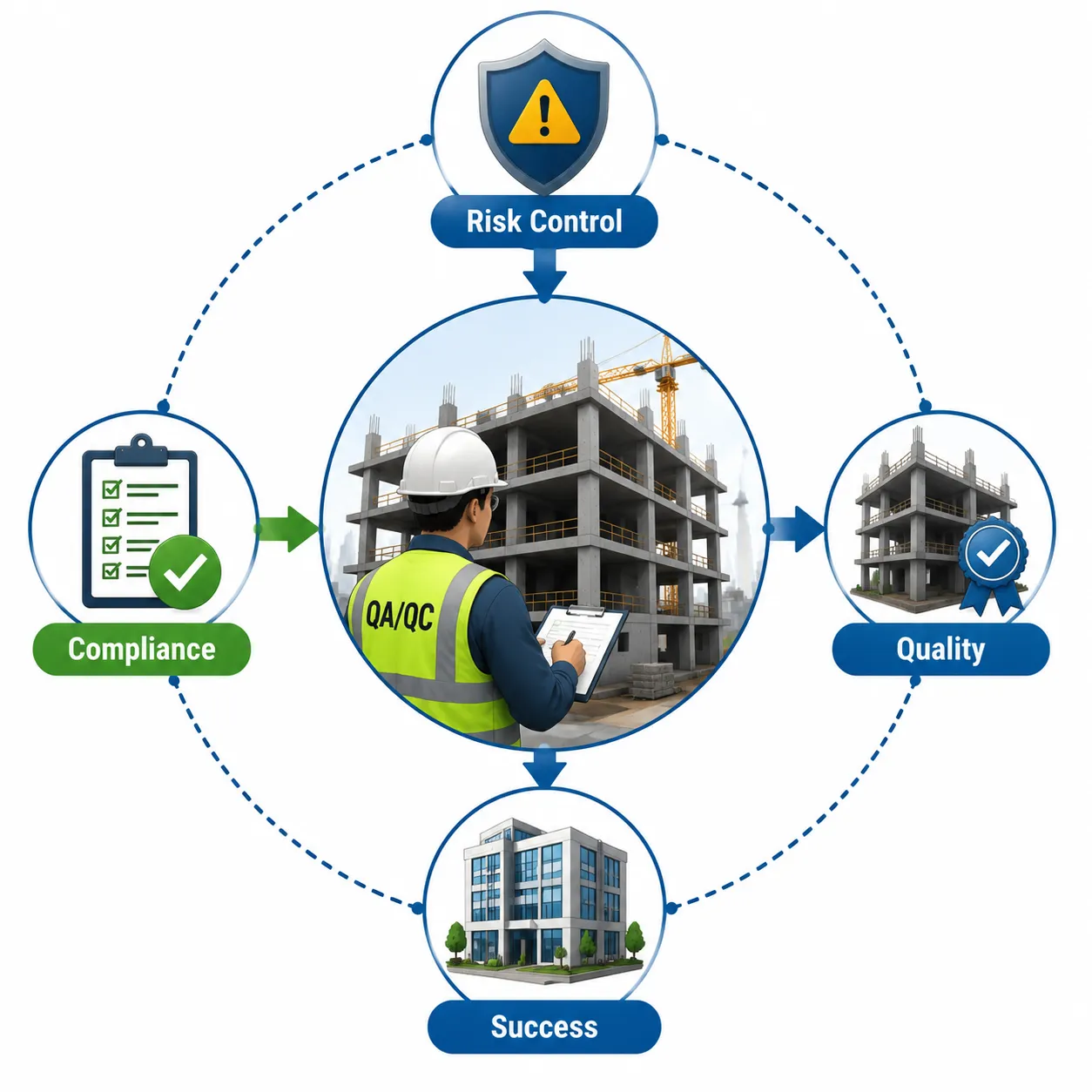
Effective QA/QC management provides important benefits for construction projects, including:
- Improved safety and reliability of structures.
- Reduced construction defects.
- Better control of project risks.
- Improved compliance with specifications.
- Reduced repair and maintenance costs.
- Increased client satisfaction.
- Better communication between project teams.
- Improved project completion performance.
For construction organisations, strong QA/QC practices improve reputation and demonstrate commitment to delivering high-quality engineering works.
Career Relevance of QA/QC Knowledge
Foundational knowledge of QA/QC is valuable for learners entering the construction industry. Understanding quality management principles helps individuals support site teams and contribute to maintaining construction standards.
This knowledge is useful for roles such as:
- QA/QC Inspector.
- Site Quality Assistant.
- Construction Technician.
- Junior Site Supervisor.
- Civil Engineering Support Staff.
Professionals with QA/QC skills are better prepared to participate in inspections, quality reporting, and construction monitoring activities.
Key Learning Summary
After completing this topic, learners should understand:
- The importance of QA/QC in civil engineering projects.
- How QA/QC helps manage construction risks.
- The role of QA in preventing quality problems.
- The role of QC in identifying and correcting issues.
- How QA/QC supports construction compliance.
- The importance of inspections, testing, and documentation.
- How quality management improves project outcomes.
QA/QC plays an essential role in ensuring the successful delivery of civil engineering projects. Quality Assurance provides the systems, procedures, and planning needed to prevent problems, while Quality Control verifies that construction activities meet required standards through inspection and testing.
By developing foundational knowledge of QA/QC roles in risk management, compliance, and quality improvement, learners can understand how construction professionals maintain safe, durable, and reliable engineering works. Effective QA/QC practices help reduce risks, improve project performance, and support the successful completion of construction projects according to required quality standards.
Conclusion
Quality Assurance (QA) and Quality Control (QC) are essential components of successful civil engineering projects, ensuring that construction activities are completed according to approved specifications, safety requirements, and quality standards. QA focuses on preventing quality issues through effective planning, procedures, and management systems, while QC focuses on inspecting, testing, and verifying construction work to identify and correct defects. Together, QA and QC help manage construction risks, maintain compliance, improve workmanship, and ensure the durability and reliability of civil engineering works.
By understanding the roles of QA/QC professionals, learners can recognise how quality management contributes to successful project delivery. Effective QA/QC practices support better decision-making, reduce construction errors, minimise rework, and improve overall project performance. This foundational knowledge enables learners to contribute effectively to construction quality activities and develop essential skills for future roles in civil engineering quality management.