
Lesson no 3 : Analyse pharmacological and dietary strategies for metabolic health.
Metabolic health is a fundamental component of overall health and is closely associated with the body’s ability to regulate energy production, glucose metabolism, lipid metabolism, body composition and other essential biochemical processes. When these regulatory systems become impaired, individuals may develop metabolic disorders such as insulin resistance, type 2 diabetes, obesity, dyslipidaemia and metabolic syndrome. Effective management therefore requires a comprehensive understanding of both pharmacological and dietary strategies and how these approaches can be applied safely and appropriately to improve metabolic outcomes.
This lesson, Analyse Pharmacological and Dietary Strategies for Metabolic Health, explores the scientific principles underlying commonly used therapeutic approaches for managing metabolic dysfunction. Learners will examine how pharmacological treatments influence biochemical pathways involved in glucose regulation, lipid metabolism, appetite control, energy balance and insulin sensitivity. The lesson also considers the role of evidence-based dietary strategies in supporting metabolic health, including appropriate manipulation of energy intake, macronutrient balance, dietary quality and individual nutritional requirements.
A central focus of this lesson is the critical analysis of how medicines and dietary interventions interact. Pharmacological therapy may provide important support in controlling biochemical abnormalities, but medication alone may not address all behavioural, nutritional and lifestyle factors contributing to metabolic disease. Similarly, dietary interventions can improve metabolic markers and support long-term health, yet some individuals may require additional pharmacological treatment because of disease severity, comorbidities or inadequate response to lifestyle-based strategies.
Learners will develop the ability to compare different treatment approaches, evaluate their mechanisms of action, assess their potential benefits and limitations, and consider safety concerns. Particular attention will be given to interpreting clinical and biochemical information when determining whether a specific intervention is appropriate for an individual. The lesson also explores the importance of personalised care, recognising that metabolic health is influenced by genetics, age, disease progression, medication use, nutritional status and other clinical factors.
Through clinical examples and practical scenarios, learners will strengthen their ability to analyse complex metabolic management strategies objectively and apply evidence-based reasoning. By the end of the lesson, learners will be better prepared to evaluate the combined role of pharmacological and dietary interventions in supporting improved metabolic control, reducing health risks and promoting sustainable long-term outcomes within appropriate professional and clinical practice.
1.Critically Analyse the Complex Biochemical Interactions Between Common Metabolic Medications and Dietary Nutrients to Actively Prevent Adverse Physiological Patient Effects
The management of metabolic health frequently involves the combined use of pharmacological treatment and dietary intervention. Medicines used to manage conditions such as type 2 diabetes, obesity, dyslipidaemia and related metabolic disorders can influence biochemical pathways that are also affected by food intake and nutritional status. As a result, dietary nutrients may alter the absorption, metabolism, effectiveness or safety of medicines, while medicines may influence appetite, nutrient absorption, nutrient utilisation or the risk of nutritional deficiency.
A critical understanding of these interactions is essential for safe clinical practice. The purpose is not simply to identify a possible interaction but to analyse its biochemical mechanism, evaluate its clinical relevance and take appropriate action within the scope of professional practice. Effective prevention of adverse physiological effects requires consideration of the patient’s diagnosis, medication regimen, dietary pattern, biochemical markers, organ function and overall nutritional status.
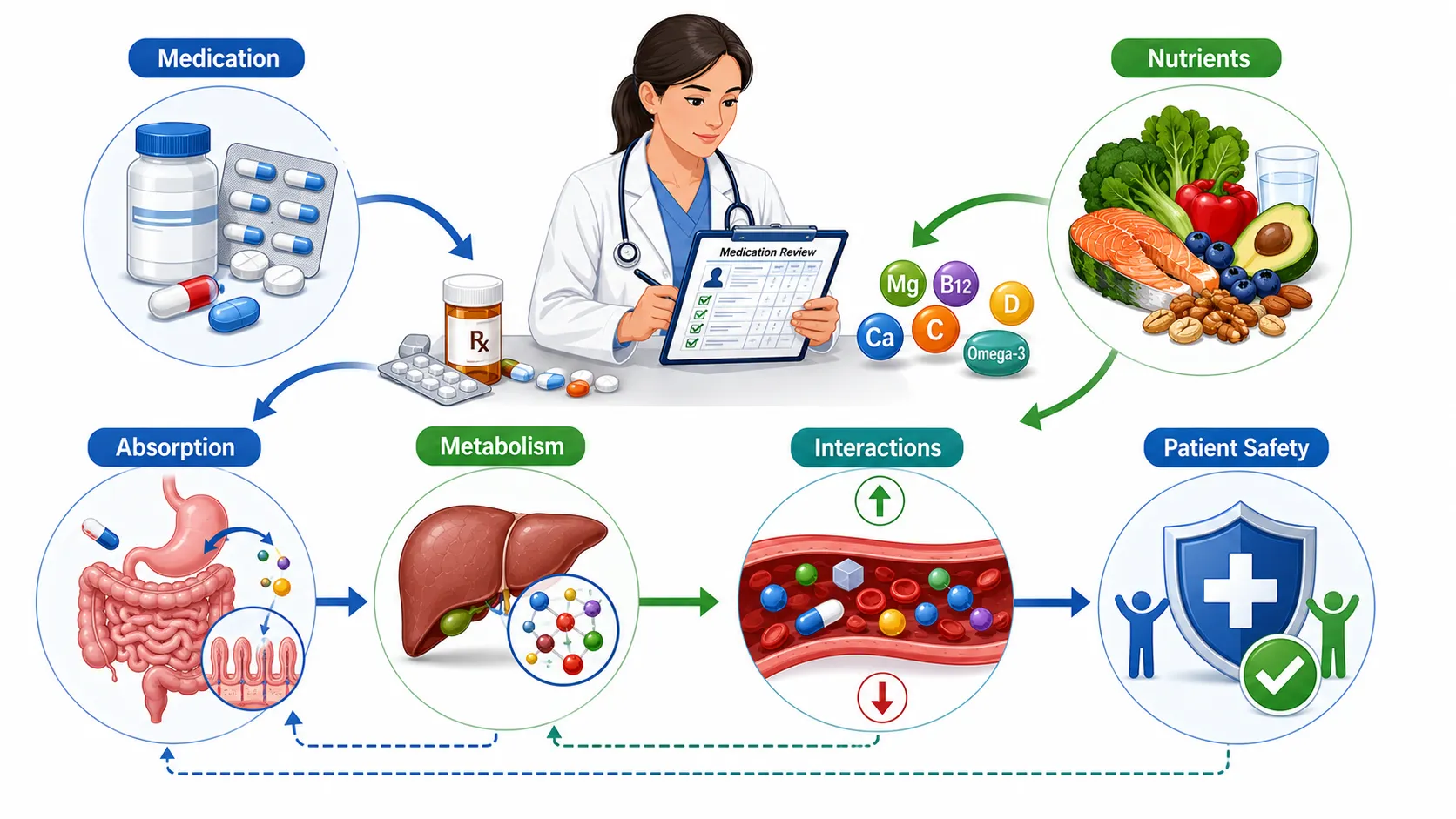
Understanding Medication–Nutrient Interactions
A medication–nutrient interaction occurs when a medicine and a nutrient, food component or dietary pattern influence each other’s action within the body. These interactions can occur at several stages, including gastrointestinal absorption, transport in the bloodstream, hepatic metabolism, cellular action and renal elimination.
The interaction may produce different outcomes:
Reduced medication absorption
Increased medication absorption
Reduced nutrient availability
Altered metabolism of nutrients
Increased risk of nutrient deficiency
Increased risk of toxicity
Changes in blood glucose or lipid regulation
Altered electrolyte balance
Increased gastrointestinal adverse effects
Not every theoretical interaction produces a clinically significant problem. Critical analysis therefore requires the practitioner to distinguish between a possible biochemical interaction and one that is sufficiently important to affect patient safety or treatment outcomes.
Why Biochemical Analysis Is Essential
Medicines and nutrients often act on interconnected metabolic pathways. For example, a medication may reduce hepatic glucose production while dietary carbohydrate intake influences post-meal glucose availability. Another medicine may alter gastrointestinal absorption, affecting the availability of vitamins or minerals required for normal metabolic processes.
A biochemical analysis considers:
The mechanism of action of the medication
The nutrient or dietary component involved
The pathway through which interaction occurs
The expected physiological effect
The dose and duration of treatment
The patient’s existing nutritional status
Relevant laboratory findings
Kidney and liver function
Other medicines being taken
This approach supports more accurate identification of patients who may require additional monitoring or nutritional assessment.
Key Definitions and Concepts
| Term | Definition | Clinical Significance |
|---|---|---|
| Medication–nutrient interaction | A change in the action of a medicine or nutrient caused by their combined presence | May affect treatment effectiveness or nutritional status |
| Pharmacokinetic interaction | An interaction affecting absorption, distribution, metabolism or elimination | Can change medication concentration within the body |
| Pharmacodynamic interaction | An interaction affecting the physiological or biochemical effects of a medicine | May increase or reduce the intended physiological response |
| Nutrient depletion | Reduced availability or body stores of an essential nutrient | May contribute to deficiency and adverse physiological effects |
| Bioavailability | The proportion of a substance that becomes available for absorption and use | Influences both nutrient and medication effectiveness |
| Hypoglycaemia | Abnormally low blood glucose requiring appropriate clinical attention | Can occur when glucose-lowering therapy and reduced intake are poorly balanced |
| Gastrointestinal intolerance | Adverse digestive effects that interfere with normal food intake or absorption | May indirectly increase nutritional risk |
| Individualised monitoring | Assessment based on the patient’s specific clinical and biochemical profile | Supports safer and more appropriate care |
Pharmacokinetic Interactions Between Medicines and Nutrients
Absorption in the Gastrointestinal Tract
The gastrointestinal tract is one of the most important sites of medication–nutrient interaction. Food may influence gastric emptying, intestinal pH, digestive activity and the physical movement of medicines through the gastrointestinal system.
Depending on the medicine, taking it with food may:
Improve gastrointestinal tolerance
Delay the rate of absorption
Increase absorption of some substances
Reduce absorption of others
Change the timing of peak medication concentration
Nutritional professionals and healthcare practitioners should avoid making assumptions based solely on general dietary advice. Medication administration instructions should be considered alongside the patient’s dietary routine and clinical needs.
Factors That Can Influence Absorption
Important dietary factors include:
Timing of meals
Total food intake
Dietary fat content
Fibre intake
Mineral-containing foods or supplements
Gastrointestinal disorders
Persistent vomiting or diarrhoea
Altered gastric function
For example, a patient experiencing significant gastrointestinal adverse effects from treatment may reduce their overall food intake. Although the medicine may not directly cause a biochemical nutrient interaction, the resulting reduction in dietary intake can create secondary nutritional consequences.
Practical Assessment Questions
When analysing possible absorption-related interactions, relevant questions include:
When does the patient take the medication?
Is it taken consistently in relation to meals?
Has the patient’s appetite changed?
Are there persistent gastrointestinal symptoms?
Is the patient taking vitamin or mineral supplements?
Have recent dietary habits changed significantly?
Are there signs of poor nutrient intake?
Pharmacodynamic Interactions in Metabolic Health
Understanding Combined Physiological Effects
Pharmacodynamic interactions occur when dietary factors and medicines produce overlapping effects on the same physiological system. In metabolic health, this is particularly important in relation to glucose regulation, energy balance and lipid metabolism.
For example, glucose-lowering medicines may act alongside dietary carbohydrate modification. If energy or carbohydrate intake is substantially reduced without appropriate clinical review, the combined effects may increase the risk of excessively low glucose in susceptible individuals.
Critical analysis should therefore focus on the combined physiological effect rather than considering medication and diet as separate interventions.
Key Areas of Pharmacodynamic Interaction
Common areas requiring attention include:
Blood glucose regulation
Insulin sensitivity
Appetite and food intake
Energy balance
Lipid metabolism
Fluid balance
Electrolyte regulation
The patient’s physiological response may depend on both the medication regimen and changes in dietary behaviour.
Glucose-Lowering Medicines and Dietary Intake
The Relationship Between Medication and Carbohydrate Intake
Glucose metabolism is strongly influenced by the interaction between dietary carbohydrate intake, insulin action, hepatic glucose production and medication effects. When a patient begins treatment with glucose-lowering medication, substantial dietary changes may alter their biochemical response.
A critical analysis should consider:
The amount and distribution of carbohydrate intake
Meal regularity
Recent dietary restriction
Changes in physical activity
The medication regimen
Previous and current glucose trends
A reduction in carbohydrate intake may improve glucose exposure in some patients. However, the clinical response cannot automatically be attributed to diet alone when medication is also being adjusted.
Prevention of Adverse Effects
Risk reduction may involve:
Reviewing changes in food intake
Monitoring relevant biochemical trends
Identifying symptoms requiring clinical attention
Ensuring the patient understands medication instructions
Encouraging communication with the appropriate prescribing team when significant dietary changes occur
The objective is to support safe coordination rather than independently changing prescribed treatment.
Practical Example
A patient with type 2 diabetes decides to follow a highly restrictive eating pattern while continuing the same glucose-lowering treatment. Within several days, the patient reports weakness, sweating and episodes of dizziness.
A critical assessment would consider:
Recent reduction in energy intake
Reduced carbohydrate availability
Medication effects on glucose regulation
Timing of symptoms in relation to meals
Relevant glucose measurements where available
The situation demonstrates why major dietary changes should be considered alongside the patient’s medication regimen.
Medications and Vitamin or Mineral Status
Medication-Associated Nutrient Depletion
Some long-term medicines may influence nutrient absorption, utilisation or body stores. This does not mean that every patient receiving a particular medicine will develop a deficiency. The risk may vary according to treatment duration, dosage, baseline nutritional status, dietary intake and individual physiological factors.
A systematic analysis should consider whether:
The medicine has a recognised association with altered nutrient status
The patient has symptoms consistent with deficiency
Dietary intake is adequate
Relevant biochemical assessment is available
Other medical conditions may explain the findings
Vitamin B12 as an Example of Long-Term Monitoring
Certain long-term metabolic treatments have been associated with altered vitamin B12 status in some individuals. The clinical significance depends on multiple factors, including duration of use and individual risk.
Potential consequences of inadequate vitamin B12 status may include:
Fatigue
Neurological symptoms
Altered haematological findings
Reduced functional wellbeing
The appropriate response is based on clinical assessment and established healthcare protocols rather than routine self-prescription of high-dose supplements.
Broader Micronutrient Considerations
Other nutrients requiring careful consideration in relevant clinical contexts may include:
Iron
Vitamin D
Calcium
Magnesium
Folate
Potassium
Sodium
The presence of a medication does not independently establish a deficiency. Nutritional diagnosis should be based on a combination of clinical history, dietary assessment and appropriate laboratory information.
Medications That Influence Appetite and Food Intake
Appetite Regulation and Metabolic Treatment
Some medicines used in metabolic health may alter appetite, satiety, gastrointestinal motility or food preferences. These changes may support energy reduction in some individuals but can also create nutritional challenges.
A patient who experiences markedly reduced appetite may have difficulty consuming sufficient:
Energy
Protein
Essential fatty acids
Vitamins
Minerals
This is particularly important in vulnerable populations, including older adults or individuals with pre-existing nutritional risk.
Critical Assessment of Reduced Food Intake
Reduced body weight does not automatically indicate improved nutritional health. A patient may experience weight reduction while simultaneously developing inadequate protein or micronutrient intake.
Assessment should therefore consider:
Rate of weight change
Dietary quality
Protein intake
Hydration status
Muscle function
Gastrointestinal tolerance
Relevant biochemical indicators
This distinction is essential when analysing the safety of pharmacological and dietary strategies.
Dietary Fat and Lipid-Modifying Strategies
The Biochemical Role of Dietary Fat
Dietary fat influences energy intake and lipid metabolism. The type and quantity of dietary fat may influence metabolic markers differently depending on the overall dietary pattern and the individual’s health status.
When lipid-modifying medication is prescribed, dietary intervention may also be recommended. The two approaches can act together but should not be evaluated in isolation.
Important dietary considerations may include:
Overall dietary pattern
Quality of dietary fats
Energy balance
Fibre intake
Alcohol intake where relevant
Presence of other metabolic conditions
Avoiding Oversimplification
It is inappropriate to conclude that one nutrient alone determines lipid outcomes. Biochemical responses are influenced by multiple factors, including:
Genetics
Medication adherence
Body composition
Physical activity
Liver function
Insulin resistance
Overall dietary intake
A high-quality analysis considers these interacting variables.
Dietary Fibre and Metabolic Medicines
Physiological Effects of Fibre
Dietary fibre can influence:
Gastrointestinal function
Satiety
Post-meal glucose responses
Lipid metabolism
Gut microbial activity
However, significant increases in fibre intake may also affect gastrointestinal tolerance and, depending on the specific medicine, may influence the timing or absorption of orally administered substances.
Safe Implementation
When dietary fibre is increased substantially, consideration should be given to:
Gradual dietary adjustment
Adequate fluid intake
Gastrointestinal symptoms
Medication administration instructions
Individual tolerance
A sudden increase may lead to discomfort in some patients and reduce adherence to the dietary strategy.
Supplements and Metabolic Medication Safety
The Risks of Unsupervised Supplement Use
Patients managing metabolic disorders may independently use vitamins, minerals, herbal preparations or concentrated nutritional products. These products may influence physiological processes or interact with prescribed treatment.
Potential concerns include:
Excessive nutrient intake
Duplicate ingredients from multiple products
Altered glucose regulation
Gastrointestinal adverse effects
Potential interactions with medicines
Delayed identification of underlying clinical problems
The assumption that a supplement is safe because it is marketed as natural is not scientifically reliable.
Professional Assessment of Supplement Use
A structured review should include:
Name of the product
Active ingredients
Dose
Frequency
Duration of use
Reason for use
Other medicines being taken
Relevant symptoms
Available biochemical information
Patients should be encouraged to disclose all supplements to appropriate healthcare professionals.
A Systematic Process for Analysing Medication–Nutrient Interactions
Step 1: Establish the Clinical Context
Begin by identifying the patient’s primary metabolic condition and treatment objectives.
Key information includes:
Diagnosis
Disease severity
Relevant comorbidities
Current symptoms
Treatment goals
Nutritional risk factors
Step 2: Complete a Medication Review
Document relevant prescribed and non-prescribed products.
The review should include:
Medication names
Dosage
Timing
Duration
Recent changes
Known adverse effects
Supplements and nutritional products
Step 3: Assess Dietary Intake
Dietary assessment should examine both quantity and quality of intake.
Important areas include:
Meal frequency
Energy intake
Carbohydrate distribution
Protein intake
Dietary fat quality
Fibre intake
Fluid intake
Supplement use
Step 4: Review Relevant Biochemical Data
Laboratory data should be interpreted in clinical context.
Possible areas for review include:
Glucose-related markers
Lipid-related markers
Electrolytes
Kidney function indicators
Liver-related indicators
Relevant vitamin and mineral markers
One result should not be interpreted independently from the broader clinical picture.
Step 5: Identify Potential Interaction Mechanisms
Consider whether the interaction is:
Pharmacokinetic
Pharmacodynamic
Related to reduced dietary intake
Related to impaired absorption
Associated with altered nutrient utilisation
Related to excessive supplementation
Step 6: Evaluate Clinical Significance
Determine whether the potential interaction is likely to:
Affect patient safety
Alter treatment effectiveness
Increase nutritional risk
Require monitoring
Require referral or review by the appropriate clinical professional
Step 7: Implement Appropriate Risk Reduction Measures
Actions may include:
Improving dietary consistency
Adjusting meal planning within professional guidance
Monitoring nutritional intake
Providing evidence-based education
Encouraging medication review where indicated
Referring significant concerns to the appropriate healthcare professional
Step 8: Monitor and Reassess
The final stage is continuous evaluation.
Monitoring may involve:
Clinical symptoms
Dietary adherence
Gastrointestinal tolerance
Relevant biochemical trends
Functional outcomes
Changes in body composition where appropriate
Key Benefits of Understanding Medication–Nutrient Interactions
A strong understanding of these interactions provides important benefits for patients and healthcare practice.
Improved Patient Safety
Potential benefits include:
Earlier identification of nutritional risk
Reduced likelihood of preventable adverse effects
Better recognition of clinically significant symptoms
Safer implementation of dietary changes
More Effective Treatment Planning
Integrated assessment can help:
Align dietary strategies with medical treatment
Improve adherence
Identify barriers to nutritional intake
Support realistic long-term plans
Better Interpretation of Biochemical Data
Understanding interactions helps professionals recognise that changes in laboratory markers may result from:
Medication effects
Dietary changes
Supplement use
Acute illness
Biological variation
Multiple simultaneous interventions
This reduces the risk of oversimplified conclusions.
Practical Scenario: Reduced Intake During Metabolic Treatment
A patient receiving treatment for metabolic disease reports persistent nausea and reduced appetite. Their food intake has decreased substantially over several weeks, and they are consuming very little protein.
A comprehensive analysis should identify that the primary concern is not simply body weight change. Reduced intake may contribute to inadequate energy and protein consumption, which could affect functional health.
The assessment should consider:
Duration of symptoms
Severity of reduced intake
Hydration
Weight and body composition trends
Medication timing
Gastrointestinal adverse effects
Relevant laboratory findings
Appropriate concerns should be communicated to the relevant healthcare team.
Practical Scenario: Major Dietary Restriction
A patient with glucose dysregulation starts an extremely low-carbohydrate diet without discussing the change with the healthcare team. The patient continues the same medication schedule and develops symptoms suggesting altered glucose balance.
A critical approach involves:
Establishing the nature and severity of dietary restriction.
Reviewing medication and timing.
Assessing symptoms and relevant glucose information.
Identifying whether combined treatment effects may be contributing.
Escalating concerns through appropriate clinical pathways.
This scenario demonstrates the importance of coordinated care when substantial dietary changes occur.
Practical Scenario: Multiple Supplements
A patient with obesity and dyslipidaemia takes several commercially available supplements alongside prescribed metabolic medication. The patient is unable to identify the ingredients or doses of all products.
The priority is to establish a complete supplement history rather than immediately assuming that the products are harmless.
Important actions include:
Documenting all products
Identifying duplicate ingredients
Reviewing the reason for each product
Considering possible physiological effects
Referring complex interaction concerns appropriately
Critical Thinking: Distinguishing Association from Causation
A patient develops a biochemical abnormality while receiving both a new medicine and a major dietary intervention. It would be scientifically inappropriate to automatically conclude that one factor caused the change.
Critical evaluation requires consideration of:
Timing of each intervention
Baseline biochemical status
Previous laboratory trends
Changes in symptoms
Medication adherence
Dietary adherence
Acute illness
Other concurrent treatments
This approach supports evidence-based professional judgement.
Individual Factors That Modify Interaction Risk
Age and Physiological Status
Older adults may have increased nutritional vulnerability because of:
Reduced appetite
Multiple medications
Altered organ function
Reduced nutrient reserves
Multiple chronic conditions
Kidney and Liver Function
The kidneys and liver play major roles in metabolism and elimination. Impaired function may alter the handling of medicines and nutrients.
Assessment should therefore consider:
Existing organ impairment
Relevant biochemical indicators
Medication burden
Potential accumulation or altered metabolism
Polypharmacy
Patients with multiple metabolic and chronic conditions may take several medicines simultaneously.
Polypharmacy can increase:
Interaction complexity
Adverse effect burden
Difficulty maintaining regular food intake
Risk of overlapping physiological effects
Baseline Nutritional Status
Patients with pre-existing nutritional deficiency or inadequate intake may be more vulnerable to further disruption.
A baseline assessment should consider:
Dietary history
Body composition
Relevant laboratory data
Functional status
Clinical symptoms
Professional Responsibilities and Scope of Practice
Healthcare and nutritional professionals must work within their professional role and competence. Medication prescribing, discontinuation and dose adjustment should only be undertaken by appropriately authorised professionals.
The role of a practitioner involved in nutritional care may include:
Identifying potential medication–nutrient concerns
Assessing dietary intake
Recognising symptoms requiring escalation
Supporting evidence-based nutritional education
Monitoring agreed nutritional outcomes
Communicating relevant information to the multidisciplinary team
Professional practice should avoid:
Independently altering prescribed medication
Diagnosing a deficiency without appropriate evidence
Recommending high-dose supplementation without adequate assessment
Assuming that all nutritional products are safe
Ignoring significant symptoms
Integrating Pharmacological and Dietary Strategies
The most effective metabolic care often requires an integrated approach. Medication and nutrition should be viewed as potentially complementary components of a broader management strategy rather than competing interventions.
A coordinated approach may involve:
Appropriate pharmacological treatment
Individualised dietary planning
Physical activity where clinically appropriate
Behavioural support
Regular biochemical monitoring
Management of comorbidities
Patient education
The exact balance between these strategies depends on the individual’s clinical condition and treatment objectives.
Key Points for Practice
The following principles support safe analysis of medication–nutrient interactions:
Analyse medicines and dietary factors as interconnected components of metabolic management.
Distinguish theoretical interactions from clinically significant risks.
Consider pharmacokinetic and pharmacodynamic mechanisms.
Assess the patient’s complete medication and supplement history.
Evaluate changes in appetite and food intake.
Use biochemical data alongside clinical and dietary information.
Recognise that reduced food intake may create secondary nutritional risks.
Avoid attributing biochemical changes to one intervention without considering confounding factors.
Monitor vulnerable patients more carefully.
Escalate significant medication-related concerns through appropriate clinical pathways.
Work within professional competence and scope of practice.
Summary
Critically analysing the biochemical interactions between metabolic medications and dietary nutrients is essential for preventing adverse physiological effects and supporting safe, effective metabolic care. These interactions may occur through changes in absorption, metabolism, nutrient utilisation, appetite, glucose regulation or other physiological processes.
Effective assessment requires a systematic approach that integrates medication history, dietary intake, supplement use, biochemical findings and clinical symptoms. Professionals must recognise that metabolic responses are often influenced by multiple factors simultaneously. A change in a laboratory marker may result from dietary modification, medication, disease progression, acute illness or a combination of these influences.
By applying biochemical principles and evidence-based reasoning, practitioners can better identify patients at nutritional risk, support safer dietary strategies and contribute to coordinated multidisciplinary care. The ultimate objective is to improve metabolic outcomes while reducing avoidable adverse effects and maintaining adequate nutritional status over the long term.
2.Compare and Contrast the Molecular Mechanisms of Action of Standard Pharmacological Treatments Versus Targeted Dietary Therapies in Managing Type 2 Diabetes
Type 2 diabetes is a complex metabolic disorder characterised by chronic dysregulation of glucose metabolism. Its development and progression are associated with insulin resistance, impaired pancreatic beta-cell function, altered hepatic glucose production, disturbances in lipid metabolism and changes in incretin signalling. Effective management therefore requires strategies that target one or more of these biochemical and physiological abnormalities.
Standard pharmacological treatments and targeted dietary therapies can both contribute to improved metabolic control, but they operate through different molecular mechanisms. Medicines are generally designed to influence specific receptors, enzymes, transporters or signalling pathways. Dietary therapies influence the metabolic environment by altering nutrient availability, hormonal responses, energy balance, substrate oxidation and long-term tissue metabolism.
A critical comparison of these approaches is important because neither should be viewed as universally superior in every clinical situation. Pharmacological treatment may be necessary to address significant hyperglycaemia or progressive metabolic dysfunction, while dietary therapy can influence several underlying drivers of insulin resistance and metabolic disease. In clinical practice, the most appropriate strategy often involves an integrated and individualised approach.
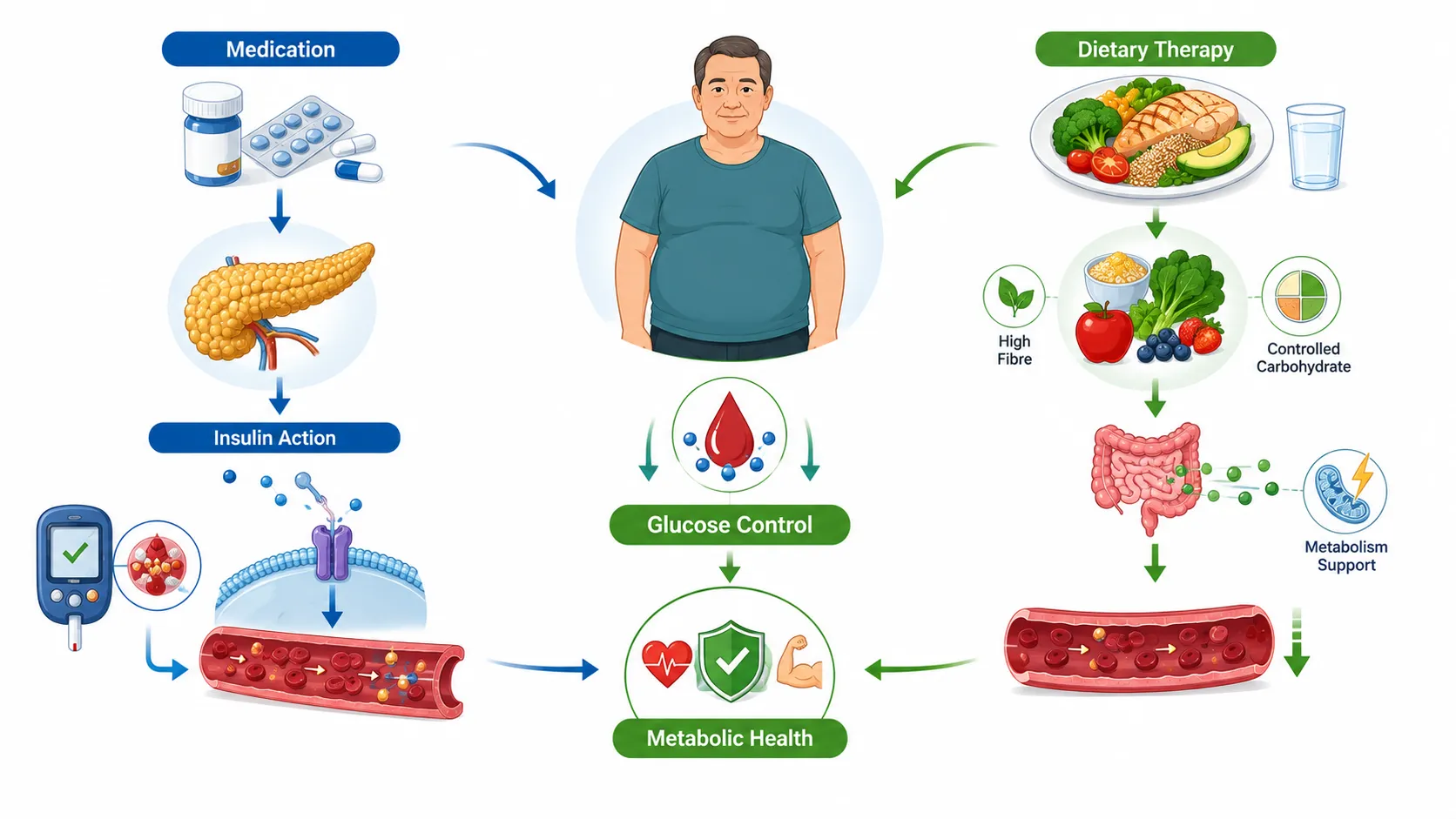
Understanding the Molecular Basis of Type 2 Diabetes
Before comparing treatments, it is necessary to understand the principal biochemical disturbances associated with type 2 diabetes.
Insulin normally promotes glucose uptake in insulin-sensitive tissues and suppresses excessive glucose production by the liver. In type 2 diabetes, these processes become progressively impaired.
The major molecular abnormalities include:
Reduced insulin sensitivity in skeletal muscle
Impaired suppression of hepatic glucose production
Progressive beta-cell dysfunction
Altered insulin secretion
Increased circulating free fatty acids in many individuals
Dysregulated adipose tissue signalling
Impaired incretin effects
Chronic low-grade inflammation
Mitochondrial and oxidative stress in some metabolic contexts
These abnormalities do not develop identically in every individual. The relative contribution of insulin resistance, beta-cell dysfunction and other metabolic disturbances can differ between patients.
Key Definitions and Concepts
| Term | Definition | Relevance to Type 2 Diabetes Management |
|---|---|---|
| Insulin resistance | Reduced biological response of target tissues to insulin | Contributes to impaired glucose uptake and increased glucose production |
| Beta-cell dysfunction | Progressive impairment in the ability of pancreatic beta cells to produce adequate insulin | Reduces the capacity to compensate for insulin resistance |
| Hepatic glucose production | Production and release of glucose by the liver | May remain excessively elevated in type 2 diabetes |
| Incretin effect | Hormonal response that enhances insulin secretion following nutrient intake | Often altered in type 2 diabetes |
| Glucose transporter | A protein involved in moving glucose across cell membranes | Important in glucose uptake and renal glucose handling |
| Insulin sensitisation | Improvement in tissue responsiveness to insulin | A major therapeutic objective |
| Glycaemic response | Change in blood glucose following food intake or other metabolic influences | Affected by dietary composition and pharmacological treatment |
| Energy balance | Relationship between energy intake and energy expenditure | Influences adiposity and insulin sensitivity |
| Targeted dietary therapy | An individualised dietary strategy designed to influence specific metabolic outcomes | Can modify nutrient exposure and underlying metabolic pathways |
Pharmacological Treatment and Molecular Targeting
General Principles of Drug Action
Pharmacological treatments generally act through defined molecular targets. These targets may include:
Cell-surface receptors
Enzymes
Transport proteins
Intracellular signalling pathways
Hormonal systems
Renal transport mechanisms
A medicine may therefore produce a relatively direct biochemical effect. However, the overall clinical response remains dependent on individual physiology, disease severity, adherence and concurrent lifestyle factors.
The main objective of pharmacological treatment is often to reduce harmful glucose exposure and improve metabolic regulation while maintaining patient safety.
Medicines That Improve Insulin Sensitivity
Cellular Insulin Signalling
Insulin binds to its receptor on the surface of responsive cells. This activates a series of intracellular signalling processes that ultimately promote glucose uptake and regulate metabolism.
In skeletal muscle and adipose tissue, effective insulin signalling contributes to movement of glucose transport proteins towards the cell membrane, increasing glucose entry into cells.
When insulin resistance develops, this signalling process becomes less effective.
Potential contributors include:
Lipid accumulation within tissues
Inflammatory signalling
Altered mitochondrial function
Oxidative stress
Excess energy availability
Genetic susceptibility
Pharmacological Insulin Sensitisation
Some standard medicines improve metabolic regulation partly by influencing insulin sensitivity and hepatic glucose metabolism. Their effects may involve reducing excessive hepatic glucose output and improving the body’s response to available insulin.
Key potential outcomes include:
Reduced fasting glucose
Improved hepatic metabolic regulation
Improved peripheral insulin action in some contexts
Reduced overall glucose exposure
A key characteristic of pharmacological treatment is that the molecular action is linked to the medicine’s biochemical properties and dosage.
Advantages of Pharmacological Insulin Sensitisation
Potential benefits include:
Predictable mechanisms of action
Measurable effects on metabolic pathways
Ability to support patients with significant hyperglycaemia
Compatibility with other appropriately prescribed treatments
However, response and tolerability can vary between individuals.
Medicines That Influence Insulin Secretion
Pancreatic Beta-Cell Stimulation
Some pharmacological treatments increase insulin secretion by acting on pancreatic beta-cell pathways.
The basic physiological objective is to increase the availability of insulin when glucose regulation requires additional hormonal support.
Potential mechanisms may involve:
Modification of ion channel activity
Changes in beta-cell membrane potential
Increased intracellular calcium signalling
Enhanced insulin granule release
These mechanisms differ from dietary strategies because they act directly on cellular processes involved in hormone secretion.
Clinical Implications
Increasing insulin secretion may improve glucose control, but the potential physiological consequences must be considered.
Relevant factors include:
Timing of medication action
Dietary carbohydrate intake
Meal regularity
Individual susceptibility to low glucose
Beta-cell function
Concurrent treatments
This illustrates why dietary behaviour and pharmacological treatment require coordinated management.
Incretin-Based Pharmacological Strategies
The Physiological Role of Incretin Hormones
Following food intake, the gastrointestinal tract releases hormones that contribute to metabolic regulation. Incretin hormones can influence insulin secretion and other aspects of glucose homeostasis.
Incretin-related mechanisms may contribute to:
Glucose-dependent insulin secretion
Regulation of glucagon activity
Appetite and satiety
Gastrointestinal motility
In type 2 diabetes, the physiological incretin response may be altered.
Pharmacological Enhancement of Incretin Pathways
Some medicines are designed to enhance or mimic aspects of incretin signalling.
Their molecular actions may involve:
Activation of specific hormone receptors
Enhancement of glucose-dependent insulin secretion
Reduction of inappropriate glucagon signalling
Effects on appetite and food intake
Changes in gastric emptying
These treatments demonstrate how pharmacology can target specific hormonal pathways with relatively direct molecular actions.
Comparison With Food-Induced Incretin Responses
Dietary intake naturally stimulates gastrointestinal hormone responses. The size and timing of this response can vary according to:
Meal composition
Energy content
Macronutrient composition
Rate of nutrient delivery
Individual physiology
Dietary therapy therefore influences incretin physiology indirectly through nutrient exposure, whereas pharmacological treatment can target specific receptors or enzymatic pathways more directly.
Medicines That Alter Renal Glucose Handling
Renal Glucose Reabsorption
The kidneys filter glucose from the bloodstream. Under normal physiological conditions, specialised transport mechanisms reclaim much of this filtered glucose.
In some pharmacological strategies, specific renal glucose transport processes are modified so that more glucose is eliminated through the urine.
This approach differs significantly from dietary therapy because the medicine targets glucose handling after filtration by the kidney.
Potential metabolic effects may include:
Reduced circulating glucose
Increased urinary glucose excretion
Altered energy loss through urinary glucose
Comparison With Dietary Therapy
Dietary strategies generally reduce the amount or rate at which glucose becomes available from the digestive process. Renal-targeted medicines influence glucose handling after it has entered the circulation and been filtered.
Therefore:
Dietary therapy primarily modifies glucose exposure and metabolic demand.
Renal-targeted pharmacology modifies glucose elimination.
Both may improve glucose-related outcomes, but they act at different points within the overall metabolic system.
Targeted Dietary Therapies and Molecular Metabolism
Dietary Therapy as a Metabolic Intervention
Targeted dietary therapy involves more than simply reducing sugar intake. An evidence-based dietary strategy may influence:
Post-meal glucose availability
Insulin secretion
Hepatic substrate metabolism
Lipid metabolism
Energy balance
Adipose tissue function
Gut hormone signalling
Inflammatory processes
Unlike many medicines, dietary interventions rarely act through one isolated receptor or enzyme. Instead, they modify the metabolic environment by changing the availability, timing and composition of nutrients.
Carbohydrate Quality and Glucose Regulation
Molecular Basis of Carbohydrate Metabolism
Dietary carbohydrates are digested and absorbed to varying degrees depending on their chemical structure and food matrix.
The resulting glucose enters the circulation and stimulates metabolic responses.
Factors influencing the glycaemic response include:
Type of carbohydrate
Degree of processing
Fibre content
Meal composition
Portion size
Rate of gastric emptying
Targeted dietary strategies can therefore influence the rate and magnitude of post-meal glucose exposure.
Dietary Manipulation of Glucose Availability
A dietary strategy may involve improving carbohydrate quality or modifying carbohydrate distribution across meals.
Potential physiological outcomes include:
Reduced rapid glucose excursions
Modified insulin demand
Improved satiety
More stable nutrient availability
However, dietary response varies according to individual metabolic status.
Pharmacological Versus Dietary Mechanisms
Pharmacological intervention may directly influence insulin secretion or glucose production.
Dietary therapy may reduce the metabolic stimulus requiring insulin action.
This distinction can be summarised as follows:
Medicines may modify a specific biochemical pathway.
Diet modifies the nutrient environment entering multiple pathways.
Dietary Fibre and Molecular Effects
Fibre and Nutrient Absorption
Dietary fibre can influence gastrointestinal processes and nutrient delivery.
Potential effects include:
Modification of gastric emptying
Altered carbohydrate absorption patterns
Increased satiety
Effects on the gut microbiome
Some fermentable fibres are metabolised by intestinal microorganisms, producing metabolites that may influence metabolic signalling.
Molecular and Physiological Importance
Potential mechanisms associated with dietary fibre include:
Changes in nutrient transit
Production of microbial metabolites
Altered gut hormone responses
Improved dietary satiety
These effects are broader and more physiologically integrated than a medicine designed to act on a single molecular target.
Energy Restriction and Insulin Sensitivity
The Biochemistry of Energy Balance
Excess energy availability can contribute to increased adipose tissue storage and accumulation of lipid within organs and tissues.
In susceptible individuals, this may contribute to:
Insulin resistance
Altered hepatic metabolism
Increased inflammatory signalling
Lipotoxic effects
Targeted energy reduction may reduce the metabolic burden associated with excess adiposity.
Molecular Consequences of Reduced Energy Availability
Over time, appropriate dietary energy management may influence:
Hepatic lipid content
Adipose tissue metabolism
Insulin signalling
Circulating lipid availability
Inflammatory activity
The response may therefore involve gradual changes across multiple tissues rather than the immediate receptor-specific action associated with many medicines.
Important Clinical Considerations
Excessive dietary restriction may create risks, including:
Inadequate protein intake
Micronutrient inadequacy
Reduced adherence
Loss of lean tissue
Interaction with glucose-lowering medication
Therefore, the biochemical objective should not be pursued without consideration of nutritional adequacy and safety.
Protein Intake and Metabolic Regulation
Protein as a Metabolic Nutrient
Protein intake influences satiety and provides amino acids required for tissue maintenance and metabolic processes.
The effect of protein on glucose regulation is complex and depends on:
Total dietary pattern
Protein source
Energy balance
Kidney function
Individual metabolic status
A targeted dietary strategy should therefore avoid assuming that increasing protein will produce identical metabolic effects in every patient.
Comparison With Pharmacological Therapy
Protein intake modifies nutrient signalling and satiety through physiological processes.
Pharmacological therapy may influence appetite or hormonal signalling through direct receptor activity.
Both can influence food intake and metabolic regulation, but the mechanisms differ.
Dietary Fat and Insulin Resistance
Lipid Metabolism and Metabolic Dysfunction
Dietary fat contributes to energy supply and cellular membrane structure. However, metabolic consequences depend on the amount and type of dietary fat, overall energy balance and individual physiology.
Excess lipid availability may contribute to accumulation of lipid intermediates in tissues.
These intermediates can interfere with insulin signalling through complex molecular pathways.
Potential consequences include:
Reduced insulin sensitivity
Altered cellular signalling
Increased inflammatory activity
Disturbed mitochondrial metabolism
Targeted Modification of Dietary Fat
Dietary therapy may aim to improve overall dietary quality and manage excessive energy intake.
Potential benefits include:
Improved lipid profiles
Support for energy balance
Reduced metabolic stress
Improved cardiovascular risk management
The dietary approach acts through long-term modification of substrate availability rather than direct blockade or activation of a single molecular target.
A Direct Comparison of Molecular Mechanisms
Specificity of Action
Pharmacological treatments often have relatively specific molecular targets.
Examples of target types include:
Receptors
Enzymes
Transporters
Ion channels
Dietary therapies influence multiple pathways simultaneously.
They may affect:
Substrate availability
Hormone secretion
Gene expression
Energy balance
Gut microbial metabolism
Tissue lipid storage
Speed of Response
Pharmacological effects may occur relatively quickly depending on the mechanism and treatment.
Dietary effects can also influence immediate post-meal metabolism, but broader improvements in insulin sensitivity and body composition may require sustained changes.
Breadth of Physiological Impact
Medicines may produce powerful effects on a defined pathway but can also cause adverse effects through actions on related systems.
Dietary therapy has a broader influence because nutrients participate in numerous metabolic pathways.
However, dietary changes may be more difficult to standardise because food intake varies between individuals.
Key Differences Between Pharmacological and Dietary Strategies
Pharmacological Approaches
Key characteristics include:
Defined active compound
Specific molecular target
Dose-dependent effects
Regulated prescribing processes
Potential for predictable pharmacological action
Possible medication-specific adverse effects
Dietary Approaches
Key characteristics include:
Modification of nutrient exposure
Multiple simultaneous biochemical effects
Influence on energy and substrate availability
Dependence on dietary adherence
Potential long-term effects on body composition and metabolism
Requirement for nutritional adequacy
Key Similarities Between the Two Approaches
Despite their differences, both approaches may influence common metabolic outcomes.
Both can contribute to:
Improved glucose regulation
Reduced metabolic stress
Improved insulin sensitivity
Changes in body weight
Reduced long-term disease risk when appropriately applied
Both also require:
Individual assessment
Safety monitoring
Consideration of comorbidities
Review of treatment response
Long-term adherence strategies
Comparing Benefits and Limitations
Benefits of Pharmacological Treatment
Potential benefits include:
Direct action on specific metabolic pathways
Useful support when hyperglycaemia is significant
Ability to target mechanisms not easily controlled through diet alone
Measurable dose-response relationships
Limitations of Pharmacological Treatment
Potential limitations may include:
Adverse effects
Cost and access issues
Need for ongoing monitoring
Variable individual response
Potential interactions with other treatments
Benefits of Dietary Therapy
Potential benefits include:
Broad effects across multiple metabolic pathways
Potential improvement in overall nutritional quality
Influence on cardiovascular and metabolic risk factors
Potential long-term improvement in metabolic environment
Limitations of Dietary Therapy
Potential challenges include:
Variable adherence
Differences in food access
Cultural and social factors
Risk of excessive restriction
Individual variation in metabolic response
A Systematic Process for Comparing Treatment Strategies
Step 1: Identify the Primary Metabolic Abnormality
The first question is: which physiological problem requires intervention?
Assessment may identify:
Predominant insulin resistance
Excessive hepatic glucose production
Impaired insulin secretion
Significant post-meal glucose excursions
Excess adiposity
Multiple metabolic abnormalities
Step 2: Identify the Molecular Target
For pharmacological treatment, identify:
Receptor
Enzyme
Transporter
Hormonal pathway
For dietary therapy, identify:
Nutrient exposure
Energy balance
Glycaemic response
Lipid availability
Meal structure
Step 3: Compare Expected Physiological Outcomes
Consider:
Expected glucose effects
Effects on appetite
Effects on body weight
Effects on lipid metabolism
Risk of adverse outcomes
Step 4: Evaluate Patient-Specific Factors
Important factors include:
Age
Duration of disease
Current biochemical profile
Body composition
Kidney and liver function
Medication history
Dietary preferences
Ability to sustain the intervention
Step 5: Develop an Integrated Strategy
The final approach should coordinate treatment components rather than treating them as unrelated.
Potential components include:
Appropriate medical treatment
Individualised dietary modification
Physical activity where clinically appropriate
Behavioural support
Biochemical monitoring
Practical Example: Predominant Post-Meal Hyperglycaemia
A patient experiences significant increases in blood glucose after meals despite reasonable fasting glucose control.
A pharmacological strategy may target pathways involved in:
Insulin secretion
Incretin activity
Glucose absorption or handling
A dietary strategy may focus on:
Carbohydrate quality
Portion management
Meal composition
Fibre intake
Distribution of carbohydrate intake
The key difference is that pharmacology may directly modify a selected physiological pathway, whereas dietary intervention modifies the nutrient stimulus that produces the post-meal response.
Practical Example: Insulin Resistance and Excess Adiposity
A patient has type 2 diabetes with significant insulin resistance and increased adiposity.
Pharmacological approaches may improve:
Insulin sensitivity
Glucose regulation
Appetite regulation, depending on the treatment
Dietary therapy may focus on:
Appropriate energy management
Nutritional quality
Carbohydrate patterns
Dietary fat quality
Adequate protein and micronutrient intake
Both strategies may contribute to improved metabolic outcomes through different but potentially complementary mechanisms.
Practical Example: Complex Multimorbidity
A patient has type 2 diabetes, dyslipidaemia and reduced physical mobility.
The healthcare team should avoid selecting treatment solely on the basis of one laboratory marker.
A comprehensive analysis should consider:
Glucose-related markers
Lipid profile
Body composition
Medication regimen
Food intake
Functional ability
Adverse effects
Treatment priorities
An integrated strategy may be more appropriate than a single-target intervention.
Critical Evaluation of Combination Therapy
Combining dietary and pharmacological strategies can provide complementary effects, but combination therapy requires careful monitoring.
Potential advantages include:
Multiple metabolic pathways can be addressed
Dietary improvements may support medication effectiveness
Reduced metabolic burden may improve overall outcomes
Individual treatment goals can be addressed simultaneously
Potential challenges include:
Difficulty identifying the cause of a particular biochemical change
Increased complexity of patient education
Risk when major dietary changes occur without medication review
Variable adherence to multiple interventions
Critical evaluation should therefore consider both effectiveness and safety.
Avoiding False Dichotomies
It is scientifically inaccurate to suggest that dietary therapy and pharmacological treatment are mutually exclusive choices in all cases.
The more appropriate question is:
Which combination of evidence-based interventions is most suitable for this individual’s biochemical and clinical needs?
Treatment decisions should recognise that:
Some patients require pharmacological treatment because of disease severity.
Some patients may achieve significant improvement through dietary and lifestyle interventions.
Many patients benefit from an integrated approach.
Treatment needs may change as disease progression and metabolic status change.
Key Benefits of Molecular Understanding
Understanding the molecular differences between treatment strategies enables professionals to:
Explain treatment mechanisms more accurately
Avoid oversimplified dietary advice
Recognise why patients respond differently
Identify potential interaction risks
Support evidence-based multidisciplinary care
Interpret biochemical outcomes more effectively
Key Points for Learners
The following principles summarise this topic:
Type 2 diabetes involves multiple biochemical abnormalities rather than one isolated defect.
Pharmacological treatments often act on specific receptors, enzymes, transporters or signalling pathways.
Dietary therapies modify nutrient availability and influence multiple metabolic processes.
Both strategies may affect glucose regulation, insulin sensitivity and energy balance.
Dietary interventions can influence immediate post-meal metabolism and longer-term tissue metabolism.
Pharmacological and dietary treatments may have complementary effects.
Individual response varies according to disease severity, physiology and adherence.
Major dietary changes should be considered alongside the medication regimen.
Treatment effectiveness should be evaluated using clinical and biochemical information.
Sustainable metabolic management requires long-term monitoring and individualisation.
Summary
Standard pharmacological treatments and targeted dietary therapies represent two important approaches to the management of type 2 diabetes. Pharmacological interventions typically act through defined molecular mechanisms, including effects on insulin signalling, insulin secretion, incretin pathways, hepatic glucose metabolism and renal glucose handling. Their actions may be relatively specific and can provide important support when metabolic dysfunction is significant.
Targeted dietary therapies operate differently. By modifying nutrient availability, carbohydrate quality, energy intake, dietary fibre, protein intake and dietary fat patterns, dietary interventions influence a broad network of metabolic pathways. Their effects may include changes in post-meal glucose exposure, insulin demand, lipid metabolism, body composition and long-term insulin sensitivity.
The critical distinction is that medicines frequently target specific biochemical mechanisms, whereas dietary therapy modifies the metabolic environment in which many mechanisms operate. Despite this difference, both approaches may influence shared clinical outcomes and can often be combined within an individualised treatment strategy.
Effective management of type 2 diabetes therefore requires more than comparing medicines and diet as competing options. Healthcare professionals must analyse the underlying biochemical abnormalities, understand the molecular mechanisms of available interventions, evaluate patient-specific factors and monitor both effectiveness and safety. Through this integrated approach, pharmacological and dietary strategies can be used appropriately to support improved metabolic health and sustainable long-term disease management.
3.Synthesise Clinical Evidence to Design Integrated Treatment Plans That Effectively and Safely Combine Pharmacological Support with Specialized Nutritional Strategies
Managing metabolic health requires more than selecting a medicine or recommending a general healthy diet. Many individuals with metabolic disorders present with multiple biochemical abnormalities, including hyperglycaemia, insulin resistance, dyslipidaemia, obesity, inflammation and altered energy metabolism. These abnormalities interact with one another and may also be influenced by medication use, dietary intake, physical activity, organ function and other medical conditions.
An integrated treatment plan combines appropriate pharmacological support with specialised nutritional strategies to address these interconnected factors. The purpose is not simply to add dietary advice to a medication regimen. Instead, the healthcare team must synthesise clinical evidence, laboratory findings, medication mechanisms, nutritional requirements and individual patient circumstances to create a coordinated and safe plan.
Clinical evidence is essential because treatment decisions should be based on reliable research, recognised clinical guidance and careful professional judgement. However, evidence must also be interpreted in the context of the individual. A strategy that is effective in a clinical trial may require modification when applied to a person with multiple conditions, changing biochemical markers or practical barriers to adherence.
Integrated treatment planning therefore involves evidence synthesis, clinical reasoning, risk assessment, monitoring and ongoing adjustment. The objective is to achieve meaningful metabolic improvement while reducing the likelihood of adverse effects, nutritional inadequacy and treatment-related complications.

Key Definitions and Concepts
| Term | Definition | Importance in Integrated Treatment Planning |
|---|---|---|
| Integrated treatment plan | A coordinated plan combining medical, nutritional and other relevant interventions | Ensures that interventions work together rather than creating conflicting effects |
| Pharmacological support | The appropriate clinical use of medicines to influence disease-related physiological pathways | Can target specific mechanisms such as glucose regulation, appetite or lipid metabolism |
| Specialised nutritional strategy | An individualised dietary approach designed to address identified clinical and biochemical needs | Modifies nutrient exposure, energy balance and metabolic responses |
| Evidence synthesis | The structured integration of findings from multiple reliable sources | Supports informed and balanced treatment decisions |
| Clinical reasoning | The process of interpreting evidence and patient information to make appropriate decisions | Connects general evidence with individual patient needs |
| Individualisation | Adaptation of treatment to the patient’s clinical, biochemical and practical circumstances | Reduces the risk of applying generic recommendations inappropriately |
| Treatment interaction | A situation in which one intervention alters the effect or safety of another | Important when dietary changes occur alongside medication |
| Biochemical monitoring | Repeated measurement of relevant laboratory markers | Helps evaluate treatment effectiveness and safety |
| Risk-benefit assessment | Evaluation of expected benefits against possible harms | Supports safe clinical decision-making |
| Therapeutic synergy | Complementary effects produced when interventions support shared treatment goals | Can improve overall metabolic management |
The Importance of Integrating Pharmacological and Nutritional Care
Why a Single Intervention May Be Insufficient
Metabolic disorders are often multifactorial. For example, an individual with type 2 diabetes may experience insulin resistance, impaired insulin secretion, increased hepatic glucose production and excess adipose tissue simultaneously. A single medicine may improve one pathway without addressing all contributing factors.
Similarly, dietary modification may improve metabolic health but may not always be sufficient to control severe or progressive biochemical abnormalities.
An integrated approach recognises that different interventions can act at different points within the metabolic system.
For example:
Pharmacological therapy may directly influence glucose-regulating pathways.
Dietary therapy may reduce excessive glucose exposure from meals.
Nutritional strategies may support energy management.
Appropriate dietary patterns may improve lipid metabolism.
Medication may support metabolic control while longer-term lifestyle changes develop.
Monitoring can identify when either component requires adjustment.
The aim is therefore coordinated care rather than the independent use of multiple interventions.
The Core Principles of Integration
A safe and effective integrated treatment plan should be based on several principles:
Evidence-based decision-making
Individual biochemical assessment
Clear treatment objectives
Understanding of medication mechanisms
Nutritional adequacy
Consideration of potential interactions
Regular clinical monitoring
Patient-centred implementation
Multidisciplinary communication
Ongoing review and adaptation
These principles help ensure that treatment remains scientifically justified while also being practical and safe.
Understanding Clinical Evidence
What Is Clinical Evidence?
Clinical evidence refers to information that helps healthcare professionals understand the effectiveness, safety and applicability of an intervention.
Evidence may include:
Controlled clinical studies
Systematic reviews
Meta-analyses
Clinical guidelines
Observational research
Laboratory and physiological research
Real-world clinical outcomes
Not all evidence provides the same level of certainty. Therefore, professionals must critically evaluate the quality, relevance and limitations of available information.
Synthesising Evidence Rather Than Relying on One Source
A single study should rarely be treated as the sole basis for a major clinical decision. Research findings must be considered alongside the wider body of evidence.
Evidence synthesis involves asking:
What question was the research investigating?
Who was included in the study?
Was the intervention clearly defined?
Were clinically meaningful outcomes measured?
Were important limitations identified?
Are the findings consistent with other research?
Does the study population resemble the patient being treated?
This process prevents the inappropriate transfer of research findings from one clinical context to another.
Key Considerations When Reviewing Evidence
Professionals should consider:
Study design
Sample size
Duration of follow-up
Quality of outcome measurements
Potential bias
Patient population
Intervention adherence
Safety findings
Clinical relevance
Consistency with wider evidence
Evidence-based practice does not mean applying research mechanically. It requires combining scientific evidence with clinical expertise and individual circumstances.
Establishing the Patient’s Clinical and Biochemical Profile
The Importance of Comprehensive Assessment
An integrated plan should begin with a detailed understanding of the patient’s metabolic status.
Relevant information may include:
Current diagnosis
Disease duration
Medication history
Dietary intake
Body composition
Relevant laboratory findings
Symptoms
Organ function
Presence of comorbidities
Physical activity
Social and cultural factors
The assessment should identify both immediate clinical priorities and longer-term metabolic goals.
Important Biochemical Domains
Depending on the clinical situation, assessment may consider:
Markers of glucose regulation
Longer-term glycaemic indicators
Lipid-related markers
Kidney function indicators
Liver-related markers
Electrolyte balance
Relevant nutritional biomarkers
No laboratory result should normally be interpreted in isolation. Trends, clinical symptoms and the wider medical context are important.
Creating a Problem List
After assessment, the healthcare team may develop a structured list of identified problems.
For example:
Persistent hyperglycaemia
Increased post-meal glucose excursions
Insulin resistance
Excess adiposity
Dyslipidaemia
Irregular meal patterns
Limited nutritional knowledge
Medication-related dietary considerations
This problem list helps prioritise treatment decisions.
Establishing Clear Treatment Goals
Why Treatment Goals Matter
An integrated plan requires clear objectives. Without defined goals, it becomes difficult to determine whether an intervention is effective.
Goals should be based on:
Clinical condition
Baseline biochemical status
Individual risk factors
Treatment safety
Patient priorities
Examples of Treatment Objectives
Appropriate objectives may include:
Improving overall glucose regulation
Reducing significant glucose fluctuations
Supporting healthy body composition
Improving lipid-related risk markers
Preventing nutritional deficiencies
Reducing treatment-related adverse effects
Improving adherence
Supporting long-term metabolic stability
Goals should be reviewed regularly because patient needs may change.
Analysing Pharmacological Mechanisms
Understanding What Each Medicine Is Intended to Do
Before combining medication with specialised nutrition, professionals must understand the purpose and mechanism of the pharmacological treatment.
Questions to consider include:
Which physiological pathway does the medicine influence?
What metabolic outcome is expected?
What adverse effects may occur?
Does the medicine influence appetite?
Does treatment timing relate to meals?
Could major dietary changes alter treatment requirements?
A medicine may influence glucose production, insulin action, insulin secretion, hormonal signalling or other metabolic processes.
Understanding the mechanism helps ensure that nutritional strategies complement rather than undermine treatment.
Medication-Related Safety Considerations
Integrated planning should consider potential risks such as:
Excessive glucose lowering
Reduced appetite and inadequate intake
Gastrointestinal intolerance
Changes in hydration status
Altered electrolyte balance
Changes in nutritional requirements
Medication safety must remain within the appropriate scope of professional practice and should involve relevant prescribing and clinical professionals where necessary.
Analysing Specialised Nutritional Strategies
Moving Beyond Generic Dietary Advice
A specialised nutritional strategy should be based on identified clinical needs.
It may address:
Carbohydrate quality and distribution
Meal timing
Dietary fibre
Energy intake
Protein adequacy
Dietary fat quality
Micronutrient sufficiency
Hydration
Individual food preferences
The intervention should be designed to support the identified biochemical and physiological objectives.
Matching Nutrition to Metabolic Problems
Different biochemical problems may require different nutritional priorities.
For example:
Significant post-meal glucose variation may require attention to meal composition and carbohydrate distribution.
Excess energy intake may require an appropriate strategy for energy management.
Poor dietary quality may require improved nutrient density.
Increased cardiovascular risk may require broader dietary pattern improvement.
The nutritional plan should therefore respond to assessment findings rather than follow a one-size-fits-all approach.
Developing Therapeutic Synergy
What Is Therapeutic Synergy?
Therapeutic synergy occurs when interventions support the same overall clinical objective through complementary mechanisms.
For example, a pharmacological intervention may improve a specific glucose-regulating pathway while nutritional modification reduces the metabolic demand placed upon that pathway.
Potential areas of synergy include:
Medication supporting glucose control while dietary changes improve meal-related glucose responses
Appetite-related pharmacological support combined with nutritionally adequate meal planning
Improved insulin sensitivity supported by appropriate energy management
Lipid-focused treatment supported by improved dietary fat quality
Synergy should not be assumed automatically. It must be evaluated for effectiveness and safety.
Identifying Complementary Mechanisms
A practical comparison may involve three questions:
What does the medicine do?
What does the nutritional strategy do?
How might the two approaches interact?
For example, if a treatment influences glucose availability or insulin action, dietary strategies should be considered in relation to meal composition and glucose exposure.
This creates a coherent plan rather than two unrelated interventions.
A Step-by-Step Process for Designing an Integrated Treatment Plan
Step 1: Conduct a Comprehensive Assessment
Collect relevant information from:
Clinical history
Current medication use
Dietary assessment
Laboratory findings
Physical measurements
Symptoms
Lifestyle factors
The objective is to understand the complete clinical situation.
Step 2: Identify the Primary Metabolic Problems
Prioritise the most significant abnormalities.
These may involve:
Hyperglycaemia
Glucose variability
Insulin resistance
Dyslipidaemia
Excess adiposity
Nutritional inadequacy
Step 3: Review the Evidence
Consider:
Current clinical guidance
High-quality research
Established physiological principles
Safety information
Relevance to the individual patient
Step 4: Analyse Existing Pharmacological Support
Determine:
Treatment purpose
Expected biochemical effects
Potential adverse effects
Relevant monitoring requirements
Possible food-related considerations
Step 5: Design the Nutritional Strategy
The nutritional strategy should specify:
Primary objectives
Key dietary priorities
Meal structure
Nutritional adequacy requirements
Practical implementation methods
Step 6: Identify Potential Interactions
Consider whether changes in:
Energy intake
Carbohydrate intake
Meal timing
Hydration
Supplement use
could influence treatment response or safety.
Step 7: Establish Monitoring Criteria
Define:
What will be measured?
When will it be reviewed?
What constitutes improvement?
What findings require reassessment?
Step 8: Educate and Support the Patient
A treatment plan is unlikely to succeed if it is not understood.
Education should focus on:
Purpose of the plan
Practical dietary actions
Importance of monitoring
Recognition of concerning symptoms
When to seek clinical advice
Step 9: Review and Adapt
Treatment should be considered dynamic.
Changes may be required when:
Biochemical markers improve
Symptoms change
Dietary adherence changes
Adverse effects occur
New clinical conditions develop
The Role of Specialised Nutrition in Medication Safety
Why Major Dietary Changes Require Care
Significant changes in dietary intake can alter the metabolic environment in which medicines act.
For example, changes in meal timing or carbohydrate intake may influence glucose patterns.
Therefore, dietary interventions should not be implemented without awareness of the wider treatment plan.
Important Safety Questions
Before introducing a major dietary modification, consider:
Is the patient using glucose-lowering medication?
Is there a risk of inadequate nutritional intake?
Are there kidney or liver considerations?
Has appetite changed?
Are there symptoms suggesting treatment intolerance?
Is the patient taking nutritional supplements?
Communication between relevant healthcare professionals is essential when significant changes may affect clinical management.
Practical Example: Type 2 Diabetes With Persistent Hyperglycaemia
Clinical Situation
A patient has persistent hyperglycaemia despite receiving pharmacological treatment. Dietary assessment shows irregular meals, inconsistent carbohydrate intake and frequent consumption of highly processed foods.
Integrated Assessment
The healthcare team identifies:
Incomplete glucose control
Irregular nutrient exposure
Potential post-meal glucose variation
Need for improved dietary structure
Integrated Plan
The pharmacological component continues to be reviewed by the appropriate prescribing professional.
The nutritional strategy may focus on:
Regular and sustainable meal patterns
Improved carbohydrate quality
Appropriate portion awareness
Increased dietary fibre where suitable
Nutritionally balanced meals
Monitoring
Relevant outcomes may include:
Changes in glucose-related markers
Symptom patterns
Dietary adherence
Weight and body composition trends where appropriate
Treatment tolerance
This example demonstrates that nutrition and pharmacology can address different components of the same metabolic problem.
Practical Example: Metabolic Dysfunction and Reduced Appetite
Clinical Situation
A patient receiving treatment experiences reduced appetite and begins consuming insufficient amounts of nutritionally important foods.
Clinical Concern
Although metabolic markers may improve, inadequate intake could create new nutritional risks.
The treatment plan should therefore assess:
Energy intake
Protein adequacy
Micronutrient intake
Hydration
Unintended weight changes
Integrated Response
Appropriate nutritional strategies may include:
Smaller nutrient-dense meals
Structured meal planning
Monitoring of dietary adequacy
Review of symptoms affecting food intake
This illustrates why biochemical improvement alone does not always indicate complete clinical success.
Practical Example: Multiple Metabolic Comorbidities
Clinical Situation
A patient presents with:
Type 2 diabetes
Dyslipidaemia
Obesity
Reduced mobility
A fragmented approach might address each condition independently.
An integrated approach examines shared mechanisms.
Shared Treatment Priorities
Potential priorities include:
Improving dietary quality
Managing excessive energy intake appropriately
Supporting stable glucose regulation
Improving lipid-related risk factors
Maintaining nutritional adequacy
The treatment plan should consider whether one intervention supports several objectives simultaneously.
Monitoring the Effectiveness of Integrated Treatment
Biochemical Monitoring
Laboratory data may help evaluate:
Direction of metabolic change
Treatment response
Emerging safety concerns
Need for treatment adjustment
However, laboratory data should be interpreted alongside clinical findings.
Physiological Monitoring
Relevant indicators may include:
Body weight trends where clinically appropriate
Blood pressure
Symptoms
Appetite
Functional ability
Nutritional Monitoring
Dietary evaluation may consider:
Meal regularity
Food quality
Nutrient adequacy
Hydration
Barriers to adherence
Patient-Reported Outcomes
The patient’s experience is also important.
Questions may include:
Is the plan practical?
Are there adverse symptoms?
Is the dietary strategy sustainable?
Are financial or cultural barriers present?
Benefits of an Integrated Treatment Approach
A well-designed integrated strategy can provide several benefits.
Clinical Benefits
Potential benefits include:
Improved coordination of care
More comprehensive management of metabolic abnormalities
Better recognition of treatment interactions
Earlier identification of nutritional risks
Improved long-term monitoring
Biochemical Benefits
An integrated approach may support improvement across several domains, including:
Glucose regulation
Insulin sensitivity
Lipid metabolism
Energy balance
The actual outcome will depend on the individual and the effectiveness of the selected interventions.
Educational Benefits
Integrated planning helps patients understand that metabolic health is influenced by multiple interacting factors.
It can encourage:
Greater understanding of treatment goals
Improved engagement
Better dietary decision-making
Recognition of the importance of monitoring
Common Challenges in Integrated Treatment Planning
Challenge 1: Overlapping Recommendations
Different healthcare professionals may provide advice independently.
This can lead to:
Conflicting dietary instructions
Confusion about treatment priorities
Reduced adherence
Solution
Develop a coordinated plan with clearly defined responsibilities.
Challenge 2: Overemphasis on One Biomarker
A treatment plan may focus excessively on a single laboratory value.
This can overlook:
Nutritional adequacy
Symptoms
Treatment tolerability
Other metabolic risks
Solution
Use a broader clinical and biochemical profile.
Challenge 3: Poor Adherence
A highly complex plan may be scientifically sound but practically unrealistic.
Solution
Prioritise:
Simplicity
Gradual implementation
Patient preferences
Achievable changes
Challenge 4: Failure to Monitor Interactions
A major dietary change may alter metabolic responses while medication remains unchanged.
Solution
Ensure appropriate clinical communication and monitoring.
Professional Judgement in Complex Cases
When Standard Evidence Requires Adaptation
Research evidence provides guidance, but patients may have circumstances not fully represented in clinical studies.
These may include:
Multiple comorbidities
Complex medication regimens
Nutritional vulnerability
Organ dysfunction
Limited ability to prepare food
Financial constraints
Professional judgement is required to determine whether standard recommendations should be adapted.
Principles of Safe Adaptation
Adaptation should:
Remain consistent with established evidence where possible
Avoid unsupported extreme interventions
Protect nutritional adequacy
Include monitoring
Be clearly documented
Involve appropriate clinical professionals
The Role of the Multidisciplinary Team
Integrated metabolic care may involve multiple professionals.
Depending on the clinical setting, this may include:
Medical practitioners
Prescribing professionals
Dietitians
Nurses
Pharmacists
Other allied healthcare professionals
Why Collaboration Matters
Different professionals contribute different expertise.
For example:
Pharmacological expertise helps assess medication mechanisms and safety.
Nutritional expertise supports dietary assessment and intervention.
Clinical assessment provides broader diagnostic context.
Monitoring supports evaluation of treatment response.
Collaboration can reduce fragmentation and improve consistency.
Ethical and Professional Considerations
Respecting Scope of Practice
Healthcare professionals must work within their professional competence.
Nutritional professionals should not independently alter prescribed medication unless authorised to do so.
Similarly, pharmacological decisions should consider nutritional consequences where relevant.
Informed Decision-Making
Patients should receive understandable information about:
Treatment objectives
Expected benefits
Possible limitations
Monitoring requirements
Avoiding Unsupported Claims
Integrated treatment should not promise guaranteed outcomes.
Professionals should avoid statements such as:
A specific diet will replace all medication.
A supplement will cure metabolic disease.
One intervention works equally for every patient.
Clinical outcomes depend on many factors.
Critical Thinking Framework for Integrated Planning
When evaluating a proposed combined treatment plan, professionals can ask:
Question 1: What is the identified biochemical problem?
Define the problem clearly.
Question 2: What evidence supports each intervention?
Evaluate the strength and relevance of evidence.
Question 3: Do the interventions have complementary mechanisms?
Identify possible synergy.
Question 4: Could one intervention create a risk for the other?
Consider interactions and adverse effects.
Question 5: Is the nutritional strategy adequate?
Ensure that metabolic goals do not compromise nutritional health.
Question 6: How will success be measured?
Establish objective and clinically relevant outcomes.
Question 7: When will the plan be reviewed?
Set appropriate monitoring and reassessment points.
Practical Framework for an Integrated Treatment Plan
A structured plan may contain the following components:
Clinical Problem
Clearly state the primary metabolic concern.
Baseline Assessment
Record:
Relevant clinical findings
Laboratory markers
Dietary intake
Current treatments
Pharmacological Component
Document:
Purpose of treatment
Expected metabolic effects
Relevant safety considerations
Nutritional Component
Define:
Dietary objectives
Meal strategies
Nutritional adequacy priorities
Interaction Assessment
Identify potential areas requiring monitoring.
Monitoring Plan
Specify:
Biochemical indicators
Clinical indicators
Nutritional indicators
Review schedule
Adaptation Criteria
Define circumstances requiring reassessment or modification.
Key Workplace Applications
This knowledge is applicable in a range of professional settings.
Hospital and Clinical Practice
Professionals may need to coordinate nutrition with:
Medication schedules
Laboratory monitoring
Acute changes in metabolic status
Primary Care
Integrated strategies may support long-term management through:
Dietary counselling
Medication review
Risk-factor monitoring
Specialist Metabolic Services
Complex patients may require:
Detailed biochemical assessment
Individualised nutritional planning
Multidisciplinary collaboration
Community Healthcare
Professionals may focus on:
Sustainable dietary implementation
Health education
Identification of barriers to adherence
Key Learning Points
Learners should understand that:
Integrated treatment planning combines evidence, clinical judgement and individual assessment.
Pharmacological and nutritional interventions may act through different but complementary mechanisms.
Medication mechanisms should be understood before major nutritional strategies are implemented.
Dietary therapy should be specialised and based on identified metabolic needs.
Biochemical results should be interpreted alongside symptoms and dietary information.
Therapeutic synergy must be evaluated rather than assumed.
Safety monitoring is essential when treatments influence related metabolic pathways.
Nutritional adequacy must remain a priority.
Multidisciplinary communication supports coordinated care.
Treatment plans should be dynamic and adjusted according to clinical response.
Summary
Synthesising clinical evidence to design integrated treatment plans requires a structured understanding of both pharmacological and nutritional approaches to metabolic health. Pharmacological treatments may target specific receptors, enzymes, transport mechanisms or hormonal pathways, while specialised nutritional strategies modify nutrient availability, energy balance, dietary quality and the broader metabolic environment.
The development of an effective plan begins with comprehensive assessment. Professionals must identify the patient’s principal biochemical abnormalities, evaluate relevant clinical evidence and understand the mechanisms and safety considerations associated with current treatment. Nutritional strategies should then be selected to complement identified therapeutic objectives while maintaining nutritional adequacy and practical feasibility.
The most effective integrated plans do not treat medication and nutrition as separate components. Instead, they examine how each intervention influences the same physiological system. Potential therapeutic synergy, interaction risks and individual patient circumstances must be considered throughout the planning process.
Monitoring is essential because metabolic responses can change over time. Biochemical markers, clinical symptoms, dietary intake, physiological outcomes and patient-reported experiences should all contribute to evaluation. Where treatment outcomes are insufficient or safety concerns arise, the plan should be reassessed by the appropriate healthcare professionals.
Ultimately, evidence-based integration requires critical thinking rather than simple adherence to standard protocols. By combining high-quality clinical evidence, sound biochemical knowledge, specialised nutritional planning and appropriate pharmacological support, healthcare professionals can contribute to safer, more coordinated and more individualised approaches to metabolic health management.
4.Evaluate the Potential Biochemical Risks and Physiological Benefits of Utilizing Specific Dietary Supplements as Adjunct Therapies Alongside Prescribed Metabolic Medications
Dietary supplements are widely used by individuals seeking to improve metabolic health, manage nutritional deficiencies or support conventional treatment for conditions such as type 2 diabetes, obesity, dyslipidaemia and metabolic syndrome. Supplements may include vitamins, minerals, fatty acids, amino acids, fibre-based products, probiotics and other bioactive substances. When used appropriately, certain supplements may help address documented nutritional deficiencies or support specific physiological functions. However, supplements can also create biochemical risks, interact with prescribed medicines and complicate the interpretation of laboratory results.
The use of dietary supplements as adjunct therapies requires critical evaluation rather than automatic acceptance or rejection. An adjunct therapy is an intervention used alongside, rather than as a replacement for, established treatment. In metabolic healthcare, this distinction is essential. Prescribed medicines are selected to target recognised disease mechanisms, while a supplement may be considered to address a specific nutritional need or support an identified physiological objective.
A scientifically grounded evaluation considers several factors simultaneously. These include the individual’s biochemical profile, current medication regimen, kidney and liver function, dietary intake, evidence supporting the supplement, dose, duration of use and potential adverse effects. The quality and composition of the supplement must also be considered because products can vary in concentration, purity and formulation.
This section develops the knowledge and critical-thinking skills required to evaluate potential benefits and risks associated with dietary supplements used alongside prescribed metabolic medications. It focuses on biochemical mechanisms, physiological responses, clinical monitoring, interaction risks and evidence-based decision-making. The content is educational and does not replace individual medical assessment or prescribing advice.
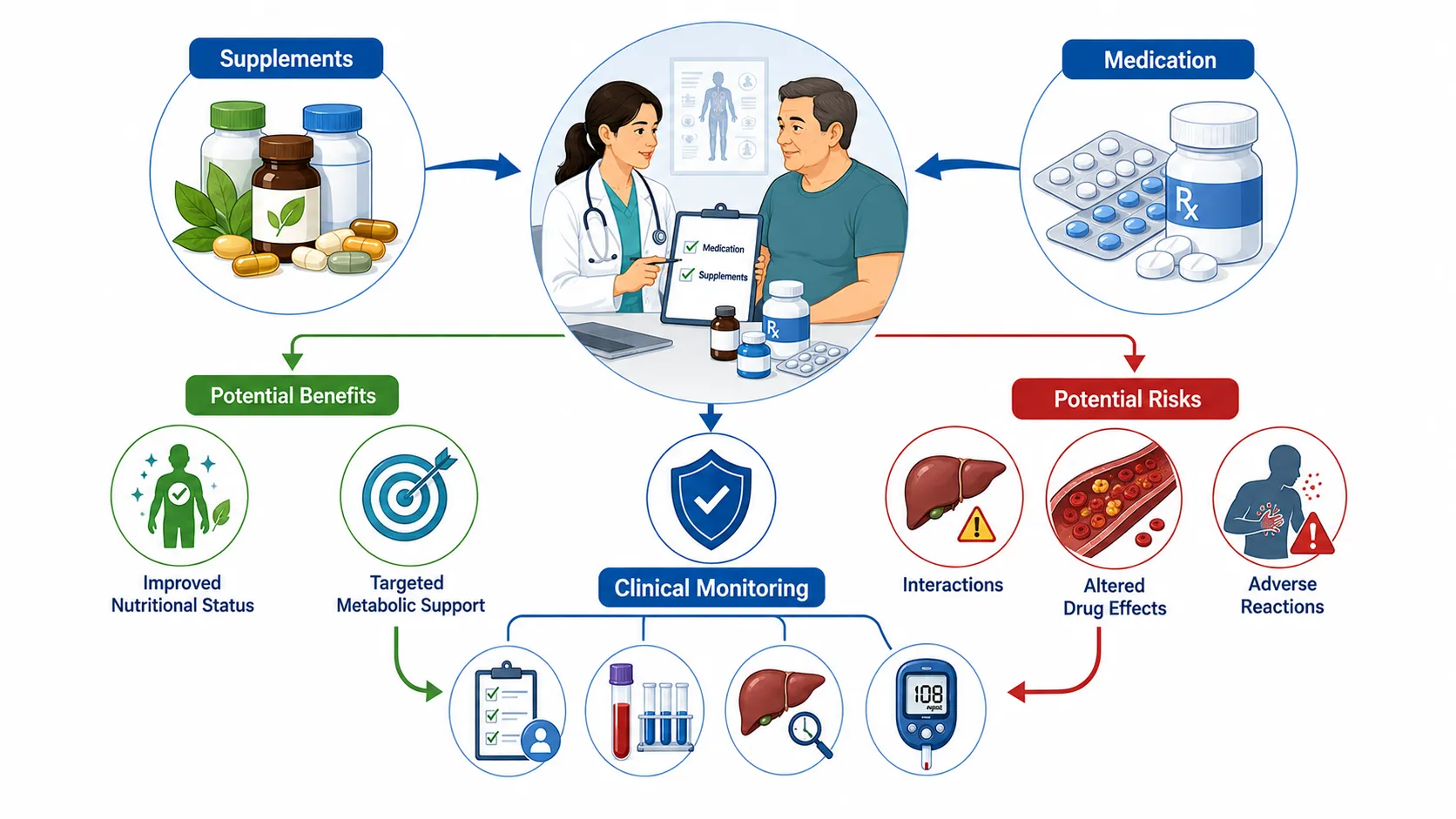
Key Definitions and Concepts
| Term | Definition | Relevance to Metabolic Care |
|---|---|---|
| Dietary supplement | A product intended to provide nutrients or other bioactive substances in addition to the usual diet | May address a specific nutritional need but requires evidence and safety assessment |
| Adjunct therapy | A supportive intervention used alongside primary medical treatment | Supplements should complement, not automatically replace, prescribed treatment |
| Biochemical interaction | A change in biological activity caused when two substances influence related metabolic pathways | May alter medication effects, nutrient metabolism or laboratory markers |
| Pharmacokinetic interaction | An interaction affecting absorption, distribution, metabolism or elimination of a substance | May change the concentration or availability of a medicine |
| Pharmacodynamic interaction | An interaction in which substances produce additive, opposing or unexpected physiological effects | May increase the risk of excessive metabolic responses |
| Nutrient deficiency | An insufficient availability of an essential nutrient for normal physiological function | Supplementation may be appropriate when deficiency is identified and clinically assessed |
| Bioavailability | The proportion of an ingested substance that becomes available for physiological use | Influenced by formulation, food intake and interactions |
| Therapeutic monitoring | Systematic evaluation of treatment effectiveness and safety over time | Helps identify benefits and adverse biochemical changes |
| Evidence-based practice | The use of reliable research alongside clinical expertise and individual assessment | Prevents unsupported or inappropriate supplement use |
| Adverse effect | An unwanted physiological or biochemical response associated with an intervention | Must be considered before and during supplement use |
Understanding Dietary Supplements in Metabolic Healthcare
Supplements Are Not Automatically Harmless
A common misconception is that a product described as natural must also be safe. Biochemically active substances can influence enzymes, receptors, transport systems, hormonal pathways and nutrient metabolism. Therefore, a supplement capable of producing a physiological benefit may also produce an unwanted effect.
The risk may be greater when a supplement is used alongside metabolic medication because both interventions can influence the same physiological systems. For example, an intervention that affects glucose metabolism may produce an additive effect when combined with medicines designed to lower blood glucose.
This does not mean that supplements should never be used. Instead, it demonstrates the importance of structured evaluation.
Key considerations include:
The reason for considering supplementation
The individual’s clinical diagnosis
Current prescribed medication
Existing nutritional status
Relevant laboratory findings
Kidney and liver function
Dose and formulation
Duration of use
Potential interactions
Quality of available evidence
The Role of Supplements as Adjuncts
Adjunct therapies should have a clearly defined purpose. A supplement should not be added simply because it is popular or widely marketed.
A clinically relevant purpose may include:
Correcting an identified nutrient deficiency
Supporting nutritional adequacy when dietary intake is insufficient
Addressing a documented physiological need
Supporting a carefully monitored clinical objective
The decision should be based on assessment rather than assumptions.
The Biochemical Basis of Supplement–Medication Interactions
Pharmacokinetic Interactions
Pharmacokinetic interactions occur when a supplement influences the way a medicine moves through the body.
This may involve:
Altered gastrointestinal absorption
Changes in metabolism
Changes in transport
Altered elimination
For example, some substances may influence gastrointestinal conditions or compete for absorption processes. This could theoretically change the amount of a medicine that becomes available to the body.
Important considerations include:
Timing of supplement and medication intake
Gastrointestinal tolerance
Changes in dietary fibre intake
Changes in nutrient absorption
Organ function affecting elimination
The practical significance of an interaction depends on the specific substances involved and the individual patient.
Pharmacodynamic Interactions
Pharmacodynamic interactions occur when two interventions influence similar physiological pathways.
Possible outcomes include:
Additive effects
Synergistic effects
Opposing effects
Increased adverse effects
For example, if both a prescribed medicine and a bioactive supplement influence glucose regulation, the combined effect may be greater than expected.
This requires appropriate clinical monitoring.
Biochemical Pathway Overlap
Metabolic regulation involves interconnected systems.
Supplements and medicines may both influence:
Glucose metabolism
Insulin signalling
Lipid metabolism
Oxidative processes
Inflammatory pathways
Electrolyte balance
Gastrointestinal absorption
Therefore, evaluating a supplement requires an understanding of the wider biochemical environment.
Potential Physiological Benefits of Supplementation
Correcting Documented Nutrient Deficiencies
One of the strongest rationales for supplementation is the correction of a confirmed or clinically suspected deficiency following appropriate assessment.
A deficiency may influence:
Energy metabolism
Neuromuscular function
Bone health
Blood formation
Immune function
Enzyme activity
Correcting a deficiency may improve physiological function, but the expected outcome depends on the nutrient, severity of deficiency and underlying cause.
Important principles include:
Identify the cause where possible.
Avoid assuming that symptoms are caused by deficiency.
Use appropriate assessment methods.
Monitor response when clinically indicated.
Avoid unnecessarily prolonged high-dose use.
Supporting Nutritional Adequacy
Some individuals may have difficulty achieving adequate nutrient intake because of:
Reduced appetite
Restricted dietary patterns
Gastrointestinal problems
Increased nutritional requirements
Poor dietary quality
A supplement may help address a specific gap, but it should not automatically replace the broader goal of improving dietary quality.
Supporting Specific Physiological Functions
Certain nutrients are required for normal biochemical processes.
These processes may include:
Enzyme activity
Cellular energy production
Redox balance
Structural tissue maintenance
Hormonal signalling
However, the fact that a nutrient participates in a biochemical pathway does not automatically prove that supplementation above normal requirements will improve disease outcomes.
This distinction is critical in evidence-based clinical nutrition.
Evidence Evaluation Before Recommending an Adjunct Supplement
Understanding the Difference Between Biological Plausibility and Clinical Benefit
A supplement may have a theoretically plausible biochemical mechanism without producing meaningful clinical benefits.
For example:
A substance may influence a laboratory marker in experimental research.
The change may be statistically measurable.
However, the change may not improve meaningful clinical outcomes.
Therefore, evidence evaluation should distinguish between:
Laboratory effects
Physiological effects
Biochemical marker changes
Clinically meaningful outcomes
Questions for Critical Evidence Appraisal
Before considering a supplement, ask:
What is the proposed mechanism?
Has the mechanism been demonstrated in humans?
What clinical outcomes have been studied?
How strong is the research design?
Were participants similar to the intended patient group?
Was the intervention dose clearly defined?
Was supplement quality controlled?
Were adverse effects monitored?
Are findings consistent across studies?
The Importance of Study Quality
Higher-quality evidence may include well-conducted systematic reviews and controlled clinical research. However, even high-level evidence must be interpreted in context.
Potential limitations include:
Small study populations
Short intervention periods
Poor adherence measurement
Variable supplement formulations
Confounding dietary changes
Publication bias
Therefore, a conclusion should reflect both evidence strengths and limitations.
Common Categories of Supplements Relevant to Metabolic Health
Vitamins and Minerals
Vitamins and minerals are essential nutrients involved in many biochemical functions.
Potential uses may relate to:
Correcting deficiency
Supporting normal enzyme function
Supporting normal physiological processes
Risks may occur when:
High doses are used without assessment
Multiple products contain the same nutrient
Organ function is impaired
A nutrient interacts with medication
Omega-3 and Other Fatty Acid Supplements
Fatty acid supplements may be considered in some clinical contexts involving lipid metabolism.
Potential considerations include:
Formulation
Dose
Overall dietary pattern
Medication regimen
Bleeding-related risks where relevant
Evidence for specific outcomes
A supplement should be evaluated as part of the total metabolic management plan.
Fibre-Based Supplements
Fibre-based products may influence:
Gastrointestinal function
Satiety
Nutrient absorption
Post-meal metabolic responses
However, significant changes in fibre intake may affect gastrointestinal tolerance and the absorption timing of some medicines.
Gradual introduction and appropriate professional guidance may be required.
Probiotics and Related Products
Microbiome-related interventions are an emerging area of nutritional research.
Potential areas of investigation include:
Gastrointestinal function
Metabolic signalling
Inflammatory processes
However, effects can vary depending on:
Specific strain
Dose
Formulation
Individual characteristics
Therefore, evidence for one product cannot automatically be applied to another.
Antioxidant Supplements
Oxidative stress is associated with metabolic dysfunction, but this does not mean that high-dose antioxidant supplementation is universally beneficial.
Important questions include:
Is there a documented deficiency?
Is the oxidative process clinically relevant?
Is the supplement supported by human outcome evidence?
Could excessive supplementation disrupt normal physiological signalling?
The body uses controlled oxidative processes for normal cellular signalling, meaning that oversimplified approaches to antioxidant use should be avoided.
Evaluating Biochemical Risks
Risk of Excessive Physiological Effects
When supplements and medicines affect similar pathways, the combined response may be excessive.
Potential concerns include:
Unexpected changes in glucose regulation
Gastrointestinal disturbances
Altered blood pressure responses
Changes in electrolyte balance
The level of risk depends on the specific combination and patient characteristics.
Risk of Nutrient Toxicity
More is not always better.
Excessive intake may lead to:
Accumulation of certain nutrients
Altered mineral balance
Organ stress
Interference with other nutrients
The risk may increase when individuals use several products simultaneously.
Risk Associated With Organ Dysfunction
Kidney and liver function are particularly relevant because these organs contribute to:
Nutrient processing
Metabolism
Elimination of substances
Individuals with impaired organ function may require additional caution.
Product Quality and Composition
Supplements may vary in:
Ingredient concentration
Purity
Bioavailability
Manufacturing quality
A product label alone does not provide complete evidence of clinical effectiveness.
A Structured Risk–Benefit Assessment Process
Step 1: Identify the Clinical Objective
The first question should be:
What specific problem is the supplement intended to address?
Examples may include:
Documented nutrient deficiency
Inadequate dietary intake
A specific physiological requirement
The objective should be measurable where possible.
Step 2: Review the Patient’s Current Treatment
Consider:
Prescribed medications
Other supplements
Dietary restrictions
Relevant medical conditions
A complete list is essential because patients may use products not recorded in their primary medication history.
Step 3: Assess Biochemical Status
Relevant assessment may include:
Existing laboratory data
Clinical symptoms
Nutritional history
Organ function
Supplementation should not be based solely on vague symptoms where appropriate clinical assessment is required.
Step 4: Evaluate the Evidence
Assess:
Strength of evidence
Relevance to the individual
Expected benefit
Known safety concerns
Step 5: Assess Interaction Risks
Consider:
Shared physiological pathways
Effects on absorption
Effects on metabolism
Additive pharmacological actions
Step 6: Develop a Monitoring Plan
Define:
Relevant clinical indicators
Relevant biochemical markers
Symptoms requiring review
Follow-up intervals
Step 7: Reassess Continued Need
Supplements should not necessarily continue indefinitely.
Reassessment may consider:
Has the objective been achieved?
Has dietary intake improved?
Have adverse effects occurred?
Is continued use justified?
Practical Example: Supplementation in a Patient Using Metabolic Medication
Clinical Scenario
An adult with metabolic dysfunction is receiving prescribed medication and wishes to begin several dietary supplements after reading online claims about metabolic improvement.
Initial Professional Assessment
The appropriate response should not be an automatic approval or rejection.
The assessment should consider:
Which supplements are being proposed?
What doses are planned?
Why does the patient want to use them?
Are there documented deficiencies?
What medicines are currently prescribed?
Are there relevant laboratory findings?
Critical Evaluation
The professional should determine:
Whether evidence supports the proposed use
Whether the supplement may affect medication action
Whether multiple products duplicate ingredients
Whether monitoring is required
Key Learning Point
Popularity is not a substitute for clinical evidence.
Practical Example: Correcting a Confirmed Nutritional Deficiency
Clinical Scenario
A patient undergoing metabolic treatment has evidence suggesting inadequate intake of a specific nutrient.
Integrated Response
A structured approach may involve:
Confirming the nutritional concern
Considering possible underlying causes
Reviewing current medicines
Selecting an appropriate nutritional intervention
Monitoring the response where indicated
The intervention may involve dietary improvement, supplementation or both, depending on the clinical context.
Key Learning Point
Supplementation should address a clearly identified need rather than function as an unstructured addition to treatment.
Practical Example: Multiple Supplements and Polypharmacy
Clinical Scenario
A patient takes prescribed medicines alongside:
A multivitamin
A mineral supplement
A herbal product
A specialised metabolic supplement
Potential Concern
The total biochemical exposure may be difficult to predict.
Risks include:
Duplication of ingredients
Excessive nutrient intake
Unrecognised interactions
Difficulty identifying the cause of adverse symptoms
Professional Response
A complete supplement and medication review should be undertaken by appropriately qualified healthcare professionals.
Physiological Monitoring of Adjunct Therapies
Why Monitoring Is Essential
A supplement may influence the body even when no immediate symptoms are experienced.
Monitoring helps determine whether:
The intended benefit is occurring
Biochemical values are changing appropriately
Adverse effects are developing
The supplement remains necessary
Types of Monitoring
Monitoring may include:
Relevant laboratory markers
Clinical symptoms
Dietary intake
Treatment adherence
Physiological measurements
The monitoring plan should be linked directly to the intervention objective.
Key Benefits of a Structured Supplement Evaluation
A systematic approach can provide important benefits.
Patient Safety
It helps identify:
Potential interactions
Excessive dosing
Unnecessary duplication
Organ-related risks
Improved Clinical Decision-Making
It encourages professionals to use:
Evidence
Biochemical reasoning
Individual assessment
Better Resource Use
It reduces unnecessary spending on interventions with limited relevance.
Improved Patient Education
Patients can better understand:
Why a supplement is being considered
What benefit is realistically expected
What safety issues require attention
Common Errors in Supplement Use
Assuming Natural Means Safe
Natural substances can still produce significant physiological effects.
Treating Supplements as Medication Replacements
A supplement should not automatically be used to replace prescribed treatment.
Using High Doses Without a Clear Rationale
High doses may increase risk without increasing benefit.
Ignoring Total Nutrient Intake
A nutrient may be obtained from:
Food
Multivitamins
Individual supplements
Fortified products
Total intake should be considered.
Failing to Review Medication Lists
Interaction assessment is impossible without knowing what the patient is taking.
Relying Only on Testimonials
Personal experiences may be meaningful to individuals but do not establish general clinical effectiveness.
Professional and Ethical Considerations
Working Within Scope of Practice
Professionals should:
Work within their competence
Recognise when specialist advice is required
Refer complex cases appropriately
Avoid independently changing prescribed medicines without authority
Informed Communication
Patients should receive clear information about:
The intended purpose
Potential benefits
Known uncertainties
Possible risks
Monitoring requirements
Avoiding Overstatement
Professionals should avoid claims that a supplement will:
Cure metabolic disease
Guarantee weight loss
Eliminate the need for medical treatment
Evidence-based communication should reflect uncertainty honestly.
Critical Thinking Questions for Learners
When evaluating a proposed supplement, consider the following questions.
Is There a Clearly Identified Need?
Determine whether the intervention addresses a specific clinical or nutritional issue.
What Does the Evidence Actually Show?
Distinguish between:
Theoretical mechanisms
Animal research
Laboratory findings
Human clinical outcomes
What Medicines Is the Patient Taking?
Identify possible interaction pathways.
Is the Dose Appropriate?
Higher doses do not automatically produce greater benefit.
How Will Benefit Be Measured?
Define objective outcomes before starting the intervention where appropriate.
How Will Safety Be Monitored?
Identify:
Relevant symptoms
Laboratory parameters
Clinical warning signs
Workplace Applications
Primary Healthcare Settings
Healthcare professionals may encounter patients using supplements without informing their care team.
Appropriate practice includes:
Asking about supplement use
Recording relevant products
Identifying potential concerns
Referring where necessary
Hospital Settings
In hospital care, supplements may be relevant when patients have:
Complex medication regimens
Nutritional vulnerability
Organ dysfunction
Integrated communication is essential.
Nutrition and Dietetic Practice
Nutritional professionals may:
Assess dietary adequacy
Identify possible nutrient gaps
Evaluate evidence
Support appropriate monitoring
Pharmacy Practice
Pharmacy professionals can contribute by:
Reviewing medication and supplement combinations
Identifying potential interactions
Supporting patient education
Developing an Evidence-Based Adjunct Therapy Plan
A structured plan should include the following elements.
1. Clinical Problem
Clearly identify the issue requiring intervention.
2. Supplement Objective
State the intended physiological or nutritional purpose.
3. Evidence Review
Summarise the relevant evidence supporting use.
4. Medication Review
Consider possible interactions and overlapping physiological effects.
5. Nutritional Assessment
Evaluate dietary intake and existing nutrient exposure.
6. Safety Assessment
Consider:
Organ function
Dose
Duration
Potential toxicity
7. Monitoring Plan
Define how effectiveness and safety will be evaluated.
8. Review and Discontinuation Criteria
Specify when continued use should be reconsidered.
Advanced Considerations in Biochemical Evaluation
Biomarkers Do Not Always Tell the Complete Story
A change in a laboratory value may not automatically demonstrate improved health.
For example, professionals should consider:
Analytical variation
Biological variation
Timing of measurement
Hydration status
Recent dietary intake
Therefore, trends and clinical context are important.
Individual Biological Variability
Individuals may respond differently because of:
Age
Body composition
Genetics
Organ function
Dietary patterns
Medication use
This variability supports the need for individualised evaluation.
The Importance of Baseline Assessment
Where clinically appropriate, baseline information helps determine whether a change occurs after an intervention.
Without baseline information, it can be difficult to establish:
Whether the supplement had an effect
Whether improvement was already occurring
Whether another intervention caused the change
Integrating Supplements Into a Wider Metabolic Strategy
Supplements should be considered only one possible component of a wider plan.
A comprehensive metabolic strategy may include:
Appropriate medical management
Individualised dietary support
Physical activity where suitable
Sleep and recovery considerations
Monitoring
Patient education
The supplement should have a defined role within this broader strategy.
Avoiding the Supplement-Centred Approach
Metabolic management should not become focused entirely on products.
The priority should remain:
Assessment
Evidence
Safety
Sustainable dietary patterns
Appropriate medical care
Key Points for Safe Practice
Learners should remember the following principles:
Supplements should have a clear clinical or nutritional rationale.
A documented deficiency provides a stronger rationale than general marketing claims.
Supplements can influence biochemical pathways.
Natural products are not automatically risk-free.
Supplement and medication interactions may be pharmacokinetic or pharmacodynamic.
High doses may increase toxicity risk.
Multiple products can result in unintended nutrient duplication.
Kidney and liver function may influence safety.
Evidence of biochemical activity does not always demonstrate meaningful clinical benefit.
Monitoring should be linked to the intended objective.
Supplements should complement rather than automatically replace prescribed treatment.
Complex cases require appropriate multidisciplinary input.
Summary
The use of dietary supplements alongside prescribed metabolic medications requires careful evaluation of both potential physiological benefits and biochemical risks. Supplements may have a valuable role when they address documented nutritional deficiencies, support identified physiological needs or contribute to a clearly defined treatment objective. However, they may also influence metabolic pathways, alter the availability or activity of medicines and contribute to adverse biochemical effects.
A structured assessment begins by identifying the clinical objective and reviewing the individual’s complete medication and supplement history. Relevant biochemical data, dietary intake, organ function and evidence quality should then be evaluated. The potential benefits of the intervention must be balanced against possible pharmacokinetic and pharmacodynamic interactions, nutrient toxicity and practical issues relating to product quality and adherence.
Evidence-based practice requires more than identifying a plausible biological mechanism. Professionals must distinguish between theoretical effects, changes in laboratory markers and meaningful clinical outcomes. They must also recognise individual variation and the limitations of available research.
Effective monitoring is central to safe adjunct therapy. Clinical symptoms, biochemical markers, dietary adequacy and treatment tolerance should be reviewed according to the individual’s needs. Continued use should be justified rather than assumed to be permanent.
Ultimately, dietary supplements should occupy a clearly defined position within a comprehensive metabolic management plan. When selected on the basis of appropriate assessment, reliable evidence and professional judgement, they may support specific nutritional and physiological objectives. When used without a clear rationale or adequate monitoring, they may introduce avoidable biochemical and physiological risks.
The central principle is therefore to evaluate each supplement not according to its popularity or marketing claims, but according to its mechanism, evidence, potential interactions, individual relevance and measurable contribution to safe and effective metabolic care.
5.Investigate How Specific Long-Term Dietary Patterns Can Significantly Alter Drug Metabolism and Affect the Overall Therapeutic Efficacy of Pharmacological Interventions
Long-term dietary patterns can influence human physiology in ways that extend beyond energy intake and nutritional status. The foods and nutrients consumed regularly may affect gastrointestinal function, body composition, liver activity, kidney function, intestinal microbiota, plasma protein status and metabolic enzyme systems. These physiological changes can alter how medicines are absorbed, distributed, metabolised and eliminated. Consequently, dietary habits may influence the concentration of a medicine in the body and its overall therapeutic effectiveness.
In metabolic healthcare, this relationship is particularly important because many individuals use long-term pharmacological treatments alongside dietary interventions. A person may substantially change carbohydrate intake, dietary fat quality, fibre consumption, energy intake or overall food patterns while continuing prescribed medicines. Such changes may improve metabolic health but can also alter physiological conditions that influence medication response.
Drug metabolism is not determined by the medicine alone. It is influenced by the characteristics of the individual and their biological environment. Long-term nutrition can contribute to this environment by affecting organ function, enzyme activity, inflammatory status and body composition. For this reason, healthcare professionals must consider dietary patterns when evaluating unexpected changes in medication response.
This section examines the mechanisms through which long-term dietary patterns may influence drug metabolism and therapeutic efficacy. It also develops the critical-thinking skills needed to identify potential food–drug interactions, assess patient risk and support safe, evidence-based coordination between nutritional and pharmacological interventions.
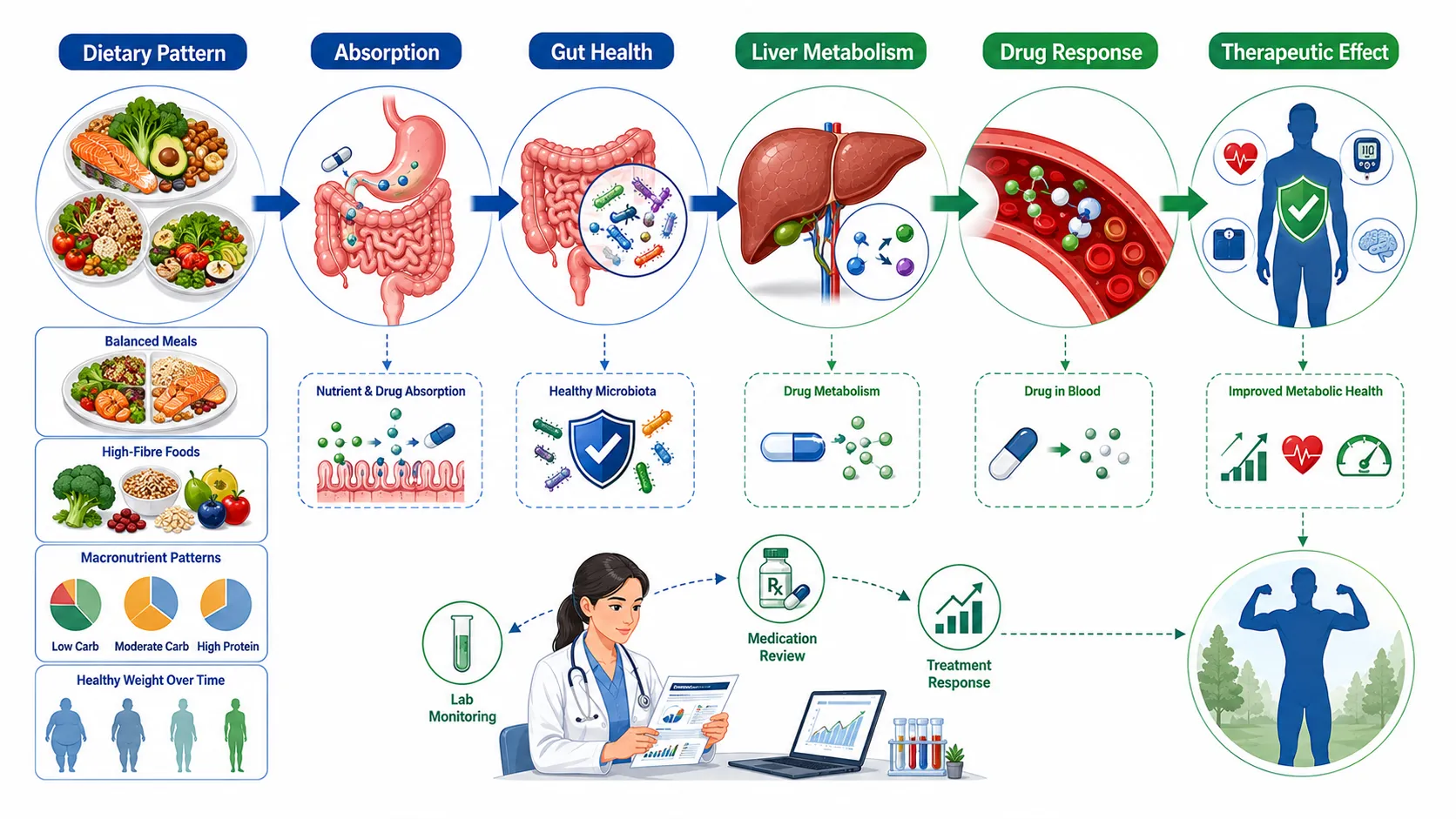
Key Definitions and Concepts
| Term | Definition | Relevance to Long-Term Dietary Patterns and Drug Therapy |
|---|---|---|
| Drug metabolism | The biochemical process through which the body chemically modifies medicines | Determines how long a medicine remains active and how it is prepared for elimination |
| Pharmacokinetics | The study of how the body absorbs, distributes, metabolises and eliminates a medicine | Long-term dietary patterns can influence each stage |
| Bioavailability | The proportion of a medicine that reaches systemic circulation in an active form | May be altered by food composition and gastrointestinal factors |
| First-pass metabolism | Metabolic processing of a substance in the intestine and liver before it reaches systemic circulation | Dietary factors may influence intestinal and hepatic metabolic activity |
| Drug-metabolising enzyme | An enzyme involved in the chemical transformation of medicines | Enzyme activity can be influenced by physiological and dietary factors |
| Enzyme induction | An increase in metabolic enzyme activity or expression | May increase the rate at which some medicines are metabolised |
| Enzyme inhibition | A reduction in enzyme activity | May slow the metabolism of some medicines |
| Drug transporter | A protein that moves medicines or other substances across biological membranes | Can influence absorption, distribution and elimination |
| Therapeutic efficacy | The extent to which an intervention achieves its intended clinical effect | May decrease or increase when medicine exposure changes |
| Dietary pattern | The overall habitual combination, frequency and quantity of foods and beverages consumed | Long-term patterns may produce sustained physiological changes |
Understanding the Relationship Between Diet and Drug Metabolism
Diet as a Long-Term Physiological Influence
A single meal may temporarily influence the absorption of a medicine, whereas a long-term dietary pattern can create more sustained physiological changes. For example, habitual dietary intake can influence:
Body weight and body composition
Hepatic metabolic activity
Kidney function
Gastrointestinal physiology
Intestinal microbiota
Inflammatory status
Nutritional status
Plasma protein concentrations
These changes may modify the internal environment in which medicines are processed.
It is important to recognise that not every dietary change produces a clinically significant alteration in medication response. The effect depends on the medicine, the dietary pattern, the duration of exposure and individual biological characteristics.
Why Long-Term Patterns Require Attention
Long-term dietary interventions are common in metabolic health management.
Examples include sustained changes in:
Carbohydrate intake
Dietary fibre intake
Fat intake
Energy intake
Protein intake
Consumption of specific foods or beverages
These changes may affect medicine response indirectly through improved or altered metabolic physiology.
For example, significant weight loss may change body composition and insulin sensitivity. If the individual continues medication without appropriate monitoring, the therapeutic requirement may change.
The Four Main Stages of Pharmacokinetics
Absorption
Absorption refers to the movement of a medicine from its site of administration into the bloodstream.
Long-term dietary factors may influence absorption through:
Gastric emptying
Gastrointestinal pH
Intestinal transit time
Dietary fibre
Fat content of meals
Intestinal integrity
Microbiota activity
For some medicines, food can increase absorption, while for others it may delay or reduce absorption.
A sustained dietary pattern that significantly changes gastrointestinal physiology may therefore influence medicine exposure.
Distribution
Distribution refers to the movement of a medicine between the bloodstream and body tissues.
Long-term nutritional status can influence:
Body fat mass
Lean body mass
Total body water
Plasma protein concentrations
These factors may influence how medicines are distributed.
For example, significant changes in body composition may alter the distribution characteristics of certain medicines.
Metabolism
Metabolism involves the biochemical transformation of medicines, primarily through enzymatic processes.
Important sites include:
Liver
Intestinal wall
Kidneys
Other tissues
Long-term dietary patterns may influence metabolic capacity through changes in:
Enzyme expression
Organ health
Inflammation
Nutrient availability
Elimination
Elimination involves the removal of medicines or their metabolites from the body.
Long-term diet may indirectly influence elimination through:
Hydration status
Kidney health
Urinary conditions
Liver function
Changes in elimination may affect how long a medicine remains active.
The Role of the Liver in Drug Metabolism
The Liver as a Major Metabolic Organ
The liver is central to both nutrient metabolism and drug metabolism. It processes carbohydrates, fats, proteins and many medicines.
Long-term dietary patterns can influence liver physiology.
Dietary factors associated with metabolic dysfunction may contribute to:
Altered lipid accumulation
Changes in insulin sensitivity
Chronic low-grade inflammation
Changes in hepatic metabolic activity
These changes may influence how medicines are processed.
Nutritional Support of Liver Health
A nutritionally balanced dietary pattern may support broader metabolic health, including hepatic function. However, dietary improvement does not guarantee predictable changes in drug metabolism.
Medication response must be evaluated individually.
Key considerations include:
Existing liver disease
Degree of metabolic dysfunction
Medicine characteristics
Other treatments
Alcohol intake where relevant
Drug-Metabolising Enzymes and Dietary Influences
Enzymatic Systems
Drug metabolism involves multiple enzyme systems. Their activity can vary between individuals and may be influenced by:
Genetics
Age
Disease
Hormonal status
Inflammation
Environmental exposure
Dietary factors
A long-term dietary pattern may influence enzyme activity directly or indirectly.
Enzyme Induction
Enzyme induction refers to increased metabolic activity resulting in faster processing of certain substances.
Potential consequences may include:
Reduced medicine concentration
Shorter duration of action
Reduced therapeutic response
However, enzyme induction is highly substance-specific and should not be assumed without evidence.
Enzyme Inhibition
Enzyme inhibition may reduce the rate at which a medicine is metabolised.
Potential consequences may include:
Increased medicine concentration
Longer duration of exposure
Increased adverse-effect risk
The significance depends on the specific medicine and interaction.
Critical Evaluation
Learners should avoid making broad statements such as:
“Healthy food always improves drug metabolism.”
Drug metabolism is medicine-specific and depends on complex biochemical pathways.
A dietary pattern may improve general health while still requiring adjustments to medication management.
Dietary Fibre and Medication Response
Physiological Effects of Fibre
Long-term increases in dietary fibre can influence:
Gastrointestinal transit
Gastric emptying
Intestinal microbial activity
Nutrient absorption patterns
These changes may also influence the timing or absorption of some medicines.
Potential Benefits
Appropriate fibre intake may support:
Gastrointestinal health
Satiety
Metabolic regulation
Dietary quality
Potential Considerations
Significant changes in fibre intake may require attention to:
Medication timing
Gastrointestinal tolerance
Individual treatment response
A healthcare professional should be consulted where dietary changes may influence essential medication management.
Dietary Fat Patterns and Drug Absorption
The Role of Dietary Fat
Dietary fat can influence the absorption of some orally administered substances.
Long-term changes in dietary fat intake may also influence:
Body composition
Lipid metabolism
Bile secretion
Energy balance
High-Fat and Low-Fat Patterns
The effect of dietary fat on medicine response depends on:
The specific medicine
Its chemical properties
Whether it is taken with food
The amount and composition of dietary fat
Therefore, general assumptions should be avoided.
Clinical Consideration
When individuals begin a specialised dietary pattern involving substantial changes in fat intake, medication instructions should be reviewed by the relevant healthcare professional.
Carbohydrate Patterns and Metabolic Medication Requirements
Carbohydrate Intake and Glucose Regulation
Long-term carbohydrate intake influences:
Post-meal glucose exposure
Insulin requirements
Hepatic glucose metabolism
Overall energy intake
For individuals using glucose-lowering medication, significant dietary changes can alter treatment requirements.
A Dynamic Relationship
If carbohydrate intake decreases substantially while glucose-lowering treatment remains unchanged, the physiological response may differ from the previous baseline.
Therefore, major dietary changes should be monitored appropriately.
Important considerations include:
Baseline glucose control
Medication type
Meal regularity
Changes in physical activity
Weight change
The purpose is not to discourage dietary improvement but to ensure that treatment remains coordinated.
Energy Restriction, Weight Loss and Drug Response
Changes in Body Composition
Long-term energy restriction may lead to changes in:
Fat mass
Lean mass
Total body weight
Insulin sensitivity
These changes may influence medicine distribution and physiological requirements.
Improvement in Metabolic Function
Weight loss may improve:
Insulin sensitivity
Glucose regulation
Lipid metabolism
As metabolic physiology changes, some medicines may require clinical reassessment.
Key Monitoring Considerations
Healthcare teams may monitor:
Metabolic biomarkers
Blood pressure
Symptoms
Body composition trends
Medication tolerance
A successful dietary intervention may therefore create a need to review existing treatment rather than simply continuing all therapies unchanged.
Protein Intake and Drug Metabolism
Nutritional Status and Protein Availability
Protein is essential for:
Tissue maintenance
Enzyme synthesis
Transport proteins
General metabolic function
Severe protein inadequacy may affect physiological systems involved in medicine handling.
Plasma Protein Binding
Some medicines bind to proteins circulating in the blood.
Changes in nutritional status may influence protein concentrations, although the clinical implications vary substantially between medicines and patient populations.
This demonstrates why severe malnutrition or major dietary restriction requires careful clinical assessment.
The Gut Microbiota and Drug Metabolism
The Gut as a Metabolic Environment
The intestinal microbiota can interact with dietary components and influence metabolic processes.
Dietary patterns may alter:
Microbial composition
Production of microbial metabolites
Intestinal barrier function
Potential Influence on Medicines
Research increasingly investigates how intestinal microorganisms may influence the metabolism of certain medicines.
Potential mechanisms include:
Direct chemical modification
Changes in intestinal enzyme activity
Altered bile acid metabolism
Effects on drug transport
This is an evolving area of research, and clinical application should remain evidence-based.
Specific Foods and Food–Drug Interactions
Why Food-Specific Interactions Matter
Some foods and beverages contain biologically active compounds that can influence metabolic enzymes or transport systems.
The effect may depend on:
Quantity consumed
Frequency of consumption
Individual metabolism
Specific medicine
Therefore, healthcare professionals should ask about habitual intake rather than only asking whether a patient eats a particular food occasionally.
Important Principles
When a potential food–drug interaction is suspected:
Identify the specific food or beverage.
Establish the frequency and quantity consumed.
Review the medication involved.
Evaluate the available evidence.
Seek appropriate pharmacological advice where necessary.
General dietary advice should not be based on unsupported assumptions.
Nutritional Deficiencies and Drug Metabolism
The Importance of Adequate Nutritional Status
Drug metabolism requires functioning organs, enzymes and cofactors.
Severe nutritional inadequacy may influence:
Enzyme production
Organ function
Plasma protein status
Energy metabolism
Therefore, long-term malnutrition may alter pharmacokinetic processes.
A Two-Way Relationship
Medicines can also influence nutritional status through:
Reduced appetite
Gastrointestinal symptoms
Altered nutrient absorption
This creates a two-way interaction:
Diet can influence medicine response, and medicines can influence nutritional status.
Integrated care should evaluate both directions.
Chronic Inflammation and Medication Response
Diet, Inflammation and Metabolic Physiology
Some long-term dietary patterns are associated with differences in metabolic and inflammatory status.
Chronic inflammation can influence:
Liver function
Enzyme activity
Insulin sensitivity
Protein metabolism
These physiological changes may alter medication handling.
Avoiding Oversimplification
It is inappropriate to conclude that one dietary pattern will produce the same inflammatory or pharmacological response in every person.
The relationship is influenced by:
Overall dietary quality
Body composition
Existing disease
Genetics
Lifestyle factors
Practical Example: Major Dietary Change in a Patient With Type 2 Diabetes
Scenario
A patient receiving glucose-lowering medication begins a substantial long-term dietary programme that significantly changes carbohydrate intake and leads to weight loss.
Physiological Changes
Over time, the individual may experience:
Changes in glucose patterns
Improved insulin sensitivity
Changes in energy balance
Clinical Implication
The original medication plan may have been based on the patient’s previous metabolic state.
Therefore, ongoing monitoring is important.
The healthcare team should consider:
Biochemical trends
Symptoms
Dietary adherence
Weight changes
Medication response
Key Learning Point
Improved metabolic health may change pharmacological requirements.
Practical Example: High-Fibre Dietary Pattern
Scenario
A patient adopts a long-term high-fibre dietary pattern to support metabolic health.
Potential Benefits
The dietary change may improve:
Dietary quality
Satiety
Gastrointestinal function
Potential Pharmacological Consideration
A significant increase in fibre may influence gastrointestinal conditions and potentially alter the absorption timing of some orally administered medicines.
Professional Approach
The appropriate approach includes:
Reviewing medicine instructions
Monitoring treatment response
Considering timing issues where clinically relevant
Practical Example: Severe Dietary Restriction
Scenario
An individual follows a highly restrictive long-term dietary pattern while taking multiple medicines.
Potential Risks
Possible concerns include:
Nutrient deficiencies
Inadequate energy intake
Altered body composition
Changes in protein status
Increased treatment variability
Professional Response
The individual may require:
Nutritional assessment
Medication review
Biochemical monitoring
Multidisciplinary support
A Step-by-Step Process for Investigating Diet–Drug Relationships
Step 1: Obtain a Detailed Dietary History
Assessment should include:
Typical food intake
Meal patterns
Major recent dietary changes
Use of fortified foods
Beverage consumption
Dietary supplements
The focus should be on habitual patterns rather than isolated meals.
Step 2: Obtain a Complete Medication History
Include:
Prescribed medicines
Non-prescription medicines
Supplements
Herbal products where relevant
Step 3: Identify Relevant Clinical Changes
Look for:
Reduced therapeutic response
Unexpected adverse effects
New symptoms
Significant biochemical changes
Step 4: Evaluate Possible Mechanisms
Consider whether the dietary pattern could influence:
Absorption
Distribution
Metabolism
Elimination
Step 5: Review Evidence
Use reliable sources to determine whether the proposed interaction is supported.
Step 6: Monitor the Patient
Monitor relevant:
Clinical outcomes
Laboratory markers
Symptoms
Medication effectiveness
Step 7: Involve Appropriate Professionals
Complex interactions may require collaboration between:
Prescribers
Pharmacists
Dietitians
Other healthcare professionals
Benefits of Understanding Long-Term Diet–Drug Interactions
Improved Medication Safety
Awareness of dietary influences can help identify potential causes of:
Unexpected adverse effects
Reduced therapeutic response
Excessive physiological effects
Better Individualisation
Treatment can be adapted to the individual’s actual dietary behaviour.
Improved Clinical Outcomes
Coordinated nutrition and medication management may support:
More stable metabolic control
Better treatment adherence
Reduced avoidable complications
Enhanced Patient Education
Patients can understand why healthcare professionals ask about:
Food patterns
Weight changes
Supplements
Major dietary interventions
Common Challenges and Misconceptions
Misconception: Food Only Affects Medicines Taken at the Same Time
Some effects occur immediately, but long-term dietary patterns may also create sustained physiological changes.
Misconception: Weight Loss Always Reduces the Need for Every Medicine
Changes in medication requirements depend on the condition and individual response.
Misconception: Healthy Diets Cannot Cause Drug Interactions
Even beneficial dietary changes may alter physiological conditions relevant to medicine response.
Misconception: A Single Laboratory Test Proves a Diet–Drug Interaction
Changes may result from:
Biological variation
Adherence changes
Disease progression
Laboratory variation
A broader assessment is required.
Professional Communication and Patient Education
Discussing Dietary Changes
Healthcare professionals should encourage patients to report:
Major dietary changes
Significant weight loss
New supplements
Restrictive eating patterns
Supporting Safe Communication
Patients should understand that:
Dietary improvement is encouraged.
Major changes may require treatment review.
Prescribed medication should not be independently stopped or altered.
Communication Priorities
Education should be:
Clear
Non-judgemental
Evidence-based
Individualised
Ethical and Professional Responsibilities
Working Within Professional Scope
Nutrition professionals should not independently modify prescribed medication unless authorised to do so.
Pharmacological decisions should remain within appropriate professional responsibilities.
Avoiding Unsupported Claims
Professionals should avoid claims that:
A particular diet eliminates the need for medicine.
All healthy diets improve drug metabolism.
A food–drug interaction exists without evidence.
Supporting Shared Decision-Making
Where possible, patients should understand:
Why treatment is being reviewed
What physiological changes are occurring
What monitoring is required
Advanced Concepts: Precision Nutrition and Precision Pharmacology
Individual Variation
People differ in their responses to both diet and medicines because of:
Genetic variation
Metabolic status
Age
Body composition
Organ function
Gut microbiota
Medication combinations
This supports the movement towards more personalised approaches.
Limitations of Personalisation
Personalised nutrition and pharmacological management should remain evidence-based.
Not every biomarker or genetic result currently provides sufficient evidence for routine treatment modification.
Critical evaluation remains essential.
Key Workplace Applications
Clinical Nutrition Practice
Professionals may need to investigate whether dietary changes contribute to:
Unexpected biochemical trends
Medication intolerance
Altered treatment effectiveness
Pharmacy Settings
Pharmacy professionals may review:
Food–medicine interactions
Supplement use
Medication timing
Primary Care
Primary care teams may monitor individuals undertaking:
Weight-management programmes
Major dietary interventions
Long-term metabolic treatment
Hospital Care
In hospital settings, major changes in food intake may occur because of:
Acute illness
Reduced appetite
Enteral feeding
Parenteral nutrition
Medication response may require careful monitoring.
Key Learning Points
Learners should understand that:
Long-term dietary patterns can influence pharmacokinetics.
The effects may involve absorption, distribution, metabolism or elimination.
Drug metabolism is influenced by liver function, enzyme systems and broader physiology.
Changes in body composition may influence medication distribution.
Major dietary changes can alter metabolic medication requirements.
Dietary fibre and food composition may affect gastrointestinal conditions relevant to medicine absorption.
Nutritional deficiencies and severe malnutrition may alter physiological processes involved in medicine handling.
The gut microbiota may influence the metabolism of certain medicines.
Not all dietary changes produce clinically significant drug interactions.
Evidence must be evaluated for the specific food, dietary pattern and medicine involved.
Monitoring is essential when major dietary changes occur alongside long-term pharmacological treatment.
Multidisciplinary communication supports safe management.
Summary
Long-term dietary patterns can influence the metabolism and therapeutic efficacy of pharmacological interventions by altering the physiological environment in which medicines are absorbed, distributed, metabolised and eliminated. Sustained changes in dietary composition, energy intake, body weight and nutritional status may influence gastrointestinal function, liver health, metabolic enzyme activity, body composition and other factors relevant to pharmacokinetics.
The relationship between diet and drug metabolism is complex and medicine-specific. A beneficial dietary intervention may improve metabolic health while simultaneously changing the individual’s physiological response to existing medication. For this reason, successful dietary treatment may require pharmacological reassessment rather than simply continuing the original medication plan unchanged.
Healthcare professionals should investigate potential diet–drug relationships systematically. This includes obtaining a detailed dietary history, reviewing the complete medication and supplement regimen, identifying relevant clinical changes and evaluating plausible biochemical mechanisms. Reliable evidence should be used to determine whether a suspected interaction is clinically meaningful.
Major dietary changes should be supported by appropriate monitoring, particularly when individuals use medicines that influence glucose regulation, lipid metabolism or other sensitive metabolic pathways. Clinical outcomes, biochemical trends, symptoms and treatment tolerance should be interpreted together.
Ultimately, effective metabolic care requires recognition that nutrition and pharmacology are interconnected rather than separate disciplines. By understanding how long-term dietary patterns influence drug metabolism, healthcare professionals can support safer treatment, improve therapeutic effectiveness and provide more individualised care while maintaining appropriate professional boundaries and evidence-based practice.
6.Justify the Clinical and Biochemical Rationale for Systematically Stepping Down Pharmacological Treatments in Response to Successful, Biochemically Monitored Dietary Modifications
Successful dietary modification can produce significant improvements in metabolic health, including changes in blood glucose regulation, insulin sensitivity, body weight, lipid metabolism and blood pressure. When these improvements are sustained and confirmed through appropriate clinical and biochemical monitoring, the pharmacological treatment plan may require reassessment. In some circumstances, a healthcare professional may decide to reduce, simplify or discontinue selected medicines in a planned and systematic manner.
This process is often described as medication step-down, deprescribing or treatment de-intensification. It is not simply the removal of medication because a patient reports feeling better. A clinically justified step-down process requires objective evidence, repeated assessment, professional judgement and continued monitoring. The underlying principle is that medication requirements should reflect the individual’s current physiological state rather than remain permanently fixed at the level required during a previous stage of disease.
Dietary interventions may alter the biochemical environment that originally justified pharmacological treatment. For example, sustained changes in dietary intake and body weight may improve insulin sensitivity and reduce glucose exposure. If glucose-lowering medicines are continued at doses designed for a previous metabolic state, the balance between therapeutic benefit and potential harm may change.
However, medication reduction is not appropriate for every patient or every medicine. Some medicines should not be reduced rapidly or without specialist supervision. The decision depends on the diagnosis, treatment objective, clinical history, biochemical evidence, risk profile and characteristics of the medicine.
This section explores the clinical and biochemical rationale for systematically stepping down pharmacological treatments following successful dietary modifications. It also examines monitoring procedures, risk management, professional responsibilities and the importance of multidisciplinary decision-making.
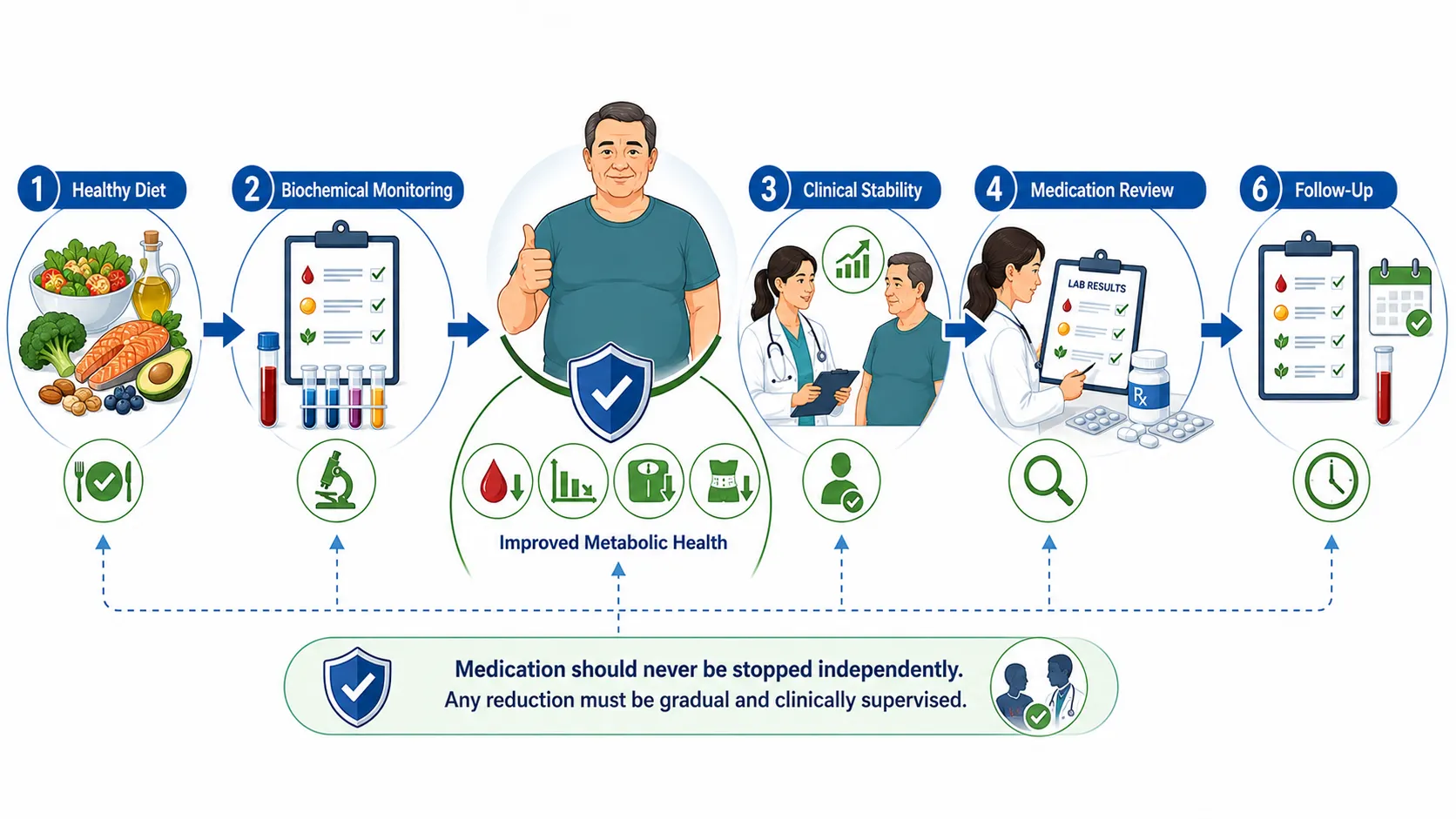
Key Definitions and Concepts
| Term | Definition | Clinical Relevance |
|---|---|---|
| Medication step-down | A planned reduction in the intensity, dose or number of medicines | May be considered when treatment requirements decrease |
| Deprescribing | A supervised process of reducing or stopping medicines when potential harms outweigh expected benefits | Requires clinical review and monitoring |
| Treatment de-intensification | Reducing treatment intensity to better match the patient’s current clinical needs | May reduce unnecessary treatment burden |
| Biochemical monitoring | Repeated measurement of relevant laboratory markers over time | Provides objective evidence of physiological change |
| Therapeutic target | A defined clinical or biochemical goal used to evaluate treatment effectiveness | Helps determine whether control is maintained |
| Insulin sensitivity | The responsiveness of tissues to the actions of insulin | Improvement may reduce medication requirements in some patients |
| Glycaemic control | The management of blood glucose concentrations over time | A key factor in reviewing glucose-lowering therapy |
| Clinical stability | A sustained period in which symptoms and relevant biomarkers remain within an acceptable range | Supports safer treatment review |
| Therapeutic efficacy | The extent to which a treatment achieves its intended outcome | Must be reassessed when physiology changes |
| Rebound effect | The return or worsening of symptoms or biochemical abnormalities after treatment reduction | Requires careful monitoring and response |
The Principle of Matching Treatment Intensity to Current Physiology
Why Medication Requirements Can Change
Pharmacological treatment is usually prescribed in response to a particular clinical and physiological situation. The dose and combination of medicines may reflect:
The severity of disease
Baseline biochemical measurements
Symptoms
Previous treatment response
Risk of complications
However, physiology is not static. Successful dietary modification may alter several variables that influence disease expression.
Potential improvements may include:
Reduced blood glucose exposure
Improved insulin sensitivity
Improved lipid profiles
Reduced body weight
Reduced visceral adiposity
Improved blood pressure
Improved dietary quality
Improved energy balance
When these changes are sustained, the original medication requirement may no longer accurately reflect the patient’s current physiological needs.
The Central Clinical Rationale
The purpose of stepping down treatment is not to eliminate medication at all costs. The purpose is to achieve the safest and most appropriate treatment intensity.
A systematic approach aims to balance:
Therapeutic benefit
Risk of adverse effects
Current biochemical status
Patient preferences
Disease progression risk
Long-term clinical outcomes
Medication reduction should therefore be understood as a reassessment process rather than a predetermined endpoint.
The Biochemical Basis for Treatment Reassessment
Objective Evidence Is Essential
Dietary success should be evaluated using more than subjective reports.
A patient may report:
Feeling healthier
Losing weight
Eating more nutritious foods
Having more energy
These outcomes may be important, but medication decisions require objective clinical assessment.
Relevant monitoring may include:
Blood glucose measurements
Longer-term markers of glycaemic control
Lipid profiles
Renal function markers
Liver-related markers where clinically appropriate
Electrolytes
Blood pressure
Body weight and body composition indicators
The exact markers depend on the patient’s diagnosis and medication regimen.
The Importance of Trends Rather Than Isolated Results
A single laboratory result may not accurately represent long-term physiological improvement.
Laboratory values may be affected by:
Normal biological variation
Recent food intake
Acute illness
Physical activity
Hydration status
Laboratory variation
For this reason, clinicians often evaluate trends over time.
A sustained improvement is generally more informative than one isolated result.
Dietary Modification and Improved Glycaemic Physiology
Changes in Glucose Exposure
Dietary strategies that improve carbohydrate quality, energy balance and meal patterns may contribute to improved glucose regulation.
Potential physiological mechanisms include:
Reduced post-meal glucose excursions
Improved insulin sensitivity
Reduced hepatic glucose production
Weight reduction where appropriate
Improved dietary fibre intake
These changes may alter the physiological demand for certain glucose-lowering treatments.
The Risk of Excessive Treatment
If medication doses remain unchanged while glucose regulation improves substantially, some patients may face an increased risk of excessively low glucose concentrations, depending on the treatment used.
This demonstrates an important principle:
Successful nutritional treatment can change the safety profile of existing pharmacological treatment.
The appropriate response is professional reassessment rather than self-directed medication reduction.
Weight Reduction and Changing Pharmacological Requirements
Metabolic Effects of Weight Change
Sustained weight reduction may influence:
Insulin sensitivity
Lipid metabolism
Blood pressure
Hepatic fat accumulation
Energy requirements
These improvements can change the underlying physiology associated with metabolic disease.
Why Weight Alone Is Insufficient
Weight loss should not automatically trigger medication discontinuation.
Two individuals with similar weight changes may experience different:
Biochemical responses
Disease progression patterns
Medication requirements
Therefore, weight trends must be interpreted alongside laboratory and clinical evidence.
The Clinical Rationale for Systematic Step-Down
Reducing the Risk of Overtreatment
Overtreatment occurs when treatment intensity exceeds the patient’s current therapeutic requirements.
Potential consequences may include:
Adverse physiological effects
Increased treatment burden
Reduced quality of life
Complex medication schedules
Reduced adherence
A carefully supervised reduction may help ensure that treatment remains proportionate.
Improving Medication Safety
A medication that was previously necessary may become less appropriate if the underlying biochemical abnormality improves substantially.
For example, successful dietary modification may change:
Glucose patterns
Blood pressure trends
Lipid concentrations
The clinical team must determine whether the current medicine remains necessary at the same intensity.
Supporting Individualised Care
Treatment plans should be based on the individual rather than a fixed assumption that medication requirements remain unchanged indefinitely.
Individualisation requires consideration of:
Current laboratory results
Clinical history
Dietary adherence
Risk factors
Comorbidities
Patient goals
A Structured Step-Down Process
Step 1: Confirm Sustained Dietary Modification
The first stage is to establish whether the dietary change is:
Consistent
Sustainable
Nutritionally appropriate
Compatible with the patient’s clinical condition
A short period of dietary change may not justify immediate long-term medication reduction.
Step 2: Review Biochemical Trends
Relevant laboratory data should be compared with previous measurements.
The review may consider:
Direction of change
Magnitude of improvement
Stability over time
Relationship to treatment goals
Step 3: Assess Clinical Symptoms
Biochemical improvement should be considered alongside symptoms.
The patient may be assessed for:
Dizziness
Fatigue
Symptoms associated with abnormal glucose levels
Changes in exercise tolerance
Gastrointestinal symptoms
Step 4: Review the Medication Regimen
The clinical team should determine:
Which medicine addresses which clinical target
Which medicines may carry increased risk under the new physiological conditions
Whether the treatment combination remains necessary
Step 5: Identify Medicines Requiring Caution
Not all medicines can be reduced in the same way.
Important considerations include:
Withdrawal effects
Rebound symptoms
Disease recurrence
Dose dependency
Duration of treatment
Step 6: Make One Planned Change
A structured approach may involve modifying treatment gradually rather than making multiple uncontrolled changes simultaneously.
This makes it easier to identify:
The effect of the change
Emerging problems
The need for adjustment
Step 7: Monitor After Modification
Following a treatment adjustment, appropriate clinical and biochemical monitoring should continue.
The purpose is to confirm that improvement is maintained.
Step 8: Reassess the Treatment Plan
Treatment reduction should be considered a dynamic process.
If the patient’s condition changes, therapy may require:
Further reduction
Stabilisation
Reintroduction
Alternative treatment
Why Gradual Reduction May Be Safer Than Abrupt Discontinuation
Physiological Adaptation
The body may adapt to long-term pharmacological treatment.
Abrupt withdrawal of some medicines can produce:
Rebound physiological effects
Return of symptoms
Biochemical deterioration
Therefore, some treatments require a gradual reduction process.
The Importance of Individual Medicine Characteristics
The appropriate approach depends on:
The medicine involved
The dose
Duration of use
Clinical indication
Patient risk
A generalised approach to stopping medication is unsafe.
Biochemical Markers Used in Treatment Review
Glycaemic Markers
Depending on the clinical context, monitoring may involve:
Fasting glucose
Post-meal glucose patterns
Longer-term glycaemic markers
These indicators can help assess whether glucose regulation remains stable.
Lipid Markers
Changes in:
Cholesterol-related markers
Triglyceride levels
Other clinically relevant lipid measurements
may help evaluate metabolic response.
Renal Markers
Renal function may influence both:
Medication selection
Medication dosing
Relevant monitoring should be considered where appropriate.
Electrolytes
Some pharmacological treatments influence fluid and electrolyte balance.
Therefore, monitoring may be necessary when treatment intensity changes.
Clinical Stability as a Requirement for Step-Down
What Does Stability Mean?
Clinical stability does not simply mean one normal laboratory result.
It may involve:
Sustained biochemical improvement
Absence of concerning symptoms
Consistent dietary behaviour
No evidence of acute deterioration
Appropriate follow-up access
Why Stability Matters
Reducing treatment during an unstable period can create unnecessary risk.
Examples of destabilising factors include:
Acute illness
Major surgery
Significant infection
Major changes in physical activity
Severe stress
The timing of medication review should therefore consider the wider clinical context.
Practical Example: Improved Glycaemic Control Following Dietary Change
Scenario
An individual with metabolic dysfunction adopts a structured dietary intervention.
Over time, the patient demonstrates:
Improved glucose trends
Sustained weight reduction
Improved dietary consistency
Clinical Question
Should medication automatically be stopped?
No.
The healthcare professional should evaluate:
Duration of improvement
Medication type
Risk of low glucose
Longer-term biochemical trends
Professional Rationale
If objective evidence demonstrates sustained improvement, treatment intensity may be reassessed under appropriate clinical supervision.
Practical Example: Improved Blood Pressure Following Lifestyle Modification
Scenario
A patient adopts long-term dietary and lifestyle changes and demonstrates lower blood pressure readings.
Clinical Consideration
The original medication dose may have been prescribed when blood pressure was consistently higher.
The healthcare team may evaluate:
Repeated blood pressure measurements
Symptoms
Kidney function
Other medicines
Learning Point
Improved physiology can justify treatment reassessment, but medication reduction must remain clinically supervised.
Practical Example: Rapid Weight Loss
Scenario
An individual experiences substantial weight loss over a short period while continuing multiple metabolic medicines.
Potential Concerns
Rapid physiological change may increase the need for medication review.
Potential issues include:
Altered glucose regulation
Changes in blood pressure
Changes in drug distribution
Appropriate Response
The individual should receive appropriate clinical assessment rather than independently stopping treatment.
Key Benefits of a Systematic Step-Down Approach
Reduced Risk of Adverse Effects
When treatment intensity is better matched to current physiology, unnecessary medication exposure may be reduced.
Improved Treatment Individualisation
The approach recognises that patient requirements change.
Reduced Treatment Burden
A simplified treatment plan may improve:
Understanding
Adherence
Daily management
Recognition of Nutritional Success
Biochemical monitoring allows dietary interventions to be evaluated objectively.
Improved Professional Decision-Making
A structured process reduces reliance on assumptions.
Risks and Limitations
Disease Recurrence
Some conditions may worsen if treatment is reduced too quickly.
Rebound Effects
Certain treatments may produce rebound physiological changes following withdrawal.
Temporary Biochemical Improvement
Short-term improvement may not represent long-term disease control.
Confounding Factors
Biochemical changes may be influenced by:
Medication adherence
Acute illness
Laboratory variation
Changes in physical activity
Therefore, causation should not be assumed.
The Role of Patient Education
Explaining Why Monitoring Continues
Patients may assume that feeling better means treatment is no longer required.
Healthcare professionals should explain that:
Symptoms and biomarkers do not always change at the same rate.
Sustained improvement must be confirmed.
Medication changes require professional supervision.
Encouraging Shared Decision-Making
Patients should be involved in discussions about:
Treatment goals
Dietary strategies
Monitoring requirements
Potential medication changes
Multidisciplinary Working
The Role of the Prescriber
The prescriber is responsible for decisions within their professional authority regarding:
Dose adjustment
Medicine discontinuation
Treatment modification
The Role of Nutrition Professionals
Nutrition professionals may contribute through:
Dietary assessment
Monitoring dietary adherence
Identifying nutritional risks
Supporting sustainable dietary modification
The Role of Pharmacists
Pharmacists may support:
Medication review
Interaction assessment
Dose-related safety considerations
Patient education
The Value of Collaboration
Complex metabolic conditions benefit from communication between relevant professionals.
Ethical and Professional Considerations
Professional Scope of Practice
Nutrition professionals must not independently instruct patients to stop prescribed medication unless authorised and appropriately qualified to do so.
Evidence-Based Decision-Making
Medication reduction should be supported by:
Clinical evidence
Biochemical data
Appropriate guidelines
Individual risk assessment
Avoiding Overpromising
Professionals should avoid statements such as:
“Diet always removes the need for medication.”
“Weight loss cures every metabolic disorder.”
“Normal laboratory results mean treatment can be stopped immediately.”
These statements oversimplify complex clinical processes.
Monitoring Framework Following Medication Reduction
Immediate Monitoring
The first stage may involve more frequent assessment depending on the medicine and clinical condition.
Short-Term Monitoring
Clinicians may review:
Symptoms
Relevant biomarkers
Medication tolerance
Dietary consistency
Long-Term Monitoring
Continued review helps determine whether improvement remains sustainable.
A monitoring plan should specify:
What will be measured
When it will be measured
What constitutes deterioration
Who should be contacted
Critical Thinking: Correlation Versus Causation
Improved biomarkers following dietary modification do not automatically prove that diet alone caused the improvement.
Other contributing factors may include:
Better medication adherence
Increased physical activity
Reduced alcohol intake
Natural biological variation
A critical evaluation should therefore consider the full clinical picture.
Decision-Making Framework for Treatment De-Intensification
Question 1: Has the Underlying Physiology Improved?
Evaluate objective evidence.
Question 2: Is the Improvement Sustained?
Examine trends over time.
Question 3: Does the Current Treatment Create New Risks?
Consider adverse effects and overtreatment.
Question 4: Can the Medicine Be Safely Reduced?
Review the medicine-specific clinical requirements.
Question 5: Is Appropriate Monitoring Available?
A treatment change should not occur without a clear follow-up plan.
Question 6: Does the Patient Understand the Plan?
The patient should understand:
What is changing
Why it is changing
What symptoms require attention
Advanced Perspective: Dynamic Treatment Rather Than Fixed Treatment
Modern clinical practice increasingly recognises that treatment requirements can change over time.
A dynamic approach considers:
Disease progression
Lifestyle modification
Nutritional intervention
Biological response
The treatment plan is therefore reviewed as physiology changes.
This does not mean that every successful dietary intervention leads to medication discontinuation. Instead, it means that therapy should be periodically reassessed to ensure it remains clinically appropriate.
Workplace Applications
Clinical Nutrition Services
Professionals may identify patients whose improved nutritional status warrants medication review.
Metabolic Clinics
Teams may coordinate:
Dietary interventions
Biochemical monitoring
Medication reassessment
Primary Healthcare
Primary care professionals may identify long-term improvements that justify reviewing treatment intensity.
Hospital and Specialist Settings
Patients undergoing major nutritional interventions may require coordinated monitoring due to complex medical conditions.
Key Learning Points
Learners should understand that:
Successful dietary modification can change medication requirements.
Medication step-down requires clinical supervision.
Biochemical trends are generally more informative than isolated results.
Weight loss alone is insufficient to justify medication discontinuation.
Improved insulin sensitivity may alter treatment requirements.
Continuing previous medication doses after physiological improvement may sometimes increase treatment risk.
Medication reduction should be systematic and individualised.
Some medicines require gradual reduction.
Rebound effects and disease recurrence must be considered.
Monitoring should continue after treatment changes.
Multidisciplinary collaboration supports safe decision-making.
Nutrition professionals must work within their professional scope of practice.
Summary
Systematically stepping down pharmacological treatment following successful dietary modification can be clinically justified when objective evidence demonstrates sustained physiological improvement and the potential risks of continued treatment intensity outweigh the expected benefits. The fundamental principle is that pharmacological therapy should remain proportionate to the individual’s current clinical and biochemical needs.
Dietary interventions can improve important aspects of metabolic physiology, including glucose regulation, insulin sensitivity, lipid metabolism, body weight and blood pressure. As these factors improve, the original medication regimen may require reassessment. However, improvement in one area does not automatically justify discontinuing medication.
Safe treatment de-intensification requires a structured process involving confirmation of sustained dietary change, review of biochemical trends, assessment of symptoms, evaluation of medication-specific risks and a clear monitoring plan. Where appropriate, treatment modifications should be made systematically so that clinical responses can be observed and evaluated.
The decision to reduce or discontinue pharmacological treatment must be made by appropriately authorised healthcare professionals. Nutrition specialists and other members of the multidisciplinary team play an important role in documenting dietary changes, monitoring nutritional adequacy and identifying improvements that may warrant clinical review.
Ultimately, the goal is not simply to reduce the number of medicines a patient takes. The goal is to provide the safest, most effective and most individualised treatment plan possible. When dietary modifications produce sustained, objectively monitored improvements in biochemical health, systematic reassessment of pharmacological treatment becomes an important component of high-quality metabolic care.