
Lesson no 1 : Apply biochemical principles to assess nutritional status.
The lesson Apply Biochemical Principles to Assess Nutritional Status introduces Learners to the scientific principles and practical approaches used to evaluate nutritional health through biochemical assessment. Nutritional status is influenced by the intake, digestion, absorption, transport, metabolism, storage and excretion of nutrients. When these processes function effectively, the body is better able to maintain normal physiological activity. However, inadequate intake, impaired absorption, increased nutritional requirements or metabolic disturbances may lead to measurable biochemical changes before obvious clinical signs become apparent.
This lesson explores the role of clinical biochemistry in identifying and interpreting these changes. Learners will develop an understanding of how biological samples, particularly blood and other relevant specimens, can provide important information about nutrient availability, metabolic function and physiological health. Key biochemical indicators may include metabolites, enzymes, proteins, electrolytes and nutrient-related biomarkers. The accurate interpretation of such measurements requires an understanding of normal physiological processes, reference ranges, biological variation and factors that may influence laboratory results.
A central focus of the lesson is the application of biochemical principles to practical nutritional assessment. Learners will examine how laboratory findings should be considered alongside dietary information, medical history, physical signs and other physiological indicators. No single laboratory measurement should automatically be interpreted in isolation. Instead, effective assessment involves recognising patterns, considering possible causes and evaluating the wider clinical and nutritional context.
The lesson also develops critical thinking and professional judgement. Learners will explore the difference between direct and indirect biomarkers, understand the importance of sample collection and laboratory quality, and recognise factors that may affect the reliability and interpretation of biochemical data. Practical scenarios will support the application of theoretical knowledge to realistic situations involving suspected nutritional deficiencies, metabolic disturbances and altered physiological function.
By the end of the lesson, Learners should be able to apply fundamental biochemical knowledge to assess nutritional status systematically and logically. They will gain greater confidence in interpreting relevant laboratory information, identifying potential nutritional concerns and explaining how biochemical findings relate to nutrient metabolism and overall health. These skills provide an essential foundation for further study and professional practice in clinical nutrition, healthcare, biomedical science and related fields.
1.Apply Advanced Biochemical Principles to Conduct Comprehensive Assessments of an Individual’s Macro and Micronutrient Nutritional Status in a Clinical Setting
Introduction
Comprehensive nutritional assessment is a systematic process used to evaluate whether an individual is receiving, absorbing, metabolising and utilising sufficient nutrients to support normal physiological function. In a clinical setting, advanced biochemical principles provide an important scientific foundation for assessing both macronutrient and micronutrient status. Biochemical assessment enables healthcare and nutrition professionals to identify physiological changes that may not be immediately visible through dietary history or physical examination alone.
Macronutrients, including carbohydrates, proteins and fats, provide energy and structural materials required for growth, maintenance and metabolic activity. Micronutrients, including vitamins and minerals, support enzyme activity, cellular signalling, immune function, blood formation, antioxidant defence and numerous metabolic pathways. Deficiencies, excesses and disturbances in nutrient utilisation can alter biochemical markers and contribute to impaired health.
A clinically meaningful nutritional assessment should not depend on a single laboratory value. Advanced assessment requires the integration of biochemical findings with dietary information, medical history, medication use, physical observations, anthropometric measurements and relevant physiological indicators. Learners must therefore understand both the scientific meaning and the limitations of nutritional biomarkers.
This section develops the knowledge and practical reasoning required to conduct a structured assessment of macro and micronutrient nutritional status in clinical contexts. It focuses on biochemical mechanisms, laboratory indicators, interpretation principles, practical procedures and professional judgement.
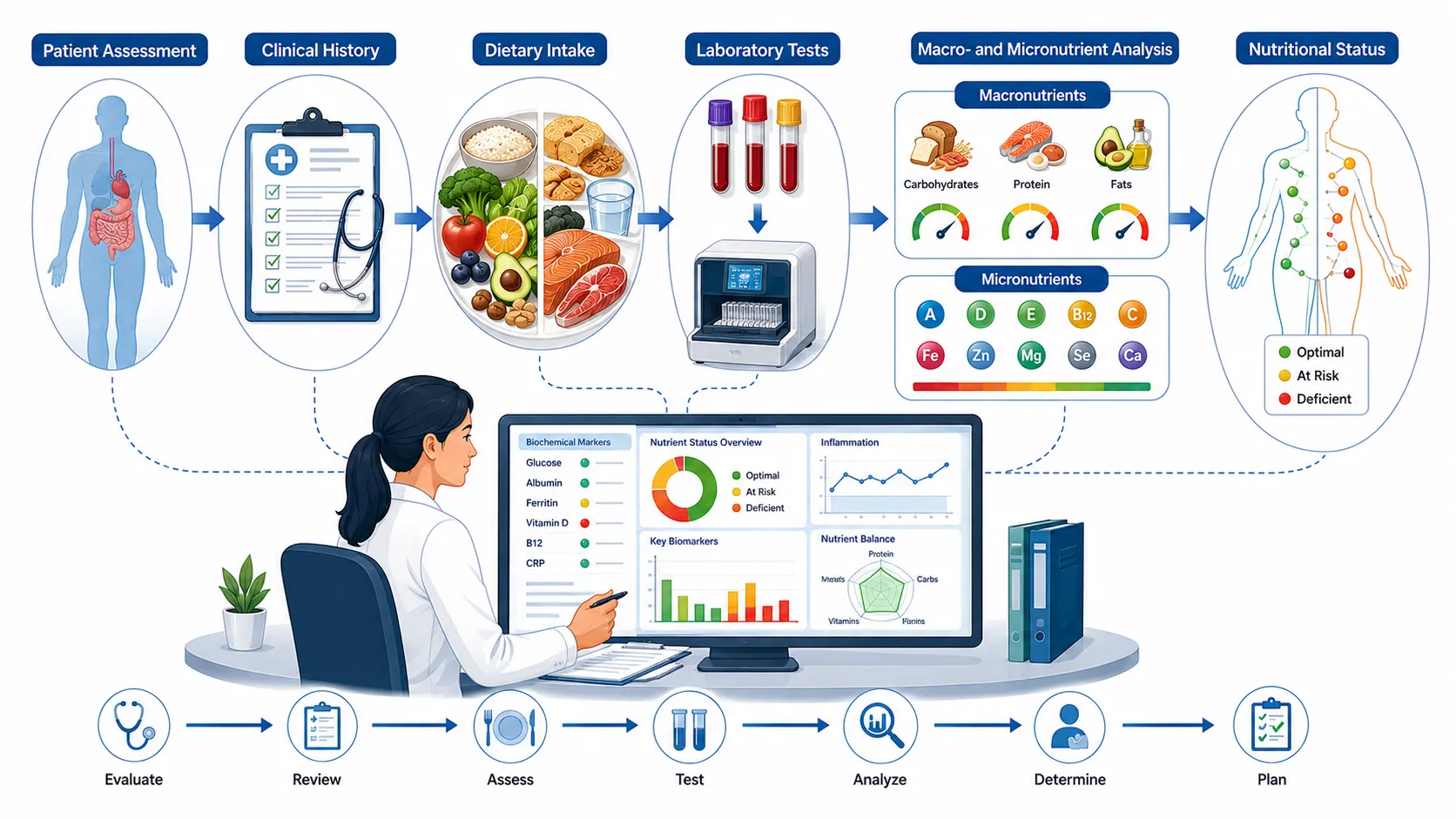
Understanding Comprehensive Nutritional Assessment
Nutritional status reflects the relationship between nutrient requirements and the availability and utilisation of nutrients within the body. A person may consume an apparently adequate diet but still experience nutritional deficiency because of impaired digestion, poor absorption, increased metabolic requirements, chronic disease or altered nutrient metabolism.
A comprehensive assessment therefore investigates several interconnected areas.
Core Components of Nutritional Assessment
A clinically informed nutritional assessment may include:
Dietary intake and eating patterns.
Medical and clinical history.
Current symptoms and physical signs.
Medication and supplement use.
Anthropometric measurements.
Biochemical laboratory results.
Functional and physiological indicators.
Evidence of digestion or absorption problems.
Evidence of altered metabolism or increased nutrient requirements.
The purpose is to develop an integrated understanding rather than simply classify an individual according to one laboratory measurement.
Advanced Biochemical Principles in Nutritional Assessment
Biochemistry examines the chemical processes that maintain life. In nutritional assessment, biochemical principles help explain how nutrients enter the body, circulate through tissues, participate in metabolic pathways and are eventually stored or excreted.
Nutrient Balance
Nutrient balance refers to the relationship between nutrient intake and nutrient loss or utilisation.
A simplified principle is:
Nutrient balance = Nutrient intake − Nutrient losses and utilisation
When intake and availability meet physiological requirements, nutritional balance can generally be maintained. However, negative balance may occur when:
Dietary intake is inadequate.
Nutrient absorption is impaired.
Physiological requirements increase.
Nutrient losses increase.
Metabolic utilisation is disrupted.
Positive balance may also be clinically significant when excessive intake contributes to metabolic dysfunction or nutrient accumulation.
Homeostasis and Nutrient Regulation
The human body uses complex regulatory systems to maintain relatively stable internal conditions. Hormones, enzymes, transport proteins, organs and cellular signalling pathways all contribute to nutrient homeostasis.
For example:
Blood glucose is regulated through hormonal mechanisms.
Protein metabolism is influenced by tissue turnover and nitrogen balance.
Lipid metabolism involves transport, storage and oxidation.
Mineral concentrations may be regulated through hormonal and renal mechanisms.
Vitamins may be stored, activated or converted into biologically active forms.
Because of these regulatory mechanisms, a normal circulating concentration does not always guarantee optimal long-term nutrient stores or utilisation. This is why biochemical results require careful interpretation.
Assessment of Macronutrient Nutritional Status
Carbohydrate Status and Glucose Metabolism
Carbohydrates are an important source of energy and contribute to the maintenance of blood glucose. Glucose is required by many tissues and is particularly important for cells with substantial energy demands.
Biochemical assessment of carbohydrate metabolism may involve evaluating markers associated with glucose regulation and metabolic control.
Key Areas for Assessment
Clinical assessment may consider:
Circulating glucose measurements.
Longer-term indicators of glucose exposure.
Insulin-related physiological responses.
Evidence of impaired glucose regulation.
Metabolic symptoms.
Dietary carbohydrate intake.
Body composition and energy balance.
Interpretation should consider the timing of sample collection and the individual’s physiological state.
Protein Nutritional Status
Proteins provide amino acids required for tissue maintenance, enzyme production, immune activity and numerous metabolic functions. Protein status is influenced by dietary intake, digestion, absorption, synthesis, breakdown and physiological demand.
Biochemical assessment of protein status requires particular care because circulating proteins may be influenced by inflammation, hydration status, liver function and acute illness.
Important Assessment Considerations
Professionals should consider:
Dietary protein intake.
Recent weight changes.
Muscle mass and functional status.
Relevant circulating protein measurements.
Nitrogen-related metabolic indicators.
Evidence of inflammation.
Organ function affecting protein metabolism.
A low circulating protein measurement should not automatically be interpreted as dietary protein deficiency without considering the wider clinical context.
Lipid Nutritional Status
Lipids provide energy, contribute to cell membranes and support the absorption of fat-soluble nutrients. Lipid metabolism includes digestion, transport, storage and oxidation.
Biochemical assessment may examine circulating lipid-related markers to understand metabolic patterns and potential nutritional concerns.
Relevant considerations include:
Overall dietary fat quality.
Essential fatty acid intake.
Lipid transport patterns.
Energy balance.
Body composition.
Metabolic health indicators.
Abnormal lipid values may reflect multiple influences, including genetics, dietary patterns, physical activity, medication use and underlying health conditions.
Assessment of Micronutrient Nutritional Status
Importance of Micronutrients
Micronutrients are required in relatively small quantities but are essential for normal biochemical and physiological function. Many vitamins and minerals act as cofactors in enzymatic reactions.
A deficiency may disrupt metabolic pathways before severe clinical symptoms become apparent.
Micronutrient assessment should consider:
Dietary intake.
Absorption.
Transport.
Storage.
Activation.
Cellular utilisation.
Excretion.
Vitamins and Biochemical Function
Vitamins contribute to a wide range of physiological processes. Some function directly in metabolic reactions, while others support cellular regulation and tissue maintenance.
Key Principles
When assessing vitamin status, it is important to consider:
The form measured by the laboratory.
Whether the marker reflects recent intake or long-term stores.
Biological variation.
Effects of inflammation or illness.
Interactions with other nutrients.
Potential effects of medication.
Mineral Status and Physiological Regulation
Minerals support functions including fluid balance, nerve transmission, muscle activity, bone metabolism and enzyme activity.
Their circulating concentrations may be tightly regulated. Therefore, serum measurements may not always provide a complete indication of total body stores.
Assessment should consider:
Dietary intake.
Renal function.
Hormonal regulation.
Gastrointestinal absorption.
Tissue storage.
Potential losses.
Interactions with other nutrients.
Table: Key Concepts in Biochemical Nutritional Assessment
| Assessment Concept | Definition | Clinical Importance | Key Interpretation Principle |
|---|---|---|---|
| Biomarker | A measurable biological characteristic that provides information about a physiological process | Supports identification of nutritional or metabolic changes | Interpret alongside clinical and dietary information |
| Macronutrient status | The availability and utilisation of carbohydrates, proteins and fats | Helps evaluate energy and metabolic balance | Consider intake, metabolism and physiological demand |
| Micronutrient status | The availability and biological utilisation of vitamins and minerals | Helps identify deficiencies, excesses or functional disturbances | One measurement may not reflect total body status |
| Nutrient homeostasis | Regulation of nutrient concentrations within physiological ranges | Maintains stable metabolic function | Normal blood values may be maintained despite altered stores |
| Bioavailability | The proportion of a nutrient available for absorption and utilisation | Explains why intake does not always equal physiological availability | Consider food matrix, interactions and digestive function |
| Functional biomarker | A marker reflecting the biological consequences of nutrient availability | May indicate impaired nutrient-dependent processes | Useful when direct concentration markers are limited |
| Reference range | A range used to compare an individual’s laboratory result with an appropriate reference population | Supports clinical interpretation | Does not replace professional clinical judgement |
The Role of Biomarkers in Nutritional Assessment
Direct and Indirect Biomarkers
Biomarkers can provide different types of information about nutritional status.
A direct biomarker may provide information related to the concentration of a nutrient or its biologically relevant form. An indirect or functional biomarker may indicate the effect of nutrient availability on a physiological pathway.
Direct Biomarker Considerations
Direct measurements may help assess:
Recent nutrient exposure.
Circulating nutrient availability.
Storage-related status in appropriate contexts.
Changes following nutritional intervention.
However, direct measurements may be influenced by recent food intake, supplementation or physiological variation.
Functional Biomarker Considerations
Functional biomarkers may help identify:
Reduced enzyme activity.
Altered metabolic products.
Impaired physiological processes.
Changes associated with nutrient-dependent pathways.
The strongest assessment may involve combining several sources of evidence.
A Structured Clinical Assessment Process
Step 1: Define the Assessment Purpose
The first stage is to determine why nutritional assessment is being conducted.
Possible purposes include:
Investigating suspected nutrient deficiency.
Assessing poor dietary intake.
Evaluating metabolic abnormalities.
Monitoring nutritional intervention.
Assessing individuals with increased nutritional requirements.
Investigating possible malabsorption.
Supporting clinical care planning.
A clearly defined purpose guides the selection of appropriate biochemical markers.
Step 2: Collect a Comprehensive Clinical History
Clinical history provides essential context for laboratory findings.
Relevant information may include:
Presenting symptoms.
Medical conditions.
Previous nutritional concerns.
Recent illness.
Gastrointestinal symptoms.
Weight changes.
Medication use.
Supplement use.
Alcohol intake where clinically relevant.
Dietary restrictions.
Lifestyle factors.
Step 3: Assess Dietary Intake
Dietary assessment helps determine the potential sources of nutritional imbalance.
Methods may include:
Food records.
Dietary recall.
Food frequency assessment.
Structured dietary interviews.
Important factors include:
Overall energy intake.
Macronutrient distribution.
Dietary diversity.
Consumption of nutrient-rich foods.
Meal timing.
Supplement use.
Dietary information should be considered alongside biochemical evidence rather than treated as a completely independent source of information.
Step 4: Select Appropriate Laboratory Measurements
Laboratory tests should be selected according to the clinical question.
Appropriate selection requires consideration of:
Biological relevance.
Analytical validity.
Sample requirements.
Timing of collection.
Potential confounding factors.
Clinical usefulness.
Unnecessary testing can create confusion and increase the risk of misinterpretation.
Step 5: Evaluate Sample Quality
The reliability of biochemical findings depends partly on appropriate sample collection and handling.
Potential pre-analytical influences include:
Timing of collection.
Recent food intake.
Hydration status.
Physical activity.
Sample storage.
Delays in processing.
Laboratory procedures.
Professionals should recognise that analytical accuracy cannot compensate completely for poor sample quality.
Step 6: Interpret Results in Context
Laboratory values should be interpreted by considering:
Reference information.
Individual clinical history.
Dietary intake.
Symptoms.
Relevant physiological indicators.
Medication effects.
Inflammation or acute illness.
Other laboratory findings.
The aim is to identify meaningful patterns rather than overinterpret isolated results.
Step 7: Formulate an Evidence-Based Assessment
The final assessment should clearly explain:
The relevant findings.
The likely nutritional concern.
Alternative explanations.
Any limitations of the available evidence.
Appropriate next steps within the professional scope of practice.
Integrating Macronutrient and Micronutrient Assessment
Why Integration Is Essential
Macronutrient and micronutrient metabolism are closely interconnected. A disturbance affecting one aspect of metabolism may influence another.
For example:
Energy metabolism depends on multiple nutrient-dependent pathways.
Protein metabolism requires adequate energy availability.
Dietary fat influences the absorption of certain nutrients.
Mineral and vitamin interactions can influence absorption and utilisation.
Chronic inflammation can alter several nutritional biomarkers simultaneously.
A comprehensive assessment therefore examines nutritional status as an integrated physiological system.
Practical Integration Framework
Learners should consider the following sequence:
Identify the clinical question.
Review dietary intake.
Examine clinical history.
Evaluate relevant physical indicators.
Select appropriate biochemical data.
Check sample quality and context.
Compare related markers.
Identify meaningful biochemical patterns.
Consider alternative explanations.
Develop an evidence-based conclusion.
Practical Clinical Scenarios
Scenario 1: Suspected Inadequate Energy and Protein Intake
An individual presents with reduced appetite, recent unintentional weight loss and reduced physical strength. A nutritional assessment should not rely solely on one circulating protein measurement.
The assessment should integrate:
Dietary intake history.
Weight trends.
Body composition where appropriate.
Functional observations.
Relevant biochemical findings.
Evidence of inflammation.
Underlying medical conditions.
The professional should consider whether observed biochemical changes reflect nutritional intake, illness, inflammation or a combination of factors.
Scenario 2: Possible Micronutrient Deficiency
An individual reports persistent symptoms that may be associated with altered nutritional status. Dietary history indicates limited dietary variety.
A structured approach would include:
Identification of nutrients potentially affected.
Review of relevant dietary sources.
Assessment of factors affecting absorption.
Selection of clinically appropriate biochemical markers.
Evaluation of related functional indicators.
Consideration of alternative physiological causes.
The conclusion should be based on the complete evidence profile.
Scenario 3: Metabolic Imbalance Associated with Excess Energy Intake
An individual presents with a dietary pattern characterised by excessive energy intake and low physical activity.
Assessment may include:
Dietary energy intake.
Macronutrient quality.
Relevant metabolic biomarkers.
Body composition indicators.
Physical activity information.
Family and medical history.
The purpose is to understand the relationship between dietary exposure, metabolic regulation and physiological outcomes.
Common Challenges in Biochemical Nutritional Assessment
Biological Variation
Biological measurements naturally vary between and within individuals.
Factors contributing to variation may include:
Time of day.
Recent dietary intake.
Physical activity.
Stress.
Hydration.
Hormonal changes.
Acute illness.
Repeated measurements may sometimes provide more useful information than a single result.
Inflammation and Acute Illness
Inflammation can influence the concentration and interpretation of several biochemical markers.
Professionals should therefore:
Consider signs of acute illness.
Review relevant inflammatory indicators where appropriate.
Avoid assuming that all abnormal results represent nutrient deficiency.
Interpret nutritional biomarkers within the clinical context.
Medication and Supplement Effects
Certain medications and supplements may influence nutrient absorption, metabolism or laboratory results.
Assessment should therefore include a review of:
Prescribed medications.
Non-prescription products.
Vitamin and mineral supplements.
Recent changes in treatment.
Overreliance on Reference Ranges
Reference ranges are useful tools but should not be interpreted as absolute definitions of nutritional health.
A result may require further consideration when:
Symptoms are present.
Related biomarkers show an unusual pattern.
Dietary history indicates substantial nutritional risk.
Physiological circumstances affect interpretation.
Key Benefits of Advanced Biochemical Assessment
A comprehensive biochemical approach can provide several important benefits.
Improved Identification of Nutritional Risk
Biochemical assessment may help identify physiological changes before severe clinical consequences become apparent.
Potential benefits include:
Earlier recognition of nutritional concerns.
Better understanding of metabolic disturbances.
More targeted follow-up.
Improved monitoring of nutritional interventions.
More Individualised Assessment
Individuals differ in:
Dietary habits.
Metabolic requirements.
Health conditions.
Absorption capacity.
Medication use.
Physiological status.
Advanced assessment supports a more individualised understanding of nutritional needs.
Evidence-Based Professional Decision-Making
A structured assessment process helps professionals:
Avoid unsupported conclusions.
Recognise uncertainty.
Compare multiple sources of evidence.
Identify potential confounding factors.
Communicate findings logically.
Professional and Ethical Considerations
Working Within Professional Scope
Biochemical nutritional assessment may involve collaboration between professionals with different responsibilities.
Learners should understand the importance of:
Working within their competence.
Following organisational procedures.
Using appropriately validated information.
Referring complex cases when necessary.
Avoiding unsupported diagnosis or treatment claims.
Confidentiality and Data Protection
Clinical and laboratory information is sensitive.
Good practice includes:
Secure handling of records.
Appropriate access controls.
Respect for confidentiality.
Accurate documentation.
Use of information only for legitimate professional purposes.
Clear Communication
Results should be communicated accurately and appropriately.
Effective communication involves:
Using understandable language.
Explaining the limitations of findings.
Avoiding unnecessary alarm.
Distinguishing evidence from assumptions.
Supporting appropriate follow-up.
Developing Advanced Clinical Reasoning
Pattern Recognition
Advanced assessment requires recognition of relationships between multiple findings.
Learners should look for:
Consistent patterns.
Related biochemical changes.
Differences between dietary history and laboratory findings.
Evidence of altered absorption or metabolism.
Possible confounding factors.
Differential Consideration
An abnormal biochemical result may have multiple explanations.
Professionals should consider:
Inadequate intake.
Increased physiological requirements.
Malabsorption.
Altered metabolism.
Medication effects.
Acute or chronic illness.
Analytical or pre-analytical factors.
The strongest conclusion is one that accounts for the available evidence while recognising uncertainty.
Evidence Integration
A useful clinical reasoning approach is:
Clinical presentation → Dietary assessment → Biochemical data → Pattern recognition → Alternative explanations → Evidence-based conclusion
This structured process supports logical and defensible professional judgement.
Practical Checklist for Learners
Before completing a comprehensive nutritional assessment, consider the following questions:
What is the main clinical purpose of the assessment?
Which nutrients or metabolic pathways are most relevant?
What does the dietary history suggest?
Are there symptoms or physical signs of nutritional concern?
Which biochemical markers are appropriate?
Was sample collection conducted appropriately?
Could recent food intake influence the results?
Could inflammation or illness affect interpretation?
Are medications or supplements relevant?
Do several findings support the same conclusion?
Are alternative explanations possible?
What are the limitations of the available evidence?
Is referral or further assessment required?
Summary
Applying advanced biochemical principles to nutritional assessment requires more than recognising whether a laboratory value falls within or outside a reference range. Comprehensive assessment involves understanding how nutrients are consumed, absorbed, transported, metabolised, stored and utilised throughout the body.
Macronutrient assessment examines the biochemical processes associated with carbohydrate, protein and lipid metabolism, while micronutrient assessment investigates the availability and functional roles of vitamins and minerals. Both areas must be interpreted in relation to physiological regulation, biological variation and individual clinical circumstances.
A high-quality clinical assessment integrates:
Dietary information.
Medical and clinical history.
Physical and functional indicators.
Anthropometric information where appropriate.
Relevant biochemical measurements.
Understanding of nutrient metabolism.
Consideration of confounding factors.
Evidence-based professional judgement.
Learners should recognise that biochemical data are powerful but not self-explanatory. The meaning of a laboratory result depends on the clinical question, the individual’s physiological state, the quality of the sample and the relationship between multiple sources of evidence.
By applying a systematic and scientifically informed approach, Learners can develop the ability to assess macro and micronutrient nutritional status more accurately, recognise potential nutritional concerns and communicate findings responsibly within appropriate professional boundaries. These competencies provide an essential foundation for effective practice in clinical nutrition, healthcare, biomedical science and nutritional assessment.
2.Critically Evaluate the Physiological and Biochemical Mechanisms That Underpin Standard Clinical Techniques Used for Human Nutritional Assessment
Introduction
Human nutritional assessment involves the systematic evaluation of dietary intake, body composition, physiological function and biochemical indicators to determine whether an individual’s nutritional needs are being met. Standard clinical techniques are based on established physiological and biochemical principles that help professionals identify nutritional deficiencies, excesses, metabolic disturbances and changes in nutritional risk.
No single assessment technique provides a complete picture of nutritional status. The concentration of a nutrient in blood, a change in body weight, a dietary record or a physical sign may each provide useful information, but every method has limitations. Accurate assessment therefore requires critical evaluation of what each technique measures, how the measurement is influenced by normal physiology and which factors may lead to misleading results.
This section examines the mechanisms that underpin common clinical techniques used to assess nutritional status. It explores anthropometric assessment, dietary assessment, biochemical testing, clinical examination and functional assessment. Learners will also develop the ability to compare these techniques, recognise their strengths and limitations, and integrate findings into evidence-based professional judgement.
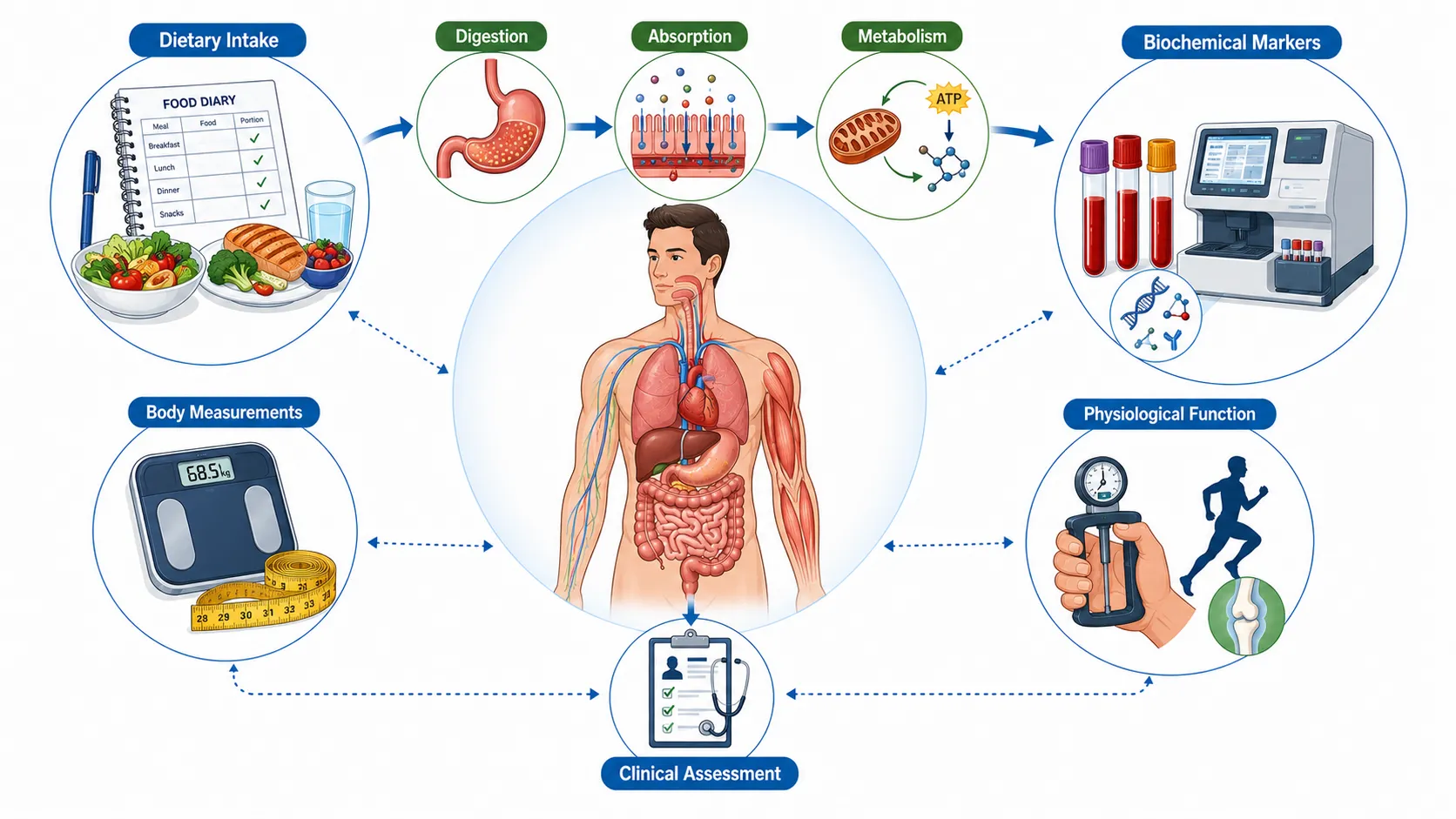
The Scientific Basis of Nutritional Assessment
Nutritional assessment is based on the principle that changes in nutrient intake or utilisation may eventually produce measurable changes in the body. These changes can occur at different stages.
A nutritional disturbance may affect:
Dietary intake.
Digestive function.
Intestinal absorption.
Nutrient transport.
Tissue storage.
Cellular metabolism.
Enzyme activity.
Hormonal regulation.
Body composition.
Physical function.
Clinical appearance.
The timing of these changes is important. Dietary intake may change immediately, whereas alterations in body composition or clinical signs may develop over a longer period. Similarly, some biochemical markers respond rapidly to recent intake, while others reflect longer-term nutrient stores or metabolic function.
Key Principle: Nutritional Status Is Dynamic
Nutritional status is not a fixed condition. It changes in response to dietary exposure, illness, physical activity, growth, ageing and metabolic demand.
A useful conceptual pathway is:
Nutrient intake → Digestion → Absorption → Transport → Cellular utilisation → Storage → Physiological function
A disturbance at any stage may influence nutritional status. Therefore, a low nutrient intake does not always lead directly to a measurable deficiency, and a normal dietary intake does not always guarantee adequate nutrient utilisation.
Major Clinical Techniques Used in Nutritional Assessment
Overview of Standard Assessment Approaches
Clinical nutritional assessment commonly combines several categories of information.
These include:
Dietary assessment.
Anthropometric assessment.
Biochemical assessment.
Clinical assessment.
Functional assessment.
Medical and lifestyle history.
These methods are complementary rather than interchangeable.
Table: Clinical Nutritional Assessment Techniques and Their Scientific Basis
| Assessment Technique | Definition | Physiological or Biochemical Principle | Main Strength | Key Limitation |
|---|---|---|---|---|
| Dietary assessment | Evaluation of food and nutrient intake | Estimates nutrient exposure entering the body | Identifies dietary patterns and possible risks | Does not directly measure absorption or utilisation |
| Anthropometry | Measurement of body size and composition | Reflects changes in tissue mass and energy balance | Practical and useful for monitoring trends | Can be affected by fluid balance and body composition differences |
| Biochemical assessment | Measurement of biological substances or metabolic products | Reflects nutrient availability, metabolism or physiological function | Provides objective physiological information | Results may be affected by illness, timing and biological variation |
| Clinical examination | Observation of physical signs and symptoms | Detects structural or functional consequences of nutritional disturbance | Provides direct patient-centred information | Signs may be non-specific or appear late |
| Functional assessment | Evaluation of physical or physiological performance | Assesses the functional consequences of nutritional status | Links nutritional status with physiological capacity | May be influenced by illness and other non-nutritional factors |
| Medical history | Review of health conditions and treatments | Identifies factors affecting nutrient requirements and metabolism | Provides essential clinical context | Depends on accurate information and interpretation |
Dietary Assessment and Its Physiological Basis
Understanding Dietary Assessment
Dietary assessment evaluates the foods, beverages and supplements consumed by an individual. It provides an estimate of nutrient exposure and helps identify patterns that may increase the risk of nutritional imbalance.
However, dietary intake is only the first stage of nutrient availability. Food consumed must still be digested, absorbed, transported and metabolised.
Therefore:
Dietary intake ≠ Guaranteed nutrient utilisation
This distinction is fundamental when critically evaluating dietary assessment techniques.
Common Dietary Assessment Methods
Standard methods may include:
Twenty-four-hour dietary recall.
Food diaries.
Food frequency questionnaires.
Dietary history interviews.
Meal observation in clinical settings.
Assessment of supplement use.
Each method provides different types of information.
Twenty-Four-Hour Dietary Recall
This technique asks an individual to describe foods and beverages consumed during a previous twenty-four-hour period.
Physiological Relevance
The information may help estimate:
Recent energy intake.
Macronutrient exposure.
Food variety.
Meal timing.
Potential nutrient inadequacies.
Strengths
Relatively quick to complete.
Useful for identifying recent intake.
Can be repeated to identify patterns.
Does not require long-term record keeping.
Limitations
Relies on memory.
One day may not represent usual intake.
Portion sizes may be estimated inaccurately.
Individuals may forget snacks or beverages.
Food Diaries
Food diaries require individuals to record intake over a specified period.
Biochemical and Physiological Value
Repeated recording may provide better information about habitual exposure to:
Energy.
Protein.
Carbohydrates.
Dietary fats.
Vitamins and minerals.
However, recording intake does not determine whether nutrients are adequately absorbed.
Critical Evaluation of Dietary Techniques
Dietary assessment is particularly useful for identifying possible causes of nutritional disturbance. However, it cannot independently diagnose biochemical deficiency.
For example, an individual may report adequate nutrient intake but still experience deficiency because of:
Impaired digestion.
Intestinal disease.
Reduced absorption.
Increased physiological demand.
Medication interactions.
Increased nutrient losses.
Therefore, dietary findings should be integrated with clinical and biochemical evidence.
Anthropometric Assessment and Physiological Mechanisms
What Is Anthropometry?
Anthropometry involves the measurement of physical characteristics related to body size and composition.
Common measurements may include:
Body weight.
Height.
Body mass index.
Weight change over time.
Circumference measurements.
Body composition indicators.
These measurements provide information about energy balance and changes in body tissues.
Body Weight and Energy Balance
Body weight is influenced by the balance between energy intake and energy expenditure.
A simplified concept is:
Energy balance = Energy intake − Energy expenditure
Persistent negative energy balance may contribute to weight loss, whereas sustained positive energy balance may contribute to increased body mass.
However, body weight alone does not identify which tissues are changing.
Changes in weight may reflect alterations in:
Fat mass.
Muscle mass.
Body water.
Bone mass.
Gastrointestinal contents.
The Importance of Weight Trends
A single body weight measurement has limited meaning without context. Repeated measurements can provide more useful information.
Professionals should consider:
Recent unintentional weight change.
Rate of change.
Baseline weight.
Fluid status.
Clinical condition.
Rapid changes in body weight may sometimes reflect fluid shifts rather than changes in nutritional tissue stores.
Body Mass Index
Body mass index is commonly calculated using weight relative to height.
It can provide a general population-level screening indicator but does not directly measure:
Muscle mass.
Fat distribution.
Nutrient stores.
Metabolic function.
Two individuals with the same body mass index may have substantially different body compositions.
Critical Evaluation of Anthropometry
Anthropometry provides valuable information because nutritional disturbances often influence body tissue.
Key benefits include:
Non-invasive assessment.
Relatively low cost.
Easy monitoring over time.
Useful identification of significant changes.
Important limitations include:
Fluid retention may alter weight.
Muscle loss may occur without major weight loss.
Body composition varies between individuals.
Measurements require correct technique.
Biochemical Assessment and Metabolic Mechanisms
The Role of Clinical Biochemistry
Biochemical assessment involves analysing biological samples to measure substances associated with nutrient status and physiological function.
Biological samples may include:
Blood.
Urine.
Other clinically appropriate specimens.
Biochemical tests can provide information about:
Nutrient concentrations.
Metabolites.
Enzyme activity.
Transport proteins.
Electrolyte balance.
Organ-related metabolic function.
Direct and Functional Biomarkers
A biochemical measurement may represent a nutrient concentration directly or indicate the functional consequences of altered nutrient availability.
Direct Biomarkers
These may provide information about:
Circulating nutrient levels.
Recent nutrient exposure.
Availability of specific biological compounds.
However, concentrations may fluctuate according to recent intake or physiological regulation.
Functional Biomarkers
Functional biomarkers may indicate changes in:
Enzyme-dependent reactions.
Metabolic pathways.
Cellular activity.
Physiological function.
These markers may sometimes provide additional information about whether nutrient availability is affecting biological processes.
Physiological Homeostasis and Biomarker Interpretation
Why Blood Concentrations Can Be Misleading
The body actively regulates many substances within relatively narrow physiological ranges.
This means that:
Blood concentrations may remain normal while tissue stores decline.
Hormonal mechanisms may compensate temporarily.
Nutrient release from storage sites may maintain circulation.
Acute illness may alter distribution.
Therefore, normal circulating values should not always be interpreted as complete evidence of optimal nutritional status.
Example of Homeostatic Regulation
When the body requires a particular nutrient for essential physiological functions, regulatory systems may prioritise maintaining circulating concentrations.
This can involve:
Mobilisation from tissue stores.
Changes in absorption.
Altered renal excretion.
Hormonal adjustment.
The result is that biochemical interpretation requires an understanding of underlying physiology.
Pre-Analytical Factors in Biochemical Testing
Importance of Sample Collection
The accuracy of a laboratory result depends partly on what happens before analysis.
Important factors include:
Timing of sample collection.
Recent food intake.
Fasting status where clinically relevant.
Physical activity.
Hydration.
Medication use.
Sample storage.
Processing delays.
These are known as pre-analytical influences.
Why Timing Matters
Some biomarkers change after food intake, exercise or normal daily physiological rhythms.
Therefore, professionals should consider:
Whether the sample reflects a baseline state.
Whether recent dietary intake could influence results.
Whether repeated testing is required.
Whether samples were collected under comparable conditions.
Clinical Examination and Physiological Signs
The Purpose of Clinical Examination
Clinical examination identifies physical signs and symptoms that may indicate altered nutritional status.
Assessment may involve observation of:
General appearance.
Muscle and tissue condition.
Skin and visible structures.
Oral signs.
Hydration indicators.
Functional capacity.
Physiological Basis of Clinical Signs
Nutritional deficiency can impair tissue maintenance, cellular renewal and enzyme activity. Over time, this may produce visible or functional changes.
However, clinical signs may be influenced by multiple conditions.
A physical sign should therefore not automatically be interpreted as evidence of a specific nutrient deficiency.
Strengths of Clinical Examination
Clinical examination can:
Identify visible nutritional concerns.
Provide immediate patient-centred information.
Support interpretation of laboratory data.
Help identify the need for further investigation.
Limitations
Clinical signs may:
Develop slowly.
Appear only in advanced deficiency.
Be non-specific.
Be influenced by unrelated disease.
Functional Assessment and Nutritional Physiology
What Is Functional Assessment?
Functional assessment examines how nutritional status may influence physical or physiological performance.
Depending on the clinical context, assessment may consider:
Physical strength.
Mobility.
Muscle function.
Fatigue.
Ability to perform daily activities.
Biochemical Mechanisms Behind Functional Change
Nutritional disturbances can influence function by affecting:
Energy production.
Muscle protein turnover.
Nerve function.
Oxygen transport.
Enzyme activity.
Electrolyte regulation.
Functional assessment therefore helps connect biochemical and nutritional changes with real physiological consequences.
Medical History as a Nutritional Assessment Tool
Importance of Clinical Context
Medical history provides information about factors that influence nutrient requirements and metabolism.
Important considerations include:
Chronic conditions.
Recent illness.
Surgery.
Gastrointestinal symptoms.
Medication use.
Previous nutritional interventions.
Lifestyle factors.
Physiological Importance
Many conditions can alter nutritional status by affecting:
Appetite.
Digestion.
Absorption.
Metabolic rate.
Nutrient losses.
Tissue turnover.
A laboratory result without clinical context can therefore be difficult to interpret accurately.
The ABCD Approach to Nutritional Assessment
A commonly used framework integrates several assessment domains.
A: Anthropometric Assessment
Focuses on:
Body size.
Weight trends.
Body composition.
Physical changes over time.
B: Biochemical Assessment
Focuses on:
Laboratory markers.
Nutrient-related measurements.
Metabolic indicators.
Functional biochemical evidence.
C: Clinical Assessment
Focuses on:
Medical history.
Symptoms.
Physical signs.
Physiological condition.
D: Dietary Assessment
Focuses on:
Food intake.
Dietary patterns.
Nutrient exposure.
Supplement use.
The major advantage of this framework is that it prevents overreliance on one source of information.
Critical Comparison of Assessment Methods
Why No Single Method Is Sufficient
Different techniques assess different stages of nutritional physiology.
For example:
Dietary assessment estimates exposure.
Biochemical testing measures biological processes.
Anthropometry measures physical outcomes.
Clinical examination identifies observable consequences.
Functional assessment evaluates physiological capacity.
These techniques should therefore be viewed as complementary.
Integrating Multiple Sources of Evidence
A comprehensive approach may follow this sequence:
Identify the clinical concern.
Obtain medical and dietary history.
Assess physical and anthropometric indicators.
Select appropriate biochemical tests.
Evaluate sample quality and timing.
Compare related findings.
Consider physiological mechanisms.
Identify alternative explanations.
Develop a reasoned assessment.
Determine appropriate next steps.
Practical Example: Evaluating Possible Nutritional Deficiency
Clinical Scenario
An individual reports reduced appetite, fatigue and recent weight change. Dietary intake appears limited.
A comprehensive assessment should investigate more than food intake alone.
Step 1: Dietary Review
The professional may examine:
Energy intake.
Protein intake.
Dietary variety.
Meal frequency.
Supplement use.
Step 2: Anthropometric Review
Relevant information may include:
Current body weight.
Previous body weight.
Rate of weight change.
Body composition where appropriate.
Step 3: Clinical Review
The assessment may consider:
Medical conditions.
Gastrointestinal symptoms.
Medication use.
Functional capacity.
Step 4: Biochemical Review
Appropriate laboratory information should be selected according to the clinical question.
The interpretation should consider:
Biological variation.
Inflammation.
Sample timing.
Related biochemical patterns.
The final assessment should be based on the combined evidence.
Key Benefits of Understanding Underlying Mechanisms
Understanding the physiological and biochemical mechanisms behind assessment techniques provides several advantages.
Improved Accuracy
It helps professionals:
Select appropriate assessment methods.
Understand what a test actually measures.
Avoid overinterpretation.
Recognise confounding influences.
Better Clinical Reasoning
Knowledge of underlying mechanisms supports the ability to:
Explain abnormal findings.
Compare conflicting information.
Identify alternative explanations.
Recognise when further assessment is required.
More Individualised Assessment
Individuals differ in:
Metabolic rate.
Nutrient requirements.
Health status.
Dietary patterns.
Absorption capacity.
Mechanistic understanding helps prevent a one-size-fits-all interpretation.
Limitations and Sources of Error
Measurement Error
Errors may occur because of:
Incorrect measurement technique.
Poor equipment calibration.
Inconsistent procedures.
Inaccurate recording.
Biological Variation
Results may differ because of:
Daily physiological changes.
Hormonal influences.
Recent food intake.
Physical activity.
Hydration.
Reporting Bias
Dietary assessment may be affected by:
Poor memory.
Under-reporting.
Over-reporting.
Changes in eating behaviour during recording.
Clinical Confounding
Laboratory and physical findings may be influenced by:
Acute illness.
Chronic disease.
Inflammation.
Medication.
Organ dysfunction.
Recognising these limitations is an essential aspect of critical evaluation.
Professional Procedures for High-Quality Assessment
Standardisation
Where possible, procedures should be standardised.
This may involve:
Using validated assessment methods.
Following laboratory procedures.
Recording measurements consistently.
Using comparable conditions for repeat testing.
Documentation
Accurate documentation should include:
Relevant dietary information.
Measurement methods.
Timing of assessments.
Clinical context.
Factors that may influence interpretation.
Quality Assurance
Good practice includes:
Equipment checks.
Laboratory quality-control procedures.
Staff competence.
Appropriate data review.
Professional Judgement and Evidence-Based Practice
Avoiding Simplistic Conclusions
An abnormal result does not automatically establish the cause of a nutritional problem.
Professionals should ask:
What does this measurement represent?
Could the result be influenced by recent intake?
Could illness affect the result?
Are related markers consistent?
Does the dietary history support the finding?
Are alternative explanations possible?
Using Evidence Proportionately
The strength of a conclusion should match the quality and amount of available evidence.
For example:
One isolated finding may suggest a need for further investigation.
Multiple consistent findings may provide stronger evidence.
Repeated measurements may clarify uncertain patterns.
Practical Checklist for Learners
Before completing a nutritional assessment, consider:
What is the purpose of the assessment?
Which physiological processes are relevant?
What does each technique actually measure?
Are dietary findings reliable?
Are anthropometric measurements influenced by fluid status?
Could illness affect biochemical markers?
Was sample collection appropriate?
Are physical signs specific or non-specific?
Do functional findings support the biochemical evidence?
Are there alternative explanations?
Does the evidence support the proposed conclusion?
Is further investigation required?
Summary
Standard clinical techniques used for human nutritional assessment are based on important physiological and biochemical mechanisms. Dietary assessment estimates nutrient exposure, anthropometric assessment evaluates changes in body size and tissue composition, biochemical testing provides information about nutrient availability and metabolism, clinical examination identifies physical signs, and functional assessment evaluates the consequences of nutritional status on physiological performance.
Each technique has important strengths but also significant limitations. Dietary intake does not guarantee nutrient absorption, body weight does not reveal all changes in body composition, and a biochemical result may be influenced by homeostatic regulation, illness, medication or sample conditions.
Effective nutritional assessment therefore requires an integrated approach. The ABCD framework provides a useful structure by combining anthropometric, biochemical, clinical and dietary evidence.
The most important principle is that no single technique should normally be interpreted in isolation. Learners must understand the mechanisms behind each measurement, evaluate potential sources of error and integrate multiple findings to develop evidence-based conclusions.
By critically evaluating the physiological and biochemical foundations of clinical nutritional assessment, Learners can improve their ability to select appropriate techniques, interpret findings responsibly and apply professional judgement in clinical, healthcare and nutritional practice.
3.Assess the Reliability and Validity of Various Biochemical Markers When Determining the Early Stages of Malnutrition in Complex Clinical Populations
Introduction
Early identification of malnutrition is a major priority in clinical practice because nutritional deterioration can develop before obvious physical signs, substantial weight loss or severe functional impairment become apparent. Biochemical markers can provide valuable information about metabolic changes, nutrient availability, inflammation, tissue turnover and physiological adaptation. However, the interpretation of these markers is complex, particularly in individuals with acute illness, chronic disease, inflammation, organ dysfunction or multiple coexisting conditions.
A biochemical marker is not automatically a direct measure of nutritional status. Many laboratory values are influenced by factors other than dietary intake. For example, inflammation may alter the concentration of circulating proteins, fluid imbalance may change measured concentrations, and impaired liver or kidney function may influence the production, metabolism or clearance of certain substances. Consequently, a laboratory result that appears abnormal may reflect disease-related physiological changes rather than primary malnutrition.
The reliability and validity of biochemical markers must therefore be assessed critically. Reliability concerns whether a measurement produces consistent and reproducible results under appropriate conditions. Validity concerns whether the marker accurately measures or reflects the nutritional condition it is intended to identify. A marker may be analytically reliable but clinically invalid for diagnosing malnutrition in a particular population if its concentration is strongly affected by unrelated physiological processes.
This section explores the principles used to evaluate biochemical markers during the early stages of malnutrition. It examines different categories of markers, the effects of inflammation and disease, sources of analytical and biological variation, and the importance of combining biochemical evidence with clinical, dietary and anthropometric assessment.
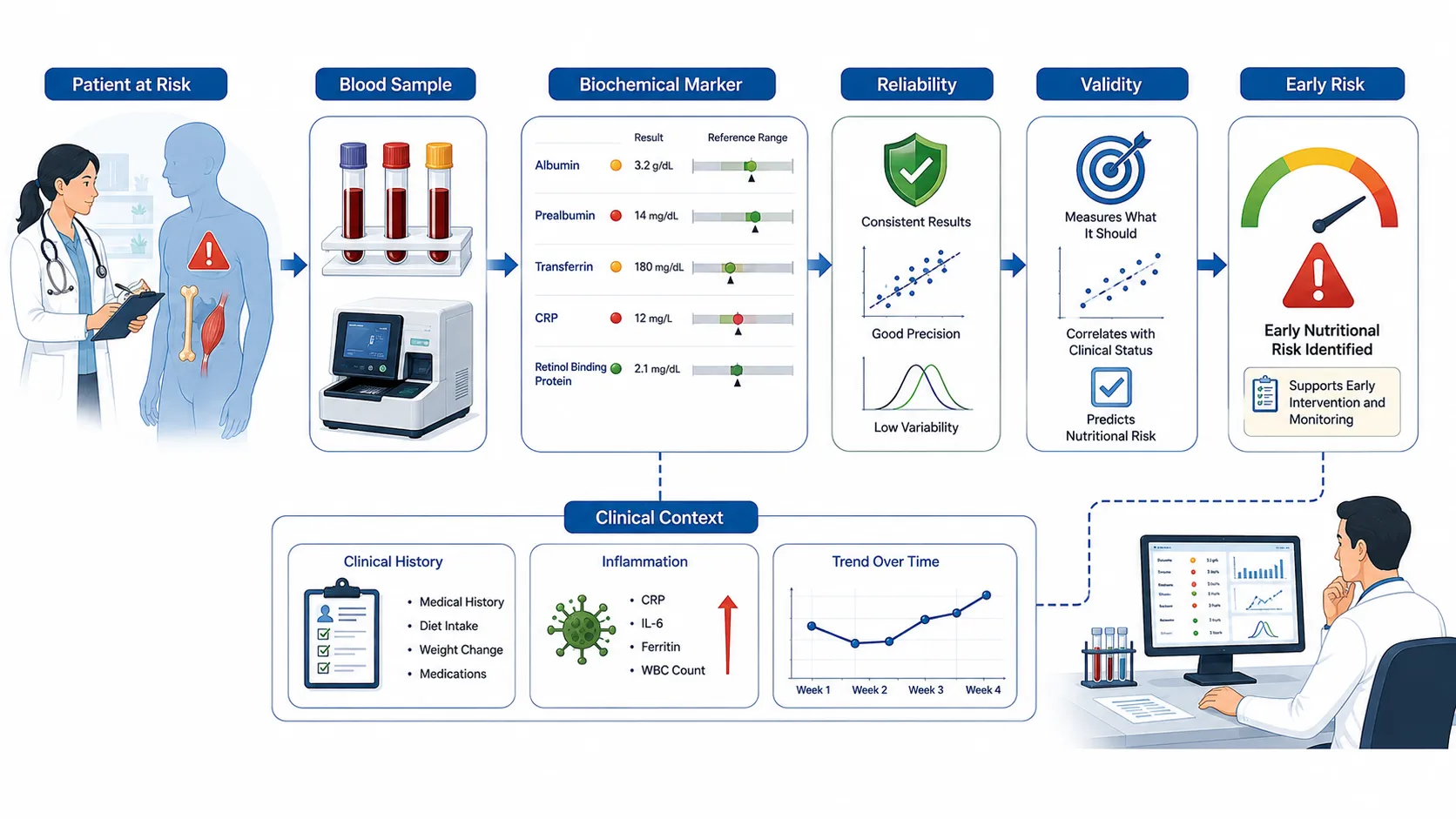
Understanding Early Malnutrition
Malnutrition may develop gradually and may not initially produce severe or visible clinical signs. Early nutritional deterioration can involve changes in nutrient intake, energy balance, metabolic adaptation and tissue function before major changes in body weight become apparent.
Early stages may include:
Reduced dietary intake.
Increased nutritional requirements.
Impaired digestion.
Reduced intestinal absorption.
Increased nutrient losses.
Changes in protein metabolism.
Altered energy utilisation.
Reduced nutrient reserves.
Early functional decline.
The biochemical consequences of these processes may vary according to the individual and the underlying clinical condition.
Why Early Detection Is Challenging
Early malnutrition is difficult to identify because the body can temporarily compensate for reduced nutrient availability.
Physiological adaptations may include:
Mobilisation of nutrient stores.
Alteration of metabolic pathways.
Reduced energy expenditure.
Changes in hormonal signalling.
Redistribution of nutrients between tissues.
Prioritisation of essential physiological functions.
These adaptations may maintain certain circulating concentrations within normal ranges despite declining nutritional reserves.
Therefore:
A normal biochemical result does not always exclude early nutritional deterioration.
Key Concepts: Reliability and Validity
What Is Reliability?
Reliability refers to the consistency and reproducibility of a measurement.
A biochemical marker is considered more reliable when repeated measurement under similar conditions produces comparable results.
Reliability may depend on:
Laboratory precision.
Equipment calibration.
Standardised sampling.
Consistent analytical methods.
Proper sample storage.
Appropriate quality-control procedures.
Types of Reliability
Analytical Reliability
Analytical reliability refers to the consistency of the laboratory measurement itself.
Important considerations include:
Instrument accuracy.
Assay precision.
Reagent quality.
Laboratory quality assurance.
Calibration procedures.
Biological Reliability
Biological reliability considers whether the marker remains sufficiently stable within an individual.
Some markers naturally fluctuate because of:
Food intake.
Circadian rhythms.
Physical activity.
Hydration.
Hormonal variation.
Acute stress.
A marker may therefore be analytically precise but biologically variable.
What Is Validity?
Validity refers to whether a biochemical marker accurately represents the biological or clinical condition being assessed.
In nutritional assessment, an important question is:
Does this marker genuinely reflect nutritional status, or is it primarily influenced by another physiological process?
Types of Validity
Relevant forms of validity include:
Construct validity.
Clinical validity.
Predictive validity.
Criterion validity.
Construct Validity
Construct validity considers whether the marker behaves as expected according to the underlying biological theory.
For example, a marker intended to reflect nutrient depletion should demonstrate a biologically plausible relationship with reduced nutrient availability.
Clinical Validity
Clinical validity considers whether the marker accurately identifies meaningful nutritional risk or deterioration in real clinical populations.
Predictive Validity
Predictive validity refers to the ability of a marker to help predict future outcomes, such as worsening nutritional status or functional decline.
Criterion Validity
Criterion validity examines how closely a measurement agrees with an established reference method or comprehensive clinical assessment.
Table: Evaluating Common Categories of Biochemical Markers in Early Malnutrition
| Marker Category | What It May Indicate | Reliability Considerations | Validity Limitations | Best Clinical Use |
|---|---|---|---|---|
| Circulating proteins | Protein metabolism and physiological response | Often measured accurately in laboratories | Strongly influenced by inflammation and organ function | Interpret alongside inflammatory and clinical findings |
| Micronutrient biomarkers | Nutrient availability or body stores | Depends on assay quality and sample handling | May be affected by recent intake and redistribution | Support targeted deficiency assessment |
| Functional biomarkers | Metabolic or enzyme-related consequences | May require specialised testing | Can be influenced by multiple physiological conditions | Assess biological impact of nutrient disturbance |
| Inflammatory markers | Presence and degree of inflammatory response | Usually reproducible with standard methods | Do not directly measure nutritional status | Provide context for interpreting other markers |
| Metabolic markers | Changes in energy or nutrient metabolism | Can vary with fasting and illness | May reflect acute physiological stress | Identify metabolic adaptation and clinical complexity |
| Urinary biomarkers | Nutrient excretion or metabolic products | Dependent on collection quality | Hydration and renal function may influence results | Complement blood and clinical assessment |
Biochemical Markers in Nutritional Assessment
Categories of Biochemical Markers
Biochemical markers can provide information about several aspects of nutritional physiology.
These include:
Nutrient concentration.
Nutrient storage.
Metabolic activity.
Protein turnover.
Enzyme function.
Inflammatory activity.
Organ function.
Nutrient excretion.
The choice of marker should always depend on the clinical question being investigated.
Direct Biomarkers
A direct biomarker attempts to measure the concentration or availability of a nutrient or biologically related compound.
Potential advantages include:
Objective measurement.
Standardised laboratory analysis.
Ability to identify biochemical abnormalities.
Potential usefulness for monitoring change.
However, direct measurement does not always indicate long-term nutritional status.
For example, recent intake may temporarily alter circulating concentrations without correcting underlying tissue depletion.
Functional Biomarkers
Functional biomarkers assess the physiological consequences of nutrient availability.
They may provide evidence of changes in:
Enzyme activity.
Metabolic pathways.
Cellular processes.
Tissue function.
Functional markers can be particularly valuable when circulating concentrations do not accurately represent biological utilisation.
The Importance of Inflammation
Inflammation as a Major Confounding Factor
Inflammation is one of the most important challenges when interpreting biochemical markers in complex clinical populations.
During inflammation, the body undergoes coordinated metabolic and physiological changes.
These changes can affect:
Protein synthesis.
Nutrient distribution.
Hormonal activity.
Iron metabolism.
Fluid balance.
Tissue breakdown.
Energy expenditure.
As a result, biochemical changes associated with illness may resemble changes associated with malnutrition.
Acute-Phase Responses
The acute-phase response is a physiological reaction to inflammation, infection or tissue injury.
During this response:
Some circulating proteins may increase.
Other proteins may decrease.
Nutrient transport may change.
Metabolic priorities may shift.
Liver protein synthesis patterns may alter.
Therefore, changes in certain circulating proteins cannot automatically be interpreted as evidence of inadequate dietary protein intake.
Critical Principle
A low concentration of a circulating protein may result from:
Inflammation.
Reduced hepatic synthesis.
Increased losses.
Fluid expansion.
Acute illness.
Changes in metabolic distribution.
It should not automatically be attributed to malnutrition.
Reliability of Biochemical Measurements
Analytical Precision
A laboratory result is only useful if the measurement process is reliable.
Analytical precision is supported by:
Standard operating procedures.
Calibrated instruments.
Internal quality control.
External quality assessment.
Validated analytical methods.
Small differences between repeated results may reflect normal analytical variation rather than a meaningful clinical change.
Pre-Analytical Variation
Many errors occur before laboratory analysis begins.
Important factors include:
Incorrect sample collection.
Inappropriate collection timing.
Delayed processing.
Improper storage.
Haemolysis.
Incorrect patient preparation.
Pre-analytical variation can significantly reduce reliability.
Patient Preparation
Depending on the marker being assessed, preparation may need to consider:
Recent meals.
Fasting status where relevant.
Exercise.
Hydration.
Medication.
Supplement use.
Failure to record these factors can lead to incorrect interpretation.
Biological Variation and Nutritional Markers
Within-Person Variation
Biochemical values naturally vary within the same individual.
This variation may result from:
Daily metabolic rhythms.
Dietary changes.
Hormonal cycles.
Physical activity.
Stress.
Hydration.
Therefore, a single measurement may not accurately represent the individual’s usual physiological condition.
Between-Person Variation
Different individuals may demonstrate different biochemical responses to similar nutritional exposures.
Variation may be influenced by:
Age.
Body composition.
Genetic factors.
Disease.
Medication.
Lifestyle.
Physiological state.
This makes population reference intervals useful but not sufficient for all individual clinical decisions.
Validity in Complex Clinical Populations
What Are Complex Clinical Populations?
Complex clinical populations may include individuals with:
Multiple chronic conditions.
Acute illness.
Inflammatory disorders.
Organ dysfunction.
Cancer.
Gastrointestinal disease.
Advanced age.
Post-surgical recovery.
Long-term medication use.
In these populations, biochemical interpretation becomes more challenging because several physiological processes may affect the same laboratory result.
The Problem of Confounding
Confounding occurs when a factor other than the nutritional condition influences the marker.
For example, an abnormal biochemical result may reflect:
Disease activity.
Inflammation.
Medication effects.
Organ dysfunction.
Fluid shifts.
A valid interpretation requires consideration of these alternative explanations.
Circulating Proteins and Nutritional Assessment
Physiological Role of Circulating Proteins
Circulating proteins perform numerous functions, including:
Transporting biological substances.
Maintaining fluid distribution.
Participating in immune responses.
Supporting metabolic processes.
Their concentrations are influenced by protein synthesis, degradation, distribution and loss.
Why They Require Careful Interpretation
Changes in circulating protein concentrations may occur because of:
Inflammatory responses.
Liver function.
Kidney-related losses.
Hydration status.
Acute illness.
Therefore, they may have limited validity as isolated markers of nutritional status.
Appropriate Professional Approach
When evaluating a circulating protein marker, consider:
The presence of inflammation.
Relevant organ function.
Hydration status.
Clinical symptoms.
Dietary intake.
Weight trends.
Other biochemical findings.
Micronutrient Biomarkers
Assessing Specific Nutrient Status
Biochemical testing may be used to investigate suspected deficiencies or excesses of specific micronutrients.
Potential measurements may relate to:
Circulating concentrations.
Storage indicators.
Transport proteins.
Functional metabolic markers.
Strengths
Micronutrient biomarkers may:
Support targeted diagnosis.
Identify biochemical changes before obvious clinical signs.
Monitor response to intervention.
Help investigate specific symptoms.
Limitations
Results may be influenced by:
Recent supplementation.
Inflammation.
Tissue redistribution.
Organ dysfunction.
Laboratory method differences.
Therefore, interpretation should consider the entire biochemical pattern rather than one isolated measurement.
Functional Biomarkers and Early Detection
Why Functional Measures Can Be Valuable
A nutrient may be present in circulation but not adequately available for its biological function.
Functional biomarkers can therefore help identify changes in:
Enzyme-dependent processes.
Cellular metabolism.
Physiological performance.
Critical Considerations
Functional biomarkers may be more closely linked to biological consequences but can still be influenced by:
Coexisting nutrient deficiencies.
Disease.
Medication.
Genetic variation.
Their validity depends on understanding the pathway being assessed.
Inflammatory Markers as Contextual Tools
Their Role in Nutritional Assessment
Inflammatory markers do not directly diagnose malnutrition.
However, they can help clinicians understand whether inflammation may be influencing other biochemical findings.
This improves interpretation of:
Protein-related markers.
Nutrient concentrations.
Metabolic indicators.
Key Benefit
The inclusion of inflammatory information helps distinguish between:
Primary nutritional changes.
Disease-related metabolic responses.
Combined disease and nutrition-related effects.
Sensitivity and Specificity
Understanding Sensitivity
Sensitivity refers to the ability of a marker or assessment method to identify individuals who genuinely have the condition of interest.
For early malnutrition, a highly sensitive marker may detect many individuals at nutritional risk.
However, high sensitivity alone may result in false-positive findings.
Understanding Specificity
Specificity refers to the ability to correctly identify individuals who do not have the condition.
A highly specific marker reduces the risk of incorrectly classifying a healthy individual as malnourished.
Clinical Balance
An ideal marker would demonstrate:
High analytical reliability.
Good biological stability.
Appropriate sensitivity.
Appropriate specificity.
Strong clinical validity.
In practice, few individual biochemical markers meet all these criteria.
The Importance of Reference Ranges
What Are Reference Ranges?
Reference ranges provide an expected distribution of laboratory values within a defined reference population.
However, a value within a reference range does not necessarily guarantee optimal nutritional status.
Similarly, a value outside a reference range does not automatically establish malnutrition.
Limitations of Reference Ranges
They may not account fully for:
Individual baseline variation.
Acute illness.
Age-related differences.
Population diversity.
Physiological adaptation.
Trend analysis can therefore be more informative than a single isolated value.
Trend Analysis in Early Malnutrition
Why Serial Measurements Matter
Repeated measurements can provide insight into physiological change.
For example, a progressive decline may be more clinically significant than a single borderline result.
Trend analysis can help identify:
Deterioration over time.
Response to nutritional intervention.
Emerging metabolic disturbance.
Changes associated with illness progression.
Professional Monitoring Approach
Where clinically appropriate:
Establish a baseline.
Record relevant clinical conditions.
Standardise collection conditions.
Repeat assessment at appropriate intervals.
Compare changes over time.
Interpret findings alongside clinical information.
Combining Biochemical Markers
The Multi-Marker Approach
Using several related markers may improve interpretation.
For example, a professional may evaluate:
A nutrient-related marker.
A functional marker.
An inflammatory indicator.
Relevant organ function.
Dietary information.
This approach provides a more complete physiological picture.
Benefits of Combined Assessment
Multiple markers can:
Reduce reliance on one potentially misleading result.
Identify conflicting physiological patterns.
Improve clinical reasoning.
Support more accurate conclusions.
However, more testing does not automatically mean better assessment. Each measurement should have a clear clinical purpose.
Practical Scenario: Acute Illness and Suspected Malnutrition
Clinical Situation
An individual is admitted with acute illness and reports reduced food intake for several days. Laboratory findings show changes in circulating protein concentrations.
A simplistic interpretation might conclude that the individual has protein deficiency.
However, a critical assessment should also investigate:
The degree of inflammation.
Recent fluid administration.
Liver function.
Kidney function.
Weight history.
Duration of reduced intake.
Muscle and functional status.
Appropriate Conclusion
The biochemical findings should be interpreted as part of a wider clinical assessment.
The professional should avoid concluding that:
Abnormal protein marker = definite malnutrition
Instead, the evidence should be integrated to determine whether nutritional deterioration, disease-related inflammation or a combination of both is responsible.
Practical Scenario: Early Nutritional Deterioration
Clinical Situation
An older individual has experienced reduced appetite and gradual reduction in food intake. Body weight has not yet changed substantially.
Initial laboratory findings are within broad reference ranges.
Critical Interpretation
Normal laboratory findings do not necessarily exclude early nutritional risk.
The body may still be compensating through:
Mobilisation of nutrient reserves.
Metabolic adaptation.
Changes in energy expenditure.
The assessment should therefore consider:
Dietary intake trends.
Appetite.
Weight history.
Muscle function.
Physical performance.
Clinical conditions.
This scenario demonstrates the limitations of relying exclusively on biochemical testing during early malnutrition.
Practical Scenario: Conflicting Biochemical Results
Clinical Situation
A patient has a biochemical result suggesting reduced nutrient availability, but a functional biomarker appears normal.
Possible Explanations
The difference may result from:
Early-stage deficiency.
Recent dietary change.
Physiological compensation.
Analytical variation.
Different biological response times.
Professional Response
The clinician should:
Review sample quality.
Examine recent dietary intake.
Consider inflammatory status.
Repeat testing where appropriate.
Assess related markers.
Review clinical signs and function.
The correct approach is to investigate the inconsistency rather than select the result that appears most convenient.
A Step-by-Step Process for Evaluating Marker Reliability and Validity
Step 1: Define the Clinical Question
Determine:
What nutritional problem is suspected?
Is the objective screening, diagnosis or monitoring?
Which physiological pathway is relevant?
Step 2: Select an Appropriate Marker
The selected marker should have:
Biological relevance.
Sufficient analytical quality.
Evidence supporting its clinical use.
Step 3: Evaluate Analytical Reliability
Check:
Method precision.
Laboratory quality procedures.
Sample handling.
Potential analytical interference.
Step 4: Evaluate Biological Variation
Consider:
Timing.
Recent intake.
Physical activity.
Hydration.
Normal physiological fluctuation.
Step 5: Identify Confounding Factors
Consider:
Inflammation.
Infection.
Organ dysfunction.
Medication.
Fluid imbalance.
Step 6: Assess Clinical Validity
Ask:
Does this marker genuinely reflect nutritional status in this population?
Does research support its use?
Does it predict clinically meaningful outcomes?
Step 7: Integrate Other Evidence
Combine findings with:
Dietary assessment.
Anthropometry.
Clinical examination.
Functional assessment.
Medical history.
Step 8: Review Trends
Where possible, compare:
Baseline values.
Repeat measurements.
Direction of change.
Response to intervention.
Step 9: Develop a Reasoned Conclusion
The conclusion should distinguish between:
Confirmed findings.
Probable findings.
Uncertain findings requiring further assessment.
Key Benefits of Critically Evaluating Biochemical Markers
Improved Diagnostic Accuracy
Critical evaluation helps reduce:
False-positive interpretations.
False-negative conclusions.
Overdiagnosis.
Misclassification.
Earlier Identification of Risk
Appropriate use of biochemical information may support:
Early investigation.
Timely nutritional intervention.
Closer monitoring.
Better Patient-Centred Care
A comprehensive assessment allows interventions to reflect:
Individual physiology.
Disease state.
Nutritional needs.
Clinical priorities.
Improved Professional Decision-Making
Learners develop the ability to:
Question laboratory findings appropriately.
Recognise uncertainty.
Identify confounding factors.
Justify clinical decisions.
Limitations of Biochemical Markers in Isolation
Biochemical assessment alone may fail to identify malnutrition accurately because:
The body maintains homeostasis.
Inflammation alters many markers.
Disease changes metabolism.
Fluid shifts influence concentrations.
Reference ranges may not reflect individual change.
Early nutritional deterioration may not yet produce abnormal values.
For this reason, biochemical markers should normally be considered one component of a broader nutritional assessment.
Professional and Ethical Considerations
Appropriate Interpretation
Healthcare professionals should avoid:
Diagnosing malnutrition from one isolated marker.
Ignoring clinical context.
Overstating the certainty of laboratory findings.
Communication of Uncertainty
Where evidence is incomplete, it is appropriate to state:
The result suggests a possible concern.
Further assessment is required.
The marker may be influenced by illness.
The conclusion should be reviewed with additional evidence.
Evidence-Based Practice
Marker selection and interpretation should be guided by:
Validated clinical practice.
Appropriate laboratory standards.
Current scientific evidence.
The individual clinical context.
Key Points for Learners
When assessing biochemical markers for early malnutrition, remember:
Reliability refers to consistency and reproducibility.
Validity refers to whether a marker measures what it is intended to measure.
Analytical reliability does not guarantee clinical validity.
Inflammation can significantly affect biochemical findings.
Normal values do not always exclude early nutritional deterioration.
Abnormal values do not automatically prove malnutrition.
Biological variation can influence laboratory results.
Pre-analytical factors must be considered.
Trends may be more informative than isolated measurements.
Multiple assessment methods provide stronger evidence.
Clinical judgement is essential when interpreting complex data.
Summary
Biochemical markers can provide valuable evidence when assessing the early stages of malnutrition, but their reliability and validity must be critically evaluated. Reliability depends on analytical precision, standardised procedures and an understanding of biological variation. Validity depends on whether the marker genuinely reflects nutritional status within the specific clinical population being assessed.
Complex clinical populations present particular challenges because inflammation, organ dysfunction, medication, acute illness and fluid imbalance can substantially alter laboratory findings. Consequently, a biochemical marker should rarely be interpreted in isolation.
The most effective approach involves defining the clinical question, selecting biologically relevant markers, evaluating analytical and pre-analytical reliability, identifying physiological confounding factors and integrating results with dietary, anthropometric, clinical and functional information.
Early malnutrition may develop before clear abnormalities appear in laboratory results. Conversely, abnormal biochemical values may result from disease-related physiological processes rather than inadequate nutritional intake. Learners must therefore apply critical thinking and professional judgement when interpreting laboratory data.
A comprehensive, multi-method assessment provides a stronger foundation for identifying nutritional risk and supporting timely, evidence-based clinical decision-making. Understanding the reliability and validity of biochemical markers enables healthcare and nutrition professionals to use laboratory evidence responsibly, recognise uncertainty and contribute to more accurate assessments of nutritional status.
4.Synthesise Detailed Clinical Histories and Raw Biochemical Data to Accurately Identify Underlying Metabolic Disruptions Affecting Overall Nutritional Health
Introduction
The accurate assessment of nutritional health requires more than reviewing dietary intake or examining an individual laboratory result. Human metabolism is a highly interconnected system in which nutrient intake, digestion, absorption, transport, storage and cellular utilisation are influenced by genetic, physiological, environmental and clinical factors. When these processes become disrupted, the consequences may affect overall nutritional health long before an obvious deficiency or disease pattern becomes apparent.
Synthesising clinical history with raw biochemical data is therefore an essential professional skill. Clinical history provides information about the individual’s symptoms, dietary habits, medical conditions, medication use, lifestyle and physiological circumstances. Biochemical data provide measurable evidence of metabolic activity, nutrient availability, organ function and physiological regulation. When these two sources of information are critically integrated, they can help identify patterns that suggest underlying metabolic disruption.
Raw biochemical data should never be interpreted as isolated numbers. A result outside a reference range does not automatically explain why an abnormality has occurred, while a value within a reference range does not necessarily confirm optimal metabolic health. Effective interpretation requires an understanding of biochemical pathways, physiological regulation, biological variation and potential confounding factors.
This section explores a structured approach to combining detailed clinical histories and biochemical evidence to identify metabolic disturbances affecting nutritional health. It examines major metabolic systems, patterns of biochemical disruption, professional reasoning processes, practical scenarios and the importance of recognising uncertainty.
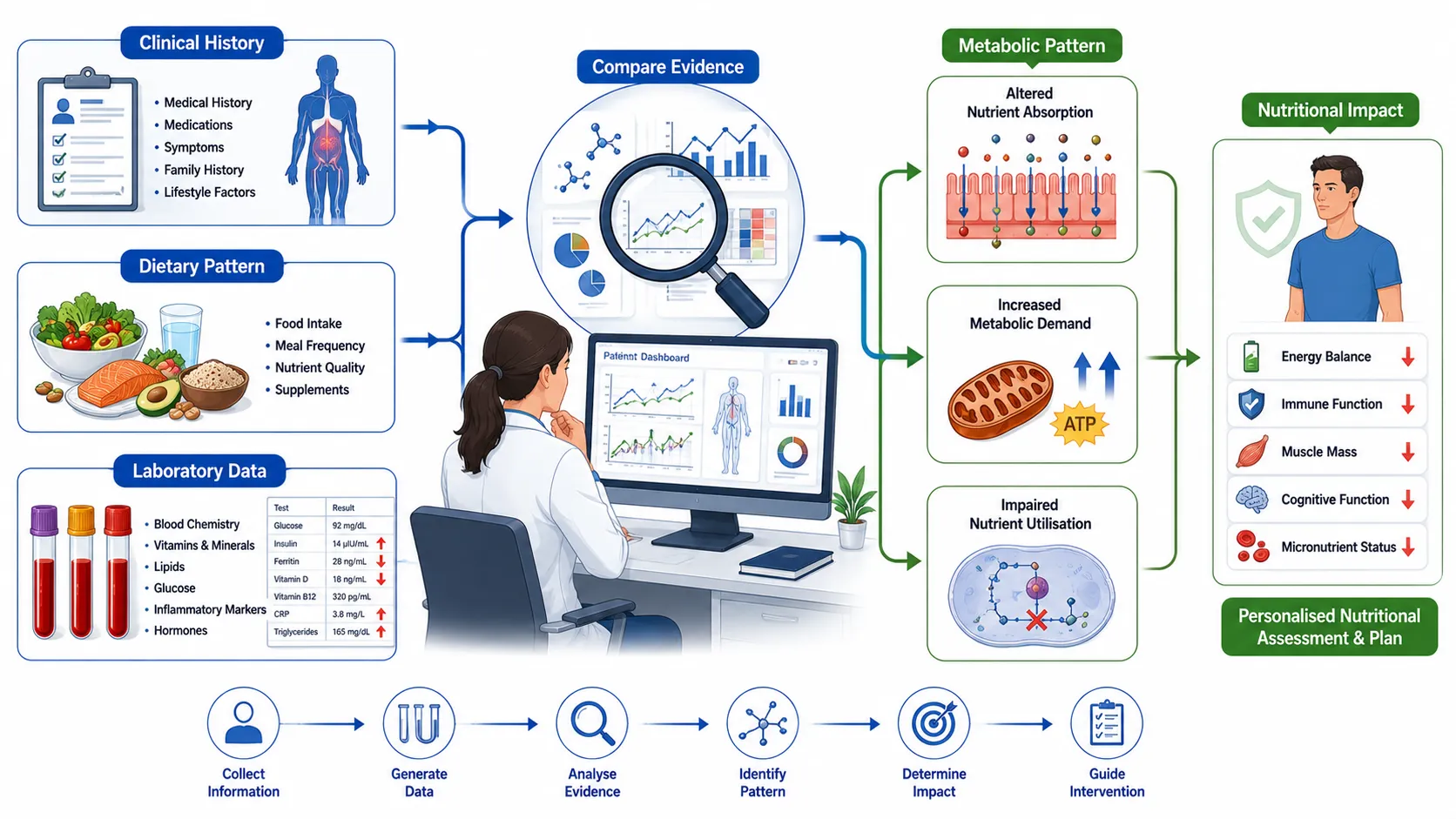
Understanding Metabolic Disruption
Metabolism refers to the interconnected chemical processes through which the body obtains, transforms, stores and uses energy and nutrients. These processes support essential physiological functions, including tissue maintenance, growth, cellular repair and energy production.
Metabolic disruption occurs when one or more of these processes is altered in a way that affects normal physiological balance.
Potential areas of disruption include:
Digestion.
Nutrient absorption.
Energy metabolism.
Glucose regulation.
Lipid metabolism.
Protein turnover.
Micronutrient utilisation.
Hormonal regulation.
Electrolyte balance.
Organ-dependent metabolism.
The Nutritional Health Pathway
A simplified pathway linking nutrition with metabolism is:
Dietary intake → Digestion → Absorption → Transport → Cellular uptake → Metabolism → Storage or utilisation → Physiological function
A disruption can occur at any stage.
For example:
Adequate dietary intake may be followed by poor absorption.
Adequate absorption may not guarantee effective cellular utilisation.
Normal circulating nutrient levels may coexist with altered intracellular metabolism.
Increased metabolic demand may exceed available nutritional resources.
Understanding where the disruption may be occurring is a key part of clinical reasoning.
Key Concepts in Clinical and Biochemical Data Synthesis
What Does Synthesis Mean?
Synthesis involves combining information from multiple sources to develop a coherent and evidence-based interpretation.
In nutritional and biochemical assessment, this means connecting:
Symptoms.
Medical history.
Dietary history.
Medication use.
Physical findings.
Anthropometric data.
Laboratory results.
Physiological mechanisms.
The objective is not simply to identify abnormal results but to determine whether the findings form a meaningful physiological pattern.
Raw Data Versus Interpreted Data
Raw biochemical data consist of individual laboratory values before comprehensive clinical interpretation.
These data may include:
Concentrations.
Ratios.
Enzyme-related indicators.
Metabolic products.
Electrolyte values.
Organ-function indicators.
Interpretation transforms these separate measurements into clinically meaningful information.
A professional should therefore move from:
Individual result → Pattern recognition → Physiological explanation → Clinical interpretation
Table: Key Components Used to Identify Metabolic Disruptions
| Information Source | Definition | Key Information Provided | Potential Metabolic Relevance |
|---|---|---|---|
| Clinical history | Structured record of health information and symptoms | Duration, progression and possible causes | Identifies possible mechanisms and risk factors |
| Dietary history | Assessment of food and nutrient intake | Nutrient exposure and dietary patterns | Identifies inadequate intake or imbalance |
| Medication history | Review of prescribed and non-prescribed substances | Potential biochemical interactions | May affect absorption, metabolism or excretion |
| Biochemical data | Laboratory measurements of biological substances | Objective metabolic information | Identifies altered pathways and physiological disturbances |
| Anthropometric data | Measurements of body size and composition | Physical changes over time | May indicate altered energy balance or tissue loss |
| Functional assessment | Evaluation of physiological performance | Impact on strength and daily function | Identifies consequences of metabolic disturbance |
| Organ-function information | Assessment of major metabolic organs | Capacity for regulation and processing | Helps explain abnormal nutrient and metabolic patterns |
The Importance of a Detailed Clinical History
Clinical History as the Foundation of Interpretation
Biochemical results become more meaningful when interpreted alongside a detailed clinical history.
A comprehensive history may include:
Presenting symptoms.
Duration of symptoms.
Changes over time.
Previous medical conditions.
Surgical history.
Gastrointestinal symptoms.
Dietary habits.
Appetite changes.
Medication use.
Supplement use.
Lifestyle factors.
The clinical history helps determine whether a laboratory finding is likely to represent a temporary physiological change, a chronic metabolic disturbance or a disease-related process.
Symptoms and Metabolic Clues
Symptoms may provide important clues about affected metabolic pathways.
Examples of relevant symptoms include:
Persistent fatigue.
Reduced appetite.
Unintentional weight change.
Digestive discomfort.
Altered bowel habits.
Reduced physical function.
Muscle weakness.
Changes in hydration.
However, symptoms alone are rarely specific enough to identify a precise metabolic disturbance.
A professional should therefore avoid assuming that:
One symptom = One biochemical cause
Instead, symptoms should be considered alongside objective evidence.
Dietary History and Metabolic Interpretation
Why Dietary Information Matters
Dietary history provides information about the availability of nutrients entering the body.
Important areas may include:
Total energy intake.
Macronutrient balance.
Food diversity.
Meal frequency.
Fluid intake.
Supplement use.
Recent dietary changes.
Limitations of Dietary History
Dietary intake does not directly demonstrate:
Nutrient absorption.
Tissue storage.
Cellular utilisation.
Metabolic efficiency.
An individual may consume an apparently adequate diet but still experience altered nutritional health because of physiological or clinical factors.
Possible reasons include:
Malabsorption.
Increased nutrient requirements.
Increased nutrient losses.
Altered metabolism.
Medication effects.
Therefore, dietary information should be used to generate hypotheses rather than establish conclusions independently.
Understanding Raw Biochemical Data
The Importance of Patterns
A single laboratory value may provide limited information. Groups of related markers can reveal patterns that are more physiologically meaningful.
For example, an assessment may consider patterns involving:
Energy metabolism.
Protein metabolism.
Electrolyte regulation.
Nutrient transport.
Organ-related metabolism.
Inflammatory activity.
Pattern recognition helps distinguish between isolated variation and a potentially meaningful metabolic disruption.
Questions to Ask When Reviewing Data
When reviewing raw biochemical information, consider:
Is the value outside the expected range?
Is the change clinically significant?
Are related markers showing similar changes?
Could biological variation explain the result?
Is there evidence of inflammation?
Could organ function influence the value?
Does the clinical history support the pattern?
These questions support critical rather than automatic interpretation.
Glucose Regulation and Nutritional Health
The Physiology of Glucose Metabolism
Glucose is an important energy substrate used by many tissues.
Glucose regulation involves:
Dietary carbohydrate intake.
Digestion and absorption.
Hormonal regulation.
Cellular uptake.
Storage.
Energy production.
Disruption of these processes can affect nutritional and metabolic health.
Clinical Factors Affecting Glucose Regulation
Relevant factors may include:
Dietary pattern.
Physical activity.
Acute illness.
Hormonal changes.
Medication.
Organ function.
Biochemical data related to glucose metabolism should therefore be interpreted within the broader clinical context.
Pattern-Based Assessment
A professional should examine whether findings suggest:
Temporary physiological change.
Altered metabolic regulation.
A response to illness.
A sustained pattern requiring further investigation.
Lipid Metabolism and Nutritional Assessment
Role of Lipids
Lipids contribute to:
Energy storage.
Cell membrane structure.
Hormone-related processes.
Transport of certain nutrients.
Lipid metabolism is influenced by dietary intake, energy balance, hormonal regulation and organ function.
Interpreting Lipid-Related Data
Altered lipid-related markers may be associated with:
Dietary patterns.
Metabolic regulation.
Physical inactivity.
Medication.
Genetic factors.
Disease.
Therefore, abnormal lipid values should not automatically be attributed to one dietary cause.
A comprehensive assessment considers:
Dietary history.
Body composition.
Activity level.
Medical history.
Related biochemical patterns.
Protein Metabolism and Nutritional Status
Protein Turnover
The body continuously synthesises and breaks down proteins.
Protein metabolism supports:
Tissue repair.
Enzyme production.
Immune function.
Transport processes.
Muscle maintenance.
Factors Influencing Protein-Related Markers
Biochemical indicators associated with protein metabolism may be influenced by:
Dietary intake.
Inflammation.
Liver function.
Kidney-related losses.
Hydration.
Acute illness.
This makes isolated interpretation challenging.
Critical Principle
Changes in circulating protein-related markers may reflect disease-related metabolic processes rather than dietary protein intake alone.
A professional assessment should therefore integrate:
Inflammatory context.
Organ function.
Dietary intake.
Weight trends.
Physical function.
Micronutrient Metabolism
Nutrient Availability Versus Nutrient Function
A circulating concentration may provide information about nutrient availability but may not always indicate whether the nutrient is functioning effectively at the cellular level.
Micronutrient metabolism involves:
Intake.
Absorption.
Transport.
Storage.
Cellular uptake.
Enzyme activity.
Excretion.
Disruption at any stage may affect physiological function.
Key Considerations
When evaluating possible micronutrient disruption, consider:
Dietary exposure.
Gastrointestinal function.
Inflammation.
Supplement use.
Organ function.
Related functional markers.
Electrolyte and Fluid Balance
Physiological Importance
Electrolytes contribute to:
Fluid regulation.
Nerve activity.
Muscle contraction.
Acid-base balance.
Abnormal concentrations may result from:
Dietary factors.
Fluid shifts.
Renal regulation.
Gastrointestinal losses.
Medication.
Why Context Matters
An electrolyte abnormality does not necessarily indicate nutritional deficiency.
The professional should assess:
Hydration.
Fluid intake.
Vomiting or diarrhoea.
Medication.
Kidney function.
This prevents incorrect attribution of all abnormalities to diet.
Organ Function and Metabolic Interpretation
The Liver
The liver contributes to:
Nutrient processing.
Protein synthesis.
Energy storage.
Metabolic regulation.
Altered liver function can therefore influence multiple biochemical markers.
The Kidneys
The kidneys contribute to:
Fluid regulation.
Electrolyte balance.
Metabolite excretion.
Nutrient conservation.
Changes in kidney function may alter the concentration and clearance of biological substances.
The Gastrointestinal System
The gastrointestinal system is essential for:
Digestion.
Absorption.
Nutrient transport.
Gastrointestinal symptoms may therefore provide important evidence when biochemical findings suggest altered nutrient availability.
The Role of Inflammation
Metabolic Effects of Inflammation
Inflammation can significantly alter metabolism.
Potential effects include:
Increased energy expenditure.
Altered protein turnover.
Nutrient redistribution.
Changes in circulating proteins.
Increased tissue breakdown.
Importance for Nutritional Assessment
An abnormal biochemical result during inflammation may represent:
Disease-related metabolic adaptation.
Nutritional deterioration.
Both processes simultaneously.
Therefore, inflammatory context should be considered when synthesising data.
A Structured Clinical Reasoning Process
Step 1: Define the Primary Clinical Concern
Begin by identifying:
Why the assessment is being performed.
Which symptoms are present.
Whether nutritional deterioration is suspected.
Whether the concern is acute or chronic.
Step 2: Gather the Clinical History
Collect relevant information regarding:
Symptoms.
Disease.
Medication.
Diet.
Lifestyle.
Recent changes.
Step 3: Review Raw Biochemical Data
Examine:
Individual values.
Related markers.
Direction of change.
Possible laboratory variation.
Step 4: Identify Patterns
Look for relationships between findings.
For example:
Do several markers suggest altered metabolism?
Is there evidence of inflammation?
Are changes consistent with the clinical history?
Step 5: Develop Physiological Hypotheses
Possible hypotheses may involve:
Reduced intake.
Malabsorption.
Increased metabolic demand.
Altered organ function.
Medication-related effects.
Step 6: Test Alternative Explanations
Ask:
Could another physiological process explain the result?
Is the finding temporary?
Is there evidence supporting the proposed mechanism?
Step 7: Integrate All Evidence
Combine:
Clinical findings.
Dietary evidence.
Biochemical data.
Anthropometric trends.
Functional observations.
Step 8: Determine Appropriate Next Steps
Depending on the findings, next steps may involve:
Monitoring.
Repeat assessment.
Additional investigation.
Nutritional intervention.
Referral to an appropriate qualified healthcare professional.
Practical Scenario: Reduced Intake and Metabolic Change
Clinical History
An individual reports:
Reduced appetite.
Lower food intake.
Fatigue.
Reduced physical activity.
Laboratory findings demonstrate several mild biochemical changes.
Professional Analysis
The correct approach is not to identify one abnormal value and assume a specific deficiency.
Instead, consider:
Duration of reduced intake.
Weight trend.
Inflammatory status.
Hydration.
Organ function.
Related biochemical markers.
Possible Interpretation
The findings may suggest early nutritional risk, metabolic adaptation or disease-related changes.
Further assessment may be required to distinguish between these possibilities.
Practical Scenario: Gastrointestinal Symptoms
Clinical History
An individual reports:
Persistent digestive symptoms.
Altered bowel habits.
Dietary restriction.
Progressive fatigue.
Biochemical data suggest possible alterations in nutrient availability.
Critical Reasoning Process
The professional should consider whether the pattern could involve:
Reduced intake.
Impaired digestion.
Reduced absorption.
Increased nutrient loss.
Inflammation.
Importance of Integration
The gastrointestinal history provides essential context that may explain why biochemical findings cannot be interpreted solely through dietary intake.
Practical Scenario: Conflicting Results
Clinical Situation
An individual reports adequate dietary intake and has stable body weight. However, several biochemical values suggest altered nutrient metabolism.
Possible Explanations
Potential factors include:
Reduced absorption.
Altered cellular utilisation.
Medication effects.
Inflammation.
Organ dysfunction.
Biological variation.
Professional Response
The professional should:
Review the complete history.
Check sample conditions.
Examine related markers.
Consider repeat testing.
Avoid premature conclusions.
Pattern Recognition in Biochemical Assessment
Why Patterns Are More Valuable Than Isolated Values
Metabolic pathways involve multiple interconnected processes.
For this reason:
One abnormal result may have several explanations.
Several related abnormalities may provide stronger evidence.
A consistent trend may be more significant than one measurement.
Pattern Recognition Skills
Learners should develop the ability to:
Group related biochemical findings.
Identify physiological relationships.
Recognise contradictions.
Generate alternative explanations.
Benefits of Data Synthesis
Improved Accuracy
Combining clinical and biochemical evidence can reduce the risk of:
Misdiagnosis.
Oversimplification.
Incorrect nutritional assumptions.
Better Identification of Underlying Causes
Data synthesis helps distinguish between:
Inadequate intake.
Malabsorption.
Increased metabolic demand.
Disease-related metabolic changes.
More Individualised Assessment
Each individual presents a unique combination of:
Health conditions.
Dietary exposure.
Physiological needs.
Metabolic responses.
Synthesis supports a more personalised assessment.
Common Errors to Avoid
Overreliance on One Laboratory Value
Avoid assuming that one abnormal result:
Confirms malnutrition.
Identifies the cause.
Explains all symptoms.
Ignoring Clinical Context
Laboratory data should not be interpreted without considering:
Symptoms.
Medical history.
Medication.
Diet.
Confusing Association With Causation
A biochemical abnormality may occur alongside a nutritional problem without being directly caused by it.
Ignoring Biological Variation
Small changes may reflect:
Normal variation.
Timing differences.
Analytical variation.
Failing to Consider Inflammation
Inflammation can alter multiple metabolic pathways and biochemical measurements.
Professional Documentation of Findings
Recording Clinical Reasoning
Professional documentation should clearly distinguish between:
Objective findings.
Clinical observations.
Possible interpretations.
Confirmed conclusions.
Areas requiring further investigation.
Example Structure
A professional record may include:
Presenting concern.
Relevant clinical history.
Dietary findings.
Biochemical findings.
Pattern interpretation.
Potential metabolic explanations.
Limitations and uncertainties.
Recommended next steps.
Key Benefits for Clinical and Nutritional Practice
Effective synthesis of clinical history and biochemical data enables professionals to:
Identify nutritional risk earlier.
Recognise complex metabolic interactions.
Improve assessment accuracy.
Avoid inappropriate conclusions.
Support evidence-based decision-making.
It also strengthens communication between professionals by providing a logical explanation of how findings are connected.
Developing Advanced Analytical Skills
Critical Thinking
Critical thinking requires the Learner to question:
What does this result actually measure?
What else could explain this finding?
Does the evidence support the proposed conclusion?
Systems Thinking
Systems thinking recognises that metabolism is interconnected.
A change in one physiological process may influence:
Other nutrients.
Hormonal systems.
Organ function.
Energy metabolism.
Evidence Integration
Strong professional reasoning requires combining:
Objective data.
Clinical information.
Scientific principles.
Appropriate professional judgement.
A Practical Checklist for Learners
Before reaching a conclusion, ask:
What is the primary clinical concern?
What symptoms are present?
How long have they been occurring?
Has dietary intake changed?
Are there gastrointestinal symptoms?
What medications are being used?
Are laboratory findings internally consistent?
Is there evidence of inflammation?
Could organ function influence the results?
Are there alternative explanations?
Do the findings form a meaningful physiological pattern?
Is additional assessment required?
Summary
Synthesising detailed clinical histories and raw biochemical data is essential for identifying metabolic disruptions that affect overall nutritional health. Effective assessment requires more than identifying abnormal laboratory values. It involves understanding how dietary intake, digestion, absorption, nutrient transport, organ function, inflammation and cellular metabolism interact.
Clinical history provides essential context, while biochemical data provide objective evidence of physiological processes. When these sources are integrated, professionals can identify patterns that may suggest reduced nutrient intake, impaired absorption, increased metabolic demand, altered organ function or other metabolic disturbances.
A structured approach should involve defining the clinical concern, gathering relevant history, reviewing raw data, identifying patterns, developing physiological hypotheses and testing alternative explanations. Findings should then be integrated with dietary, anthropometric and functional information.
The most important principle is to
5.Justify the Logical Selection of Specific Biochemical Assessment Tools Over Standard Anthropometric Measures for Diagnosing Complex Nutritional Deficiencies
Introduction
Assessing nutritional status is a complex clinical process that requires the careful selection and interpretation of appropriate assessment tools. Traditional anthropometric measures, such as body weight, height, body mass index (BMI), waist circumference, mid-upper arm circumference and skinfold thickness, provide useful information about body size, growth, body composition and changes in physical status. However, these measures have important limitations when the objective is to identify complex nutritional deficiencies or determine the underlying biochemical mechanisms affecting nutritional health.
A person may have a body weight or BMI within an expected range while experiencing clinically significant deficiencies of vitamins, minerals or other essential nutrients. Conversely, changes in body weight or body composition may occur for reasons unrelated to a specific nutrient deficiency. Anthropometric measurements therefore provide indirect evidence of nutritional status and are generally unable to identify the precise biochemical pathway responsible for an observed nutritional problem.
Biochemical assessment tools offer a different type of evidence. They measure substances, metabolites, enzymes, proteins or other indicators in biological samples. Depending on the assessment, biochemical tools can provide information about nutrient availability, storage, transport, metabolism, functional activity and physiological consequences. Their selection can therefore be particularly valuable when nutritional problems are complex, early-stage, masked by body composition or influenced by disease.
The logical selection of biochemical assessment tools does not mean that anthropometric assessment should be disregarded. Instead, the choice of assessment method should be based on the clinical question being investigated. Anthropometric measures may provide an important overview of physical status, whereas biochemical tools may help clarify the underlying metabolic or nutritional mechanisms.
This section examines how professionals justify the selection of specific biochemical assessment tools over standard anthropometric measures when investigating complex nutritional deficiencies. It explores key principles, definitions, selection processes, benefits, limitations and practical examples relevant to clinical nutritional assessment.
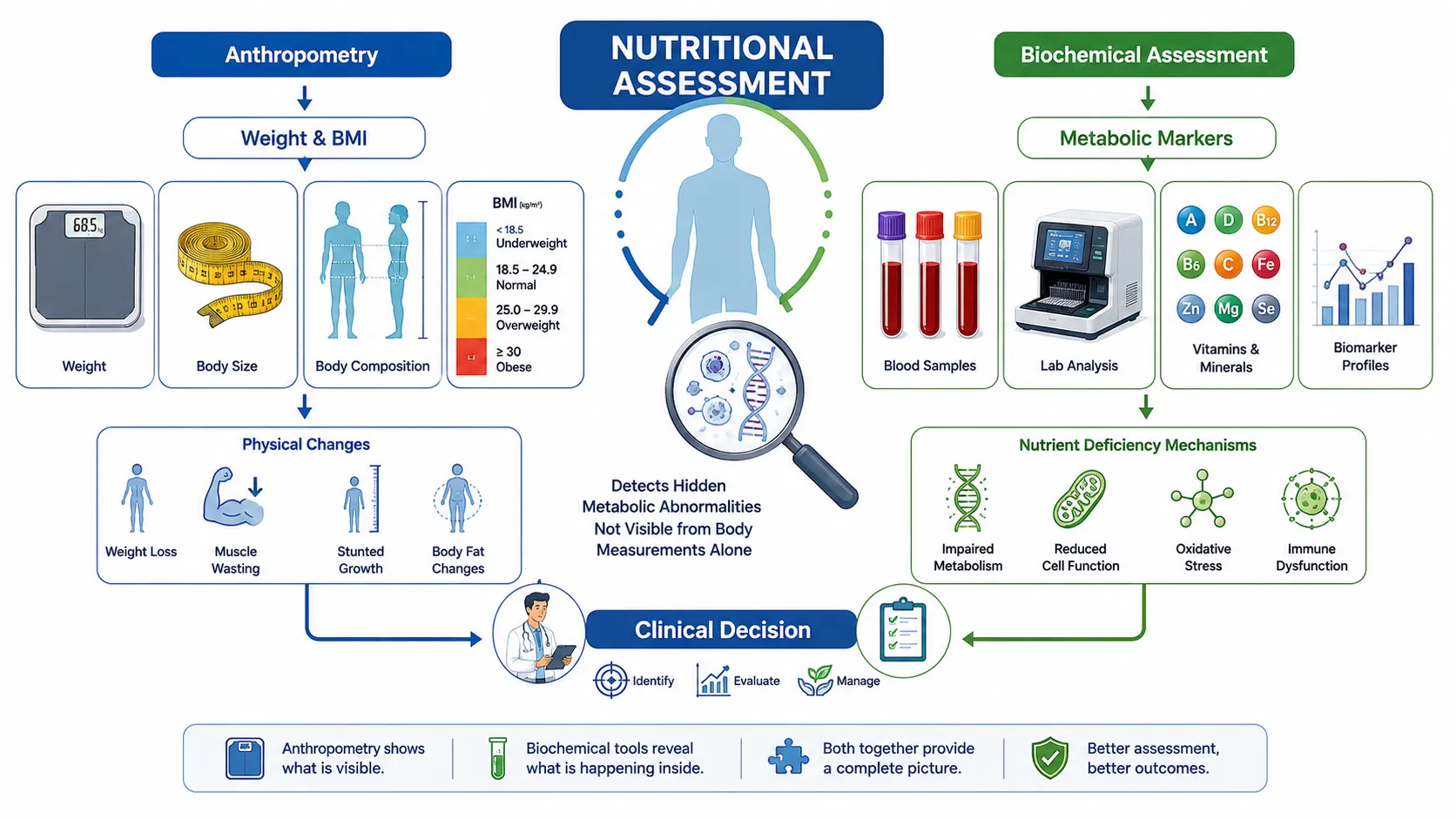
Understanding Nutritional Assessment Methods
Nutritional assessment involves the systematic collection and interpretation of information to evaluate an individual’s nutritional status and identify potential nutritional risks.
A comprehensive assessment may include:
Clinical history.
Dietary assessment.
Anthropometric measurements.
Biochemical investigations.
Physical examination.
Functional assessment.
Each approach provides different information.
The most appropriate tool depends on:
The suspected nutritional problem.
The clinical condition.
The stage of deficiency.
The physiological mechanism being investigated.
The availability and reliability of the test.
Key Definitions and Assessment Concepts
Anthropometric Assessment
Anthropometry involves measuring physical characteristics of the human body.
Common measures include:
Body weight.
Height.
BMI.
Waist circumference.
Mid-upper arm circumference.
Skinfold thickness.
These measures are particularly useful for monitoring:
Growth.
Weight change.
Body size.
Changes in body composition.
However, they do not directly measure the concentration or biological function of individual nutrients.
Biochemical Assessment
Biochemical assessment involves analysing biological samples to evaluate physiological and metabolic processes relevant to nutritional health.
Samples may include:
Blood.
Urine.
Other clinically appropriate biological specimens.
Biochemical tools may help evaluate:
Nutrient concentration.
Nutrient stores.
Transport mechanisms.
Metabolic products.
Enzyme-related activity.
Functional consequences of deficiency.
Complex Nutritional Deficiency
A complex nutritional deficiency is a nutritional problem that cannot be reliably identified using body size or weight alone.
Complexity may arise because:
Several nutrients are involved.
The deficiency is in an early stage.
The individual has inflammation or chronic disease.
Body weight remains stable.
Absorption or metabolism is altered.
Multiple physiological pathways are affected.
Table: Comparison of Anthropometric Measures and Biochemical Assessment Tools
| Assessment Approach | Definition | Primary Information Provided | Key Strength | Major Limitation |
|---|---|---|---|---|
| Body weight | Measurement of total body mass | Overall mass and change over time | Simple and widely available | Does not identify specific nutrient deficiencies |
| BMI | Ratio of weight to height | Broad indicator of body size | Useful for population screening | Does not measure micronutrient status |
| Waist circumference | Measurement of central body size | Distribution of abdominal size | Supports metabolic risk assessment | Does not diagnose nutrient deficiency |
| Mid-upper arm circumference | Measurement of upper arm size | Approximate tissue and nutritional reserve | Useful in selected settings | Influenced by body composition and fluid status |
| Nutrient concentration test | Measurement of a nutrient-related substance | Current circulating availability | Can identify biochemical abnormalities | May not always reflect total body stores |
| Functional biochemical marker | Indicator of a nutrient-dependent process | Physiological effect of nutrient status | Helps assess functional significance | May be influenced by disease |
| Metabolite assessment | Measurement of metabolic products | Pathway activity and metabolic disruption | Supports identification of complex patterns | Requires careful interpretation |
Why Anthropometric Measures May Be Insufficient
Body Size Does Not Equal Nutritional Adequacy
One of the most important principles in nutritional assessment is that body size does not directly indicate whether an individual has adequate levels of all essential nutrients.
An individual may:
Have a normal BMI.
Maintain stable body weight.
Appear physically well.
Consume adequate energy.
Yet the same individual may experience altered nutrient status.
This can occur when there is:
Poor dietary quality.
Reduced nutrient absorption.
Increased physiological demand.
Increased nutrient loss.
Altered nutrient metabolism.
Anthropometric measures cannot directly distinguish between these mechanisms.
Early Nutritional Deficiencies May Not Change Body Measurements
Many nutritional deficiencies develop gradually.
Early biochemical changes may occur before significant alterations in:
Body weight.
BMI.
Arm circumference.
Body composition.
This means anthropometric screening may fail to detect early or subclinical nutritional disturbances.
Biochemical assessment may be more appropriate when the objective is to investigate a suspected physiological abnormality before physical changes become evident.
Stable Weight Can Mask Deficiency
Stable body weight does not necessarily indicate stable nutritional status.
For example, an individual may maintain energy intake sufficient to preserve body weight while consuming inadequate amounts of specific micronutrients.
This distinction is important:
Energy adequacy and micronutrient adequacy are not the same concept.
An individual may therefore have:
Adequate calories.
Inadequate nutrient quality.
Anthropometry primarily reflects changes in body size and tissue mass rather than detailed nutrient availability.
The Logical Basis for Selecting Biochemical Tools
Begin With the Clinical Question
Assessment tools should be selected according to the question that needs to be answered.
For example:
Is there evidence of altered nutrient availability?
Is a nutrient deficiency suspected?
Is there evidence of impaired absorption?
Is a metabolic pathway functioning normally?
Are symptoms consistent with altered nutrient utilisation?
A biochemical tool should be selected because it provides information relevant to the suspected physiological process.
Match the Tool to the Suspected Mechanism
The logical process involves identifying the likely stage at which nutritional disruption may be occurring.
A simplified pathway is:
Dietary intake → Absorption → Transport → Storage → Cellular utilisation → Physiological function
Different assessment tools may provide information about different stages.
For example:
Dietary assessment investigates intake.
Anthropometry examines physical consequences.
Biochemical testing may investigate availability or metabolism.
Functional assessment examines physiological impact.
Avoid Using Tests Without a Clear Rationale
Unnecessary testing may produce findings that are difficult to interpret.
Appropriate selection requires consideration of:
Clinical relevance.
Test validity.
Biological variability.
Potential confounding factors.
The individual’s clinical history.
The best assessment is not necessarily the most technologically advanced test. It is the test that most appropriately answers the clinical question.
Types of Biochemical Assessment Tools
Direct Nutrient-Related Measurements
Some biochemical tests measure the concentration of a nutrient or nutrient-related substance in a biological sample.
These measurements may provide information about:
Current availability.
Recent exposure.
Potential deficiency.
However, direct concentrations must be interpreted carefully because they may be affected by:
Recent intake.
Hydration.
Inflammation.
Redistribution between body compartments.
Storage Indicators
Some biochemical markers provide information about the body’s nutrient reserves.
These may be useful when assessing longer-term nutritional status.
However, storage-related indicators may also be influenced by:
Inflammatory activity.
Organ function.
Disease.
Transport Indicators
Certain nutrients require specialised transport mechanisms.
Biochemical assessment may provide information about:
Transport capacity.
Carrier proteins.
Distribution of nutrients.
Altered transport can produce nutritional consequences even when dietary intake appears adequate.
Functional Biomarkers
Functional biomarkers assess the consequences of altered nutrient status on a biological process.
They may help answer:
Is the nutrient-related pathway functioning effectively?
Is there evidence of physiological impairment?
Does the abnormality have functional significance?
Functional markers can be particularly valuable when direct nutrient measurements provide incomplete information.
Metabolic Markers
Metabolic markers measure substances produced or altered during biochemical processes.
They can provide insight into:
Energy metabolism.
Nutrient utilisation.
Enzyme-dependent reactions.
Metabolic pathway disruption.
A Step-by-Step Process for Selecting Assessment Tools
Step 1: Establish the Clinical Context
Begin by reviewing:
Presenting symptoms.
Medical history.
Dietary pattern.
Medication use.
Gastrointestinal function.
Recent weight changes.
This information helps define the suspected problem.
Step 2: Determine the Type of Nutritional Risk
Consider whether the primary concern involves:
Inadequate intake.
Impaired absorption.
Altered metabolism.
Increased requirements.
Increased losses.
Functional deficiency.
Step 3: Assess the Value of Anthropometry
Ask whether anthropometric information is likely to answer the clinical question.
Anthropometry may be useful when assessing:
Weight loss.
Growth.
Body composition.
Long-term physical deterioration.
It may be less useful when the objective is to identify a specific biochemical deficiency.
Step 4: Select Relevant Biochemical Evidence
Choose biochemical tools based on the suspected physiological pathway.
Consider:
What the test measures.
What stage of metabolism it reflects.
Its sensitivity and specificity.
Potential confounding influences.
Step 5: Interpret Results in Combination
Biochemical assessment should rarely be interpreted alone.
Results should be synthesised with:
Clinical history.
Dietary information.
Physical assessment.
Anthropometric trends.
Other relevant laboratory data.
Step 6: Evaluate Whether Further Investigation Is Required
If findings are unclear, the appropriate response may include:
Repeat measurement.
Assessment of related markers.
Monitoring trends.
Specialist referral where appropriate.
Sensitivity and Specificity in Tool Selection
Understanding Sensitivity
Sensitivity refers to the ability of an assessment method to identify individuals who may have the condition or abnormality being investigated.
A sensitive test may be particularly useful for:
Early detection.
Screening.
Identifying possible abnormalities.
Understanding Specificity
Specificity refers to the ability of a test to correctly distinguish individuals without the condition.
Highly specific information may help:
Confirm a suspected abnormality.
Reduce false interpretation.
Improve diagnostic confidence.
Importance in Nutritional Assessment
No assessment tool is perfect.
The professional should consider:
What the test can detect.
What it cannot detect.
What factors may influence the result.
This is more important than simply choosing the most commonly available test.
Reliability and Validity
Reliability
Reliability refers to the consistency of a measurement.
A reliable assessment should provide reasonably consistent results under comparable conditions.
Factors influencing reliability include:
Sample collection.
Laboratory procedures.
Timing.
Biological variation.
Validity
Validity refers to whether an assessment tool actually measures what it claims to measure.
For example, a body weight measurement may be highly reliable but not valid for diagnosing a specific micronutrient deficiency.
This distinction is essential.
A measurement can be reliable without being appropriate for the clinical question.
Complex Clinical Conditions
Chronic Disease
Chronic conditions can alter:
Metabolism.
Nutrient requirements.
Nutrient distribution.
Biochemical marker interpretation.
In these situations, anthropometric measures may provide useful information about physical status but may not identify the underlying metabolic mechanism.
Inflammation
Inflammation may influence:
Protein metabolism.
Nutrient distribution.
Circulating biomarkers.
A biochemical result must therefore be interpreted within the inflammatory context.
Gastrointestinal Dysfunction
An individual may consume sufficient nutrients but experience:
Impaired digestion.
Reduced absorption.
Increased nutrient losses.
Anthropometric measures may remain relatively unchanged during early stages.
Biochemical assessment may help identify physiological consequences requiring further investigation.
Older and Complex Clinical Populations
Some individuals may have:
Stable body weight.
Multiple medical conditions.
Altered body composition.
Reduced physiological reserve.
In such cases, relying on BMI alone may be particularly misleading.
Practical Example: Normal BMI With Suspected Micronutrient Deficiency
Clinical Presentation
An individual presents with:
Persistent fatigue.
Reduced concentration.
A restricted dietary pattern.
Anthropometric assessment shows:
Stable weight.
BMI within an expected range.
Why Anthropometry Is Insufficient
The measurements indicate that there is no obvious major change in body size.
However, they do not answer:
Whether micronutrient intake is adequate.
Whether nutrients are being absorbed.
Whether nutrient-dependent pathways are functioning normally.
Logical Assessment Approach
A professional may consider:
Detailed dietary analysis.
Relevant biochemical investigation.
Functional indicators where appropriate.
Clinical history.
The biochemical approach is justified because the clinical question concerns a possible specific nutritional disturbance rather than body size.
Practical Example: Weight Loss With Complex Biochemical Findings
Clinical Presentation
An individual experiences:
Unintentional weight loss.
Reduced appetite.
Ongoing illness.
Anthropometry identifies physical change.
Why Biochemical Assessment Is Still Important
Weight loss alone cannot determine whether the cause involves:
Reduced energy intake.
Increased metabolic demand.
Inflammation.
Altered nutrient metabolism.
Biochemical evidence may help explain the physiological context.
The most appropriate assessment therefore combines anthropometry and biochemistry rather than treating them as competing methods.
Practical Example: Suspected Malabsorption
Clinical History
An individual reports:
Persistent gastrointestinal symptoms.
Changes in bowel function.
Dietary intake that appears adequate.
Anthropometric Limitation
Body measurements may not identify whether nutrients are reaching systemic circulation effectively.
Biochemical Justification
Biochemical investigations may provide evidence relevant to:
Nutrient availability.
Metabolic consequences.
Related physiological abnormalities.
The selection is justified because the suspected problem involves nutrient processing rather than body size alone.
Benefits of Biochemical Assessment in Complex Cases
Earlier Detection
Biochemical changes may sometimes occur before major physical changes are measurable.
Potential benefits include:
Earlier recognition of nutritional risk.
More targeted investigation.
Improved monitoring.
Greater Physiological Specificity
Appropriate biochemical tools can provide information about:
Specific nutrients.
Metabolic pathways.
Functional consequences.
Improved Differential Assessment
Biochemical data can help distinguish between possible explanations.
For example:
Inadequate intake.
Altered absorption.
Increased requirements.
Metabolic disruption.
Monitoring Response
Repeated biochemical assessment, where clinically appropriate, may help monitor physiological change over time.
Limitations of Biochemical Assessment
A Biochemical Result Is Not Automatically a Diagnosis
An abnormal laboratory result should not automatically be interpreted as proof of a nutritional deficiency.
Potential influences include:
Acute illness.
Inflammation.
Hydration.
Medication.
Organ function.
Reference Ranges Have Limitations
Reference ranges describe expected distributions within defined populations.
They do not always represent:
Optimal nutritional status.
Individual physiological needs.
Functional health.
Timing Can Affect Results
Results may vary according to:
Recent food intake.
Time of day.
Physical activity.
Acute physiological stress.
Laboratory Variation
Differences in:
Methods.
Equipment.
Sample handling.
may influence measurements.
These limitations reinforce the importance of professional interpretation.
Integrating Anthropometry and Biochemistry
Complementary Rather Than Competitive Approaches
The strongest nutritional assessment often uses multiple methods.
Anthropometry may answer:
Has body size changed?
Is there evidence of tissue loss?
Has growth been affected?
Biochemistry may answer:
Is nutrient metabolism altered?
Is a specific physiological pathway affected?
Is there evidence of nutrient-related dysfunction?
Together, these methods can provide a more complete picture.
The Multi-Method Assessment Model
A comprehensive assessment may follow:
Clinical History + Dietary Assessment + Anthropometry + Biochemical Assessment + Functional Evaluation
Each component addresses a different aspect of nutritional health.
A Decision-Making Framework for Learners
Question 1: What Is the Main Clinical Concern?
Identify whether the concern relates primarily to:
Body composition.
Specific nutrient status.
Metabolic dysfunction.
Clinical symptoms.
Question 2: Can Anthropometry Answer the Question?
If the concern is a specific biochemical deficiency, body measurements alone are unlikely to provide a definitive answer.
Question 3: What Physiological Pathway Is Suspected?
Identify whether the potential disruption relates to:
Intake.
Absorption.
Transport.
Storage.
Utilisation.
Question 4: Which Biochemical Tool Provides Relevant Evidence?
Select the assessment based on:
Physiological relevance.
Validity.
Reliability.
Clinical context.
Question 5: What Are the Limitations?
Consider:
Confounding variables.
Disease effects.
Inflammation.
Biological variation.
Question 6: How Will Findings Be Integrated?
Never interpret the result independently of the wider clinical assessment.
Common Errors in Assessment Selection
Relying Only on BMI
BMI does not directly assess:
Micronutrient status.
Metabolic function.
Nutrient absorption.
Selecting Tests Without a Clinical Question
Testing without a clear rationale can produce:
Difficult-to-interpret findings.
Incidental abnormalities.
Unnecessary uncertainty.
Treating All Abnormal Results as Nutritional Deficiencies
Abnormal biochemical findings may result from:
Disease.
Medication.
Inflammation.
Organ dysfunction.
Ignoring Trends
A single measurement may be less informative than a pattern over time.
Overlooking Clinical Symptoms
Laboratory data should always be interpreted alongside the individual’s clinical presentation.
Professional and Ethical Considerations
Appropriate Scope of Practice
Professionals should interpret biochemical information within their:
Professional role.
Training.
Competence.
Organisational procedures.
Where findings require medical diagnosis or specialist interpretation, appropriate referral should be made.
Communication of Findings
Results should be communicated:
Clearly.
Accurately.
Without unnecessary alarm.
With appropriate recognition of uncertainty.
Avoiding Overdiagnosis
A responsible professional should avoid:
Making unsupported claims.
Diagnosing from one isolated value.
Promising outcomes based on incomplete evidence.
Key Benefits of Logical Tool Selection
The appropriate selection of biochemical assessment tools can:
Improve the accuracy of nutritional assessment.
Support earlier identification of possible abnormalities.
Provide greater physiological detail.
Help identify complex metabolic patterns.
Support targeted clinical investigation.
At the same time, anthropometric assessment remains valuable for monitoring physical changes and should not be unnecessarily excluded.
Summary of Key Principles
The logical selection of biochemical assessment tools over standard anthropometric measures depends on the clinical question and suspected physiological mechanism.
Key principles include:
Body size does not directly indicate micronutrient status.
Stable weight can coexist with nutritional deficiency.
Early metabolic changes may precede anthropometric changes.
Biochemical tools can provide greater physiological specificity.
Test selection must be based on a clear clinical rationale.
Reliability and validity must be considered.
Results must be interpreted within the clinical context.
Anthropometric and biochemical assessments are complementary.
Conclusion
Complex nutritional deficiencies cannot always be identified through standard anthropometric measures alone. Body weight, BMI, waist circumference and other physical measurements provide important information about body size, growth and physical change, but they do not directly measure nutrient availability, metabolic activity or functional biochemical processes.
Biochemical assessment tools may therefore be logically selected when the clinical objective is to investigate a suspected specific nutrient deficiency, altered nutrient metabolism, impaired absorption or functional physiological disruption. The choice of tool should always be guided by the clinical question, the suspected metabolic pathway and the known strengths and limitations of the available assessment method.
The most effective professional approach is not to consider biochemical assessment and anthropometry as competing techniques. Instead, they should be viewed as complementary components of comprehensive nutritional assessment. Anthropometric measures describe important physical consequences, while biochemical data can provide insight into underlying physiological and metabolic processes.
By developing the ability to justify assessment selection, critically evaluate test reliability and validity, recognise confounding factors and integrate findings with clinical history, Learners can make more accurate and evidence-based judgements regarding complex nutritional deficiencies. This approach supports professional decision-making while recognising the limits of individual assessment tools and the importance of appropriate clinical referral where necessary.
::: avoid interpreting any single biochemical result in isolation. Metabolic disruption is often multifactorial, particularly in complex clinical populations. By applying critical thinking, systems-based reasoning and evidence integration, Learners can develop more accurate and professionally responsible assessments of nutritional health.
6.Formulate a Systematic Clinical Approach That Integrates Core Biochemical Principles to Accurately Evaluate the Nutritional Status of High-Risk Patient Groups
Introduction
Evaluating nutritional status in high-risk patient groups requires a systematic, evidence-informed and clinically appropriate approach. Nutritional problems in complex clinical populations are rarely explained by dietary intake alone. Acute illness, chronic disease, inflammation, altered organ function, impaired digestion, reduced absorption, medication use and increased metabolic demands can all influence the body’s nutritional status and the interpretation of biochemical findings.
A systematic clinical approach integrates information from several sources rather than relying on one measurement or laboratory result. Core biochemical principles provide an essential scientific foundation for understanding how nutrients are absorbed, transported, metabolised, stored and utilised. These principles help professionals interpret biochemical changes within the wider context of the individual’s clinical condition.
High-risk groups may develop nutritional deterioration rapidly, while conventional measures such as body weight or BMI may not immediately reveal the underlying problem. For example, fluid imbalance may mask weight loss, inflammation may alter biochemical markers, and disease may change nutrient requirements. Therefore, accurate assessment requires a structured process that considers both physical and biochemical evidence.
This section explains how to formulate a systematic clinical approach for evaluating nutritional status in high-risk groups. It examines relevant biochemical principles, assessment processes, key risk factors, interpretation strategies, practical scenarios, benefits and professional considerations. The focus is on developing strong clinical reasoning and evidence-based assessment rather than relying on isolated measurements.
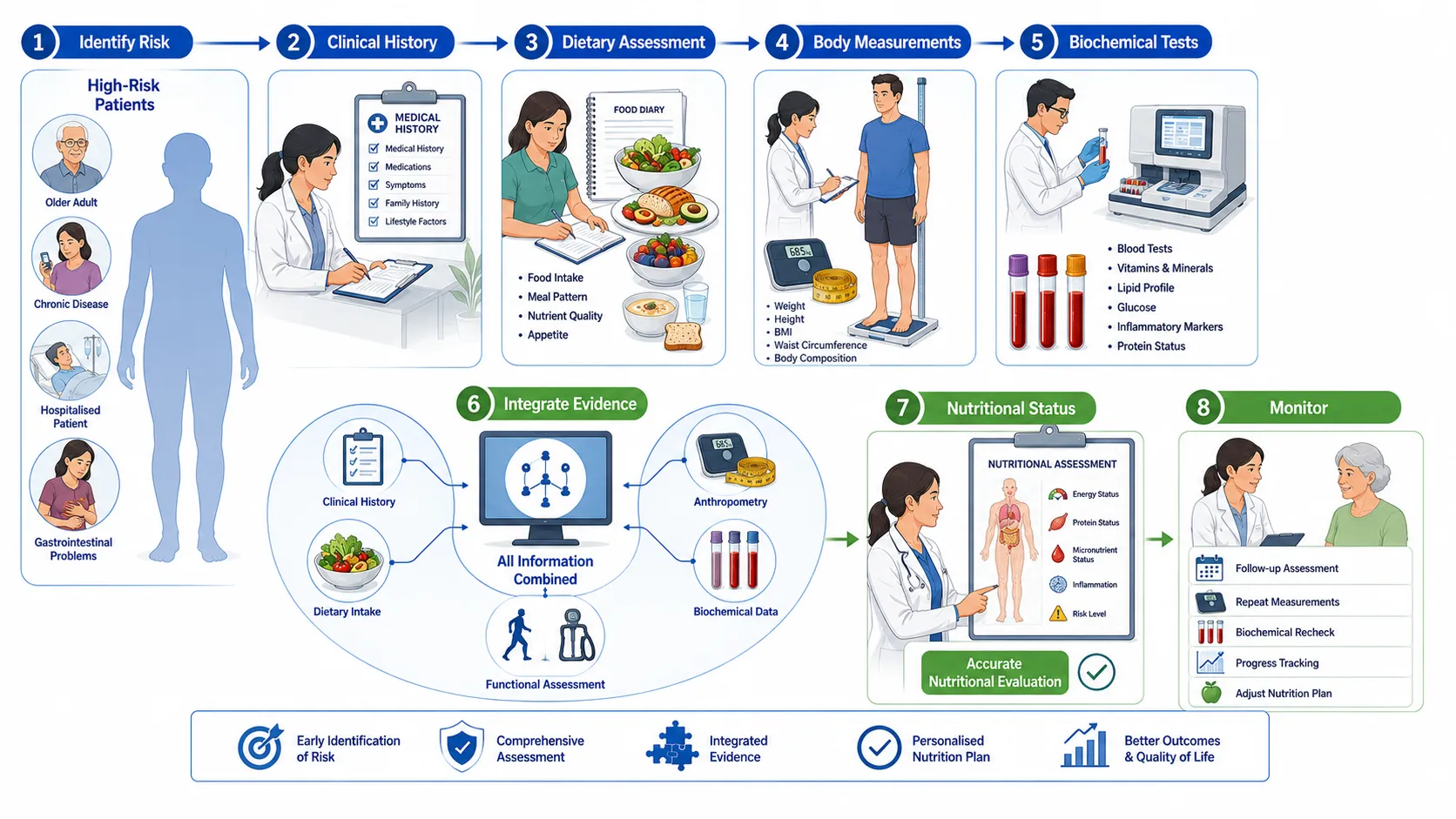
Understanding High-Risk Patient Groups
A high-risk patient group is a population with an increased likelihood of developing nutritional problems because of physiological, clinical or environmental factors.
High nutritional risk may be associated with:
Acute illness.
Chronic disease.
Reduced food intake.
Increased metabolic demand.
Digestive dysfunction.
Malabsorption.
Increased nutrient losses.
Altered organ function.
Advanced age.
Complex medical treatment.
The degree of nutritional risk can change rapidly. Therefore, assessment should not always be treated as a one-time activity.
Key Definitions and Core Concepts
Nutritional Status
Nutritional status refers to the relationship between nutrient availability and the body’s physiological requirements.
It reflects:
Nutrient intake.
Nutrient absorption.
Nutrient metabolism.
Nutrient stores.
Functional utilisation.
Biochemical Assessment
Biochemical assessment involves analysing biological measurements that provide information about metabolic and physiological processes relevant to nutritional health.
Biochemical information may help assess:
Nutrient availability.
Metabolic activity.
Organ function.
Inflammatory processes.
Fluid and electrolyte balance.
High Nutritional Risk
High nutritional risk describes an increased probability that an individual may experience nutritional deterioration or metabolic complications.
Risk may arise from one or more interacting factors.
Metabolic Stress
Metabolic stress refers to physiological changes that increase or alter the body’s energy and nutrient requirements.
It may be associated with:
Acute disease.
Tissue injury.
Infection.
Inflammatory processes.
Table: Core Components of a Systematic Nutritional Assessment Approach
| Assessment Component | Definition | Key Information | Biochemical Relevance |
|---|---|---|---|
| Clinical screening | Initial identification of nutritional risk | Symptoms, disease burden and risk factors | Identifies need for targeted assessment |
| Clinical history | Structured collection of health information | Disease, symptoms and medication use | Explains potential metabolic disturbances |
| Dietary assessment | Evaluation of food and nutrient intake | Energy and nutrient exposure | Helps identify inadequate intake patterns |
| Anthropometry | Measurement of body characteristics | Weight, body size and physical change | Identifies physical consequences over time |
| Biochemical assessment | Measurement of biological substances | Metabolic and physiological status | Supports investigation of underlying mechanisms |
| Functional assessment | Evaluation of physical capability | Strength and functional impact | Identifies consequences of nutritional decline |
| Ongoing monitoring | Repeated assessment over time | Response and changing risk | Identifies metabolic or nutritional trends |
Core Biochemical Principles in Nutritional Assessment
Nutrient Intake Is Only the First Stage
Dietary intake does not guarantee nutritional utilisation.
For a nutrient to contribute effectively to physiological function, it generally must pass through several stages:
Intake → Digestion → Absorption → Transport → Storage → Cellular uptake → Metabolism → Physiological function
A disruption at any point can affect nutritional health.
For example, an individual may have:
Adequate dietary intake.
Impaired nutrient absorption.
Altered transport.
Reduced cellular utilisation.
Therefore, assessment should investigate the entire nutritional pathway where clinically relevant.
Homeostasis
Homeostasis refers to the body’s ability to maintain a relatively stable internal environment despite external and internal changes.
Nutritional assessment must recognise that the body may temporarily compensate for reduced nutrient intake.
Compensatory mechanisms may:
Mobilise nutrient stores.
Alter metabolic pathways.
Reduce energy expenditure.
Change hormone activity.
As a result, early nutritional deterioration may not always be immediately visible through physical appearance.
Dynamic Rather Than Static Metabolism
Metabolism changes in response to:
Food intake.
Illness.
Physical activity.
Hormonal changes.
Inflammation.
A biochemical value should therefore be interpreted as part of a dynamic physiological process.
Important questions include:
When was the sample collected?
Was the individual acutely unwell?
Has food intake recently changed?
Is the result part of a trend?
Step 1: Identify High-Risk Individuals
Initial Risk Recognition
The first stage is to identify individuals who may require detailed nutritional assessment.
Potential warning signs include:
Unintentional weight change.
Reduced appetite.
Difficulty eating.
Persistent gastrointestinal symptoms.
Chronic illness.
Increased physiological stress.
Functional decline.
Key Risk Factors
Risk factors may include:
Prolonged reduced dietary intake.
Recurrent vomiting or diarrhoea.
Swallowing difficulties.
Digestive disorders.
Chronic inflammation.
Organ dysfunction.
Complex medication regimens.
Early recognition allows assessment before severe deterioration develops.
Step 2: Conduct a Comprehensive Clinical History
Importance of Clinical Context
Clinical history provides the context required to interpret biochemical findings correctly.
A detailed history may include:
Current symptoms.
Duration of illness.
Medical diagnoses.
Surgical history.
Medication use.
Dietary restrictions.
Gastrointestinal function.
Recent changes in appetite.
Questions That Support Clinical Reasoning
Professionals may consider:
Has food intake changed?
Are there symptoms affecting digestion?
Has body weight changed?
Are there signs of increased nutrient losses?
Is there an underlying condition affecting metabolism?
The purpose is to identify possible mechanisms before interpreting laboratory data.
Step 3: Assess Dietary Intake and Nutrient Exposure
Evaluating Dietary Patterns
Dietary assessment may examine:
Energy intake.
Protein intake.
Food variety.
Meal patterns.
Fluid intake.
Supplement use.
Limitations of Dietary Information
Reported intake may not accurately represent:
Nutrient absorption.
Nutrient stores.
Cellular utilisation.
Therefore, dietary assessment should be interpreted alongside biochemical and clinical evidence.
Important Principle
Adequate intake does not always mean adequate nutritional status.
Step 4: Perform Appropriate Anthropometric Assessment
Role of Anthropometry
Anthropometric measures can provide important evidence of physical change.
Common measurements may include:
Body weight.
Height.
BMI.
Weight trends.
Circumference measurements.
Importance of Trends
A change over time may be more informative than one isolated measurement.
For example:
Stable weight may conceal changes in body composition.
Fluid retention may mask tissue loss.
A normal BMI may coexist with nutrient deficiency.
Anthropometric assessment should therefore support, rather than replace, biochemical evaluation.
Step 5: Select Appropriate Biochemical Assessment Tools
Selection Based on Clinical Need
Biochemical assessment should address a defined clinical question.
Possible questions include:
Is there evidence of altered nutrient metabolism?
Is absorption likely to be impaired?
Is inflammation influencing nutritional markers?
Is organ function affecting metabolism?
Factors to Consider
The selection of biochemical tools should consider:
Clinical relevance.
Reliability.
Validity.
Biological variation.
Potential confounding factors.
Avoiding Unnecessary Testing
More testing does not always produce better assessment.
A systematic approach should:
Define the suspected problem.
Select relevant markers.
Interpret findings as patterns.
Step 6: Assess Inflammation and Metabolic Stress
Why Inflammation Matters
Inflammation can alter normal nutrient metabolism and affect the interpretation of biochemical markers.
Possible metabolic effects include:
Increased energy expenditure.
Altered protein turnover.
Changes in nutrient distribution.
Increased tissue breakdown.
Clinical Implications
A biochemical abnormality may reflect:
Nutritional deterioration.
Inflammation.
Disease-related metabolic change.
A combination of these factors.
Assessment should therefore avoid assuming that every abnormal marker directly indicates dietary deficiency.
Step 7: Consider Organ Function
The Liver
The liver plays an important role in:
Nutrient metabolism.
Energy regulation.
Protein synthesis.
Nutrient storage.
Altered hepatic function may influence nutritional metabolism and laboratory findings.
The Kidneys
The kidneys contribute to:
Electrolyte regulation.
Fluid balance.
Metabolite excretion.
Kidney-related dysfunction may alter nutrient handling and biochemical interpretation.
The Gastrointestinal System
The gastrointestinal system is responsible for:
Digestion.
Absorption.
Initial nutrient processing.
Persistent gastrointestinal symptoms may indicate that dietary intake alone does not reflect actual nutrient availability.
Step 8: Evaluate Functional Consequences
Why Function Matters
Nutritional status should not be assessed solely through laboratory values.
Functional assessment can provide information about the physiological consequences of nutritional decline.
Areas may include:
Muscle strength.
Mobility.
Daily activities.
Fatigue.
Integration With Other Evidence
Functional decline may strengthen concerns when combined with:
Reduced dietary intake.
Weight change.
Biochemical abnormalities.
Step 9: Synthesise All Assessment Findings
The Evidence Integration Process
A systematic assessment brings together:
Clinical History + Dietary Assessment + Anthropometry + Biochemical Data + Functional Assessment
The aim is to identify whether the information forms a coherent physiological pattern.
Questions for Data Synthesis
Consider:
Do the symptoms support the biochemical findings?
Does the dietary history explain the potential deficiency?
Are there signs of altered absorption?
Could inflammation explain the changes?
Is organ function influencing the results?
This approach prevents isolated interpretation.
Step 10: Develop a Clinical Assessment Hypothesis
Formulating Possible Explanations
After reviewing all evidence, possible explanations may include:
Reduced nutrient intake.
Impaired absorption.
Increased metabolic demand.
Increased nutrient losses.
Altered nutrient metabolism.
Testing Alternative Explanations
Strong clinical reasoning requires consideration of alternatives.
For example:
Could medication explain the finding?
Could hydration influence the measurement?
Is acute illness affecting metabolism?
A professional should avoid reaching a conclusion before considering competing explanations.
High-Risk Group: Older Adults
Nutritional Challenges
Older adults may experience:
Reduced appetite.
Changes in body composition.
Multiple medical conditions.
Medication-related effects.
Assessment Considerations
A systematic assessment should include:
Dietary changes.
Weight trends.
Functional status.
Relevant biochemical evidence.
Why a Multi-Method Approach Is Important
BMI alone may not accurately describe changes in muscle mass or micronutrient status.
High-Risk Group: Individuals With Chronic Disease
Metabolic Complexity
Chronic disease may affect:
Energy requirements.
Nutrient metabolism.
Organ function.
Inflammatory activity.
Assessment Priorities
Consider:
Disease progression.
Dietary intake.
Medication.
Functional status.
Relevant biochemical patterns.
The objective is to distinguish nutritional problems from disease-related metabolic changes.
High-Risk Group: Individuals With Gastrointestinal Problems
Potential Mechanisms
Nutritional risk may arise through:
Reduced food intake.
Impaired digestion.
Reduced absorption.
Increased nutrient losses.
Assessment Approach
The assessment should include:
Detailed symptom history.
Dietary review.
Weight trends.
Relevant biochemical information.
Normal body weight should not automatically exclude nutritional risk.
High-Risk Group: Acutely Unwell Individuals
Metabolic Stress
Acute illness can rapidly alter:
Energy requirements.
Protein metabolism.
Fluid balance.
Assessment Challenges
Laboratory results may be influenced by:
Inflammation.
Fluid shifts.
Organ dysfunction.
Repeated assessment and trend analysis may therefore be more informative than one isolated measurement.
Practical Scenario 1: Hidden Nutritional Risk
Clinical Presentation
An older individual reports:
Reduced appetite.
Increased fatigue.
Difficulty preparing meals.
Body weight has changed only slightly.
Systematic Assessment
A structured approach should include:
Clinical history.
Dietary review.
Functional assessment.
Relevant biochemical investigation.
Key Lesson
Minor changes in weight do not exclude clinically important nutritional risk.
Practical Scenario 2: Adequate Intake but Poor Nutritional Status
Clinical Presentation
An individual reports:
Regular meals.
Adequate appetite.
Persistent gastrointestinal symptoms.
Biochemical findings suggest altered nutrient availability.
Clinical Reasoning
Possible explanations include:
Impaired absorption.
Increased nutrient losses.
Altered metabolism.
Dietary intake alone cannot explain the complete physiological picture.
Practical Scenario 3: Acute Illness
Clinical Presentation
A hospitalised individual experiences:
Reduced intake.
Increased metabolic stress.
Rapid functional decline.
Assessment Priorities
The assessment should consider:
Recent dietary intake.
Weight history.
Inflammatory status.
Biochemical trends.
Functional capacity.
The goal is to recognise rapidly changing nutritional needs.
Benefits of a Systematic Clinical Approach
Earlier Identification
Structured assessment can help identify:
Emerging nutritional risk.
Early metabolic abnormalities.
Potential deterioration.
Improved Clinical Accuracy
Combining multiple information sources reduces the risk of relying on:
BMI alone.
One laboratory value.
Dietary information alone.
Individualised Assessment
Each high-risk individual may have different:
Physiological needs.
Disease-related factors.
Metabolic responses.
A systematic approach supports individualised evaluation.
Better Monitoring
Repeated assessment can identify:
Improvement.
Deterioration.
New metabolic complications.
Common Errors to Avoid
Using One Assessment Method Only
No single measurement can fully describe nutritional health.
Avoid relying solely on:
Body weight.
BMI.
One biochemical result.
Ignoring the Effects of Illness
Acute and chronic illness may substantially affect metabolic findings.
Assuming Abnormal Results Prove Nutritional Deficiency
Alternative explanations may include:
Inflammation.
Organ dysfunction.
Medication.
Hydration changes.
Ignoring Trends Over Time
Repeated measurements may provide stronger evidence than a single isolated result.
Failing to Consider Scope of Practice
Professionals should:
Work within their competence.
Follow organisational procedures.
Refer complex findings appropriately.
Developing a Practical Assessment Algorithm
Stage A: Screen
Identify:
High-risk characteristics.
Warning signs.
Immediate concerns.
Stage B: Assess
Collect:
Clinical history.
Dietary information.
Anthropometric data.
Functional findings.
Stage C: Investigate
Select relevant biochemical tools based on the suspected physiological mechanism.
Stage D: Interpret
Evaluate:
Patterns.
Trends.
Confounding factors.
Stage E: Integrate
Combine all evidence to develop a coherent understanding.
Stage F: Act
Depending on the findings:
Monitor progress.
Adjust assessment plans.
Seek specialist input.
Follow appropriate clinical pathways.
Professional Communication
Communicating Findings Clearly
Findings should distinguish between:
Observed evidence.
Probable interpretations.
Uncertainty.
Recommended next steps.
Example Structure
Professional communication may include:
Identified nutritional risk.
Relevant clinical factors.
Significant assessment findings.
Possible metabolic explanations.
Limitations of available evidence.
This supports clear multidisciplinary decision-making.
Ethical and Professional Considerations
Respect for Individual Differences
Assessment must recognise differences in:
Age.
Physiological status.
Disease burden.
Dietary patterns.
Evidence-Based Practice
Clinical decisions should be based on:
Appropriate assessment.
Scientific principles.
Professional guidelines.
Scope of practice.
Avoiding Overinterpretation
Professionals should avoid presenting uncertain findings as confirmed diagnoses.
Complex cases may require:
Further investigation.
Specialist assessment.
Ongoing monitoring.
Key Principles for Learners
A systematic biochemical approach to nutritional assessment should:
Start with clinical risk identification.
Use detailed clinical history.
Assess dietary intake and trends.
Include appropriate anthropometry.
Select biochemical tools logically.
Consider inflammation and organ function.
Evaluate functional consequences.
Integrate findings rather than interpreting them separately.
Recognise uncertainty.
Support appropriate referral.
Conclusion
Formulating a systematic clinical approach for evaluating nutritional status in high-risk patient groups requires the integration of core biochemical principles with detailed clinical assessment. Nutritional health is influenced not only by what an individual eats but also by digestion, absorption, nutrient transport, metabolism, storage and cellular utilisation.
High-risk groups may experience rapid or hidden nutritional deterioration that cannot be identified through body weight or BMI alone. Acute illness, chronic disease, inflammation, gastrointestinal dysfunction and altered organ function can all influence both nutritional status and the interpretation of biochemical results.
A robust approach therefore combines clinical history, dietary assessment, anthropometry, biochemical evidence and functional evaluation. The assessment process should begin with risk recognition and progress through systematic data collection, targeted investigation, critical interpretation and evidence integration.
The central principle is that no single assessment method provides a complete picture of nutritional status. Biochemical results must be interpreted in the context of the individual’s symptoms, medical condition, dietary exposure and physiological circumstances. Similarly, anthropometric measurements provide valuable information about physical change but may not identify underlying metabolic disruption.
By applying structured clinical reasoning, recognising confounding factors and evaluating patterns over time, Learners can develop a more accurate and evidence-based approach to nutritional assessment. This supports earlier recognition of nutritional risk, more appropriate clinical decision-making and better communication with multidisciplinary healthcare teams while maintaining appropriate professional boundaries and recognising when specialist referral is required.