
Lesson no 4 : Apply knowledge to clinical and research contexts.
This lesson, Apply Knowledge to Clinical and Research Contexts, enables Learners to connect theoretical knowledge of nutrition, biochemistry, metabolism and human physiology with practical applications in clinical practice and scientific research. Understanding biochemical and nutritional principles is essential, but the ability to interpret evidence, analyse data and apply knowledge appropriately is equally important when addressing complex health-related questions and professional challenges.
Learners will explore how scientific knowledge can be used to interpret clinical information, evaluate nutritional and metabolic indicators, identify potential physiological abnormalities and support evidence-informed decision-making. The lesson develops an understanding of how laboratory findings, clinical observations, dietary information and research evidence can be considered together to form a comprehensive picture of an individual’s nutritional and metabolic status.
A central focus of the lesson is the application of critical thinking to real-world clinical and research contexts. Learners will examine how biochemical mechanisms and metabolic pathways may explain observed health outcomes and how relevant evidence can be used to assess possible interventions. This includes recognising the importance of individual variation, research quality, ethical considerations and the limitations of available data.
The lesson also introduces key principles of research interpretation, including the evaluation of scientific evidence, identification of patterns in complex data and appropriate communication of findings. Learners will consider how research contributes to the development of nutritional knowledge and how clinical evidence can inform professional practice. Particular attention is given to the need to distinguish between reliable conclusions and assumptions that cannot be adequately supported by the available evidence.
Through clinical scenarios, research-based examples and analytical activities, Learners will develop the ability to apply scientific knowledge systematically and responsibly. They will strengthen their capacity to connect biochemical theory with observable physiological outcomes, evaluate evidence-based interventions and communicate scientifically reasoned conclusions.
By the end of this lesson, Learners will have developed a stronger foundation for applying nutritional and biochemical knowledge within clinical, research and professional contexts. These skills are valuable for further study and for roles that require evidence-based analysis, critical evaluation, research literacy and informed decision-making in nutrition, health and related scientific disciplines.
1.Critically Apply an Advanced Understanding of Nutrient Metabolism to Formulate Targeted, Evidence-Based Dietary Interventions for Complex Clinical Case Studies
The application of nutrient metabolism to complex clinical case studies requires more than identifying whether a person consumes too much or too little of a particular nutrient. It involves a systematic analysis of how carbohydrates, lipids, proteins, vitamins, minerals and other dietary components are digested, absorbed, transported, metabolised, stored and utilised by the body. Advanced nutritional decision-making therefore requires the integration of biochemical knowledge, physiological understanding, clinical information and high-quality scientific evidence.
A targeted dietary intervention should address the underlying metabolic mechanisms associated with the individual’s clinical presentation. This requires careful consideration of dietary intake, biochemical indicators, hormonal regulation, organ function, body composition, lifestyle factors and the interaction between different nutrients. The purpose is not simply to prescribe a generic diet, but to develop an evidence-informed strategy that is appropriate to the identified nutritional and metabolic problem.
Complex clinical cases may involve several interacting factors. For example, an individual may present with altered glucose regulation, excess adipose tissue, abnormal lipid markers and reduced physical activity. Another individual may experience impaired nutrient absorption due to gastrointestinal dysfunction, resulting in multiple micronutrient deficiencies. In such cases, the dietary intervention must be based on an understanding of the relevant metabolic pathways and should be monitored and adjusted according to the individual’s response.

Key Definitions and Concepts
| Term | Definition | Relevance to Clinical Dietary Intervention |
|---|---|---|
| Nutrient metabolism | The biochemical processes through which nutrients are converted, utilised, stored or eliminated | Helps identify how dietary changes may influence energy production and physiological function |
| Evidence-based intervention | A strategy developed using relevant research evidence, professional knowledge and individual assessment | Supports scientifically justified dietary decision-making |
| Metabolic regulation | The control of biochemical pathways that maintain energy and nutrient balance | Explains how dietary interventions influence glucose, lipid and protein metabolism |
| Clinical assessment | The systematic evaluation of health information, symptoms, dietary intake and relevant measurements | Provides the foundation for identifying nutritional priorities |
| Biomarker | A measurable biological indicator associated with a physiological or metabolic process | Helps assess metabolic status and monitor intervention outcomes |
| Individualisation | The adaptation of an intervention to a person’s specific needs and circumstances | Recognises differences in metabolism, lifestyle and clinical presentation |
| Nutritional intervention | A planned modification of dietary intake intended to improve a defined health or metabolic outcome | Translates biochemical knowledge into practical action |
| Monitoring and evaluation | The repeated assessment of outcomes following an intervention | Determines whether the strategy is effective and requires adjustment |
Understanding the Relationship Between Nutrient Metabolism and Clinical Intervention
The Importance of Metabolic Pathways
Nutrient metabolism consists of interconnected biochemical pathways rather than isolated processes. Carbohydrate metabolism influences insulin secretion and glucose availability, while lipid metabolism contributes to energy storage, membrane structure and hormonal processes. Protein metabolism provides amino acids for tissue maintenance, enzyme production and other essential physiological functions.
These pathways constantly interact. A change in the intake of one macronutrient may influence the metabolism of another. For example, a substantial reduction in carbohydrate availability can alter the use of fatty acids and increase the contribution of alternative energy pathways. Similarly, prolonged inadequate energy intake may influence protein metabolism and contribute to the mobilisation of amino acids from body tissues.
An advanced clinical approach therefore considers:
The primary nutrient-related problem.
The metabolic pathways most closely associated with the condition.
The interaction between carbohydrates, lipids and proteins.
Relevant hormonal responses.
The individual’s capacity to digest and absorb nutrients.
The role of micronutrients in enzymatic reactions.
The effects of organ function on nutrient processing.
The likely short-term and long-term consequences of dietary modification.
From Biochemical Knowledge to Clinical Reasoning
Clinical reasoning involves moving systematically from available information to a justified intervention. A biochemical result should not normally be interpreted in isolation. Its significance depends on the individual’s symptoms, dietary pattern, physiological state and other clinical information.
For example, an altered blood glucose measurement may require consideration of:
Recent dietary intake.
Timing of the measurement.
Insulin-related responses.
Physical activity patterns.
Body composition.
Long-term dietary habits.
Other relevant biochemical indicators.
Medication and clinical management where applicable.
The objective is to identify meaningful patterns rather than rely on a single measurement.
A Systematic Process for Formulating Targeted Dietary Interventions
Step One: Define the Clinical and Nutritional Problem
The first stage is to establish a clear understanding of the presenting issue. Complex clinical cases may include multiple symptoms and biochemical abnormalities, so priorities must be identified carefully.
The assessment should consider whether the primary concern involves:
Impaired glucose regulation.
Altered lipid metabolism.
Inadequate energy intake.
Excessive energy intake.
Protein-energy imbalance.
Micronutrient deficiency.
Impaired nutrient absorption.
Gastrointestinal dysfunction.
Altered hormonal regulation.
Increased metabolic demands.
A precise problem statement helps ensure that the intervention addresses the most relevant metabolic mechanisms.
Step Two: Gather and Integrate Relevant Evidence
Evidence should be collected from several sources rather than relying solely on dietary information. A comprehensive assessment may include clinical observations, dietary records, laboratory findings and information about lifestyle.
Relevant information may include:
Medical and nutritional history.
Usual dietary intake.
Meal timing and eating patterns.
Food preferences and cultural considerations.
Physical activity.
Body composition where appropriate.
Relevant biochemical findings.
Gastrointestinal symptoms.
Hydration patterns.
Sleep and stress factors.
Functional ability and lifestyle circumstances.
The information should then be interpreted as an integrated profile.
Step Three: Identify the Relevant Metabolic Mechanisms
Once the clinical problem has been defined, the next step is to identify the biochemical pathways that may explain the observed findings.
For carbohydrate-related concerns, relevant mechanisms may include:
Glucose absorption.
Glycolysis.
Glycogen synthesis.
Glycogen breakdown.
Gluconeogenesis.
Insulin-mediated glucose uptake.
Hepatic glucose regulation.
For lipid-related concerns, analysis may consider:
Digestion and absorption of dietary lipids.
Lipoprotein transport.
Fatty acid oxidation.
Lipogenesis.
Lipolysis.
Triglyceride storage.
Cholesterol metabolism.
For protein-related concerns, important mechanisms may include:
Protein digestion.
Amino acid absorption.
Protein synthesis.
Amino acid degradation.
Nitrogen balance.
Urea formation.
Understanding these pathways helps explain why a particular dietary modification may be beneficial.
The Role of Evidence-Based Practice
Evaluating the Quality of Evidence
Evidence-based dietary interventions should be supported by appropriate scientific evidence. However, not all evidence has equal strength or relevance. Critical evaluation is necessary before applying research findings to a clinical case.
Important considerations include:
The quality of the research design.
The characteristics of the study population.
The size and duration of the study.
The relevance of the measured outcomes.
Potential sources of bias.
Consistency with other research.
Applicability to the individual case.
Research findings should not be applied mechanically. An intervention that demonstrates benefits in one population may require modification for another individual.
Integrating Evidence with Individual Assessment
Evidence-based practice involves the combination of scientific evidence with professional judgement and individual circumstances. The intervention must remain realistic and appropriate for the person.
This means considering:
Metabolic requirements.
Clinical priorities.
Dietary preferences.
Cultural dietary practices.
Food availability.
Financial considerations.
Ability to prepare and access suitable foods.
Capacity to maintain dietary changes.
Existing clinical guidance.
A scientifically strong intervention may have limited value if it cannot realistically be implemented.
Targeting Carbohydrate Metabolism in Clinical Case Studies
Understanding Carbohydrate Quality and Metabolic Response
Carbohydrates differ in their structure, digestion and physiological effects. The metabolic response to carbohydrate-containing foods may depend on factors such as the food matrix, fibre content, degree of processing and the combination of nutrients consumed.
A targeted intervention may therefore consider:
The overall amount of carbohydrate consumed.
The distribution of carbohydrate across meals.
The fibre content of foods.
The degree of food processing.
The presence of protein and fat within meals.
Individual metabolic response.
The person’s physical activity level.
The goal is not necessarily to remove carbohydrates but to align carbohydrate intake with the individual’s metabolic needs and overall dietary pattern.
Clinical Example: Altered Glucose Regulation
Consider an individual whose assessment indicates repeated elevations in circulating glucose alongside evidence of reduced metabolic responsiveness.
A systematic intervention may include:
Reviewing the overall dietary pattern.
Identifying highly processed carbohydrate sources.
Improving meal composition.
Increasing appropriate sources of dietary fibre.
Distributing carbohydrate intake appropriately.
Supporting a balanced energy intake.
Considering physical activity as part of overall metabolic management.
Monitoring relevant clinical outcomes.
The biochemical rationale is that changes in nutrient intake and meal composition can influence glucose availability, insulin demand and energy storage processes.
Targeting Lipid Metabolism
Understanding Dietary Lipids and Metabolic Health
Lipids provide concentrated energy and perform essential structural and physiological functions. However, the quantity and quality of dietary fat, combined with overall energy balance, may influence lipid metabolism.
An advanced intervention should evaluate the complete dietary pattern rather than focusing on a single nutrient in isolation.
Relevant considerations include:
Total energy intake.
Types and sources of dietary fats.
Overall dietary pattern.
Fibre intake.
Carbohydrate quality.
Physical activity.
Body composition.
Relevant lipid-related biochemical findings.
Clinical Example: Altered Lipid Profile
A case study may involve an individual with an unfavourable pattern of lipid-related biomarkers and a dietary pattern characterised by excessive energy intake.
A targeted strategy may involve:
Reviewing sources of dietary fats.
Improving overall dietary quality.
Increasing suitable fibre-rich foods.
Addressing excessive energy intake where appropriate.
Supporting sustainable physical activity.
Monitoring biochemical changes over time.
The intervention should be justified by the relationship between dietary intake, hepatic metabolism, lipid transport and energy balance.
Targeting Protein Metabolism and Nitrogen Balance
Protein Requirements in Complex Clinical Contexts
Protein metabolism is particularly important when the body experiences altered physiological demands. Proteins provide amino acids required for tissue maintenance, enzyme synthesis and numerous physiological processes.
The assessment of protein needs may require consideration of:
Age and life stage.
Energy intake.
Physical activity.
Tissue maintenance requirements.
Recovery needs.
Gastrointestinal function.
Ability to digest and absorb protein.
Overall nutritional status.
Inadequate energy intake may influence how amino acids are utilised, potentially affecting nitrogen balance and tissue maintenance.
Clinical Example: Reduced Nutritional Intake
A complex case may involve an individual with reduced appetite and insufficient overall food intake.
The intervention process may include:
Assessing total energy intake.
Evaluating protein intake and distribution.
Identifying barriers to eating.
Considering food texture and tolerance where relevant.
Improving nutrient density.
Monitoring body composition and functional outcomes where appropriate.
The strategy should address both protein intake and overall energy availability because these factors interact metabolically.
The Role of Micronutrients in Targeted Interventions
Vitamins and Minerals as Metabolic Regulators
Micronutrients are required in relatively small amounts but perform essential biochemical functions. Many vitamins and minerals act as cofactors or contribute to enzyme systems involved in energy metabolism, antioxidant processes and tissue maintenance.
A targeted intervention should therefore investigate whether inadequate micronutrient intake or absorption contributes to the clinical problem.
Important considerations include:
Dietary diversity.
Bioavailability.
Food interactions.
Gastrointestinal health.
Nutrient absorption.
Increased physiological requirements.
Evidence of deficiency.
Practical Application
Where assessment identifies a potential deficiency, the appropriate process involves:
Confirming the nutritional concern using relevant evidence.
Identifying possible dietary or physiological causes.
Considering food-based strategies where appropriate.
Following relevant clinical guidance for management.
Monitoring response to intervention.
Micronutrient interventions should be evidence-based and should not rely on unnecessary supplementation.
Individualising Dietary Interventions
Why Individual Variation Matters
Individuals do not respond identically to the same dietary intervention. Differences in metabolism, physiological state, lifestyle and health status can influence outcomes.
Individual variation may be associated with:
Age.
Body composition.
Physical activity.
Gastrointestinal function.
Hormonal regulation.
Genetic variation.
Existing nutritional status.
Dietary habits.
Social and environmental circumstances.
An effective intervention therefore requires flexibility and regular evaluation.
Key Principles of Individualisation
A personalised strategy should:
Address clearly identified metabolic priorities.
Use evidence relevant to the individual’s circumstances.
Avoid unnecessary dietary restrictions.
Support nutritional adequacy.
Be practical and sustainable.
Include measurable outcomes.
Be reviewed and adjusted when necessary.
Applying Critical Thinking to Complex Clinical Case Studies
Identifying Cause and Association
A major component of critical analysis is distinguishing between association and causation. A biochemical abnormality may be associated with a dietary pattern without being caused by one isolated dietary factor.
Learners should therefore ask:
What evidence supports a causal relationship?
Are other factors involved?
Is the pattern consistent over time?
Are there alternative explanations?
Does the proposed intervention address the most plausible mechanism?
This prevents oversimplified conclusions.
Recognising Interacting Factors
Complex cases frequently involve multiple influences.
For example, altered metabolic regulation may involve:
Dietary excess or inadequacy.
Reduced physical activity.
Chronic stress.
Sleep disruption.
Hormonal changes.
Gastrointestinal dysfunction.
Genetic susceptibility.
The dietary intervention should therefore be considered within the wider physiological and lifestyle context.
Monitoring and Evaluating Intervention Outcomes
Establishing Measurable Outcomes
A targeted intervention should include clear indicators that can be monitored over time. The selected outcomes should directly relate to the original clinical and nutritional objectives.
Depending on the context, outcomes may include:
Changes in dietary intake.
Relevant biochemical indicators.
Changes in body composition where appropriate.
Energy levels.
Gastrointestinal tolerance.
Functional capacity.
Physical performance.
Symptoms relevant to nutritional status.
Monitoring enables the effectiveness of the intervention to be evaluated objectively.
The Review and Adjustment Process
The intervention should not be considered complete once recommendations have been made. Metabolic responses can change, and new information may become available.
A systematic review process involves:
Establishing baseline findings.
Implementing the planned intervention.
Monitoring relevant outcomes.
Comparing changes with expected objectives.
Identifying barriers or unintended effects.
Adjusting the strategy where justified.
Continuing evaluation.
This cyclical process reflects evidence-based clinical reasoning.
Practical Framework for Complex Case Analysis
A Structured Decision-Making Model
A useful framework for analysing complex nutritional cases can be organised into the following stages.
Stage 1: Assess
Collect relevant information regarding:
Dietary intake.
Symptoms.
Nutritional status.
Biochemical data.
Lifestyle.
Physiological demands.
Stage 2: Analyse
Identify:
Major abnormalities.
Relevant metabolic pathways.
Potential nutrient-related contributors.
Interactions between clinical findings.
Stage 3: Prioritise
Determine:
The most urgent nutritional concerns.
The factors most likely to influence metabolic outcomes.
Realistic intervention objectives.
Stage 4: Plan
Develop:
Specific dietary strategies.
Measurable objectives.
Monitoring arrangements.
A realistic implementation approach.
Stage 5: Evaluate
Review:
Clinical outcomes.
Biochemical changes where relevant.
Dietary adherence.
Tolerance and sustainability.
Stage 6: Adjust
Modify the intervention when:
Objectives are not being achieved.
New clinical information becomes available.
The intervention is not sustainable.
Metabolic requirements change.
Key Benefits of Applying Advanced Nutrient Metabolism Knowledge
An advanced understanding of nutrient metabolism improves the quality of nutritional reasoning and intervention planning.
Key benefits include:
More accurate identification of metabolic priorities.
Improved interpretation of clinical and biochemical information.
Better justification of dietary recommendations.
Greater ability to individualise interventions.
Reduced reliance on oversimplified nutritional advice.
Improved monitoring of outcomes.
Stronger integration of research evidence into practice.
Enhanced professional decision-making.
Workplace and Professional Applications
The ability to apply biochemical knowledge to clinical scenarios is valuable across nutrition, health, research and related professional environments.
Examples of professional applications include:
Analysing nutritional assessment information.
Supporting evidence-based care planning within an appropriate professional role.
Interpreting research findings.
Identifying relationships between diet and metabolic outcomes.
Developing structured nutritional strategies.
Monitoring intervention outcomes.
Communicating evidence-based findings to relevant stakeholders.
Professional practice also requires awareness of role boundaries. Complex clinical conditions may require multidisciplinary assessment and management. Nutritional recommendations should therefore be developed and applied in accordance with relevant professional responsibilities and clinical guidance.
Common Challenges and Limitations
Oversimplification of Metabolic Problems
One common error is assuming that a complex metabolic condition has one dietary cause and one simple solution. Human metabolism is regulated by multiple interacting systems.
To avoid oversimplification:
Examine the complete clinical context.
Consider multiple contributing factors.
Avoid drawing conclusions from one isolated measurement.
Review evidence critically.
Applying Research Without Context
Research findings may not automatically apply to every individual.
Critical application requires consideration of:
Population differences.
Study limitations.
Intervention duration.
Outcome measures.
Individual clinical circumstances.
Failure to Monitor Outcomes
Without follow-up, it is difficult to determine whether an intervention is effective.
Effective practice requires:
Clear baseline information.
Defined objectives.
Appropriate outcome measures.
Regular review.
Integrated Case Example
Consider an adult presenting with persistent fatigue, an unbalanced dietary pattern, reduced physical activity and biochemical findings suggesting altered nutrient regulation. The individual regularly consumes highly processed foods, has irregular meal patterns and reports limited dietary variety.
A critical assessment should avoid immediately selecting a single dietary restriction. Instead, the professional approach should examine the interaction between energy intake, carbohydrate quality, lipid intake, protein adequacy and micronutrient diversity.
A structured intervention may involve:
Improving overall dietary quality.
Establishing more consistent meal patterns.
Increasing nutrient-dense foods.
Improving the balance of macronutrients.
Supporting appropriate physical activity where suitable.
Identifying possible micronutrient concerns.
Establishing measurable monitoring outcomes.
The effectiveness of the strategy should be evaluated using relevant dietary, clinical and biochemical information. If outcomes do not improve as expected, the original assumptions should be reviewed and the intervention adjusted.
Key Principles for Evidence-Based Dietary Intervention
The following principles provide a foundation for advanced clinical reasoning:
Begin with a comprehensive assessment.
Identify the relevant metabolic pathways.
Interpret biochemical information within context.
Use high-quality evidence.
Individualise the intervention.
Maintain nutritional adequacy.
Establish realistic and measurable objectives.
Monitor outcomes systematically.
Adjust interventions according to evidence.
Recognise professional boundaries and the need for multidisciplinary collaboration.
Conclusion
Critically applying an advanced understanding of nutrient metabolism to complex clinical case studies requires the integration of biochemistry, physiology, nutritional assessment and evidence-based practice. Effective dietary interventions are not based solely on general dietary rules; they are developed through systematic analysis of the individual’s metabolic characteristics, clinical findings, nutritional status and relevant scientific evidence.
Carbohydrate, lipid and protein metabolism must be understood as interconnected processes influenced by hormonal regulation, organ function, nutrient availability and physiological demand. Micronutrients also play essential roles in enzymatic and metabolic processes, meaning that dietary adequacy must be considered comprehensively.
A high-quality intervention follows a structured process of assessment, analysis, planning, implementation, monitoring and adjustment. Critical thinking is essential throughout this process because complex clinical findings may have multiple interacting causes and cannot always be explained by a single dietary factor.
Ultimately, the application of advanced nutrient metabolism knowledge enables Learners to develop scientifically reasoned, targeted and individualised dietary strategies. This strengthens their ability to analyse complex clinical information, evaluate research evidence and make informed professional judgements within appropriate clinical and research contexts.
2.Design a Robust Research Proposal to Investigate a Specific Physiological Anomaly Related to Human Nutrient Digestion, Absorption, or Metabolism
A robust research proposal provides a clear, systematic and scientifically justified plan for investigating a defined research problem. Within nutrition and human physiology, research proposals are particularly important because abnormalities in nutrient digestion, absorption and metabolism can arise through complex interactions between biochemical, physiological, dietary, environmental and behavioural factors. A well-designed proposal enables the researcher to move from a broad observation to a focused research question, select an appropriate methodology, collect relevant data and interpret findings responsibly.
This section examines the principles and procedures involved in designing a rigorous research proposal focused on a specific physiological anomaly related to nutrient digestion, absorption or metabolism. Learners will explore how to identify a meaningful research problem, develop research questions and objectives, review relevant evidence, select an appropriate research design, consider sampling and data collection procedures, address ethical requirements and develop a plan for analysing and interpreting results.
The emphasis is not simply on producing a written document. A strong research proposal demonstrates critical thinking. Every major decision within the proposal should be justified by the research question, the available evidence and the nature of the physiological phenomenon being investigated.

Key Definitions and Concepts
| Term | Definition | Application in Nutritional and Physiological Research |
|---|---|---|
| Research proposal | A structured plan describing how a specific research problem will be investigated | Provides the scientific and practical framework for a study |
| Physiological anomaly | A measurable deviation or unusual pattern in normal physiological function | Forms the central phenomenon being investigated |
| Research question | A focused question that defines what the study aims to investigate | Guides the design, data collection and analysis |
| Hypothesis | A testable prediction about the expected relationship between variables | Commonly used in quantitative research |
| Variable | A characteristic or factor that can be measured or classified | May include nutrient intake, absorption markers or metabolic outcomes |
| Methodology | The overall approach and reasoning used to conduct research | Explains why particular methods are appropriate |
| Study population | The wider group to which the research question relates | Defines the context of the investigation |
| Sample | The group of individuals or observations included in the study | Provides the data used for analysis |
| Confounding factor | A factor that may influence both the exposure and outcome being studied | Must be considered to reduce misleading conclusions |
| Biomarker | A measurable biological characteristic associated with a physiological process | Can provide objective evidence of digestion, absorption or metabolism |
| Validity | The extent to which a method accurately measures what it is intended to measure | Supports the credibility of research findings |
| Reliability | The consistency of a measurement or research procedure | Reduces random variation and measurement error |
| Ethical approval | Formal permission to conduct research involving relevant ethical considerations | Protects participants and promotes responsible research |
Understanding the Purpose of a Research Proposal
Why Research Proposals Are Important
A research proposal acts as a blueprint for a scientific investigation. Before collecting data, the researcher must establish exactly what will be investigated, why it matters and how the study will be conducted. This planning stage helps identify weaknesses before resources are committed.
In the study of nutrient physiology, poorly designed research can produce misleading conclusions. For example, a study investigating reduced nutrient absorption must distinguish between dietary intake, digestive efficiency, intestinal transport and systemic utilisation. If these processes are not clearly separated, the results may be difficult to interpret.
A robust proposal therefore helps the researcher:
Define a specific physiological problem.
Establish the scientific significance of the problem.
Identify gaps in existing knowledge.
Develop focused research questions.
Select suitable methods.
Identify relevant variables.
Reduce avoidable sources of bias.
Plan ethical and practical procedures.
Establish a realistic strategy for analysing data.
The Relationship Between Research and Evidence-Based Practice
Research proposals contribute to the wider evidence base that informs nutrition and health practice. A carefully designed investigation may improve understanding of physiological variation, identify factors associated with altered nutrient handling or generate evidence for future interventions.
However, research should not begin with the assumption that a preferred answer is already known. The purpose of scientific investigation is to examine a question systematically and allow the findings to support, challenge or refine existing understanding.
A strong research approach therefore requires:
Intellectual curiosity.
Critical evaluation of existing evidence.
Clear separation between observation and assumption.
Transparent methodology.
Appropriate interpretation of uncertainty.
Recognition of study limitations.
Identifying a Specific Physiological Anomaly
Moving from a Broad Topic to a Focused Problem
A broad topic such as “nutrient absorption” is too extensive for a focused research proposal. The researcher must narrow the topic to a specific physiological anomaly or clearly defined pattern.
Examples of broad areas include:
Carbohydrate digestion.
Lipid absorption.
Protein metabolism.
Micronutrient bioavailability.
Intestinal nutrient transport.
Post-meal metabolic responses.
These areas can then be narrowed into more focused research problems.
For example:
Broad topic: Nutrient absorption.
Narrower focus: Variation in intestinal absorption efficiency.
Specific anomaly: Reduced absorption of a defined nutrient under specified physiological conditions.
Research focus: The relationship between the physiological condition and measurable indicators of nutrient status.
The research problem should be sufficiently narrow to allow meaningful investigation while remaining significant enough to justify the study.
Characteristics of a Suitable Physiological Research Problem
A strong research problem should be:
Specific and clearly defined.
Scientifically relevant.
Supported by a logical rationale.
Possible to investigate using available methods.
Ethically appropriate.
Feasible within the available time and resources.
Capable of producing measurable or interpretable findings.
The researcher should also distinguish between a genuine physiological anomaly and normal biological variation. Human metabolic processes naturally vary between individuals and across different physiological states.
Developing a Clear Research Title
Characteristics of an Effective Title
The title should communicate the central focus of the proposed investigation without becoming unnecessarily complex.
A useful research title normally indicates:
The main physiological process.
The primary variable or anomaly.
The population or context where appropriate.
For example, a general title such as “Nutrition and Health” lacks precision. A more focused title would identify the physiological process and the specific relationship being examined.
A good title should be:
Clear.
Specific.
Relevant.
Concise.
Consistent with the research question.
Avoiding Common Title Problems
Research titles should avoid:
Overly broad terminology.
Claims that assume the results before the study is completed.
Unnecessary technical language.
Multiple unrelated research aims.
The title should describe the investigation rather than promote a conclusion.
Developing the Research Background and Rationale
Establishing the Scientific Context
The background section explains the wider scientific context of the problem. It introduces the relevant physiological processes and explains why the selected anomaly deserves investigation.
For nutrient-related research, the background may describe:
Normal digestion.
Nutrient absorption mechanisms.
Cellular transport processes.
Relevant metabolic pathways.
Hormonal regulation.
Known physiological disruptions.
Existing clinical observations.
The background should gradually lead the reader towards the specific research problem.
Developing a Strong Rationale
The rationale explains why the study is necessary. It should identify what remains uncertain, inconsistent or insufficiently understood within the existing evidence.
A strong rationale may highlight:
Conflicting research findings.
Limited evidence in a specific population.
Uncertainty regarding a physiological mechanism.
A lack of long-term data.
Limitations in existing measurement approaches.
The need to investigate an observed pattern more systematically.
The rationale should answer the question: Why should this research be conducted?
Key Components of a Research Rationale
A robust rationale normally includes:
A description of the physiological process.
Evidence that the issue is scientifically relevant.
Identification of a knowledge gap.
An explanation of the potential value of the study.
A logical connection to the research question.
Conducting a Critical Literature Review
The Purpose of the Literature Review
A literature review is not simply a collection of summaries. It requires the researcher to evaluate, compare and synthesise existing evidence.
The review should help determine:
What is already known.
How previous studies were conducted.
Where findings are consistent.
Where findings conflict.
What methodological limitations exist.
What questions remain unanswered.
For research involving nutrient metabolism, the literature review may examine studies involving biochemical pathways, dietary patterns, biomarkers, physiological measurements and controlled interventions.
A Systematic Approach to Reviewing Literature
The researcher should use a structured process.
Step 1: Define the Review Topic
Identify key concepts related to:
The nutrient or nutrient group.
The physiological process.
The proposed anomaly.
The population of interest.
Step 2: Identify Relevant Evidence
Search for appropriate academic sources that address the specific research topic.
Relevant evidence may include:
Peer-reviewed research.
Systematic reviews.
Controlled studies.
Observational studies.
Scientific reports.
Relevant professional guidance.
Step 3: Critically Evaluate Sources
The researcher should consider:
Study design.
Sample characteristics.
Measurement methods.
Duration of follow-up.
Potential bias.
Confounding factors.
Statistical interpretation.
Relevance to the proposed study.
Step 4: Synthesise Findings
The purpose is to identify patterns rather than simply list individual studies.
The researcher should examine:
Areas of agreement.
Areas of disagreement.
Methodological differences.
Remaining knowledge gaps.
Formulating the Research Question
Characteristics of a Strong Research Question
The research question provides the central direction for the entire proposal. All major methodological decisions should relate directly to it.
A strong research question should be:
Focused.
Researchable.
Relevant.
Ethically appropriate.
Clearly linked to measurable or interpretable outcomes.
For example, a vague question such as “Does diet affect metabolism?” is too broad.
A stronger approach identifies:
The relevant dietary or physiological factor.
The metabolic process of interest.
The population or context.
The outcome to be examined.
Using Structured Frameworks
Depending on the research design, a structured framework can help formulate the question.
Important components may include:
Population.
Exposure or intervention.
Comparison where relevant.
Outcome.
Time period where appropriate.
The framework should guide thinking rather than force every study into an unsuitable format.
Developing Research Aim and Objectives
The Research Aim
The aim is a broad statement describing the overall purpose of the study.
An example structure is:
To investigate the relationship between a defined physiological factor and a measurable aspect of nutrient digestion, absorption or metabolism.
The aim should be achievable and consistent with the scope of the proposed research.
Research Objectives
Objectives break the overall aim into smaller, measurable components.
Typical objectives may include:
To characterise the relevant physiological anomaly.
To measure selected nutrient-related biomarkers.
To compare findings between defined groups.
To investigate associations between dietary and physiological variables.
To evaluate factors that may influence the observed pattern.
Effective objectives should:
Be clearly written.
Follow a logical sequence.
Be measurable or assessable.
Directly support the research aim.
Developing a Research Hypothesis
The Role of Hypotheses
A hypothesis is particularly relevant when the study uses quantitative methods to examine relationships between variables.
A hypothesis should be:
Testable.
Specific.
Based on existing evidence.
Consistent with the research question.
The researcher should distinguish between:
A research hypothesis predicting a relationship or difference.
A null hypothesis stating that no statistically significant relationship or difference is expected.
The hypothesis should not be written in a way that guarantees the desired conclusion.
Example Conceptual Structure
A research hypothesis may examine whether:
A physiological anomaly is associated with altered nutrient handling.
A dietary exposure is associated with a metabolic outcome.
A measurable biomarker differs between groups.
The exact wording should remain specific to the proposed investigation.
Selecting an Appropriate Research Design
Quantitative Research Designs
Quantitative research is useful when the objective is to measure variables, compare groups or examine statistical relationships.
Possible designs include:
Cross-sectional studies.
Cohort studies.
Case-control studies.
Controlled intervention studies.
Experimental designs.
The choice depends on the research question.
For example:
A cross-sectional design may investigate associations at a particular point in time.
A cohort design may examine changes over time.
An intervention design may investigate the effects of a controlled dietary change.
Qualitative Research Designs
Qualitative research explores experiences, perceptions and behaviours. It may be useful when physiological research also requires an understanding of:
Dietary behaviours.
Experiences of symptoms.
Barriers to dietary change.
Participant perspectives.
Methods may include:
Semi-structured interviews.
Focus groups.
Thematic analysis.
Mixed-Methods Research
Some complex questions benefit from combining quantitative and qualitative methods.
For example, a study may:
Measure physiological biomarkers quantitatively.
Explore participants’ dietary experiences qualitatively.
This approach can provide a broader understanding of the research problem.
Defining Variables
Independent and Dependent Variables
Variables must be clearly identified before data collection begins.
An independent variable may represent:
A dietary exposure.
A physiological characteristic.
A defined intervention.
A dependent variable may represent:
A biochemical outcome.
An absorption marker.
A metabolic response.
The proposed relationship between variables should be consistent with the research question.
Confounding Variables
Confounding factors can influence the interpretation of results.
In nutrient metabolism research, possible confounders may include:
Age.
Sex.
Physical activity.
Total energy intake.
Medication use.
Existing health conditions.
Gastrointestinal function.
Body composition.
Smoking or alcohol exposure where relevant.
The proposal should explain how important confounding factors will be measured, controlled or considered during analysis.
Selecting the Study Population and Sample
Defining the Study Population
The population should be clearly related to the research question.
The proposal should describe:
Who the study concerns.
Relevant physiological characteristics.
Inclusion criteria.
Exclusion criteria.
Inclusion and exclusion criteria help create a study group that is appropriate for the research question.
Sampling Strategy
A sampling strategy explains how participants or observations will be selected.
Possible approaches include:
Random sampling.
Stratified sampling.
Convenience sampling.
Purposive sampling.
The chosen method should be justified.
Sample Size Considerations
The required sample size depends on:
Study design.
Expected variability.
Number of comparison groups.
Outcome measurements.
Planned statistical analysis.
Available resources.
A sample that is too small may lack sufficient analytical power, while an unnecessarily large sample may create avoidable ethical and resource demands.
Selecting Data Collection Methods
Dietary Assessment
Dietary information may be collected using methods such as:
Food records.
Dietary recalls.
Food frequency questionnaires.
Structured dietary interviews.
Each method has strengths and limitations.
Potential challenges include:
Recall bias.
Under-reporting.
Changes in usual eating behaviour.
Difficulty estimating portion sizes.
The proposal should justify why a particular method is appropriate.
Physiological and Biochemical Measurements
Depending on the research question, relevant measurements may include:
Blood-based biomarkers.
Metabolic indicators.
Anthropometric measurements.
Body composition measurements.
Functional assessments.
Gastrointestinal measurements where appropriate.
The selected measurements must relate directly to the research objective.
Standardisation of Procedures
To improve consistency, the proposal should describe standard procedures for:
Participant preparation.
Timing of measurements.
Sample collection.
Storage and handling.
Laboratory analysis.
Data recording.
Standardisation reduces unnecessary variation.
Validity and Reliability in Research
Understanding Validity
Validity concerns whether the study measures what it claims to measure.
Different forms of validity may be relevant, including:
Measurement validity.
Internal validity.
External validity.
Threats to validity may include:
Selection bias.
Confounding.
Measurement error.
Participant dropout.
Inappropriate interpretation.
Understanding Reliability
Reliability refers to consistency.
Reliable research procedures should produce reasonably consistent results when repeated under similar conditions.
Strategies to support reliability include:
Using validated measurement tools.
Training researchers.
Standardising procedures.
Calibrating equipment.
Establishing clear data collection protocols.
Ethical Considerations in Nutritional and Physiological Research
Protecting Participants
Research involving human participants must prioritise safety, dignity and autonomy.
Key ethical principles include:
Informed consent.
Voluntary participation.
Confidentiality.
Protection of personal information.
Minimisation of avoidable risk.
The right to withdraw.
Informed Consent
Participants should receive clear information regarding:
The purpose of the study.
Research procedures.
Potential benefits and risks.
How data will be used.
Their right to withdraw.
Consent should be obtained appropriately before participation.
Managing Physiological Data
Nutritional and biochemical research may involve sensitive health information. The proposal should explain how data will be:
Collected securely.
Stored appropriately.
Accessed only by authorised personnel.
De-identified where appropriate.
Managed according to relevant ethical and data protection requirements.
Planning Data Analysis
Quantitative Data Analysis
The analysis plan should be determined before the study begins.
Depending on the design, analysis may involve:
Descriptive statistics.
Group comparisons.
Correlation analysis.
Regression analysis.
Analysis of changes over time.
The proposal should avoid selecting statistical techniques solely because they are complex. The method should match the research question and data type.
Qualitative Data Analysis
Qualitative data may be analysed using approaches such as:
Thematic analysis.
Content analysis.
Framework analysis.
The proposal should explain how patterns and themes will be identified systematically.
Interpreting Results Responsibly
The analysis plan should acknowledge that:
Statistical association does not automatically establish causation.
Biological variation is expected.
Measurement limitations may affect interpretation.
Confounding factors may remain.
Developing a Practical Research Timeline
Why a Timeline Is Necessary
A research proposal should demonstrate that the study is feasible.
A typical timeline may include:
Literature review.
Proposal development.
Ethical review.
Participant recruitment.
Data collection.
Data preparation.
Data analysis.
Interpretation.
Report writing.
The timeline should be realistic and account for possible delays.
Resource Planning
The proposal should consider the resources required, including:
Personnel.
Laboratory facilities.
Data collection tools.
Software.
Participant recruitment procedures.
Time.
Funding.
Resource planning strengthens the feasibility of the proposal.
Practical Example of a Research Proposal Framework
Proposed Research Context
Consider a researcher interested in investigating a physiological anomaly involving altered nutrient absorption.
The proposal could follow this structure:
Title
A concise title identifying the nutrient-related process and the population or physiological context.
Background
A discussion of:
Normal nutrient absorption.
The relevant transport mechanisms.
Known causes of altered absorption.
Existing evidence gaps.
Research Problem
A clearly defined physiological pattern requiring further investigation.
Research Aim
To investigate the relationship between the defined physiological anomaly and measurable indicators of nutrient absorption.
Research Objectives
To characterise the selected physiological anomaly.
To collect relevant dietary information.
To measure selected physiological indicators.
To analyse associations between relevant variables.
Methodology
The researcher would justify:
Study design.
Population.
Sample.
Data collection methods.
Analysis strategy.
Ethics
The proposal would explain:
Consent procedures.
Data protection.
Risk management.
Participant withdrawal procedures.
Common Weaknesses in Research Proposals
An Overly Broad Research Question
A broad question makes it difficult to select appropriate variables and methods.
To improve the proposal:
Narrow the physiological focus.
Define the population.
Identify a measurable outcome.
Methods That Do Not Match the Question
A research question concerning long-term physiological change cannot always be adequately investigated using a single short-term measurement.
The researcher must ensure alignment between:
Research question.
Study design.
Variables.
Data collection.
Analysis.
Insufficient Consideration of Confounding
Ignoring important variables can weaken the credibility of findings.
The proposal should identify likely confounders and explain how they will be addressed.
Weak Ethical Planning
Ethical issues should not be treated as an administrative formality. They are a fundamental component of responsible research.
Key Benefits of a Robust Research Proposal
A carefully designed proposal provides several important benefits:
Creates a clear scientific direction.
Improves the quality of methodological decisions.
Identifies potential weaknesses before data collection.
Supports ethical research practice.
Reduces unnecessary resource use.
Strengthens the validity and reliability of findings.
Improves transparency.
Supports meaningful interpretation of results.
Contributes to evidence-based knowledge.
Professional and Workplace Applications
Research proposal skills are valuable across a range of academic and professional settings.
Applications include:
Nutrition research projects.
Laboratory-based investigations.
Clinical research support.
Public health research.
Evidence reviews.
Quality improvement projects.
Academic research programmes.
Professionals involved in research must work within their level of competence and follow relevant institutional, ethical and professional procedures.
A Step-by-Step Checklist for Designing a Robust Proposal
Before finalising the proposal, the researcher should confirm that it includes the following elements:
A clear and focused title.
A scientifically justified background.
A clearly identified research gap.
A specific research question.
A realistic research aim.
Measurable objectives.
A justified research design.
Clearly defined variables.
Appropriate sampling procedures.
Suitable data collection methods.
Strategies to support validity and reliability.
Consideration of confounding factors.
A detailed ethical plan.
An appropriate data analysis strategy.
A realistic timeline and resource plan.
Clear recognition of limitations.
Conclusion
Designing a robust research proposal to investigate a physiological anomaly related to nutrient digestion, absorption or metabolism requires systematic scientific reasoning. The process begins by identifying a meaningful and specific problem and then developing a focused research question that guides every subsequent decision.
A high-quality proposal integrates existing academic evidence with a clearly justified methodology. The researcher must select an appropriate study design, define relevant variables, identify a suitable population and sample, establish reliable data collection procedures and develop a transparent analysis plan. Ethical considerations must be integrated throughout the proposal to protect participants and ensure responsible management of physiological and personal data.
Critical evaluation is essential at every stage. Researchers must recognise limitations, identify possible confounding factors and avoid assumptions that exceed the available evidence. A robust proposal therefore provides more than a plan for collecting data; it demonstrates that the proposed investigation is scientifically meaningful, methodologically appropriate, ethically responsible and practically achievable.
By developing these research design skills, Learners strengthen their ability to investigate complex questions within nutrition and human physiology. They become better equipped to evaluate evidence, formulate researchable questions and contribute to the development of knowledge concerning nutrient digestion, absorption and metabolism.
3.Evaluate Contemporary Clinical Research Findings to Propose Innovative, Biochemical-Based Solutions for Managing Chronic Metabolic Disorders
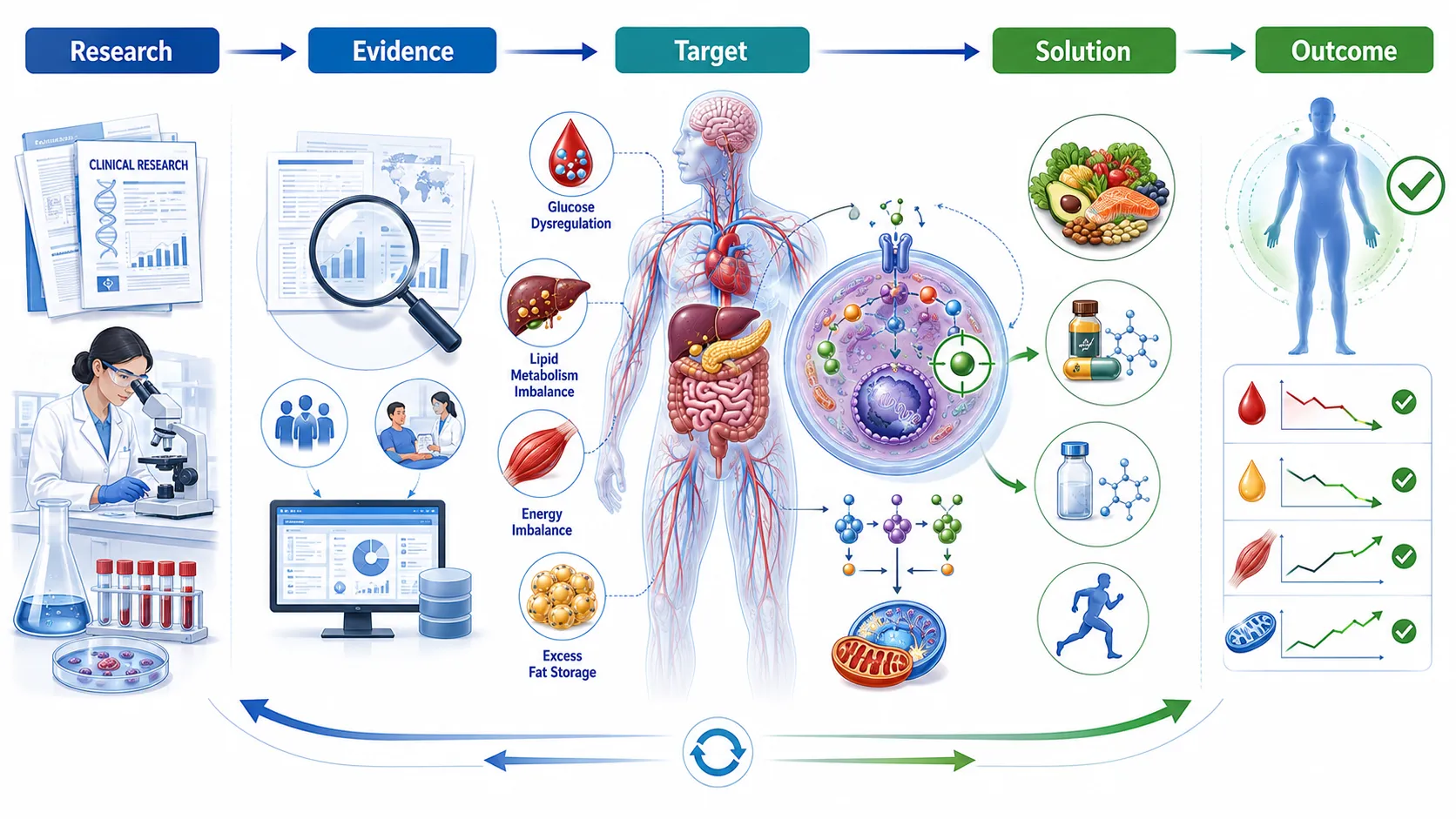
Chronic metabolic disorders represent a major area of clinical and scientific concern because they involve long-term disturbances in the regulation of energy metabolism, nutrient utilisation, hormonal signalling and cellular homeostasis. Conditions such as insulin resistance, obesity, type 2 diabetes and metabolic dysfunction associated with excess adiposity often develop through interconnected biochemical mechanisms rather than a single isolated abnormality. Contemporary clinical research increasingly recognises that effective management requires an integrated understanding of glucose regulation, lipid metabolism, mitochondrial function, inflammation, oxidative stress, gut-derived metabolites and hormonal communication.
Evaluating contemporary clinical research findings involves more than identifying whether an intervention appears beneficial. Researchers and health professionals must critically examine study design, population characteristics, intervention methods, biochemical outcomes, limitations and clinical relevance. Innovative biochemical-based solutions should therefore be grounded in reliable evidence and should address the underlying mechanisms contributing to metabolic dysfunction.
This section explores how contemporary clinical evidence can be evaluated and translated into scientifically justified approaches for managing chronic metabolic disorders. It focuses on biochemical mechanisms, emerging areas of research and the principles used to develop innovative nutritional and metabolic management strategies.
Key Definitions and Concepts
| Term | Definition | Relevance to Chronic Metabolic Disorders |
|---|---|---|
| Metabolic disorder | A condition involving disruption of normal biochemical processes responsible for energy production, storage or nutrient utilisation | May involve abnormal glucose, lipid or protein metabolism |
| Insulin resistance | Reduced biological responsiveness of target tissues to insulin signalling | Contributes to impaired glucose regulation and altered lipid metabolism |
| Metabolic homeostasis | The maintenance of relatively stable internal metabolic conditions | Depends on coordinated hormonal and biochemical regulation |
| Biomarker | A measurable biological characteristic associated with a physiological or pathological process | Helps assess metabolic status and response to interventions |
| Mitochondrial dysfunction | Impaired capacity of mitochondria to generate energy or regulate cellular metabolic processes | May contribute to inefficient energy metabolism and oxidative stress |
| Oxidative stress | An imbalance between reactive molecular species and protective antioxidant systems | Can contribute to cellular dysfunction and inflammatory signalling |
| Systemic inflammation | Persistent activation of inflammatory processes affecting multiple tissues | Associated with metabolic dysregulation |
| Personalised nutrition | Nutritional guidance adapted to relevant individual characteristics and responses | Represents an emerging approach to metabolic management |
| Gut microbiome | The community of microorganisms living primarily within the gastrointestinal tract | Can influence nutrient metabolism and metabolic signalling |
| Metabolomics | The study of small molecules and metabolic products within biological systems | Can provide detailed information about metabolic activity |
| Precision medicine | An approach that considers individual biological characteristics when selecting interventions | May support more targeted metabolic management |
Understanding Chronic Metabolic Disorders
The Biochemical Nature of Metabolic Dysfunction
Chronic metabolic disorders arise when regulatory systems responsible for nutrient sensing, energy production, storage and mobilisation become persistently disrupted. Under normal physiological conditions, the body adjusts metabolism according to nutrient availability, physical activity and energy requirements.
After food consumption, nutrients enter circulation and stimulate coordinated responses involving insulin, incretin hormones and other signalling pathways. During periods of reduced nutrient availability, regulatory mechanisms promote glycogen breakdown, fat mobilisation and the maintenance of circulating energy substrates.
In chronic metabolic dysfunction, these adaptive systems may become impaired. Persistent energy excess, altered tissue responsiveness, inflammation and other factors can disrupt normal communication between metabolic organs.
Important organs and tissues involved include:
The liver.
Skeletal muscle.
Adipose tissue.
The pancreas.
The gastrointestinal tract.
The brain.
The cardiovascular system.
Major Features of Chronic Metabolic Dysfunction
Common biochemical features may include:
Impaired insulin signalling.
Altered glucose uptake.
Increased hepatic glucose production.
Dysregulated lipid storage.
Elevated circulating triglycerides.
Increased ectopic lipid accumulation.
Altered mitochondrial activity.
Persistent low-grade inflammatory signalling.
Increased oxidative stress.
Disturbances in appetite and energy regulation.
These processes frequently interact, creating reinforcing cycles of metabolic dysfunction.
The Importance of Evaluating Contemporary Clinical Research
Research Findings Must Be Interpreted Critically
A contemporary clinical study may report statistically significant findings, but statistical significance alone does not establish that an intervention is clinically meaningful or suitable for widespread use.
Critical evaluation requires consideration of:
The research question.
Study design.
Sample size.
Population characteristics.
Duration of follow-up.
Intervention quality.
Outcome measurements.
Potential sources of bias.
Confounding variables.
Practical applicability.
A short-term improvement in a laboratory biomarker, for example, may not necessarily demonstrate long-term improvement in metabolic health.
Key Questions for Evaluating Research
When reviewing clinical research, Learners should ask:
What specific metabolic mechanism was investigated?
Was the study population clearly defined?
Was an appropriate comparison group used?
Were the biochemical outcomes measured reliably?
Was the study sufficiently long to evaluate the intended outcome?
Were important confounding factors considered?
Are the findings biologically plausible?
Can the results be applied to other populations?
What limitations were acknowledged?
Evaluating Different Types of Clinical Evidence
Randomised Controlled Studies
Randomised controlled studies are often valuable when evaluating the effects of defined interventions because random allocation can help reduce systematic differences between groups.
They may be used to investigate:
Dietary interventions.
Physical activity programmes.
Pharmacological approaches.
Specific nutrient interventions.
Behavioural strategies.
However, even well-designed trials have limitations.
Potential challenges include:
Limited study duration.
Participant non-adherence.
Difficulty controlling complex dietary behaviour.
Restricted participant populations.
Observational Research
Observational studies investigate relationships without directly assigning an intervention.
Examples include:
Cohort studies.
Case-control studies.
Cross-sectional investigations.
These studies can provide important information about long-term associations and population patterns.
However, association should not automatically be interpreted as causation.
Potential confounding factors may include:
Physical activity.
Total dietary intake.
Socioeconomic circumstances.
Medication use.
Existing health conditions.
Smoking and other lifestyle factors.
Systematic Reviews and Evidence Synthesis
Systematic reviews attempt to identify and evaluate multiple studies addressing a focused question.
Their value depends on:
The quality of included studies.
The consistency of methods.
Population similarity.
Outcome definitions.
Appropriate analytical methods.
A review cannot completely eliminate weaknesses present in the underlying evidence.
Biochemical Basis of Insulin Resistance
Normal Insulin Signalling
Insulin plays a central role in nutrient metabolism. It helps coordinate nutrient uptake, storage and utilisation following food consumption.
Important physiological actions include:
Promoting glucose uptake in insulin-sensitive tissues.
Supporting glycogen synthesis.
Influencing lipid metabolism.
Reducing excessive hepatic glucose production.
Supporting nutrient storage.
Insulin acts through a sequence of cellular signalling events. The effectiveness of these pathways influences how tissues respond to circulating glucose and other nutrients.
Development of Insulin Resistance
Insulin resistance occurs when normal concentrations of insulin produce a reduced biological response.
Multiple factors may contribute, including:
Persistent energy excess.
Increased ectopic lipid accumulation.
Inflammatory signalling.
Reduced physical activity.
Altered mitochondrial function.
Genetic susceptibility.
Disturbed hormonal regulation.
The condition should not be viewed as a single biochemical event. Different tissues may develop altered insulin responsiveness through different mechanisms.
Innovative Biochemical Approaches
Research into insulin resistance increasingly explores strategies that target multiple mechanisms simultaneously.
Potential areas of investigation include:
Improving skeletal muscle glucose utilisation.
Reducing excessive hepatic lipid accumulation.
Supporting physical activity-mediated metabolic adaptation.
Improving dietary quality and nutrient distribution.
Investigating personalised metabolic responses.
The purpose of biochemical targeting is to address underlying physiological dysfunction rather than focusing exclusively on a single circulating measurement.
Lipid Metabolism and Metabolic Health
The Role of Lipid Regulation
Lipids serve essential physiological functions. They provide energy, contribute to cellular membranes and support signalling processes.
Metabolic problems can develop when lipid handling becomes dysregulated.
Important processes include:
Fatty acid uptake.
Triglyceride synthesis.
Lipolysis.
Fatty acid oxidation.
Lipid transport.
Cholesterol metabolism.
Ectopic Lipid Accumulation
Excess lipid storage outside normal adipose tissue stores may affect metabolic function.
Research has investigated the relationship between lipid accumulation and dysfunction in:
The liver.
Skeletal muscle.
Other metabolically active tissues.
Not all lipid molecules have identical metabolic effects. Contemporary biochemical research increasingly examines the specific types, locations and metabolic fates of lipid intermediates.
Innovative Approaches to Lipid Management
Potential biochemical strategies include:
Improving dietary fat quality.
Managing overall energy balance.
Supporting fatty acid oxidation through physical activity.
Reducing excessive accumulation of specific lipid species.
Improving metabolic flexibility.
Metabolic flexibility refers broadly to the capacity of the body to adapt substrate utilisation according to nutrient availability and energy demand.
Mitochondrial Function and Metabolic Regulation
The Central Role of Mitochondria
Mitochondria are essential organelles involved in energy transformation. They participate in pathways involving carbohydrate, lipid and amino acid metabolism.
Their functions include:
Generating ATP.
Supporting oxidative metabolism.
Participating in cellular signalling.
Contributing to redox regulation.
Influencing metabolic adaptation.
Mitochondrial Dysfunction
Mitochondrial dysfunction may involve altered efficiency, substrate utilisation or signalling.
Potential consequences include:
Reduced metabolic flexibility.
Altered energy production.
Increased cellular stress.
Disturbed lipid handling.
Changes in metabolic signalling.
However, mitochondrial abnormalities may be both a cause and a consequence of metabolic dysfunction. Research findings should therefore be interpreted carefully.
Strategies Supporting Mitochondrial Health
Evidence-based approaches often examine:
Regular physical activity.
Appropriate energy intake.
Dietary patterns supporting overall nutritional adequacy.
Management of prolonged metabolic stress.
Interventions designed to improve metabolic capacity.
Claims regarding specialised products or supplements should be evaluated critically and should not be accepted without sufficient evidence.
Oxidative Stress and Metabolic Disorders
Understanding Oxidative Stress
Reactive molecular species are naturally produced during normal cellular metabolism. The body possesses protective systems that help regulate these molecules.
Oxidative stress may develop when reactive molecular activity exceeds protective capacity.
Potential consequences include:
Damage to cellular structures.
Altered enzyme activity.
Disturbed signalling.
Increased inflammatory responses.
Mitochondrial dysfunction.
Critical Evaluation of Antioxidant Approaches
It is overly simplistic to assume that increasing antioxidant intake will automatically prevent or reverse chronic metabolic disorders.
Research must consider:
The specific antioxidant compound.
Dose.
Bioavailability.
Study population.
Baseline nutritional status.
Interaction with normal physiological signalling.
Innovative biochemical approaches should therefore focus on restoring appropriate cellular balance rather than attempting to eliminate all reactive molecular activity.
Systemic Inflammation and Metabolic Dysregulation
Low-Grade Inflammatory Signalling
Chronic metabolic disorders may involve persistent activation of inflammatory pathways.
Inflammatory mediators can influence:
Insulin signalling.
Lipid metabolism.
Endothelial function.
Cellular energy regulation.
Adipose tissue can act as a metabolically active organ capable of producing signalling molecules.
The Metabolic-Inflammatory Cycle
A simplified cycle can be described as:
Persistent metabolic stress develops.
Cellular and tissue stress responses increase.
Inflammatory signalling becomes more active.
Metabolic regulation may become further impaired.
Continued dysfunction reinforces the cycle.
Contemporary research increasingly investigates interventions capable of influencing several stages of this cycle.
The Gut Microbiome as an Emerging Research Area
Microbial Contributions to Nutrient Metabolism
The gastrointestinal microbiome participates in interactions involving dietary components and host physiology.
Microbial activity can influence:
Fermentation of certain dietary components.
Production of metabolites.
Intestinal barrier function.
Communication with immune processes.
Metabolic signalling.
Critical Interpretation of Microbiome Research
The microbiome is highly complex and variable.
Research findings should therefore be interpreted cautiously because microbial composition can be influenced by:
Diet.
Geography.
Medication.
Age.
Health status.
Measurement methods.
A particular microbial pattern should not automatically be considered a direct cause of disease without appropriate evidence.
Potential Innovative Directions
Research continues to investigate:
Dietary strategies influencing microbial activity.
Individual variation in microbial responses.
Microbial metabolites as potential biomarkers.
Interactions between diet and host metabolism.
These areas remain important fields for future investigation.
Personalised and Precision Nutrition
Moving Beyond One-Size-Fits-All Approaches
Individuals may respond differently to similar dietary patterns.
Variation may relate to:
Baseline metabolic health.
Physical activity.
Body composition.
Genetic factors.
Sleep patterns.
Medication use.
Gastrointestinal characteristics.
Personalised nutrition attempts to account for relevant individual differences.
Biochemical Foundations of Personalisation
Potential sources of individual information include:
Glucose responses.
Lipid markers.
Anthropometric measurements.
Dietary patterns.
Selected metabolic biomarkers.
Emerging research approaches may also examine complex molecular data, although advanced testing should be evaluated carefully before routine use.
Key Potential Benefits
Personalised approaches may:
Improve intervention relevance.
Identify different metabolic response patterns.
Support more targeted monitoring.
Improve understanding of individual variability.
However, personalisation should not be confused with unsupported commercial claims. Scientific validity remains essential.
Metabolomics and Advanced Biomarker Research
Understanding Metabolomics
Metabolomics involves the analysis of numerous small molecules generated through metabolic processes.
These measurements may provide information about:
Nutrient utilisation.
Energy pathways.
Lipid metabolism.
Amino acid metabolism.
Cellular stress responses.
Potential Applications
Metabolomic research may support:
Identification of metabolic patterns.
Investigation of disease mechanisms.
Development of potential biomarkers.
Monitoring physiological responses.
Limitations
Advanced molecular measurements can generate large amounts of information.
Challenges include:
Complex interpretation.
High analytical variability.
Risk of identifying associations without clinical relevance.
Need for independent validation.
Therefore, innovative technologies should complement rather than replace sound clinical and physiological reasoning.
Developing Biochemical-Based Solutions
Step 1: Define the Metabolic Problem
The first step is to identify the primary physiological disturbance.
Relevant information may include:
Clinical history.
Dietary patterns.
Physical activity.
Relevant laboratory data.
Anthropometric indicators.
Medication use.
The assessment should avoid interpreting a single measurement in isolation.
Step 2: Identify Relevant Biochemical Mechanisms
The researcher or practitioner should examine possible mechanisms involving:
Insulin signalling.
Hepatic glucose regulation.
Lipid handling.
Mitochondrial metabolism.
Inflammatory pathways.
Oxidative stress.
Gut-derived metabolic signals.
Step 3: Evaluate Available Evidence
Evidence should be ranked according to:
Methodological quality.
Relevance.
Consistency.
Biological plausibility.
Clinical applicability.
Step 4: Propose a Targeted Strategy
A biochemical-based strategy may include coordinated approaches involving:
Dietary modification.
Physical activity.
Behavioural support.
Appropriate clinical monitoring.
Specialist referral where necessary.
Step 5: Monitor Outcomes
Relevant outcomes should be selected before implementation.
Monitoring may involve:
Changes in relevant biomarkers.
Changes in dietary patterns.
Functional indicators.
Metabolic responses.
Clinical outcomes.
Practical Case Example: Insulin Resistance
Scenario
An adult presents with evidence of impaired glucose regulation and features consistent with reduced insulin responsiveness. The individual also has a sedentary lifestyle and a dietary pattern characterised by frequent consumption of highly energy-dense foods.
A simplistic approach might focus only on reducing one nutrient. A biochemical approach instead considers the interaction between multiple physiological systems.
Stepwise Evaluation
The assessment may consider:
Glucose regulation.
Insulin responsiveness.
Lipid markers.
Energy balance.
Physical activity.
Dietary quality.
Relevant clinical history.
Proposed Evidence-Based Strategy
A comprehensive strategy could focus on:
Improving overall dietary quality.
Supporting an appropriate energy balance.
Increasing regular physical activity within individual capability.
Improving the distribution and quality of macronutrients.
Monitoring relevant clinical biomarkers.
The purpose is not to assume that one intervention alone will correct every biochemical disturbance.
Practical Case Example: Altered Lipid Metabolism
Scenario
A clinical research project identifies a population with persistent abnormalities in circulating lipid markers alongside evidence of central adiposity and low physical activity.
Researchers must determine whether the observed pattern relates primarily to:
Energy imbalance.
Dietary composition.
Physical inactivity.
Genetic susceptibility.
Medication effects.
Multiple interacting factors.
Biochemical Research Questions
Potential questions include:
How is hepatic lipid metabolism altered?
Is there evidence of impaired fatty acid utilisation?
Which biomarkers best predict metabolic risk?
Do individuals respond differently to the same intervention?
The resulting research design should avoid attributing all findings to a single cause.
Combining Nutrition, Physical Activity and Biochemical Monitoring
Why Integrated Strategies Are Important
Nutrition is only one component of metabolic regulation. Skeletal muscle activity influences:
Energy expenditure.
Glucose utilisation.
Insulin sensitivity.
Mitochondrial adaptation.
An integrated approach may therefore provide broader metabolic benefits than focusing on dietary change alone.
Core Components of an Integrated Strategy
An evidence-based model may include:
Nutritionally adequate dietary modification.
Appropriate physical activity.
Behavioural support.
Regular monitoring.
Individualised adjustments.
Clinical oversight where required.
Critical Challenges in Developing Innovative Solutions
Translating Laboratory Findings into Clinical Practice
A biochemical mechanism demonstrated in laboratory research does not automatically produce an effective clinical intervention.
The pathway from discovery to application requires:
Mechanistic investigation.
Early-stage testing.
Controlled clinical research.
Replication.
Assessment of safety and effectiveness.
Evaluation of real-world implementation.
Avoiding Overinterpretation
Common problems include:
Treating correlation as causation.
Generalising findings from small studies.
Ignoring population differences.
Focusing only on short-term biomarkers.
Promoting new technologies before adequate validation.
Critical appraisal protects against these errors.
Ethical and Professional Considerations
Evidence-Based Decision-Making
Professionals should:
Work within their scope of competence.
Avoid unsupported therapeutic claims.
Recognise the limits of available evidence.
Refer individuals for appropriate clinical assessment when required.
Respect participant and patient autonomy.
Responsible Innovation
Innovation should be guided by:
Scientific evidence.
Safety considerations.
Ethical research practice.
Transparency.
Ongoing evaluation.
Novelty alone does not make an intervention effective.
Key Principles for Evaluating Contemporary Research
When evaluating clinical research findings, remember the following principles:
Examine the quality of the study design.
Consider whether the sample represents the intended population.
Assess the reliability of outcome measurements.
Identify possible confounding variables.
Distinguish association from causation.
Consider biological plausibility.
Evaluate short-term and long-term relevance separately.
Compare findings with the wider body of evidence.
Recognise uncertainty and study limitations.
Avoid adopting innovative approaches without adequate validation.
The Role of Future Research
Future metabolic research is likely to increasingly investigate the interaction between:
Nutrient intake.
Hormonal regulation.
Genetic variation.
Metabolic biomarkers.
Microbial activity.
Physical activity.
Environmental influences.
Future research priorities may include:
Improved methods for identifying metabolic subtypes.
Long-term evaluation of personalised interventions.
Better integration of molecular and clinical data.
Development of reliable predictive biomarkers.
Improved understanding of individual variation.
The most valuable innovations will be those that demonstrate meaningful improvements in health outcomes rather than simply generating additional biological data.
Summary of Key Learning Points
A comprehensive evaluation of contemporary clinical research requires the ability to connect scientific evidence with underlying biochemical mechanisms. Chronic metabolic disorders commonly involve interactions between altered nutrient handling, hormonal dysregulation, lipid metabolism, inflammation and cellular energy processes.
Key points include:
Chronic metabolic disorders involve interconnected biochemical pathways.
Insulin resistance can affect both glucose and lipid metabolism.
Mitochondrial function influences cellular energy regulation.
Oxidative stress and inflammation may contribute to metabolic dysfunction.
The gut microbiome represents an important but complex area of metabolic research.
Personalised nutrition may improve targeting but requires strong scientific validation.
Advanced biomarker technologies must be interpreted carefully.
Innovative solutions should be evidence-based and biologically plausible.
Integrated strategies may address multiple metabolic mechanisms.
Long-term clinical relevance is essential when evaluating new approaches.
Conclusion
Evaluating contemporary clinical research findings is essential for developing innovative biochemical-based approaches to the management of chronic metabolic disorders. Modern research increasingly demonstrates that metabolic dysfunction cannot be fully understood through a single biomarker or isolated biochemical pathway. Insulin signalling, lipid metabolism, mitochondrial activity, inflammatory processes, oxidative balance and gastrointestinal-derived metabolic signals interact continuously to influence metabolic homeostasis.
A critical approach requires careful examination of research quality, study design, biological plausibility and clinical relevance. Innovative approaches such as personalised nutrition, metabolomic analysis and advanced biomarker assessment offer important opportunities, but they must be supported by rigorous validation and responsible interpretation.
The development of effective solutions should follow a systematic process: define the metabolic problem, identify relevant biochemical mechanisms, evaluate the quality of available evidence, develop a targeted and feasible strategy, and monitor meaningful outcomes. This approach supports evidence-based decision-making and reduces the risk of relying on oversimplified or unproven interventions.
For Learners and professionals working in clinical, nutritional and research contexts, the ability to evaluate evidence critically and connect biochemical mechanisms with practical solutions is fundamental. It supports the development of scientifically justified strategies while recognising that chronic metabolic disorders are complex, multifactorial and highly variable between individuals.
4.Conduct a Comprehensive Critical Review of Current Academic Literature Detailing the Physiological Impact of Emerging Nutritional and Metabolic Therapies
The rapid development of nutritional science, metabolic research and biomedical technology has led to growing interest in emerging therapies designed to influence human metabolism, nutrient utilisation and long-term physiological health. These approaches include personalised nutrition, targeted dietary interventions, microbiome-focused strategies, time-restricted eating, novel metabolic medicines, advanced biomarker-guided interventions and therapies designed to influence appetite, energy balance or specific biochemical pathways.
However, the emergence of a new therapy does not automatically mean that it is effective, safe or appropriate for widespread clinical use. Scientific evidence must be critically reviewed before conclusions are drawn. A comprehensive critical literature review enables researchers and practitioners to examine the quality, consistency and relevance of available evidence while considering the physiological mechanisms through which an intervention may affect the human body.
This section develops the knowledge and analytical skills required to conduct a critical review of academic literature relating to emerging nutritional and metabolic therapies. Learners will examine how to identify relevant evidence, evaluate different research designs, analyse physiological outcomes, recognise limitations and synthesise findings into balanced conclusions.
The emphasis is on evidence-based reasoning. A critical review should not simply describe what individual studies report. Instead, it should compare findings, evaluate methodological quality, identify patterns and contradictions, and determine how confidently conclusions can be applied to clinical and professional contexts.

Key Definitions and Concepts
| Term | Definition | Relevance to Literature Review |
|---|---|---|
| Critical literature review | A systematic and analytical examination of existing academic evidence | Helps determine the quality, consistency and significance of current knowledge |
| Emerging therapy | A developing or relatively new intervention being investigated for health or metabolic effects | Requires careful evaluation before widespread adoption |
| Physiological impact | The effect of an intervention on normal body functions and biological processes | May include effects on metabolism, hormones, tissues or energy regulation |
| Metabolic therapy | An intervention intended to influence metabolic pathways or metabolic health | May target glucose regulation, lipid metabolism, energy balance or hormonal signalling |
| Evidence synthesis | The process of combining and interpreting findings from multiple sources | Supports broader conclusions than reliance on a single study |
| Biomarker | A measurable biological characteristic reflecting a physiological or pathological process | Used to assess metabolic responses and treatment effects |
| Internal validity | The extent to which study findings are likely to reflect a true relationship within the study | Influenced by bias, confounding and research design |
| External validity | The extent to which findings can reasonably be applied beyond the study population | Important when considering clinical application |
| Confounding factor | A variable that may distort the relationship between an intervention and an outcome | Must be considered when interpreting research findings |
| Biological plausibility | The extent to which findings are consistent with established biological mechanisms | Helps evaluate whether an observed effect is scientifically credible |
| Clinical significance | The practical importance of a change in health or physiological function | May differ from statistical significance |
| Evidence-based practice | Decision-making that integrates appropriate research evidence with professional judgement | Supports responsible use of nutritional and metabolic interventions |
Understanding the Purpose of a Critical Literature Review
Moving Beyond Simple Description
A literature review becomes critical when the researcher actively evaluates the evidence rather than merely summarising it.
For example, a descriptive review might state that several studies reported improvements in a metabolic marker following a particular intervention. A critical review would go further and examine:
How the studies were designed.
Whether participants were appropriately selected.
How long the intervention lasted.
Whether suitable comparison groups were used.
Which physiological outcomes were measured.
Whether the results were consistent.
Whether important confounding factors were controlled.
Whether the findings have practical clinical relevance.
The purpose is to develop a balanced interpretation of the evidence.
Main Purposes of a Critical Review
A comprehensive review should aim to:
Identify the current state of knowledge.
Examine the physiological basis of emerging therapies.
Compare findings across different studies.
Identify methodological strengths and weaknesses.
Recognise conflicting evidence.
Assess biological plausibility.
Identify important research gaps.
Evaluate possible clinical relevance.
Support evidence-based conclusions.
Understanding Emerging Nutritional and Metabolic Therapies
What Makes a Therapy “Emerging”?
An emerging therapy may be a newly developed intervention or an established approach being applied in a new metabolic context.
Examples of important areas of research include:
Personalised nutrition.
Precision nutrition approaches.
Time-restricted dietary strategies.
Microbiome-focused interventions.
Targeted manipulation of dietary macronutrients.
Advanced metabolic biomarker monitoring.
Novel approaches to appetite regulation.
Therapies targeting glucose and lipid metabolism.
Digital approaches to metabolic monitoring.
Research into metabolically targeted nutritional interventions.
Not all emerging therapies are at the same stage of scientific development. Some have extensive clinical evidence, while others remain experimental.
Levels of Evidence Development
Emerging interventions may progress through several stages:
Basic biochemical research.
Laboratory and mechanistic investigation.
Early human studies.
Controlled clinical trials.
Larger population studies.
Systematic evidence synthesis.
Evaluation of real-world effectiveness.
Learners should recognise that evidence from an early-stage study should not automatically be interpreted in the same way as evidence supported by multiple high-quality investigations.
Establishing a Focused Review Question
Why a Focused Question Is Essential
A broad question such as “Are new nutritional therapies effective?” is too vague for a meaningful academic review.
The review question should clearly identify:
The intervention or therapy.
The relevant physiological process.
The population or context.
The outcome of interest.
A focused question helps the researcher select relevant literature and prevents the review from becoming excessively broad.
Important Components of a Review Question
The researcher may consider:
Who is the population of interest?
What intervention is being examined?
What comparison is relevant?
Which physiological outcomes are important?
Over what time period are effects being considered?
The structure should be adapted to the purpose of the review.
Developing a Comprehensive Search Strategy
Identifying Appropriate Academic Sources
A high-quality review should prioritise credible academic literature.
Relevant sources may include:
Peer-reviewed journal articles.
Systematic reviews.
Meta-analyses.
Randomised controlled studies.
Cohort studies.
Mechanistic studies.
Clinical research reports.
The quality of a source should be evaluated rather than assumed from its publication status alone.
Developing Search Terms
Search terms should reflect the central concepts within the review.
For a review involving an emerging metabolic therapy, terms may include combinations of:
Nutritional intervention.
Metabolic health.
Physiological response.
Insulin sensitivity.
Energy metabolism.
Lipid metabolism.
Glucose regulation.
Hormonal regulation.
Biomarkers.
Clinical outcomes.
The researcher should use alternative terminology where appropriate to improve the completeness of the search.
Search Strategy Considerations
A systematic search strategy should consider:
Relevant databases.
Date ranges.
Language requirements.
Study populations.
Intervention types.
Outcome measures.
The search process should be transparent enough for another researcher to understand how evidence was identified.
Establishing Inclusion and Exclusion Criteria
Why Selection Criteria Are Necessary
Without clear criteria, a literature review may become influenced by selective evidence collection.
Inclusion criteria may define:
Relevant populations.
Specific interventions.
Appropriate research designs.
Physiological outcomes.
Publication periods.
Exclusion criteria may identify:
Irrelevant populations.
Studies without relevant outcomes.
Inadequate methodological detail.
Duplicate publications.
Evidence unrelated to the research question.
Avoiding Selection Bias
Researchers should avoid selecting only studies that support a preferred conclusion.
A balanced review should include relevant evidence showing:
Positive effects.
Limited effects.
No measurable effects.
Potential adverse outcomes.
This improves academic objectivity.
Evaluating Research Design
Randomised Controlled Trials
Randomised controlled trials are often useful for investigating whether an intervention produces a measurable effect.
Their strengths may include:
Structured intervention procedures.
Comparison groups.
Random allocation.
Greater control over confounding.
However, limitations may include:
Short duration.
Restricted participant populations.
Difficulty maintaining dietary adherence.
Limited real-world applicability.
A strong trial should therefore be evaluated rather than automatically accepted as definitive.
Observational Studies
Observational studies can provide valuable information about:
Long-term patterns.
Population differences.
Associations between behaviours and health outcomes.
However, they may be affected by:
Confounding.
Measurement error.
Recall bias.
Reverse causation.
An association between a dietary factor and a metabolic outcome does not automatically prove that the dietary factor caused the outcome.
Mechanistic Research
Mechanistic research investigates how an intervention may influence biological processes.
It may examine:
Cellular signalling.
Enzyme activity.
Hormonal responses.
Mitochondrial processes.
Metabolic pathways.
Such research can improve biological understanding but may not automatically demonstrate clinical effectiveness.
Critically Evaluating Physiological Outcomes
Selecting Meaningful Outcomes
Emerging therapies may influence multiple biological measurements.
Potential outcomes include:
Blood glucose regulation.
Insulin responsiveness.
Lipid markers.
Body composition.
Energy expenditure.
Inflammatory indicators.
Hormonal responses.
Measures of metabolic flexibility.
The researcher should distinguish between a measurable biological change and a meaningful improvement in overall health.
Statistical Significance and Clinical Significance
A statistically significant result does not always represent a clinically important change.
Critical questions include:
How large was the observed effect?
Was the effect sustained?
Was the change meaningful to health outcomes?
Did the intervention produce unwanted effects?
Is the intervention practical outside the research setting?
These questions help prevent overinterpretation.
Personalised Nutrition as an Emerging Research Area
The Concept of Individual Variation
Individuals can respond differently to similar dietary interventions.
Potential influences include:
Baseline metabolic status.
Body composition.
Physical activity.
Dietary habits.
Genetic characteristics.
Sleep patterns.
Age.
Medication use.
Personalised nutrition attempts to account for relevant variation.
Physiological Potential
Personalised approaches may use information relating to:
Dietary intake.
Glucose responses.
Lipid metabolism.
Anthropometric characteristics.
Physical activity.
Selected biomarkers.
Potential benefits include:
More targeted interventions.
Improved understanding of individual responses.
More relevant monitoring strategies.
Critical Limitations
Important questions remain:
Which individual measurements are genuinely useful?
Are personalised approaches superior to high-quality general guidance?
Can complex biological data be interpreted reliably?
Are advanced testing methods sufficiently validated?
Are the approaches cost-effective?
A critical review should examine these questions rather than assuming that greater personalisation always produces better outcomes.
Time-Restricted and Meal-Timing Strategies
Physiological Basis
Research has investigated whether the timing of food intake may influence metabolic processes.
Potential mechanisms include:
Changes in insulin responses.
Altered substrate utilisation.
Interaction with biological rhythms.
Changes in energy intake patterns.
Effects on fasting and feeding metabolism.
Evaluating the Evidence
Studies should be examined for:
Duration.
Participant characteristics.
Energy intake differences.
Adherence.
Timing protocols.
Relevant metabolic outcomes.
An apparent benefit may sometimes result from changes in total dietary intake rather than timing alone.
Critical Questions
A comprehensive review should ask:
Was total energy intake controlled?
Were dietary compositions comparable?
Was adherence objectively measured?
Were long-term outcomes assessed?
Is the strategy suitable for different populations?
Microbiome-Focused Nutritional Approaches
The Physiological Connection
The gastrointestinal microbiome interacts with dietary components and host physiology.
Research suggests potential involvement in:
Fermentation of dietary substrates.
Production of metabolic compounds.
Gut barrier function.
Immune signalling.
Metabolic communication.
Emerging Intervention Areas
Research may investigate:
Dietary modification.
Fibre-related interventions.
Specific microbial approaches.
Microbial metabolites.
Personalised microbiome responses.
Critical Challenges
Microbiome research is complex because microbial communities can vary considerably between individuals.
Important influences include:
Diet.
Geography.
Medication exposure.
Age.
Health status.
Analytical techniques.
Therefore, the presence of a particular microbial pattern does not necessarily establish causation.
Advanced Biomarker-Guided Approaches
The Role of Biomarkers
Biomarkers can provide measurable information about physiological processes.
In metabolic research, biomarkers may help evaluate:
Glucose handling.
Lipid metabolism.
Hormonal activity.
Inflammatory processes.
Nutrient status.
Emerging Molecular Technologies
Advanced research methods may examine:
Metabolomic patterns.
Multiple biochemical markers.
Dynamic physiological responses.
These approaches may provide a more detailed picture of metabolic function than a single measurement.
Critical Evaluation
However, more data do not always mean better clinical decisions.
Researchers must consider:
Analytical reliability.
Reproducibility.
Cost.
Clinical usefulness.
Appropriate interpretation.
Independent validation.
Therapies Targeting Appetite and Energy Regulation
Physiological Importance of Appetite Regulation
Energy balance is influenced by complex communication between:
The gastrointestinal system.
Adipose tissue.
The pancreas.
The brain.
Hormonal signalling systems.
Emerging metabolic therapies increasingly investigate mechanisms involved in appetite regulation and energy intake.
Critical Review Considerations
A literature review should examine:
Changes in appetite.
Changes in energy intake.
Body composition outcomes.
Metabolic biomarkers.
Adverse effects.
Long-term physiological adaptation.
Short-term reductions in food intake should not automatically be assumed to predict long-term metabolic improvement.
Targeted Macronutrient Manipulation
Biochemical Rationale
Different macronutrients influence metabolism through distinct pathways.
Carbohydrates primarily influence:
Glucose availability.
Insulin responses.
Glycogen storage.
Proteins contribute to:
Amino acid availability.
Tissue maintenance.
Nitrogen metabolism.
Lipids contribute to:
Energy storage.
Cellular membranes.
Hormonal and signalling processes.
Emerging Research Questions
Researchers investigate whether modifying macronutrient ratios can influence:
Glycaemic regulation.
Lipid metabolism.
Appetite.
Energy balance.
Metabolic flexibility.
Critical Interpretation
A review should avoid assuming that one macronutrient pattern is universally superior.
Important considerations include:
Overall energy intake.
Food quality.
Fibre content.
Individual metabolic status.
Physical activity.
Long-term adherence.
Evaluating Safety and Physiological Risk
Why Safety Must Be Included
An intervention may produce a desirable change in one biomarker while causing unwanted effects elsewhere.
A comprehensive review should therefore consider:
Short-term adverse effects.
Long-term safety.
Nutritional adequacy.
Effects on vulnerable populations.
Medication interactions where relevant.
Effects on organ function.
Risk-Benefit Evaluation
The potential benefits of a therapy should be balanced against:
Physiological risks.
Practical difficulties.
Financial cost.
Nutritional consequences.
Uncertainty in the evidence.
Innovation should never replace careful safety assessment.
Comparing Short-Term and Long-Term Effects
Short-Term Physiological Responses
Early changes may include:
Altered blood glucose responses.
Changes in circulating metabolic markers.
Changes in appetite.
Changes in substrate utilisation.
These effects may be useful for understanding mechanisms.
Long-Term Physiological Adaptation
Long-term outcomes may involve:
Changes in metabolic regulation.
Sustained behavioural changes.
Body composition changes.
Adaptation of hormonal systems.
Long-term health outcomes.
Short-term improvements do not always predict sustained long-term benefits.
Assessing Bias and Confounding
Common Sources of Bias
Researchers should consider:
Selection bias.
Measurement bias.
Reporting bias.
Attrition bias.
Publication bias.
Bias can influence both individual studies and the overall literature.
Confounding Factors in Nutritional Research
Important confounders may include:
Physical activity.
Total energy intake.
Sleep.
Medication use.
Existing health conditions.
Smoking.
Alcohol exposure.
Socioeconomic factors.
A high-quality review should examine how effectively individual studies addressed these factors.
Synthesising Evidence Across Studies
Identifying Patterns
Evidence synthesis involves comparing studies to identify:
Consistent findings.
Contradictory findings.
Population-specific effects.
Differences in intervention protocols.
Methodological explanations for variation.
Explaining Conflicting Results
Different findings may occur because studies differ in:
Participant characteristics.
Intervention duration.
Dietary composition.
Measurement methods.
Baseline metabolic status.
Adherence.
A critical review should explore these differences rather than simply choosing one result.
Practical Example: Reviewing an Emerging Metabolic Intervention
Step 1: Define the Intervention
The reviewer identifies:
The intervention.
The intended metabolic mechanism.
The relevant population.
The expected physiological outcomes.
Step 2: Examine the Biological Rationale
Questions may include:
Which metabolic pathway is targeted?
Is the proposed mechanism biologically plausible?
Is there mechanistic evidence supporting the intervention?
Step 3: Review Clinical Studies
The reviewer compares:
Study design.
Sample size.
Duration.
Intervention procedures.
Outcome measures.
Reported results.
Step 4: Evaluate Limitations
The review identifies:
Potential bias.
Confounding.
Short follow-up periods.
Limited generalisability.
Measurement limitations.
Step 5: Develop a Balanced Conclusion
The final conclusion should state:
What evidence currently supports.
What remains uncertain.
Which populations may require further research.
What limitations affect interpretation.
A Structured Process for Conducting the Critical Review
Stage 1: Define the Topic
Clearly identify the emerging therapy and physiological focus.
Stage 2: Develop the Review Question
Ensure the question is specific and researchable.
Stage 3: Conduct a Systematic Search
Identify relevant academic literature using transparent methods.
Stage 4: Screen the Evidence
Apply predefined inclusion and exclusion criteria.
Stage 5: Extract Key Information
Record information relating to:
Study design.
Population.
Intervention.
Duration.
Outcomes.
Main findings.
Limitations.
Stage 6: Critically Appraise Quality
Evaluate:
Validity.
Reliability.
Bias.
Confounding.
Generalisability.
Stage 7: Synthesise Findings
Compare evidence and identify meaningful patterns.
Stage 8: Draw Balanced Conclusions
Avoid conclusions that exceed the available evidence.
Key Benefits of Conducting a Comprehensive Critical Review
A rigorous literature review can:
Improve understanding of emerging therapies.
Identify reliable evidence.
Reveal gaps in scientific knowledge.
Prevent overreliance on individual studies.
Support evidence-based decision-making.
Improve research proposal development.
Inform future clinical investigations.
Support responsible innovation.
Common Errors in Literature Reviews
Relying on a Small Number of Studies
A conclusion based on only one or two studies may be unreliable.
Treating Association as Causation
Observational evidence may identify relationships without proving direct causality.
Ignoring Negative Findings
Studies reporting no effect are also important.
Focusing Only on Positive Biomarkers
A therapy should be evaluated across relevant physiological outcomes.
Ignoring Study Limitations
Every study has limitations that may affect interpretation.
Overstating Emerging Evidence
Promising early research should not be presented as established clinical fact.
Professional and Clinical Applications
The ability to critically review emerging therapies is valuable in:
Nutrition research.
Clinical research.
Public health.
Academic education.
Evidence review.
Research and development.
Healthcare quality improvement.
Professionals should remain within their scope of competence and recognise when specialist clinical input is required.
Key Principles for Critical Evaluation
When reviewing current academic literature, Learners should consistently apply the following principles:
Question the quality of the evidence.
Examine study design carefully.
Consider the biological mechanism.
Evaluate physiological outcomes.
Identify possible bias.
Consider confounding factors.
Compare multiple sources.
Distinguish short-term and long-term effects.
Evaluate safety alongside effectiveness.
Avoid overstating uncertain findings.
Identify areas requiring further research.
Summary of Key Learning Points
A comprehensive critical review provides a structured method for evaluating the physiological impact of emerging nutritional and metabolic therapies. It requires more than summarising published studies. The reviewer must examine the quality, consistency, biological plausibility and practical relevance of the evidence.
Key learning points include:
Emerging therapies require rigorous scientific evaluation.
A focused review question improves the quality of the literature review.
Different research designs provide different forms of evidence.
Statistical significance and clinical significance are not identical.
Personalised nutrition offers potential benefits but requires validation.
Microbiome research is promising but highly complex.
Advanced biomarkers require careful interpretation.
Short-term physiological changes may differ from long-term outcomes.
Safety and nutritional adequacy must be evaluated.
Conflicting findings should be analysed rather than ignored.
Balanced conclusions should reflect the strength and limitations of the available evidence.
Conclusion
Conducting a comprehensive critical review of current academic literature is essential for understanding the physiological impact of emerging nutritional and metabolic therapies. New approaches may offer important opportunities to improve the management of chronic metabolic dysfunction, but scientific innovation must be supported by rigorous evidence.
A high-quality review begins with a focused question and follows a structured process for identifying, selecting and evaluating relevant academic literature. Individual studies should be assessed for methodological quality, validity, reliability, potential bias and relevance to the research question. Findings must then be synthesised to identify consistent patterns, conflicting evidence and important gaps in knowledge.
The physiological impact of an intervention should be considered broadly. Changes in isolated biomarkers may provide useful information, but they must be interpreted alongside wider metabolic processes, long-term outcomes, safety and practical applicability. Personalised nutrition, microbiome-focused interventions, meal-timing strategies, biomarker-guided approaches and other emerging therapies all require careful scientific evaluation.
For Learners working within academic, research and professional environments, critical literature review skills are fundamental to evidence-based practice. These skills support the responsible evaluation of new scientific developments and enable professionals to distinguish between promising hypotheses, preliminary findings and interventions supported by stronger bodies of evidence.
Ultimately, the purpose of reviewing contemporary research is not simply to identify the newest therapy. It is to determine what the available evidence genuinely demonstrates, understand the biochemical and physiological mechanisms involved, recognise uncertainty and identify the most important directions for future research and innovation.
5.Synthesise Complex Metabolic Data from Laboratory Assessments to Accurately Diagnose and Logically Explain Specific Nutritional Deficiencies in Practical Scenarios
The accurate identification of nutritional deficiencies requires more than recognising a single abnormal laboratory value. Nutritional status is influenced by dietary intake, digestion, absorption, transport, storage, metabolism, physiological demand and disease processes. Consequently, a comprehensive assessment requires the synthesis of multiple forms of metabolic and laboratory data to develop a logical explanation for an individual’s nutritional status.
In clinical, research and professional settings, laboratory assessments may provide information about circulating nutrients, storage markers, metabolic products, enzyme activity, haematological status and organ function. However, laboratory values must always be interpreted within their physiological context. A result that appears abnormal may be influenced by inflammation, hydration status, recent dietary intake, medication use, organ dysfunction or other metabolic factors.
The purpose of synthesising complex metabolic data is therefore to identify meaningful patterns rather than relying on isolated measurements. This process involves comparing laboratory findings, considering clinical signs and symptoms, reviewing dietary and physiological factors, identifying potential causes and developing an evidence-based explanation of the likely nutritional deficiency.
This section explores the principles, processes and practical applications involved in interpreting laboratory assessments to recognise and explain nutritional deficiencies. It develops the critical thinking required to connect biochemical evidence with human physiology and realistic practical scenarios.
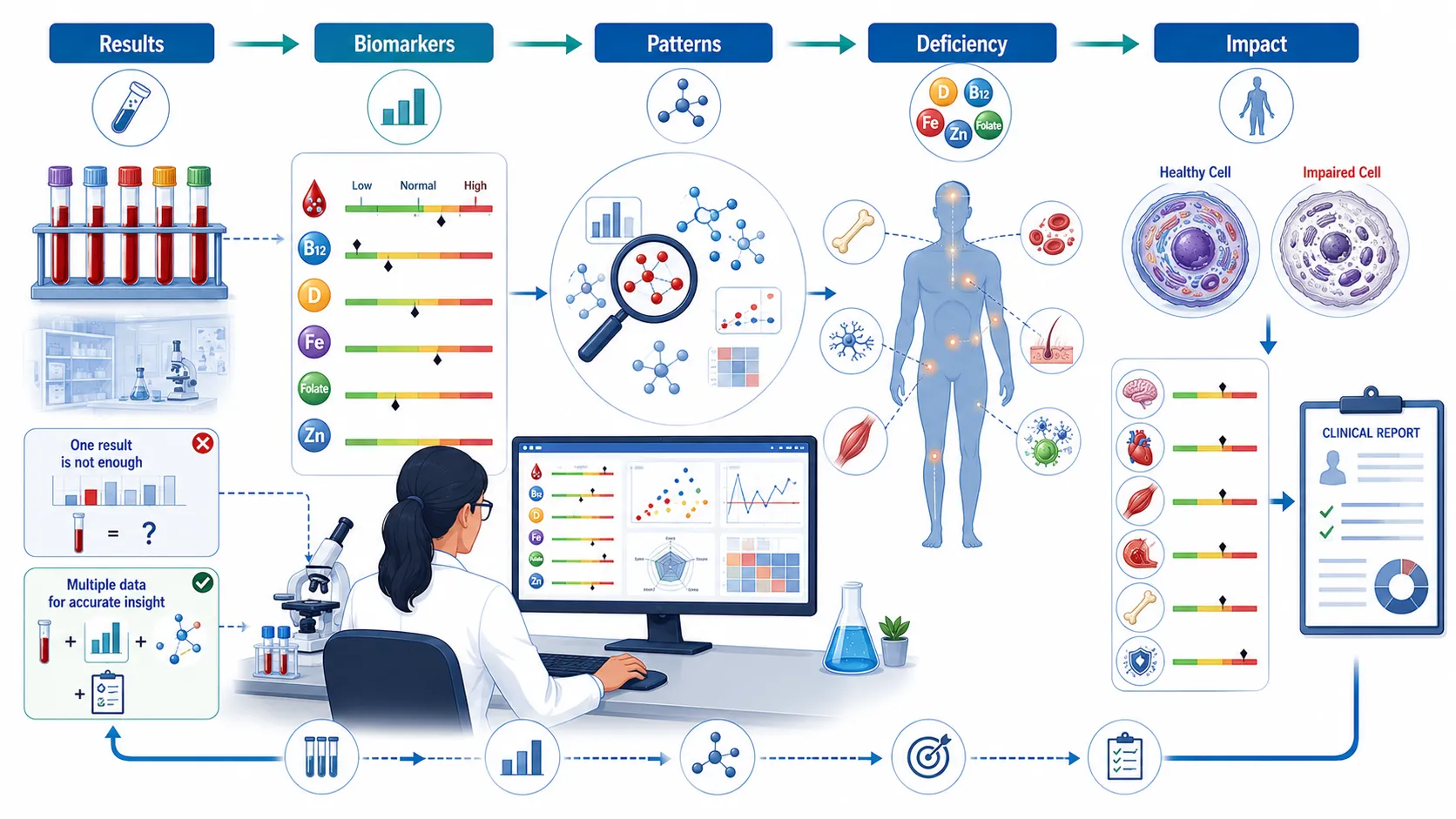
Key Definitions and Concepts
| Term | Definition | Importance in Nutritional Assessment |
|---|---|---|
| Nutritional deficiency | An inadequate availability or utilisation of an essential nutrient required for normal physiological function | May affect cellular processes, tissue function and systemic health |
| Biomarker | A measurable biological indicator that reflects a physiological, nutritional or pathological process | Provides objective evidence that supports assessment |
| Serum concentration | The measured amount of a substance present in the liquid component of blood | May reflect recent availability but does not always represent total body stores |
| Storage marker | A laboratory measurement that provides information about nutrient reserves | Helps distinguish short-term intake from longer-term depletion |
| Functional marker | A measurement showing the effect of nutrient availability on a biological process | Helps identify physiological consequences of deficiency |
| Metabolic profile | A group of laboratory measurements interpreted together to assess metabolic function | Supports recognition of complex biochemical patterns |
| Reference range | A range of values commonly observed within a defined reference population | Supports interpretation but does not replace clinical judgement |
| Subclinical deficiency | A deficiency state that may produce biochemical changes before obvious symptoms develop | Important for early identification and intervention |
| Bioavailability | The proportion of an ingested nutrient that is absorbed and available for physiological use | Explains why intake alone may not predict nutritional status |
| Differential explanation | A structured consideration of alternative causes for observed findings | Reduces the risk of incorrectly attributing abnormalities to nutrition alone |
| Nutrient utilisation | The uptake and use of nutrients by cells and tissues | May be impaired despite apparently adequate intake |
| Metabolic adaptation | Physiological adjustment to changes in nutrient availability or energy supply | Can alter laboratory findings and clinical presentation |
Understanding the Complexity of Nutritional Deficiency Diagnosis
Why a Single Laboratory Result Is Often Insufficient
A nutritional deficiency can develop gradually through several stages. Initially, dietary intake may become inadequate, but circulating concentrations may remain within an expected range because the body uses stored reserves or adapts its metabolism. As depletion progresses, storage markers may decline, followed by functional disturbances and, eventually, clinical manifestations.
For this reason, an isolated laboratory result should rarely be interpreted without additional information. The assessor should consider whether the measurement reflects recent intake, tissue stores, functional activity or the effect of another physiological condition.
A comprehensive interpretation may involve:
Reviewing more than one laboratory marker.
Comparing storage and functional indicators.
Assessing haematological findings.
Considering metabolic and organ function data.
Reviewing dietary patterns.
Identifying symptoms and physical signs.
Considering gastrointestinal health.
Reviewing medication and relevant clinical factors.
Considering inflammation and other physiological stressors.
The Principle of Data Synthesis
Data synthesis means bringing together separate pieces of information to produce a coherent explanation. In nutritional assessment, the objective is not simply to state that several laboratory values are abnormal. The objective is to determine whether those findings form a biologically plausible pattern.
For example, a Learner may observe:
Reduced concentration of a nutrient-related marker.
Evidence of declining physiological function.
Compatible dietary history.
Symptoms consistent with impaired metabolic activity.
When these findings occur together, confidence in the proposed explanation may increase. However, the assessor must still consider alternative explanations.
The Relationship Between Nutrition and Metabolic Data
Nutrients Participate in Multiple Physiological Processes
Nutrients do not function independently. A deficiency in one nutrient may influence the metabolism or utilisation of another. Similarly, an abnormal metabolic result may reflect problems with absorption, transport, storage or cellular utilisation rather than inadequate dietary intake.
Nutritional deficiencies may affect:
Energy production.
Enzyme function.
Oxygen transport.
DNA synthesis.
Neurotransmitter production.
Immune activity.
Bone metabolism.
Muscle function.
Hormonal regulation.
Cellular repair.
This interconnected nature of metabolism explains why nutritional assessment requires a systems-based approach.
From Dietary Intake to Cellular Function
A nutrient must pass through several stages before it can support physiological function:
Dietary intake.
Gastrointestinal digestion.
Intestinal absorption.
Transport through blood or lymphatic systems.
Distribution to tissues.
Cellular uptake.
Metabolic utilisation.
Storage or excretion.
A disruption at any stage can contribute to deficiency.
Key Questions During Assessment
When interpreting laboratory data, the assessor should ask:
Is dietary intake likely to be inadequate?
Is digestion functioning appropriately?
Is nutrient absorption impaired?
Is transport affected?
Are body stores reduced?
Is cellular utilisation impaired?
Is physiological demand increased?
Could another disease process explain the findings?
These questions support logical and structured reasoning.
Categories of Laboratory Assessments Used in Nutritional Evaluation
Direct Nutrient Measurements
Some laboratory assessments measure circulating concentrations of nutrients or nutrient-related compounds.
These measurements may help identify:
Current nutrient availability.
Severe depletion.
Excessive concentrations.
Response to intervention.
However, direct measurements may be influenced by recent food intake or short-term physiological changes.
Storage Markers
Storage markers provide information about longer-term nutrient reserves.
They are particularly useful because nutritional deficiency may progress before obvious functional symptoms occur.
However, storage markers can also be influenced by:
Inflammation.
Infection.
Liver function.
Chronic disease.
Physiological stress.
Therefore, they must be interpreted alongside other data.
Functional Biomarkers
Functional biomarkers assess the consequences of nutrient availability.
They may indicate changes in:
Enzyme activity.
Cellular metabolism.
Haematological function.
Tissue turnover.
Metabolic pathway activity.
Functional markers can provide valuable evidence because they show whether physiological processes are being affected.
Supporting Metabolic and Clinical Data
Additional laboratory information may include:
Blood cell indices.
Protein-related measurements.
Electrolyte status.
Markers of inflammation.
Liver-related measurements.
Kidney-related measurements.
Glucose-related indicators.
These measurements can help identify whether a nutritional abnormality is isolated or part of a broader physiological disturbance.
A Systematic Process for Synthesising Metabolic Data
Step 1: Define the Clinical or Practical Scenario
The interpretation process begins with context.
The assessor should establish:
Age group.
Relevant physiological state.
Dietary pattern.
Presenting symptoms.
Existing health conditions.
Medication use.
Recent lifestyle changes.
Duration of symptoms.
A laboratory result cannot be meaningfully interpreted without understanding the person or scenario from which it was obtained.
Step 2: Identify Abnormal and Relevant Findings
The next stage involves reviewing the available laboratory data and identifying measurements that may be relevant.
The assessor should:
Identify values outside the appropriate reference range.
Recognise borderline findings.
Compare related markers.
Identify patterns rather than isolated abnormalities.
Consider changes over time where repeated measurements exist.
Step 3: Group Related Findings
Laboratory data should be organised according to physiological systems.
For example, findings may be grouped into:
Nutrient availability.
Storage status.
Cellular function.
Energy metabolism.
Inflammatory status.
Organ function.
Grouping information can make complex patterns easier to interpret.
Step 4: Connect Findings to Physiology
The assessor should explain how the observed pattern may relate to known biological functions.
Questions may include:
What role does the nutrient normally perform?
Which metabolic pathway may be affected?
Which tissues are particularly dependent on the nutrient?
What functional consequences would be expected?
Step 5: Develop Possible Explanations
The assessor should avoid immediately assuming one explanation.
Possible causes may include:
Inadequate dietary intake.
Reduced absorption.
Increased physiological demand.
Increased nutrient losses.
Impaired transport.
Impaired cellular utilisation.
Chronic disease.
Step 6: Evaluate the Most Plausible Explanation
The final interpretation should be based on the total pattern of evidence.
A strong explanation should:
Be consistent with laboratory findings.
Fit the clinical scenario.
Be biologically plausible.
Consider alternative explanations.
Recognise uncertainty where appropriate.
Understanding Patterns Rather Than Isolated Values
Pattern Recognition in Nutritional Assessment
One of the most important skills in metabolic interpretation is recognising relationships between measurements.
For example, an individual measurement may be:
Low because of reduced intake.
Low because of poor absorption.
Altered by inflammation.
Affected by hydration.
Influenced by medication.
Therefore, a pattern of related findings is usually more informative.
Characteristics of a Strong Diagnostic Pattern
A strong pattern often includes:
A relevant biochemical abnormality.
Supporting functional changes.
Compatible symptoms.
A plausible physiological mechanism.
Relevant dietary or clinical history.
The greater the consistency between these elements, the stronger the proposed explanation may become.
Practical Scenario 1: Progressive Nutrient Depletion
Scenario
An adult reports persistent tiredness, reduced exercise tolerance and difficulty concentrating. Their dietary history indicates a prolonged period of restricted intake of nutrient-rich foods.
Laboratory data show:
A reduced nutrient-related storage marker.
Changes in blood parameters associated with impaired physiological function.
A functional marker consistent with reduced nutrient availability.
Interpretation Process
The assessor should not simply identify the lowest laboratory value. Instead, the data should be synthesised.
The reasoning process may include:
The dietary history suggests prolonged inadequate intake.
The storage marker suggests reduced reserves.
Functional changes suggest that depletion is affecting physiology.
Symptoms are compatible with impaired cellular or systemic function.
Logical Explanation
The combined evidence supports a possible progressive nutritional deficiency. However, alternative explanations should still be considered, including:
Chronic inflammation.
Blood loss.
Malabsorption.
Other medical causes.
The final conclusion should therefore be proportionate to the available evidence.
Practical Scenario 2: Adequate Intake but Impaired Absorption
Scenario
An individual reports consuming a diet that appears nutritionally adequate but experiences gastrointestinal symptoms and has laboratory evidence of reduced nutrient status.
Possible Interpretation
The data may suggest that intake alone is not the problem.
The assessor should consider:
Gastrointestinal dysfunction.
Reduced digestive capacity.
Intestinal inflammation.
Altered absorptive surface.
Medication effects.
Key Learning Point
Adequate dietary intake does not guarantee adequate nutrient status. Nutrients must also be digested, absorbed, transported and utilised effectively.
Practical Scenario 3: Increased Physiological Demand
Scenario
An individual has laboratory findings suggesting reduced nutrient availability during a period of increased physiological demand.
Potential contributing factors may include:
Rapid growth.
Intensive physical activity.
Recovery from illness.
Increased tissue repair.
Other physiological states requiring increased nutrient utilisation.
Interpretation
The assessor should consider whether nutrient requirements may have increased beyond usual intake.
Important questions include:
Has the person’s nutritional requirement changed?
Has dietary intake increased appropriately?
Are stored reserves being mobilised?
Are functional changes beginning to develop?
This demonstrates the importance of interpreting nutritional status in relation to physiological demand.
Differentiating Nutritional Deficiency from Other Causes
The Importance of Differential Interpretation
An abnormal laboratory result does not automatically confirm a nutritional deficiency.
Similar findings may arise from:
Inflammation.
Infection.
Organ dysfunction.
Hormonal changes.
Medication effects.
Genetic variation.
Acute illness.
Therefore, critical interpretation requires the consideration of alternative explanations.
A Structured Differential Approach
The assessor should consider:
Is there evidence of inadequate intake?
Is absorption likely to be impaired?
Is physiological demand increased?
Could nutrient losses be increased?
Is another condition affecting the laboratory marker?
Are supporting functional markers present?
This approach improves diagnostic reasoning.
The Role of Dietary Assessment
Connecting Laboratory Data with Food Intake
Laboratory data should be considered alongside dietary information.
Useful areas of assessment include:
Meal frequency.
Food group diversity.
Dietary restrictions.
Long-term eating patterns.
Recent changes in intake.
Use of fortified foods.
Supplement use.
Limitations of Dietary Reporting
Dietary assessment also has limitations.
Individuals may:
Forget foods consumed.
Underestimate portion sizes.
Report usual rather than actual intake.
Experience day-to-day variation.
Therefore, dietary data should complement laboratory assessment rather than replace it.
Time Course and Repeated Measurements
Why Trends Matter
A single measurement provides only one point in time.
Repeated assessments may reveal:
Progressive depletion.
Stable status.
Recovery.
Response to intervention.
Worsening physiological function.
Example of Longitudinal Interpretation
A pattern may show:
Initially normal circulating concentrations.
Gradual decline in storage markers.
Later changes in functional indicators.
Development of symptoms.
This sequence can provide stronger evidence of progressive deficiency than a single isolated result.
Understanding Subclinical Nutritional Deficiency
Definition and Importance
Subclinical deficiency occurs when biochemical or functional changes develop before obvious symptoms become apparent.
This stage is important because early identification may allow appropriate nutritional assessment and intervention before more significant physiological consequences develop.
Possible Indicators
Subclinical changes may include:
Declining storage markers.
Borderline functional measurements.
Reduced efficiency of a metabolic process.
Mild but persistent changes across repeated assessments.
The assessor must interpret such findings carefully and avoid diagnosing deficiency solely from minor variation.
Practical Procedures for Data Interpretation
Creating a Laboratory Data Summary
A useful approach is to organise findings into categories.
For example:
Nutrient Status
Direct nutrient measurements.
Storage indicators.
Functional Effects
Enzyme-related markers.
Cellular indicators.
Physiological measurements.
Supporting Context
Inflammatory indicators.
Organ function.
Dietary information.
This structure helps the assessor identify relationships between different forms of evidence.
Developing an Evidence Map
An evidence map can connect:
Laboratory finding → Physiological function → Possible deficiency → Potential cause
For example:
Reduced storage indicator → reduced nutrient reserve → possible depletion → inadequate intake or impaired absorption.
The purpose is not to create a simplistic diagnostic formula. Instead, it supports structured reasoning.
The Physiological Consequences of Nutritional Deficiencies
Effects on Cellular Energy Production
Certain nutrients are required for:
Enzyme activity.
Electron transfer processes.
Cellular energy production.
Metabolic pathway regulation.
Deficiency may therefore reduce the efficiency of normal energy metabolism.
Effects on Tissue Maintenance
Nutrients support:
Protein synthesis.
Cellular repair.
Tissue renewal.
Structural integrity.
Long-term deficiency may impair normal maintenance processes.
Effects on Neurological Function
Some nutrients are important for:
Neurotransmitter synthesis.
Nerve function.
Cellular signalling.
Changes in nutrient availability may therefore contribute to neurological symptoms, although such symptoms require careful clinical evaluation because they may have multiple causes.
Key Benefits of Synthesising Complex Metabolic Data
A structured approach provides several important benefits:
Improves interpretation of laboratory results.
Reduces reliance on isolated measurements.
Supports recognition of early deficiency patterns.
Encourages evidence-based reasoning.
Improves understanding of nutrient physiology.
Helps distinguish possible causes of abnormal results.
Supports more effective monitoring strategies.
Strengthens professional judgement.
Common Errors in Nutritional Data Interpretation
Overreliance on Reference Ranges
A result within a reference range does not always prove optimal nutritional status, while a result slightly outside a range does not automatically confirm deficiency.
Interpretation should consider:
Symptoms.
Trends.
Related biomarkers.
Physiological context.
Diagnosing from One Biomarker
One measurement may be influenced by multiple factors.
A stronger assessment usually considers:
Direct measurements.
Storage indicators.
Functional markers.
Clinical information.
Ignoring Inflammation
Inflammation can alter some nutritional biomarkers.
Therefore, inflammatory status may need to be considered when interpreting certain laboratory results.
Ignoring Absorption and Utilisation
A person may consume an apparently adequate diet but still experience reduced nutrient availability because of impaired absorption or utilisation.
Confusing Correlation with Causation
An abnormal marker may occur alongside a nutritional issue without being directly caused by it.
Critical reasoning requires consideration of alternative explanations.
Applying the Knowledge in Professional Contexts
Clinical and Healthcare Environments
Relevant activities may include:
Reviewing laboratory information.
Supporting nutritional assessment.
Monitoring changes in nutritional status.
Communicating findings to appropriate professionals.
Research Settings
Researchers may:
Analyse biomarker data.
Compare intervention outcomes.
Identify metabolic patterns.
Investigate nutrient-related mechanisms.
Public Health and Nutrition Programmes
Data interpretation can support:
Population nutritional assessment.
Identification of deficiency risk.
Evaluation of intervention programmes.
Monitoring of nutritional outcomes.
Professional responsibilities must remain within the individual’s role, competence and scope of practice.
A Step-by-Step Framework for Practical Scenarios
Stage 1: Review the Scenario
Identify:
Symptoms.
Dietary history.
Physiological context.
Relevant health factors.
Stage 2: Examine the Laboratory Data
Identify:
Abnormal findings.
Borderline findings.
Related measurements.
Stage 3: Identify Patterns
Ask:
Do multiple findings point towards a common physiological problem?
Are storage and functional markers consistent?
Is there evidence of progression?
Stage 4: Explain the Mechanism
Connect the findings to:
Nutrient function.
Metabolic pathways.
Tissue requirements.
Physiological consequences.
Stage 5: Consider Alternative Causes
Evaluate:
Disease processes.
Inflammation.
Absorption problems.
Medication effects.
Stage 6: Formulate a Balanced Conclusion
The conclusion should:
Identify the most likely explanation.
Explain the supporting evidence.
Recognise limitations.
Avoid unsupported certainty.
Developing Critical Thinking and Professional Judgement
The ability to interpret metabolic data depends on asking appropriate questions rather than memorising isolated laboratory values.
A critically thinking Learner should ask:
What does this measurement actually represent?
Does it reflect intake, storage or function?
Which physiological process could explain this result?
What other data support the interpretation?
What information contradicts it?
Are there alternative explanations?
What further information would improve confidence?
These questions encourage analytical reasoning.
Summary of Key Concepts
The interpretation of nutritional deficiencies requires the synthesis of laboratory, metabolic, physiological and contextual information. A single laboratory measurement rarely provides a complete explanation.
The most important principles include:
Interpret patterns rather than isolated results.
Consider dietary intake and nutrient availability.
Assess digestion and absorption.
Examine nutrient transport and cellular utilisation.
Compare storage and functional markers.
Consider physiological demand.
Review relevant symptoms.
Identify alternative explanations.
Consider inflammation and other confounding factors.
Evaluate trends over time.
Use conclusions that are proportionate to the available evidence.
Conclusion
Synthesising complex metabolic data is an essential skill for understanding and explaining nutritional deficiencies in practical clinical and research scenarios. Effective interpretation requires the integration of laboratory assessments with knowledge of nutrient physiology, metabolic pathways, dietary intake and individual circumstances.
The assessment process should begin by examining the practical context and identifying relevant laboratory findings. Rather than relying on a single value, the assessor should group related measurements and identify meaningful biochemical patterns. These patterns should then be connected to the known physiological roles of nutrients and the potential consequences of inadequate availability.
A comprehensive interpretation must also consider the multiple stages involved in nutrient utilisation, including intake, digestion, absorption, transport, storage and cellular metabolism. Deficiency may arise at any of these stages, meaning that apparently adequate dietary intake does not always guarantee adequate nutritional status.
Critical evaluation is particularly important because laboratory abnormalities can have multiple causes. Inflammation, disease, medication, altered physiological demand and impaired organ function may influence nutritional biomarkers. Therefore, professional judgement requires the consideration of alternative explanations and the recognition of uncertainty.
By applying a systematic and evidence-based approach, Learners can develop the ability to interpret complex metabolic information, identify plausible nutritional deficiencies and explain the underlying physiological mechanisms logically. These skills are valuable in clinical assessment, nutritional research and wider professional contexts where accurate interpretation of biochemical and metabolic evidence supports informed decision-making.
6.Communicate Advanced Metabolic Concepts Effectively and Professionally to Both Scientific Academic Peers and Nonspecialist Clinical Audiences
Advanced metabolic science involves complex interactions between nutrients, enzymes, hormones, organs, cells and biochemical pathways. Professionals working in nutrition, physiology, healthcare, research and related disciplines must be able not only to understand these concepts but also to communicate them accurately to different audiences. A detailed explanation suitable for a scientific academic peer may be inappropriate for a patient, client or other nonspecialist clinical audience. Conversely, an overly simplified explanation may be insufficient when communicating scientific findings to researchers or academic professionals.
Effective communication therefore requires the ability to adapt language, depth, structure and supporting evidence without changing the underlying scientific meaning. The communicator must understand what the audience already knows, what information it needs and what decisions or actions may result from the communication.
This is particularly important when discussing metabolic concepts such as nutrient digestion, absorption, energy production, glucose regulation, lipid metabolism, protein turnover, hormonal control and metabolic dysfunction. These topics can involve technical terminology and complex biochemical relationships. Poor communication may lead to misunderstanding, inappropriate conclusions or reduced confidence in professional advice.
The objective is not simply to make science sound simpler. Effective professional communication involves selecting the most relevant information, organising it logically, explaining causal relationships clearly and ensuring that the final message remains scientifically accurate.

Key Definitions and Concepts
| Term | Definition | Importance in Professional Communication |
|---|---|---|
| Scientific communication | The accurate exchange of scientific knowledge, evidence and interpretation | Supports research, collaboration and evidence-based practice |
| Audience adaptation | Modifying communication according to the knowledge and needs of the intended audience | Ensures information is understandable and relevant |
| Metabolic concept | A principle or process relating to biochemical reactions and energy or nutrient utilisation | Forms the subject matter being communicated |
| Scientific literacy | The ability to understand and evaluate scientific information | Influences the level of explanation required |
| Technical terminology | Specialist language used within a scientific discipline | Must be used accurately and explained when necessary |
| Plain language | Clear communication that can be understood without unnecessary specialist terminology | Particularly important for nonspecialist audiences |
| Knowledge translation | The process of making scientific knowledge understandable and usable in practice | Connects research with clinical or professional application |
| Evidence-based communication | Communication supported by appropriate scientific evidence | Reduces misinformation and unsupported claims |
| Metaphor or analogy | A comparison used to explain a complex concept through a familiar idea | Can improve understanding when scientifically appropriate |
| Health communication | Communication designed to support understanding and informed decisions about health | Requires clarity, sensitivity and accuracy |
| Risk communication | The explanation of uncertainty, potential benefits and possible harms | Prevents overstatement and supports informed judgement |
| Scientific accuracy | Faithful representation of evidence and established scientific knowledge | Must be maintained regardless of audience |
Understanding the Importance of Audience-Centred Communication
One Scientific Concept Can Require Multiple Explanations
A central principle of professional communication is that the same metabolic concept may need to be explained differently depending on the audience.
For example, the scientific explanation of glucose regulation may involve:
Pancreatic endocrine activity.
Insulin receptor signalling.
Cellular glucose transport.
Hepatic glycogen metabolism.
Hormonal feedback mechanisms.
A nonspecialist audience may not require all of these details. Instead, the explanation may focus on the main physiological relationship between food intake, blood glucose and hormonal regulation.
The underlying science remains the same. What changes is:
The level of technical detail.
The terminology used.
The examples selected.
The structure of the explanation.
The amount of background information provided.
Why Audience Analysis Is Essential
Before communicating advanced information, the professional should consider:
Who is the audience?
What is its existing level of knowledge?
Why does the audience need the information?
What decision or action may follow?
Which concepts are essential?
Which details may create unnecessary confusion?
This process prevents both excessive simplification and unnecessary complexity.
Characteristics of Scientific Academic Audiences
Communication with Scientific Peers
Scientific academic audiences may include:
Researchers.
Academic staff.
Laboratory scientists.
Postgraduate Learners.
Clinical researchers.
Specialists in related disciplines.
These audiences generally expect greater scientific precision and methodological detail.
Key Features of Academic Communication
Communication with scientific peers may require:
Accurate technical terminology.
Clear definitions.
Reference to biochemical mechanisms.
Evaluation of evidence quality.
Discussion of methodological limitations.
Consideration of conflicting findings.
Appropriate scientific uncertainty.
Scientific communication should avoid unsupported certainty. Where evidence is incomplete, the limitations should be clearly stated.
Characteristics of Nonspecialist Clinical Audiences
Who May Be a Nonspecialist Audience?
Nonspecialist clinical audiences may include:
Patients.
Families.
Community members.
Service users.
Non-specialist healthcare staff.
Professionals working outside metabolic science.
These groups may have very different levels of scientific and health literacy.
Communication Priorities
When communicating with nonspecialists, the professional should prioritise:
Clarity.
Relevance.
Plain language.
Logical organisation.
Practical meaning.
Opportunities for questions.
The aim is to support understanding without overwhelming the audience.
Maintaining Scientific Accuracy While Simplifying Language
Simplification Does Not Mean Distortion
A common communication error is to replace scientific accuracy with an oversimplified statement.
For example, complex metabolic systems should not be described as though they are controlled by only one nutrient, hormone or organ when multiple interacting systems are involved.
Effective simplification should:
Preserve the main causal relationships.
Avoid false certainty.
Remove unnecessary detail.
Use familiar language where possible.
Explain technical terms when they are essential.
A Useful Communication Principle
The communicator should simplify the explanation, not oversimplify the science.
This distinction is essential.
Translating Technical Metabolic Terminology
Identifying Essential Technical Terms
Some technical terms are necessary because they describe specific scientific processes.
Examples include:
Metabolism.
Enzyme.
Hormone.
Glucose.
Insulin.
Nutrient absorption.
However, these terms should be explained when the audience is unlikely to understand them.
Example of Terminology Translation
A scientific explanation may state:
“Insulin promotes cellular glucose uptake and supports anabolic storage processes.”
A nonspecialist explanation may state:
“Insulin is a hormone that helps body cells use glucose from the blood and helps the body store energy when it is available.”
The second explanation retains the central physiological meaning while reducing unnecessary technical language.
Explaining Metabolic Processes Clearly
Use a Logical Sequence
Complex metabolic concepts are easier to understand when presented as a sequence.
A general structure may be:
Input → Processing → Regulation → Outcome
For nutrient metabolism, this may become:
Food intake → Digestion → Absorption → Transport → Cellular use or storage
This approach helps the audience understand where each process occurs.
Key Principles for Explaining Processes
When explaining a metabolic pathway:
Begin with the purpose of the process.
Identify the main input.
Explain the key stages.
Describe the main regulatory factors.
State the physiological outcome.
Avoid introducing excessive molecular detail unless it is necessary for the learning objective.
Communicating Carbohydrate Metabolism
Scientific Academic Explanation
A scientific discussion may examine:
Glycolysis.
Glycogen synthesis.
Glycogen breakdown.
Glucose production pathways.
Hormonal regulation.
Tissue-specific metabolism.
The explanation should demonstrate how these processes are integrated.
Nonspecialist Clinical Explanation
A simpler explanation may focus on:
Carbohydrates being broken down into glucose.
Glucose entering the bloodstream.
Hormones helping regulate its availability.
Cells using glucose for energy.
Excess energy sometimes being stored.
Essential Communication Points
The communicator should emphasise that:
Metabolism is dynamic.
Different tissues have different functions.
Hormonal regulation changes according to nutritional state.
The body can use and store nutrients in different ways.
Communicating Lipid Metabolism
Key Scientific Concepts
Scientific audiences may require discussion of:
Fatty acid transport.
Lipid storage.
Fat mobilisation.
Fatty acid oxidation.
Lipoprotein transport.
Cholesterol metabolism.
Simplified Explanation
For nonspecialists, the main message may be:
“Dietary and stored fats provide an important source of energy and also contribute to essential structures and signalling processes in the body.”
The explanation can then be expanded depending on the audience’s needs.
Avoiding Misleading Messages
The communicator should avoid statements suggesting that all fats have identical physiological effects.
Communication should recognise:
Differences in dietary composition.
The role of overall dietary patterns.
Individual metabolic differences.
The importance of physiological context.
Communicating Protein Metabolism
Scientific Perspective
Advanced explanations may involve:
Protein turnover.
Amino acid metabolism.
Nitrogen handling.
Amino acid degradation.
Urea formation.
Nonspecialist Perspective
A clearer explanation may state:
“Proteins provide amino acids that the body uses to build and repair tissues and support many important biological functions.”
Important Professional Point
The communicator should explain that protein metabolism is not limited to muscle development. Proteins and amino acids participate in many physiological processes.
Using Analogies Appropriately
Why Analogies Can Be Useful
An analogy can connect an unfamiliar concept with something more familiar.
For example, metabolism may be compared with a coordinated system in which nutrients are:
Received.
Processed.
Distributed.
Used.
Stored.
Risks of Analogies
An analogy should not be treated as a complete scientific explanation.
The communicator should:
Use analogies to introduce a concept.
Explain where the comparison is useful.
Avoid extending the analogy beyond scientific accuracy.
Effective Practice
A useful analogy should:
Clarify rather than confuse.
Be culturally understandable.
Support the intended learning outcome.
Avoid implying incorrect biological mechanisms.
Using Visual Communication for Metabolic Concepts
The Value of Visual Representation
Metabolic processes often involve multiple interconnected steps. Visual resources can help reduce cognitive overload.
Useful visual formats include:
Flow diagrams.
Process maps.
Simple pathway illustrations.
Comparison tables.
Concept maps.
Cause-and-effect diagrams.
Principles of Effective Visual Design
Visual materials should:
Have a clear purpose.
Use logical sequencing.
Avoid excessive text.
Use consistent labels.
Highlight key relationships.
Support rather than duplicate spoken or written explanations.
The Role of Evidence in Professional Communication
Communicating Research to Scientific Audiences
Academic communication should clearly distinguish between:
Established knowledge.
Emerging evidence.
Research hypotheses.
Areas of uncertainty.
When discussing research findings, important considerations include:
Study design.
Population.
Sample size.
Outcome measures.
Limitations.
Generalisability.
Communicating Evidence to Nonspecialists
Nonspecialists usually do not require a detailed methodological explanation unless it is relevant to decision-making.
However, professionals should still communicate:
What is reasonably well established.
What remains uncertain.
Whether findings are based on limited evidence.
Whether results apply broadly or only to particular groups.
Communicating Uncertainty Honestly
Why Uncertainty Is Important
Metabolic science is continually developing. Evidence may change as new research becomes available.
Professionals should avoid phrases that suggest absolute certainty when evidence is limited.
Appropriate communication may include:
“Current evidence suggests…”
“Research indicates a possible relationship…”
“The findings are still being investigated…”
“The evidence is stronger in some populations than others…”
Benefits of Transparent Uncertainty
Honest communication:
Builds professional credibility.
Reduces misinformation.
Encourages realistic expectations.
Supports evidence-based decision-making.
A Step-by-Step Process for Communicating Advanced Concepts
Step 1: Identify the Core Message
Determine the most important point the audience needs to understand.
For example:
“The body regulates nutrient availability through coordinated communication between organs, hormones and cells.”
Step 2: Analyse the Audience
Consider:
Scientific knowledge.
Professional background.
Health literacy.
Purpose of communication.
Step 3: Select the Appropriate Level of Detail
Decide whether the audience needs:
Molecular mechanisms.
Physiological processes.
General principles.
Practical implications.
Step 4: Organise Information Logically
Use a structure such as:
What it is.
Why it matters.
How it works.
What the outcome is.
Step 5: Select Supporting Examples
Examples should be:
Relevant.
Realistic.
Scientifically accurate.
Appropriate for the audience.
Step 6: Check Understanding
Effective communication is not complete when the speaker has finished talking. The communicator should assess whether the message has been understood.
Possible methods include:
Asking the audience to summarise.
Inviting questions.
Using short knowledge checks.
Applying the teach-back approach where appropriate.
Practical Scenario 1: Explaining a Metabolic Pathway to Academic Peers
Scenario
A researcher presents findings relating to altered carbohydrate metabolism during a scientific meeting.
The audience includes metabolic researchers and clinical scientists.
Appropriate Communication
The presenter may:
Define the metabolic pathway.
Explain relevant biochemical mechanisms.
Present supporting laboratory data.
Discuss statistical findings.
Compare results with existing research.
Identify methodological limitations.
Professional Communication Features
The presentation should demonstrate:
Scientific precision.
Logical argument.
Appropriate evidence use.
Critical evaluation.
Transparent discussion of limitations.
Practical Scenario 2: Explaining the Same Concept to a Nonspecialist
Scenario
A healthcare professional needs to explain the importance of metabolic regulation to an individual with limited scientific knowledge.
Appropriate Communication
The professional may explain:
Food provides nutrients and energy.
The body processes these nutrients.
Hormones help control how nutrients are used and stored.
Several organs work together to maintain balance.
The professional should avoid unnecessary technical terminology unless it is explained clearly.
Key Difference
The scientific principle remains unchanged, but the communication method is adapted.
Practical Scenario 3: Communicating Laboratory Findings
Scenario
A professional is required to explain complex metabolic laboratory information to both a research team and a nonspecialist clinical audience.
For the Research Team
The explanation may include:
Specific biomarker patterns.
Physiological mechanisms.
Statistical trends.
Alternative interpretations.
Study limitations.
For the Nonspecialist Audience
The explanation may focus on:
What the measurements generally indicate.
Which body processes may be affected.
Why further assessment may be required.
What the next professional steps involve.
The professional should not provide conclusions beyond their competence or the available evidence.
Professional Communication in Multidisciplinary Teams
Why Interdisciplinary Communication Matters
Metabolic and nutritional issues may involve professionals from different disciplines.
A multidisciplinary team may include:
Nutrition specialists.
Medical professionals.
Laboratory personnel.
Researchers.
Nursing professionals.
Allied health practitioners.
Each professional may use different terminology and have different responsibilities.
Effective Communication Strategies
Professionals should:
Define specialist terms.
Avoid unnecessary jargon.
Explain the relevance of laboratory data.
Clearly distinguish evidence from interpretation.
State professional recommendations within scope.
This supports safer and more coordinated decision-making.
Written Communication of Metabolic Concepts
Characteristics of Effective Academic Writing
Academic writing should demonstrate:
Clear structure.
Accurate terminology.
Logical progression.
Evidence-based reasoning.
Appropriate critical evaluation.
A useful structure may include:
Introduction.
Explanation of the concept.
Evidence and mechanisms.
Critical discussion.
Practical implications.
Conclusion.
Characteristics of Effective Clinical Writing
Clinical communication should prioritise:
Accuracy.
Relevance.
Clarity.
Conciseness.
Appropriate terminology.
Information should be presented in a way that supports professional understanding and continuity of care.
Verbal Communication Skills
Important Techniques
Effective verbal communication may involve:
Speaking at an appropriate pace.
Defining unfamiliar terms.
Using short, logical explanations.
Pausing for questions.
Checking understanding.
Adapting During Communication
A skilled communicator observes whether the audience appears:
Confused.
Engaged.
Overwhelmed.
Ready for additional detail.
The explanation can then be adjusted accordingly.
Listening as Part of Scientific Communication
Communication is a two-way process.
Effective professionals should listen to:
Questions.
Concerns.
Alternative interpretations.
Different professional perspectives.
Active listening can reveal misunderstandings that would otherwise remain unnoticed.
Key Active Listening Practices
Allow sufficient time for responses.
Avoid interrupting unnecessarily.
Clarify unclear questions.
Summarise important points.
Confirm shared understanding.
Cultural and Ethical Considerations
Respecting Different Backgrounds
Nonspecialist audiences may differ in:
Language.
Cultural beliefs.
Educational experience.
Health literacy.
Communication should be respectful and inclusive.
Avoiding Stigmatising Language
When discussing metabolic conditions or nutritional status, professionals should avoid language that:
Blames individuals.
Assumes lack of knowledge.
Oversimplifies complex health issues.
Creates unnecessary fear.
Professional communication should focus on physiology, evidence and respectful support.
Common Communication Errors
Excessive Use of Jargon
Technical terminology can reduce understanding when the audience is unfamiliar with it.
Oversimplification
Removing essential scientific relationships can create misinformation.
Information Overload
Presenting too many biochemical details at once can overwhelm the audience.
Failure to Check Understanding
A clear explanation is not necessarily understood correctly.
Overstatement of Evidence
Emerging research should not be presented as established fact.
Ignoring Audience Needs
The same presentation is not suitable for every audience.
Strategies for Improving Communication Quality
Professionals can improve communication by:
Practising explanations at different levels.
Using plain language techniques.
Reviewing scientific terminology.
Seeking feedback from peers.
Using structured visual aids.
Testing explanations with nonspecialist audiences.
Keeping current with scientific evidence.
Developing active listening skills.
Assessing the Quality of Communication
A communication process can be evaluated using several questions.
Scientific Accuracy
Is the information factually correct?
Are mechanisms explained appropriately?
Are limitations acknowledged?
Clarity
Is the main message easy to identify?
Are terms explained?
Is the sequence logical?
Relevance
Does the information meet the audience’s needs?
Are unnecessary details removed?
Professionalism
Is the tone respectful?
Are claims evidence-based?
Are professional boundaries maintained?
Key Benefits of Effective Communication
Strong communication of metabolic concepts can:
Improve scientific collaboration.
Support accurate interpretation of research.
Increase understanding among nonspecialists.
Reduce the risk of misinformation.
Improve multidisciplinary teamwork.
Support informed decision-making.
Increase confidence in professional communication.
Strengthen academic and clinical practice.
Practical Checklist for Communicating Advanced Metabolic Concepts
Before communicating, consider:
Audience
Who will receive the information?
What is their existing knowledge?
Content
What is the core message?
Which details are essential?
Evidence
Is the information supported by appropriate evidence?
Are limitations acknowledged?
Language
Is the terminology appropriate?
Have complex terms been explained?
Structure
Does the explanation follow a logical sequence?
Are cause-and-effect relationships clear?
Understanding
Has the audience had an opportunity to ask questions?
Has understanding been checked?
Developing Advanced Communication Competence
Advanced communication competence requires more than scientific knowledge. It requires the ability to select, organise and translate knowledge for different purposes.
Learners should develop the ability to:
Explain the same concept at multiple levels.
Use accurate scientific terminology appropriately.
Translate technical language into plain language.
Present evidence critically.
Communicate uncertainty honestly.
Use examples and visuals effectively.
Respond professionally to questions.
Recognise the limits of their professional role.
These abilities are particularly valuable in academic research, clinical communication, education and multidisciplinary practice.
Summary of Key Learning Points
Effective communication of advanced metabolic concepts depends on scientific accuracy, audience awareness and professional judgement.
The most important principles include:
Adapt the explanation to the audience.
Maintain the underlying scientific meaning.
Simplify language without distorting science.
Use technical terminology appropriately.
Explain metabolic processes in logical sequences.
Use relevant examples and visual tools.
Distinguish established evidence from emerging findings.
Communicate uncertainty honestly.
Encourage questions and check understanding.
Maintain professionalism and appropriate scope of practice.
Conclusion
The ability to communicate advanced metabolic concepts effectively is an essential professional skill in scientific, academic and clinical environments. Complex knowledge about nutrient metabolism, biochemical pathways, hormonal regulation and physiological function must often be shared with audiences that have very different levels of scientific understanding.
Effective communication requires more than reducing the number of technical terms. The communicator must understand the science sufficiently well to identify the essential message, select appropriate evidence and explain complex relationships without compromising scientific accuracy. Scientific academic peers may require detailed discussion of mechanisms, methodology and evidence limitations, whereas nonspecialist audiences may benefit from plain language, relevant examples and clear explanations of practical meaning.
A structured approach improves communication quality. Professionals should identify the audience, define the core message, select the appropriate level of detail, organise information logically and check whether the explanation has been understood. They should also communicate uncertainty responsibly and avoid overstating evidence.
Strong communication supports collaboration, improves scientific literacy and reduces misunderstanding. It enables complex metabolic knowledge to move effectively from research and academic environments into clinical and professional discussions. By developing the ability to adapt advanced scientific concepts without losing accuracy, Learners can communicate confidently, ethically and professionally with both specialist and nonspecialist audiences.
Ultimately, effective metabolic communication is a combination of scientific competence and communication skill. The strongest professional communicator is not the person who uses the most complex terminology, but the person who can make complex scientific knowledge accurate, meaningful, relevant and understandable for the audience receiving it.