
Lesson no 2 : Interpret metabolic pathways of carbohydrates, lipids, and proteins.
Learners with an advanced understanding of how the human body processes, transforms and utilises the three major macronutrients to support energy production, growth, repair and overall metabolic homeostasis. Carbohydrates, lipids and proteins follow distinct but interconnected biochemical pathways that enable cells to respond to changing nutritional intake, energy demands and physiological conditions.
Learners will examine the major pathways involved in carbohydrate metabolism, including glycolysis, glycogenesis, glycogenolysis and gluconeogenesis, and understand how these processes regulate blood glucose and cellular energy production. The lesson also explores lipid metabolism, including lipolysis, beta-oxidation, lipogenesis and ketone body formation, highlighting the importance of fats in long-term energy storage and energy supply during fasting or prolonged physical activity.
In addition, the lesson investigates protein metabolism, including protein turnover, amino acid metabolism, transamination, deamination and the conversion of amino acid components into metabolic intermediates. Learners will explore how proteins contribute not only to tissue structure and function but also to energy metabolism when carbohydrate and lipid availability changes.
A central focus of this lesson is the integration of metabolic pathways. Learners will interpret how carbohydrates, lipids and proteins interact through shared metabolic intermediates and how hormones, enzymes and cellular energy requirements regulate the movement of nutrients between storage, synthesis and breakdown pathways.
By developing the ability to interpret metabolic diagrams, biochemical data and physiological scenarios, Learners will gain a stronger understanding of metabolic flexibility and nutrient utilisation. This knowledge is essential for analysing nutritional status, energy balance, metabolic adaptations and the biochemical consequences of altered dietary intake. The lesson provides an important scientific foundation for further study in nutrition, metabolism, physiology and health-related disciplines.
1.Critically Interpret the Integrated Biochemical Steps Involved in Both the Catabolic and Anabolic Pathways of Dietary Carbohydrates
Carbohydrate metabolism is a highly integrated network of biochemical pathways responsible for the digestion, absorption, utilisation, storage, synthesis and breakdown of carbohydrate-derived molecules. Dietary carbohydrates provide an important source of metabolic energy, particularly in tissues with substantial or continuous glucose requirements. However, carbohydrate metabolism is not limited to the production of energy from glucose. It also involves anabolic processes that store glucose, synthesise new glucose when required and generate metabolic intermediates for the production of other biological molecules.
A critical interpretation of carbohydrate metabolism requires an understanding of the relationship between catabolism and anabolism. Catabolic pathways generally break down complex or energy-rich molecules into smaller products while releasing or conserving energy. Anabolic pathways require energy and reducing power to synthesise larger molecules or maintain energy reserves. These pathways are carefully coordinated through enzymes, hormones, cellular energy status and tissue-specific metabolic requirements.
The major carbohydrate pathways include glycolysis, glycogenolysis and the oxidative utilisation of glucose as important catabolic processes, while glycogenesis and gluconeogenesis represent major anabolic or biosynthetic pathways. The pentose phosphate pathway also provides an important alternative route for glucose metabolism by generating reducing equivalents and metabolic precursors.
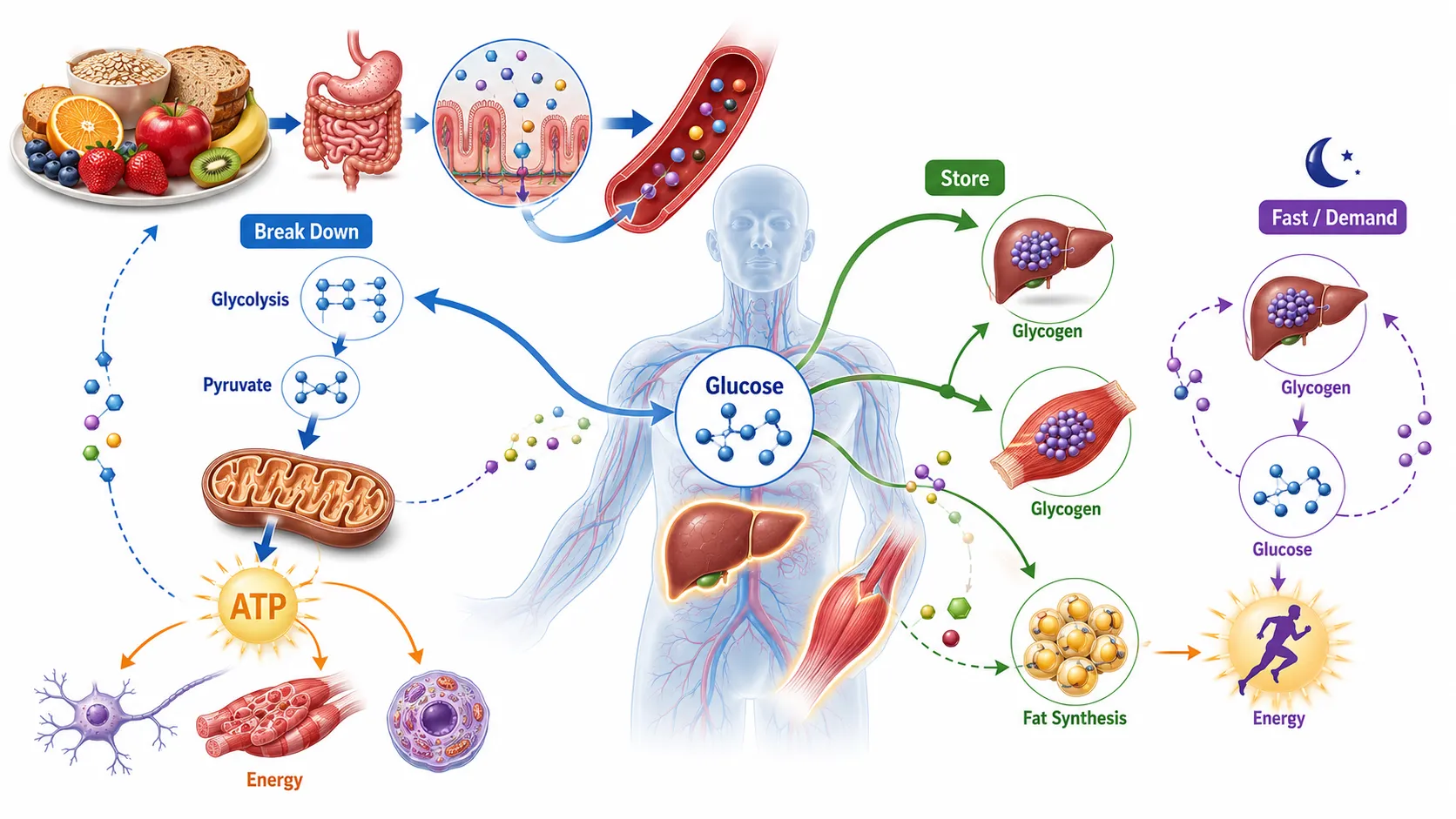
Key Definitions and Concepts
| Term | Definition | Metabolic Importance |
|---|---|---|
| Carbohydrate metabolism | The network of biochemical reactions involved in the utilisation, storage, synthesis and breakdown of carbohydrates | Supports energy production and metabolic homeostasis |
| Catabolism | The breakdown of larger molecules into smaller molecules, often associated with energy release | Provides ATP and metabolic intermediates |
| Anabolism | The synthesis of complex molecules from smaller precursors, requiring energy | Supports storage, growth and biosynthesis |
| Glycolysis | A pathway that converts glucose into pyruvate | Produces ATP and reducing equivalents |
| Glycogenesis | The synthesis of glycogen from glucose | Stores excess glucose for later use |
| Glycogenolysis | The breakdown of glycogen into glucose-containing products | Mobilises stored carbohydrate during energy demand |
| Gluconeogenesis | The synthesis of glucose from non-carbohydrate precursors | Helps maintain glucose availability during fasting |
| Pyruvate oxidation | The conversion of pyruvate into acetyl-CoA | Connects glycolysis with oxidative metabolism |
| Pentose phosphate pathway | An alternative pathway for glucose metabolism | Produces NADPH and pentose sugars |
| Metabolic integration | The coordination of multiple pathways to meet cellular and whole-body needs | Maintains energy and nutrient balance |
Understanding the Integrated Nature of Carbohydrate Metabolism
Carbohydrates as Metabolic Substrates
Dietary carbohydrates are consumed in several forms, including monosaccharides, disaccharides and polysaccharides. Before most complex carbohydrates can be utilised by cells, they must be digested into smaller absorbable units. Glucose is particularly important because it can enter several metabolic pathways depending on the nutritional state, tissue type and energy requirements.
After absorption, glucose enters the circulation and is distributed to tissues. Cells may immediately oxidise glucose to generate ATP, convert it into glycogen for storage, channel it into biosynthetic pathways or use it as a precursor for lipid synthesis when carbohydrate availability exceeds immediate requirements.
The metabolic fate of glucose is therefore not fixed. Instead, it is determined by an integrated regulatory system involving:
Nutritional state, such as feeding or fasting
Hormonal signals
Cellular ATP availability
The concentration of metabolic intermediates
Tissue-specific enzyme expression
Oxygen availability
Physical activity and energy demand
The availability of alternative fuels
The Relationship Between Catabolism and Anabolism
Catabolic and anabolic pathways operate as interconnected components of metabolism rather than as completely independent systems. Catabolism provides energy and molecular intermediates that may support anabolic reactions. Anabolism, in turn, creates energy reserves and biological molecules that can later become substrates for catabolic metabolism.
For example:
Glucose can be broken down through glycolysis to generate ATP.
Excess glucose can be converted into glycogen through glycogenesis.
During fasting, glycogen can be broken down through glycogenolysis.
When glycogen availability becomes limited, glucose can be synthesised through gluconeogenesis.
Metabolic intermediates produced during carbohydrate breakdown can contribute to lipid or amino acid metabolism.
This demonstrates that carbohydrate metabolism is a dynamic system designed to maintain a balance between energy availability and energy demand.
Catabolic Pathways of Dietary Carbohydrates
Glycolysis: The Central Pathway of Glucose Catabolism
Glycolysis is one of the most important pathways of carbohydrate metabolism. It occurs in the cytoplasm of cells and converts glucose into pyruvate through a sequence of enzyme-controlled reactions.
The pathway can operate under aerobic or anaerobic conditions, although the ultimate metabolic fate of pyruvate differs according to oxygen availability and cellular conditions.
Glycolysis can be understood in two major phases:
The energy investment phase
The energy generation phase
The Energy Investment Phase
During the early stages of glycolysis, the cell uses ATP to activate and modify glucose. These reactions make the glucose molecule more suitable for subsequent breakdown.
The major features include:
Phosphorylation of glucose
Conversion into glucose-6-phosphate
Rearrangement into fructose derivatives
Further phosphorylation
Splitting of a six-carbon molecule into smaller three-carbon molecules
The initial use of ATP may appear contradictory within a catabolic pathway. However, this investment enables later reactions to produce a greater amount of energy.
The Energy Generation Phase
Following the splitting of the six-carbon carbohydrate molecule, the resulting three-carbon molecules undergo further oxidation and conversion.
The later stages of glycolysis produce:
ATP
NADH
Pyruvate
The ATP generated during glycolysis provides an immediate source of usable cellular energy. NADH stores high-energy electrons that may later contribute to ATP production under aerobic conditions.
Critical Importance of Glycolysis
Glycolysis is important because it:
Occurs in the cytoplasm and does not directly require mitochondria
Provides rapid ATP production
Supplies intermediates for other metabolic pathways
Supports energy production in tissues with high glucose demand
Can continue when oxygen availability is limited
Produces pyruvate, which links carbohydrate metabolism to further oxidative pathways
Regulation of Glycolysis
Glycolysis is carefully regulated to prevent unnecessary glucose breakdown. Several enzymes act as important control points.
Regulation is influenced by:
ATP concentration
ADP and AMP concentration
Availability of glucose
Hormonal signals
Concentrations of pathway intermediates
Cellular energy requirements
A high ATP concentration generally indicates that the cell has sufficient energy, reducing the need for rapid glucose breakdown. Conversely, increased AMP or ADP can indicate energy demand and promote metabolic activity.
The Metabolic Fate of Pyruvate
Pyruvate Under Aerobic Conditions
When oxygen availability and mitochondrial function are sufficient, pyruvate can enter the mitochondria and undergo further metabolism.
Pyruvate is converted into acetyl-CoA, which can enter the citric acid cycle. This process creates an important connection between glycolysis and oxidative energy metabolism.
The resulting acetyl-CoA can contribute to:
Citric acid cycle activity
Production of reducing equivalents
ATP generation through oxidative processes
Biosynthesis under certain metabolic conditions
Pyruvate Under Limited Oxygen Conditions
When oxygen availability is limited or when energy demand exceeds the capacity of oxidative metabolism, pyruvate may be converted into lactate.
This conversion allows glycolysis to continue by supporting the regeneration of molecules required for the pathway.
This is particularly relevant when:
Energy demand rises rapidly
Oxygen delivery is temporarily limited
Certain tissues rely heavily on anaerobic metabolism
The production of lactate does not represent a complete metabolic endpoint. Lactate can later be transported and used in other metabolic processes.
Glycogenolysis: Mobilising Stored Carbohydrate
The Purpose of Glycogen Breakdown
Glycogenolysis is the catabolic process through which glycogen is broken down into glucose-containing products. Glycogen is a branched storage polymer of glucose found primarily in the liver and skeletal muscle.
The purpose of glycogen differs according to tissue.
Liver Glycogen
Liver glycogen is particularly important for supporting blood glucose availability between meals and during short periods of fasting.
Its functions include:
Maintaining glucose availability
Supporting tissues that require glucose
Providing a rapidly accessible carbohydrate reserve
Muscle Glycogen
Muscle glycogen is primarily used to support local muscular energy requirements.
Its major functions include:
Supporting physical activity
Providing a rapid energy source
Reducing dependence on immediate blood glucose availability
Key Features of Glycogenolysis
Glycogenolysis involves:
Recognition of energy demand
Activation of glycogen-degrading enzymes
Release of glucose-containing units
Conversion of these units into usable metabolic intermediates
Entry into glycolytic pathways where appropriate
Hormonal and cellular signals coordinate glycogen mobilisation.
Anabolic Pathways of Dietary Carbohydrates
Glycogenesis: The Storage of Excess Glucose
Glycogenesis is an anabolic pathway that converts glucose into glycogen. It is particularly active when glucose availability is greater than immediate energy requirements.
Following carbohydrate consumption, increased glucose availability can promote glycogen synthesis, particularly in the liver and skeletal muscle.
Glycogenesis requires:
A supply of glucose
Energy
Specific enzymes
Appropriate hormonal conditions
Major Stages of Glycogenesis
The general process includes:
Conversion of glucose into an activated form
Formation of an initial glycogen structure
Addition of glucose units
Formation of branches within the glycogen molecule
The branched structure of glycogen is metabolically advantageous because it provides multiple sites where glucose-containing units can be added or removed.
Benefits of Glycogen Storage
Glycogen storage provides several physiological advantages:
Rapid access to stored carbohydrate
Temporary buffering of blood glucose
Support for exercise and physical activity
Reduction of excessive circulating glucose after meals
A readily available source of metabolic substrate
However, glycogen storage capacity is limited. When carbohydrate availability remains high after glycogen stores are sufficiently replenished, excess carbon may contribute to other biosynthetic pathways.
Gluconeogenesis: Synthesising New Glucose
Definition and Purpose
Gluconeogenesis is the synthesis of glucose from non-carbohydrate precursors. It is particularly important during prolonged periods without sufficient dietary carbohydrate availability.
Common precursors include:
Lactate
Glycerol-derived molecules
Certain amino acid-derived carbon skeletons
Gluconeogenesis is an anabolic process because it requires energy to construct glucose from smaller molecules.
Why Gluconeogenesis Is Necessary
The body requires mechanisms to maintain glucose availability because not all tissues can rely equally on alternative fuels.
Gluconeogenesis helps:
Maintain blood glucose during fasting
Support continuous metabolic needs
Recycle metabolic products
Coordinate carbohydrate metabolism with protein and lipid metabolism
Integration with Other Pathways
Gluconeogenesis illustrates the close relationship between different macronutrient pathways.
For example:
Lactate produced during anaerobic metabolism can contribute carbon for glucose synthesis.
Glycerol released during lipid breakdown can enter pathways leading towards glucose production.
Certain amino acid carbon skeletons can contribute to glucose synthesis.
Therefore, carbohydrate metabolism cannot be interpreted in isolation from lipid and protein metabolism.
The Pentose Phosphate Pathway
An Alternative Fate of Glucose
Not all glucose enters glycolysis. Glucose-6-phosphate can enter the pentose phosphate pathway, which performs important anabolic and protective functions.
The pathway produces molecules that support:
Reductive biosynthesis
Antioxidant defence
Nucleotide-related biosynthesis
Major Products and Functions
Two important outcomes include the production of NADPH and pentose sugars.
NADPH is important for:
Biosynthetic reactions
Maintenance of cellular antioxidant systems
Protection against oxidative damage
Pentose sugars are important for:
Nucleotide synthesis
Nucleic acid-related processes
This pathway demonstrates that glucose serves purposes beyond direct ATP production.
Hormonal Regulation of Carbohydrate Metabolism
The Fed State
Following a carbohydrate-containing meal, increased nutrient availability promotes metabolic pathways associated with utilisation and storage.
During the fed state, the body generally favours:
Glucose uptake by responsive tissues
Glycolysis where energy is required
Glycogenesis
Biosynthetic activity
These responses help manage increased nutrient availability and maintain metabolic stability.
The Fasting State
During fasting, the body must maintain energy availability while conserving important metabolic resources.
The metabolic response may involve:
Glycogenolysis
Reduced glycogen synthesis
Increased gluconeogenesis
Greater use of alternative energy substrates
Changes in tissue-specific fuel selection
Hormonal Integration
Hormones act as communication signals between tissues. They help ensure that metabolic pathways respond appropriately to nutritional conditions.
Hormonal regulation influences:
Glucose uptake
Glycogen synthesis
Glycogen breakdown
Glucose production
Enzyme activity
Energy storage and mobilisation
Cellular Energy Status and Pathway Regulation
ATP as a Metabolic Signal
ATP is not only an energy molecule; its concentration also provides information about cellular energy status.
When ATP levels are high:
Energy demand may be relatively low
Some catabolic pathways may slow
Storage and biosynthetic pathways may become more favourable
When ATP levels decline:
Catabolic activity may increase
Stored fuels may be mobilised
Energy-producing pathways may become more active
The Role of AMP and ADP
AMP and ADP can indicate that ATP has been consumed.
An increase in these molecules may signal:
Increased energy demand
Need for greater ATP production
Activation of catabolic pathways
This regulatory system allows cells to respond rapidly to changing conditions.
Integration of Carbohydrate Catabolism and Anabolism
Metabolic Switching
The body continuously switches between carbohydrate utilisation, storage and production according to physiological conditions.
A simplified interpretation is:
After meals: utilisation and storage increase.
Between meals: stored carbohydrate may be mobilised.
During prolonged fasting: glucose synthesis becomes increasingly important.
During intense activity: carbohydrate breakdown may increase rapidly.
However, these states overlap and are influenced by factors such as exercise intensity, dietary composition, health status and previous nutritional history.
Reciprocal Regulation
Many opposing pathways are regulated to reduce unnecessary simultaneous activity.
For example, the body generally avoids maximising both:
Glycogenesis and glycogenolysis
Glycolysis and glucose production pathways
at the same time within the same cellular context.
Reciprocal regulation improves metabolic efficiency and reduces unnecessary energy expenditure.
Key Processes in Dietary Carbohydrate Metabolism
From Dietary Intake to Cellular Energy
The overall process can be interpreted through the following sequence:
Dietary carbohydrates are consumed.
Complex carbohydrates are digested into smaller sugars.
Absorbable sugars enter intestinal cells.
Nutrients are transported into the circulation.
Glucose is delivered to tissues.
Cells take up glucose according to tissue-specific mechanisms.
Glucose enters glycolysis or alternative pathways.
ATP is generated or metabolic intermediates are produced.
Excess glucose may be stored as glycogen.
During Reduced Dietary Carbohydrate Availability
When immediate carbohydrate intake decreases:
Blood glucose regulation becomes increasingly important.
Liver glycogen may be mobilised.
Glucose production pathways may increase.
Alternative metabolic fuels may contribute more substantially to energy supply.
Protein and lipid metabolism may become increasingly integrated with carbohydrate pathways.
Practical Examples of Carbohydrate Pathway Integration
Example: The Post-Meal State
A person consumes a meal containing complex carbohydrates.
The metabolic sequence may involve:
Digestion of carbohydrates into absorbable sugars
Increased glucose availability
Distribution of glucose through the circulation
Cellular uptake of glucose
ATP production through glycolysis
Storage of excess glucose as glycogen
Diversion of some glucose-derived intermediates into biosynthetic pathways
This example demonstrates the simultaneous operation of catabolic and anabolic processes.
Example: Moderate Physical Activity
During moderate exercise, skeletal muscle requires additional ATP.
The metabolic response may include:
Increased utilisation of available glucose
Mobilisation of muscle glycogen
Increased glycolytic activity
Greater oxidative metabolism where oxygen is available
Integration with lipid metabolism as activity continues
The exact contribution of each pathway changes according to exercise duration and intensity.
Example: Overnight Fasting
During an overnight period without food intake, dietary glucose is unavailable.
The body responds by:
Mobilising stored glycogen
Maintaining blood glucose availability
Increasing reliance on endogenous metabolic pathways
Gradually increasing gluconeogenic activity
Coordinating carbohydrate metabolism with lipid metabolism
This demonstrates how anabolic and catabolic processes are coordinated over time.
Critical Interpretation of Metabolic Pathways
Pathways Are Not Isolated
A common misunderstanding is to view glycolysis, glycogenesis and gluconeogenesis as isolated sequences. In reality, they share substrates, enzymes, regulatory signals and metabolic intermediates.
Critical interpretation requires the Learner to ask:
What is the starting substrate?
What is the final product?
Is energy consumed or produced?
Which enzymes regulate the pathway?
Where in the cell does the pathway occur?
Which tissue is primarily involved?
Under what physiological conditions is the pathway active?
How does the pathway interact with lipid and protein metabolism?
Directionality and Irreversibility
Some metabolic reactions are readily reversible, whereas others act as major control points and require specialised mechanisms when the metabolic direction changes.
This is particularly important when comparing glycolysis and gluconeogenesis. The body does not simply reverse every glycolytic reaction to produce glucose. Instead, alternative reactions and enzymes allow metabolic control and prevent inappropriate energy loss.
Key points include:
Not all biochemical reactions are equally reversible.
Regulatory enzymes determine pathway direction.
Energy input is required for anabolic glucose synthesis.
Metabolic bypass mechanisms support controlled pathway reversal.
Common Misinterpretations and How to Avoid Them
Misconception: Catabolism Always Means Immediate Energy Release
Although catabolic pathways often release energy, energy may also be conserved in molecules such as NADH.
A more accurate interpretation is that catabolism:
Breaks down molecules
Releases or transfers potential energy
Produces smaller intermediates
Supports ATP generation directly or indirectly
Misconception: Glucose Is Used Only for ATP Production
Glucose has several metabolic functions.
It may be used for:
ATP production
Glycogen synthesis
Pentose production
NADPH generation
Biosynthetic intermediates
Lipid synthesis under certain conditions
Misconception: Anabolic and Catabolic Pathways Cannot Occur Together
Different pathways may operate simultaneously in different tissues or cellular compartments.
For example:
The liver may produce glucose while another tissue uses glucose.
One tissue may mobilise glycogen while another stores carbohydrate.
Anabolic and catabolic reactions may be integrated to support overall homeostasis.
Key Benefits of Understanding Integrated Carbohydrate Metabolism
A detailed understanding of carbohydrate pathways enables Learners to:
Interpret metabolic pathway diagrams accurately.
Understand the relationship between nutrient intake and energy production.
Analyse changes occurring during feeding and fasting.
Explain the physiological role of glycogen storage.
Differentiate between catabolic and anabolic reactions.
Understand how cellular energy status regulates metabolism.
Connect carbohydrate metabolism with lipid and protein metabolism.
Interpret biochemical data in nutritional and physiological contexts.
Recognise the importance of tissue-specific metabolic functions.
Develop a foundation for advanced study in human metabolism and nutrition.
Applying Carbohydrate Metabolism to Professional and Academic Contexts
Nutritional Assessment
Understanding carbohydrate pathways helps professionals interpret the relationship between:
Dietary carbohydrate intake
Blood glucose regulation
Energy availability
Glycogen storage
Physical activity
Fasting adaptation
Exercise and Performance
Carbohydrate metabolism is particularly relevant when assessing:
Exercise intensity
Duration of activity
Glycogen availability
Recovery requirements
Energy demands of skeletal muscle
Clinical and Scientific Interpretation
Metabolic pathway knowledge supports the interpretation of:
Altered glucose regulation
Changes in energy metabolism
Abnormal glycogen metabolism
Fasting responses
Biochemical laboratory findings
Interpretation should always consider the complete physiological context rather than relying on a single pathway or measurement.
A Step-by-Step Framework for Interpreting Carbohydrate Pathways
Step 1: Identify the Nutritional State
Determine whether the individual is:
Recently fed
Between meals
Fasting
Exercising
Recovering from physical activity
Step 2: Identify the Primary Metabolic Requirement
Ask whether the body primarily requires:
Immediate ATP
Glucose storage
Maintenance of blood glucose
New glucose synthesis
Biosynthetic intermediates
Step 3: Identify the Relevant Tissue
Different tissues have different metabolic priorities.
Consider:
Liver
Skeletal muscle
Brain and other glucose-dependent tissues
Adipose tissue
Other metabolically active organs
Step 4: Identify the Dominant Pathway
Determine whether the dominant process is likely to involve:
Glycolysis
Glycogenesis
Glycogenolysis
Gluconeogenesis
Pentose phosphate pathway
Further oxidative metabolism
Step 5: Evaluate Energy Status
Consider the balance between:
ATP availability
ADP concentration
AMP concentration
Energy demand
Step 6: Interpret Regulatory Signals
Assess the influence of:
Hormones
Enzyme activity
Substrate availability
Product accumulation
Tissue-specific regulation
Step 7: Connect the Pathway to Whole-Body Metabolism
Finally, determine how the pathway contributes to:
Energy balance
Blood glucose regulation
Nutrient storage
Exercise adaptation
Fasting responses
Integration with lipid and protein metabolism
Summary
The catabolic and anabolic pathways of dietary carbohydrates form a coordinated biochemical network that enables the human body to respond effectively to changing nutritional and physiological conditions. Glycolysis and glycogenolysis contribute to the breakdown and mobilisation of carbohydrate substrates, supporting ATP production and energy availability. In contrast, glycogenesis and gluconeogenesis support the storage and synthesis of glucose, helping to maintain metabolic stability during changing patterns of nutrient intake.
The pentose phosphate pathway further demonstrates that glucose metabolism extends beyond direct energy production by supporting biosynthesis and cellular protective mechanisms. Hormonal regulation, enzyme activity and cellular energy status coordinate these pathways to ensure that glucose is used, stored or synthesised according to physiological need.
A critical understanding of carbohydrate metabolism requires more than memorising individual pathways. Learners must interpret how pathways interact, why they are activated under particular conditions and how different tissues cooperate to maintain whole-body metabolic homeostasis. By analysing the integration of catabolic and anabolic carbohydrate metabolism, Learners can develop the scientific knowledge required to understand nutrition, energy balance, exercise physiology, fasting adaptation and advanced human biochemical processes.
2.Evaluate the Specific Physiological Roles and Complex Metabolic Processing of Various Lipids, Including Fatty Acid Oxidation and Cholesterol Synthesis
Lipids are a diverse group of biological molecules with essential roles in human physiology, cellular structure, energy metabolism and biochemical signalling. Although lipids are commonly associated with long-term energy storage, their physiological functions extend far beyond the storage of excess energy. They contribute to cell membrane structure, insulation, organ protection, hormone production, intracellular signalling and the transport and absorption of certain nutrients.
The metabolic processing of lipids is complex because different classes of lipids follow different pathways after digestion and absorption. Fatty acids may be oxidised to produce energy, incorporated into triglycerides for storage, used in membrane synthesis or converted into other biologically important molecules. Cholesterol is synthesised through a highly regulated anabolic pathway and is also obtained from dietary sources. It serves as a structural component of cell membranes and as a precursor for steroid hormones, bile acids and other important compounds.
A critical evaluation of lipid metabolism requires an understanding of how the body responds to changing energy demands. During periods of adequate energy availability, lipids may be synthesised and stored. During fasting, prolonged exercise or reduced carbohydrate availability, stored fatty acids may be mobilised and oxidised to support ATP production. These processes are regulated by hormones, enzymes, cellular energy status and tissue-specific requirements.
Key Definitions and Concepts
| Term | Definition | Physiological or Metabolic Importance |
|---|---|---|
| Lipid | A broad group of hydrophobic or amphipathic biological molecules | Supports energy storage, membranes and signalling |
| Triglyceride | A molecule consisting of glycerol attached to three fatty acids | Major form of stored dietary and endogenous fat |
| Fatty acid | A hydrocarbon chain with a carboxyl group | Important fuel and structural precursor |
| Lipolysis | The breakdown of stored triglycerides into fatty acids and glycerol | Mobilises energy during increased demand |
| Beta-oxidation | A mitochondrial pathway that breaks fatty acids into acetyl-CoA units | Produces energy-rich reducing equivalents |
| Lipogenesis | The synthesis of fatty acids from metabolic precursors | Supports energy storage when fuel is abundant |
| Ketogenesis | The production of ketone bodies from acetyl-CoA | Provides alternative fuel during prolonged carbohydrate limitation |
| Cholesterol | A sterol lipid essential for membranes and biosynthesis | Precursor for steroid hormones and bile acids |
| Cholesterol synthesis | An anabolic pathway that produces cholesterol from acetyl-CoA | Supports cellular and physiological requirements |
| Lipoprotein | A complex that transports lipids through the circulation | Enables distribution of hydrophobic lipids |
| Metabolic flexibility | The ability to alter fuel utilisation according to availability and demand | Supports adaptation to feeding, fasting and exercise |
Classification and Physiological Roles of Lipids
Major Types of Lipids
Lipids include several structurally and functionally distinct groups. Understanding these differences is important because their digestion, transport and metabolic processing are not identical.
The major categories include:
Fatty acids
Triglycerides
Phospholipids
Cholesterol and cholesterol-containing compounds
Steroid-derived molecules
Lipid-soluble signalling molecules
Each category contributes differently to human physiology.
Fatty Acids
Fatty acids are important metabolic substrates and structural components. Their chemical structure influences how they behave within membranes and metabolic pathways.
Fatty acids may differ according to:
Chain length
Degree of saturation
Number and position of double bonds
Cellular and dietary origin
These structural differences influence physical properties and metabolic handling.
Fatty acids perform several important functions:
Providing a concentrated source of energy
Contributing to triglyceride storage
Participating in membrane lipid structures
Serving as precursors for signalling molecules
Supporting metabolic adaptation during fasting
Triglycerides
Triglycerides are the principal form of stored energy in adipose tissue and are also a major dietary lipid.
Their physiological roles include:
Long-term energy storage
Provision of fatty acids during energy demand
Storage of excess metabolic energy
Transport of dietary and endogenous lipids
Triglycerides are particularly efficient for long-term energy storage because they provide a high energy density and can be stored with relatively little associated water.
Phospholipids
Phospholipids are major structural components of cellular membranes. Their amphipathic structure allows them to form bilayers that separate the internal cellular environment from the external environment.
Key roles include:
Formation of cell membranes
Organisation of intracellular membranes
Participation in cell signalling
Support of membrane transport processes
Contribution to lipoprotein structure
Cholesterol
Cholesterol is often discussed primarily in relation to cardiovascular health, but this perspective is incomplete. Cholesterol is an essential biological molecule.
It contributes to:
Regulation of membrane structure
Maintenance of membrane stability
Production of steroid hormones
Synthesis of bile acids
Formation of certain biologically active molecules
The physiological importance of cholesterol means that the body maintains carefully regulated mechanisms for its synthesis, transport, utilisation and elimination.
Digestion and Absorption of Dietary Lipids
The Challenge of Lipid Digestion
Lipids are hydrophobic and do not mix easily with the aqueous environment of the gastrointestinal tract. Consequently, lipid digestion requires specialised processes.
The major stages include:
Mechanical processing of food
Emulsification of large lipid droplets
Enzymatic breakdown of complex lipids
Formation of transportable lipid aggregates
Uptake into intestinal cells
Reassembly and packaging for transport
Emulsification
Bile-derived compounds assist in breaking large lipid droplets into smaller droplets. This increases the surface area available for enzymatic activity.
The benefits of emulsification include:
Improved access for digestive enzymes
More efficient lipid breakdown
Formation of smaller lipid structures
Enhanced preparation for intestinal absorption
Enzymatic Hydrolysis
Digestive enzymes break triglycerides into smaller components that can be absorbed more effectively.
The resulting products may include:
Free fatty acids
Monoacylglycerols
Other smaller lipid-derived molecules
These components interact with specialised structures that assist their movement through the intestinal environment.
Absorption and Reassembly
After entering intestinal cells, many lipid components are reassembled into larger lipid molecules. They are then packaged into specialised transport particles because lipids cannot circulate freely in large quantities within the aqueous bloodstream.
This process allows dietary lipids to move through the body and eventually reach tissues where they can be:
Oxidised for energy
Stored in adipose tissue
Incorporated into cellular structures
Used for biosynthetic purposes
Lipid Transport and Lipoproteins
Why Lipids Require Transport Systems
Because triglycerides and cholesterol are hydrophobic, specialised transport systems are required to move them through the circulation.
Lipoproteins contain:
Lipid components
Protein components
Surface molecules that support interaction with tissues
Different lipoprotein particles vary in composition and function.
Major Functional Roles of Lipoprotein Transport
Lipoprotein systems help:
Transport dietary triglycerides
Deliver lipids to tissues
Move cholesterol between organs
Support lipid recycling
Maintain lipid distribution within the body
A critical understanding of lipid transport recognises that cholesterol and triglyceride metabolism involve both synthesis and movement between tissues.
Lipolysis: Mobilisation of Stored Lipids
Definition of Lipolysis
Lipolysis is the catabolic breakdown of stored triglycerides into fatty acids and glycerol. It is particularly important when immediate dietary energy availability is reduced or when energy expenditure increases.
Stored triglycerides are primarily found in adipose tissue.
Physiological Conditions That Promote Lipolysis
Lipolysis may increase during:
Fasting
Prolonged physical activity
Reduced carbohydrate availability
Increased energy demand
Certain hormonal conditions
The mobilisation of stored lipids provides fatty acids that can travel to tissues requiring energy.
Metabolic Products of Lipolysis
The major products include:
Free fatty acids
Glycerol
These products have different metabolic fates.
Fatty acids may:
Enter oxidative pathways
Be used by energy-demanding tissues
Be converted into other lipid-derived molecules
Glycerol may contribute to other metabolic pathways, demonstrating the integration of lipid and carbohydrate metabolism.
Fatty Acid Oxidation
Overview of Beta-Oxidation
Beta-oxidation is a major catabolic pathway responsible for the progressive breakdown of fatty acids. It occurs primarily in the mitochondria and produces acetyl-CoA along with reducing equivalents that support ATP production.
The pathway is especially important when fatty acids become a major energy source.
Beta-oxidation involves repeated cycles in which the fatty acid chain is progressively shortened.
Each cycle generally results in:
Removal of a two-carbon unit
Production of acetyl-CoA
Generation of reducing equivalents
Preparation of the shortened fatty acid for another cycle
Step 1: Activation of Fatty Acids
Before oxidation, fatty acids must be converted into an activated form.
This activation:
Requires energy
Prepares the fatty acid for further processing
Occurs before full mitochondrial oxidation
Activation ensures that fatty acids can enter the appropriate metabolic sequence.
Step 2: Transport into the Mitochondria
Long-chain fatty acids require specialised transport processes to enter the mitochondrial environment where much of beta-oxidation occurs.
This transport stage is an important point of metabolic regulation.
The process ensures that:
Fatty acid entry is controlled
Oxidation responds to energy requirements
Storage and oxidation pathways are appropriately coordinated
Step 3: Repeated Oxidation Cycles
Once within the appropriate mitochondrial environment, the fatty acid undergoes repeated reactions.
The general sequence includes:
Oxidation
Hydration
Further oxidation
Cleavage
This sequence is repeated until the fatty acid has been sufficiently converted into smaller units.
Major Products of Beta-Oxidation
The pathway produces:
Acetyl-CoA
NADH
FADH₂
These products are metabolically important because they contribute to further ATP production.
Acetyl-CoA may enter:
The citric acid cycle
Ketone body synthesis under certain conditions
Other metabolic pathways
NADH and FADH₂ transfer high-energy electrons to processes involved in oxidative ATP generation.
Physiological Importance of Fatty Acid Oxidation
Fatty acid oxidation is particularly important because it allows the body to use stored energy reserves during periods when carbohydrate availability is reduced.
Key benefits include:
Provision of sustained energy
Conservation of circulating glucose
Support for prolonged physical activity
Mobilisation of long-term energy reserves
Adaptation to fasting
However, the rate of fatty acid oxidation depends on several factors.
These include:
Availability of fatty acids
Mitochondrial capacity
Oxygen availability
Hormonal state
Cellular ATP demand
Availability of carbohydrate-derived intermediates
The Relationship Between Carbohydrate and Lipid Oxidation
Metabolic Interdependence
Carbohydrate and lipid metabolism are closely connected. The oxidation of fatty acids produces acetyl-CoA, while carbohydrate metabolism provides intermediates that support efficient oxidative metabolism.
During periods of adequate carbohydrate intake:
Glucose may contribute substantially to ATP production.
Excess carbohydrate may support lipid synthesis.
Fat oxidation may be relatively reduced in some tissues.
During fasting or prolonged exercise:
Fatty acid mobilisation increases.
Beta-oxidation becomes increasingly important.
The body may conserve available glucose.
Metabolic Flexibility
The ability to shift between carbohydrate and lipid utilisation is known as metabolic flexibility.
This capacity allows the body to adapt to:
Feeding
Short-term fasting
Prolonged fasting
Low carbohydrate availability
Exercise
Changing energy demands
Efficient metabolic flexibility contributes to the maintenance of energy balance.
Lipogenesis and Fatty Acid Synthesis
Definition of Lipogenesis
Lipogenesis is an anabolic process involving the synthesis of fatty acids and, subsequently, other lipid molecules.
It generally becomes more active when energy and carbohydrate availability exceed immediate physiological requirements.
Major Characteristics of Lipogenesis
Lipogenesis:
Requires energy
Uses carbon-containing metabolic precursors
Occurs primarily under conditions of energy abundance
Supports long-term energy storage
The process allows excess energy to be converted into a form suitable for storage.
Integration with Carbohydrate Metabolism
When carbohydrate intake is high and glycogen stores are sufficiently replenished, some carbohydrate-derived carbon may contribute to fatty acid synthesis.
This demonstrates an important metabolic principle:
Excess energy from one macronutrient can influence the storage and metabolism of another.
Ketogenesis and Alternative Fuel Production
What Is Ketogenesis?
Ketogenesis is the production of ketone bodies from acetyl-CoA under conditions in which carbohydrate availability is reduced and fatty acid oxidation is increased.
Ketone body production becomes more significant during:
Prolonged fasting
Extended carbohydrate restriction
Certain physiological states involving increased fat mobilisation
Physiological Purpose
Ketone bodies provide an alternative energy source for certain tissues.
Their production may:
Reduce dependence on glucose
Support energy metabolism during prolonged fasting
Reflect increased fatty acid oxidation
Ketogenesis therefore represents an important adaptation to changing nutrient availability.
Cholesterol Metabolism
The Physiological Importance of Cholesterol
Cholesterol is essential for normal cellular function. It is a structural component of cell membranes and serves as a precursor for several important molecules.
Its functions include:
Supporting membrane structure
Contributing to membrane fluidity
Providing a precursor for steroid hormones
Supporting bile acid production
Participating in specialised cellular processes
The body can obtain cholesterol from dietary sources and can also synthesise it internally.
Cholesterol Synthesis as an Anabolic Pathway
Cholesterol synthesis is a complex anabolic pathway that begins with acetyl-CoA-derived building blocks.
The pathway involves several stages in which smaller molecules are progressively converted into larger intermediates before cholesterol is produced.
The general stages include:
Formation of acetyl-CoA-derived intermediates
Production of mevalonate
Formation of activated carbon units
Construction of larger hydrocarbon structures
Formation of cyclic sterol intermediates
Final production of cholesterol
This pathway requires substantial metabolic regulation because excessive cholesterol synthesis would disrupt lipid homeostasis.
Regulation of Cholesterol Synthesis
Enzyme Regulation
A key regulatory enzyme controls an important rate-limiting stage in cholesterol synthesis.
Regulation of this pathway responds to:
Cellular cholesterol availability
Nutritional state
Hormonal signals
Energy availability
When cellular cholesterol levels are sufficient, synthesis can be reduced. When cells require additional cholesterol, synthesis may increase within physiological limits.
Importance of Feedback Regulation
Feedback regulation prevents unnecessary overproduction.
This system helps maintain balance between:
Cholesterol synthesis
Cholesterol uptake
Cholesterol utilisation
Cholesterol storage
Cholesterol elimination
Physiological Roles of Cholesterol-Derived Molecules
Steroid Hormones
Cholesterol provides a precursor for the synthesis of steroid hormones involved in several physiological functions.
These hormones contribute to:
Regulation of metabolism
Stress responses
Reproductive functions
Salt and fluid balance
Bile Acids
Cholesterol-derived bile acids assist in the digestion and absorption of dietary lipids.
Their roles include:
Emulsification of dietary fats
Support for lipid digestion
Facilitation of lipid absorption
This demonstrates a metabolic cycle in which cholesterol contributes to processes that help the body process additional lipids.
Storage and Mobilisation of Lipids
Adipose Tissue as a Metabolic Organ
Adipose tissue is not simply an inactive storage site. It is a metabolically active tissue involved in energy storage, endocrine signalling and fuel mobilisation.
Its functions include:
Storage of triglycerides
Release of fatty acids
Communication with other tissues
Participation in energy balance
Energy Surplus
When energy intake exceeds expenditure:
Triglyceride synthesis may increase.
Lipid storage may increase.
Fatty acid oxidation may be relatively reduced.
Adipose tissue may accumulate energy reserves.
Energy Deficit
When energy expenditure exceeds intake:
Lipolysis may increase.
Fatty acids may be released.
Beta-oxidation may increase.
Alternative fuels may become more important.
This dynamic balance demonstrates the central role of lipid metabolism in long-term energy regulation.
Practical Example: Lipid Metabolism During Fasting
During fasting, the body must continue to supply energy despite reduced nutrient intake.
A general metabolic sequence includes:
Reduced availability of dietary nutrients
Increased mobilisation of stored triglycerides
Release of fatty acids and glycerol
Transport of fatty acids to energy-demanding tissues
Increased beta-oxidation
Production of acetyl-CoA
Possible increase in ketone body production during prolonged fasting
This example demonstrates the coordinated transition from energy storage to energy mobilisation.
Practical Example: Lipid Metabolism During Prolonged Exercise
During prolonged exercise, energy demand remains elevated for an extended period.
Metabolic adaptations may include:
Increased use of stored energy
Mobilisation of fatty acids
Increased mitochondrial oxidation
Integration of carbohydrate and lipid metabolism
Adjustment of fuel selection according to intensity and duration
At higher exercise intensities, carbohydrate metabolism may contribute more substantially because it can provide energy more rapidly. During prolonged moderate activity, lipid oxidation can provide a significant contribution to energy supply.
Practical Example: Cholesterol Synthesis and Cellular Requirements
A cell requires cholesterol to maintain membrane structure and support specific biosynthetic functions.
The cell may obtain cholesterol through:
Internal synthesis
Uptake from circulating transport particles
If internal cholesterol availability becomes sufficient, regulatory mechanisms can reduce further synthesis.
This illustrates the principle of metabolic feedback regulation.
Critical Evaluation of Lipid Metabolism
Lipids Are Not Simply Energy Stores
A narrow interpretation of lipid metabolism focuses only on body fat and energy storage. A more accurate understanding recognises the broad physiological importance of lipids.
Lipids contribute to:
Energy production
Cell structure
Hormone production
Cell signalling
Nutrient absorption
Transport of hydrophobic molecules
Tissue protection
Fatty Acid Oxidation Is Context Dependent
Fatty acid oxidation does not occur at a constant rate. Its contribution to energy production depends on physiological circumstances.
Factors influencing oxidation include:
Nutritional intake
Exercise intensity
Duration of activity
Hormonal regulation
Mitochondrial function
Oxygen availability
Carbohydrate availability
Cholesterol Is Essential but Requires Regulation
Cholesterol is necessary for normal physiology, but its metabolism must remain regulated.
A balanced interpretation recognises that:
Cholesterol has essential cellular functions.
The body can synthesise cholesterol.
Cholesterol can be transported between tissues.
Excessive disturbances in cholesterol handling may affect health.
Dietary intake is only one component of overall cholesterol metabolism.
Common Misinterpretations
Misconception: All Dietary Fat Is Immediately Stored
Dietary fat can have several metabolic fates.
It may be:
Oxidised for energy
Stored as triglyceride
Incorporated into membranes
Used for biosynthesis
Transported to specific tissues
Misconception: Fatty Acid Oxidation Occurs Only During Starvation
Fatty acid oxidation occurs under many normal physiological conditions.
Its contribution varies during:
Rest
Exercise
Between meals
Overnight fasting
Prolonged food restriction
Misconception: Cholesterol Is Only Harmful
Cholesterol is essential for normal cellular and physiological functions.
The more important scientific consideration is the regulation of:
Synthesis
Transport
Distribution
Utilisation
Elimination
Misconception: All Lipids Follow the Same Pathway
Different lipid classes have different functions and metabolic pathways.
For example:
Triglycerides primarily support energy storage.
Phospholipids contribute to membranes.
Cholesterol supports membranes and serves as a biosynthetic precursor.
Fatty acids can function as fuels or structural components.
Key Benefits of Understanding Lipid Metabolism
Understanding the metabolic processing of lipids enables Learners to:
Explain the major physiological functions of different lipid classes.
Interpret the process of dietary lipid digestion and absorption.
Describe the mobilisation of stored triglycerides.
Understand the biochemical stages of beta-oxidation.
Explain how fatty acid oxidation supports ATP production.
Recognise the metabolic importance of ketone body production.
Understand the integration of carbohydrate and lipid metabolism.
Explain the anabolic nature of cholesterol synthesis.
Evaluate how hormones and energy status regulate lipid pathways.
Apply biochemical knowledge to fasting, exercise and nutritional scenarios.
Step-by-Step Framework for Evaluating Lipid Metabolism
Step 1: Identify the Lipid Type
Determine whether the metabolic discussion concerns:
Fatty acids
Triglycerides
Phospholipids
Cholesterol
Other lipid-derived molecules
Step 2: Determine the Physiological State
Consider whether the individual is:
In the fed state
Between meals
Fasting
Exercising
Experiencing prolonged energy demand
Step 3: Identify the Primary Metabolic Requirement
Ask whether the body requires:
Immediate energy
Long-term energy storage
Membrane synthesis
Hormone production
Lipid transport
Alternative fuel production
Step 4: Identify the Dominant Pathway
Relevant pathways may include:
Lipolysis
Beta-oxidation
Lipogenesis
Ketogenesis
Cholesterol synthesis
Lipoprotein transport
Step 5: Evaluate Regulation
Consider:
Hormonal signals
Substrate availability
Cellular energy status
Enzyme activity
Tissue-specific metabolic requirements
Step 6: Connect the Pathway to Whole-Body Physiology
Evaluate how lipid metabolism influences:
Energy balance
Physical activity
Fasting adaptation
Cellular structure
Hormone synthesis
Nutrient absorption
Metabolic homeostasis
Integration of Lipid Pathways with Overall Metabolism
Lipid metabolism is closely integrated with carbohydrate and protein metabolism. Acetyl-CoA acts as an important metabolic intermediate connecting several pathways. Glycerol released during lipolysis can contribute to carbohydrate-related pathways, while amino acid metabolism can also interact with central energy metabolism.
This integration allows the body to respond flexibly to changing nutritional conditions.
The key relationships include:
Carbohydrate excess can contribute to lipid synthesis.
Reduced carbohydrate availability can increase reliance on fatty acid oxidation.
Fatty acid oxidation produces acetyl-CoA.
Acetyl-CoA can support oxidative metabolism or ketone body production.
Cholesterol synthesis uses acetyl-CoA-derived precursors.
Lipid mobilisation supports energy requirements during fasting.
Summary
Lipids are essential biological molecules with diverse structural, metabolic and regulatory functions. Their importance extends from long-term energy storage to membrane formation, hormone synthesis, cellular signalling and nutrient transport. The metabolic processing of lipids involves coordinated pathways that respond to changes in energy availability and physiological demand.
Fatty acid oxidation is a major catabolic pathway that converts fatty acids into acetyl-CoA and energy-rich reducing equivalents, supporting ATP production during periods of increased energy demand or reduced carbohydrate availability. Lipolysis mobilises stored triglycerides, while ketogenesis provides an important metabolic adaptation during prolonged carbohydrate limitation.
In contrast, lipogenesis and cholesterol synthesis represent important anabolic processes. Lipogenesis allows excess energy to be stored, while cholesterol synthesis provides an essential molecule required for membrane structure and the production of steroid hormones and bile acids.
A critical understanding of lipid metabolism requires recognition that these pathways are highly integrated. The body continuously balances lipid storage, mobilisation, oxidation and synthesis according to nutrient availability, hormonal regulation and tissue-specific energy requirements. By evaluating these complex processes, Learners can develop a strong foundation for understanding human nutrition, energy metabolism, exercise physiology and metabolic regulation.
3.Analyse the Complete Metabolic Lifecycle of Proteins, Detailing Amino Acid Degradation, Nitrogen Balance, and the Function of the Urea Cycle
Proteins are essential biological macromolecules that perform structural, metabolic, transport, regulatory and protective functions within the human body. Unlike carbohydrates and lipids, the body does not maintain a specialised storage system for excess amino acids. Consequently, protein metabolism requires continuous regulation to balance dietary protein intake, tissue protein synthesis, protein degradation and amino acid catabolism.
The metabolic lifecycle of proteins begins with dietary intake and digestion and continues through absorption, transport, utilisation, turnover and degradation. Amino acids released from dietary proteins enter a dynamic metabolic pool that supplies tissues with the building blocks required for protein synthesis and other specialised biochemical functions. When amino acids are present in excess or when the body requires energy during particular physiological conditions, their carbon skeletons may enter metabolic pathways for energy production or glucose synthesis.
A distinctive feature of amino acid metabolism is the presence of nitrogen. The removal and safe disposal of nitrogen are essential because excessive accumulation of ammonia can disrupt normal cellular and neurological function. The liver plays a central role in nitrogen metabolism by converting toxic ammonia into urea through the urea cycle. Urea is subsequently transported to the kidneys and eliminated from the body.
A comprehensive analysis of protein metabolism therefore requires an understanding of the relationship between protein digestion, amino acid utilisation, protein turnover, nitrogen balance, amino acid degradation and the urea cycle.
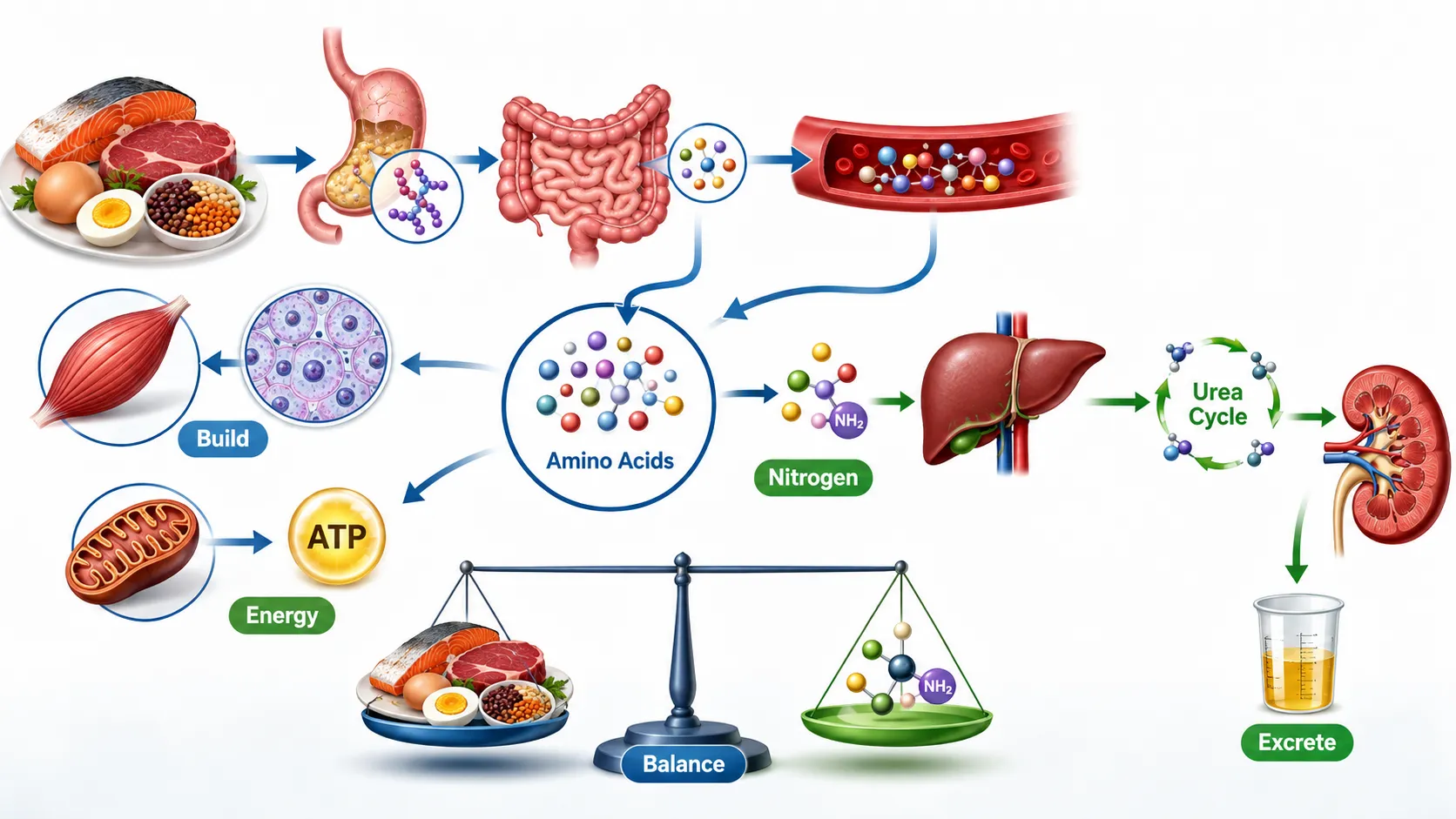
Key Definitions and Concepts
| Term | Definition | Metabolic Importance |
|---|---|---|
| Protein metabolism | The processes involved in protein digestion, synthesis, turnover and degradation | Maintains body tissues and metabolic functions |
| Amino acid pool | The available supply of free amino acids within body fluids and cells | Provides substrates for protein synthesis and metabolism |
| Proteolysis | The enzymatic breakdown of proteins into smaller peptides and amino acids | Supports digestion and protein turnover |
| Amino acid catabolism | The biochemical degradation of amino acids | Provides energy or metabolic intermediates |
| Transamination | Transfer of an amino group from one molecule to another | Central process in amino acid metabolism |
| Deamination | Removal of an amino group from an amino acid | Produces nitrogen-containing compounds for disposal |
| Ammonia | A nitrogen-containing product of amino acid metabolism | Toxic at elevated concentrations |
| Nitrogen balance | The relationship between nitrogen intake and nitrogen loss | Indicates protein metabolic status |
| Positive nitrogen balance | Nitrogen intake exceeds nitrogen loss | Associated with tissue growth and repair |
| Negative nitrogen balance | Nitrogen loss exceeds nitrogen intake | Associated with tissue protein breakdown |
| Urea cycle | A liver-based metabolic pathway that converts ammonia into urea | Enables safe nitrogen disposal |
| Glucogenic amino acid | An amino acid whose carbon skeleton can contribute to glucose production | Supports energy metabolism during certain conditions |
| Ketogenic amino acid | An amino acid whose carbon skeleton contributes to ketone-related pathways | Supports alternative energy metabolism |
The Complete Metabolic Lifecycle of Proteins
Dietary Protein Intake
The metabolic lifecycle of protein begins with the consumption of dietary protein. Food proteins are complex macromolecules composed of amino acids linked by peptide bonds.
Common dietary sources include:
Meat and poultry
Fish
Eggs
Milk and dairy products
Legumes
Nuts and seeds
Grains
Soy-based foods
The nutritional value of dietary protein depends on several factors, including:
Amino acid composition
Digestibility
Bioavailability
Overall dietary pattern
Individual physiological requirements
Dietary proteins cannot generally be absorbed intact in large quantities. They must first be broken down into smaller peptides and amino acids.
Gastrointestinal Digestion of Proteins
Protein digestion is a coordinated physiological and enzymatic process.
The major stages include:
Mechanical breakdown of food
Protein denaturation in the stomach
Enzymatic cleavage of peptide bonds
Continued digestion in the small intestine
Absorption of amino acids and small peptides
The stomach contributes to the early stages of protein digestion. Gastric conditions help alter protein structure and support the activity of protein-digesting enzymes.
Further digestion occurs in the small intestine through enzymes that progressively break proteins and peptides into absorbable products.
Absorption of Amino Acids
The products of protein digestion are absorbed primarily through the small intestine.
Absorbed products include:
Individual amino acids
Small peptides that can undergo further processing within intestinal cells
These molecules are transported across specialised cellular membranes and enter the circulation.
Following absorption:
Amino acids are transported to the liver and other tissues.
They enter the circulating amino acid pool.
Their metabolic fate depends on tissue requirements and nutritional status.
The Amino Acid Pool
Definition and Importance
The amino acid pool refers to the available collection of free amino acids present in the body.
This pool is dynamic rather than static. Amino acids continuously enter and leave it.
Sources of amino acids entering the pool include:
Digestion and absorption of dietary protein
Breakdown of body proteins
Synthesis of certain non-essential amino acids
Amino acids leave the pool through:
Protein synthesis
Synthesis of specialised nitrogen-containing compounds
Oxidation for energy
Conversion into glucose or other metabolic products
Nitrogen excretion
Why There Is No Dedicated Amino Acid Storage System
Unlike glycogen for carbohydrate storage or triglycerides for lipid storage, the human body does not possess a specialised storage depot for excess amino acids.
Therefore, when amino acids are present in excess:
They cannot simply be stored indefinitely as intact amino acids.
Their amino groups must be processed.
Their carbon skeletons may enter energy-producing pathways.
Some carbon structures may contribute to glucose or lipid synthesis.
This feature makes protein metabolism highly dependent on continuous regulation.
Protein Synthesis and Protein Turnover
Protein Synthesis
A major fate of amino acids is incorporation into newly synthesised proteins.
Protein synthesis is required for:
Growth
Tissue repair
Enzyme production
Hormone production
Immune functions
Structural maintenance
Replacement of damaged proteins
The body continuously produces proteins according to cellular requirements.
Protein Turnover
Protein turnover refers to the continuous cycle of protein synthesis and degradation.
Body proteins are not permanent structures. Many proteins are regularly broken down and replaced.
Protein turnover allows the body to:
Remove damaged proteins
Adapt to changing physiological conditions
Recycle amino acids
Regulate enzyme concentrations
Maintain cellular quality
The balance between protein synthesis and protein degradation is influenced by:
Dietary protein intake
Energy availability
Hormonal regulation
Physical activity
Growth
Illness
Injury
Protein Degradation and Proteolysis
What Is Proteolysis?
Proteolysis is the enzymatic breakdown of proteins into smaller peptides and amino acids.
It occurs in two major contexts:
Digestion of dietary proteins
Breakdown of proteins already present within body tissues
Physiological Importance of Tissue Protein Breakdown
Tissue protein breakdown is necessary for normal metabolism.
It helps:
Remove damaged cellular proteins
Recycle amino acids
Regulate protein concentrations
Provide amino acids during limited dietary availability
However, excessive or prolonged protein breakdown can contribute to loss of lean tissue.
Amino Acid Degradation
Why Amino Acids Are Degraded
Amino acid degradation occurs when amino acids are not required for immediate protein synthesis or other biosynthetic processes.
The body must process both major components of an amino acid:
The amino group containing nitrogen
The carbon skeleton
These components follow different metabolic pathways.
The General Stages of Amino Acid Catabolism
Amino acid degradation generally involves:
Removal or transfer of the amino group
Collection and transport of nitrogen
Conversion of toxic nitrogen-containing compounds into safer products
Processing of the remaining carbon skeleton
The carbon skeleton may then contribute to:
Energy production
Glucose synthesis
Ketone body-related metabolism
Lipid metabolism
Other intermediary pathways
Transamination
Definition of Transamination
Transamination is a central reaction in amino acid metabolism involving the transfer of an amino group from one molecule to another.
Rather than immediately releasing free ammonia, many amino acids first transfer their amino group to another acceptor molecule.
This process helps coordinate nitrogen metabolism.
Importance of Transamination
Transamination:
Allows redistribution of amino groups
Supports amino acid synthesis
Concentrates nitrogen for further processing
Links amino acid metabolism with central energy pathways
A common metabolic principle is that amino groups from several amino acids can eventually be channelled towards common nitrogen-disposal pathways.
Key Features of Transamination
Important characteristics include:
Enzyme-mediated reactions
Specific amino acid substrates
Reversible reactions in many contexts
Dependence on appropriate coenzyme systems
Transamination is therefore an important bridge between amino acid metabolism and the wider metabolic network.
Deamination
Definition of Deamination
Deamination refers to the removal of an amino group from an amino acid or related nitrogen-containing molecule.
The process contributes to the formation of ammonia or ammonium-containing compounds.
Because ammonia can be harmful at elevated concentrations, the body must manage it efficiently.
Importance of Deamination
Deamination allows:
Separation of nitrogen from the carbon skeleton
Further metabolism of the carbon-containing portion
Preparation of nitrogen for safe disposal
The resulting carbon skeleton can enter pathways associated with:
ATP production
Glucose formation
Lipid metabolism
Ketone body production
The Metabolic Fate of Amino Acid Carbon Skeletons
Once the nitrogen-containing component has been removed, the remaining carbon skeleton can enter central metabolic pathways.
The fate depends on:
The specific amino acid
Cellular energy requirements
Nutritional status
Hormonal conditions
Possible metabolic outcomes include:
Oxidation for energy
Conversion into glucose-related intermediates
Contribution to ketone-related pathways
Entry into the citric acid cycle
Glucogenic Amino Acids
Glucogenic amino acids produce carbon skeletons that can contribute to metabolic intermediates involved in glucose production.
Their importance may increase during:
Fasting
Prolonged energy restriction
Increased metabolic demand
Ketogenic Amino Acids
Ketogenic amino acids produce metabolic products that contribute to ketone-related pathways.
Their carbon skeletons do not follow the same route as amino acids that primarily support glucose production.
Some amino acids have metabolic characteristics that allow them to contribute to more than one pathway.
Nitrogen Metabolism
Why Nitrogen Requires Special Management
Nitrogen is essential for biological molecules, including:
Proteins
Nucleic acids
Certain hormones
Neurotransmitters
Other nitrogen-containing compounds
However, nitrogen released during amino acid degradation can form ammonia.
Elevated ammonia concentrations are harmful because they can interfere with normal cellular function, particularly within the nervous system.
The body must therefore:
Collect nitrogen safely
Transport it between tissues
Convert it into less toxic compounds
Eliminate it from the body
Transport of Nitrogen Between Tissues
The Need for Nitrogen Transport
Different tissues continuously metabolise amino acids. Nitrogen produced in peripheral tissues must be transported to organs capable of processing and eliminating it.
Nitrogen transport mechanisms help:
Prevent excessive accumulation of free ammonia
Move nitrogen safely through the circulation
Deliver nitrogen to the liver
Support final conversion into urea
Amino Acid-Based Nitrogen Transport
Certain amino acids play important roles in carrying nitrogen between tissues.
These transport mechanisms allow nitrogen to move in a less toxic form.
The overall objectives are to:
Collect nitrogen from amino acid metabolism
Protect peripheral tissues
Deliver nitrogen for hepatic processing
Support nitrogen excretion
Nitrogen Balance
Definition of Nitrogen Balance
Nitrogen balance compares the amount of nitrogen entering the body with the amount of nitrogen leaving the body.
Because dietary protein is a major source of nitrogen, nitrogen balance provides useful information about protein metabolism.
The basic concept is:
Nitrogen Balance = Nitrogen Intake − Nitrogen Loss
Nitrogen enters primarily through dietary protein and leaves through several routes, particularly urinary nitrogen-containing compounds.
Types of Nitrogen Balance
There are three major states.
Positive Nitrogen Balance
Positive nitrogen balance occurs when nitrogen intake exceeds nitrogen loss.
This may occur during:
Growth
Pregnancy
Tissue recovery
Muscle development under appropriate conditions
Periods of increased protein synthesis
Positive nitrogen balance generally indicates that the body is retaining nitrogen for anabolic processes.
Negative Nitrogen Balance
Negative nitrogen balance occurs when nitrogen loss exceeds nitrogen intake.
It may occur during:
Severe illness
Trauma
Prolonged inadequate protein intake
Starvation
Certain catabolic conditions
Negative nitrogen balance indicates that body proteins may be broken down at a rate exceeding protein replacement.
Nitrogen Equilibrium
Nitrogen equilibrium occurs when nitrogen intake approximately equals nitrogen loss.
This is generally associated with stable body protein mass in healthy adults under relatively stable physiological conditions.
Factors Influencing Nitrogen Balance
Nitrogen balance is influenced by multiple factors.
These include:
Quantity of dietary protein
Protein quality
Total energy intake
Physiological growth
Physical activity
Illness
Injury
Hormonal status
Tissue repair requirements
Adequate energy intake is particularly important because insufficient energy availability may increase the use of amino acids for energy.
The Urea Cycle
Purpose of the Urea Cycle
The urea cycle is a specialised metabolic pathway responsible for converting excess nitrogen into urea.
Its primary purpose is to prevent harmful accumulation of ammonia.
The overall sequence can be summarised as:
Amino Acid Degradation → Nitrogen Release → Ammonia Processing → Urea Formation → Renal Excretion
The liver is the primary site of urea production.
Why Urea Is Important
Urea is a nitrogen-containing compound that is substantially less toxic than free ammonia.
Its production allows the body to:
Safely package excess nitrogen
Transport nitrogen through the circulation
Deliver it to the kidneys
Eliminate it in urine
Location of the Urea Cycle
The urea cycle involves reactions occurring in different cellular locations within liver cells.
This organisation demonstrates the importance of intracellular compartmentalisation.
The pathway involves:
Initial reactions in specialised intracellular compartments
Subsequent reactions in the cellular fluid
Transport of intermediates between metabolic locations
This coordination enables efficient nitrogen disposal.
Major Functional Stages of the Urea Cycle
Although the pathway consists of several biochemical reactions, its overall function can be understood through key stages.
Stage 1: Collection of Nitrogen
Nitrogen from amino acid metabolism is collected through interconnected reactions.
The body must manage nitrogen from multiple amino acids rather than treating each amino acid independently.
Stage 2: Formation of Activated Nitrogen-Containing Intermediates
Nitrogen is incorporated into activated intermediates that prepare it for conversion into urea.
This process requires:
Enzymatic activity
Energy
Appropriate metabolic regulation
Stage 3: Formation of Urea Cycle Intermediates
The nitrogen-containing compounds pass through a series of biochemical intermediates.
Each stage:
Changes molecular structure
Transfers or incorporates nitrogen
Prepares the molecule for the next reaction
Stage 4: Production of Urea
The final stages release urea as the principal nitrogen disposal product.
The cycle also regenerates components required for continued operation.
Stage 5: Transport and Excretion
After synthesis:
Urea enters the bloodstream.
It is transported to the kidneys.
The kidneys filter and excrete it in urine.
This completes the major pathway of nitrogen elimination.
Energy Requirements of the Urea Cycle
The conversion of ammonia into urea requires energy.
This is physiologically significant because:
Nitrogen disposal is an active metabolic process.
The body must invest energy to reduce ammonia toxicity.
Protein catabolism therefore involves both energy generation and energy expenditure.
This provides an important example of metabolic trade-offs within human physiology.
Integration of the Urea Cycle with Other Metabolic Pathways
The urea cycle is not an isolated pathway. It is connected with several other metabolic systems.
These include:
Amino acid metabolism
The citric acid cycle
Cellular energy metabolism
Glucose metabolism
The sharing of intermediates between pathways demonstrates metabolic integration.
A change in one metabolic pathway may therefore influence:
Nitrogen disposal
Energy production
Amino acid availability
Overall metabolic homeostasis
Regulation of Protein and Amino Acid Metabolism
Hormonal Regulation
Hormones help coordinate protein metabolism according to physiological needs.
Hormonal signals influence:
Protein synthesis
Protein degradation
Amino acid uptake
Nitrogen metabolism
Energy utilisation
The overall hormonal response depends on nutritional and physiological conditions.
Nutritional Regulation
Protein metabolism changes according to:
Dietary protein intake
Total calorie intake
Carbohydrate availability
Fasting duration
During adequate feeding:
Amino acids may support protein synthesis.
Excess amino acids may be metabolised.
During prolonged fasting:
Tissue protein may provide amino acids for essential metabolic processes.
Nitrogen disposal pathways remain important.
The body attempts to adapt fuel utilisation to reduce unnecessary protein loss.
Protein Metabolism During the Fed State
Following a protein-containing meal:
Dietary proteins are digested.
Amino acids are absorbed.
The amino acid pool increases.
Protein synthesis may be stimulated.
Excess amino acids cannot be stored indefinitely.
Surplus amino acids may undergo catabolism.
The carbon skeletons of excess amino acids may contribute to:
Energy production
Glucose synthesis
Other metabolic pathways
Nitrogen is directed towards disposal processes.
Protein Metabolism During Fasting
During fasting, dietary amino acid supply decreases.
The body responds by:
Adjusting protein turnover
Mobilising amino acids from tissue proteins when required
Using selected amino acids for essential metabolic functions
Increasing attention to nitrogen conservation and disposal
Prolonged fasting can lead to significant changes in protein metabolism.
Early stages may involve greater use of amino acids for metabolic requirements, while longer-term adaptation can increase reliance on alternative fuels in an attempt to reduce excessive protein breakdown.
Protein Metabolism During Exercise
Physical activity can influence protein metabolism.
During and after exercise:
Amino acid metabolism may change.
Energy demand increases.
Tissue protein turnover may be altered.
Recovery requires appropriate nutrient availability.
The exact metabolic response depends on:
Exercise intensity
Exercise duration
Type of activity
Overall dietary intake
Energy availability
Protein metabolism should therefore be considered as part of the wider nutritional and energy environment.
Practical Example: Excess Dietary Protein
Consider an individual who consumes more protein than is immediately required for protein synthesis and tissue maintenance.
The excess amino acids cannot be stored as a dedicated protein reserve.
Their metabolism may involve:
Removal or transfer of amino groups.
Processing of nitrogen-containing compounds.
Conversion of nitrogen into urea.
Excretion of urea through the kidneys.
Entry of carbon skeletons into energy-producing pathways.
This example illustrates why excess protein does not function as a direct storage system in the same way as glycogen or triglyceride.
Practical Example: Negative Nitrogen Balance During Severe Illness
Consider a person experiencing severe physiological stress with inadequate nutritional intake.
Possible metabolic changes include:
Increased tissue protein breakdown
Release of amino acids from muscle and other tissues
Increased nitrogen loss
Reduced ability to maintain lean tissue
Negative nitrogen balance
The clinical importance of this situation is that prolonged protein loss can affect:
Muscle function
Recovery
Immune capacity
Tissue repair
Practical Example: Urea Cycle and Ammonia Management
Consider the degradation of amino acids following the breakdown of excess dietary or tissue proteins.
The metabolic challenge is that nitrogen must be safely eliminated.
The process involves:
Collection of amino groups
Formation and transport of nitrogen-containing compounds
Hepatic processing
Conversion of nitrogen into urea
Transport of urea through the blood
Renal excretion
This coordinated process protects the body from excessive accumulation of ammonia.
Critical Analysis of Protein Metabolism
Protein Is Both a Structural Nutrient and a Metabolic Substrate
Protein has a dual metabolic role.
It provides:
Structural materials for the body
Functional molecules such as enzymes
A source of amino acids
Carbon skeletons that can enter energy metabolism
However, using body protein extensively for energy can have physiological consequences because proteins are required for essential tissue functions.
Nitrogen Disposal Is a Major Distinguishing Feature
Carbohydrates and lipids do not contain nitrogen in the same way as amino acids.
A major challenge of protein metabolism is therefore the separation of:
Carbon metabolism
Nitrogen metabolism
The carbon skeleton can be used metabolically, while nitrogen requires specialised handling and elimination.
Protein Metabolism Is Highly Dynamic
The body is continuously engaged in:
Protein synthesis
Protein degradation
Amino acid recycling
Nitrogen transport
Nitrogen disposal
This dynamic process is known as protein turnover.
Key Benefits of Understanding the Protein Metabolic Lifecycle
A detailed understanding enables Learners to:
Explain the complete journey of dietary protein.
Describe how proteins are digested and absorbed.
Understand the function of the amino acid pool.
Analyse protein synthesis and degradation.
Explain transamination and deamination.
Distinguish between amino groups and carbon skeletons.
Evaluate the metabolic fate of amino acid carbon skeletons.
Calculate and interpret basic nitrogen balance.
Differentiate positive and negative nitrogen balance.
Explain why ammonia requires careful metabolic management.
Describe the primary function of the urea cycle.
Connect hepatic urea production with renal nitrogen excretion.
A Step-by-Step Framework for Analysing Protein Metabolism
Step 1: Identify the Protein Source
Determine whether amino acids originate from:
Dietary protein
Tissue protein breakdown
Metabolic synthesis
Step 2: Identify the Current Physiological State
Consider whether the individual is:
In the fed state
Fasting
Exercising
Growing
Recovering from injury
Experiencing illness
Step 3: Determine the Primary Requirement for Amino Acids
Amino acids may be required for:
Protein synthesis
Tissue repair
Enzyme production
Energy metabolism
Glucose production
Synthesis of specialised molecules
Step 4: Assess Whether Amino Acid Degradation Occurs
If amino acids are not required for synthesis, evaluate whether:
Transamination occurs.
Deamination occurs.
Nitrogen is transported for disposal.
Carbon skeletons enter metabolic pathways.
Step 5: Follow the Nitrogen
Track nitrogen through the sequence:
Amino Acid → Amino Group Transfer → Nitrogen Collection → Ammonia Processing → Urea Cycle → Urea → Urine
Step 6: Follow the Carbon Skeleton
Determine whether the remaining carbon skeleton contributes to:
ATP production
Glucose formation
Ketone-related metabolism
Central metabolic pathways
Step 7: Evaluate Nitrogen Balance
Compare:
Nitrogen intake
Nitrogen loss
Then determine whether the individual is in:
Positive nitrogen balance
Nitrogen equilibrium
Negative nitrogen balance
Relationship Between Protein Metabolism and Whole-Body Energy Balance
Protein metabolism contributes to overall energy regulation, although protein is not the body’s preferred long-term energy storage system.
Under certain conditions, amino acids can contribute to energy production.
This may occur when:
Energy intake is inadequate
Carbohydrate availability is reduced
Metabolic demands increase
Excess amino acids are present
However, extensive reliance on body protein for energy may result in tissue loss.
Therefore, the body regulates energy metabolism to balance:
Immediate energy requirements
Preservation of functional tissue
Nitrogen disposal
Long-term metabolic stability
Professional and Clinical Relevance
Understanding protein metabolism is relevant in several professional settings.
Nutrition Practice
Professionals may evaluate:
Dietary protein intake
Energy adequacy
Protein quality
Physiological protein requirements
Clinical Assessment
Knowledge of nitrogen metabolism can support interpretation of:
Protein status
Catabolic conditions
Nitrogen losses
Urea-related laboratory measurements
Exercise and Performance
Understanding protein turnover helps explain:
Recovery
Tissue adaptation
Nutritional requirements
The relationship between training and dietary intake
Biomedical and Laboratory Science
Knowledge of amino acid metabolism and the urea cycle is important when interpreting:
Nitrogen-containing metabolites
Liver-related metabolic processes
Renal excretion patterns
Metabolic disturbances
Summary
The metabolic lifecycle of proteins is a continuous and highly integrated process involving digestion, absorption, transport, synthesis, turnover and degradation. Dietary proteins are broken down into amino acids, which enter a dynamic amino acid pool and are distributed according to the body’s physiological requirements. Amino acids may be incorporated into new proteins, used to synthesise specialised biological molecules or degraded when present in excess or required for metabolic energy.
Amino acid degradation requires the separation of nitrogen-containing amino groups from carbon skeletons. Transamination and deamination are central processes that coordinate the movement and removal of nitrogen. Carbon skeletons can enter pathways involved in energy production, glucose formation or other aspects of intermediary metabolism.
Nitrogen balance provides an important framework for assessing whether the body is gaining, maintaining or losing protein. Positive nitrogen balance supports growth and tissue formation, while negative nitrogen balance indicates that nitrogen loss exceeds intake and may reflect increased tissue protein breakdown.
The urea cycle is essential for safe nitrogen disposal. By converting potentially toxic ammonia into urea, the liver enables nitrogen to be transported to the kidneys and eliminated through urine. The pathway is closely integrated with wider amino acid and energy metabolism.
A complete understanding of protein metabolism therefore requires Learners to follow both components of the amino acid: the nitrogen-containing amino group and the carbon skeleton. This integrated perspective provides a strong biochemical foundation for understanding nutrition, fasting, exercise, tissue maintenance, metabolic adaptation and human physiological health.
4.Compare and Contrast the Distinct Metabolic Pathways of Major Macronutrients to Accurately Determine Their Relative Contributions to Cellular Energy Production
The three major dietary macronutrients—carbohydrates, lipids and proteins—provide the human body with energy and metabolic substrates required for survival, growth, repair and physiological regulation. Although all three can ultimately contribute to cellular energy production, they follow distinct biochemical pathways, differ in their energy density, require different processing mechanisms and are preferentially utilised under different physiological conditions.
A critical understanding of macronutrient metabolism requires more than simply identifying the amount of energy supplied by carbohydrates, fats and proteins. It requires an examination of how each nutrient is digested, absorbed, transported, stored, mobilised and converted into adenosine triphosphate (ATP). ATP is the immediate energy currency of the cell and supports processes including muscle contraction, active transport, biosynthesis, nerve signalling and cellular maintenance.
The relative contribution of each macronutrient to energy production is dynamic rather than fixed. It changes according to dietary intake, physical activity, hormonal status, oxygen availability, duration of fasting and the metabolic requirements of specific tissues. For example, glucose is a rapid and versatile energy source, fatty acids provide a highly energy-dense fuel during prolonged activity and fasting, while amino acids generally contribute less to energy production but become increasingly important during prolonged energy deprivation or specific metabolic demands.
Key Definitions and Concepts
| Term | Definition | Importance in Cellular Energy Production |
|---|---|---|
| Metabolism | The total collection of biochemical reactions occurring within the body | Includes the pathways that produce, store and utilise energy |
| Catabolism | The breakdown of complex molecules into simpler molecules | Releases energy and produces ATP or reducing equivalents |
| Anabolism | The synthesis of complex molecules from simpler components | Requires energy, usually supplied by ATP |
| ATP | Adenosine triphosphate, the principal immediate energy currency of cells | Directly powers many cellular processes |
| Glycolysis | A cytoplasmic pathway that converts glucose into pyruvate | Produces ATP and NADH |
| Beta-oxidation | The mitochondrial breakdown of fatty acids | Produces acetyl-CoA, NADH and FADH₂ |
| Citric Acid Cycle | A mitochondrial pathway that oxidises acetyl-CoA | Generates reducing equivalents for ATP production |
| Oxidative Phosphorylation | ATP production through the electron transport chain | Produces the majority of ATP during aerobic metabolism |
| Gluconeogenesis | Production of glucose from non-carbohydrate precursors | Helps maintain blood glucose during fasting |
| Ketogenesis | Production of ketone bodies from fatty acid-derived acetyl-CoA | Provides an alternative fuel during prolonged carbohydrate restriction |
| Amino Acid Catabolism | The breakdown of amino acids after removal or transfer of nitrogen | Allows carbon skeletons to enter energy-producing pathways |
The Central Role of ATP in Macronutrient Metabolism
ATP as the Immediate Cellular Energy Currency
Cells cannot use carbohydrates, fats or proteins directly to perform most forms of biological work. These nutrients must first be processed through metabolic pathways that capture their chemical energy in forms that the cell can utilise. ATP provides this immediate source of usable energy.
The energy contained within dietary macronutrients is released gradually through controlled enzymatic reactions. This controlled process is essential because the direct release of all energy at once would be inefficient and potentially harmful to cellular structures.
ATP supports numerous physiological activities, including:
Muscle contraction.
Active transport of ions across cell membranes.
Protein synthesis.
DNA and RNA synthesis.
Nerve impulse transmission.
Cellular signalling.
Maintenance of body temperature.
Tissue repair and growth.
Common Metabolic Convergence Points
Despite their different initial pathways, carbohydrate, lipid and protein metabolism become increasingly interconnected. One of the most important convergence points is acetyl-CoA.
Acetyl-CoA can be produced from:
Pyruvate derived from glucose.
Fatty acids through beta-oxidation.
Certain amino acids through amino acid catabolism.
Once acetyl-CoA enters the citric acid cycle, its carbon atoms can be progressively oxidised, generating NADH and FADH₂. These electron carriers subsequently donate electrons to the electron transport chain, where the majority of ATP is generated under aerobic conditions.
Carbohydrate Metabolism and Cellular Energy Production
Overview of Carbohydrates as an Energy Source
Carbohydrates are an important and rapidly available source of metabolic energy. Dietary carbohydrates include monosaccharides, disaccharides and polysaccharides, which are ultimately processed into absorbable monosaccharides, particularly glucose.
Glucose is especially important because it can be utilised by many tissues and can generate ATP both aerobically and anaerobically.
Key characteristics of carbohydrate metabolism include:
Rapid availability of glucose.
Capacity for anaerobic ATP production.
Storage as glycogen.
Important regulation by insulin and glucagon.
Strong relevance to brain and red blood cell metabolism.
Ability to provide intermediates for other metabolic pathways.
Glycolysis
Glycolysis occurs in the cytoplasm and converts glucose into pyruvate through a series of enzyme-controlled reactions. The pathway does not directly require oxygen, although the subsequent fate of pyruvate depends significantly on oxygen availability and cellular conditions.
The major outcomes of glycolysis include:
Production of pyruvate.
Net production of ATP.
Production of NADH.
Generation of metabolic intermediates.
Under adequate oxygen availability, pyruvate can enter the mitochondria and be converted into acetyl-CoA. Under conditions where oxidative metabolism cannot meet immediate requirements, pyruvate may be converted into lactate.
Aerobic Oxidation of Glucose
When oxygen availability and mitochondrial function are sufficient, glucose metabolism continues beyond glycolysis.
The general sequence is:
Glucose undergoes glycolysis.
Pyruvate enters the mitochondria.
Pyruvate is converted into acetyl-CoA.
Acetyl-CoA enters the citric acid cycle.
NADH and FADH₂ transfer electrons to the electron transport chain.
Oxidative phosphorylation produces substantial quantities of ATP.
This pathway makes carbohydrate metabolism highly effective for supporting both routine cellular functions and periods of increased energy demand.
Glycogen Storage and Mobilisation
Excess glucose can be stored as glycogen, primarily in the liver and skeletal muscles. Glycogen provides a relatively accessible reserve of carbohydrate.
The liver and muscles have different roles:
Liver glycogen helps support blood glucose regulation.
Muscle glycogen provides a local energy reserve for muscle activity.
Glycogen can be mobilised rapidly during increased energy demand.
Glycogen reserves are more limited than body fat stores.
Relative Contribution of Carbohydrates
Carbohydrates are particularly important during:
High-intensity physical activity.
Rapid changes in energy demand.
Short-duration exercise.
Situations requiring anaerobic metabolism.
The post-meal state when glucose availability is high.
However, carbohydrate stores are limited compared with lipid energy stores. This means that the body cannot rely indefinitely on glycogen during prolonged fasting or extended endurance activity.
Lipid Metabolism and Cellular Energy Production
Lipids as Highly Energy-Dense Fuels
Lipids provide a highly concentrated form of stored energy. Fatty acids contain numerous reduced carbon-hydrogen bonds, allowing them to release substantial energy when oxidised.
The main physiological roles of lipids include:
Long-term energy storage.
Cellular membrane formation.
Hormone-related functions.
Thermal insulation.
Protection of organs.
Energy production during prolonged activity and fasting.
Triacylglycerols stored in adipose tissue represent the body’s largest energy reserve.
Lipolysis
When energy demand increases or carbohydrate availability decreases, stored triacylglycerols can undergo lipolysis.
Lipolysis releases:
Free fatty acids.
Glycerol.
The released fatty acids can travel to tissues requiring energy, while glycerol can contribute to metabolic pathways, including glucose production under certain conditions.
Lipolysis is influenced by several physiological factors:
Reduced insulin signalling.
Increased energy demand.
Fasting.
Prolonged exercise.
Hormonal signals promoting fuel mobilisation.
Beta-Oxidation
Fatty acids are primarily oxidised within mitochondria through beta-oxidation. This process progressively breaks long fatty acid chains into acetyl-CoA units.
Beta-oxidation produces:
Acetyl-CoA.
NADH.
FADH₂.
These products contribute to further ATP generation through the citric acid cycle and oxidative phosphorylation.
The Importance of Oxygen in Fat Oxidation
Unlike glycolysis, efficient fatty acid oxidation depends strongly on functional aerobic metabolism. The reducing equivalents produced during beta-oxidation must be processed through mitochondrial oxidative systems.
This means lipid metabolism is particularly suited to sustained energy production when:
Oxygen availability is adequate.
Energy demand is relatively prolonged.
Exercise intensity is moderate.
Carbohydrate availability is reduced.
Ketone Body Production
During prolonged fasting or substantial carbohydrate restriction, the liver may convert excess fatty acid-derived acetyl-CoA into ketone bodies.
Ketone bodies can provide an alternative fuel for several tissues.
This metabolic adaptation:
Reduces complete dependence on glucose.
Provides an alternative energy substrate.
Helps conserve glucose under prolonged fasting conditions.
Alters the relative contribution of fats and carbohydrates to total energy metabolism.
Relative Contribution of Lipids
Lipids become increasingly important during:
Resting conditions.
Prolonged fasting.
Low-to-moderate intensity exercise.
Extended endurance activity.
Long-term energy storage requirements.
The major advantages of lipid energy reserves include:
High energy density.
Large storage capacity.
Ability to support prolonged energy demands.
However, lipid mobilisation and oxidation are generally less suitable for extremely rapid, high-intensity energy requirements where carbohydrate metabolism can provide ATP more quickly.
Protein Metabolism and Cellular Energy Production
Proteins Are Not Primarily Stored for Energy
Proteins differ significantly from carbohydrates and lipids because the body does not possess a specialised storage system for excess protein comparable to glycogen or adipose tissue.
Dietary and body proteins are primarily required for:
Tissue structure.
Enzyme production.
Hormone synthesis.
Transport proteins.
Immune function.
Cellular repair.
Growth and maintenance.
Amino acids can contribute to energy metabolism, but their use for ATP production requires additional biochemical processing.
Amino Acid Catabolism
Before the carbon skeleton of an amino acid can enter many energy-producing pathways, its nitrogen-containing group must be removed or transferred.
Important processes include:
Transamination.
Deamination.
Nitrogen transport.
Urea formation.
The remaining carbon skeleton can enter metabolic pathways at different points.
Glucogenic and Ketogenic Amino Acids
Amino acid carbon skeletons can contribute to different metabolic outcomes.
Glucogenic amino acids can contribute to:
Glucose production.
Pyruvate formation.
Citric acid cycle intermediates.
Ketogenic amino acids can contribute to:
Acetyl-CoA production.
Acetoacetate-related pathways.
Ketone body metabolism.
This demonstrates that protein metabolism is closely integrated with both carbohydrate and lipid metabolism.
The Urea Cycle and Energy Cost
A critical distinction between protein and carbohydrate or lipid metabolism is the requirement to safely manage nitrogen.
Ammonia produced during amino acid catabolism is potentially toxic. The liver converts nitrogen-containing waste into urea through the urea cycle.
This process:
Protects the body from ammonia accumulation.
Requires metabolic energy.
Represents an additional physiological cost of extensive amino acid oxidation.
Relative Contribution of Proteins
Protein contribution to energy production may increase during:
Prolonged fasting.
Severe energy deficiency.
Certain prolonged exercise conditions.
Reduced carbohydrate availability.
Increased tissue breakdown.
However, extensive reliance on protein for energy can compromise essential body structures and functions because proteins are needed for many physiological purposes.
Direct Comparison of Macronutrient Energy Pathways
Carbohydrates Versus Lipids
Carbohydrates and lipids differ substantially in their storage capacity, metabolic speed and physiological role.
Carbohydrates are generally characterised by:
Rapid mobilisation.
Limited storage capacity.
Ability to support anaerobic ATP production.
Major importance during high-intensity exercise.
Strong regulation of blood glucose.
Lipids are characterised by:
High energy density.
Extensive long-term storage capacity.
Dependence on aerobic oxidation for efficient ATP production.
Major importance during prolonged activity.
A central role in long-term energy balance.
Carbohydrates Versus Proteins
Both carbohydrates and proteins can contribute carbon intermediates to energy metabolism, but their physiological priorities differ.
Carbohydrates:
Are specialised dietary energy substrates.
Can be stored as glycogen.
Are rapidly metabolised.
Do not require nitrogen disposal.
Proteins:
Primarily serve structural and functional roles.
Have no dedicated energy storage depot.
Require nitrogen removal before carbon skeleton utilisation.
Can impose physiological costs when extensively catabolised.
Lipids Versus Proteins
Lipids and proteins also differ significantly in their metabolic efficiency and primary purpose.
Lipids:
Function as major energy stores.
Provide highly concentrated energy.
Can support prolonged energy demands.
Proteins:
Are essential structural and functional molecules.
Are metabolically expensive to use extensively as fuel.
Require nitrogen disposal.
Become more important as energy sources under specific physiological stress conditions.
Integration Through the Citric Acid Cycle
The Citric Acid Cycle as a Metabolic Hub
The citric acid cycle provides one of the most important points of metabolic integration.
Different macronutrients can generate intermediates that enter or interact with this cycle.
These include:
Acetyl-CoA from carbohydrate metabolism.
Acetyl-CoA from fatty acid oxidation.
Citric acid cycle intermediates derived from amino acid catabolism.
The cycle therefore acts as a central biochemical hub connecting the metabolism of carbohydrates, fats and proteins.
Production of Reducing Equivalents
The direct ATP produced by some pathways represents only part of total energy capture. A substantial proportion of cellular ATP is generated indirectly through NADH and FADH₂.
These electron carriers are produced during:
Pyruvate oxidation.
The citric acid cycle.
Beta-oxidation.
Certain amino acid metabolic pathways.
They subsequently support ATP production through oxidative phosphorylation.
Oxidative Phosphorylation as the Final Common Pathway
Electron Transport and ATP Generation
Oxidative phosphorylation occurs primarily within mitochondria. Electrons from NADH and FADH₂ pass through a series of electron carriers.
This process creates an electrochemical gradient that supports ATP synthesis.
The pathway is essential because it:
Produces substantial amounts of ATP.
Integrates energy derived from multiple nutrients.
Connects nutrient oxidation with oxygen utilisation.
Supports sustained cellular activity.
Importance of Mitochondrial Function
Mitochondria are particularly important in determining how efficiently nutrients can be converted into usable cellular energy.
Impaired mitochondrial function can affect:
ATP production.
Fatty acid oxidation.
Carbohydrate oxidation.
Amino acid metabolism.
Cellular energy balance.
Therefore, nutrient availability alone does not determine energy production. Cellular capacity to process nutrients is equally important.
Macronutrient Utilisation During Different Physiological States
The Fed State
Following a carbohydrate-containing meal, blood glucose availability increases and insulin promotes nutrient uptake and storage.
During this state:
Glucose utilisation generally increases.
Glycogen synthesis may occur.
Excess energy may contribute to lipid synthesis.
Amino acids support protein synthesis.
Lipid storage may increase when energy intake exceeds expenditure.
The body therefore prioritises nutrient utilisation and storage rather than extensive mobilisation of internal energy reserves.
The Post-Absorptive State
As time passes after a meal, nutrient absorption decreases and the body increasingly relies on stored fuels.
Important changes include:
Increased glycogen mobilisation.
Greater reliance on stored energy.
Reduced insulin signalling.
Increased use of fatty acids.
This represents a transition between dietary energy utilisation and endogenous energy mobilisation.
Prolonged Fasting
During prolonged fasting, the relative contribution of macronutrients changes significantly.
The body may progressively:
Deplete glycogen reserves.
Increase lipolysis.
Increase fatty acid oxidation.
Produce ketone bodies.
Use gluconeogenesis to maintain essential glucose availability.
Attempt to reduce unnecessary protein breakdown as metabolic adaptation develops.
Intensive Exercise
During high-intensity activity, energy demand may rise rapidly.
Carbohydrate metabolism becomes particularly important because:
ATP can be produced rapidly.
Glycolysis can support high rates of energy production.
Anaerobic metabolism can contribute when oxygen delivery is limited.
During longer-duration activity, the contribution of lipid oxidation may increase.
Relative Energy Density and Cellular Energy Contribution
Energy Content of Macronutrients
The energy density of macronutrients differs.
Common nutritional estimates are approximately:
Carbohydrates: 4 kcal per gram.
Proteins: 4 kcal per gram.
Lipids: 9 kcal per gram.
However, energy density alone does not determine immediate cellular contribution.
The actual contribution depends on:
Nutrient availability.
Hormonal regulation.
Tissue type.
Exercise intensity.
Duration of energy demand.
Oxygen availability.
Glycogen stores.
Metabolic health.
Why Lipids Provide More Energy Per Gram
Lipids contain a greater proportion of reduced carbon and hydrogen bonds than carbohydrates and proteins. Their oxidation therefore releases a greater amount of energy per unit mass.
This biochemical property explains why adipose tissue is an efficient form of long-term energy storage.
Factors That Determine Which Macronutrient Is Used
Hormonal Regulation
Hormones influence the movement between nutrient storage and nutrient mobilisation.
Important regulatory signals influence:
Glucose uptake.
Glycogen synthesis.
Glycogen breakdown.
Lipolysis.
Fat storage.
Protein turnover.
Gluconeogenesis.
The hormonal environment therefore plays a major role in determining the relative contribution of each macronutrient.
Exercise Intensity and Duration
The metabolic contribution of nutrients changes according to physical activity.
Generally:
Higher intensity increases carbohydrate dependence.
Longer duration can increase lipid contribution.
Prolonged activity may involve amino acid metabolism to a limited extent.
Training status can influence substrate utilisation.
Nutritional Status
Dietary composition also affects metabolic pathways.
For example:
High carbohydrate availability supports glucose oxidation.
Low carbohydrate availability may increase fat oxidation.
Prolonged energy restriction may increase reliance on stored fuels.
Adequate protein intake supports tissue maintenance.
Tissue-Specific Requirements
Different tissues have different metabolic capabilities and preferences.
Examples include:
Skeletal muscle can substantially alter fuel selection.
The liver plays a central role in nutrient processing.
Adipose tissue stores and mobilises lipids.
Some cells depend heavily on glucose because of their metabolic characteristics.
Practical Example: Comparing Energy Use During Exercise
Consider an individual undertaking two different forms of exercise.
Scenario One: Short High-Intensity Activity
During a brief period of intense activity:
ATP demand increases rapidly.
Muscle glycogen becomes an important fuel.
Glycolysis accelerates.
Carbohydrate contributes substantially to rapid ATP production.
Lactate production may increase when energy demand exceeds oxidative capacity.
Scenario Two: Prolonged Moderate Activity
During prolonged moderate activity:
Oxygen availability is generally sufficient for sustained oxidative metabolism.
Fatty acid oxidation can contribute increasingly to ATP production.
Muscle and liver glycogen may still contribute.
The relative contribution of lipids may increase as activity continues.
This comparison demonstrates that no macronutrient can be described as the universal primary energy source under all conditions.
Key Benefits of Comparing Macronutrient Pathways
Understanding the similarities and differences between macronutrient pathways provides several important academic and practical benefits.
It enables Learners to:
Explain how ATP is produced from different dietary substrates.
Understand why fuel selection changes during fasting and exercise.
Interpret the importance of mitochondrial metabolism.
Analyse the relationship between nutrient intake and energy balance.
Evaluate the metabolic consequences of dietary patterns.
Understand why proteins are generally preserved for functional purposes.
Compare short-term and long-term energy storage mechanisms.
Apply biochemical knowledge to nutritional and physiological scenarios.
Practical Framework for Determining Relative Macronutrient Contribution
Step 1: Identify the Physiological State
First determine whether the individual is:
In the fed state.
Between meals.
Fasting.
Exercising.
Recovering from exercise.
Experiencing prolonged energy restriction.
Step 2: Assess Nutrient Availability
Consider:
Recent carbohydrate intake.
Glycogen availability.
Fat stores.
Protein intake.
Overall energy intake.
Step 3: Consider Hormonal Regulation
Evaluate the likely metabolic environment.
Important questions include:
Is insulin relatively high or low?
Is stored fuel likely to be mobilised?
Is nutrient storage likely to be occurring?
Step 4: Assess Oxygen and Mitochondrial Capacity
Determine whether sustained aerobic metabolism is possible.
This influences:
The rate of carbohydrate oxidation.
Fatty acid oxidation.
Electron transport chain activity.
Overall ATP production.
Step 5: Identify Tissue Requirements
Different organs and tissues may use different combinations of substrates.
The final assessment should therefore recognise that whole-body metabolism represents the integration of multiple tissue-specific metabolic processes.
Critical Comparison of the Major Pathways
Similarities Between Macronutrient Pathways
Despite important differences, carbohydrate, lipid and protein metabolism share several characteristics.
All can:
Contribute carbon-containing intermediates to central metabolism.
Participate in ATP generation.
Interact with mitochondrial pathways.
Be influenced by hormonal regulation.
Change their relative contribution according to physiological state.
Major Differences
The pathways differ in several important respects.
Carbohydrates are distinguished by:
Rapid mobilisation.
Limited glycogen storage.
Anaerobic ATP-generating capacity.
Lipids are distinguished by:
High energy density.
Extensive storage capacity.
Major dependence on aerobic metabolism.
Proteins are distinguished by:
Primary structural and functional roles.
Lack of specialised energy storage.
Requirement for nitrogen disposal.
Advanced Perspective: Metabolic Flexibility
Metabolic flexibility refers broadly to the capacity of the body and its tissues to adjust fuel utilisation according to nutrient availability and energy demand.
A metabolically adaptable system can shift between:
Glucose utilisation.
Glycogen mobilisation.
Fatty acid oxidation.
Ketone utilisation.
Limited amino acid contribution when required.
This flexibility is important because human energy demands are not constant.
For example, the body must adapt to:
Meal consumption.
Overnight fasting.
Physical exercise.
Prolonged energy restriction.
Changes in dietary macronutrient composition.
The ability to regulate these transitions efficiently supports overall metabolic homeostasis.
Summary of Key Comparisons
The major differences and relationships between macronutrients can be summarised as follows:
Carbohydrates provide a rapidly available fuel and are particularly important when ATP must be produced quickly.
Lipids provide the largest long-term energy reserve and contribute strongly during prolonged aerobic energy demands.
Proteins primarily support structural and functional roles but can contribute carbon skeletons to energy metabolism when required.
All three macronutrients can interact with central metabolic pathways.
The citric acid cycle and oxidative phosphorylation provide major points of metabolic integration.
Hormones, nutrient availability and physiological state determine which substrate contributes most significantly to ATP production.
Energy density does not always predict immediate fuel utilisation.
Cellular energy production depends on both nutrient availability and mitochondrial capacity.
Human metabolism is dynamic, integrated and responsive rather than dependent on a single constant energy source.
Conclusion
The comparison of carbohydrate, lipid and protein metabolism demonstrates that cellular energy production is a highly integrated and adaptable biochemical process. Each macronutrient follows distinct pathways from digestion and absorption through storage, mobilisation and oxidation. Carbohydrates are generally associated with rapid energy availability and can support both aerobic and anaerobic ATP production. Lipids provide the most concentrated form of stored energy and become increasingly important during prolonged aerobic activity and fasting. Proteins are primarily required for structural and functional purposes but can contribute to energy metabolism through amino acid catabolism when physiological conditions demand it.
The relative contribution of these macronutrients cannot be determined solely by their calorific value. It depends on multiple factors, including dietary intake, hormonal status, exercise intensity, duration of activity, oxygen availability, tissue-specific requirements and overall metabolic health. Through shared metabolic hubs such as acetyl-CoA, the citric acid cycle and oxidative phosphorylation, the pathways of carbohydrates, lipids and proteins become interconnected to support the continuous production of ATP.
A critical understanding of these similarities and differences enables Learners to accurately analyse cellular energy production, interpret changes in substrate utilisation and evaluate how physiological conditions alter the body’s reliance on different macronutrients.
5.Interpret Complex Laboratory Results to Accurately Trace the Metabolic Fate and Utilisation of Specific Carbohydrates, Lipids, and Proteins Within the Body
The interpretation of laboratory results is essential for understanding how the human body processes, transports, stores and utilises dietary macronutrients. Complex biochemical data can provide valuable evidence about the metabolic fate of carbohydrates, lipids and proteins, enabling healthcare, nutrition and scientific professionals to evaluate whether nutrients are being appropriately absorbed, metabolised and utilised.
The metabolic fate of a nutrient refers to the sequence of biochemical events that occurs after the nutrient enters the body. These events may include digestion, absorption, transport through the bloodstream, cellular uptake, storage, conversion into other molecules, oxidation for energy or elimination as metabolic waste. Laboratory investigations provide measurable indicators of these processes and allow metabolic pathways to be interpreted using objective biochemical evidence.
Accurate interpretation requires more than comparing a laboratory result with a reference range. Individual markers must be considered in relation to dietary intake, fasting status, physical activity, hormonal regulation, organ function and other laboratory findings. A single abnormal value may not identify the complete metabolic pathway involved. Instead, patterns of biochemical data often provide a more reliable basis for tracing nutrient utilisation.
This section develops the knowledge and analytical skills required to interpret complex laboratory findings and trace the metabolic fate of specific carbohydrates, lipids and proteins within the body.
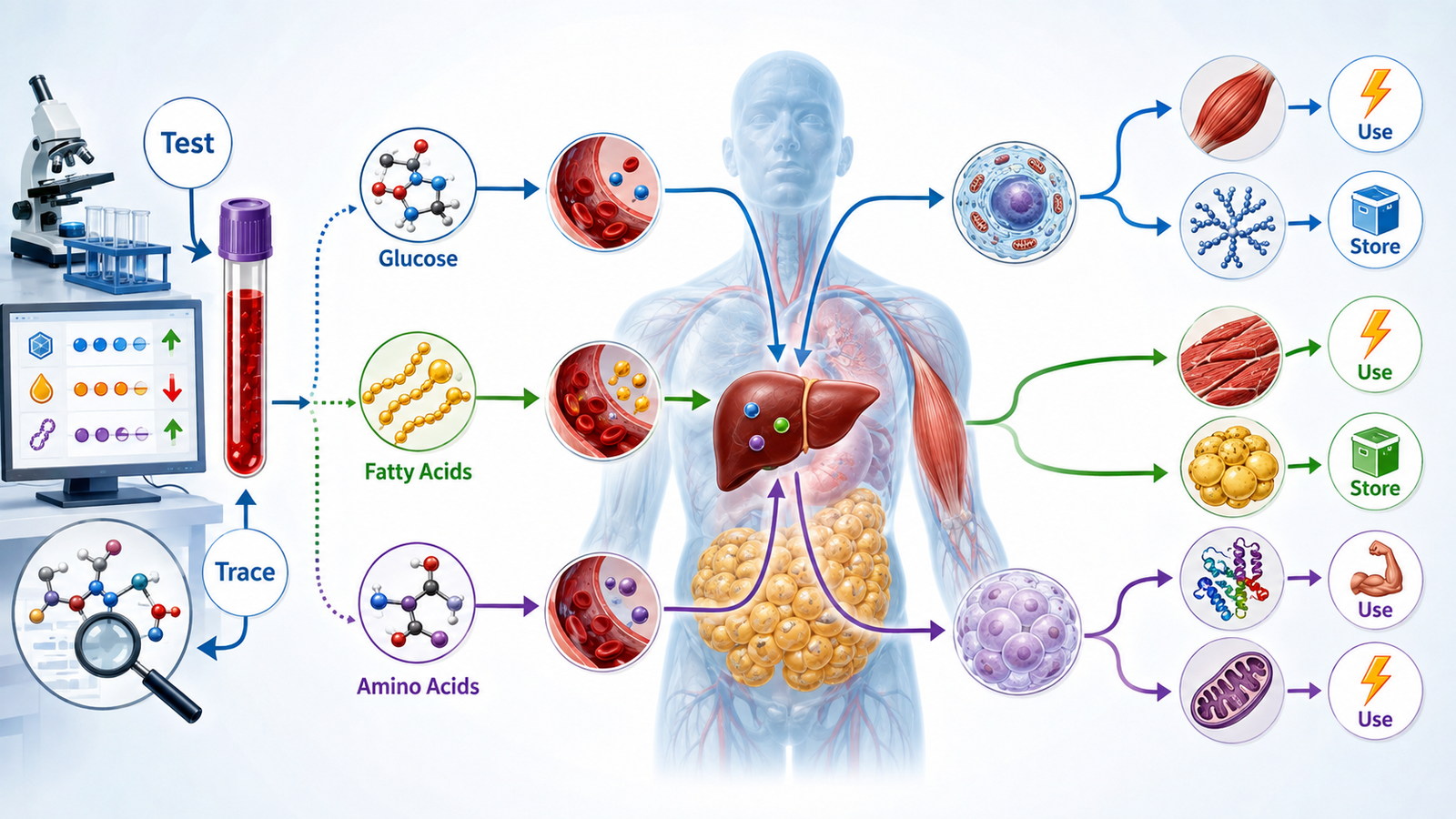
Key Definitions and Concepts
| Term | Definition | Relevance to Macronutrient Metabolism |
|---|---|---|
| Metabolic fate | The biochemical pathway followed by a nutrient after absorption | Explains whether a nutrient is oxidised, stored, converted or eliminated |
| Biomarker | A measurable biological indicator of a physiological or metabolic process | Provides evidence about nutrient metabolism and health status |
| Substrate | A molecule acted upon or transformed during a biochemical reaction | Includes glucose, fatty acids and amino acids |
| Metabolite | A molecule produced or used during metabolism | Helps trace the activity of metabolic pathways |
| Fasting state | A physiological condition following a period without food intake | Alters the interpretation of glucose, lipid and protein markers |
| Postprandial state | The metabolic period following food consumption | Reflects nutrient absorption and utilisation after a meal |
| Glycaemia | The concentration of glucose in the blood | Indicates aspects of carbohydrate regulation |
| Lipolysis | The breakdown of stored triacylglycerols into fatty acids and glycerol | Indicates mobilisation of stored lipid energy |
| Ketogenesis | The production of ketone bodies from fatty acid-derived substrates | Indicates altered lipid utilisation during carbohydrate limitation |
| Nitrogen balance | The relationship between nitrogen intake and nitrogen loss | Provides evidence about protein metabolism and tissue turnover |
| Transamination | The transfer of an amino group between molecules | Central to amino acid metabolism |
| Urea cycle | A hepatic pathway that converts toxic nitrogen into urea | Helps manage nitrogen generated during amino acid catabolism |
Understanding the Purpose of Laboratory Data in Metabolic Analysis
Laboratory Results as Evidence of Dynamic Metabolism
Laboratory tests provide a biochemical snapshot of the body’s metabolic state. However, metabolism is dynamic and continuously changes in response to food intake, exercise, fasting, stress and hormonal signals. Therefore, a laboratory result should be interpreted as evidence collected at a specific point within an ongoing metabolic process.
For example, an increased concentration of glucose in the bloodstream may reflect several possible processes, including increased dietary carbohydrate absorption, reduced cellular glucose uptake, increased hepatic glucose production or altered hormonal regulation. Accurate interpretation requires the Learner to consider the complete metabolic context.
Laboratory data can assist in evaluating:
Nutrient availability in the bloodstream.
Cellular utilisation of metabolic substrates.
Hormonal regulation of metabolism.
Storage and mobilisation of energy.
Oxidation of carbohydrates and lipids.
Protein turnover and amino acid degradation.
Organ involvement in nutrient metabolism.
Production and elimination of metabolic waste.
The Importance of Pattern Recognition
Complex metabolic interpretation depends heavily on recognising patterns rather than focusing on isolated values.
For example:
Increased glucose with altered insulin-related markers may suggest changes in glucose regulation.
Elevated circulating lipids combined with other biochemical findings may provide information about lipid transport and utilisation.
Changes in nitrogen-containing waste products may help evaluate amino acid metabolism and nitrogen disposal.
A professional interpretation therefore involves connecting individual biomarkers to the biochemical pathways from which they originate.
A Systematic Process for Interpreting Complex Metabolic Laboratory Results
Step 1: Establish the Clinical and Physiological Context
Before interpreting biochemical results, it is essential to understand the circumstances under which the sample was collected.
Important considerations include:
Whether the individual was fasting.
Time since the last meal.
Recent dietary intake.
Recent exercise.
Duration and intensity of physical activity.
Hydration status.
Medication use.
Existing physiological conditions.
Recent illness or metabolic stress.
These factors can significantly influence the concentration of metabolic substrates and products.
Step 2: Identify the Primary Macronutrient Markers
The next stage involves grouping laboratory markers according to the metabolic system being evaluated.
Carbohydrate-related markers may include:
Blood glucose.
Glycated glucose-related indicators.
Insulin-related measurements.
Lactate.
Pyruvate in specialised investigations.
Ketone bodies.
Lipid-related markers may include:
Triacylglycerols.
Cholesterol.
Lipoprotein-associated measurements.
Free fatty acids in specialised testing.
Ketone bodies.
Protein-related markers may include:
Plasma amino acids.
Urea.
Nitrogen-related waste products.
Protein concentrations.
Liver-associated biochemical markers where relevant to protein metabolism.
Step 3: Identify Whether the Nutrient Is Being Used, Stored or Mobilised
The central purpose of metabolic tracing is to determine what is happening to the nutrient.
A nutrient may be:
Oxidised to generate energy.
Stored for later use.
Converted into another molecule.
Used for biosynthesis.
Mobilised from body stores.
Converted into metabolic waste.
The interpretation should therefore move from the measured laboratory value towards the most plausible biochemical pathway.
Step 4: Integrate Multiple Results
Complex metabolism cannot normally be interpreted from one marker alone.
An integrated assessment may involve:
Comparing related biomarkers.
Examining trends over time.
Considering fasting and postprandial measurements.
Relating biochemical findings to physiological conditions.
Identifying whether multiple pathways are activated simultaneously.
Step 5: Trace the Most Probable Metabolic Pathway
The final analytical step is to construct a logical pathway explaining the metabolic fate of the nutrient.
For example:
Dietary carbohydrate → digestion → glucose absorption → bloodstream → cellular uptake → glycolysis → pyruvate → mitochondrial oxidation → ATP production.
Alternatively:
Dietary carbohydrate → glucose → excess availability → glycogen synthesis → storage.
Or:
Fat stores → lipolysis → free fatty acids → mitochondrial beta-oxidation → acetyl-CoA → ATP production.
Interpreting Laboratory Results Related to Carbohydrate Metabolism
Blood Glucose as a Metabolic Marker
Blood glucose provides important information about the availability of a major carbohydrate-derived fuel. However, glucose concentration alone does not indicate exactly where the glucose originated or how it will ultimately be utilised.
Glucose in the bloodstream may originate from:
Recent dietary carbohydrate absorption.
Liver glycogen breakdown.
Glucose production from non-carbohydrate precursors.
Once present in circulation, glucose may:
Enter cells for ATP production.
Be stored as glycogen.
Be converted into other metabolic substrates.
Contribute to lipid synthesis when energy availability is excessive.
Tracing the Fate of Glucose
The metabolic fate of glucose depends on cellular energy requirements and hormonal conditions.
When energy demand is high, glucose may proceed through:
Cellular uptake.
Glycolysis.
Pyruvate formation.
Acetyl-CoA production under aerobic conditions.
Entry into the citric acid cycle.
Production of NADH and FADH₂.
Oxidative phosphorylation.
ATP generation.
When glucose availability exceeds immediate requirements, alternative pathways may become more important.
These include:
Glycogen synthesis.
Conversion into metabolic intermediates.
Contribution to fatty acid synthesis under suitable metabolic conditions.
Glycated Markers and Longer-Term Interpretation
Certain laboratory indicators provide information about longer-term patterns of glucose exposure rather than immediate glucose concentration.
These markers can be useful for distinguishing between:
A temporary alteration in glucose concentration.
A persistent pattern of altered glucose regulation.
This distinction is important because a single measurement may be influenced by a recent meal, stress or physical activity.
Lactate as an Indicator of Altered Carbohydrate Processing
Lactate may provide information about the metabolic handling of pyruvate.
Increased lactate production can occur when:
Energy demand rises rapidly.
Glycolytic activity increases.
Oxidative processing cannot meet immediate metabolic demand.
Lactate should not automatically be interpreted as evidence of one specific condition. Instead, its significance depends on the broader physiological and biochemical context.
Practical Example: Carbohydrate Utilisation
Consider an individual undertaking high-intensity physical activity.
The expected metabolic sequence may involve:
Increased muscle ATP demand.
Increased glycogen mobilisation.
Increased glycolysis.
Increased pyruvate production.
Greater lactate formation when rapid energy demand exceeds oxidative processing capacity.
Laboratory measurements taken before and after intense activity may therefore demonstrate significant changes in carbohydrate-derived metabolites.
Interpreting Laboratory Results Related to Lipid Metabolism
Lipids Require Different Analytical Approaches
Unlike glucose, most lipids do not circulate freely in large quantities in aqueous blood. They are transported through specialised systems.
Laboratory evaluation of lipid metabolism may therefore include measurements relating to:
Triacylglycerol transport.
Cholesterol transport.
Lipoprotein-associated particles.
Free fatty acid mobilisation in specialised contexts.
Ketone body production.
Triacylglycerols and Energy Storage
Triacylglycerols represent a major form of stored energy.
Their metabolic fate can include:
Storage in adipose tissue.
Mobilisation through lipolysis.
Transport to energy-demanding tissues.
Hydrolysis to fatty acids.
Beta-oxidation for ATP production.
The interpretation of circulating triacylglycerol concentrations should consider:
Fasting status.
Recent dietary fat intake.
Carbohydrate intake.
Overall energy balance.
Physical activity.
Free Fatty Acids and Lipolysis
When stored energy is mobilised, triacylglycerols are broken down into fatty acids and glycerol.
The metabolic pathway can be summarised as:
Stored triacylglycerol → lipolysis → fatty acids → transport to tissues → mitochondrial entry → beta-oxidation → acetyl-CoA → citric acid cycle → ATP production.
An increase in markers associated with fatty acid mobilisation may therefore indicate a shift towards the use of stored lipid energy.
Ketone Bodies as Indicators of Altered Fuel Selection
Ketone bodies are produced when fatty acid-derived substrates are processed under conditions where carbohydrate availability is reduced or metabolic demand has shifted.
The presence of increased ketone-related markers may indicate:
Increased fatty acid mobilisation.
Increased hepatic lipid metabolism.
Reduced carbohydrate availability.
Prolonged fasting.
A significant shift in fuel utilisation.
Ketone body interpretation must always consider the broader physiological context.
Practical Example: Prolonged Fasting
During prolonged fasting, laboratory findings may indicate a transition in energy utilisation.
The general sequence may include:
Reduced dietary glucose availability.
Mobilisation of glycogen.
Increased lipolysis.
Increased fatty acid availability.
Increased beta-oxidation.
Increased ketone body production.
This pattern demonstrates the body’s ability to shift from reliance on recently consumed nutrients towards stored energy reserves.
Interpreting Laboratory Results Related to Protein Metabolism
Protein Metabolism Requires Special Consideration
Protein metabolism differs from carbohydrate and lipid metabolism because amino acids contain nitrogen.
When amino acids are used for energy, the body must separate the nitrogen-containing component from the carbon skeleton.
The carbon skeleton may then enter energy-producing pathways, while nitrogen must be safely processed and eliminated.
Plasma Amino Acids
Measurements of circulating amino acids can provide information about:
Dietary protein availability.
Protein breakdown.
Amino acid transport.
Metabolic utilisation.
Specific pathway disturbances in specialised assessments.
However, plasma amino acid concentrations are influenced by numerous factors and should not be interpreted independently of dietary intake and physiological status.
Transamination and Deamination
Amino acid metabolism commonly involves the transfer or removal of amino groups.
Important processes include:
Transamination, which transfers amino groups.
Deamination, which contributes to nitrogen removal.
Conversion of carbon skeletons into metabolic intermediates.
The carbon skeleton may subsequently contribute to:
Glucose production.
Citric acid cycle activity.
Acetyl-CoA-related metabolism.
Ketone-related pathways.
Urea as a Marker of Nitrogen Disposal
The urea cycle plays an essential role in safely processing nitrogen derived from amino acid metabolism.
The general pathway is:
Protein → amino acids → amino acid catabolism → nitrogen removal → ammonia-related intermediates → urea cycle → urea → elimination.
Changes in urea-related markers can provide information about nitrogen metabolism, but interpretation must also consider:
Hydration.
Dietary protein intake.
Liver function.
Kidney function.
Catabolic state.
Nitrogen Balance
Nitrogen balance provides a conceptual framework for assessing protein metabolism.
A positive nitrogen balance may occur when nitrogen intake exceeds nitrogen loss, supporting processes such as:
Growth.
Tissue repair.
Recovery.
A negative nitrogen balance may occur when nitrogen loss exceeds intake.
Potential circumstances include:
Prolonged inadequate protein intake.
Increased tissue breakdown.
Severe physiological stress.
Integrating Macronutrient Pathways in Laboratory Interpretation
Metabolic Pathways Do Not Operate Independently
Carbohydrate, lipid and protein metabolism are strongly interconnected. A laboratory result associated with one nutrient may therefore reflect changes in another metabolic system.
For example:
Reduced carbohydrate availability may increase lipid mobilisation.
Increased amino acid catabolism may contribute to glucose production.
Excess carbohydrate availability may contribute to lipid synthesis.
Fatty acid oxidation may reduce reliance on glucose in certain tissues.
The professional interpretation of laboratory data must therefore avoid treating each macronutrient as a completely independent system.
Acetyl-CoA as a Central Metabolic Connection
Acetyl-CoA is a major metabolic convergence point.
It can arise from:
Pyruvate generated through carbohydrate metabolism.
Fatty acid beta-oxidation.
The metabolism of certain amino acids.
Its metabolic fate may include:
Entry into the citric acid cycle.
Contribution to energy production.
Participation in lipid-related pathways.
Contribution to ketone body production under specific conditions.
The Citric Acid Cycle and Oxidative Phosphorylation
The citric acid cycle and oxidative phosphorylation connect multiple nutrient pathways.
Nutrients are progressively converted into:
Acetyl-CoA.
Citric acid cycle intermediates.
NADH.
FADH₂.
These reducing equivalents support ATP generation through mitochondrial electron transport processes.
Interpreting Results Across Different Physiological States
The Fed State
Following nutrient consumption, laboratory findings may reflect increased nutrient availability.
Possible features include:
Increased glucose availability after carbohydrate intake.
Increased circulating lipid transport following dietary fat consumption.
Increased amino acid availability after protein consumption.
Increased signals supporting nutrient storage and biosynthesis.
The metabolic priority is generally to utilise available nutrients and store excess energy.
The Post-Absorptive State
As absorption from the digestive tract declines, the body increasingly relies on internal energy reserves.
Metabolic changes may include:
Reduced direct contribution from dietary nutrients.
Increased glycogen mobilisation.
Increased use of stored fatty acids.
Maintenance of blood glucose through regulated mechanisms.
Prolonged Fasting
Laboratory interpretation during prolonged fasting may reveal significant metabolic adaptation.
Potential patterns include:
Reduced reliance on recently absorbed glucose.
Increased fatty acid mobilisation.
Increased ketone body production.
Increased gluconeogenesis.
Changes in protein metabolism according to duration and physiological adaptation.
Exercise
Exercise alters the metabolic use of nutrients according to intensity and duration.
Short, intense exercise may increase:
Glycogen mobilisation.
Glycolytic activity.
Lactate production.
Prolonged moderate exercise may increase:
Fatty acid oxidation.
Mitochondrial oxidative metabolism.
The relative contribution of stored lipids.
Using Trends Rather Than Single Measurements
Serial Laboratory Monitoring
A single laboratory result provides information from one moment in time. Serial measurements can provide a clearer picture of metabolic change.
Trend analysis may identify:
Increasing or decreasing substrate availability.
Changes in metabolic adaptation.
Response to dietary intervention.
Shifts between storage and mobilisation.
For example, repeated measurements may demonstrate whether a change in a metabolic marker is temporary or persistent.
Pre- and Post-Intervention Analysis
Laboratory data can also be interpreted before and after a controlled intervention.
Possible interventions include:
A dietary modification.
A period of fasting.
Physical activity.
Nutritional supplementation where appropriate.
Changes in macronutrient distribution.
The comparison can help trace how nutrient handling changes over time.
A Structured Framework for Complex Data Interpretation
Stage One: Identify the Question
Determine what the laboratory investigation is attempting to establish.
Examples include:
Is glucose being appropriately regulated?
Is lipid mobilisation increasing?
Is protein breakdown contributing to energy metabolism?
Is the body shifting towards ketone utilisation?
Stage Two: Review Sample Conditions
Confirm relevant contextual information:
Fasting duration.
Recent food intake.
Exercise.
Time of sample collection.
Relevant physiological conditions.
Stage Three: Categorise Biomarkers
Organise results into:
Carbohydrate markers.
Lipid markers.
Protein markers.
Hormonal indicators where available.
Metabolic by-products.
Stage Four: Identify Relationships
Compare findings to identify patterns.
Ask:
Which substrates are increased or reduced?
Which metabolic products are changing?
Does the pattern suggest storage or mobilisation?
Are multiple pathways likely to be active?
Stage Five: Construct a Metabolic Pathway
Use the data to develop a logical biochemical explanation.
For example:
Reduced carbohydrate availability → increased fat mobilisation → increased fatty acid oxidation → increased ketone body production.
Stage Six: Evaluate Alternative Explanations
Complex data interpretation requires professional judgement.
Consider whether findings may be influenced by:
Dietary timing.
Exercise.
Hydration.
Organ function.
Sampling conditions.
Laboratory variation.
Practical Scenario: Tracing Macronutrient Use During Energy Restriction
Consider an individual who has undergone a prolonged period of reduced food intake.
The interpretation may follow several stages.
Carbohydrate Pathway
Initially:
Liver glycogen contributes to maintaining glucose availability.
Glycogen reserves gradually decline.
Gluconeogenesis becomes increasingly important.
Lipid Pathway
As fasting continues:
Lipolysis increases.
Fatty acids become increasingly available.
Beta-oxidation increases.
Ketone body production may increase.
Protein Pathway
Protein metabolism may also contribute:
Certain amino acids can provide substrates for glucose production.
Nitrogen disposal becomes necessary.
Prolonged extensive protein breakdown may threaten tissue maintenance.
This scenario demonstrates how laboratory findings must be interpreted as an integrated representation of changing fuel selection.
Practical Scenario: Post-Exercise Metabolic Interpretation
Consider laboratory findings collected following prolonged physical activity.
Possible metabolic features may include:
Reduced availability of some carbohydrate stores.
Increased utilisation of fatty acids.
Changes in lactate depending on exercise intensity.
Altered amino acid metabolism under prolonged energy demand.
A professional interpretation would avoid assuming that one marker represents the complete metabolic response. Instead, the overall biochemical pattern should be evaluated.
Common Challenges in Laboratory Interpretation
Overreliance on Reference Ranges
Reference ranges are useful but do not provide a complete explanation of metabolic function.
A result within a reference interval may still require interpretation in relation to:
Other biomarkers.
Trends over time.
Physiological conditions.
Individual metabolic demands.
Ignoring Fasting Status
Failure to consider fasting status can lead to incorrect conclusions.
For example, the expected metabolic significance of:
Glucose.
Triacylglycerols.
Ketone bodies.
may differ substantially depending on whether the individual has recently eaten.
Treating Biomarkers in Isolation
Metabolic pathways are interconnected.
A more reliable interpretation considers:
Substrates.
Products.
Hormonal influences.
Related metabolic markers.
Confusing Availability With Utilisation
An increased concentration of a nutrient in the bloodstream does not automatically prove increased cellular utilisation.
A nutrient may be:
Available but not efficiently taken up.
Mobilised but not fully oxidised.
Transported towards storage.
Converted into another metabolite.
This distinction is essential when tracing metabolic fate.
Key Benefits of Accurate Metabolic Laboratory Interpretation
The ability to interpret laboratory results provides important benefits in academic, nutritional and scientific contexts.
It enables Learners and professionals to:
Trace the movement of nutrients through metabolic pathways.
Identify whether nutrients are being stored, mobilised or oxidised.
Understand changes during fasting and feeding.
Evaluate metabolic responses to exercise.
Recognise interactions between carbohydrate, lipid and protein metabolism.
Interpret trends in biochemical data.
Develop evidence-based explanations of nutrient utilisation.
Apply biochemical theory to realistic physiological scenarios.
Critical Thinking Questions for Metabolic Interpretation
When interpreting complex results, the following questions provide a useful analytical framework:
What physiological state was the individual in when the sample was collected?
Which macronutrient-related substrates are changing?
Which metabolic products provide evidence of pathway activity?
Does the evidence suggest nutrient storage or mobilisation?
Is the nutrient likely to be oxidised for ATP production?
Are carbohydrate, lipid and protein pathways interacting?
Could another physiological factor explain the findings?
Are the results consistent across multiple biomarkers?
Do serial measurements demonstrate a metabolic trend?
Advanced Interpretation of Metabolic Fate
From Nutrient Intake to Cellular Outcome
A complete interpretation of metabolic fate should trace the nutrient across several stages:
Dietary intake.
Digestion.
Absorption.
Bloodstream transport.
Cellular uptake.
Metabolic processing.
Storage or oxidation.
Production of metabolic by-products.
Elimination or recycling.
This complete pathway provides a structured method for linking laboratory evidence to underlying biochemical mechanisms.
The Importance of Metabolic Flux
Metabolic concentration and metabolic activity are not always identical. A metabolite concentration represents the amount measurable at a particular time, whereas metabolic flux refers to the rate at which substances move through a pathway.
For example, a relatively stable concentration may exist despite substantial movement through a pathway because production and utilisation occur simultaneously.
Therefore, complex interpretation should recognise that:
Concentration does not always equal pathway activity.
Multiple pathways can operate simultaneously.
Nutrient turnover may be rapid.
Dynamic testing may provide additional information in specialised contexts.
Conclusion
Interpreting complex laboratory results to trace the metabolic fate of carbohydrates, lipids and proteins requires an integrated understanding of biochemistry, physiology and nutritional metabolism. Laboratory markers provide valuable evidence about nutrient availability, transport, storage, mobilisation and oxidation, but individual values must always be interpreted within their physiological context.
Carbohydrate-related data can help trace glucose from absorption through glycolysis, glycogen storage or mitochondrial oxidation. Lipid-related findings can provide evidence of energy storage, lipolysis, fatty acid oxidation and ketone body production. Protein-related markers can help explain amino acid availability, tissue protein turnover, nitrogen removal and the contribution of amino acid carbon skeletons to energy metabolism.
The most effective approach involves analysing patterns rather than isolated results. Learners must consider fasting status, dietary intake, physical activity, hormonal regulation and the interaction between macronutrient pathways. Through a systematic interpretation process, complex laboratory data can be transformed into a logical explanation of how specific nutrients are utilised within the body.
Ultimately, the ability to trace metabolic fate strengthens scientific reasoning and enables Learners to connect theoretical biochemical pathways with measurable evidence. This skill is fundamental for advanced study in nutrition, metabolism, physiology and related health and scientific disciplines.
6.Diagram and Critically Explain the Interconnected Nature of Macronutrient Metabolic Pathways During Alternating Fed and Fasted Physiological States
Human metabolism is a highly integrated and continuously changing system in which carbohydrates, lipids and proteins are processed according to nutrient availability and physiological energy requirements. The body does not use each macronutrient through completely separate pathways. Instead, carbohydrate, lipid and protein metabolism are interconnected through shared metabolic intermediates, organs, hormones and energy-producing processes.
One of the most important ways to understand this metabolic integration is to compare the fed and fasted physiological states. During the fed state, recently absorbed nutrients are available in the circulation, and the body generally prioritises nutrient utilisation, storage and biosynthesis. During the fasted state, dietary nutrient availability decreases, and the body progressively mobilises internal energy reserves to maintain essential physiological functions.
The transition between these states is controlled by complex interactions involving insulin, glucagon, other counter-regulatory hormones, tissue-specific metabolic pathways and cellular energy requirements. Understanding these relationships enables Learners to diagram metabolic pathways accurately and critically explain how the body maintains energy balance despite changing nutrient availability.
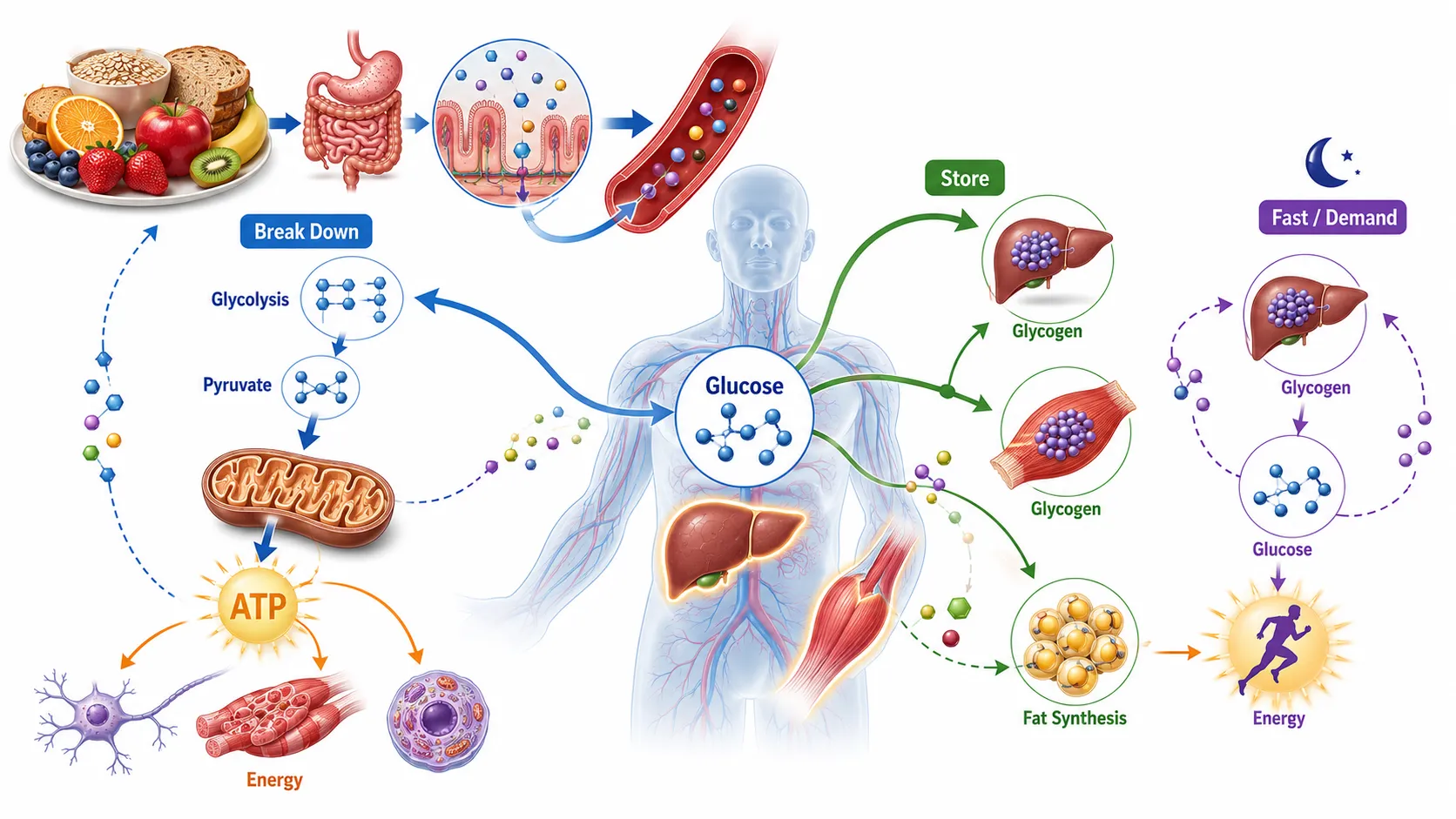
Key Definitions and Concepts
| Key Term | Definition | Importance in Fed and Fasted Metabolism |
|---|---|---|
| Fed state | The physiological period following food consumption when absorbed nutrients are available | Promotes nutrient utilisation, storage and anabolic activity |
| Post-absorptive state | The period after nutrient absorption declines but before prolonged fasting | Increases reliance on stored energy sources |
| Fasted state | A physiological state in which dietary nutrient availability is limited | Promotes mobilisation of glycogen, fat and selected protein-derived substrates |
| Anabolism | Metabolic processes that build complex molecules from simpler components | Important for glycogen, lipid and protein synthesis |
| Catabolism | Metabolic processes that break down molecules to release energy or substrates | Important during fasting and increased energy demand |
| Glycolysis | The breakdown of glucose to produce pyruvate and energy | Links carbohydrate metabolism to mitochondrial energy production |
| Glycogenesis | The synthesis of glycogen from glucose | Stores carbohydrate during the fed state |
| Glycogenolysis | The breakdown of glycogen to release glucose-related substrates | Supports energy availability during fasting |
| Gluconeogenesis | The production of glucose from non-carbohydrate precursors | Helps maintain glucose availability during fasting |
| Lipogenesis | The synthesis of fatty acids and other storage lipids | Converts excess energy into stored lipid |
| Lipolysis | The breakdown of stored triacylglycerol | Releases fatty acids and glycerol during fasting |
| Beta-oxidation | The breakdown of fatty acids into acetyl-CoA | Provides energy during reduced carbohydrate availability |
| Ketogenesis | The production of ketone bodies from acetyl-CoA | Becomes increasingly important during prolonged fasting |
| Nitrogen balance | The relationship between nitrogen intake and nitrogen loss | Reflects aspects of protein metabolism and tissue turnover |
| Metabolic integration | The coordination of carbohydrate, lipid and protein pathways | Enables the body to adapt to changing nutrient availability |
Understanding the Two Major Physiological States
The Fed State
The fed state begins after food consumption when nutrients from the gastrointestinal tract are absorbed and enter the circulation. Blood concentrations of glucose, amino acids and dietary lipid-derived components change according to the composition and quantity of the meal.
The body responds by directing nutrients towards tissues that require immediate energy while also storing surplus nutrients for future use.
The major metabolic characteristics of the fed state include:
Increased availability of dietary glucose.
Increased amino acid availability.
Increased processing of dietary lipids.
Increased insulin-mediated nutrient storage.
Increased glycogen synthesis.
Increased lipid synthesis when energy availability is excessive.
Increased protein synthesis when amino acids are available.
Reduced dependence on stored energy reserves.
The fed state is therefore predominantly associated with anabolic processes.
The Fasted State
The fasted state develops as absorption of nutrients from the previous meal decreases. The body must then maintain energy availability using stored fuels and internally produced metabolic substrates.
Initially, glycogen provides an important source of glucose-related energy. As fasting continues, lipid mobilisation becomes increasingly significant, and ketone body production may increase.
The major characteristics of the fasted state include:
Reduced availability of dietary nutrients.
Increased mobilisation of stored glycogen.
Increased gluconeogenesis.
Increased lipolysis.
Increased fatty acid oxidation.
Increased ketone body production during prolonged fasting.
Changes in amino acid metabolism.
Greater reliance on stored energy reserves.
The fasted state therefore involves a greater emphasis on catabolic pathways and energy mobilisation.
The Central Role of Hormonal Regulation
Insulin in the Fed State
Insulin is a major hormone associated with nutrient abundance and storage. Following a meal, increased nutrient availability stimulates metabolic processes that promote cellular uptake and storage of selected nutrients.
Insulin contributes to:
Increased glucose uptake in insulin-responsive tissues.
Increased glycogen synthesis.
Increased glycolytic activity in appropriate tissues.
Increased fatty acid synthesis under suitable metabolic conditions.
Increased triacylglycerol storage.
Increased protein synthesis.
Reduced mobilisation of stored fat.
Insulin therefore supports the transition from nutrient availability to nutrient utilisation and storage.
Glucagon and the Fasted State
As nutrient absorption decreases, hormonal conditions change to support energy mobilisation and glucose maintenance.
Glucagon contributes to metabolic adaptation by supporting:
Hepatic glycogen mobilisation.
Glucose production through gluconeogenic pathways.
Metabolic adjustments associated with fasting.
The availability of energy substrates for essential tissues.
The relative balance between insulin and glucagon is more important than viewing either hormone independently.
Other Hormonal Influences
Additional hormonal systems influence metabolism during fasting, exercise and physiological stress.
These may contribute to:
Lipid mobilisation.
Increased glucose availability.
Altered protein metabolism.
Increased energy substrate delivery.
The metabolic response is therefore regulated through a coordinated endocrine network rather than a single hormone.
A Conceptual Diagram of Interconnected Macronutrient Metabolism
A simplified metabolic diagram can be represented as follows:
Fed State
Dietary Carbohydrates
↓
Glucose
↓
Glycolysis → Pyruvate → Acetyl-CoA → ATP Production
↓
Glycogenesis → Glycogen Storage
↓
Excess Energy → Fatty Acid Synthesis → Triacylglycerol Storage
Dietary Lipids
↓
Fatty Acids + Other Lipid Components
↓
Energy Use OR Re-esterification
↓
Triacylglycerol Storage
Dietary Proteins
↓
Amino Acids
↓
Protein Synthesis
↓
Excess Amino Acids
↓
Nitrogen Removal + Carbon Skeleton
↓
Energy Metabolism OR Glucose/Lipid-Related Pathways
Fasted State
Glycogen
↓
Glycogenolysis
↓
Glucose Availability
Stored Triacylglycerol
↓
Lipolysis
↓
Fatty Acids + Glycerol
↓
Fatty Acid Oxidation → Acetyl-CoA → ATP
↓
Ketogenesis During Prolonged Fasting
Amino Acids
↓
Nitrogen Removal
↓
Carbon Skeletons
↓
Energy Production or Gluconeogenic Pathways
This diagram demonstrates that individual nutrients may enter common metabolic pathways and that the direction of metabolic activity changes according to physiological conditions.
Carbohydrate Metabolism During the Fed State
Absorption and Circulating Glucose
Following carbohydrate digestion, monosaccharides are absorbed and contribute to the circulating nutrient supply. Glucose becomes an important metabolic substrate for many tissues.
The immediate fate of glucose depends on:
Cellular energy demand.
Hormonal conditions.
Tissue type.
Availability of alternative fuels.
The amount of glucose available.
Glycolysis
When cells require energy, glucose can enter glycolysis.
The simplified pathway is:
Glucose
↓
Glycolysis
↓
Pyruvate
↓
Acetyl-CoA under appropriate aerobic conditions
↓
Citric Acid Cycle
↓
Electron Transport Processes
↓
ATP
This pathway demonstrates how carbohydrate metabolism connects directly with mitochondrial energy production.
Glycogen Synthesis
When glucose availability exceeds immediate energy requirements, glucose can be stored as glycogen.
Major storage sites include:
Liver.
Skeletal muscle.
The purpose of glycogen storage differs between tissues. Hepatic glycogen is important in supporting systemic glucose availability, whereas muscle glycogen primarily supports local muscular energy demands.
Conversion of Excess Carbohydrate
When carbohydrate availability remains high and storage capacity is limited, carbon from carbohydrate metabolism can contribute to lipid-related synthetic pathways.
This demonstrates an important principle:
Carbohydrate, lipid and protein metabolism are interconnected rather than isolated.
Carbohydrate Metabolism During the Fasted State
Early Fasting and Glycogen Mobilisation
As dietary glucose becomes unavailable, stored glycogen contributes to maintaining glucose-related metabolic requirements.
The general sequence is:
Reduced dietary glucose
↓
Decreased insulin signalling
↓
Increased mobilisation of stored fuels
↓
Glycogenolysis
↓
Maintenance of glucose availability
This mechanism is particularly important during the early stages of fasting.
Gluconeogenesis
As glycogen reserves decline, glucose production from non-carbohydrate precursors becomes increasingly important.
Potential precursors include:
Glycerol derived from lipid mobilisation.
Lactate produced through metabolic activity.
Certain amino acid-derived carbon skeletons.
The process can be represented as:
Non-carbohydrate precursor
↓
Metabolic conversion
↓
Gluconeogenic pathway
↓
Glucose production
This is a clear example of metabolic integration because substrates originating from lipids and proteins can contribute to carbohydrate-related metabolism.
Lipid Metabolism During the Fed State
Dietary Lipid Processing
Following digestion and absorption, dietary lipids are processed and transported through specialised mechanisms.
Fatty acids may subsequently be:
Used directly for energy.
Incorporated into cellular structures.
Reassembled into storage molecules.
Stored within adipose tissue.
Lipogenesis
When energy availability is high, metabolic conditions may favour the synthesis of fatty acids and storage lipids.
Lipogenesis involves:
Availability of carbon-containing metabolic intermediates.
Production of fatty acids.
Formation of storage lipids.
Deposition of energy within adipose tissue.
This pathway provides a long-term method of energy storage.
Adipose Tissue as an Energy Reserve
Adipose tissue is metabolically active and performs important functions beyond passive energy storage.
Its roles include:
Long-term energy storage.
Fatty acid mobilisation.
Metabolic signalling.
Regulation of energy substrate availability.
Lipid Metabolism During the Fasted State
Lipolysis
During fasting, the body increasingly mobilises stored lipid.
The general pathway is:
Stored Triacylglycerol
↓
Lipolysis
↓
Free Fatty Acids + Glycerol
The released products have different metabolic fates.
Fate of Fatty Acids
Fatty acids can be transported to tissues and used for energy.
Their general metabolic pathway is:
Fatty Acids
↓
Cellular Uptake
↓
Mitochondrial Processing
↓
Beta-Oxidation
↓
Acetyl-CoA
↓
Citric Acid Cycle
↓
ATP Production
This demonstrates how lipid metabolism connects to the same central energy pathways used by carbohydrate-derived substrates.
Fate of Glycerol
Glycerol released during lipolysis can contribute to other metabolic pathways.
One important fate is its contribution to gluconeogenic metabolism.
Therefore:
Stored Fat
↓
Lipolysis
↓
Glycerol
↓
Gluconeogenic Pathway
↓
Glucose
This is a direct biochemical connection between lipid and carbohydrate metabolism.
Protein Metabolism During the Fed State
Amino Acid Availability
Following protein digestion and absorption, amino acids enter the circulating amino acid pool.
Amino acids may be used for:
Protein synthesis.
Enzyme synthesis.
Production of structural molecules.
Production of signalling molecules.
Synthesis of specialised nitrogen-containing compounds.
The body does not possess a dedicated protein storage system equivalent to glycogen or adipose tissue. Therefore, amino acid availability must be continuously regulated.
Protein Synthesis
The fed state generally provides favourable conditions for protein synthesis when adequate amino acids and energy are available.
Important outcomes include:
Tissue maintenance.
Cellular repair.
Enzyme production.
Formation of functional proteins.
Excess Amino Acids
Amino acids cannot simply be stored indefinitely in their original form.
When amino acids are metabolised:
Nitrogen-containing groups require processing.
Carbon skeletons may enter energy-producing pathways.
The carbon skeletons may contribute to:
Glucose production.
Citric acid cycle intermediates.
Acetyl-CoA-related pathways.
Other metabolic processes.
Protein Metabolism During the Fasted State
Protein Turnover
During fasting, protein metabolism changes according to the duration and severity of nutrient restriction.
Protein turnover remains necessary for:
Replacement of damaged proteins.
Maintenance of essential functions.
Provision of specific metabolic substrates.
Amino Acids as Metabolic Precursors
Certain amino acids can provide carbon skeletons that contribute to glucose production or energy metabolism.
The general pathway may involve:
Protein
↓
Amino Acids
↓
Transamination or Deamination
↓
Carbon Skeleton
↓
Energy Pathway or Glucose Production
Nitrogen Disposal
The removal of amino groups produces nitrogen-containing compounds that must be safely processed.
The liver plays a major role in converting nitrogen into a form suitable for elimination.
The process includes:
Amino group transfer.
Nitrogen collection.
Conversion into urea-related products.
Transport for elimination.
This illustrates the close relationship between protein metabolism and organ function.
The Central Metabolic Role of Acetyl-CoA
A Major Metabolic Convergence Point
Acetyl-CoA occupies a central position in metabolic integration.
It may be generated from:
Carbohydrate-derived pyruvate.
Fatty acid beta-oxidation.
The metabolism of certain amino acids.
Its potential fates include:
Oxidation through the citric acid cycle.
Contribution to ATP generation.
Participation in lipid synthesis.
Contribution to ketone body production.
Why Acetyl-CoA Is Important
Acetyl-CoA demonstrates that nutrients from different sources can converge at common biochemical points.
For example:
Carbohydrate → Pyruvate → Acetyl-CoA
Fatty Acid → Beta-Oxidation → Acetyl-CoA
Selected Amino Acids → Metabolic Conversion → Acetyl-CoA
The same intermediate can therefore connect all three major macronutrient pathways.
The Citric Acid Cycle as an Integrative Pathway
The citric acid cycle is another major point of metabolic convergence.
Intermediates can originate from:
Carbohydrate metabolism.
Fatty acid metabolism.
Amino acid metabolism.
The cycle contributes to:
Energy production.
Production of reducing equivalents.
Generation of metabolic intermediates.
Integration of catabolic pathways.
Important concepts include:
Nutrients are broken down into smaller intermediates.
Common pathways process these intermediates.
Energy is captured in chemical carriers.
These carriers support ATP production.
Interconnection Between Carbohydrate and Lipid Metabolism
Carbohydrate-to-Lipid Conversion
During prolonged energy surplus, carbohydrate-derived carbon can contribute to lipid synthesis.
The conceptual pathway is:
Excess Glucose
↓
Glycolysis
↓
Pyruvate
↓
Acetyl-CoA
↓
Fatty Acid Synthesis
↓
Triacylglycerol Storage
This demonstrates how excessive carbohydrate energy may ultimately contribute to long-term energy storage.
Lipid Contribution to Glucose Production
The glycerol component of stored triacylglycerol can contribute to gluconeogenic metabolism.
However, fatty acids themselves primarily follow different metabolic routes.
The process illustrates metabolic cooperation:
Stored Lipid
↓
Lipolysis
↓
Glycerol
↓
Glucose-Producing Pathway
Interconnection Between Protein and Carbohydrate Metabolism
Amino Acids as Glucose Precursors
Certain amino acid carbon skeletons can contribute to pathways that support glucose production.
The general process involves:
Amino Acid
↓
Removal of Nitrogen
↓
Carbon Skeleton
↓
Metabolic Intermediate
↓
Gluconeogenesis
↓
Glucose
This pathway becomes particularly relevant when dietary carbohydrate availability is reduced.
Carbohydrate Availability and Protein Conservation
Adequate carbohydrate availability can reduce the need to use amino acid carbon skeletons for glucose production.
This is sometimes described conceptually as a protein-sparing effect.
The relationship demonstrates that macronutrient intake patterns influence the metabolic use of other nutrients.
Interconnection Between Protein and Lipid Metabolism
Amino acid carbon skeletons may enter pathways that overlap with lipid metabolism.
Depending on the amino acid and metabolic conditions, carbon skeletons may contribute to:
Acetyl-CoA-related metabolism.
Citric acid cycle intermediates.
Energy production.
Ketone-related pathways.
This illustrates that the metabolic fate of protein depends on overall nutrient availability and physiological requirements.
Alternating Between Fed and Fasted States
Metabolism as a Continuous Cycle
Human metabolism should not be viewed as permanently fed or permanently fasted. Most individuals repeatedly move through alternating physiological states throughout the day.
A simplified cycle is:
Meal Consumption
↓
Fed State
↓
Nutrient Absorption
↓
Energy Utilisation and Storage
↓
Post-Absorptive State
↓
Mobilisation of Stored Fuels
↓
Fasted State
↓
Next Meal
The body must therefore continuously adjust metabolic pathways.
Major Changes During the Transition
As the body moves from the fed to fasted state:
Insulin-related storage signals decrease.
Stored fuel mobilisation becomes more important.
Glycogen breakdown increases.
Lipolysis increases.
Fatty acid oxidation increases.
Gluconeogenesis becomes increasingly important.
Ketone production may increase during prolonged fasting.
These changes do not occur as completely separate events. They overlap and change gradually.
A Comparative Analysis of Fed and Fasted Metabolism
Fed State: Primary Metabolic Priorities
The major priorities include:
Using recently absorbed nutrients.
Restoring glycogen reserves.
Supporting protein synthesis.
Storing excess energy.
Reducing the need to mobilise body reserves.
Fasted State: Primary Metabolic Priorities
The major priorities include:
Maintaining essential energy availability.
Supporting blood glucose regulation.
Mobilising glycogen.
Mobilising stored lipids.
Increasing fatty acid oxidation.
Conserving essential proteins where possible.
Supporting continued energy production.
Critical Comparison
The difference between the states can be summarised as follows:
Fed state: Nutrient availability encourages utilisation and storage.
Fasted state: Reduced nutrient availability encourages mobilisation and endogenous fuel production.
However, this distinction is simplified. Both anabolic and catabolic processes occur continuously, with the relative dominance of individual pathways changing according to physiological conditions.
Tissue-Specific Differences in Macronutrient Metabolism
Liver
The liver acts as a major metabolic processing centre.
Its important functions include:
Glycogen storage and mobilisation.
Glucose production.
Fatty acid metabolism.
Ketone body production.
Amino acid processing.
Nitrogen disposal.
The liver therefore links all major macronutrient pathways.
Skeletal Muscle
Skeletal muscle has substantial energy requirements, particularly during physical activity.
Its metabolism may involve:
Glucose utilisation.
Glycogen storage.
Fatty acid oxidation.
Amino acid metabolism.
Muscle metabolism changes significantly according to exercise intensity and duration.
Adipose Tissue
Adipose tissue performs a major role in energy storage and mobilisation.
During nutrient abundance, it supports:
Storage of energy as triacylglycerol.
During fasting, it supports:
Lipolysis.
Release of fatty acids.
Release of glycerol.
Brain and Other Energy-Demanding Tissues
Different tissues have different metabolic requirements and fuel preferences.
The metabolic system must therefore coordinate nutrient availability to support essential cellular functions.
Practical Example: Metabolism Following a Mixed Meal
Consider an individual consuming a meal containing carbohydrates, protein and fat.
Carbohydrate Pathway
The metabolic sequence may include:
Digestion of carbohydrates.
Absorption of glucose.
Increased glucose availability.
Cellular utilisation.
Glycogen storage.
Possible contribution to lipid synthesis when energy is excessive.
Protein Pathway
The sequence may include:
Protein digestion.
Amino acid absorption.
Use in protein synthesis.
Metabolism of excess amino acids.
Processing of nitrogen.
Entry of carbon skeletons into central metabolism.
Lipid Pathway
The sequence may include:
Digestion and absorption of lipids.
Transport through specialised pathways.
Tissue uptake.
Energy use or storage.
All three pathways operate simultaneously and interact through common metabolic signals and intermediates.
Practical Example: Metabolism During Overnight Fasting
An overnight fast provides a useful example of metabolic adaptation.
The body may progressively:
Reduce reliance on dietary nutrients.
Mobilise hepatic glycogen.
Increase fatty acid mobilisation.
Increase use of fatty acids for energy.
Maintain glucose availability through endogenous processes.
The relative contribution of each pathway depends on:
Duration of fasting.
Previous dietary intake.
Energy stores.
Physical activity.
Individual metabolic characteristics.
Practical Example: Prolonged Fasting
During more prolonged fasting, metabolic adaptation becomes increasingly complex.
Important changes may include:
Declining glycogen availability.
Increased gluconeogenesis.
Increased lipolysis.
Increased beta-oxidation.
Increased ketone body production.
Changes in protein utilisation.
The body attempts to maintain essential functions while adapting fuel selection to available energy stores.
How to Construct an Effective Metabolic Pathway Diagram
Step 1: Identify the Physiological State
Clearly identify whether the diagram represents:
The fed state.
The post-absorptive state.
The fasted state.
A comparison between states.
Step 2: Identify the Three Macronutrients
Place the major nutrient categories clearly:
Carbohydrates.
Lipids.
Proteins.
Step 3: Show Major Metabolic Intermediates
Important connecting points may include:
Glucose.
Glycogen.
Pyruvate.
Acetyl-CoA.
Fatty acids.
Amino acids.
Citric acid cycle intermediates.
Ketone bodies.
Step 4: Use Directional Arrows
Arrows should demonstrate metabolic flow.
For example:
Glucose → Glycolysis → Pyruvate → Acetyl-CoA → ATP
or:
Stored Fat → Lipolysis → Fatty Acids → Beta-Oxidation → ATP
Step 5: Show Interconnections
The diagram should not present three isolated columns.
Instead, demonstrate connections such as:
Amino acids → gluconeogenic intermediates.
Glycerol → gluconeogenic pathways.
Carbohydrate-derived acetyl-CoA → lipid synthesis.
Fatty acids → acetyl-CoA → energy production.
Step 6: Include Hormonal Direction
The diagram should indicate the major regulatory pattern.
For example:
Fed: Higher insulin influence → utilisation and storage.
Fasted: Reduced insulin influence and increased counter-regulatory activity → mobilisation and endogenous fuel production.
Critical Evaluation of Metabolic Integration
Metabolism Is Not a Series of Independent Pathways
A common misunderstanding is to study carbohydrate, lipid and protein metabolism as completely separate systems. In reality, these pathways continuously exchange substrates and share common intermediates.
Key examples include:
Acetyl-CoA linking carbohydrate and lipid metabolism.
Amino acid carbon skeletons entering glucose-producing pathways.
Glycerol from lipolysis contributing to gluconeogenesis.
Citric acid cycle intermediates connecting multiple nutrient sources.
Metabolic Flexibility
Metabolic flexibility refers to the body’s capacity to adjust fuel utilisation according to nutrient availability and energy demand.
Effective metabolic adaptation involves the ability to:
Use glucose when carbohydrate availability is high.
Increase fat utilisation when carbohydrate availability decreases.
Mobilise stored energy during fasting.
Adjust substrate selection during exercise.
This adaptability is essential for maintaining energy homeostasis.
Limitations of Simplified Diagrams
Metabolic diagrams are valuable educational tools, but they simplify highly complex processes.
A critical interpretation should recognise that:
Multiple pathways operate simultaneously.
Different tissues behave differently.
Hormonal effects depend on concentration and timing.
Metabolic responses vary between individuals.
Nutrient availability is influenced by digestion and absorption.
Physiological conditions alter pathway activity.
Therefore, diagrams should be used as conceptual models rather than complete representations of every biochemical reaction.
Key Benefits of Understanding Interconnected Macronutrient Pathways
A strong understanding of metabolic integration provides several important benefits.
Learners can:
Explain how the body adapts to feeding and fasting.
Identify common metabolic intermediates.
Understand how nutrients contribute to ATP production.
Explain the relationship between energy intake and energy storage.
Interpret changes in fuel selection.
Analyse the role of hormones in metabolic regulation.
Connect carbohydrate, lipid and protein metabolism.
Apply biochemical knowledge to nutritional scenarios.
Interpret laboratory evidence within a physiological context.
Develop advanced scientific reasoning skills.
Professional and Academic Applications
Understanding the integration of macronutrient pathways is valuable in:
Nutrition science.
Dietetics education.
Biomedical science.
Clinical biochemistry.
Exercise physiology.
Health science education.
Metabolic research.
Applications may include analysing:
Fasting adaptations.
Dietary interventions.
Exercise-related energy metabolism.
Changes in nutrient utilisation.
Metabolic responses to altered macronutrient intake.
Summary of Key Learning Points
The interconnected nature of macronutrient metabolism can be understood through several core principles:
Carbohydrates, lipids and proteins are metabolically interconnected.
The fed state generally promotes nutrient utilisation and storage.
The fasted state promotes mobilisation of internal energy reserves.
Insulin plays an important role in nutrient storage and utilisation.
Glucagon and other regulatory mechanisms support fasting adaptation.
Acetyl-CoA is a major metabolic convergence point.
The citric acid cycle integrates substrates from multiple macronutrients.
Amino acid carbon skeletons can contribute to energy and glucose-related pathways.
Glycerol released from stored fat can contribute to gluconeogenic metabolism.
Fatty acid oxidation becomes increasingly important during fasting.
Ketone body production may increase during prolonged carbohydrate limitation.
The liver acts as a major centre of metabolic integration.
Metabolism is dynamic and changes continuously between fed and fasted conditions.
Conclusion
The metabolic pathways of carbohydrates, lipids and proteins form an interconnected biochemical network that enables the human body to adapt to continuous changes in nutrient availability. During the fed state, recently absorbed nutrients support immediate energy production, glycogen replenishment, protein synthesis and long-term energy storage. During the fasted state, the body progressively shifts towards glycogen mobilisation, gluconeogenesis, lipolysis and fatty acid oxidation to maintain energy availability.
The transition between these physiological states is regulated through coordinated hormonal signals and tissue-specific metabolic responses. Carbohydrates, lipids and proteins are linked through common intermediates such as acetyl-CoA and citric acid cycle components. Amino acid carbon skeletons can contribute to glucose and energy metabolism, while glycerol released from stored fat can support glucose-producing pathways.
The ability to diagram and critically explain these relationships is essential for understanding advanced nutritional biochemistry. Rather than memorising isolated pathways, Learners should recognise metabolism as a dynamic and integrated system in which nutrients are continuously converted, exchanged, stored and mobilised according to the body’s changing physiological needs.
A comprehensive understanding of fed and fasted metabolism therefore provides a strong foundation for analysing energy balance, nutritional adaptation, metabolic flexibility and the biochemical consequences of changing dietary patterns.