
Lesson no 1 : Examine the digestion, absorption, and transport of nutrients.
Introduction
The digestion, absorption and transport of nutrients are fundamental processes that enable the human body to obtain essential substances from food and deliver them to cells and tissues where they support energy production, growth, repair and physiological regulation. This lesson examines the complex biochemical and physiological mechanisms involved in the breakdown of carbohydrates, proteins and lipids, as well as the absorption and movement of vitamins, minerals and other essential nutrients throughout the body.
Learners will explore how mechanical and chemical digestion transform complex food molecules into smaller units that can be absorbed through the gastrointestinal tract. Particular attention is given to the role of digestive enzymes, gastrointestinal secretions, intestinal structures and specialised transport mechanisms in determining nutrient availability. The lesson also investigates how nutrients cross the intestinal barrier and enter either the bloodstream or lymphatic system before being distributed to different organs and tissues.
An advanced understanding of nutrient transport is essential for evaluating how the body maintains metabolic homeostasis. Nutrient delivery is influenced by factors such as molecular structure, solubility, concentration gradients, carrier proteins and physiological demand. The lesson therefore examines passive and active transport processes and considers the distinct pathways used by water-soluble and fat-soluble nutrients.
Learners will also analyse factors that can influence nutrient digestion and absorption, including digestive enzyme activity, gastrointestinal health, nutrient interactions and variations in physiological requirements. By connecting biochemical principles with human physiology, this lesson develops the knowledge required to interpret how disruptions in digestion, absorption or transport may influence nutritional status and metabolic function.
By the end of the lesson, Learners will have developed a comprehensive understanding of how nutrients move from food consumption to cellular utilisation. This knowledge provides an essential foundation for advanced study in nutritional biochemistry, metabolism, human physiology and nutrient-related health.
1.Critically Examine the Complex Physiological Processes Involved in the Breakdown and Gastrointestinal Digestion of Diverse Dietary Nutrient Sources
Gastrointestinal digestion is a highly coordinated physiological process through which complex dietary substances are mechanically and chemically processed into smaller molecules that can subsequently be absorbed and utilised by the human body. The process involves the integrated activity of the mouth, oesophagus, stomach, pancreas, liver, gallbladder and small intestine, together with specialised enzymes, hormones, transport mechanisms and regulatory signals.
Different nutrients require different digestive processes because carbohydrates, proteins and lipids have distinct chemical structures and physical properties. In addition, dietary fibre, nucleic acids, vitamins, minerals and water follow specific pathways that may involve limited digestion, direct absorption or microbial metabolism. A critical understanding of gastrointestinal digestion therefore requires examination not only of individual organs and enzymes but also of the dynamic interactions between mechanical activity, chemical conditions, secretions and physiological regulation.
This section explores the breakdown of diverse dietary nutrient sources and critically examines how the digestive system adapts to differences in nutrient composition, meal size and physiological demand.
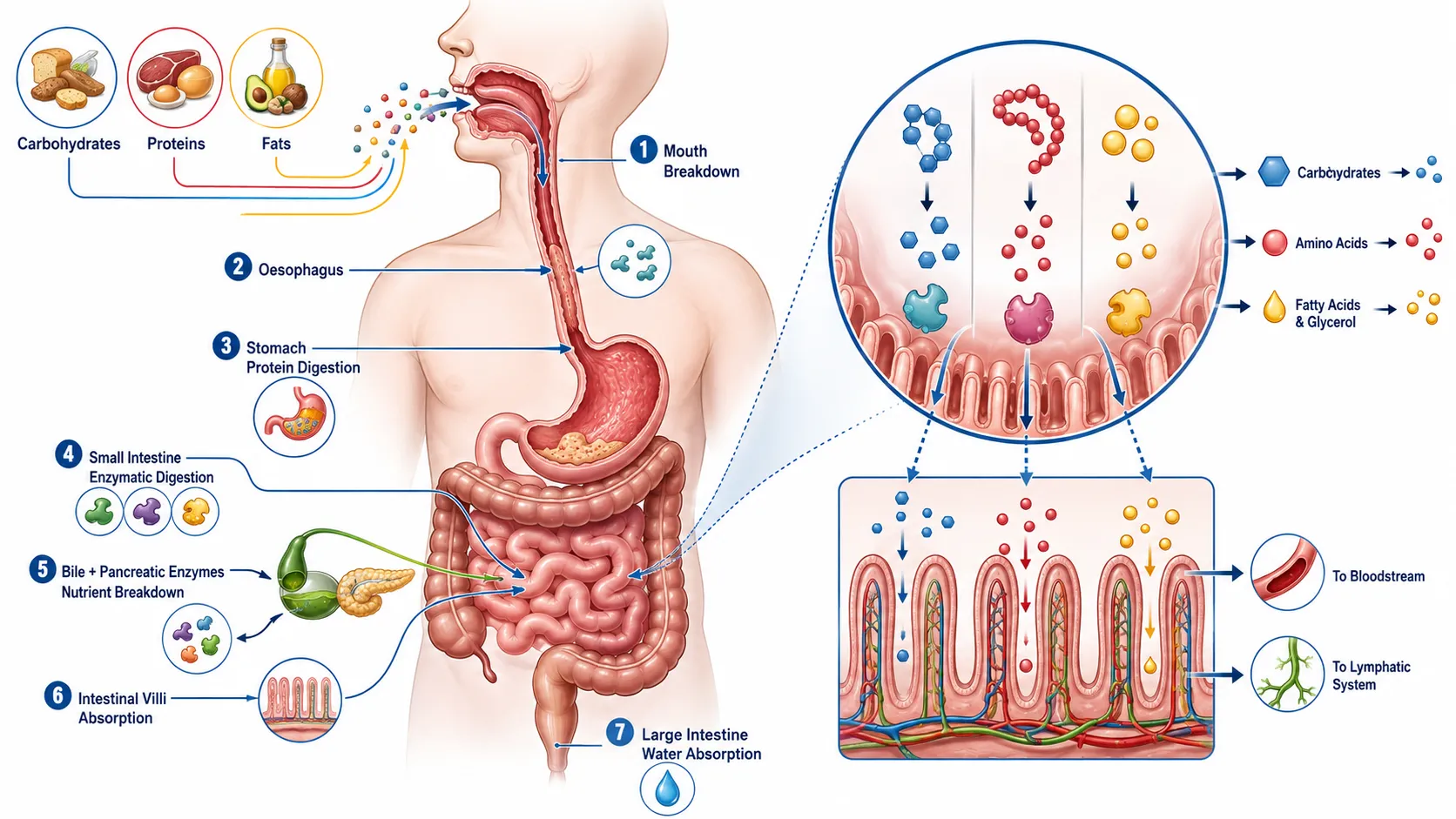
Key Concepts and Definitions
| Term | Definition | Importance in Nutrient Digestion |
|---|---|---|
| Mechanical digestion | Physical breakdown and mixing of food without changing its chemical composition | Increases surface area available for enzyme activity |
| Chemical digestion | Enzymatic and chemical breakdown of complex molecules into smaller units | Produces absorbable nutrient components |
| Hydrolysis | A reaction in which water is used to break chemical bonds | Central to the digestion of carbohydrates, proteins and lipids |
| Digestive enzyme | A biological catalyst that accelerates nutrient breakdown | Enables efficient and specific digestion |
| Gastrointestinal motility | Coordinated muscular movement of the digestive tract | Mixes food and moves digestive contents |
| Emulsification | Dispersion of large fat droplets into smaller droplets | Improves access of lipases to dietary lipids |
| Luminal digestion | Digestion occurring within the cavity of the gastrointestinal tract | Includes actions of pancreatic and intestinal enzymes |
| Brush-border digestion | Final enzymatic digestion occurring at the surface of intestinal cells | Completes breakdown before absorption |
| Chyme | Semi-liquid mixture of partially digested food and gastric secretions | Transfers nutrients from the stomach to the small intestine |
| Gut microbiota metabolism | Biochemical processing of dietary components by intestinal microorganisms | Particularly important for fermentation of certain fibres |
The Integrated Physiology of Gastrointestinal Digestion
Digestion should not be viewed as a simple sequence in which food passes through a series of organs independently. It is an integrated physiological system regulated by neural, hormonal and local biochemical mechanisms. The digestive response begins before nutrients reach the intestine and continues until digestible molecules have been converted into forms suitable for absorption.
The efficiency of digestion depends on several interconnected factors:
The physical structure of food.
The chemical composition of the meal.
The activity and concentration of digestive enzymes.
The acidity or alkalinity of different gastrointestinal regions.
The rate of gastrointestinal motility.
The availability of bile and pancreatic secretions.
Hormonal responses to nutrient entry.
The functional condition of the intestinal surface.
Interactions between different nutrients within a meal.
The digestive system must also balance two important physiological requirements. Food must remain within a digestive region long enough for effective processing, while gastrointestinal contents must continue moving to prevent excessive accumulation and maintain normal function.
Major Stages of Nutrient Digestion
The overall process can be understood through the following sequence:
Ingestion of food.
Mechanical breakdown in the mouth.
Initial enzymatic digestion.
Transport through the oesophagus.
Gastric mixing and chemical processing.
Controlled delivery of chyme into the small intestine.
Neutralisation of gastric acidity.
Enzymatic digestion by pancreatic and intestinal enzymes.
Emulsification and digestion of lipids.
Final digestion at the intestinal brush border.
Preparation of nutrients for absorption.
Although this sequence appears linear, the processes overlap considerably and are continuously regulated.
Mechanical Digestion and the Importance of Physical Food Breakdown
Mechanical digestion is the physical processing of food into smaller particles. It does not directly break the chemical bonds within nutrients, but it is essential because digestive enzymes act more effectively when they have greater access to the surface of food particles.
Mastication in the Oral Cavity
The first major mechanical process is mastication. Teeth break food into smaller fragments while the tongue positions and mixes the food with saliva.
The physiological benefits of mastication include:
Reduction in food particle size.
Increased surface area for enzyme activity.
Mixing with salivary secretions.
Formation of a cohesive bolus.
Preparation of food for safe swallowing.
Stimulation of digestive reflexes.
Poor mastication may reduce the efficiency of subsequent digestion, particularly when foods contain rigid structures or require substantial mechanical disruption.
Gastric Mixing
The stomach continues mechanical processing through rhythmic muscular contractions. Food is mixed with gastric secretions and repeatedly moved against the stomach wall.
This process:
Produces a more uniform mixture.
Exposes food to gastric acid and enzymes.
Helps break down soft food particles.
Creates chyme.
Controls the physical preparation of nutrients for intestinal digestion.
The mechanical activity of the stomach works closely with chemical digestion. Gastric contractions continually expose new food surfaces to acidic secretions and proteolytic enzymes.
Digestion of Carbohydrates
Carbohydrates represent a major source of dietary energy and include monosaccharides, disaccharides and polysaccharides. Their digestion involves progressive enzymatic breakdown into smaller sugars that can be absorbed by intestinal cells.
Initial Carbohydrate Digestion in the Mouth
Carbohydrate digestion begins with the action of salivary amylase. This enzyme begins the hydrolysis of certain starch molecules.
The process includes:
Hydration of food with saliva.
Enzymatic exposure of starch.
Initial cleavage of carbohydrate bonds.
Production of smaller carbohydrate fragments.
However, oral digestion is relatively brief because food quickly enters the stomach.
The Effect of Gastric Acidity
When food reaches the stomach, the acidic environment reduces the activity of salivary amylase. Consequently, extensive carbohydrate digestion does not normally occur in the stomach.
The stomach nevertheless remains important because it:
Stores the meal temporarily.
Regulates the rate at which carbohydrates enter the small intestine.
Mixes carbohydrates with other nutrients.
Influences the timing of intestinal digestive responses.
Pancreatic and Intestinal Digestion
The small intestine is the principal location for carbohydrate digestion. Pancreatic amylase acts on starch and other digestible complex carbohydrates.
Further digestion occurs through enzymes associated with the intestinal brush border.
These enzymes convert carbohydrate fragments into absorbable monosaccharides.
Key digestive stages include:
Starch enters the small intestine.
Pancreatic secretions provide amylase.
Complex carbohydrate chains are shortened.
Brush-border enzymes act on disaccharides and smaller fragments.
Absorbable monosaccharides are produced.
Critical Considerations in Carbohydrate Digestion
Carbohydrates differ significantly in digestibility. Their digestion may be influenced by:
Molecular structure.
Degree of processing.
Food particle size.
Presence of dietary fibre.
Cooking methods.
Interactions with proteins and lipids.
Enzyme availability.
Gastrointestinal transit time.
For example, highly refined carbohydrate sources may be rapidly accessible to digestive enzymes, whereas carbohydrates enclosed within intact plant cell structures may require more extensive physical and enzymatic processing.
Digestion of Proteins
Proteins are structurally complex macromolecules composed of amino acids linked through peptide bonds. Their digestion requires extensive hydrolysis because proteins must be reduced into smaller peptides and amino acids before absorption.
Gastric Protein Digestion
The stomach plays a particularly important role in the early stages of protein digestion. Gastric acid contributes to the denaturation of dietary proteins.
Protein denaturation alters the three-dimensional structure of proteins, making peptide bonds more accessible to digestive enzymes.
The stomach contributes through:
Acid secretion.
Protein denaturation.
Activation of proteolytic enzyme precursors.
Mechanical mixing.
Formation of partially digested protein fragments.
Proteolytic activity within the stomach begins the breakdown of large protein molecules.
Pancreatic Proteolysis
Most protein digestion occurs in the small intestine through pancreatic enzymes. These enzymes are secreted in inactive forms to protect the pancreas from self-digestion.
Once activated in the intestinal environment, they act on different peptide bonds.
Important features include:
Enzyme precursors are activated when required.
Different enzymes have different substrate specificities.
Large proteins are progressively reduced.
Peptides become smaller and more suitable for final digestion.
Brush-Border and Intracellular Peptide Processing
Further digestion occurs at the surface of intestinal cells through peptidases.
These processes produce:
Free amino acids.
Small peptides.
Other absorbable nitrogen-containing components.
Critical Analysis of Protein Digestion
Protein digestibility depends on more than total protein intake. Important factors include:
Protein source.
Amino acid composition.
Food processing.
Structural resistance to enzymes.
Presence of anti-nutritional compounds.
Cooking methods.
Digestive enzyme activity.
Gastrointestinal health.
A dietary protein may contain valuable amino acids but still demonstrate reduced digestibility if its structure limits enzyme access.
Practical Example
Consider two different protein-containing foods. One may be finely processed and easily exposed to digestive enzymes, while another may be embedded within a complex plant matrix containing fibre and enzyme-inhibiting compounds.
Although both foods contain protein, the physiological processes required for digestion may differ substantially.
Digestion of Dietary Lipids
Lipids present unique digestive challenges because they are largely hydrophobic and do not mix readily with the aqueous environment of the gastrointestinal tract.
Their digestion therefore requires specialised physiological processes.
Initial Lipid Processing
Some lipid digestion begins before the small intestine, but the majority occurs after dietary fat enters the upper small intestine.
The principal challenge is to increase the surface area available to water-soluble digestive enzymes.
Emulsification by Bile Components
Bile contributes to the physical processing of dietary fats. Bile components help disperse large fat droplets into smaller droplets.
This process is known as emulsification.
Emulsification:
Increases lipid surface area.
Improves enzyme accessibility.
Supports the formation of organised lipid transport structures.
Facilitates efficient digestion within an aqueous environment.
Pancreatic Lipase Activity
Pancreatic lipase is a major enzyme involved in lipid digestion. It hydrolyses specific lipid molecules into smaller components.
The coordinated process includes:
Arrival of dietary fat in the small intestine.
Hormonal stimulation of digestive secretions.
Delivery of bile components.
Emulsification of lipid droplets.
Action of pancreatic enzymes.
Formation of smaller lipid products.
Formation of Micellar Structures
Following digestion, lipid products interact with bile-derived components to form structures that facilitate movement through the intestinal environment.
This is particularly important because lipid digestion products must cross an aqueous layer before reaching the intestinal surface.
Critical Factors Affecting Lipid Digestion
Lipid digestion can be influenced by:
Adequacy of bile secretion.
Pancreatic enzyme activity.
Amount of dietary fat.
Lipid chain length.
Degree of emulsification.
Gastrointestinal motility.
Integrity of the small intestinal surface.
Practical Example
A meal containing a moderate amount of lipid stimulates coordinated physiological responses involving the intestine, pancreas and biliary system. These organs do not function independently; rather, nutrient detection triggers integrated hormonal and neural responses that regulate secretion and motility.
Digestion and Physiological Handling of Dietary Fibre
Dietary fibre differs from digestible carbohydrates because many fibre components resist digestion by human digestive enzymes.
However, this does not mean that fibre is physiologically inactive.
Types of Fibre
Dietary fibres vary according to their:
Chemical composition.
Solubility.
Fermentability.
Viscosity.
Physical structure.
Some fibres contribute primarily to gastrointestinal bulk, while others can be metabolised by intestinal microorganisms.
Microbial Fermentation
Certain dietary fibres reach the large intestine, where they may be fermented by components of the gut microbiota.
The process can produce smaller metabolic products that may influence:
Intestinal physiology.
Energy metabolism.
Local cellular activity.
Interactions between diet and microbial ecosystems.
Critical Importance of Fibre
Fibre demonstrates why digestion should not be understood solely as enzyme-mediated nutrient breakdown. Human nutrition also involves interactions between dietary components and microorganisms.
Key considerations include:
Not all dietary components are digested by human enzymes.
Microbial metabolism can contribute to nutrient processing.
Fibre structure influences physiological effects.
Gastrointestinal transit can influence fermentation.
Digestion of Nucleic Acids
Dietary cells contain nucleic acids that also undergo digestion within the gastrointestinal tract.
Nucleic acid digestion involves:
Breakdown of cellular material.
Enzymatic hydrolysis of nucleic acid components.
Production of smaller molecular constituents.
Although nucleic acids generally receive less attention than carbohydrates, proteins and lipids, their digestion demonstrates the broad biochemical capacity of the gastrointestinal system.
Vitamins and Minerals: Digestion Versus Release and Absorption
Vitamins and minerals differ from macronutrients because they do not generally require enzymatic digestion into smaller energy-producing units.
Instead, the digestive system must often release them from the food matrix and create conditions suitable for absorption.
Vitamins
The physiological handling of vitamins depends on whether they are water-soluble or fat-soluble.
Water-soluble vitamins generally interact with aqueous digestive environments, whereas fat-soluble vitamins require effective lipid digestion processes for efficient absorption.
Factors affecting vitamin availability include:
Food matrix.
Cooking and processing.
Interaction with other nutrients.
Presence of dietary fat.
Gastrointestinal conditions.
Transport proteins.
Minerals
Minerals must often be released from food structures and maintained in chemical forms suitable for absorption.
Their bioavailability may be influenced by:
Chemical form.
Interactions with other dietary compounds.
Gastric acidity.
Intestinal conditions.
Nutritional status.
Physiological requirements.
Critical Perspective
Nutrient content is not identical to nutrient availability. A food may contain a substantial quantity of a nutrient, but physiological utilisation depends on whether the nutrient can be effectively released, absorbed and transported.
The Role of the Stomach in Nutrient Digestion
The stomach performs several functions beyond acting as a storage chamber.
Key Physiological Functions
The stomach:
Stores food temporarily.
Mixes food mechanically.
Secretes acid.
Initiates significant protein digestion.
Produces regulatory signals.
Controls the rate of nutrient delivery to the intestine.
Gastric Emptying
The rate at which the stomach releases chyme into the small intestine has major nutritional implications.
Gastric emptying can be influenced by:
Meal volume.
Energy density.
Macronutrient composition.
Physical properties of food.
Hormonal feedback from the intestine.
A highly coordinated feedback system prevents excessive delivery of nutrients into the small intestine.
The Small Intestine as the Principal Site of Digestion
The small intestine is the central organ for completing the digestion of most macronutrients.
Its effectiveness results from several physiological features.
Structural Adaptations
The intestinal surface provides:
Extensive surface area.
Specialised epithelial cells.
Enzyme-containing brush-border structures.
Close association with blood and lymphatic vessels.
Major Digestive Contributions
The small intestine receives:
Gastric chyme.
Pancreatic enzymes.
Bicarbonate-rich secretions.
Bile components.
These substances create an environment suitable for extensive nutrient digestion.
Key Digestive Processes
The small intestine coordinates:
Neutralisation of acidic chyme.
Enzymatic hydrolysis.
Lipid emulsification.
Final carbohydrate digestion.
Final peptide digestion.
Preparation of nutrients for absorption.
The Role of the Pancreas in Nutrient Breakdown
The exocrine pancreas is a major source of digestive enzymes.
Pancreatic secretions contain enzymes involved in the digestion of:
Carbohydrates.
Proteins.
Lipids.
Certain nucleic acid components.
The pancreas also produces bicarbonate-rich secretions that help neutralise acidic material entering the small intestine.
Physiological Importance of Enzyme Regulation
Pancreatic enzymes must be tightly regulated.
Important protective mechanisms include:
Production of some enzymes as inactive precursors.
Controlled secretion in response to nutrient signals.
Activation at appropriate gastrointestinal locations.
This demonstrates an important physiological principle: digestive enzymes must be powerful enough to break down food while being controlled sufficiently to prevent damage to the tissues that produce them.
Hormonal Regulation of Gastrointestinal Digestion
Digestion is strongly regulated by hormonal signals produced by the gastrointestinal tract.
These signals coordinate nutrient arrival with digestive activity.
Major Regulatory Functions
Gastrointestinal hormones can influence:
Gastric secretion.
Pancreatic enzyme release.
Bile delivery.
Gastrointestinal motility.
Gastric emptying.
Appetite and satiety signalling.
Nutrient-Specific Responses
Different nutrients can stimulate different physiological responses.
For example:
Lipid entry into the small intestine can stimulate signals that support bile and pancreatic secretion.
Protein digestion products can influence gastrointestinal hormone release.
Carbohydrate delivery contributes to metabolic and hormonal signalling.
This means the digestive system actively senses nutrient composition and modifies its response.
Neural Regulation of Digestion
The nervous system also contributes significantly to digestive control.
Levels of Regulation
Digestion is influenced by:
Local enteric nervous system activity.
Autonomic nervous system signals.
Sensory responses to food.
Reflexes triggered by gastrointestinal distension.
Neural regulation affects:
Secretion.
Blood flow.
Motility.
Coordination between digestive organs.
The Cephalic Phase
Digestive activity can begin before food enters the stomach. Sensory exposure to food may stimulate anticipatory physiological responses.
Examples include:
Increased salivation.
Changes in gastric secretion.
Preparation of digestive activity.
This illustrates that nutrient digestion is regulated through both direct nutrient contact and anticipatory neural mechanisms.
Factors That Influence the Efficiency of Gastrointestinal Digestion
Digestive efficiency varies between individuals and circumstances.
Dietary Factors
Important dietary influences include:
Nutrient composition.
Meal size.
Food texture.
Degree of food processing.
Cooking method.
Fibre content.
Nutrient interactions.
Physiological Factors
Physiological influences include:
Age.
Digestive enzyme production.
Gastrointestinal motility.
Hormonal regulation.
Health of digestive organs.
Intestinal surface integrity.
Lifestyle and Environmental Factors
Additional influences may include:
Alcohol exposure.
Certain medications.
Stress-related changes in gastrointestinal function.
Long-term dietary patterns.
A critical nutritional assessment must therefore avoid assuming that identical dietary intake always produces identical digestive outcomes.
Interactions Between Different Nutrients During Digestion
Meals contain multiple nutrients that interact physically and physiologically.
For example:
Lipids can influence the digestion and physiological handling of fat-soluble nutrients.
Fibre can alter the rate at which some nutrients move through the gastrointestinal tract.
Proteins can affect gastric and intestinal secretory responses.
Food structure can alter access to digestive enzymes.
Why Nutrient Interactions Matter
Understanding nutrient interactions helps explain why isolated nutrient analysis may not accurately represent the physiological effects of whole foods.
Important considerations include:
Nutrients are consumed within food matrices.
Digestive responses are influenced by meal composition.
One nutrient can alter the availability of another.
Gastrointestinal physiology responds to the entire meal.
Critical Comparison of Macronutrient Digestion
Although carbohydrates, proteins and lipids all provide energy, their digestive pathways differ substantially.
Carbohydrates
Primary features include:
Enzymatic hydrolysis of complex sugars.
Significant digestion in the small intestine.
Final production of monosaccharides.
Dependence on specific carbohydrate-digesting enzymes.
Proteins
Primary features include:
Initial gastric processing.
Acid-mediated denaturation.
Proteolytic enzyme activity.
Extensive small intestinal digestion.
Production of amino acids and small peptides.
Lipids
Primary features include:
Hydrophobic properties.
Requirement for emulsification.
Dependence on bile-derived components.
Major pancreatic enzyme activity.
Formation of specialised structures to support movement in the intestinal environment.
Critical Summary
The differences between these pathways demonstrate that the digestive system is highly specialised. A single universal mechanism would be insufficient because each nutrient class presents different chemical and physical challenges.
Practical Examples of Gastrointestinal Nutrient Digestion
Example 1: A Starch-Rich Meal
A meal containing bread, rice or other starch-rich foods undergoes:
Mechanical breakdown through chewing.
Initial exposure to salivary enzymes.
Temporary interruption of enzymatic activity in the acidic stomach.
Extensive digestion by pancreatic enzymes in the small intestine.
Final enzymatic processing at the intestinal surface.
The efficiency of digestion may vary according to food processing, fibre content and physical structure.
Example 2: A Protein-Rich Meal
A protein-rich meal undergoes:
Mechanical disruption in the mouth.
Acid-induced protein denaturation in the stomach.
Initial proteolytic activity.
Extensive enzymatic digestion in the small intestine.
Final breakdown into absorbable components.
Example 3: A High-Fat Meal
A high-fat meal stimulates coordinated responses involving:
Controlled gastric emptying.
Bile delivery.
Pancreatic enzyme secretion.
Lipid emulsification.
Formation of transport-supporting structures.
This example demonstrates the importance of communication between different digestive organs.
Key Benefits of Understanding Gastrointestinal Digestion
An advanced understanding of nutrient digestion provides several academic and professional benefits.
Scientific Benefits
Learners can:
Explain the biochemical basis of nutrient breakdown.
Compare macronutrient digestive pathways.
Analyse interactions between organs and enzymes.
Understand the relationship between food structure and nutrient availability.
Nutritional Benefits
This knowledge supports the ability to:
Evaluate factors influencing nutrient availability.
Understand potential causes of impaired digestion.
Interpret differences between dietary intake and physiological utilisation.
Analyse the effects of food composition.
Professional Benefits
Understanding digestive physiology is valuable for professionals involved in:
Nutrition education.
Nutritional assessment.
Health and wellbeing programmes.
Research and academic study.
Food and nutrition-related services.
Professional practice must remain within the appropriate scope of competence, particularly when gastrointestinal symptoms or potential disease processes require clinical investigation.
Common Analytical Errors When Studying Nutrient Digestion
Several oversimplifications should be avoided.
Error: Assuming All Nutrients Are Digested in the Same Way
This is inaccurate because carbohydrates, proteins and lipids have different structures and require different physiological processes.
Error: Equating Nutrient Intake with Nutrient Availability
Dietary intake does not automatically determine how much nutrient becomes available to the body.
Availability can depend on:
Digestion.
Release from food structures.
Absorption.
Transport.
Cellular utilisation.
Error: Viewing Each Digestive Organ Independently
The digestive system functions as an integrated network.
For example:
The stomach regulates nutrient delivery.
The pancreas provides enzymes.
The liver contributes bile production.
The gallbladder assists with bile delivery.
The intestine coordinates digestion and absorption.
Error: Ignoring the Role of Food Structure
The physical structure of food can significantly influence digestive enzyme access and the rate of nutrient release.
Applying a Systems-Based Understanding of Digestion
A systems-based approach considers digestion as a coordinated physiological network rather than a collection of isolated reactions.
When examining a nutrient source, Learners should consider:
What is the chemical and physical structure of the nutrient?
Where does initial processing begin?
Which mechanical processes are involved?
Which enzymes contribute to chemical breakdown?
What environmental conditions are required?
Which organs provide supporting secretions?
How is the process regulated?
Which factors may reduce efficiency?
How does the nutrient interact with other meal components?
What products are generated before absorption?
This analytical framework supports critical understanding of complex gastrointestinal processes.
Summary
The gastrointestinal digestion of dietary nutrients is a complex and highly coordinated physiological process involving mechanical activity, enzymatic hydrolysis, specialised secretions, neural regulation and hormonal signalling. Carbohydrates, proteins and lipids follow distinct digestive pathways because their molecular structures and physical properties differ. The mouth and stomach initiate important stages of processing, while the small intestine serves as the principal location for extensive enzymatic digestion and preparation for nutrient absorption.
Carbohydrate digestion depends largely on amylase activity and brush-border enzymes, protein digestion requires acid-mediated denaturation and coordinated proteolytic activity, and lipid digestion depends on emulsification, bile-derived components and specialised enzymatic processes. Dietary fibre and other non-digestible components further demonstrate that human nutrient processing also involves interactions with the gut microbiota.
Critically examining these processes highlights that digestive efficiency is influenced by food structure, meal composition, enzyme activity, gastrointestinal motility, physiological regulation and individual health factors. Understanding these integrated mechanisms provides an essential foundation for analysing nutrient absorption, transport, metabolism and the consequences of impaired digestive function.
2.Evaluate the Specialized Transport Mechanisms Required for Transferring Absorbed Nutrients Across Cellular Membranes and into the Human Bloodstream
The absorption of nutrients is only one stage in the journey from food consumption to cellular utilisation. Once dietary molecules have been digested into sufficiently small and absorbable forms, they must cross highly selective biological barriers. The intestinal epithelium acts as a controlled interface between the external environment represented by the intestinal lumen and the internal environment of the human body. Nutrients therefore require specialised transport mechanisms to move across cellular membranes, enter intestinal cells and subsequently reach the bloodstream or lymphatic circulation.
The ability of nutrients to cross biological membranes depends on their molecular size, electrical charge, solubility, concentration gradient and chemical structure. Small non-polar molecules may cross membranes relatively easily, whereas charged ions and many water-soluble nutrients require specialised membrane proteins. The body uses several mechanisms, including simple diffusion, facilitated diffusion, primary active transport, secondary active transport, endocytosis and specialised vesicular processes.
A critical understanding of nutrient transport requires more than memorising individual transporters. It involves evaluating why particular mechanisms are necessary, how energy requirements differ, how concentration gradients are maintained and how transport systems coordinate the delivery of nutrients into the circulation. This section examines these mechanisms and evaluates their physiological importance in maintaining nutrient availability and metabolic homeostasis.
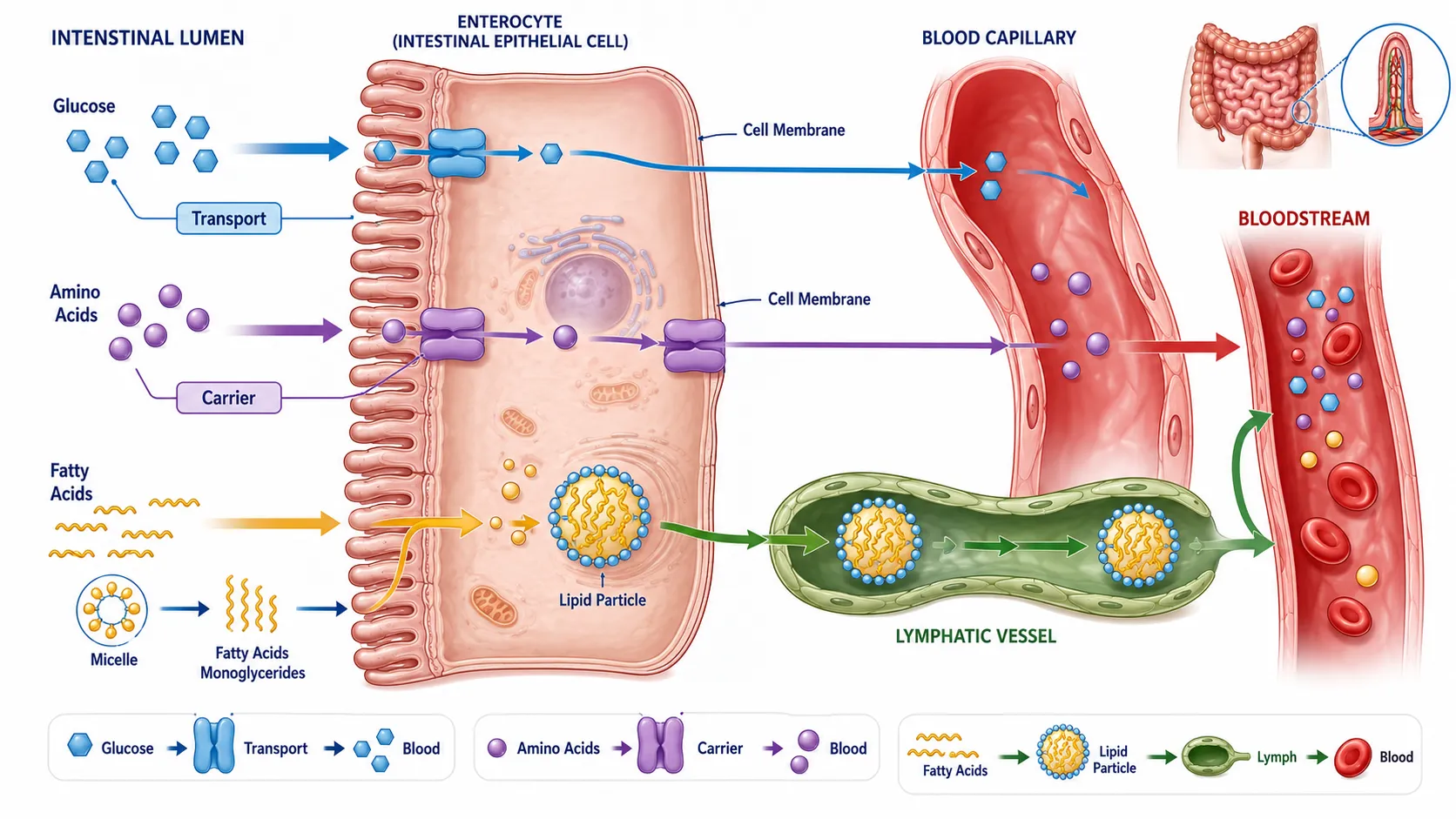
Key Concepts and Definitions
| Term | Definition | Importance in Nutrient Transport |
|---|---|---|
| Absorption | Movement of nutrients from the gastrointestinal lumen into the body | Connects digestion with systemic nutrient utilisation |
| Cellular membrane | Selectively permeable lipid-based barrier surrounding cells | Controls nutrient entry and exit |
| Simple diffusion | Passive movement down a concentration gradient | Allows some small or lipid-soluble molecules to cross membranes |
| Facilitated diffusion | Passive transport through membrane proteins | Enables movement of specific molecules without direct ATP use |
| Primary active transport | Movement against a gradient using energy directly | Maintains essential ion and nutrient gradients |
| Secondary active transport | Transport driven by an existing ion gradient | Supports uptake of several nutrients |
| Carrier protein | Membrane protein that binds and transports a specific substance | Provides selective nutrient movement |
| Co-transport | Movement of two substances through the same transporter | Couples nutrient uptake to ion movement |
| Concentration gradient | Difference in concentration across a membrane | Drives many passive transport processes |
| Enterocyte | Specialised absorptive cell lining the small intestine | Performs nutrient uptake and transfer to circulation |
| Portal circulation | Blood pathway carrying absorbed substances from the intestine to the liver | Important for processing many water-soluble nutrients |
| Lymphatic transport | Movement of substances through lymphatic vessels | Particularly important for many dietary lipid products |
The Intestinal Epithelium as a Selective Transport Barrier
The small intestine is structurally adapted to maximise nutrient absorption. Its surface contains folds, villi and microscopic projections that increase the area available for nutrient exchange. However, increased surface area alone does not explain efficient absorption. Nutrients must still cross a layer of specialised epithelial cells.
The intestinal epithelium performs two apparently contrasting functions. It must permit the selective entry of essential nutrients while preventing uncontrolled movement of harmful substances, excessive ions and potentially damaging molecules.
This selective function depends on:
The lipid bilayer structure of cellular membranes.
Specific membrane transport proteins.
Tight connections between neighbouring cells.
Energy-dependent ion pumps.
Intracellular nutrient-processing mechanisms.
Transport across both the apical and basolateral surfaces of enterocytes.
Apical and Basolateral Transport
Enterocytes are polarised cells. Their membrane facing the intestinal lumen is known as the apical membrane, while the membrane facing internal tissues and blood vessels is known as the basolateral membrane.
This organisation is essential because nutrient transport generally occurs in stages.
A typical pathway involves:
Nutrients being present in the intestinal lumen.
Movement across the apical membrane.
Entry into the enterocyte.
Intracellular processing or temporary handling.
Movement across the basolateral membrane.
Entry into blood capillaries or lymphatic vessels.
Different proteins may therefore be required for nutrient entry and nutrient release.
Fundamental Mechanisms of Membrane Transport
Simple Diffusion
Simple diffusion is the passive movement of molecules from an area of higher concentration to an area of lower concentration. The process does not require direct cellular energy.
The rate of diffusion is influenced by:
The concentration difference.
Molecular size.
Lipid solubility.
Membrane characteristics.
Available surface area.
Small, non-polar and lipid-soluble substances generally move more easily through the lipid component of cellular membranes than charged or highly polar substances.
Key Features of Simple Diffusion
No direct ATP requirement.
Movement occurs down a concentration gradient.
No carrier protein is necessarily required.
Efficiency depends on physical and chemical properties.
Movement continues until conditions approach equilibrium.
Simple diffusion is important because it demonstrates that not every nutrient-related transport process requires a specialised transporter. However, many biologically important nutrients are unable to cross the lipid membrane efficiently through simple diffusion alone.
Facilitated Diffusion
Facilitated diffusion also moves substances down a concentration gradient, but it requires a membrane protein.
Carrier proteins or channels provide a route for molecules that cannot easily cross the lipid bilayer.
Key characteristics include:
No direct ATP consumption by the transporter.
Movement down an existing gradient.
High molecular specificity.
Potential saturation when transport proteins are fully occupied.
Facilitated diffusion is particularly important for substances that are polar or relatively large.
Primary Active Transport
Primary active transport moves substances against a concentration or electrochemical gradient. This requires direct energy, commonly derived from ATP.
The most important general principle is that active transport enables cells to establish and maintain unequal concentrations of ions on opposite sides of a membrane.
Key characteristics include:
Direct energy requirement.
Movement against a gradient.
Dependence on specialised membrane pumps.
Maintenance of electrochemical conditions.
Although some nutrient transport does not directly use primary active transport, active ion pumping is fundamental because it creates gradients that support other nutrient transport processes.
Secondary Active Transport
Secondary active transport uses energy indirectly. A substance moves down its established electrochemical gradient, and the energy released by this movement is used to transport another molecule against its concentration gradient.
This mechanism is particularly important in intestinal nutrient absorption.
General Process
An ion gradient is established by an energy-dependent pump.
The ion is permitted to move back across the membrane.
A nutrient molecule is transported simultaneously.
The energy stored in the ion gradient supports nutrient uptake.
This demonstrates how cellular systems can use stored electrochemical energy rather than directly consuming ATP at every transport step.
The Sodium Gradient and Nutrient Co-Transport
Sodium gradients are central to several intestinal transport mechanisms. Cells maintain relatively low intracellular sodium concentrations through energy-dependent pumping systems.
This creates a strong tendency for sodium to move into the cell under suitable conditions.
Specialised co-transport proteins can use this movement to support the uptake of other substances.
Physiological Importance
The sodium gradient contributes to:
Efficient uptake of specific monosaccharides.
Transport of certain amino acids.
Maintenance of intestinal electrolyte balance.
Coupling between ion movement and nutrient absorption.
The process illustrates an important biochemical principle: nutrient transport is often dependent on broader systems that regulate ion concentrations.
Transport of Carbohydrate Digestion Products
Digestible carbohydrates are ultimately broken down into monosaccharides before significant absorption.
The major absorbable forms include:
Glucose.
Galactose.
Fructose.
These molecules do not all use identical transport mechanisms.
Glucose and Galactose Transport
Glucose and galactose can enter intestinal cells through specialised co-transport mechanisms linked to sodium movement.
This process enables absorption even when the nutrient concentration inside the cell would otherwise limit passive uptake.
The process can be summarised as:
Sodium concentration is maintained at a low level inside the cell.
Sodium tends to move into the enterocyte.
A co-transporter binds sodium and the nutrient.
Both substances move into the cell.
The nutrient is subsequently released across the basolateral membrane.
Fructose Transport
Fructose generally follows a different mechanism involving facilitated transport.
Its movement depends more directly on concentration differences and specialised carrier proteins.
Transfer into the Bloodstream
Following movement through enterocytes, monosaccharides enter the blood vessels associated with the intestinal villi.
They are then transported through the portal circulation to the liver.
This route is physiologically significant because the liver plays a major role in:
Nutrient processing.
Energy storage.
Glucose regulation.
Conversion of metabolic substrates.
Distribution of nutrients to systemic circulation.
Critical Evaluation
The use of different transport mechanisms for different sugars reflects molecular specificity. A single universal transporter would not necessarily provide the required level of selectivity and metabolic control.
Important considerations include:
Transporters may become saturated.
Genetic variation can influence transporter function.
Intestinal health can affect transport efficiency.
Nutrient concentration influences transport dynamics.
Transport of Protein Digestion Products
Dietary proteins are broken down into amino acids and small peptides. Their absorption involves multiple specialised transport systems.
Amino Acid Transport
Different amino acids have different chemical properties. Some are neutral, others acidic or basic, and these differences influence transporter specificity.
Several transport systems therefore contribute to amino acid uptake.
Key principles include:
Selective recognition of amino acid groups.
Sodium-dependent co-transport in some pathways.
Movement across both apical and basolateral membranes.
Competition between molecules for transport capacity.
Small Peptide Transport
Some small peptides can be absorbed before being completely broken down into individual amino acids.
Specialised peptide transport systems allow these molecules to enter enterocytes.
Once inside the cell, further enzymatic processing can occur.
This approach can provide an efficient mechanism for recovering nitrogen-containing nutrients from dietary proteins.
Transfer to Portal Blood
After processing within the enterocyte, amino acids and related products are released into intestinal capillaries.
They enter the portal circulation and are transported to the liver.
Physiological Importance
Efficient amino acid transport supports:
Protein synthesis.
Enzyme production.
Hormone synthesis.
Tissue maintenance.
Growth and repair.
Nitrogen balance.
Transport of Lipid Digestion Products
Lipid transport differs substantially from the transport of carbohydrates and amino acids because many lipid molecules are hydrophobic.
They cannot simply dissolve in the aqueous environment of the intestinal lumen and bloodstream.
Formation of Mixed Micelles
After lipid digestion, smaller lipid products associate with bile-derived compounds.
These structures help transport lipid digestion products through the aqueous intestinal environment.
Their primary function is to bring lipid components close to the surface of enterocytes.
Entry into Enterocytes
Lipid digestion products can enter intestinal cells through a combination of processes, depending on the specific molecule.
These may include:
Passive movement across membranes.
Protein-assisted uptake.
Specialised lipid transport mechanisms.
Intracellular Reassembly
Within intestinal cells, many absorbed lipid components are processed and reassembled into larger lipid molecules.
This is necessary because the form in which lipids are digested is not always the form in which they are transported throughout the body.
Formation of Lipoprotein Particles
Reassembled dietary lipids combine with proteins and other molecules to form transport particles.
These particles allow hydrophobic lipids to travel within body fluids.
Entry into the Lymphatic System
Many larger dietary lipid transport particles enter specialised lymphatic vessels within intestinal villi rather than directly entering the portal blood.
The general pathway is:
Dietary lipids are digested.
Digestion products associate with bile-derived components.
Lipid components reach the enterocyte.
They enter and are processed.
Larger transport particles are assembled.
These particles enter intestinal lymphatic vessels.
Lymphatic circulation eventually delivers them to the bloodstream.
Why Lymphatic Transport Is Necessary
The lymphatic route provides an effective pathway for transporting large lipid-rich particles that are not handled in the same way as water-soluble nutrients.
This represents a major physiological distinction between lipid and carbohydrate absorption.
Transport of Water-Soluble and Fat-Soluble Vitamins
Vitamins demonstrate that nutrient transport cannot be understood as a single uniform process.
Water-Soluble Vitamins
Water-soluble vitamins generally require specialised transport systems or carrier-mediated mechanisms because many cannot freely pass through lipid membranes.
Their transport may depend on:
Specific membrane carriers.
Concentration gradients.
Cellular transport proteins.
Physiological regulation.
Fat-Soluble Vitamins
Fat-soluble vitamins are closely associated with dietary lipid digestion.
Their absorption can depend on:
Adequate dietary lipid.
Effective bile availability.
Normal lipid digestion.
Formation of micellar structures.
Intracellular lipid processing.
Critical Comparison
The transport pathway of a nutrient reflects its chemical properties.
Water-soluble nutrients generally move within aqueous environments but often require carriers to cross lipid membranes. Fat-soluble nutrients can interact with lipid membranes but require specialised mechanisms to move through aqueous environments and circulate in body fluids.
Mineral Transport Across Intestinal Cells
Minerals are inorganic ions that often carry electrical charges. Their absorption therefore requires careful physiological regulation.
Different minerals use different mechanisms.
These may include:
Passive diffusion.
Facilitated transport.
Active transport.
Binding to specialised carrier proteins.
Regulation according to body requirements.
Factors Affecting Mineral Transport
Mineral absorption may depend on:
Chemical form.
Intestinal pH.
Dietary composition.
Presence of competing minerals.
Specific transport proteins.
Nutritional status.
Hormonal regulation.
Importance of Regulation
Uncontrolled mineral absorption could disrupt electrolyte balance and cellular function.
The body therefore uses selective systems that help regulate uptake according to physiological needs.
Water Transport and Osmotic Regulation
Water is not transported in the same manner as many nutrients. Its movement is closely associated with osmotic gradients.
Water tends to move across biological membranes towards areas with a higher concentration of dissolved substances.
Osmosis in the Intestine
Water movement is influenced by:
Sodium absorption.
Glucose transport.
Other solute concentrations.
Intestinal permeability.
The relationship between solute and water transport is physiologically important because nutrient and electrolyte movement can influence fluid balance.
Practical Importance
Co-transport of sodium and glucose can contribute to water absorption because movement of these solutes creates osmotic conditions that encourage water movement.
This principle demonstrates the close relationship between nutrient transport and hydration physiology.
Movement Through the Portal Circulation
Most water-soluble nutrients enter blood capillaries located within intestinal villi.
These nutrients then travel through the hepatic portal system.
The Role of the Liver
The liver acts as a major metabolic processing centre.
It can:
Store certain nutrients.
Convert nutrients into alternative metabolic forms.
Regulate nutrient release.
Synthesise transport proteins.
Process potentially harmful substances.
Advantages of Portal Transport
The portal circulation enables early metabolic processing before nutrients reach the wider systemic circulation.
This provides an important level of metabolic regulation.
The Lymphatic Pathway in Nutrient Transport
The lymphatic system is essential for the transport of many dietary lipids.
Structural Basis
Intestinal villi contain specialised lymphatic vessels capable of receiving larger lipid-rich transport particles.
Functional Importance
The lymphatic pathway:
Supports transport of dietary lipids.
Accommodates large lipid-containing particles.
Eventually delivers these substances into the bloodstream.
Provides a distinct route from portal blood transport.
The Role of Transport Proteins in the Bloodstream
Once nutrients enter the circulation, some remain dissolved in plasma while others require binding proteins or specialised particles.
Transport proteins provide several advantages.
Key Functions
They can:
Improve nutrient solubility.
Protect molecules from rapid degradation.
Prevent uncontrolled chemical interactions.
Deliver nutrients to specific tissues.
Regulate the proportion of free and bound nutrients.
Examples of Transport Principles
Different nutrients may circulate:
Freely dissolved in plasma.
Bound to specific carrier proteins.
Incorporated into lipoprotein particles.
Temporarily stored within blood components.
The transport method depends largely on molecular chemistry and physiological function.
Transporter Specificity and Saturation
Transport proteins are selective. A transporter generally recognises particular molecular structures rather than transporting every substance indiscriminately.
Specificity
Specificity provides:
Controlled nutrient entry.
Prevention of inappropriate molecular movement.
Efficient recognition of required substrates.
Saturation
Carrier-mediated transport has a maximum capacity.
When all available transport proteins are occupied, increasing nutrient concentration may not produce a proportional increase in transport rate.
This concept is important when evaluating:
High nutrient concentrations.
Supplement exposure.
Differences in nutrient absorption.
Transporter abnormalities.
Competition Between Nutrients
Some nutrients may compete for related transport systems.
Competition can occur when:
Molecules have similar structures.
Transporters recognise multiple substrates.
Transport capacity is limited.
Physiological Consequences
Competition may influence:
Rate of nutrient uptake.
Relative absorption efficiency.
Nutrient interactions within mixed meals.
This demonstrates why nutrient absorption should be considered within the context of total dietary composition.
Regulation of Nutrient Transport
Nutrient transport is dynamic rather than fixed.
The body can regulate transporter activity according to physiological conditions.
Potential influences include:
Nutrient availability.
Hormonal signals.
Energy requirements.
Nutritional status.
Developmental stage.
Intestinal adaptation.
Adaptive Responses
When dietary patterns change over time, the digestive system may demonstrate functional adaptation.
Examples include changes in:
Enzyme production.
Transporter expression.
Intestinal absorptive capacity.
Such adaptation demonstrates the flexibility of human nutritional physiology.
Factors That Can Impair Nutrient Transport
Nutrient transport depends on the coordinated function of multiple systems.
Potential factors influencing efficiency include:
Damage to the intestinal surface.
Reduced digestive function.
Altered gastrointestinal motility.
Impaired bile delivery.
Reduced pancreatic activity.
Transporter abnormalities.
Nutrient competition.
Changes in intestinal permeability.
Critical Evaluation
A reduction in nutrient status cannot always be attributed simply to inadequate dietary intake.
A comprehensive evaluation should consider:
Was the nutrient consumed?
Was it released from the food matrix?
Was digestion adequate?
Was the nutrient absorbed?
Did it cross the enterocyte effectively?
Did it enter the appropriate circulation?
Was transport in the blood adequate?
Could tissues utilise the nutrient?
This systems-based approach provides a more accurate understanding of nutrient availability.
Practical Examples of Specialised Nutrient Transport
Example 1: Glucose Uptake Following a Meal
Following digestion of carbohydrate:
Monosaccharides accumulate in the intestinal lumen.
Specialised transport systems facilitate their movement into enterocytes.
Glucose can use sodium-linked transport at the apical membrane.
Glucose exits the enterocyte through specialised basolateral transport mechanisms.
It enters intestinal capillaries.
Portal circulation carries it towards the liver.
This demonstrates coordinated transport across multiple membranes.
Example 2: Dietary Lipid Transport
Following a meal containing fats:
Lipids are emulsified and enzymatically digested.
Smaller lipid components associate with bile-derived structures.
Lipid products reach the intestinal surface.
They enter intestinal cells.
Many are reassembled into transportable lipid forms.
Lipid-rich particles enter lymphatic vessels.
The lymphatic system eventually delivers them into the bloodstream.
Example 3: Amino Acid Uptake
Following protein digestion:
Proteins are reduced to amino acids and small peptides.
Specific transport systems move these products into enterocytes.
Peptides may undergo additional intracellular processing.
Amino acids are released into intestinal capillaries.
Portal blood carries them to the liver.
Evaluation of Passive and Active Transport Mechanisms
Each transport mechanism has advantages and limitations.
Passive Transport
Benefits include:
No direct ATP requirement.
Efficient movement when concentration gradients are favourable.
Simple transport of suitable molecules.
Limitations include:
Cannot move substances against a gradient.
Depends on existing concentration differences.
May be unsuitable for charged molecules.
Facilitated Diffusion
Benefits include:
Selectivity.
Efficient movement of polar molecules.
No direct ATP use.
Limitations include:
Requires appropriate concentration gradients.
Can become saturated.
Active Transport
Benefits include:
Movement against gradients.
Maintenance of essential nutrient and ion concentrations.
Strong physiological control.
Limitations include:
Requires energy directly or indirectly.
Depends on functional transport systems.
Can be affected by cellular energy availability.
Vesicular Processes
Benefits include:
Movement of larger or specialised materials.
Protection and controlled handling of complex substances.
Limitations include:
Greater cellular complexity.
Energy requirements.
Dependence on specialised cellular machinery.
Key Benefits of Specialised Nutrient Transport Systems
Specialised transport systems provide essential physiological advantages.
Efficiency
They enable nutrients to be absorbed even when simple diffusion would be insufficient.
Selectivity
Transporters recognise appropriate molecules and help regulate cellular exposure.
Regulation
Transport activity can respond to changing physiological requirements.
Protection
Controlled transport prevents uncontrolled movement of substances across biological barriers.
Metabolic Coordination
Different circulation pathways allow nutrients to be directed towards appropriate processing systems.
Professional and Scientific Applications
Understanding nutrient transport mechanisms is important in several professional contexts.
Learners can apply this knowledge when:
Evaluating nutrient bioavailability.
Comparing food sources.
Interpreting biochemical transport principles.
Understanding nutrient interactions.
Analysing the consequences of impaired absorption.
Assessing how food composition influences nutrient delivery.
In professional practice, interpretation of complex clinical symptoms or suspected absorption disorders should remain within appropriate professional competence and referral pathways should be followed where necessary.
A Systematic Framework for Evaluating Nutrient Transport
When evaluating the transport of any nutrient, Learners should apply the following framework.
Step 1: Identify the Nutrient
Determine whether it is:
Water-soluble.
Lipid-soluble.
Charged.
Non-polar.
Large or small.
Bound to other molecules.
Step 2: Identify the Absorptive Form
Determine the form produced after digestion.
Examples include:
Monosaccharides.
Amino acids.
Small peptides.
Lipid digestion products.
Mineral ions.
Step 3: Evaluate Apical Entry
Ask:
Does the nutrient diffuse freely?
Is a carrier required?
Is co-transport involved?
Is an ion gradient necessary?
Step 4: Consider Intracellular Processing
Determine whether the nutrient:
Remains unchanged.
Is temporarily stored.
Is enzymatically modified.
Is reassembled into a larger transport structure.
Step 5: Evaluate Basolateral Exit
Identify how the nutrient leaves the enterocyte.
Step 6: Identify the Circulatory Route
Determine whether it enters:
Portal blood circulation.
Lymphatic circulation.
A specialised transport pathway.
Step 7: Consider Systemic Transport
Evaluate whether the nutrient:
Dissolves freely.
Requires a carrier protein.
Requires a lipoprotein particle.
Is regulated by tissue demand.
Summary
The transport of absorbed nutrients across cellular membranes is a highly specialised and coordinated physiological process. The intestinal epithelium functions as a selective barrier that requires nutrients to cross both apical and basolateral membranes before entering the circulation.
Different nutrients require different transport mechanisms because their molecular structures, charges and solubility characteristics vary. Passive diffusion supports the movement of suitable molecules down concentration gradients, while facilitated diffusion depends on specific membrane proteins. Primary active transport establishes essential electrochemical gradients, and secondary active transport uses these gradients to support nutrient uptake.
Carbohydrates, proteins and lipids demonstrate distinct transport strategies. Many monosaccharides and amino acids use carrier-mediated mechanisms and enter portal blood, while lipid digestion products undergo specialised processing and frequently enter lymphatic circulation before reaching the bloodstream. Vitamins and minerals similarly require transport processes appropriate to their chemical properties.
A critical understanding of nutrient transport therefore requires a systems-based perspective. Effective nutrient utilisation depends not only on dietary intake but also on successful digestion, membrane transport, intracellular processing, entry into the circulation and delivery to tissues. These specialised mechanisms provide the physiological foundation for maintaining nutrient availability, metabolic regulation and overall human health.
3.Analyse Clinical Data to Accurately Identify and Explain Specific Physiological Disruptions in Nutrient Digestion and Subsequent Absorption Processes
The effective digestion and absorption of nutrients depend on the coordinated function of multiple physiological systems. Food must first undergo appropriate mechanical and chemical digestion before nutrients can be released from the food matrix, converted into absorbable forms and transported across the intestinal epithelium. Any disruption affecting digestive secretions, enzyme activity, gastrointestinal motility, intestinal structure, membrane transport or circulatory transfer can alter nutrient availability and contribute to nutritional deficiencies or broader metabolic consequences.
Analysing clinical data in this context requires a structured and evidence-based approach. No single laboratory result, symptom or dietary observation is sufficient to explain every disruption in nutrient handling. Accurate interpretation requires the integration of clinical history, dietary information, physical observations, biochemical measurements and, where appropriate, specialist investigations. Learners must therefore understand both the normal physiology of digestion and absorption and the patterns that may indicate altered function.
This section examines how clinical and scientific data can be analysed to identify disruptions in nutrient digestion and absorption while recognising the limits of individual findings and the importance of appropriate clinical assessment.
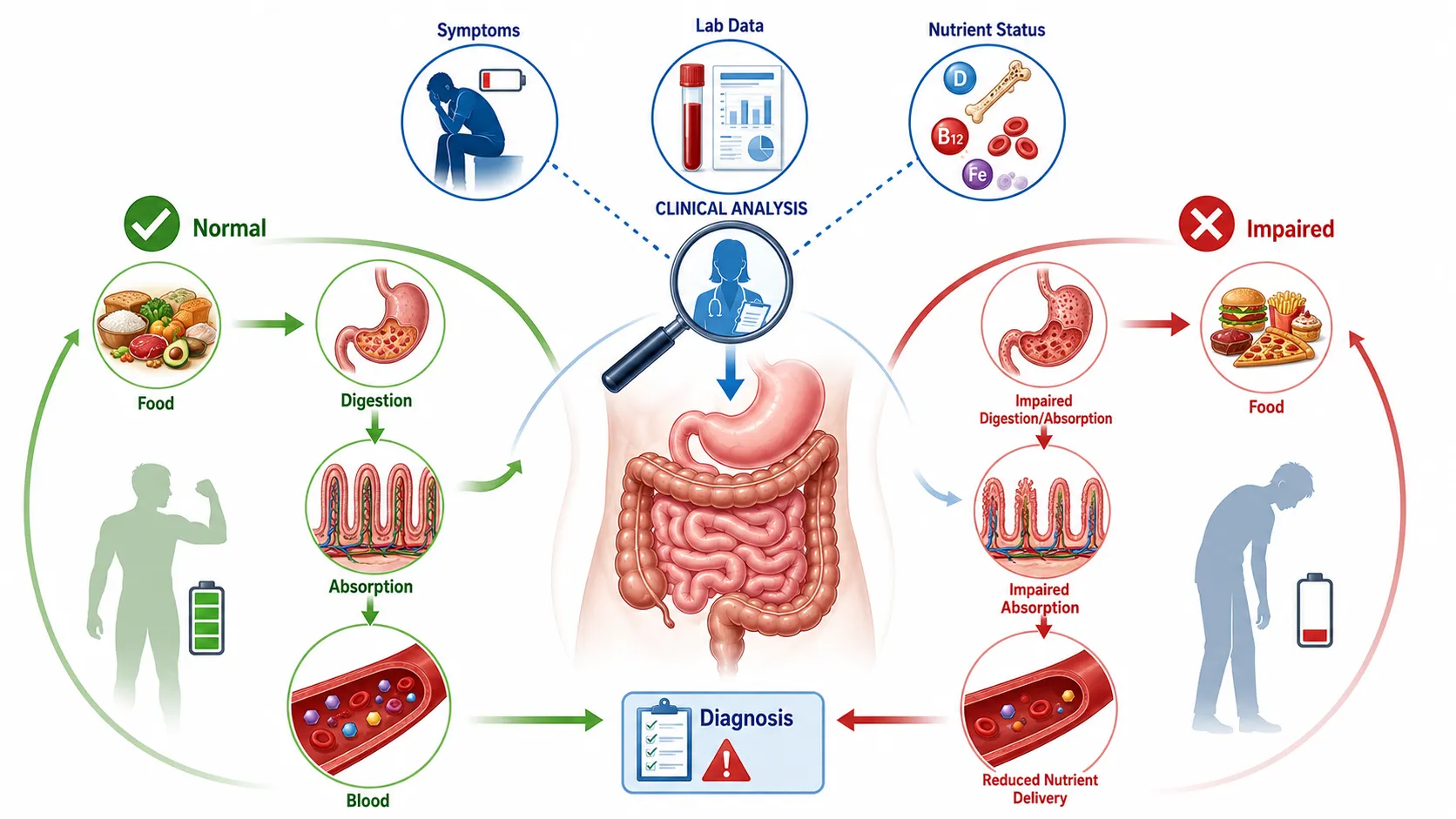
Key Concepts and Definitions
| Term | Definition | Relevance to Digestion and Absorption |
|---|---|---|
| Maldigestion | Inadequate breakdown of food into absorbable components | May result from insufficient enzymes, bile or digestive secretions |
| Malabsorption | Impaired uptake of nutrients across the intestinal system | Can contribute to reduced nutrient availability and deficiency |
| Bioavailability | Proportion of a nutrient that becomes available for physiological use | Influenced by digestion, absorption and transport |
| Steatorrhoea | Excess fat in stools due to impaired fat digestion or absorption | May indicate disruption of normal lipid handling |
| Brush-border enzymes | Enzymes located on the surface of intestinal cells | Complete digestion of several nutrients |
| Exocrine secretion | Release of substances such as digestive enzymes into a body lumen | Essential for gastrointestinal digestion |
| Intestinal permeability | Selective capacity of the intestinal barrier to regulate molecular passage | Alterations may affect barrier and absorptive function |
| Biomarker | Measurable biological indicator used in assessment | Helps evaluate nutritional and physiological status |
| Nutrient deficiency | Inadequate availability of an essential nutrient for normal function | May arise from intake, digestion, absorption or utilisation problems |
| Differential interpretation | Comparison of several possible explanations for observed findings | Supports accurate analysis of complex clinical data |
The Relationship Between Normal Physiology and Clinical Data
Before abnormal findings can be interpreted, normal digestive and absorptive physiology must be understood. Nutrient handling follows a sequence beginning with food ingestion and continuing through digestion, absorption, transport and cellular utilisation.
The major physiological stages include:
Mechanical breakdown of food.
Secretion of digestive fluids.
Enzymatic hydrolysis of macronutrients.
Emulsification of dietary lipids.
Regulation of gastrointestinal pH.
Controlled gastrointestinal motility.
Final digestion at the intestinal surface.
Transport across intestinal epithelial cells.
Entry into blood or lymphatic circulation.
Delivery to tissues.
Clinical data may provide evidence that one or more stages are not functioning normally. However, an observed nutrient deficiency does not automatically identify the location of the disruption. A reduced nutrient concentration may arise from inadequate intake, impaired digestion, reduced absorption, altered transport, increased physiological demand or impaired cellular utilisation.
A critical analysis must therefore distinguish between these possibilities.
Core Principle of Clinical Interpretation
The most reliable approach is to examine the complete pattern rather than relying on a single isolated result.
Learners should consider:
What symptoms are present?
Which nutrients appear to be affected?
Is there evidence of digestive dysfunction?
Is intestinal absorption likely to be impaired?
Are multiple nutrient classes affected?
Could dietary intake explain the findings?
Are there changes in physiological demand?
Do laboratory findings support the proposed explanation?
A Systematic Framework for Analysing Digestive and Absorptive Disruption
A structured framework improves the accuracy of clinical reasoning.
Step 1: Review the Clinical History
The history provides important contextual information.
Relevant areas may include:
Duration of symptoms.
Relationship between symptoms and food intake.
Changes in appetite.
Changes in body mass.
Stool characteristics.
Abdominal discomfort.
Previous gastrointestinal history.
Dietary pattern.
Medication use.
Alcohol exposure.
Previous nutritional concerns.
The purpose is not to diagnose from history alone. Instead, the information helps identify physiological systems that may require further evaluation.
Step 2: Identify the Predominant Physiological Pattern
The data should then be examined for patterns.
Possible patterns include:
Predominantly carbohydrate-related symptoms.
Predominantly protein-related nutritional changes.
Evidence of impaired lipid digestion.
Multiple nutrient deficiencies.
Signs suggesting generalised intestinal dysfunction.
Pattern recognition is valuable because different disruptions affect nutrients differently.
Step 3: Examine Biochemical and Nutritional Data
Relevant measurements may include indicators associated with:
Nutrient status.
Protein balance.
Electrolyte regulation.
Vitamin availability.
Mineral status.
Metabolic function.
Interpretation should always consider:
Reference ranges.
Biological variation.
Hydration status.
Acute physiological changes.
Medication effects.
Overall clinical context.
Step 4: Relate Findings to Normal Physiology
Each abnormal pattern should be connected to a possible physiological stage.
For example:
Reduced digestion may indicate insufficient enzymatic or biliary contribution.
Multiple nutrient abnormalities may suggest broad impairment of intestinal function.
Predominantly fat-related abnormalities may indicate disruption of lipid digestion, transport or absorption.
Step 5: Evaluate Alternative Explanations
Professional reasoning requires consideration of competing explanations.
A finding may result from:
Reduced dietary intake.
Maldigestion.
Malabsorption.
Increased requirements.
Increased losses.
Altered metabolism.
Laboratory variation.
Step 6: Determine the Level of Certainty
Learners should distinguish between:
Direct evidence.
Strongly supported interpretation.
Possible explanation.
Speculative conclusion.
This prevents overinterpretation of limited data.
Clinical Indicators of Impaired Digestion
Maldigestion occurs when food is not adequately broken down into forms suitable for efficient absorption.
The digestive process depends on:
Adequate mechanical processing.
Appropriate gastric conditions.
Digestive enzyme activity.
Pancreatic secretions.
Bile availability.
Normal intestinal pH.
Signs That May Suggest Digestive Disruption
Potential findings may include:
Persistent changes in stool consistency.
Increased stool volume.
Visible undigested food in some circumstances.
Symptoms associated with particular meals.
Abdominal bloating.
Nutritional decline despite food intake.
These findings are non-specific and require further evaluation.
Evaluating Enzyme-Related Disruption
Digestive enzymes have specific substrates. A reduction in enzyme activity may therefore produce a pattern related to the nutrient affected.
For example, impaired digestion of complex carbohydrates may increase the quantity of undigested material reaching the lower intestine. This can alter microbial fermentation and contribute to gastrointestinal symptoms.
Potential consequences include:
Increased gas production.
Altered osmotic conditions.
Abdominal distension.
Changes in bowel habits.
The physiological mechanism should be explained rather than simply listing symptoms.
Analysing Disruptions in Carbohydrate Digestion and Absorption
Carbohydrate digestion requires coordinated enzymatic activity. Complex carbohydrates must be progressively broken down before absorbable monosaccharides can be transported into intestinal cells.
Physiological Sites of Potential Disruption
Disruption may occur at:
Initial enzymatic processing.
Pancreatic enzyme activity.
Brush-border digestion.
Monosaccharide transport.
Intestinal epithelial function.
Clinical Data Patterns
A clinical assessment may identify:
Symptoms occurring after specific carbohydrate intake.
Changes associated with poorly digested carbohydrates.
Evidence of altered nutritional status.
Laboratory findings requiring correlation with clinical presentation.
Example of Analytical Reasoning
Consider an individual reporting recurrent gastrointestinal symptoms after consuming a specific type of carbohydrate-containing food.
A structured analysis should consider:
Is the nutrient being adequately digested?
Could a brush-border process be impaired?
Is the carbohydrate reaching the lower intestine undigested?
Could microbial fermentation explain the symptoms?
Are there alternative dietary explanations?
This approach links symptoms with physiological mechanisms.
Analysing Protein Digestion and Absorption
Protein digestion involves gastric denaturation, proteolytic enzyme activity and final intestinal processing.
Disruption may affect:
Gastric processing.
Pancreatic protease activity.
Brush-border peptide breakdown.
Amino acid transport.
Intestinal epithelial integrity.
Potential Physiological Consequences
Inadequate protein digestion or absorption may influence:
Availability of amino acids.
Nitrogen balance.
Tissue maintenance.
Protein synthesis.
Recovery and repair processes.
Clinical Interpretation
Reduced indicators associated with protein nutritional status should not automatically be attributed to impaired digestion.
Alternative explanations may include:
Low dietary protein intake.
Increased protein losses.
Altered liver protein synthesis.
Inflammation.
Increased metabolic demand.
A critical analysis therefore requires integration of dietary and physiological evidence.
Analysing Lipid Digestion and Absorption
Lipid digestion is particularly complex because dietary fats are poorly soluble in water.
Normal lipid handling requires:
Appropriate gastric delivery.
Bile-derived emulsification.
Pancreatic enzyme activity.
Formation of lipid transport structures.
Enterocyte uptake.
Intracellular lipid processing.
Lymphatic transport.
Identifying Potential Disruption
Clinical findings that may require investigation include:
Persistent abnormal stool characteristics.
Reduced availability of fat-associated nutrients.
Nutritional changes involving multiple fat-related components.
Steatorrhoea as a Physiological Clue
Steatorrhoea refers to excessive fat content in stool.
It may reflect disruption at several stages, including:
Inadequate lipid digestion.
Reduced bile availability.
Impaired intestinal absorption.
Altered processing within intestinal cells.
Therefore, steatorrhoea is a physiological clue rather than a complete diagnosis.
Critical Interpretation
A Learner should ask:
Is fat reaching the intestine in an appropriate form?
Is emulsification occurring effectively?
Is enzymatic breakdown adequate?
Are lipid digestion products reaching the enterocyte?
Is intestinal absorption functioning normally?
Is transport through the lymphatic system likely to be affected?
The Importance of Multiple Nutrient Deficiencies
One of the most important principles in clinical interpretation is that the pattern of nutrient abnormalities may provide more information than a single deficiency.
Isolated Deficiency Patterns
An isolated deficiency may result from:
Low dietary intake.
Specific nutrient interaction.
Increased requirement.
Selective transport disruption.
Multiple Deficiency Patterns
Multiple deficiencies may suggest:
Broad dietary inadequacy.
Generalised digestive disruption.
Extensive intestinal dysfunction.
Chronic physiological stress.
Critical Evaluation
The presence of multiple deficiencies does not prove a specific gastrointestinal disorder. However, it may justify a broader investigation into nutrient digestion and absorption.
The Role of Intestinal Surface Structure
The small intestine has a highly specialised absorptive surface.
Its structure includes:
Circular folds.
Villi.
Microvilli.
Specialised epithelial cells.
Close association with blood and lymphatic vessels.
These adaptations increase the capacity for nutrient absorption.
Physiological Consequences of Surface Disruption
If the absorptive surface is compromised, the body may experience:
Reduced contact area.
Altered enzyme activity.
Impaired transporter function.
Reduced nutrient uptake.
Multiple nutritional consequences.
Analysing Clinical Evidence
Possible indicators may include:
Persistent nutritional deficiencies.
Unexplained weight changes.
Multiple nutrient abnormalities.
Chronic gastrointestinal symptoms.
Such findings require careful assessment and should not be interpreted as proof of a specific cause without appropriate clinical investigation.
The Role of Gastrointestinal Motility
Nutrient digestion depends not only on enzymes but also on appropriate movement of gastrointestinal contents.
Motility ensures:
Mixing with digestive secretions.
Controlled exposure to enzymes.
Appropriate contact with the intestinal surface.
Timely movement between digestive regions.
Effects of Altered Transit Time
If food moves too rapidly:
Digestive enzymes may have less time to act.
Nutrients may have reduced contact with the absorptive surface.
If movement is excessively slow:
Normal digestive patterns may be altered.
Microbial activity may change.
Symptoms may develop through different mechanisms.
Clinical Interpretation
Symptoms related to motility should be evaluated alongside:
Meal timing.
Stool pattern.
Nutritional findings.
Medication history.
Hydration status.
Gastric Acidity and Nutrient Availability
The stomach provides an acidic environment that contributes to protein processing and the release of certain nutrients from food structures.
Physiological Roles of Gastric Acid
Gastric acidity contributes to:
Protein denaturation.
Activation of specific digestive processes.
Release of some nutrients from food.
Regulation of gastrointestinal signalling.
Potential Consequences of Altered Gastric Conditions
Changes in gastric acidity may influence:
Protein processing.
Nutrient release.
Downstream digestive activity.
Microbial composition in the upper gastrointestinal tract.
Clinical data must be interpreted cautiously because altered nutrient status may have multiple causes.
Analysing the Role of Pancreatic Function
The pancreas provides important digestive enzymes and bicarbonate-rich secretions.
Key Functions
Pancreatic activity supports digestion of:
Carbohydrates.
Proteins.
Lipids.
Certain nucleic acid components.
Bicarbonate also helps create an environment suitable for intestinal enzyme activity.
Data Patterns Requiring Evaluation
Possible indicators of pancreatic digestive disruption may include:
Evidence of impaired macronutrient digestion.
Persistent fat-related stool abnormalities.
Nutritional decline.
Abnormal specialised digestive tests.
The interpretation of pancreatic function requires appropriate clinical investigations.
Evaluating the Role of Bile in Nutrient Absorption
Bile-derived components are particularly important in lipid digestion.
They support:
Emulsification of dietary fats.
Formation of micellar structures.
Delivery of lipid products to the intestinal surface.
Consequences of Reduced Bile Availability
Potential effects include:
Reduced efficiency of lipid digestion.
Impaired absorption of certain lipid-associated nutrients.
Changes in stool lipid content.
Analytical Considerations
A pattern involving both impaired fat handling and reduced availability of nutrients that depend on normal lipid absorption may provide useful physiological information.
However, other explanations must also be considered.
Laboratory Data and Nutritional Biomarkers
Laboratory measurements provide valuable information but must not be interpreted in isolation.
Types of Data That May Be Considered
Clinical assessment may include:
Blood nutrient concentrations.
Protein-related indicators.
Mineral measurements.
Vitamin-related biomarkers.
Stool-based assessments.
Metabolic measurements.
Principles of Accurate Interpretation
Learners should consider:
Whether the measurement reflects recent intake or longer-term status.
Whether inflammation may alter the result.
Whether hydration influences concentration.
Whether a single measurement is sufficient.
Whether trends over time provide stronger evidence.
Trend Analysis
Repeated measurements may provide more useful information than a single result.
For example, a progressive decline in a nutrient-related marker may suggest an ongoing physiological issue, whereas an isolated abnormal result may require confirmation.
Analysing Clinical Data Through Pattern Recognition
Pattern recognition is useful when several findings are considered together.
Pattern A: Predominantly Carbohydrate-Related Symptoms
Possible analytical questions include:
Are symptoms associated with specific foods?
Could incomplete digestion increase lower intestinal fermentation?
Is intestinal transport likely to be involved?
Are symptoms influenced by meal quantity?
Pattern B: Predominantly Lipid-Related Findings
Possible questions include:
Is lipid digestion likely to be adequate?
Is bile availability sufficient?
Could pancreatic enzyme activity be affected?
Is intestinal absorption functioning normally?
Pattern C: Broad Nutritional Decline
Possible questions include:
Is dietary intake sufficient?
Are multiple nutrient classes affected?
Is there evidence of generalised absorptive impairment?
Are physiological demands increased?
Pattern recognition should guide further investigation rather than replace it.
Practical Scenario 1: Persistent Symptoms Following Meals
An individual reports recurrent abdominal discomfort, bloating and altered bowel habits after eating. Dietary intake appears adequate.
A systematic analysis should consider:
The timing of symptoms.
Macronutrient composition of meals.
Possible digestive enzyme involvement.
Gastrointestinal transit.
Food intolerances or sensitivities requiring clinical assessment.
Other non-nutritional causes.
The key academic skill is linking observations to plausible physiological mechanisms while avoiding unsupported conclusions.
Practical Scenario 2: Reduced Nutritional Status Despite Adequate Intake
A person consumes a diet that appears nutritionally adequate but develops evidence suggesting reduced availability of several nutrients.
A critical assessment should investigate:
Dietary intake accuracy.
Digestive efficiency.
Intestinal absorption.
Nutrient losses.
Increased physiological requirements.
Chronic inflammatory processes.
Possible medication interactions.
The presence of adequate intake alone does not guarantee adequate physiological availability.
Practical Scenario 3: Evidence of Impaired Fat Handling
An individual presents with persistent stool changes and reduced availability of certain nutrients associated with normal lipid absorption.
The physiological analysis should examine:
Lipid emulsification.
Pancreatic lipase activity.
Intestinal mucosal function.
Lymphatic transport.
Overall nutritional pattern.
This scenario demonstrates how one clinical observation may involve multiple stages of nutrient physiology.
Distinguishing Maldigestion from Malabsorption
These concepts are related but distinct.
Maldigestion
Maldigestion occurs when food is not adequately broken down.
Common physiological stages potentially involved include:
Insufficient enzyme activity.
Inadequate bile contribution.
Altered digestive pH.
Reduced mechanical processing.
Malabsorption
Malabsorption occurs when nutrients cannot be adequately transferred from the gastrointestinal tract into the body.
Potential mechanisms include:
Reduced absorptive surface.
Transporter dysfunction.
Intestinal inflammation.
Altered epithelial function.
Why the Distinction Matters
A nutrient may remain unavailable because:
It was never adequately digested.
or because:
It was digested but could not be effectively absorbed.
These mechanisms require different physiological explanations.
The Role of Inflammation in Nutrient Handling
Inflammatory processes can influence nutrient digestion and absorption indirectly or directly.
Potential effects include:
Changes in intestinal permeability.
Altered transporter expression.
Changes in metabolic demand.
Modified nutrient distribution.
Changes in circulating nutrient biomarkers.
Critical Consideration
An abnormal nutrient biomarker during inflammation may not always represent simple dietary deficiency. The physiological interpretation must consider redistribution and altered metabolic regulation.
The Importance of Clinical Context
The same laboratory result may have different meanings depending on the wider clinical situation.
Factors requiring consideration include:
Age.
Physiological state.
Dietary history.
Medication use.
Duration of symptoms.
Acute or chronic illness.
Body composition.
Hydration status.
Clinical interpretation is therefore an exercise in contextual reasoning.
Common Errors in Analysing Digestion and Absorption Data
Error 1: Assuming a Deficiency Always Indicates Poor Intake
A nutrient deficiency may result from:
Reduced intake.
Maldigestion.
Malabsorption.
Increased demand.
Increased loss.
Altered metabolism.
Error 2: Using One Biomarker as Definitive Proof
A single measurement may be influenced by:
Biological variation.
Inflammation.
Recent intake.
Analytical factors.
Error 3: Ignoring the Pattern of Multiple Findings
The combination of symptoms, nutritional data and physiological findings often provides more information than any individual result.
Error 4: Confusing Digestion with Absorption
Digestion is primarily the breakdown of nutrients.
Absorption involves movement across the gastrointestinal barrier.
Both must function effectively.
Error 5: Reaching a Diagnostic Conclusion Without Sufficient Evidence
Academic analysis should identify plausible mechanisms and explain supporting evidence. Formal diagnosis requires appropriate clinical competence and investigation.
Key Benefits of Analysing Clinical Data in Nutritional Physiology
The ability to analyse clinical data supports advanced academic and professional understanding.
Improved Physiological Reasoning
Learners can:
Connect symptoms with biochemical processes.
Identify likely stages of disruption.
Compare alternative explanations.
Interpret complex patterns.
Better Nutritional Assessment
Learners can understand that nutritional status depends on:
Intake.
Digestion.
Absorption.
Transport.
Metabolism.
Physiological demand.
Stronger Evidence-Based Decision Making
A systematic approach encourages:
Use of multiple evidence sources.
Recognition of uncertainty.
Avoidance of oversimplification.
Appropriate referral where necessary.
A Structured Process for Data Analysis
The following process can be applied to academic case studies.
Step 1: Define the Primary Problem
Identify whether the main concern relates to:
Gastrointestinal symptoms.
Nutrient deficiency.
Altered stool characteristics.
Weight change.
Multiple biochemical abnormalities.
Step 2: Identify the Nutrient Pattern
Determine whether the findings involve:
Carbohydrates.
Proteins.
Lipids.
Vitamins.
Minerals.
Multiple nutrient groups.
Step 3: Map the Normal Physiological Pathway
Trace the nutrient from:
Food → Digestion → Absorption → Circulation → Cellular utilisation.
Step 4: Identify the Possible Point of Disruption
Ask whether the problem may occur during:
Mechanical digestion.
Enzymatic digestion.
Bile-dependent processing.
Intestinal absorption.
Membrane transport.
Blood or lymphatic transport.
Step 5: Compare Evidence
Evaluate:
Supporting findings.
Contradictory findings.
Missing information.
Step 6: Consider Alternatives
Avoid assuming a single cause.
Step 7: State the Conclusion Appropriately
Use evidence-based language such as:
“The findings may suggest…”
“This pattern is consistent with…”
“Further assessment would be required to distinguish…”
This reflects professional academic reasoning.
Key Learning Points
Learners should be able to recognise that:
Nutrient availability depends on both digestion and absorption.
Clinical findings must be interpreted in relation to normal physiology.
Maldigestion and malabsorption represent different physiological disruptions.
Multiple nutrient abnormalities may provide important pattern-based evidence.
Lipid, protein and carbohydrate handling involve distinct physiological mechanisms.
Laboratory data require contextual interpretation.
A single abnormal result rarely provides a complete explanation.
Professional analysis requires consideration of alternative explanations.
Persistent or significant clinical abnormalities require appropriate medical assessment.
Summary
Analysing clinical data to identify disruptions in nutrient digestion and absorption requires a systematic understanding of gastrointestinal physiology, biochemical mechanisms and evidence-based interpretation. Nutrient handling begins with the breakdown of food but depends equally on the ability of intestinal cells to absorb and transfer nutrients into blood or lymphatic circulation.
Disruptions may occur at many points, including digestive enzyme activity, gastric conditions, pancreatic secretion, bile-dependent lipid processing, intestinal surface integrity, nutrient transporter function and gastrointestinal motility. Clinical findings may include altered gastrointestinal symptoms, nutritional deficiencies, abnormal stool characteristics or changes in biochemical markers, but no individual finding should be interpreted independently of the wider physiological context.
A robust analytical approach integrates clinical history, dietary information, symptom patterns and biochemical data. It distinguishes between inadequate intake, maldigestion, malabsorption and other causes of reduced nutrient availability. By mapping abnormal findings onto the normal pathway from food ingestion to nutrient utilisation, Learners can develop advanced skills in identifying plausible physiological disruptions.
This approach supports accurate academic analysis while emphasising the limits of non-clinical interpretation. The ability to evaluate patterns, consider alternative explanations and recognise uncertainty is essential for advanced study in nutritional biochemistry and human physiology.
4.Critically Discuss How Gastrointestinal Health, Including the Role of the Microbiome, Significantly Influences the Efficiency of Nutrient Absorption and Transport
Gastrointestinal health is fundamental to human nutrition because the gastrointestinal tract is responsible not only for receiving and digesting food but also for regulating the absorption, transport and physiological availability of nutrients. A healthy gastrointestinal system requires coordinated mechanical activity, digestive secretions, an intact intestinal barrier, specialised epithelial cells, efficient blood and lymphatic circulation and a balanced interaction with the intestinal microbiome. Disruption at any of these levels can influence how effectively nutrients move from food into the body.
The gastrointestinal microbiome adds further complexity to this process. Trillions of microorganisms inhabit the digestive tract and interact continuously with dietary components, intestinal cells and the immune system. These microorganisms can metabolise compounds that human digestive enzymes cannot fully process, produce biologically active metabolites and influence the environment in which nutrient absorption occurs. However, the relationship between the microbiome and nutrition is dynamic. Microbial effects may vary according to dietary pattern, host physiology, medication exposure, age and the composition and functional activity of the microbial community.
A critical discussion of gastrointestinal health therefore requires consideration of both direct physiological mechanisms and indirect regulatory effects. Nutrient absorption is not determined simply by how much food is consumed. It depends on the condition of the gastrointestinal system and the complex interaction between the host, diet and microbial ecosystem.
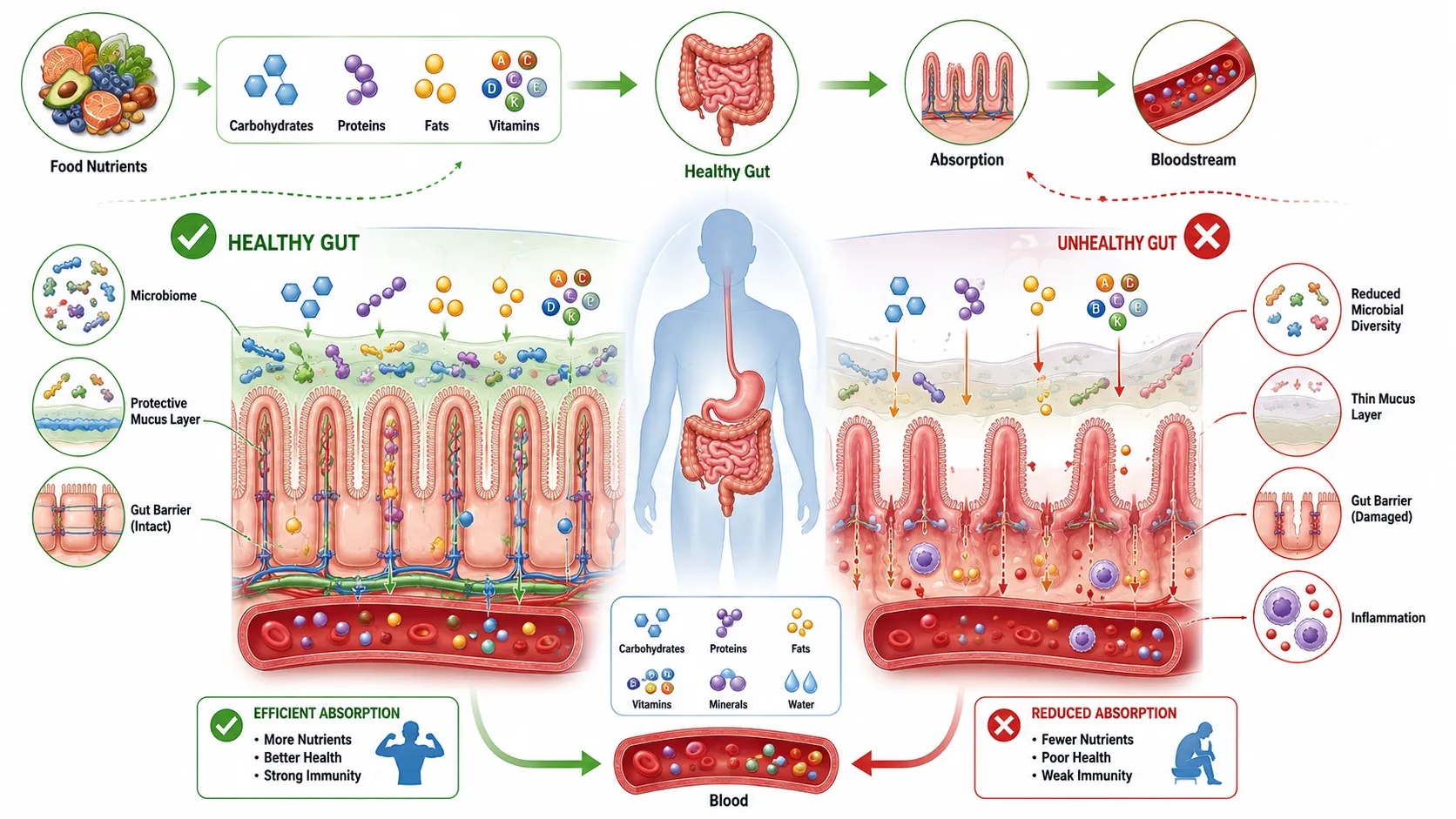
Key Definitions and Concepts
| Term | Definition | Importance for Nutrient Absorption and Transport |
|---|---|---|
| Gastrointestinal health | The effective structural and functional operation of the digestive system | Supports digestion, absorption, barrier function and nutrient transport |
| Microbiome | The community of microorganisms and their collective genetic material within a specific environment | Influences nutrient metabolism, intestinal function and host physiology |
| Microbiota | The microorganisms living within a particular environment | Interacts directly with dietary compounds and intestinal tissues |
| Intestinal barrier | A selective biological barrier regulating movement between the intestinal lumen and the internal environment | Allows nutrient uptake while limiting inappropriate passage of harmful substances |
| Dysbiosis | An altered microbial composition or function associated with disturbed host–microbe interactions | May influence metabolism, inflammation and gastrointestinal function |
| Short-chain fatty acids | Microbial metabolites produced mainly from fermentation of certain carbohydrates | Influence colonic physiology and contribute to host energy metabolism |
| Bioavailability | The proportion of a nutrient that becomes available for absorption and physiological use | Depends on food structure, digestion, absorption and metabolism |
| Enterocyte | A specialised intestinal epithelial cell involved in nutrient absorption | Transfers nutrients from the intestinal lumen into blood or lymphatic pathways |
| Gut–immune interaction | Communication between the intestinal environment and immune system | Influences inflammation and the absorptive environment |
| Nutrient transport | Movement of absorbed nutrients through blood, lymph or cellular transport systems | Enables delivery of nutrients to tissues |
Understanding the Gastrointestinal System as a Nutrient Interface
The gastrointestinal tract forms the principal interface between the external environment and the internal physiological environment. Food enters the digestive tract, but nutrients do not become biologically available until they have been adequately processed and transferred across specialised barriers.
The small intestine is particularly important because it provides:
A large absorptive surface area.
Specialised epithelial cells.
Brush-border digestive enzymes.
Specific membrane transport proteins.
Extensive blood supply.
Access to lymphatic vessels.
Regulatory interaction with the nervous and immune systems.
Efficient nutrient absorption depends on these components functioning as an integrated system. The gastrointestinal tract must maintain sufficient digestive capacity while simultaneously protecting the body from potentially harmful microorganisms and substances.
A healthy intestinal environment therefore achieves a balance between permeability and protection. Nutrients must be permitted to cross the intestinal epithelium through regulated mechanisms, whereas inappropriate passage of harmful substances should be restricted.
Key Components of Gastrointestinal Health
Important components include:
Effective gastrointestinal motility.
Appropriate secretion of digestive enzymes.
Adequate bile availability.
Normal intestinal epithelial structure.
Functional nutrient transporters.
Effective blood and lymphatic circulation.
Balanced immune regulation.
Appropriate microbial activity.
Controlled intestinal barrier function.
These processes are interdependent rather than isolated.
The Structure of the Intestine and Nutrient Absorption
The anatomical design of the small intestine supports highly efficient nutrient uptake. Circular folds, villi and microvilli substantially increase the surface area available for contact between digested nutrients and intestinal cells.
The Role of Villi and Microvilli
Villi contain networks of blood capillaries and lymphatic vessels. These structures allow different nutrients to enter appropriate transport pathways after absorption.
Microvilli form the brush border of intestinal epithelial cells and provide:
Increased surface area.
Enzymatic activity.
Membrane transport systems.
Final stages of nutrient processing.
Damage to the absorptive surface can potentially reduce nutrient uptake and influence multiple nutrient classes.
Physiological Importance
The structure of the intestinal surface enables:
Close contact between nutrients and transport proteins.
Rapid transfer into circulation.
Controlled processing of nutrients.
Selective regulation of absorption.
If structural integrity is compromised, nutrient availability may be affected even when dietary intake is sufficient.
The Intestinal Barrier and Selective Nutrient Movement
The intestinal barrier is not simply a physical wall. It is a dynamic system involving epithelial cells, intercellular junctions, mucus, immune components and microbial interactions.
Functions of the Intestinal Barrier
The barrier must simultaneously:
Permit controlled nutrient absorption.
Regulate water and electrolyte movement.
Limit inappropriate microbial translocation.
Separate intestinal contents from internal tissues.
Support immune surveillance.
This selective function is essential because excessive permeability could expose internal tissues to substances that normally remain within the intestinal lumen.
Key Factors Supporting Barrier Integrity
Barrier function depends on:
Healthy epithelial cell turnover.
Adequate nutritional support.
Mucus production.
Appropriate immune regulation.
Balanced microbial interactions.
Functional intercellular junctions.
A disturbance in any of these areas may alter the intestinal environment.
The Gastrointestinal Microbiome and Nutrient Metabolism
The microbiome contains bacteria and other microorganisms that contribute to the metabolic activity of the gastrointestinal tract. The human digestive system does not independently produce enzymes capable of processing every dietary compound.
Microorganisms can therefore contribute to the metabolism of substances that reach the lower gastrointestinal tract.
Major Functions of the Microbiome
The intestinal microbiome may contribute to:
Fermentation of certain dietary carbohydrates.
Production of short-chain fatty acids.
Metabolism of dietary compounds.
Transformation of bile-related molecules.
Interaction with vitamin-related metabolic processes.
Regulation of the intestinal environment.
Communication with immune and epithelial cells.
The effects of the microbiome should not be oversimplified. Microbial communities differ considerably between individuals, and the functional consequences of a particular microbial pattern may depend on the wider dietary and physiological context.
Dietary Fibre and Microbial Fermentation
Certain carbohydrates escape complete digestion in the upper gastrointestinal tract and reach the large intestine. Microorganisms can metabolise many of these compounds through fermentation.
Important Products of Fermentation
Microbial fermentation can produce:
Short-chain fatty acids.
Gases.
Other metabolic intermediates.
Short-chain fatty acids can influence colonic cells and contribute to broader metabolic signalling.
Physiological Importance
The fermentation process may:
Provide metabolic substrates for intestinal cells.
Influence the intestinal environment.
Affect microbial community activity.
Contribute to host energy metabolism.
The response to dietary fibre varies according to:
Type of fibre.
Quantity consumed.
Existing microbiome composition.
Gastrointestinal physiology.
Individual tolerance.
Critical Considerations
Not all dietary fibres produce identical microbial responses.
Important factors include:
Solubility.
Fermentability.
Food structure.
Rate of intestinal transit.
Microbial enzyme capacity.
Therefore, the statement that “fibre is beneficial for everyone in exactly the same way” is an oversimplification.
Short-Chain Fatty Acids and Intestinal Function
Short-chain fatty acids are important microbial metabolites. They are generated when microorganisms ferment particular dietary substrates.
Their potential physiological roles include:
Supporting aspects of colonic cellular metabolism.
Influencing local pH.
Participating in cellular signalling.
Interacting with immune processes.
Contributing to systemic metabolic pathways.
Importance for Nutrient Physiology
Short-chain fatty acids demonstrate that nutrient metabolism does not end when food reaches the large intestine. Microbial activity can transform dietary components into new metabolites that may influence host physiology.
This highlights an important concept:
The nutritional value of food can be influenced by both human digestive enzymes and microbial metabolic activity.
Microbiome Diversity and Functional Capacity
Microbial diversity is frequently discussed in relation to gastrointestinal health. However, diversity alone does not provide a complete assessment of function.
A microbial community may differ in:
Species composition.
Genetic capacity.
Enzyme production.
Metabolic output.
Interaction with host tissues.
Why Function Matters
Two individuals may consume similar diets but experience different metabolic responses because their gastrointestinal microbial communities differ in functional capacity.
For example, microbial populations may vary in their ability to:
Ferment particular fibres.
Transform dietary compounds.
Interact with bile-related molecules.
Produce specific metabolites.
Therefore, microbiome assessment should focus on biological function as well as simple microbial classification.
Dysbiosis and Nutrient Absorption
Dysbiosis generally refers to altered microbial composition or function associated with disturbed host–microbe interactions.
It is important to use this term carefully because:
There is no single universally accepted “perfect” microbiome.
Microbial composition varies naturally between individuals.
Cause and effect can be difficult to establish.
Potential Consequences of Altered Microbial Function
Changes in microbial activity may influence:
Intestinal metabolic processes.
Barrier regulation.
Immune activity.
Gastrointestinal motility.
Dietary compound metabolism.
Critical Interpretation
Dysbiosis should not automatically be treated as the direct cause of every digestive or nutritional problem.
A more accurate interpretation is that altered microbial communities may:
Reflect changes in the gastrointestinal environment.
Contribute to altered physiological processes.
Develop as a consequence of disease or dietary changes.
The direction of causality may therefore be complex.
The Microbiome and Vitamin-Related Processes
Certain microorganisms can participate in pathways associated with vitamin metabolism. However, the presence of microbial vitamin synthesis does not necessarily mean that all microbially produced vitamins are absorbed by the host in nutritionally significant amounts.
This distinction is important.
Critical Questions to Consider
When evaluating microbial contributions to vitamin status, Learners should ask:
Where is the compound produced?
Is it produced in a region where absorption can occur?
Is the quantity physiologically significant?
Does the host require additional dietary intake?
Are there factors influencing microbial production?
This illustrates the difference between biochemical capability and meaningful nutritional contribution.
Gastrointestinal Motility and the Microbiome
Gastrointestinal motility affects how long food remains in different regions of the digestive tract.
Transit time can influence:
Exposure to digestive enzymes.
Contact with the absorptive surface.
Microbial fermentation.
Water absorption.
Metabolite production.
Rapid Transit
If intestinal contents move rapidly:
There may be reduced time for digestion.
Nutrient contact with absorptive surfaces may decrease.
Fermentation patterns may change.
Slow Transit
If contents remain for longer periods:
Microbial metabolism may be altered.
Water absorption may increase.
The local intestinal environment may change.
The relationship is bidirectional because microorganisms and their metabolites may also influence gastrointestinal motility.
The Microbiome and Bile Acid Metabolism
Bile-related compounds are essential for normal lipid digestion and absorption. After participating in lipid processing, many bile components undergo reabsorption and recycling.
Microorganisms can modify certain bile-related molecules within the gastrointestinal tract.
Potential Physiological Effects
Microbial transformation of bile-related compounds may influence:
The intestinal chemical environment.
Signalling pathways.
Lipid-related metabolic processes.
Microbial population dynamics.
Relevance to Nutrient Absorption
Because bile is essential for the efficient processing of dietary lipids, factors that influence bile-related physiology may indirectly affect nutrient absorption.
This represents another example of the complex interaction between:
Diet → digestive physiology → microbiome → metabolic regulation.
Gastrointestinal Inflammation and Nutrient Absorption
Inflammatory activity within the gastrointestinal system can alter the environment required for efficient nutrient absorption.
Potential consequences include:
Changes in epithelial integrity.
Altered transporter expression.
Increased metabolic demands.
Changes in intestinal permeability.
Modified nutrient utilisation.
Effects on Nutritional Status
Chronic gastrointestinal disturbance may potentially influence:
Iron availability.
Vitamin status.
Mineral absorption.
Protein nutritional status.
Overall energy balance.
The severity and pattern depend on the underlying physiological process.
Critical Assessment
An abnormal nutrient level in the presence of inflammation must be interpreted carefully because inflammatory processes can alter:
Nutrient transport.
Storage.
Circulating concentrations.
Metabolic utilisation.
A low circulating concentration may therefore require further analysis before being attributed solely to poor dietary intake.
The Gut–Immune–Nutrition Interaction
The gastrointestinal system contains a significant proportion of the body’s immune activity. This is necessary because the intestinal tract is continuously exposed to food-derived substances and microorganisms.
Nutritional Importance
The immune system and gastrointestinal function interact through:
Epithelial signalling.
Microbial recognition.
Inflammatory mediators.
Metabolic signalling pathways.
Persistent disruption of this balance may influence the absorptive environment.
Factors Affecting the Interaction
These may include:
Dietary pattern.
Microbial activity.
Infection.
Medication exposure.
Physiological stress.
Underlying gastrointestinal conditions.
The relationship is complex and cannot be explained by a single nutrient or microorganism.
Nutrient Transport Across the Intestinal Epithelium
Nutrients use different mechanisms to cross the intestinal barrier.
Major Transport Mechanisms
These include:
Passive diffusion.
Facilitated diffusion.
Active transport.
Secondary active transport.
Vesicular transport in specialised circumstances.
Factors Influencing Transport Efficiency
Transport may depend on:
Concentration gradients.
Availability of transport proteins.
Cellular energy supply.
Electrochemical gradients.
Intestinal surface integrity.
Examples
Different nutrient groups require different transport systems.
For example:
Some monosaccharides require specialised membrane transporters.
Amino acids and small peptides use multiple carrier systems.
Lipid digestion products enter intestinal cells through processes involving micellar delivery and membrane movement.
Therefore, gastrointestinal health affects not only digestion but also the final cellular processes that determine whether nutrients enter the body.
Blood and Lymphatic Transport of Nutrients
After absorption, nutrients must be transported to the appropriate tissues.
Blood Transport
Many water-soluble nutrients enter intestinal blood vessels and are transported through the portal circulation.
This route supports:
Delivery to the liver.
Metabolic processing.
Regulation of nutrient distribution.
Lymphatic Transport
Many dietary lipids follow a different route after processing within intestinal cells.
They are packaged into specialised transport particles and enter lymphatic vessels before reaching the wider circulation.
Why Transport Matters
Successful absorption alone does not complete nutrient handling.
The full physiological pathway includes:
Digestion.
Absorption.
Cellular processing.
Entry into blood or lymph.
Tissue distribution.
Cellular utilisation or storage.
Gastrointestinal dysfunction may affect several of these stages simultaneously.
The Influence of Diet on Gastrointestinal Health
Diet strongly influences both gastrointestinal physiology and the composition and activity of the microbiome.
Dietary Factors That Influence the Gastrointestinal Environment
These include:
Fibre quantity and type.
Dietary diversity.
Macronutrient composition.
Food processing level.
Meal patterns.
Fluid intake.
Different dietary patterns provide different substrates for microorganisms and may influence microbial metabolic activity.
Key Dietary Considerations
A nutritionally appropriate dietary pattern may support:
Regular gastrointestinal function.
Diverse microbial metabolic activity.
Adequate nutrient intake.
Normal intestinal energy supply.
However, nutritional strategies should be individualised where gastrointestinal symptoms or medical conditions are present.
Practical Example: Low Fibre Dietary Pattern
Consider an individual whose diet contains a limited range of plant-derived foods and relatively low amounts of fermentable dietary substrates.
Possible physiological considerations include:
Reduced availability of substrates for specific microbial pathways.
Altered fermentation patterns.
Changes in stool characteristics.
Potential effects on gastrointestinal function.
However, a direct causal conclusion should not be made without considering:
Total dietary intake.
Fluid consumption.
Physical activity.
Medication use.
Existing gastrointestinal conditions.
This demonstrates the importance of critical rather than simplistic reasoning.
Practical Example: Altered Intestinal Surface Function
Consider a person with persistent gastrointestinal symptoms and evidence of multiple nutritional deficiencies despite apparently adequate food intake.
A structured analysis might consider:
Is digestion occurring efficiently?
Is the intestinal surface functioning normally?
Are multiple nutrient transport systems affected?
Could inflammation influence nutrient biomarkers?
Are nutrient losses occurring?
The presence of multiple deficiencies may suggest a broad physiological issue but does not independently establish its cause.
Practical Example: Microbial Fermentation and Dietary Change
An individual substantially increases intake of fermentable dietary carbohydrates over a short period and develops increased gas production and abdominal discomfort.
A physiological explanation may include:
Increased delivery of fermentable substrates to the large intestine.
Increased microbial fermentation.
Greater production of gases and metabolic products.
Individual variation in microbial capacity and intestinal sensitivity.
This example demonstrates that a dietary change may produce different responses depending on gastrointestinal physiology and the microbiome.
Key Benefits of a Healthy Gastrointestinal Environment
A well-functioning gastrointestinal system supports multiple aspects of nutritional physiology.
Efficient Nutrient Processing
It contributes to:
Effective breakdown of food.
Appropriate digestive enzyme activity.
Controlled gastrointestinal pH.
Efficient nutrient absorption.
Improved Nutrient Availability
Healthy gastrointestinal function supports:
Contact between nutrients and absorptive cells.
Effective membrane transport.
Transfer into circulation.
Physiological distribution.
Barrier Protection
A functional barrier helps:
Maintain selective permeability.
Limit inappropriate passage of harmful substances.
Support controlled immune interaction.
Metabolic Support
Microbial activity can:
Transform dietary compounds.
Produce biologically active metabolites.
Influence the gastrointestinal metabolic environment.
Factors That Can Negatively Influence Gastrointestinal Health
Numerous factors may influence gastrointestinal function.
These include:
Poor dietary diversity.
Inadequate fibre intake.
Excessive dietary restriction.
Certain medications.
Gastrointestinal infection.
Chronic inflammation.
Altered motility.
Prolonged physiological stress.
The impact of these factors varies between individuals.
Important Principle
There is rarely one universal explanation for altered gastrointestinal health. Effective assessment requires consideration of multiple biological, dietary and environmental influences.
Evaluating Evidence About the Microbiome
The microbiome is a rapidly developing field of research. It is important for advanced Learners to evaluate evidence critically.
Key Challenges
Research findings may be influenced by:
Differences in study populations.
Dietary variation.
Microbiome testing methods.
Geographic differences.
Medication exposure.
Individual host genetics.
Correlation Versus Causation
A microbial pattern may be associated with a health outcome without necessarily causing that outcome.
For example:
A dietary change may alter both health status and microbial composition.
A disease process may change the gastrointestinal environment and subsequently alter the microbiome.
Medication may independently influence microbial communities.
Therefore, advanced interpretation requires careful consideration of causal direction.
A Systematic Framework for Assessing Gastrointestinal Influence on Nutrient Absorption
Step 1: Assess Dietary Intake
Consider:
Macronutrient distribution.
Micronutrient adequacy.
Fibre intake.
Food diversity.
Meal patterns.
Step 2: Evaluate Gastrointestinal Symptoms
Identify:
Bloating.
Altered bowel patterns.
Abdominal discomfort.
Changes associated with particular foods.
Step 3: Consider Digestive Function
Evaluate the possible role of:
Enzyme activity.
Gastric conditions.
Pancreatic function.
Bile-related processes.
Step 4: Consider Intestinal Absorption
Assess potential influences on:
Surface area.
Epithelial integrity.
Nutrient transport.
Gastrointestinal inflammation.
Step 5: Consider Microbial Activity
Evaluate relevant factors such as:
Dietary substrates.
Fermentation patterns.
Medication exposure.
Changes in gastrointestinal transit.
Step 6: Integrate Nutritional and Clinical Data
Compare:
Dietary history.
Symptoms.
Physical findings.
Biochemical indicators.
Step 7: Recognise the Limits of Interpretation
Conclusions should distinguish between:
Established evidence.
Plausible mechanisms.
Associations requiring further investigation.
Common Misconceptions About the Microbiome and Nutrition
Misconception 1: All Microorganisms Are Either Good or Bad
Microbial effects depend on:
Location.
Quantity.
Functional activity.
Host health.
Dietary environment.
Misconception 2: More Microbial Diversity Always Means Better Health
Diversity can provide useful information, but function and host interaction are also important.
Misconception 3: Probiotic or Microbial Interventions Produce Identical Results in Everyone
Responses may differ because of:
Existing microbiome composition.
Diet.
Host physiology.
Specific microbial strain.
Misconception 4: The Microbiome Alone Determines Nutritional Health
Nutritional status depends on many factors, including:
Dietary intake.
Digestion.
Absorption.
Transport.
Metabolism.
Physiological demand.
Professional and Academic Applications
Understanding gastrointestinal health and the microbiome is valuable in several professional contexts.
Nutritional Assessment
It supports analysis of:
Persistent nutritional deficiencies.
Gastrointestinal symptoms.
Dietary tolerance.
Potential absorptive disruption.
Research Interpretation
It enables Learners to:
Evaluate microbiome studies critically.
Distinguish association from causation.
Understand individual variation.
Nutritional Strategy Development
It supports consideration of:
Dietary fibre.
Food diversity.
Nutrient bioavailability.
Individual gastrointestinal tolerance.
Key Learning Points
Learners should understand that:
Gastrointestinal health is essential for efficient nutrient digestion, absorption and transport.
The intestinal surface is highly specialised for nutrient uptake.
The intestinal barrier must balance absorption with protection.
The microbiome contributes to the metabolism of dietary compounds.
Microbial fermentation can produce metabolites relevant to host physiology.
Gastrointestinal motility influences both nutrient processing and microbial activity.
Inflammation can alter the absorptive environment and nutrient biomarkers.
Nutrient transport continues after absorption through blood or lymphatic pathways.
Microbiome research must be interpreted critically because association does not always prove causation.
Individual responses to dietary changes vary significantly.
Summary
Gastrointestinal health plays a central role in determining whether nutrients consumed in food become available for physiological use. Efficient nutrient handling requires coordinated digestion, an intact intestinal surface, specialised membrane transport systems and effective blood and lymphatic transport. The gastrointestinal tract must also maintain an appropriate barrier that allows controlled nutrient movement while protecting the internal environment.
The microbiome contributes significantly to this system by interacting with dietary components and producing metabolites that may influence intestinal and systemic physiology. Microorganisms can ferment compounds that are not completely processed by human digestive enzymes and can participate in complex interactions involving the intestinal barrier, immune system and metabolic regulation.
However, the role of the microbiome must be evaluated critically. Microbial communities vary between individuals, and changes in composition may represent a cause, consequence or correlate of altered health. Therefore, conclusions about microbiome function should be based on the broader physiological and dietary context.
A comprehensive understanding of nutrient absorption must therefore extend beyond digestive enzymes and intestinal transporters. It must include gastrointestinal structure, motility, barrier integrity, immune regulation, microbial activity and post-absorptive nutrient transport. By analysing these interconnected systems, Learners can develop an advanced understanding of how gastrointestinal health influences nutrient bioavailability and contributes to overall human nutritional and metabolic physiology.
5.Synthesise Current Academic Research to Explain How Different Food Matrices and Nutrient Interactions Affect the Overall Bioavailability of Specific Nutrients
Nutritional value is not determined solely by the quantity of a nutrient present in a food. For a nutrient to contribute effectively to human physiology, it must first be released from the food structure, remain available during digestion, be absorbed through the gastrointestinal tract, transported appropriately and ultimately utilised by tissues. This broader concept is described as nutrient bioavailability. Consequently, two foods containing similar amounts of the same nutrient may produce different physiological outcomes because the nutrients are embedded within different food matrices or consumed alongside different dietary components.
The food matrix refers to the physical and chemical structure in which nutrients exist. It includes the arrangement of proteins, carbohydrates, lipids, water, fibres and naturally occurring compounds within a food. The structure of the matrix can influence chewing, gastric emptying, enzyme accessibility, nutrient release and intestinal absorption. Nutrient interactions provide an additional level of complexity because one dietary component may enhance, inhibit or otherwise modify the absorption and utilisation of another.
Current nutritional research increasingly recognises that foods should not always be evaluated as simple collections of isolated nutrients. Whole foods contain complex combinations of compounds that interact throughout digestion and metabolism. Understanding these interactions is particularly important in nutritional biochemistry because it helps explain why nutrient intake and nutrient availability are not identical concepts.
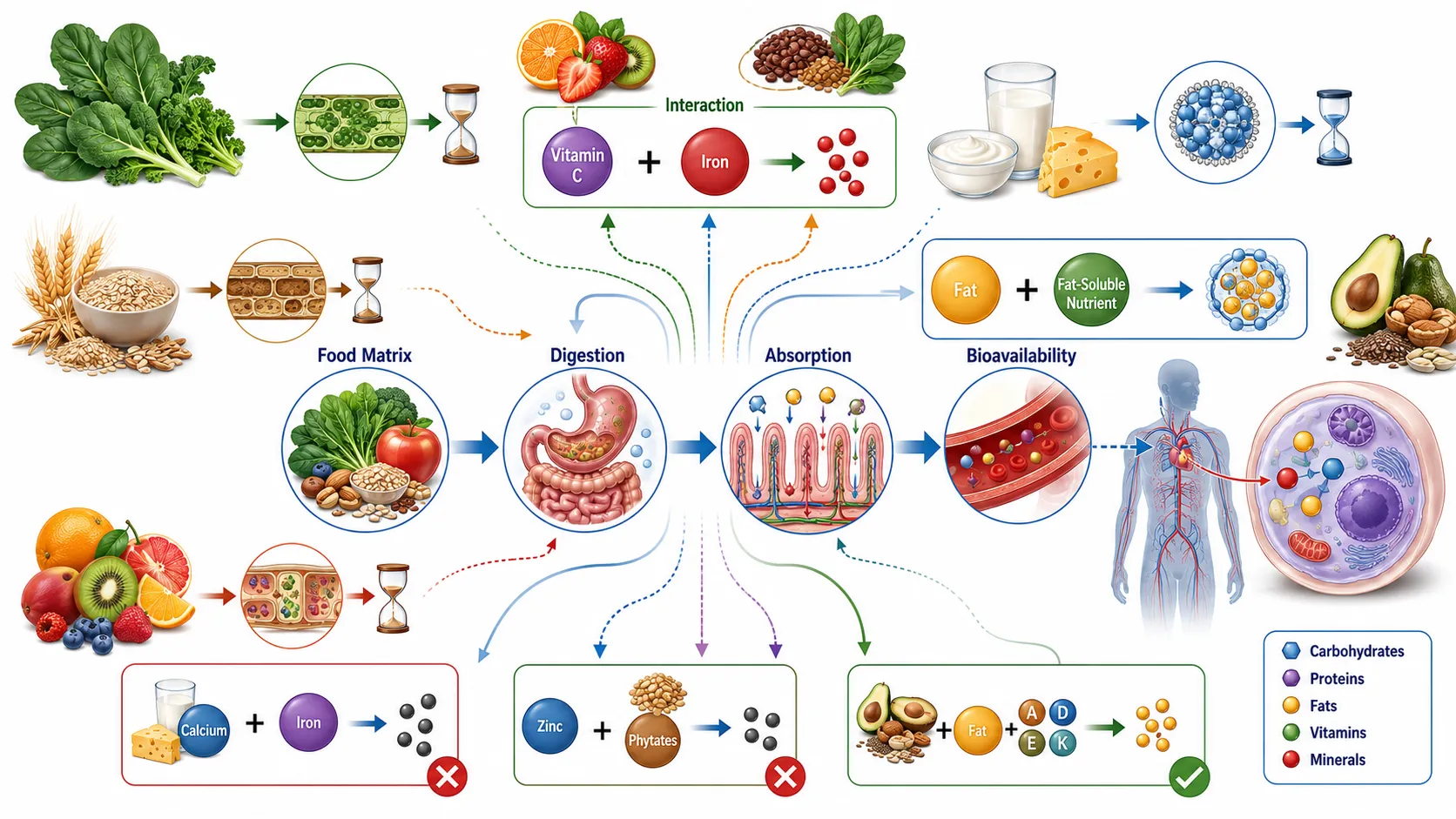
Key Definitions and Concepts
| Term | Definition | Relevance to Nutrient Bioavailability |
|---|---|---|
| Bioavailability | The proportion of an ingested nutrient that is absorbed and available for physiological use | Determines the effective nutritional contribution of food |
| Food matrix | The physical and chemical structure in which nutrients are naturally or technologically embedded | Influences nutrient release and digestion |
| Bioaccessibility | The proportion of a nutrient released from food and available for intestinal absorption | Represents an important stage before absorption |
| Nutrient interaction | An effect in which one nutrient or food component influences another nutrient’s availability or function | May enhance or reduce absorption |
| Enhancer | A dietary component that increases nutrient absorption or utilisation | Can improve effective nutrient availability |
| Inhibitor | A dietary component that reduces nutrient absorption or availability | May limit the amount reaching circulation |
| Nutrient density | The concentration of nutrients relative to the energy content or quantity of food | Does not automatically indicate bioavailability |
| Food processing | Physical, chemical or biological modification of food | Can increase or decrease nutrient accessibility |
| Antinutritional factor | A naturally occurring compound that may reduce the availability of particular nutrients under certain conditions | May influence mineral or protein availability |
| Nutrient utilisation | The use of an absorbed nutrient in metabolic and physiological processes | Represents the final stage of nutritional effectiveness |
Understanding Nutrient Bioavailability as a Multi-Stage Process
Bioavailability is a dynamic process rather than a single event. A nutrient may be present in a food but remain partly inaccessible because it is physically trapped within cellular structures, chemically bound to another compound or altered during digestion.
A simplified pathway is:
Food Matrix → Digestion → Nutrient Release → Bioaccessibility → Intestinal Absorption → Transport → Tissue Uptake → Physiological Utilisation
Each stage may influence the final amount of nutrient available to the body.
Major Stages Influencing Bioavailability
The process includes:
Release of nutrients from the food structure.
Mechanical breakdown during chewing.
Chemical modification in the stomach.
Enzymatic digestion in the small intestine.
Formation of soluble or transportable nutrient forms.
Interaction with other dietary compounds.
Movement across intestinal epithelial cells.
Transport through blood or lymph.
Cellular uptake and metabolic utilisation.
A disruption or limitation at any stage may reduce overall nutrient availability.
The Concept of the Food Matrix
The food matrix is one of the most important concepts in modern nutritional science. Nutrients within foods are not always freely available. Their accessibility depends partly on how they are organised within the food.
For example, a nutrient may be:
Enclosed within plant cell walls.
Bound to proteins.
Associated with dietary fibre.
Dissolved within water.
Incorporated into lipid structures.
Protected by a hard physical structure.
The matrix can therefore slow, control or modify nutrient release.
Structural Components of Food Matrices
Food structure may include:
Cellular walls.
Protein networks.
Starch granules.
Lipid droplets.
Fibre structures.
Water-containing compartments.
Mineral-binding compounds.
The interaction of these components determines how digestive enzymes access nutrients.
Mechanical Processing and Nutrient Release
Chewing is the first stage of matrix disruption. Mechanical breakdown reduces particle size and increases the surface area exposed to digestive enzymes.
Factors Affecting Mechanical Breakdown
These include:
Food hardness.
Moisture content.
Particle size.
Cooking method.
Degree of processing.
Individual chewing behaviour.
A finely disrupted food may allow digestive enzymes to access nutrients more rapidly than a food with an intact cellular structure.
Practical Example
Whole nuts and nut pastes may contain similar nutrients but have different physical structures.
When the structure remains relatively intact:
Some lipid-containing cells may not be fully disrupted.
Digestive enzymes may have reduced access to all stored lipids.
The timing and extent of nutrient release may differ.
This demonstrates that nutrient composition alone does not fully predict nutrient availability.
Plant Cell Walls and Nutrient Bioaccessibility
Many plant foods contain nutrients enclosed within cellular structures. Cell walls can influence the extent to which digestive enzymes access intracellular nutrients.
Functions of Plant Cell Walls
They may:
Provide structural strength.
Protect cellular contents.
Influence digestion rate.
Modify nutrient release.
Nutritional Implications
The extent of cell-wall disruption may influence:
Starch accessibility.
Lipid release.
Protein digestion.
Availability of intracellular micronutrients.
Food preparation methods can modify these structures.
Food Processing and Bioavailability
Food processing can change the physical structure and chemical composition of food.
Processing methods include:
Chopping.
Grinding.
Heating.
Boiling.
Steaming.
Fermentation.
Freezing.
Extrusion.
The effects are not universally positive or negative.
Potential Benefits of Processing
Processing may:
Break down cell structures.
Improve enzyme accessibility.
Reduce some antinutritional compounds.
Improve digestibility.
Increase the availability of certain nutrients.
Potential Limitations
Processing may also:
Cause loss of sensitive nutrients.
Alter food structure.
Promote oxidation of some compounds.
Change the interaction between nutrients.
The nutritional effect depends on the nutrient, food and processing method.
Thermal Processing and Nutrient Availability
Heat can influence bioavailability through several mechanisms.
Potential Positive Effects
Cooking may:
Soften plant cell walls.
Gelatinise starch.
Denature proteins.
Improve digestive enzyme access.
Reduce certain inhibitory compounds.
Potential Negative Effects
Excessive heat exposure may:
Degrade heat-sensitive vitamins.
Alter sensitive phytochemicals.
Promote undesirable oxidation.
Therefore, the relationship between cooking and nutritional value is complex.
Critical Interpretation
A reduction in the chemical concentration of a nutrient after cooking does not always mean that the food has become proportionally less useful nutritionally. In some cases, structural changes may improve accessibility despite a partial reduction in total nutrient content.
Lipids as Enhancers of Nutrient Absorption
Dietary lipids can influence the absorption of nutrients that require lipid-associated transport processes.
Certain fat-soluble compounds require:
Adequate digestion of dietary lipids.
Bile-derived emulsification.
Micelle formation.
Uptake into intestinal cells.
Intracellular processing.
Key Role of Dietary Fat
Appropriate dietary fat can support the absorption of certain lipid-soluble nutrients.
This process involves:
Emulsification.
Enzymatic lipid digestion.
Formation of mixed micelles.
Transport to the intestinal surface.
Absorption into enterocytes.
Practical Example
A meal containing vegetables and an appropriate amount of dietary fat may support the absorption of certain fat-associated compounds more effectively than an identical vegetable meal consumed without an available lipid component.
However, the optimal amount and type of dietary fat may vary according to the specific nutrient and overall dietary context.
Nutrient–Nutrient Synergy
Some nutrients influence each other’s absorption, transport or metabolic utilisation.
This relationship may be:
Synergistic.
Competitive.
Neutral.
Dependent on dose.
Examples of Nutritional Synergy
Nutrient interactions may:
Improve solubility.
Maintain a nutrient in an absorbable form.
Support transport processes.
Assist metabolic activation.
One important example is the relationship between vitamin C and non-haem iron.
Vitamin C and Non-Haem Iron
Vitamin C can influence the chemical environment of non-haem iron and help maintain iron in a form that may be more readily absorbed.
This interaction illustrates an important principle:
The nutritional effect of a meal may depend on the combination of foods consumed rather than the nutrient content of each food considered separately.
Iron Bioavailability and Food Composition
Iron provides a particularly useful example of nutrient interaction.
Iron availability may be influenced by:
Chemical form of iron.
Presence of enhancing compounds.
Presence of inhibitory compounds.
Overall composition of the meal.
Factors That May Enhance Non-Haem Iron Availability
These may include:
Vitamin C-containing foods.
Certain organic acids.
Meal combinations that support a favourable digestive environment.
Factors That May Reduce Availability
Certain dietary compounds may bind minerals or reduce their accessibility.
These may include:
Phytate-containing compounds.
Some polyphenolic compounds.
High concentrations of competing minerals under particular conditions.
The effect depends on the amount consumed, food preparation and overall dietary pattern.
Phytates and Mineral Bioavailability
Phytates are naturally occurring compounds found in many plant foods.
They can interact with minerals and influence their availability.
Minerals Potentially Affected
Interactions may influence:
Iron.
Zinc.
Calcium.
Magnesium.
Important Context
The presence of phytate does not mean that a food is nutritionally poor. Many phytate-containing foods provide valuable nutrients and other beneficial compounds.
The nutritional impact depends on:
Overall dietary diversity.
Food preparation.
Total mineral intake.
Individual nutritional status.
Food Preparation Can Modify Phytate Effects
Methods such as:
Soaking.
Germination.
Fermentation.
may alter phytate concentrations or activity in some foods.
Calcium and Nutrient Interactions
Calcium absorption is influenced by several dietary and physiological factors.
Important considerations include:
Chemical form.
Food matrix.
Vitamin D status.
Presence of other dietary components.
Physiological requirement.
Food Matrix Effects
Calcium naturally present in a complex food may behave differently from calcium provided in an isolated form because the surrounding matrix influences solubility and digestive release.
Critical Consideration
High intake of one mineral may influence the absorption of another under specific circumstances. However, not every theoretical interaction produces a clinically significant effect in a balanced diet.
This distinction is important when interpreting nutritional claims.
Protein Matrix and Amino Acid Availability
Protein quality is influenced by more than total protein concentration.
The food matrix may affect:
Protein denaturation.
Enzyme access.
Rate of digestion.
Release of amino acids.
Effects of Food Structure
Proteins may be embedded within:
Plant cell structures.
Fibre-rich matrices.
Complex carbohydrate networks.
Dense protein networks.
These structural factors can influence digestive accessibility.
Cooking and Protein Digestibility
Thermal processing may improve access to proteins by altering their structure. However, excessive processing may also modify amino acids or reduce the availability of some protein components.
Therefore, protein digestibility depends on:
Food source.
Processing method.
Matrix structure.
Digestive physiology.
Carbohydrate Structure and Bioavailability
Carbohydrates differ significantly in their physical and chemical structure.
Factors affecting their digestion include:
Molecular arrangement.
Degree of processing.
Particle size.
Starch structure.
Fibre content.
Starch Gelatinisation
Heating in the presence of water can alter starch structure and influence enzyme accessibility.
This may change:
Digestion rate.
Glucose release.
Post-meal metabolic responses.
Resistant Starch
Some starch escapes complete digestion in the small intestine and reaches the large intestine, where it may be metabolised by microorganisms.
This demonstrates that:
Not all carbohydrates are absorbed in the same location or at the same rate.
Dietary Fibre and Nutrient Availability
Dietary fibre influences the physical environment of the gastrointestinal tract.
Depending on its characteristics, fibre may influence:
Gastric emptying.
Nutrient diffusion.
Enzyme accessibility.
Microbial fermentation.
Intestinal transit.
Soluble and Insoluble Characteristics
Different fibres behave differently within the gastrointestinal tract.
Potential effects may include:
Changes in viscosity.
Altered nutrient movement.
Modified fermentation.
Critical Perspective
Fibre may reduce the immediate availability of some nutrients while supporting other aspects of long-term gastrointestinal and metabolic physiology.
Therefore, reduced absorption of an individual nutrient does not automatically mean that a food is nutritionally undesirable.
Food Matrix Effects on Fat Digestion
The physical structure of food influences how lipids are released and digested.
Lipids may occur as:
Large droplets.
Small emulsified droplets.
Intracellular stores.
Components of complex food structures.
Importance of Surface Area
Smaller lipid droplets provide a greater surface area for digestive enzymes.
Therefore, physical structure can influence:
Rate of lipid digestion.
Release of fatty acids.
Formation of transportable lipid structures.
Practical Example
The same quantity of fat may produce different digestive responses depending on whether it is:
Incorporated into an intact whole food.
Finely emulsified.
Encapsulated within plant cells.
Food Processing and the Nutritional Whole
A reductionist approach may evaluate foods by measuring isolated nutrient concentrations. However, modern nutritional research increasingly examines the whole-food context.
The same nutrient may behave differently depending on:
Food structure.
Other nutrients.
Processing.
Meal composition.
Digestive physiology.
Whole Foods and Nutritional Interactions
Whole foods provide combinations of:
Macronutrients.
Micronutrients.
Fibre.
Bioactive compounds.
Water.
Structural components.
These factors can interact throughout digestion.
Nutrient Competition During Absorption
Some nutrients may compete for similar transport mechanisms.
Competition can occur when:
Transport capacity is limited.
Nutrients share similar pathways.
Very large quantities are consumed simultaneously.
Important Principle
Competition is not always clinically important.
Its significance depends on:
Nutrient dose.
Frequency of intake.
Individual nutritional status.
Overall dietary composition.
This prevents the oversimplified assumption that every nutrient interaction automatically produces deficiency.
The Role of Meal Composition
Bioavailability should often be considered at the level of the complete meal rather than a single food.
A meal can contain:
Nutrient enhancers.
Nutrient inhibitors.
Lipid components.
Fibre.
Proteins.
Organic acids.
These components interact during digestion.
Example of a Meal-Based Perspective
A plant-based meal containing an iron source may also include:
Vitamin C-containing vegetables.
Phytate-containing grains.
Polyphenol-rich beverages.
The overall availability of iron depends on the combined effect of these components.
This is why dietary assessment must examine patterns rather than isolated nutrients.
Bioavailability and Individual Variation
Different individuals may absorb and utilise the same nutrient differently.
Factors influencing individual variation include:
Age.
Gastrointestinal health.
Nutrient status.
Genetic variation.
Medication exposure.
Microbiome activity.
Physiological requirements.
Example
An individual with low stores of a nutrient may regulate absorption differently from someone with adequate stores.
This demonstrates that bioavailability is influenced by both:
The food consumed and the physiological state of the person consuming it.
The Role of Nutrient Status in Absorption Regulation
The body can regulate the absorption and transport of certain nutrients.
This regulation may involve:
Changes in transporter activity.
Hormonal signalling.
Altered storage mechanisms.
Changes in intestinal uptake.
Therefore, the same meal may not produce identical absorption under different physiological conditions.
Bioaccessibility Versus Bioavailability
These terms should not be confused.
Bioaccessibility
Bioaccessibility refers to whether a nutrient is released from food and becomes available for intestinal absorption.
Bioavailability
Bioavailability includes the broader process of:
Release.
Absorption.
Transport.
Physiological availability.
Why the Distinction Matters
A nutrient may be highly bioaccessible but have limited physiological availability because of:
Poor absorption.
Rapid metabolism.
Limited transport.
Reduced cellular uptake.
Therefore, advanced nutritional research must distinguish between laboratory estimates of nutrient release and actual biological utilisation.
Research Methods Used to Study Bioavailability
Current research uses multiple approaches to investigate nutrient availability.
In Vitro Digestion Models
These simulate aspects of human digestion.
They can examine:
Nutrient release.
Food structure breakdown.
Potential bioaccessibility.
Cell-Based Models
These may investigate:
Intestinal transport.
Cellular uptake.
Biological interactions.
Human Intervention Studies
These can evaluate:
Changes in nutrient biomarkers.
Post-meal metabolic responses.
Longer-term nutritional outcomes.
Stable Isotope Approaches
These may be used in specialised research to track nutrient absorption and metabolism.
Critical Evaluation of Research
Each method has limitations.
For example:
Laboratory models cannot reproduce all human physiological variation.
Cell models may simplify complex gastrointestinal processes.
Human studies can be affected by dietary adherence and individual differences.
The strongest conclusions often emerge from synthesising evidence across multiple research approaches.
Practical Example: Whole Food Versus Isolated Nutrient
Consider a nutrient provided in two forms:
Naturally embedded within a whole food.
Provided as an isolated compound.
The total quantity may be similar, but bioavailability may differ because of:
Food structure.
Coexisting nutrients.
Digestive release.
Chemical stability.
This does not mean that isolated nutrients are inherently ineffective. Rather, it demonstrates that the food matrix can modify physiological responses.
Practical Example: Preparation of Plant Foods
A plant food containing minerals and naturally occurring binding compounds may undergo:
Soaking.
Fermentation.
Germination.
These processes may modify the food matrix and influence the availability of particular nutrients.
The potential benefits include:
Changes in structural accessibility.
Altered inhibitory compound activity.
Improved digestibility.
However, outcomes depend on the specific food and preparation conditions.
Practical Example: Fat-Soluble Nutrient Absorption
A meal provides compounds requiring lipid-associated digestive processes.
When dietary fat is present in an appropriate food context:
Lipid digestion is stimulated.
Micellar transport mechanisms can support movement of lipid-associated compounds.
Intestinal uptake may be improved.
This illustrates how the interaction between macronutrients can influence micronutrient bioavailability.
Key Benefits of Understanding Food Matrices and Nutrient Interactions
Improved Dietary Assessment
Learners can move beyond simply calculating nutrient quantities.
They can evaluate:
Food structure.
Meal composition.
Preparation methods.
Nutrient combinations.
Better Interpretation of Nutritional Research
Understanding bioavailability helps Learners:
Evaluate differences between foods and supplements.
Interpret biomarker studies.
Recognise limitations of nutrient composition tables.
Improved Nutritional Strategy Development
Knowledge of nutrient interactions can support the development of dietary strategies that consider:
Meal composition.
Nutrient synergy.
Food preparation.
Individual gastrointestinal tolerance.
A Systematic Framework for Evaluating Nutrient Bioavailability
Step 1: Identify the Nutrient
Determine:
Chemical form.
Food source.
Physiological function.
Step 2: Examine the Food Matrix
Consider:
Physical structure.
Fibre content.
Protein networks.
Lipid environment.
Cellular integrity.
Step 3: Assess Nutrient Release
Evaluate whether:
Chewing releases the nutrient.
Cooking alters accessibility.
Digestive enzymes can access the nutrient.
Step 4: Identify Nutrient Interactions
Consider:
Enhancers.
Inhibitors.
Competitive interactions.
Synergistic compounds.
Step 5: Consider Individual Physiology
Evaluate:
Nutritional status.
Gastrointestinal health.
Age.
Physiological demand.
Step 6: Evaluate the Evidence
Consider:
Study design.
Sample size.
Type of food studied.
Biomarkers used.
Relevance to real dietary patterns.
Common Misconceptions
Misconception 1: A Higher Nutrient Content Always Means Greater Nutritional Benefit
A nutrient must be released, absorbed and utilised.
Misconception 2: Processing Always Reduces Nutritional Value
Processing may either:
Improve accessibility.
or:
Reduce sensitive nutrient concentrations.
The outcome depends on the nutrient and process.
Misconception 3: Nutrients Work Independently
Nutrients interact within:
Foods.
Meals.
The digestive system.
Metabolic pathways.
Misconception 4: One Study Provides a Final Answer
Bioavailability research often requires synthesis of evidence from:
Laboratory studies.
Mechanistic studies.
Human research.
Key Learning Points
Learners should understand that:
Nutrient content and nutrient bioavailability are different concepts.
The food matrix influences nutrient release and digestive accessibility.
Bioavailability involves digestion, absorption, transport and utilisation.
Food processing can either enhance or reduce nutrient availability.
Dietary fat can influence absorption of lipid-associated nutrients.
Nutrients can enhance or inhibit the absorption of other nutrients.
Meal composition can influence the overall availability of specific nutrients.
Individual physiology influences nutrient absorption.
Bioaccessibility and bioavailability should be clearly distinguished.
Current research should be evaluated using multiple lines of evidence.
Summary
The bioavailability of nutrients is determined by far more than the quantity present in a food. Nutrients exist within complex food matrices that influence how effectively they are released during digestion and made available for absorption. Physical structures such as plant cell walls, protein networks, lipid droplets and fibre can alter digestive enzyme access and change the rate and extent of nutrient release.
Nutrient interactions add further complexity. Some dietary components can enhance nutrient absorption by modifying chemical conditions or supporting transport processes, while others may reduce accessibility through binding or competition. Examples such as vitamin C and non-haem iron, dietary fat and lipid-associated nutrients, and phytate–mineral interactions demonstrate that nutritional outcomes often depend on the composition of the whole meal rather than an isolated food.
Food processing can also modify bioavailability in different directions. Cooking, fermentation, soaking and mechanical processing may improve nutrient accessibility by disrupting structural barriers, while excessive processing can reduce sensitive nutrient concentrations. The net nutritional effect must therefore be evaluated in context.
Advanced nutritional analysis requires Learners to synthesise evidence from food science, gastrointestinal physiology and human research. By understanding food matrices, nutrient interactions, individual variation and research methodology, Learners can evaluate why similar nutrient intakes may produce different physiological outcomes. This knowledge provides an essential foundation for evidence-based nutritional assessment and the interpretation of modern research in nutritional biochemistry.
6.Assess the Physiological Impact of Altered or Impaired Nutrient Transport Systems on Systemic Human Health Using Evidence-Based Clinical Case Studies
Nutrient transport is a fundamental physiological process that connects digestion and absorption with the delivery of essential substances to cells throughout the body. Once nutrients have crossed the intestinal epithelium, they must be transported through highly regulated systems involving membrane transporters, blood, lymph, carrier proteins and specialised cellular uptake mechanisms. An alteration or impairment at any stage can reduce nutrient availability to tissues, even when dietary intake appears adequate.
The physiological consequences of impaired nutrient transport can be significant. A person may consume sufficient amounts of carbohydrates, proteins, lipids, vitamins or minerals but still experience nutritional deficiency if these nutrients cannot be effectively absorbed, transported, delivered or utilised by target cells. Transport disorders can therefore affect multiple systems, including the nervous, cardiovascular, musculoskeletal, endocrine and immune systems.
This section examines how altered nutrient transport systems influence systemic human health. It uses evidence-based clinical reasoning and representative case-study approaches to demonstrate how biochemical abnormalities can produce identifiable physiological outcomes. The discussion also highlights the importance of interpreting clinical data carefully and distinguishing between dietary deficiency, malabsorption, transport impairment and altered cellular utilisation.
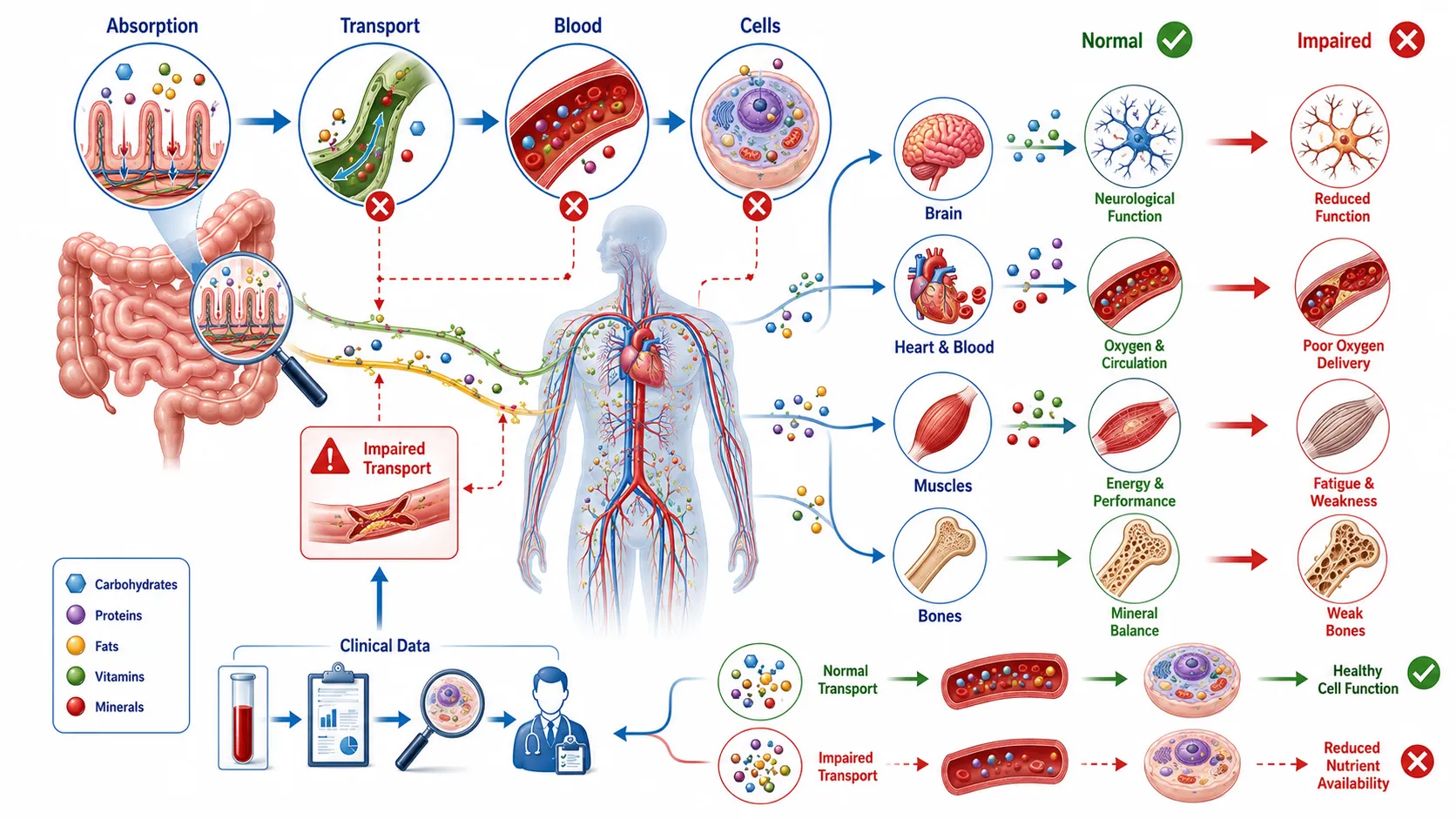
Key Definitions and Concepts
| Term | Definition | Clinical Significance |
|---|---|---|
| Nutrient transport | The movement of nutrients across membranes and through body fluids to target tissues | Essential for maintaining cellular metabolism and physiological function |
| Membrane transporter | A specialised protein that assists the movement of specific molecules or ions across a cell membrane | Defects may reduce nutrient uptake or distribution |
| Passive transport | Movement of substances down a concentration or electrochemical gradient without direct energy expenditure | Important for selected molecules and diffusion processes |
| Facilitated diffusion | Transport down a gradient through a specific carrier or channel protein | Allows selective movement of nutrients such as glucose in particular tissues |
| Active transport | Movement of substances against a gradient using energy directly or indirectly | Essential for maintaining nutrient and electrolyte gradients |
| Carrier protein | A protein that binds and transports a nutrient through blood or another body fluid | Impairment can reduce delivery to tissues |
| Malabsorption | Reduced uptake of nutrients from the gastrointestinal tract | Can lead to multiple systemic deficiencies |
| Transport defect | Impaired movement of a nutrient across a membrane or between physiological compartments | May produce tissue-specific or systemic consequences |
| Bioavailability | The proportion of an ingested nutrient that becomes available for physiological use | Depends on digestion, absorption, transport and utilisation |
| Homeostasis | Maintenance of a stable internal physiological environment | Nutrient transport contributes directly to metabolic homeostasis |
The Importance of Nutrient Transport in Human Physiology
The human body depends on a coordinated nutrient distribution network. Digestion breaks complex foods into absorbable components, but absorption alone is not sufficient. Nutrients must subsequently reach the tissues and cells that require them.
For example:
Glucose must reach metabolically active cells.
Amino acids must be delivered for protein synthesis.
Fatty acids and lipid-associated compounds require specialised transport.
Iron must be transported safely to tissues.
Calcium and phosphate must be regulated within the circulation.
Vitamins may require specific binding proteins or transport mechanisms.
An impairment in any of these processes can create a mismatch between nutrient availability and cellular demand.
Major Stages of Nutrient Movement
A simplified nutrient transport pathway can be described as:
Dietary Intake → Digestion → Intestinal Absorption → Circulatory or Lymphatic Transport → Tissue Delivery → Cellular Uptake → Metabolic Utilisation
Each stage depends on specialised physiological mechanisms.
Why Transport Impairment Can Produce Systemic Disease
Transport impairment can affect health because nutrients are required continuously by cells. The consequences depend on:
The nutrient involved.
The severity of the impairment.
The duration of the abnormality.
The tissues most dependent on the nutrient.
The body’s capacity to compensate.
The individual’s physiological state.
A mild short-term impairment may produce few symptoms, whereas a persistent or severe defect can result in substantial physiological dysfunction.
Mechanisms of Altered Nutrient Transport
Nutrient transport may be altered through several mechanisms. These mechanisms can occur independently or simultaneously.
Defects in Membrane Transport Proteins
Membrane transporters are selective proteins that facilitate the movement of nutrients and related molecules.
Transporter abnormalities may result from:
Genetic variation.
Reduced protein expression.
Structural abnormalities.
Cellular injury.
Inflammatory processes.
Altered hormonal regulation.
When transporter activity is reduced, nutrients may accumulate in one physiological compartment while target tissues experience relative deficiency.
Altered Carrier Proteins in the Blood
Some nutrients cannot circulate freely in large amounts and require binding proteins.
Carrier proteins can:
Maintain nutrient solubility.
Protect nutrients from inappropriate chemical reactions.
Regulate tissue delivery.
Maintain stable circulating concentrations.
Reduced carrier availability may alter the amount of nutrient delivered to specific tissues.
Impaired Lymphatic Transport
Dietary lipids follow specialised transport pathways after intestinal absorption.
Lipid-associated transport involves:
Digestion and emulsification.
Formation of transportable lipid structures.
Uptake by intestinal cells.
Packaging into specialised particles.
Movement through the lymphatic system.
Entry into systemic circulation.
Impairment at any stage may affect energy availability and the transport of lipid-associated nutrients.
Gastrointestinal Damage and Secondary Transport Impairment
Transport problems do not always originate from an inherited transporter defect. Damage to the intestinal surface can reduce the number or function of transport systems.
Potential causes include:
Inflammatory conditions.
Structural damage to intestinal tissue.
Surgical changes.
Severe infection.
Chronic gastrointestinal disease.
The result may be reduced uptake of several nutrients simultaneously.
Glucose Transport and Systemic Energy Regulation
Glucose is an important metabolic fuel. Its movement between body compartments depends on several regulated transport mechanisms.
Intestinal Glucose Uptake
Following carbohydrate digestion, glucose must cross intestinal epithelial cells.
This process involves coordinated transport mechanisms that:
Move glucose from the intestinal lumen into enterocytes.
Transfer glucose from enterocytes into the circulation.
Respond to concentration gradients and cellular energy requirements.
Impairment can reduce effective carbohydrate absorption.
Tissue-Specific Glucose Uptake
Different tissues regulate glucose uptake differently.
Important tissues include:
Skeletal muscle.
Adipose tissue.
The liver.
The brain.
These tissues have different metabolic demands and regulatory mechanisms.
Clinical Case Study: Impaired Intestinal Glucose Transport
Consider an infant or young child presenting with persistent watery diarrhoea and signs of dehydration shortly after consuming carbohydrate-containing feeds. Clinical investigation may identify an abnormality affecting sodium-dependent glucose transport within the intestinal epithelium.
The physiological consequences may include:
Reduced glucose absorption.
Reduced water absorption through coupled transport mechanisms.
Persistent diarrhoea.
Dehydration.
Electrolyte imbalance.
Impaired energy intake.
This case demonstrates that a nutrient transport system can influence more than nutritional status. A molecular transport defect may also affect fluid balance and cardiovascular stability.
Key Clinical Reasoning Points
The clinician must distinguish between:
Reduced dietary carbohydrate intake.
Enzyme deficiency affecting carbohydrate digestion.
General intestinal malabsorption.
A specific transport defect.
Appropriate interpretation requires correlation between:
Clinical symptoms.
Dietary response.
Laboratory findings.
Physiological mechanisms.
Iron Transport and Systemic Health
Iron is essential for oxygen transport, electron transfer and numerous metabolic processes. However, free iron can participate in potentially damaging chemical reactions, meaning that its transport must be carefully regulated.
Major Stages of Iron Handling
Iron physiology includes:
Intestinal uptake.
Intracellular storage.
Transfer into circulation.
Binding to transport proteins.
Delivery to tissues.
Recycling from ageing red blood cells.
Each stage contributes to iron homeostasis.
Consequences of Altered Iron Transport
Impaired iron movement can result in:
Reduced availability for red blood cell production.
Altered oxygen transport.
Fatigue.
Reduced exercise capacity.
Cognitive effects.
Impaired cellular energy metabolism.
Clinical Case Study: Functional Iron Restriction
Consider an individual with chronic systemic inflammation who has apparently adequate body iron stores but reduced availability of circulating iron for tissue use.
A biochemical assessment may show a pattern suggesting:
Iron is present in storage compartments.
Circulating availability is reduced.
Red blood cell production may be affected.
The important physiological principle is that total nutrient quantity and functional nutrient availability are not identical.
Clinical Interpretation
Assessment should consider:
Storage indicators.
Transport indicators.
Markers of inflammation.
Red blood cell indices.
Clinical symptoms.
This demonstrates the importance of interpreting biochemical data in context rather than relying on a single laboratory measurement.
Lipid Transport and Energy Distribution
Lipids are hydrophobic and cannot move freely through aqueous blood in the same way as many water-soluble molecules. They therefore require specialised transport systems.
Major Functions of Lipid Transport
Lipid transport supports:
Energy distribution.
Storage.
Cell membrane synthesis.
Hormone precursor production.
Transport of lipid-associated compounds.
Key Physiological Processes
Following absorption, lipids may be:
Reassembled within intestinal cells.
Packaged into specialised transport particles.
Moved through lymphatic pathways.
Released into the circulation.
Delivered to muscle or adipose tissue.
Consequences of Impairment
Altered lipid transport can affect:
Energy balance.
Growth.
Tissue maintenance.
Essential fatty acid availability.
Absorption and distribution of certain vitamins.
Clinical Case Study: Impaired Lipid Absorption and Transport
Consider a patient presenting with chronic gastrointestinal symptoms, weight loss and evidence of inadequate absorption of dietary fat.
Possible physiological consequences include:
Reduced energy availability.
Altered body composition.
Deficiency of lipid-associated nutrients.
Impaired bone health over time.
Neurological consequences where specific nutrient deficiencies become severe.
Clinical evaluation may include:
Dietary assessment.
Stool characteristics.
Nutritional biomarkers.
Assessment of gastrointestinal function.
The case illustrates that lipid-related nutritional problems may affect multiple physiological systems simultaneously.
Amino Acid Transport and Protein Metabolism
Amino acids are required for:
Protein synthesis.
Enzyme production.
Neurotransmitter synthesis.
Hormone production.
Tissue repair.
Energy metabolism under specific conditions.
Amino acid transport systems exist within:
The intestinal epithelium.
The kidneys.
Cell membranes.
Consequences of Transport Impairment
Impairment may affect:
Nutrient absorption.
Renal conservation of amino acids.
Tissue protein synthesis.
Metabolic balance.
Clinical Case Study: Selective Amino Acid Transport Abnormality
A representative clinical scenario may involve an inherited alteration affecting the transport of particular amino acids.
Possible findings include:
Increased loss of specific amino acids.
Altered nutrient availability.
Secondary metabolic consequences.
Variable clinical symptoms depending on the affected pathway.
The key lesson is that not all nutrient deficiencies result from insufficient dietary intake.
A Learner should consider:
Dietary supply.
Intestinal absorption.
Blood transport.
Renal conservation.
Cellular uptake.
Vitamin Transport Systems
Vitamins have diverse chemical properties and therefore require different transport mechanisms.
Water-Soluble Vitamins
Some water-soluble vitamins depend on:
Specific intestinal transporters.
Binding proteins.
Regulated cellular uptake.
Lipid-Associated Vitamins
These depend more strongly on:
Normal dietary lipid digestion.
Bile-mediated processes.
Micelle formation.
Lipid transport mechanisms.
Clinical Importance
Transport impairment may produce vitamin deficiency despite apparently sufficient dietary intake.
Potential consequences may affect:
Neurological function.
Blood cell formation.
Bone metabolism.
Vision.
Immune function.
Clinical Case Study: Vitamin B12 Transport and Absorption
Vitamin B12 provides an important example of a nutrient requiring multiple specialised stages before cellular use.
The pathway includes:
Release from food.
Binding to protective molecules.
Interaction with specialised intestinal mechanisms.
Absorption.
Transport in the circulation.
Cellular uptake.
A failure at any stage can impair physiological availability.
Potential Clinical Consequences
Prolonged impairment may contribute to:
Altered red blood cell formation.
Neurological dysfunction.
Fatigue.
Cognitive symptoms in some individuals.
Clinical Assessment
An evidence-based approach may consider:
Dietary history.
Blood measurements.
Functional biochemical markers where appropriate.
Gastrointestinal health.
Medication history.
The case demonstrates that nutrient transport is a multi-stage system rather than a single event.
Mineral Transport and Electrolyte Homeostasis
Minerals are required for multiple physiological processes, including:
Muscle contraction.
Nerve transmission.
Bone mineralisation.
Enzyme activity.
Fluid regulation.
Their transport is tightly regulated.
Calcium Transport
Calcium movement depends on:
Intestinal absorption.
Hormonal regulation.
Bone exchange.
Renal handling.
Transport within extracellular fluid.
An imbalance can influence:
Neuromuscular activity.
Bone health.
Cellular signalling.
Clinical Case Study: Impaired Calcium Availability
Consider an individual with reduced intestinal nutrient absorption combined with inadequate physiological regulation of calcium balance.
Over time, consequences may include:
Increased mobilisation of mineral from bone.
Altered skeletal integrity.
Changes in muscle and nerve function.
The clinical picture may develop gradually, demonstrating that transport impairment can produce long-term systemic consequences.
The Role of the Intestinal Epithelium
The intestinal epithelium is a major interface between the external environment and internal circulation.
Its functions include:
Selective nutrient uptake.
Barrier protection.
Electrolyte regulation.
Interaction with the microbiome.
Immune signalling.
Specialised Transport Mechanisms
Different nutrients require different pathways.
These include:
Simple diffusion.
Facilitated diffusion.
Secondary active transport.
Carrier-mediated transport.
Vesicular transport in specialised circumstances.
The selectivity of these systems protects physiological homeostasis but also creates vulnerability when transport proteins are impaired.
Evidence-Based Clinical Assessment of Nutrient Transport Disorders
Assessment should follow a structured process.
Step 1: Identify the Clinical Presentation
Consider symptoms such as:
Unexplained weight loss.
Persistent fatigue.
Diarrhoea.
Neurological changes.
Reduced exercise tolerance.
Growth concerns.
Signs of micronutrient deficiency.
Step 2: Assess Dietary Intake
Determine:
Quantity of food consumed.
Dietary diversity.
Food restrictions.
Meal composition.
Duration of dietary patterns.
Adequate intake does not exclude transport impairment.
Step 3: Evaluate Gastrointestinal Function
Consider:
Digestive symptoms.
Stool characteristics.
History of gastrointestinal disease.
Surgical history.
Evidence of inflammation.
Step 4: Interpret Laboratory Data
Relevant investigations may include:
Nutrient concentrations.
Transport-related biomarkers.
Storage indicators.
Markers of inflammation.
Haematological findings.
Electrolyte measurements.
Step 5: Assess Systemic Consequences
Evaluate possible effects on:
Cardiovascular function.
Neurological health.
Musculoskeletal function.
Immune competence.
Energy metabolism.
Distinguishing Different Causes of Nutritional Deficiency
An important aspect of professional judgement is distinguishing between several possible mechanisms.
Inadequate Dietary Intake
The nutrient is not consumed in sufficient quantities.
Impaired Digestion
The nutrient is consumed but not adequately broken into absorbable forms.
Malabsorption
The nutrient reaches the gastrointestinal tract but is not effectively transferred into the body.
Transport Impairment
The nutrient is absorbed but cannot be effectively moved through blood, lymph or cellular membranes.
Altered Cellular Utilisation
The nutrient reaches the cell but cannot be appropriately used within metabolic pathways.
These mechanisms can produce similar clinical symptoms but require different interventions.
Clinical Case Study Comparison
Case A: Low Dietary Iron Intake
The primary issue is insufficient nutrient supply.
Potential approach:
Assess dietary pattern.
Improve appropriate dietary sources.
Consider factors influencing absorption.
Case B: Adequate Iron Intake with Reduced Functional Availability
The individual consumes adequate iron, but physiological mechanisms reduce effective delivery to tissues.
Potential approach:
Assess underlying biological processes.
Interpret inflammatory and transport-related markers.
Avoid assuming that increasing intake alone will correct the problem.
Case C: General Gastrointestinal Malabsorption
Multiple nutrients may be affected.
Potential findings include:
Weight loss.
Multiple biochemical deficiencies.
Gastrointestinal symptoms.
The clinical priority may involve investigation of the underlying gastrointestinal cause.
Systemic Effects of Chronic Transport Impairment
Persistent nutrient transport impairment can affect multiple systems simultaneously.
Effects on Energy Metabolism
Possible consequences include:
Reduced substrate availability.
Altered ATP production.
Increased fatigue.
Reduced physical performance.
Effects on the Nervous System
Nutrient transport abnormalities may contribute to:
Altered neurotransmitter synthesis.
Reduced energy availability.
Changes in nerve function.
The specific outcome depends on the nutrient involved.
Effects on the Musculoskeletal System
Potential consequences include:
Reduced protein availability.
Mineral imbalance.
Impaired tissue maintenance.
Reduced muscle performance.
Effects on the Cardiovascular System
Nutrient-related abnormalities may influence:
Oxygen delivery.
Fluid balance.
Electrolyte regulation.
Cardiac energy metabolism.
Compensation and Physiological Adaptation
The human body can compensate for some transport disturbances.
Possible adaptations include:
Increased expression of transport proteins.
Changes in renal conservation.
Mobilisation of nutrient stores.
Altered metabolic pathway activity.
Limitations of Compensation
Compensation may become insufficient when:
Nutrient demand increases.
The impairment is severe.
Physiological stores become depleted.
Multiple nutrient systems are affected.
This explains why some disorders remain clinically silent for long periods before symptoms emerge.
The Importance of Clinical Case Studies
Clinical case studies help connect molecular mechanisms with real physiological outcomes.
They enable Learners to:
Apply biochemical knowledge.
Interpret laboratory evidence.
Identify possible mechanisms.
Develop structured explanations.
Consider differential causes.
A Systematic Case Study Framework
When analysing a case, ask:
What is the primary physiological abnormality?
Which nutrient or transport pathway is affected?
Where in the transport sequence is the impairment occurring?
What evidence supports this interpretation?
Which body systems are affected?
What compensatory mechanisms may occur?
What further assessment may be required?
Practical Example: Multi-System Nutrient Transport Failure
Consider a patient with chronic intestinal dysfunction who develops:
Progressive weight loss.
Fatigue.
Muscle weakness.
Reduced bone health.
Multiple vitamin abnormalities.
A narrow approach focusing on a single nutrient may fail to explain the complete clinical picture.
A broader physiological assessment should consider:
Intestinal surface function.
Macronutrient absorption.
Micronutrient transport.
Lipid transport.
Systemic inflammatory effects.
This illustrates the importance of systems thinking.
Key Benefits of Understanding Nutrient Transport Disorders
Improved Clinical Reasoning
Learners can distinguish between:
Low intake.
Digestion problems.
Malabsorption.
Transport defects.
Cellular utilisation disorders.
More Accurate Data Interpretation
Understanding physiology helps prevent incorrect conclusions based solely on one laboratory value.
Better Nutritional Assessment
A comprehensive assessment can consider:
Symptoms.
Diet.
Biochemical data.
Physiological mechanisms.
Improved Evidence-Based Decision Making
Learners can connect scientific evidence with:
Clinical findings.
Mechanistic understanding.
Appropriate nutritional strategies.
Limitations and Considerations When Interpreting Evidence
Clinical evidence must be interpreted carefully.
Laboratory Values May Not Tell the Whole Story
A nutrient concentration may be influenced by:
Hydration status.
Inflammation.
Timing of food intake.
Storage and transport processes.
Symptoms May Be Non-Specific
Fatigue, weakness and weight changes may have multiple causes.
Single Measurements Have Limitations
Where clinically appropriate, interpretation may require:
Repeated measurements.
Multiple biomarkers.
Clinical examination.
Dietary assessment.
Population Findings Do Not Always Predict Individual Outcomes
Individual differences may involve:
Genetics.
Age.
Disease status.
Medication use.
Physiological demand.
Professional and Ethical Considerations
Advanced understanding of nutrient transport does not replace clinical diagnosis.
Learners should recognise the importance of:
Working within professional scope.
Using reliable evidence.
Avoiding unsupported diagnostic conclusions.
Referring individuals for appropriate medical assessment when necessary.
Nutritional recommendations should be based on comprehensive assessment rather than assumptions derived from isolated symptoms.
Key Learning Points
The most important concepts include:
Nutrient transport connects absorption with tissue utilisation.
Impairment can occur at intestinal, circulatory, lymphatic or cellular levels.
Adequate dietary intake does not guarantee adequate physiological nutrient availability.
Membrane transporters provide selective nutrient movement.
Carrier proteins support the safe distribution of particular nutrients.
Lipid transport requires specialised physiological pathways.
Iron status depends on storage, transport and tissue availability.
Vitamin transport often requires multiple coordinated steps.
Clinical assessment should distinguish dietary deficiency from transport impairment.
Chronic transport dysfunction can affect multiple body systems.
Evidence-based case analysis requires integration of symptoms, laboratory data and physiological mechanisms.
Summary
Altered or impaired nutrient transport systems can have profound consequences for systemic human health. Nutrient transport represents the essential connection between the gastrointestinal tract, circulation and individual cells. Even when dietary intake is adequate, impaired membrane transport, reduced carrier activity, gastrointestinal damage, altered lymphatic movement or defective cellular uptake can limit the nutrients available for physiological function.
Clinical examples involving glucose, iron, lipids, amino acids, vitamins and minerals demonstrate that transport impairment may affect far more than nutritional status. It can influence energy metabolism, fluid balance, oxygen transport, neurological function, bone health, immune activity and overall metabolic homeostasis.
Evidence-based assessment requires a structured approach. Symptoms should be considered alongside dietary intake, gastrointestinal function, laboratory findings and known physiological mechanisms. A central principle is the need to distinguish between inadequate intake, impaired digestion, malabsorption, transport dysfunction and altered cellular utilisation. These mechanisms may produce similar outcomes but require different forms of investigation and management.
Clinical case studies provide an effective framework for developing advanced analytical skills because they connect molecular transport mechanisms with systemic physiological outcomes. By integrating biochemical evidence, nutritional assessment and clinical reasoning, Learners can develop a more comprehensive understanding of how nutrient transport systems maintain human health and how their impairment can contribute to complex multi-system dysfunction.