
Lesson no 4 : Assess biochemical mechanisms underlying nutrient-related diseases.
Nutrient-related diseases arise when the intake, absorption, transport, metabolism or utilisation of essential nutrients is disrupted, leading to measurable biochemical and physiological consequences. Understanding the biochemical mechanisms underlying these conditions is fundamental to advanced nutritional biochemistry because it enables Learners to connect dietary patterns and nutrient status with molecular processes, cellular function, metabolic regulation and disease development.
This lesson, Assess Biochemical Mechanisms Underlying Nutrient-Related Diseases, examines how deficiencies, excesses, imbalances and impaired nutrient metabolism can influence normal biochemical pathways and contribute to disease. Learners will explore the relationship between nutrients and essential metabolic processes, including energy production, enzyme activity, hormonal regulation, cellular signalling, oxidative balance and tissue maintenance. Particular attention is given to the mechanisms through which altered nutrient availability affects organs, cells and biochemical systems over both short and long periods.
The lesson also develops the ability to assess how disruptions in carbohydrate, protein and lipid metabolism may contribute to metabolic dysfunction. Learners will consider the biochemical consequences of inadequate or excessive nutrient intake and examine how vitamins and minerals support critical enzymatic reactions as cofactors and coenzymes. The role of nutrient-related oxidative stress, inflammation and altered cellular metabolism will also be considered when evaluating disease mechanisms.
Through the interpretation of biochemical and clinical information, Learners will develop a deeper understanding of how laboratory findings, metabolic markers and nutritional assessments can contribute to the identification and evaluation of nutrient-related disorders. The lesson encourages critical analysis rather than simple memorisation, enabling Learners to examine the complex interactions between dietary exposure, genetic variation, environmental influences and physiological responses.
Practical and case-based perspectives will support the application of biochemical knowledge to realistic nutritional and health-related situations. Learners will assess how prolonged nutritional imbalances can alter metabolic homeostasis and contribute to changes in tissue function and overall health. They will also consider the importance of evidence-based interpretation when evaluating the relationship between nutrients and disease outcomes.
By the end of this lesson, Learners will have developed an advanced foundation for assessing the biochemical mechanisms that connect nutrition with disease. This knowledge supports further study and professional development in nutritional biochemistry, clinical nutrition, health sciences and related disciplines. It also strengthens the ability to interpret complex metabolic relationships and evaluate how appropriate nutritional strategies may support the maintenance of biochemical and physiological health.
1.Critically Assess the Specific Biochemical and Molecular Triggers That Lead to the Development of Metabolic Disorders, Such as Insulin Resistance and Obesity
Metabolic disorders develop through complex interactions between nutrient exposure, energy balance, genetic susceptibility, cellular signalling, hormonal regulation and environmental influences. Conditions such as insulin resistance and obesity should not be understood as the consequence of a single biochemical defect. Instead, they often emerge gradually when multiple regulatory systems involved in energy intake, nutrient storage and metabolic homeostasis become disrupted.
At the molecular level, prolonged nutrient excess can alter intracellular signalling pathways, increase lipid accumulation in tissues, disturb mitochondrial function and promote inflammatory responses. These changes may interfere with the ability of cells to respond appropriately to hormones such as insulin. Over time, impaired metabolic regulation can influence glucose handling, lipid metabolism, appetite regulation and body energy storage.
A critical assessment of metabolic disease therefore requires more than identifying an individual biochemical marker. It involves examining the interaction between molecular triggers, physiological adaptations and long-term environmental exposures. This section explores the major biochemical and molecular mechanisms associated with the development of insulin resistance and obesity and explains how these mechanisms interact.
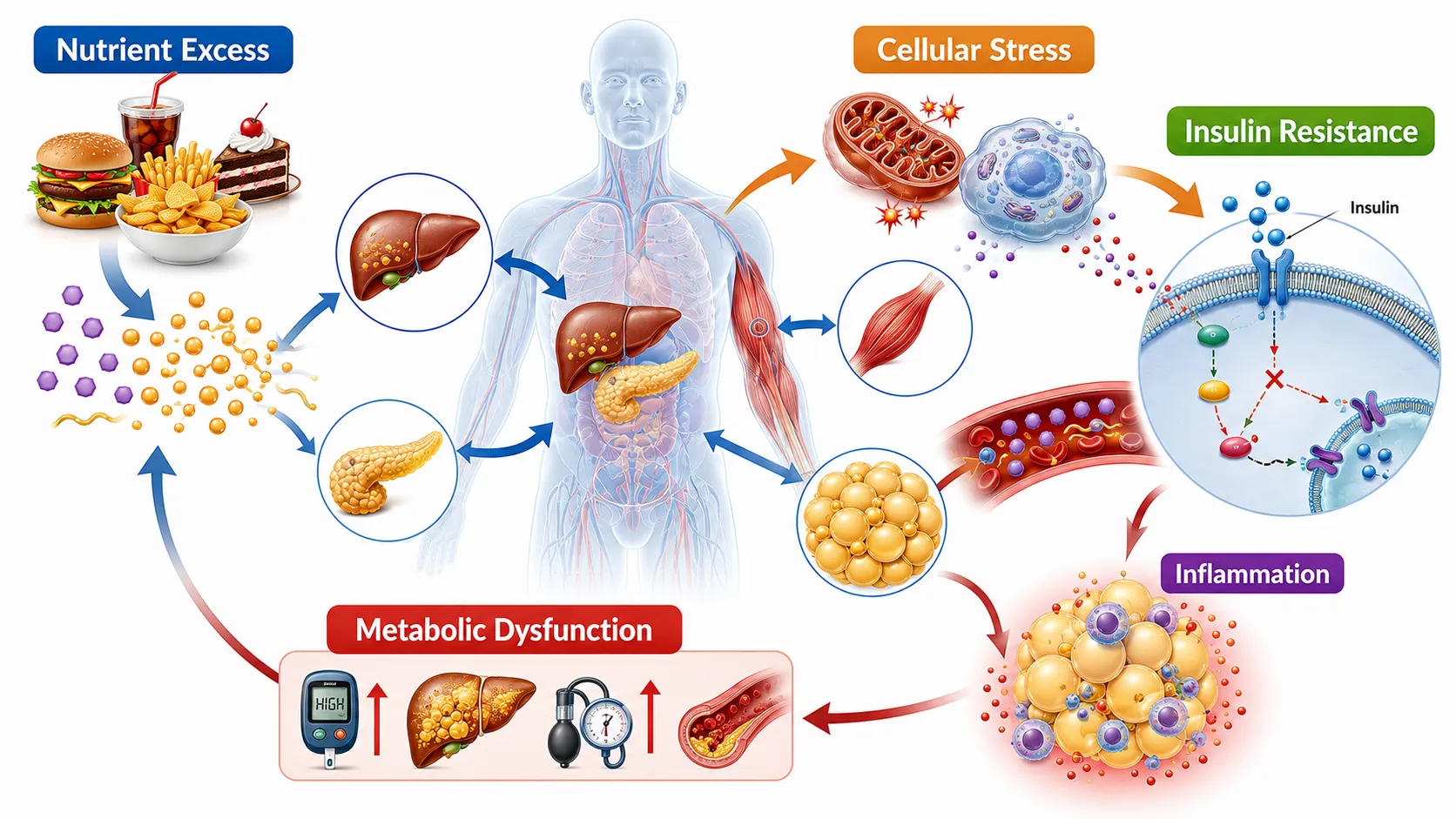
Key Concepts and Definitions
| Term | Definition | Relevance to Metabolic Disorders |
|---|---|---|
| Metabolic homeostasis | The maintenance of relatively stable internal metabolic conditions despite changing nutrient availability and energy demands | Disruption may contribute to abnormal glucose and lipid regulation |
| Insulin resistance | A reduced biological response to insulin in target tissues | Can impair glucose uptake and alter hepatic and lipid metabolism |
| Obesity | Excess accumulation of body fat that may adversely affect health | Associated with altered energy storage, inflammation and metabolic dysfunction |
| Energy surplus | A state in which energy intake exceeds energy expenditure over time | Can promote expansion of energy stores |
| Lipotoxicity | Cellular dysfunction associated with excessive or inappropriate accumulation of lipid-derived molecules | May interfere with insulin signalling and organ function |
| Inflammation | A biological response involving immune and signalling pathways | Chronic low-grade inflammation can contribute to metabolic dysregulation |
| Oxidative stress | An imbalance in which reactive molecular species exceed protective capacity | May damage cellular components and alter signalling |
| Mitochondrial dysfunction | Impaired mitochondrial capacity or regulation | Can affect energy production and substrate metabolism |
| Adipose tissue dysfunction | Altered storage, mobilisation and signalling functions of adipose tissue | May influence systemic metabolic regulation |
Understanding the Molecular Basis of Metabolic Disorders
Metabolism as an Integrated Regulatory System
Normal metabolism depends on the coordinated activity of multiple organs and tissues. The liver, skeletal muscle, adipose tissue, pancreas, gastrointestinal tract and brain communicate through circulating nutrients, hormones and signalling molecules. This communication allows the body to adjust energy production, storage and mobilisation according to nutritional and physiological conditions.
After a meal, nutrients enter the circulation and trigger coordinated metabolic responses. Glucose availability, amino acids and lipid-derived molecules influence hormonal signalling and intracellular pathways. During periods of fasting or increased physical activity, the body adjusts by mobilising stored energy and altering substrate utilisation.
Metabolic disorders may develop when these adaptive mechanisms are repeatedly exposed to conditions that exceed their regulatory capacity.
Important components of metabolic regulation include:
Hormonal control of nutrient uptake and storage.
Cellular sensing of nutrient availability.
Regulation of energy-producing pathways.
Storage and mobilisation of lipids.
Glucose uptake and utilisation.
Mitochondrial energy metabolism.
Communication between organs and tissues.
Appetite and energy intake regulation.
Inflammatory and immune signalling.
The critical point is that metabolic adaptation is normally beneficial. Problems may arise when prolonged nutrient excess, inactivity, altered tissue function or other factors produce persistent dysregulation.
The Difference Between Adaptation and Dysfunction
A short-term metabolic response should not automatically be interpreted as disease. For example, after consuming a carbohydrate-containing meal, insulin secretion and increased glucose uptake are normal physiological responses. Similarly, increased lipid mobilisation during fasting represents an appropriate adaptation to reduced nutrient availability.
Metabolic dysfunction is more likely when regulatory disturbances become persistent or when compensatory mechanisms are unable to maintain normal physiological control.
A critical assessment should therefore consider:
The duration of metabolic exposure.
The magnitude of nutrient excess or deficiency.
The tissues affected.
The individual’s physiological context.
Whether compensatory responses remain effective.
The presence of interacting risk factors.
Changes in biochemical and clinical markers over time.
Biochemical Triggers of Insulin Resistance
Normal Insulin Signalling
Insulin is an important regulatory hormone involved in the control of nutrient metabolism. It contributes to the regulation of glucose uptake, glycogen synthesis, lipid metabolism and other cellular processes.
Insulin acts by binding to receptors on responsive cells and initiating intracellular signalling pathways. These pathways influence how cells handle available nutrients.
In skeletal muscle and adipose tissue, insulin signalling contributes to the regulation of glucose uptake. In the liver, insulin influences glucose production and nutrient storage. These responses help maintain relatively stable circulating glucose concentrations.
The general sequence can be understood as:
Insulin signal → Receptor activation → Intracellular signalling → Metabolic response
When this signalling pathway becomes less effective, a greater insulin concentration may be required to produce an equivalent biological response.
What Is Insulin Resistance?
Insulin resistance describes a state in which target tissues show a reduced response to normal or elevated concentrations of insulin. It can affect multiple tissues simultaneously, although the degree and pattern of resistance may vary.
The consequences may include:
Reduced insulin-stimulated glucose uptake in skeletal muscle.
Altered regulation of hepatic glucose production.
Changes in adipose tissue metabolism.
Increased demand on insulin-producing pancreatic cells.
Disturbances in lipid handling.
Progressive disruption of metabolic homeostasis.
Insulin resistance should not be viewed solely as a glucose disorder. It is closely connected with lipid metabolism, inflammation, cellular energy regulation and tissue-specific signalling.
Excess Nutrient Availability as a Molecular Trigger
Chronic Energy Surplus
A sustained energy surplus can increase the availability of metabolic substrates beyond immediate energy requirements. The body has mechanisms for storing excess energy, particularly within adipose tissue. However, prolonged nutrient excess may contribute to changes in tissue structure and cellular metabolism.
Excess nutrient availability may involve:
Increased glucose exposure.
Increased circulating fatty acids.
Greater triglyceride storage.
Increased production of lipid intermediates.
Altered hormonal responses.
Increased metabolic pressure on nutrient-processing organs.
The biochemical effect of nutrient excess depends on the overall dietary pattern, physical activity, tissue capacity and individual characteristics.
Nutrient Overflow and Ectopic Lipid Accumulation
Adipose tissue normally provides an important capacity for energy storage. When energy storage and metabolic handling become dysregulated, lipid-derived molecules may accumulate in tissues that are not specialised for large-scale lipid storage.
These tissues may include:
Skeletal muscle.
Liver.
Pancreatic tissue.
Other metabolically active organs.
This phenomenon is often described as ectopic lipid accumulation.
Certain lipid-derived molecules may interfere with cellular signalling pathways. Their effects depend on molecular type, cellular location and metabolic context. Therefore, the simple presence of dietary fat should not be considered the sole explanation for metabolic dysfunction.
A more complete assessment examines:
Total energy exposure.
Rate of lipid delivery.
Capacity for oxidation.
Adipose tissue storage capacity.
Physical activity level.
Cellular lipid intermediates.
Duration of metabolic overload.
Lipotoxicity and Cellular Signalling
The Concept of Lipotoxic Stress
Lipotoxicity refers broadly to harmful cellular effects associated with excessive or inappropriate accumulation of certain lipid-derived molecules. These molecules can influence membrane function, intracellular signalling and organelle activity.
The potential consequences include:
Impaired insulin signalling.
Increased cellular stress responses.
Altered mitochondrial metabolism.
Changes in inflammatory signalling.
Disturbances in cellular energy balance.
It is important to distinguish between normal lipid storage and harmful metabolic lipid accumulation. Lipids are essential biological molecules and provide structural, signalling and energy-storage functions.
The concern arises when lipid handling becomes dysregulated.
How Lipid-Derived Molecules May Affect Insulin Action
Excess intracellular lipid intermediates can activate signalling pathways that interfere with components of insulin signalling. The exact mechanisms are complex and can vary between tissues.
Potential effects include:
Alteration of receptor-associated signalling.
Reduced efficiency of downstream insulin pathways.
Changes in glucose transporter regulation.
Increased inflammatory signalling.
Cellular stress responses.
This illustrates why insulin resistance is considered a multi-pathway disorder rather than a single molecular failure.
Inflammation as a Metabolic Trigger
Chronic Low-Grade Inflammation
Metabolic dysfunction is frequently associated with persistent low-grade inflammatory activity. This differs from the acute inflammatory response that occurs during infection or injury.
In metabolically stressed tissues, immune cells and local cells may produce signalling molecules that influence cellular function. Adipose tissue is particularly important because it contains multiple cell types, including immune cells and metabolically active adipocytes.
Persistent inflammatory signalling may contribute to:
Impaired insulin responsiveness.
Altered lipid metabolism.
Changes in tissue communication.
Increased cellular stress.
Progression of metabolic dysfunction.
Adipose Tissue and Inflammatory Signalling
Adipose tissue is not simply an inactive storage compartment. It functions as a metabolically active tissue that communicates with other organs through multiple signalling molecules.
Changes associated with expanding or dysfunctional adipose tissue may include:
Altered adipocyte size.
Changes in local blood supply.
Immune cell infiltration.
Altered secretion of signalling molecules.
Increased cellular stress.
Changes in lipid mobilisation.
These processes may influence systemic metabolism.
A critical assessment should avoid assuming that body fat quantity alone determines metabolic risk. The location, distribution and functional characteristics of adipose tissue can also be relevant.
Oxidative Stress and Metabolic Dysfunction
Reactive Molecular Species and Cellular Balance
Cells naturally generate reactive molecular species during normal metabolism. Under normal conditions, protective systems help maintain balance.
Oxidative stress may occur when the production of reactive species exceeds the capacity of protective mechanisms. Persistent metabolic overload can contribute to this imbalance.
Potential consequences include:
Damage to cellular lipids.
Altered protein function.
Changes in DNA integrity.
Disturbed signalling pathways.
Impaired mitochondrial activity.
Oxidative stress may interact with inflammation and insulin resistance rather than acting independently.
Why Oxidative Stress Requires Critical Interpretation
The presence of oxidative stress markers does not automatically establish a direct cause of metabolic disease. Such markers must be interpreted within the wider biochemical context.
Assessment should consider:
The marker being measured.
The tissue or biological sample.
The timing of measurement.
Other metabolic abnormalities.
Nutritional and environmental factors.
Evidence for biological mechanisms.
This approach prevents oversimplified conclusions.
Mitochondrial Function and Energy Regulation
The Role of Mitochondria
Mitochondria play an important role in cellular energy metabolism. They participate in pathways that generate ATP and process metabolic substrates.
Metabolically active tissues depend on appropriate mitochondrial function to respond to changing energy demands.
Important mitochondrial functions include:
ATP generation.
Oxidation of metabolic substrates.
Integration of nutrient-derived signals.
Regulation of cellular energy status.
Participation in reactive molecular species production.
Mitochondrial Dysfunction and Insulin Resistance
Impaired mitochondrial capacity or regulation may influence the relationship between nutrient supply and energy utilisation. When nutrient delivery repeatedly exceeds the ability of tissues to appropriately process substrates, metabolic stress may increase.
Potential associations include:
Altered lipid oxidation.
Accumulation of metabolic intermediates.
Increased cellular stress.
Reduced metabolic flexibility.
Disturbed insulin responsiveness.
However, mitochondrial dysfunction may be both a contributing factor and a consequence of metabolic disease. Critical analysis should therefore consider directionality rather than assuming a single cause.
Molecular Mechanisms Contributing to Obesity
Obesity and Long-Term Energy Storage
Obesity is associated with the long-term accumulation of excess body fat. At its most fundamental level, this involves sustained positive energy balance. However, the biological regulation of body weight and adipose tissue is considerably more complex than a simple numerical comparison.
Energy balance is influenced by:
Dietary intake.
Physical activity.
Resting energy expenditure.
Hormonal regulation.
Appetite signalling.
Food environment.
Behavioural factors.
Genetic susceptibility.
Metabolic adaptation.
Therefore, the biochemical mechanisms associated with obesity must be considered within a broader physiological and environmental framework.
Adipocyte Expansion
When energy is stored over time, adipose tissue may expand through changes in cell size and, under some circumstances, changes in cell number.
Adipocyte expansion can influence:
Local oxygen availability.
Cellular stress.
Lipid storage capacity.
Inflammatory activity.
Hormonal signalling.
Not all adipose tissue expansion produces identical metabolic outcomes. Functional storage capacity and tissue distribution are important considerations.
Adipose Tissue Distribution
The distribution of adipose tissue may influence metabolic risk. Different adipose depots have different anatomical and metabolic characteristics.
Critical factors include:
Visceral adipose tissue.
Subcutaneous adipose tissue.
Ectopic lipid accumulation.
Individual differences in fat distribution.
This explains why body mass alone does not provide a complete description of metabolic health.
Hormonal and Molecular Regulation of Appetite
Appetite as a Biochemical Process
Energy intake is influenced by complex communication between the gastrointestinal system, adipose tissue, pancreas and brain. Nutrient availability generates signals that influence hunger, satiety and food-seeking behaviour.
Relevant regulatory systems include:
Signals related to stomach fullness.
Intestinal nutrient sensing.
Adipose-derived signalling.
Pancreatic hormonal responses.
Central nervous system regulation.
These systems help coordinate energy intake with physiological requirements, although they can be influenced by environmental and behavioural factors.
Disruption of Appetite Regulation
Persistent exposure to highly energy-dense dietary patterns, changes in body energy stores and other influences may alter appetite regulation.
Potential consequences include:
Increased energy intake.
Reduced sensitivity to satiety signals.
Altered food preference.
Difficulty matching intake with expenditure.
Appetite regulation should not be interpreted as a simple matter of conscious choice. It is influenced by biological, psychological and environmental mechanisms.
Genetic Susceptibility and Molecular Variation
Genes and Metabolic Risk
Genetic variation can influence metabolic characteristics, including appetite regulation, energy expenditure, adipose tissue distribution and nutrient metabolism.
However, genes generally operate within an environmental context.
Genetic susceptibility may influence:
Individual responses to nutrient exposure.
Propensity for particular patterns of fat distribution.
Regulation of energy intake.
Metabolic responses to physical activity.
Risk of developing insulin resistance.
Gene–Environment Interaction
A genetic predisposition does not necessarily determine a metabolic outcome. Environmental exposures can influence how biological susceptibility is expressed.
Relevant environmental influences include:
Long-term dietary patterns.
Physical inactivity.
Sleep patterns.
Stress-related physiological responses.
Socioeconomic and food environments.
A critical assessment therefore considers both inherited and modifiable influences.
The Interaction Between Insulin Resistance and Obesity
A Bidirectional Relationship
Insulin resistance and obesity frequently occur together, but neither condition should automatically be considered the universal cause of the other.
Expanding or dysfunctional adipose tissue can contribute to:
Increased lipid delivery to other tissues.
Altered inflammatory signalling.
Changes in hormone-related communication.
Disturbed metabolic regulation.
At the same time, insulin resistance can alter nutrient handling and influence lipid metabolism.
This creates a potentially self-reinforcing metabolic cycle.
A Simplified Metabolic Progression
A broad conceptual sequence may be represented as:
Sustained nutrient excess
→ Increased energy storage
→ Adipose tissue expansion
→ Cellular and inflammatory stress
→ Altered lipid handling
→ Impaired insulin signalling
→ Further metabolic dysregulation
This sequence is a useful educational model, but real metabolic disease is more complex. Different individuals may enter the cycle at different points.
Practical Examples of Biochemical Triggers
Example 1: Prolonged Energy Surplus and Reduced Activity
Consider an individual whose daily energy intake consistently exceeds expenditure while physical activity remains low.
Over time, potential metabolic changes may include:
Increased energy storage.
Expansion of adipose tissue.
Increased lipid availability.
Altered tissue nutrient handling.
Reduced metabolic flexibility.
A critical assessment should not attribute these changes to one food or macronutrient without evaluating the complete dietary pattern.
Example 2: Lipid Accumulation and Insulin Signalling
An individual with prolonged metabolic overload may develop increased lipid-derived intermediates in skeletal muscle or the liver.
Potential consequences include:
Interference with intracellular signalling.
Altered glucose metabolism.
Increased cellular stress.
Reduced insulin responsiveness.
The interpretation should consider physical activity, dietary history and other biochemical findings.
Example 3: Chronic Adipose Tissue Dysfunction
An individual with substantial adipose tissue expansion may experience changes in adipose tissue signalling and local inflammatory activity.
Possible metabolic consequences include:
Altered lipid mobilisation.
Changes in systemic signalling.
Increased metabolic stress.
Greater risk of impaired glucose regulation.
Again, individual variation means that risk cannot be determined from body size alone.
A Structured Process for Critically Assessing Metabolic Triggers
Step 1: Identify the Nutritional and Physiological Exposure
Begin by assessing relevant exposures.
Consider:
Total energy intake.
Macronutrient distribution.
Dietary quality.
Duration of exposure.
Physical activity.
Physiological state.
Step 2: Identify Potential Biochemical Pathways
Determine which metabolic pathways may be affected.
These may include:
Insulin signalling.
Glucose metabolism.
Lipid mobilisation and storage.
Mitochondrial metabolism.
Inflammatory signalling.
Oxidative stress pathways.
Step 3: Consider Tissue-Specific Effects
Different tissues respond differently to metabolic stress.
Assess the potential role of:
Liver.
Skeletal muscle.
Adipose tissue.
Pancreatic tissue.
Central nervous system.
Step 4: Examine Molecular Interactions
Avoid analysing pathways in isolation.
Consider interactions between:
Lipid accumulation and insulin signalling.
Inflammation and oxidative stress.
Mitochondrial function and substrate availability.
Adipose tissue and systemic hormonal regulation.
Step 5: Interpret Evidence Critically
A strong assessment distinguishes between:
Association and causation.
Short-term adaptation and chronic dysfunction.
Individual biomarkers and overall metabolic patterns.
Biological plausibility and proven clinical outcomes.
Key Benefits of Understanding Molecular Triggers
A detailed understanding of biochemical mechanisms provides several important benefits for advanced nutritional analysis.
It enables Learners to:
Connect dietary exposure with molecular processes.
Understand why metabolic disorders are multifactorial.
Interpret biochemical findings more critically.
Avoid oversimplified explanations of obesity and insulin resistance.
Recognise the importance of tissue-specific metabolism.
Evaluate evidence concerning nutrient-related disease.
Develop more informed approaches to metabolic case analysis.
Critical Considerations for Professional Practice
Avoiding Single-Cause Explanations
Metabolic disorders are often presented through overly simple explanations. For example, insulin resistance may incorrectly be attributed to a single nutrient, while obesity may be explained only through individual behaviour.
Professional assessment requires consideration of multiple interacting factors.
These include:
Nutrient availability.
Energy balance.
Tissue-specific metabolism.
Hormonal regulation.
Physical activity.
Genetic susceptibility.
Environmental exposure.
Duration of metabolic stress.
Recognising Individual Variation
Individuals exposed to similar dietary conditions may experience different metabolic outcomes.
Variation may arise from:
Genetic characteristics.
Body composition.
Adipose tissue distribution.
Physical activity.
Age and physiological state.
Existing metabolic health.
Environmental influences.
Therefore, biochemical knowledge should support individualised assessment rather than universal assumptions.
Maintaining Appropriate Clinical Boundaries
Advanced biochemical understanding can support nutritional assessment and academic analysis, but significant metabolic abnormalities may require appropriate clinical investigation.
Professional practice should recognise when:
Laboratory abnormalities require medical interpretation.
Symptoms suggest significant metabolic dysfunction.
Complex cases require multidisciplinary assessment.
Nutritional advice should be coordinated with qualified healthcare professionals.
Summary
Insulin resistance and obesity develop through complex biochemical and molecular interactions rather than a single isolated trigger. Sustained nutrient excess, altered lipid handling, ectopic lipid accumulation, inflammation, oxidative stress, mitochondrial dysfunction, hormonal signalling and genetic susceptibility may all contribute to metabolic dysregulation.
Insulin resistance involves reduced responsiveness to insulin and may affect glucose and lipid metabolism across several tissues. Obesity involves long-term changes in energy storage and adipose tissue biology, influenced by physiological, behavioural, environmental and molecular factors.
The relationship between these disorders is dynamic and often bidirectional. Dysfunctional adipose tissue can influence insulin responsiveness through altered lipid and inflammatory signalling, while insulin resistance can further alter nutrient handling.
A high-quality biochemical assessment should therefore examine the complete pathway from exposure to outcome:
Dietary and environmental exposure.
Changes in nutrient availability.
Cellular and molecular responses.
Tissue-specific metabolic effects.
Hormonal and inflammatory interactions.
Physiological consequences over time.
By critically examining these int
2.Evaluate the Underlying Biochemical Pathways That Directly Connect Chronic Micronutrient Deficiencies to the Onset of Systemic and Cellular Diseases
Micronutrients, including vitamins and minerals, are required in relatively small quantities but perform essential roles in human biochemistry. They function as cofactors, coenzymes, structural components, antioxidants, signalling molecules and regulators of gene expression. When micronutrient intake, absorption, transport, storage or utilisation is inadequate for a prolonged period, the consequences may extend far beyond an isolated nutritional deficiency. Chronic deficiency can progressively disrupt enzyme activity, cellular energy production, DNA synthesis, immune function, tissue maintenance and organ-level physiological processes.
The relationship between micronutrient deficiency and disease is therefore fundamentally biochemical. A deficiency reduces the availability or function of a molecule required for a specific physiological process. This may initially cause subtle changes in enzyme efficiency or cellular regulation. If the deficiency persists, compensatory mechanisms may become insufficient, leading to measurable functional impairment, tissue damage and systemic disease.
This section evaluates the major biochemical pathways that connect chronic micronutrient deficiencies with cellular and systemic disorders. The focus is not simply on memorising deficiency conditions, but on understanding the molecular sequence through which inadequate micronutrient availability can progress from biochemical disturbance to disease.
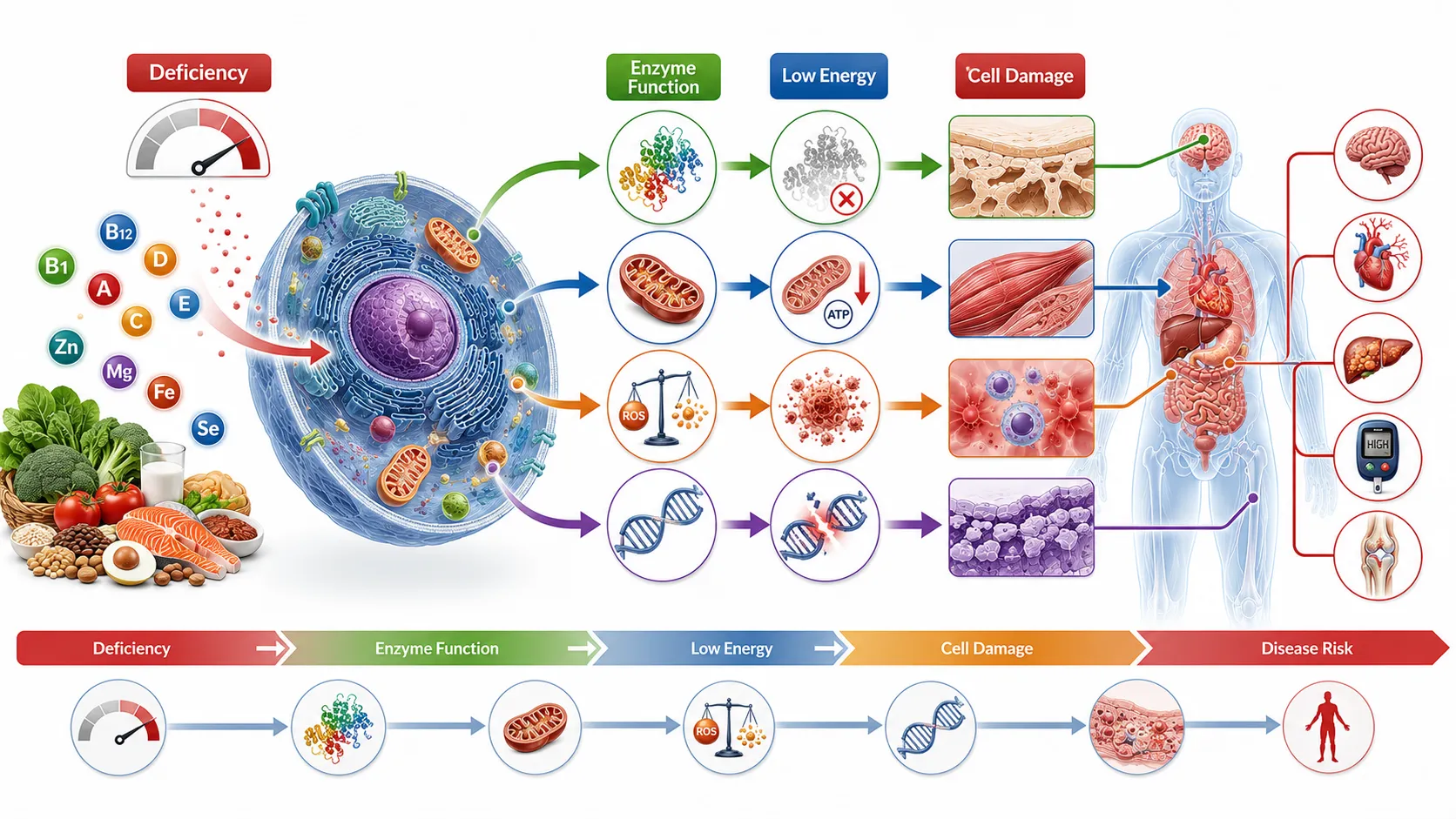
Key Concepts and Definitions
| Term | Definition | Biochemical Significance |
|---|---|---|
| Micronutrient | An essential vitamin or mineral required in small amounts for normal biological function | Supports enzymes, signalling, structure and metabolic regulation |
| Cofactor | A non-protein component required for the activity of certain enzymes | Often enables catalytic reactions to occur efficiently |
| Coenzyme | An organic molecule that assists enzyme-mediated reactions | Frequently derived from dietary vitamins |
| Chronic deficiency | Prolonged inadequate availability of a nutrient | Can cause cumulative biochemical and physiological dysfunction |
| Bioavailability | The proportion of a nutrient that is absorbed and available for biological use | Influences whether dietary intake meets physiological needs |
| Oxidative stress | A state in which reactive molecular species exceed protective capacity | Can damage lipids, proteins and genetic material |
| Cellular homeostasis | The maintenance of stable internal conditions within cells | Depends on adequate nutrient availability and metabolic regulation |
| Systemic disease | A condition affecting multiple tissues or the body as a whole | May result from widespread biochemical dysfunction |
| Nutrient utilisation | The uptake and incorporation of nutrients into biological processes | Can be impaired even when dietary intake appears adequate |
Understanding the Biochemical Importance of Micronutrients
Why Small Quantities Can Have Major Biological Effects
Macronutrients provide substantial amounts of energy and building material, whereas micronutrients often act by enabling biochemical processes. Their importance is therefore not determined by the amount required but by the essential nature of the reactions they support.
A relatively small deficiency can influence a major metabolic pathway when the nutrient is required for a rate-limiting or essential enzymatic process.
Micronutrients contribute to:
Enzyme activation and catalytic activity.
Electron transfer reactions.
ATP production and energy metabolism.
DNA synthesis and cellular replication.
Red blood cell formation.
Bone mineralisation.
Antioxidant defence.
Immune regulation.
Nervous system function.
Hormonal synthesis and signalling.
Tissue repair and maintenance.
The biochemical consequences of deficiency depend on the specific nutrient involved, the severity of inadequate availability and the duration of deficiency.
The Progression from Deficiency to Disease
Chronic micronutrient deficiency often develops through a sequence rather than causing immediate clinical disease.
A simplified progression is:
Reduced intake or availability
→ Decreased body stores
→ Reduced biochemical activity
→ Cellular dysfunction
→ Tissue impairment
→ Organ dysfunction
→ Systemic disease
This sequence is useful for understanding the progressive nature of nutritional disorders. However, individual responses vary depending on nutrient reserves, age, physiological demands, health status and genetic factors.
The Role of Vitamins as Coenzymes in Metabolic Pathways
Water-Soluble Vitamins and Enzyme Function
Many water-soluble vitamins participate directly or indirectly in enzyme-mediated metabolic reactions. Several are converted into biologically active coenzyme forms.
These coenzymes can support:
Transfer of electrons.
Transfer of carbon-containing groups.
Amino acid metabolism.
Fatty acid metabolism.
Carbohydrate metabolism.
Nucleotide synthesis.
When a vitamin-derived coenzyme becomes unavailable, the affected enzyme may operate less efficiently or become unable to complete its normal catalytic reaction.
B Vitamins and Energy Metabolism
The B-vitamin group includes several micronutrients involved in metabolic pathways responsible for extracting usable energy from carbohydrate, lipid and protein substrates.
Important general functions include:
Supporting oxidation–reduction reactions.
Assisting electron transfer.
Participating in carbohydrate metabolism.
Supporting amino acid processing.
Contributing to cellular energy production.
Chronic deficiency may therefore reduce metabolic efficiency, particularly in tissues with high energy requirements.
These tissues include:
Brain tissue.
Cardiac muscle.
Skeletal muscle.
Rapidly dividing cells.
Biochemical Consequences of Reduced Coenzyme Availability
When coenzyme availability falls, several outcomes may occur.
Potential consequences include:
Reduced reaction rates.
Accumulation of metabolic intermediates.
Reduced production of essential products.
Diversion of substrates into alternative pathways.
Increased metabolic stress.
Reduced cellular energy availability.
The consequences are not always immediate because the body may initially compensate by using stored nutrient reserves or modifying metabolic activity.
Vitamin B Deficiency and Cellular Energy Dysfunction
Thiamine and Carbohydrate Metabolism
Thiamine-derived coenzyme forms participate in important reactions associated with carbohydrate metabolism and energy production.
Inadequate thiamine availability can impair the processing of carbohydrate-derived intermediates and influence cellular energy production.
Potential biochemical effects include:
Reduced efficiency of selected metabolic reactions.
Altered carbohydrate-derived substrate processing.
Accumulation of specific metabolic intermediates.
Reduced ATP availability in vulnerable tissues.
Because the nervous system depends heavily on continuous energy metabolism, prolonged impairment can have significant physiological consequences.
Riboflavin and Electron Transfer
Riboflavin contributes to coenzyme forms involved in oxidation–reduction reactions. These reactions are important in energy-producing pathways and mitochondrial metabolism.
Chronic deficiency may influence:
Electron transfer reactions.
Enzyme activity.
Energy production.
Cellular redox balance.
This demonstrates how a deficiency may affect multiple metabolic pathways simultaneously when the micronutrient supports several enzymes.
Niacin and Cellular Redox Reactions
Niacin contributes to coenzyme systems involved in electron transfer and cellular oxidation–reduction reactions.
These systems participate in:
Energy metabolism.
Biosynthetic reactions.
Cellular repair processes.
Metabolic regulation.
Reduced availability can interfere with the ability of cells to manage electron transfer efficiently and maintain normal metabolic activity.
Micronutrient Deficiency and Mitochondrial Dysfunction
Micronutrients in Mitochondrial Metabolism
Mitochondria require multiple micronutrient-dependent enzymes and cofactors to support efficient energy metabolism.
Micronutrient availability influences:
Substrate processing.
Electron transfer.
ATP production.
Antioxidant protection.
Mitochondrial enzyme activity.
When deficiencies persist, mitochondrial metabolic efficiency may decline.
The Consequences of Impaired Energy Production
Reduced cellular energy availability can have tissue-specific effects.
Tissues with high energy requirements may be particularly vulnerable.
Examples include:
Brain.
Heart.
Skeletal muscle.
Kidney.
Possible consequences include:
Reduced functional capacity.
Altered cellular transport.
Impaired tissue maintenance.
Increased susceptibility to metabolic stress.
The Link Between Energy Dysfunction and Disease
Chronic impairment of energy metabolism may contribute to broader physiological dysfunction.
The progression can involve:
Micronutrient deficiency
→ Reduced enzyme efficiency
→ Altered mitochondrial metabolism
→ Reduced ATP availability
→ Cellular dysfunction
→ Tissue impairment
This pathway demonstrates how a molecular disturbance can eventually produce systemic consequences.
Iron Deficiency and Impaired Oxygen-Related Metabolism
Iron as a Biochemical Component
Iron is involved in several essential biological processes, including oxygen transport and enzyme systems associated with cellular metabolism.
Its functions include:
Supporting haem-containing proteins.
Participating in electron transfer.
Contributing to oxygen-related metabolism.
Supporting cellular growth and development.
Chronic Iron Deficiency
When iron availability becomes chronically inadequate, the production and function of iron-containing molecules may be affected.
Potential consequences include:
Impaired oxygen transport.
Reduced capacity for normal energy metabolism.
Fatigue and reduced physical capacity.
Altered cellular function.
The biochemical impact is particularly significant because adequate oxygen availability supports efficient energy metabolism in many tissues.
From Cellular Impairment to Systemic Effects
A prolonged reduction in oxygen transport capacity may influence multiple organ systems.
Potential systemic effects include:
Reduced exercise tolerance.
Increased fatigue.
Impaired cognitive performance.
Reduced work capacity.
The progression illustrates the connection between a micronutrient deficiency and whole-body physiological function.
Folate and Vitamin B12 in DNA Synthesis
The Importance of One-Carbon Metabolism
Folate and vitamin B12 are involved in biochemical processes associated with one-carbon metabolism and normal cellular replication.
These pathways support:
Nucleotide synthesis.
DNA production.
Cellular division.
Normal maturation of rapidly dividing cells.
Consequences of Chronic Deficiency
When these pathways are disrupted, cells with rapid turnover may be particularly affected.
Examples include:
Blood-forming cells.
Gastrointestinal cells.
Other rapidly renewing tissues.
Possible biochemical outcomes include:
Impaired DNA synthesis.
Abnormal cellular maturation.
Reduced effective cell production.
Tissue dysfunction.
Systemic Implications
The consequences of impaired cellular replication can extend beyond a single tissue.
A critical assessment may consider:
Nutrient intake.
Absorption capacity.
Transport mechanisms.
Medication effects.
Physiological demand.
Other coexisting deficiencies.
This approach helps identify why similar clinical manifestations may arise through different biochemical mechanisms.
Vitamin C and Connective Tissue Biochemistry
Vitamin C and Collagen-Related Processes
Vitamin C contributes to specific biochemical reactions required for the normal formation and maintenance of connective tissue.
Connective tissue supports:
Blood vessels.
Skin.
Gums.
Bones.
Other structural systems.
Chronic Deficiency and Tissue Integrity
Prolonged inadequate vitamin C availability can disrupt normal connective tissue maintenance.
Potential effects include:
Reduced tissue strength.
Impaired wound healing.
Increased vulnerability of blood vessels.
Altered structural integrity.
The biochemical pathway can be summarised as:
Vitamin C deficiency
→ Impaired enzyme-dependent connective tissue reactions
→ Altered collagen-related structure
→ Tissue weakness
→ Systemic clinical manifestations
This provides a clear example of how a specific molecular pathway can produce visible systemic disease.
Vitamin D, Calcium and Mineral Homeostasis
Vitamin D as a Regulatory Micronutrient
Vitamin D is involved in the regulation of calcium and phosphate metabolism and contributes to processes important for skeletal health.
Adequate regulation is required for:
Mineral absorption.
Bone mineralisation.
Maintenance of mineral homeostasis.
Normal neuromuscular function.
Chronic Deficiency and Biochemical Compensation
When vitamin D availability is insufficient, the body may activate compensatory mechanisms to maintain circulating mineral concentrations.
Over time, these adaptations may affect skeletal mineral balance.
Potential consequences include:
Impaired mineralisation.
Changes in bone metabolism.
Reduced skeletal integrity.
Systemic Effects
Chronic disruption of mineral homeostasis can influence:
Skeletal health.
Muscular function.
Physiological signalling processes.
This demonstrates that nutrient deficiency can initiate compensatory biochemical responses that may eventually contribute to tissue disease.
Mineral Deficiencies and Enzyme Regulation
Minerals as Enzyme Cofactors
Several minerals are required for the normal structure or activity of enzymes.
They may contribute to:
Stabilisation of enzyme structure.
Binding of substrates.
Electron transfer.
Signal transduction.
Cellular ion balance.
Examples of biologically important minerals include:
Magnesium.
Zinc.
Selenium.
Iron.
Copper.
Magnesium and Metabolic Function
Magnesium participates in numerous biochemical reactions, including processes involving ATP and enzyme activity.
Chronic inadequate availability may influence:
Energy metabolism.
Cellular signalling.
Neuromuscular activity.
Metabolic regulation.
Because magnesium participates in multiple pathways, deficiency may produce broad and sometimes non-specific effects.
Zinc and Cellular Function
Zinc contributes to the function of numerous proteins and enzymes and is relevant to:
Gene expression.
Immune function.
Protein synthesis.
Tissue repair.
Chronic deficiency can therefore influence several systems simultaneously.
Selenium and Antioxidant Defence
Selenium contributes to the function of certain antioxidant-related enzyme systems.
Inadequate selenium availability may reduce the capacity of these systems to manage reactive molecular species effectively.
Potential consequences include:
Increased oxidative stress.
Altered cellular protection.
Greater susceptibility to molecular damage.
Oxidative Stress as a Pathway to Cellular Disease
The Biochemical Balance Between Oxidants and Defences
Normal metabolism generates reactive molecular species. The body uses antioxidant and repair systems to control their effects.
When micronutrient-dependent protective systems are impaired, oxidative balance may become disturbed.
Important processes may involve:
Enzymatic antioxidant systems.
Nutrient-derived antioxidants.
Cellular repair mechanisms.
Cellular Consequences of Persistent Oxidative Stress
Excessive oxidative stress may affect:
Membrane lipids.
Proteins.
DNA.
Mitochondrial components.
Cell signalling systems.
Persistent damage can contribute to cellular dysfunction and tissue pathology.
Critical Evaluation of Oxidative Stress
Oxidative stress should not be treated as an explanation for every disease. Professional assessment requires evaluation of evidence.
Important questions include:
Which oxidative markers are altered?
Is there evidence of reduced antioxidant capacity?
Is the deficiency sufficiently severe?
Are other metabolic stressors present?
Does the proposed mechanism match the observed disease process?
Micronutrient Deficiency and Immune Dysfunction
Nutrients and Immune Cell Activity
The immune system depends on adequate nutrient availability to support:
Cell production.
Protein synthesis.
Cellular signalling.
Energy metabolism.
Antioxidant protection.
Chronic deficiency can therefore impair immune responses.
The Relationship Between Deficiency and Infection
The relationship may become cyclical.
Micronutrient deficiency
→ Reduced immune efficiency
→ Increased susceptibility to illness
→ Increased physiological stress
→ Further nutritional deterioration
This demonstrates how biochemical dysfunction can interact with systemic disease processes.
Critical Assessment of Immune Effects
A single micronutrient deficiency may not explain all immune dysfunction. Assessment should also consider:
Overall dietary adequacy.
Protein and energy status.
Existing disease.
Age.
Medication use.
Physiological stress.
Absorption, Transport and Utilisation: Why Intake Alone Is Not Enough
The Difference Between Dietary Intake and Biological Availability
A person may consume a nutrient without absorbing or effectively using an adequate amount.
Micronutrient status can be influenced by:
Dietary intake.
Digestive function.
Intestinal absorption.
Transport proteins.
Storage capacity.
Cellular uptake.
Metabolic activation.
Therefore, a dietary assessment alone may not identify the complete cause of deficiency.
Malabsorption and Chronic Deficiency
Disorders affecting digestion or intestinal absorption can reduce nutrient availability even when dietary intake appears adequate.
Potential consequences include:
Multiple micronutrient deficiencies.
Progressive depletion of body stores.
Broad biochemical dysfunction.
A professional assessment should investigate whether the deficiency arises from inadequate intake, impaired absorption or altered utilisation.
The Interaction Between Multiple Micronutrient Deficiencies
Why Deficiencies May Occur Together
Nutritional deficiencies frequently occur in combination rather than isolation.
This may occur because:
Dietary patterns lack multiple nutrient sources.
Malabsorption affects several nutrients.
Increased physiological demands exceed supply.
Chronic illness alters intake and utilisation.
Combined Biochemical Effects
Multiple deficiencies may interact.
For example:
Reduced coenzyme availability may impair energy metabolism.
Reduced mineral availability may affect enzyme activity.
Reduced antioxidant capacity may increase cellular stress.
Impaired DNA synthesis may affect tissue renewal.
The combined effect may be greater than the effect of a single isolated deficiency.
Practical Examples of Biochemical Disease Pathways
Example 1: Chronic Inadequate Micronutrient Intake
Consider an individual with a long-term restricted dietary pattern containing insufficient micronutrient diversity.
Possible progression:
Reduced micronutrient intake.
Gradual depletion of nutrient stores.
Reduced activity of dependent enzymes.
Altered cellular metabolism.
Development of tissue-specific dysfunction.
The exact outcome depends on which nutrients become limiting.
Example 2: Impaired Absorption
An individual may consume an apparently adequate diet but have impaired absorption of specific micronutrients.
The pathway may be:
Adequate intake
→ Reduced absorption
→ Low circulating availability
→ Reduced cellular uptake
→ Enzyme dysfunction
→ Clinical consequences
This example highlights why nutritional assessment must extend beyond dietary intake.
Example 3: Multiple Deficiencies and Systemic Disease
An individual with prolonged malnutrition may develop deficiencies involving several vitamins and minerals.
Potential combined effects include:
Reduced energy metabolism.
Impaired immune function.
Altered tissue repair.
Increased oxidative stress.
Reduced cellular replication.
The systemic outcome reflects the interaction of multiple biochemical disturbances.
A Structured Process for Evaluating Deficiency-Related Disease
Step 1: Identify the Suspected Micronutrient
Determine:
Which nutrient may be deficient.
Its primary biochemical functions.
The enzymes or pathways that depend upon it.
Step 2: Examine the Cause of Deficiency
Possible causes include:
Inadequate intake.
Increased physiological requirements.
Impaired absorption.
Altered transport.
Increased losses.
Impaired activation or utilisation.
Step 3: Identify the Affected Biochemical Pathway
Ask:
Which enzyme or system requires the nutrient?
What reaction is disrupted?
Which substrates or intermediates may accumulate?
Which essential products may decrease?
Step 4: Assess Cellular Consequences
Potential cellular effects may include:
Reduced ATP production.
Impaired DNA synthesis.
Altered membrane integrity.
Increased oxidative damage.
Reduced protein synthesis.
Impaired cell division.
Step 5: Connect Cellular Dysfunction with Systemic Disease
Consider:
Which tissues have the greatest demand?
How does cellular impairment affect organ function?
Are compensatory mechanisms present?
What occurs if the deficiency persists?
Step 6: Interpret Evidence Critically
A strong evaluation distinguishes between:
Biochemical association and established causation.
Mild depletion and clinically significant deficiency.
Single nutrient effects and multiple nutritional influences.
Short-term changes and chronic disease progression.
Key Benefits of Understanding These Biochemical Pathways
Understanding the mechanisms linking micronutrient deficiencies to disease enables Learners to develop stronger scientific and professional judgement.
Key benefits include:
Improved interpretation of nutritional assessments.
Better understanding of laboratory findings.
Recognition of early biochemical dysfunction.
Stronger analysis of disease mechanisms.
Greater ability to connect molecular events with systemic outcomes.
Improved critical evaluation of nutritional evidence.
More informed assessment of complex nutritional cases.
Professional and Scientific Considerations
Avoiding Oversimplification
Micronutrient deficiencies can contribute to disease, but disease development is often multifactorial.
A robust evaluation should consider:
Overall nutritional status.
Duration of deficiency.
Severity of depletion.
Individual physiological characteristics.
Existing disease.
Genetic factors.
Environmental influences.
Recognising the Importance of Chronic Exposure
The duration of deficiency is particularly important. Body stores and compensatory mechanisms may initially prevent clinical disease.
However, prolonged inadequate availability can gradually produce:
Enzyme impairment.
Cellular dysfunction.
Tissue damage.
Systemic disease.
Maintaining Appropriate Clinical Boundaries
Biochemical understanding supports academic and nutritional analysis but does not replace appropriate clinical diagnosis.
Significant symptoms or laboratory abnormalities should be evaluated through suitable healthcare and laboratory assessment processes.
Professional practice should recognise when:
Deficiency requires clinical confirmation.
Multiple abnormalities suggest complex disease.
Malabsorption may require further investigation.
Specialist assessment is appropriate.
Summary
Chronic micronutrient deficiencies can lead to systemic and cellular diseases through specific and interconnected biochemical pathways. Vitamins and minerals support essential processes including enzyme activity, coenzyme function, energy metabolism, DNA synthesis, antioxidant defence, immune regulation and tissue maintenance.
When micronutrient availability becomes inadequate over a prolonged period, the consequences may progress from subtle biochemical changes to significant cellular dysfunction and systemic disease. The pathway often follows a sequence in which reduced nutrient availability decreases the efficiency of essential biological reactions, disrupts cellular homeostasis and ultimately affects tissue and organ function.
Important mechanisms include:
Reduced coenzyme availability.
Impaired enzyme activity.
Altered mitochondrial energy production.
Disrupted DNA synthesis.
Impaired oxygen-related metabolism.
Increased oxidative stress.
Reduced antioxidant defence.
Altered immune function.
Disruption of mineral homeostasis.
A critical evaluation must also recognise that dietary intake is only one determinant of micronutrient status. Absorption, transport, storage and cellular utilisation are equally important.
The most effective approach to assessing nutrient-related disease is therefore to follow the complete biochemical pathway:
Micronutrient availability
→ Enzyme or molecular function
→ Cellular metabolic process
→ Tissue response
→ Organ function
→ Systemic disease outcome
3.Interpret Complex Pathological Data to Accurately Track the Progression of a Nutrient-Related Disease at the Biochemical and Cellular Level
The progression of a nutrient-related disease is rarely identified through a single laboratory value or isolated pathological observation. Nutritional disorders develop through dynamic interactions between nutrient availability, absorption, transport, metabolism, cellular adaptation, tissue injury and systemic physiological responses. Accurate interpretation of complex pathological data therefore requires the integration of biochemical measurements, cellular findings, clinical information and changes observed over time.
At postgraduate level, Learners must move beyond simply recognising whether a laboratory result falls inside or outside a reference range. They must understand what the result represents biologically, how it relates to other findings and whether it indicates an early biochemical disturbance, established cellular dysfunction, tissue injury or advanced disease.
Nutrient-related diseases may involve deficiencies, toxicities, metabolic imbalances or abnormal nutrient utilisation. Their progression can often be traced from an initial molecular disturbance through increasingly significant biochemical and cellular changes. For example, a prolonged micronutrient deficiency may initially reduce enzyme activity before causing measurable changes in metabolic intermediates, impaired cellular function and eventually structural tissue damage.
This section explains how complex pathological data can be interpreted systematically to track the progression of nutrient-related disease at biochemical and cellular levels. The focus is on scientific reasoning, data integration, trend analysis and the relationship between molecular abnormalities and pathological outcomes.
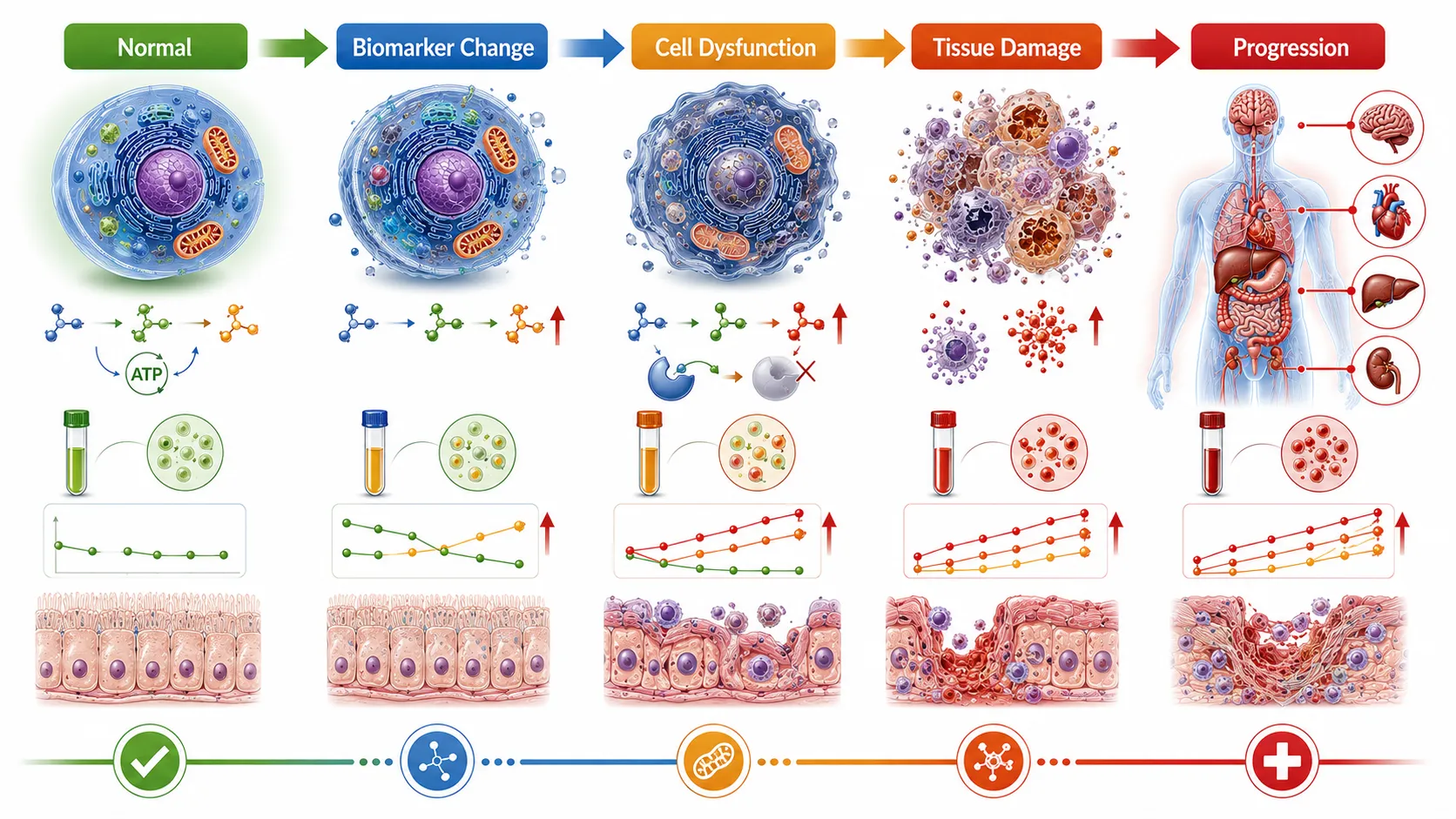
Key Concepts and Definitions
| Term | Definition | Importance in Tracking Disease Progression |
|---|---|---|
| Pathological data | Information obtained from laboratory tests, tissue analysis, cellular studies or clinical investigations | Provides evidence of biochemical and structural changes associated with disease |
| Biomarker | A measurable biological characteristic indicating a normal or pathological process | Helps identify nutritional status, metabolic dysfunction or tissue injury |
| Reference range | A range of values commonly observed in an appropriate reference population | Supports interpretation but does not independently establish health or disease |
| Disease progression | The sequence of biological changes through which a condition develops or worsens | Enables identification of early, intermediate and advanced pathological stages |
| Biochemical abnormality | A measurable disturbance in a metabolic substance, enzyme or molecular pathway | May occur before visible tissue damage develops |
| Cellular dysfunction | Impaired normal function of a cell due to molecular or metabolic disturbance | Connects biochemical abnormalities with tissue-level pathology |
| Tissue pathology | Structural or functional abnormalities within tissues | Indicates progression beyond isolated molecular disturbance |
| Longitudinal analysis | Assessment of measurements collected over time | Helps identify trends, progression, recovery or response to intervention |
| Confounding factor | A variable that influences interpretation and may create a misleading association | Must be considered when evaluating pathological data |
Understanding the Relationship Between Nutrition and Pathological Data
Nutrient-Related Disease as a Progressive Process
Nutrient-related diseases frequently develop gradually. During the early stages, the body may compensate for reduced nutrient availability or altered metabolism. Nutrient stores may decline before obvious clinical symptoms appear. As compensation becomes insufficient, measurable biochemical abnormalities may emerge.
A simplified progression can be represented as:
Altered nutrient intake or utilisation
→ Change in nutrient availability
→ Molecular or enzymatic dysfunction
→ Biochemical abnormality
→ Cellular adaptation or injury
→ Tissue dysfunction
→ Organ-level pathology
→ Systemic disease
This model is useful because it highlights that pathological evidence may appear at different stages of disease development.
Important principles include:
Biochemical abnormalities may precede clinical symptoms.
Cellular dysfunction may develop before structural tissue damage.
Different biomarkers may change at different rates.
Compensatory mechanisms may temporarily conceal disease.
A single test result may not accurately represent disease progression.
Trends over time are often more informative than isolated measurements.
The Importance of Data Integration
Complex pathological interpretation requires the integration of multiple forms of evidence. A biochemical result should not automatically be interpreted independently of the individual’s physiological and nutritional context.
Relevant information may include:
Dietary intake patterns.
Nutritional history.
Laboratory measurements.
Metabolic biomarkers.
Enzyme activity.
Inflammatory markers.
Tissue or cellular findings.
Clinical symptoms.
Physiological measurements.
Changes over time.
The strongest interpretation emerges when different sources of evidence support a consistent biological explanation.
Major Categories of Pathological Data
Biochemical Data
Biochemical data provide information about substances and reactions occurring within the body.
Examples may include measurements related to:
Nutrient concentrations.
Metabolic intermediates.
Blood glucose regulation.
Lipid metabolism.
Protein metabolism.
Enzyme activity.
Electrolyte balance.
Oxidative stress.
These measurements may indicate whether an underlying metabolic pathway is functioning normally.
Nutrient Status Biomarkers
Different biomarkers may provide information about different stages of nutrient status.
They can broadly indicate:
Recent intake.
Circulating availability.
Storage levels.
Functional adequacy.
Consequences of deficiency.
A low circulating concentration may suggest reduced availability, but interpretation may require consideration of transport proteins, inflammation and other physiological influences.
Functional Biomarkers
Functional biomarkers measure the consequences of altered nutrient availability rather than simply measuring the nutrient itself.
Examples may include:
Enzyme activity.
Accumulation of metabolic intermediates.
Altered product formation.
Changes in cellular function.
These measurements can be particularly valuable because they help connect nutritional status with biochemical function.
Cellular and Tissue Data
Cellular and tissue analysis may provide evidence of more advanced pathological change.
Potential findings include:
Changes in cell morphology.
Altered cellular organisation.
Signs of oxidative injury.
Abnormal cell proliferation.
Cellular degeneration.
Tissue inflammation.
Fibrosis or structural remodelling.
Such findings help establish the relationship between biochemical disturbance and physical pathology.
Establishing a Baseline for Disease Tracking
Why Baseline Data Matter
Accurate tracking requires a meaningful starting point. Without baseline information, it can be difficult to determine whether an abnormal result represents a recent change, a chronic condition or normal biological variation.
A baseline assessment may include:
Relevant nutrient biomarkers.
Metabolic measurements.
Clinical observations.
Dietary information.
Existing health conditions.
Medication use.
Previous laboratory results where available.
Interpreting Baseline Variation
Biological measurements naturally vary between individuals. Therefore, a result should not automatically be interpreted as pathological simply because it differs from a population average.
Important sources of variation include:
Age.
Sex.
Physiological state.
Time of sampling.
Recent food intake.
Hydration status.
Physical activity.
Acute illness.
Laboratory methodology.
A professional interpretation must distinguish normal biological variation from meaningful pathological change.
Tracking the Biochemical Stage of Disease
Identifying Early Molecular Disturbances
The earliest stage of nutrient-related disease may involve a reduction in the availability of a nutrient required for a specific biochemical process.
This may lead to:
Reduced cofactor availability.
Altered enzyme activity.
Slower metabolic reactions.
Accumulation of substrates.
Reduced production of essential molecules.
At this stage, structural tissue damage may not yet be detectable.
Recognising Metabolic Compensation
Cells and tissues can sometimes adapt to nutritional stress.
Possible compensatory responses include:
Mobilisation of nutrient stores.
Changes in enzyme expression.
Alteration of substrate utilisation.
Reduction in energy expenditure.
Increased nutrient absorption efficiency.
Compensation may maintain normal physiological function temporarily.
However, prolonged nutritional stress may eventually exceed the body’s adaptive capacity.
Detecting the Transition to Dysfunction
Disease progression becomes more significant when biochemical compensation begins to fail.
Possible indicators include:
Persistent biomarker abnormalities.
Progressive changes in metabolic intermediates.
Declining enzyme efficiency.
Increasing oxidative stress.
Evidence of impaired cellular function.
The interpretation of progression requires attention to both the direction and rate of change.
Understanding Cellular Responses to Nutritional Stress
Cellular Adaptation
Cells respond to changes in nutrient availability through regulatory mechanisms designed to maintain survival and function.
Adaptations may include:
Changes in gene expression.
Altered metabolic pathway activity.
Increased use of alternative substrates.
Changes in protein synthesis.
Modifications in cellular transport.
These adaptations may be beneficial initially.
Cellular Dysfunction
When nutrient deficiency or imbalance persists, adaptive mechanisms may become insufficient.
Potential consequences include:
Reduced ATP production.
Impaired protein synthesis.
Altered membrane function.
Reduced antioxidant protection.
Disrupted cellular signalling.
Impaired DNA synthesis.
The transition from adaptation to dysfunction is a key stage in pathological progression.
Cellular Injury
Persistent metabolic disturbance may cause direct molecular damage.
Important mechanisms can include:
Oxidative stress.
Mitochondrial dysfunction.
Protein damage.
Membrane lipid damage.
DNA instability.
Disrupted ion balance.
These mechanisms may eventually lead to cell death or irreversible tissue damage.
Interpreting Biomarker Trends Over Time
Why One Measurement Is Often Insufficient
A single abnormal laboratory result may have several possible explanations.
For example, it may reflect:
Temporary dietary variation.
Acute physiological stress.
Sampling variation.
Laboratory variation.
Chronic nutritional dysfunction.
Repeated measurements can help determine whether the change is persistent.
Longitudinal Trend Analysis
Longitudinal analysis involves examining how biomarkers change over time.
A systematic approach should consider:
The initial value.
The direction of change.
The rate of change.
The duration of abnormality.
The relationship with other biomarkers.
The presence of symptoms or tissue changes.
Important patterns include:
Stable abnormality.
Progressive deterioration.
Sudden deterioration.
Fluctuating values.
Gradual recovery.
Interpreting Patterns Rather Than Isolated Values
Suppose a nutrient-related biomarker gradually declines over several assessments while a functional metabolic marker progressively becomes abnormal.
This pattern may indicate:
Reduced nutrient availability
→ Functional biochemical impairment
→ Progressive cellular stress
The combined trend provides stronger evidence than either measurement alone.
Linking Biochemical Abnormalities to Cellular Pathology
The Cause-and-Effect Challenge
One of the most important challenges in pathological interpretation is determining whether a biochemical abnormality contributes to cellular pathology or simply occurs alongside it.
Critical questions include:
Does the nutrient normally participate in the affected pathway?
Does the biochemical abnormality occur before cellular injury?
Is the severity sufficient to affect function?
Are alternative explanations possible?
Do multiple findings support the same mechanism?
Building a Biological Sequence
A strong interpretation constructs a logical biological sequence.
For example:
Chronic inadequate nutrient availability
→ Reduced coenzyme activity
→ Impaired metabolic reaction
→ Accumulation of abnormal intermediates
→ Cellular stress
→ Functional impairment
Each step should be supported by relevant scientific evidence rather than assumed automatically.
Practical Example: Progression of a Deficiency-Related Disorder
Stage One: Reduced Availability
An individual experiences prolonged inadequate intake or impaired absorption of an essential micronutrient.
Possible findings:
Declining nutrient stores.
Initially normal physiological function.
Mild biochemical adaptation.
Stage Two: Functional Impairment
As availability continues to decline:
Nutrient-dependent enzymes may function less efficiently.
Metabolic intermediates may change.
Functional biomarkers may become abnormal.
At this stage, symptoms may still be limited.
Stage Three: Cellular Dysfunction
Persistent impairment may lead to:
Reduced energy production.
Altered cellular synthesis.
Increased oxidative stress.
Impaired cell maintenance.
Stage Four: Tissue and Systemic Disease
Eventually, the affected tissue may develop measurable dysfunction.
Possible outcomes include:
Reduced organ function.
Structural abnormalities.
Clinical symptoms.
Systemic physiological effects.
This staged model provides a practical framework for tracking disease progression.
Using Enzyme Data to Interpret Disease Progression
Enzymes as Indicators of Biochemical Function
Enzymes catalyse biochemical reactions and may serve as indicators of metabolic or tissue processes.
Changes in enzyme activity may result from:
Altered cofactor availability.
Nutritional deficiency.
Cellular adaptation.
Cellular injury.
Tissue damage.
Interpreting Enzyme Changes
An altered enzyme measurement should be interpreted carefully.
Consider:
Which tissue or pathway is involved?
Is the change increased or decreased?
Is the nutrient directly required for the enzyme?
Are other markers consistent with the proposed mechanism?
Is there evidence of tissue injury?
The Importance of Context
An enzyme abnormality alone does not necessarily identify a nutritional cause.
Professional interpretation requires integration with:
Nutrient biomarkers.
Metabolic findings.
Clinical history.
Dietary patterns.
Other pathological evidence.
Oxidative Stress and Nutrient-Related Pathology
Understanding Oxidative Imbalance
Oxidative stress develops when reactive molecular species exceed the capacity of protective systems.
Micronutrients can support antioxidant defence directly or indirectly.
Chronic deficiencies may therefore influence:
Enzymatic antioxidant systems.
Cellular repair mechanisms.
Membrane protection.
Tracking Oxidative Injury
A progression model may involve:
Reduced protective capacity
→ Increased reactive molecular activity
→ Molecular damage
→ Mitochondrial dysfunction
→ Cellular injury
Possible targets of damage include:
Lipids.
Proteins.
DNA.
Mitochondrial components.
Critical Interpretation
Oxidative stress is a complex process and should not be used as a universal explanation for disease.
A strong assessment considers:
The specific nutrient involved.
The affected antioxidant pathway.
Available biomarkers.
Alternative sources of oxidative stress.
Evidence of cellular damage.
Inflammation as a Confounding and Contributing Factor
The Relationship Between Nutrition and Inflammation
Inflammation can both influence nutritional status and complicate interpretation of nutritional biomarkers.
Inflammatory processes may:
Alter nutrient transport.
Affect circulating protein concentrations.
Change metabolic demand.
Influence nutrient storage.
Why This Matters for Pathological Interpretation
A reduced circulating nutrient concentration may sometimes reflect altered distribution rather than simple dietary deficiency.
Therefore, interpretation may require:
Relevant inflammatory markers.
Clinical evidence of inflammation.
Repeated measurements.
Functional indicators.
This prevents overly simplistic conclusions.
A Systematic Procedure for Interpreting Complex Pathological Data
Step 1: Define the Clinical or Nutritional Question
Begin by identifying what is being investigated.
Examples include:
Is there evidence of chronic deficiency?
Has biochemical dysfunction developed?
Is cellular injury progressing?
Is the condition improving or worsening?
A clear question guides data selection.
Step 2: Identify Relevant Biomarkers
Select measurements related to:
Nutrient availability.
Nutrient storage.
Functional biochemical activity.
Cellular injury.
Tissue dysfunction.
Avoid relying exclusively on unrelated laboratory values.
Step 3: Establish Biological Relationships
For each biomarker, determine:
What does it measure?
Which pathway does it represent?
How might nutritional status influence it?
What other factors may affect it?
Step 4: Compare Findings Over Time
Assess:
Baseline values.
Current values.
Direction of change.
Speed of progression.
Relationship between different markers.
Step 5: Identify the Stage of Pathology
The condition may represent:
Early biochemical alteration.
Functional cellular dysfunction.
Established tissue pathology.
Advanced systemic disease.
Step 6: Evaluate Alternative Explanations
Consider possible confounding factors such as:
Acute illness.
Medication effects.
Inflammation.
Organ dysfunction.
Hydration changes.
Laboratory variation.
Step 7: Form a Scientifically Reasoned Interpretation
The final interpretation should connect the data logically.
A strong conclusion explains:
What has changed.
Which biochemical pathway is affected.
What the cellular consequences may be.
Whether evidence suggests progression.
What uncertainty remains.
Integrating Dietary Data with Pathological Findings
The Importance of Dietary History
Pathological data can become more meaningful when combined with information about dietary intake.
A dietary assessment may identify:
Low nutrient diversity.
Prolonged restrictive eating patterns.
Inadequate consumption of nutrient-rich foods.
Excessive intake of competing substances.
Irregular meal patterns.
However, dietary intake alone does not confirm biochemical deficiency.
Combining Evidence
The strongest interpretation may involve:
Dietary pattern
Nutrient biomarker
Functional biomarker
Cellular evidence
Longitudinal trend
When these findings are biologically consistent, confidence in the interpretation increases.
Scenario-Based Example: Progressive Nutrient Dysfunction
Initial Presentation
A hypothetical individual has a prolonged dietary pattern associated with inadequate intake of a key micronutrient.
Early assessment shows:
Reduced indicators of nutrient availability.
No major structural tissue abnormality.
Mild changes in a nutrient-dependent biochemical process.
Follow-Up Assessment
Several months later, data demonstrate:
Further deterioration in nutrient status.
Increased functional biochemical abnormalities.
Emerging evidence of reduced cellular efficiency.
Advanced Stage
Without correction of the underlying problem, the individual may later demonstrate:
Persistent biochemical dysfunction.
Evidence of tissue impairment.
Clinical manifestations.
Interpretation
The pattern supports a progression from:
Nutritional inadequacy
→ Biochemical disturbance
→ Cellular dysfunction
→ Tissue pathology
The key lesson is that disease tracking depends on recognising the sequence and relationship between different findings.
Advanced Interpretation of Multi-System Data
Recognising Interconnected Pathways
Nutrient-related diseases may affect multiple metabolic systems simultaneously.
For example, chronic deficiency may influence:
Energy metabolism.
Oxidative balance.
Immune regulation.
Tissue repair.
Cellular replication.
A single abnormality may therefore have consequences across several tissues.
Identifying Primary and Secondary Effects
It is important to distinguish:
Primary Effects
These occur directly because a nutrient-dependent pathway is disrupted.
Examples include:
Reduced coenzyme activity.
Reduced mineral-dependent enzyme function.
Impaired synthesis of a nutrient-dependent molecule.
Secondary Effects
These develop as a consequence of the initial disturbance.
Examples include:
Oxidative stress.
Altered cellular signalling.
Tissue inflammation.
Organ dysfunction.
This distinction improves the quality of pathological interpretation.
Common Challenges in Interpreting Pathological Data
Overreliance on Reference Ranges
A value within a reference range does not always indicate optimal functional status, while a value slightly outside the range does not automatically confirm disease.
Interpretation should consider:
Trends.
Symptoms.
Related biomarkers.
Biological context.
Confusing Association with Causation
Two abnormalities may occur together without one directly causing the other.
Critical analysis should ask:
Is there a known biochemical mechanism?
Is the sequence biologically plausible?
Does the evidence support causation?
Ignoring Time
Disease progression cannot always be understood from a single measurement.
Longitudinal analysis is particularly important when evaluating chronic nutritional conditions.
Ignoring Multiple Deficiencies
Nutritional disorders may involve several deficiencies simultaneously.
This can create:
Overlapping symptoms.
Multiple biochemical abnormalities.
Complex cellular responses.
A comprehensive assessment should avoid assuming that one nutrient explains every finding.
Practical Applications in Nutritional and Scientific Practice
The ability to interpret complex pathological data is valuable in several professional contexts.
Applications include:
Nutritional assessment.
Clinical research.
Public health investigations.
Laboratory interpretation.
Metabolic research.
Disease monitoring.
Evaluation of nutritional interventions.
Learners should understand how scientific data can support evidence-based conclusions without exceeding appropriate professional or clinical boundaries.
Key Benefits of Accurate Pathological Interpretation
Developing advanced skills in data interpretation enables Learners to:
Identify early biochemical disturbances.
Track disease progression more accurately.
Connect molecular mechanisms with cellular outcomes.
Recognise compensatory responses.
Distinguish temporary variation from persistent dysfunction.
Interpret multiple biomarkers together.
Evaluate the effectiveness of nutritional interventions.
Apply critical thinking to complex scientific cases.
Professional Judgement and Evidence-Based Interpretation
The Importance of Uncertainty
Pathological data are not always definitive. A responsible interpretation acknowledges uncertainty.
Appropriate professional questions include:
Is the evidence sufficient?
Are repeated measurements available?
Are alternative explanations possible?
Do the findings form a consistent pattern?
Avoiding Overdiagnosis
Abnormal biochemical results should not automatically be treated as proof of a specific disease.
A strong scientific approach:
Uses multiple sources of evidence.
Recognises biological variation.
Considers confounding factors.
Identifies limitations.
Avoids unsupported conclusions.
Applying a Hierarchy of Evidence
When interpreting nutrient-related pathology, evidence may be strengthened when findings are supported by:
Biological mechanisms.
Laboratory measurements.
Functional evidence.
Cellular findings.
Repeated observations.
High-quality scientific research.
Summary
Accurately tracking the progression of a nutrient-related disease requires the interpretation of complex pathological data across biochemical, cellular and tissue levels. Nutritional disorders often develop gradually, beginning with altered nutrient availability and progressing through molecular dysfunction, metabolic abnormalities, cellular stress and, eventually, systemic pathology.
The most effective approach is to integrate multiple forms of evidence rather than relying on a single laboratory measurement. Nutrient concentrations, functional biomarkers, enzyme activity, cellular findings, dietary information and longitudinal trends should be interpreted together within an appropriate biological context.
A systematic approach involves:
Establishing a meaningful baseline.
Identifying relevant nutrient and metabolic biomarkers.
Understanding the biochemical pathways involved.
Tracking changes over time.
Recognising cellular adaptation and dysfunction.
Linking biochemical abnormalities to tissue pathology.
Considering confounding variables.
Evaluating alternative explanations.
The central principle is that pathological progression follows a biological sequence. Nutrient-related disease can often be understood through the pathway:
Altered nutrient status
→ Molecular disruption
→ Biochemical dysfunction
→ Cellular adaptation or injury
→ Tissue pathology
→ Organ dysfunction
→ Systemic disease
By mastering the interpretation of complex pathological data, Learners can develop advanced analytical skills for evaluating how nutritional disturbances progress from molecular abnormalities to clinically significant cellular and systemic disease.
4.Investigate the Biochemical Mechanisms by Which Specific Dietary Excesses or Toxins Contribute to Cellular Damage and Chronic Disease Pathology
Diet and environmental exposure can influence human health not only through nutrient deficiencies but also through excessive intake of particular dietary components and exposure to toxic substances. When consumed or accumulated beyond the body’s capacity to metabolise, store, eliminate or neutralise them safely, certain substances can disrupt normal biochemical processes. These disturbances may contribute to oxidative stress, inflammation, mitochondrial dysfunction, altered cellular signalling, DNA damage and progressive tissue injury.
The development of chronic disease associated with dietary excess or toxic exposure is typically a gradual process. Cells possess protective systems that regulate nutrient concentrations, detoxify potentially harmful compounds, repair molecular damage and maintain metabolic homeostasis. However, persistent exposure can overwhelm these protective mechanisms. The result may be repeated cellular stress and cumulative molecular injury.
Understanding these mechanisms requires more than identifying a substance as “harmful”. A critical scientific investigation examines how exposure occurs, how the substance is absorbed and metabolised, which molecular targets are affected, what protective mechanisms respond and how repeated damage can contribute to chronic pathology.
This section investigates the biochemical mechanisms through which selected dietary excesses and toxins may contribute to cellular injury and chronic disease. It emphasises dose, duration, individual susceptibility, metabolic context and the distinction between normal physiological exposure and sustained excessive exposure.
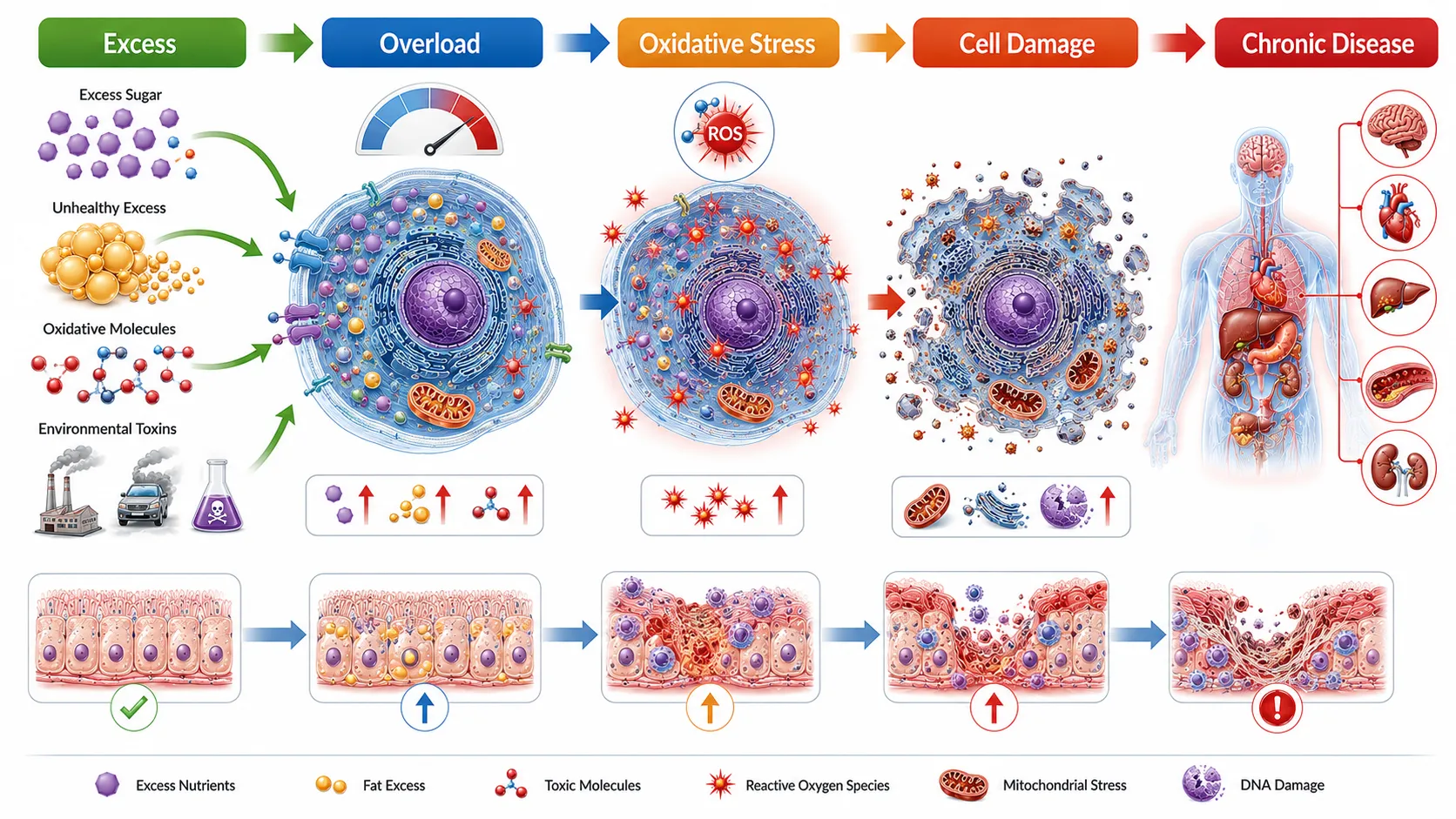
Key Concepts and Definitions
| Term | Definition | Relevance to Cellular Damage |
|---|---|---|
| Dietary excess | Consumption of a nutrient or dietary component beyond physiological requirements or adaptive capacity | May disrupt metabolic regulation and promote molecular stress |
| Toxin | A substance capable of causing biological harm at a sufficient exposure level | Can interfere with cellular structure or biochemical function |
| Oxidative stress | An imbalance in which reactive molecular species exceed cellular protective capacity | Can damage lipids, proteins, DNA and organelles |
| Mitochondrial dysfunction | Impairment of normal mitochondrial energy and regulatory functions | Can reduce ATP production and increase cellular stress |
| Lipotoxicity | Cellular dysfunction caused by excessive or abnormal accumulation of lipid-derived molecules | Can promote inflammation, organelle stress and cell injury |
| Glucotoxicity | Cellular damage associated with prolonged exposure to elevated glucose availability | Can alter proteins, signalling pathways and oxidative balance |
| Inflammation | A coordinated biological response to injury or stress | Persistent activation can contribute to chronic tissue damage |
| Detoxification | Biological processes that modify and eliminate potentially harmful substances | Reduces exposure to reactive compounds |
| Bioaccumulation | Progressive accumulation of a substance within tissues over time | May increase chronic toxic effects |
Understanding the Relationship Between Exposure and Cellular Injury
The Principle of Dose and Duration
A fundamental principle of toxicology and nutritional biochemistry is that biological effects depend on exposure. The same substance may have different effects depending on its concentration, frequency and duration of exposure.
Cells can tolerate many physiological challenges when exposure is:
Limited in duration.
Within normal metabolic capacity.
Balanced by effective repair mechanisms.
Accompanied by adequate antioxidant and nutritional support.
Risk may increase when exposure becomes:
Excessive.
Repeated.
Chronic.
Combined with other metabolic stressors.
Difficult to metabolise or eliminate.
Therefore, the presence of a dietary component alone does not automatically establish harm. Scientific investigation must consider the amount consumed and the biological context.
The General Pathway from Excess Exposure to Disease
Although individual substances act through different mechanisms, a common pathological sequence can be identified:
Excessive intake or toxic exposure
→ Absorption and distribution
→ Metabolic processing
→ Cellular stress
→ Molecular damage
→ Inflammatory or adaptive response
→ Persistent dysfunction
→ Tissue injury
→ Chronic disease pathology
This sequence provides a framework for evaluating how a biochemical disturbance can progress into long-term disease.
Excess Energy Intake and Metabolic Overload
When Energy Supply Exceeds Metabolic Demand
The body normally regulates the use and storage of energy obtained from carbohydrates, proteins and lipids. When energy intake consistently exceeds expenditure, excess substrates may be stored or redirected through metabolic pathways.
Initially, energy storage represents a normal physiological adaptation. However, prolonged metabolic overload can contribute to changes in cellular metabolism and tissue function.
Potential consequences include:
Increased substrate availability.
Greater lipid storage.
Altered hormonal signalling.
Increased metabolic demand.
Changes in mitochondrial activity.
Development of metabolic stress.
Cellular Consequences of Persistent Energy Excess
Persistent energy availability may require cells to continuously process large quantities of metabolic substrates.
Possible effects include:
Increased formation of reactive metabolic intermediates.
Altered redox balance.
Increased lipid synthesis.
Accumulation of intracellular lipids.
Stress within cellular organelles.
The specific outcome depends on the tissue involved and the individual’s overall metabolic condition.
Chronic Excess Glucose and Glucotoxicity
Understanding Glucotoxicity
Glucose is an essential metabolic fuel. However, prolonged excessive glucose exposure can alter cellular biochemistry and contribute to metabolic dysfunction.
Chronic elevation of glucose availability may influence:
Oxidation–reduction reactions.
Protein modification.
Mitochondrial activity.
Cellular signalling.
Oxidative stress.
Non-Enzymatic Molecular Modification
When glucose or related reactive molecules are persistently elevated, they may participate in non-enzymatic reactions with proteins and other biological molecules.
Over time, altered molecules may affect:
Protein structure.
Cellular signalling.
Tissue elasticity.
Molecular recognition.
Persistent molecular modification may contribute to progressive cellular and tissue dysfunction.
Biochemical Consequences of Chronic Glucose Excess
Potential consequences include:
Increased production of reactive molecular species.
Altered enzyme function.
Disrupted cellular signalling.
Changes in membrane function.
Increased cellular stress.
These processes can interact and amplify one another.
Progression to Chronic Pathology
A simplified pathway is:
Persistent glucose excess
→ Altered cellular metabolism
→ Increased molecular stress
→ Protein and cellular modification
→ Tissue dysfunction
→ Chronic disease complications
This demonstrates how a normal nutrient can become associated with pathological mechanisms when metabolic regulation is persistently disrupted.
Excess Dietary Lipids and Lipotoxicity
The Normal Role of Lipids
Lipids provide:
Energy storage.
Structural membrane components.
Signalling molecules.
Precursors for biologically active compounds.
However, excessive delivery of certain lipid-derived substrates to tissues can exceed their capacity for safe storage and oxidation.
Ectopic Lipid Accumulation
When lipid storage capacity in specialised tissues becomes limited, lipids or lipid-derived intermediates may accumulate in tissues not primarily designed for large-scale storage.
Potential sites include:
Liver.
Skeletal muscle.
Cardiac tissue.
The accumulation of specific lipid-derived molecules may interfere with normal cellular processes.
Mechanisms of Lipotoxicity
Potential biochemical mechanisms include:
Mitochondrial overload.
Altered membrane composition.
Endoplasmic reticulum stress.
Increased oxidative stress.
Disrupted insulin signalling.
Inflammatory activation.
The Difference Between Lipid Storage and Lipotoxicity
It is important not to assume that all lipid accumulation is equally harmful.
Critical evaluation should consider:
The type of lipid.
The cellular location.
The concentration.
The duration of accumulation.
The presence of harmful lipid intermediates.
This distinction is essential for accurate biochemical interpretation.
Saturated Fat, Lipid Signalling and Inflammation
Dietary Fat Quality and Cellular Responses
Different dietary fatty acids can be metabolised differently and may influence membrane composition and signalling pathways.
Certain patterns of prolonged dietary excess may contribute to metabolic stress when combined with overall energy imbalance and other risk factors.
Possible processes include:
Changes in membrane lipid composition.
Altered signalling molecule production.
Increased formation of specific lipid intermediates.
Activation of inflammatory pathways.
Inflammatory Signalling
Persistent metabolic stress may activate cellular pathways associated with inflammation.
Chronic inflammation can:
Alter insulin responsiveness.
Increase oxidative stress.
Affect tissue repair.
Contribute to progressive organ dysfunction.
The interaction between metabolism and inflammation is therefore an important component of chronic disease pathology.
Excessive Fructose Exposure and Hepatic Metabolism
Fructose Processing
Fructose is metabolised differently from glucose in several biochemical contexts, with significant processing occurring in the liver.
Excessive intake from highly concentrated dietary sources may increase the metabolic burden on hepatic pathways.
Potential outcomes may include:
Increased substrate flow into lipid-related pathways.
Altered energy metabolism.
Increased production of lipid intermediates.
Changes in hepatic fat storage.
Hepatic Metabolic Stress
When substrate processing exceeds normal regulatory capacity, the liver may experience increased metabolic demand.
Possible consequences include:
Increased lipid synthesis.
Accumulation of intracellular fat.
Oxidative stress.
Altered mitochondrial function.
Long-term effects depend on the overall dietary pattern, energy balance and individual metabolic susceptibility.
Excess Protein and Nitrogen Metabolism
Protein Metabolism and Nitrogen Handling
Dietary proteins are essential for tissue maintenance, enzyme synthesis and numerous physiological functions. Excess amino acid intake cannot generally be stored as a specialised protein reserve for future energy needs.
Amino acids may therefore undergo:
Protein synthesis.
Conversion into metabolic intermediates.
Deamination.
Nitrogen processing.
Biochemical Demands of Excess Nitrogen
Increased amino acid breakdown produces nitrogen-containing compounds that require safe processing and elimination.
The body uses specialised pathways to manage nitrogen metabolism.
Potential considerations include:
Increased metabolic processing requirements.
Altered substrate availability.
Increased demand on nitrogen disposal mechanisms.
The physiological significance depends on total intake, individual health status and the function of relevant organs.
Excess Sodium and Cellular Physiology
Sodium as an Essential Electrolyte
Sodium is essential for:
Fluid balance.
Nerve signalling.
Muscle function.
Membrane transport.
However, persistent excessive intake may influence physiological regulatory systems involved in fluid and vascular homeostasis.
Cellular and Systemic Effects
Changes in sodium handling can influence:
Extracellular fluid volume.
Vascular regulation.
Hormonal responses.
Renal workload.
Although many consequences occur at systemic levels, altered electrolyte regulation can influence cellular function and signalling.
Alcohol as a Dietary and Metabolic Toxin
Metabolic Processing of Alcohol
Alcohol is metabolised through enzyme-mediated pathways that can produce reactive intermediates.
These processes may:
Alter cellular redox balance.
Increase oxidative stress.
Generate reactive metabolites.
Influence lipid metabolism.
Reactive Metabolites and Cellular Injury
Certain metabolic intermediates can interact with proteins, lipids and other cellular components.
Potential consequences include:
Protein modification.
Membrane damage.
Mitochondrial dysfunction.
Impaired cellular repair.
Chronic Exposure and Tissue Pathology
Repeated exposure may contribute to progressive tissue injury through combined mechanisms involving:
Oxidative stress.
Inflammation.
Metabolic disruption.
Molecular modification.
The liver is particularly relevant because of its major role in alcohol metabolism, although systemic effects may also occur.
Dietary Toxins and Food-Related Chemical Exposure
Naturally Occurring and Environmentally Derived Toxins
Food may contain substances that can become harmful depending on exposure.
Potential sources include:
Naturally occurring plant compounds.
Contaminants.
Environmental pollutants.
Improperly stored food products.
Industrial contaminants.
The biological effect depends on the specific compound and exposure level.
General Mechanisms of Toxic Cellular Injury
Toxic compounds may cause injury through:
Direct interaction with proteins.
Enzyme inhibition.
DNA damage.
Mitochondrial disruption.
Oxidative stress.
Altered membrane function.
Different toxins may affect different cellular targets.
Heavy Metals and Cellular Toxicity
General Mechanisms
Certain heavy metals can interfere with essential biochemical processes.
Potential mechanisms include:
Binding to functional protein groups.
Interfering with enzyme activity.
Displacing essential minerals.
Increasing oxidative stress.
Affecting mitochondrial function.
Cellular Consequences
Long-term exposure may contribute to:
Impaired enzyme function.
Altered energy metabolism.
Molecular damage.
Disrupted cellular signalling.
The severity depends on the substance, exposure pathway and duration.
Bioaccumulation
Some toxic substances may accumulate in tissues over time.
This can create a progression:
Repeated exposure
→ Incomplete elimination
→ Tissue accumulation
→ Increasing cellular exposure
→ Chronic molecular stress
This explains why chronic low-level exposure may require a different assessment from a single acute exposure.
Oxidative Stress as a Central Mechanism of Cellular Damage
Production of Reactive Molecular Species
Normal cellular metabolism generates reactive molecular species. Under normal conditions, antioxidant and repair systems help maintain balance.
Excess dietary substrates or toxic exposures may increase reactive species production.
Potential sources include:
Mitochondrial metabolism.
Toxic substance metabolism.
Inflammatory processes.
Excess substrate oxidation.
Molecular Targets of Oxidative Damage
Persistent oxidative stress may damage:
Membrane lipids.
Structural proteins.
Enzymes.
DNA.
Mitochondrial components.
Lipid Peroxidation
Membrane lipids can be particularly vulnerable to oxidative damage.
Potential consequences include:
Reduced membrane stability.
Altered transport processes.
Disrupted receptor function.
Increased cellular permeability.
If oxidative damage persists, cellular survival may be compromised.
Mitochondrial Dysfunction and Chronic Disease
The Role of Mitochondria
Mitochondria contribute to:
ATP production.
Metabolic substrate processing.
Cellular signalling.
Regulation of cell survival.
They are therefore highly sensitive to metabolic overload and toxic injury.
Mechanisms of Dysfunction
Potential causes include:
Excess substrate supply.
Reactive molecular species.
Toxic metabolites.
Damage to mitochondrial components.
Altered membrane function.
Consequences of Mitochondrial Damage
Mitochondrial dysfunction may lead to:
Reduced ATP production.
Increased oxidative stress.
Altered metabolic flexibility.
Disrupted cellular signalling.
This creates a potential cycle:
Metabolic overload
→ Mitochondrial stress
→ Reduced metabolic efficiency
→ Increased reactive species
→ Further mitochondrial injury
Endoplasmic Reticulum Stress and Nutritional Overload
The Role of the Endoplasmic Reticulum
The endoplasmic reticulum contributes to:
Protein synthesis and processing.
Lipid metabolism.
Cellular quality control.
How Metabolic Excess Can Create Stress
Persistent metabolic overload may disrupt the ability of the endoplasmic reticulum to process proteins and maintain normal internal conditions.
Potential consequences include:
Accumulation of improperly processed proteins.
Activation of cellular stress responses.
Altered lipid metabolism.
Inflammatory signalling.
From Adaptive Response to Pathology
Initially, cellular stress responses may protect the cell.
However, prolonged stress may lead to:
Reduced cellular function.
Persistent inflammatory activation.
Increased susceptibility to cell injury.
Inflammation and Chronic Disease Pathology
Acute Versus Chronic Inflammation
Inflammation is a protective response to injury. Short-term inflammation may support repair.
Chronic inflammation, however, can contribute to ongoing tissue damage.
Persistent dietary excess or toxic exposure may create repeated cellular stress that maintains inflammatory signalling.
Biochemical Consequences
Chronic inflammatory activity may influence:
Insulin signalling.
Lipid metabolism.
Oxidative balance.
Cellular repair.
Tissue remodelling.
A Self-Reinforcing Cycle
A chronic pathological cycle may develop:
Dietary excess or toxin exposure
→ Cellular stress
→ Inflammatory activation
→ Further metabolic dysfunction
→ Increased cellular injury
Breaking this cycle requires addressing the underlying exposure and metabolic context.
DNA Damage and Altered Cellular Regulation
Molecular Damage to Genetic Material
Certain toxic exposures and excessive oxidative stress can affect DNA.
Potential outcomes include:
Molecular lesions.
Impaired replication.
Altered gene expression.
Activation of repair mechanisms.
Cells possess multiple repair systems, but persistent damage can exceed repair capacity.
Implications for Chronic Pathology
Long-term molecular injury may contribute to:
Cellular dysfunction.
Abnormal cell behaviour.
Impaired tissue maintenance.
The biological outcome depends on the affected cells and the effectiveness of protective and repair systems.
A Systematic Procedure for Investigating Dietary Excess and Toxicity
Step 1: Identify the Exposure
Determine:
The substance involved.
The likely source.
The amount and frequency.
The duration of exposure.
Step 2: Assess Absorption and Distribution
Investigate:
How the substance enters the body.
Which tissues receive exposure.
Whether it accumulates.
Step 3: Examine Metabolic Processing
Consider:
Which enzymes metabolise the substance.
Whether reactive intermediates are produced.
Whether detoxification pathways are involved.
Step 4: Identify Molecular Targets
Potential targets include:
Enzymes.
Membranes.
Mitochondria.
DNA.
Structural proteins.
Step 5: Evaluate Cellular Responses
Look for evidence of:
Oxidative stress.
Inflammation.
Altered metabolism.
Organelle dysfunction.
Impaired cellular signalling.
Step 6: Connect Cellular Injury with Tissue Pathology
Determine whether persistent cellular changes contribute to:
Tissue dysfunction.
Structural damage.
Organ impairment.
Chronic disease progression.
Step 7: Consider Alternative Explanations
A robust scientific investigation should also consider:
Other dietary factors.
Existing health conditions.
Genetic susceptibility.
Environmental exposure.
Medication use.
Practical Examples of Exposure-Related Cellular Damage
Example 1: Chronic Energy Surplus
A person consistently consumes more energy than is required for prolonged periods.
Possible biochemical progression:
Increased nutrient availability.
Increased energy storage.
Metabolic overload in susceptible tissues.
Accumulation of lipid-derived intermediates.
Cellular stress and altered signalling.
The final outcome depends on multiple factors, including physical activity and metabolic health.
Example 2: Persistent Elevated Glucose Exposure
An individual experiences long-term disruption of glucose regulation.
Possible progression:
Persistent high cellular glucose exposure.
Altered metabolic processing.
Increased reactive molecular species.
Molecular modification.
Cellular and tissue dysfunction.
Example 3: Chronic Toxic Exposure
A person experiences repeated exposure to a toxic contaminant.
Potential progression:
Absorption.
Partial detoxification.
Incomplete elimination.
Tissue accumulation.
Progressive cellular injury.
This illustrates the importance of duration and bioaccumulation.
Key Benefits of Understanding These Mechanisms
Understanding how dietary excesses and toxins contribute to disease provides several important benefits.
Learners can develop the ability to:
Connect dietary exposure with biochemical mechanisms.
Identify major pathways of cellular injury.
Understand the role of oxidative stress.
Analyse mitochondrial and organelle dysfunction.
Evaluate the progression from molecular damage to chronic disease.
Interpret complex evidence critically.
Distinguish physiological exposure from chronic excessive exposure.
Apply biochemical reasoning to nutritional case studies.
Critical Considerations in Interpreting Dietary Toxicity
Avoiding Simplistic Cause-and-Effect Claims
Chronic disease is often multifactorial. A dietary component may contribute to risk without acting as the sole cause.
Critical analysis should consider:
Dose.
Duration.
Overall dietary pattern.
Individual susceptibility.
Coexisting exposures.
Metabolic health.
The Importance of Individual Variation
Individuals may respond differently to the same exposure because of variations in:
Genetic characteristics.
Metabolic enzyme activity.
Age.
Nutritional status.
Organ function.
Environmental conditions.
Therefore, population-level findings should not automatically be applied identically to every individual.
Protective and Adaptive Mechanisms
The body possesses protective systems, including:
Detoxification pathways.
Antioxidant defences.
DNA repair systems.
Cellular stress responses.
Nutrient storage mechanisms.
Disease may develop when exposure overwhelms these systems or when exposure persists for long periods.
Summary
Specific dietary excesses and toxins can contribute to cellular damage and chronic disease pathology through interconnected biochemical mechanisms. The development of disease often begins when excessive substrate availability or toxic exposure exceeds the body’s ability to regulate, metabolise, detoxify or repair the resulting molecular disturbances.
Major mechanisms include:
Metabolic overload.
Glucotoxicity.
Lipotoxicity.
Oxidative stress.
Mitochondrial dysfunction.
Endoplasmic reticulum stress.
Chronic inflammation.
Protein and molecular modification.
DNA damage.
Disruption of cellular signalling.
A systematic investigation follows the sequence:
Exposure
→ Absorption and distribution
→ Metabolic processing
→ Molecular interaction
→ Cellular stress
→ Organelle dysfunction
→ Tissue injury
→ Chronic disease pathology
Understanding this progression enables Learners to investigate complex nutrient-related diseases using a biochemical and cellular framework. It also supports critical evaluation by emphasising that dose, duration, individual susceptibility and overall metabolic context determine whether an exposure is likely to contribute to pathology.
The ability to link dietary excesses and toxic exposures with specific molecular mechanisms is essential for advanced nutritional biochemistry and for evaluating how long-term biochemical disturbances can progress into chronic cellular and systemic disease.
5.Critically Discuss the Role of Oxidative Stress and Systemic Inflammation as Primary Biochemical Mediators in Diet-Related Chronic Conditions
Diet-related chronic conditions develop through complex interactions between nutritional exposure, metabolism, cellular signalling, genetic susceptibility and environmental influences. Two of the most important biochemical processes involved in this progression are oxidative stress and systemic inflammation. These processes are closely interconnected and can act as major mediators between prolonged dietary imbalance and the development of cellular, tissue and systemic dysfunction.
Oxidative stress occurs when the production of reactive molecular species exceeds the capacity of antioxidant and protective systems to neutralise or control them. Systemic inflammation refers to a persistent or widespread inflammatory state involving signalling molecules, immune cells and multiple tissues. Both processes are normal components of human physiology when appropriately regulated. However, prolonged activation may contribute to chronic metabolic disturbances and tissue injury.
Dietary patterns characterised by persistent energy excess, poor nutrient quality, inadequate intake of protective nutrients or excessive exposure to certain harmful compounds may increase metabolic stress. Over time, these exposures can influence mitochondrial activity, immune signalling, lipid metabolism and cellular repair mechanisms. Oxidative stress and inflammation can therefore provide a biochemical link between diet and the pathological processes observed in several chronic conditions.
A critical discussion requires recognition that oxidative stress and inflammation are rarely isolated causes. They interact with other mechanisms, including insulin resistance, mitochondrial dysfunction, altered gut-derived signalling, abnormal lipid accumulation and hormonal dysregulation. Their importance lies in their ability to amplify cellular injury and maintain self-reinforcing cycles of metabolic dysfunction.
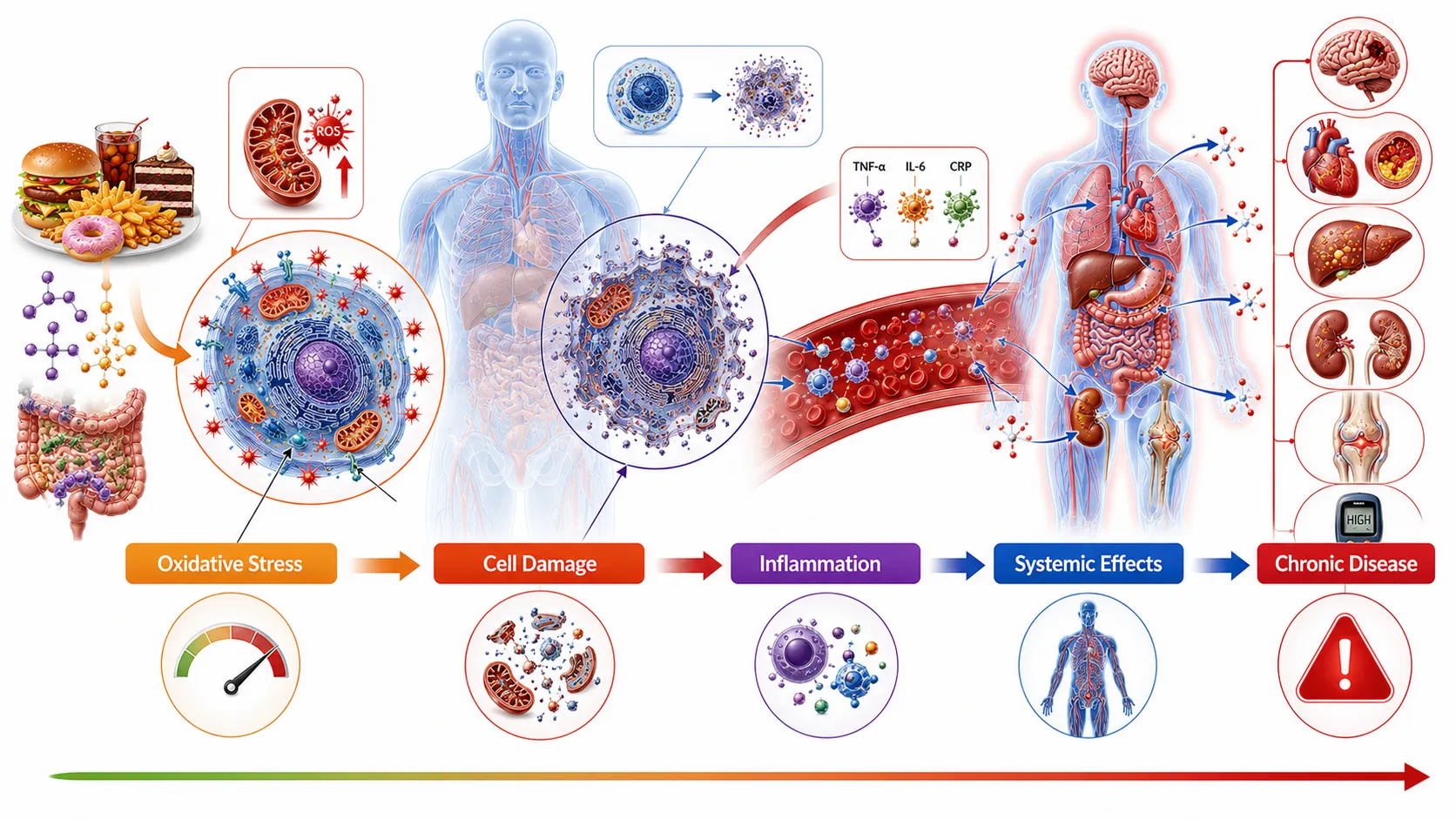
Key Concepts and Definitions
| Term | Definition | Importance in Diet-Related Chronic Conditions |
|---|---|---|
| Oxidative stress | A state in which reactive molecular species exceed the capacity of antioxidant and protective systems | Can damage lipids, proteins, DNA and cellular organelles |
| Reactive oxygen species (ROS) | Reactive oxygen-containing molecules produced during metabolism and other cellular processes | Act in normal signalling but may cause damage when excessively produced |
| Antioxidant defence | Enzymatic and non-enzymatic systems that limit oxidative molecular damage | Helps maintain cellular redox balance |
| Systemic inflammation | Persistent inflammatory activity affecting multiple tissues or the whole body | Can alter metabolism and contribute to chronic tissue dysfunction |
| Cytokines | Signalling proteins involved in immune and inflammatory communication | Can influence insulin signalling and metabolic regulation |
| Redox balance | The regulated relationship between oxidising and reducing processes within cells | Essential for normal metabolism and signalling |
| Mitochondrial dysfunction | Impairment of normal mitochondrial energy and regulatory functions | Can increase oxidative stress and reduce metabolic efficiency |
| Lipid peroxidation | Oxidative damage to membrane and other lipids | Can impair membrane integrity and generate reactive products |
| Chronic low-grade inflammation | Persistent, relatively moderate inflammatory activity | Commonly associated with long-term metabolic dysfunction |
Understanding Oxidative Stress in Human Metabolism
Reactive Molecules Are Not Always Harmful
Reactive oxygen species are often described only as harmful molecules, but this is an oversimplification. At controlled concentrations, reactive molecules participate in normal physiological processes.
They can contribute to:
Cellular signalling.
Regulation of gene expression.
Immune defence.
Adaptation to physical activity.
Communication between metabolic pathways.
The problem arises when production becomes excessive or when antioxidant and repair systems are insufficient to maintain balance.
Therefore, oxidative stress should be understood as a disruption of redox regulation rather than simply the presence of reactive molecules.
Major Sources of Reactive Molecular Species
Reactive molecular species can originate from several cellular processes.
Important sources include:
Mitochondrial energy metabolism.
Inflammatory immune responses.
Enzyme-mediated oxidation reactions.
Metabolism of certain toxic substances.
Excessive nutrient oxidation.
Cellular stress responses.
The contribution of each source may vary according to nutritional status, tissue type and physiological condition.
Mitochondria and Oxidative Stress
Mitochondria as a Major Metabolic Centre
Mitochondria play a central role in the conversion of nutrients into usable cellular energy. During normal energy metabolism, electrons are transferred through specialised biochemical systems to support ATP production.
A small proportion of reactive molecules may be produced during these processes. Under healthy conditions, cellular antioxidant systems help control these molecules.
Metabolic Overload and Increased Reactive Species
Persistent nutrient excess can increase the metabolic workload placed on mitochondria. Large quantities of carbohydrates and lipids may increase substrate availability and alter electron flow.
Potential consequences include:
Increased production of reactive molecular species.
Disturbed redox balance.
Damage to mitochondrial components.
Reduced metabolic flexibility.
Impaired ATP production.
This creates the possibility of a self-reinforcing cycle in which mitochondrial stress increases oxidative damage, which can then further impair mitochondrial function.
The Mitochondrial Stress Cycle
A simplified progression can be represented as:
Excess nutrient supply
→ Increased metabolic processing
→ Increased mitochondrial stress
→ Increased reactive molecular species
→ Molecular damage
→ Reduced mitochondrial efficiency
→ Further metabolic stress
This cycle helps explain how prolonged dietary imbalance may contribute to progressive cellular dysfunction.
Antioxidant Defence Systems
Endogenous Antioxidant Protection
The body possesses multiple protective mechanisms against excessive oxidative activity.
Important endogenous systems include:
Superoxide dismutase.
Catalase.
Glutathione-related systems.
Peroxidase enzymes.
Cellular repair pathways.
These systems work together rather than functioning as isolated protective mechanisms.
Dietary Contributions to Antioxidant Capacity
Nutrition provides compounds required for normal antioxidant and repair processes. Adequate dietary quality supports the availability of essential nutrients involved in enzyme activity and cellular protection.
Relevant dietary factors may include:
Vitamins with antioxidant-related functions.
Minerals required for enzyme activity.
Plant-derived bioactive compounds.
Adequate protein for synthesis of protective molecules.
However, antioxidant biology is complex. Simply consuming increasingly large quantities of isolated antioxidant compounds does not necessarily produce proportionally greater protection.
Critical Perspective on Antioxidants
A scientifically balanced interpretation should recognise that:
Reactive molecules have normal physiological roles.
Antioxidant systems require regulation.
Excessive suppression of reactive signalling may not always be beneficial.
Whole dietary patterns are more informative than isolated compounds.
The effect of a nutrient depends on dose and biological context.
Molecular Consequences of Oxidative Stress
Lipid Peroxidation
Cellular membranes contain lipids that can be affected by excessive oxidative activity.
Lipid peroxidation may lead to:
Altered membrane structure.
Changes in permeability.
Disrupted receptor function.
Impaired membrane transport.
Formation of reactive secondary products.
Because membranes are essential for cellular compartmentalisation and communication, persistent lipid damage can have widespread consequences.
Protein Oxidation
Proteins may also be modified by oxidative processes.
Potential consequences include:
Altered enzyme activity.
Changes in protein structure.
Reduced receptor function.
Impaired cellular signalling.
Increased protein degradation.
Oxidative modification of key metabolic proteins may therefore contribute directly to metabolic dysfunction.
DNA and Genetic Material
Persistent oxidative stress may affect DNA and other genetic material.
Cells possess repair mechanisms, but excessive or repeated molecular injury can increase the burden on these systems.
Possible consequences include:
Molecular lesions.
Altered gene expression.
Impaired replication.
Activation of stress responses.
The biological outcome depends on the type of damage, the affected cell and the effectiveness of repair mechanisms.
Understanding Systemic Inflammation
Inflammation as a Protective Biological Response
Inflammation is not inherently pathological. Acute inflammation helps the body respond to infection, injury and tissue damage.
Appropriate inflammatory responses may:
Recruit immune cells.
Remove damaged material.
Support tissue repair.
Coordinate protective signalling.
The concern in chronic disease is persistent activation without effective resolution.
Chronic Low-Grade Systemic Inflammation
Long-term dietary imbalance and metabolic dysfunction may be associated with persistent, low-grade inflammatory activity.
This state can involve:
Continuous cytokine production.
Altered immune cell activity.
Tissue signalling changes.
Metabolic disturbances.
Unlike acute inflammation, chronic low-grade inflammation may persist for extended periods and contribute to progressive dysfunction.
Cytokines and Metabolic Regulation
Inflammatory Signalling Molecules
Cytokines are important signalling molecules that coordinate communication between cells and tissues.
During prolonged inflammatory activity, altered cytokine signalling may influence metabolic processes.
Potential effects include:
Changes in insulin responsiveness.
Altered lipid metabolism.
Increased oxidative activity.
Changes in energy distribution.
Modification of cellular signalling pathways.
Inflammation and Insulin Signalling
Persistent inflammatory signalling may interfere with normal metabolic communication.
A simplified sequence is:
Metabolic stress
→ Inflammatory signalling
→ Altered intracellular signalling
→ Reduced metabolic responsiveness
→ Further substrate accumulation
→ Additional metabolic stress
This illustrates how inflammation can contribute to the maintenance of metabolic dysfunction.
Adipose Tissue as a Metabolic and Inflammatory Organ
Beyond Energy Storage
Adipose tissue was historically viewed primarily as a storage site for energy. Modern metabolic understanding recognises that it also participates in endocrine and immune signalling.
Adipose tissue can influence:
Energy storage.
Hormonal communication.
Appetite-related signalling.
Inflammatory responses.
Adipose Tissue Expansion
When energy surplus persists, adipose tissue may expand.
Changes associated with prolonged expansion can include:
Altered cellular metabolism.
Changes in blood supply.
Increased local stress.
Immune cell recruitment.
Changes in signalling molecule production.
From Local Stress to Systemic Effects
Persistent local inflammatory activity may influence wider metabolic processes.
Potential progression includes:
Energy excess
→ Adipose tissue expansion
→ Cellular stress
→ Local inflammatory signalling
→ Release of signalling molecules
→ Systemic metabolic effects
This helps explain why disturbances in one tissue can affect whole-body metabolism.
The Relationship Between Oxidative Stress and Inflammation
Two Interconnected Processes
Oxidative stress and inflammation frequently influence each other.
Oxidative stress may:
Activate inflammatory signalling pathways.
Damage molecules that trigger immune responses.
Increase cellular stress signals.
Inflammation may:
Increase production of reactive molecular species.
Alter mitochondrial activity.
Promote further oxidative injury.
The Oxidative Stress–Inflammation Cycle
A self-amplifying cycle can develop:
Dietary imbalance
→ Metabolic stress
→ Oxidative stress
→ Inflammatory activation
→ Increased reactive molecular species
→ Further oxidative stress
→ Cellular dysfunction
Persistent activation of this cycle can contribute to long-term disease pathology.
Diet-Related Factors That May Influence Oxidative Stress
Persistent Energy Excess
Chronic energy intake exceeding expenditure may increase metabolic substrate processing.
Potential consequences include:
Greater mitochondrial workload.
Increased lipid accumulation.
Altered redox balance.
Increased cellular stress.
The outcome depends on physical activity, nutrient composition and individual metabolic characteristics.
Diets High in Highly Processed Foods
Dietary patterns containing large quantities of highly processed foods may be associated with poor nutrient quality and excessive energy intake.
Potential concerns include:
High energy density.
Low fibre intake.
Altered metabolic responses.
Increased risk of sustained energy surplus.
The biochemical effect should be assessed in the context of the overall dietary pattern rather than attributing all effects to a single food category.
Excessive Sugar Availability
Persistent high availability of rapidly absorbed carbohydrates may contribute to metabolic stress in susceptible individuals.
Possible mechanisms include:
Increased substrate availability.
Altered glucose handling.
Increased formation of reactive metabolic intermediates.
Oxidative stress.
Long-term effects depend on the regulation of glucose metabolism and total energy balance.
Excessive Lipid Availability
Persistent excess lipid availability may contribute to:
Ectopic lipid accumulation.
Mitochondrial stress.
Altered cellular signalling.
Inflammatory activation.
The type, quantity and metabolic handling of dietary fat are all important considerations.
The Role of Dietary Fibre and Gut-Related Inflammation
The Gut as a Metabolic Interface
The gastrointestinal system forms an important interface between diet, microbial activity and systemic metabolism.
Dietary components can influence:
Gut microbial metabolism.
Production of biologically active compounds.
Intestinal barrier function.
Immune signalling.
Fibre and Metabolic Regulation
Adequate fibre intake can influence digestive and metabolic processes.
Potential roles include:
Supporting normal gut function.
Influencing microbial metabolism.
Modifying nutrient absorption patterns.
Supporting metabolic regulation.
A dietary pattern consistently low in fibre may alter these processes, although individual responses vary.
Gut-Derived Signals and Systemic Inflammation
Changes in intestinal function and microbial activity may influence immune signalling beyond the gastrointestinal tract.
This illustrates an important principle:
Dietary exposure
→ Gastrointestinal processing
→ Cellular and microbial signalling
→ Immune response
→ Potential systemic metabolic effects
Oxidative Stress in Insulin Resistance
Normal Insulin Function
Insulin helps regulate nutrient utilisation and storage by influencing cellular metabolic pathways.
Normal signalling supports:
Glucose uptake in responsive tissues.
Glycogen synthesis.
Regulation of lipid metabolism.
Coordination of energy storage.
How Oxidative Stress May Alter Signalling
Persistent oxidative stress can influence proteins involved in cellular signalling.
Potential effects include:
Altered phosphorylation processes.
Impaired signal transmission.
Changes in receptor function.
Increased inflammatory activity.
These disturbances may reduce the efficiency of metabolic responses.
Critical Interpretation
Oxidative stress should not be considered the only explanation for insulin resistance. Other relevant factors include:
Genetic susceptibility.
Ectopic lipid accumulation.
Inflammation.
Physical inactivity.
Hormonal factors.
Overall energy balance.
The most accurate interpretation is that oxidative stress can act as an important mediator within a multifactorial process.
Oxidative Stress and Obesity-Related Pathology
Metabolic Consequences of Excess Adiposity
Excess adipose tissue can influence metabolism through both physical and biochemical mechanisms.
Potential changes include:
Altered hormone production.
Increased inflammatory signalling.
Changes in lipid mobilisation.
Greater metabolic stress.
Cellular Mechanisms
At the cellular level, chronic metabolic overload may contribute to:
Mitochondrial dysfunction.
Endoplasmic reticulum stress.
Oxidative stress.
Altered inflammatory responses.
These processes can interact and influence long-term metabolic health.
Systemic Inflammation and Cardiometabolic Risk
Effects on the Vascular System
Persistent inflammatory and oxidative activity can influence vascular biology.
Potential mechanisms include:
Endothelial dysfunction.
Oxidative modification of circulating molecules.
Altered vascular signalling.
Chronic tissue stress.
Interaction with Lipid Metabolism
Inflammation can influence how lipids are transported, stored and metabolised.
This interaction may involve:
Changes in lipid signalling.
Oxidative modification of lipid-containing particles.
Altered cellular uptake.
Inflammatory responses within tissues.
These mechanisms demonstrate why metabolic and inflammatory processes cannot be studied independently.
Practical Procedure for Evaluating Oxidative Stress and Inflammation
Step 1: Identify Relevant Dietary Patterns
Consider:
Total energy intake.
Macronutrient quality.
Degree of food processing.
Fibre intake.
Micronutrient adequacy.
Alcohol or other toxic exposures.
Step 2: Assess Metabolic Context
Evaluate:
Energy expenditure.
Physical activity.
Body composition.
Glucose regulation.
Lipid metabolism.
Step 3: Examine Potential Sources of Cellular Stress
Possible sources include:
Excess substrate oxidation.
Mitochondrial overload.
Lipid accumulation.
Toxic metabolites.
Persistent inflammatory activity.
Step 4: Consider Biological Indicators
Scientific or clinical investigations may consider indicators relevant to:
Oxidative molecular damage.
Inflammatory activity.
Metabolic regulation.
Organ function.
No single measurement should automatically be interpreted as a complete representation of systemic oxidative stress or inflammation.
Step 5: Integrate Multiple Findings
A robust interpretation should connect:
Dietary exposure.
Biochemical findings.
Physiological function.
Clinical indicators.
Individual risk factors.
This integrated approach is more reliable than relying on a single biomarker.
Practical Examples
Example 1: Persistent Energy Surplus
An individual consumes a consistently energy-dense diet while maintaining low levels of physical activity.
Potential sequence:
Energy surplus increases.
Adipose tissue expands.
Metabolic workload increases.
Local cellular stress develops.
Inflammatory signalling increases.
Systemic metabolic regulation may become impaired.
Oxidative stress may contribute at several stages, particularly when metabolic processing exceeds adaptive capacity.
Example 2: Reduced Dietary Quality
A dietary pattern is characterised by low fibre, limited micronutrient variety and frequent consumption of energy-dense foods.
Possible consequences may include:
Reduced nutritional support for normal metabolic processes.
Increased risk of energy imbalance.
Altered gastrointestinal signalling.
Increased susceptibility to metabolic stress.
The outcome depends on the overall pattern and individual characteristics.
Example 3: Chronic Metabolic Dysfunction
A person develops persistent abnormalities in glucose and lipid regulation.
Potential interacting mechanisms include:
Excess substrate availability.
Mitochondrial stress.
Oxidative molecular damage.
Inflammatory activation.
Impaired metabolic signalling.
This example demonstrates that chronic disease progression often involves multiple interacting mechanisms rather than one isolated pathway.
Key Benefits of Understanding Oxidative Stress and Inflammation
Advanced knowledge of these processes enables Learners to:
Explain how diet influences cellular stress.
Connect mitochondrial activity with oxidative balance.
Understand the difference between physiological and pathological inflammation.
Analyse interactions between adipose tissue and systemic metabolism.
Evaluate mechanisms involved in chronic metabolic dysfunction.
Interpret complex biochemical pathways more critically.
Avoid oversimplified explanations of diet-related disease.
Apply biochemical principles to nutritional and clinical scenarios.
Critical Evaluation of the Evidence
Association Does Not Always Establish Causation
Oxidative stress and inflammatory markers are often associated with chronic disease. However, the presence of an association does not always establish that one process independently caused the disease.
Critical questions include:
Did oxidative stress precede disease development?
Is inflammation a cause, consequence or both?
Are other metabolic factors involved?
Does the evidence demonstrate a plausible biological mechanism?
Biomarker Limitations
The measurement of oxidative stress and inflammation can be complex.
Potential limitations include:
Biological variation.
Short-term fluctuations.
Differences between tissues.
Influence of physical activity.
Effects of infection or injury.
Methodological variation.
Therefore, scientific conclusions should be based on multiple lines of evidence.
Individual Variation
Responses to dietary patterns differ between individuals because of variations in:
Genetics.
Age.
Physical activity.
Existing metabolic health.
Nutritional status.
Environmental exposures.
A critical nutritional biochemistry approach therefore avoids assuming that identical dietary exposures produce identical biochemical outcomes in every person.
Strategies for Reducing Chronic Metabolic Stress
The purpose of understanding these mechanisms is not simply to identify pathological processes but to support evidence-informed approaches to maintaining metabolic health.
Important broad strategies include:
Maintaining an appropriate long-term energy balance.
Consuming a varied and nutrient-dense dietary pattern.
Including appropriate sources of dietary fibre.
Supporting adequate micronutrient intake.
Limiting sustained excessive exposure to harmful substances.
Maintaining regular physical activity.
Considering individual metabolic risk factors.
These principles should be adapted to individual circumstances and professional nutritional guidance where appropriate.
Summary
Oxidative stress and systemic inflammation are important biochemical mediators linking prolonged dietary imbalance with cellular dysfunction and chronic disease pathology. They are interconnected processes that can influence mitochondrial function, cellular signalling, lipid metabolism, protein integrity and tissue health.
Oxidative stress develops when reactive molecular species exceed the capacity of protective and repair systems. It may contribute to damage involving:
Lipids.
Proteins.
DNA.
Mitochondria.
Cellular membranes.
Systemic inflammation involves persistent activation of immune and inflammatory signalling. When prolonged, it may influence:
Insulin responsiveness.
Lipid metabolism.
Energy regulation.
Tissue repair.
Vascular function.
The two processes frequently reinforce each other through a self-amplifying cycle:
Dietary imbalance
→ Metabolic overload
→ Oxidative stress
→ Inflammatory activation
→ Further molecular stress
→ Cellular dysfunction
→ Increased chronic disease risk
However, a critical scientific interpretation recognises that neither oxidative stress nor inflammation acts independently in most diet-related chronic conditions. Their effects depend on dietary exposure, duration, metabolic health, genetics, lifestyle and environmental factors.
For advanced Learners, understanding these interconnected pathways provides a powerful framework for analysing how dietary patterns can influence molecular events and how persistent biochemical disturbances may contribute to the progression of chronic metabolic conditions. This knowledge supports evidence-based interpretation of nutritional, biochemical and pathological information and strengthens the ability to evaluate complex diet-related disease mechanisms.
6.Propose and Systematically Justify Targeted Nutritional Interventions Based on a Comprehensive Biochemical Assessment of a Specific Nutrient-Related Pathology
Targeted nutritional intervention is a systematic process in which biochemical, physiological, dietary and clinical information is evaluated to identify modifiable nutritional factors that may contribute to a specific pathology. The purpose is not simply to recommend a generally “healthy diet”. Instead, an evidence-informed intervention should address the underlying biochemical disturbances, nutritional inadequacies, metabolic abnormalities and relevant risk factors associated with the individual’s condition.
Nutrient-related pathologies can arise from deficiency, excess, impaired absorption, altered metabolism, abnormal nutrient utilisation or interactions between several nutritional and physiological factors. A comprehensive biochemical assessment therefore provides the foundation for selecting appropriate nutritional priorities. This assessment may include dietary history, biochemical markers, physiological measurements, medication considerations and relevant clinical information within the appropriate professional scope of practice.
The development of an intervention requires systematic justification. Each recommendation should be connected to a clearly identified biochemical mechanism or nutritional objective. For example, if assessment identifies impaired glucose regulation, the proposed dietary strategy should be justified in relation to carbohydrate quality, energy balance, fibre intake, metabolic regulation and the individual’s overall nutritional requirements. Similarly, where micronutrient deficiency is suspected or confirmed, the intervention should consider the cause of deficiency, dietary sources, absorption, utilisation and the need for appropriate clinical assessment.
This approach is especially important because nutrient-related pathologies are often multifactorial. A single dietary modification may be insufficient to correct a complex biochemical disturbance. Effective intervention requires prioritisation, monitoring, adaptation and critical evaluation of outcomes.
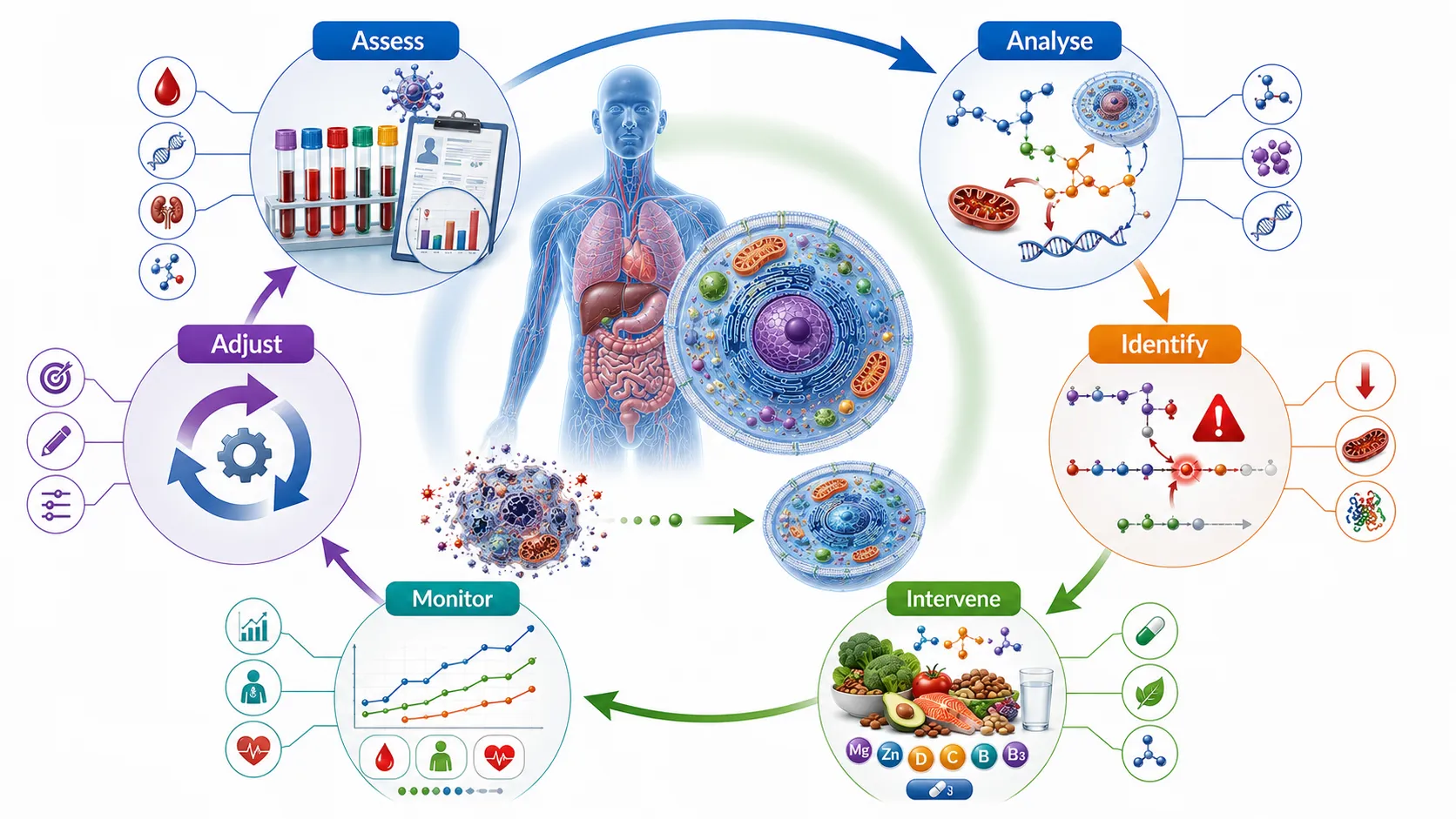
Key Concepts and Definitions
| Term | Definition | Application in Nutritional Intervention |
|---|---|---|
| Biochemical assessment | Systematic evaluation of biological and metabolic indicators | Helps identify mechanisms and nutritional abnormalities |
| Nutrient-related pathology | A disease process influenced by nutrient deficiency, excess, metabolism or utilisation | Defines the biochemical problem requiring intervention |
| Targeted intervention | A specific strategy designed to address identified needs | Links nutritional action to a measurable objective |
| Biomarker | A measurable biological indicator of physiological or pathological processes | Supports assessment and monitoring |
| Nutritional adequacy | The extent to which nutrient intake meets physiological requirements | Helps identify deficiencies or imbalances |
| Metabolic regulation | Control of biochemical pathways involved in energy and nutrient use | Guides interventions for metabolic dysfunction |
| Personalised nutrition | Adaptation of nutritional strategies to relevant individual characteristics | Supports more appropriate intervention planning |
| Monitoring | Repeated evaluation of relevant outcomes over time | Determines whether the intervention is effective |
| Confounding factor | A factor that may influence the interpretation of an observed outcome | Must be considered when evaluating intervention effects |
The Importance of Comprehensive Biochemical Assessment
Moving Beyond General Dietary Advice
General healthy eating guidance may be useful at a population level, but targeted nutritional intervention requires greater specificity. The biochemical mechanisms associated with a pathology should be investigated before recommendations are prioritised.
A comprehensive assessment can help determine whether a condition is associated with:
Inadequate nutrient intake.
Excessive nutrient intake.
Poor nutrient quality.
Malabsorption.
Altered metabolism.
Increased physiological requirements.
Medication-related effects.
Impaired storage or utilisation.
The assessment should therefore seek to understand why a biochemical abnormality exists rather than focusing only on the presence of an abnormal value.
The Relationship Between Assessment and Intervention
A logical evidence-informed pathway is:
Assessment
→ Identification of abnormalities
→ Biochemical interpretation
→ Identification of modifiable nutritional factors
→ Intervention design
→ Implementation
→ Monitoring
→ Adjustment
This sequence ensures that nutritional recommendations are linked to identified needs.
Step 1: Define the Specific Nutrient-Related Pathology
Establishing the Primary Problem
The first stage is to define the pathology as accurately as possible. A broad label may not provide sufficient information for intervention planning.
The assessment should clarify:
What pathological process is present?
Which biochemical pathways are affected?
Is the condition primarily associated with deficiency, excess or dysregulation?
Which tissues or systems are involved?
Are multiple mechanisms contributing?
For example, abnormal glucose regulation may involve several interacting mechanisms rather than a simple excess intake of dietary sugar.
Identifying the Nutritional Component
The next task is to establish the relationship between nutrition and pathology.
Questions may include:
Is nutrient intake inadequate?
Is a nutrient consumed excessively?
Is absorption impaired?
Is nutrient utilisation altered?
Does energy imbalance contribute?
Are dietary patterns increasing metabolic stress?
A nutritional association should be supported by evidence rather than assumption.
Step 2: Collect Relevant Assessment Information
Dietary Assessment
Dietary information provides essential context for biochemical findings.
Relevant areas include:
Usual food intake.
Meal patterns.
Portion sizes.
Macronutrient distribution.
Fibre intake.
Micronutrient sources.
Alcohol intake where relevant.
Use of supplements.
Food restrictions or exclusions.
A single day of food intake may not accurately represent long-term nutritional exposure. Repeated assessment or validated dietary tools may provide a more representative picture.
Biochemical and Physiological Information
Depending on the pathology and professional context, relevant information may include indicators associated with:
Glucose regulation.
Lipid metabolism.
Nutrient status.
Inflammatory activity.
Organ function.
Electrolyte balance.
Protein metabolism.
The interpretation of laboratory findings should remain within appropriate professional competence and should not replace clinical diagnosis.
Medical and Lifestyle Context
Nutritional assessment should also consider:
Relevant medical conditions.
Medication use.
Physical activity.
Sleep patterns.
Smoking or toxic exposures.
Age-related physiological factors.
These factors can influence nutrient requirements, metabolism and biochemical measurements.
Step 3: Interpret the Biochemical Mechanism
Linking Biomarkers to Biological Pathways
A biomarker should not be viewed as an isolated number. Its meaning depends on the underlying biochemical process.
For example, an abnormal marker may reflect:
Increased production.
Reduced clearance.
Tissue damage.
Nutrient deficiency.
Altered enzyme activity.
Hormonal dysregulation.
The objective is to construct a plausible biological explanation supported by the available evidence.
Identifying the Primary Mechanism
Possible biochemical mechanisms include:
Impaired nutrient absorption.
Reduced cofactor availability.
Insulin resistance.
Excess substrate accumulation.
Oxidative stress.
Chronic inflammation.
Mitochondrial dysfunction.
Altered enzyme activity.
Multiple mechanisms may coexist. The intervention should focus on those that are both relevant and potentially modifiable.
Step 4: Establish Clear Nutritional Objectives
Translating Biochemistry into Intervention Goals
After identifying the likely biochemical disturbance, broad recommendations should be converted into specific objectives.
Examples include:
Improve overall nutrient adequacy.
Correct an identified dietary deficiency.
Reduce excessive intake of a relevant dietary component.
Improve dietary fibre intake.
Support stable energy balance.
Improve the quality of carbohydrate intake.
Optimise protein distribution where appropriate.
Each objective should have a clear rationale.
Characteristics of Effective Objectives
Well-designed objectives should be:
Relevant to the pathology.
Biochemically justified.
Realistic.
Measurable where possible.
Appropriate for the individual.
Reviewed over time.
Step 5: Propose a Targeted Nutritional Intervention
Intervention Should Match the Mechanism
The central principle of targeted intervention is alignment.
The pathway should be:
Identified pathology
→ Biochemical disturbance
→ Nutritional target
→ Specific intervention
For example, a confirmed inadequate intake of a micronutrient requires investigation of the reason for inadequate status before assuming that increased intake alone will solve the problem.
Potential causes may include:
Low dietary intake.
Restricted food choices.
Malabsorption.
Increased requirements.
Medication interactions.
The intervention should address the most relevant cause.
Targeted Intervention for Impaired Glucose Regulation
Biochemical Rationale
Impaired glucose regulation may involve:
Altered insulin responsiveness.
Increased glucose production.
Reduced metabolic flexibility.
Excess energy availability.
Inflammatory activity.
A targeted nutritional strategy should therefore focus on the overall metabolic context.
Potential Nutritional Strategies
Appropriate evidence-informed considerations may include:
Improving carbohydrate quality.
Increasing appropriate fibre intake.
Managing overall energy balance.
Improving meal composition.
Reducing excessive consumption of highly energy-dense foods.
Supporting sustainable dietary habits.
The most suitable approach depends on the individual’s nutritional status and clinical circumstances.
Monitoring
Relevant outcomes may include changes in:
Dietary patterns.
Body composition indicators where appropriate.
Biochemical markers assessed by qualified healthcare professionals.
Functional wellbeing.
Targeted Intervention for Micronutrient Deficiency
Establish the Cause Before Intervention
Micronutrient deficiency should be investigated carefully.
Possible causes include:
Low dietary intake.
Restricted dietary patterns.
Increased physiological needs.
Reduced absorption.
Chronic disease.
Medication effects.
Dietary Intervention
Depending on the nutrient involved, intervention may include:
Increasing intake of appropriate food sources.
Improving dietary diversity.
Supporting meal planning.
Addressing dietary restrictions.
Where clinically indicated, supplementation decisions should be made with appropriate professional oversight.
Why Cause Matters
Consider two individuals with the same biochemical indication of low nutrient status.
One may have:
Low dietary intake.
Another may have:
Adequate intake but impaired absorption.
The nutritional strategy may therefore differ significantly.
Targeted Intervention for Excess Energy Intake
Identifying the Energy Imbalance
Chronic energy surplus can contribute to:
Increased adipose tissue storage.
Metabolic overload.
Altered lipid handling.
Increased inflammatory activity.
However, intervention should avoid simplistic assumptions based only on body weight.
A comprehensive assessment should consider:
Dietary intake.
Physical activity.
Food quality.
Eating behaviour.
Medical context.
Intervention Principles
Potential strategies include:
Improving dietary quality.
Supporting appropriate portion awareness.
Increasing nutrient density.
Encouraging sustainable meal patterns.
Aligning energy intake with individual needs.
The objective should be long-term metabolic health rather than short-term restrictive practices.
The Role of Macronutrient Quality
Carbohydrates
Carbohydrate interventions should consider more than total quantity.
Relevant factors include:
Fibre content.
Degree of processing.
Food structure.
Overall dietary pattern.
Individual metabolic response.
Proteins
Protein assessment should consider:
Total intake.
Distribution across meals.
Quality and diversity of sources.
Individual physiological needs.
Lipids
Lipid assessment should consider:
Overall dietary pattern.
Type and source of dietary fats.
Total energy intake.
Metabolic and clinical context.
A targeted intervention integrates macronutrient considerations rather than treating nutrients independently.
Step 6: Systematically Justify Each Recommendation
The Biochemical Justification Model
Each intervention should answer four questions:
What abnormality has been identified?
What biochemical mechanism is relevant?
How does the proposed nutritional change address this mechanism?
How will the outcome be monitored?
This structure strengthens professional and academic reasoning.
Example of Systematic Justification
Assessment finding:
Low intake of fibre-rich foods and a dietary pattern dominated by highly processed foods.
Possible biochemical considerations:
Altered nutrient absorption patterns.
Reduced support for normal gastrointestinal function.
Increased risk of poor dietary quality.
Potential intervention:
Gradually increase appropriate fibre-rich foods as tolerated.
Justification:
The intervention addresses a clearly identified dietary pattern and aims to improve overall nutritional quality and support normal metabolic and gastrointestinal processes.
Practical Intervention Planning Framework
Phase 1: Assessment
Collect information on:
Diet.
Biochemical findings.
Health status.
Lifestyle.
Relevant medications.
Phase 2: Problem Identification
Identify:
Primary nutritional problems.
Contributing factors.
Modifiable risks.
Areas requiring referral.
Phase 3: Intervention Design
Develop:
Specific objectives.
Dietary strategies.
Behavioural considerations.
Monitoring methods.
Phase 4: Implementation
Support the individual to:
Understand recommendations.
Apply realistic changes.
Monitor practical barriers.
Develop sustainable habits.
Phase 5: Review
Evaluate:
Dietary adherence.
Biochemical changes where available.
Physiological outcomes.
Barriers and facilitators.
Phase 6: Adjustment
Modify the intervention when:
Objectives are not being achieved.
New information becomes available.
Nutritional needs change.
Clinical circumstances change.
Personalisation and Individual Variation
Why the Same Intervention May Produce Different Outcomes
Individuals vary in their response to nutrition because of differences in:
Genetics.
Age.
Metabolic health.
Physical activity.
Gut function.
Medication use.
Food preferences.
Therefore, nutritional interventions should not assume identical responses.
Personalisation Without Overinterpretation
Personalisation should be evidence-informed.
It may involve adapting:
Food choices.
Meal timing.
Nutrient distribution.
Cultural preferences.
Practical accessibility.
Personalisation does not mean that every intervention requires advanced genetic testing or highly specialised technology.
Integrating Oxidative Stress and Inflammation
Nutritional Relevance
When biochemical assessment suggests chronic metabolic stress, oxidative processes and inflammation may be relevant mediators.
A broad dietary strategy may aim to support:
Nutritional adequacy.
Appropriate energy balance.
Dietary diversity.
Adequate intake of essential micronutrients.
Reduction of sustained harmful exposures.
Avoiding Simplistic “Anti-Inflammatory” Claims
The term “anti-inflammatory diet” should be interpreted carefully.
Chronic inflammation is influenced by:
Diet.
Physical activity.
Adipose tissue.
Sleep.
Medical conditions.
Environmental factors.
Therefore, intervention should focus on the overall pattern rather than promising that one food or supplement will eliminate inflammation.
Case Study: Developing a Targeted Intervention
Scenario
An adult presents with a dietary pattern characterised by:
Frequent consumption of energy-dense processed foods.
Low intake of fibre-rich foods.
Limited dietary variety.
Low levels of physical activity.
Available health information suggests impaired metabolic regulation, and further clinical evaluation is being undertaken.
Assessment
The assessment identifies potential concerns relating to:
Persistent energy surplus.
Poor dietary quality.
Low fibre intake.
Reduced physical activity.
Biochemical Interpretation
Possible mechanisms include:
Increased metabolic substrate availability.
Adipose tissue expansion.
Altered lipid handling.
Increased metabolic stress.
Potential oxidative and inflammatory activity.
These mechanisms require appropriate clinical interpretation and cannot be confirmed from diet history alone.
Proposed Intervention
A staged nutritional strategy could include:
Improving meal quality.
Increasing the proportion of minimally processed foods.
Gradually increasing appropriate fibre sources.
Improving dietary variety.
Reviewing portion patterns.
Supporting sustainable energy balance.
Justification
The intervention is targeted because it addresses the specific dietary patterns identified during assessment rather than applying unrelated recommendations.
Monitoring
Review may consider:
Changes in food choices.
Meal consistency.
Dietary variety.
Relevant professionally assessed health indicators.
Key Benefits of a Biochemically Informed Intervention
A comprehensive biochemical approach provides several advantages.
Learners can:
Link nutritional assessment to biological mechanisms.
Avoid generic recommendations.
Identify the cause of nutritional abnormalities.
Develop evidence-informed strategies.
Justify recommendations systematically.
Monitor outcomes objectively.
Recognise when referral is necessary.
This approach strengthens both academic analysis and professional nutritional decision-making.
Monitoring Intervention Outcomes
Why Monitoring Is Essential
An intervention should not be considered successful simply because a recommendation has been provided.
Monitoring helps determine:
Whether dietary changes were implemented.
Whether the strategy is practical.
Whether objectives are being achieved.
Whether unintended consequences have occurred.
Types of Monitoring
Depending on professional scope and available information, monitoring may involve:
Dietary records.
Symptom reports.
Food frequency assessment.
Body composition indicators where appropriate.
Relevant laboratory results interpreted by qualified professionals.
The Feedback Cycle
Assessment
→ Intervention
→ Monitoring
→ Evaluation
→ Adjustment
This feedback cycle is essential for evidence-informed nutritional practice.
Professional Scope and Ethical Considerations
Recognising Professional Boundaries
Advanced biochemical knowledge does not remove the need to work within professional scope.
Nutrition professionals should recognise when:
Medical diagnosis is required.
Laboratory abnormalities require clinical interpretation.
Medication interactions may be relevant.
Specialist referral is necessary.
Avoiding Unsupported Claims
Recommendations should not:
Promise disease cures.
Guarantee biochemical outcomes.
Replace necessary medical treatment.
Encourage unsafe supplementation.
Evidence-based practice requires accurate communication about potential benefits and limitations.
Common Challenges in Intervention Design
Incomplete Assessment Data
A limited dietary history may not accurately represent usual intake.
Possible solutions include:
Collecting information over time.
Using multiple assessment methods.
Identifying uncertainty clearly.
Multiple Contributing Factors
Nutrient-related pathologies may involve several interacting causes.
Prioritisation may focus on:
The most significant modifiable factors.
Nutritional safety.
Feasibility.
Evidence strength.
Poor Adherence
Even scientifically strong interventions may fail if they are unrealistic.
Considerations include:
Food availability.
Cost.
Cultural practices.
Cooking skills.
Personal preferences.
The most effective strategy is often one that can be maintained.
Critical Evaluation of Nutritional Evidence
Assessing Evidence Quality
Interventions should be supported by appropriate evidence.
Critical evaluation may consider:
Study design.
Population studied.
Duration of intervention.
Relevance to the individual.
Consistency of findings.
Distinguishing Mechanism from Clinical Outcome
A proposed mechanism may be biologically plausible without proving a significant clinical benefit.
For example:
Biochemical mechanism
→ Possible pathway of benefit
does not automatically mean
→ Guaranteed disease improvement.
This distinction is essential for postgraduate-level critical analysis.
A Systematic Decision-Making Checklist
Before proposing an intervention, consider:
Assessment Questions
What pathology is being addressed?
What biochemical evidence is available?
What dietary factors are relevant?
Are there signs of deficiency or excess?
Are other causes possible?
Intervention Questions
What specific nutritional change is proposed?
What biochemical mechanism supports it?
Is the intervention safe?
Is it realistic?
Monitoring Questions
What outcome will be measured?
When will it be reviewed?
What would indicate improvement?
When should the intervention be modified?
Summary
Proposing and justifying targeted nutritional interventions requires a systematic process that begins with comprehensive assessment and ends with ongoing evaluation. The central principle is that nutritional recommendations should be connected to an identified biochemical or physiological need rather than based solely on general assumptions.
A robust intervention follows the sequence:
Comprehensive assessment
→ Identification of pathology
→ Biochemical interpretation
→ Identification of nutritional priorities
→ Targeted intervention
→ Systematic justification
→ Monitoring
→ Review and adjustment
Effective biochemical assessment considers:
Dietary intake.
Nutrient adequacy.
Metabolic indicators.
Physiological status.
Lifestyle factors.
Relevant medical context.
Targeted interventions may address:
Nutrient deficiencies.
Excessive dietary exposure.
Energy imbalance.
Poor dietary quality.
Altered metabolic regulation.
Factors contributing to oxidative and inflammatory stress.
However, interventions must remain evidence-informed, realistic and within appropriate professional scope. Individual variation, medication use, underlying pathology and lifestyle factors can all influence nutritional requirements and responses.
The greatest value of a comprehensive biochemical approach is its ability to transform assessment findings into logically justified nutritional strategies. Rather than asking only, “What dietary advice should be given?”, the advanced practitioner asks:
What biochemical abnormality has been identified, what factors may be contributing to it, which nutritional intervention is most relevant, and how will its effectiveness be evaluated?
This systematic reasoning process enables Learners to develop advanced analytical skills in nutritional biochemistry and supports the development of safe, evidence-informed and individualised approaches to nutrient-related pathology.