
Lesson no 3 : Evaluate the role of macronutrients in metabolic regulation.
Macronutrients play a fundamental role in maintaining human energy balance, supporting physiological functions and regulating complex metabolic processes. Carbohydrates, proteins and fats are the three primary macronutrient groups required in relatively large amounts by the body. Beyond providing energy and structural components, these nutrients influence cellular signalling, hormonal responses, enzymatic activity and the regulation of major metabolic pathways. Understanding how macronutrients interact with metabolic systems is therefore essential for advanced study in nutritional biochemistry.
This lesson examines the role of carbohydrates, proteins and fats in metabolic regulation and evaluates how differences in their intake, availability and utilisation can influence physiological function. Learners will explore how carbohydrates contribute to glucose homeostasis and energy production, how proteins provide amino acids for tissue maintenance and metabolic processes, and how fats support energy storage, cellular structure and signalling functions.
The lesson also considers the dynamic relationship between macronutrient intake and metabolic regulation. Changes in nutrient availability can influence enzyme activity, metabolic flux, hormonal signalling and the balance between energy storage and energy mobilisation. Particular attention is given to the body’s ability to adapt to different nutritional states, including feeding, fasting and changing energy demands.
Learners will develop the ability to critically evaluate how macronutrient composition may influence metabolic pathways and whole-body physiological responses. The lesson will also explore the interaction between different macronutrients, recognising that human metabolism functions as an interconnected network rather than as isolated pathways.
By the end of this lesson, Learners will have a stronger understanding of the biochemical and physiological roles of macronutrients and their importance in regulating metabolism. This knowledge provides a foundation for analysing nutritional interventions, interpreting metabolic responses and applying advanced principles of nutritional biochemistry in academic and professional contexts.
1.Critically Evaluate the Distinct Biochemical Pathways Utilised for the Digestion, Absorption, and Metabolism of Carbohydrates, Proteins, and Lipids
Macronutrients are essential components of human nutrition and metabolic regulation. Carbohydrates, proteins and lipids each follow distinct but interconnected biochemical pathways from the point of ingestion to their final utilisation, storage or conversion within the body. Their digestion and absorption involve specialised enzymes, transport mechanisms and physiological processes, while their metabolism is regulated according to nutrient availability, cellular energy requirements and the wider metabolic state.
A critical evaluation of macronutrient metabolism requires more than describing individual pathways. It involves comparing how each nutrient is digested, absorbed and processed, identifying major regulatory points and recognising how the pathways interact. Carbohydrates are generally processed to provide readily available metabolic substrates, proteins supply amino acids for synthesis and specialised metabolic functions, and lipids provide concentrated energy, structural components and signalling molecules.
Although these macronutrients have distinct biochemical routes, they converge within integrated metabolic networks. Their metabolism is influenced by factors such as hormonal regulation, tissue-specific demand, nutritional status and energy balance. Understanding these relationships is essential for evaluating how dietary composition can influence metabolic regulation and physiological outcomes.
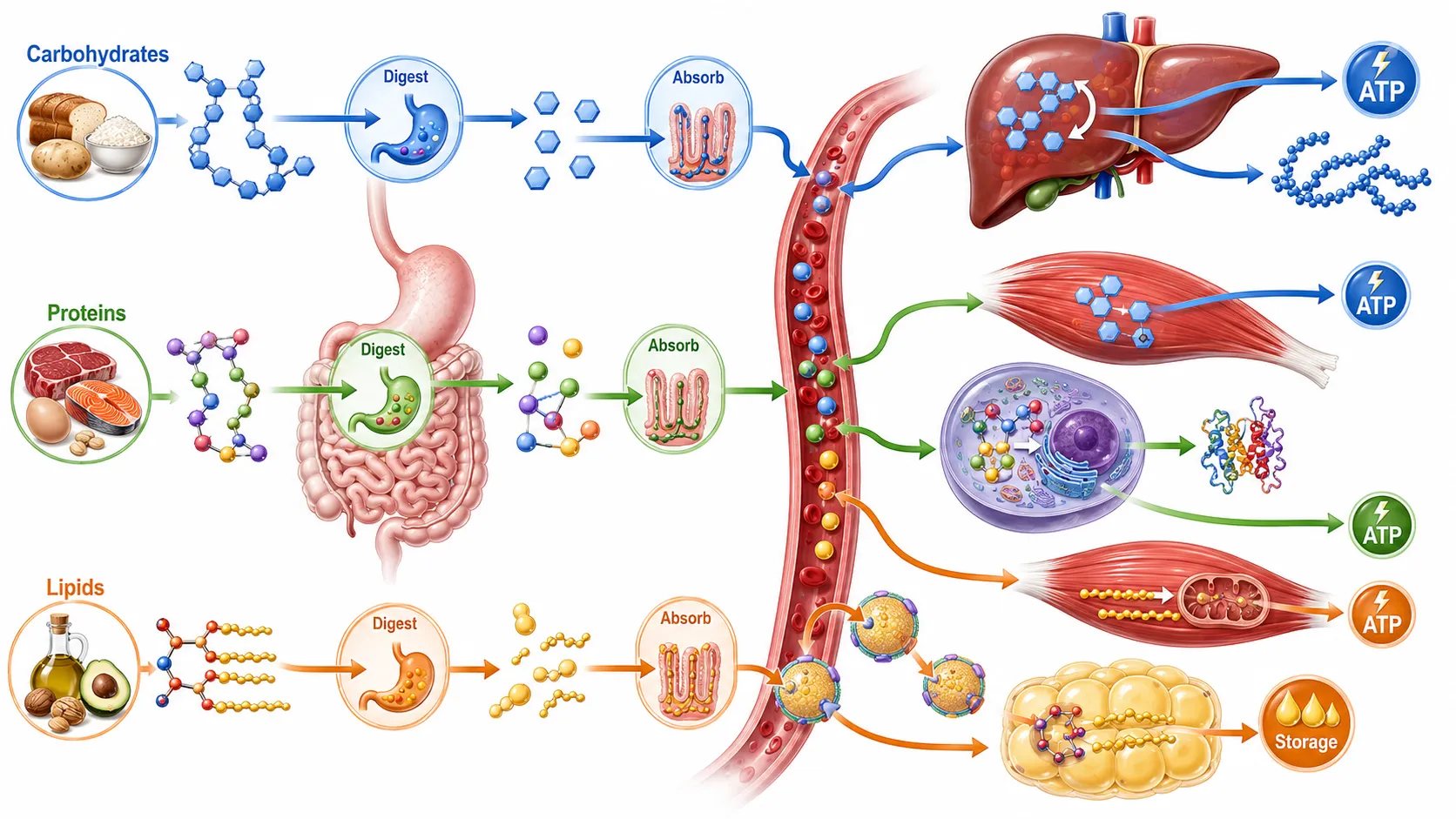
Key Definitions and Concepts
| Term | Definition | Relevance to Macronutrient Metabolism |
|---|---|---|
| Macronutrient | A nutrient required by the body in relatively large amounts | Includes carbohydrates, proteins and lipids |
| Digestion | The breakdown of food into smaller molecules suitable for absorption | Makes macronutrients available for further processing |
| Absorption | The movement of digested nutrients from the gastrointestinal tract into circulation or transport systems | Connects digestion with tissue metabolism |
| Metabolism | The network of biochemical reactions involved in the utilisation, transformation and storage of nutrients | Determines how nutrients support cellular and physiological function |
| Catabolism | The breakdown of complex molecules into simpler molecules | Releases usable energy and metabolic intermediates |
| Anabolism | The synthesis of complex molecules from simpler components | Supports growth, maintenance and energy storage |
| Metabolic flux | The rate at which molecules move through metabolic pathways | Reflects changing nutrient utilisation |
| Glycolysis | A pathway involved in the breakdown of glucose to produce metabolic intermediates and energy | Central to carbohydrate metabolism |
| Lipolysis | The breakdown of stored lipids into smaller components for metabolic use | Supports energy mobilisation |
| Proteolysis | The breakdown of proteins into peptides and amino acids | Provides amino acids for absorption and metabolism |
| Beta-oxidation | A pathway involved in the breakdown of fatty acids | Produces energy-rich metabolic intermediates |
| Amino acid metabolism | Biochemical processing of amino acids for synthesis, energy or other metabolic functions | Links protein intake with wider metabolism |
Understanding the Overall Journey of Macronutrients
From Food Intake to Cellular Metabolism
The biochemical journey of a macronutrient can be understood through four broad stages:
Food Intake → Digestion → Absorption and Transport → Cellular Metabolism
Each stage differs according to the chemical structure of the nutrient.
Carbohydrates consist primarily of sugar-based molecules that must often be broken into absorbable monosaccharides. Proteins are complex chains of amino acids and require enzymatic breakdown into smaller peptides and amino acids. Lipids are hydrophobic molecules and require specialised emulsification, digestion and transport processes.
The major stages can be summarised as follows:
Carbohydrates
Complex carbohydrates are broken into smaller sugars.
Absorbable monosaccharides enter specialised transport systems.
Metabolic pathways determine whether glucose is used, stored or converted.
Proteins
Dietary proteins are denatured and enzymatically broken down.
Peptides and amino acids are absorbed.
Amino acids support synthesis or enter specialised metabolic pathways.
Lipids
Large lipid droplets are emulsified into smaller structures.
Enzymes release absorbable lipid components.
Lipids are reassembled and transported through specialised systems.
Fatty acids may be oxidised, stored or incorporated into biological structures.
Carbohydrate Digestion
Initial Breakdown of Carbohydrates
Dietary carbohydrates include a range of simple and complex molecules. Digestion aims to convert digestible carbohydrates into smaller units that can be absorbed through the intestinal lining.
Carbohydrate digestion begins with enzymatic activity that initiates the breakdown of larger carbohydrate molecules. Further digestion occurs within the gastrointestinal tract, producing smaller carbohydrate units.
The overall objective is the formation of absorbable monosaccharides.
Important stages include:
Breakdown of complex carbohydrate chains.
Production of smaller oligosaccharides.
Enzymatic processing at the intestinal surface.
Formation of monosaccharides suitable for absorption.
Enzymatic Specificity
Different enzymes act on particular carbohydrate bonds. This specificity is important because not all carbohydrate structures can be processed by the same enzyme.
The effectiveness of digestion may depend on:
The structure of the dietary carbohydrate.
Enzyme availability.
Gastrointestinal conditions.
The presence of particular carbohydrate bonds.
Critical Evaluation of Carbohydrate Digestion
Carbohydrate digestion is relatively direct compared with lipid digestion because many carbohydrate digestion products are water-soluble and can enter intestinal transport processes without specialised lipid packaging.
However, carbohydrate digestion is not identical for all dietary sources.
Factors influencing digestion include:
Degree of processing.
Molecular structure.
Physical structure of the food.
Fibre content.
The presence of resistant carbohydrate components.
Therefore, the rate at which carbohydrate-derived substrates become available can vary considerably.
Carbohydrate Absorption
Transport Across the Intestinal Epithelium
Following digestion, monosaccharides are transported across specialised intestinal cells through distinct transport mechanisms.
Absorption involves:
Movement from the intestinal lumen.
Entry into intestinal epithelial cells.
Transport towards the circulation.
Delivery to the liver and other tissues.
The absorption of carbohydrate-derived molecules is regulated by transporter availability and concentration gradients.
Importance of the Liver
Following intestinal absorption, many carbohydrate-derived nutrients are processed by the liver.
The liver acts as a major metabolic regulator by:
Processing incoming glucose-related substrates.
Supporting short-term energy storage.
Releasing substrates according to metabolic demand.
Contributing to the maintenance of circulating fuel availability.
Carbohydrate Metabolism
Glycolysis
Glycolysis is a central metabolic pathway through which glucose is converted into smaller metabolic intermediates.
Its major functions include:
Supporting cellular energy production.
Producing intermediates for other pathways.
Connecting carbohydrate metabolism with broader metabolic networks.
The rate of glycolysis is influenced by:
Cellular energy status.
Substrate availability.
Regulatory enzymes.
Hormonal and metabolic signals.
Glycogen Storage and Mobilisation
When glucose availability exceeds immediate requirements, some carbohydrate-derived substrate can be stored as glycogen in specific tissues.
Glycogen metabolism involves two major processes:
Glycogen synthesis – the formation of stored glycogen.
Glycogen breakdown – the release of stored glucose-related units.
These processes allow the body to respond to changing energy requirements.
Critical Perspective
Carbohydrates should not be viewed only as immediate energy sources. Their metabolic role depends on:
Dietary intake.
Energy demand.
Storage capacity.
Hormonal regulation.
The metabolic state of the individual.
Protein Digestion
Structural Complexity of Dietary Proteins
Proteins are large biological molecules composed of amino acid chains. Before absorption, these structures must be broken into smaller components.
Protein digestion involves:
Structural unfolding of proteins.
Cleavage of peptide bonds.
Formation of smaller peptides.
Production of free amino acids.
Multiple enzymes participate in this process.
Enzymatic Breakdown
Protein digestion occurs through the coordinated action of enzymes with different specificities.
The process involves:
Initial protein denaturation.
Cleavage into smaller peptide fragments.
Further enzymatic digestion.
Production of absorbable amino acids and peptides.
The sequential nature of digestion improves the efficiency of protein processing.
Protein Absorption
Amino Acid and Peptide Transport
Following digestion, amino acids and small peptides are transported across the intestinal epithelium.
Absorption depends on:
Specific transport proteins.
Concentration gradients.
Energy-dependent transport mechanisms.
The chemical properties of amino acids.
Once absorbed, amino acids enter circulation and become available to tissues.
The Amino Acid Pool
The body maintains a dynamic pool of available amino acids.
These amino acids may be used for:
Protein synthesis.
Enzyme synthesis.
Production of signalling molecules.
Formation of specialised compounds.
Energy metabolism when required.
Unlike dedicated carbohydrate and lipid stores, the body does not maintain a specialised storage system solely for excess dietary amino acids.
This creates an important metabolic distinction between proteins and the other major macronutrients.
Protein Metabolism
Protein Synthesis
A major function of absorbed amino acids is the synthesis of proteins required for normal cellular structure and function.
Proteins produced within the body include:
Structural proteins.
Enzymes.
Transport proteins.
Regulatory proteins.
Components involved in cellular communication.
Protein synthesis is influenced by:
Amino acid availability.
Cellular energy status.
Physiological demand.
Regulatory signalling.
Amino Acid Catabolism
When amino acids are not required for protein synthesis or other functions, their carbon-containing structures can enter metabolic pathways.
The nitrogen-containing component must be processed through specialised biochemical mechanisms.
Amino acid metabolism therefore involves:
Removal or transfer of nitrogen groups.
Processing of nitrogen-containing products.
Entry of carbon skeletons into metabolic pathways.
Critical Perspective
Protein metabolism differs fundamentally from carbohydrate metabolism because amino acids have essential structural and functional roles beyond energy production.
Therefore, evaluating protein metabolism requires consideration of:
Tissue requirements.
Protein turnover.
Amino acid balance.
Nutritional status.
Lipid Digestion
The Challenge of Lipid Digestion
Lipids differ substantially from carbohydrates and proteins because many dietary lipids are poorly soluble in water.
This creates a major biochemical challenge within the aqueous environment of the digestive tract.
Effective lipid digestion therefore requires:
Physical dispersion of lipid droplets.
Formation of smaller lipid structures.
Enzymatic action at lipid interfaces.
Formation of transportable absorption structures.
Emulsification
Emulsification increases the surface area available for digestive enzymes.
This process helps transform large lipid droplets into smaller structures that can be processed more effectively.
Key benefits include:
Increased surface area.
Improved enzyme access.
Enhanced formation of absorbable lipid products.
Enzymatic Lipid Breakdown
Digestive enzymes break complex lipids into smaller components.
These may include:
Fatty acids.
Monoglyceride-related components.
Other lipid-derived molecules.
The resulting molecules participate in specialised absorption processes.
Lipid Absorption and Transport
Formation of Absorbable Structures
Because lipid digestion products are poorly soluble in water, specialised structures assist their movement through the intestinal environment.
These structures support:
Transport through the intestinal contents.
Delivery to the epithelial surface.
Uptake into intestinal cells.
Reassembly and Transport
Following absorption, certain lipid components may be reassembled into larger lipid structures.
They are then packaged with other molecules for transport.
This represents a major distinction from carbohydrate absorption.
Carbohydrate-derived molecules generally enter circulation through relatively direct transport routes, whereas many dietary lipids require complex packaging and specialised transport systems.
Lipid Metabolism
Lipid Storage
Lipids provide an efficient form of long-term energy storage.
When energy availability exceeds immediate requirements, lipid-derived molecules may be stored in specialised tissues.
The major advantages of lipid storage include:
High energy density.
Long-term energy availability.
Storage without the same water-associated requirements as carbohydrate storage.
Lipolysis
When energy is required, stored lipids can be broken down through lipolysis.
This releases components that can be used in metabolic pathways.
The process involves:
Mobilisation of stored lipid.
Release of fatty acid-related molecules.
Transport to metabolically active tissues.
Entry into energy-producing pathways.
Beta-Oxidation
Fatty acids can undergo beta-oxidation, a process that produces smaller energy-rich units that can contribute to cellular energy metabolism.
The rate of fatty acid oxidation depends on:
Fatty acid availability.
Cellular energy demand.
Transport processes.
Mitochondrial metabolic capacity.
Comparing Macronutrient Absorption
Distinct Transport Strategies
One of the most important biochemical differences between macronutrients is the way in which their digestion products are absorbed and transported.
Carbohydrate-derived monosaccharides are generally water-soluble and use specialised membrane transport systems.
Amino acids and peptides also depend on specialised transport proteins.
Lipids require additional processes because of their hydrophobic nature.
A comparison can be made as follows:
Carbohydrates
Digested to monosaccharides.
Absorbed through specialised transporters.
Delivered rapidly into metabolic circulation.
Proteins
Digested to amino acids and small peptides.
Absorbed using specialised transport mechanisms.
Used for synthesis or further metabolism.
Lipids
Emulsified and enzymatically processed.
Transported in specialised structures.
Reassembled and packaged for distribution.
Integration of Macronutrient Metabolism
Shared Metabolic Networks
Despite their distinct pathways, carbohydrate, protein and lipid metabolism are interconnected.
Their metabolic products may converge at common points within cellular metabolism.
This allows the body to adapt to changing nutrient availability.
For example:
Carbohydrate-derived molecules can support energy production.
Fatty acid-derived molecules can provide alternative energy substrates.
Amino acid carbon skeletons can enter selected metabolic pathways.
Metabolic Flexibility
Metabolic flexibility refers to the capacity of the body to adjust fuel utilisation according to nutrient availability and energy demand.
This is important because the body does not rely exclusively on one macronutrient under all physiological conditions.
Metabolic flexibility involves:
Changes in substrate utilisation.
Regulation of enzyme activity.
Alterations in metabolic flux.
Tissue-specific responses.
Hormonal Regulation of Macronutrient Metabolism
The Role of Hormonal Signals
Hormonal signals contribute to the coordination of nutrient metabolism.
They influence:
Nutrient uptake.
Enzyme activity.
Energy storage.
Fuel mobilisation.
The effects of hormones help coordinate the transition between different nutritional states.
Fed and Fasting States
Macronutrient metabolism differs substantially between periods of nutrient availability and periods of reduced intake.
During nutrient availability, the body may prioritise:
Processing incoming nutrients.
Supporting immediate energy requirements.
Replenishing appropriate energy stores.
During reduced nutrient availability, metabolism may shift towards:
Mobilisation of stored fuels.
Altered substrate utilisation.
Conservation of important metabolic resources.
Key Regulatory Differences Between Macronutrients
Carbohydrate Regulation
Carbohydrate metabolism is strongly linked with:
Glucose availability.
Storage capacity.
Immediate energy requirements.
Hormonal regulation.
Protein Regulation
Protein metabolism is influenced by:
Amino acid availability.
Tissue protein requirements.
Protein turnover.
Nitrogen balance.
Lipid Regulation
Lipid metabolism is influenced by:
Energy balance.
Storage requirements.
Hormonal signals.
Physical activity and energy demand.
Practical Example: Comparing a Mixed Meal
Consider a mixed meal containing carbohydrates, proteins and fats.
Carbohydrate Response
Carbohydrates are digested into smaller sugars and absorbed through intestinal transport systems.
Potential metabolic outcomes include:
Immediate cellular utilisation.
Storage as glycogen.
Further metabolic conversion depending on energy status.
Protein Response
Dietary proteins are broken into amino acids and peptides.
The absorbed components may support:
Protein synthesis.
Tissue maintenance.
Enzyme production.
Other specialised functions.
Lipid Response
Dietary lipids require emulsification and specialised absorption.
Following transport, they may:
Support cellular structures.
Provide energy.
Be stored for later use.
Critical Evaluation
The physiological response to the meal is not simply the sum of three isolated pathways.
The pathways interact through:
Shared energy requirements.
Hormonal regulation.
Tissue-specific metabolism.
Changing substrate availability.
Practical Example: Fasting and Fuel Selection
During a period of reduced nutrient intake, the availability of newly absorbed dietary macronutrients decreases.
The body responds by altering metabolic priorities.
Potential changes include:
Increased mobilisation of stored fuels.
Changes in carbohydrate-related metabolism.
Greater reliance on alternative energy substrates.
Altered protein metabolism depending on physiological conditions.
The exact response depends on:
Duration of reduced intake.
Existing energy stores.
Physical activity.
Individual metabolic characteristics.
Benefits of Understanding Distinct Macronutrient Pathways
A detailed understanding of carbohydrate, protein and lipid metabolism enables Learners to:
Explain how food-derived nutrients become metabolically available.
Compare different digestive and absorption processes.
Identify major regulatory points.
Understand metabolic flexibility.
Evaluate the effects of changing dietary composition.
Interpret biochemical and physiological responses.
Connect nutrient intake with cellular metabolism.
Apply scientific reasoning to nutritional scenarios.
Common Misconceptions
Misconception: All Macronutrients Follow the Same Absorption Route
This is incorrect.
Carbohydrates, proteins and lipids require different digestion and transport mechanisms because of differences in their chemical structure and solubility.
Misconception: Protein Is Stored in the Same Way as Fat
The body does not maintain a specialised storage system for excess amino acids equivalent to adipose tissue for lipid storage.
Protein metabolism is closely linked with ongoing tissue turnover and functional requirements.
Misconception: Carbohydrates Are Used Only for Immediate Energy
Carbohydrate-derived substrates can also contribute to:
Energy storage.
Biosynthetic pathways.
Production of metabolic intermediates.
Misconception: Dietary Fat Is Always Used Directly for Energy
Lipids may be:
Oxidised.
Stored.
Incorporated into biological structures.
Used in signalling processes.
Their metabolic fate depends on physiological conditions.
Critical Evaluation of Pathway Differences
A critical comparison demonstrates that the three macronutrients differ at every major stage of metabolism.
Digestion
Carbohydrates require enzymatic cleavage into smaller sugars.
Proteins require progressive cleavage of peptide bonds.
Lipids require emulsification as well as enzymatic hydrolysis.
Absorption
Carbohydrates rely mainly on monosaccharide transport mechanisms.
Proteins rely on amino acid and peptide transport systems.
Lipids require specialised absorption and transport structures.
Storage
Carbohydrates have relatively limited storage capacity as glycogen.
Proteins are primarily functional components rather than dedicated energy stores.
Lipids provide extensive long-term energy storage capacity.
Energy Metabolism
Carbohydrates can provide readily available metabolic substrates.
Lipids provide highly energy-dense substrates for oxidation.
Amino acids can contribute to energy metabolism but also have essential structural and functional roles.
A Step-by-Step Framework for Evaluating Macronutrient Pathways
Step 1: Identify the Macronutrient
Determine whether the nutrient is:
A carbohydrate.
A protein.
A lipid.
Step 2: Examine Its Chemical Properties
Consider:
Solubility.
Molecular structure.
Digestive requirements.
Enzyme specificity.
Step 3: Map Digestion
Identify:
Major sites of digestion.
Key enzyme actions.
Final absorbable products.
Step 4: Evaluate Absorption
Determine:
Transport mechanisms.
Intestinal uptake processes.
Initial transport routes.
Step 5: Analyse Metabolism
Consider:
Immediate utilisation.
Storage.
Oxidation.
Conversion into other metabolites.
Step 6: Consider Regulation
Evaluate:
Nutrient availability.
Hormonal signals.
Cellular energy status.
Tissue-specific requirements.
Step 7: Integrate the Findings
The final evaluation should recognise that macronutrients operate within an interconnected metabolic network.
Professional and Academic Application
Understanding these pathways is important in several areas of nutritional science.
Applications include:
Nutritional biochemistry.
Metabolic research.
Dietary intervention analysis.
Interpretation of nutrient utilisation.
Advanced health and nutrition education.
When evaluating metabolic responses, professionals should avoid assuming that a dietary change automatically produces a predictable physiological outcome. Individual variation, nutritional status and metabolic regulation must be considered.
Summary
Carbohydrates, proteins and lipids follow distinct biochemical pathways for digestion, absorption and metabolism. Their structural differences determine how they are processed within the gastrointestinal system and transported to tissues. Carbohydrates are generally broken into monosaccharides and enter pathways associated with immediate energy production, storage and metabolic regulation. Proteins are digested into amino acids and peptides, which support protein synthesis, specialised biochemical functions and, when required, energy metabolism. Lipids require emulsification, specialised enzymatic digestion and complex transport mechanisms because of their hydrophobic properties.
Despite these differences, the three macronutrients function within an integrated metabolic network. Their pathways interact through shared metabolic intermediates, hormonal regulation and changing cellular energy requirements. The body demonstrates metabolic flexibility by adjusting nutrient utilisation according to feeding status, energy demand and nutrient availability.
A critical evaluation therefore requires analysis of the entire journey of each macronutrient, from ingestion and digestion to absorption, transport, storage and cellular utilisation. It must also recognise regulatory mechanisms, pathway interactions and individual biological variation.
By understanding these distinct but interconnected pathways, Learners can develop the advanced analytical skills required to evaluate dietary composition, interpret metabolic responses and understand the central role of macronutrients in metabolic regulation.
2.Synthesise Current Academic Research to Explain How Varying Macronutrient Ratios Influence Hormonal Regulation and Metabolic Homeostasis
Macronutrient ratios describe the relative proportions of carbohydrates, proteins and fats within an individual’s overall dietary intake. These proportions can influence nutrient availability, post-meal metabolic responses, hormonal signalling and the mechanisms used by the body to maintain metabolic homeostasis. However, the relationship between macronutrient ratios and health outcomes is complex. Current academic research increasingly demonstrates that the physiological effects of a dietary pattern cannot be explained by macronutrient percentages alone. The quality, source, energy content, timing and distribution of macronutrients, together with individual characteristics, can substantially influence metabolic responses.
Metabolic homeostasis refers to the body’s ability to maintain a relatively stable internal environment despite changes in food intake, energy expenditure and nutrient availability. Hormones are central to this process. They coordinate the uptake, storage, mobilisation and utilisation of nutrients across different tissues. Changes in carbohydrate, protein and fat intake can alter the secretion or activity of hormones involved in glucose regulation, appetite control, energy storage and substrate mobilisation.
Synthesising academic research requires the integration of findings from nutritional biochemistry, endocrinology, metabolism and human dietary intervention studies. Rather than treating one dietary ratio as universally superior, a critical approach evaluates the mechanisms through which different ratios may influence hormonal and metabolic responses under different physiological conditions.
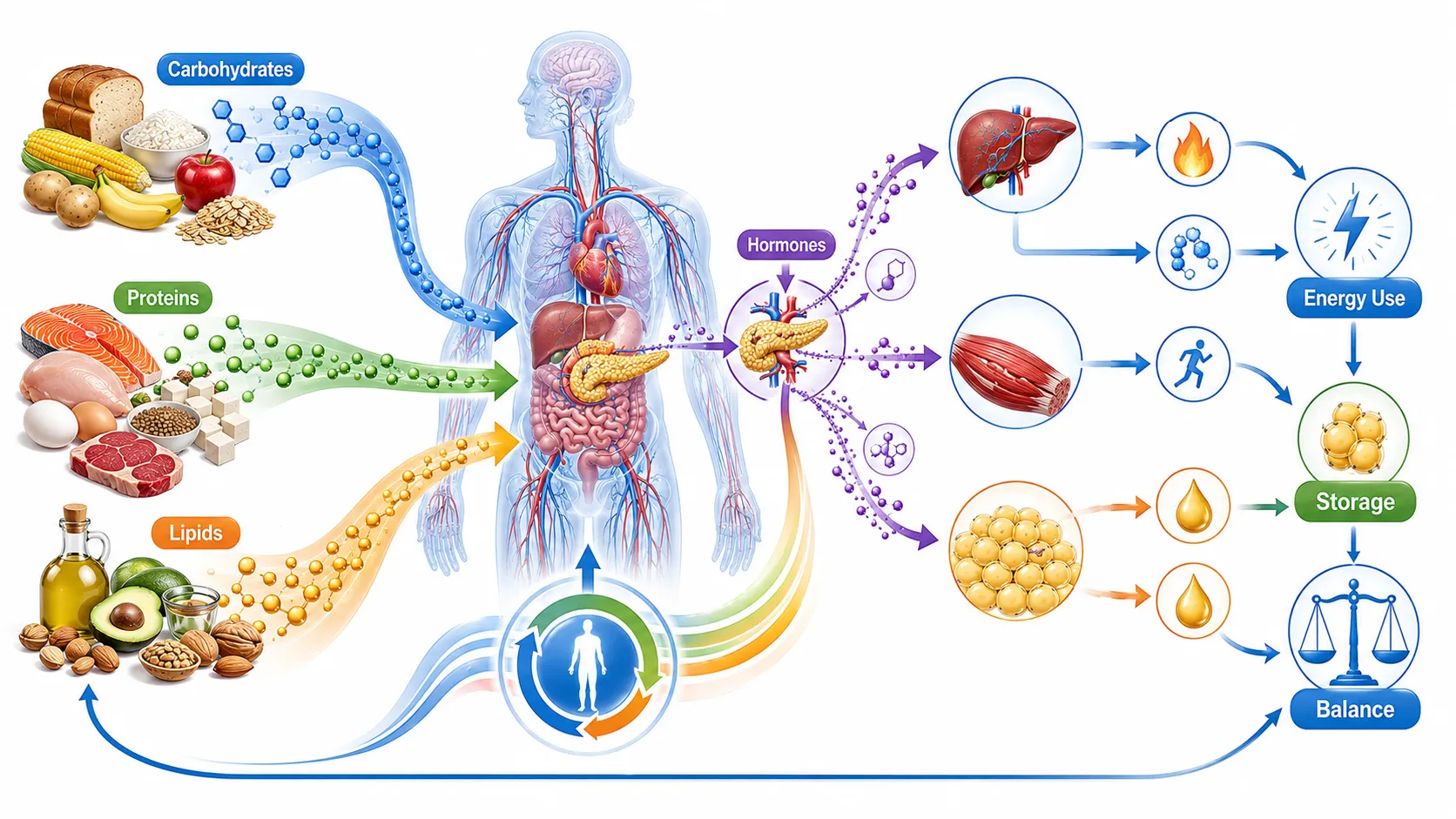
Key Definitions and Concepts
| Key Term | Definition | Importance in Macronutrient Regulation |
|---|---|---|
| Macronutrient ratio | The relative proportion of carbohydrate, protein and fat within total dietary intake | Influences nutrient availability and metabolic responses |
| Hormonal regulation | Physiological control mediated through chemical signalling molecules | Coordinates nutrient uptake, storage and mobilisation |
| Metabolic homeostasis | Maintenance of a relatively stable internal metabolic environment | Supports normal energy and nutrient balance |
| Insulin | A hormone involved in regulating nutrient uptake and storage, particularly after food intake | Influences carbohydrate, lipid and protein metabolism |
| Glucagon | A hormone that contributes to fuel mobilisation during reduced nutrient availability | Supports maintenance of circulating energy substrates |
| Satiety signalling | Physiological processes that influence fullness and appetite | Can be affected by macronutrient composition |
| Metabolic flexibility | The capacity to adjust substrate utilisation according to nutrient availability and energy demand | Helps maintain energy balance |
| Postprandial response | A physiological response occurring after food consumption | Reflects the metabolic handling of a meal |
| Energy balance | The relationship between energy intake and energy expenditure | Influences storage and mobilisation of energy |
| Substrate oxidation | The metabolic utilisation of carbohydrates, fats or other substrates for energy | Changes according to nutritional and physiological state |
Understanding Macronutrient Ratios in Nutritional Biochemistry
Macronutrient Ratios Are Relative Rather Than Isolated Values
A macronutrient ratio describes how dietary energy is distributed between carbohydrates, proteins and fats. If the proportion of one macronutrient changes while total energy intake remains constant, the proportion of at least one other macronutrient must usually change.
For example, a reduction in carbohydrate intake may be accompanied by:
An increase in dietary fat.
An increase in dietary protein.
A combination of increases in both fat and protein.
A reduction in total energy intake.
These changes are physiologically important because replacing carbohydrate with fat may produce a different metabolic response from replacing carbohydrate with protein.
Therefore, research findings should be interpreted by asking:
Which macronutrient was increased?
Which macronutrient was reduced?
Was total energy intake controlled?
What was the quality and source of the macronutrients?
How long did the intervention last?
What was the metabolic status of the study population?
The Importance of Macronutrient Quality
Two diets can have identical macronutrient ratios but produce different physiological responses.
For carbohydrates, factors may include:
Degree of processing.
Fibre content.
Food structure.
Rate of digestion and absorption.
Overall meal composition.
For dietary fats, important considerations may include:
Fatty acid composition.
Food source.
Degree of processing.
Interaction with other nutrients.
For proteins, responses may vary according to:
Amino acid composition.
Digestibility.
Food source.
Distribution across meals.
Consequently, academic research increasingly emphasises dietary patterns and food quality alongside macronutrient ratios.
Hormonal Regulation of Macronutrient Metabolism
Hormones as Metabolic Coordinators
Hormones help the body coordinate nutrient availability with tissue requirements. Following food consumption, changes in circulating nutrients provide signals that contribute to metabolic regulation.
Hormonal responses can influence:
Cellular nutrient uptake.
Glycogen storage and mobilisation.
Lipid storage and breakdown.
Protein synthesis and turnover.
Appetite and satiety.
Energy expenditure.
Fuel selection by different tissues.
The endocrine system therefore acts as an important link between dietary composition and metabolic homeostasis.
Insulin and Nutrient Availability
Insulin is one of the principal hormones involved in post-meal metabolic regulation. Its secretion and physiological effects are influenced by nutrient intake, although carbohydrate availability is a major stimulus for postprandial glucose-related responses.
Insulin contributes to processes such as:
Facilitating nutrient uptake in responsive tissues.
Supporting carbohydrate storage.
Influencing lipid metabolism.
Supporting anabolic processes.
Modifying the balance between fuel storage and mobilisation.
A meal containing a substantial amount of digestible carbohydrate may produce a different postprandial insulin response from a meal containing a greater proportion of fat.
However, insulin responses should not be interpreted as a simple measure of whether a food or diet is beneficial or harmful. The physiological context is essential.
Glucagon and Fuel Mobilisation
Glucagon contributes to metabolic regulation when nutrient availability changes, particularly during periods when the body must maintain circulating energy substrates.
Its physiological role is associated with:
Supporting mobilisation of stored fuels.
Influencing hepatic metabolic processes.
Contributing to the maintenance of circulating glucose availability.
The balance between insulin-related and glucagon-related signalling is influenced by the nutritional state and the composition of nutrient intake.
Carbohydrate Ratios and Hormonal Regulation
Higher Carbohydrate Availability
Diets containing a relatively higher proportion of digestible carbohydrates may increase the availability of glucose after meals. This can influence hormonal responses associated with nutrient uptake and metabolic storage.
Potential responses include:
Increased post-meal glucose availability.
Increased insulin-related signalling.
Enhanced utilisation of carbohydrate-derived substrates.
Support for glycogen replenishment where physiologically appropriate.
The magnitude of these responses depends on several factors.
These include:
Amount of carbohydrate consumed.
Type of carbohydrate.
Fibre content.
Meal composition.
Physical activity.
Individual metabolic characteristics.
Carbohydrate Restriction
Reducing dietary carbohydrate availability can alter the pattern of fuel utilisation.
Possible adaptations include:
Reduced dependence on recently absorbed glucose.
Greater reliance on lipid-derived substrates.
Alterations in glycogen metabolism.
Changes in hormonal signals associated with fuel mobilisation.
These changes do not occur identically in every individual.
The response may depend on:
Duration of carbohydrate restriction.
Total energy intake.
Protein intake.
Fat intake.
Physical activity.
Existing metabolic health.
Critical Evaluation
A lower-carbohydrate dietary ratio may change short-term metabolic responses, but this should not automatically be interpreted as a universal improvement in metabolic health.
A critical evaluation should distinguish between:
Acute metabolic responses.
Long-term adaptation.
Changes caused by weight loss.
Changes caused directly by dietary composition.
Differences between populations.
Protein Ratios and Hormonal Regulation
Protein as a Functional and Regulatory Macronutrient
Protein provides amino acids required for structural and functional processes throughout the body. Changes in protein intake can influence metabolic regulation through amino acid availability, protein turnover and satiety-related mechanisms.
Higher-protein dietary patterns may influence:
Fullness after meals.
Preservation of lean tissue during energy restriction.
Protein synthesis.
Dietary thermogenesis.
Amino acid-related signalling.
Protein does not function primarily as a dedicated long-term energy storage substrate. This creates an important difference between protein and dietary fat.
Protein and Satiety
Research commonly examines the potential relationship between dietary protein and appetite regulation.
Possible mechanisms include:
Effects on gastrointestinal signalling.
Changes in post-meal amino acid concentrations.
Influences on hunger and fullness.
Altered energy expenditure associated with nutrient processing.
However, satiety responses vary according to:
Amount of protein.
Food form.
Meal composition.
Individual characteristics.
Duration of dietary adaptation.
Protein and Anabolic Regulation
Amino acid availability contributes to the regulation of protein synthesis and tissue turnover.
Factors influencing the response include:
Overall protein intake.
Distribution of protein intake.
Amino acid composition.
Energy availability.
Physical activity.
Physiological condition.
A critical interpretation must recognise that increasing dietary protein beyond an individual’s requirements does not necessarily produce proportionally greater physiological benefits.
Dietary Fat Ratios and Hormonal Regulation
Fat as an Energy and Signalling Nutrient
Dietary fats contribute to energy intake, cellular structures and signalling processes. Their metabolic effects depend not only on quantity but also on fatty acid composition.
Higher-fat dietary patterns may influence:
Energy density of meals.
Postprandial fuel utilisation.
Lipid transport.
Storage and mobilisation of energy.
Satiety responses.
The physiological consequences depend on the broader dietary context.
Fat and Postprandial Metabolism
Compared with carbohydrates, dietary fats generally follow different digestion and transport processes. Their presence within a meal can influence the rate at which nutrients are processed and absorbed.
Potential effects include:
Changes in gastric emptying patterns.
Altered timing of post-meal nutrient availability.
Increased transport of lipid-derived molecules.
Changes in substrate oxidation.
These responses should be evaluated alongside total energy intake and food quality.
Fatty Acid Composition Matters
A critical review of academic research must avoid treating all dietary fats as metabolically identical.
Important factors include:
Degree of saturation.
Molecular structure.
Food source.
Interaction with carbohydrate intake.
Overall dietary pattern.
Therefore, a comparison between higher-carbohydrate and higher-fat diets is incomplete unless the type and quality of fat are also considered.
Macronutrient Ratios and Metabolic Homeostasis
Maintaining Stable Fuel Availability
Metabolic homeostasis requires continuous adjustment between nutrient intake, nutrient storage and nutrient mobilisation.
The body responds differently during:
The fed state.
The post-absorptive state.
Short-term fasting.
Prolonged energy restriction.
Physical activity.
Recovery from physical activity.
Macronutrient ratios may influence the availability of different substrates during these states.
The Fed State
Following a mixed meal, the body must process incoming carbohydrates, proteins and fats simultaneously.
Key metabolic priorities include:
Managing nutrient availability.
Supporting immediate energy requirements.
Directing appropriate substrates towards storage.
Maintaining normal metabolic concentrations.
The hormonal environment changes as nutrient availability increases.
The Fasting State
During reduced food intake, the body shifts away from processing newly absorbed nutrients.
Metabolic priorities may include:
Mobilising stored energy.
Maintaining essential fuel availability.
Adjusting substrate oxidation.
Preserving critical physiological functions.
The ratio of macronutrients consumed before the fasting period may influence stored fuel availability, but the body’s response is also shaped by overall energy status and duration of fasting.
The Interrelationship Between Insulin and Macronutrient Ratios
Insulin Is Not a Carbohydrate-Only Hormone
Although carbohydrate intake strongly influences post-meal glucose and insulin responses, insulin also participates in broader nutrient metabolism.
Its effects extend to:
Carbohydrate utilisation.
Glycogen metabolism.
Lipid storage and mobilisation.
Protein metabolism.
This demonstrates why macronutrient regulation should be viewed as an integrated system.
Insulin Responses Depend on Context
The physiological response to a meal can vary depending on:
Meal size.
Macronutrient composition.
Food structure.
Fibre content.
Previous physical activity.
Individual metabolic characteristics.
Therefore, academic research should not be reduced to the assumption that a single hormonal measurement explains the complete metabolic effect of a dietary pattern.
Appetite Hormones and Macronutrient Composition
Regulation of Hunger and Fullness
Macronutrient composition can influence physiological signals associated with appetite.
These signals contribute to:
Meal initiation.
Perception of fullness.
Duration of satiety.
Subsequent food intake.
Different macronutrients may influence these responses through distinct mechanisms.
Protein and Satiety Signals
Higher protein intake is frequently investigated for its potential influence on fullness.
Potential outcomes include:
Increased perceived satiety.
Reduced hunger in some individuals.
Changes in subsequent energy intake.
Altered post-meal hormonal responses.
However, the magnitude and consistency of these effects vary.
Fat and Satiety
Dietary fat may contribute to satiety through gastrointestinal and metabolic mechanisms.
However, because fat is energy-dense, satiety must be considered alongside:
Portion size.
Energy density.
Food palatability.
Overall dietary intake.
Carbohydrates and Appetite Regulation
The effects of carbohydrates on appetite depend substantially on carbohydrate type and food structure.
Important considerations include:
Fibre content.
Rate of digestion.
Degree of processing.
Combination with protein and fat.
Current Research Perspectives on Macronutrient Ratios
Moving Beyond a Single Ideal Ratio
Current nutritional research does not support a single macronutrient ratio as universally optimal for every person and circumstance.
Different dietary approaches may produce different outcomes because individuals vary in:
Energy requirements.
Physical activity.
Body composition.
Metabolic characteristics.
Food preferences.
Cultural dietary patterns.
A critical synthesis therefore focuses on mechanisms and context rather than universal claims.
Energy Balance as a Major Confounding Factor
One of the most important challenges in interpreting research is separating the effects of macronutrient composition from the effects of changes in total energy intake.
For example, an intervention may appear to improve metabolic outcomes because:
Total energy intake decreased.
Body mass changed.
Physical activity changed.
Dietary quality improved.
The observed effect cannot automatically be attributed only to the macronutrient ratio.
Short-Term Versus Long-Term Studies
Short-term interventions may reveal immediate hormonal and metabolic responses.
Long-term studies may demonstrate adaptation involving:
Changes in enzyme expression.
Changes in substrate utilisation.
Altered appetite responses.
Physiological compensation.
Therefore, the duration of a study is a critical consideration when synthesising research.
A Framework for Synthesising Academic Research
Step 1: Identify the Research Question
Clearly define what is being evaluated.
For example:
How does increasing dietary protein affect post-meal metabolic regulation?
What occurs when carbohydrate is replaced by dietary fat?
How does macronutrient composition influence appetite-related signalling?
Step 2: Examine the Study Population
Consider:
Age group.
Baseline metabolic status.
Physical activity.
Energy balance.
Relevant physiological characteristics.
Findings from one population should not automatically be generalised to all individuals.
Step 3: Examine the Dietary Intervention
Evaluate:
Macronutrient ratio.
Total energy intake.
Food sources.
Intervention duration.
Dietary adherence.
Step 4: Identify Relevant Outcomes
Relevant outcomes may include:
Postprandial metabolic responses.
Hormonal concentrations.
Changes in substrate oxidation.
Appetite-related responses.
Measures associated with metabolic homeostasis.
Step 5: Consider Alternative Explanations
Ask whether the observed outcome may have been influenced by:
Energy restriction.
Weight change.
Physical activity.
Dietary quality.
Baseline metabolic differences.
Step 6: Synthesize Rather Than Simply List Findings
A high-level academic evaluation should:
Compare findings across studies.
Identify consistent patterns.
Recognise conflicting evidence.
Explain plausible biochemical mechanisms.
Acknowledge limitations.
Practical Example: Comparing Three Dietary Patterns
Consider three hypothetical dietary patterns with similar overall energy intake but different macronutrient emphasis.
Pattern A: Higher Carbohydrate Proportion
Potential characteristics may include:
Greater availability of carbohydrate-derived substrates.
Stronger post-meal glucose-related responses.
Greater reliance on carbohydrate utilisation after meals.
The precise response depends on carbohydrate quality and total intake.
Pattern B: Higher Protein Proportion
Potential characteristics may include:
Greater amino acid availability.
Changes in satiety-related responses.
Increased emphasis on protein turnover and synthesis.
Potential outcomes vary according to total energy intake and individual needs.
Pattern C: Higher Fat Proportion
Potential characteristics may include:
Greater dietary energy density.
Increased availability of lipid-derived substrates.
Changes in postprandial lipid processing.
The effects depend strongly on the quality and type of dietary fat.
Critical Comparison
These patterns should not be ranked automatically as universally beneficial or harmful.
The evaluation should consider:
Individual metabolic requirements.
Dietary quality.
Sustainability.
Energy intake.
Physiological outcomes.
Macronutrient Interactions Rather Than Macronutrient Competition
The Mixed-Meal Perspective
Most meals contain more than one macronutrient. Consequently, the body rarely processes carbohydrates, proteins and fats in complete isolation.
A mixed meal may produce interactions involving:
Digestion rates.
Hormonal responses.
Nutrient transport.
Substrate oxidation.
Energy storage.
This is why isolated macronutrient experiments may not fully predict real-world dietary responses.
Metabolic Cross-Talk
Metabolic pathways communicate through shared intermediates and regulatory signals.
Examples include:
Changes in carbohydrate availability influencing lipid utilisation.
Amino acid availability influencing protein synthesis.
Energy status modifying the utilisation of all three macronutrients.
This integrated communication helps maintain metabolic homeostasis.
Benefits of Understanding Macronutrient Ratios
Advanced knowledge of macronutrient ratios can help Learners:
Interpret nutritional research critically.
Understand hormonal responses to food intake.
Analyse differences between dietary patterns.
Recognise the importance of energy balance.
Evaluate metabolic adaptation.
Avoid oversimplified nutritional conclusions.
Apply biochemical knowledge to realistic dietary scenarios.
Limitations and Challenges in Research Interpretation
Individual Variation
Individuals may respond differently to similar dietary interventions.
Potential sources of variation include:
Baseline metabolic status.
Physical activity.
Genetics.
Body composition.
Previous dietary habits.
Measurement Challenges
Hormonal concentrations can vary according to:
Time of measurement.
Meal timing.
Biological rhythms.
Laboratory methods.
Therefore, a single measurement may not represent long-term metabolic regulation.
Adherence and Dietary Reporting
Research involving free-living populations may face challenges relating to:
Dietary adherence.
Accuracy of food reporting.
Changes in lifestyle behaviours.
These limitations must be considered before drawing strong conclusions.
Professional Application of Research Evidence
In advanced nutritional biochemistry, evidence should be applied carefully.
A professional approach involves:
Evaluating the quality of evidence.
Considering the relevance of the study population.
Examining biochemical mechanisms.
Recognising uncertainty.
Avoiding universal dietary conclusions based on limited findings.
Macronutrient ratios should therefore be considered as one component of a wider nutritional assessment.
Key Points for Critical Evaluation
When evaluating the influence of macronutrient ratios on hormonal regulation and metabolic homeostasis, consider the following:
Macronutrient ratios influence nutrient availability but do not act independently of food quality.
Carbohydrates can strongly influence post-meal glucose-related and insulin-related responses.
Protein intake can influence amino acid availability, protein metabolism and satiety-related processes.
Dietary fat contributes to energy density, lipid transport and substrate utilisation.
Hormonal regulation coordinates nutrient storage and mobilisation.
Short-term metabolic responses may differ from long-term adaptations.
Total energy intake can strongly influence research outcomes.
Individual variation can modify physiological responses.
Mixed meals produce interactions between macronutrients.
No single macronutrient ratio is universally appropriate in all contexts.
Summary
Varying macronutrient ratios can influence hormonal regulation and metabolic homeostasis by changing the availability of carbohydrates, amino acids and lipid-derived substrates. These changes affect the complex hormonal systems responsible for coordinating nutrient uptake, storage, mobilisation and utilisation. Insulin-related signalling plays an important role in post-meal nutrient management, while other hormonal systems contribute to fuel mobilisation, appetite regulation and the maintenance of energy balance.
A synthesis of current academic research demonstrates that the physiological effects of macronutrient ratios cannot be explained by percentages alone. The macronutrient being replaced, the quality and source of nutrients, total energy intake, intervention duration and individual characteristics all influence metabolic outcomes. Higher-carbohydrate, higher-protein and higher-fat dietary patterns may each produce distinct hormonal and metabolic responses, but these responses occur within an integrated and adaptable metabolic system.
The most academically rigorous approach is therefore to evaluate evidence critically rather than promoting a single ideal macronutrient ratio. Research findings should be interpreted according to study design, population characteristics, dietary composition and relevant biochemical mechanisms.
Understanding these relationships enables Learners to explain how dietary composition may influence hormonal signalling and metabolic stability while recognising the complexity and individual variability inherent in human nutritional metabolism.
3.Assess Complex Dietary Profiles to Determine Their Immediate and Long-Term Impact on Human Metabolic Regulation and Energy Storage
A complex dietary profile refers to the overall pattern of food and nutrient intake rather than the consumption of an isolated nutrient or a single meal. Assessing such a profile requires consideration of macronutrient composition, energy intake, nutrient quality, meal distribution, food processing, dietary consistency and the physiological characteristics of the individual. These factors collectively influence immediate metabolic responses and may contribute to longer-term adaptations in energy regulation and storage.
Human metabolism is dynamic. The body continuously adjusts nutrient utilisation according to food availability, energy demand, hormonal signals and tissue-specific requirements. Following food intake, metabolic pathways coordinate the digestion, absorption, transport and utilisation of nutrients. Over longer periods, repeated dietary exposures can influence energy stores, substrate utilisation and metabolic adaptation.
A rigorous assessment must distinguish between immediate effects and long-term outcomes. An immediate post-meal response may involve changes in circulating nutrients, hormonal signalling and substrate oxidation. Long-term outcomes may reflect sustained energy balance, changes in body energy stores and adaptation of metabolic pathways. Importantly, dietary effects are influenced by individual variation and should not be interpreted as identical across all people.
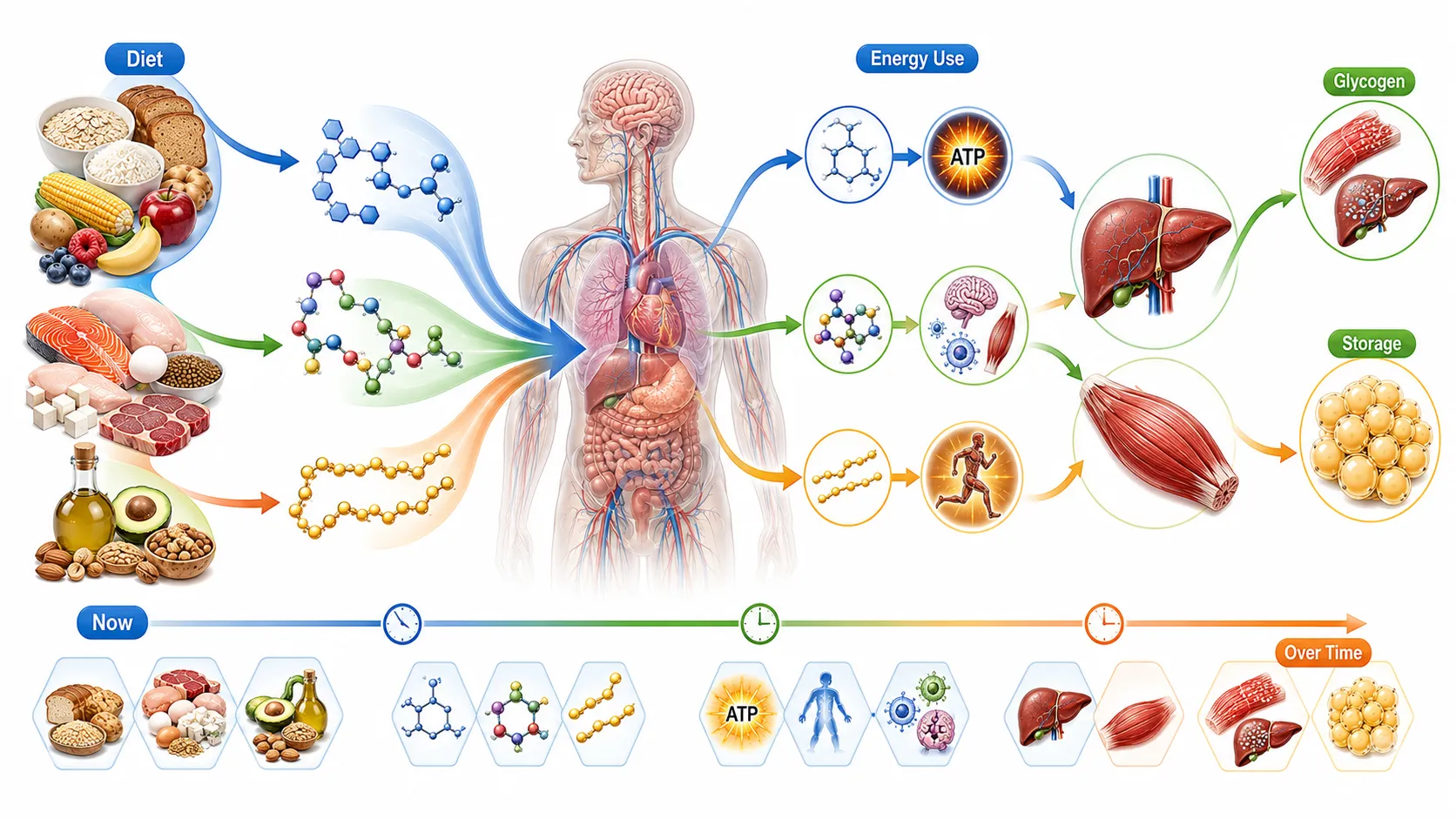
Key Definitions and Concepts
| Key Term | Definition | Importance in Dietary Assessment |
|---|---|---|
| Dietary profile | The overall pattern and characteristics of an individual’s food and nutrient intake | Provides a broader view than analysing a single nutrient or meal |
| Metabolic regulation | The coordinated control of biochemical pathways that manage nutrient utilisation and energy availability | Determines how the body responds to dietary intake |
| Energy balance | The relationship between energy intake and energy expenditure | Influences changes in energy storage over time |
| Energy storage | The retention of energy in biological forms, including glycogen and stored lipids | Supports future energy requirements |
| Postprandial metabolism | Metabolic processes occurring after food consumption | Reflects immediate responses to nutrient availability |
| Substrate oxidation | The utilisation of metabolic substrates to support energy production | Indicates which fuels are being used |
| Metabolic adaptation | Physiological adjustment to sustained changes in nutrient or energy availability | Important when assessing long-term dietary effects |
| Glycogen | A stored form of carbohydrate found mainly in specific tissues | Provides relatively accessible stored fuel |
| Lipid storage | The retention of energy in the form of stored lipids | Represents an important form of long-term energy storage |
| Metabolic flexibility | The ability to adjust fuel utilisation according to nutrient availability and energy demand | Supports adaptation to changing dietary conditions |
Understanding Complex Dietary Profiles
Moving Beyond Individual Nutrients
A dietary profile cannot be adequately assessed by examining carbohydrate, protein or fat intake alone. Foods contain combinations of nutrients, and meals vary according to their structure, timing and energy density.
A comprehensive dietary assessment may consider:
Total energy intake.
Relative carbohydrate intake.
Relative protein intake.
Relative fat intake.
Macronutrient quality.
Fibre-containing foods.
Degree of food processing.
Meal frequency and distribution.
Timing of food intake.
Consistency of dietary patterns.
The same macronutrient ratio may produce different physiological responses when the food sources differ substantially.
For example, two diets may provide a similar proportion of carbohydrate but differ in:
Fibre content.
Food structure.
Rate of digestion.
Degree of processing.
Micronutrient contribution.
Therefore, metabolic assessment must consider the dietary pattern as a whole.
The Individual Context
A complex dietary profile must also be interpreted within the context of the individual.
Important considerations include:
Age.
Physiological status.
Physical activity.
Energy expenditure.
Body composition.
Existing nutritional status.
Duration of the dietary pattern.
The same dietary intake may produce different metabolic outcomes depending on whether an individual has high, moderate or low energy expenditure.
Immediate Effects of Dietary Intake on Metabolic Regulation
The Postprandial Metabolic Response
After a meal, nutrients become available for absorption and cellular metabolism. The body must coordinate the management of multiple substrates simultaneously.
Immediate metabolic priorities include:
Processing incoming nutrients.
Supporting current energy requirements.
Regulating circulating substrate concentrations.
Directing nutrients towards appropriate storage pathways.
Limiting excessive fluctuations in metabolic availability.
These processes are coordinated through enzymatic and hormonal regulation.
Carbohydrate Availability and Immediate Regulation
Digestible carbohydrates can increase the availability of glucose-related substrates after consumption.
The immediate metabolic response may involve:
Increased uptake of glucose by responsive tissues.
Increased utilisation of carbohydrate-derived substrates.
Glycogen synthesis when appropriate.
Alterations in substrate oxidation.
The magnitude of these effects depends on:
Quantity consumed.
Carbohydrate structure.
Fibre content.
Meal composition.
Previous physical activity.
Protein Intake and Immediate Metabolic Responses
Following protein consumption, amino acids become available for cellular processes.
Immediate responses may include:
Increased amino acid availability.
Stimulation of protein-related metabolic processes.
Changes in nitrogen metabolism.
Effects on satiety-related mechanisms.
Amino acids may also contribute to energy metabolism when required, but their primary physiological role extends beyond energy provision.
Dietary Fat and Immediate Metabolic Responses
Dietary fat follows specialised digestion and transport processes.
After absorption, lipid-derived molecules may contribute to:
Cellular energy metabolism.
Structural requirements.
Lipid transport.
Storage pathways.
Because dietary fat is energy-dense, the total quantity consumed can substantially influence the overall energy content of a dietary profile.
Hormonal Responses to Complex Meals
Coordinating Multiple Nutrients
A mixed meal requires the simultaneous regulation of carbohydrates, proteins and lipids.
Hormonal and metabolic signals help coordinate:
Nutrient uptake.
Energy storage.
Fuel mobilisation.
Tissue-specific metabolism.
The metabolic response cannot be predicted solely from one nutrient because the presence of other nutrients may modify the overall physiological effect.
Factors Influencing Hormonal Responses
The response to a meal may be affected by:
Macronutrient proportions.
Total meal energy.
Food structure.
Fibre content.
Rate of nutrient absorption.
Individual metabolic characteristics.
Therefore, assessing a complex dietary profile requires examination of both nutrient composition and physiological context.
Energy Storage: Immediate and Long-Term Perspectives
Glycogen as a Relatively Accessible Energy Store
Carbohydrate-derived substrates can contribute to glycogen storage when conditions favour energy storage.
Glycogen has important characteristics:
It is stored primarily in specialised tissues.
It can support changing energy requirements.
Storage capacity is limited compared with long-term lipid storage.
The amount of glycogen stored can be influenced by:
Carbohydrate availability.
Previous energy expenditure.
Physical activity.
Overall nutritional status.
Lipid as Long-Term Energy Storage
Stored lipids represent a major form of long-term energy reserve.
Lipid storage is influenced by:
Total energy availability.
Dietary energy intake.
Energy expenditure.
Hormonal regulation.
The metabolic handling of incoming nutrients.
It is important to recognise that long-term changes in energy storage depend primarily on the relationship between energy intake and energy expenditure over time, while macronutrient composition can influence substrate utilisation and other metabolic responses.
Protein Is Not a Dedicated Energy Store
Protein has a distinct metabolic role.
Body proteins are primarily required for:
Cellular structure.
Enzyme production.
Transport functions.
Tissue maintenance.
Other physiological processes.
The body does not maintain excess dietary protein as a dedicated storage system equivalent to glycogen or adipose tissue.
Assessing Energy Balance
The Fundamental Relationship
Energy balance represents the relationship between:
Energy Intake and Energy Expenditure
Over time, a sustained imbalance can influence the amount of energy stored within the body.
A dietary assessment should therefore consider:
Total dietary energy.
Basal physiological requirements.
Physical activity.
Daily movement.
Adaptive metabolic responses.
Positive Energy Balance
A positive energy balance occurs when energy intake exceeds energy expenditure over a sustained period.
Potential consequences include:
Increased energy storage.
Expansion of glycogen stores within physiological limits.
Increased long-term lipid storage.
The extent of change depends on multiple biological and behavioural factors.
Negative Energy Balance
A negative energy balance occurs when energy expenditure exceeds energy intake over a sustained period.
The body may respond through:
Increased mobilisation of stored energy.
Changes in substrate oxidation.
Metabolic adaptation.
Altered energy conservation mechanisms.
The response varies according to the duration and severity of the energy deficit.
Assessing Dietary Quality
Macronutrient Quantity Is Not Sufficient
A complete dietary assessment should examine the quality of the nutrients consumed.
For carbohydrate-containing foods, relevant factors include:
Fibre content.
Degree of processing.
Physical structure.
Nutrient density.
For dietary protein, considerations include:
Amino acid composition.
Digestibility.
Distribution across meals.
Overall dietary adequacy.
For dietary fats, assessment may include:
Fatty acid composition.
Food source.
Contribution to total energy intake.
Why Food Patterns Matter
Foods are not simply collections of isolated macronutrients.
Whole dietary patterns can influence:
Rate of digestion.
Nutrient absorption.
Satiety.
Meal energy density.
Long-term dietary consistency.
Immediate Assessment of a Dietary Profile
Step 1: Identify Total Energy Intake
Begin by examining the estimated energy content of the dietary profile.
Questions include:
Is energy intake appropriate to estimated expenditure?
Does the profile appear to contain unusually energy-dense meals?
Is energy intake distributed evenly or concentrated at specific times?
Step 2: Examine Macronutrient Distribution
Assess the relative contribution of:
Carbohydrates.
Proteins.
Lipids.
However, avoid interpreting the ratio without considering total energy intake.
Step 3: Assess Food Quality
Consider:
Whole and minimally processed foods.
Fibre-containing foods.
Nutrient density.
Diversity of food sources.
Step 4: Predict Immediate Metabolic Responses
Consider:
Likely post-meal substrate availability.
Potential changes in carbohydrate utilisation.
Protein-related metabolic processes.
Lipid transport and storage.
Hormonal coordination.
Long-Term Assessment of a Dietary Profile
Repeated Exposure and Metabolic Adaptation
A single meal produces an acute metabolic response, whereas a repeated dietary pattern can produce longer-term adaptation.
Long-term changes may involve:
Altered substrate utilisation.
Changes in appetite responses.
Modification of enzyme activity.
Changes in energy stores.
Adaptation to sustained energy availability.
These adaptations are not necessarily permanent and may change when the dietary pattern changes.
Body Energy Stores
Over time, dietary intake interacts with energy expenditure to influence energy stores.
The major storage forms include:
Glycogen.
Stored lipid.
Changes in these stores depend on:
Duration of dietary exposure.
Energy balance.
Physical activity.
Metabolic regulation.
Long-Term Metabolic Flexibility
A sustained dietary pattern may influence how efficiently the body adapts to changes in nutrient availability.
Metabolic flexibility involves the capacity to shift between available fuels according to:
Nutritional state.
Energy demand.
Physical activity.
Duration of fasting.
Practical Example: A High-Energy Mixed Dietary Profile
Consider an individual who regularly consumes a dietary pattern characterised by:
Large energy-dense meals.
Frequent highly processed foods.
High total dietary fat.
Substantial refined carbohydrate intake.
Limited fibre-containing foods.
Immediate Effects
Potential immediate responses may include:
High availability of metabolic substrates.
Significant post-meal nutrient processing.
Increased demand for hormonal regulation.
Increased potential for energy storage when intake exceeds current requirements.
Long-Term Considerations
If the pattern consistently provides more energy than is expended, long-term outcomes may include:
Increased energy storage.
Changes in substrate utilisation.
Physiological adaptation to sustained energy surplus.
However, a critical assessment must not assume identical outcomes for all individuals.
Relevant factors include:
Total energy expenditure.
Physical activity.
Duration of exposure.
Individual metabolic characteristics.
Practical Example: A High-Protein Dietary Profile
Consider a dietary pattern with:
Increased protein intake.
Moderate carbohydrate intake.
Moderate fat intake.
Adequate overall energy intake.
Potential immediate responses may include:
Increased amino acid availability.
Support for protein synthesis.
Changes in satiety-related responses.
Increased metabolic processing of dietary protein.
Long-term assessment should consider:
Whether protein intake meets physiological requirements.
Overall dietary balance.
Energy intake.
Sustainability of the dietary pattern.
A high protein proportion alone does not determine the overall metabolic outcome.
Practical Example: A Lower-Carbohydrate, Higher-Fat Profile
Consider a dietary profile characterised by:
Reduced carbohydrate availability.
Higher dietary fat intake.
Adequate protein intake.
Potential metabolic adaptations may include:
Altered reliance on carbohydrate-derived substrates.
Increased utilisation of lipid-derived fuels.
Changes in glycogen-related metabolism.
Long-term outcomes depend on:
Total energy intake.
Fat quality.
Protein adequacy.
Duration of the dietary pattern.
Physical activity.
Comparing Immediate and Long-Term Effects
Immediate Effects
Immediate responses occur over a relatively short period following food consumption.
These may include:
Changes in circulating nutrients.
Hormonal signalling.
Altered substrate oxidation.
Nutrient uptake.
Glycogen synthesis.
Temporary energy storage.
Long-Term Effects
Long-term effects reflect repeated dietary exposure.
These may include:
Changes in body energy stores.
Metabolic adaptation.
Altered fuel utilisation.
Changes in dietary habits and appetite patterns.
Adaptation of metabolic pathways.
The two time scales should not be confused.
An acute increase in a metabolic marker does not necessarily predict a long-term physiological outcome.
The Importance of Physical Activity
Energy Expenditure Changes the Interpretation
Physical activity is a major factor in the assessment of dietary profiles.
An individual with high energy expenditure may process the same dietary intake differently from an individual with low energy expenditure.
Assessment should consider:
Type of activity.
Duration.
Frequency.
Overall daily movement.
Recovery requirements.
Macronutrients and Physical Activity
Physical activity can influence:
Glycogen utilisation.
Carbohydrate oxidation.
Lipid utilisation.
Protein requirements associated with tissue maintenance.
Therefore, dietary assessment without considering activity may produce incomplete conclusions.
Assessing Meal Timing and Distribution
Timing as Part of the Dietary Profile
The timing and distribution of meals may influence the pattern of nutrient availability.
Assessment may consider:
Number of meals.
Distribution of energy across the day.
Timing relative to activity.
Consistency of eating patterns.
Meal timing should be interpreted within the context of total dietary intake and individual lifestyle.
Repeated Large Meals
Repeated consumption of very large meals may create substantial periods of nutrient availability.
The body must regulate:
Nutrient transport.
Substrate utilisation.
Energy storage.
However, the metabolic significance depends on the overall dietary pattern rather than meal size alone.
A Structured Process for Assessing Complex Dietary Profiles
Step 1: Collect Relevant Dietary Information
Gather information about:
Food intake.
Portion sizes.
Meal frequency.
Food preparation.
Dietary consistency.
Step 2: Estimate Macronutrient and Energy Intake
Identify:
Relative carbohydrate intake.
Relative protein intake.
Relative fat intake.
Estimated total energy.
Step 3: Evaluate Nutrient Quality
Consider:
Food sources.
Fibre.
Degree of processing.
Nutrient density.
Step 4: Consider the Individual Context
Assess:
Physical activity.
Energy requirements.
Body composition.
Physiological state.
Step 5: Predict Immediate Responses
Evaluate likely:
Postprandial nutrient availability.
Hormonal responses.
Substrate oxidation patterns.
Short-term energy storage.
Step 6: Evaluate Long-Term Exposure
Consider:
Duration of the dietary pattern.
Consistency of energy balance.
Potential metabolic adaptation.
Changes in energy storage.
Step 7: Identify Uncertainty
A professional assessment should recognise limitations.
Ask:
What information is missing?
Are energy expenditure estimates available?
Is dietary reporting reliable?
Are individual metabolic differences known?
Common Errors in Dietary Assessment
Focusing Only on Macronutrient Percentages
This approach ignores:
Total energy intake.
Food quality.
Physical activity.
Individual variation.
Assuming Immediate Effects Predict Long-Term Outcomes
Acute metabolic responses may not represent long-term adaptation.
Ignoring Energy Expenditure
Dietary intake cannot be interpreted fully without considering energy requirements.
Treating All Foods Within a Macronutrient Category as Identical
Carbohydrate-containing foods, protein sources and fat sources can differ substantially in their biochemical and nutritional characteristics.
Key Benefits of a Comprehensive Assessment Approach
A systematic assessment enables Learners to:
Analyse complete dietary patterns.
Distinguish immediate from long-term effects.
Understand energy storage mechanisms.
Recognise the importance of energy balance.
Evaluate metabolic adaptation.
Apply biochemical knowledge to realistic dietary scenarios.
Avoid oversimplified conclusions.
Professional Application and Critical Judgement
Advanced assessment of dietary profiles requires professional judgement.
A scientifically informed approach should:
Integrate multiple sources of information.
Avoid conclusions based on one dietary variable.
Recognise individual variation.
Distinguish association from causation.
Consider short-term and long-term effects separately.
For example, observing a higher proportion of dietary fat does not by itself determine whether an individual will experience increased long-term energy storage. The assessment must examine total energy balance, physical activity, dietary duration and the broader nutritional context.
Key Principles for Advanced Assessment
When assessing complex dietary profiles, remember that:
Dietary patterns are more informative than isolated nutrients.
Macronutrient ratios must be interpreted alongside total energy intake.
Immediate post-meal responses differ from long-term adaptation.
Energy balance strongly influences long-term energy storage.
Food quality can modify metabolic responses.
Physical activity changes nutrient requirements and utilisation.
Individual variation affects metabolic outcomes.
Professional assessment should identify uncertainty rather than assume certainty.
Summary
Complex dietary profiles influence human metabolic regulation through the combined effects of total energy intake, macronutrient composition, nutrient quality, meal distribution and individual physiological characteristics. Immediately after food intake, the body coordinates digestion, absorption, hormonal signalling and substrate utilisation to manage the availability of carbohydrates, proteins and lipids. These acute responses help maintain metabolic stability while supporting immediate energy requirements and appropriate nutrient storage.
Over the longer term, repeated dietary exposure can contribute to changes in energy stores and metabolic adaptation. Glycogen provides a relatively accessible form of stored carbohydrate, while stored lipids represent an important long-term energy reserve. Protein has essential structural and functional roles and does not serve as a dedicated energy storage system in the same way.
A rigorous assessment must distinguish between immediate and long-term outcomes. It should consider energy balance, physical activity, dietary quality and individual variation rather than relying solely on macronutrient ratios. The same dietary profile may produce different metabolic responses in different individuals or under different physiological conditions.
By applying a structured assessment process, Learners can analyse complex dietary patterns, predict likely metabolic responses and evaluate how sustained dietary behaviours may influence metabolic regulation and energy storage. This integrated approach provides an essential foundation for advanced nutritional biochemistry and evidence-informed evaluation of dietary interventions.
4.Formulate Evidence-Based Nutritional Strategies That Carefully Manipulate Macronutrient Intake to Optimise Specific Metabolic and Health Outcomes
Formulating an evidence-based nutritional strategy requires more than selecting a popular diet or applying a fixed ratio of carbohydrates, proteins and fats. It involves systematically assessing an individual’s nutritional context, identifying a specific metabolic or health-related objective, reviewing relevant scientific evidence and designing an appropriate pattern of macronutrient intake. The strategy must also consider total energy intake, food quality, physical activity, physiological status, sustainability and individual variation.
Macronutrient manipulation refers to the planned adjustment of carbohydrate, protein and fat intake to influence nutrient availability, substrate utilisation, energy balance and physiological responses. At an advanced level, this process should not be interpreted as simply increasing or reducing one macronutrient. Any change in macronutrient intake can affect the wider dietary pattern and the availability of other nutrients.
Evidence-based nutritional planning therefore requires critical judgement. Research findings must be interpreted according to the population studied, the intervention design, the duration of the intervention and the outcomes measured. A strategy that produces a favourable outcome in one context may not produce the same result in another.
The objective of this approach is to develop nutritional strategies that are scientifically informed, physiologically appropriate and capable of supporting clearly defined metabolic and health outcomes.
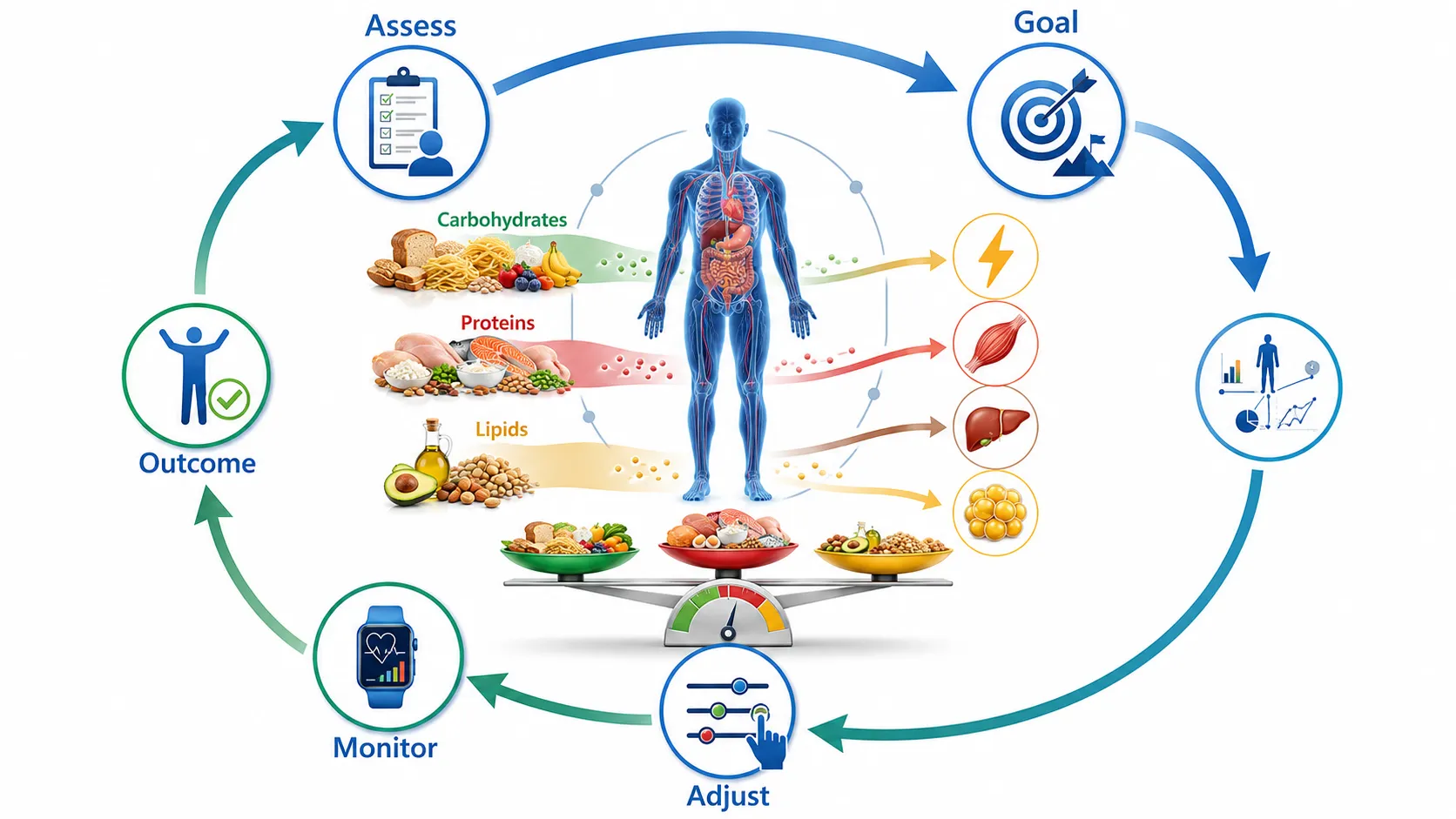
Key Definitions and Concepts
| Key Term | Definition | Relevance to Nutritional Strategy |
|---|---|---|
| Evidence-based practice | The integration of relevant scientific evidence with professional judgement and individual circumstances | Supports scientifically informed nutritional planning |
| Macronutrient manipulation | Planned adjustment of carbohydrate, protein and fat intake | Can alter substrate availability and metabolic responses |
| Metabolic outcome | A measurable physiological response related to nutrient or energy metabolism | Helps define the purpose of a strategy |
| Energy balance | The relationship between energy intake and energy expenditure | Influences long-term changes in energy stores |
| Nutrient timing | The planned distribution of nutrient intake in relation to daily activities or physiological demands | May influence nutrient availability at specific times |
| Individualisation | Adaptation of a strategy to an individual’s characteristics and requirements | Recognises variation in metabolic responses |
| Dietary quality | The nutritional characteristics and overall quality of food choices | Influences outcomes beyond macronutrient quantity |
| Substrate utilisation | The use of available carbohydrates, fats or other substrates to support metabolic processes | Changes according to nutrient availability and energy demand |
| Metabolic flexibility | The capacity to adjust fuel utilisation in response to changing physiological conditions | Supports adaptation to varying nutrient availability |
| Sustainability | The ability to maintain a dietary strategy over an appropriate period | Essential for long-term application |
The Principles of Evidence-Based Nutritional Strategy Formulation
Defining a Clear Outcome
A nutritional strategy should begin with a clearly defined objective. Macronutrient manipulation is not an end in itself; it is a method that may be used to support a particular physiological outcome.
Potential objectives may include:
Supporting appropriate energy availability.
Improving dietary protein adequacy.
Supporting physical activity and recovery.
Managing post-meal nutrient availability.
Supporting changes in body energy stores.
Improving dietary quality.
Supporting metabolic stability.
Maintaining nutritional adequacy during dietary change.
The objective must be specific enough to guide the strategy.
For example, a strategy designed to support endurance activity may differ substantially from one designed to support adequate protein intake during an energy-restricted dietary pattern.
Establishing the Individual Context
Before manipulating macronutrient intake, relevant information should be assessed.
This may include:
Estimated energy requirements.
Physical activity pattern.
Dietary preferences.
Current dietary intake.
Meal timing.
Physiological status.
Relevant health considerations.
Cultural and practical food availability.
A strategy should not assume that all individuals require the same macronutrient distribution.
Integrating Scientific Evidence
Evidence-based formulation requires more than locating a single study.
A critical evaluation should consider:
The type of research.
Study population.
Duration of intervention.
Dietary comparison.
Outcome measurements.
Consistency with other research.
Biological plausibility.
Higher-level evidence synthesis should compare multiple sources rather than relying on isolated findings.
Understanding the Role of Carbohydrate Manipulation
Carbohydrates as a Metabolic Substrate
Carbohydrates contribute to the availability of glucose-related substrates and can support energy metabolism in many physiological situations.
Adjusting carbohydrate intake may influence:
Post-meal nutrient availability.
Glycogen-related processes.
Carbohydrate oxidation.
Overall dietary energy distribution.
The appropriate level of carbohydrate intake depends on the individual’s energy demands and dietary context.
Increasing Carbohydrate Availability
A strategy may increase carbohydrate intake when the objective is to support situations associated with higher carbohydrate utilisation.
Considerations include:
Type and duration of physical activity.
Overall energy expenditure.
Timing of activity.
Food quality.
Fibre intake.
An evidence-based approach should not simply recommend increasing refined carbohydrate intake without considering the overall dietary pattern.
Reducing Carbohydrate Availability
A reduction in carbohydrate intake may alter the balance of available metabolic substrates.
Possible adaptations include:
Greater reliance on lipid-derived substrates.
Changes in glycogen availability.
Changes in dietary food selection.
However, the physiological outcome depends on what replaces the reduced carbohydrate.
Possible replacements include:
Dietary fat.
Dietary protein.
A reduction in total energy intake.
These alternatives can produce different metabolic effects.
Understanding the Role of Protein Manipulation
Protein and Physiological Function
Protein provides amino acids required for:
Tissue maintenance.
Protein synthesis.
Enzyme production.
Transport processes.
Other structural and functional roles.
Manipulating protein intake requires attention to both total intake and distribution.
Increasing Protein Proportion
A higher proportion of dietary protein may be considered when the strategy aims to support:
Adequate amino acid availability.
Maintenance of lean tissue during periods of altered energy intake.
Satiety-related dietary goals.
Recovery requirements associated with physical activity.
The evidence should be interpreted carefully.
Increasing protein intake beyond an individual’s physiological requirements does not necessarily produce proportionally greater benefits.
Protein Distribution
The distribution of protein across the day may also be relevant.
Assessment may consider:
Protein content of meals.
Frequency of intake.
Food source.
Overall energy availability.
This demonstrates that nutritional strategy is not based solely on total daily macronutrient percentages.
Understanding the Role of Dietary Fat Manipulation
Dietary Fat as an Energy-Dense Nutrient
Dietary fat contributes substantially to dietary energy because of its high energy density.
Changes in dietary fat intake may influence:
Total energy intake.
Meal energy density.
Availability of lipid-derived substrates.
Long-term dietary patterns.
The quality of dietary fat is an essential consideration.
Evaluating Fat Quality
A strategy should consider:
Food source.
Fatty acid composition.
Degree of food processing.
Overall dietary pattern.
It is scientifically inappropriate to treat all dietary fats as metabolically identical.
Increasing or Reducing Dietary Fat
Changes in dietary fat should be assessed alongside the macronutrient that replaces it.
For example, reducing dietary fat while increasing refined carbohydrate may produce a different dietary pattern from reducing dietary fat while increasing fibre-containing carbohydrate foods.
The Relationship Between Macronutrients and Energy Balance
Macronutrient Manipulation Does Not Replace Energy Assessment
Macronutrient ratios must be interpreted alongside total energy intake and energy expenditure.
A dietary pattern may contain a carefully designed macronutrient ratio but still provide:
More energy than required.
Less energy than required.
An appropriate level of energy.
Therefore, nutritional strategies should first consider the relationship between energy intake and physiological requirements.
Positive and Negative Energy Balance
A sustained positive energy balance can increase long-term energy storage.
A sustained negative energy balance can increase reliance on stored energy.
However, the physiological response may be influenced by:
Duration.
Magnitude of energy imbalance.
Protein intake.
Physical activity.
Individual characteristics.
Macronutrient manipulation should therefore be integrated with an assessment of energy balance.
Formulating a Step-by-Step Nutritional Strategy
Step 1: Identify the Primary Objective
The first step is to determine the outcome the strategy aims to support.
Examples include:
Supporting high physical activity.
Improving overall dietary protein adequacy.
Supporting a sustained change in energy intake.
Improving meal composition.
Supporting stable nutrient availability.
The objective should be realistic and measurable where possible.
Step 2: Assess the Current Dietary Profile
Evaluate:
Total estimated energy intake.
Carbohydrate sources.
Protein sources.
Dietary fat sources.
Fibre-containing foods.
Meal distribution.
Food processing patterns.
This establishes a baseline.
Step 3: Assess Physiological and Lifestyle Context
Consider:
Daily energy expenditure.
Physical activity.
Occupational demands.
Meal schedule.
Food availability.
Dietary preferences.
Step 4: Identify Evidence Relevant to the Objective
The evidence should match the question being addressed.
For example:
Research involving highly active populations may be relevant to activity-related strategies.
Research involving energy restriction may not automatically apply to energy maintenance.
Step 5: Adjust Macronutrient Distribution
Macronutrient adjustments should be purposeful.
Ask:
Why is carbohydrate being changed?
What will replace it?
Why is protein being increased or reduced?
How will dietary fat quality be maintained?
Will total energy change?
Step 6: Protect Nutritional Adequacy
Macronutrient manipulation should not unnecessarily reduce dietary quality.
Monitor:
Food variety.
Fibre-containing foods.
Essential nutrient intake.
Adequate energy availability.
Step 7: Monitor and Review
A nutritional strategy should be evaluated rather than assumed to be effective.
Relevant observations may include:
Dietary adherence.
Energy levels.
Physical performance.
Hunger and fullness.
Changes in dietary intake patterns.
Interpretation should remain within the individual’s appropriate professional context.
Nutrient Timing as a Strategic Tool
Understanding Nutrient Distribution
The timing of nutrient intake can influence when substrates become available.
Nutrient distribution may be considered in relation to:
Physical activity.
Work schedules.
Sleep patterns.
Meal preferences.
Carbohydrate Timing
Carbohydrate distribution may be adjusted to align with periods of greater energy demand.
Potential considerations include:
Activity duration.
Training intensity.
Recovery periods.
Total daily carbohydrate intake.
Protein Timing
Protein intake can be distributed across meals to provide repeated periods of amino acid availability.
The strategy should consider:
Total protein intake.
Meal pattern.
Food preferences.
Overall dietary adequacy.
Formulating Strategies for Specific Metabolic Objectives
Strategy Objective: Supporting Sustained Physical Activity
A strategy may focus on ensuring adequate energy and substrate availability.
Key considerations include:
Total energy intake.
Carbohydrate availability.
Protein adequacy.
Dietary fat contribution.
Meal timing.
A balanced strategy may prioritise:
Sufficient overall energy.
Appropriate carbohydrate-containing foods.
Adequate protein-containing foods.
Nutrient-dense dietary choices.
Strategy Objective: Supporting Adequate Protein Intake
The assessment should identify whether protein intake is distributed appropriately within the individual’s overall diet.
Potential strategies include:
Including suitable protein sources across meals.
Improving dietary variety.
Considering protein quality.
Maintaining adequate total energy.
Strategy Objective: Modifying Energy Intake
Where the objective involves a sustained change in energy balance, macronutrient manipulation may support dietary adherence and nutritional adequacy.
Consider:
Satiety.
Food preferences.
Energy density.
Protein adequacy.
Fibre-containing foods.
No single macronutrient distribution guarantees the same response for every individual.
Practical Example: Strategy for an Active Individual
Consider an individual with:
Regular high energy expenditure.
Frequent structured physical activity.
A dietary pattern with inconsistent meal timing.
Assessment
The assessment identifies:
Variable energy availability.
Inconsistent carbohydrate intake around activity.
Adequate overall protein intake.
Strategy Formulation
A potential evidence-informed strategy may involve:
Improving meal regularity.
Ensuring adequate total energy intake.
Distributing carbohydrate-containing foods around periods of high energy demand.
Maintaining adequate protein intake.
Including appropriate dietary fat sources.
Evaluation
The strategy should be reviewed according to:
Practical adherence.
Energy availability.
Dietary adequacy.
Physical performance indicators.
Practical Example: Strategy for Improving Dietary Quality
Consider a dietary profile characterised by:
High reliance on highly processed foods.
Limited dietary variety.
Low intake of fibre-containing foods.
A strategy should not focus only on changing macronutrient percentages.
Potential improvements may include:
Increasing dietary variety.
Selecting more nutrient-dense food sources.
Improving fibre intake through appropriate foods.
Maintaining balanced protein sources.
Reviewing overall energy density.
The objective is to improve the complete dietary profile.
Practical Example: Replacing One Macronutrient With Another
Consider a strategy that reduces the proportion of dietary carbohydrate.
The critical question is:
What replaces the carbohydrate?
Possible alternatives include:
Increasing dietary protein.
Increasing dietary fat.
Reducing total energy intake.
Each replacement may influence:
Energy density.
Satiety.
Substrate availability.
Overall dietary quality.
This illustrates why macronutrient ratios must not be interpreted in isolation.
Evidence Hierarchies in Nutritional Strategy
Types of Evidence
Different forms of research provide different forms of information.
Evidence may include:
Mechanistic research.
Controlled dietary studies.
Observational research.
Systematic reviews.
Meta-analyses.
Each type has strengths and limitations.
Critical Interpretation
When reviewing evidence, ask:
Was the intervention sufficiently long?
Was dietary adherence measured?
Was total energy intake controlled?
What population was studied?
Were the outcomes clinically or physiologically relevant?
An evidence-based strategy requires interpretation rather than simple repetition of research findings.
Individual Variation and Personalisation
Why Responses Differ
Individuals can vary in their response to dietary change because of differences in:
Energy expenditure.
Physical activity.
Body composition.
Metabolic characteristics.
Dietary habits.
Therefore, two people following a similar macronutrient ratio may experience different outcomes.
The Principle of Individualisation
A professional strategy should be adaptable.
Individualisation may involve adjusting:
Portion sizes.
Meal timing.
Macronutrient distribution.
Food sources.
Total energy intake.
The objective is not to create unlimited dietary complexity but to make evidence relevant to the individual’s context.
Common Errors When Manipulating Macronutrients
Using a Fixed Ratio for Everyone
This approach ignores differences in:
Energy needs.
Physical activity.
Dietary preferences.
Physiological requirements.
Ignoring What Replaces a Reduced Macronutrient
Reducing one macronutrient always changes another aspect of the diet.
The replacement must be assessed carefully.
Focusing Only on Quantity
Macronutrient quality remains important.
For example, dietary patterns with similar carbohydrate percentages can differ significantly in food quality.
Ignoring Long-Term Sustainability
A theoretically effective strategy has limited practical value if it cannot be maintained.
Sustainability may depend on:
Food preferences.
Cost.
Culture.
Lifestyle.
Practical preparation.
Key Benefits of Evidence-Based Macronutrient Strategies
A systematic approach can help Learners:
Link nutritional biochemistry with dietary planning.
Understand how macronutrients influence substrate availability.
Apply research evidence critically.
Consider individual variation.
Distinguish energy effects from macronutrient effects.
Develop realistic and structured nutritional strategies.
Evaluate dietary interventions systematically.
Monitoring Outcomes and Adjusting the Strategy
The Importance of Review
A nutritional strategy should operate as a cycle rather than a fixed prescription.
The process includes:
Assessment.
Objective setting.
Evidence review.
Strategy formulation.
Implementation.
Monitoring.
Adjustment.
Appropriate Outcome Measures
Depending on the context, evaluation may consider:
Dietary adherence.
Changes in food intake patterns.
Subjective energy levels.
Hunger and fullness patterns.
Physical activity demands.
Relevant metabolic measurements where appropriately assessed.
Outcome measures must be interpreted carefully and within the appropriate scope of professional practice.
Ethical and Professional Considerations
Avoiding Over-Simplification
Professional nutritional communication should avoid claims that:
One macronutrient is universally harmful.
One dietary ratio is universally superior.
A single hormonal response determines overall health.
Scientific evidence is more complex.
Recognising Scope of Practice
Advanced nutritional knowledge does not automatically authorise every form of individual clinical intervention.
Where specialised clinical assessment is required, appropriate qualified healthcare professionals should be involved.
Communicating Uncertainty
A scientifically responsible strategy should acknowledge:
Individual variation.
Limitations in evidence.
Uncertainty regarding long-term outcomes.
An Advanced Decision-Making Framework
Question 1: What Outcome Is Being Targeted?
Identify the metabolic or health-related objective.
Question 2: What Is the Current Dietary Pattern?
Assess:
Energy intake.
Macronutrient distribution.
Food quality.
Meal timing.
Question 3: What Is the Physiological Context?
Consider:
Energy demand.
Physical activity.
Relevant individual factors.
Question 4: What Does the Evidence Suggest?
Evaluate:
Quality of research.
Relevance to the individual.
Biological mechanisms.
Question 5: What Macronutrient Change Is Appropriate?
Determine:
Which nutrient changes.
What replaces it.
Whether total energy changes.
Question 6: How Will Success Be Evaluated?
Identify realistic and relevant outcomes.
Applying Critical Thinking to Macronutrient Manipulation
An advanced Learner should be able to evaluate statements critically.
For example:
Statement: “Reducing carbohydrates will automatically improve metabolic health.”
A critical analysis should recognise that:
Carbohydrate reduction can produce different physiological effects.
The replacement macronutrient matters.
Food quality matters.
Energy intake may change simultaneously.
Individual responses vary.
Similarly:
Statement: “Increasing protein always produces better metabolic outcomes.”
Critical evaluation should consider:
Baseline protein intake.
Physiological requirements.
Total dietary energy.
Duration of the intervention.
Individual context.
Summary
Formulating evidence-based nutritional strategies through careful manipulation of macronutrient intake requires a systematic understanding of nutritional biochemistry, metabolic regulation and research evaluation. Carbohydrates, proteins and fats influence nutrient availability and substrate utilisation in different ways, but their effects cannot be understood independently of total energy intake, dietary quality and individual physiology.
An effective strategy begins with a clearly defined objective and a detailed assessment of the existing dietary profile. Scientific evidence must then be evaluated critically according to study design, population and outcome measures. Macronutrient adjustments should be purposeful, and the consequences of replacing one nutrient with another must always be considered.
Carbohydrate manipulation may influence substrate availability and glycogen-related metabolism. Protein manipulation may influence amino acid availability, protein turnover and satiety-related processes. Dietary fat manipulation can influence energy density and the availability of lipid-derived substrates. However, no single macronutrient strategy is universally appropriate.
The most effective evidence-based approach is individualised, adaptable and sustainable. It integrates macronutrient distribution with total energy intake, food quality, physical activity and lifestyle requirements. Continuous monitoring and review allow the strategy to be adjusted according to relevant outcomes.
By applying this structured process, Learners can formulate scientifically informed nutritional strategies that carefully manipulate macronutrient intake while recognising the complexity, limitations and individual variability of human metabolic regulation.
5.Critically Appraise the Specific Role of Macronutrients in Maintaining Energy Balance During Different Physiological States, Such as Intensive Exercise or Prolonged Fasting
Energy balance is a dynamic physiological process involving the relationship between energy intake, energy expenditure and the storage or mobilisation of metabolic fuels. Carbohydrates, proteins and lipids each make distinct contributions to this process. Their relative importance changes according to the individual’s physiological state, nutrient availability, duration and intensity of physical activity, hormonal environment and overall energy demands.
During periods of intensive exercise, the body must rapidly increase energy production to support muscular contraction and other physiological functions. During prolonged fasting, by contrast, the body must preserve essential functions while relying increasingly on stored energy. These contrasting states demonstrate the metabolic flexibility of human physiology and the changing roles of macronutrients in maintaining energy homeostasis.
A critical appraisal requires more than describing the functions of carbohydrates, proteins and fats. It involves evaluating how their contribution to energy metabolism changes over time, identifying the biochemical mechanisms responsible for these changes and recognising the limitations of simplified nutritional claims. No macronutrient operates independently. Metabolic pathways interact continuously, and hormonal regulation determines which substrates are prioritised under different conditions.
This section examines the roles of macronutrients during intensive exercise and prolonged fasting, compares their metabolic contributions and evaluates how nutritional status influences energy balance across changing physiological conditions.
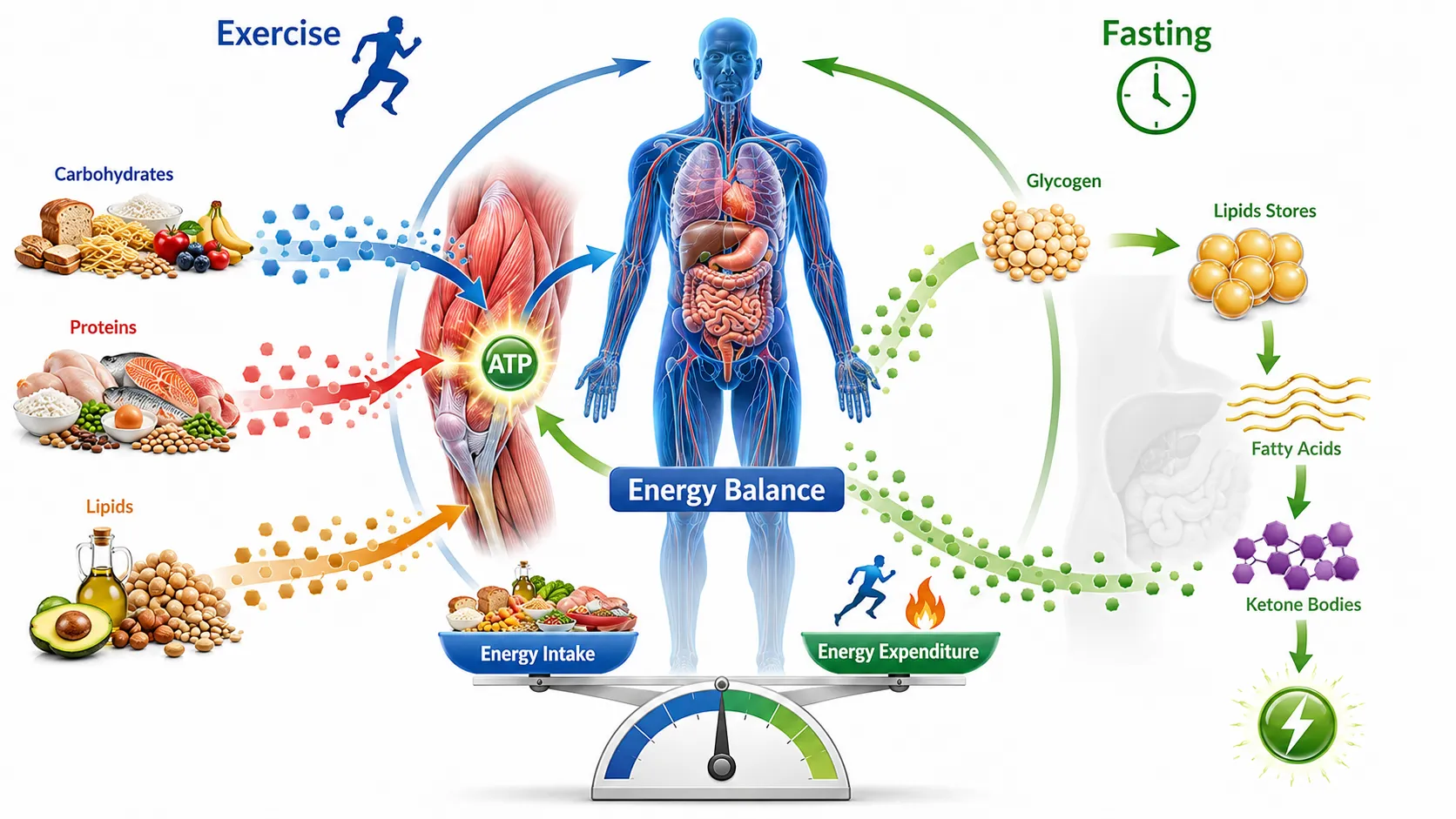
Key Definitions and Concepts
| Key Term | Definition | Relevance to Physiological Energy Balance |
|---|---|---|
| Energy balance | The relationship between energy intake and total energy expenditure over time | Determines whether energy stores are maintained, increased or mobilised |
| Energy expenditure | The energy used to support basal functions, physical activity and other physiological processes | Changes substantially during intensive exercise |
| Substrate utilisation | The use of carbohydrates, fats or other substrates to generate energy | Varies according to intensity, duration and nutrient availability |
| Glycogen | A stored form of carbohydrate, particularly important for rapidly available energy | Supports carbohydrate metabolism during increased energy demand |
| Lipolysis | The mobilisation of stored lipids into usable metabolic components | Becomes increasingly important when food availability is reduced |
| Gluconeogenesis | The production of glucose from non-carbohydrate precursors | Supports glucose availability during fasting |
| Ketone bodies | Metabolic compounds produced during increased reliance on lipid-derived energy | Become more relevant during extended carbohydrate restriction or fasting |
| Metabolic flexibility | The ability to adjust fuel selection according to physiological conditions | Allows adaptation between feeding, exercise and fasting |
| Protein turnover | The continuous synthesis and breakdown of body proteins | May contribute substrates during prolonged energy limitation |
| Hormonal regulation | Control of metabolism through endocrine signalling | Coordinates storage and mobilisation of energy |
Understanding Energy Balance Across Physiological States
Energy Balance Is a Dynamic Process
Energy balance is often described simply as the difference between energy consumed and energy expended. Although this principle is useful, human physiology is more complex. The body does not use dietary energy in the same way at every moment.
Energy requirements change according to:
Resting metabolic needs.
Physical activity.
Exercise intensity.
Exercise duration.
Nutritional state.
Environmental conditions.
Recovery requirements.
The body must therefore continuously regulate the availability and use of metabolic substrates.
Macronutrients Have Distinct Metabolic Roles
The three major macronutrients contribute differently to energy metabolism.
Carbohydrates are particularly important as a rapidly available source of metabolic substrate and contribute to glycogen storage.
Lipids provide a highly concentrated form of energy and represent a major long-term energy reserve.
Proteins primarily provide structural and functional components but can contribute metabolic substrates under specific physiological conditions.
Their relative contribution is not fixed. It changes according to metabolic demand and nutrient availability.
Carbohydrates During Intensive Exercise
The Importance of Rapid Energy Availability
During intensive exercise, muscular energy demand can increase rapidly. The body requires efficient systems capable of supplying energy at a rate sufficient to support repeated muscular contraction.
Carbohydrate-derived substrates are important because they can contribute to energy production during conditions requiring relatively rapid metabolic flux.
Key carbohydrate-related processes include:
Utilisation of circulating glucose.
Breakdown of glycogen.
Glycolytic energy production.
Replenishment of glycogen following exercise.
The relative importance of these processes depends on the intensity and duration of activity.
Muscle Glycogen as a Local Energy Reserve
Glycogen stored in skeletal muscle provides an important source of carbohydrate-derived substrate.
During demanding exercise:
Glycogen can be mobilised within active muscle.
Carbohydrate metabolism can increase substantially.
Availability of glycogen may influence sustained exercise capacity.
However, glycogen is not an unlimited energy reserve.
Its availability can be influenced by:
Previous dietary carbohydrate intake.
Previous exercise.
Recovery duration.
Training status.
Critical Appraisal of Carbohydrate Requirements
It would be inaccurate to state that intensive exercise always requires the same quantity of dietary carbohydrate.
Requirements vary according to:
Exercise intensity.
Exercise duration.
Frequency of training.
Total energy expenditure.
Recovery period.
Therefore, nutritional strategies should be adapted to physiological demands rather than applying a single fixed carbohydrate ratio.
Lipids During Intensive Exercise
Fat as an Important Energy Substrate
Lipids can contribute significantly to energy metabolism during physical activity.
Stored lipids provide a large potential energy reserve. Their contribution to energy production can vary depending on exercise conditions.
Factors influencing lipid utilisation include:
Exercise intensity.
Exercise duration.
Training status.
Nutritional state.
Carbohydrate availability.
During sustained activity, lipid-derived substrates may contribute substantially to overall energy production.
The Relationship Between Exercise Intensity and Fat Utilisation
At lower and moderate intensities, the body may utilise a greater relative contribution from lipid-derived substrates than during very high-intensity activity.
However, this should not be interpreted as meaning that dietary fat intake automatically increases fat oxidation during all forms of exercise.
Substrate selection is influenced by:
Hormonal regulation.
Muscle metabolic characteristics.
Availability of stored carbohydrate.
Oxygen availability.
Exercise intensity.
Critical Evaluation
Dietary strategies designed to increase fat availability may alter substrate utilisation, but this does not necessarily mean improved performance or suitability for every form of exercise.
A critical evaluation should distinguish between:
Increased fat oxidation.
Improved exercise performance.
Long-term adaptation.
Practical sustainability.
Protein During Intensive Exercise
Protein Is Not the Primary Exercise Fuel
Protein is not generally the body’s preferred primary energy substrate during normal exercise conditions.
Its major functions include:
Tissue maintenance.
Enzyme production.
Structural support.
Repair and remodelling.
However, amino acids can contribute to metabolic pathways, particularly when other substrates are limited or during prolonged energy-demanding conditions.
Protein Turnover and Exercise
Intensive exercise can influence protein turnover.
Nutritional considerations may include:
Adequate total protein intake.
Distribution of protein across meals.
Overall energy availability.
Recovery requirements.
The primary importance of protein in an exercise context is therefore related to physiological maintenance and adaptation rather than simply supplying immediate energy.
Hormonal Regulation During Intensive Exercise
Coordinating Fuel Mobilisation
Exercise changes the hormonal environment to support increased energy availability.
Metabolic regulation may involve:
Increased mobilisation of stored substrates.
Changes in insulin-related signalling.
Increased activity of hormones involved in fuel mobilisation.
Altered blood flow to metabolically active tissues.
The purpose of these adjustments is to ensure that sufficient energy substrates are available to support physiological demand.
Integration of Hormonal Signals
No single hormone controls exercise metabolism.
Instead, the metabolic response results from coordinated changes involving:
Neural signals.
Hormonal responses.
Enzyme activation.
Local muscle metabolic regulation.
This integrated system allows substrate utilisation to change rapidly.
Energy Balance During Exercise Recovery
Recovery as a Metabolic State
Energy balance should not be evaluated only during the exercise period. Recovery also involves significant metabolic processes.
Following intensive exercise, the body may prioritise:
Replenishment of utilised substrates.
Tissue repair.
Protein synthesis.
Restoration of physiological balance.
Macronutrient Contributions During Recovery
A nutritionally adequate recovery pattern may consider:
Carbohydrate availability for glycogen-related recovery.
Protein availability for tissue maintenance and adaptation.
Dietary fat as part of overall energy intake and dietary quality.
The appropriate balance depends on:
Type of exercise.
Duration.
Frequency of activity.
Time before the next activity period.
Understanding Prolonged Fasting
Transition From the Fed State
Prolonged fasting involves a progressive reduction in the availability of recently consumed nutrients.
The body must transition from:
Using recently absorbed nutrients.
Mobilising stored carbohydrate.
Increasing reliance on lipid-derived substrates.
Conserving essential physiological functions.
This transition occurs progressively rather than as a single sudden metabolic event.
The Early Fasting State
During the initial period without food, the body can rely on available energy stores.
Key processes include:
Mobilisation of stored carbohydrate.
Maintenance of circulating glucose availability.
Changes in hormonal signalling.
The duration of this phase varies according to prior nutritional status and energy expenditure.
Carbohydrates During Prolonged Fasting
Maintaining Essential Glucose Availability
Some tissues have important requirements for glucose or glucose-derived metabolic pathways.
During fasting, the body must regulate glucose availability despite the absence of newly absorbed dietary carbohydrate.
Mechanisms contributing to this process include:
Glycogen mobilisation.
Production of glucose from non-carbohydrate precursors.
Metabolic adaptation to reduce unnecessary glucose utilisation.
The Limitation of Glycogen Stores
Glycogen stores are finite.
As fasting continues:
Glycogen availability decreases.
Other mechanisms become increasingly important.
Greater reliance is placed on lipid-derived energy.
This transition is essential for maintaining energy balance during extended periods without food.
Lipids During Prolonged Fasting
Mobilisation of Stored Lipids
During prolonged fasting, stored lipids become increasingly important as an energy source.
Lipolysis contributes to the release of lipid-derived components that can support energy metabolism.
The process may involve:
Mobilisation of stored triglycerides.
Transport of lipid-derived substrates.
Increased oxidation of fatty acids.
Production of alternative metabolic fuels.
Ketone Production and Metabolic Adaptation
As reliance on lipid-derived metabolism increases, the production of ketone bodies may become more significant.
Ketone bodies can provide an alternative energy substrate for certain tissues.
This adaptation may:
Reduce dependence on glucose.
Contribute to preservation of limited carbohydrate-derived substrates.
Support energy availability during extended fasting.
Critical Appraisal of Fasting Adaptation
Metabolic adaptation to fasting demonstrates physiological flexibility, but adaptation should not automatically be interpreted as evidence that prolonged fasting is appropriate for every individual or context.
Important considerations include:
Duration of fasting.
Baseline nutritional status.
Energy reserves.
Physiological demands.
Individual health circumstances.
Protein Metabolism During Prolonged Fasting
Protein as a Source of Metabolic Precursors
During periods of reduced nutrient availability, protein-derived amino acids may contribute to metabolic processes, including the production of glucose-related substrates.
However, extensive loss of functional body protein would be physiologically harmful.
Therefore, metabolic adaptation aims to reduce unnecessary protein breakdown as fasting continues.
Protein Conservation
As reliance on lipid-derived substrates and ketone bodies increases, the body’s metabolic adaptations may contribute to a relative reduction in the requirement for protein-derived substrates.
This illustrates an important survival mechanism.
The progression may involve:
Early use of amino acid-derived precursors.
Increased reliance on lipid-derived energy.
Adaptation to alternative metabolic fuels.
Relative conservation of functional protein.
Hormonal Regulation During Fasting
The Shift From Storage to Mobilisation
The hormonal environment changes when nutrient availability decreases.
Metabolic regulation shifts towards:
Mobilisation of stored substrates.
Maintenance of essential circulating fuels.
Reduction of storage-oriented processes.
Key Regulatory Effects
Fasting-related hormonal changes can support:
Glycogen mobilisation.
Lipid mobilisation.
Glucose production.
Reduced nutrient storage.
These responses demonstrate the integrated relationship between endocrine signalling and macronutrient metabolism.
Comparing Intensive Exercise and Prolonged Fasting
Different Physiological Challenges
Intensive exercise and prolonged fasting both require metabolic adaptation, but the nature of the challenge differs.
During intensive exercise:
Energy demand rises rapidly.
Muscle energy turnover increases.
Rapid substrate availability becomes important.
During prolonged fasting:
Dietary nutrient availability decreases.
The body increasingly mobilises stored energy.
Conservation of essential tissues becomes important.
Comparison of Macronutrient Roles
During intensive exercise, carbohydrates may provide an important rapidly available substrate, while lipid-derived energy contributes according to intensity and duration. Protein primarily supports tissue maintenance and adaptation.
During prolonged fasting, carbohydrate reserves are progressively depleted, stored lipids become increasingly important and protein metabolism is regulated to reduce excessive loss of functional tissue.
Practical Scenario: High-Intensity Training
Consider an individual undertaking repeated periods of intensive training.
The physiological demands may include:
Increased energy expenditure.
Greater use of carbohydrate-derived substrates.
Increased recovery requirements.
A dietary assessment should consider:
Total energy availability.
Carbohydrate intake relative to activity demands.
Protein adequacy.
Overall dietary quality.
Recovery opportunities.
A fixed dietary ratio may be inappropriate if training volume changes substantially.
Practical Scenario: Extended Food Deprivation
Consider an individual experiencing an extended period without food intake.
The metabolic priorities progressively change.
Early adaptations may include:
Use of stored carbohydrate.
Maintenance of glucose availability.
Later adaptations may increasingly involve:
Mobilisation of stored lipids.
Increased fatty acid oxidation.
Greater production and utilisation of alternative metabolic substrates.
Relative conservation of body protein.
This example demonstrates why the role of macronutrients must be evaluated according to time and physiological state.
Evaluating Macronutrient Contributions Critically
Carbohydrates
Critical points include:
Important for rapidly available metabolic substrate.
Major contribution during higher-intensity activity.
Stored glycogen is limited.
Availability changes substantially during prolonged fasting.
Lipids
Critical points include:
Major long-term energy reserve.
Important during sustained and lower-to-moderate intensity activity.
Increasingly important during prolonged fasting.
Dietary fat quality remains relevant to overall nutrition.
Proteins
Critical points include:
Essential for structure and function.
Important for tissue maintenance and adaptation.
Can provide metabolic substrates under specific conditions.
Not a dedicated long-term energy storage system.
Key Benefits of Understanding Physiological State
Understanding changing physiological states enables Learners to:
Explain why substrate utilisation changes.
Compare fed, exercising and fasting metabolism.
Evaluate nutritional strategies critically.
Recognise the importance of metabolic flexibility.
Apply biochemical knowledge to realistic scenarios.
Avoid oversimplified nutritional recommendations.
Factors That Modify Macronutrient Utilisation
Exercise Intensity
As intensity changes, the relative contribution of different substrates may also change.
Exercise Duration
Longer activity can progressively alter fuel availability.
Nutritional Status
Previous food intake and nutrient stores influence substrate selection.
Training Adaptation
Repeated physical activity can influence metabolic efficiency and substrate utilisation.
Duration of Fasting
The metabolic response to a short period without food differs from the response to prolonged fasting.
Individual Variation
Metabolic responses can differ according to:
Body composition.
Physical activity.
Nutritional history.
Physiological characteristics.
Common Oversimplifications to Avoid
“Carbohydrates Are Always the Main Fuel”
This statement ignores:
Exercise intensity.
Exercise duration.
Fasting adaptation.
Individual metabolic context.
“Fat Burning Is Always Better”
Increased fat oxidation does not automatically indicate improved metabolic health or physical performance.
“Protein Is an Energy Reserve”
Protein is not stored as a dedicated energy reserve equivalent to glycogen or adipose tissue.
“Fasting Uses Only Fat”
Prolonged fasting involves coordinated changes in carbohydrate, lipid and protein metabolism.
Applying an Advanced Appraisal Framework
When evaluating macronutrient roles during different physiological states, use the following process.
Step 1: Define the Physiological State
Determine whether the individual is:
At rest.
Recently fed.
Performing intensive exercise.
Recovering from exercise.
Experiencing short-term fasting.
Experiencing prolonged fasting.
Step 2: Assess Energy Demand and Availability
Consider:
Current energy expenditure.
Recent nutrient intake.
Available energy stores.
Step 3: Identify Likely Dominant Substrates
Evaluate the probable contribution of:
Carbohydrate-derived substrates.
Lipid-derived substrates.
Protein-derived precursors.
Step 4: Consider Hormonal and Enzymatic Regulation
Assess how metabolic signalling may shift between:
Storage.
Mobilisation.
Oxidation.
Conservation.
Step 5: Evaluate Time Course
Ask whether the physiological state is:
Acute.
Sustained.
Repeated.
Long-term.
Step 6: Apply Individual Context
Consider:
Physical activity.
Nutritional status.
Energy availability.
Individual variation.
Professional and Evidence-Based Application
An advanced understanding of macronutrient metabolism should support evidence-informed interpretation rather than simplistic dietary claims.
Professional application requires Learners to:
Assess the physiological state.
Understand the biochemical mechanisms involved.
Evaluate the duration of metabolic exposure.
Recognise individual variation.
Interpret research evidence critically.
It is also important to recognise that specialised nutritional interventions may require assessment by appropriately qualified healthcare or nutrition professionals, particularly where medical conditions or significant nutritional risks are involved.
Summary
Carbohydrates, proteins and lipids play distinct but interconnected roles in maintaining energy balance across changing physiological states. During intensive exercise, energy demand can increase rapidly, and carbohydrate-derived substrates often make an important contribution, particularly as exercise intensity rises. Lipid-derived substrates also contribute to energy production, with their relative importance influenced by intensity, duration and metabolic adaptation. Protein is primarily important for tissue maintenance, repair and physiological adaptation, although amino acids can contribute metabolic substrates under specific conditions.
During prolonged fasting, the body undergoes a progressive transition from reliance on recently available nutrients and stored carbohydrate towards increased mobilisation and utilisation of lipid-derived energy. As fasting continues, alternative metabolic fuels become increasingly important, helping to reduce dependence on limited carbohydrate availability and supporting relative conservation of functional body protein.
A critical appraisal demonstrates that the contribution of each macronutrient is not fixed. It depends on the physiological state, intensity and duration of activity, nutrient availability, hormonal regulation and individual characteristics. Energy balance must therefore be understood as a dynamic and adaptable process.
By applying biochemical principles and critical evaluation, Learners can assess how macronutrients contribute to energy regulation during intensive exercise, recovery and prolonged fasting. This knowledge supports a deeper understanding of metabolic flexibility and provides a strong foundation for evaluating evidence-based nutritional strategies in advanced nutritional biochemistry.
6.Analyse Detailed Clinical Case Studies to Evaluate How Prolonged Macronutrient Imbalances Disrupt Normal Biochemical Metabolic Regulation
Prolonged macronutrient imbalance can disrupt normal biochemical metabolic regulation by altering energy availability, substrate utilisation, hormonal signalling and the function of multiple organs and tissues. Carbohydrates, proteins and lipids are metabolically interconnected. Therefore, a persistent excess or deficiency of one or more macronutrients rarely affects a single pathway in isolation. Instead, the disturbance may extend across carbohydrate metabolism, lipid metabolism, amino acid metabolism and whole-body energy regulation.
Clinical case analysis provides an effective framework for examining these interactions. A detailed case requires the Learner to move beyond identifying an abnormal dietary pattern and instead evaluate the biochemical mechanisms linking prolonged nutrient imbalance to metabolic outcomes. This includes analysing dietary history, physiological signs, laboratory findings, energy balance and compensatory metabolic responses.
At postgraduate level, clinical case studies should be interpreted cautiously. Individual laboratory results and symptoms must always be assessed within their clinical context, and educational case analysis does not replace diagnosis or individual medical assessment. The purpose of this section is to develop advanced biochemical reasoning and enable Learners to understand how persistent disturbances in carbohydrate, protein and lipid intake can alter normal metabolic homeostasis.
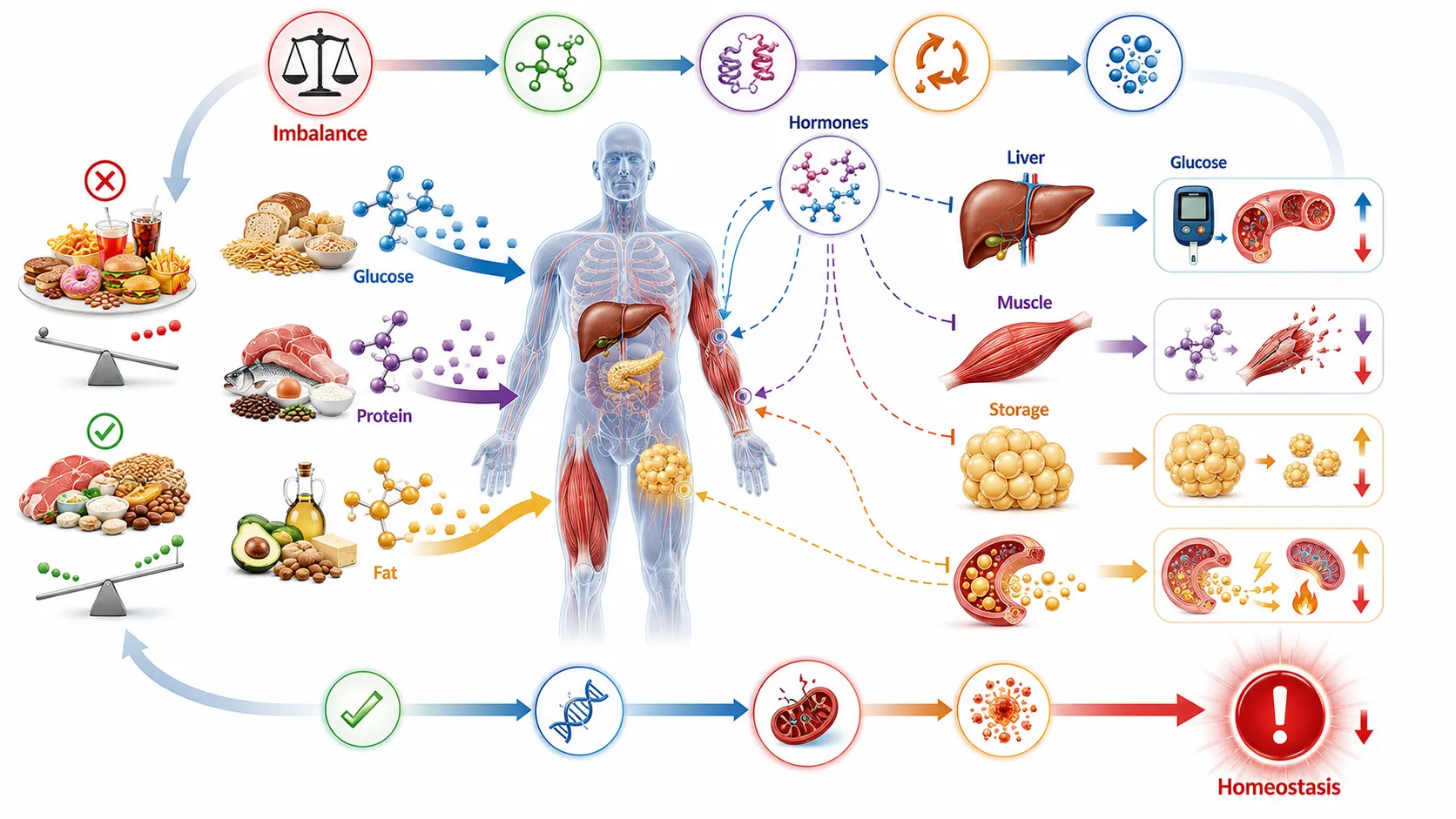
Key Definitions and Concepts
| Key Term | Definition | Importance in Clinical Case Analysis |
|---|---|---|
| Macronutrient imbalance | A persistent dietary pattern in which macronutrient intake is substantially disproportionate to physiological requirements or overall energy needs | May alter metabolic regulation and substrate availability |
| Metabolic homeostasis | The coordinated maintenance of relatively stable internal metabolic conditions | Can be disrupted by prolonged nutrient excess or deficiency |
| Insulin signalling | Cellular and systemic signalling associated with nutrient availability and metabolic regulation | Influences glucose uptake, storage and nutrient utilisation |
| Substrate overload | Excess availability of metabolic substrates beyond immediate physiological demand | May increase storage and alter regulatory pathways |
| Lipotoxicity | Cellular stress associated with excessive or inappropriate accumulation of lipid-derived compounds | Illustrates potential consequences of chronic lipid imbalance |
| Glucotoxicity | Cellular dysfunction associated with prolonged exposure to excessive glucose concentrations | Demonstrates consequences of persistent dysregulated glucose metabolism |
| Negative energy balance | A state in which energy expenditure exceeds energy intake over time | Can increase mobilisation of stored substrates |
| Protein catabolism | The breakdown of body proteins into amino acids | May increase during prolonged inadequate energy or protein availability |
| Metabolic adaptation | Physiological adjustments that occur in response to changing nutrient availability | May initially support survival but can have consequences if imbalance persists |
| Biochemical regulation | Control of metabolic pathways through hormones, enzymes and cellular signalling | Central to maintaining metabolic stability |
The Importance of Clinical Case Analysis in Nutritional Biochemistry
Moving Beyond Dietary Description
A simple description such as “the individual consumes too much carbohydrate” is not sufficient for advanced biochemical analysis. The Learner must determine how the dietary pattern affects the movement and regulation of metabolic substrates.
A detailed analysis should investigate:
The duration of the imbalance.
The severity of the imbalance.
Total energy intake.
Relative carbohydrate, protein and lipid intake.
Physical activity and energy expenditure.
Changes in body energy stores.
Relevant biochemical findings.
Physiological signs and symptoms.
The most important analytical question is not simply what is being consumed? It is how is persistent nutrient availability changing metabolic regulation?
The Value of Time in Metabolic Analysis
Short-term metabolic changes are often reversible physiological responses. Prolonged imbalance may lead to more persistent adaptations or disturbances.
For example:
A single high-energy meal does not necessarily produce chronic metabolic dysfunction.
Repeated excessive energy intake over months may progressively alter energy storage.
Brief fasting differs biochemically from prolonged inadequate intake.
Temporary dietary restriction differs from persistent protein-energy inadequacy.
Therefore, duration must be included in every case analysis.
A Systematic Framework for Analysing Clinical Cases
Step 1: Identify the Primary Macronutrient Imbalance
Determine whether the dominant disturbance involves:
Persistent carbohydrate excess.
Inadequate carbohydrate availability.
Excessive dietary fat intake within an energy-surplus pattern.
Persistent protein inadequacy.
Excessive energy intake from multiple macronutrients.
Combined macronutrient imbalance.
The analysis should recognise that dietary patterns often involve more than one disturbance.
Step 2: Establish the Energy Context
Ask:
Is overall energy intake likely to exceed expenditure?
Is there sustained negative energy balance?
Has body mass or body composition changed?
Are metabolic reserves being accumulated or mobilised?
Macronutrient imbalance must not be separated completely from energy balance.
Step 3: Identify the Affected Biochemical Pathways
Relevant pathways may include:
Glycolysis.
Glycogen synthesis and breakdown.
Gluconeogenesis.
Fatty acid synthesis.
Lipolysis.
Beta-oxidation.
Ketone production.
Protein synthesis.
Protein catabolism.
Step 4: Evaluate Regulatory Signals
Consider changes involving:
Insulin-related signalling.
Counter-regulatory hormonal responses.
Cellular energy sensing.
Enzyme activation or inhibition.
Step 5: Interpret the Clinical Evidence
Relevant evidence may include:
Dietary records.
Anthropometric trends.
Blood glucose-related measures.
Lipid-related measures.
Protein-related indicators.
Clinical observations.
No single measurement should automatically be interpreted in isolation.
Case Study 1: Prolonged Energy and Carbohydrate Excess
Case Scenario
A hypothetical adult has consumed a highly energy-dense diet for several years. A substantial proportion of the diet consists of refined carbohydrate-rich foods and sugar-containing beverages. Physical activity is limited, and total energy intake frequently exceeds estimated expenditure.
Over time, the individual experiences progressive increases in body energy stores and develops abnormal markers related to glucose and lipid metabolism.
Initial Biochemical Interpretation
The first consideration is sustained substrate availability.
Repeated consumption of carbohydrate-rich foods can result in frequent increases in circulating glucose availability. In a healthy regulatory system, insulin-related mechanisms contribute to glucose uptake and storage.
However, persistent energy surplus may progressively alter the normal relationship between nutrient availability, storage and utilisation.
The analysis should examine:
Frequency of excessive energy intake.
Carbohydrate quality.
Total dietary pattern.
Physical activity.
Duration of exposure.
Potential Metabolic Consequences
Persistent energy surplus may contribute to:
Increased glycogen storage until storage capacity is limited.
Increased conversion of excess energy into stored lipid.
Increased adipose energy storage.
Altered insulin responsiveness in susceptible individuals.
Disturbances in lipid handling.
The key point is that these outcomes are not caused by carbohydrate intake alone. Total energy balance and the wider dietary pattern are important.
Critical Appraisal
A scientifically appropriate conclusion would avoid claiming that all carbohydrate consumption produces metabolic dysfunction.
Instead, the case demonstrates how:
Prolonged excess energy availability.
Frequent consumption of low-fibre, rapidly absorbed carbohydrate sources.
Low physical activity.
may interact to challenge normal metabolic regulation.
Case Study 2: Prolonged Inadequate Energy and Protein Intake
Case Scenario
A hypothetical individual experiences prolonged inadequate food intake because of limited food availability. Both total energy intake and dietary protein intake remain insufficient for an extended period.
The individual develops:
Progressive loss of body mass.
Reduced muscle tissue.
Reduced physical capacity.
Signs consistent with impaired nutritional status.
Metabolic Adaptation
Initially, the body attempts to maintain essential energy supply by mobilising stored substrates.
The progression may involve:
Use of glycogen reserves.
Increased mobilisation of stored lipid.
Increased reliance on gluconeogenic pathways.
Use of amino acid-derived substrates.
The Role of Protein Catabolism
When dietary protein and energy are persistently inadequate, body proteins may increasingly contribute amino acids to essential metabolic processes.
This can affect:
Skeletal muscle tissue.
Structural proteins.
Functional protein turnover.
The body therefore faces a critical metabolic challenge: it must maintain essential glucose-related processes without excessive loss of functional tissue.
Long-Term Consequences
Persistent inadequacy can contribute to:
Reduced lean tissue.
Impaired physiological function.
Reduced capacity for physical activity.
Altered metabolic adaptation.
This case demonstrates that protein cannot be viewed simply as another interchangeable energy source. Functional body proteins have essential structural and metabolic roles.
Case Study 3: High-Fat, Energy-Dense Dietary Pattern
Case Scenario
A hypothetical individual consumes a prolonged diet high in energy-dense foods with a substantial proportion of energy derived from dietary fat. The individual has a sedentary lifestyle and experiences sustained positive energy balance.
Biochemical Considerations
Dietary fat is energy dense and can contribute substantially to total energy intake.
If energy intake consistently exceeds expenditure:
Dietary energy can be stored.
Adipose tissue stores may increase.
Lipid handling pathways may experience persistent high substrate availability.
Cellular and Systemic Regulation
Chronic lipid excess can influence:
Adipose tissue metabolism.
Liver lipid processing.
Skeletal muscle substrate utilisation.
Cellular signalling.
In susceptible individuals, inappropriate accumulation of lipid-derived compounds in non-adipose tissues may be associated with metabolic stress.
Critical Analysis
The Learner should not conclude that dietary fat is inherently harmful.
The analysis must consider:
Total energy intake.
Type of dietary fat.
Food sources.
Physical activity.
Overall dietary quality.
The central issue is the interaction between sustained excess energy and the body’s capacity to store, oxidise and regulate available substrates.
Case Study 4: Extreme Carbohydrate Restriction
Case Scenario
A hypothetical individual adopts a highly restrictive dietary pattern that substantially reduces carbohydrate intake for several months.
Dietary fat intake increases to compensate for reduced carbohydrate, while protein intake remains variable.
Early Metabolic Adaptation
Reduced carbohydrate availability may result in:
Reduced glycogen availability.
Increased mobilisation of lipid-derived substrates.
Increased fatty acid oxidation.
Increased production of ketone bodies under appropriate conditions.
Longer-Term Adaptation
With continued restriction, the body may adapt by altering substrate selection.
However, the outcome may depend on:
Total energy intake.
Dietary protein adequacy.
Dietary quality.
Physical activity.
Individual physiology.
Critical Appraisal
Carbohydrate restriction does not automatically indicate either metabolic improvement or dysfunction.
The case should be evaluated according to:
Nutritional adequacy.
Sustainability.
Individual response.
Quality of carbohydrate foods being replaced.
Health context.
This demonstrates why biochemical adaptation must be distinguished from a universal recommendation.
Case Study 5: Excessive Protein Intake Within a Poorly Balanced Diet
Case Scenario
A hypothetical recreational athlete adopts a dietary pattern containing substantially more protein than required while consuming inadequate carbohydrate for their level of intensive training.
The individual reports reduced exercise capacity and inconsistent recovery.
Biochemical Analysis
The issue is not necessarily that protein is intrinsically harmful. Instead, the dietary distribution may be poorly matched to physiological demand.
Potential concerns include:
Inadequate carbohydrate availability for repeated high-intensity activity.
Reduced dietary variety.
Displacement of other important foods.
Unnecessary reliance on protein as an energy source.
Metabolic Implications
When carbohydrate availability is insufficient relative to activity demands, the body may rely more heavily on alternative substrates.
However, increased protein intake does not automatically compensate for inadequate availability of the substrate most appropriate for a particular metabolic demand.
Professional Judgement
The case requires the Learner to consider:
Exercise type.
Training volume.
Total energy intake.
Protein adequacy rather than protein excess alone.
Overall dietary pattern.
How Prolonged Imbalance Disrupts Metabolic Regulation
Disruption of Normal Substrate Switching
Healthy metabolism involves the ability to switch between available substrates.
Persistent macronutrient imbalance may reduce metabolic efficiency by maintaining an abnormal pattern of:
Continuous substrate excess.
Chronic nutrient scarcity.
Inappropriate storage signals.
Repeated compensatory mobilisation.
Altered Hormonal Regulation
Hormones coordinate whether nutrients are:
Stored.
Mobilised.
Oxidised.
Used for biosynthesis.
Prolonged nutrient imbalance can repeatedly expose regulatory systems to abnormal patterns of nutrient availability.
Potential consequences include:
Altered insulin-related responses.
Persistent counter-regulatory activity during nutrient deficiency.
Changes in appetite and energy-regulation signals.
Enzyme-Level Adaptation
Metabolic pathways are regulated through enzymes.
Persistent changes in nutrient availability can influence:
Enzyme activity.
Enzyme expression.
Substrate availability.
Cellular energy status.
This means that prolonged dietary patterns can influence metabolic regulation at both systemic and cellular levels.
The Role of the Liver in Macronutrient Imbalance
The Liver as a Metabolic Integration Centre
The liver plays a central role in coordinating:
Glucose metabolism.
Glycogen storage.
Glucose production.
Lipid synthesis.
Lipid oxidation.
Ketone production.
During Nutrient Excess
The liver may process increased nutrient availability through:
Glycogen-related pathways.
Lipid synthesis pathways.
Redistribution of metabolic substrates.
During Nutrient Deficiency
The liver contributes to:
Glycogen mobilisation.
Glucose production.
Ketone body production.
Therefore, many prolonged macronutrient imbalances affect hepatic metabolism.
The Role of Skeletal Muscle
Skeletal muscle is important because it represents a substantial metabolically active tissue.
During Adequate Nutrition
Muscle contributes to:
Glucose uptake.
Glycogen storage.
Protein turnover.
Energy expenditure.
During Prolonged Inadequacy
Muscle protein may become increasingly important as a source of amino acids when energy and protein availability remain insufficient.
Potential consequences include:
Reduced muscle mass.
Reduced functional capacity.
Altered metabolic demand.
The Role of Adipose Tissue
Adipose tissue is not simply passive energy storage.
It participates in:
Energy storage.
Lipid mobilisation.
Metabolic signalling.
During Sustained Energy Excess
Adipose tissue can expand as energy storage increases.
However, prolonged energy surplus may alter adipose tissue function and metabolic communication.
During Sustained Energy Deficit
Stored lipid can be mobilised to provide energy substrates.
The physiological response depends on:
Duration.
Energy reserves.
Hormonal environment.
Interpreting Clinical and Biochemical Data
Avoiding Single-Marker Interpretation
A high-level clinical case analysis should avoid drawing conclusions from one measurement alone.
For example, a metabolic marker should be interpreted alongside:
Dietary history.
Duration of symptoms.
Physical activity.
Medication and medical context where relevant.
Other laboratory findings.
Establishing Patterns
The objective is to identify patterns of metabolic disturbance.
Potential patterns may include:
Persistent elevation in glucose-related indicators.
Altered lipid-related indicators.
Progressive changes in body composition.
Evidence of inadequate protein or energy availability.
The interpretation must remain evidence-based and clinically contextualised.
A Structured Clinical Reasoning Process
Identify the Problem
What is the principal nutritional disturbance?
Determine Duration
Has the imbalance existed for:
Days?
Weeks?
Months?
Years?
Identify the Dominant Metabolic Response
Is the body primarily:
Storing energy?
Mobilising energy?
Producing glucose?
Increasing lipid oxidation?
Breaking down protein?
Assess Compensatory Mechanisms
Determine which adaptations may initially maintain metabolic stability.
Identify Potential Points of Failure
Ask when compensatory mechanisms may become insufficient or maladaptive.
Formulate an Evidence-Based Interpretation
The conclusion should connect:
Dietary pattern → substrate availability → biochemical pathway → regulatory response → physiological consequence
Practical Example of Case Analysis
Case Information
An adult presents with a long-term dietary pattern characterised by:
High energy intake.
Frequent consumption of highly processed foods.
Low physical activity.
Progressive increase in body energy stores.
Analytical Process
Step 1: Identify the energy pattern
The dietary information suggests a possible sustained positive energy balance.
Step 2: Identify likely substrate consequences
Repeated nutrient availability may promote continued storage when immediate energy requirements are met.
Step 3: Assess metabolic tissues
The analysis should consider:
Liver nutrient processing.
Adipose energy storage.
Skeletal muscle substrate utilisation.
Step 4: Consider regulatory adaptation
Persistent nutrient availability may alter normal regulatory responses in susceptible individuals.
Step 5: Evaluate supporting evidence
Relevant clinical assessment may include appropriate dietary and metabolic data.
Key Benefits of Detailed Clinical Case Analysis
Clinical case analysis helps Learners develop the ability to:
Connect dietary patterns with biochemical pathways.
Interpret complex metabolic interactions.
Recognise the importance of duration.
Evaluate compensatory metabolic responses.
Apply critical thinking to nutritional evidence.
Avoid simplistic cause-and-effect conclusions.
Understand individual variation.
Common Analytical Errors
Blaming One Macronutrient
Metabolic dysfunction is often multifactorial.
Avoid conclusions such as:
“Carbohydrates caused the entire problem.”
“Dietary fat alone caused metabolic disruption.”
“Protein intake always protects against energy deficiency.”
Ignoring Energy Balance
A macronutrient ratio cannot be interpreted independently of:
Total energy intake.
Energy expenditure.
Duration.
Confusing Adaptation With Optimal Health
The ability to adapt metabolically does not automatically mean that a prolonged dietary pattern is optimal.
Ignoring Individual Context
The same dietary exposure may produce different responses depending on:
Activity level.
Physiological status.
Baseline nutritional condition.
Genetic and environmental influences.
Advanced Critical Appraisal of Macronutrient Imbalance
A postgraduate-level appraisal should address four major questions.
What Is the Nature of the Imbalance?
Determine whether the primary issue involves:
Excess.
Deficiency.
Poor distribution.
Low dietary quality.
Combined disturbance.
What Is the Biochemical Mechanism?
Identify:
Substrate availability.
Enzymatic pathways.
Hormonal signals.
Storage and mobilisation responses.
What Is the Time Course?
Distinguish between:
Acute response.
Adaptation.
Chronic disturbance.
What Is the Physiological Consequence?
Evaluate potential effects on:
Energy regulation.
Tissue metabolism.
Functional capacity.
Long-term metabolic health.
Applying Evidence to Nutritional Interpretation
Evidence-based case analysis requires careful distinction between:
Association and causation.
Short-term biochemical change and long-term outcome.
Individual case findings and population evidence.
Physiological adaptation and clinical dysfunction.
A robust interpretation should integrate multiple forms of evidence rather than relying on a single observation.
Professional Considerations and Scope of Practice
Clinical case studies involving metabolic abnormalities may include complex health considerations. Learners should understand that:
Educational analysis is not equivalent to medical diagnosis.
Laboratory abnormalities require appropriate clinical interpretation.
Nutritional interventions may require multidisciplinary management.
Individual clinical decisions should be made by suitably qualified professionals.
This distinction is particularly important when prolonged nutritional imbalance is associated with significant metabolic abnormalities.
Summary
Prolonged macronutrient imbalances can disrupt normal biochemical metabolic regulation by altering substrate availability, energy balance, hormonal signalling, enzyme activity and the metabolic functions of major tissues. Clinical case analysis provides a structured method for understanding these complex interactions.
Persistent carbohydrate and energy excess may alter glucose and lipid handling, particularly when combined with low physical activity and prolonged positive energy balance. Long-term inadequate energy and protein intake can increase reliance on stored substrates and may contribute to the breakdown of functional body proteins. Energy-dense dietary patterns rich in fat can promote increased energy storage when energy intake consistently exceeds expenditure, while highly restrictive dietary patterns can trigger substantial adaptations in substrate utilisation.
The key principle is that metabolic regulation involves continuous interaction between carbohydrates, proteins and lipids. No macronutrient should be evaluated in isolation. Duration, total energy balance, dietary quality, hormonal regulation, tissue-specific metabolism and individual variation must all be considered.
A detailed clinical reasoning process enables Learners to trace the pathway from dietary exposure to biochemical response and physiological consequence. By using the framework:
Dietary pattern → substrate availability → metabolic pathway → regulatory response → physiological outcome
Learners can critically evaluate how prolonged macronutrient imbalances influence normal metabolic homeostasis. This approach strengthens advanced analytical skills and supports the evidence-based interpretation of nutritional biochemistry in academic, professional and clinical learning contexts.