Lesson 2: Apply advanced project planning techniques to electrical QA/QC activities.
Effective project planning is a critical component of successful electrical engineering delivery, particularly when managing complex installations that require strict quality assurance and quality control (QA/QC) processes. Advanced project planning techniques enable electrical engineering teams to coordinate multiple activities, manage resources efficiently, control project risks, and ensure that all quality requirements are achieved throughout the project lifecycle. By integrating structured planning methods with QA/QC principles, organisations can improve installation reliability, reduce defects, enhance compliance, and achieve successful project outcomes.
Modern electrical projects involve interconnected activities such as engineering design verification, procurement management, installation monitoring, inspection scheduling, testing, commissioning, and final documentation approval. Applying advanced planning techniques allows QA/QC professionals to develop proactive strategies that identify potential challenges early, optimise resource utilisation, and maintain consistent quality standards. Techniques such as risk-based planning, critical path management, Inspection and Test Plan (ITP) integration, digital project planning tools, and performance monitoring systems support effective control of complex electrical operations.
This lesson explores the application of advanced project planning techniques within electrical QA/QC activities, focusing on how professional engineering teams can coordinate quality requirements, adapt planning methods, and implement effective control measures in real-world electrical projects. Through structured planning approaches, learners will develop the ability to support efficient project execution, maintain regulatory compliance, and enhance quality performance across electrical installation and engineering environments.
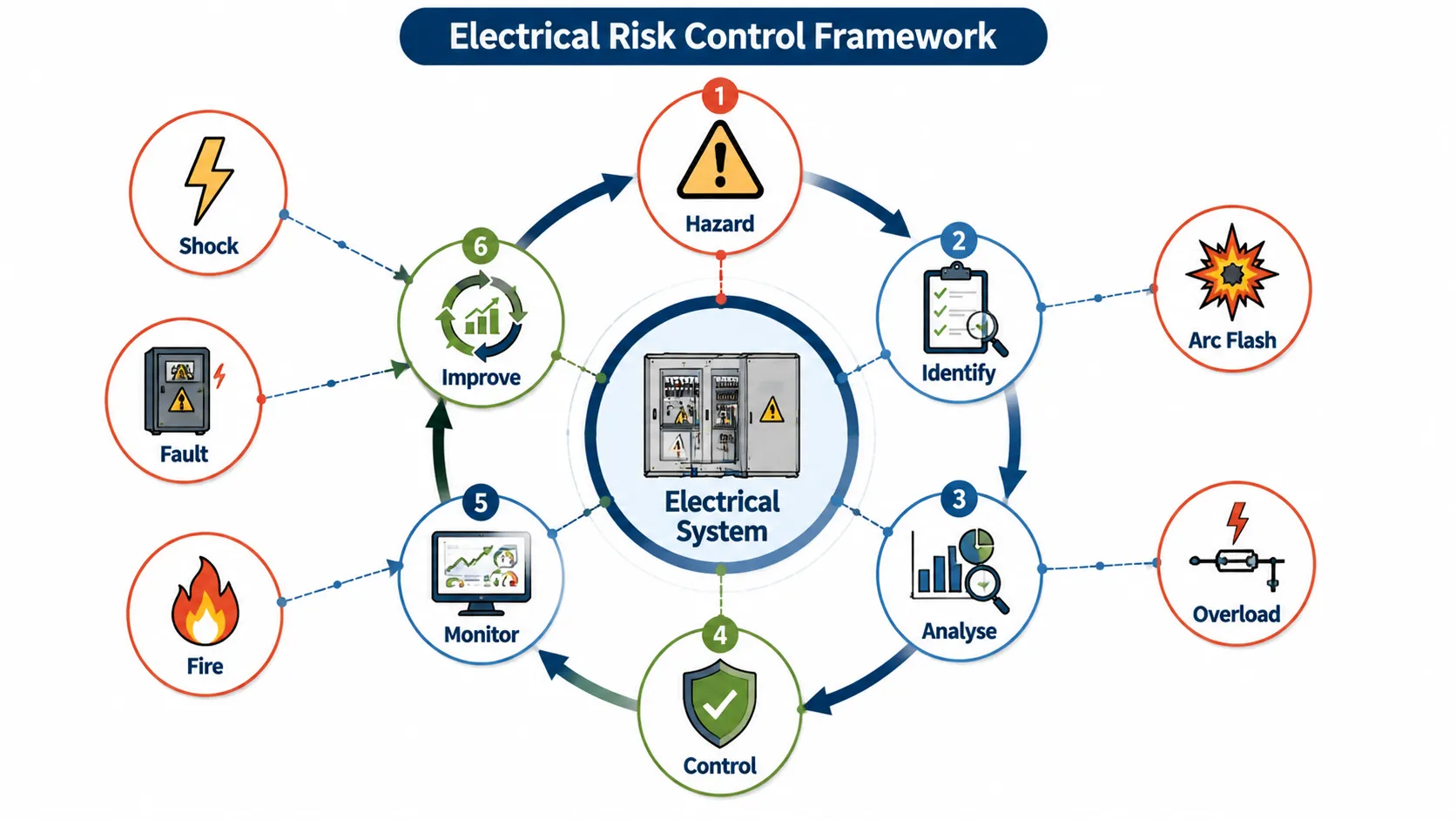
including design weaknesses, equipment failures, installation errors, environmental conditions, operational activities, and inadequate maintenance practices. In complex electrical environments, a single failure can create significant consequences, including equipment damage, operational disruption, fire incidents, electrical shock, arc flash events, and risks to personnel safety.
A comprehensive understanding of electrical hazards and risk factors is a fundamental responsibility within electrical Quality Assurance and Quality Control (QA/QC) management. Effective QA/QC processes ensure that electrical systems are designed, installed, tested, and commissioned according to approved standards, technical specifications, and safety requirements. Through systematic hazard identification and risk analysis, engineering teams can implement preventive controls that improve reliability, compliance, and operational safety.
Critically analysing hazards requires more than identifying possible failures. It involves evaluating the causes, likelihood, severity, consequences, and effectiveness of existing control measures. This analytical approach enables electrical engineering professionals to prioritise risks, allocate resources effectively, and develop improvement strategies that reduce potential failures within complex electrical systems.
1. Understanding Electrical Hazards and Risks in Complex Installations
Definition of Electrical Hazards
An electrical hazard is any condition, situation, or source of energy within an electrical system that has the potential to cause injury, equipment damage, fire, operational failure, or environmental impact.
Electrical hazards may result from:
- Exposure to live electrical components.
- Fault conditions.
- Equipment malfunction.
- Poor installation practices.
- Inadequate protection systems.
- Incorrect operation or maintenance procedures.
In complex installations, hazards are often interconnected. For example, incorrect cable selection may lead to overheating, insulation failure, short circuits, equipment damage, and potential fire risks.
Definition of Electrical Risk
Electrical risk refers to the combination of the likelihood that a hazardous event will occur and the potential severity of its consequences.
Risk analysis considers:
- Probability of failure.
- Frequency of exposure.
- Possible consequences.
- Existing control measures.
A low-probability event may still represent a significant risk if the consequences are severe.
For example:
A protection system failure in a high-voltage substation may occur rarely, but the potential impact can include:
- Equipment destruction.
- Power system instability.
- Fire hazards.
- Safety risks to personnel.
Importance of Hazard and Risk Analysis in Electrical QA/QC Management
Supporting Safe Electrical System Design
Risk analysis begins during the design stage because many electrical hazards originate from design decisions.
Effective design reviews help identify:
- Incorrect system configurations.
- Inadequate protection arrangements.
- Insufficient equipment ratings.
- Poor coordination between systems.
QA/QC teams contribute by verifying that designs comply with:
- Technical specifications.
- Engineering standards.
- Safety requirements.
- Client expectations.
Preventing Installation Defects
Many electrical failures occur because of installation errors.
Examples include:
- Incorrect cable termination.
- Poor earthing connections.
- Improper equipment installation.
- Incorrect component selection.
QA/QC inspection processes help prevent these issues through:
- Installation inspections.
- Material verification.
- Testing procedures.
- Workmanship checks.
Improving Reliability and System Performance
Electrical systems must operate reliably under normal and abnormal conditions.
Risk analysis supports reliability by identifying:
- Weak points within systems.
- Potential failure modes.
- Required preventive measures.
This enables engineering teams to improve:
- System availability.
- Equipment lifespan.
- Operational safety.
Key Concepts of Electrical Hazard Identification and Risk Assessment
Hazard Identification Process
Hazard identification is the first stage of risk management and involves systematically identifying conditions that may create harm.
Electrical engineering teams identify hazards through:
- Design reviews.
- Site inspections.
- Technical assessments.
- Previous incident analysis.
- Testing results.
- Maintenance records.
Common hazard identification methods include:
- Hazard and Operability Study (HAZOP).
- Failure Mode and Effects Analysis (FMEA).
- Job Safety Analysis (JSA).
- Risk assessment workshops.
Risk Evaluation
After identifying hazards, risks are evaluated based on:
- Likelihood of occurrence.
- Severity of impact.
- Existing protection measures.
A typical risk evaluation process considers:
Likelihood
The possibility that a hazardous event may occur.
Factors include:
- Equipment condition.
- Operating environment.
- Maintenance history.
- Human interaction.
Severity
The level of consequence if the event occurs.
Possible consequences include:
- Injury.
- Equipment failure.
- Production loss.
- Fire.
-
Environmental impact.

Major Hazards in Complex Electrical Installations
Electrical Shock Hazards
Electrical shock occurs when a person comes into contact with an energised electrical source.
Complex electrical installations may contain:
- High-voltage equipment.
- Distribution panels.
- Control circuits.
- Battery systems.
- Electrical enclosures.
Risk factors include:
- Poor insulation.
- Incorrect isolation procedures.
- Damaged equipment.
- Lack of protective barriers.
Electrical shock hazards can result in:
- Serious injury.
- Burns.
- Cardiac effects.
- Fatal accidents.
QA/QC controls include:
- Insulation resistance testing.
- Verification of protective devices.
- Inspection of electrical enclosures.
- Confirmation of isolation procedures.
Arc Flash and Arc Blast Risks
Arc flash is a dangerous electrical event where energy is released through an uncontrolled electrical arc.
It can occur due to:
- Short circuits.
- Equipment failure.
- Incorrect switching operations.
- Poor maintenance conditions.
Arc flash events may cause:
- Extreme temperatures.
- Pressure waves.
- Molten metal release.
- Serious injuries.
High-risk locations include:
- Switchgear assemblies.
- Distribution boards.
- Motor control centres.
- High-voltage equipment.
Risk reduction methods include:
- Correct protection settings.
- Equipment maintenance.
- Arc flash assessment.
- Proper equipment selection.
- Safe working procedures.
Short Circuit and Fault Current Hazards
Short circuits occur when an unintended electrical connection allows excessive current flow.
Causes may include:
- Insulation failure.
- Incorrect wiring.
- Component damage.
- Foreign objects entering equipment.
Potential consequences include:
- Equipment damage.
- Fire.
- System shutdown.
- Protection system operation.
QA/QC verification includes:
- Cable testing.
- Protection coordination checks.
- Fault current calculations.
- Equipment rating verification.
Fire and Thermal Hazards in Electrical Systems
Causes of Electrical Fire Risks
Electrical fires commonly result from:
- Overloaded circuits.
- Loose connections.
- Poor cable installation.
- Equipment overheating.
- Insulation deterioration.
Complex electrical installations may increase fire risk due to:
- High energy levels.
- Large equipment quantities.
- Continuous operation requirements.
Preventive QA/QC Measures
Quality control activities include:
- Thermal inspection.
- Cable sizing verification.
- Connection testing.
- Equipment inspection.
- Protection system testing.
Proper planning and inspection reduce the likelihood of electrical fire incidents.
Overvoltage and Transient Risks
Understanding Overvoltage Hazards
Overvoltage occurs when electrical systems experience voltage levels above their designed operating limits.
Sources include:
- Lightning strikes.
- Switching operations.
- Network disturbances.
- Fault conditions.
Potential impacts include:
- Equipment insulation failure.
- Electronic system damage.
- Control system malfunction.
Risk Control Measures
Controls include:
- Surge protection devices.
- Correct insulation levels.
- Earthing systems.
- Protection coordination.
Equipment Failure Risks in Complex Electrical Systems
Causes of Equipment Failure
Electrical equipment failures may occur due to:
- Manufacturing defects.
- Incorrect installation.
- Poor maintenance.
- Environmental conditions.
- Excessive loading.
Examples include:
- Transformer failures.
- Switchgear malfunction.
- Motor breakdown.
- Protection relay failure.
Impact of Equipment Failures
Consequences may include:
- Production interruption.
- Safety hazards.
- Expensive repairs.
- Project delays.
QA/QC teams reduce these risks through:
- Factory acceptance testing.
- Equipment inspection.
- Performance verification.
- Maintenance planning.
Table: Common Hazards and Risk Controls in Complex Electrical Installations
| Electrical Hazard | Definition | Common Causes | Potential Impact | QA/QC Control Measures |
|---|---|---|---|---|
| Electrical Shock | Contact with energised electrical sources | Poor isolation, damaged insulation | Injury or fatality | Testing, inspection, protection verification |
| Arc Flash | Uncontrolled electrical arc energy release | Faults, equipment failure | Burns, equipment damage | Protection testing, maintenance checks |
| Short Circuit | Unintended high current flow | Wiring faults, insulation failure | Fire and system damage | Cable testing, fault analysis |
| Overvoltage | Voltage exceeding equipment limits | Lightning, switching events | Equipment failure | Surge protection verification |
| Equipment Failure | Loss of equipment performance | Defects, poor installation | Downtime and safety risks | Inspection and testing |
2. Evaluate the Probability and Potential Impact of Identified Risks Using Advanced Assessment Methodologies
Risk evaluation is a critical stage within electrical QA/QC management because identifying hazards alone is not sufficient to ensure safe and reliable electrical systems. Complex electrical installations involve multiple interconnected components, operational conditions, human interactions, and technical dependencies. To effectively control these risks, engineering teams must evaluate both the probability of occurrence and the potential impact of identified hazards using advanced assessment methodologies.
Electrical risk evaluation enables professionals to determine which risks require immediate attention, which control measures are most effective, and how resources should be prioritised throughout the project lifecycle. In large-scale electrical projects such as industrial power systems, substations, renewable energy installations, and complex commercial facilities, inaccurate risk evaluation can result in equipment failures, safety incidents, project delays, and compliance issues.
Advanced risk assessment methodologies provide a structured approach for analysing uncertainty and making evidence-based decisions. These approaches move beyond simple hazard identification by considering historical data, system complexity, failure probabilities, operational conditions, and the consequences of potential failures.
Within electrical QA/QC operations, risk evaluation supports proactive quality management by helping teams identify critical failure points, strengthen inspection strategies, improve testing plans, and implement effective preventive controls. A systematic evaluation process ensures that electrical installations meet technical specifications, safety requirements, and performance expectations.
Understanding Probability and Impact in Electrical Risk Assessment
Definition of Risk Probability
Risk probability refers to the likelihood that a specific hazardous event or failure will occur within an electrical system.
Probability evaluation considers factors such as:
Frequency of previous failures.
Equipment reliability.
Operating conditions.
Installation quality.
Maintenance effectiveness.
Human interaction.
For example, an electrical cable installed in a high-temperature environment with inadequate protection may have a higher probability of insulation failure compared with a properly installed and maintained cable system.
Probability assessment helps engineering teams determine how frequently a risk may occur and whether additional preventive controls are required.
Definition of Risk Impact
Risk impact refers to the level of consequence that may result if an identified risk occurs.
The impact of electrical risks may involve:
Personnel safety consequences.
Equipment damage.
Operational downtime.
Financial losses.
Environmental effects.
Regulatory compliance failures.
For example, a protection relay malfunction in a high-voltage substation may have a low probability of occurring, but its impact can be extremely severe due to possible equipment damage and power system disruption.
Relationship Between Probability and Impact
Risk level is determined by combining probability and impact.
A common principle used in risk assessment is:
Risk Level = Probability × Impact
A risk with:
High probability and high impact requires urgent action.
Low probability and high impact requires strategic control measures.
High probability and low impact requires monitoring and improvement.
Low probability and low impact may require basic controls.
This approach helps QA/QC professionals prioritise risks according to their significance.
Importance of Advanced Risk Evaluation in Electrical QA/QC
Supporting Effective Quality Planning
Advanced risk evaluation allows QA/QC teams to develop targeted quality plans based on actual project risks.
Instead of applying identical controls to every activity, teams can focus resources on high-risk areas.
Examples include:
High-voltage testing activities.
Transformer installation.
Protection system verification.
Critical cable networks.
Benefits include:
Improved inspection effectiveness.
Better resource allocation.
Reduced unnecessary monitoring.
Stronger quality outcomes.
Improving Decision-Making
Electrical projects involve complex decisions regarding:
Equipment selection.
Testing requirements.
Installation methods.
Maintenance strategies.
Risk evaluation provides objective information to support these decisions.
Engineering teams can use risk analysis results to determine:
Which activities require additional inspections.
Which systems need enhanced protection.
Where specialist expertise is required.
Reducing Electrical System Failures
Many electrical failures occur because risks were underestimated during planning or installation.
Advanced assessment methods help identify:
Potential failure modes.
Weak system points.
Inadequate controls.
This enables teams to introduce preventive actions before failures occur.
Key Concepts in Advanced Risk Assessment Methodologies
Risk Severity
Risk severity represents the seriousness of consequences if a failure occurs.
Severity evaluation considers:
Extent of damage.
Number of affected systems.
Safety consequences.
Recovery requirements.
Examples of high-severity electrical risks include:
Arc flash incidents.
Transformer failures.
Protection system malfunction.
Risk Exposure
Risk exposure considers how often personnel, equipment, or systems are exposed to hazardous conditions.
Factors include:
Operating frequency.
Maintenance activities.
Environmental conditions.
Human involvement.
For example:
An electrical panel accessed daily by maintenance personnel may require stronger controls compared with equipment located in a restricted area.
Risk Prioritisation
Risk prioritisation involves ranking identified risks according to their importance.
This helps project teams focus on:
Critical hazards.
High-impact failures.
Areas requiring immediate improvement.
Prioritisation supports efficient use of:
Engineering resources.
Inspection time.
Testing capacity.
Advanced Risk Assessment Methodologies for Electrical Systems
Risk Matrix Evaluation
Understanding Risk Matrix Methodology
A risk matrix is one of the most commonly used methods for evaluating electrical risks. It combines probability and impact ratings to determine overall risk classification.
A typical risk matrix includes:
Probability categories:
Rare.
Unlikely.
Possible.
Likely.
Almost certain.
Impact categories:
Minor.
Moderate.
Major.
Severe.
Critical.
The combination of these factors determines whether a risk is:
Low.
Medium.
High.
Critical.
Application in Electrical QA/QC
Risk matrices are used for evaluating:
Installation hazards.
Testing activities.
Equipment failures.
Maintenance risks.
Example:
A QA/QC engineer identifies a risk of incorrect cable termination.
Evaluation:
Probability: Possible.
Impact: Major.
Risk level: High.
Required actions:
Additional inspection.
Technician verification.
Testing before energisation.
Failure Mode and Effects Analysis (FMEA)
Definition of FMEA
Failure Mode and Effects Analysis (FMEA) is a structured methodology used to identify possible failure modes, their causes, consequences, and control measures.
FMEA evaluates:
Failure occurrence.
Failure severity.
Detection capability.
The method helps engineering teams understand how individual component failures can affect the overall system.
Application in Electrical Installations
FMEA can be applied to:
Switchgear systems.
Transformers.
Protection systems.
Control panels.
Renewable energy equipment.
Example:
Failure Mode:
Protection relay malfunction.
Possible Cause:
Incorrect configuration.
Effect:
Failure to isolate electrical faults.
Control:
Relay testing and verification.
Benefits of FMEA
FMEA provides:
Early identification of weaknesses.
Improved preventive actions.
Better maintenance planning.
Enhanced system reliability.
Fault Tree Analysis (FTA)
Definition of Fault Tree Analysis
Fault Tree Analysis is a deductive method that investigates how combinations of failures can lead to a major unwanted event.
It starts with a top event and works backwards to identify possible causes.
Example:
Top Event:
Electrical fire.
Possible causes:
Overcurrent.
Insulation failure.
Protection failure.
Use in Electrical Risk Assessment
FTA is useful for analysing:
Power distribution failures.
Protection system problems.
Safety-critical electrical systems.
Benefits include:
Understanding complex failure relationships.
Identifying critical components.
Improving system design.
Hazard and Operability Study (HAZOP)
Understanding HAZOP
HAZOP is a structured review technique used to identify potential operational problems by analysing deviations from intended system conditions.
It evaluates:
Design assumptions.
Operating processes.
Control systems.
Application in Electrical Projects
HAZOP can support:
Power generation systems.
Industrial electrical networks.
Automated control systems.
It helps identify:
Incorrect operating conditions.
Control failures.
Process risks.
Quantitative Risk Assessment (QRA)
Definition of QRA
Quantitative Risk Assessment uses numerical data and statistical analysis to estimate risk levels.
It considers:
Failure probabilities.
Consequence calculations.
Historical performance data.
QRA provides detailed risk information for complex systems.
Application in Electrical Engineering
QRA may be used for:
Large power networks.
Critical infrastructure.
High-voltage installations.
Benefits include:
More accurate risk prediction.
Improved investment decisions.
Better safety planning.
Bow-Tie Analysis for Electrical Risk Evaluation
Understanding Bow-Tie Risk Methodology
Bow-Tie Analysis is an advanced risk assessment methodology used to visually represent the relationship between potential causes, hazardous events, consequences, and control measures. This approach combines elements of hazard identification, risk analysis, and preventive control planning into a single framework.
The methodology is called “Bow-Tie” because the diagram resembles a bow tie:
- Causes are displayed on the left side.
- The hazardous event is positioned in the centre.
- Consequences are displayed on the right side.
- Preventive and mitigating controls are placed between these elements.
This method is particularly useful for complex electrical installations because it helps engineering teams understand how multiple failures can contribute to a single hazardous event.
Application of Bow-Tie Analysis in Electrical Systems
Bow-Tie Analysis can be applied to various electrical risks, including:
- Arc flash events.
- Transformer failures.
- Electrical fires.
- Protection system failures.
- Loss of power supply.
- Battery system incidents.
Example:
Hazardous Event:
Electrical arc flash occurrence.
Possible causes:
- Incorrect maintenance procedure.
- Insulation failure.
- Loose electrical connections.
Preventive controls:
- Regular inspection.
- Protection system testing.
- Equipment maintenance.
Possible consequences:
- Personnel injury.
- Equipment damage.
- Operational shutdown.
Mitigation controls:
- Emergency response procedures.
- Fire protection systems.
- Safety equipment.
Evaluating Probability of Electrical Risks
Factors Influencing Risk Probability
Accurately evaluating probability requires consideration of multiple technical and operational factors. Electrical systems are influenced by equipment condition, environmental factors, installation quality, and human performance.
Important probability evaluation factors include:
- Equipment reliability.
- Previous failure history.
- Operating conditions.
- Maintenance quality.
- Installation standards.
- Human competency.
- Environmental exposure.
Equipment Reliability Assessment
Equipment condition directly influences the likelihood of failure.
Probability evaluation considers:
- Equipment age.
- Manufacturer reliability data.
- Maintenance records.
- Previous breakdowns.
- Operating stress levels.
Examples:
A transformer operating beyond its recommended capacity may have a higher probability of failure compared with a properly loaded transformer.
QA/QC teams evaluate equipment reliability through:
- Inspection records.
- Condition monitoring.
- Testing results.
- Manufacturer documentation.
Historical Data Analysis
Previous project and operational data provide valuable information for predicting future risks.
Historical analysis may include:
- Previous failures.
- Non-conformance trends.
- Testing failures.
- Maintenance records.
Benefits include:
- Improved risk prediction.
- Identification of recurring issues.
- Better preventive strategies.
Environmental Condition Assessment
Environmental conditions can increase the probability of electrical failures.
Factors include:
- Temperature.
- Humidity.
- Dust levels.
- Chemical exposure.
- Water presence.
For example:
An electrical system installed in a coastal environment may have increased corrosion risks due to salt exposure.
Risk controls include:
- Suitable equipment selection.
- Protective coatings.
- Environmental monitoring.
Evaluating Potential Impact of Electrical Risks
Safety Impact Assessment
Personnel safety is the highest priority when evaluating electrical risk impact.
Potential safety consequences include:
- Electric shock.
- Arc flash injuries.
- Burns.
- Fatal accidents.
Impact assessment considers:
- Number of exposed personnel.
- Energy levels involved.
- Protection systems available.
- Emergency response capability.
Equipment Damage Assessment
Electrical failures can cause significant equipment damage.
Examples include:
- Transformer destruction.
- Switchgear damage.
- Cable system failure.
- Control system breakdown.
Impact evaluation considers:
- Replacement cost.
- Repair duration.
- Availability of spare equipment.
- Operational importance.
Operational Impact Assessment
Electrical system failures can interrupt critical operations.
Potential impacts include:
- Production downtime.
- Service interruption.
- Loss of system availability.
- Reduced productivity.
Critical systems require higher levels of risk control because failure consequences are greater.
Examples:
- Hospitals.
- Data centres.
- Industrial production facilities.
- Transportation systems.
Compliance and Regulatory Impact
Electrical risks can also affect compliance performance.
Possible consequences include:
- Failed inspections.
- Regulatory penalties.
- Project delays.
- Certification issues.
QA/QC teams reduce these risks by ensuring:
- Correct documentation.
- Approved procedures.
- Compliance verification.
- Testing evidence.
Risk Scoring and Prioritisation Techniques
Risk Rating Process
After evaluating probability and impact, risks are assigned a rating value.
A typical process includes:
- Identify the hazard.
- Evaluate probability.
- Determine impact severity.
- Calculate risk level.
- Assign control actions.
- Monitor effectiveness.
This approach ensures that critical risks receive appropriate attention.
Risk Evaluation Comparison Table
Assessment Methodology Definition Electrical Application Main Benefit Limitation Risk Matrix Evaluates risks by combining probability and impact ratings General electrical hazard prioritisation Simple and effective risk ranking Less detailed for complex systems FMEA Analyses possible failure modes and their effects Equipment and component reliability assessment Identifies preventive actions Requires detailed technical knowledge Fault Tree Analysis Studies how failures combine to create major events System failure investigation Analyses complex failure relationships Time-consuming HAZOP Identifies risks caused by process deviations Complex operational systems Improves design safety Requires expert participation QRA Uses numerical data to calculate risk levels Critical electrical infrastructure Provides detailed risk information Requires accurate data Bow-Tie Analysis Shows causes, events, consequences, and controls visually Safety-critical electrical hazards Improves understanding of risk pathways Requires regular updating Role of QA/QC Teams in Advanced Risk Evaluation
Integrating Risk Assessment into Quality Planning
QA/QC teams ensure that risk evaluation is incorporated throughout the project lifecycle.
Activities include:
- Reviewing design risks.
- Assessing installation hazards.
- Verifying testing requirements.
- Monitoring quality performance.
Risk evaluation should not be a one-time activity. It must continue during:
- Design.
- Procurement.
- Installation.
- Testing.
- Commissioning.
- Operation.
Using Risk Assessment Results for Inspection Planning
Risk evaluation helps determine inspection priorities.
High-risk activities may require:
- Increased inspection frequency.
- Additional testing.
- Specialist review.
- Enhanced documentation.
Examples:
- High-voltage equipment installation.
- Protection relay testing.
- Transformer commissioning.
Supporting Corrective and Preventive Actions
Risk evaluation findings help identify improvement opportunities.
Corrective actions may include:
- Repairing defective installations.
- Updating procedures.
- Retraining personnel.
Preventive actions may include:
- Improving design controls.
- Enhancing inspection methods.
- Updating risk assessments.
Practical Workplace Example: Risk Evaluation in a Complex Electrical Installation
A commercial power infrastructure project involved installation of:
- Main distribution boards.
- Emergency power systems.
- Protection equipment.
- Backup generators.
During risk assessment, the QA/QC team identified several potential risks.
Identified Risk: Protection System Failure
Probability evaluation:
- Previous testing issues identified.
- Complex relay settings.
- Multiple connected systems.
Impact evaluation:
- Possible equipment damage.
- Power interruption.
- Safety consequences.
Risk level:
High.
Control measures implemented:
- Protection coordination review.
- Relay testing.
- Functional verification.
Identified Risk: Cable Insulation Failure
Probability evaluation:
- Long cable routes.
- Environmental exposure.
- Installation complexity.
Impact evaluation:
- Short circuit possibility.
- Equipment damage.
- Project delays.
Control measures:
- Insulation resistance testing.
- Installation inspection.
- Cable quality verification.
Project Outcome
Through advanced risk evaluation methodologies:
- Critical risks were prioritised.
- Testing activities were improved.
- Installation defects were reduced.
- Project reliability increased.
Key Benefits of Advanced Risk Assessment Methodologies
Applying advanced risk evaluation techniques provides significant advantages:
- Improved understanding of electrical hazards.
- Better prioritisation of critical risks.
- Enhanced safety performance.
- Reduced equipment failures.
- Improved QA/QC planning.
- Better resource allocation.
- Stronger compliance management.
- Reduced project disruption.
- Improved decision-making.
- Increased system reliability.
Best Practices for Electrical Risk Evaluation
Electrical engineering organisations should implement the following practices:
- Use structured risk assessment methodologies.
- Combine qualitative and quantitative approaches.
- Review risks throughout the project lifecycle.
- Use historical data for risk prediction.
- Involve technical specialists during assessments.
- Prioritise high-impact risks.
- Link risk results with QA/QC activities.
- Update assessments after major changes.
- Maintain accurate risk documentation.
- Monitor effectiveness of control measures.
Conclusion
Evaluating the probability and potential impact of identified risks is a fundamental requirement for managing complex electrical installations safely and effectively. Advanced assessment methodologies such as Risk Matrix Analysis, FMEA, Fault Tree Analysis, HAZOP, QRA, and Bow-Tie Analysis provide structured approaches for understanding electrical risks and developing effective controls.
Through detailed evaluation of likelihood, consequences, and existing protection measures, electrical QA/QC professionals can make informed decisions that improve project reliability, safety, and compliance. These methodologies support proactive risk management by allowing teams to identify critical issues before failures occur.
Effective electrical risk evaluation ensures that complex electrical systems are designed, installed, tested, and operated with appropriate levels of control, contributing to safer workplaces, improved system performance, and successful project delivery.
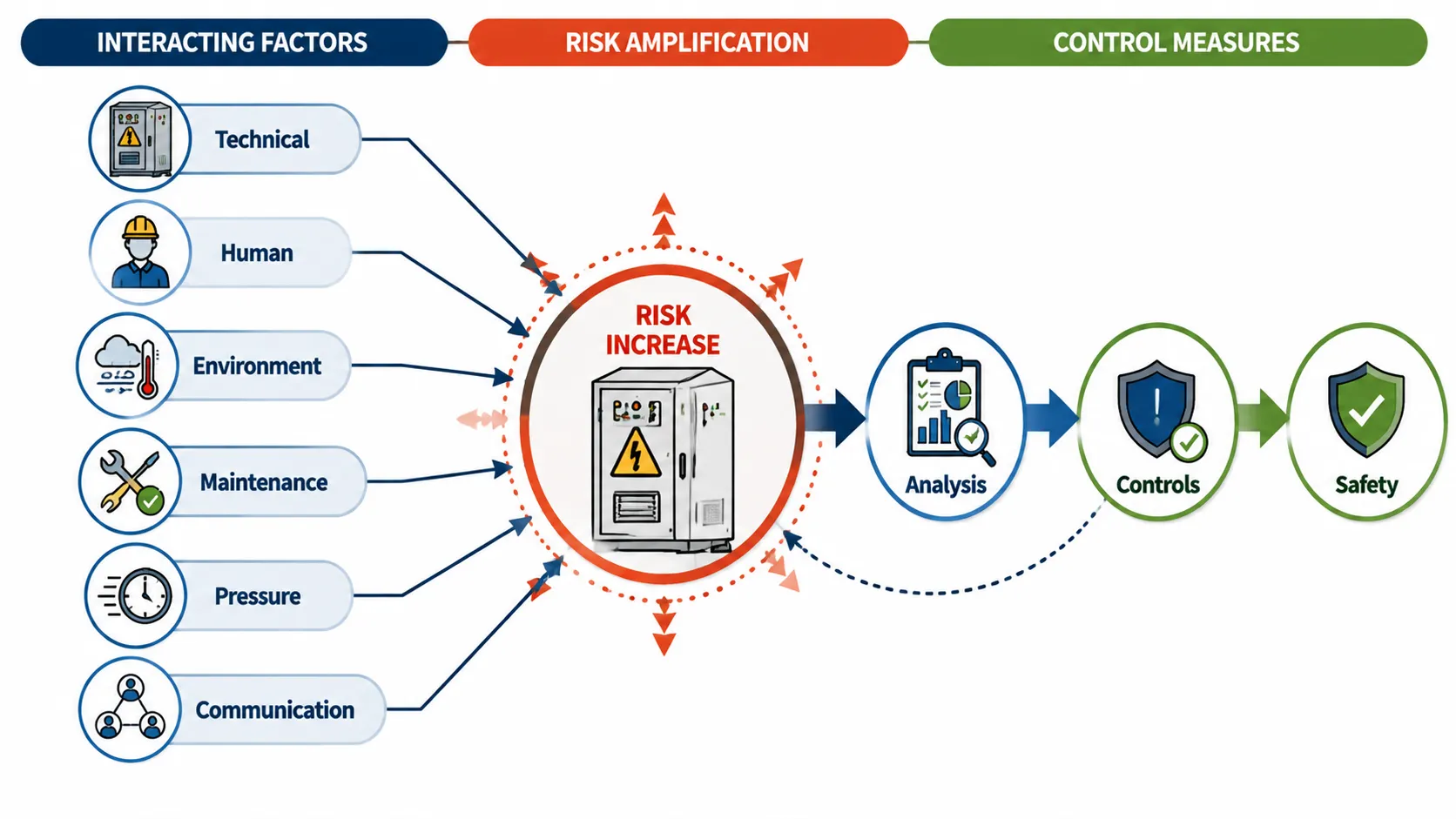
3. Investigate Interacting Factors That Could Amplify Safety or Quality Risks Within Unpredictable Electrical Environments
Modern electrical installations are becoming increasingly complex due to the integration of advanced technologies, higher power demands, automation systems, renewable energy sources, energy storage solutions, and interconnected control networks. While these developments improve efficiency and operational capability, they also introduce multiple interacting factors that can increase safety and quality risks within electrical environments.
In complex electrical projects, risks rarely occur due to a single isolated cause. Instead, incidents and quality failures often result from a combination of technical, environmental, organisational, and human factors that interact with each other. A minor issue, such as a small installation defect, may become a major safety risk when combined with poor maintenance, environmental stress, inadequate supervision, or operational pressure.
Investigating interacting factors requires a systematic understanding of how different conditions influence each other and amplify potential risks. Electrical QA/QC professionals must evaluate not only individual hazards but also the relationships between multiple risk sources. This approach enables engineering teams to identify hidden vulnerabilities, strengthen control measures, and improve the reliability of electrical systems.
Within electrical quality management, understanding risk interactions supports proactive decision-making by allowing teams to anticipate complex failure scenarios before they occur. Through advanced risk assessment techniques, continuous monitoring, and effective quality controls, organisations can reduce uncertainty and maintain safe, compliant, and reliable electrical operations.
Understanding Interacting Factors in Electrical Risk Management
Definition of Interacting Risk Factors
Interacting risk factors are multiple conditions or events that combine and influence each other, increasing the likelihood or severity of safety and quality failures within an electrical system.
Unlike individual risks, interacting risks involve relationships between different factors.
For example:
A cable installation may initially have a minor defect. However, when combined with:
- High operating temperature.
- Excessive electrical loading.
- Poor ventilation.
- Delayed maintenance.
The original defect may develop into insulation failure, overheating, and fire risk.
This demonstrates how multiple small issues can combine to create a significant electrical hazard.
Definition of Risk Amplification
Risk amplification occurs when the combined effect of multiple factors becomes greater than the effect of each individual factor separately.
In electrical environments, risk amplification may occur due to:
- Multiple system failures.
- Poor coordination between teams.
- Changing operating conditions.
- Increased system complexity.
- Limited resource availability.
Risk amplification is particularly important in:
- Industrial electrical systems.
- High-voltage installations.
- Renewable energy systems.
- Data centre power infrastructure.
- Critical power networks.
Importance of Investigating Interacting Factors in Electrical QA/QC
Improving Safety Performance
Electrical safety risks are often influenced by several interconnected conditions.
For example:
An arc flash incident may involve:
- Incorrect protection settings.
- Poor equipment maintenance.
- Human error.
- Inadequate procedures.
Investigating these relationships helps organisations identify the real causes rather than addressing only the immediate problem.
Benefits include:
- Reduced electrical incidents.
- Improved safety controls.
- Better emergency preparedness.
- Enhanced workplace protection.
Enhancing Quality Management
Quality failures in electrical installations are rarely caused by one mistake.
They may result from:
- Poor design coordination.
- Incorrect materials.
- Installation errors.
- Inadequate inspection.
- Communication failures.
Understanding interacting factors allows QA/QC teams to develop stronger prevention strategies.
Supporting Reliable Electrical Systems
Electrical systems depend on many connected components working together.
A failure in one area can affect other systems.
Examples include:
- Protection system failure affecting power distribution.
- Cooling failure affecting electrical equipment performance.
- Communication failure affecting control systems.
Risk interaction analysis improves system reliability by identifying possible chain reactions.
Key Concepts of Risk Interaction Analysis
System Complexity
Complex electrical systems contain multiple components, processes, and stakeholders that influence overall performance.
Examples of system complexity include:
- Multiple voltage levels.
- Integrated automation systems.
- Renewable energy connections.
- Digital monitoring systems.
- Multiple contractors.
As system complexity increases, the possibility of unexpected interactions also increases.
Cascading Failures
A cascading failure occurs when one failure triggers additional failures throughout a system.
Example:
A protection relay malfunction may lead to:
- Failure to isolate a fault.
- Equipment overheating.
- Damage to connected systems.
- Extended power interruption.
Cascading failures are dangerous because their final impact can be much greater than the original problem.
Uncertainty Management
Uncertainty exists when future conditions cannot be predicted with complete accuracy.
Sources of uncertainty include:
- Changing weather conditions.
- Equipment performance variations.
- Human behaviour.
- Supply chain problems.
- Unexpected site conditions.
Effective QA/QC management requires strategies that reduce uncertainty through:
- Monitoring.
- Testing.
- Risk assessment.
-
Contingency planning.
Technical Factors That Amplify Electrical Safety and Quality Risks
Equipment Condition and Ageing Effects
Impact of Equipment Deterioration
Electrical equipment performance decreases over time due to operational stress, environmental exposure, and ageing processes.
Ageing equipment may experience:
- Insulation deterioration.
- Mechanical wear.
- Connection failures.
- Reduced protection performance.
When combined with other factors, ageing can significantly increase risk levels.
For example:
An ageing transformer operating under increased load during high temperatures may experience accelerated deterioration and possible failure.
QA/QC Control Measures
Risk reduction strategies include:
- Condition monitoring.
- Preventive maintenance.
- Thermal inspections.
- Electrical testing.
- Performance analysis.
Design Complexity and Integration Challenges
Influence of Complex Designs
Modern electrical projects often involve integration between multiple systems.
Examples include:
- Power distribution.
- Building automation.
- Fire protection systems.
- Renewable energy sources.
- Battery storage systems.
Complex designs may create risks when different systems are not properly coordinated.
Potential issues include:
- Incorrect protection coordination.
- Interface failures.
- Design conflicts.
- Inadequate capacity planning.
Quality Management Controls
QA/QC teams address these risks through:
- Design reviews.
- Technical approvals.
- Coordination meetings.
- Engineering verification.
Installation Quality and Workmanship Factors
Relationship Between Installation Quality and Risk
Poor installation practices can increase the probability of electrical failures.
Examples include:
- Incorrect cable termination.
- Loose connections.
- Poor earthing installation.
- Incorrect equipment alignment.
These issues may remain unnoticed until the system becomes operational.
Factors Increasing Installation Risks
Installation risks may increase due to:
- Time pressure.
- Limited supervision.
- Lack of skilled workers.
- Poor communication.
- Incomplete documentation.
QA/QC Prevention Measures
Controls include:
- Inspection and Test Plans (ITPs).
- Installation inspections.
- Competency verification.
- Testing procedures.
- Non-conformance management.
Environmental Factors Affecting Risk Interaction
Temperature and Thermal Conditions
Temperature can increase electrical risks by affecting:
- Cable performance.
- Equipment cooling.
- Insulation strength.
A combination of high temperature and excessive loading can significantly increase overheating risks.
Moisture and Contamination
Moisture and contamination may cause:
- Insulation breakdown.
- Corrosion.
- Reduced equipment reliability.
Risk amplification occurs when environmental exposure combines with poor maintenance.
Physical and External Conditions
Additional environmental influences include:
- Vibration.
- Dust.
- Chemical exposure.
- Water ingress.
- Weather conditions.
These factors must be considered during design, installation, and operation.
Human and Organisational Factors
Impact of Human Error
Human factors remain a major contributor to electrical incidents.
Common causes include:
- Incorrect procedures.
- Miscommunication.
- Lack of training.
- Poor decision-making.
Human errors become more dangerous when combined with technical weaknesses.
Example:
An incorrect switching operation may become a major incident if protection systems are poorly maintained.
Communication and Coordination Failures
Large electrical projects involve multiple stakeholders, including:
- Engineers.
- Contractors.
- Inspectors.
- Suppliers.
- Clients.
Poor communication can result in:
- Incorrect installations.
- Delayed inspections.
- Documentation errors.
- Uncontrolled changes.
Effective communication reduces the possibility of risk amplification.
Operational and External Factors That Amplify Electrical Safety and Quality Risks
Operational Pressure and Project Constraints
Complex electrical projects are often delivered under strict deadlines, budget limitations, and performance expectations. These pressures can influence decision-making and may increase safety and quality risks if not properly managed.
Operational pressures may include:
- Accelerated project schedules.
- Limited availability of skilled personnel.
- Reduced inspection time.
- Increased workload during commissioning.
- Pressure to complete activities before deadlines.
When operational pressure combines with technical risks, the likelihood of quality failures can increase significantly.
For example:
A contractor working under a compressed schedule may accelerate cable installation activities. If inspection stages are reduced or testing is delayed, installation defects may remain undetected until system energisation.
QA/QC Controls for Managing Operational Pressure
Effective controls include:
- Maintaining mandatory inspection points.
- Protecting testing requirements.
- Reviewing workload distribution.
- Monitoring project progress.
- Ensuring adequate technical supervision.
Quality requirements should not be reduced to achieve short-term schedule improvements because this can create long-term reliability and safety problems.
Supply Chain and Material Availability Risks
Impact of Supply Chain Challenges
Electrical projects depend on reliable supply of approved materials, components, and equipment. Delays or changes within the supply chain can create additional risks.
Supply chain-related risks include:
- Delayed equipment delivery.
- Availability of alternative components.
- Material substitution.
- Incorrect documentation.
- Supplier quality issues.
These factors can interact with project schedule pressure and increase the possibility of quality failures.
Example of Risk Interaction
A supplier delay affects delivery of a specific switchgear component. The project team decides to use an alternative product without adequate technical review.
Possible consequences:
- Compatibility issues.
- Incorrect protection coordination.
- Additional testing requirements.
- Compliance problems.
QA/QC Control Measures
Risk reduction methods include:
- Supplier evaluation.
- Material approval procedures.
- Factory acceptance testing.
- Certificate verification.
- Technical review before substitution.
Maintenance and Lifecycle Management Risks
Importance of Maintenance Planning
Electrical system reliability depends not only on installation quality but also on effective maintenance throughout the operational lifecycle.
Poor maintenance can amplify existing risks by allowing minor defects to develop into major failures.
Maintenance-related risks include:
- Delayed inspections.
- Incorrect maintenance procedures.
- Lack of spare parts.
- Inadequate condition monitoring.
Interaction Between Maintenance and Equipment Condition
Example:
An electrical connection with minor overheating may not immediately cause failure. However, if maintenance inspections are delayed, the problem may develop into:
- Connection deterioration.
- Insulation damage.
- Equipment failure.
- Fire risk.
QA/QC and Maintenance Integration
Effective strategies include:
- Reviewing maintenance requirements during design.
- Maintaining accurate equipment records.
- Monitoring equipment condition.
- Conducting periodic testing.
Regulatory and Compliance Factors
Impact of Compliance Requirements
Electrical installations must comply with technical standards, safety regulations, and project specifications. Failure to meet these requirements can increase both safety and quality risks.
Compliance-related risks include:
- Incorrect design approval.
- Incomplete documentation.
- Failure to meet testing requirements.
- Non-compliance with installation standards.
Risk Amplification Through Compliance Failures
A minor documentation issue may become a significant project problem when combined with:
- Poor communication.
- Incomplete inspection records.
- Client approval delays.
QA/QC Compliance Controls
Controls include:
- Regulatory reviews.
- Document verification.
- Internal audits.
- Inspection records.
- Certification management.
Advanced Methods for Analysing Interacting Risks
Failure Mode and Effects Analysis (FMEA)
Application for Risk Interaction Investigation
FMEA helps identify how individual component failures can combine and influence overall system performance.
The methodology evaluates:
- Failure mode.
- Cause.
- Effect.
- Severity.
- Occurrence.
- Detection capability.
Electrical Example
Failure Mode:
Cable termination failure.
Possible interacting factors:
- Poor workmanship.
- High operating temperature.
- Excessive loading.
Potential outcome:
- Overheating.
- Insulation failure.
- Electrical fire.
FMEA helps identify preventive actions before multiple factors combine into a major failure.
Fault Tree Analysis (FTA)
Investigating Complex Failure Relationships
Fault Tree Analysis examines how different events combine to create an undesirable outcome.
It is useful for analysing:
- Power system failures.
- Protection system failures.
- Safety incidents.
Example:
Top Event:
Loss of electrical supply.
Possible contributing factors:
- Protection failure.
- Equipment fault.
- Control system malfunction.
FTA helps engineers understand the relationship between different risk factors.
Bow-Tie Analysis
Visualising Risk Amplification Pathways
Bow-Tie Analysis provides a clear representation of:
- Causes.
- Hazardous events.
- Consequences.
- Preventive controls.
- Recovery measures.
It helps QA/QC teams understand how multiple factors can interact.
Example:
Hazard:
High electrical energy exposure.
Causes:
- Equipment failure.
- Poor maintenance.
- Incorrect operation.
Preventive controls:
- Inspection.
- Testing.
- Training.
Consequences:
- Arc flash.
- Injury.
- Equipment damage.
Mitigation:
- Emergency response.
- Protective equipment.
System-Based Risk Assessment
Understanding Whole-System Behaviour
System-based risk assessment evaluates electrical installations as interconnected systems rather than individual components.
It considers:
- Technical interactions.
- Human activities.
- Environmental influences.
- Operational conditions.
This approach is valuable for:
- Smart electrical systems.
- Renewable energy networks.
- Industrial automation systems.
Scenario Analysis
Evaluating Unpredictable Conditions
Scenario analysis examines possible future situations and evaluates how systems may respond.
Examples include:
- Equipment failure during peak demand.
- Extreme weather conditions.
- Multiple simultaneous faults.
- Resource shortages.
Benefits include:
- Improved emergency planning.
- Better preparedness.
- Stronger risk controls.
Comparison Table: Interacting Factors and Risk Amplification
Interacting Factor Definition Risk Amplification Effect QA/QC Control Approach Technical Complexity Multiple interconnected electrical systems and components Increases possibility of system interaction failures Design review and system testing Human Factors Influence of skills, communication, and decisions Can increase installation and operational errors Training and supervision Environmental Conditions External conditions affecting equipment performance Accelerates equipment deterioration Environmental assessment and protection Project Pressure Schedule and resource constraints affecting activities May reduce inspection quality Controlled planning and monitoring Maintenance Limitations Insufficient inspection and servicing activities Allows minor issues to become major failures Preventive maintenance planning Supply Chain Issues Problems with materials and equipment availability Can introduce unsuitable substitutions Supplier control and approval processes Practical Workplace Example: Investigating Interacting Risks in an Industrial Electrical Project
An industrial facility was upgrading its electrical distribution system. During project risk assessment, the QA/QC team identified several interacting factors.
Initial Risk Factors
The project experienced:
- Limited installation timeframe.
- Multiple contractors working simultaneously.
- High equipment complexity.
- Changing site conditions.
Individually, each factor represented a manageable risk. However, together they created a higher level of uncertainty.
Risk Interaction Analysis
The QA/QC team analysed:
Installation Pressure + Limited Supervision
Potential impact:
- Increased workmanship errors.
- Incorrect connections.
- Testing failures.
Equipment Complexity + Design Changes
Potential impact:
- Configuration errors.
- Commissioning delays.
- System performance issues.
Environmental Conditions + Equipment Sensitivity
Potential impact:
- Equipment degradation.
- Reduced reliability.
Control Actions Implemented
The project team introduced:
- Additional inspection stages.
- Improved contractor coordination meetings.
- Updated risk assessments.
- Enhanced testing procedures.
- Increased technical supervision.
Project Outcome
The risk interaction approach resulted in:
- Reduced installation defects.
- Improved communication.
- Successful commissioning.
- Better compliance performance.
This example demonstrates that analysing individual risks alone is not sufficient. Understanding how risks interact provides a more accurate picture of potential project challenges.
Key Benefits of Investigating Interacting Risk Factors
A structured investigation of interacting factors provides several benefits:
- Improved identification of hidden risks.
- Better understanding of complex failure scenarios.
- Enhanced electrical safety performance.
- Reduced quality failures.
- Improved project decision-making.
- Stronger risk control strategies.
- Better resource allocation.
- Increased system reliability.
- Improved compliance confidence.
- Reduced operational disruption.
Best Practices for Managing Amplified Electrical Risks
Electrical engineering organisations should implement the following practices:
- Analyse relationships between multiple risks.
- Avoid evaluating hazards in isolation.
- Use advanced risk assessment methodologies.
- Integrate QA/QC data with risk management processes.
- Conduct regular risk reviews.
- Monitor changing project conditions.
- Improve communication between stakeholders.
- Maintain accurate technical documentation.
- Train personnel in risk awareness.
- Apply lessons learned from previous projects.
Conclusion
Investigating interacting factors that amplify safety and quality risks is essential for managing unpredictable electrical environments. Complex electrical systems are influenced by multiple interconnected conditions, including technical challenges, environmental factors, human behaviour, operational pressures, and organisational limitations.
A single weakness may appear insignificant; however, when combined with other factors, it can develop into a serious safety or quality issue. Advanced assessment approaches such as FMEA, Fault Tree Analysis, Bow-Tie Analysis, and system-based risk assessment enable engineering teams to understand these relationships and develop effective preventive strategies.
Through proactive QA/QC management, continuous monitoring, and structured risk analysis, organisations can reduce uncertainty, improve electrical system reliability, and ensure safe and compliant project delivery. Understanding risk interactions allows electrical engineering professionals to move from reactive problem-solving toward proactive risk prevention and continuous improvement.
4. Formulate a Comprehensive Risk Profile for a Specific, Complex Electrical Engineering Project
Complex electrical engineering projects require structured risk management approaches because they involve multiple technical systems, operational activities, stakeholders, regulatory requirements, and quality expectations. Projects such as high-voltage substations, industrial electrical distribution networks, renewable energy facilities, smart grid systems, and large commercial electrical installations contain numerous interconnected elements where a failure in one area can influence the performance and safety of the entire system.
A comprehensive risk profile provides a complete understanding of the uncertainties, hazards, and potential failure scenarios associated with a specific electrical engineering project. It enables engineering teams, project managers, and QA/QC professionals to identify risks systematically, evaluate their potential consequences, assign ownership, and establish appropriate mitigation strategies.
In electrical QA/QC management, a risk profile is not limited to safety hazards only. It includes technical, quality, operational, environmental, compliance, resource, and stakeholder-related risks that may affect project objectives. Developing a detailed risk profile ensures that quality controls, inspection activities, testing procedures, and project planning decisions are aligned with the areas of highest risk.
A well-developed electrical project risk profile supports proactive decision-making by identifying potential problems before they become failures. Instead of responding to incidents after they occur, engineering teams can implement preventive controls, improve resource allocation, strengthen quality assurance processes, and enhance overall project reliability.
Understanding a Comprehensive Electrical Project Risk Profile
Definition of a Risk Profile
A risk profile is a structured assessment that identifies, analyses, categorises, and evaluates potential risks associated with a specific project. It provides information about the likelihood of risks occurring, their possible impact, responsible parties, and required control measures.
For complex electrical engineering projects, a risk profile normally includes:
- Identified hazards and uncertainties.
- Risk causes and contributing factors.
- Probability assessment.
- Impact evaluation.
- Risk priority ranking.
- Existing control measures.
- Additional mitigation actions.
- Assigned risk ownership.
A risk profile provides a complete overview of the project’s risk environment and supports continuous monitoring throughout the project lifecycle.
Purpose of Developing a Project Risk Profile
The main purpose of developing a comprehensive risk profile is to create a proactive framework for managing uncertainty and improving project performance.
A detailed risk profile helps electrical engineering teams to:
- Identify critical risks before project execution.
- Prevent electrical failures and quality issues.
- Prioritise high-risk activities.
- Improve safety management.
- Support effective QA/QC planning.
- Allocate resources efficiently.
- Maintain regulatory compliance.
For example, during the development of a high-voltage substation project, a risk profile may identify:
- Protection system failure.
- Transformer installation risks.
- Testing and commissioning challenges.
- Equipment delivery delays.
- Environmental exposure risks.
These risks can then be evaluated and controlled before they affect project outcomes.
Importance of Risk Profiling in Electrical QA/QC Management
Supporting Risk-Based Quality Management
Electrical QA/QC activities should be focused on areas where failures could create the greatest consequences. A comprehensive risk profile allows quality teams to apply risk-based inspection and testing strategies.
Instead of applying the same level of control to every activity, QA/QC professionals can prioritise:
- High-voltage equipment.
- Safety-critical systems.
- Complex installation activities.
- Critical testing procedures.
This approach improves efficiency while maintaining strong quality standards.
Improving Project Decision-Making
Electrical projects involve continuous decision-making regarding:
- Equipment selection.
- Installation methods.
- Testing requirements.
- Resource allocation.
- Schedule adjustments.
A risk profile provides evidence-based information that supports better decisions.
For example:
If risk analysis identifies a high probability of cable insulation failure, the project team may decide to:
- Increase inspection frequency.
- Perform additional testing.
- Review installation procedures.
Enhancing Safety and Compliance
Electrical engineering projects must comply with strict safety standards, technical requirements, and contractual obligations.
Risk profiling helps identify compliance-related risks such as:
- Incorrect installation practices.
- Missing test documentation.
- Unapproved materials.
- Incomplete inspections.
Effective risk management ensures that electrical systems are delivered safely and meet required performance standards.
Key Components of a Comprehensive Electrical Project Risk Profile
Project Scope and Requirement Risks
Understanding Scope-Related Risks
The project scope defines the objectives, technical boundaries, deliverables, and performance requirements of an electrical engineering project. Inaccurate or incomplete scope definition can create uncertainty and increase project risks.
Scope-related risks may occur due to:
- Unclear client requirements.
- Incomplete technical specifications.
- Frequent scope changes.
- Conflicting stakeholder expectations.
When project scope is not properly controlled, it can affect:
- Design decisions.
- Procurement activities.
- Installation planning.
- Quality requirements.
Risk Control Measures
Effective controls for scope-related risks include:
- Detailed project requirement reviews.
- Technical clarification meetings.
- Approved scope documentation.
- Formal change management procedures.
These controls ensure that all stakeholders understand project expectations.
Design and Engineering Risks
Importance of Design Risk Evaluation
The design phase establishes the foundation of electrical system performance. Errors during design can create significant safety, quality, and operational problems during later project stages.
Design risks may include:
- Incorrect load calculations.
- Inadequate protection coordination.
- Incorrect equipment selection.
- Poor system integration.
- Design conflicts between engineering disciplines.
Examples of Design Risks
A protection system may fail to operate correctly due to:
- Incorrect relay settings.
- Inaccurate fault calculations.
- Poor coordination studies.
A power distribution system may experience reliability problems due to:
- Insufficient capacity planning.
- Incorrect cable sizing.
- Inadequate voltage calculations.
QA/QC Controls for Design Risks
Design risks can be controlled through:
- Engineering design reviews.
- Independent technical verification.
- Design approval processes.
- Simulation and modelling.
- Compliance checks.
Equipment and Material Risks
Importance of Equipment Quality Management
Electrical equipment represents a major investment within any engineering project. Poor-quality or unsuitable equipment can create serious safety and operational risks.
Equipment-related risks include:
- Manufacturing defects.
- Incorrect specifications.
- Delayed delivery.
- Poor supplier performance.
- Missing certification.
Common Electrical Equipment Risks
Examples include:
- Transformer failure.
- Switchgear malfunction.
- Protection equipment defects.
- Cable quality issues.
These failures may lead to:
- System downtime.
- Safety hazards.
- Increased maintenance costs.
- Project delays.
Material Quality Control Measures
QA/QC teams manage equipment and material risks through:
- Supplier evaluation.
- Factory Acceptance Testing (FAT).
- Material approval procedures.
- Certificate verification.
- Incoming inspection.
Installation and Construction Risks
Importance of Installation Quality
Correct installation is essential for achieving reliable electrical system performance. Even high-quality equipment can fail if installation activities are not properly controlled.
Installation risks include:
- Incorrect cable termination.
- Poor earthing connections.
- Incorrect equipment positioning.
- Improper torque application.
- Inadequate protection installation.
Factors Increasing Installation Risks
Installation risks may increase due to:
- Lack of skilled personnel.
- Poor supervision.
- Tight project schedules.
- Communication failures.
- Incomplete technical information.
QA/QC Controls During Installation
Effective controls include:
- Inspection and Test Plans (ITPs).
- Installation inspections.
- Work verification procedures.
- Testing requirements.
- Non-conformance management.
Testing and Commissioning Risks
Importance of Commissioning Risk Management
Testing and commissioning confirm that electrical systems operate according to design requirements before they become operational.
Testing risks may include:
- Incorrect test procedures.
- Inadequate test equipment.
- Incorrect measurements.
- Missing test records.
Commissioning Control Measures
Risk reduction strategies include:
- Approved testing procedures.
- Calibrated testing equipment.
- Competent testing personnel.
- Independent verification.
- Review of test results.
Operational and Maintenance Risks
Understanding Lifecycle Risks
Electrical risk management continues after project completion. Operational and maintenance activities directly influence long-term system reliability.
Operational risks include:
- Equipment degradation.
- Poor maintenance practices.
- Incorrect operation.
- Lack of monitoring.
Maintenance Risk Controls
Effective controls include:
- Preventive maintenance schedules.
- Condition monitoring.
- Operator training.
- Equipment performance reviews.
Safety and Environmental Risks
Electrical Safety Risks
Electrical systems contain significant energy hazards that must be controlled throughout the project lifecycle.
Safety risks include:
- Electrical shock.
- Arc flash.
- Fire hazards.
- Stored energy exposure.
Environmental Risks
Environmental conditions can influence electrical equipment performance.
Potential environmental risks include:
- High temperatures.
- Moisture exposure.
- Dust contamination.
- Chemical environments.
- Water ingress.
Risk controls include:
- Appropriate equipment selection.
- Environmental protection systems.
- Regular inspections.
-
Condition monitoring.
4. Formulate a Comprehensive Risk Profile for a Specific, Complex Electrical Engineering Project
Complex electrical engineering projects require structured risk management approaches because they involve multiple technical systems, operational activities, stakeholders, regulatory requirements, and quality expectations. Projects such as high-voltage substations, industrial electrical distribution networks, renewable energy facilities, smart grid systems, and large commercial electrical installations contain numerous interconnected elements where a failure in one area can influence the performance and safety of the entire system.
A comprehensive risk profile provides a complete understanding of the uncertainties, hazards, and potential failure scenarios associated with a specific electrical engineering project. It enables engineering teams, project managers, and QA/QC professionals to identify risks systematically, evaluate their potential consequences, assign ownership, and establish appropriate mitigation strategies.
In electrical QA/QC management, a risk profile is not limited to safety hazards only. It includes technical, quality, operational, environmental, compliance, resource, and stakeholder-related risks that may affect project objectives. Developing a detailed risk profile ensures that quality controls, inspection activities, testing procedures, and project planning decisions are aligned with the areas of highest risk.
A well-developed electrical project risk profile supports proactive decision-making by identifying potential problems before they become failures. Instead of responding to incidents after they occur, engineering teams can implement preventive controls, improve resource allocation, strengthen quality assurance processes, and enhance overall project reliability.
Understanding a Comprehensive Electrical Project Risk Profile
Definition of a Risk Profile
A risk profile is a structured assessment that identifies, analyses, categorises, and evaluates potential risks associated with a specific project. It provides information about the likelihood of risks occurring, their possible impact, responsible parties, and required control measures.
For complex electrical engineering projects, a risk profile normally includes:
- Identified hazards and uncertainties.
- Risk causes and contributing factors.
- Probability assessment.
- Impact evaluation.
- Risk priority ranking.
- Existing control measures.
- Additional mitigation actions.
- Assigned risk ownership.
A risk profile provides a complete overview of the project’s risk environment and supports continuous monitoring throughout the project lifecycle.
Purpose of Developing a Project Risk Profile
The main purpose of developing a comprehensive risk profile is to create a proactive framework for managing uncertainty and improving project performance.
A detailed risk profile helps electrical engineering teams to:
- Identify critical risks before project execution.
- Prevent electrical failures and quality issues.
- Prioritise high-risk activities.
- Improve safety management.
- Support effective QA/QC planning.
- Allocate resources efficiently.
- Maintain regulatory compliance.
For example, during the development of a high-voltage substation project, a risk profile may identify:
- Protection system failure.
- Transformer installation risks.
- Testing and commissioning challenges.
- Equipment delivery delays.
- Environmental exposure risks.
These risks can then be evaluated and controlled before they affect project outcomes.
Importance of Risk Profiling in Electrical QA/QC Management
Supporting Risk-Based Quality Management
Electrical QA/QC activities should be focused on areas where failures could create the greatest consequences. A comprehensive risk profile allows quality teams to apply risk-based inspection and testing strategies.
Instead of applying the same level of control to every activity, QA/QC professionals can prioritise:
- High-voltage equipment.
- Safety-critical systems.
- Complex installation activities.
- Critical testing procedures.
This approach improves efficiency while maintaining strong quality standards.
Improving Project Decision-Making
Electrical projects involve continuous decision-making regarding:
- Equipment selection.
- Installation methods.
- Testing requirements.
- Resource allocation.
- Schedule adjustments.
A risk profile provides evidence-based information that supports better decisions.
For example:
If risk analysis identifies a high probability of cable insulation failure, the project team may decide to:
- Increase inspection frequency.
- Perform additional testing.
- Review installation procedures.
Enhancing Safety and Compliance
Electrical engineering projects must comply with strict safety standards, technical requirements, and contractual obligations.
Risk profiling helps identify compliance-related risks such as:
- Incorrect installation practices.
- Missing test documentation.
- Unapproved materials.
- Incomplete inspections.
Effective risk management ensures that electrical systems are delivered safely and meet required performance standards.
Key Components of a Comprehensive Electrical Project Risk Profile
Project Scope and Requirement Risks
Understanding Scope-Related Risks
The project scope defines the objectives, technical boundaries, deliverables, and performance requirements of an electrical engineering project. Inaccurate or incomplete scope definition can create uncertainty and increase project risks.
Scope-related risks may occur due to:
- Unclear client requirements.
- Incomplete technical specifications.
- Frequent scope changes.
- Conflicting stakeholder expectations.
When project scope is not properly controlled, it can affect:
- Design decisions.
- Procurement activities.
- Installation planning.
- Quality requirements.
Risk Control Measures
Effective controls for scope-related risks include:
- Detailed project requirement reviews.
- Technical clarification meetings.
- Approved scope documentation.
- Formal change management procedures.
These controls ensure that all stakeholders understand project expectations.
Design and Engineering Risks
Importance of Design Risk Evaluation
The design phase establishes the foundation of electrical system performance. Errors during design can create significant safety, quality, and operational problems during later project stages.
Design risks may include:
- Incorrect load calculations.
- Inadequate protection coordination.
- Incorrect equipment selection.
- Poor system integration.
- Design conflicts between engineering disciplines.
Examples of Design Risks
A protection system may fail to operate correctly due to:
- Incorrect relay settings.
- Inaccurate fault calculations.
- Poor coordination studies.
A power distribution system may experience reliability problems due to:
- Insufficient capacity planning.
- Incorrect cable sizing.
- Inadequate voltage calculations.
QA/QC Controls for Design Risks
Design risks can be controlled through:
- Engineering design reviews.
- Independent technical verification.
- Design approval processes.
- Simulation and modelling.
- Compliance checks.
Equipment and Material Risks
Importance of Equipment Quality Management
Electrical equipment represents a major investment within any engineering project. Poor-quality or unsuitable equipment can create serious safety and operational risks.
Equipment-related risks include:
- Manufacturing defects.
- Incorrect specifications.
- Delayed delivery.
- Poor supplier performance.
- Missing certification.
Common Electrical Equipment Risks
Examples include:
- Transformer failure.
- Switchgear malfunction.
- Protection equipment defects.
- Cable quality issues.
These failures may lead to:
- System downtime.
- Safety hazards.
- Increased maintenance costs.
- Project delays.
Material Quality Control Measures
QA/QC teams manage equipment and material risks through:
- Supplier evaluation.
- Factory Acceptance Testing (FAT).
- Material approval procedures.
- Certificate verification.
- Incoming inspection.
Installation and Construction Risks
Importance of Installation Quality
Correct installation is essential for achieving reliable electrical system performance. Even high-quality equipment can fail if installation activities are not properly controlled.
Installation risks include:
- Incorrect cable termination.
- Poor earthing connections.
- Incorrect equipment positioning.
- Improper torque application.
- Inadequate protection installation.
Factors Increasing Installation Risks
Installation risks may increase due to:
- Lack of skilled personnel.
- Poor supervision.
- Tight project schedules.
- Communication failures.
- Incomplete technical information.
QA/QC Controls During Installation
Effective controls include:
- Inspection and Test Plans (ITPs).
- Installation inspections.
- Work verification procedures.
- Testing requirements.
- Non-conformance management.
Testing and Commissioning Risks
Importance of Commissioning Risk Management
Testing and commissioning confirm that electrical systems operate according to design requirements before they become operational.
Testing risks may include:
- Incorrect test procedures.
- Inadequate test equipment.
- Incorrect measurements.
- Missing test records.
Commissioning Control Measures
Risk reduction strategies include:
- Approved testing procedures.
- Calibrated testing equipment.
- Competent testing personnel.
- Independent verification.
- Review of test results.
Operational and Maintenance Risks
Understanding Lifecycle Risks
Electrical risk management continues after project completion. Operational and maintenance activities directly influence long-term system reliability.
Operational risks include:
- Equipment degradation.
- Poor maintenance practices.
- Incorrect operation.
- Lack of monitoring.
Maintenance Risk Controls
Effective controls include:
- Preventive maintenance schedules.
- Condition monitoring.
- Operator training.
- Equipment performance reviews.
Safety and Environmental Risks
Electrical Safety Risks
Electrical systems contain significant energy hazards that must be controlled throughout the project lifecycle.
Safety risks include:
- Electrical shock.
- Arc flash.
- Fire hazards.
- Stored energy exposure.
Environmental Risks
Environmental conditions can influence electrical equipment performance.
Potential environmental risks include:
- High temperatures.
- Moisture exposure.
- Dust contamination.
- Chemical environments.
- Water ingress.
Risk controls include:
- Appropriate equipment selection.
- Environmental protection systems.
- Regular inspections.
-
Condition monitoring.
Regulatory, Stakeholder, and Communication Risks in Electrical Engineering Projects
Regulatory and Compliance Risks
Importance of Compliance Risk Management
Electrical engineering projects must comply with a wide range of technical standards, safety regulations, client requirements, and industry expectations. Failure to meet compliance obligations can create serious risks affecting project approval, operational safety, and long-term system reliability.
A comprehensive risk profile must consider compliance risks because regulatory failures may occur even when the physical installation appears technically acceptable.
Compliance risks may include:
Failure to follow electrical installation standards.
Incorrect testing procedures.
Incomplete inspection documentation.
Missing approval certificates.
Non-compliant equipment selection.
Failure to meet client specifications.
Impact of Compliance Failures
Regulatory and compliance failures may result in:
Project approval delays.
Rework requirements.
Additional costs.
Legal consequences.
Safety concerns.
Loss of client confidence.
For example:
If an electrical installation passes physical inspection but lacks complete testing records and compliance documentation, the project may face delays during final approval and handover.
Compliance Risk Control Measures
Effective controls include:
Regular compliance reviews.
Regulatory requirement tracking.
Document verification.
Internal quality audits.
Approved testing procedures.
Competent technical review.
QA/QC teams play an important role by ensuring that all project activities are completed according to approved standards and documented evidence requirements.
Stakeholder and Communication Risks
Importance of Stakeholder Management
Large electrical engineering projects involve multiple stakeholders with different responsibilities, expectations, and technical requirements.
Stakeholders may include:
Clients.
Electrical engineers.
QA/QC teams.
Contractors.
Equipment suppliers.
Consultants.
Regulatory authorities.
Poor stakeholder coordination can increase project uncertainty and create quality risks.
Common Stakeholder Risks
Stakeholder-related risks include:
Poor communication.
Delayed approvals.
Conflicting technical expectations.
Unclear responsibilities.
Incomplete information sharing.
These issues can affect:
Design decisions.
Installation activities.
Testing schedules.
Quality documentation.
Communication Risk Control Strategies
Effective communication controls include:
Regular coordination meetings.
Clear responsibility assignment.
Digital information-sharing platforms.
Document control systems.
Formal approval processes.
Strong communication ensures that all stakeholders understand:
Project requirements.
Quality expectations.
Risk responsibilities.
Required actions.
Schedule and Resource Risks
Impact of Project Scheduling Challenges
Electrical projects often operate under strict deadlines. Schedule pressures can increase risk when teams attempt to accelerate activities without maintaining quality controls.
Schedule-related risks include:
Delayed equipment delivery.
Testing delays.
Limited inspection time.
Installation conflicts.
Commissioning pressure.
Resource-Related Risks
Resource limitations may affect project performance.
Common resource risks include:
Shortage of skilled engineers.
Limited testing specialists.
Lack of equipment availability.
Insufficient supervision.
Risk Control Approaches
Effective controls include:
Advanced project planning.
Resource forecasting.
Activity prioritisation.
Contingency planning.
Regular progress monitoring.
Risk Classification and Categorisation
Purpose of Risk Classification
Risk classification helps project teams organise identified risks into meaningful categories. This improves analysis, communication, and decision-making.
Electrical project risks are commonly classified into:
Technical Risks
Technical risks relate to engineering design, equipment performance, and system functionality.
Examples include:
Incorrect calculations.
Equipment failure.
Protection system issues.
Design conflicts.
Quality Risks
Quality risks affect compliance with project requirements.
Examples include:
Installation defects.
Testing failures.
Documentation errors.
Material non-conformance.
Safety Risks
Safety risks involve potential harm to personnel or assets.
Examples include:
Electrical shock.
Arc flash.
Fire hazards.
Unsafe working conditions.
Environmental Risks
Environmental risks arise from external conditions affecting electrical systems.
Examples include:
Extreme temperatures.
Moisture.
Dust.
Corrosion.
Project Management Risks
Project management risks affect cost, schedule, and coordination.
Examples include:
Poor planning.
Resource shortages.
Communication failures.
Delayed approvals.
Risk Probability and Impact Evaluation
Evaluating Risk Probability
Probability evaluation determines how likely a risk is to occur.
Factors considered include:
Previous failure history.
Equipment reliability.
Installation complexity.
Environmental conditions.
Human involvement.
Probability ratings may include:
Rare.
Unlikely.
Possible.
Likely.
Almost certain.
Evaluating Risk Impact
Impact evaluation determines the consequences if a risk occurs.
Impact categories may include:
Minor.
Moderate.
Major.
Severe.
Critical.
Impact assessment considers:
Safety consequences.
Equipment damage.
Operational disruption.
Financial implications.
Compliance effects.
Risk Scoring and Prioritisation Methodology
Developing Risk Ratings
Risk scoring combines probability and impact values to determine overall risk priority.
A common approach is:
Risk Score = Probability × Impact
Higher scores indicate risks requiring stronger controls.
Risk Priority Categories
Risk Level Definition Required Action Low Limited impact with effective controls Continue monitoring Medium Moderate impact requiring attention Implement additional controls High Significant impact requiring priority action Immediate mitigation required Critical Severe consequences affecting safety or project success Urgent management intervention Example of Risk Prioritisation
Risk:
Protection relay failure.
Probability:
Medium.
Impact:
High.
Risk Rating:
High priority.
Required controls:
Protection testing.
Setting verification.
Functional checks.
Risk Ownership and Responsibility Assignment
Importance of Risk Ownership
Each identified risk should have an assigned owner responsible for monitoring and controlling that risk.
Risk ownership prevents situations where:
Problems are ignored.
Responsibilities become unclear.
Corrective actions are delayed.
Typical Risk Owners
Risk Area Responsible Person Design risks Design Engineer Installation risks Construction Manager Quality risks QA/QC Manager Safety risks HSE Manager Equipment risks Procurement Engineer Testing risks Commissioning Engineer Clear ownership improves accountability and response effectiveness.
Risk Mitigation and Control Strategies
Preventive Controls
Preventive controls reduce the likelihood of risks occurring.
Examples include:
Design verification.
Supplier approval.
Training.
Inspection planning.
Equipment testing.
Detective Controls
Detective controls identify problems before they become major failures.
Examples include:
Site inspections.
Testing activities.
Audits.
Monitoring systems.
Corrective Controls
Corrective controls address identified problems.
Examples include:
Repair activities.
Re-testing.
Procedure improvement.
Staff training.
Integration of QA/QC Requirements Within Risk Profiling
Linking Risk Assessment with Quality Activities
A strong risk profile should directly influence QA/QC planning.
High-risk areas should receive additional quality controls.
Examples include:
Increased inspection frequency.
Additional testing requirements.
Specialist reviews.
Enhanced documentation checks.
Risk-Based Inspection and Testing
Risk-based QA/QC ensures that resources are focused where failures would have the greatest consequences.
Activities may include:
Critical equipment inspection.
High-voltage testing.
Protection system verification.
Commissioning reviews.
Comparison Table: Electrical Project Risk Profile Components
Risk Category Definition Example in Electrical Projects Control Strategy Technical Risk Risk related to engineering design and system performance Protection failure Design review and testing Quality Risk Risk affecting installation standards and specifications Incorrect cable termination Inspection and verification Safety Risk Risk causing harm to people or assets Arc flash event Safety controls and procedures Resource Risk Risk caused by limited availability of people or equipment Lack of testing specialists Resource planning Compliance Risk Risk of failing standards or requirements Missing certificates Audit and documentation control Practical Workplace Example: Risk Profile Development for a High-Voltage Substation Project
A high-voltage substation project required installation of:
Power transformers.
Switchgear systems.
Protection equipment.
Control systems.
Underground cable networks.
The engineering team developed a comprehensive risk profile.
Identified Risks
Technical risks:
Protection coordination errors.
Transformer performance issues.
Quality risks:
Installation defects.
Testing failures.
Safety risks:
High-voltage exposure.
Arc flash hazards.
Schedule risks:
Equipment delivery delays.
Commissioning conflicts.
Risk Evaluation
The team assessed each risk based on:
Probability.
Impact.
Existing controls.
High-priority risks were identified as:
Protection system failure.
Transformer commissioning failure.
Incorrect earthing installation.
Mitigation Actions
The project team implemented:
Additional design verification.
Enhanced inspection procedures.
Factory acceptance testing.
Detailed commissioning plans.
Increased technical supervision.
Project Outcome
The comprehensive risk profile helped achieve:
Improved quality performance.
Reduced installation problems.
Successful commissioning.
Better compliance results.
Increased stakeholder confidence.
Key Benefits of Developing a Comprehensive Risk Profile
A detailed electrical project risk profile provides:
Better risk visibility.
Improved safety management.
Stronger QA/QC planning.
More effective resource allocation.
Reduced project delays.
Improved decision-making.
Enhanced compliance performance.
Increased system reliability.
Better stakeholder communication.
Reduced failure consequences.
Best Practices for Electrical Project Risk Profiling
Electrical engineering organisations should apply the following practices:
Develop risk profiles during early project stages.
Update risks throughout the project lifecycle.
Involve technical experts during assessment.
Integrate risk management with QA/QC processes.
Use evidence-based risk evaluation.
Assign clear risk ownership.
Monitor mitigation effectiveness.
Maintain accurate risk documentation.
Review lessons learned after project completion.
Continuously improve risk management processes.
Conclusion
Formulating a comprehensive risk profile for a specific complex electrical engineering project is essential for achieving safe, reliable, and high-quality project outcomes. Electrical projects contain multiple interacting risks related to technical design, equipment performance, installation activities, compliance requirements, resources, and operational conditions.
A structured risk profile enables engineering teams to identify potential failures, evaluate their significance, assign responsibilities, and implement effective control measures. By integrating risk profiling with QA/QC management, organisations can improve inspection strategies, strengthen quality assurance, reduce uncertainty, and enhance project performance.
Effective risk profiling transforms risk management from a reactive activity into a proactive engineering process. It provides the foundation for safer electrical installations, improved compliance, and successful delivery of complex electrical engineering projects.