Lexiton International
Lexiton International Welcome to Lexiton International
Courses › ICTQual Level 6 Diploma in Quality Assurance and Quality Control (QA/QC) Electrical

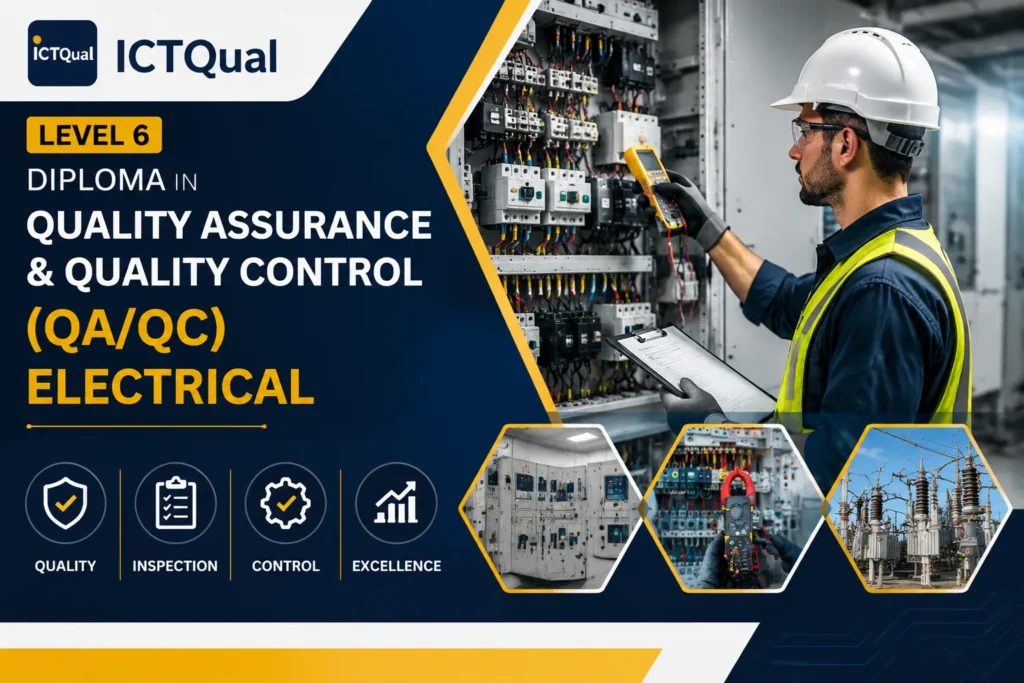
ICTQual Level 6 Diploma in Quality Assurance and Quality Control (QA/QC) Electrical

The ICTQual Level 6 Diploma in Quality Assurance and Quality Control (QA/QC) Electrical is a comprehensive professional qualification designed to...

Advanced 60 weeks 48 lessons 48 quizzes
Overview
Curriculum 96
Instructor

What You Will Learn

By completing the ICTQual Level 6 Diploma in Quality Assurance and Quality Control (QA/QC) Electrical, learners will be able to:

  • Understand the principles and practices of electrical quality assurance and quality control.
  • Apply international QA/QC standards, codes, and electrical engineering regulations.
  • Develop and implement quality management systems within electrical projects.
  • Perform electrical inspections, testing, verification, and commissioning activities.
  • Prepare and interpret Inspection and Test Plans (ITPs), quality documentation, and technical reports.
  • Identify, investigate, and resolve quality issues using corrective and preventive actions (CAPA).
  • Conduct audits and ensure compliance with project specifications and industry standards.

The ICTQual Level 6 Diploma in Quality Assurance and Quality Control (QA/QC) Electrical is a comprehensive professional qualification designed to develop the knowledge, technical expertise, and practical competencies required to maintain and improve quality standards throughout the lifecycle of electrical engineering and construction projects. The programme equips learners with a thorough understanding of quality assurance principles, quality control procedures, inspection techniques, testing methodologies, and internationally recognised quality management systems. It is ideal for individuals seeking to build a successful career in electrical quality management or enhance their existing professional capabilities.

Developed from the perspective of experienced QA/QC construction specialists, this diploma focuses on ensuring that electrical installations, systems, components, and equipment consistently comply with project specifications, contractual requirements, statutory regulations, and international industry standards. Learners will gain practical knowledge of electrical inspections, commissioning processes, material verification, inspection and test plans (ITPs), quality documentation, non-conformance management, corrective and preventive actions (CAPA), and quality auditing. The curriculum combines theoretical understanding with real-world industry applications to prepare learners for complex quality management responsibilities.

The qualification also explores modern quality management practices used across construction, power generation, renewable energy, manufacturing, oil and gas, industrial facilities, commercial developments, and infrastructure projects. Learners will develop the ability to identify quality risks, evaluate electrical workmanship, monitor compliance with engineering standards, analyse inspection results, and implement continuous improvement strategies that enhance project quality, safety, reliability, and operational performance. Emphasis is placed on professional decision-making, technical accuracy, and adherence to internationally recognised electrical and quality assurance standards.

Upon successful completion of the ICTQual Level 6 Diploma in Quality Assurance and Quality Control (QA/QC) Electrical, learners will possess the confidence and technical competence to contribute effectively to quality-focused engineering environments. The qualification supports career progression into roles such as Electrical QA/QC Engineer, Electrical Quality Inspector, Commissioning Engineer, Quality Assurance Coordinator, Site Quality Engineer, Electrical Compliance Officer, and QA/QC Manager. With its strong emphasis on practical skills, regulatory compliance, and industry best practices, this diploma prepares learners to meet the evolving quality demands of the global electrical engineering and construction sectors.

Requirements

The ICTQual Level 6 Diploma in Quality Assurance and Quality Control (QA/QC) Electrical is intended for learners with a background or interest in electrical engineering and quality management. It is suitable for those seeking to enhance their technical knowledge and professional competence in electrical QA/QC practices.

  • Learners should be 18 years of age or above.
  • A Level 5 qualification in Electrical Engineering, Electrical Technology, QA/QC, or a related field is recommended, or an equivalent qualification.
  • Relevant industry experience in the electrical sector is advantageous.
  • A basic understanding of electrical engineering principles is beneficial.
  • A good standard of English language proficiency is recommended.
  • Basic computer skills are beneficial for accessing learning resources and completing assessments.
  • There are no mandatory licensing or professional registration requirements for entry to this qualification.
Section 1: Unit No 1: Advanced Quality Management Systems in Electrical Engineering
16 items
This unit provides learners with a comprehensive understanding of advanced quality management systems and their application within the electrical engineering industry. It explores the principles, frameworks, and methodologies used to establish, implement, monitor, and continually improve quality systems that ensure electrical installations, equipment, and engineering processes consistently meet client expectations, contractual obligations, and international standards. Learners will examine the integration of quality assurance and quality control into every stage of electrical projects, from design and procurement to installation, testing, commissioning, and maintenance, while gaining insight into industry best practices for achieving operational excellence.nnThroughout this unit, learners will develop the knowledge and practical skills required to manage quality management systems in complex electrical engineering environments. Topics include ISO 9001 quality management principles, process-based quality approaches, risk-based thinking, quality planning, internal auditing, documentation control, non-conformance management, corrective and preventive actions, and continuous improvement strategies. By the end of the unit, learners will be equipped to support the delivery of safe, compliant, reliable, and high-quality electrical projects across construction, power generation, manufacturing, renewable energy, utilities, and industrial engineering sectors.
Lesson 1: Critically Evaluate International Quality Standards (e.g., ISO 9001) and Their Application in Electrical Engineering
Quiz No 1: Critically Evaluate International Quality Standards (e.g., ISO 9001) and Their Application in Electrical Engineering
Quiz
Lesson 2: Design and implement advanced quality management systems for electrical projects.
Quiz No 2: Design and implement advanced quality management systems for electrical projects.
Quiz
Lesson 3: Analyse the Effectiveness of Quality Assurance Frameworks in Complex Environments
Quiz No 3: Analyse the Effectiveness of Quality Assurance Frameworks in Complex Environments
Quiz
Lesson 4: Integrate Continuous Improvement Methodologies (e.g., Six Sigma, TQM) into QA/QC Processes
Quiz No 4: Integrate Continuous Improvement Methodologies (e.g., Six Sigma, TQM) into QA/QC Processes
Quiz
Lesson 5: Assess the Impact of Quality Management on Safety, Cost, and Project Performance in Electrical QA/QC Processes
Quiz No 5: Assess the Impact of Quality Management on Safety, Cost, and Project Performance in Electrical QA/QC Processes
Quiz
Lesson 6: Develop Audit Procedures and Compliance Monitoring Strategies in Electrical QA/QC Processes
Quiz No 6: Develop Audit Procedures and Compliance Monitoring Strategies in Electrical QA/QC Processes
Quiz
Lesson 7: Apply Advanced Documentation and Traceability Methods in Electrical QA/QC Processes
Quiz No 7: Apply Advanced Documentation and Traceability Methods in Electrical QA/QC Processes
Quiz
Lesson 8: Apply advanced project planning techniques to electrical QA/QC activities.
Quiz No 8: Apply advanced project planning techniques to electrical QA/QC activities.
Quiz
Section 2: Unit No. 2: Electrical Project Planning, Risk, and Compliance Management
16 items
Electrical Project Planning, Risk, and Compliance Management focuses on developing the advanced knowledge and practical skills required to effectively plan, control, and manage electrical engineering projects while ensuring quality, safety, and regulatory compliance. This unit explores the principles of structured project planning, resource management, risk identification, mitigation strategies, and compliance monitoring within complex electrical environments. Learners will develop an understanding of how effective planning processes support successful project delivery by aligning engineering activities, quality objectives, timelines, resources, and stakeholder expectations.nnThis unit also examines the importance of proactive risk management and compliance frameworks in electrical engineering projects. Learners will explore methods for assessing technical, operational, safety, and regulatory risks while implementing appropriate control measures to minimise project disruptions and improve performance. Through the application of advanced planning techniques, compliance evaluation methods, and risk-based decision-making approaches, learners will gain the ability to support reliable, efficient, and legally compliant electrical project execution across professional engineering workplaces.
Lesson 1: Apply Advanced Project Planning Techniques to Electrical QA/QC Activities
Quiz No 1: Apply Advanced Project Planning Techniques to Electrical QA/QC Activities
Quiz
Lesson 2: Apply advanced project planning techniques to electrical QA/QC activities.
Quiz No 2: Apply advanced project planning techniques to electrical QA/QC activities.
Quiz
Lesson 3: Identify and Evaluate Risks Associated with Electrical Installations and Systems
Quiz No 3:Identify and Evaluate Risks Associated with Electrical Installations and Systems
Quiz
Lesson 4: Interpret and apply national and international electrical codes and regulations.
Quiz No 4: Interpret and apply national and international electrical codes and regulations.
Quiz
Lesson 5: Integrate QA/QC Processes into Project Scheduling and Resource Allocation
Quiz No 5: Integrate QA/QC Processes into Project Scheduling and Resource Allocation
Quiz
Lesson 6: Monitor compliance with contractual, legal, and regulatory obligations.
Quiz No 6: Monitor compliance with contractual, legal, and regulatory obligations.
Quiz
Lesson No 7: Evaluate the effectiveness of risk management frameworks in electrical projects.
Quiz No 7: Evaluate the effectiveness of risk management frameworks in electrical projects.
Quiz
Lesson 8: Recommend Corrective Actions to Address Compliance Gaps
Quiz No 8: Recommend Corrective Actions to Address Compliance Gaps
Quiz
Section 3: Unit No 3: Advanced Inspection, Testing, and Non-Destructive Evaluation (NDE) in Electrical Systems
16 items
Advanced Inspection, Testing, and Non-Destructive Evaluation (NDE) in Electrical Systems develops advanced knowledge and practical skills required to assess the safety, reliability, and performance of complex electrical installations. This unit focuses on professional inspection strategies, advanced testing techniques, and modern NDE methods used by Electrical QA/QC Engineers to identify defects, verify compliance, and ensure electrical systems meet contractual, regulatory, and industry requirements throughout their lifecycle.nnThis unit enables learners to understand how advanced diagnostic techniques, condition monitoring methods, and evidence-based evaluation processes support effective quality management in electrical engineering projects. Learners explore the application of inspection and testing data to evaluate system integrity, detect potential failures, improve maintenance decisions, and enhance the overall reliability, safety, and compliance performance of electrical systems across industrial, commercial, and infrastructure projects.
Lesson 1: Apply Advanced Inspection and Testing Methods to Electrical Systems and Components
Quiz No 1: Apply advanced inspection and testing methods to electrical systems and components.
Quiz
Lesson 2: Evaluate the suitability of different NDE techniques for specific electrical applications.
Quiz No 2: Evaluate the suitability of different NDE techniques for specific electrical applications.
Quiz
Lesson 3: Interpret complex test results and identify potential system failures.
Quiz No 3: Interpret complex test results and identify potential system failures.
Quiz
Lesson 4: Ensure calibration and reliability of advanced testing equipment.
Quiz No 4: Ensure calibration and reliability of advanced testing equipment.
Quiz
Lesson 5: Develop inspection protocols for high‑risk electrical installations.
Quiz No 5: Develop inspection protocols for high‑risk electrical installations.
Quiz
Lesson 6: Assess the role of NDE in predictive maintenance and reliability engineering.
Quiz No 6: Assess the role of NDE in predictive maintenance and reliability engineering.
Quiz
Lesson 7: Document inspection findings in line with international QA/QC standards.
Quiz No 7: Document inspection findings in line with international QA/QC standards.
Quiz
Lesson 8: Recommend corrective and preventive measures based on inspection outcomes.
Quiz No 8: Recommend corrective and preventive measures based on inspection outcomes.
Quiz
Section 4: Unit 4: Demonstrate Leadership Skills in Managing QA/QC Teams and Projects
16 items
This unit develops advanced leadership and management capabilities required to lead Quality Assurance and Quality Control (QA/QC) teams effectively within electrical engineering projects and complex technical environments. Learners will explore how professional QA/QC leaders establish clear quality objectives, allocate responsibilities, coordinate multidisciplinary teams, manage inspection and testing activities, communicate technical expectations, resolve quality issues, and maintain accountability throughout project delivery. The unit emphasises professional leadership, decision-making, team coordination, performance management, stakeholder communication, resource planning, risk awareness, and effective management of quality documentation and project requirements.nnLearners will also develop the ability to lead QA/QC projects through changing priorities, technical challenges, non-conformities, competing programme demands, and quality-related risks. Emphasis is placed on building a positive quality culture, motivating team members, managing conflicts, monitoring performance, implementing corrective and preventive actions, and supporting continual improvement. Through practical workplace situations and leadership-focused activities, learners will strengthen their ability to make informed decisions, communicate effectively with engineers, inspectors, contractors, clients, and management, and ensure that QA/QC objectives are consistently achieved while maintaining electrical quality, safety, compliance, reliability, and project performance.
Lesson 1: Demonstrate leadership skills in managing QA/QC teams and projects.
Quiz No 1: Demonstrate leadership skills in managing QA/QC teams and projects.
Quiz
Lesson 2 : Apply strategic decision‑making models to complex QA/QC challenges
Quiz No 2 : Apply strategic decision‑making models to complex QA/QC challenges
Quiz
Lesson 3: Evaluate the impact of leadership styles on quality culture and performance.
Quiz No 3: Evaluate the impact of leadership styles on quality culture and performance.
Quiz
Lesson 4: Develop Strategies for Conflict Resolution and Team Motivation
Quiz No 4: Develop strategies for conflict resolution and team motivation.
Quiz
Lesson 5: Integrate ethical considerations into QA/QC leadership decisions.
Quiz No 5: Integrate ethical considerations into QA/QC leadership decisions.
Quiz
Lesson 6: Manage stakeholder expectations in high‑pressure project environments.
Quiz No 6: Manage stakeholder expectations in high‑pressure project environments.
Quiz
Lesson 7: Lead quality audits and present findings to senior management.
Quiz No 7: Lead quality audits and present findings to senior management
Quiz
Lesson 8: Recommend Strategic Improvements to Enhance Organisational QA/QC Performance
Quiz No 8: Recommend strategic improvements to enhance organisational QA/QC performance.
Quiz
Section 5: Unit 5: Sustainability, Innovation, and Digital Tools in Electrical QA/QC
16 items
This unit explores the growing importance of sustainability, technological innovation, and digital transformation within modern electrical Quality Assurance and Quality Control (QA/QC) practices. It focuses on how electrical engineering organisations can integrate sustainable approaches, advanced technologies, and data-driven solutions to improve quality performance, enhance operational efficiency, and support environmentally responsible project delivery. Learners will examine the relationship between sustainable engineering practices and effective quality management, including resource optimisation, waste reduction, energy efficiency, lifecycle considerations, and compliance with evolving environmental expectations.nnThe unit also develops an understanding of how digital tools and innovative technologies are transforming electrical QA/QC systems. Learners will explore the application of digital inspection platforms, automated monitoring systems, data analytics, Building Information Modelling (BIM), smart reporting tools, and emerging technologies that improve accuracy, traceability, decision-making, and continuous improvement. By evaluating the impact of innovation and sustainability strategies, learners will develop the ability to recommend and implement advanced QA/QC solutions that enhance reliability, compliance, and long-term organisational performance within the electrical sector.
Lesson 1: Evaluate the role of sustainability in electrical QA/QC practices.
Quiz No 1: Evaluate the role of sustainability in electrical QA/QC practices.
Quiz
Lesson 2: Integrate Green Technologies and Energy-Efficient Solutions into QA/QC Frameworks
Quiz No 2: Integrate green technologies and energy‑efficient solutions into QA/QC frameworks.
Quiz
Lesson 3: Assess the Impact of Digital Tools (e.g., BIM, IoT, AI) on Quality Management
Quiz No 3: Assess the Impact of Digital Tools (e.g., BIM, IoT, AI) on Quality Management
Quiz
Lesson 4: Apply Data Analytics to Monitor and Improve Electrical QA/QC Performance
Quiz no 4: Apply data analytics to monitor and improve electrical QA/QC performance.
Quiz
Lesson 5: Recommend Innovative Solutions to Enhance Compliance and Efficiency
Quiz No 5: Recommend Innovative Solutions to Enhance Compliance and Efficiency
Quiz
Lesson 6: Critically Analyse Case Studies of Sustainable Electrical Projects
Quiz no 6: Critically Analyse Case Studies of Sustainable Electrical Projects
Quiz
Lesson 7: Develop strategies for adopting emerging technologies in QA/QC.
Quiz No 7: Develop strategies for adopting emerging technologies in QA/QC.
Quiz
Lesson 8: Balance Sustainability Goals with Cost and Performance Requirements
Quiz No 8: Balance sustainability goals with cost and performance requirements
Quiz
Section 6: Unit 6: Research Project in Electrical Quality Assurance and Control
16 items
This unit develops advanced research, analytical, and professional skills required to investigate contemporary issues in electrical Quality Assurance and Quality Control (QA/QC). Learners will undertake a structured research project focused on a relevant electrical QA/QC topic, enabling them to explore technical challenges, quality risks, inspection and testing practices, sustainability considerations, emerging technologies, standards, project performance, and opportunities for continual improvement. The unit emphasises systematic research methods, reliable information sources, critical analysis, evidence evaluation, data interpretation, and the development of well-supported conclusions. Learners will be expected to define a suitable research problem, establish clear objectives, review relevant technical and professional literature, select appropriate research methods, collect and analyse evidence, and present findings in a structured academic and industry-relevant format.nnThe unit also strengthens the learneru2019s ability to translate research findings into practical recommendations for electrical engineering and QA/QC environments. Through independent investigation, learners will critically evaluate existing practices, identify gaps or improvement opportunities, consider technical, commercial, safety, sustainability, and quality implications, and formulate evidence-based recommendations that can support better decision-making. The completed research project will demonstrate the learneru2019s ability to combine advanced electrical QA/QC knowledge with research competence, professional judgement, analytical thinking, and effective technical communication, preparing them to contribute to quality improvement initiatives and informed practice within complex electrical projects.
Lesson 1: Formulate a Research Question Relevant to Electrical QA/QC
Quiz No 1: Formulate a research question relevant to electrical QA/QC.
Quiz
Lesson 2: Conduct a Literature Review to Identify Gaps in Current Knowledge
Quiz No 2: Conduct a literature review to identify gaps in current knowledge.
Quiz
Lesson 3: Apply Appropriate Research Methodologies to Investigate QA/QC Issues
Quiz No 3: Apply appropriate research methodologies to investigate QA/QC issues.
Quiz
Lesson 4: Collect, analyse, and interpret data from electrical engineering contexts.
Quiz No 4: Collect, analyse, and interpret data from electrical engineering contexts.
Quiz
Lesson 5: Evaluate Findings Against Industry Standards and Best Practices
Quiz No 5: Evaluate findings against industry standards and best practices.
Quiz
Lesson 6: Present research outcomes in a professional, structured format.
Quiz No 6: Present research outcomes in a professional, structured format.
Quiz
Lesson 7: Recommend practical applications of research findings to industry.
Quiz No 7: Recommend practical applications of research findings to industry.
Quiz
Lesson 8: Reflect on personal learning and professional development through research.
Quiz No 8: Reflect on personal learning and professional development through research.
Quiz

lexiton international

Administrator

ICTQual Level 6 Diploma in Quality Assurance and Quality Control (QA/QC) Electrical
$450.00
  • 60 weeks
  • 48 lessons
  • 48 quizzes
  • Lifetime access