
Lesson 2: Advocacy and Outreach
Advocacy and outreach are essential components of effective addiction treatment and mental health support systems. While treatment services focus on helping individuals manage addiction and mental health conditions, advocacy and outreach activities work to improve the wider environment in which recovery takes place. Advocacy seeks to influence policies, services, and community initiatives that affect individuals and families, while outreach focuses on raising awareness, providing education, and connecting people with available support. Together, these approaches help create communities that are more informed, inclusive, and supportive of recovery and wellbeing.
In professional practice, addiction counsellors, mental health workers, social care practitioners, community organisations, and advocacy groups play an important role in promoting positive change. They work to improve access to services, reduce barriers to treatment, challenge stigma, and encourage community engagement. Understanding advocacy and outreach enables learners to support individuals more effectively, contribute to service improvements, and help create environments where people feel safe seeking assistance and participating in recovery.
By the end of this lesson, learners will be able to:
- Define advocacy and outreach within addiction and mental health services.
- Explain the importance of policy development and community initiatives.
- Identify methods used to advocate for improved addiction and mental health services.
- Understand the role of outreach in raising awareness and community engagement.
- Analyse the impact of stigma on individuals affected by addiction and mental health disorders.
- Apply strategies to reduce stigma and encourage help-seeking behaviour.
- Evaluate the benefits of collaborative advocacy and outreach activities.
- Recognise best practices for promoting recovery, inclusion, and community wellbeing.
1: Advocate for Policy Changes and Community Initiatives to Improve Addiction Treatment and Mental Health Services
Understanding Advocacy
Advocacy is the process of actively supporting, representing, and promoting the rights, interests, needs, and wellbeing of individuals or groups to influence decisions, policies, services, and public attitudes. Within addiction treatment and mental health services, advocacy aims to ensure that individuals receive fair access to support, quality care, and opportunities for recovery while addressing barriers that may prevent them from achieving positive outcomes.
Advocacy is an essential component of modern health and social care practice because it gives a voice to individuals who may otherwise struggle to express their needs or influence decisions that affect their lives. People experiencing addiction or mental health difficulties often face challenges such as stigma, discrimination, social exclusion, financial hardship, and limited access to appropriate services. Advocacy helps address these challenges by promoting fairness, inclusion, and equal opportunities.
In practice, advocacy can occur at several levels. At an individual level, it may involve helping a person access treatment services or understand their rights. At a community level, advocacy may focus on improving local services, increasing awareness, or strengthening support networks. At a policy level, advocacy seeks to influence legislation, funding decisions, and service development to improve outcomes for larger populations.
Advocacy is closely linked to person-centred care because it places the individual’s needs, preferences, and experiences at the centre of decision-making. Effective advocacy not only supports access to services but also promotes dignity, empowerment, participation, and recovery.
Why Advocacy Matters
Advocacy plays a significant role in improving addiction and mental health services because it helps identify gaps in provision and encourages action to address unmet needs. Without advocacy, many challenges affecting vulnerable individuals may remain unnoticed or unresolved.
People affected by addiction and mental health disorders may experience:
- Limited access to treatment services.
- Long waiting times for support.
- Social stigma and discrimination.
- Lack of awareness about available resources.
- Insufficient community support programmes.
- Housing and employment difficulties.
- Financial barriers to recovery.
- Poor integration between services.
Advocacy helps address these issues by encouraging service improvement, influencing policy development, and ensuring that the voices of service users are heard.
Benefits of Advocacy
Effective advocacy contributes to:
- Improved access to addiction and mental health services.
- Better quality of care and support.
- Increased awareness of community needs.
- Enhanced protection of individual rights.
- Greater social inclusion and equality.
- Improved service funding and resource allocation.
- Stronger recovery-focused approaches.
- Better long-term outcomes for individuals and communities.
Critical Perspective on Advocacy
Advocacy is not simply about raising concerns; it is a structured process that seeks to create meaningful and sustainable change. Successful advocacy requires evidence, collaboration, communication, and persistence. While advocacy can influence policies and services, change often takes time and may involve negotiating with multiple stakeholders who have different priorities and perspectives.
For example, an organisation may identify a shortage of addiction treatment services in a particular area. Although the need may be clear, securing additional funding or resources may require extensive consultation, evidence gathering, and engagement with decision-makers. This demonstrates that advocacy is both a strategic and practical activity that requires planning and commitment.
Types of Advocacy
Different forms of advocacy are used depending on the issue being addressed and the intended outcome.
Types of Advocacy in Addiction and Mental Health Services
| Type of Advocacy | Purpose | Example |
|---|---|---|
| Individual Advocacy | Supports the rights and needs of one person | Helping a client access rehabilitation services |
| Group Advocacy | Represents the interests of a particular group | Campaigning for improved recovery programmes |
| Community Advocacy | Promotes positive change within communities | Supporting local mental health awareness initiatives |
| Policy Advocacy | Influences legislation and service development | Advocating for increased funding for treatment services |
| Self-Advocacy | Enables individuals to speak for themselves | Service users expressing their treatment preferences |
Each type of advocacy contributes to service improvement in different ways, but all share the common goal of promoting positive outcomes and ensuring that individuals receive appropriate support.
Policy Changes and Service Improvement
Policies influence how addiction and mental health services are organised, funded, delivered, and evaluated. They establish the standards and frameworks that guide professional practice and determine how resources are allocated.
Effective policies can:
- Improve access to treatment and recovery services.
- Strengthen community-based support programmes.
- Promote early intervention and prevention.
- Encourage integrated care approaches.
- Improve service quality and accountability.
- Protect the rights of service users.
Policy development is particularly important because addiction and mental health challenges often require coordinated responses across healthcare, social care, education, housing, and employment sectors. Well-designed policies encourage collaboration between services and ensure that support is delivered in a consistent and effective manner.
Examples of Policy Improvements
Examples of policy changes that may improve addiction and mental health services include:
- Increased funding for addiction treatment programmes.
- Expansion of community recovery services.
- Development of crisis intervention teams.
- Improved access to early intervention programmes.
- Enhanced training requirements for professionals.
- Better integration between healthcare and social care services.
- Introduction of anti-stigma strategies and awareness campaigns.
Industry Relevance
Professionals working in addiction counselling, mental health services, social care, and community support frequently encounter situations where policy improvements could benefit service users. Their frontline experience places them in a valuable position to identify service gaps, emerging needs, and opportunities for improvement.
For example, addiction support workers may notice increasing demand for youth-focused services. By gathering evidence and communicating these concerns to local authorities or service managers, they can contribute to policy discussions that lead to the development of new programmes.
This highlights the important relationship between professional practice and advocacy. Practitioners are not only service providers but can also act as advocates for positive change within their communities.
Community Initiatives
Community initiatives are organised programmes, projects, or activities designed to improve health, wellbeing, social inclusion, and community engagement. They complement formal treatment services by providing additional support and opportunities for participation.
Community initiatives are particularly valuable because recovery often occurs within social environments rather than clinical settings alone. Individuals benefit from opportunities to connect with others, develop skills, access information, and participate in meaningful activities.
Examples of community initiatives include:
- Mental health awareness campaigns.
- Addiction recovery support groups.
- Community wellbeing workshops.
- Family support programmes.
- Youth prevention and education projects.
- Peer mentoring schemes.
- Recovery-friendly employment initiatives.
- Community outreach programmes.
These initiatives help strengthen recovery networks, reduce social isolation, and create supportive environments that encourage wellbeing and personal development.
Advantages of Community Initiatives
Community initiatives offer several benefits:
- Improve community awareness and understanding.
- Promote early intervention and prevention.
- Strengthen local support networks.
- Encourage social inclusion and participation.
- Provide accessible sources of support.
- Reduce stigma and discrimination.
- Support long-term recovery and resilience.
Potential Limitations
While community initiatives can be highly effective, they may face challenges such as:
- Limited funding and resources.
- Variable levels of community engagement.
- Difficulties reaching vulnerable populations.
- Dependence on volunteers or external support.
- Sustainability concerns for long-term projects.
Understanding both the strengths and limitations of community initiatives helps professionals develop realistic expectations and effective strategies for implementation.
The Advocacy Process
Advocacy is most effective when it follows a structured and systematic approach.
Identify a Need or Issue
↓
Gather Evidence and Information
↓
Consult Service Users and Stakeholders
↓
Develop Advocacy Objectives
↓
Prepare Recommendations
↓
Communicate with Decision-Makers
↓
Support Implementation of Change
↓
Monitor and Evaluate Outcomes
This process demonstrates that advocacy is evidence-based and focused on achieving measurable improvements.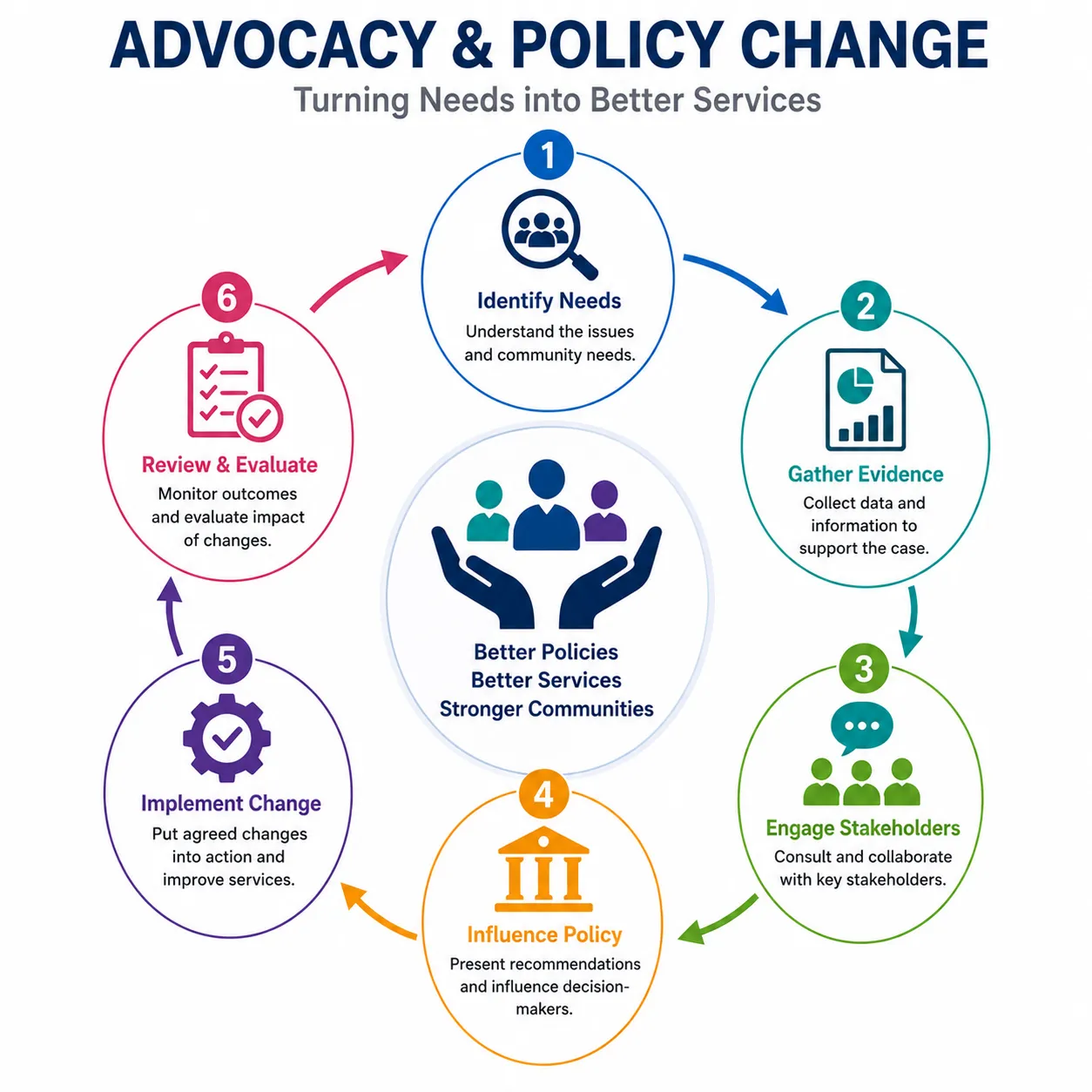
Principles of Effective Advocacy
Successful advocacy is guided by several key principles that help ensure ethical and effective practice.
Professional Practice Principles
- Use reliable and evidence-based information.
- Listen to the experiences of service users.
- Promote equality, diversity, and inclusion.
- Respect confidentiality and professional boundaries.
- Build partnerships and collaborative relationships.
- Focus on achievable and realistic objectives.
- Maintain transparency and accountability.
- Evaluate the impact of advocacy activities.
These principles support ethical practice and increase the likelihood of achieving positive outcomes.
Comparison Table: Advocacy and Direct Support
| Advocacy | Direct Support |
|---|---|
| Focuses on influencing systems, policies, and services | Focuses on assisting individuals directly |
| Often seeks long-term improvements | Often addresses immediate needs |
| Targets decision-makers and stakeholders | Targets service users and clients |
| Promotes service development and reform | Promotes personal recovery and wellbeing |
| Addresses wider community issues | Addresses individual circumstances |
| Influences future service provision | Supports current service delivery |
This comparison highlights that advocacy and direct support are complementary approaches. While direct support helps individuals manage current challenges, advocacy seeks to improve the systems and services that affect future experiences.
Practical Example
A community addiction service notices a significant increase in young people seeking support for substance misuse. Staff members identify that existing programmes are designed primarily for adults and do not adequately meet the needs of younger service users.
The organisation gathers evidence through service data, consultations with young people and families, and feedback from professionals. This information is presented to local authorities and healthcare commissioners along with recommendations for youth-focused prevention and recovery programmes.
As a result, additional funding is secured to develop specialist services that provide education, counselling, and early intervention support for young people. This example demonstrates how advocacy can lead to meaningful service improvements that benefit both individuals and communities.
Effective Advocacy
Identify Community Needs
Gather Evidence and Data
Engage Service Users
Collaborate with Stakeholders
Influence Policy and Decision-Making
Improve Services and Programmes
Promote Recovery and Wellbeing
Strengthen Communities
Advocacy is a powerful tool for improving addiction treatment and mental health services. By identifying needs, gathering evidence, engaging stakeholders, and influencing decision-makers, professionals and organisations can help create more accessible, inclusive, and recovery-focused support systems. Effective advocacy not only benefits individuals seeking help today but also contributes to long-term improvements that strengthen communities and improve future service provision.
2: Engage in Outreach Activities to Raise Awareness and Reduce the Stigma Associated with Addiction and Mental Health Disorders
Understanding Outreach
Outreach refers to organised activities designed to engage individuals, groups, and communities by providing information, education, guidance, support, and access to relevant services. The primary purpose of outreach is to connect with people who may not actively seek help, may be unaware of available support services, or may experience barriers that prevent them from accessing care. Outreach initiatives help bridge the gap between service providers and communities, ensuring that support reaches those who need it most.
Within addiction and mental health services, outreach plays a crucial role in increasing awareness, promoting early intervention, encouraging recovery, and improving community understanding of addiction and mental health conditions. Outreach activities can take place in a variety of settings, including schools, workplaces, healthcare facilities, community centres, social media platforms, and public events.
Modern health and social care systems recognise that many individuals affected by addiction or mental health difficulties may not engage with formal services until problems become severe. Outreach aims to address this challenge by proactively bringing information and support into the community. Rather than waiting for individuals to seek assistance, outreach programmes actively engage people where they live, work, study, and socialise.
Outreach is particularly important for vulnerable populations who may experience social exclusion, discrimination, poverty, homelessness, or cultural barriers that affect their access to support. Through targeted engagement and awareness activities, outreach programmes can improve service accessibility and encourage earlier intervention.
Why Outreach Matters
Outreach is an essential component of prevention, education, and recovery support because it helps create informed and supportive communities. Effective outreach enables organisations to build trust, increase awareness, and encourage individuals to access services before problems escalate.
Outreach contributes to:
- Increased awareness of addiction and mental health issues.
- Improved understanding of available support services.
- Greater community engagement and participation.
- Earlier identification of problems and support needs.
- Reduced barriers to accessing care.
- Improved treatment engagement and recovery outcomes.
- Enhanced public knowledge and understanding.
- Stronger connections between communities and service providers.
From an industry perspective, outreach is increasingly recognised as a cost-effective and proactive approach to improving public health and wellbeing. By encouraging prevention and early intervention, outreach can reduce the need for more intensive services in the future.
Purpose of Outreach Activities
Outreach activities are designed to inform, educate, engage, and support communities. Their purpose extends beyond simply sharing information. Effective outreach seeks to create meaningful connections between individuals and services while encouraging positive attitudes towards mental health and addiction recovery.
Outreach activities help:
- Raise awareness of addiction and mental health challenges.
- Increase understanding of support services.
- Encourage help-seeking behaviour.
- Promote prevention and early intervention.
- Strengthen community participation.
- Reduce stigma and discrimination.
- Improve access to care and support.
- Foster trust between communities and service providers.
Critical Analysis
While awareness campaigns are important, awareness alone does not always lead to behavioural change. Individuals may understand that support services exist but still avoid accessing them because of fear, stigma, cultural beliefs, or previous negative experiences. Effective outreach therefore combines education with engagement, support, and relationship-building. This approach increases the likelihood that individuals will seek assistance when needed.
Understanding Stigma
Stigma refers to negative attitudes, beliefs, stereotypes, assumptions, or discriminatory behaviours directed towards individuals because of a particular characteristic, condition, or life experience. In addiction and mental health contexts, stigma often results in people being judged, misunderstood, blamed, or excluded because of their condition.
Individuals affected by addiction and mental health disorders frequently experience stigma from society, communities, workplaces, educational settings, and sometimes even healthcare services. This can have a significant impact on their willingness to seek support and engage in recovery.
Types of Stigma
Stigma can occur in several forms:
- Social Stigma: Negative attitudes and stereotypes held by the public.
- Self-Stigma: Negative beliefs individuals develop about themselves due to societal attitudes.
- Structural Stigma: Policies, systems, or organisational practices that create barriers to support and inclusion.
Understanding these forms of stigma helps professionals recognise the wide-ranging challenges individuals may experience throughout their recovery journey.
Impact of Stigma
Stigma can have serious consequences for individuals, families, and communities.
Common effects include:
- Social isolation and exclusion.
- Reduced confidence and self-esteem.
- Fear of disclosure and help-seeking.
- Discrimination in employment and education.
- Delayed access to treatment.
- Increased emotional distress.
- Poorer recovery outcomes.
- Reduced quality of life.
Critical Perspective
Research and professional practice consistently demonstrate that stigma remains one of the most significant barriers to addiction and mental health support. Many individuals delay seeking treatment because they fear judgement, rejection, or discrimination. As a result, problems may worsen before support is accessed.
Reducing stigma is therefore not only a social responsibility but also a public health priority. Communities that promote understanding, acceptance, and support are more likely to encourage individuals to seek help early and engage in recovery.
Table: Common Outreach Activities and Their Purpose
| Outreach Activity | Purpose | Expected Outcome |
|---|---|---|
| Community Awareness Campaigns | Increase public understanding | Improved awareness and knowledge |
| Educational Workshops | Provide accurate information | Better understanding of addiction and mental health |
| Social Media Campaigns | Reach wider audiences | Increased community engagement |
| School and College Presentations | Promote prevention and early intervention | Improved awareness among young people |
| Community Events | Connect people with local services | Increased access to support |
| Peer Education Programmes | Share lived experiences | Reduced stigma and increased trust |
This table demonstrates that outreach activities can be tailored to different audiences and objectives while contributing to a common goal of improving awareness and engagement.
Outreach Activities
Outreach can take many forms depending on the needs of the target audience and the goals of the organisation. Effective outreach programmes are planned carefully to ensure that information is accessible, relevant, and engaging.
Examples of outreach activities include:
- Community awareness campaigns.
- Educational seminars and workshops.
- Social media awareness initiatives.
- School and college presentations.
- Health promotion events.
- Information and advice sessions.
- Peer-led education programmes.
- Community engagement projects.
- Recovery awareness campaigns.
- Public information resources.
Each activity provides opportunities to educate communities, challenge misconceptions, and connect individuals with available support services.
Industry Application of Outreach
Many addiction and mental health organisations rely on outreach programmes to connect with vulnerable and underserved populations. These programmes often target groups that may experience barriers to accessing traditional services, such as young people, individuals experiencing homelessness, minority communities, or people living in rural areas.
For example, a community mental health organisation may deliver educational sessions in schools to help young people understand mental wellbeing, recognise warning signs, and access support when needed. Similarly, addiction recovery organisations may use outreach events to provide information about treatment options and recovery resources.
Outreach activities also help organisations build stronger relationships with communities, improve trust, and increase service uptake.
Outreach Planning Process
Successful outreach requires careful planning, implementation, and evaluation.
Identify Target Audience
↓
Assess Community Needs
↓
Develop Outreach Objectives
↓
Create Awareness Materials
↓
Deliver Outreach Activities
↓
Engage Community Members
↓
Provide Information and Referrals
↓
Evaluate Impact and Outcomes
Each stage of this process contributes to the overall effectiveness of outreach initiatives. Evaluation is particularly important because it helps organisations measure success, identify improvements, and ensure resources are being used effectively.
Strategies for Reducing Stigma
Reducing stigma requires a long-term commitment to education, awareness, and community engagement. Professionals can play a key role in promoting positive attitudes and challenging misconceptions.
Effective strategies include:
- Using respectful and person-centred language.
- Challenging myths and stereotypes.
- Sharing accurate, evidence-based information.
- Promoting recovery success stories.
- Encouraging open and honest conversations.
- Delivering educational programmes.
- Supporting inclusive community initiatives.
- Involving people with lived experience.
- Promoting positive media representation.
Benefits of Stigma Reduction
Reducing stigma creates benefits for individuals, communities, and service providers.
Benefits include:
- Increased willingness to seek help.
- Improved treatment engagement.
- Greater community understanding.
- Stronger social support networks.
- Enhanced recovery outcomes.
- Improved quality of life.
- Reduced discrimination and exclusion.
Comparison Table: Stigma-Based Attitudes vs Recovery-Oriented Attitudes
| Stigma-Based Attitudes | Recovery-Oriented Attitudes |
|---|---|
| Focus on blame and judgement | Focus on support and understanding |
| Promote stereotypes | Promote accurate information |
| Discourage help-seeking | Encourage access to support |
| Increase social exclusion | Promote inclusion and participation |
| Create barriers to recovery | Support positive recovery outcomes |
| Emphasise limitations | Recognise strengths and potential |
This comparison highlights the importance of shifting from negative perceptions towards supportive and recovery-focused approaches.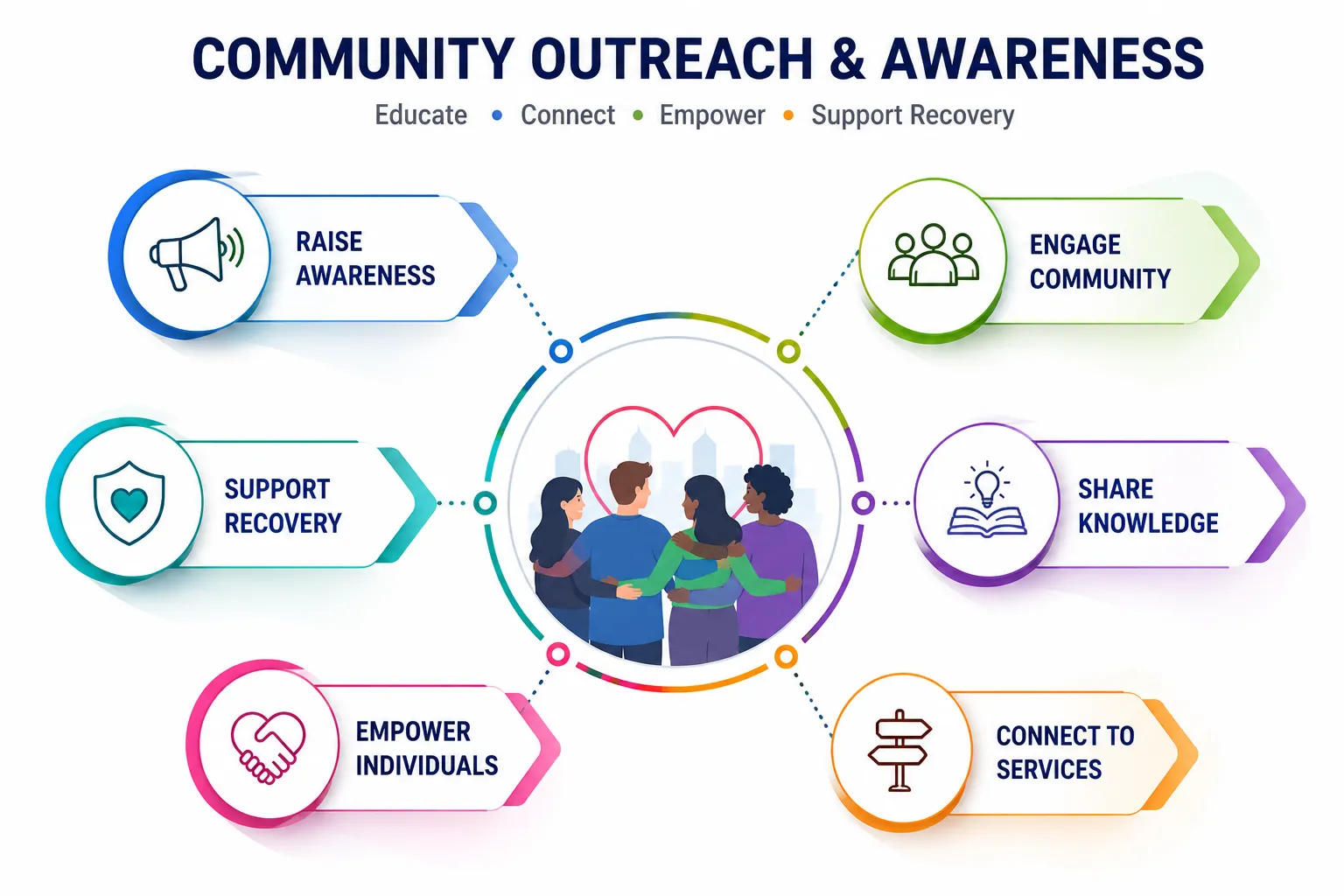
Workplace Example
An addiction support worker collaborates with local schools, healthcare providers, and community organisations to deliver a series of educational workshops focusing on substance misuse prevention and mental health awareness. The programme includes presentations, interactive discussions, information materials, and opportunities for participants to ask questions.
Through these activities, young people learn about risk factors, available support services, coping strategies, and the importance of seeking help early. Feedback collected after the programme shows increased awareness, improved understanding, and greater confidence in accessing support services. This example demonstrates how outreach can positively influence knowledge, attitudes, and community engagement.
Case Study: Advocacy and Outreach in Action
Background
Sarah works for a community addiction support organisation serving an area where substance misuse rates have increased significantly over recent years.
Situation
Despite the availability of treatment services, many individuals are not accessing support. Community surveys indicate that stigma, misinformation, and limited awareness are major barriers.
Challenge
Many people fear being judged if they seek help and are unaware of the services available to support recovery.
Analysis
The organisation recognises that improving service access requires more than simply expanding treatment provision. It is necessary to address public attitudes, increase awareness, and build trust within the community.
Solution
The organisation develops a coordinated outreach strategy that includes:
- Community awareness campaigns.
- Educational workshops.
- Social media engagement.
- Collaboration with healthcare providers.
- Promotion of recovery success stories.
- Advocacy for improved service accessibility.
Outcome
Community awareness increases significantly, attitudes become more supportive, and service referrals rise. More individuals begin accessing treatment and support services, resulting in improved recovery outcomes.
Learning Point
This case study demonstrates how outreach and advocacy can work together to address barriers, reduce stigma, strengthen community engagement, and improve access to addiction and mental health services.
Outreach is a powerful tool for raising awareness, reducing stigma, and connecting individuals with support services. By combining education, engagement, and community participation, outreach programmes help create environments where individuals feel informed, supported, and empowered to seek help. Effective outreach not only benefits those currently experiencing addiction or mental health challenges but also contributes to healthier, more inclusive, and recovery-focused communities.
Conclusion
Advocacy and outreach are powerful tools for improving addiction treatment and mental health services. Advocacy helps influence policies, strengthen community initiatives, and address barriers that affect individuals and families, while outreach activities increase awareness, encourage early intervention, and connect people with available support. Together, these approaches contribute to the development of more responsive, accessible, and recovery-focused services.
By promoting understanding, reducing stigma, and encouraging community participation, advocacy and outreach help create environments where individuals feel supported in seeking help and maintaining recovery. For professionals working in addiction and mental health services, developing knowledge and skills in advocacy and outreach is essential for improving outcomes, strengthening communities, and promoting long-term wellbeing.