
Lesson 1: Role of Community Resources
Community resources play a crucial role in supporting individuals affected by addiction and mental health challenges. Recovery and wellbeing are often influenced not only by professional treatment services but also by the availability of local support systems that help individuals meet their social, emotional, educational, financial, and healthcare needs. Community-based services create opportunities for individuals to access support, reduce isolation, improve quality of life, and maintain long-term recovery.
In addiction and mental health treatment, no single organisation can meet all the needs of an individual. Effective support often requires collaboration between healthcare providers, social services, community organisations, peer support groups, housing agencies, educational institutions, and employment services. Understanding how these resources work together helps professionals provide comprehensive, person-centred care.
This lesson explores the different community-based resources available to individuals affected by addiction and mental health issues and examines how professionals can collaborate with community organisations to improve access to care, strengthen support networks, and enhance recovery outcomes.
By the end of this lesson, learners will be able to:
- Identify various community-based resources that support individuals affected by addiction and mental health issues.
- Explain the purpose and functions of different support services.
- Understand the importance of community involvement in recovery and wellbeing.
- Analyse how community organisations contribute to support networks.
- Describe methods of collaborating with community agencies.
- Apply strategies to improve access to care through partnership working.
- Recognise best practices for developing effective community support systems.
1: Identify Community-Based Resources and Support Services for Individuals Affected by Addiction and Mental Health Issues
Understanding Community Resources
Community resources are the services, organisations, programmes, facilities, and support systems available within a community that help individuals meet their physical, emotional, psychological, social, educational, and practical needs. These resources are provided by a wide range of organisations, including healthcare providers, social care agencies, housing organisations, educational institutions, charities, voluntary groups, and community networks.
For individuals affected by addiction and mental health challenges, community resources play a vital role in providing support beyond formal treatment settings. While healthcare professionals may focus on diagnosis, treatment, and clinical interventions, community resources help address the wider factors that influence recovery and wellbeing. These factors may include unemployment, financial hardship, social isolation, family difficulties, lack of stable housing, limited educational opportunities, and reduced access to support networks.
Modern addiction and mental health practice recognises that recovery is not solely about reducing symptoms or stopping substance use. Sustainable recovery involves rebuilding a meaningful and stable life. Community resources contribute to this process by helping individuals strengthen relationships, develop life skills, access employment opportunities, improve educational attainment, secure accommodation, and become active members of their communities.
Community support systems are particularly important because addiction and mental health conditions often affect multiple areas of a person’s life. An individual may require medical treatment, emotional support, financial assistance, housing support, and educational opportunities simultaneously. Community resources provide a framework through which these diverse needs can be addressed in a coordinated and person-centred manner.
Why Community Resources Matter
Community resources are an essential component of holistic care because they provide practical and emotional support that complements professional treatment. They help individuals maintain stability during recovery and create opportunities for personal growth and long-term wellbeing.
Community resources help individuals:
- Access treatment and recovery services.
- Build supportive relationships and social networks.
- Improve social inclusion and community participation.
- Develop independent living skills.
- Secure housing and employment opportunities.
- Reduce the risk of relapse and social exclusion.
- Improve physical and mental wellbeing.
- Increase self-confidence and resilience.
- Strengthen coping strategies and problem-solving abilities.
- Enhance overall quality of life.
The importance of community resources can be understood through the concept of recovery capital. Recovery capital refers to the internal and external resources available to an individual that support recovery. Community resources increase recovery capital by providing access to support systems, opportunities, and positive social connections that contribute to long-term success.
Common Community-Based Resources and Their Functions
| Community Resource | Primary Purpose | Support Provided |
|---|---|---|
| Healthcare Services | Medical and mental health support | Assessment, treatment, medication management, referrals |
| Addiction Treatment Services | Substance misuse recovery | Detoxification, counselling, rehabilitation programmes |
| Peer Support Groups | Shared recovery support | Emotional encouragement, motivation, lived experience |
| Social Services | Practical and welfare assistance | Financial support, family services, safeguarding |
| Housing Services | Accommodation support | Emergency housing, supported accommodation, long-term housing |
| Employment Support Services | Career and employability development | Job training, career guidance, work preparation |
| Educational Services | Skills and knowledge development | Literacy programmes, vocational qualifications, training |
| Crisis Intervention Services | Immediate support during emergencies | Mental health crisis response and urgent assistance |
This range of resources demonstrates that recovery is not dependent upon a single service. Instead, successful outcomes are often achieved when multiple services work together to address the complex needs of individuals affected by addiction and mental health issues.
Healthcare Services
Healthcare services are frequently the first point of contact for individuals experiencing addiction or mental health concerns. These services provide assessment, diagnosis, treatment, monitoring, and referral pathways to specialist support.
Healthcare professionals may provide:
- Mental health assessments.
- Substance misuse assessments.
- Treatment planning.
- Medication management.
- Health education and promotion.
- Referral to specialist addiction or mental health services.
- Ongoing monitoring and review.
Healthcare services are particularly important because early intervention can significantly improve outcomes. Identifying addiction or mental health concerns at an early stage allows appropriate support to be implemented before problems become more severe.
Industry Example
A person experiencing depression and alcohol dependency visits a healthcare clinic after noticing that their alcohol use is affecting their daily life. Following a comprehensive assessment, the healthcare provider develops a treatment plan that includes counselling, medication support, and referral to a local recovery programme. This integrated approach ensures that both the addiction and mental health concerns are addressed simultaneously.
Healthcare services provide significant benefits, including access to qualified professionals, evidence-based treatment approaches, and coordinated care planning. However, limitations may include waiting lists, resource constraints, and variations in service availability between different regions.
Addiction Treatment Services
Addiction treatment services specialise in supporting individuals experiencing substance misuse and addictive behaviours. These services provide structured interventions that help individuals reduce or stop substance use, understand the causes of addiction, and develop healthier coping strategies.
Services may include:
- Detoxification programmes.
- Individual counselling sessions.
- Group therapy programmes.
- Residential rehabilitation services.
- Outpatient treatment programmes.
- Relapse prevention planning.
- Family support interventions.
Addiction treatment services are designed to address both the physical and psychological aspects of addiction. Treatment approaches often focus on helping individuals understand triggers, manage cravings, develop coping skills, and build healthier lifestyles.
The benefits of addiction treatment services include professional guidance, access to specialist interventions, structured recovery pathways, and support for long-term recovery planning. However, some individuals may encounter barriers such as limited service availability, lengthy waiting times, or challenges related to treatment accessibility.
Peer Support Groups
Peer support groups are community-based groups where individuals with similar experiences of addiction, recovery, or mental health challenges come together to provide mutual support and encouragement.
Unlike professional services, peer support is based on shared lived experience rather than clinical expertise. Participants often feel understood and accepted because they are interacting with others who have faced similar challenges.
Key characteristics of peer support groups include:
- Shared lived experiences.
- Non-judgemental environments.
- Emotional support and empathy.
- Mutual encouragement and accountability.
- Voluntary participation.
- Social connection and belonging.
Peer support groups can be particularly valuable during long-term recovery because they provide ongoing encouragement and reduce feelings of isolation. Many individuals report that peer groups help them maintain motivation, strengthen resilience, and develop practical coping strategies.
Benefits of Peer Support Groups
- Reduced isolation and loneliness.
- Increased motivation for recovery.
- Opportunities for shared learning.
- Emotional support and understanding.
- Improved confidence and self-esteem.
- Development of positive social networks.
Housing and Accommodation Services
Housing stability is widely recognised as a key factor in successful recovery and positive mental health outcomes. Individuals who experience homelessness or unstable housing often face additional barriers that can negatively affect treatment engagement and recovery progress.
Housing support services may include:
- Emergency accommodation.
- Supported housing schemes.
- Transitional housing programmes.
- Independent living support.
- Long-term housing assistance.
Safe and stable accommodation provides individuals with a secure environment in which they can focus on recovery, maintain treatment attendance, and establish healthy routines. Housing support can also reduce stress, improve mental wellbeing, and create opportunities for education and employment.
For many individuals, housing is not simply a practical need but a foundation upon which other aspects of recovery are built. Without stable accommodation, it may be difficult to maintain employment, attend treatment appointments, or establish supportive social relationships.
Employment and Educational Support
Employment and education play an important role in recovery because they promote independence, purpose, and social inclusion. Individuals who participate in education or employment often report improved self-esteem, greater confidence, and enhanced quality of life.
Employment support services may provide:
- Job search assistance.
- Skills training.
- Career guidance.
- CV preparation.
- Interview preparation.
- Employment retention support.
Educational services may provide:
- Adult learning opportunities.
- Literacy and numeracy support.
- Vocational qualifications.
- Professional development courses.
- Life-skills training.
Participation in employment and education can help individuals rebuild confidence and establish a sense of achievement. These opportunities also contribute to financial independence and social integration, both of which are important protective factors against relapse.
Comparison Table: Community Resources and Their Contribution to Recovery
| Community Resource | Key Contribution to Recovery | Long-Term Benefit |
|---|---|---|
| Healthcare Services | Assessment and treatment | Improved physical and mental health |
| Addiction Treatment Services | Structured recovery support | Reduced substance dependence |
| Peer Support Groups | Emotional and social support | Increased resilience and motivation |
| Housing Services | Stability and security | Greater independence and wellbeing |
| Employment Services | Career development and income | Financial stability and social inclusion |
| Educational Services | Skills and knowledge development | Improved opportunities and self-confidence |
| Social Services | Practical and welfare support | Reduced social and economic barriers |
| Crisis Intervention Services | Immediate assistance during emergencies | Enhanced safety and risk management |
Community Resource Network Hierarchy
Community support systems operate through a network of interconnected services that address different aspects of an individual’s needs. Effective recovery often depends on coordinated access to multiple services rather than reliance on a single source of support.
Community Support System
Healthcare Services
- Mental Health Services
- Addiction Treatment Services
Social Services
- Family Support
- Welfare Support
Housing Services
- Emergency Housing
- Long-Term Housing
Education Services
- Training Programmes
- Adult Education
Employment Services
- Job Placement
- Career Development
This interconnected approach reflects best practice within addiction and mental health support because it recognises that recovery is influenced by multiple social, economic, psychological, and environmental factors.
Community Resources Support Recovery Through
Healthcare and treatment services
Peer support and social connections
Housing and accommodation assistance
Education and skills development
Employment and career opportunities
Family and social support
Crisis intervention services
Improved mental and emotional wellbeing
Long-term recovery and social reintegration
Community resources are a fundamental component of addiction and mental health support systems. They provide practical, emotional, educational, social, and healthcare assistance that complements formal treatment services. By helping individuals access a wide range of support options, community resources contribute to sustainable recovery, improved wellbeing, greater independence, and stronger community participation. Understanding these resources enables professionals to make informed referrals, develop person-centred support plans, and promote positive long-term outcomes for individuals affected by addiction and mental health challenges.
2: Collaborate with Community Organizations to Enhance Access to Care and Support Networks
Understanding Collaboration
Collaboration refers to the process through which individuals, professionals, organisations, and agencies work together to achieve shared goals and improve outcomes for people receiving support. Within addiction and mental health services, collaboration involves coordinated efforts between healthcare providers, social care professionals, community organisations, housing services, educational institutions, employment agencies, and support groups.
The complex nature of addiction and mental health challenges means that no single organisation can meet all of an individual’s needs. Effective support often requires expertise from multiple services working together to provide comprehensive, person-centred care. Collaboration ensures that support is coordinated, resources are used effectively, and individuals receive appropriate assistance at the right time.
In modern health and social care systems, collaborative working is recognised as a best-practice approach because it promotes continuity of care, reduces duplication of services, and improves access to support. It enables professionals to address the physical, emotional, social, educational, and practical needs of individuals in a holistic manner.
The Importance of Collaboration in Addiction and Mental Health Support
Addiction and mental health difficulties often affect multiple areas of a person’s life simultaneously. An individual may require counselling for emotional wellbeing, healthcare services for treatment, housing support for accommodation, educational opportunities for personal development, and employment support for financial stability. When organisations work independently, individuals may experience fragmented care, inconsistent support, or gaps in service provision.
Collaboration helps overcome these challenges by creating integrated support networks that focus on the whole person rather than a single issue.
Key reasons why collaboration is important include:
- Improving access to appropriate services.
- Providing coordinated and holistic care.
- Supporting early intervention and prevention.
- Enhancing communication between professionals.
- Reducing duplication of services.
- Increasing the effectiveness of recovery planning.
- Strengthening community support networks.
- Improving long-term recovery outcomes.
From an industry perspective, collaborative working has become increasingly important as addiction and mental health professionals recognise the connection between health, social circumstances, education, employment, and community participation. Recovery is more sustainable when these areas are addressed together rather than separately.
Benefits of Collaborative Working
Table: Benefits of Collaboration in Addiction and Mental Health Services
| Benefit | Impact on Individuals and Services |
|---|---|
| Improved Access to Services | Individuals are connected to appropriate support more quickly. |
| Holistic Support | Physical, emotional, social, and practical needs are addressed together. |
| Shared Expertise | Professionals contribute different knowledge and skills. |
| Reduced Service Gaps | Minimises duplication and ensures continuity of care. |
| Stronger Recovery Networks | Builds long-term support systems around individuals. |
| Better Decision-Making | Information from multiple professionals improves care planning. |
| Increased Efficiency | Resources are used more effectively across organisations. |
| Improved Outcomes | Greater likelihood of successful recovery and wellbeing. |
Critical Analysis of Collaborative Practice
While collaboration offers many benefits, successful partnership working requires commitment, communication, and clear organisational structures. Poor communication between agencies can lead to misunderstandings, delayed support, or inconsistent care. Differences in organisational priorities, funding arrangements, or professional approaches may also create challenges.
For example, a housing provider may focus primarily on accommodation needs, while a healthcare provider prioritises treatment outcomes. Without effective communication and shared goals, individuals may receive fragmented support. Therefore, successful collaboration requires mutual respect, shared responsibility, and a commitment to person-centred practice.
Professionals must recognise that collaboration is not simply about referring individuals to another service. It involves actively working together, sharing appropriate information, monitoring progress, and adjusting support plans when necessary.
Key Community Organisations Involved in Collaborative Support
A wide range of organisations contribute to addiction and mental health recovery. Each organisation provides unique expertise and resources that support different aspects of an individual’s wellbeing.
Examples include:
- Mental health charities.
- Addiction recovery organisations.
- Healthcare providers.
- Social care agencies.
- Community support groups.
- Housing organisations.
- Employment support services.
- Educational institutions.
- Youth services.
- Family support organisations.
- Crisis intervention teams.
- Community outreach programmes.
Each organisation plays a specific role, but their effectiveness increases when they work as part of a coordinated support network.
Roles of Community Organisations in Recovery
Mental health charities often provide counselling, emotional support, advocacy, and awareness programmes. Addiction recovery organisations may offer treatment programmes, peer support, and relapse prevention services. Housing agencies help individuals secure safe and stable accommodation, while employment services support job readiness and career development.
Educational institutions contribute by providing learning opportunities, vocational qualifications, and skills development programmes. Community support groups help reduce social isolation and create opportunities for individuals to build positive relationships.
Together, these services create a network that supports recovery, independence, and long-term wellbeing.
The Collaboration Process
Effective collaboration follows a structured process that ensures support is coordinated and responsive to individual needs.
Process Flow
Identify Individual Needs
↓
Assess Available Community Resources
↓
Establish Partnerships and Referral Pathways
↓
Share Relevant Information Appropriately
↓
Coordinate Support Services
↓
Monitor Progress and Outcomes
↓
Review Support Effectiveness
↓
Strengthen and Improve Support Networks
This process demonstrates that collaboration is continuous rather than a one-time activity. As an individual’s needs change, support arrangements may also need to be adjusted.
Methods of Collaboration
Organisations can collaborate in several ways depending on the needs of individuals and communities.
Common methods include:
- Referral systems.
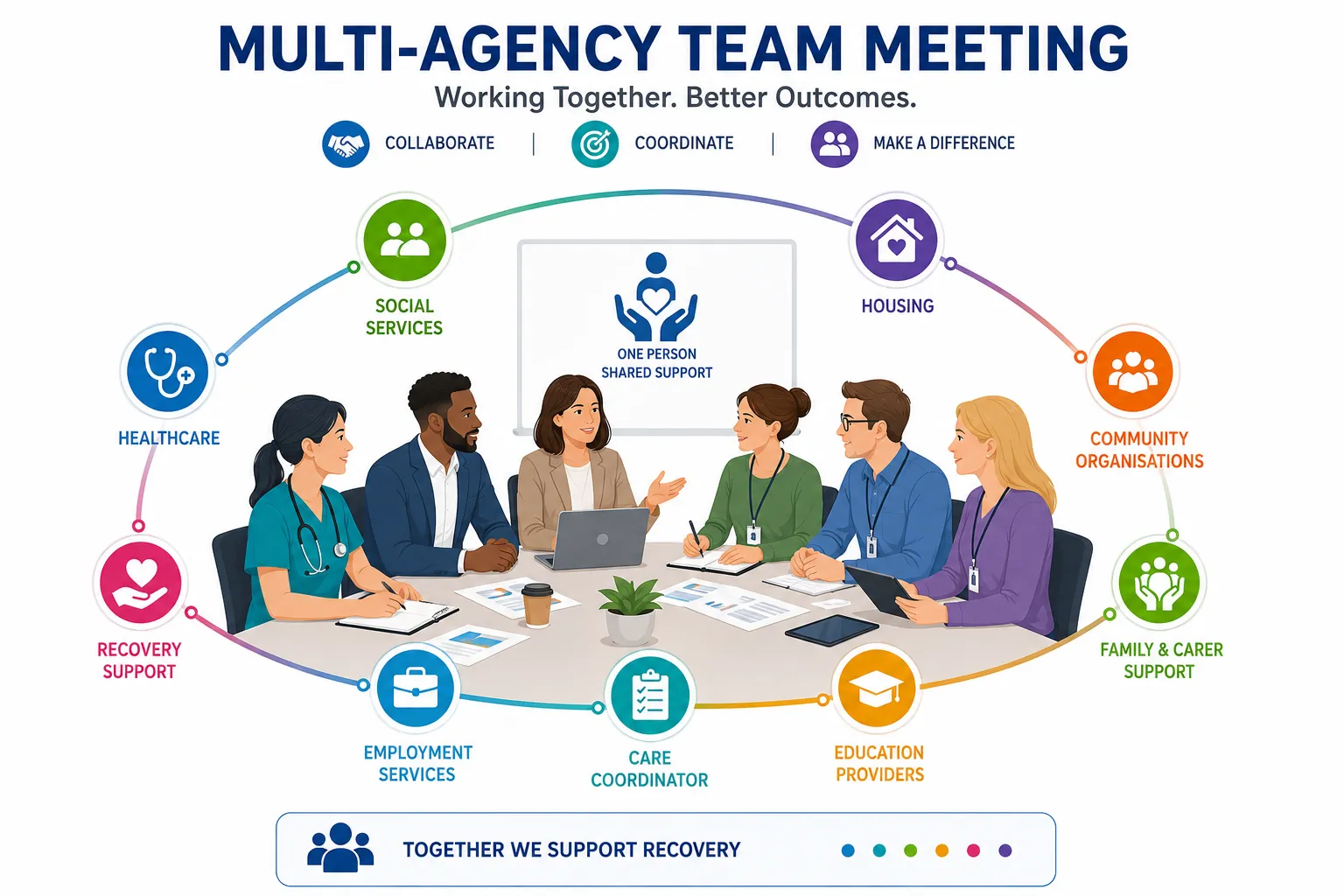
- Multi-agency meetings.
- Joint service delivery programmes.
- Community outreach initiatives.
- Information sharing agreements.
- Partnership projects.
- Networking events.
- Integrated care planning.
Referral systems are one of the most common forms of collaboration. They enable professionals to connect individuals with services that address specific needs. Multi-agency meetings bring together professionals from different organisations to discuss cases and coordinate support plans.
Community outreach programmes help increase awareness of available services and improve engagement among vulnerable populations. Information sharing, when conducted appropriately and ethically, improves continuity of care and reduces duplication of effort.
Best Practices for Effective Collaboration
Successful collaborative working depends on the adoption of professional best practices.
Key principles include:
- Maintaining open and respectful communication.
- Understanding the roles and responsibilities of partner organisations.
- Focusing on the needs and preferences of the individual.
- Establishing clear referral pathways.
- Promoting transparency and accountability.
- Respecting confidentiality and data protection requirements.
- Encouraging community participation.
- Regularly reviewing support effectiveness.
- Building long-term professional relationships.
These practices help ensure that collaboration remains effective, ethical, and focused on achieving positive outcomes.
Comparison Table: Working Alone vs Collaborative Working
| Working Alone | Collaborative Working |
|---|---|
| Limited resources available | Access to a wider range of resources |
| Individual expertise only | Shared professional expertise |
| Fragmented support | Coordinated and integrated support |
| Fewer referral opportunities | Extensive referral networks |
| Greater risk of service gaps | Improved continuity of care |
| Narrow problem-solving capacity | Multiple perspectives and solutions |
| Increased workload for one organisation | Shared responsibilities across services |
| Potentially lower outcomes | Improved recovery and wellbeing outcomes |
Industry Relevance of Collaborative Working
Collaborative practice is widely used throughout healthcare, social care, education, community development, and addiction treatment sectors. Modern policies and professional frameworks increasingly emphasise partnership working because complex social and health challenges require coordinated responses.
Professionals working in addiction counselling, mental health support, social care, nursing, community outreach, and recovery services are expected to understand how to engage effectively with partner organisations. The ability to build and maintain collaborative relationships is therefore a valuable professional skill.
In many workplaces, practitioners regularly attend multidisciplinary meetings, participate in referral processes, coordinate support plans, and contribute to joint interventions. Understanding collaborative approaches helps professionals deliver more effective and person-centred services.
Practical Example: Building a Recovery Support Network
An individual recovering from substance misuse requires counselling, stable housing, and support in returning to employment.
The addiction counsellor identifies these needs and collaborates with several community organisations. A housing agency assists with accommodation, a community support group provides peer encouragement, and an employment service delivers job readiness training.
Rather than operating independently, each organisation contributes to a coordinated recovery plan. Regular communication between services ensures that progress is monitored and support remains aligned with the individual’s goals.
As a result, the individual experiences greater stability, increased confidence, and a reduced likelihood of relapse.
Case Study: Community Partnership in Action
Background
Ahmed recently completed an addiction treatment programme and is preparing to reintegrate into the community.
Situation
Although treatment has been successful, Ahmed faces several challenges. He does not have stable accommodation, is unemployed, and has a limited support network.
Challenge
Without ongoing support, Ahmed may experience social isolation, financial difficulties, and an increased risk of relapse.
Analysis
Ahmed’s needs extend beyond clinical treatment. He requires support in housing, employment, emotional wellbeing, and community integration. No single organisation can effectively address all these needs.
Solution
A recovery coordinator develops a collaborative support plan involving:
- Housing services to secure accommodation.
- Employment agencies to provide skills training and job support.
- Peer support groups to encourage continued recovery.
- Community mental health services to provide emotional support.
- Social services to assist with practical needs.
Outcome
Ahmed secures stable housing, gains employment, develops positive social relationships, and continues to engage with recovery support services. His confidence increases, and his risk of relapse is significantly reduced.
Learning Point
This case study demonstrates that effective collaboration between community organisations can significantly improve recovery outcomes by addressing multiple aspects of an individual’s life simultaneously.
Key Takeaways
- Collaboration involves organisations working together to achieve shared goals and improve outcomes.
- Addiction and mental health recovery often requires support from multiple services.
- Collaborative working promotes holistic, person-centred care.
- Strong partnerships improve access to resources and support networks.
- Effective communication and information sharing are essential for successful collaboration.
- Multi-agency working reduces service gaps and strengthens continuity of care.
- Community organisations play an important role in supporting recovery, independence, and wellbeing.
- Collaborative approaches contribute to sustainable recovery and improved quality of life.
Conclusion
Collaboration plays a vital role in supporting individuals affected by addiction and mental health challenges. Because these issues often impact multiple areas of a person’s life, effective support requires the combined efforts of healthcare professionals, community organisations, social services, housing providers, educational institutions, and employment agencies. By working together, these organisations can provide coordinated, person-centred care that addresses both immediate needs and long-term recovery goals.
Strong partnerships between community services improve access to resources, strengthen support networks, and promote continuity of care. Effective collaboration helps reduce service gaps, enhances recovery outcomes, and empowers individuals to build healthier, more stable, and independent lives. For professionals working in addiction and mental health settings, developing collaborative relationships with community organisations is essential for delivering holistic support and promoting sustainable wellbeing within the community.