
Lesson 1: Ethical Principles
Ethical principles are the foundation of professional addiction counselling practice. Individuals experiencing addiction, substance misuse, and co-occurring mental health challenges are often in vulnerable situations that require counsellors and support workers to act with integrity, fairness, respect, and professionalism. Ethical principles provide a framework for making appropriate decisions, protecting client rights, and ensuring that counselling interventions promote wellbeing while minimising harm. They guide practitioners in managing sensitive information, maintaining professional relationships, respecting client autonomy, and responding effectively to complex situations that arise during treatment and recovery support.
In addiction counselling, ethical practice is essential for building trust and creating a safe therapeutic environment where clients feel respected and supported. Healthcare organisations, rehabilitation centres, community support services, and mental health agencies all require practitioners to follow recognised ethical standards. Understanding ethical principles helps learners develop professional judgement, navigate challenging situations, and provide person-centred care that supports recovery goals while maintaining legal and professional responsibilities.
By the end of this lesson, learners will be able to:
- Define ethics and ethical principles within addiction counselling practice.
- Explain the importance of autonomy, beneficence, non-maleficence, justice, fidelity, and confidentiality.
- Apply ethical principles when supporting individuals affected by addiction and substance misuse.
- Understand the role of informed consent in counselling relationships.
- Identify and manage professional boundaries in addiction counselling settings.
- Recognise the risks associated with dual relationships.
- Apply ethical decision-making processes when facing professional dilemmas.
- Demonstrate ethical and professional behaviour in workplace settings.
Understanding Ethics in Addiction Counselling
Ethics is a cornerstone of effective addiction counselling and serves as the foundation for professional, safe, and person-centred practice. Individuals experiencing addiction and substance misuse often face a combination of emotional, psychological, social, behavioural, and physical challenges that can significantly affect their wellbeing and decision-making abilities. Many clients may also encounter stigma, discrimination, social isolation, financial difficulties, family conflict, and mental health concerns. Because of these vulnerabilities, addiction counsellors have a responsibility to ensure that all interactions, interventions, and decisions are guided by strong ethical principles that protect client welfare and promote recovery.
In professional practice, ethics refers to the moral values, standards, and principles that guide behaviour and decision-making. Ethical principles provide a framework that helps practitioners determine the most appropriate course of action when supporting clients through treatment, rehabilitation, and recovery. These principles enable counsellors to act responsibly, maintain professional integrity, respect client rights, and provide services that are fair, compassionate, and evidence-informed.
Ethical practice goes beyond simply following organisational rules or professional codes of conduct. It requires counsellors to use critical thinking, professional judgement, empathy, and self-awareness when responding to complex situations. In addiction counselling, practitioners frequently encounter challenging circumstances involving confidentiality, informed consent, client autonomy, safeguarding concerns, professional boundaries, and competing responsibilities. Ethical principles help guide decision-making in these situations and support consistent, accountable practice.
Across healthcare, social care, rehabilitation services, community recovery programmes, and mental health settings, ethical behaviour is considered an essential professional competency. Practitioners who consistently apply ethical principles contribute to positive recovery outcomes, strengthen therapeutic relationships, and maintain public confidence in addiction support services. Conversely, poor ethical practice can damage trust, compromise treatment effectiveness, and potentially lead to professional misconduct or legal consequences.
The Importance of Ethics in Addiction Counselling
Ethics plays a vital role in ensuring that addiction counselling remains respectful, client-centred, and recovery-focused. Ethical principles provide a clear foundation for professional behaviour and help practitioners deliver support that prioritises both client wellbeing and professional accountability.
Effective ethical practice helps counsellors:
- Protect vulnerable individuals from harm and exploitation.
- Promote recovery, wellbeing, and positive life outcomes.
- Build trust and therapeutic rapport with clients.
- Respect client rights, choices, and personal dignity.
- Ensure fairness and equality in service delivery.
- Support professional accountability and transparency.
- Guide decision-making in complex and sensitive situations.
- Maintain high standards of professional conduct.
Without ethical principles, counselling decisions could become inconsistent, subjective, and potentially harmful. Ethical frameworks therefore provide an essential structure for maintaining safe, effective, and professional practice across addiction treatment and recovery services.
1. Core Ethical Principles in Addiction Counselling
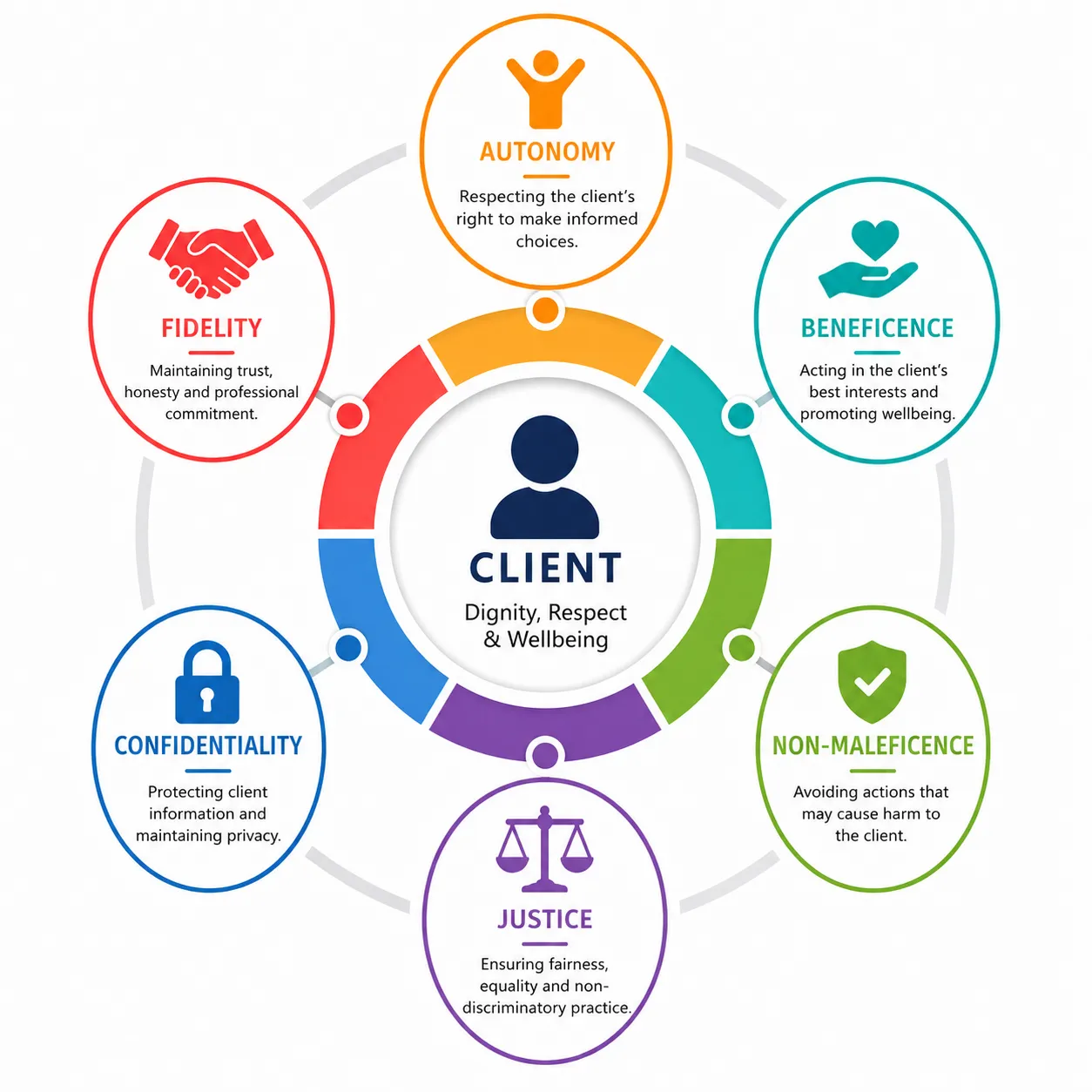
The ethical principles used in addiction counselling are interconnected and work together to support client wellbeing, professional responsibility, and ethical decision-making.
| Ethical Principle | Meaning | Contribution to Professional Practice |
|---|---|---|
| Autonomy | Respecting a person’s right to make informed choices | Encourages self-determination and personal responsibility |
| Beneficence | Acting in the client’s best interests | Promotes wellbeing, recovery, and positive outcomes |
| Non-Maleficence | Avoiding actions that may cause harm | Protects client safety and welfare |
| Justice | Ensuring fairness and equality | Supports inclusive and non-discriminatory practice |
| Confidentiality | Protecting personal information | Builds trust and encourages openness |
| Fidelity | Maintaining trust, honesty, and professional commitment | Strengthens therapeutic relationships |
| Respect for Dignity | Recognising the inherent worth of every individual | Promotes respect, compassion, and inclusion |

Hierarchy of Ethical Responsibilities
Professional Ethical Practice
              │
 ┌────────────┼────────────┐
 │            │            │
Client Rights Client Welfare Professional Responsibility
 │            │            │
Autonomy      Beneficence   Confidentiality
Justice       Non-Maleficence Fidelity
This hierarchy demonstrates that ethical counselling practice requires a balance between respecting client rights, promoting client wellbeing, and maintaining professional responsibilities. Effective practitioners continuously consider all three areas when making decisions and providing support.
Autonomy
Understanding Autonomy
Autonomy is the ethical principle that recognises an individual’s right to make informed decisions about their own life, treatment, and recovery. It reflects the belief that clients should be active participants in decisions affecting their care rather than passive recipients of professional advice.
In addiction counselling, autonomy is particularly important because recovery is often most successful when individuals take ownership of their goals, decisions, and behavioural changes. Respecting autonomy means acknowledging that clients have unique values, experiences, and priorities that may influence their recovery choices.
Applying Autonomy in Practice
Counsellors support autonomy by:
- Providing clear and accurate information.
- Explaining available treatment and support options.
- Encouraging clients to participate in care planning.
- Respecting client preferences and decisions.
- Supporting realistic and achievable recovery goals.
- Avoiding coercion, pressure, or manipulation.
For example, a client may choose to engage in a harm-reduction programme rather than pursue complete abstinence. While a counsellor may personally believe abstinence offers greater long-term benefits, respecting autonomy requires supporting the client’s informed choice while continuing to provide professional guidance.
Professional Significance of Autonomy
Respecting autonomy can significantly improve engagement and commitment to recovery. Clients who actively participate in decision-making often feel more empowered, motivated, and responsible for their progress. This can strengthen self-confidence, improve treatment adherence, and support sustainable behavioural change.
However, autonomy is not without challenges. Addiction, severe mental health difficulties, intoxication, or cognitive impairment may temporarily affect a person’s ability to make informed decisions. In such circumstances, practitioners must carefully balance respect for autonomy with the need to protect client safety and wellbeing.
Beneficence
Understanding Beneficence
Beneficence refers to the professional duty to act in ways that promote the wellbeing and best interests of clients. This principle requires counsellors to take positive actions that support recovery, improve quality of life, and reduce the harmful effects of addiction and substance misuse.
While autonomy focuses on respecting client choice, beneficence focuses on actively helping clients achieve positive outcomes. Together, these principles create a balanced approach to ethical practice.
Applying Beneficence in Addiction Counselling
Practitioners demonstrate beneficence by:
- Providing evidence-based interventions.
- Supporting recovery planning.
- Encouraging healthy lifestyle changes.
- Promoting emotional and psychological wellbeing.
- Referring clients to specialist services when required.
- Coordinating care with other professionals.
For example, if a counsellor identifies symptoms of severe depression alongside substance misuse, they may arrange a referral to mental health services to ensure the client receives comprehensive support. This action reflects beneficence because it seeks to improve overall wellbeing rather than focusing solely on addiction-related concerns.
Industry Relevance
Beneficence underpins many aspects of addiction treatment, including assessment, treatment planning, relapse prevention, crisis intervention, recovery support, and multi-agency collaboration. It encourages practitioners to consider the broader needs of clients and adopt a holistic approach to care.
Non-Maleficence
Understanding Non-Maleficence
Non-maleficence is often summarised as the principle of “doing no harm.” It requires practitioners to avoid actions that may cause physical, emotional, psychological, social, or professional harm to clients.
This principle is particularly important in addiction counselling because clients may already be experiencing significant vulnerability and distress. Counsellors must therefore ensure that their actions, interventions, and professional conduct do not worsen a client’s situation.
Applying Non-Maleficence in Practice
Examples include:
- Working within professional competence.
- Using evidence-based approaches.
- Avoiding judgemental attitudes and language.
- Recognising professional limitations.
- Making appropriate referrals.
- Maintaining professional boundaries.
For instance, if a counsellor lacks specialist training in trauma therapy, attempting to provide trauma treatment could potentially cause harm. Referring the client to a qualified trauma specialist demonstrates ethical responsibility and protects client welfare.
Importance in Professional Practice
Non-maleficence helps practitioners minimise risk, maintain professional standards, and ensure that client welfare remains central to all decisions and interventions.
Justice
Understanding Justice
Justice is the ethical principle concerned with fairness, equality, and impartial treatment. It requires addiction counsellors to ensure that all individuals have equal access to support services regardless of their personal characteristics, background, or circumstances.
Justice is particularly important in addiction counselling because individuals experiencing substance misuse often face stigma, discrimination, and social exclusion.
Applying Justice in Practice
Counsellors demonstrate justice by:
- Providing fair access to services.
- Avoiding discrimination and bias.
- Respecting diversity and inclusion.
- Making objective decisions based on client needs.
- Treating all individuals with equal respect.
Ethical practice requires support to be provided based on need rather than factors such as age, gender, ethnicity, religion, disability, sexual orientation, or socioeconomic status.
For example, a recovery service may provide translated information materials, accessible facilities, and culturally sensitive support programmes to ensure equal access for diverse populations. Such measures promote fairness and help remove barriers to treatment.
Confidentiality
Understanding Confidentiality
Confidentiality is one of the most significant ethical responsibilities in addiction counselling. It refers to the professional duty to protect information shared by clients during counselling and treatment processes.
Clients often discuss highly sensitive matters relating to substance misuse, mental health, family relationships, criminal behaviour, and personal trauma. They are more likely to engage honestly and openly when they trust that their information will be handled responsibly and respectfully.
The Importance of Confidentiality
Confidentiality:
- Builds trust between counsellor and client.
- Encourages honest communication.
- Protects personal privacy.
- Strengthens therapeutic relationships.
- Supports effective treatment outcomes.
Information that is typically protected includes personal details, medical records, treatment plans, counselling notes, substance use history, assessments, and recovery goals.
Limits of Confidentiality
Although confidentiality is a fundamental ethical principle, there are situations where information may need to be disclosed.
| Situation Requiring Disclosure | Reason for Disclosure |
|---|---|
| Serious risk of harm | Protection of life and safety |
| Safeguarding concerns | Protection of vulnerable individuals |
| Disclosure of abuse | Legal and safeguarding obligations |
| Court order | Compliance with legal requirements |
| Serious criminal activity | Public protection responsibilities |
Practitioners must ensure that clients understand these limitations from the beginning of the counselling relationship.
Fidelity and Professional Trust
Understanding Fidelity
Fidelity refers to honesty, reliability, loyalty, and maintaining professional commitments. It is closely linked to trust and forms the basis of effective therapeutic relationships.
Individuals seeking addiction support are often experiencing uncertainty, vulnerability, and emotional distress. Consistent and trustworthy behaviour from counsellors helps create a safe environment in which recovery can take place.
Demonstrating Fidelity in Practice
Counsellors demonstrate fidelity by:
- Keeping professional commitments.
- Being honest and transparent.
- Maintaining confidentiality.
- Following organisational policies.
- Acting consistently and reliably.
- Taking responsibility for professional actions.
Professional Value of Fidelity
When fidelity is demonstrated consistently, clients are more likely to trust the counselling process, engage openly in treatment, and remain committed to recovery goals. Fidelity also strengthens professional credibility and promotes ethical accountability.
Ethical Decision-Making in Addiction Counselling
Ethical dilemmas arise when two or more ethical principles appear to conflict. For example, a counsellor may need to balance the duty of confidentiality with the responsibility to protect someone from serious harm. In such situations, ethical decision-making provides a structured process for determining the most appropriate course of action.
Ethical Decision-Making Process
Identify Ethical Issue
        ↓
Gather Relevant Information
        ↓
Review Ethical Principles
        ↓
Consider Available Options
        ↓
Evaluate Risks and Benefits
        ↓
Seek Supervision or Professional Guidance
        ↓
Make and Implement Decision
        ↓
Document Actions Taken
        ↓
Review Outcome
A structured approach helps practitioners make informed, consistent, and defensible decisions while maintaining professional accountability.
Industry Practice Example
A client informs a counsellor that they are considering harming another person but insists that the conversation remain confidential. The counsellor must balance confidentiality with their duty of care and responsibility to protect others from harm. By reviewing ethical principles, consulting organisational procedures, seeking supervision, and assessing the level of risk, the practitioner can make an ethically justified decision that prioritises safety while maintaining professional integrity.
2: Navigate Ethical Dilemmas Related to Informed Consent, Boundaries, and Dual Relationships
Ethical decision-making is a critical aspect of addiction counselling practice. While ethical principles such as autonomy, beneficence, non-maleficence, justice, confidentiality, and fidelity provide a foundation for professional conduct, counsellors frequently encounter situations where applying these principles is not straightforward. In real-world practice, competing responsibilities, client needs, legal obligations, and organisational policies can create complex situations that require careful judgement and professional reasoning.
The ability to recognise, analyse, and respond appropriately to ethical dilemmas is an essential skill for addiction counsellors and support practitioners. Ethical decision-making helps ensure that client welfare remains a priority while maintaining professional integrity and compliance with legal and organisational requirements.
Understanding Ethical Dilemmas in Addiction Counselling
An ethical dilemma arises when a practitioner is faced with two or more competing ethical responsibilities and no option appears entirely satisfactory. In these situations, the counsellor must carefully evaluate the circumstances, consider the potential consequences of different actions, and determine the most ethical course of action.
Unlike routine decisions, ethical dilemmas often involve conflicts between professional obligations. For example, a counsellor may wish to respect a client’s confidentiality while also having a duty to protect the client or others from serious harm. Balancing these competing responsibilities requires critical thinking, ethical awareness, and professional judgement.
In addiction counselling settings, ethical dilemmas occur because practitioners work with individuals experiencing complex challenges that may involve mental health concerns, safeguarding risks, criminal behaviour, family conflicts, social vulnerabilities, and substance dependence. These situations often require practitioners to make difficult decisions while maintaining respect for client rights and wellbeing.
Common Ethical Challenges in Addiction Counselling
Ethical dilemmas frequently arise in relation to:
- Informed consent and client understanding.
- Confidentiality and information sharing.
- Professional boundaries.
- Dual relationships.
- Conflicts of interest.
- Safeguarding concerns.
- Duty of care responsibilities.
- Professional competence and limitations.
Understanding these challenges enables practitioners to respond effectively while maintaining ethical standards and professional accountability.
Informed Consent
Understanding Informed Consent
Informed consent is one of the most important ethical requirements in addiction counselling. It refers to the process through which clients voluntarily agree to participate in counselling, treatment, or support services after receiving sufficient information to make an informed decision.
Informed consent is not simply the signing of a document. It is an ongoing process of communication that ensures clients understand the nature of the service being provided, the potential benefits and limitations of treatment, their rights and responsibilities, and any circumstances under which information may be shared.
The principle of informed consent is closely linked to autonomy because it supports an individual’s right to make decisions about their own care. Without adequate information and understanding, a client cannot make genuinely informed choices.
Why Informed Consent Matters
In addiction counselling, clients may be entering treatment during periods of vulnerability, crisis, or emotional distress. Ensuring informed consent helps protect their rights and promotes ethical practice.
Effective informed consent:
- Respects client autonomy.
- Encourages transparency and trust.
- Promotes collaborative decision-making.
- Reduces misunderstandings.
- Supports legal and professional compliance.
- Strengthens the therapeutic relationship.
Key Components of Informed Consent
| Component | Purpose in Counselling Practice |
|---|---|
| Information | Clients receive clear and accurate information about services and treatment options. |
| Understanding | Practitioners ensure that clients fully comprehend the information provided. |
| Voluntariness | Decisions are made freely without pressure, coercion, or manipulation. |
| Capacity | The client has the ability to understand information and make informed decisions. |
| Agreement | Consent is clearly communicated and appropriately documented. |
The Informed Consent Process
The informed consent process should be systematic and client-centred.
Provide Information
        ↓
Explain Rights and Responsibilities
        ↓
Discuss Confidentiality and Its Limits
        ↓
Check Client Understanding
        ↓
Answer Questions
        ↓
Confirm Decision-Making Capacity
        ↓
Obtain Consent
        ↓
Document Consent
Practical Application
Consider a client entering an outpatient recovery programme. Before counselling begins, the practitioner explains the purpose of counselling, confidentiality arrangements, record-keeping procedures, treatment expectations, and the client’s right to withdraw from services. The client is encouraged to ask questions and is given time to consider the information before agreeing to participate.
This approach demonstrates respect for autonomy while ensuring ethical and professional accountability.
Challenges in Obtaining Informed Consent
Obtaining valid consent can sometimes be difficult. Factors such as intoxication, severe mental health conditions, learning difficulties, language barriers, or emotional distress may affect a client’s ability to fully understand information and make informed decisions.
In such situations, practitioners must carefully assess capacity, adapt communication methods, and ensure that consent is obtained ethically and appropriately.
Professional Boundaries
Understanding Professional Boundaries
Professional boundaries are the limits that define the appropriate relationship between a counsellor and a client. They help maintain a safe, respectful, and effective therapeutic environment while protecting both parties from harm.
Boundaries establish clear expectations regarding professional roles, responsibilities, communication, and behaviour. Without appropriate boundaries, counselling relationships can become confusing, ineffective, and potentially harmful.
In addiction counselling, maintaining boundaries is particularly important because clients may be experiencing emotional vulnerability, dependency issues, or difficulties forming healthy relationships.
The Importance of Professional Boundaries
Healthy boundaries help to:
- Protect client welfare.
- Maintain professional integrity.
- Prevent exploitation and harm.
- Promote objectivity and fairness.
- Support effective therapeutic relationships.
- Reduce conflicts of interest.
- Protect practitioner wellbeing.
Boundaries are not barriers that prevent meaningful relationships. Instead, they create a professional framework that allows trust, respect, and therapeutic work to develop safely.
Characteristics of Healthy Professional Boundaries
Healthy professional boundaries typically involve:
- Professional and respectful communication.
- Clear role definitions.
- Consistent session structures.
- Appropriate use of self-disclosure.
- Respect for client autonomy.
- Compliance with organisational policies and professional standards.
- Maintenance of professional objectivity.
When boundaries are maintained effectively, clients are more likely to feel safe, respected, and supported throughout the counselling process.
Boundary Violations
Boundary violations occur when professional limits are crossed in ways that may compromise the counselling relationship or place the client at risk.
Examples include:
- Sharing excessive personal information.
- Developing personal friendships with clients.
- Accepting inappropriate gifts.
- Providing personal loans or financial assistance.
- Engaging in social activities with clients.
- Communicating through personal social media accounts.
- Becoming emotionally dependent on the client.
Not all boundary crossings are harmful, but repeated or inappropriate boundary violations can undermine professional relationships and create ethical concerns.
Healthy Boundaries vs Boundary Violations
Healthy professional boundaries focus on the client’s needs and support therapeutic goals. Boundary violations, by contrast, often shift attention away from the client’s wellbeing and may create confusion regarding professional roles.
For example, maintaining communication through approved professional channels supports accountability and confidentiality. In contrast, frequent personal messaging outside agreed working arrangements may blur professional roles and create dependency.
Industry Relevance
Healthcare organisations, rehabilitation centres, mental health services, and social care agencies all emphasise boundary management as a key professional competency. Practitioners who fail to maintain boundaries risk disciplinary action, reputational damage, and harm to clients.
Dual Relationships
Understanding Dual Relationships
A dual relationship occurs when a counsellor has more than one type of relationship with a client. While the primary relationship should be professional and therapeutic, a secondary relationship may exist in a personal, social, business, family, or community context.
Dual relationships are considered ethically challenging because they can affect professional judgement, create conflicts of interest, and compromise the therapeutic relationship.
Examples of Dual Relationships
Examples may include:
- A counsellor becoming friends with a client.
- A practitioner counselling a family member.
- A counsellor supervising someone they are also treating.
- A counsellor engaging in business activities with a client.
- A practitioner working with someone from their own social group or community.
In some rural or small communities, avoiding all dual relationships may be difficult. However, practitioners must still manage these situations carefully and ethically.
Risks Associated with Dual Relationships
| Risk | Potential Impact on Counselling Practice |
|---|---|
| Loss of objectivity | Professional judgement may become biased. |
| Conflict of interest | Decisions may be influenced by personal considerations. |
| Confidentiality concerns | Sensitive information may be exposed or misused. |
| Emotional dependency | Clients may become overly reliant on the practitioner. |
| Exploitation risk | Power imbalances may lead to harm or misconduct. |
Critical Analysis of Dual Relationships
The primary concern with dual relationships is the imbalance of power that exists within counselling relationships. Clients often place significant trust in practitioners and may be emotionally vulnerable. Introducing another type of relationship can make it difficult to maintain objectivity and professional boundaries.
For example, if a counsellor develops a friendship with a client, decisions may become influenced by personal feelings rather than professional judgement. Similarly, a business relationship may create financial interests that conflict with the client’s needs.
Managing Dual Relationships
When potential dual relationships arise, practitioners should:
- Avoid them whenever reasonably possible.
- Recognise potential conflicts early.
- Consult supervisors or managers.
- Follow organisational policies.
- Document concerns and decisions.
- Prioritise client welfare above personal interests.
Professional supervision plays a crucial role in helping practitioners evaluate risks and determine the most appropriate course of action.
Ethical Decision-Making Framework
Ethical dilemmas cannot always be resolved through simple rules. Practitioners therefore need a structured process that supports thoughtful and consistent decision-making.
Ethical Decision-Making Proces
Recognise Ethical Issue
          ↓
Identify Relevant Ethical Principles
          ↓
Gather Information
          ↓
Review Professional Guidelines
          ↓
Consider Client Welfare
          ↓
Evaluate Possible Actions
          ↓
Consult Supervisor or Manager
          ↓
Choose the Most Ethical Option
          ↓
Document Decision
          ↓
Review and Reflect on Outcome
This framework encourages practitioners to consider multiple perspectives, minimise personal bias, and ensure decisions are ethically defensible.
Practical Workplace Applications
Example 1: Confidentiality
A client discloses information about substance misuse and criminal behaviour. The counsellor maintains confidentiality while assessing whether any legal or safeguarding obligations require disclosure.
Example 2: Informed Consent
Before treatment begins, a practitioner explains counselling procedures, confidentiality arrangements, and client rights. The client confirms understanding before agreeing to participate.
Example 3: Professional Boundaries
A client invites a counsellor to attend a family celebration. The counsellor respectfully declines and explains the importance of maintaining professional boundaries.
Example 4: Dual Relationships
A practitioner discovers that a new client is a close acquaintance from a community organisation. The issue is discussed with management to determine whether referral to another practitioner would be more appropriate.
Case Study: Managing Professional Boundaries
Background
Maria works as an addiction support practitioner in a community recovery service.
Situation
One of Maria’s clients sends her a social media friend request and regularly contacts her outside working hours seeking personal advice and emotional support.
Challenge
Accepting the request could blur professional boundaries and create a dual relationship that may affect objectivity and professional accountability.
Analysis
Several ethical principles are relevant:
- Confidentiality.
- Beneficence.
- Non-maleficence.
- Fidelity.
- Professional boundaries.
Maria must balance the client’s need for support with her responsibility to maintain professional standards.
Solution
Maria politely explains the organisation’s boundary policy and declines the social media request. She discusses approved communication methods and directs the client towards appropriate support services available outside counselling hours.
Learning Outcome
This scenario demonstrates how maintaining professional boundaries protects both client welfare and practitioner integrity while preserving the effectiveness of the therapeutic relationship.
Conclusion
Ethical practice is a fundamental requirement in addiction counselling and plays a crucial role in protecting client welfare, promoting recovery, and maintaining professional integrity. The ethical principles of autonomy, beneficence, non-maleficence, justice, confidentiality, and fidelity provide a framework for making responsible decisions and delivering person-centred support. By applying these principles consistently, practitioners can create safe, respectful, and trusting therapeutic environments that encourage client engagement and positive treatment outcomes.
In addition to understanding ethical principles, addiction counsellors must be prepared to manage complex situations involving informed consent, professional boundaries, and dual relationships. These challenges require careful judgement, critical thinking, and adherence to professional standards. Through effective ethical decision-making and ongoing professional reflection, practitioners can navigate dilemmas confidently, protect client rights, and maintain the quality, credibility, and effectiveness of addiction treatment and recovery services across diverse practice settings.