
Lesson 2: Behavioural Change Strategies
Behavioural change strategies are fundamental in addiction recovery and mental health treatment as they focus on helping individuals understand, modify, and sustain positive behavioural patterns. In addiction services, behaviour is closely linked with thoughts, emotions, environment, and motivation, making behavioural interventions essential for effective recovery planning.
These strategies are widely used in healthcare, counselling, rehabilitation centres, probation services, and community support programmes. Professionals apply behavioural change techniques to help clients move from harmful substance use patterns towards healthier lifestyle choices, improved emotional regulation, and long-term recovery stability.
Understanding behavioural change is essential because addiction is not only a physical dependency but also a learned behavioural pattern influenced by reinforcement, environment, and psychological triggers. By applying structured behavioural theories and techniques, practitioners can effectively enhance client motivation, strengthen readiness for change, and support personalised recovery journeys.
By the end of this lesson, learners will be able to:
- Understand key behavioural change theories used in addiction treatment
- Apply behavioural techniques to support client motivation and readiness for change
- Analyse client behaviour patterns linked to substance use
- Develop personalised treatment plans based on client strengths and recovery goals
- Evaluate the effectiveness of behavioural interventions in real-world practice
- Demonstrate understanding of structured behaviour modification approaches
1: Applying Behavioural Change Theories and Techniques to Facilitate Client Motivation and Readiness for Change
Understanding Behavioural Change in Addiction
Behavioural change in the context of addiction refers to a structured psychological and behavioural process through which individuals replace harmful substance use patterns with healthier and more adaptive behaviours. Addiction is widely recognised as a learned and reinforced behaviour, meaning it is maintained through repetition, environmental cues, emotional triggers, and neuropsychological reinforcement mechanisms.
From a professional practice perspective, behavioural change is not a single event but a gradual and staged process influenced by motivation, cognitive readiness, environmental stability, and therapeutic support. In addiction treatment services, understanding behavioural change is essential because it enables practitioners to design interventions that are realistic, personalised, and aligned with the client’s readiness for recovery.
Behavioural change theories provide a scientific foundation for understanding:
- Why individuals continue substance use despite negative consequences
- How addictive behaviours are formed and reinforced over time
- What psychological and environmental factors influence readiness for change
- How motivation evolves throughout the recovery journey
This theoretical foundation allows professionals to move beyond general advice and instead apply structured, evidence-based interventions that systematically guide individuals toward recovery readiness and long-term behavioural transformation.
Key Behavioural Change Theories in Addiction Treatment
Behavioural change theories provide structured frameworks that explain how and why people modify behaviour. In addiction treatment, these theories are used to assess readiness, guide intervention selection, and improve engagement outcomes.
1. Stages of Change Model (Transtheoretical Model)
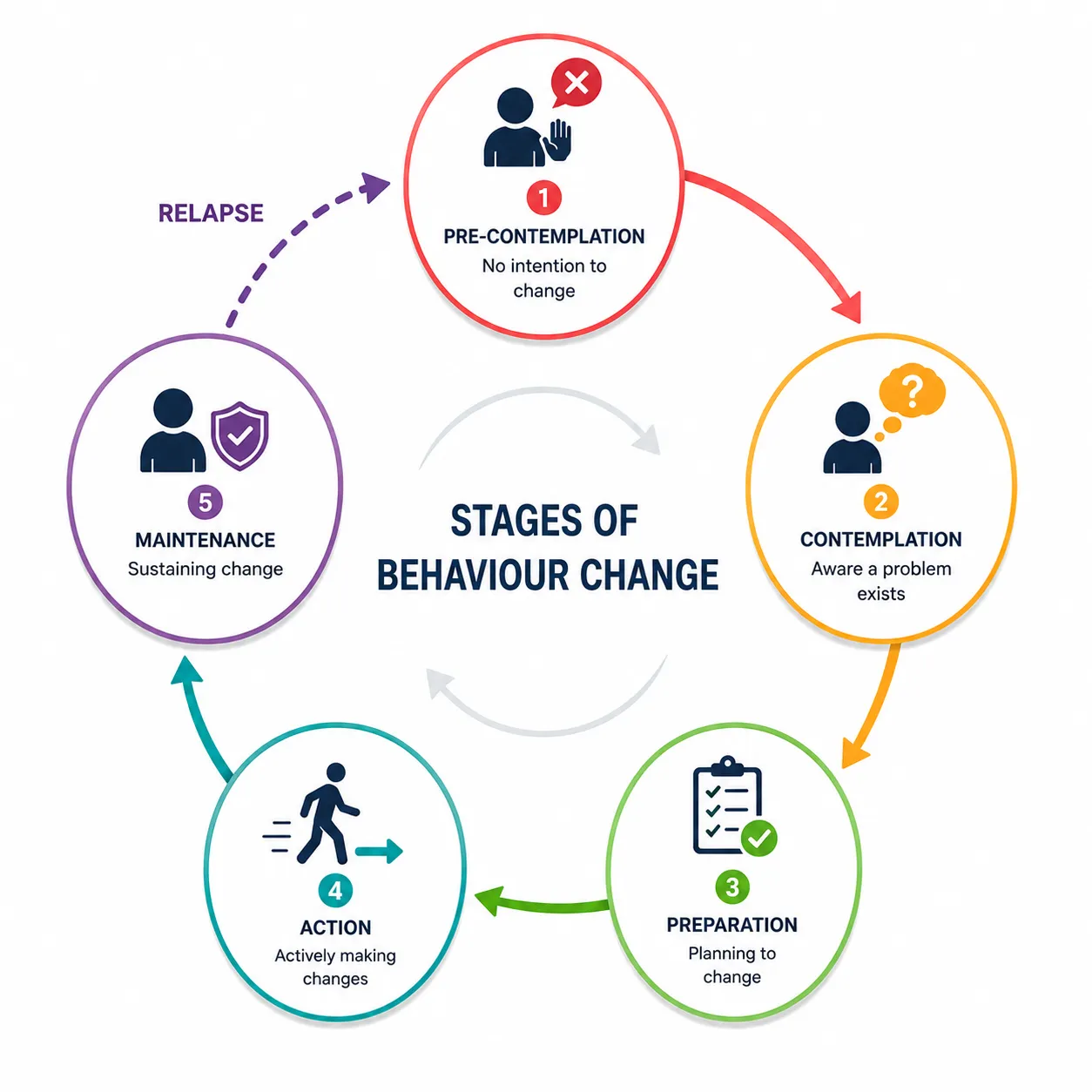
The Stages of Change Model explains behavioural change as a cyclical and progressive process rather than a single decision. Individuals move through different psychological stages before achieving sustained behavioural change.
Stages of Change Explained
- Pre-contemplation
- The individual does not recognise substance use as a problem.
- There is no intention to change behaviour.
- Contemplation
- Awareness of the problem begins.
- The individual feels ambivalent about change.
- Preparation
- The individual begins planning for change.
- Small steps toward recovery may begin.
- Action
- Active behavioural modification occurs.
- Substance use reduction or cessation begins.
- Maintenance
- Long-term behaviour change is sustained.
- Focus shifts to relapse prevention.
Critical Analysis in Practice
This model is widely used in addiction services because it recognises that forcing immediate change is often ineffective. Instead, it promotes stage-appropriate interventions, ensuring that clients are not overwhelmed or disengaged.
Practical Application
- Matching counselling intensity to client readiness
- Preventing premature intervention strategies
- Supporting gradual psychological commitment to recovery
2. Social Learning Theory
Social Learning Theory explains that behaviour is learned through observation, imitation, and reinforcement within a social environment. In addiction contexts, this theory is highly relevant because substance use is often influenced by peer groups, family behaviour, and social norms.
Core Principles
- Individuals learn behaviours by observing others
- Behaviour is reinforced through rewards and social approval
- Negative environments can normalise substance use
- Role models significantly influence behavioural patterns
Application in Addiction Treatment
- Use of peer support groups and recovery communities
- Exposure to positive recovery role models
- Encouraging supportive and substance-free environments
- Reinforcing positive behavioural choices through social validation
Critical Perspective
Social Learning Theory highlights the importance of environmental change. Without modifying social influences, behavioural change may be difficult to sustain even when motivation is present.
3. Operant Conditioning Theory
Operant Conditioning focuses on how behaviour is shaped and maintained through reinforcement and consequences. In addiction, substance use is often reinforced through short-term pleasure, stress relief, or emotional escape.
Key Principles
- Positive reinforcement increases likelihood of repeated behaviour
- Negative reinforcement strengthens avoidance behaviours
- Punishment reduces undesirable behaviour
- Behaviour is shaped through consistent reinforcement patterns
Clinical Application
- Reward-based recovery systems (e.g., milestone achievements)
- Structured behavioural monitoring charts
- Reinforcement of abstinence or reduction goals
- Use of contingency management strategies
Critical Analysis
Operant conditioning is highly effective in structured treatment environments but may be less effective without consistent reinforcement systems or external monitoring.
Behavioural Change Techniques in Clinical Practice
Behavioural theories are translated into practical interventions that directly influence motivation and readiness for change.
1. Motivational Enhancement Techniques
These techniques focus on strengthening internal motivation and increasing awareness of the need for change.
- Encouraging reflective thinking about substance use patterns
- Exploring personal goals and future aspirations
- Building confidence in the ability to change
- Resolving ambivalence about recovery decisions
These techniques are particularly effective during early engagement stages where clients may be uncertain or resistant.
2. Cognitive-Behavioural Techniques
CBT-based strategies are widely used to modify thinking patterns that drive addictive behaviour.
- Identifying emotional and environmental triggers
- Challenging irrational or negative thought patterns
- Replacing harmful behaviours with healthier alternatives
- Developing structured coping and problem-solving skills
These techniques are especially effective in preventing relapse and maintaining long-term behavioural change.
3. Reinforcement Strategies
Reinforcement techniques are used to strengthen positive behavioural changes through consistent feedback and reward systems.
- Rewarding attendance and participation in treatment sessions
- Acknowledging progress through structured feedback systems
- Encouraging consistency in behavioural goals
- Reinforcing abstinence milestones or reduction targets
Reinforcement improves engagement and helps sustain long-term motivation.
Practical Application in Real-World Settings
Workplace Scenario
A rehabilitation centre supports a client who is in the contemplation stage of alcohol dependence recovery. The client acknowledges negative consequences but remains uncertain about stopping alcohol use.
Intervention Strategy
The practitioner applies integrated behavioural approaches:
- Uses motivational interviewing to explore ambivalence
- Applies stages of change model to assess readiness level
- Introduces behavioural tracking tools to identify patterns
- Sets small, achievable reduction goals
Outcome
- Client transitions from contemplation to preparation stage
- Increased awareness of behavioural triggers
- Improved motivation through structured reinforcement
- Gradual engagement in treatment planning
Learning Insight
This demonstrates that behavioural change is most effective when theories are applied in combination rather than isolation.
Behavioural Change Process Flow Diagram
Assessment of Behaviour Patterns
↓
Identification of Stage of Change
↓
Selection of Appropriate Behavioural Theory
↓
Application of Behavioural Techniques
↓
Monitoring Client Progress
↓
Evaluation and Adjustment of Intervention
↓
Maintenance and Long-Term Behavioural Stability
Comparison of Behavioural Change Theories
| Theory | Focus | Strength in Addiction Treatment | Limitation |
|---|---|---|---|
| Stages of Change Model | Readiness for change | Supports personalised intervention planning | Progress is not always linear |
| Social Learning Theory | Environmental influence | Highlights role of peers and social context | Limited focus on internal cognition |
| Operant Conditioning | Reinforcement patterns | Effective for structured behaviour modification | Requires consistent reinforcement |
Key Takeaways
- Behavioural change is a structured and staged process in addiction recovery
- Theories such as Stages of Change, Social Learning, and Operant Conditioning provide scientific frameworks for intervention
- Motivation, environment, and reinforcement play key roles in behaviour modification
- Behavioural techniques must be tailored to client readiness and individual needs
- Integrated approaches improve engagement and long-term recovery outcomes
Behavioural change theories provide a critical foundation for understanding and addressing addiction-related behaviours in professional treatment settings. By applying models such as the Stages of Change, Social Learning Theory, and Operant Conditioning, practitioners can better assess client readiness, identify influencing factors, and implement targeted interventions that promote sustainable recovery.
When these theories are combined with practical behavioural techniques such as motivational enhancement, cognitive restructuring, and reinforcement strategies, they become powerful tools for increasing client motivation and supporting long-term behavioural change. Ultimately, effective application of behavioural change approaches enables practitioners to deliver structured, evidence-based, and person-centred care that significantly improves recovery outcomes and enhances overall wellbeing.
2: Developing Personalised Treatment Plans Based on Client Strengths and Goals
Understanding Personalised Treatment Planning
Personalised treatment planning is a cornerstone of effective addiction and mental health intervention. It refers to the structured development of a tailored recovery pathway that aligns with an individual’s unique needs, strengths, challenges, cultural background, motivation level, and long-term recovery goals. In modern addiction services, personalised planning is considered best practice because it recognises that addiction is not a uniform condition and cannot be treated effectively using a single standardised approach.
Each client presents with different patterns of substance use, psychological triggers, environmental influences, and levels of readiness for change. Therefore, treatment planning must be flexible, responsive, and continuously evaluated to ensure relevance and effectiveness. A personalised plan is not a static document; it is a dynamic framework that evolves as the client progresses through recovery stages.
Core Principles of Personalised Treatment Planning
Effective treatment plans are built on the following principles:
- Client-centred care
- The client’s voice, preferences, and lived experience are central to decision-making.
- Goal-oriented structure
- Recovery is guided by clearly defined short-term and long-term goals.
- Flexibility
- Plans are adjusted based on progress, setbacks, and changing needs.
- Evidence-based practice
- Interventions are selected using proven treatment approaches.
- Strength-based focus
- Emphasis is placed on abilities and resources rather than only problems.
Critical Importance in Addiction Treatment
Personalised treatment planning is essential because addiction is influenced by a combination of biological, psychological, and social factors. A standardised approach may fail to address complex underlying causes such as trauma, mental health conditions, or environmental triggers.
Why Personalised Planning Matters
- Increases treatment engagement and retention
- Improves long-term recovery outcomes
- Reduces risk of relapse through targeted interventions
- Enhances client motivation and empowerment
- Supports ethical and culturally sensitive practice
From an industry perspective, organisations that implement personalised planning frameworks demonstrate higher success rates in rehabilitation programmes and improved client satisfaction levels.
Key Components of a Personalised Treatment Plan
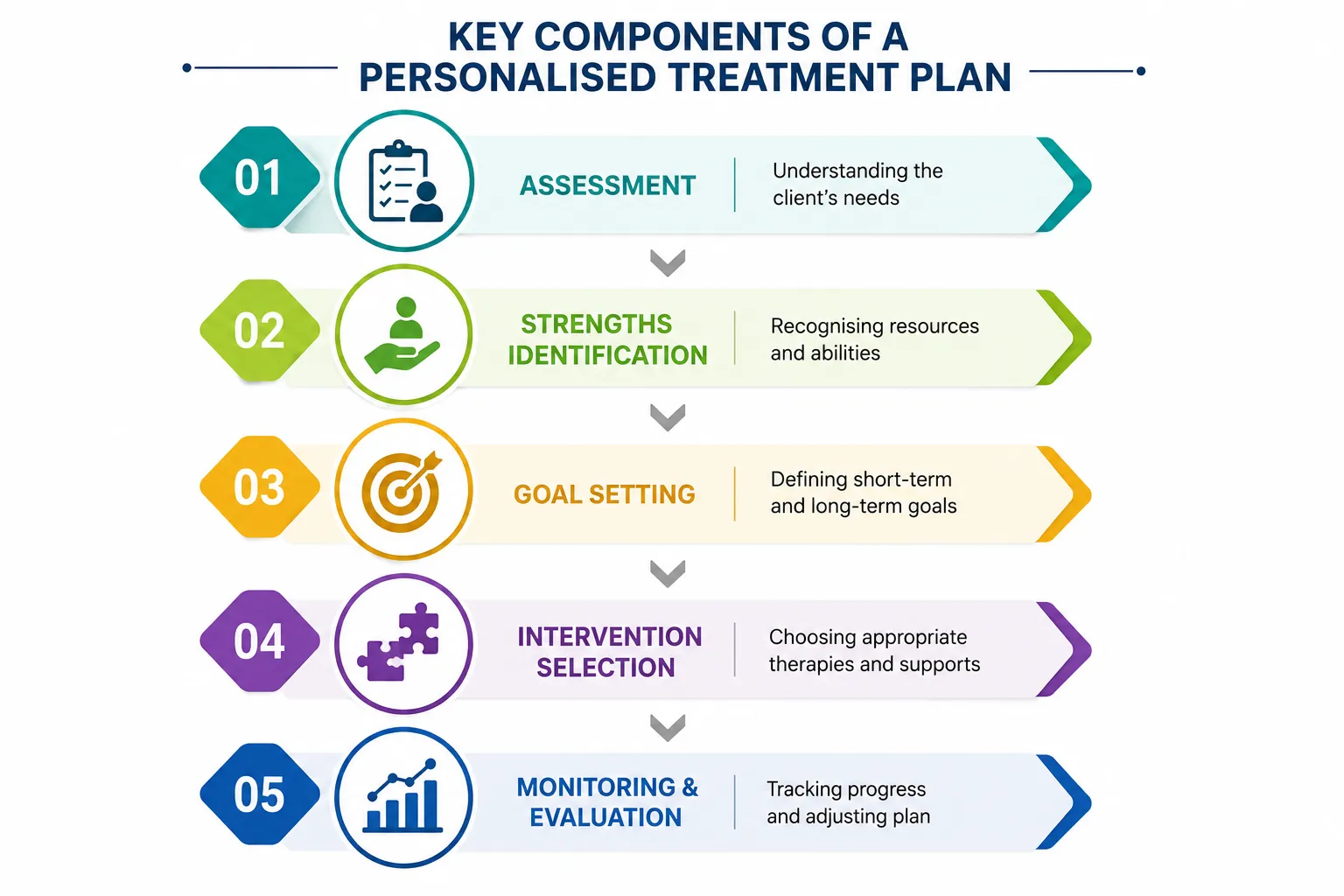
A structured treatment plan is developed through a systematic process that ensures all aspects of the client’s life are considered.
1. Comprehensive Client Assessment
Assessment is the foundation of treatment planning and involves gathering detailed information about the client’s situation.
- Substance use history and patterns
- Mental health conditions (e.g., anxiety, depression)
- Physical health status
- Family and social relationships
- Environmental risk factors
Purpose:
- To identify severity of addiction and underlying causes
- To inform appropriate intervention selection
2. Strength Identification
Strength identification focuses on recognising positive personal resources that can support recovery.
- Emotional resilience and coping capacity
- Supportive family or peer networks
- Employment or educational stability
- Motivation for change
- Previous recovery attempts and learning experiences
Purpose:
- Builds confidence and self-efficacy
- Encourages active participation in recovery
- Strengthens long-term sustainability of change
3. Goal Setting in Recovery Planning
Goal setting provides direction and structure within the treatment process.
Types of Goals
- Short-term goals
- Reduce frequency of substance use
- Attend counselling sessions regularly
- Long-term goals
- Achieve sustained abstinence
- Rebuild family relationships
- Gain stable employment
Purpose:
- Creates measurable progress indicators
- Enhances motivation through achievable milestones
4. Intervention Selection
Interventions are chosen based on assessment findings and client needs.
- Cognitive-Behavioural Therapy (CBT) for behavioural change
- Motivational Interviewing (MI) for readiness enhancement
- Group therapy for peer support and social learning
- Family therapy for relationship rebuilding
Purpose:
- Ensures treatment is evidence-based and targeted
- Increases effectiveness of recovery strategies
5. Monitoring and Evaluation
Continuous evaluation ensures that the treatment plan remains effective.
- Regular progress reviews
- Behavioural tracking tools
- Client feedback sessions
- Outcome measurement (e.g., reduced substance use)
Purpose:
- Identifies what is working and what needs adjustment
- Prevents treatment stagnation
- Improves long-term recovery success

Personalised Treatment Plan Structure
| Component | Description | Purpose |
|---|---|---|
| Assessment | Comprehensive evaluation of client needs | Identify severity and contributing factors |
| Strengths | Identification of personal and social resources | Build motivation and confidence |
| Goals | Short-term and long-term recovery targets | Provide direction and structure |
| Intervention | Selection of evidence-based therapies | Support behavioural and psychological change |
| Evaluation | Continuous monitoring of progress | Ensure effectiveness and adaptability |
Strength-Based Approach in Treatment Planning
A strength-based approach shifts the focus from problems and deficits to abilities, resilience, and potential for recovery. This approach is widely used in modern addiction services because it promotes empowerment and long-term engagement.
Key Features of Strength-Based Practice
- Focus on recovery potential rather than limitations
- Encourages self-efficacy and independence
- Builds on existing coping skills
- Enhances motivation and engagement in treatment
Critical Analysis
Strength-based approaches are particularly effective because they reduce stigma and promote a more positive therapeutic relationship. However, they must be balanced with risk assessment to ensure that serious challenges are not overlooked.
Example in Practice
A client with a history of substance misuse but strong family support is encouraged to actively involve family members in recovery planning. This strengthens accountability and emotional stability, improving treatment adherence.
Workplace Application in Addiction Services
In a community rehabilitation programme, personalised treatment planning is applied as follows:
- Client assessed with opioid dependence
- Strengths identified:
- Stable housing
- High motivation for employment
- Treatment plan includes:
- CBT sessions for behavioural change
- Weekly group therapy for peer support
- Employment readiness training
Outcome
- Improved emotional stability
- Reduced substance use
- Increased engagement in recovery services
- Better reintegration into community life
This demonstrates how structured planning improves both clinical and social recovery outcomes.
Personalised Treatment Planning Process
Client Assessment
↓
Identification of Strengths and Challenges
↓
Goal Setting (Short & Long Term)
↓
Selection of Evidence-Based Interventions
↓
Implementation of Treatment Plan
↓
Ongoing Monitoring and Evaluation
↓
Adjustment and Refinement of Plan
Case Study: Behavioural Change in Practice
Background
A 28-year-old client presents with long-term cannabis dependence and seeks support from an addiction service.
Situation
The client is in the contemplation stage of change and expresses uncertainty about quitting due to low confidence and fear of failure.
Intervention Approach
- Stages of Change Model used to assess readiness
- CBT applied to identify triggers and thought patterns
- Goal-setting introduced to reduce usage gradually
- Motivational techniques used to increase confidence
Outcome
- Client progresses to the action stage
- Gradual reduction in substance use achieved
- Improved self-control and coping ability
- Increased motivation for sustained recovery
Learning Point
This case highlights that treatment effectiveness increases significantly when interventions are matched to both client readiness and individual strengths.
- Personalised treatment improves recovery success
- Strengths-based planning increases engagement
- Goals provide structure and direction
- Continuous monitoring ensures effectiveness
- Evidence-based interventions improve outcomes
- Flexibility is essential in addiction treatment
Key Takeaways
- Personalised treatment planning is essential in addiction recovery
- Assessment, strengths, goals, interventions, and evaluation form the core structure
- Strength-based approaches improve motivation and empowerment
- Treatment must be flexible and continuously reviewed
- Matching interventions to client readiness increases effectiveness
- Real-world application requires integrated, evidence-based strategies
Personalised treatment planning is a fundamental element of effective addiction and mental health care. It ensures that interventions are tailored to the individual rather than applied as a generic solution. By combining comprehensive assessment, strength identification, structured goal setting, evidence-based interventions, and continuous evaluation, practitioners can deliver highly effective and responsive care.
Strength-based approaches further enhance this process by focusing on the client’s capabilities and recovery potential, fostering empowerment and long-term engagement. When applied correctly, personalised treatment planning improves motivation, reduces relapse risk, and supports sustainable recovery outcomes.
Ultimately, this approach reflects best practice in modern addiction services, ensuring that care is ethical, client-centred, and aligned with real-world recovery needs.
Conclusion
Behavioural change strategies are essential in addiction and mental health treatment as they provide structured ways to understand, influence, and modify harmful behavioural patterns. Through established behavioural theories such as the Stages of Change Model, Social Learning Theory, and Operant Conditioning, practitioners are able to assess how addiction develops, what maintains it, and how individuals can progressively move toward positive behavioural transformation.
When these behavioural approaches are integrated with personalised treatment planning, their effectiveness increases significantly. Tailoring interventions to an individual’s strengths, needs, and readiness for change ensures that recovery support is both realistic and achievable. This combination of theory-driven practice and client-centred planning enhances engagement, improves motivation, and supports consistent progress throughout the recovery journey.
In summary, behavioural change strategies not only support immediate behaviour modification but also build long-term resilience, empowering individuals to maintain recovery, strengthen coping abilities, and achieve sustainable improvements in their overall mental health and wellbeing.