
Lesson 3: Crisis Intervention
Crisis intervention is a critical component of counselling and mental health support practice, designed to assist individuals experiencing acute emotional distress, psychological breakdown, or high-risk situations. In counselling environments, crises may arise suddenly and can include suicidal ideation, severe anxiety attacks, trauma reactions, substance-related emergencies, domestic violence situations, or acute emotional dysregulation. These situations require immediate, structured, and professional responses to ensure client safety, stabilise emotional states, and prevent harm.
For counsellors, crisis intervention is not about long-term therapy but about immediate stabilisation, safety assurance, and structured support. The primary goal is to reduce emotional intensity, restore a sense of control, and guide the client towards appropriate ongoing care or support services. Effective crisis intervention relies on calm communication, rapid assessment, risk evaluation, de-escalation techniques, and safety planning strategies.
This lesson explores the principles, techniques, and practical applications of crisis intervention, with a focus on supporting clients in acute distress and implementing structured safety planning and de-escalation methods in professional counselling settings.
1. Utilize Crisis Intervention Techniques to Support Clients in Acute Distress or Crises
Crisis intervention is a specialised and highly important area within counselling practice that focuses on providing immediate, structured, and stabilising support to individuals experiencing acute emotional or psychological distress. In counselling and mental health environments, crises can occur unexpectedly and may involve situations such as suicidal ideation, severe anxiety, trauma reactions, substance-related emergencies, or overwhelming life events. These situations require counsellors to respond quickly, calmly, and professionally to ensure client safety and emotional stabilisation.
Unlike long-term therapeutic approaches, crisis intervention is short-term and solution-focused. Its primary aim is not to resolve underlying psychological issues immediately but to restore emotional balance, reduce distress, ensure safety, and connect the client with appropriate ongoing support. Counsellors must therefore apply structured techniques, professional judgement, and ethical responsibility when working with clients in crisis situations.
This section explores the meaning of crisis in counselling, outlines core principles and goals of crisis intervention, and examines practical techniques used to support individuals in acute distress. It also highlights workplace applications and real-world scenarios to strengthen understanding of professional practice.
Understanding Crisis in Counselling Practice
A crisis in counselling refers to a psychological or emotional state in which an individual experiences overwhelming stress that exceeds their usual coping abilities. During such moments, the person may feel emotionally unstable, confused, unsafe, or unable to make rational decisions. Crises often disrupt normal functioning and require immediate professional intervention to prevent further deterioration or harm.
In counselling environments, crises are considered time-sensitive situations that require structured assessment and rapid response. Counsellors must recognise early warning signs, maintain professional composure, and prioritise client safety above all other concerns.
Definition and Nature of Crisis
A crisis is not simply a stressful event; rather, it is a situation where:
- The individual’s coping mechanisms are overwhelmed
- Emotional regulation becomes significantly impaired
- Decision-making ability is reduced
- There is potential risk of harm to self or others
Crises may vary in intensity, but all require immediate attention and supportive intervention.
Common Triggers of Crisis Situations
Crisis situations can arise from a variety of personal, social, or environmental factors. In professional counselling settings, common triggers include:
- Sudden loss or bereavement
- Relationship breakdown or family conflict
- Severe anxiety or panic attacks
- Trauma exposure or flashbacks
- Substance misuse or relapse episodes
- Financial hardship or job loss
- Social isolation or rejection
- Suicidal thoughts or self-harm ideation
Each of these triggers can significantly impact emotional stability and require immediate counselling support.
Workplace Relevance of Crisis Awareness
In professional environments such as counselling centres, healthcare services, rehabilitation facilities, and community support organisations, crisis situations are common. Counsellors must be trained to:
- Identify early signs of distress
- Respond calmly under pressure
- Apply structured intervention techniques
- Maintain ethical and professional standards
- Ensure safeguarding procedures are followed
Effective crisis management is essential for protecting client wellbeing and maintaining service quality.
Key Principles of Crisis Intervention
Crisis intervention is guided by structured principles that ensure consistency, safety, and ethical responsibility in professional practice. These principles help counsellors remain focused during high-pressure situations and ensure that client needs are addressed effectively and appropriately.
Core Principles Explained
Crisis intervention is based on several essential principles:
- Immediate focus on safety and risk reduction
- Rapid assessment of emotional and psychological state
- Establishing calm, supportive, and structured communication
- Providing short-term stabilisation rather than long-term therapy
- Encouraging realistic thinking and emotional grounding
- Referring clients to emergency or specialist services when required
Each principle plays a critical role in ensuring effective crisis response.
Explanation of Principles in Practice
Safety First Approach
Safety is the highest priority in any crisis situation. Counsellors must quickly assess whether the client is at risk of harm and take appropriate action.
Rapid Assessment
Quick evaluation of emotional state, behaviour, and risk level allows counsellors to determine appropriate intervention strategies.
Calm Communication
Maintaining a steady tone and non-threatening presence helps reduce emotional escalation and supports client stabilisation.
Short-Term Focus
Crisis intervention does not aim to resolve long-term issues but instead focuses on immediate emotional regulation and safety.
Grounding and Realistic Thinking
Clients are encouraged to reconnect with reality through structured techniques that reduce panic and confusion.
Referral to Services
In high-risk situations, counsellors must ensure appropriate referral to emergency or specialist services.
Goals of Crisis Intervention
The goals of crisis intervention define what counsellors aim to achieve during immediate support sessions. These goals are focused on stabilisation, safety, and emotional control rather than long-term therapeutic outcomes.
Primary Goals of Crisis Intervention
The main goals include:
- Reducing emotional distress and panic
- Restoring emotional stability and control
- Ensuring client safety and preventing harm
- Identifying immediate risks and vulnerabilities
- Providing psychological containment and reassurance
- Linking clients to ongoing or emergency support services
Each goal supports immediate recovery from acute distress.
Explanation of Goals
Emotional Stabilisation
Counsellors aim to help clients regain emotional balance through calming techniques and supportive communication.
Safety Assurance
Ensuring the physical and psychological safety of the client is essential, especially in cases involving suicidal thoughts or self-harm risk.
Risk Identification
Early recognition of potential harm allows timely intervention and safeguarding.
Containment and Support
Psychological containment involves helping clients feel safe, understood, and supported during emotional overwhelm.
Service Connection
Clients are guided towards appropriate long-term care or emergency services when necessary.
Crisis Intervention Techniques in Practice
Crisis intervention techniques are practical strategies used by counsellors to support individuals experiencing acute distress. These techniques are designed to reduce emotional intensity, restore control, and ensure safety. They are widely used in counselling, healthcare, emergency response, and mental health services.
Active Stabilisation Techniques
Active stabilisation refers to immediate actions taken to reduce emotional escalation and restore calmness.
These include:
- Speaking in a calm, steady, and reassuring tone
- Encouraging slow and controlled breathing
- Redirecting attention to the present moment
- Reducing environmental stressors where possible
- Offering reassurance without making unrealistic promises
Each of these techniques helps reduce emotional overload and supports grounding.
Explanation in Practice
For example, when a client is experiencing panic or emotional breakdown, the counsellor’s calm voice and steady presence help regulate emotional intensity and reduce feelings of chaos or fear.
Grounding Techniques
Grounding techniques are used to help clients reconnect with the present moment when experiencing emotional distress, panic, or trauma responses.
Common grounding strategies include:
- The 5-4-3-2-1 sensory technique
- Focusing on physical sensations such as feet on the ground
- Describing surroundings in detail
- Holding a physical object for sensory focus
Practical Application
Grounding techniques are particularly effective for clients experiencing:
- Panic attacks
- Flashbacks related to trauma
- Dissociation
- Overwhelming emotional distress
These techniques help shift focus away from distressing thoughts and return attention to the present environment.
Supportive Communication in Crisis Situations
Communication plays a central role in crisis intervention and must be carefully managed.
Effective communication includes:
- Using simple and clear language
- Avoiding complex questioning or analysis
- Validating emotions without judgement
- Maintaining calm and reassuring tone
- Allowing silence for emotional processing
Workplace Application
In counselling settings, supportive communication helps reduce confusion, prevents escalation, and builds trust during emotionally intense situations.
Risk Assessment in Crisis Situations
Risk assessment is a critical responsibility in crisis intervention. It involves identifying potential harm to the client or others and determining the appropriate level of response. This process ensures safety and informs decision-making during high-risk situations.
Key Risk Factors Assessed
Counsellors must evaluate:
- Suicidal ideation or intent
- Self-harm behaviours or urges
- Risk of harm to others
- Influence of substance misuse
- Environmental safety risks
- Emotional instability levels
Importance of Early Identification
Early identification of risk allows counsellors to:
- Prevent escalation
- Implement safeguarding procedures
- Provide immediate intervention
- Arrange emergency support if required
Crisis Levels and Professional Response
| Crisis Level | Characteristics | Counsellor Response |
|---|---|---|
| Low Risk | Mild emotional distress, anxiety | Supportive listening and grounding |
| Moderate Risk | Emotional instability, withdrawal | Structured support and monitoring |
| High Risk | Suicidal thoughts or self-harm risk | Immediate intervention and safeguarding |
| Critical Risk | Immediate danger to self/others | Emergency services involvement |
Practical Scenario: Crisis Intervention
Practical scenarios help demonstrate how crisis intervention techniques are applied in real counselling environments. They support learner understanding of professional decision-making under pressure.
Scenario Description
A client attends a counselling session following a relationship breakdown. They appear highly distressed, are crying continuously, struggling to communicate clearly, and expressing feelings of hopelessness.
Counsellor Response in Practice
The counsellor responds by:
- Maintaining a calm and steady tone
- Allowing the client to express emotions without interruption
- Using grounding techniques to reduce emotional intensity
- Asking gentle and structured questions
- Assessing immediate risk levels
- Providing reassurance and emotional containment
Outcome
Through structured intervention, the client gradually becomes calmer, more focused, and able to engage in conversation. Emotional escalation is reduced, and safety is maintained.
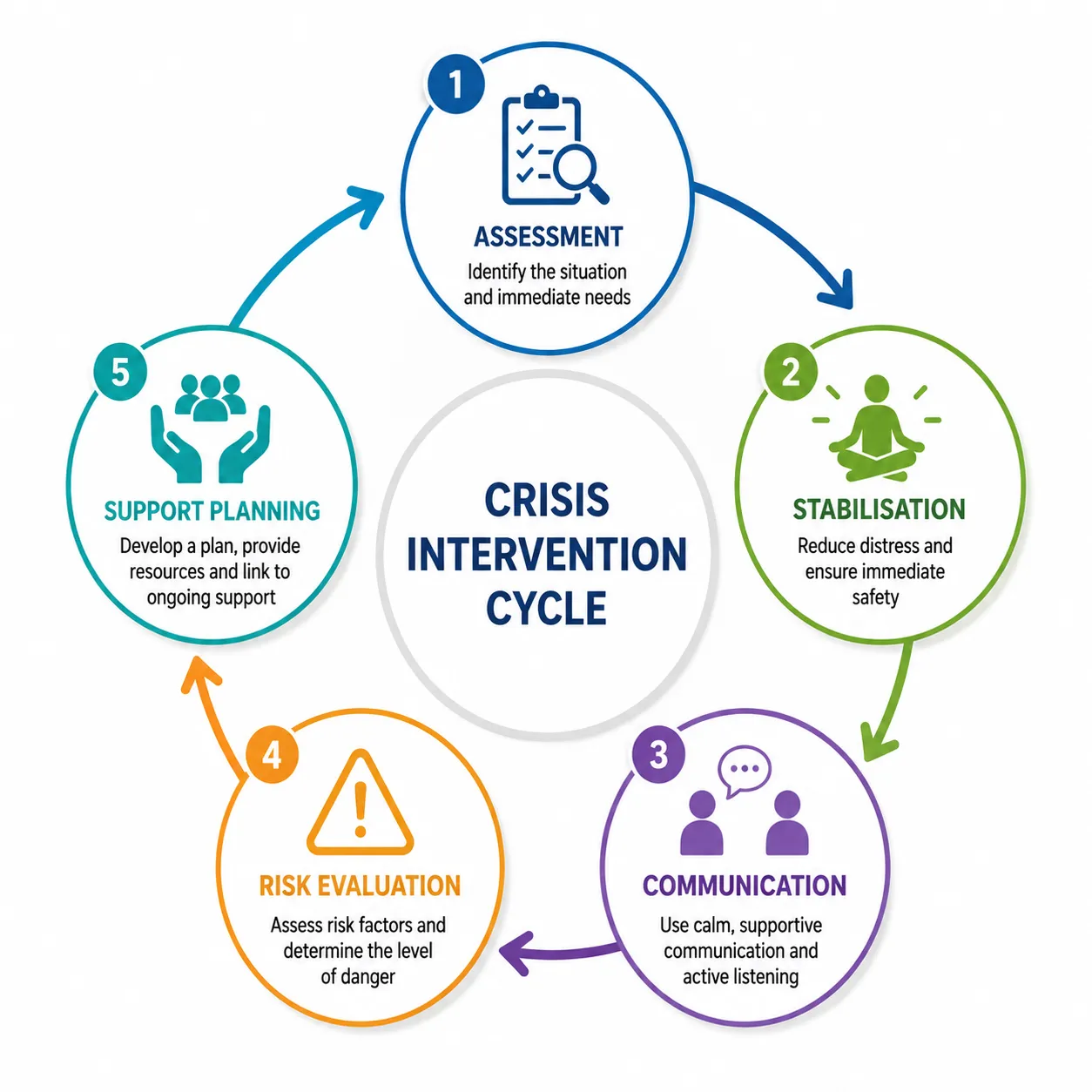
Crisis intervention is a vital professional skill in counselling practice that focuses on supporting individuals experiencing acute emotional distress or psychological instability. It requires counsellors to respond quickly, remain calm under pressure, and apply structured techniques that prioritise safety and emotional stabilisation.
Through active stabilisation, grounding techniques, supportive communication, and risk assessment, counsellors can effectively manage crisis situations and prevent further escalation. These approaches ensure that clients receive immediate emotional support while being guided towards appropriate ongoing care or emergency services.
By applying crisis intervention techniques in professional settings, counsellors play a critical role in safeguarding client wellbeing, restoring emotional balance, and supporting recovery pathways during some of the most vulnerable moments in a client’s life.
2. Implement Strategies for De-escalation and Safety Planning in Crisis Management
De-escalation and safety planning are essential components of crisis intervention practice in counselling, mental health, and emergency support services. When individuals experience a crisis, their emotional state may become highly unstable, leading to anxiety, agitation, aggression, panic, or withdrawal. In such moments, counsellors must respond with structured, calm, and professional strategies to reduce emotional intensity, restore communication, and ensure safety.
De-escalation focuses on calming the immediate emotional response, while safety planning focuses on preventing future harm and providing structured coping mechanisms. Together, these approaches help counsellors manage high-risk situations effectively and support clients in regaining control over their emotions and behaviour.
This section explores de-escalation strategies, safety planning procedures, and their real-world application in professional counselling settings. It also highlights workplace relevance, practical scenarios, and structured tools used to support clients in crisis situations.
Understanding De-escalation in Counselling
De-escalation is a structured counselling process used to reduce emotional intensity, agitation, or aggressive behaviour during a crisis situation. It is a core skill in counselling practice, particularly in environments where clients may experience emotional breakdowns, trauma reactions, panic attacks, or behavioural escalation.
In professional settings, de-escalation is not about controlling the client but about creating a safe, calm, and supportive environment that helps the individual regain emotional stability. It requires patience, emotional regulation, communication skills, and strong professional awareness.
Definition of De-escalation
De-escalation can be defined as:
A set of communication and behavioural techniques used to reduce emotional intensity, prevent escalation of distress, and restore calm and rational interaction during a crisis situation.
It is commonly used in:
- Counselling services
- Mental health facilities
- Hospital emergency departments
- Crisis helplines
- Social care environments
- Addiction recovery centres
Purpose of De-escalation
De-escalation is designed to:
- Prevent further emotional escalation
- Restore calm communication
- Reduce risk of harm to self or others
- Create a safe therapeutic environment
- Encourage cooperation and trust between client and counsellor
Each purpose is focused on immediate safety and emotional regulation.
Core De-escalation Strategies
Effective de-escalation requires structured strategies that help reduce emotional distress and support stabilisation. Counsellors must remain calm, professional, and non-reactive while guiding the client toward emotional control.
1. Calm and Controlled Communication
Calm communication is the foundation of de-escalation. Counsellors must regulate their tone, language, and body posture to avoid increasing client distress.
Effective approaches include:
- Speaking slowly and clearly to reduce confusion
- Using simple and non-threatening language
- Avoiding confrontation, criticism, or arguments
- Maintaining open and relaxed body posture
- Demonstrating emotional control under pressure
These behaviours help create a sense of safety and reduce emotional intensity in the client.
2. Active Listening and Validation
Active listening is essential in reducing emotional escalation because it helps clients feel heard and understood.
Counsellors should:
- Listen without interrupting the client
- Acknowledge emotional experiences
- Reflect feelings back to the client
- Show empathy and understanding
- Avoid judgement or dismissal of emotions
Validation helps clients feel respected, which often reduces anger, fear, or panic.
3. Creating Physical and Emotional Space
In some crisis situations, environmental control plays an important role in de-escalation.
Counsellors may:
- Maintain a safe and appropriate physical distance
- Reduce environmental noise or distractions
- Ensure privacy to protect dignity
- Avoid crowding or overwhelming the client
- Create a calm and structured environment
This helps reduce sensory overload and emotional pressure.
4. Redirecting Focus and Grounding
When clients are overwhelmed, counsellors can redirect attention away from distressing thoughts toward stabilising activities.
Common techniques include:
- Guided breathing exercises
- Sensory grounding (5-4-3-2-1 technique)
- Focusing on present safety and surroundings
- Discussing immediate needs instead of long-term issues
- Encouraging physical awareness (feet on ground, breathing rhythm)
These techniques help clients reconnect with reality and reduce emotional overwhelm.
Effective vs Ineffective De-escalation Approaches
| Effective Approach | Ineffective Approach |
|---|---|
| Calm and steady voice | Raising voice or shouting |
| Active listening | Interrupting the client |
| Empathy and validation | Dismissing emotions |
| Non-threatening body language | Aggressive posture |
| Clear simple instructions | Confusing or complex language |
This comparison highlights how communication style directly impacts emotional escalation or stabilisation.
Safety Planning in Crisis Management
Safety planning is a structured and collaborative process used in counselling to reduce risk and support individuals who may be vulnerable to harm. It is especially important for clients experiencing suicidal thoughts, self-harm tendencies, severe emotional distress, or repeated crisis episodes.
Unlike immediate crisis intervention, safety planning is proactive and focuses on preparing clients for future emotional challenges by identifying coping strategies and support systems.
Definition of Safety Planning
Safety planning can be defined as:
A structured, collaborative process that helps clients identify warning signs, coping strategies, support networks, and emergency actions to reduce risk during future crises.
It is widely used in:
- Mental health services
- Suicide prevention programmes
- Addiction recovery support
- Community counselling services
- Emergency intervention settings
Key Components of Safety Planning
A safety plan provides a structured framework that helps clients manage emotional distress and reduce risk during vulnerable periods.
Essential Elements of a Safety Plan
A comprehensive safety plan includes:
- Identification of warning signs of crisis escalation
- Development of personal coping strategies
- List of supportive contacts (family, friends, professionals)
- Emergency service information and contact details
- Identification of safe environments and protective factors
- Step-by-step actions to reduce immediate risk
Each element plays a role in supporting client safety and emotional stability.
Practical Application of Safety Planning
In counselling practice, safety planning is developed collaboratively between the counsellor and client. It is designed to be practical, personalised, and easy to use during times of distress.
Steps in Safety Planning Process
Counsellors typically support clients to:
- Identify personal triggers and early warning signs
- Recognise emotional and behavioural changes during crisis
- Develop coping strategies for managing distress
- Build a list of trusted individuals for support
- Establish clear emergency response steps
- Commit to using the safety plan during crises
Each step strengthens client awareness and preparedness.
Workplace Relevance of Safety Planning
Safety planning is a critical safeguarding tool in professional counselling environments. It ensures that clients have structured guidance during emotional crises and reduces the likelihood of harmful behaviour.
In workplace settings, safety planning supports:
- Risk management and safeguarding procedures
- Ethical responsibility of counsellors
- Structured client support systems
- Collaboration between services and professionals
- Prevention of crisis escalation
Practical Scenario: Crisis De-escalation and Safety Planning
Practical scenarios help learners understand how theoretical knowledge is applied in real counselling situations.
Scenario Description
A young adult presents with suicidal ideation following academic failure and family pressure. The client is emotionally distressed, withdrawn, and expressing feelings of worthlessness.
Counsellor Response
The counsellor responds professionally by:
- Maintaining calm and non-judgmental communication
- Assessing immediate risk and safety concerns
- Using grounding techniques to reduce emotional intensity
- Encouraging the client to express emotions safely
- Identifying available support systems
- Collaboratively developing a structured safety plan
Outcome of Intervention
As a result of structured intervention:
- Emotional distress is reduced
- Client begins to regain stability
- Communication improves
- Risk is managed effectively
- Client agrees to follow-up support
This demonstrates the importance of structured de-escalation and safety planning in crisis management.
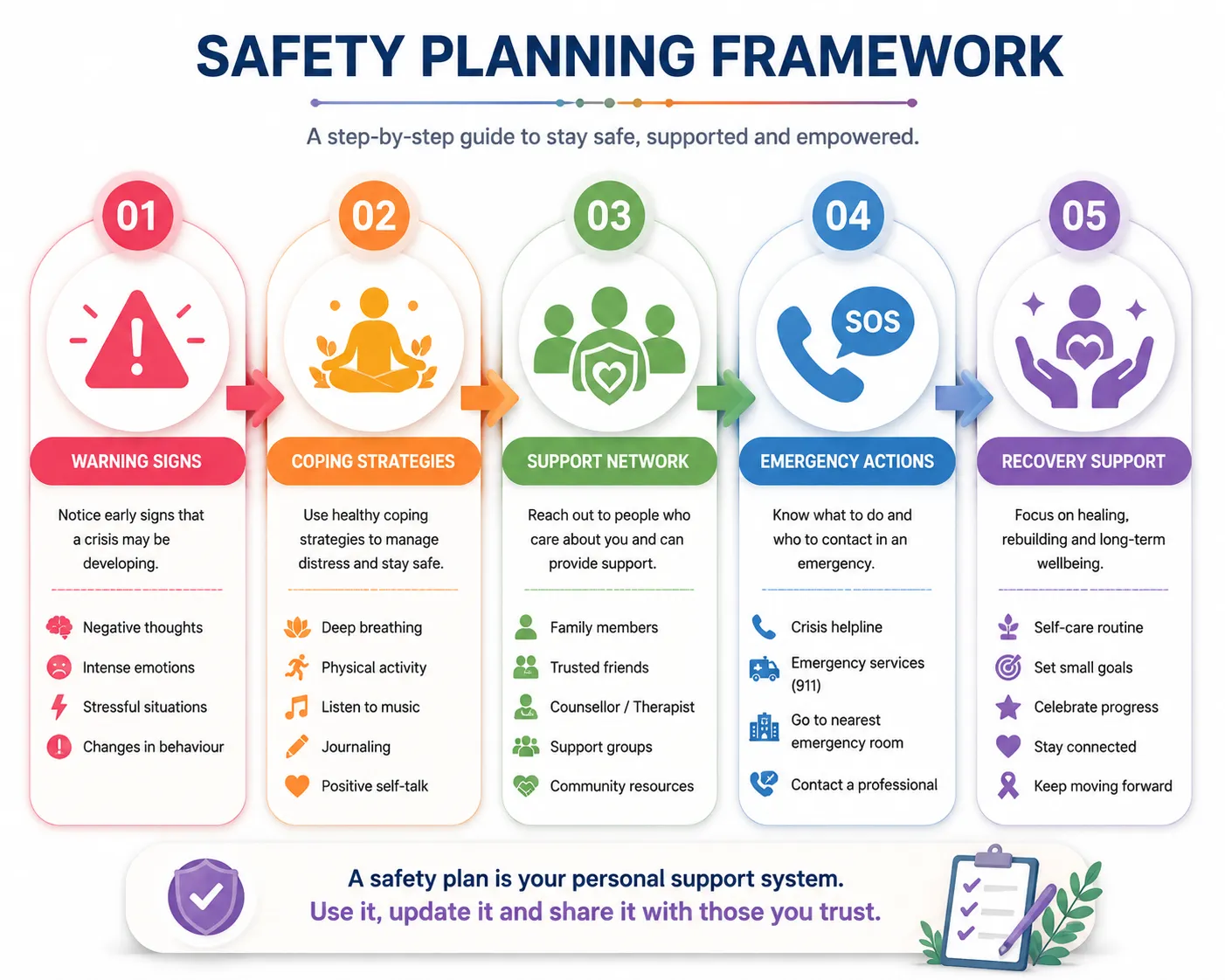
This visual illustrates how safety planning progresses step-by-step from identifying early warning signs to establishing recovery and support systems.
De-escalation and safety planning are essential skills in crisis management within counselling practice. De-escalation focuses on immediate emotional stabilisation through calm communication, active listening, grounding techniques, and environmental control. These strategies help reduce emotional intensity and prevent further escalation during crisis situations.
Safety planning complements de-escalation by providing a structured, proactive framework that helps clients identify warning signs, develop coping strategies, and access support systems when needed. Together, these approaches ensure both immediate and long-term safety for clients experiencing emotional distress or crisis situations.
In professional counselling environments, these skills are critical for safeguarding, risk management, and effective client support. By applying de-escalation techniques and safety planning procedures, counsellors can provide structured, ethical, and effective interventions that promote emotional stability, reduce risk, and support recovery-focused outcomes.
Conclusion
Crisis intervention is a fundamental and highly specialised skill within counselling practice that enables professionals to respond effectively to individuals experiencing acute emotional distress or high-risk situations. It involves the use of structured assessment, stabilisation techniques, grounding strategies, and clear, supportive communication to help clients regain emotional balance and maintain immediate safety.
De-escalation techniques are essential in reducing emotional intensity and preventing situations from escalating further, while safety planning provides a structured and practical framework to support clients beyond the immediate crisis. Together, these approaches ensure that counsellors can respond in a calm, organised, and ethically responsible manner, even in highly challenging situations.
Overall, the effective use of crisis intervention strategies strengthens client safety, promotes emotional stabilisation, and supports the development of long-term coping and recovery pathways. By applying these skills consistently, counsellors play a vital role in protecting wellbeing, restoring control during moments of crisis, and guiding clients towards appropriate ongoing support and recovery-focused care.