
Lesson 1: Communication Skills
Communication is one of the most important skills in counselling practice and forms the foundation of every successful therapeutic relationship. Counsellors work with individuals from diverse backgrounds who may be experiencing emotional distress, addiction, trauma, anxiety, depression, or other mental health challenges. In these situations, effective communication enables counsellors to understand clients’ experiences, explore their concerns, and provide appropriate support in a professional and ethical manner. Communication in counselling extends beyond spoken words and includes active listening, empathy, observation, body language, tone of voice, and the ability to respond appropriately to both verbal and non-verbal messages.
For individuals experiencing addiction and mental health difficulties, communication often represents the first step toward recovery and positive change. Many clients enter counselling feeling misunderstood, judged, or reluctant to discuss personal issues. Through the use of active listening, effective communication techniques, rapport building, and trust development, counsellors create a safe environment where clients feel respected and valued. This lesson explores the communication skills required in counselling settings and examines how strong therapeutic relationships can be established with clients experiencing addiction and mental health challenges.
1. Demonstrate Active Listening and Effective Communication Techniques in Counseling Settings
1. Understanding Communication in Counselling
Communication is the foundation of effective counselling practice and serves as the primary tool through which counsellors develop therapeutic relationships, explore client concerns, and facilitate positive change. In counselling settings, communication is much more than the exchange of information. It is a purposeful and professional process that enables counsellors to understand a client’s thoughts, emotions, behaviours, experiences, and personal circumstances while creating a safe, supportive, and non-judgemental environment. Effective communication allows clients to feel heard, respected, and valued, which encourages greater participation in the counselling process.
Unlike everyday conversations, counselling communication is intentional, structured, and client-centred. Every interaction has a specific purpose, whether it is gathering information, exploring emotions, identifying challenges, or supporting decision-making. Counsellors use communication skills to help clients gain insight into their situations, develop coping strategies, and work towards meaningful goals. In addiction and mental health settings, strong communication skills are particularly important because clients may struggle with trust, self-expression, fear of judgement, shame, anxiety, or emotional distress. Effective communication helps overcome these barriers and promotes engagement, recovery, and personal growth.
The Purpose of Communication in Counselling
Communication plays several essential roles within the counselling process. It enables counsellors to establish professional relationships, understand client needs, and support emotional wellbeing.
Key purposes of communication in counselling include:
- Building a therapeutic relationship based on trust and respect.
- Encouraging clients to express thoughts, feelings, and concerns openly.
- Gathering accurate information for assessment and intervention planning.
- Supporting emotional exploration and self-awareness.
- Helping clients identify challenges and potential solutions.
- Promoting positive behavioural and emotional change.
- Facilitating collaboration between counsellor and client.
- Enhancing engagement and commitment to the counselling process.
When communication is effective, clients are more likely to participate actively in counselling, share personal experiences honestly, and work towards agreed goals.
Why Communication is Important in Addiction and Mental Health Counselling
Individuals seeking support for addiction or mental health difficulties often experience complex emotional and psychological challenges. Many may feel isolated, misunderstood, or reluctant to discuss personal issues due to fear of stigma or previous negative experiences. Effective communication helps create an environment where clients feel safe enough to share sensitive information and engage in the recovery process.
Communication is particularly important because it helps counsellors:
- Understand the client’s perspective and lived experiences.
- Identify emotional, behavioural, and environmental factors affecting wellbeing.
- Recognise signs of distress, anxiety, trauma, or relapse risk.
- Encourage motivation for recovery and positive change.
- Strengthen therapeutic relationships and treatment outcomes.
In professional practice, communication is recognised internationally as one of the most important competencies for counsellors, mental health practitioners, social workers, addiction specialists, and healthcare professionals.
Forms of Communication in Counselling Practice
Communication in counselling occurs through several interconnected forms. Each contributes to the effectiveness of therapeutic interactions and supports client-centred practice.
Verbal Communication
Verbal communication refers to the spoken language used during counselling sessions. The words chosen by a counsellor can significantly influence how a client interprets information and responds emotionally. Effective verbal communication requires clarity, sensitivity, and professionalism.
Examples of verbal communication include:
- Asking open and closed questions.
- Providing feedback and clarification.
- Reflecting client statements.
- Offering encouragement and reassurance.
- Summarising key points from discussions.
- Exploring thoughts, feelings, and behaviours.
A skilled counsellor avoids overly technical language and adapts communication to the client’s level of understanding.
Non-Verbal Communication
Non-verbal communication involves messages conveyed without spoken words. Research indicates that non-verbal behaviours can often communicate emotions more powerfully than verbal language.
Examples include:
- Facial expressions.
- Eye contact.
- Body posture.
- Hand gestures.
- Tone and pace of speech.
- Physical distance and positioning.
For example, a client may verbally state that they are coping well while simultaneously displaying signs of anxiety through fidgeting, avoiding eye contact, or appearing tense. Observing these cues allows counsellors to explore underlying emotions more effectively.
Written Communication
Written communication supports professional practice and continuity of care.
Examples include:
- Session notes.
- Assessment records.
- Referral documentation.
- Treatment plans.
- Progress reports.
Accurate written communication ensures important information is recorded clearly and professionally.
Digital Communication
Technology has become increasingly important within counselling and mental health services.
Examples include:
- Online counselling sessions.
- Video consultations.
- Secure messaging platforms.
- Electronic record systems.
Digital communication enables greater accessibility to support services while requiring counsellors to maintain the same professional standards expected in face-to-face interactions.
Forms of Communication in Counselling
| Communication Type | Description | Practical Examples | Importance in Counselling |
|---|---|---|---|
| Verbal Communication | Spoken interaction between counsellor and client | Questions, reflections, summaries | Facilitates therapeutic dialogue |
| Non-Verbal Communication | Communication without words | Eye contact, posture, gestures | Provides insight into emotions |
| Written Communication | Recorded professional information | Session notes, referrals | Supports continuity and accountability |
| Digital Communication | Technology-based interaction | Online counselling, secure messaging | Improves access to services |
Characteristics of Effective Counselling Communication
Effective counselling communication is built upon several key characteristics that contribute to successful therapeutic relationships.
These characteristics include:
- Active listening.
- Empathy and understanding.
- Respect and professionalism.
- Clarity and accuracy.
- Confidentiality.
- Cultural sensitivity.
- Non-judgemental attitudes.
- Appropriate responsiveness.
When these characteristics are consistently demonstrated, clients are more likely to feel supported and engaged in the counselling process.
Industry Relevance of Communication Skills
Communication skills are considered essential across counselling, healthcare, addiction recovery, social care, education, and community support services. Employers consistently identify communication as one of the most valuable professional competencies because it directly affects service quality, client satisfaction, and treatment outcomes.
In addiction services, communication enables practitioners to discuss sensitive issues such as substance misuse, relapse triggers, and recovery planning. In mental health settings, communication supports assessment, crisis intervention, emotional regulation, and therapeutic engagement. Poor communication can lead to misunderstandings, reduced trust, disengagement from services, and ineffective interventions.
For this reason, professional counsellors continually develop and refine their communication skills throughout their careers to meet the changing needs of clients and service environments.
Practical Example: Communication in a Counselling Session
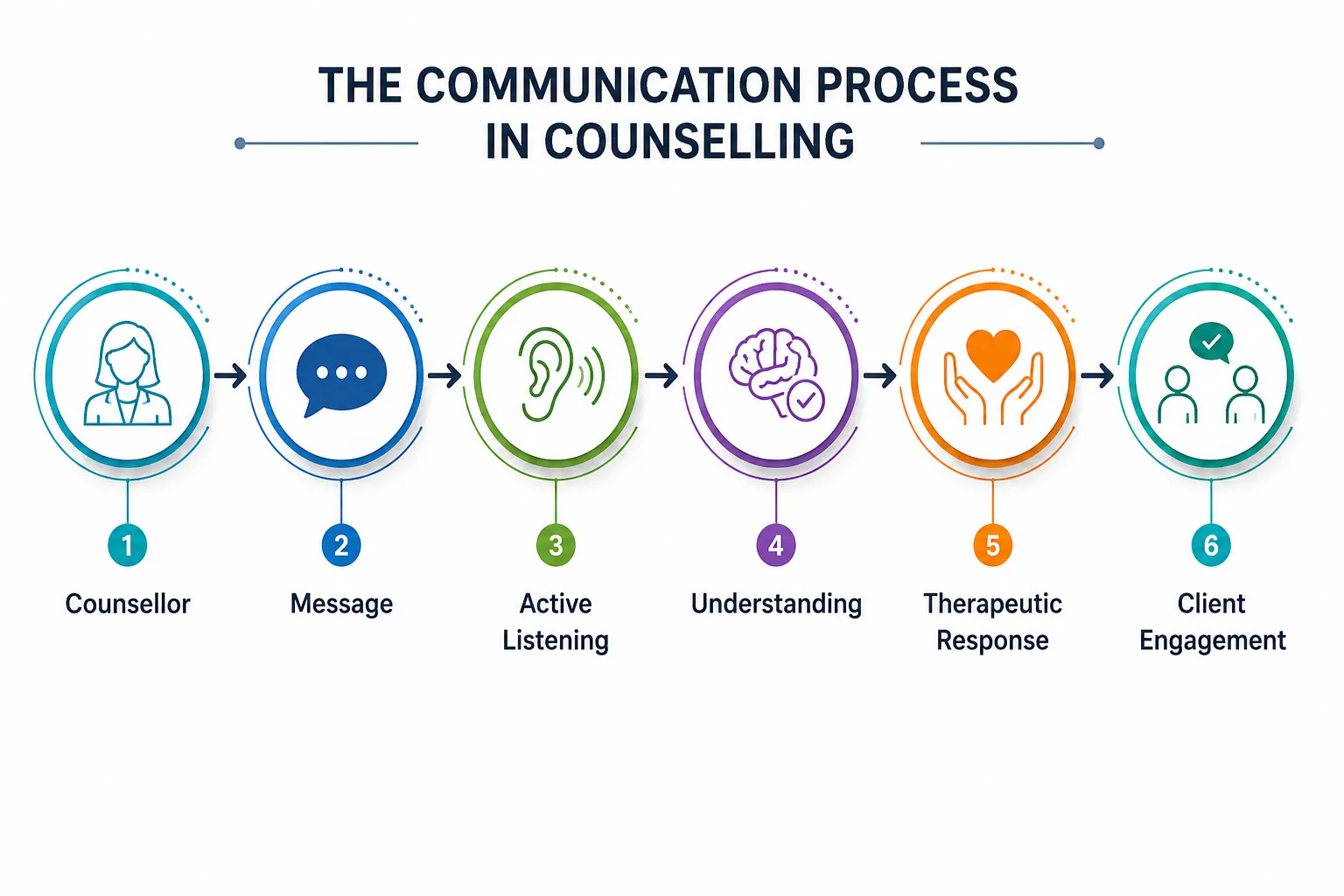
Consider a client attending counselling for anxiety and alcohol dependency. During the first session, the client appears nervous, avoids eye contact, and responds with very short answers. An inexperienced practitioner may focus solely on collecting information quickly, which could increase the client’s discomfort.
A skilled counsellor adopts a different approach by using a calm tone of voice, maintaining an open posture, demonstrating active listening, and asking supportive open-ended questions. Rather than rushing the conversation, the counsellor allows the client time to respond and acknowledges their emotions without judgement.
As trust develops, the client begins discussing workplace stress, family pressures, and the factors contributing to alcohol use. This example demonstrates how effective communication serves not only as a method of gathering information but also as a therapeutic intervention that encourages engagement, trust, and positive change.
Effective communication is therefore the cornerstone of successful counselling practice. It enables counsellors to establish meaningful therapeutic relationships, understand client experiences, support emotional wellbeing, and facilitate positive outcomes for individuals experiencing addiction, mental health challenges, and a wide range of personal difficulties. By developing strong communication skills, counsellors can create supportive environments that empower clients to explore their concerns, build resilience, and work towards lasting recovery and personal growth.
2. Establish Rapport and Build Trust with Clients Experiencing Addiction and Mental Health Challenges
Understanding Rapport in Counselling
Rapport is a fundamental component of effective counselling and refers to the positive and professional relationship that develops between a counsellor and a client. It is built through mutual respect, understanding, empathy, trust, and effective communication. In counselling practice, rapport is much more than simply being friendly or approachable; it involves creating a safe and supportive environment where clients feel comfortable discussing personal experiences, emotions, and concerns without fear of criticism or judgement.
For individuals experiencing addiction and mental health challenges, establishing rapport is often the first and most important step in the therapeutic process. Many clients enter counselling with feelings of shame, guilt, anxiety, fear, or mistrust due to previous life experiences or negative encounters with support services. Without a positive therapeutic relationship, clients may be reluctant to share sensitive information, participate actively in treatment, or engage fully in recovery programmes. Rapport therefore serves as the foundation upon which trust, collaboration, and meaningful therapeutic progress are built.
In professional counselling settings, rapport develops gradually through consistent and positive interactions. Counsellors must demonstrate genuine interest, active listening, empathy, patience, and professionalism throughout the counselling process. As rapport strengthens, clients often become more open, engaged, and willing to explore difficult emotions and experiences.
Importance of Rapport in Therapeutic Relationships
The relationship between counsellor and client is widely recognised as one of the strongest factors influencing counselling success. Regardless of the counselling approach or intervention being used, positive outcomes are more likely when a strong therapeutic relationship exists.
Strong rapport helps clients feel:
- Safe when discussing personal and sensitive issues.
- Accepted without fear of judgement or criticism.
- Understood emotionally and psychologically.
- Respected as individuals with unique experiences and needs.
- Supported throughout the counselling journey.
- Empowered to participate in decision-making and goal setting.
- Motivated to engage in treatment and recovery activities.
For clients experiencing addiction and mental health difficulties, rapport often determines whether they continue attending counselling sessions. Individuals who feel disconnected from their counsellor may disengage from treatment, while those who experience genuine support are more likely to remain committed to recovery.
Research in counselling, psychotherapy, and mental health services consistently identifies rapport as a key predictor of client engagement, treatment adherence, emotional disclosure, and long-term therapeutic success. A strong therapeutic relationship can enhance client confidence, improve communication, and create opportunities for meaningful personal growth.
Stages of Rapport Development in Counselling Relationships
| Stage | Description | Outcome |
|---|---|---|
| Initial Contact | First interaction between counsellor and client | Establishes first impressions and comfort |
| Safety and Acceptance | Client begins feeling respected and valued | Reduces anxiety and resistance |
| Mutual Understanding | Counsellor demonstrates empathy and understanding | Encourages open communication |
| Rapport Development | Trust and collaboration begin to strengthen | Improves engagement |
| Therapeutic Partnership | Strong professional relationship established | Supports positive therapeutic outcomes |
Core Elements of Rapport Building
Successful rapport building depends on several key qualities that help create a positive and supportive counselling environment.
Respect
Respect involves recognising the dignity, worth, and individuality of every client regardless of their circumstances, behaviours, cultural background, addiction history, or mental health condition. Respectful communication demonstrates that clients are valued and deserving of support.
Counsellors demonstrate respect by:
- Listening attentively.
- Avoiding judgemental language.
- Acknowledging client perspectives.
- Supporting client autonomy.
- Protecting confidentiality.
When clients feel respected, they are more likely to trust the counselling process and participate actively in discussions.
Authenticity
Authenticity refers to being genuine, honest, and sincere during professional interactions. Clients often recognise when counsellors are genuinely interested in supporting their wellbeing rather than simply performing professional duties.
Authentic counsellors:
- Communicate honestly and openly.
- Show genuine concern for clients.
- Maintain consistency between words and actions.
- Avoid artificial or scripted responses.
Authenticity strengthens credibility and helps create meaningful therapeutic relationships.
Empathy
Empathy is the ability to understand and appreciate another person’s experiences and emotions from their perspective. It allows counsellors to connect with clients emotionally while maintaining professional boundaries.
Empathy contributes to rapport by:
- Demonstrating understanding.
- Validating emotions.
- Reducing feelings of isolation.
- Encouraging emotional expression.
- Promoting trust and openness.
Clients who feel understood are often more willing to engage in counselling and explore difficult experiences.
Professional Presence
Professional presence refers to the counsellor’s ability to project confidence, attentiveness, competence, and professionalism during interactions.
Professional presence includes:
- Appropriate body language.
- Active listening.
- Consistent communication.
- Emotional self-control.
- Ethical behaviour.
Together, these qualities help create a therapeutic environment where clients feel safe and supported.
Understanding Trust in Counselling Relationships
Trust is one of the most important elements of successful counselling. Counselling requires clients to discuss personal experiences, vulnerabilities, fears, and emotions that they may never have shared with others. Such disclosure is unlikely to occur unless clients believe that the counsellor is trustworthy and genuinely committed to their wellbeing.
Many individuals entering counselling have experienced situations that affect their ability to trust others, including:
- Trauma and abuse.
- Social stigma.
- Rejection and discrimination.
- Family conflict.
- Relationship breakdowns.
- Negative experiences with professionals or services.
As a result, trust often develops gradually rather than immediately. Counsellors must consistently demonstrate reliability, empathy, honesty, professionalism, and integrity throughout the counselling process.
An important principle in counselling is that trust cannot be demanded. Instead, it is earned through repeated positive interactions and consistent professional behaviour.
Factors Influencing Trust Development
Several factors influence the development of trust within therapeutic relationships.
Confidentiality
Clients need confidence that personal information will be handled securely and professionally. Maintaining confidentiality demonstrates respect for privacy and creates emotional safety.
Reliability
Reliability involves consistency, punctuality, preparation, and follow-through on commitments. Reliable counsellors create a sense of stability and predictability.
Honesty
Transparent and truthful communication strengthens credibility and reduces uncertainty.
Professional Competence
Clients are more likely to trust counsellors who demonstrate knowledge, confidence, professional skills, and ethical practice.
Trust-Building Behaviours
| Behaviour | Impact on Client |
|---|---|
| Confidentiality | Increases emotional safety |
| Consistency | Builds reliability and confidence |
| Honesty | Strengthens credibility |
| Respect | Encourages openness |
| Professional Boundaries | Maintains trust and security |
| Empathy | Promotes emotional connection |
| Competence | Reassures clients about quality of support |
Strategies for Building Trust
Trust is built through practical actions rather than words alone. Professional counsellors use a variety of strategies to strengthen therapeutic relationships.
Maintaining Confidentiality
Confidentiality is a core ethical principle within counselling practice. Clients should understand how their information will be collected, stored, used, and protected. Clear explanations regarding confidentiality help reduce anxiety and encourage openness.
Demonstrating Reliability
Reliability includes:
- Arriving punctually for appointments.
- Preparing adequately for sessions.
- Following through on agreed actions.
- Providing consistent support.
Reliable behaviour reassures clients that they can depend on the counsellor.
Communicating Transparently
Counsellors should communicate openly about:
- Counselling processes.
- Treatment goals.
- Confidentiality limitations.
- Available support options.
- Professional responsibilities.
Transparency promotes informed decision-making and strengthens trust.
Maintaining Professional Boundaries
Professional boundaries protect both clients and counsellors. Clear boundaries ensure that counselling relationships remain ethical, respectful, and focused on therapeutic objectives.
Building Relationships with Clients Experiencing Addiction
Working with clients affected by addiction requires patience, understanding, and specialised communication skills. Addiction is often associated with shame, guilt, denial, fear of failure, and concerns about being judged by others.
Clients may initially be reluctant to engage in treatment because they fear criticism or negative consequences. Counsellors must therefore create a supportive environment that focuses on understanding rather than blame.
Effective approaches include:
- Active listening.
- Motivational communication.
- Respectful questioning.
- Strength-based interventions.
- Collaborative goal setting.
- Positive reinforcement.
Comparison: Supportive vs Judgemental Approaches
| Supportive Approach | Judgemental Approach |
|---|---|
| Encourages openness | Creates resistance |
| Builds trust | Damages relationships |
| Promotes engagement | Increases withdrawal |
| Supports recovery | Reduces motivation |
| Focuses on solutions | Focuses on blame |
Clients are more likely to participate in recovery when they feel supported and understood rather than criticised.
Building Relationships with Clients Experiencing Mental Health Challenges
Mental health conditions can influence communication styles, emotional expression, and relationship development. Effective counsellors recognise these differences and adapt their approaches accordingly.
Examples include:
- Depression may reduce motivation and participation.
- Anxiety may increase fear and uncertainty.
- Trauma may contribute to distrust and emotional withdrawal.
- Psychosis may affect communication and perception.
- Personality disorders may influence interpersonal relationships.
Counsellors must remain patient, empathetic, and flexible while maintaining professional consistency and support.
Trauma-Informed Communication
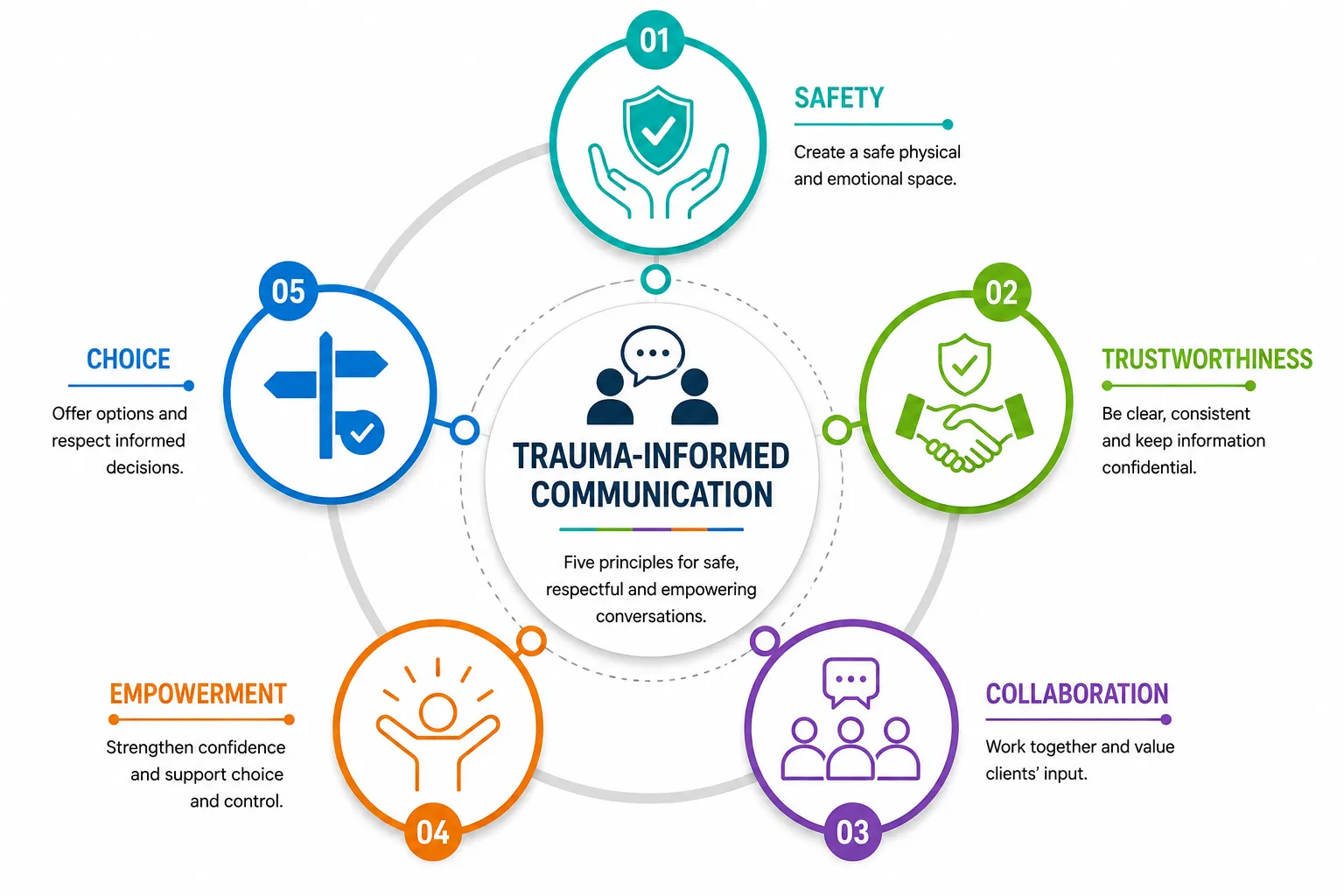
A significant number of individuals experiencing addiction and mental health challenges have experienced trauma. Trauma can affect trust, communication, emotional regulation, behaviour, and engagement with support services.
Trauma-informed communication recognises these impacts and aims to create a safe and empowering environment.
Key principles include:
- Safety.
- Trustworthiness.
- Collaboration.
- Empowerment.
- Choice.
These principles help minimise the risk of re-traumatisation while supporting healing and recovery.
Comparison: Traditional and Trauma-Informed Communication
| Traditional Approach | Trauma-Informed Approach |
|---|---|
| Focuses on problems | Focuses on strengths and resilience |
| Asks “What is wrong?” | Asks “What happened?” |
| Practitioner-led decisions | Collaborative decision-making |
| Limited client choice | Promotes empowerment |
| Focuses on symptoms | Focuses on holistic wellbeing |
Cultural Sensitivity and Inclusive Practice
Modern counselling services support individuals from diverse cultural, social, religious, ethnic, and linguistic backgrounds. Cultural sensitivity involves recognising these differences while ensuring that all clients receive fair, respectful, and inclusive support.
Effective culturally sensitive practice includes:
- Respecting cultural beliefs and values.
- Avoiding stereotypes and assumptions.
- Using inclusive language.
- Adapting communication methods where necessary.
- Promoting equality and accessibility.
Inclusive Communication Principles
| Principle | Application |
|---|---|
| Respect | Value individual differences |
| Equality | Provide fair and unbiased treatment |
| Accessibility | Adapt communication methods |
| Inclusion | Encourage active participation |
| Cultural Awareness | Recognise diverse perspectives |
| Sensitivity | Respond appropriately to cultural needs |
Case Study: Building Trust During Recovery
David enters counselling following opioid dependency. During the early stages of treatment, he appears defensive, avoids discussing personal concerns, and frequently misses appointments. Previous experiences with support services have left him feeling judged and misunderstood.
Rather than criticising David’s behaviour, the counsellor adopts a patient, consistent, and non-judgemental approach. Sessions focus on understanding his experiences, recognising his strengths, and exploring concerns regarding relapse and social stigma. The counsellor maintains confidentiality, communicates transparently, and consistently follows through on commitments.
Over time, David begins discussing his fears more openly and becomes increasingly involved in treatment planning. As trust develops, he engages more actively in recovery programmes and demonstrates greater confidence in the counselling process.
This case highlights that trust is not established through authority or persuasion. Instead, it develops through respect, empathy, consistency, professionalism, and meaningful therapeutic engagement over time.
Conclusion
Effective communication is at the heart of successful counselling practice and serves as the primary tool for understanding, supporting, and empowering clients. Through the use of active listening, empathetic responses, effective questioning, reflection, clarification, and summarising techniques, counsellors can develop a deeper understanding of clients’ experiences, emotions, and concerns. These communication skills help create a safe and supportive environment where individuals feel heard, valued, and respected, enabling them to engage more openly in the counselling process.
The development of rapport and trust is equally essential when working with individuals experiencing addiction and mental health challenges. Strong therapeutic relationships are built through respect, authenticity, confidentiality, reliability, cultural sensitivity, and professional integrity. Counsellors who consistently demonstrate these qualities can foster meaningful connections that encourage client engagement, emotional disclosure, and commitment to recovery. By combining effective communication skills with trust-building strategies and trauma-informed approaches, counsellors can create positive therapeutic partnerships that support resilience, personal growth, improved wellbeing, and long-term recovery outcomes.