
Lesson 1: Identification and Diagnosis
The identification and diagnosis of mental health disorders play a fundamental role in promoting psychological wellbeing and ensuring individuals receive appropriate care, support, and treatment. Mental health conditions can affect a person’s emotions, thoughts, behaviours, relationships, and ability to function effectively in daily life. Because these disorders often develop gradually and may present through a wide range of symptoms, early recognition is essential for preventing further deterioration and improving long-term outcomes. Accurate identification enables healthcare professionals, counsellors, social workers, and support practitioners to assess an individual’s needs, establish effective treatment plans, and provide timely interventions that support recovery and overall quality of life.
Mental health assessment can be particularly complex when symptoms overlap with substance misuse or addiction-related behaviours. Many individuals experience mental health disorders alongside alcohol or drug dependency, creating what is commonly known as a co-occurring disorder or dual diagnosis. In such cases, it is important to determine whether mental health symptoms are the result of an underlying psychiatric condition or are directly influenced by substance use. This lesson explores the key signs and symptoms associated with common mental health disorders and examines the distinctions between primary mental health conditions and those occurring alongside substance abuse. Understanding these differences is essential for accurate diagnosis, effective treatment planning, and the delivery of person-centred care that supports sustainable recovery and improved mental wellbeing.
1. Recognising Symptoms and Signs of Common Mental Health Disorders
Mental health disorders affect millions of people worldwide and can influence how individuals think, feel, behave, and interact with others. These disorders do not always present in the same way, as symptoms can vary depending on the individual’s age, personality, environment, life experiences, and the severity of the condition. Some symptoms may develop gradually over time, while others may appear suddenly following stressful life events, trauma, physical illness, or significant changes in personal circumstances.
Recognising the signs and symptoms of mental health disorders is one of the most important steps in supporting individuals who may be experiencing psychological difficulties. Early identification allows healthcare professionals, caregivers, family members, and support workers to provide timely assistance, reducing the risk of symptoms worsening and improving the likelihood of successful treatment and recovery.
Mental health disorders typically present through a combination of emotional, cognitive, behavioural, and physical symptoms. These symptoms often overlap and may affect multiple areas of an individual’s life, including relationships, education, employment, social activities, and overall wellbeing. Understanding these different categories of symptoms helps professionals and carers recognise potential mental health concerns and respond appropriately.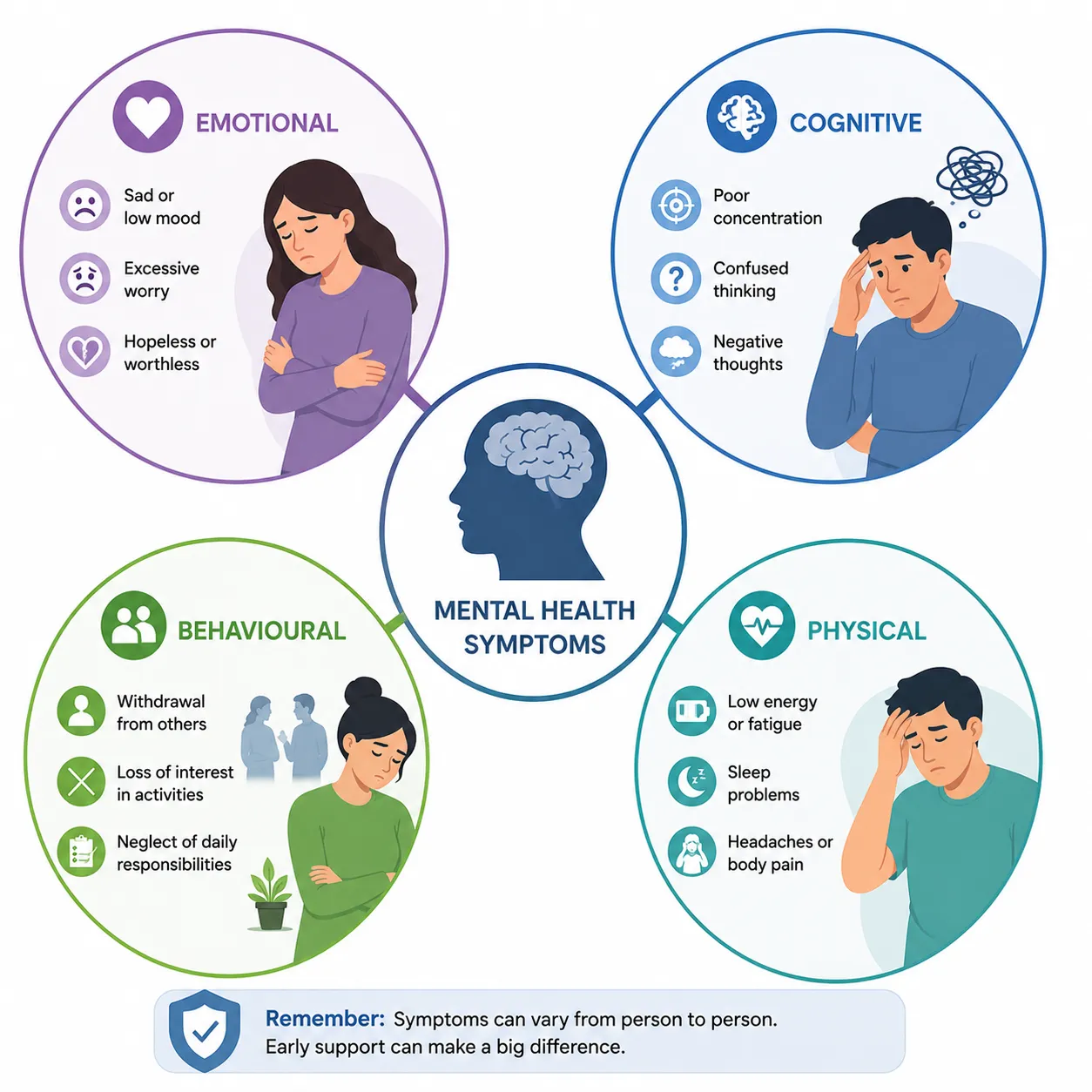
Understanding Mental Health Symptoms
Mental health symptoms are indicators that a person’s emotional, psychological, or behavioural functioning may not be operating normally. While everyone experiences stress, sadness, anxiety, or emotional difficulties at times, mental health disorders are generally characterised by symptoms that are persistent, severe, and interfere with daily functioning.
Symptoms may:
- Last for weeks, months, or even years.
- Affect multiple areas of life.
- Cause distress to the individual.
- Impact relationships and social functioning.
- Reduce productivity and performance.
- Increase the risk of physical health problems.
Recognising these symptoms requires careful observation and understanding of how mental health conditions manifest in different individuals.
Emotional Symptoms
What Are Emotional Symptoms?
Emotional symptoms relate to how a person feels internally and how they respond emotionally to different situations. These symptoms often affect mood, emotional stability, self-esteem, and the ability to regulate emotions effectively.
For many individuals, emotional symptoms are among the earliest signs of a developing mental health disorder. They may experience emotional changes long before behavioural or physical symptoms become noticeable.
Common Emotional Signs
- Persistent sadness or low mood
- Excessive worry or fear
- Frequent feelings of hopelessness
- Feelings of worthlessness or guilt
- Emotional numbness
- Irritability
- Mood swings
- Increased sensitivity to criticism
- Difficulty experiencing happiness or pleasure
Persistent Sadness or Low Mood
One of the most common emotional symptoms associated with mental health disorders is prolonged sadness. While everyone feels sad occasionally, individuals experiencing depression often report feeling persistently unhappy for extended periods without a clear reason.
This sadness may affect:
- Motivation
- Relationships
- Work performance
- Academic achievement
- Daily activities
Individuals may describe feeling empty, tearful, or emotionally exhausted.
Excessive Worry or Fear
Anxiety disorders often cause individuals to experience excessive worry that is difficult to control. These worries may focus on health, finances, relationships, work performance, or future events.
People experiencing excessive anxiety may:
- Constantly anticipate negative outcomes
- Feel overwhelmed by minor challenges
- Struggle to relax
- Experience ongoing nervousness
Feelings of Hopelessness and Worthlessness
Individuals experiencing depression often develop negative beliefs about themselves and their future. They may feel that situations will never improve or that they have little value as a person.
These feelings can contribute to:
- Social withdrawal
- Reduced motivation
- Poor self-care
- Increased risk of self-harm
Emotional Numbness
Some individuals report feeling emotionally detached from their surroundings. Rather than experiencing sadness, they may feel disconnected, empty, or unable to experience emotions fully.
Emotional numbness can impact:
- Personal relationships
- Family interactions
- Enjoyment of hobbies
- Daily functioning
Cognitive (Thinking) Symptoms
What Are Cognitive Symptoms?
Cognitive symptoms affect how individuals think, process information, solve problems, and make decisions. Mental health disorders can significantly impair cognitive functioning, making everyday tasks more challenging.
These symptoms are often overlooked because they may initially appear as concentration problems or forgetfulness.
Common Cognitive Signs
- Difficulty concentrating
- Confused thinking
- Poor decision-making
- Memory problems
- Negative thinking patterns
- Intrusive thoughts
- Racing thoughts
- Difficulty organising tasks
Difficulty Concentrating
Many mental health disorders reduce a person’s ability to focus and maintain attention. Individuals may find it difficult to complete tasks, follow conversations, or absorb information.
This can affect:
- Workplace performance
- Educational achievement
- Daily responsibilities
- Personal relationships
Memory Problems
Mental health conditions such as depression and anxiety can interfere with memory and information processing.
Individuals may:
- Forget appointments
- Misplace items frequently
- Struggle to recall information
- Have difficulty learning new skills
Negative Thinking Patterns
Negative thinking is common in many mental health disorders. Individuals may automatically interpret situations in a pessimistic or self-critical way.
Examples include:
- Assuming failure before attempting tasks
- Expecting rejection from others
- Viewing mistakes as personal failures
- Believing they are incapable of success
These thought patterns often reinforce emotional distress.
Intrusive Thoughts
Intrusive thoughts are unwanted thoughts, images, or urges that repeatedly enter a person’s mind.
These thoughts can be:
- Disturbing
- Distressing
- Difficult to control
- Unrelated to the person’s actual intentions
Intrusive thoughts are commonly associated with anxiety disorders and obsessive-compulsive disorder (OCD).
Racing Thoughts
Some individuals experience thoughts that move rapidly from one idea to another. Racing thoughts are often associated with bipolar disorder, particularly during manic episodes.
This can make it difficult to:
- Focus on tasks
- Communicate effectively
- Sleep properly
- Make rational decisions
Behavioural Symptoms
What Are Behavioural Symptoms?
Behavioural symptoms involve observable changes in how a person acts. These symptoms are often noticed first by family members, friends, colleagues, or caregivers.
Changes in behaviour can indicate that an individual is struggling with emotional or psychological difficulties.
Common Behavioural Signs
- Social withdrawal
- Loss of interest in activities
- Changes in sleeping habits
- Increased irritability
- Aggressive behaviour
- Risk-taking behaviours
- Neglecting responsibilities
- Reduced personal hygiene
Social Withdrawal
People experiencing mental health difficulties often begin withdrawing from social activities and relationships.
They may:
- Avoid family gatherings
- Stop meeting friends
- Isolate themselves
- Limit communication with others
Social withdrawal can worsen mental health symptoms by reducing emotional support and increasing feelings of loneliness.
Loss of Interest in Activities
A common symptom of depression is an inability to enjoy activities that were previously pleasurable.
Individuals may lose interest in:
- Sports
- Hobbies
- Social events
- Entertainment
- Personal goals
This symptom is known as anhedonia and is a key indicator of depressive disorders.
Changes in Sleeping Patterns
Mental health disorders frequently affect sleep.
Examples include:
- Difficulty falling asleep
- Frequent waking during the night
- Oversleeping
- Poor sleep quality
- Early morning waking
Poor sleep often worsens other mental health symptoms.
Aggressive or Irritable Behaviour
Emotional distress can sometimes manifest as anger, frustration, or irritability.
Individuals may:
- Become easily annoyed
- React aggressively to minor issues
- Experience frequent conflicts
- Display verbal hostility
Such behaviour can strain relationships and create additional stress.
Neglect of Responsibilities
Individuals experiencing significant mental health challenges may struggle to maintain daily responsibilities.
This may include:
- Missing work
- Poor academic performance
- Ignoring household tasks
- Failing to manage finances
These difficulties often result from reduced motivation, fatigue, or impaired concentration.
Physical Symptoms
What Are Physical Symptoms?
Mental health disorders do not only affect the mind. They often produce physical symptoms due to the close relationship between psychological and physical health.
Physical symptoms may sometimes be mistaken for medical conditions, leading individuals to seek physical healthcare before recognising the psychological cause.
Common Physical Signs
- Fatigue
- Low energy levels
- Headaches
- Muscle tension
- Changes in appetite
- Weight fluctuations
- Digestive problems
- Sleep disturbances
- Restlessness
Fatigue and Low Energy
Persistent tiredness is common in many mental health disorders.
Individuals may feel:
- Exhausted despite adequate rest
- Physically drained
- Unable to complete routine tasks
- Lacking motivation
Fatigue can significantly reduce quality of life.
Headaches and Body Pain
Chronic stress and anxiety often contribute to physical discomfort.
Common complaints include:
- Headaches
- Back pain
- Muscle aches
- Neck tension
These symptoms may persist even when no physical illness is present.
Changes in Appetite
Mental health disorders frequently affect eating habits.
Some individuals experience:
- Loss of appetite
- Weight loss
- Reduced interest in food
Others may experience:
- Increased appetite
- Emotional eating
- Weight gain
Sleep Disturbances
Sleep problems are among the most common physical symptoms of mental illness.
Poor sleep can worsen:
- Mood
- Concentration
- Energy levels
- Emotional regulation
This creates a cycle that can further intensify mental health difficulties.
Common Mental Health Disorders and Their General Symptoms
The following mental health disorders are among the most frequently diagnosed worldwide.
Depression
Overview
Depression is a mood disorder characterised by persistent sadness and loss of interest in daily activities.
Common Symptoms
- Persistent low mood
- Loss of enjoyment
- Fatigue
- Feelings of hopelessness
- Difficulty concentrating
- Sleep disturbances
- Appetite changes
- Social withdrawal
Impact on Daily Life
Depression can affect:
- Employment
- Education
- Relationships
- Physical health
- Overall quality of life
Without treatment, symptoms may become increasingly severe.
Anxiety Disorders
Overview
Anxiety disorders involve excessive fear, worry, or nervousness that interferes with daily functioning.
Common Symptoms
- Constant worrying
- Panic attacks
- Restlessness
- Difficulty concentrating
- Rapid heartbeat
- Sweating
- Trembling
- Sleep problems
Impact on Daily Life
Individuals may avoid situations that trigger anxiety, limiting social, educational, and professional opportunities.
Bipolar Disorder
Overview
Bipolar disorder causes significant shifts in mood, energy, and activity levels.
Common Symptoms
Manic Symptoms
- Excessive energy
- Reduced need for sleep
- Increased confidence
- Impulsive decisions
- Risk-taking behaviour
Depressive Symptoms
- Low mood
- Fatigue
- Loss of interest
- Feelings of worthlessness
Impact on Daily Life
The unpredictable nature of mood episodes can disrupt relationships, employment, and financial stability.
Psychotic Disorders
Overview
Psychotic disorders affect a person’s perception of reality.
Common Symptoms
- Hallucinations
- Delusions
- Disorganised thinking
- Disorganised speech
- Social withdrawal
- Reduced emotional expression
Impact on Daily Life
Psychotic disorders often require ongoing treatment and support to help individuals manage symptoms and maintain independence.
Categories of Mental Health Symptoms
| Symptom Category | Common Signs | Potential Impact |
|---|---|---|
| Emotional | Sadness, anxiety, hopelessness, mood swings | Reduced emotional wellbeing |
| Cognitive | Poor concentration, memory issues, intrusive thoughts | Difficulty with work and learning |
| Behavioural | Social withdrawal, aggression, loss of interest | Relationship and social difficulties |
| Physical | Fatigue, sleep problems, headaches | Reduced physical wellbeing and daily functioning |
Importance of Early Recognition
Recognising mental health symptoms at an early stage is essential for effective intervention and recovery. Early identification allows individuals to access professional support before symptoms become more severe or lead to additional complications.
Benefits of early recognition include:
- Faster access to treatment
- Improved recovery outcomes
- Reduced risk of crisis situations
- Better management of symptoms
- Improved quality of life
- Enhanced social and occupational functioning
Family members, friends, teachers, employers, healthcare professionals, and support workers all play an important role in recognising warning signs and encouraging individuals to seek help.
Mental health disorders present through a wide range of emotional, cognitive, behavioural, and physical symptoms. These symptoms can affect every aspect of an individual’s life, including relationships, education, employment, and overall wellbeing. Understanding the different categories of symptoms enables professionals, caregivers, and support networks to identify potential mental health concerns at an early stage and respond appropriately.
Conditions such as depression, anxiety disorders, bipolar disorder, and psychotic disorders each present unique challenges, yet they share many common warning signs. By recognising these symptoms and understanding their impact, healthcare professionals and support workers can contribute to earlier diagnosis, more effective treatment planning, and improved long-term outcomes for individuals experiencing mental health difficulties.
Understanding the difference between primary mental health disorders and co-occurring conditions is a critical aspect of mental health assessment, diagnosis, and treatment planning. Mental health disorders can develop independently as a result of biological, psychological, social, or environmental factors. However, many individuals experiencing mental health difficulties also struggle with substance misuse, creating complex clinical situations that require specialised assessment and intervention. Distinguishing between these conditions helps healthcare professionals identify the underlying causes of symptoms and develop effective treatment strategies tailored to the individual’s needs.
The relationship between mental health disorders and substance use is often complicated because both conditions can influence and worsen one another. In some cases, individuals may use alcohol or drugs to cope with emotional distress, while in others, prolonged substance misuse may contribute to the development of mental health symptoms. Accurate diagnosis is therefore essential to ensure that both conditions are recognised and treated appropriately. This section explores primary mental health disorders, co-occurring mental health and substance use disorders, their key differences, and the importance of accurate diagnosis in achieving successful recovery outcomes.
2. Differentiating Between Primary Mental Health Disorders and Co-occurring Conditions
Mental health disorders affect individuals in different ways and can arise from a variety of causes. Some mental health conditions develop independently and exist regardless of whether a person uses alcohol or drugs. Others occur alongside substance misuse and may be influenced by the effects of addiction, intoxication, or withdrawal. Understanding the distinction between these two situations is essential because treatment approaches vary significantly depending on the underlying cause of the symptoms.
Healthcare professionals must carefully assess whether a person’s symptoms are the result of a primary mental health disorder, a substance use disorder, or a combination of both. Failure to make this distinction can lead to inappropriate treatment, delayed recovery, and an increased risk of relapse. By understanding the characteristics of primary mental health disorders and co-occurring conditions, professionals can provide more effective and person-centred care.
1. Primary Mental Health Disorders
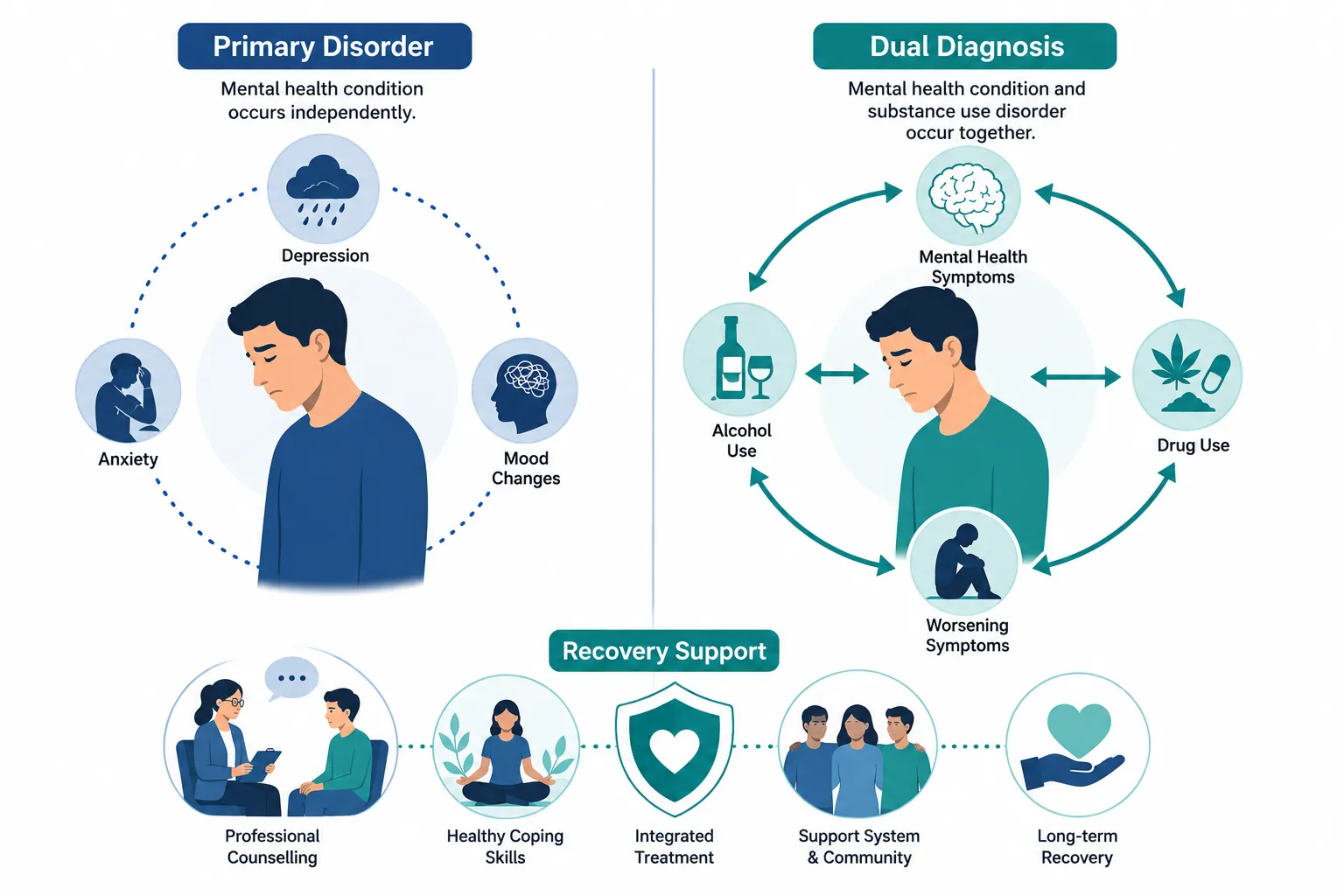
A primary mental health disorder is a psychological condition that develops independently of substance use. The symptoms are not caused by alcohol, drugs, medication misuse, or withdrawal effects. Instead, these disorders arise from a combination of biological, genetic, psychological, social, and environmental influences.
Primary mental health disorders can affect people of all ages and backgrounds. They may develop gradually over time or emerge following significant life events such as trauma, loss, chronic stress, or major life changes. While substance misuse may sometimes occur alongside these disorders, it is not the direct cause of the condition.
Understanding the Development of Primary Mental Health Disorders
Mental health disorders rarely result from a single cause. Instead, they are usually influenced by multiple interacting factors.
Biological Factors
Biological influences involve changes in brain structure, brain chemistry, and neurological functioning.
Examples include:
- Imbalances in neurotransmitters such as serotonin and dopamine.
- Genetic predisposition to mental illness.
- Hormonal changes affecting mood regulation.
- Neurological conditions affecting cognitive functioning.
Psychological Factors
Psychological influences relate to an individual’s thoughts, emotions, personality traits, and coping mechanisms.
Examples include:
- Low self-esteem.
- Chronic stress.
- Negative thinking patterns.
- Poor emotional regulation skills.
- Unresolved trauma.
Social and Environmental Factors
The environment in which a person lives can significantly influence mental wellbeing.
Examples include:
- Family conflict.
- Financial difficulties.
- Social isolation.
- Workplace stress.
- Exposure to abuse or neglect.
The interaction of these factors contributes to the development and progression of many mental health disorders.
Key Characteristics of Primary Mental Health Disorders
Primary mental health disorders share several common characteristics.
Symptoms Appear Independently of Substance Use
The symptoms exist regardless of whether the individual uses alcohol or drugs. The condition would still be present even if substance use stopped completely.
Long-Term or Recurring Nature
Many primary mental health disorders are chronic or recurrent conditions. Symptoms may improve with treatment but can return during periods of stress or vulnerability.
Not Linked to Intoxication or Withdrawal
Symptoms are not directly caused by the effects of substance intoxication or withdrawal.
Multiple Contributing Factors
These disorders often result from a combination of genetic, biological, psychological, and environmental influences rather than a single identifiable cause.
Common Examples of Primary Mental Health Disorders
Major Depressive Disorder
A mood disorder characterised by persistent sadness, hopelessness, loss of interest in activities, and reduced energy levels.
Common symptoms include:
- Persistent low mood.
- Fatigue.
- Sleep disturbances.
- Appetite changes.
- Feelings of worthlessness.
Generalised Anxiety Disorder (GAD)
A condition involving excessive and uncontrollable worry about everyday situations.
Common symptoms include:
- Constant nervousness.
- Difficulty relaxing.
- Muscle tension.
- Restlessness.
- Difficulty concentrating.
Bipolar Disorder
A mood disorder involving alternating episodes of depression and mania.
Characteristics include:
- Extreme mood swings.
- Periods of excessive energy.
- Reduced need for sleep.
- Impulsive behaviour.
- Depressive episodes.
Schizophrenia
A severe mental health disorder affecting perception, thinking, and behaviour.
Symptoms may include:
- Hallucinations.
- Delusions.
- Disorganised thinking.
- Social withdrawal.
- Reduced emotional expression.
Treatment Approaches for Primary Mental Health Disorders
Treatment generally focuses on addressing the mental health condition itself.
Common interventions include:
- Psychological therapies.
- Cognitive Behavioural Therapy (CBT).
- Counselling.
- Psychiatric medication.
- Psychoeducation.
- Support groups.
- Lifestyle modifications.
Treatment plans are often tailored to the individual’s symptoms, needs, and recovery goals.
2. Co-occurring Mental Health and Substance Use Disorders (Dual Diagnosis)
A co-occurring disorder, also known as dual diagnosis, occurs when an individual experiences both a mental health disorder and a substance use disorder at the same time. These conditions interact with one another and often create more severe challenges than either condition would produce independently.
The relationship between mental health disorders and substance misuse is complex. Mental health symptoms may increase the likelihood of substance use, while substance use may worsen existing psychological difficulties.
Understanding Dual Diagnosis
Many individuals with mental health disorders use substances as a way of coping with emotional distress. This behaviour is often referred to as self-medication.
Examples include:
- Using alcohol to reduce anxiety.
- Taking drugs to escape depressive feelings.
- Using sedatives to improve sleep.
- Using stimulants to increase energy and motivation.
Although substances may provide temporary relief, they often worsen mental health symptoms over time and contribute to dependency.
Key Characteristics of Co-occurring Disorders
Mental Health Symptoms Worsen with Substance Use
Substance use frequently intensifies existing psychological symptoms.
Examples include:
- Increased depression following alcohol misuse.
- Heightened anxiety after stimulant use.
- More severe psychotic symptoms during drug use.
Self-Medication Behaviour
Individuals may rely on substances to manage emotional pain, trauma, anxiety, or depression.
Overlapping Symptoms
Symptoms of mental illness and substance misuse often resemble one another, making diagnosis more challenging.
Examples include:
- Mood swings.
- Sleep disturbances.
- Irritability.
- Concentration difficulties.
- Social withdrawal.
Higher Risk of Relapse
People experiencing dual diagnosis often face greater challenges during recovery because each condition can trigger the other.
Common Patterns of Co-occurring Disorders
Anxiety and Alcohol Misuse
Individuals experiencing anxiety may use alcohol to reduce nervousness or social discomfort.
Long-term consequences include:
- Increased anxiety symptoms.
- Alcohol dependency.
- Reduced coping ability.
Depression and Drug Dependency
People experiencing depression may use drugs to escape emotional distress.
This often leads to:
- Worsening depressive symptoms.
- Increased isolation.
- Dependency and addiction.
Psychosis and Stimulant Misuse
Certain stimulants can worsen psychotic symptoms or trigger psychotic episodes.
Possible effects include:
- Hallucinations.
- Delusions.
- Increased paranoia.
PTSD and Substance Abuse
Individuals affected by trauma may use substances to avoid distressing memories or emotional pain.
This often interferes with trauma recovery and increases dependency risks.
Why Co-occurring Disorders Are More Complex
Co-occurring disorders require careful assessment because both conditions influence one another.
Challenges include:
- More severe symptoms.
- Greater risk of self-harm.
- Increased hospitalisation rates.
- Difficulty maintaining treatment engagement.
- Higher relapse rates.
- Reduced social and occupational functioning.
As a result, integrated treatment approaches are considered best practice.
3 Key Differences Between Primary and Co-occurring Disorders
Understanding the differences between primary mental health disorders and co-occurring disorders helps professionals develop appropriate treatment plans.
Comparison of Primary and Co-occurring Disorders
| Feature | Primary Mental Health Disorder | Co-occurring Disorder |
|---|---|---|
| Cause | Independent psychological condition | Mental illness combined with substance use |
| Substance Use | Not required for diagnosis | Substance use disorder always present |
| Symptom Source | Psychological, biological, social factors | Combination of mental illness and substance effects |
| Diagnostic Complexity | Moderate | High |
| Treatment Focus | Therapy, medication, psychological support | Integrated treatment for both conditions |
| Risk of Relapse | Lower when treated effectively | Higher due to interaction of both conditions |
| Recovery Process | Often more straightforward | More complex and long-term |
Major Differences Explained
Source of Symptoms
Primary disorders originate from mental health-related factors, whereas co-occurring disorders involve both psychological difficulties and substance misuse.
Complexity of Diagnosis
Dual diagnosis cases require more extensive assessment because professionals must determine how much of the symptom presentation is related to mental illness and how much is related to substance use.
Treatment Requirements
Primary mental health disorders may be treated successfully through therapy and medication alone. Co-occurring disorders require simultaneous treatment of both mental health and substance misuse issues.
4. Importance of Accurate Diagnosis
Why Accurate Diagnosis Matters
Accurate diagnosis is one of the most important aspects of effective mental health care. Without a clear understanding of the individual’s condition, treatment interventions may fail to address the underlying causes of distress.
Ensures the Correct Treatment Approach
Different conditions require different treatment strategies.
Accurate diagnosis helps professionals:
- Select appropriate therapies.
- Prescribe suitable medications.
- Develop personalised recovery plans.
- Provide effective support services.
Prevents Misdiagnosis
Because many symptoms overlap, individuals may sometimes receive incorrect diagnoses.
For example:
- Anxiety caused by substance withdrawal may be mistaken for an anxiety disorder.
- Drug-induced psychosis may resemble schizophrenia.
- Alcohol-related depression may appear similar to major depressive disorder.
Accurate assessment helps avoid these errors.
Improves Recovery Outcomes
When both mental health disorders and substance use disorders are correctly identified, individuals are more likely to receive comprehensive treatment.
Benefits include:
- Better symptom management.
- Improved quality of life.
- Stronger coping skills.
- Enhanced social functioning.
- Increased treatment success.
Reduces the Risk of Relapse
Integrated treatment programmes address both conditions simultaneously, reducing the likelihood that one disorder will trigger a relapse in the other.
Effective diagnosis supports:
- Long-term recovery.
- Improved stability.
- Reduced hospital admissions.
- Greater independence.
Differentiating between primary mental health disorders and co-occurring conditions is a fundamental aspect of effective mental health practice. Primary mental health disorders develop independently and are influenced by a combination of biological, psychological, and environmental factors. In contrast, co-occurring disorders involve the simultaneous presence of a mental health disorder and a substance use disorder, creating additional challenges for diagnosis and treatment.
Understanding these distinctions enables healthcare professionals to provide accurate assessments, develop appropriate treatment plans, and deliver person-centred support. Accurate diagnosis not only improves treatment effectiveness but also reduces relapse risk, enhances recovery outcomes, and promotes long-term mental wellbeing. By recognising the complex relationship between mental health and substance use, professionals can better support individuals on their journey towards recovery and improved quality of life.
Conclusion
Understanding the difference between primary mental health disorders and co-occurring conditions is essential for effective mental health assessment and care. Primary mental health disorders develop independently and are influenced by a combination of biological, psychological, and environmental factors. In contrast, co-occurring conditions involve the presence of both a mental health disorder and a substance use disorder, creating more complex challenges for diagnosis, treatment, and recovery. Recognising the characteristics of each condition helps healthcare professionals and support workers identify the underlying causes of symptoms and provide appropriate interventions.
Accurate diagnosis plays a crucial role in improving treatment outcomes and supporting long-term wellbeing. By distinguishing between primary mental health disorders and dual diagnosis conditions, professionals can develop personalised treatment plans that address all aspects of an individual’s needs. Early identification, integrated care approaches, and ongoing support can reduce the risk of relapse, enhance recovery outcomes, and improve overall quality of life. Ultimately, a thorough understanding of these conditions enables more effective care and supports individuals in achieving lasting mental health stability and recovery.