
Lesson 3: Public Health Perspective
The public health perspective on addiction focuses on understanding substance use as a significant health concern that affects not only individuals but also families, communities, and entire populations. It highlights that addiction is not limited to personal behaviour alone; rather, it is a complex health issue influenced by biological, psychological, social, and environmental factors. From this viewpoint, addiction contributes to wider challenges such as the spread of diseases, increased mental health disorders, and greater pressure on healthcare systems.
In addition, addiction has a major impact on public health resources, including hospitals, rehabilitation centres, and emergency services, which often become overburdened due to substance-related cases. It also affects community well-being by increasing crime rates, reducing productivity, and weakening social stability. Therefore, addressing addiction requires more than individual treatment; it demands coordinated efforts involving prevention strategies, healthcare services, and public policies. This lesson explores how addiction influences public health and examines harm reduction strategies that aim to minimize risks, reduce harm, and improve overall community health outcomes.
1. Public Health Implications of Addiction
Understanding Public Health Implications
Public health implications refer to the wider effects of addiction on population health, healthcare systems, and community well-being. Unlike individual-level impacts, public health focuses on how addiction affects entire societies through increased disease burden, healthcare demand, and social disruption.
Addiction creates both direct health consequences (such as illness and overdose) and indirect consequences (such as poverty, crime, and reduced healthcare access). These combined effects place significant pressure on national health systems and reduce overall quality of life in communities.
1. Impact on Physical Health
Addiction has severe and long-lasting consequences on physical health at both individual and population levels. Continuous substance use gradually damages vital organs, disrupts normal body functioning, and increases the risk of life-threatening medical conditions. Over time, the body becomes weaker, less resistant to disease, and more dependent on medical intervention for survival.
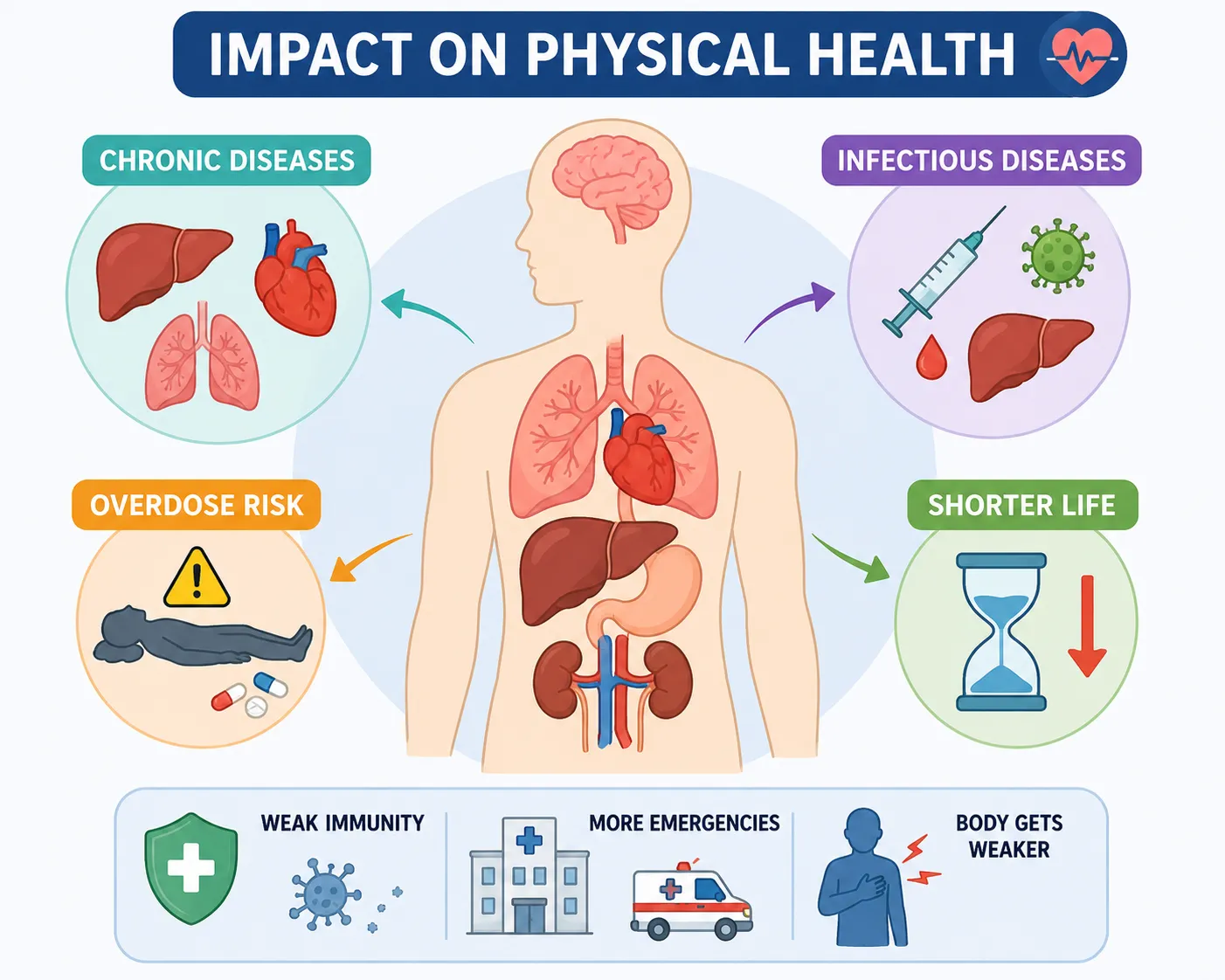
Key Effects of Addiction on Physical Health
1. Increase in Chronic Diseases
Overview
Long-term substance use significantly increases the risk of developing chronic and irreversible diseases that affect major organs of the body.
Key Conditions
Liver Diseases
- Development of liver inflammation and cirrhosis
- Reduced liver function due to toxic substance buildup
- Increased risk of liver failure in severe cases
Heart Diseases
- High blood pressure (hypertension)
- Irregular heart rhythms
- Increased risk of heart attacks and heart failure
- Weakening of cardiovascular system over time
Lung Disorders
- Chronic bronchitis and breathing difficulties
- Lung damage due to smoking or inhaled substances
- Reduced oxygen supply to the body
- Long-term respiratory complications
General Organ Damage
- Progressive deterioration of kidney function
- Damage to digestive system
- Reduced ability of organs to repair themselves
- Overall decline in physical performance and energy levels
2. Higher Rates of Infectious Diseases
Overview
Addiction increases the risk of infectious diseases, especially in cases involving unsafe practices such as needle sharing or unprotected exposure.
Key Infections
Blood-Borne Diseases
- HIV transmission through shared needles
- Hepatitis B and Hepatitis C infections
- Increased risk in high-risk populations
Other Infectious Conditions
- Skin infections due to poor hygiene
- Respiratory infections due to weakened immunity
- Increased vulnerability to common diseases
Contributing Factors
- Unsafe injection practices
- Lack of awareness about hygiene
- Reduced access to healthcare services
- Poor living conditions among addicted individuals
3 Increased Risk of Overdose and Death
Overview
One of the most serious physical health risks of addiction is overdose, which can lead to sudden death if not treated immediately.
Key Risks
Accidental Overdose
- Taking higher doses than the body can handle
- Misjudging strength or purity of substances
- Mixing drugs or alcohol unintentionally
Polysubstance Use
- Combining multiple substances increases toxicity
- Higher risk of respiratory failure
- Greater chance of cardiac arrest
Lack of Medical Supervision
- No monitoring during substance use
- Delayed emergency response
- Increased mortality rates in emergencies
4 Reduced Life Expectancy
Overview
Long-term addiction significantly reduces life expectancy due to cumulative physical damage and increased risk of fatal diseases.
Key Consequences
- Early onset of chronic illnesses
- Long-term organ failure
- Increased risk of fatal accidents and overdose
- Poor recovery from infections and diseases
- Overall decline in quality and length of life
Explanation of Physical Impact
Addiction affects the body through continuous chemical and biological changes that weaken overall health.
Key Processes
- Toxic substances damage vital organs over time
- The immune system becomes weaker and less effective
- The body loses its natural ability to heal and recover
- Repeated substance use creates long-term physical dependency
- Hospitals face increased emergency cases due to addiction-related complications
The physical impact of addiction is severe, progressive, and often irreversible. It affects almost every major organ system, increases vulnerability to disease, and significantly reduces life expectancy. Without early intervention and treatment, these health effects become more serious over time, leading to long-term disability or death.
2. Impact on Mental Health
Addiction has a strong and complex relationship with mental health. It affects how a person thinks, feels, and behaves by disrupting emotional balance, cognitive functioning, and behavioural control. Over time, substance use can worsen existing mental health conditions or even trigger new psychological disorders. This makes mental health support an essential part of addiction treatment and recovery.
Key Effects of Addiction on Mental Health
1. Rise in Depression and Anxiety 
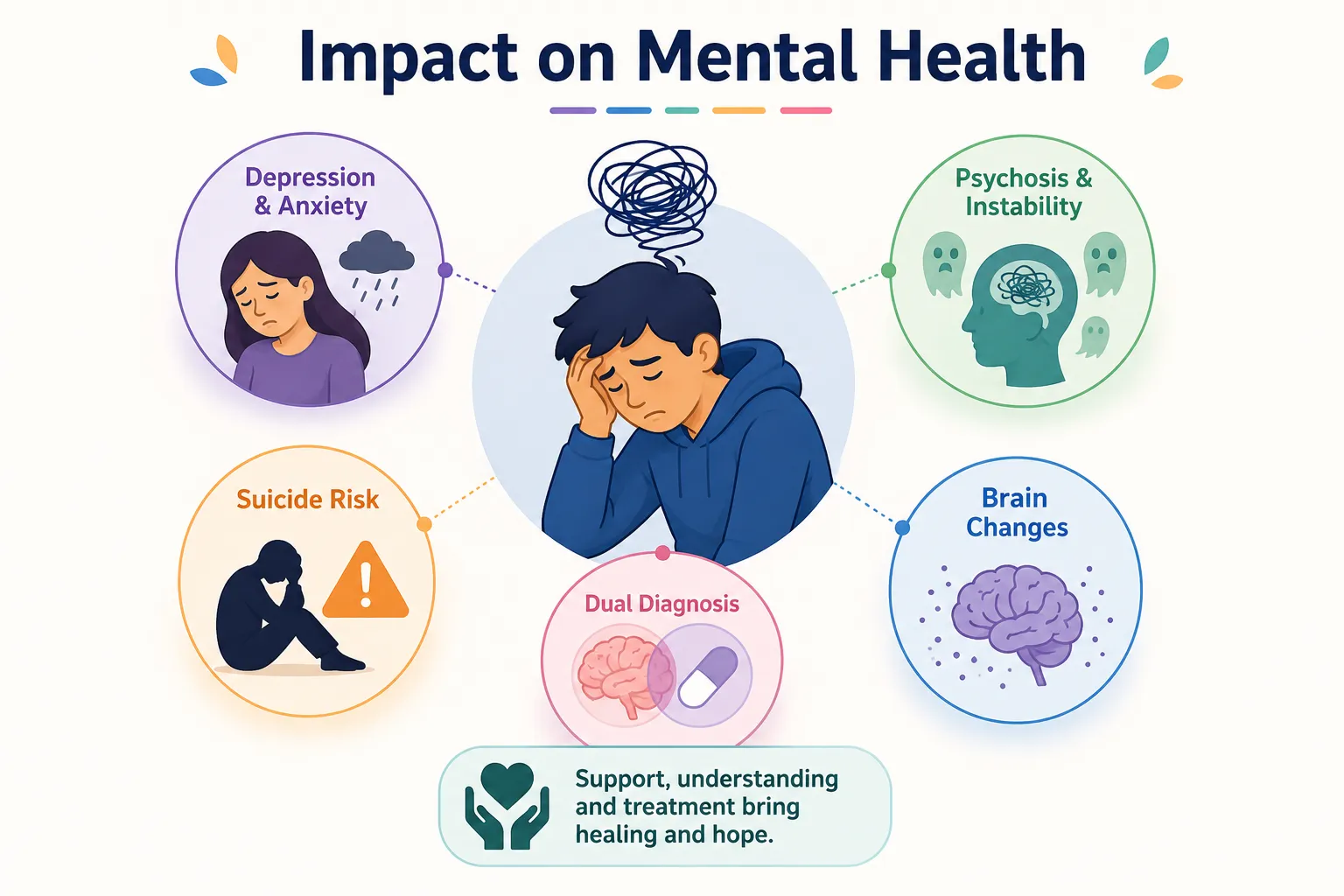
Overview
One of the most common mental health effects of addiction is the development or worsening of depression and anxiety disorders.
Key Symptoms
Persistent Sadness and Hopelessness
- Continuous feelings of sadness
- Loss of interest in daily activities
- Emotional emptiness and low motivation
Chronic Stress and Panic Disorders
- Constant worry and fear
- Panic attacks in severe cases
- Feeling overwhelmed by daily life situations
Emotional Instability in Daily Life
- Sudden mood changes
- Difficulty managing emotions
- Irritability and frustration
2. Psychosis and Emotional Instability
Overview
In severe cases, addiction can lead to psychotic symptoms that affect perception and thinking.
Key Effects
Hallucinations
- Seeing or hearing things that are not real
- Distorted perception of reality
Confused Thinking and Behaviour
- Difficulty understanding situations clearly
- Disorganised thoughts
- Poor judgment and decision-making
Mood Swings and Unpredictability
- Sudden emotional changes
- Aggressive or withdrawn behaviour
- Difficulty maintaining stable relationships
3. Increased Suicide Risk
Overview
Addiction significantly increases the risk of self-harm and suicidal thoughts due to emotional distress and hopelessness.
Key Risks
Self-Harm Behaviour
- Intentional harm to oneself
- Risk-taking and dangerous actions
Suicidal Thoughts
- Feeling life has no meaning
- Persistent thoughts of death or escape from problems
Lack of Support
- Isolation increases emotional suffering
- Absence of family or social support worsens risk
4. Co-occurring Disorders (Dual Diagnosis)
Overview
Many individuals with addiction also suffer from mental health disorders at the same time. This is known as dual diagnosis.
Key Conditions
Addiction with Depression
- Substance use worsens depressive symptoms
- Emotional dependence on drugs or alcohol
Addiction with Anxiety Disorders
- Increased panic and fear symptoms
- Substances used as temporary relief
Multiple Mental Health Disorders
- Combination of emotional and behavioural issues
- Complex treatment needs
Explanation
- Addiction changes brain chemistry, especially dopamine and reward systems
- Mental health disorders and substance use often reinforce each other
- This creates a cycle where each condition worsens the other
- Dual diagnosis requires specialised medical treatment, counselling, and long-term care
Addiction has severe effects on mental health, including depression, anxiety, psychosis, emotional instability, and increased suicide risk. It also commonly co-exists with other mental health disorders, making recovery more complex. Effective treatment must address both addiction and mental health together to ensure long-term recovery and stability.
3. Impact on Healthcare Systems
Addiction places a significant burden on healthcare systems due to the increasing number of patients requiring emergency treatment, long-term care, rehabilitation services, and mental health support. As substance use disorders grow, healthcare facilities face continuous pressure on resources, staff, and infrastructure. This reduces the system’s ability to provide timely and effective care for all patients.
Key Effects on Healthcare Systems
1. Overcrowded Hospitals 
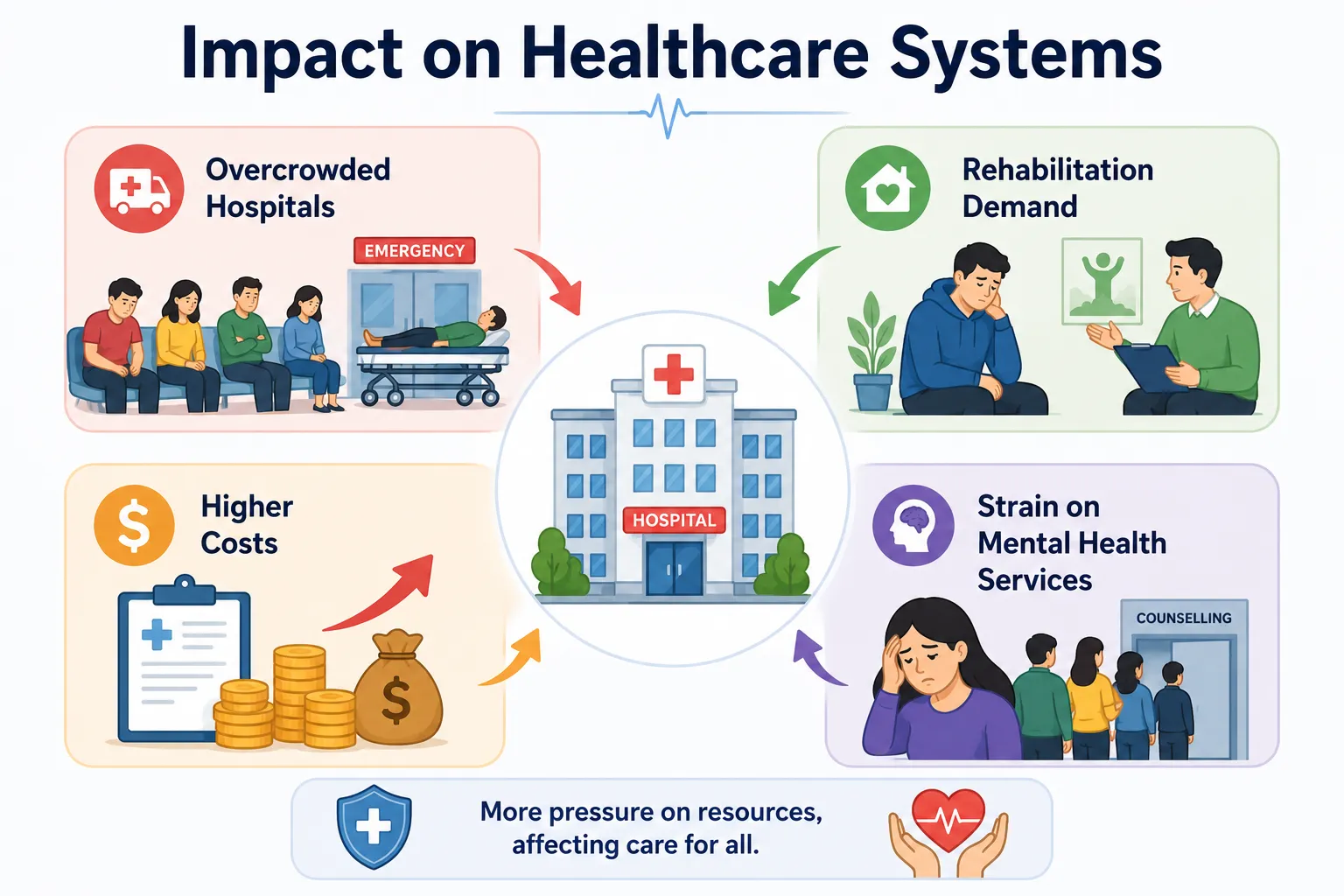
Hospitals experience increased patient load due to addiction-related emergencies and complications.
Key Issues
Increased Emergency Admissions
- Rise in overdose cases requiring immediate medical attention
- Frequent emergency visits due to substance-related injuries
- Continuous intake of critical patients
Overloaded Emergency Departments
- Long waiting times for treatment
- Pressure on doctors, nurses, and emergency staff
- Reduced efficiency in emergency care
Limited Resources for Other Patients
- Beds and equipment occupied by addiction cases
- Delays in treating non-addiction patients
- Reduced quality of healthcare delivery
2. Increased Demand for Rehabilitation Centres
Overview
Addiction increases the need for structured treatment and recovery services.
Key Requirements
Detoxification Programs
- Medical supervision during withdrawal
- Safe removal of substances from the body
- Management of withdrawal symptoms
Long-Term Recovery Services
- Inpatient and outpatient rehabilitation programs
- Continuous monitoring and follow-up care
- Relapse prevention strategies
Counselling and Therapy Support
- Psychological counselling sessions
- Behavioural therapy programs
- Emotional and mental health support
3.Higher Healthcare Costs
Overview
The financial burden on healthcare systems increases significantly due to long-term addiction treatment.
Key Issues
Increased Government Spending
- More funds required for treatment programs
- Expansion of healthcare facilities
- Investment in mental health services
Expensive Long-Term Treatment
- Chronic care for addiction-related diseases
- Repeated hospital admissions
- Costly rehabilitation programs
Pressure on Insurance Systems
- Increased claims related to addiction treatment
- Rising healthcare insurance costs
- Financial strain on public health systems
4. Strain on Mental Health Services
Overview
Addiction significantly increases demand for mental health professionals and services.
Key Issues
Increased Demand for Specialists
- More need for psychiatrists and psychologists
- Higher patient load for counsellors
Long Waiting Lists
- Delays in receiving mental health treatment
- Overburdened psychiatric services
Limited Access to Care
- Shortage of mental health professionals
- Reduced availability in rural and underserved areas
Explanation
Addiction-related health emergencies require immediate and continuous medical attention. At the same time, long-term rehabilitation and mental health treatment consume significant healthcare resources. As a result, other patients with non-addiction-related conditions may experience delays or reduced access to care, creating imbalance in healthcare service delivery.
Addiction creates a heavy burden on healthcare systems by increasing hospital admissions, raising treatment costs, and placing pressure on mental health services. It reduces the efficiency of healthcare delivery and limits resources available for other medical conditions, making it a major public health challenge.
4 Social and Community Health Impact
Overview
Addiction affects the social structure and stability of communities, leading to long-term social problems.
Key Effects
Increased Homelessness and Poverty
- Loss of employment leads to homelessness
- Financial instability increases vulnerability
- Families fall into poverty cycles
Spread of Infectious Diseases
- Unsafe practices increase disease transmission
- Lack of awareness worsens spread
- Community health risks increase
Family Breakdown
- Increased domestic conflict
- Divorce and separation cases rise
- Child neglect becomes more common
Reduced Community Safety
- Increased crime rates
- Unsafe public environments
- Reduced trust within communities
Explanation
- Addiction affects social behaviour and relationships
- Communities experience long-term instability
- Vulnerable groups such as children are highly affected
5. Economic and Public Burden
Addiction creates a major economic burden on society by reducing workforce productivity, increasing unemployment, and placing significant pressure on government resources. These combined effects slow down economic growth and reduce the overall financial stability of a country. Over time, addiction affects both individual earning capacity and national economic development.
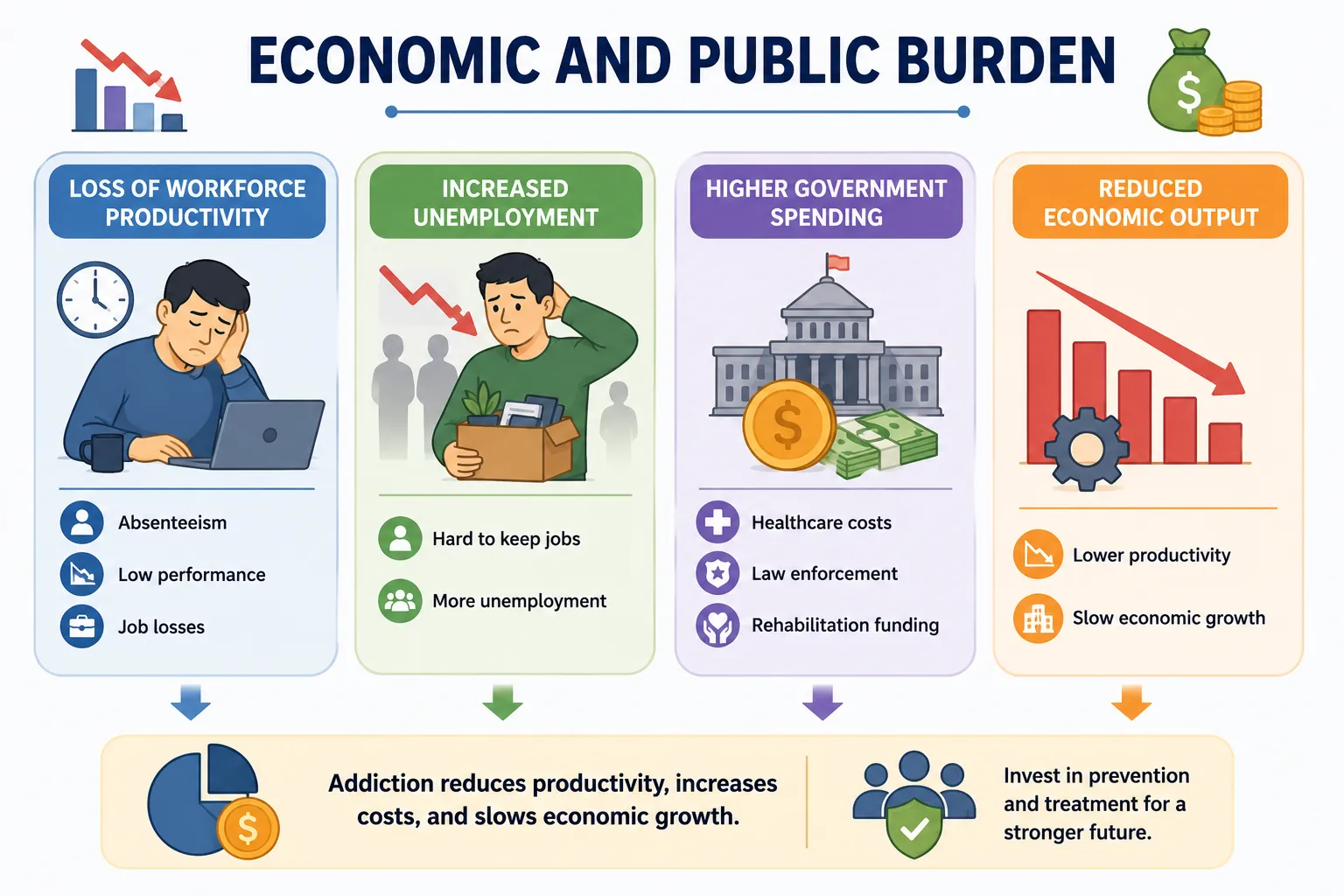
Key Effects of Addiction on Economic and Public Systems
1. Loss of Workforce Productivity
Addiction significantly reduces the ability of individuals to perform effectively in the workplace, leading to economic losses for businesses and industries.
Key Impacts
Absenteeism from Work
- Frequent absence due to health or personal issues
- Unreliable attendance patterns
- Reduced workplace consistency
Reduced Performance
- Poor concentration and decision-making
- Lower efficiency in completing tasks
- Increased workplace errors and accidents
Job Losses
- Termination due to poor performance
- Difficulty maintaining long-term employment
- Reduced career growth opportunities
2. Increased Unemployment Rates
Addiction contributes to rising unemployment rates by affecting employability and job stability.
Key Impacts
Difficulty Maintaining Employment
- Individuals struggle to meet job requirements
- Reduced professional reliability
- Loss of skills over time
Business Workforce Loss
- Employers lose trained and skilled workers
- Increased recruitment and training costs
- Reduced organisational productivity
Economic Instability
- Higher unemployment rates in affected communities
- Increased dependency on social welfare systems
- Reduced household income levels
3. Higher Government Spending
Governments face increased financial pressure due to addiction-related healthcare, law enforcement, and rehabilitation needs.
Key Impacts
Healthcare Costs Increase
- More emergency treatments and hospital admissions
- Long-term rehabilitation and mental health services
- Increased burden on public healthcare systems
Law Enforcement Expenses
- Increased crime-related policing costs
- Legal and judicial system pressure
- Rehabilitation programs within correctional systems
Rehabilitation Funding
- Government investment in recovery centres
- Community-based support programs
- Prevention and awareness campaigns
4. Reduced Economic Output
Addiction reduces overall national productivity and weakens economic growth over time.
Key Impacts
Lower National Productivity
- Reduced workforce participation
- Decreased output in key industries
- Loss of skilled labour
Reduced Business Efficiency
- Higher employee turnover
- Increased training and replacement costs
- Disruption in workplace operations
Slow Economic Growth
- Reduced investment opportunities
- Lower GDP contribution
- Long-term financial slowdown
Explanation
Addiction reduces participation in the workforce by affecting health, behaviour, and job stability. As a result, fewer individuals contribute productively to the economy. At the same time, public funds are increasingly redirected towards healthcare, rehabilitation, and law enforcement services. This creates a financial imbalance where resources that could support development are instead used to manage addiction-related problems.
Over time, these combined effects negatively impact national economic development, reducing overall productivity, increasing public expenditure, and slowing economic growth.
The economic and public burden of addiction is significant and far-reaching. It affects individuals, businesses, and governments by reducing productivity, increasing unemployment, and increasing public spending. Addressing addiction through prevention and treatment is essential for improving economic stability and long-term development.
Public Health Impact of Addiction
| Area | Key Impact | Outcome |
|---|---|---|
| Physical Health | Disease, overdose | Reduced life expectancy |
| Mental Health | Depression, anxiety | Psychological disorders |
| Healthcare System | High demand | Resource burden |
| Society | Crime, homelessness | Social instability |
Public health implications of addiction are wide-ranging and affect every level of society. Addiction contributes to physical illness, mental health disorders, healthcare system overload, social instability, and economic loss. Understanding these impacts is essential for developing effective prevention strategies, healthcare responses, and public policies that aim to reduce harm and improve community well-being
2. Harm Reduction Strategies and Their Effectiveness
Understanding Harm Reduction
Harm reduction refers to a set of practical strategies, policies, and public health approaches designed to reduce the negative health, social, and legal consequences associated with drug use. Unlike traditional approaches that focus only on complete abstinence, harm reduction accepts that some individuals may continue using substances and therefore aims to minimise harm and save lives.
This approach is widely used in public health systems to reduce overdose deaths, prevent disease transmission, and improve access to healthcare and treatment services.
1. Key Harm Reduction Strategies
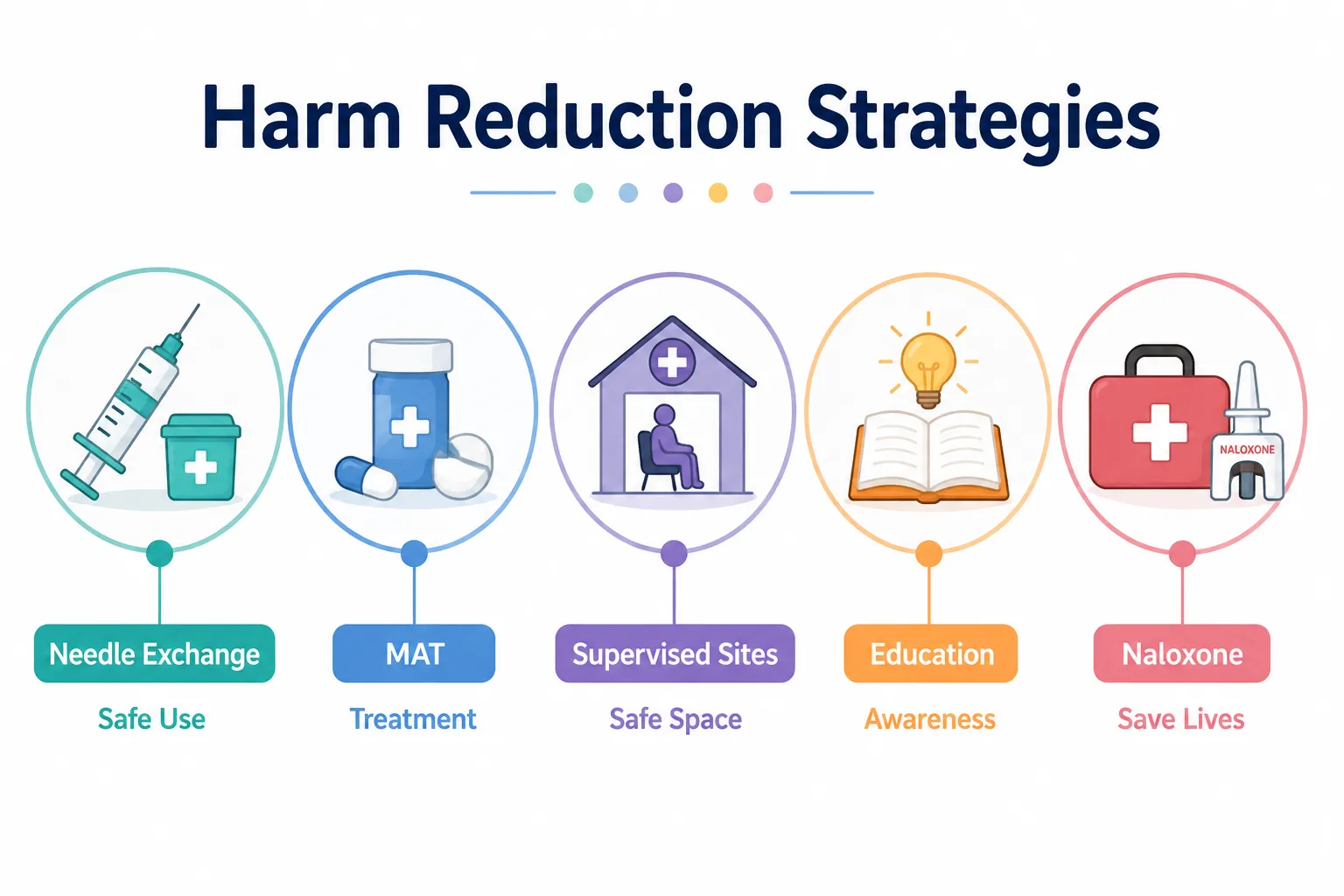
Harm reduction strategies are practical and evidence-based public health approaches designed to reduce the negative consequences of drug use. These strategies do not always require complete abstinence but instead focus on minimising harm, saving lives, and improving health outcomes. They are widely used in healthcare systems to support individuals who use substances while also protecting community health.
Needle Exchange Programs
Needle exchange programs are public health initiatives that provide clean, sterile needles and syringes to individuals who inject drugs. The main goal is to reduce health risks associated with unsafe injection practices.
Purpose
These programs are designed to:
- Reduce the spread of infectious diseases such as HIV and hepatitis
- Encourage safer and more hygienic injection practices
- Provide an entry point into healthcare and treatment services
- Promote awareness about safe substance use practices
Explanation
Needle exchange programs are based on the principle that preventing harm is more effective than ignoring the issue of drug use. Sharing contaminated needles is one of the leading causes of blood-borne infections. By providing sterile equipment, these programs significantly reduce health risks and also create an opportunity for healthcare professionals to engage with individuals who may otherwise avoid medical services.
Effectiveness
Health Benefits
- Major reduction in HIV transmission rates
- Lower incidence of Hepatitis B and Hepatitis C
- Decreased spread of blood-borne infections in communities
- Improved overall public hygiene and safety
Social Benefits
- Builds trust between healthcare workers and drug users
- Encourages individuals to seek medical help
- Provides education on safer behaviours
- Strengthens connection to rehabilitation services
Medication-Assisted Treatment (MAT)
Medication-Assisted Treatment (MAT) is a clinical approach that combines approved medications with counselling and behavioural therapies to treat substance use disorders, especially opioid addiction.
Examples
- Methadone
- Buprenorphine
Explanation
MAT works by stabilising brain chemistry affected by addiction. It reduces withdrawal symptoms and cravings, making it easier for individuals to focus on recovery. This method is widely recognised as one of the most effective treatments for opioid dependence when combined with psychological support.
Effectiveness
Clinical Benefits
- Reduces intense cravings for substances
- Minimises withdrawal symptoms
- Stabilises neurological functioning
- Improves long-term recovery outcomes
Recovery Benefits
- Reduces relapse risk significantly
- Supports continuous treatment adherence
- Improves emotional stability and daily functioning
- Enhances overall quality of life
Supervised Consumption Sites
Supervised consumption sites are controlled medical environments where individuals can use drugs under the supervision of trained healthcare professionals.
Explanation
These facilities aim to reduce immediate harm caused by drug use. Medical staff are present to monitor individuals, prevent overdoses, and provide emergency care if needed. They also serve as a bridge between drug users and treatment services.
Effectiveness
Safety Benefits
- Prevents fatal overdose cases
- Provides immediate medical intervention
- Reduces unsafe drug use in public places
- Improves emergency response time
Healthcare Benefits
- Connects users with rehabilitation and treatment programs
- Encourages entry into recovery services
- Reduces pressure on emergency hospital departments
- Improves overall community safety
Education and Awareness Programs
Education and awareness programs aim to inform individuals and communities about the risks of drug use, addiction, and safe behavioural practices.
Explanation
Education plays a vital role in prevention and early intervention. When people are aware of the dangers of substance misuse, they are more likely to make informed decisions. These programs also help reduce stigma and misinformation surrounding addiction.
Effectiveness
Knowledge Improvement
- Increases understanding of drug-related risks
- Corrects myths and misconceptions
- Promotes informed decision-making
- Reduces stigma in society
Behavioural Impact
- Encourages safer lifestyle choices
- Reduces risky substance use behaviour
- Promotes early help-seeking behaviour
- Strengthens community awareness and prevention
Naloxone Distribution
Naloxone distribution programs provide access to Naloxone, a life-saving medication used to reverse opioid overdoses quickly and effectively.
Explanation
Naloxone works by blocking the effects of opioids in the brain and restoring normal breathing in individuals experiencing an overdose. It is considered an essential emergency medication in addiction response systems.
Effectiveness
Emergency Benefits
- Rapidly reverses opioid overdose effects
- Saves lives in critical situations
- Can be administered by trained non-medical individuals
- Works quickly in emergency situations
Public Health Benefits
- Reduces opioid-related death rates
- Improves survival chances during overdose events
- Strengthens emergency medical response systems
- Supports community-level overdose prevention strategies
Harm reduction strategies such as needle exchange programs, MAT, supervised consumption sites, education initiatives, and naloxone distribution play a crucial role in modern public health systems. They reduce harm, save lives, and improve access to healthcare services, making them an essential part of addiction management and prevention strategies.
2. Effectiveness of Harm Reduction Strategies
Harm reduction strategies are widely used in public health systems to reduce the negative consequences of drug use. These approaches focus on saving lives, reducing health risks, and improving safety, rather than requiring immediate abstinence. Over time, research has shown that harm reduction is one of the most effective ways to manage substance-related harm at both individual and community levels.
Positive Outcomes of Harm Reduction Strategies
Harm reduction strategies have demonstrated strong effectiveness in improving health outcomes, reducing mortality rates, and increasing access to essential healthcare services. They help individuals who use drugs stay safer while gradually connecting them to treatment and recovery support.
Key Positive Outcomes
Reduction in Overdose Deaths
- Significant decrease in fatal overdose cases
- Early emergency intervention saves lives
- Availability of life-saving medications improves survival rates
- Safer environments reduce accidental deaths
Lower Transmission of Infectious Diseases
- Reduced spread of HIV among injecting drug users
- Lower rates of Hepatitis B and Hepatitis C infections
- Safer injection practices reduce community-level disease risk
- Improved hygiene awareness reduces infection spread
Increased Access to Healthcare Services
- More individuals engage with healthcare providers
- Early identification of health problems
- Increased referrals to treatment and rehabilitation
- Improved trust between users and healthcare systems
Improved Public Safety and Awareness
- Reduced drug-related harm in public spaces
- Better awareness of safe practices in communities
- Fewer emergency incidents in public areas
- Increased education on substance-related risks
Limitations of Harm Reduction
Although highly effective, harm reduction strategies also face certain limitations and challenges that can affect their implementation and acceptance in society.
Key Challenges
Does Not Eliminate Drug Use
- Focuses on reducing harm rather than stopping drug use completely
- Some individuals may continue substance use long-term
- Does not directly address root causes of addiction in all cases
Requires Strong Support Systems
- Needs consistent government funding
- Requires trained healthcare professionals and facilities
- Depends on strong public health infrastructure
- May be limited in low-resource areas
Social and Moral Criticism
- Some communities misunderstand harm reduction approaches
- Seen by some as encouraging drug use (misconception)
- Cultural or moral opposition may limit acceptance
- Public awareness is needed to improve understanding
Overall Evaluation
Harm reduction is widely recognised as an effective and evidence-based public health approach. It prioritises saving lives, reducing harm, and improving health outcomes rather than demanding immediate abstinence. While it does not eliminate addiction completely, it plays a critical role in reducing overdose deaths, preventing disease spread, and improving access to healthcare services.
Harm reduction becomes even more effective when combined with rehabilitation programs, counselling services, and long-term recovery support systems. Together, these approaches provide a complete framework for managing addiction at both individual and societal levels.
Harm Reduction Strategies and Their Impact
| Strategy | Purpose | Effectiveness |
|---|---|---|
| Needle Exchange | Reduce infections | High |
| Medication-Assisted Treatment (MAT) | Manage addiction | High |
| Supervised Consumption Sites | Prevent overdose | Very High |
| Education Programs | Awareness and prevention | Medium–High |
| Naloxone Distribution | Reverse overdose | Very High |
Harm reduction strategies are an essential component of modern public health responses to addiction. They focus on reducing immediate harm, preventing deaths, and improving overall community health. When integrated with treatment and rehabilitation programs, these strategies create safer environments and support long-term recovery outcomes for individuals affected by substance use
Conclusion
From a public health perspective, addiction represents a major health and social challenge that impacts physical health, mental well-being, healthcare systems, and overall community stability. It increases the burden on medical services and reduces the quality of life at both individual and population levels.
Harm reduction strategies provide an essential approach to addressing these challenges by focusing on reducing risks and preventing harm. Although they do not completely stop substance use, they are highly effective in saving lives, lowering health risks, and improving access to healthcare and support services. Together, public health interventions and harm reduction approaches play a vital role in managing addiction and promoting healthier, safer communities.