
Lesson 1: Understanding Addiction
Addiction is a complex and long-term condition that affects an individual’s brain, behaviour, emotions, and overall quality of life. It is medically recognised as a disorder rather than a simple lack of willpower or moral weakness. Addiction develops when repeated exposure to a substance or behaviour begins to alter the brain’s reward system, creating a strong desire or compulsion to continue despite harmful consequences.
Over time, individuals may lose control over their use, experiencing cravings and withdrawal symptoms when the substance is not available. This cycle of dependence can impact decision-making, emotional stability, and physical health. Addiction is influenced by a combination of psychological, biological, and environmental factors, making it a highly complex condition to understand and treat.
This lesson provides a foundational introduction to addiction by exploring its definition, key characteristics, and the factors that contribute to its development. It also examines common substances of abuse such as alcohol, opioids, stimulants, cannabis, and nicotine, along with their effects on both the body and mind. By understanding these core concepts, learners will gain essential knowledge that supports further study in addiction treatment, mental health care, and recovery support services.
1. Definition of Addiction and Its Characteristics
Addiction is a serious and complex condition that affects how a person thinks, feels, and behaves. It is not a simple habit or a result of weak character. Instead, it is recognised by medical and psychological professionals as a chronic brain disorder that changes the way the brain’s reward system works. When a person becomes addicted to a substance or behaviour, they continue using it even when they clearly understand that it is causing harm to their health, relationships, or daily life.
Addiction can involve substances such as alcohol, drugs, or prescription medications, or it can involve behaviours such as gambling, gaming, or compulsive internet use. In both cases, the individual experiences a strong urge to repeat the activity because it produces temporary pleasure or relief.
Over time, addiction becomes more powerful and difficult to control. The brain begins to rely on the substance or behaviour, creating both psychological and physical dependence. This makes addiction a long-term condition that often requires professional treatment and support.
Definition of Addiction
Addiction is defined as a chronic, relapsing disorder characterised by compulsive engagement in rewarding stimuli despite harmful consequences.
To understand this definition more clearly, it is important to break it into key parts:
Chronic Condition
- “Chronic” means long-lasting or ongoing.
- Addiction does not develop overnight; it builds gradually over time.
- Even after treatment, there is always a risk of relapse, meaning the person may return to addictive behaviour.
Relapsing Disorder
- “Relapsing” means that symptoms can return after improvement.
- A person may stop using a substance for some time but later start again.
- Relapse is a common part of addiction recovery, not a failure.
Compulsive Engagement
- Compulsive behaviour means doing something repeatedly without control.
- The person feels forced or driven to continue using the substance or behaviour.
- Even when they want to stop, they struggle to do so.
Rewarding Stimuli
- These are substances or activities that activate the brain’s pleasure system.
- Examples include drugs, alcohol, gambling wins, or gaming achievements.
- The brain releases dopamine, a chemical linked to pleasure and reward.
Harmful Consequences
- Addiction continues even when it causes damage.
- These harms may include:
- Physical illness
- Mental health issues
- Relationship breakdown
- Financial problems
- Work or academic failure
Types of Addiction
Addiction is a broad and complex condition that can affect individuals in different ways. It is generally classified into two main categories: substance addiction and behavioural addiction. Although the nature of these addictions differs, both share similar psychological mechanisms, particularly the activation of the brain’s reward system, which leads to dependency and loss of control over time.
Substance Addiction
Substance addiction refers to a condition where an individual becomes physically and psychologically dependent on chemical substances that directly affect the brain and body. These substances alter mood, perception, and behaviour by interfering with normal brain chemistry, especially neurotransmitters such as dopamine, which is associated with pleasure and reward.
Over time, repeated use of these substances leads to tolerance, dependence, and withdrawal symptoms, making it increasingly difficult for the individual to stop using them without professional help or medical support.
Common Substances of Abuse
Alcohol
- Alcohol is one of the most widely abused substances globally.
- It acts as a depressant, slowing down brain activity and affecting coordination.
- Long-term use can lead to liver damage, heart problems, memory impairment, and severe dependence.
Opioids
(e.g., heroin, morphine, codeine, and prescription painkillers)
- Opioids are powerful pain-relieving drugs that create intense feelings of relaxation and euphoria.
- They carry a high risk of addiction due to their strong impact on the brain’s reward system.
- Long-term use may result in respiratory depression, overdose, and physical dependence.
Stimulants
(e.g., cocaine, amphetamines, methamphetamine)
- Stimulants increase alertness, energy, and heart rate by stimulating the central nervous system.
- They produce short-term feelings of confidence and excitement but can quickly lead to addiction.
- Prolonged use can cause anxiety, paranoia, heart damage, and severe psychological dependence.
Cannabis
- Cannabis affects perception, mood, and cognitive functioning.
- It may produce relaxation and altered sensory experiences.
- Heavy or prolonged use can impair memory, concentration, and motivation.
Nicotine
(found in tobacco products such as cigarettes and vapes)
- Nicotine is highly addictive and rapidly reaches the brain after use.
- It creates temporary feelings of relaxation and focus.
- Long-term use leads to lung disease, cardiovascular problems, and strong physical dependence.
Sedatives or Sleeping Pills
(e.g., benzodiazepines and barbiturates)
- These drugs are used medically to treat anxiety and sleep disorders.
- Misuse can cause drowsiness, impaired judgment, and slowed breathing.
- Long-term use increases the risk of dependence and withdrawal complications.
Behavioural Addiction
Behavioural addiction refers to compulsive engagement in certain activities that do not involve substance intake but still activate the brain’s reward system in a similar way. These behaviours become repetitive and difficult to control, often interfering with daily responsibilities, relationships, and mental well-being.
In behavioural addiction, the brain releases dopamine in response to activities that provide pleasure or relief, reinforcing the behaviour and making it increasingly habitual.
Common Forms of Behavioural Addiction
Behavioural addictions refer to compulsive engagement in rewarding activities that do not involve the use of substances but still activate the brain’s reward system in a similar way. Over time, these behaviours become repetitive, difficult to control, and harmful to an individual’s mental, emotional, social, and financial well-being. Below are the most common forms of behavioural addiction explained in detail.
Gambling Addiction
Gambling addiction, also known as compulsive gambling or gambling disorder, is a behavioural condition where an individual is unable to control the urge to gamble despite experiencing negative consequences.
Key Features
- Continuous betting on games of chance such as casinos, sports betting, lotteries, or online gambling platforms.
- Increasing risk-taking behaviour to achieve excitement or financial gain.
- Loss of control over time and money spent on gambling activities.
Behavioural Patterns
- Individuals often “chase losses,” meaning they continue gambling in an attempt to recover money already lost.
- They may lie to family members or hide their gambling activities.
- Gambling becomes the central focus of their life, replacing hobbies and responsibilities.
Impacts
- Severe financial debt and economic instability
- High levels of stress, anxiety, and guilt
- Breakdown of family relationships and trust
- Increased risk of depression and emotional distress
Gaming Addiction
Gaming addiction refers to excessive and compulsive use of video games, often at the expense of real-life responsibilities and social interactions.
Key Features
- Spending long hours playing video games without control.
- Prioritising gaming over education, work, or personal responsibilities.
- Feeling restless or irritated when unable to play.
Behavioural Patterns
- Loss of interest in studies, work, or physical activities
- Isolation from family and friends
- Disrupted sleep patterns due to late-night gaming sessions
- Emotional attachment to gaming achievements and virtual rewards
Impacts
- Poor academic or occupational performance
- Social withdrawal and loneliness
- Physical health issues such as eye strain, fatigue, and lack of exercise
- Reduced attention span and concentration difficulties
Internet or Social Media Addiction
Internet or social media addiction involves excessive and uncontrolled use of digital platforms such as social networking sites, video streaming services, and online browsing.
Key Features
- Constant need to check notifications, messages, or updates.
- Spending excessive time scrolling through social media feeds.
- Difficulty reducing screen time even when aware of negative effects.
Behavioural Patterns
- Anxiety or discomfort when not connected to the internet (often called “digital withdrawal”).
- Comparing oneself to others on social media, leading to low self-esteem.
- Neglect of real-life relationships and responsibilities.
- Reduced productivity in work or studies.
Impacts
- Poor concentration and reduced attention span
- Sleep disturbances due to late-night usage
- Increased feelings of loneliness or depression
- Weakening of face-to-face communication skills
Shopping Addiction (Compulsive Buying Disorder)
Shopping addiction is characterised by an uncontrollable urge to shop or make purchases, often without necessity or financial capability.
Key Features
- Repeated buying of items that are not needed.
- Shopping as a way to cope with stress, sadness, or boredom.
- Temporary emotional satisfaction followed by guilt or regret.
Behavioural Patterns
- Frequent online or in-store shopping without planning.
- Hiding purchases from family members or friends.
- Accumulation of unnecessary or unused items.
- Financial disorganisation and uncontrolled spending habits.
Impacts
- Accumulation of debt and financial hardship
- Emotional distress, guilt, and anxiety
- Relationship conflicts due to money issues
- Long-term financial instability
Food-Related Compulsive Behaviour
Food-related behavioural addiction involves a lack of control over eating habits, often driven by emotional or psychological triggers rather than physical hunger.
Key Features
- Eating large quantities of food in a short period (binge eating).
- Eating in response to emotions such as stress, sadness, or boredom.
- Difficulty controlling food intake even when full.
Behavioural Patterns
- Secret eating or hiding food consumption
- Frequent episodes of overeating followed by guilt
- Using food as a coping mechanism for emotional distress
- Irregular eating patterns and poor dietary habits
Impacts
- Weight gain and obesity
- Increased risk of diabetes, heart disease, and other health conditions
- Low self-esteem and body image issues
- Emotional distress and feelings of loss of control
Behavioural addictions may not involve substances, but they can be just as damaging as substance-related addictions. They influence the brain’s reward system, leading to compulsive behaviour, loss of control, and negative consequences in daily life. Understanding these forms of addiction is essential for early identification, prevention, and effective intervention strategies.
How Both Types of Addiction Affect the Brain
Although substance and behavioural addictions differ in their form, they both affect the brain in remarkably similar ways. The key mechanism involved is the brain’s reward system, particularly the release of dopamine.
Shared Brain Mechanisms
- Dopamine Release: Both types of addiction increase dopamine levels, creating feelings of pleasure and reward.
- Reinforcement Cycle: The brain learns to repeat behaviours that produce pleasure.
- Reduced Self-Control: Over time, the prefrontal cortex (responsible for decision-making) becomes less effective.
- Dependency Formation: The individual becomes reliant on the substance or behaviour for emotional or psychological relief.
Long-Term Impact on Behaviour
- Reduced ability to experience natural pleasure
- Increased compulsive behaviour patterns
- Emotional instability and mood disorders
- Difficulty in stopping or controlling the addictive behaviour
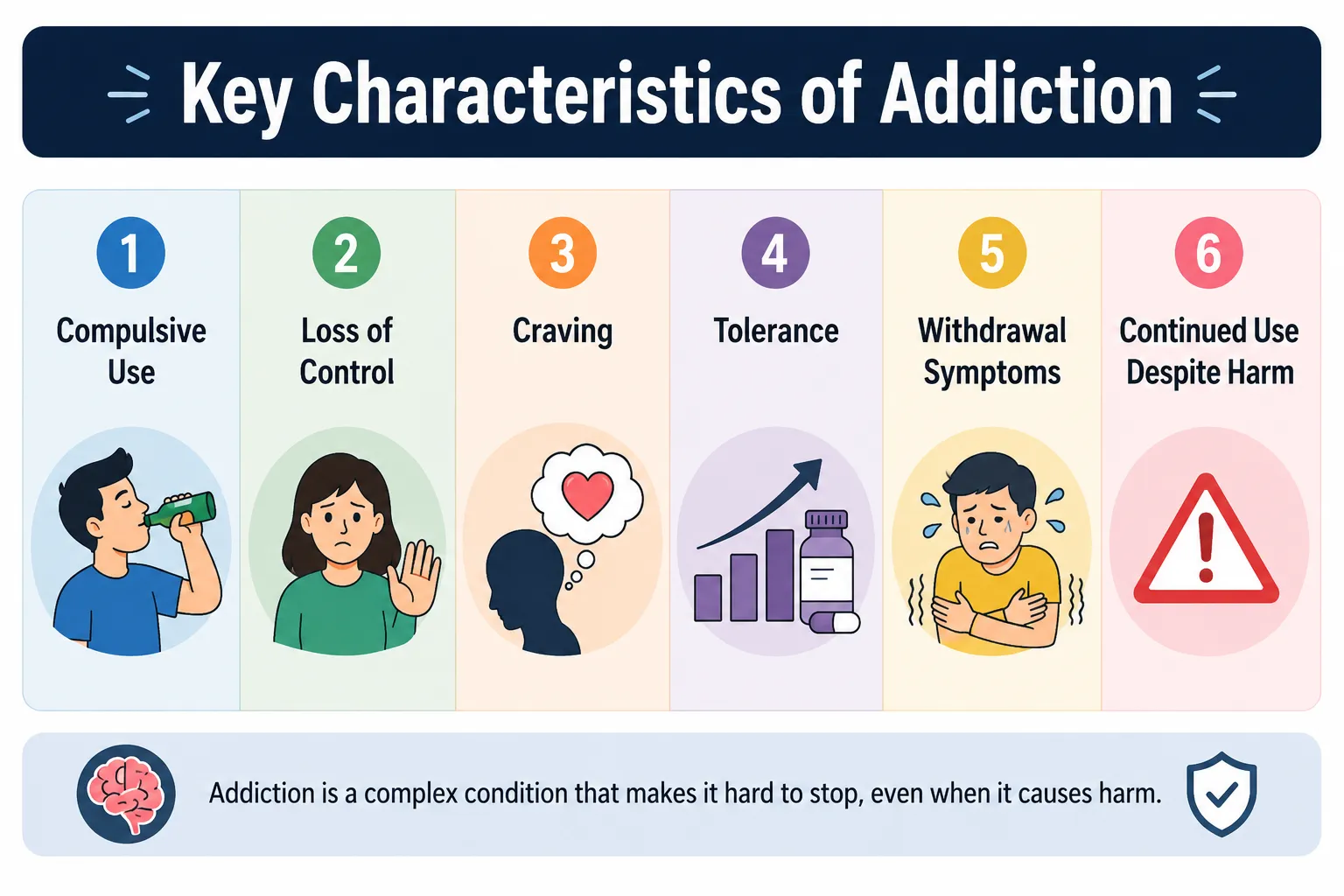
Key Characteristics of Addiction
Addiction presents itself through a range of behavioural, emotional, and physical signs that help professionals identify its presence and severity. These characteristics are often interlinked and become more severe as addiction progresses.
Behavioural Characteristics
- Repeated engagement in substance use or addictive behaviour
- Failure to reduce or stop usage despite repeated attempts
- Neglect of responsibilities at work, school, or home
- Secretive or deceptive behaviour related to usage
- Loss of interest in previously enjoyed activities
Emotional and Psychological Characteristics
- Intense cravings and obsessive thoughts
- Mood swings and emotional instability
- Increased anxiety, irritability, or depression
- Dependence on substance or behaviour for emotional relief
- Reduced ability to cope with stress in healthy ways
Physical Characteristics
- Development of tolerance requiring higher doses
- Withdrawal symptoms when substance is not used
- Changes in sleep patterns and appetite
- Decline in physical health and energy levels
- Signs of neglect in personal hygiene or appearance
Social Characteristics
- Breakdown of family and social relationships
- Isolation from friends or support systems
- Financial difficulties due to continued use
- Legal or occupational problems
Substance and behavioural addictions are two major categories of addiction, both driven by the brain’s reward system and patterns of dependency. While substance addiction involves chemical dependence, behavioural addiction involves compulsive engagement in rewarding activities. Despite their differences, both types share similar psychological and physical effects, making early recognition and intervention essential for effective treatment and recovery.
Compulsive Use
Meaning
Compulsive use refers to the repeated use of a substance or engagement in an activity despite knowing it is harmful.
Explanation
- The person feels a strong internal drive to continue using the substance.
- The behaviour becomes automatic and difficult to control.
- Decision-making becomes dominated by the urge to use.
Examples
- Drinking alcohol every day even after health warnings
- Using drugs despite legal or financial consequences
- Gaming for excessive hours, ignoring responsibilities
Impact
- Loss of productivity
- Neglect of responsibilities
- Increased risk of physical and mental health problems
Loss of Control
Meaning
Loss of control means the individual cannot regulate how much or how often they use a substance or engage in a behaviour.
Explanation
- The person may plan to stop or reduce use but fails repeatedly.
- Once they start, they are unable to stop easily.
- The behaviour overrides rational thinking.
Key Signs
- Using more than intended
- Failed attempts to quit
- Inability to resist triggers or cravings
Real-Life Impact
- Missed deadlines or appointments
- Conflicts with family or friends
- Legal or financial difficulties
Craving
Meaning
Craving is a strong, intense desire or urge to use a substance or repeat an addictive behaviour.
Explanation
- Cravings can be triggered by stress, environment, or emotional states.
- They can occur even after long periods of abstinence.
- The brain associates the substance with pleasure or relief.
Types of Cravings
Cravings are one of the most powerful and challenging features of addiction. They refer to intense urges or desires to use a substance or engage in an addictive behaviour. These cravings are not random; they are triggered by specific emotional, environmental, or physical factors that activate the brain’s reward system and reinforce addictive behaviour.
Emotional Craving
Emotional cravings are triggered by a person’s internal emotional state.
Explanation
- These cravings occur when an individual experiences strong emotions such as stress, sadness, loneliness, anger, or anxiety.
- The brain begins to associate substance use with emotional relief or comfort.
- Individuals may feel that using the substance is the only way to cope with negative feelings.
Examples
- Drinking alcohol after a stressful day at work
- Using drugs to escape feelings of depression or grief
- Overeating during emotional distress
Effects
- Temporary emotional relief followed by guilt or regret
- Increased dependency on substances for emotional regulation
- Difficulty developing healthy coping mechanisms
Environmental Craving
Environmental cravings are triggered by external surroundings, people, or situations associated with past substance use.
Explanation
- The brain forms strong associations between certain environments and substance use.
- When a person revisits these places or interacts with certain people, memories of past use are activated.
- These triggers can be very powerful even after long periods of abstinence.
Examples
- Feeling an urge to drink when visiting a bar
- Craving drugs when meeting old friends who use substances
- Wanting to gamble when entering a casino or betting shop
Effects
- Sudden and intense urge to use substances
- Increased risk of relapse
- Difficulty avoiding trigger environments
Physical Craving
Physical cravings are directly linked to the body’s dependence on a substance.
Explanation
- The body becomes physically adapted to the presence of a substance.
- When the substance level decreases, the body sends strong signals demanding more.
- These cravings are often linked with withdrawal symptoms.
Examples
- Needing nicotine shortly after waking up
- Strong urge for opioids when pain or discomfort appears
- Physical discomfort when alcohol levels drop
Effects
- Restlessness and irritability
- Strong physiological urge to use substances
- Difficulty focusing on anything other than obtaining the substance
Effects of Cravings
Cravings can significantly disrupt daily functioning and mental stability.
Psychological and Cognitive Effects
- Increased anxiety and nervousness
- Difficulty concentrating on tasks or responsibilities
- Obsessive thoughts about using the substance
- Reduced ability to make rational decisions
Behavioural Effects
- Seeking out substances or addictive behaviours urgently
- Risk-taking behaviour to satisfy cravings
- Neglect of responsibilities or commitments
Tolerance
Meaning
Tolerance occurs when an individual requires increasingly larger amounts of a substance to achieve the same effect they previously experienced with smaller doses.
Explanation
- With repeated use, the brain and body adapt to the substance.
- The same dose produces a weaker effect over time.
- This leads the individual to increase the quantity or frequency of use to feel the same level of pleasure or relief.
Development Process
Initial Use
- The substance produces strong effects such as pleasure, relaxation, or euphoria.
Repeated Exposure
- The brain becomes less sensitive to the substance.
- The original dose no longer produces the same effect.
Increased Consumption
- The individual increases the dose or frequency of use.
- Dependency begins to deepen significantly.
Risks of Tolerance
- Greater physical and mental health damage
- Increased risk of overdose due to higher consumption
- Faster progression from mild use to severe addiction
- Financial strain due to increased usage
Withdrawal Symptoms
Meaning
Withdrawal symptoms are the physical and psychological reactions that occur when a person reduces or stops using a substance after becoming dependent on it.
Explanation
- The body becomes accustomed to functioning with the substance present.
- When the substance is removed, the body struggles to maintain balance.
- This creates uncomfortable and sometimes severe symptoms.
Common Physical Symptoms
- Sweating and shaking
- Nausea and vomiting
- Headaches and body pain
- Insomnia or disturbed sleep
- Fatigue and weakness
Psychological Symptoms
- Anxiety and irritability
- Depression and low mood
- Intense cravings for the substance
- Confusion or mental fog
- Mood swings and agitation
Importance of Withdrawal
- Withdrawal symptoms are often severe enough to prevent individuals from quitting.
- Many people return to substance use to avoid discomfort.
- This creates a continuous cycle of dependence and relapse.
Continued Use Despite Harm
Meaning
Continued use despite harm refers to the ongoing consumption of a substance or engagement in addictive behaviour even when the individual is fully aware that it is damaging their health, relationships, finances, or life circumstances.
Explanation
- Addiction reduces the ability to make rational decisions.
- The brain’s reward system becomes stronger than logical thinking.
- Even clear negative consequences are not enough to stop the behaviour.
Types of Harm
Physical Harm
- Organ damage (liver, heart, lungs)
- Increased risk of overdose
- Long-term illness and weakened immune system
Psychological Harm
- Depression and anxiety disorders
- Emotional instability
- Cognitive decline and memory issues
Social Harm
- Breakdown of family relationships
- Social isolation and loss of support networks
- Conflict with friends and colleagues
Financial Harm
- Accumulation of debt
- Job loss or unemployment
- Financial instability and poverty risks
Examples
- Continuing alcohol use despite liver disease diagnosis
- Using drugs even after losing employment or housing
- Gambling repeatedly despite severe financial debt
Consequences
- Progressive deterioration of overall health
- Stronger dependency and reduced control
- Decline in quality of life and future opportunities
- Increased likelihood of long-term disability or crisis situations
Cravings, tolerance, withdrawal symptoms, and continued use despite harm are core features of addiction that reinforce the cycle of dependence. These processes affect the brain, body, and behaviour in powerful ways, making addiction difficult to control without structured intervention and support. Understanding these elements is essential for identifying addiction patterns and supporting effective treatment and recovery pathways.
Addiction is a chronic and relapsing condition that deeply affects an individual’s behaviour, brain function, and overall life stability. It is characterised by compulsive use, loss of control, cravings, tolerance, withdrawal symptoms, and continued use despite harm. Understanding these characteristics is essential for recognising addiction early and supporting effective intervention and treatment strategies.
2. Psychological and Physiological Factors Contributing to Addiction
Addiction is not caused by a single reason. It develops through a complex interaction between psychological (mental and emotional) factors and physiological (biological and physical) factors. These two dimensions work together and gradually influence a person’s thoughts, behaviour, brain chemistry, and physical functioning.
Understanding these factors is very important for learners in health, social care, and mental health fields because it helps in identifying why individuals become vulnerable to addiction and how effective treatment plans can be developed.
Psychological Factors Contributing to Addiction
Psychological factors refer to the mental, emotional, and behavioural influences that increase an individual’s vulnerability to addiction. These factors strongly affect how a person perceives stress, manages emotions, and responds to difficult life situations. In many cases, addiction begins as a coping mechanism for emotional distress but gradually develops into a compulsive and harmful pattern of behaviour.
Stress and Trauma
Meaning
Stress and trauma refer to the emotional and psychological distress caused by difficult or painful life experiences such as abuse, neglect, accidents, loss of a loved one, or prolonged exposure to high levels of stress.
Explanation
- Individuals who experience trauma often struggle with emotional regulation.
- They may find it difficult to cope with painful memories or ongoing stress.
- Substances or addictive behaviours are used as a form of escape or emotional relief.
- Addiction provides short-term comfort but does not resolve underlying issues.
Examples
- Using alcohol to cope after losing a job or going through divorce
- Using drugs to escape memories of childhood abuse or violence
- Overeating or compulsive behaviour during periods of emotional distress
Impact
- Temporary emotional relief followed by long-term dependency
- Increased emotional instability and mood swings
- Higher risk of developing chronic addiction patterns
- Difficulty in developing healthy coping strategies
Mental Health Disorders
Meaning
Mental health disorders include psychological conditions that affect mood, thinking, and behaviour. Common examples include depression, anxiety disorders, bipolar disorder, and post-traumatic stress disorder (PTSD).
Explanation
- Individuals with mental health conditions may attempt to self-medicate using substances.
- Drugs or alcohol may temporarily reduce feelings of anxiety, sadness, or distress.
- Over time, reliance on substances worsens both mental health and addiction.
- This often results in a dual diagnosis condition, where both issues exist together.
Examples
- Drinking alcohol to reduce social anxiety
- Using sleeping pills to manage insomnia caused by depression
- Using drugs to temporarily escape feelings of hopelessness
Impact
- Worsening of mental health symptoms over time
- Development of dual diagnosis (addiction + mental illness)
- Increased difficulty in treatment and recovery
- Higher risk of relapse without professional support
Peer Pressure
Meaning
Peer pressure refers to the social influence exerted by friends, classmates, or social groups that encourages an individual to engage in certain behaviours, including substance use.
Explanation
- Individuals may use substances to gain acceptance or avoid rejection.
- Social environments can normalise drinking, smoking, or drug use.
- Young people are especially vulnerable to peer influence.
- Fear of exclusion often overrides personal judgment.
Examples
- Trying cigarettes because friends are smoking
- Using drugs at parties to feel included in the group
- Drinking alcohol to fit in socially
Impact
- Early exposure to addictive substances
- Increased likelihood of long-term substance use
- Difficulty separating from negative peer groups
- Development of risky behavioural patterns
Low Self-Esteem
Meaning
Low self-esteem refers to a negative perception of oneself, including feelings of inadequacy, worthlessness, or lack of confidence.
Explanation
- Individuals may use substances to temporarily boost confidence or escape negative self-perceptions.
- Addiction becomes a way to manage emotional discomfort.
- The relief is short-lived and often followed by guilt or regret.
- Over time, addiction reinforces negative self-image.
Examples
- Using alcohol to feel confident in social situations
- Using drugs to escape feelings of failure or rejection
- Engaging in addictive behaviours to reduce emotional pain
Impact
- Increased emotional dependence on substances
- Poor decision-making and impulsive behaviour
- Strengthening of negative self-beliefs
- Reduced ability to cope with life challenges
Behavioural Conditioning
Meaning
Behavioural conditioning refers to the process by which a person learns to associate certain behaviours with rewards or positive feelings, leading to repeated engagement in those behaviours.
Explanation
- The brain learns that substance use produces pleasure or relief.
- Repeated use strengthens the association between the behaviour and reward.
- Over time, the behaviour becomes automatic and habitual.
- Triggers such as stress or environment can activate the conditioned response.
Examples
- Drinking alcohol every evening after work as a routine
- Smoking during breaks as a stress-relief habit
- Using substances in specific social situations repeatedly
Impact
- Strong habit formation that is difficult to break
- Increased likelihood of relapse after stopping
- Automatic response to triggers without conscious decision-making
- Reinforcement of addictive cycles over time
Psychological factors play a crucial role in the development of addiction by influencing emotions, thoughts, and behaviours. Stress and trauma, mental health disorders, peer pressure, low self-esteem, and behavioural conditioning all contribute to substance use initiation and continuation. These factors often interact with biological influences, making addiction a complex condition that requires both psychological support and structured intervention for effective recovery.
Physiological Factors Contributing to Addiction
Physiological factors refer to the biological and physical changes in the brain and body that contribute to the development, maintenance, and progression of addiction. These factors explain how repeated substance use alters normal body functioning, leading to dependence, withdrawal, and long-term changes in behaviour. Unlike psychological factors, physiological influences are directly related to brain chemistry, genetics, and the body’s adaptation to substances over time.
Brain Chemistry Changes
Meaning
Brain chemistry changes refer to the alteration of normal neurotransmitter activity in the brain caused by addictive substances. Neurotransmitters are chemical messengers that control mood, pleasure, motivation, and reward. One of the most important neurotransmitters involved in addiction is dopamine, which is responsible for feelings of pleasure and reinforcement.
Explanation
- When a person uses addictive substances, dopamine levels increase rapidly.
- This creates an intense feeling of pleasure or “high”.
- The brain starts associating the substance with reward and satisfaction.
- Over time, the brain reduces its natural dopamine production.
- As a result, the person becomes dependent on the substance to feel normal pleasure.
Effects
- Reduced ability to experience natural pleasure (anhedonia)
- Strong reinforcement of addictive behaviour
- Increased cravings and compulsive use
- Emotional imbalance and mood instability
- Reduced motivation for everyday activities
Genetic Predisposition
Meaning
Genetic predisposition refers to inherited biological traits that increase an individual’s vulnerability to developing addiction. It means that addiction risk can be partially passed down through family history.
Explanation
- Certain genes influence how the brain responds to alcohol, drugs, or addictive behaviours.
- These genetic differences may affect impulse control, stress response, and reward sensitivity.
- Having a family history of addiction does not guarantee addiction, but it increases risk significantly.
- Environmental factors combined with genetics further increase vulnerability.
Examples
- Individuals with parents or siblings who struggle with addiction are at higher risk.
- Some people may have a stronger dopamine response to alcohol or drugs.
- Families with a history of substance misuse often show repeated patterns across generations.
Impact
- Higher likelihood of early exposure and early onset of addiction
- Increased sensitivity to addictive substances
- Greater difficulty in resisting cravings
- Need for early intervention and prevention strategies
Physical Dependence
Meaning
Physical dependence occurs when the body adapts to the continuous presence of a substance and begins to rely on it to function normally.
Explanation
- With repeated use, the body adjusts its normal chemical balance.
- The substance becomes part of the body’s functioning system.
- When the substance is not taken, the body struggles to maintain balance.
- This leads to withdrawal symptoms and physical discomfort.
Effects
- Increased tolerance over time
- Strong physical urge to continue use
- Dependence on regular intake to avoid discomfort
- Difficulty stopping without medical support
Withdrawal Response
Meaning
Withdrawal response refers to the set of physical and psychological symptoms that occur when a person reduces or stops using a substance after developing dependence.
Explanation
- The body reacts negatively due to the sudden absence of the substance.
- The severity of symptoms depends on the type of substance, duration of use, and level of dependence.
- Withdrawal is often one of the biggest barriers to recovery.
Common Physical Symptoms
- Sweating and chills
- Shaking or tremors
- Nausea and vomiting
- Headaches and muscle pain
- Fatigue and weakness
- Sleep disturbances (insomnia)
Psychological Symptoms
- Anxiety and irritability
- Depression and low mood
- Strong cravings for the substance
- Confusion and difficulty concentrating
- Emotional instability and restlessness
Impact
- Strong barrier to quitting addiction
- High risk of relapse during early recovery
- Increased emotional and physical distress
- Need for structured detox or medical supervision in severe cases
Tolerance Development
Meaning
Tolerance development occurs when the body becomes less responsive to a substance after repeated use, meaning higher doses are required to achieve the same effect.
Explanation
- Repeated exposure causes the brain and body to adapt.
- The initial effects of the substance gradually weaken.
- The individual increases dosage or frequency of use to maintain the desired effect.
- This cycle accelerates the progression of addiction.
Effects
- Gradual increase in substance consumption
- Higher risk of overdose due to increased dosage
- Faster development of severe addiction
- Greater physical and psychological harm over time
- Increased financial burden due to higher usage
Physiological factors play a critical role in addiction by changing how the brain and body function. Brain chemistry changes, genetic predisposition, physical dependence, withdrawal responses, and tolerance development all contribute to the progression of addiction. These biological processes strengthen compulsive use, making addiction a chronic and challenging condition that requires medical and therapeutic intervention for effective recovery.
Psychological vs Physiological Factors in Addiction
| Psychological Factors | Physiological Factors |
|---|---|
| Stress and trauma | Brain chemistry changes |
| Mental health disorders | Genetic predisposition |
| Peer pressure | Physical dependence |
| Low self-esteem | Withdrawal response |
| Behavioural conditioning | Tolerance development |
Interaction Between Psychological and Physiological Factors
Addiction does not occur due to only one type of factor. Both psychological and physiological elements work together:
- Psychological stress may trigger initial use.
- Physiological changes in the brain reinforce continued use.
- Emotional dependence and physical dependence strengthen each other.
- Over time, both factors create a strong cycle of addiction.
Psychological factors such as stress, trauma, mental health disorders, peer pressure, low self-esteem, and behavioural conditioning increase vulnerability to addiction. Physiological factors like brain chemistry changes, genetic predisposition, physical dependence, withdrawal symptoms, and tolerance development strengthen the addiction cycle. Together, these factors explain why addiction is a complex condition that requires both psychological and medical approaches for effective treatment and recovery.
3. Common Substances of Abuse and Their Effects on Body and Mind
Substances of abuse are chemical agents that affect the brain and body by altering mood, perception, behaviour, and physical functioning. While these substances may produce short-term feelings of pleasure, relaxation, or energy, their long-term effects are often harmful and can lead to serious physical, psychological, and social consequences. Understanding how different substances affect the body and mind is essential for identifying risks, preventing misuse, and supporting effective treatment and recovery.
Alcohol
Overview
Alcohol is one of the most commonly used psychoactive substances worldwide. It acts as a central nervous system depressant, meaning it slows down brain activity and affects coordination, judgment, and emotional regulation.
Effects on the Body
- Slows down brain and nervous system functions
- Causes dehydration and fatigue
- Increases blood pressure and weakens the immune system
- Long-term use damages vital organs, especially the liver
Effects on the Mind
- Impaired judgment and decision-making
- Memory loss and blackouts
- Increased aggression or emotional instability
- Depression and anxiety symptoms
Long-Term Risks
- Liver cirrhosis and liver failure
- Alcohol dependence (alcohol use disorder)
- Brain damage and cognitive decline
- Increased risk of accidents and injuries
Opioids (Heroin, Morphine, Prescription Painkillers)
Overview
Opioids are strong pain-relieving substances that interact with the brain’s opioid receptors. They are medically used for pain management but have a very high risk of addiction when misused.
Effects on the Body
- Strong pain relief and sedation
- Slowed breathing and heart rate
- Constipation and nausea
- Reduced physical activity and drowsiness
Effects on the Mind
- Intense euphoria or “high”
- Mental confusion and impaired thinking
- Emotional numbness
- Reduced awareness of surroundings
Long-Term Risks
- Severe physical dependence
- High risk of overdose and death
- Respiratory failure
- Damage to brain reward pathways
Stimulants (Cocaine, Amphetamines)
Overview
Stimulants increase activity in the central nervous system, leading to heightened alertness, energy, and focus. However, they also significantly increase stress on the heart and brain.
Effects on the Body
- Increased heart rate and blood pressure
- Reduced appetite and weight loss
- Elevated body temperature
- Increased energy and restlessness
Effects on the Mind
- Feelings of alertness and confidence
- Anxiety and irritability
- Paranoia and hallucinations (in severe cases)
- Aggressive or risky behaviour
Long-Term Risks
- Heart disease and stroke
- Severe psychological dependence
- Mental health disorders such as paranoia and psychosis
- Emotional instability and aggression
Cannabis
Overview
Cannabis is a psychoactive substance that affects memory, perception, and mood. It is commonly used for recreational purposes but can lead to dependence in heavy users.
Effects on the Body
- Relaxation and reduced physical tension
- Increased appetite (“munchies”)
- Dry mouth and red eyes
- Slower reaction time
Effects on the Mind
- Altered perception of time and space
- Impaired memory and concentration
- Reduced motivation in some users
- Mild euphoria or relaxation
Long-Term Risks
- Cognitive impairment, especially in young users
- Reduced academic or work performance
- Emotional dependence in heavy users
- Increased risk of mental health issues in vulnerable individuals
Nicotine (Tobacco Products)
Overview
Nicotine is a highly addictive substance found in tobacco products such as cigarettes, cigars, and e-cigarettes (vapes). It acts quickly on the brain and creates strong dependence.
Effects on the Body
- Increased heart rate and blood pressure
- Reduced oxygen supply to organs
- Lung irritation and breathing difficulties
- Increased risk of cardiovascular disease
Effects on the Mind
- Temporary relaxation and stress relief
- Increased alertness and focus
- Strong cravings after short periods of non-use
- Mood dependency on nicotine intake
Long-Term Risks
- Lung cancer and chronic respiratory diseases
- Heart disease and stroke
- Severe physical addiction
- Reduced overall life expectancy
Comparison of Common Substances of Abuse
| Substance | Short-Term Effects | Mind Effects | Long-Term Risks |
|---|---|---|---|
| Alcohol | Relaxation, reduced coordination | Poor judgment, memory loss | Liver disease, addiction |
| Opioids | Pain relief, euphoria | Confusion, sedation | Overdose, respiratory failure |
| Stimulants | Energy, alertness | Anxiety, paranoia | Heart disease, psychosis |
| Cannabis | Relaxation, appetite increase | Memory impairment, altered perception | Cognitive decline, dependence |
| Nicotine | Increased alertness | Temporary focus, cravings | Cancer, heart disease |
Common Substances of Abuse and Their Effects on Body and Mind
Substances of abuse are chemical agents that affect the brain and body by altering mood, perception, behaviour, and physical functioning. While these substances may produce short-term feelings of pleasure, relaxation, or energy, their long-term effects are often harmful and can lead to serious physical, psychological, and social consequences. Understanding how different substances affect the body and mind is essential for identifying risks, preventing misuse, and supporting effective treatment and recovery.
Alcohol
Overview
Alcohol is one of the most commonly used psychoactive substances worldwide. It acts as a central nervous system depressant, meaning it slows down brain activity and affects coordination, judgment, and emotional regulation.
Effects on the Body
- Slows down brain and nervous system functions
- Causes dehydration and fatigue
- Increases blood pressure and weakens the immune system
- Long-term use damages vital organs, especially the liver
Effects on the Mind
- Impaired judgment and decision-making
- Memory loss and blackouts
- Increased aggression or emotional instability
- Depression and anxiety symptoms
Long-Term Risks
- Liver cirrhosis and liver failure
- Alcohol dependence (alcohol use disorder)
- Brain damage and cognitive decline
- Increased risk of accidents and injuries
Opioids (Heroin, Morphine, Prescription Painkillers)
Overview
Opioids are strong pain-relieving substances that interact with the brain’s opioid receptors. They are medically used for pain management but have a very high risk of addiction when misused.
Effects on the Body
- Strong pain relief and sedation
- Slowed breathing and heart rate
- Constipation and nausea
- Reduced physical activity and drowsiness
Effects on the Mind
- Intense euphoria or “high”
- Mental confusion and impaired thinking
- Emotional numbness
- Reduced awareness of surroundings
Long-Term Risks
- Severe physical dependence
- High risk of overdose and death
- Respiratory failure
- Damage to brain reward pathways
Stimulants (Cocaine, Amphetamines)
Overview
Stimulants increase activity in the central nervous system, leading to heightened alertness, energy, and focus. However, they also significantly increase stress on the heart and brain.
Effects on the Body
- Increased heart rate and blood pressure
- Reduced appetite and weight loss
- Elevated body temperature
- Increased energy and restlessness
Effects on the Mind
- Feelings of alertness and confidence
- Anxiety and irritability
- Paranoia and hallucinations (in severe cases)
- Aggressive or risky behaviour
Long-Term Risks
- Heart disease and stroke
- Severe psychological dependence
- Mental health disorders such as paranoia and psychosis
- Emotional instability and aggression
Cannabis
Overview
Cannabis is a psychoactive substance that affects memory, perception, and mood. It is commonly used for recreational purposes but can lead to dependence in heavy users.
Effects on the Body
- Relaxation and reduced physical tension
- Increased appetite (“munchies”)
- Dry mouth and red eyes
- Slower reaction time
Effects on the Mind
- Altered perception of time and space
- Impaired memory and concentration
- Reduced motivation in some users
- Mild euphoria or relaxation
Long-Term Risks
- Cognitive impairment, especially in young users
- Reduced academic or work performance
- Emotional dependence in heavy users
- Increased risk of mental health issues in vulnerable individuals
Nicotine (Tobacco Products)
Overview
Nicotine is a highly addictive substance found in tobacco products such as cigarettes, cigars, and e-cigarettes (vapes). It acts quickly on the brain and creates strong dependence.
Effects on the Body
- Increased heart rate and blood pressure
- Reduced oxygen supply to organs
- Lung irritation and breathing difficulties
- Increased risk of cardiovascular disease
Effects on the Mind
- Temporary relaxation and stress relief
- Increased alertness and focus
- Strong cravings after short periods of non-use
- Mood dependency on nicotine intake
Long-Term Risks
- Lung cancer and chronic respiratory diseases
- Heart disease and stroke
- Severe physical addiction
- Reduced overall life expectancy
Comparison of Common Substances of Abuse
| Substance | Short-Term Effects | Mind Effects | Long-Term Risks |
|---|---|---|---|
| Alcohol | Relaxation, reduced coordination | Poor judgment, memory loss | Liver disease, addiction |
| Opioids | Pain relief, euphoria | Confusion, sedation | Overdose, respiratory failure |
| Stimulants | Energy, alertness | Anxiety, paranoia | Heart disease, psychosis |
| Cannabis | Relaxation, appetite increase | Memory impairment, altered perception | Cognitive decline, dependence |
| Nicotine | Increased alertness | Temporary focus, cravings | Cancer, heart disease |
Combined Impact of Substance Abuse on Body and Mind
Although different substances such as alcohol, opioids, stimulants, cannabis, and nicotine affect the body in unique ways, they all produce similar long-term harmful effects. These effects gradually build up over time and impact nearly every aspect of an individual’s physical health, mental stability, and daily functioning. The combined impact is often severe because addiction does not affect just one system of the body it disrupts overall balance and well-being.
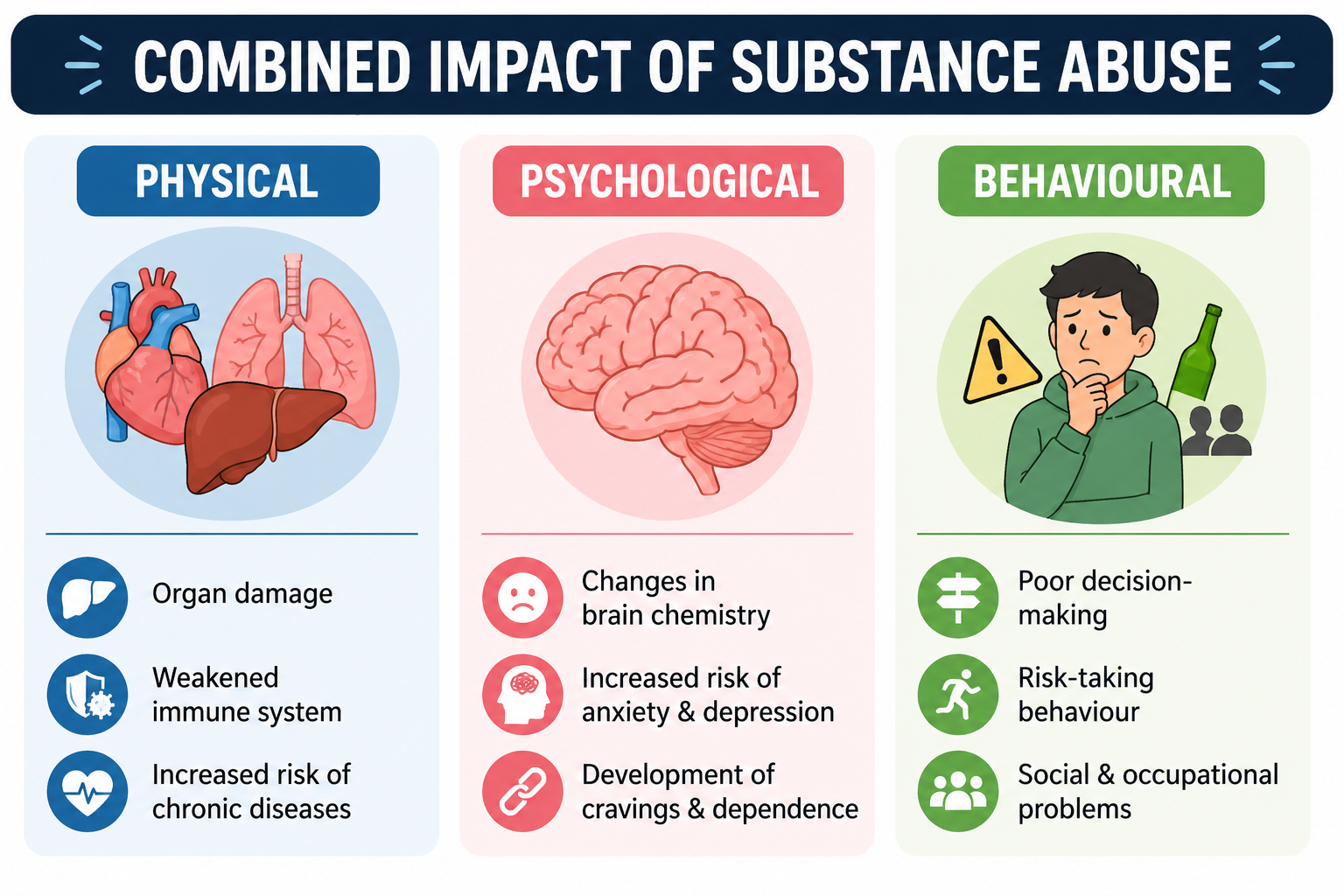
Physical Impact on the Body
Substance abuse causes progressive damage to vital organs and weakens the body’s natural ability to function and defend itself.
Organ Damage
- Continuous substance use can damage major organs such as the liver, heart, brain, and lungs.
- The liver becomes overworked, especially with alcohol and drug processing, leading to long-term conditions like liver disease.
- The heart may experience irregular rhythm, high blood pressure, and increased risk of heart failure.
- Lung function may decline, especially with smoking or inhaled substances.
Weakened Immune System
- Substance abuse reduces the body’s ability to fight infections.
- Individuals become more vulnerable to common illnesses such as flu, infections, and slow healing of wounds.
- Chronic use weakens overall immunity, making recovery slower and more difficult.
Increased Risk of Chronic Diseases
- Long-term substance use increases the risk of serious health conditions such as:
- Diabetes
- Heart disease
- Liver cirrhosis
- Respiratory illnesses
- These conditions often develop silently and worsen over time without early detection.
Psychological Impact on the Mind
Substances directly affect brain chemistry, leading to changes in mood, thinking patterns, and emotional stability.
Changes in Brain Chemistry
- Addictive substances interfere with neurotransmitters such as dopamine and serotonin.
- This disrupts the brain’s natural reward system.
- Over time, the brain becomes dependent on substances to feel pleasure or satisfaction.
Increased Risk of Mental Health Disorders
- Substance abuse is strongly linked with mental health issues such as:
- Anxiety disorders
- Depression
- Paranoia
- Psychosis in severe cases
- These conditions may worsen existing mental health problems or trigger new ones.
Development of Dependency and Cravings
- The brain begins to associate substance use with relief or pleasure.
- This leads to strong cravings and compulsive use.
- Individuals may feel unable to function normally without the substance.
Behavioural Impact on Daily Life
Substance abuse also significantly affects behaviour, decision-making, and social functioning.
Poor Decision-Making
- Individuals may struggle to think clearly or evaluate risks.
- Impaired judgment leads to unsafe or irresponsible choices.
- This may include driving under the influence or engaging in risky activities.
Risk-Taking Behaviour
- Substance use reduces fear and increases impulsivity.
- Individuals may engage in dangerous activities without considering consequences.
- This increases the likelihood of accidents, injuries, or legal problems.
Social and Occupational Problems
- Relationships with family and friends may become strained or broken.
- Work or academic performance often declines due to lack of focus and absenteeism.
- Individuals may experience unemployment or financial instability.
- Social isolation becomes more common as addiction progresses.
The combined impact of substance abuse on the body and mind is wide-ranging and severe. Physically, it damages vital organs, weakens immunity, and increases the risk of chronic illness. Psychologically, it disrupts brain chemistry, increases mental health risks, and creates dependency. Behaviourally, it leads to poor decisions, risky actions, and serious social and occupational consequences. Together, these effects highlight why addiction is a complex condition that requires comprehensive prevention, treatment, and recovery support strategies.
Conclusion
Understanding addiction involves recognising its complex and multifaceted nature, where both psychological triggers and physiological changes play a significant role. While different substances impact the body and mind in distinct ways, they all share common risks that can lead to serious long-term physical, emotional, and behavioural consequences when misused.
This knowledge forms a crucial foundation for learners, supporting further study in addiction treatment, mental health care, and recovery support. It also helps in developing awareness, early identification skills, and effective approaches to prevention and intervention in real-world settings.