
Lesson 2: Identify Professional Boundaries
Professional boundaries are the limits that define a safe, respectful, and professional relationship between a CBT practitioner and a client. They help maintain trust, protect client wellbeing, and ensure therapy remains focused on achieving positive outcomes. Understanding professional boundaries is essential because CBT practitioners regularly work with people who share personal experiences, emotions, and sensitive information. By maintaining clear boundaries, practitioners provide ethical, client-centred, and professional care while protecting both themselves and their clients.
After completing this lesson, learners will be able to:
- Define professional boundaries in therapeutic relationships.
- Explain why professional boundaries are important in CBT.
- Identify common boundary violations and associated risks.
- Apply professional boundaries in everyday therapeutic practice.
- Recognise good professional behaviour that promotes safe and ethical care.
1. Professional Boundaries in Therapeutic Relationships
Professional boundaries are an essential part of safe and effective Cognitive Behavioural Therapy (CBT). They help create a clear and appropriate relationship between the practitioner and the client. These boundaries ensure that therapy remains focused on the client’s needs while protecting both the client and the practitioner.
During CBT, clients often share personal experiences, emotions, thoughts, and challenges. Because of this, practitioners must behave professionally at all times. They should communicate respectfully, maintain confidentiality, avoid inappropriate relationships, and always act in the client’s best interests.
Professional boundaries help build trust and confidence. They also make sure that therapy takes place in a safe, respectful, and supportive environment. Learning about professional boundaries helps new practitioners understand how to behave appropriately and maintain high standards of professional practice.
What Are Professional Boundaries?
Professional boundaries are the clear limits that guide how practitioners interact with clients during therapy. These limits help ensure that the relationship remains professional, ethical, respectful, and focused on supporting the client’s wellbeing.
Unlike friendships or family relationships, a therapeutic relationship has a specific purpose. Its aim is to help the client improve their mental health and wellbeing. Professional boundaries help keep this relationship focused on the client’s needs rather than the personal interests of the practitioner.
Professional boundaries also protect both the practitioner and the client by reducing misunderstandings, preventing inappropriate behaviour, and maintaining professional trust.
Why Professional Boundaries Are Important
Professional boundaries provide a clear framework for safe and respectful practice. They help practitioners understand how they should behave in different situations while ensuring that clients receive professional care.
When clear boundaries are maintained, clients are more likely to feel safe, respected, and confident in the therapeutic relationship. They know that the practitioner will act professionally, keep information confidential, and focus on helping them achieve their therapy goals.
Without professional boundaries, relationships can become confusing or inappropriate. This may affect trust, reduce the effectiveness of therapy, and create ethical or professional concerns.
Professional boundaries also help practitioners remain objective. By keeping the focus on the client’s needs, practitioners can make balanced decisions and provide effective support.
Key Features of Professional Boundaries

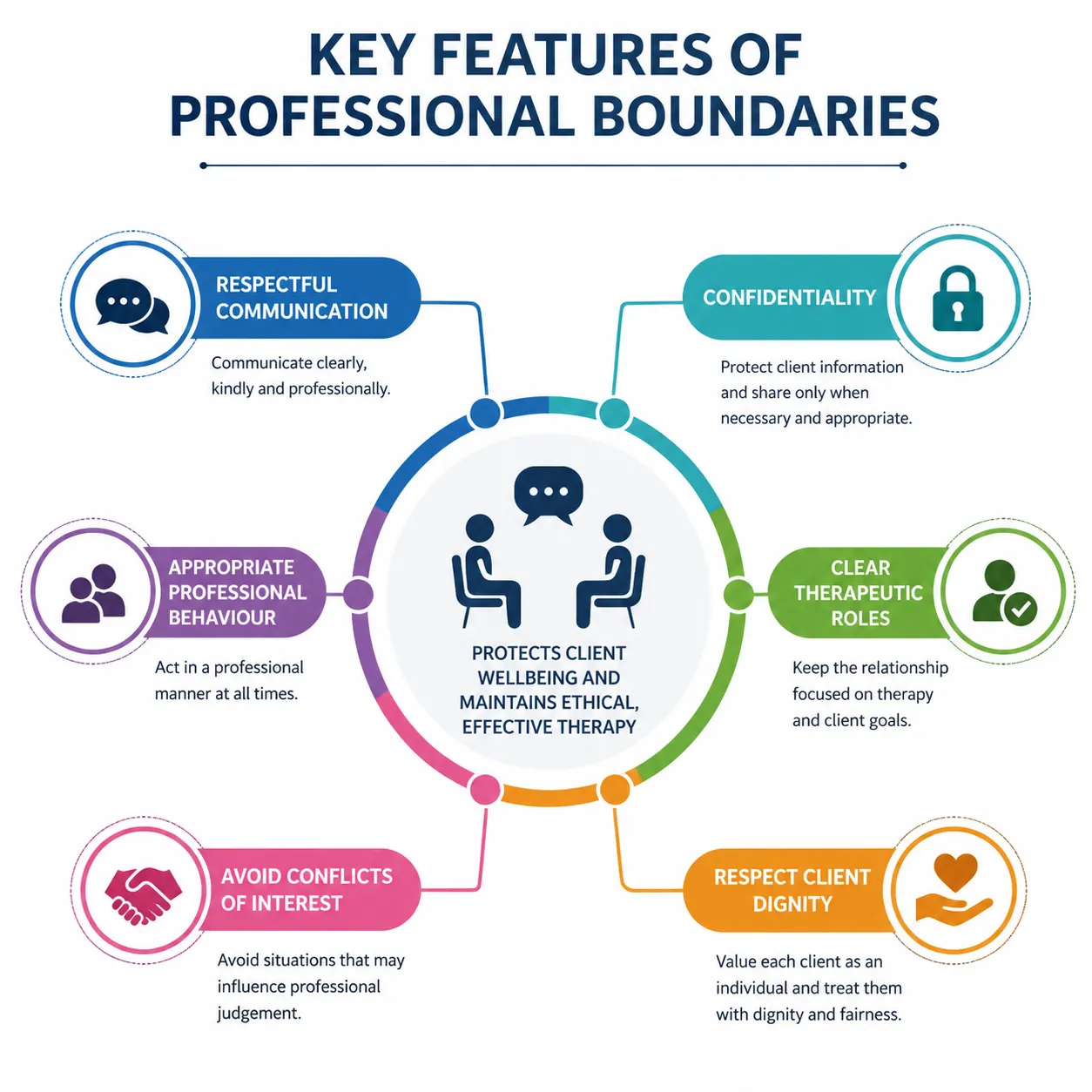
Professional boundaries include several important elements that guide everyday therapeutic practice.
One important feature is respectful communication. Practitioners should speak politely, listen carefully, avoid judgement, and communicate in a way that makes clients feel valued and understood.
Another key feature is appropriate professional behaviour. Practitioners should always behave professionally during therapy sessions, maintain appropriate conduct, and avoid behaviour that could affect the therapeutic relationship.
Confidentiality is another essential boundary. Personal information shared during therapy should remain private unless there is a legal or ethical reason to disclose it. Protecting confidentiality helps build trust and encourages honest communication.
Maintaining clear therapeutic roles is also important. The practitioner is there to support the client’s therapeutic goals, not to become a friend, family member, or business partner. Keeping these roles separate helps maintain professional objectivity.
Professional boundaries also involve avoiding conflicts of interest. Practitioners should avoid situations where personal interests may influence professional decisions or affect the quality of care provided.
Finally, practitioners should always show respect for client dignity by treating every client fairly, listening to their concerns, respecting their choices, and recognising their individual needs.
Professional Communication
Communication is one of the most visible examples of professional boundaries.
Professional communication should always be respectful, clear, honest, and focused on therapy.
Practitioners should:
- Listen actively.
- Speak respectfully.
- Explain information clearly.
- Encourage questions.
- Avoid judgement.
- Maintain a calm and supportive manner.
Professional communication also includes using appropriate language and avoiding conversations that are unrelated to the client’s therapy.
For example, a practitioner may briefly introduce themselves but should avoid discussing personal problems or sharing unnecessary information about their private life.
Maintaining Therapeutic Roles
The therapeutic relationship is different from other personal relationships.
The practitioner’s role is to support, guide, and encourage the client using recognised CBT techniques. Their responsibility is to help clients work towards agreed therapy goals.
Practitioners should avoid becoming emotionally dependent on clients or encouraging clients to become dependent on them.
Maintaining clear roles helps therapy remain structured, objective, and effective.
Respecting Client Dignity
Every client deserves to be treated with dignity and respect.
Respecting client dignity means recognising that every individual has different experiences, beliefs, cultures, and personal values.
Practitioners should:
- Treat everyone fairly.
- Respect different opinions.
- Listen carefully.
- Protect privacy.
- Encourage client participation.
- Avoid discrimination.
Respectful behaviour helps clients feel accepted and supported throughout therapy.
Avoiding Conflicts of Interest
A conflict of interest occurs when a practitioner’s personal interests may influence professional judgement.
For example, providing therapy to a close friend or family member may make it difficult to remain objective.
Practitioners should avoid situations where personal relationships, financial interests, or other commitments could affect their professional responsibilities.
When conflicts of interest cannot be avoided, practitioners should seek advice from supervisors or arrange appropriate referrals.
Confidentiality as a Professional Boundary
Confidentiality is one of the most important professional boundaries.
Clients often discuss very personal information during CBT sessions. Practitioners have a responsibility to protect this information by storing records securely and only sharing information when legally or ethically required.
Protecting confidentiality demonstrates professionalism and helps build strong therapeutic relationships.
Clients are more likely to participate openly in therapy when they know their information will be treated respectfully.
Benefits of Professional Boundaries
Maintaining professional boundaries benefits both clients and practitioners.
For clients, clear boundaries create a safe environment where they feel respected and supported. They understand the purpose of therapy and know what to expect from the therapeutic relationship.
For practitioners, professional boundaries help maintain objectivity, reduce misunderstandings, support ethical decision-making, and protect professional reputation.
Professional boundaries also benefit organisations by promoting consistent standards, reducing complaints, and supporting high-quality services.
Everyday Examples of Professional Boundaries
Professional boundaries are demonstrated in many everyday situations.
A practitioner begins each therapy session on time and keeps the discussion focused on the client’s treatment goals.
Another practitioner stores therapy records securely and only discusses client information with authorised professionals when appropriate.
A practitioner politely declines a client’s invitation to meet socially outside therapy because maintaining professional boundaries is important.
Another practitioner recognises that a client requires specialist support and arranges an appropriate referral rather than working beyond their professional competence.
These examples show how professional boundaries help maintain safe and effective therapeutic relationships.
| Professional Boundary | Purpose | Example in CBT Practice |
|---|---|---|
| Professional Communication | Promotes respectful interaction | Listen carefully and communicate clearly |
| Confidentiality | Protects client information | Store therapy records securely |
| Appropriate Professional Behaviour | Maintains professionalism | Focus sessions on therapy goals |
| Clear Therapeutic Roles | Keeps therapy client-centred | Avoid becoming a personal friend |
| Avoiding Conflicts of Interest | Protects professional judgement | Refer a close family member to another therapist |
| Respect for Client Dignity | Builds trust and respect | Treat every client fairly and respectfully |
Case Study
Situation
Sarah is a CBT practitioner working in a community wellbeing service. After several successful therapy sessions, one of her clients invites her to attend a birthday celebration because they feel grateful for her support.
Action
Sarah thanks the client for the invitation but politely explains that professional boundaries require therapists to keep relationships professional. She explains that maintaining these boundaries helps ensure therapy remains focused on the client’s wellbeing and protects the therapeutic relationship.
Result
The client understands the reason for Sarah’s decision and continues attending therapy sessions with confidence. Trust between the client and practitioner remains strong, and therapy continues in a safe and professional environment.
Learning Point
Professional boundaries help protect both the client and the practitioner. Maintaining appropriate relationships ensures that therapy remains ethical, respectful, and focused on achieving positive outcomes.
Key Takeaways
- Professional boundaries are the clear limits that guide therapeutic relationships.
- They help keep therapy safe, respectful, and focused on the client’s wellbeing.
- Respectful communication, confidentiality, and appropriate professional behaviour are essential parts of professional boundaries.
- Maintaining clear therapeutic roles helps practitioners remain objective.
- Avoiding conflicts of interest protects professional judgement.
- Respecting client dignity builds trust and strengthens therapeutic relationships.
- Professional boundaries support ethical practice and improve the quality of CBT services.
- Following professional boundaries protects both clients and practitioners.
Professional boundaries are an important foundation of safe and effective Cognitive Behavioural Therapy. They help practitioners maintain respectful, ethical, and professional relationships while ensuring that every client’s wellbeing remains the main focus of therapy. By understanding the purpose of professional boundaries, learners can recognise the behaviours that support trust, safety, and positive therapeutic outcomes.
Maintaining professional communication, protecting confidentiality, respecting client dignity, and avoiding conflicts of interest all contribute to high-quality CBT practice. By applying these boundaries consistently in everyday situations, practitioners create supportive therapeutic relationships that encourage confidence, professionalism, and effective client care.
Conclusion
Professional boundaries are a fundamental part of ethical Cognitive Behavioural Therapy (CBT) practice. They help practitioners build safe, respectful, and professional therapeutic relationships while ensuring that the focus remains on the client’s wellbeing. Maintaining appropriate boundaries also protects confidentiality, promotes trust, and supports a positive environment where clients feel comfortable sharing their thoughts and experiences.
Understanding the importance of professional boundaries and recognising the risks associated with boundary violations enables practitioners to make responsible decisions in everyday practice. By following professional standards, maintaining appropriate relationships, and acting in the client’s best interests, practitioners can provide safe, effective, and client-centred care that promotes positive therapeutic outcomes and maintains high standards of professional practice.