Lexiton International
Lexiton International Welcome to Lexiton International
Certificate in Cognitive Behavioural Therapy (CBT): Principles and Techniques
Section 1: Unit No 1: Introduction to Cognitive Behavioural Therapy
Section 2: Unit No 2: Cognitive Models and Thought Patterns
Section 3: Unit No 3: Behavioural Principles in CBT
Section 4: Unit No 4: Assessment and Case Formulation
Lesson 1: Understand Assessment in CBT Quiz No 1: Understand Assessment in CBT Lesson 2: Explain Case Formulation Lecture 7: Cognitive Techniques in CBT Quiz No 2: Explain Case Formulation Lesson 3: Identify Contributing Factors to Presenting Difficulties Lecture 8: Ethical Codes in CBT Quiz No 3: Identify Contributing Factors to Presenting Difficulties ASSIGNMENT IDENTIFYING COGNITIVE DISTORTIONS
Section 5: Unit No 5: CBT Techniques and Intervention Strategies
Section 6: Unit No 6: Professional Practice and Ethical Considerations
Lesson 12

Lesson 3: Identify Contributing Factors to Presenting Difficulties

In Cognitive Behavioural Therapy (CBT), understanding why a person is experiencing psychological difficulties is an important step before treatment begins. These difficulties, known as presenting problems, do not usually happen for one single reason. Instead, they develop due to a combination of different influencing factors.

These contributing factors can include biological, psychological, and social influences. They can also be shaped by life experiences and maintained by ongoing patterns of thinking and behaviour.

For example, a person experiencing anxiety may be influenced by brain chemistry, past stressful events, current life pressures, and unhelpful thinking patterns. CBT helps to explore all these areas in a structured and practical way.

For beginners, this lesson focuses on building awareness of how different factors work together to influence mental health problems. Understanding these factors helps therapists provide more accurate and effective support.

By the end of this lesson, learners will be able to:

  • Identify biological, psychological, and social factors influencing difficulties
  • Explain how life experiences contribute to presenting issues
  • Understand how different factors interact in CBT cases
  • Analyse maintaining factors within psychological problems
  • Develop basic awareness of how problems develop and continue over time
1. Understanding Contributing Factors in CBT

Cognitive Behavioural Therapy (CBT) is a structured psychological approach used to understand and treat emotional and behavioural difficulties. One of the most important foundations of CBT is understanding why people experience psychological problems in the first place.

In real-life situations, mental health difficulties such as anxiety, stress, depression, or low confidence rarely develop from a single cause. Instead, they arise from a combination of interacting factors. These factors influence how a person thinks, feels, and behaves in different situations.

Understanding contributing factors is essential because it helps therapists move beyond surface-level symptoms and explore the deeper reasons behind a person’s difficulties. This leads to more accurate assessment and more effective support planning.

From an industry perspective, CBT is widely used in healthcare services, counselling centres, schools, workplaces, and community mental health settings. Professionals in these environments must understand contributing factors to provide safe, structured, and evidence-based care.

In workplace applications, this understanding helps therapists, counsellors, HR professionals, and support workers identify early signs of distress and intervene appropriately before problems become severe.

Definition / Key Concepts

Contributing factors in CBT refer to the biological, psychological, and social influences that affect a person’s mental health and contribute to the development or continuation of psychological difficulties.

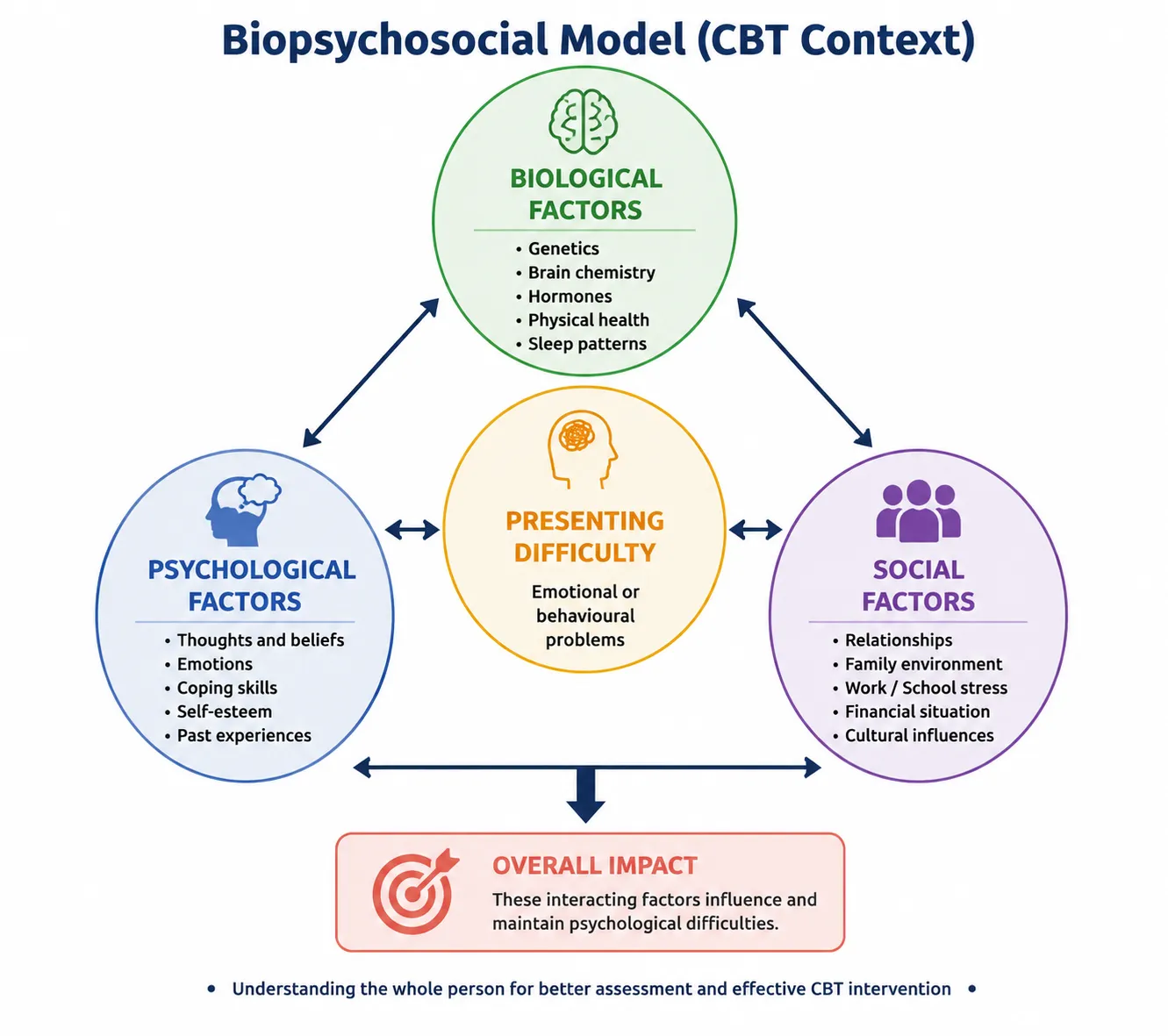
These factors are explained through the biopsychosocial model, which suggests that mental health is shaped by a combination of:

  • Biological influences (body and brain functions)
  • Psychological influences (thoughts and emotions)
  • Social influences (environment and relationships)

This model is important because it provides a holistic view of mental health, rather than focusing on one single cause.

In CBT practice, these factors are used to understand:

  • Why a problem started
  • Why it continues
  • What maintains the difficulty over time

Types / Classification of Contributing Factors

CBT classifies contributing factors into three main categories:

Biological Factors

These relate to physical and biological aspects of the human body, including brain function.

Psychological Factors

These relate to thoughts, beliefs, emotions, and cognitive processes.

Social Factors

These relate to environment, relationships, and social conditions.

Each category plays an important role in shaping mental health outcomes.

Importance

Understanding contributing factors is important in CBT because it helps professionals:

  • Identify the root causes of psychological difficulties
  • Understand how different influences interact
  • Avoid oversimplifying complex mental health problems
  • Develop accurate case formulations
  • Plan effective and personalised interventions
  • Improve client outcomes through structured support

Without understanding these factors, therapy may focus only on symptoms rather than underlying causes.

Benefits

Understanding contributing factors in CBT provides several practical benefits:

  • Improves accuracy of psychological assessment
  • Supports early identification of mental health risks
  • Helps create personalised treatment plans
  • Enhances communication between therapist and client
  • Encourages holistic understanding of client needs
  • Supports evidence-based decision-making
  • Reduces chances of misdiagnosis or ineffective intervention

These benefits make CBT a highly structured and reliable therapeutic approach.

Biological Factors in CBT

Biological factors are related to the physical body and brain processes that influence mental health.

Common biological influences include:

  • Genetic inheritance from family history
  • Chemical imbalances in the brain
  • Hormonal changes in the body
  • Chronic illnesses or long-term health conditions
  • Sleep disturbances and fatigue
  • Substance use effects

These factors can increase vulnerability to psychological difficulties. For example, someone with poor sleep patterns may experience increased irritability, reduced concentration, and emotional instability.

However, biological factors alone do not determine mental health outcomes. They interact with psychological and social influences, making the overall situation more complex.

Psychological Factors in CBT

Psychological factors relate to how individuals think, interpret situations, and manage emotions.

Common psychological influences include:

  • Negative thinking patterns
  • Low self-esteem
  • Fear of failure or rejection
  • Trauma-related thinking
  • Perfectionism
  • Poor coping strategies

These factors affect how individuals respond to everyday situations. For example, a person who believes “I always fail” may avoid new challenges, leading to reduced confidence and increased anxiety.

CBT focuses heavily on psychological factors because they can often be changed through structured techniques such as cognitive restructuring.

Social Factors in CBT

Social factors relate to a person’s environment, relationships, and external life circumstances.

Common social influences include:

  • Family conflict or lack of support
  • Workplace stress or academic pressure
  • Financial difficulties
  • Social isolation
  • Cultural expectations
  • Peer pressure or bullying

These factors can create emotional strain and contribute to psychological distress. For example, continuous workplace pressure may lead to chronic stress and burnout if not managed properly.

Social factors often interact with biological and psychological influences, increasing overall vulnerability.

Interaction of Factors (Critical Understanding)

In CBT, these three categories do not work separately. Instead, they interact continuously.

For example:

  • A biological factor like poor sleep may reduce emotional stability
  • A psychological factor like negative thinking may increase worry
  • A social factor like work pressure may trigger stress

Together, these factors can create a cycle of anxiety or depression.

This interaction is important because CBT treatment must address all relevant areas, not just one.
Biopsychosocial model in CBT

Practical Applications

Understanding contributing factors is essential in real-world CBT practice.

Industry Example

In a mental health clinic, a client presents with anxiety symptoms. The therapist explores:

  • Biological factor: sleep disturbance
  • Psychological factor: fear of failure
  • Social factor: high workplace demands

By identifying all three, the therapist develops a complete understanding of the client’s condition.

Workplace Scenario

In an organisational setting, an employee shows signs of stress and reduced productivity. An HR counsellor trained in CBT principles may identify:

  • Long working hours (social factor)
  • Self-doubt (psychological factor)
  • Fatigue due to poor sleep (biological factor)

This helps in planning supportive workplace interventions such as workload adjustment and stress management support.

Real-Life Application

A student experiencing exam anxiety may have:

  • Biological fatigue from lack of sleep
  • Psychological fear of failure
  • Social pressure from family expectations

Understanding these factors helps in providing targeted academic and emotional support.

Table: Biopsychosocial Factors in CBT

Factor TypeMeaningExample
BiologicalBody and brain influencesGenetics, sleep problems, illness
PsychologicalThoughts and emotionsNegative thinking, low confidence
SocialEnvironment and relationshipsWork stress, family conflict

Case Study

Background

A 29-year-old employee reports increasing stress, lack of motivation, and difficulty concentrating at work.

Situation

The individual is struggling to manage workload pressure and has started avoiding team interactions.

Analysis

The therapist identifies contributing factors:

  • Biological: Poor sleep and constant fatigue
  • Psychological: “I cannot handle this job” thinking pattern
  • Social: High workload and limited workplace support

Action

A CBT-informed approach is used to address each factor:

  • Sleep improvement strategies are discussed
  • Negative thoughts are challenged through cognitive restructuring
  • Workplace stress is managed through structured problem-solving

Result

The client shows improved energy levels, reduced anxiety, and better engagement at work after intervention.

Conclusion of Case Study

This case demonstrates how identifying biological, psychological, and social factors helps create a complete understanding of the problem and supports effective CBT planning.

Key Takeaways

  • Psychological difficulties are influenced by biological, psychological, and social factors
  • The biopsychosocial model provides a complete understanding of mental health
  • These factors interact and influence each other continuously
  • Identifying contributing factors is essential for accurate CBT assessment
  • Understanding these factors supports effective treatment planning
  • CBT focuses on a holistic and structured approach to mental health care

Contributing factors in CBT provide a structured way to understand why psychological difficulties develop and continue. By examining biological, psychological, and social influences, practitioners gain a complete picture of the client’s condition.

This holistic approach ensures that therapy is not based on assumptions or isolated symptoms, but on a clear understanding of real-life influences. It supports accurate assessment, effective case formulation, and practical intervention planning.

For learners and practitioners, mastering this concept is essential because it forms the foundation of evidence-based CBT practice and improves the quality of mental health support across all professional settings.

2. How Life Experiences Contribute to Presenting Issues (CBT)

Life experiences play a fundamental role in shaping human thoughts, emotions, and behaviours. In Cognitive Behavioural Therapy (CBT), understanding these experiences is essential because many psychological difficulties develop over time as a result of what a person has gone through in their past and present life.

Presenting issues such as anxiety, depression, low confidence, or stress rarely appear suddenly without reason. Instead, they are often linked to life experiences that influence how individuals interpret themselves, others, and the world around them. These experiences may be positive or negative, but negative or stressful experiences often have a stronger impact on mental health.

From an industry perspective, mental health professionals, counsellors, and CBT practitioners regularly work with clients whose difficulties are rooted in past experiences. Understanding these links helps professionals develop accurate case formulations and provide effective, personalised interventions.

In workplace settings, awareness of life experiences is also valuable for HR professionals, managers, and support workers. It helps them recognise why employees may be struggling emotionally or behaviourally and how to respond appropriately.

Overall, life experiences are not just past events; they actively shape present psychological functioning and influence how individuals cope with daily challenges.

Definition / Key Concepts

In CBT, life experiences refer to significant events or situations that an individual has gone through, which influence their emotional development, thinking patterns, and behavioural responses.

These experiences contribute to the formation of core beliefs, which are deeply held assumptions about oneself, others, and the world. These beliefs often guide how a person reacts to future situations.

Key conceptually, life experiences are important because they:

  • Shape personal identity and self-perception
  • Influence emotional reactions to situations
  • Develop thinking patterns and beliefs
  • Affect coping strategies and behaviour
  • Increase or reduce vulnerability to psychological distress

CBT views life experiences as part of a continuous learning process where individuals develop patterns based on what they have lived through.

Types / Classification of Life Experiences

Life experiences can be classified into several categories based on their nature and timing in a person’s life.

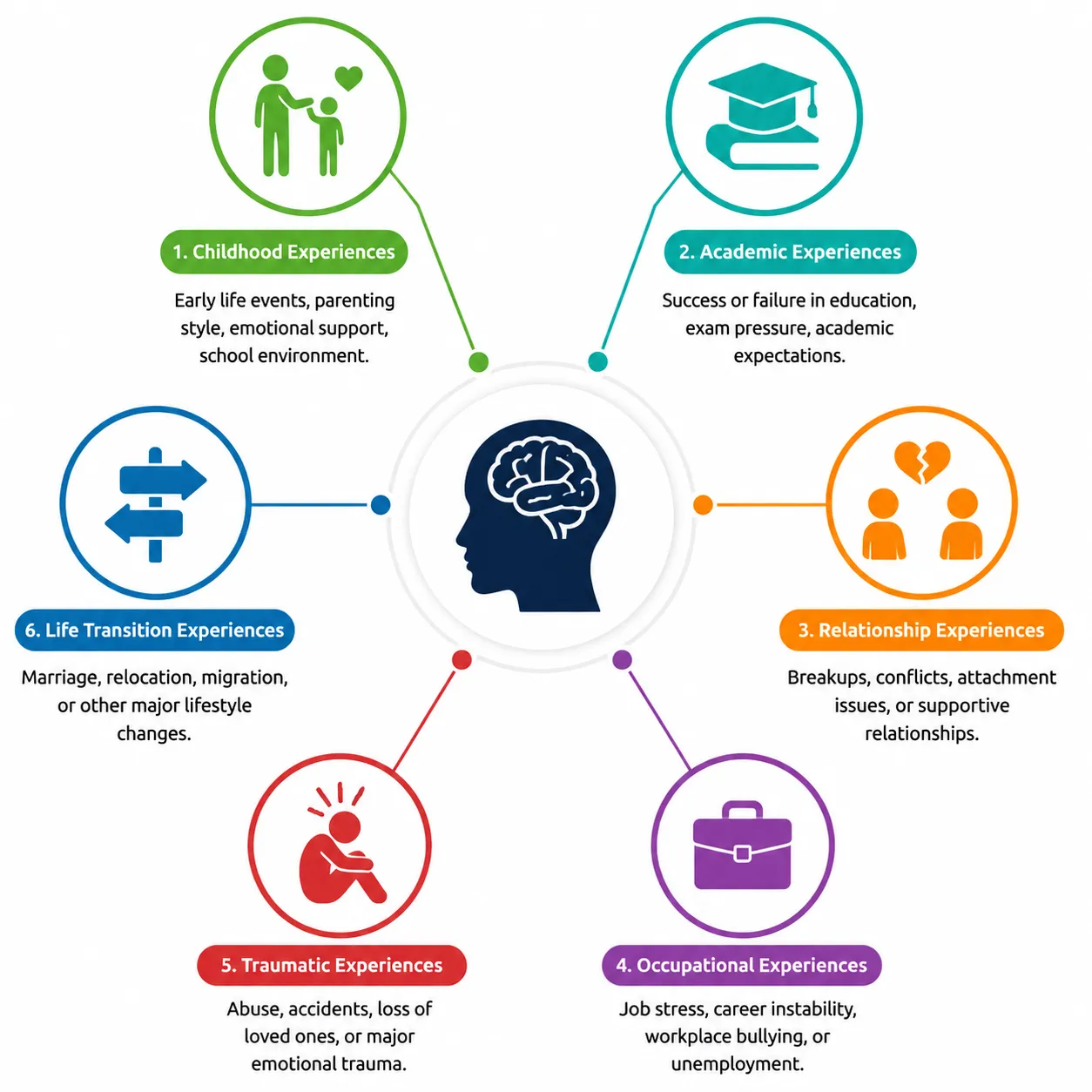
Factors influencing personal development

1. Childhood Experiences

Early life experiences such as parenting style, school environment, and emotional support.

2. Academic Experiences

Success or failure in education, exam pressure, and academic expectations.

3. Relationship Experiences

Breakups, conflicts, attachment issues, or supportive relationships.

4. Occupational Experiences

Job stress, career instability, workplace bullying, or unemployment.

5. Traumatic Experiences

Abuse, accidents, loss of loved ones, or major emotional trauma.

6. Life Transition Experiences

Marriage, relocation, migration, or major lifestyle changes.

Each category contributes differently to psychological development and emotional wellbeing.

Importance

Understanding life experiences is important in CBT because it helps practitioners:

  • Identify root causes of emotional difficulties
  • Understand development of core beliefs
  • Explain why certain triggers affect clients strongly
  • Build accurate case formulations
  • Recognise long-term behavioural patterns
  • Support trauma-informed care practices

Without exploring life experiences, therapy may only address surface symptoms and miss underlying causes.

Benefits

Exploring life experiences in CBT provides several important benefits:

  • Improves understanding of client background
  • Helps identify emotional triggers more clearly
  • Supports personalised treatment planning
  • Enhances therapist-client communication
  • Encourages empathy and non-judgmental understanding
  • Improves long-term treatment outcomes
  • Helps identify vulnerability patterns early

These benefits ensure that CBT remains a structured and client-centred therapeutic approach.

Life experiences influence mental health through a continuous process of learning, interpretation, and emotional conditioning.

How Life Experiences Shape Core Beliefs

Core beliefs are deeply held ideas formed through repeated life experiences. For example, a child repeatedly criticised may develop the belief “I am not good enough.” This belief can continue into adulthood and influence behaviour in work, relationships, and social situations.

Influence on Emotional Responses

Past experiences shape how individuals emotionally react to current situations. Someone who experienced rejection in relationships may feel intense fear or anxiety in new relationships, even when there is no real threat.

Development of Behaviour Patterns

Life experiences often lead to learned behaviours such as avoidance, withdrawal, or overcompensation. For example, a person who experienced bullying may avoid social interaction to protect themselves from further harm.

Increased Vulnerability to Stress

Negative or traumatic experiences can reduce emotional resilience, making individuals more vulnerable to stress in daily life.

Features, Advantages, and Limitations

Features of Life Experience Influence in CBT

  • Long-term psychological impact
  • Shapes thinking patterns
  • Influences emotional regulation
  • Contributes to behavioural responses

Advantages

  • Helps explain deep-rooted issues
  • Supports holistic understanding
  • Improves treatment accuracy
  • Encourages structured formulation

Limitations

  • Not all experiences affect individuals equally
  • Some clients may not recall or recognise past influences
  • Overemphasis on past experiences may delay present-focused intervention

CBT balances past experiences with current thinking and behaviour patterns.

Critical Analysis

Life experiences alone do not determine mental health outcomes. Their impact depends on interpretation, coping ability, and support systems. Two individuals may experience similar events but respond differently based on their psychological resilience and environment.

CBT does not focus only on past experiences but uses them to understand current thinking patterns and behaviours. This makes the approach both reflective and practical.

Practical Applications

Industry Example

In a mental health clinic, a client presenting with anxiety is found to have experienced childhood bullying. This experience contributes to the belief “people will judge me,” which maintains anxiety in social situations.

Workplace Scenario

An employee struggling with low confidence may have experienced repeated criticism in previous jobs. This life experience affects current performance and workplace behaviour.

Real-Life Application

A student experiencing exam anxiety may have previously failed important exams, leading to fear of failure and avoidance of study.

Table: Life Experiences and Their Impact on CBT

Type of ExperiencePsychological ImpactExample
Childhood experiencesCore belief formationEmotional neglect leading to low self-worth
Academic pressurePerformance anxietyFear of exams
Relationship breakdownsTrust issuesFear of rejection
Job stressEmotional exhaustionBurnout symptoms
TraumaEmotional sensitivityHeightened anxiety responses
Life transitionsAdjustment difficultiesStress after relocation

Case Study

Background

A 30-year-old employee reports ongoing anxiety, low confidence, and avoidance of workplace meetings.

Situation

The individual feels unable to speak in group discussions and fears being judged by colleagues.

Analysis

The therapist identifies key life experiences:

  • Childhood bullying at school
  • Repeated academic failure experiences
  • Past workplace criticism

These experiences contributed to the core belief “I am not capable.”

Action

A CBT-based approach is applied:

  • Cognitive restructuring to challenge negative beliefs
  • Gradual exposure to speaking in meetings
  • Confidence-building exercises in safe environments

Result

The client gradually becomes more confident, participates in meetings, and reports reduced anxiety levels.

Conclusion of Case Study

This case demonstrates how life experiences shape core beliefs and how CBT uses this understanding to create structured interventions.

Key Takeaways

  • Life experiences significantly influence psychological development
  • They shape core beliefs, emotions, and behaviours
  • Different types include childhood, academic, occupational, and traumatic experiences
  • CBT uses life experiences to understand current problems
  • Not all experiences affect individuals in the same way
  • Therapy focuses on how past experiences influence present thinking

Life experiences are a core component in understanding psychological difficulties within CBT. They help explain how individuals develop certain beliefs, emotional responses, and behavioural patterns over time.

By exploring these experiences, CBT practitioners can identify the deeper origins of presenting problems and understand why certain issues continue in the present. This leads to more accurate case formulation and effective intervention planning.

However, CBT does not focus only on the past. Instead, it uses life experiences as a foundation to understand current thinking and behaviour patterns. This balanced approach ensures that therapy remains practical, structured, and focused on real-life improvement.

Overall, understanding life experiences is essential for developing meaningful, personalised, and evidence-based CBT interventions that support long-term psychological wellbeing.

3. Maintaining Factors in Psychological Problems (CBT)

In Cognitive Behavioural Therapy (CBT), understanding why psychological problems continue over time is just as important as understanding how they begin. Many individuals seek help for issues such as anxiety, stress, depression, or low confidence, but these problems often persist even after the original cause has passed. This continuation is usually due to maintaining factors.

Maintaining factors are the ongoing patterns of thinking, feeling, and behaving that keep psychological difficulties active. They prevent recovery and often make problems stronger over time.

In real-world mental health practice, identifying maintaining factors is essential for therapists, counsellors, and healthcare professionals because it allows them to focus treatment on what is keeping the problem alive rather than only focusing on its origin.

From an industry perspective, CBT is widely used in hospitals, counselling services, schools, rehabilitation centres, and workplaces. In all these environments, professionals must identify maintaining patterns to design effective interventions that lead to long-term improvement.

In workplace applications, understanding maintaining factors is especially useful for identifying performance issues, emotional stress, burnout, and interpersonal difficulties among employees.

Definition / Key Concepts

Maintaining factors in CBT refer to the thoughts, behaviours, and emotional responses that sustain psychological problems over time, even when the original trigger is no longer present.

These factors are important because they explain why psychological difficulties continue and often become more severe if not addressed.

Key concepts include:

  • Ongoing behavioural patterns that reinforce distress
  • Negative thinking cycles that maintain emotional suffering
  • Avoidance behaviours that prevent exposure to challenges
  • Reduced coping strategies and problem-solving skills
  • Emotional reactions that reinforce unhelpful patterns

In CBT, maintaining factors are central to treatment planning because they are often the primary targets for therapeutic change.

Types / Classification of Maintaining Factors

Maintaining factors can be grouped into several common categories based on their nature:

Behavioural Factors

  • Avoidance of feared situations
  • Social withdrawal
  • Reduced activity levels
  • Procrastination

Cognitive Factors

  • Negative thinking patterns
  • Catastrophic thinking
  • Overthinking or rumination
  • Self-critical thoughts

Emotional Factors

  • Persistent anxiety
  • Fear-based responses
  • Low mood or sadness

Skill-Based Factors

  • Lack of problem-solving skills
  • Poor emotional regulation strategies
  • Limited coping mechanisms

Each type contributes differently but often works together to maintain the problem.

Importance

Understanding maintaining factors is essential in CBT because it helps professionals:

  • Identify why psychological problems persist
  • Focus treatment on changeable behaviours and thoughts
  • Develop effective case formulations
  • Design structured and targeted interventions
  • Improve long-term recovery outcomes
  • Prevent relapse of psychological symptoms

Without identifying maintaining factors, therapy may only address symptoms without creating lasting improvement.

Benefits

Recognising maintaining factors provides several key benefits:

  • Helps break negative behavioural cycles
  • Supports targeted CBT interventions
  • Improves client self-awareness
  • Encourages active participation in therapy
  • Enhances treatment effectiveness
  • Reduces risk of long-term psychological distress
  • Supports sustainable mental health improvement

These benefits make CBT a practical and solution-focused therapeutic approach.

Maintaining factors work by creating cycles that reinforce psychological difficulties. Even when the original cause of distress is gone, these cycles continue to influence thoughts, emotions, and behaviour.

Avoidance Behaviour

Avoidance is one of the most common maintaining factors. When individuals avoid situations they fear, they experience short-term relief. However, this prevents learning and increases fear over time.

Negative Thinking Patterns

People often develop automatic negative thoughts such as “I will fail” or “I am not good enough.” These thoughts maintain emotional distress and reduce confidence.

Overthinking and Rumination

Repeated thinking about problems increases anxiety and prevents emotional recovery. It keeps attention focused on negative experiences.

Reduced Activity Levels

When individuals withdraw from activities, they lose opportunities for positive experiences, which maintains low mood and reduces motivation.

Lack of Coping Skills

Without effective coping strategies, individuals struggle to manage stress, which increases vulnerability to psychological difficulties.

Critical Analysis

Maintaining factors are not the original cause of psychological problems but are responsible for their continuation. This distinction is important in CBT because treatment focuses more on breaking maintenance cycles than exploring distant causes.

For example, a person may develop anxiety after a stressful event, but avoidance behaviour and negative thinking may keep the anxiety active long after the event has passed.

CBT therefore prioritises present-focused change, targeting what maintains the problem rather than only exploring its origin.

Features, Advantages, and Limitations

Features of Maintaining Factors

  • Ongoing patterns of behaviour and thinking
  • Reinforce psychological distress
  • Interconnected with emotional responses
  • Observable in daily life

Advantages

  • Helps identify clear treatment targets
  • Supports structured CBT interventions
  • Improves long-term recovery outcomes

Limitations

  • May overlook deep historical causes if overfocused
  • Requires client awareness and honesty
  • Behaviour change can take time and effort

Practical Applications

Industry Example

In a mental health clinic, a client presents with anxiety. The therapist identifies that avoidance of social situations is maintaining the anxiety. Treatment focuses on gradual exposure and cognitive restructuring.

Workplace Scenario

An employee experiencing stress avoids difficult tasks due to fear of failure. This avoidance increases workload pressure and stress over time. CBT-informed coaching focuses on building confidence and task engagement.

Real-Life Application

A student avoids studying due to fear of failure. This avoidance leads to poor performance, which increases anxiety and reinforces the belief that they are incapable.

Table: Causes vs Maintaining Factors

AspectCausesMaintaining Factors
TimingPast eventsOngoing behaviours
RoleStart the problemKeep the problem active
FocusWhy it beganWhy it continues
ExampleTrauma or lossAvoidance behaviour

Hierarchy Chart: Maintaining Cycle

Triggering Event
→ Negative Thought
→ Emotional Response (Fear/Anxiety)
→ Avoidance Behaviour
→ Short-Term Relief
→ Long-Term Problem Reinforcement

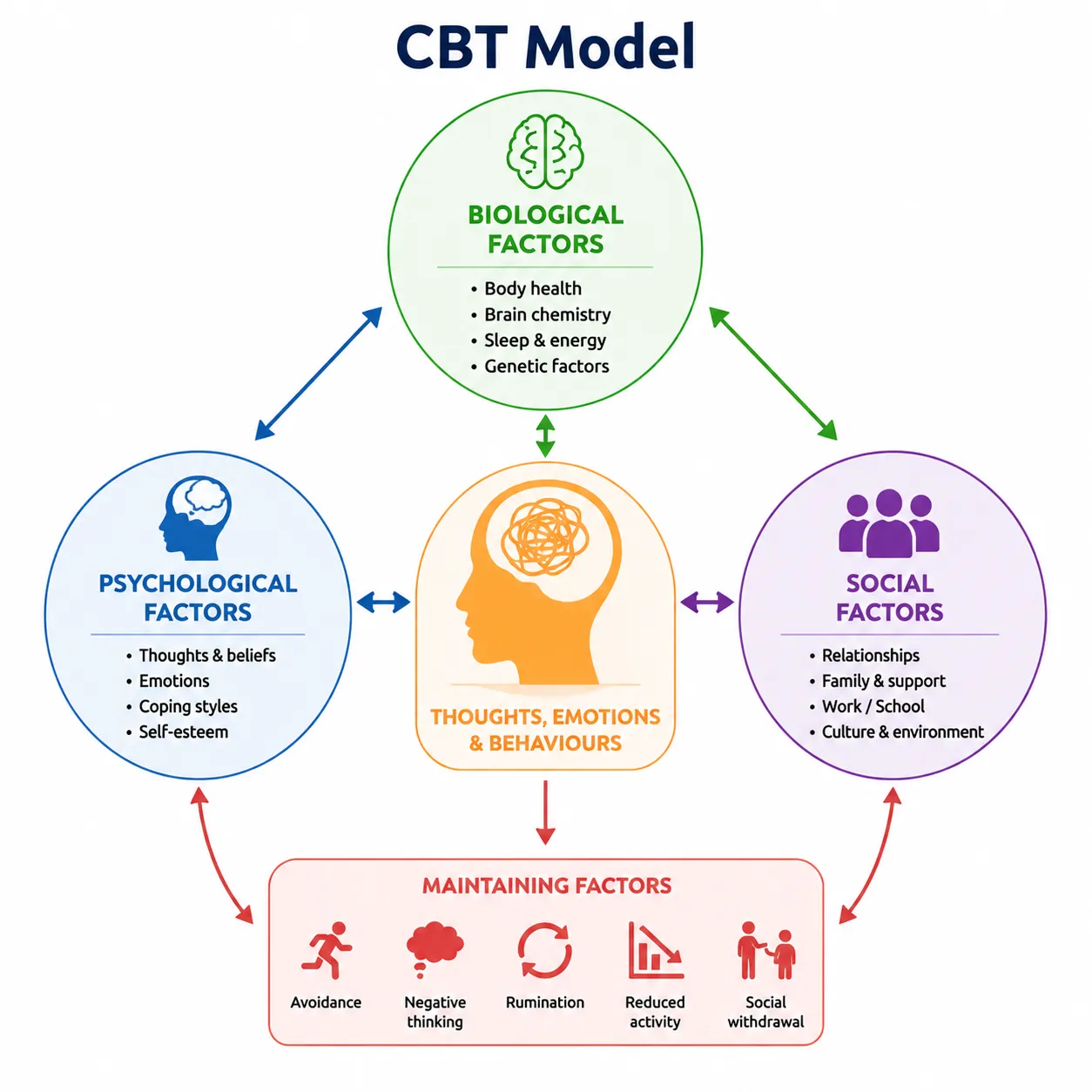
Psychological Difficulties are influenced by:

  • Biological factors (body & brain)
  • Psychological factors (thoughts & emotions)
  • Social factors (environment & relationships)
  • Life experiences (past events shaping beliefs)
  • Maintaining factors (ongoing patterns that sustain problems)

CBT model infographic diagramPractical Workplace Example

A customer service employee experiences stress at work.

  • Biological factor: Poor sleep due to stress
  • Psychological factor: Fear of making mistakes
  • Social factor: High workload and customer pressure
  • Life experience: Past criticism from supervisors
  • Maintaining factor: Avoiding difficult calls

This combination creates a cycle of ongoing workplace anxiety and reduced performance.

Case Study

Background

A 26-year-old client reports ongoing anxiety and low confidence in social situations.

Situation

The client avoids group discussions and feels nervous in public settings.

Challenge

The therapist needs to identify both causes and maintaining factors of the problem.

Analysis

  • Biological factor: Fatigue and poor sleep
  • Psychological factor: “I will embarrass myself” thought pattern
  • Social factor: Workplace pressure and lack of support
  • Life experience: School bullying
  • Maintaining factor: Avoidance of group interaction

Solution

The therapist identifies avoidance as the key maintaining factor and introduces:

  • Gradual exposure to group situations
  • Cognitive restructuring to challenge negative thoughts
  • Confidence-building exercises

Result

The client gradually becomes more confident, participates in discussions, and reports reduced anxiety levels.

Conclusion of Case Study

This case shows how identifying maintaining factors is essential for breaking negative cycles and supporting effective CBT intervention planning.

Key Takeaways

  • Maintaining factors keep psychological problems active over time
  • They include behavioural, cognitive, emotional, and skill-based patterns
  • Avoidance and negative thinking are common maintaining factors
  • They are different from causes and focus on ongoing processes
  • Identifying them is essential for effective CBT treatment planning
  • CBT interventions target these factors to create lasting change

Maintaining factors are a core concept in CBT because they explain why psychological problems continue even after the original cause has passed. These factors include unhelpful thinking patterns, avoidance behaviours, emotional responses, and lack of coping skills.

By identifying and analysing maintaining factors, CBT practitioners can focus treatment on breaking unhelpful cycles and encouraging healthier patterns of thinking and behaviour. This leads to more effective and long-lasting outcomes.

Overall, understanding maintaining factors is essential for developing structured, practical, and evidence-based CBT interventions that support real improvement in clients’ everyday lives.

Conclusion

Contributing factors in CBT provide a clear framework for understanding why psychological difficulties develop and continue over time. These factors include biological influences, psychological thinking patterns, social conditions, and life experiences that interact with each other. Together, they shape how a person thinks, feels, and behaves in different situations.

By understanding the relationship between these factors, CBT practitioners can develop a complete picture of the client’s difficulties. This supports accurate assessment and helps identify both the root causes and maintaining factors of the problem. It also improves intervention planning, leading to more effective and structured support in real-world practice.