
Lesson 2: Identify Automatic Thoughts and Core Beliefs
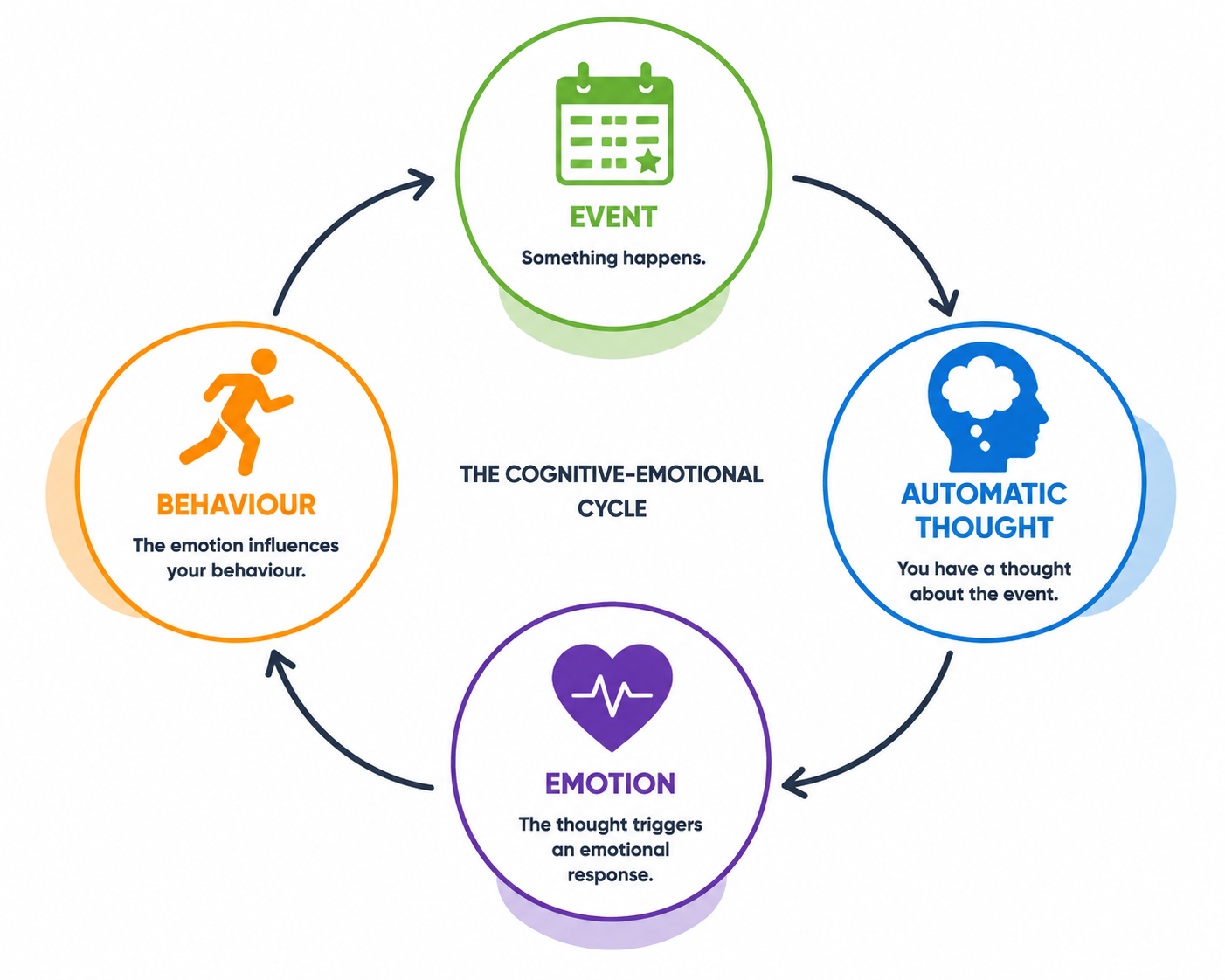 Automatic thoughts play a crucial role in shaping emotional responses by acting as immediate interpretations of events. These interpretations determine whether emotions become balanced or distorted. When automatic thoughts are inaccurate or influenced by cognitive distortions, they lead to intensified emotional reactions and unhelpful behavioural patterns.
3. Identify Examples of Core Beliefs and Their Impact on Behaviour
Introduction to Core Beliefs in CBT
Core beliefs are the deepest level of cognition in Cognitive Behavioural Therapy (CBT). They represent fundamental assumptions individuals hold about themselves, other people, and the world. These beliefs are usually formed early in life through experiences, learning, and repeated patterns of success, failure, or emotional interaction.
In CBT practice, core beliefs are important because they shape how individuals interpret situations and directly influence emotional responses and behaviour. When core beliefs are negative or unhelpful, they can contribute to long-term psychological distress, including anxiety, low self-esteem, and depressive thinking patterns.
Understanding the Role of Core Beliefs
Core beliefs act as the foundation of human cognition. They are not usually visible at surface level but influence every thought and emotional reaction. These beliefs shape how individuals interpret daily experiences and determine whether they see situations positively or negatively.
In practical CBT application, core beliefs are important because they:
- Influence emotional reactions in different situations
- Shape automatic thoughts in daily life
- Affect decision-making and behaviour patterns
- Maintain long-term psychological patterns
When core beliefs are rigid or negative, they reinforce unhelpful behavioural cycles and emotional distress.
Common Categories of Core Beliefs
Core beliefs are generally divided into three main categories. Each category plays a different role in shaping cognition and behaviour.
Self-Related Core Beliefs
These beliefs focus on how a person views themselves.
Common examples include:
- “I am unworthy”
- “I am not capable”
- “I am a failure”
These beliefs often lead to low self-confidence, self-doubt, and avoidance of challenges.
World-Related Core Beliefs
These beliefs relate to how individuals view other people and their environment.
Examples include:
- “The world is unsafe”
- “People cannot be trusted”
- “Others will reject me”
Such beliefs often lead to isolation, distrust, and difficulty in forming relationships.
Future-Related Core Beliefs
These beliefs reflect expectations about future outcomes.
Examples include:
- “Things will never improve”
- “I will always struggle”
- “Success is not possible for me”
These beliefs often result in hopelessness, lack of motivation, and reduced goal-setting behaviour.
Case Study: Impact of Core Beliefs on Behaviour
Core beliefs strongly influence how individuals respond to everyday situations by shaping automatic thoughts and emotional reactions.
Example Scenario
- Core belief: “I am not intelligent enough”
- Situation: Challenging academic task
- Automatic thought: “I will fail this anyway”
- Emotional response: Anxiety and hopelessness
- Behaviour: Avoidance of studying or reduced effort
This example shows how a deep belief influences surface thoughts and leads to behavioural avoidance.
Workplace Example: Leadership and Performance
In workplace settings, core beliefs significantly affect performance, confidence, and career development.
Example Scenario
An employee with a core belief of inadequacy may:
- Avoid leadership roles
- Depend heavily on others for decisions
- Experience anxiety in challenging tasks
- Avoid career progression opportunities
Over time, this behaviour reinforces the original belief, creating a continuous cycle of low confidence and avoidance.
Clinical Interpretation
In CBT practice, identifying core beliefs is essential because they:
- Maintain long-term emotional difficulties
- Influence automatic thought patterns
- Shape behavioural responses
- Reinforce psychological distress cycles
Therapeutic intervention typically involves:
- Identifying belief patterns through guided questioning
- Challenging the evidence for the belief
- Developing balanced alternative beliefs
- Testing new beliefs through real-life behaviour
Comparative Overview of Cognitive Levels
| Cognitive Level | Nature | Stability | Awareness Level | Clinical Focus |
|---|---|---|---|---|
| Automatic Thoughts | Immediate interpretations | Low | High | Short-term cognitive restructuring |
| Core Beliefs | Deep assumptions | High | Low | Long-term cognitive change |
Integrated Understanding
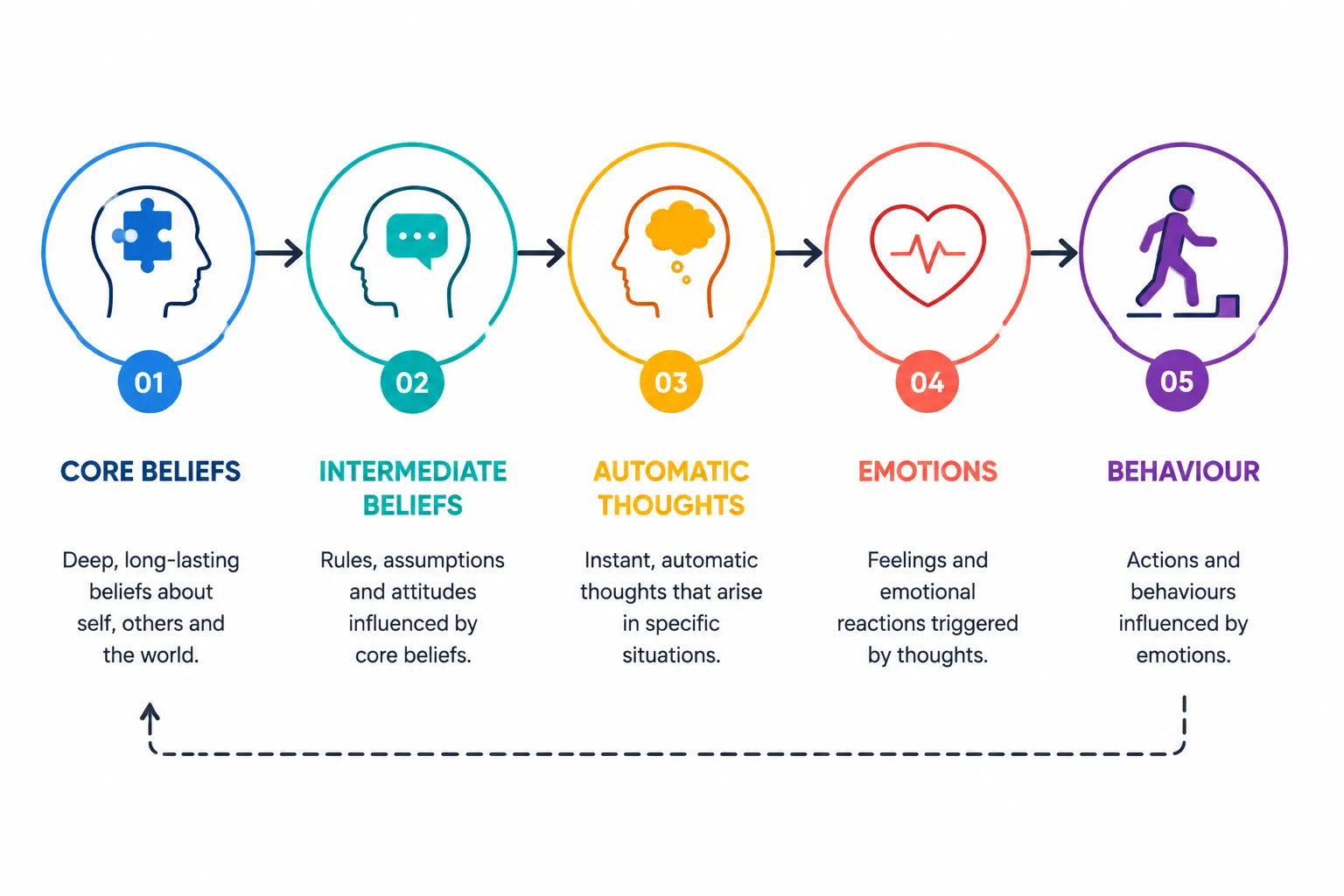
Core beliefs and automatic thoughts are closely connected. Core beliefs form the foundation of cognition, while automatic thoughts are their surface expression in daily situations.
The relationship works as follows:
- Core beliefs influence interpretation of events
- Interpretations create automatic thoughts
- Automatic thoughts generate emotional responses
- Emotions influence behaviour
- Behaviour reinforces core beliefs
Understanding this relationship is essential for effective CBT intervention.
Core beliefs are deep cognitive structures that strongly influence emotional and behavioural patterns. They shape how individuals interpret themselves, others, and future experiences. Negative core beliefs can lead to persistent psychological distress by generating unhelpful automatic thoughts and reinforcing maladaptive behaviours.
By identifying self-related, world-related, and future-related beliefs, CBT practitioners can better understand the root causes of emotional difficulties. Addressing these beliefs alongside automatic thoughts allows for more effective cognitive restructuring and long-term behavioural change in both clinical and real-world settings.