
Lesson 1: Introduction to Work at Height
Working at height is one of the highest-risk activities carried out across construction, engineering, maintenance, utilities, warehousing, telecommunications, facilities management, and industrial workplaces. Every year, falls from height result in serious injuries, fatalities, and significant financial losses that can often be prevented through proper planning, hazard identification, and the consistent application of safe working practices. Understanding the principles of work at height is therefore an essential first step for anyone whose job involves accessing elevated work areas or supervising such activities.
This lesson introduces the fundamental concepts of work at height and explains why effective safety management is critical in protecting workers, equipment, and the surrounding environment. Learners will gain an understanding of what constitutes work at height, the common situations where it occurs, and the key hazards associated with elevated work activities. The lesson also explores the importance of legal compliance, risk assessment, safe systems of work, competent supervision, and the appropriate use of access equipment and personal protective equipment (PPE).
From a health and safety perspective, preventing falls requires more than simply using safety equipment. It involves careful planning, selecting the correct work methods, inspecting equipment before use, identifying workplace hazards, implementing suitable control measures, and ensuring that everyone involved understands their responsibilities. A proactive safety culture supported by effective communication, regular inspections, and continuous monitoring significantly reduces the likelihood of accidents and improves overall workplace performance.
By the end of this lesson, learners will have developed a solid understanding of the principles that underpin safe work at height operations. This knowledge provides the foundation for subsequent lessons covering hazard identification, risk assessment, fall prevention systems, safe access equipment, emergency procedures, and workplace best practices, enabling learners to contribute confidently to safer and more compliant working environments across a wide range of industries.
Understand the Definition and Scope of Work at Height
Introduction to Work at Height
Work at height is a critical workplace safety area that applies to many industries where employees perform tasks above ground level or where a fall could result in injury. Activities involving ladders, scaffolds, roofs, platforms, towers, elevated structures, machinery access points, and temporary work platforms all require careful planning and appropriate safety controls. Understanding the definition and scope of work at height is the first step towards preventing falls, improving workplace safety performance, and ensuring compliance with occupational health and safety requirements.
For learners undertaking the ICTQual Level 1 Award in Work at Height, developing a clear understanding of this concept provides the foundation for recognising hazards, following safe working procedures, and supporting a strong workplace safety culture. Work at height safety is not limited to construction activities; it applies across multiple sectors where workers may be exposed to the risk of falling from one level to another.
Definition of Work at Height
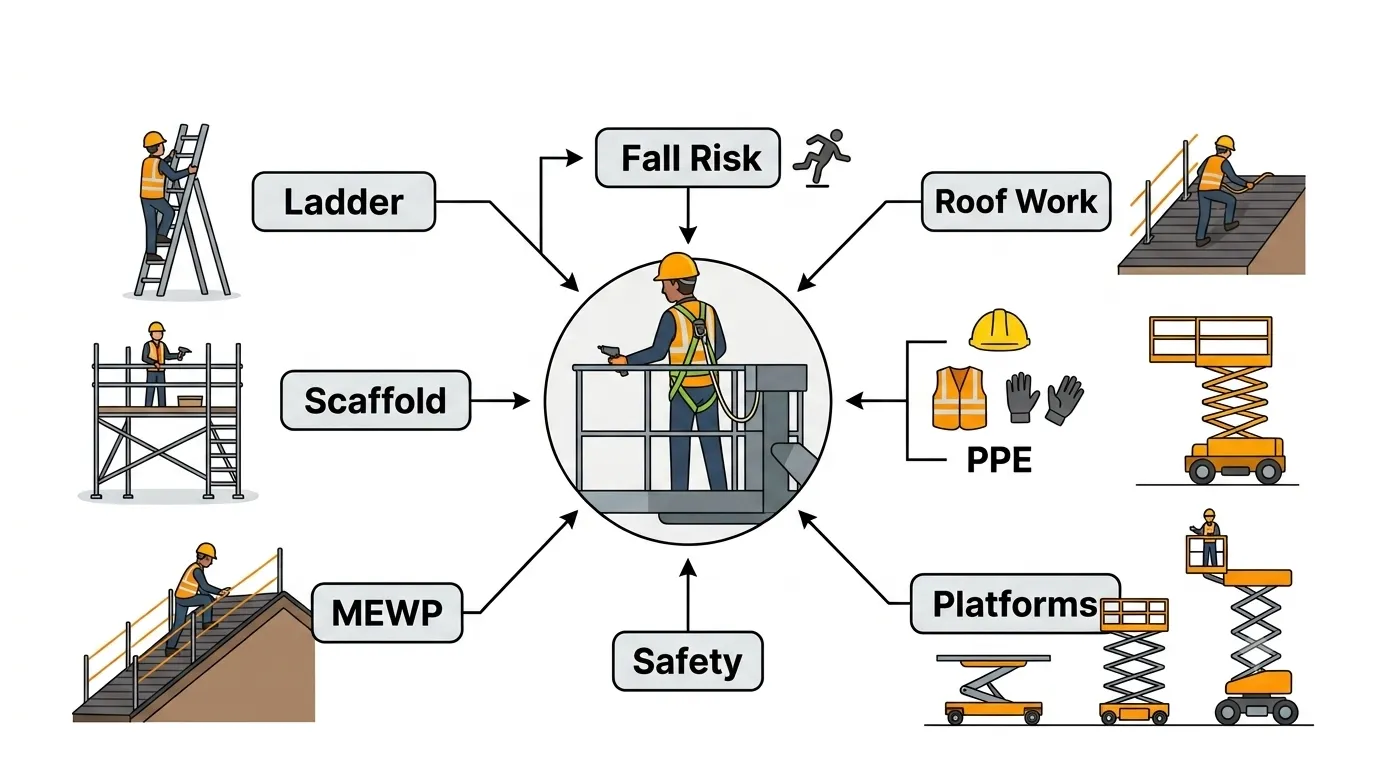
Work at height refers to any work activity where a person could fall from one level to another and suffer injury. It includes situations where a worker is positioned above ground level, as well as circumstances where a fall into a lower area, opening, excavation, or hazardous surface could occur.
A common misconception is that work at height only involves working on high buildings or large structures. However, even relatively low-level activities can be considered work at height if there is a possibility of a harmful fall. For example, a worker standing on a step ladder, accessing storage areas, working on a raised platform, or carrying out maintenance tasks above floor level may be exposed to work at height risks.
The key factor in defining work at height is not the exact height of the activity but the potential consequence of a fall. Any workplace situation where a person could lose balance, slip, trip, or fall to a lower level requires suitable safety precautions.
Key Elements of Work at Height
Work at height activities generally involve several important elements that must be considered before starting any task:
Elevated Work Position
An elevated work position occurs when a person carries out a task from a location above the normal working level. Examples include:
- Working on scaffolding structures.
- Accessing roofs for inspection or maintenance.
- Using mobile elevated work platforms (MEWPs).
- Performing tasks on towers, poles, or industrial structures.
- Working from raised platforms or temporary access systems.
The higher the working position and the more complex the environment, the greater the need for effective planning and safety controls.
Potential for Falling
The presence of a fall risk is the main factor that determines whether an activity is classified as work at height. Falls can occur due to:
- Loss of balance while working.
- Incorrect use of ladders or access equipment.
- Poor housekeeping causing slips or trips.
- Damaged or unsuitable equipment.
- Lack of edge protection.
- Unsafe working practices.
- Adverse weather conditions such as strong winds or rain.
Identifying these risks before work begins allows employers and workers to implement appropriate preventive measures.
Use of Access Equipment
Many work at height activities require specialised equipment to provide safe access and working positions. Common examples include:
- Ladders and step ladders.
- Scaffolding systems.
- Mobile access towers.
- MEWPs.
- Fixed platforms and walkways.
- Roof access systems.
The correct selection, inspection, and use of access equipment are essential components of effective work at height management.
Scope of Work at Height Activities
The scope of work at height covers a wide range of workplace activities and industries. It is not restricted to one profession or sector. Understanding this broad application helps workers recognise when safety controls are required.
Construction Industry
Construction is one of the sectors most commonly associated with work at height. Workers may perform activities such as:
- Building structural work.
- Roof installation and repairs.
- Scaffolding operations.
- Steel erection.
- External building maintenance.
- Installation of electrical, mechanical, and ventilation systems.
Construction sites often involve changing conditions, temporary structures, and multiple contractors, making effective work at height management essential.
Maintenance and Facilities Management
Maintenance workers frequently carry out tasks requiring access to elevated areas, including:
- Changing lighting systems.
- Inspecting building services.
- Cleaning windows and external surfaces.
- Repairing HVAC systems.
- Maintaining industrial equipment.
Although these tasks may appear routine, inadequate planning can create significant fall hazards.
Industrial and Manufacturing Environments
Industrial workplaces may involve accessing:
- Storage systems.
- Production machinery.
- Processing equipment.
- Maintenance platforms.
- Industrial structures.
Workers must follow established procedures to ensure safe access and prevent falls.
Utilities and Telecommunications
Workers involved in utilities and communication services may work at height when:
- Installing or repairing overhead cables.
- Maintaining power infrastructure.
- Working on communication towers.
- Inspecting utility structures.
These activities require specialised training, suitable equipment, and strict safety controls.
Warehouse and Logistics Operations
Warehousing activities may involve working at height when:
- Retrieving goods from elevated storage areas.
- Using access platforms.
- Maintaining warehouse equipment.
- Inspecting storage systems.
Safe access procedures are essential to prevent falls from shelves, platforms, and lifting equipment.
Importance of Understanding Work at Height
Understanding the definition and scope of work at height helps workers and organisations take a proactive approach to safety. Without proper awareness, employees may underestimate risks associated with everyday activities such as using ladders or accessing elevated areas.
A clear understanding enables workers to:
- Recognise situations where work at height controls are required.
- Identify potential fall hazards before starting tasks.
- Select appropriate safety equipment.
- Follow workplace procedures and instructions.
- Report unsafe conditions.
- Support accident prevention initiatives.
For employers and supervisors, this knowledge supports better risk management, improved compliance, and stronger workplace safety performance.
Workplace Example: Identifying Work at Height
A maintenance worker is asked to replace damaged lighting fixtures inside a warehouse. The lights are positioned several metres above the floor, requiring access using a mobile elevated work platform.
Before starting the task, the supervisor evaluates the activity and identifies potential hazards, including:
- Risk of falling from the platform.
- Incorrect operation of the equipment.
- Poor ground conditions.
- Contact with nearby structures.
Control measures are introduced, including equipment inspection, worker training, use of appropriate PPE, and establishing a safe working area. This example demonstrates that work at height safety begins with recognising the activity and understanding its associated risks.
Conclusion
Understanding the definition and scope of work at height is a fundamental requirement for maintaining safe working environments. Work at height includes any activity where a person may fall from one level to another and suffer injury, regardless of whether the working height appears significant. It applies across construction, maintenance, engineering, industrial, and many other workplace settings.
For learners completing the ICTQual Level 1 Award in Work at Height, this knowledge provides the essential foundation for recognising hazards, applying safe working practices, and supporting effective workplace risk management. By understanding where work at height occurs and why it presents risks, individuals can contribute to preventing accidents, protecting themselves and others, and promoting a positive health and safety culture.
2. Recognize the Importance of Specialized Training for Working at Height
Working at height is a high-risk workplace activity that requires specific knowledge, practical skills, and safety awareness to prevent falls, injuries, and fatalities. Unlike many routine workplace tasks, work at height involves unique hazards that cannot be effectively managed through general workplace induction alone. Specialized training ensures that workers understand the risks associated with elevated work activities, know how to use safety equipment correctly, and can follow established procedures to protect themselves and others.
For learners completing the ICTQual Level 1 Award in Work at Height, understanding the importance of specialised training is a fundamental part of developing a strong safety mindset. Proper training provides workers with the ability to recognise unsafe conditions, understand workplace responsibilities, and apply safe working practices when using ladders, scaffolds, platforms, mobile elevated work platforms (MEWPs), and other access systems.
Purpose of Specialized Work at Height Training
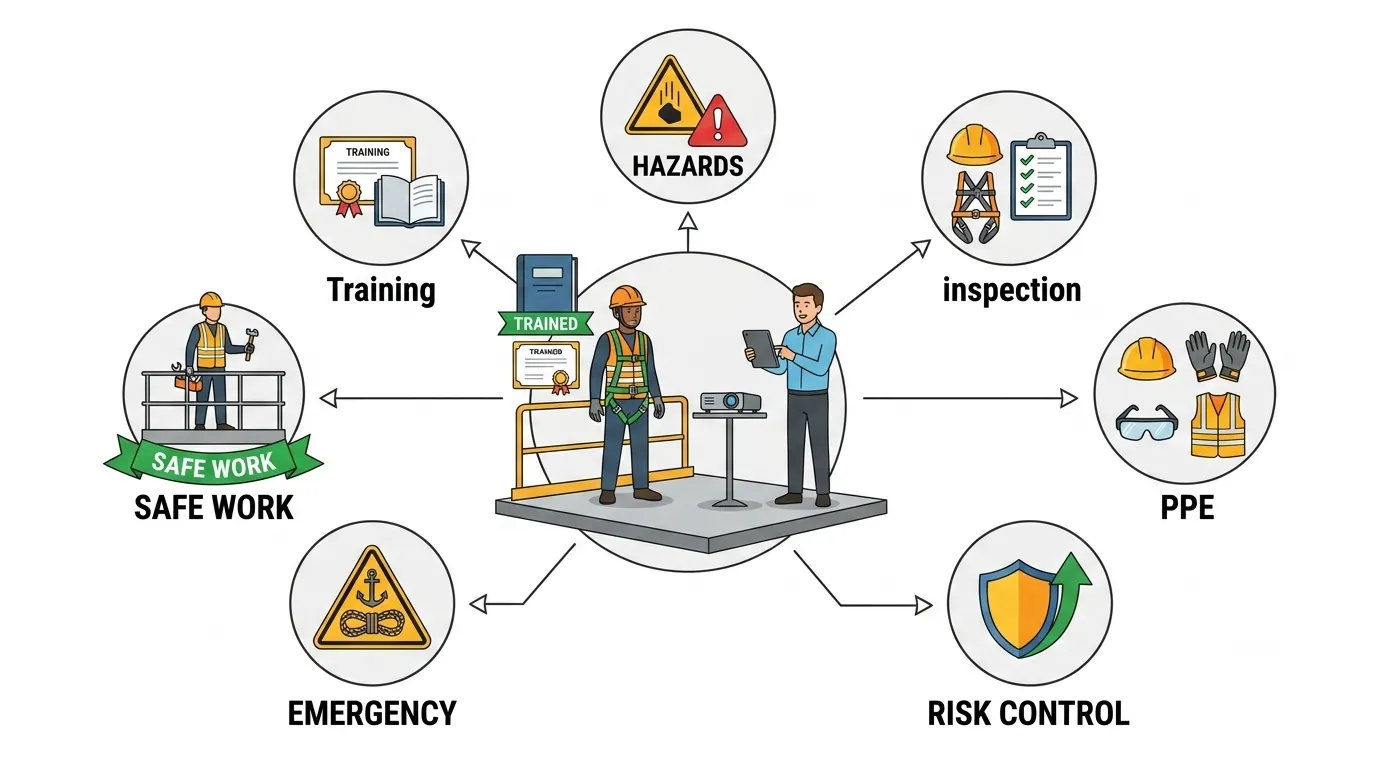
Specialized work at height training is designed to provide workers with the essential knowledge and skills needed to perform elevated tasks safely. The main purpose is to reduce the likelihood of accidents by ensuring that individuals understand potential hazards and know how to apply appropriate control measures.
Effective training helps workers to:
- Understand the risks associated with working at height.
- Identify hazards before starting work activities.
- Select suitable equipment and safety systems.
- Use personal protective equipment (PPE) correctly.
- Follow safe work procedures and site requirements.
- Respond appropriately during emergency situations.
Training transforms safety procedures from written instructions into practical actions that workers can apply in real workplace situations.
Why General Workplace Knowledge Is Not Enough
Many workplace accidents occur because workers underestimate the risks associated with working at height or assume that basic experience is sufficient. General workplace knowledge may cover broad safety topics, but it does not provide the detailed understanding required for controlling fall hazards.
Specialized training focuses specifically on:
- Fall prevention principles.
- Safe access and positioning techniques.
- Equipment inspection requirements.
- Correct use of fall protection systems.
- Hazard identification and risk control.
- Emergency response procedures.
A worker who understands general safety rules may still be unaware of critical work at height requirements, such as checking anchor points, maintaining three points of contact when using ladders, or identifying unsafe scaffold conditions.
Developing Hazard Awareness and Risk Recognition
One of the most important outcomes of work at height training is improved hazard recognition. Workers must be able to identify conditions that could lead to falls before beginning a task.
Specialized training helps learners recognise hazards such as:
- Unprotected edges and openings.
- Damaged ladders or access equipment.
- Incorrect scaffold assembly.
- Poor housekeeping around work areas.
- Slippery surfaces caused by weather or materials.
- Incorrect use of safety harnesses.
- Lack of suitable fall protection measures.
Early identification of hazards allows workers and supervisors to implement preventive actions before an incident occurs.
Correct Use of Work at Height Equipment
Work at height often requires specialised equipment, and incorrect use can create additional risks. Training ensures that workers understand how different equipment should be selected, inspected, and operated.
Common equipment covered in work at height safety training includes:
Ladders and Step Ladders
Workers learn:
- How to select the correct ladder for a task.
- How to inspect ladders before use.
- Safe positioning and climbing methods.
- Limitations of ladder use.
Scaffolding Systems
Training helps workers understand:
- The importance of stable scaffold structures.
- The need for guardrails and safe access.
- Inspection requirements.
- Risks associated with incomplete or damaged scaffolds.
Mobile Elevated Work Platforms (MEWPs)
Workers learn:
- Safe operating principles.
- Pre-use inspection requirements.
- Stability considerations.
- The importance of following manufacturer instructions.
Personal Fall Protection Systems
Training provides awareness of:
- Safety harness components.
- Lanyards and connectors.
- Anchor points.
- Fall arrest principles.
- Inspection and maintenance requirements.
Correct equipment use significantly reduces the risk of falls and improves workplace safety performance.
Building Competence and Confidence
Specialized training does not only provide technical knowledge; it also develops worker confidence and professional competence. Employees who understand safe work methods are more likely to make responsible decisions and avoid unsafe shortcuts.
Competent workers are able to:
- Evaluate workplace conditions.
- Follow safety procedures consistently.
- Communicate hazards effectively.
- Stop unsafe activities when necessary.
- Support colleagues in maintaining safe practices.
A trained workforce contributes to a stronger safety culture where prevention becomes a shared responsibility.
Supporting Legal and Workplace Safety Compliance
Organisations have a responsibility to ensure that employees involved in work at height activities receive appropriate information, instruction, and training. Compliance with workplace safety requirements helps employers demonstrate effective risk management and reduces the possibility of accidents caused by inadequate preparation.
Specialized training supports organisations by helping them:
- Meet occupational health and safety expectations.
- Improve workplace safety procedures.
- Reduce accident rates.
- Maintain better inspection and monitoring practices.
- Demonstrate commitment to employee protection.
From a QA/QC and HSE perspective, training records, competency assessments, and regular refresher training are important elements of maintaining safety standards on construction and industrial sites.
Role of Refresher Training
Work at height training should not be considered a one-time activity. Regular refresher training helps workers maintain awareness, update their knowledge, and adapt to changes in equipment, procedures, and workplace conditions.
Refresher training may be required when:
- New equipment is introduced.
- Work methods change.
- Safety procedures are updated.
- Previous incidents highlight learning needs.
- Workers demonstrate unsafe practices.
Continuous learning ensures that safety remains a priority throughout an organisation.
Workplace Example: Importance of Specialist Training
A construction company assigns a new employee to assist with roof maintenance activities. Although the employee has previous construction experience, they have never received specific work at height training.
Before allowing the employee to participate, the supervisor provides specialised training covering ladder safety, fall protection equipment, hazard identification, and emergency procedures. During the training, the employee learns how to inspect equipment and recognise unsafe roof conditions.
As a result, the employee is able to perform tasks more safely, identify potential risks, and follow the company’s work at height procedures. This example demonstrates how specialised training prevents accidents by preparing workers for the specific challenges of elevated work.
Conclusion
Specialized training for working at height is essential because it provides workers with the knowledge, skills, and confidence required to manage fall risks effectively. Work at height activities involve complex hazards that cannot be controlled through general safety awareness alone. Proper training enables workers to identify hazards, use equipment correctly, follow safe systems of work, and contribute to accident prevention.
For learners completing the ICTQual Level 1 Award in Work at Height, understanding the importance of specialised training establishes a strong foundation for safe workplace behaviour. A trained and competent workforce supports improved safety performance, regulatory compliance, and a positive health and safety culture across construction, engineering, maintenance, and industrial environments.
3. Analyze Statistics and Case Studies to Appreciate the Risks and Consequences Associated with Work at Height
Introduction to Work at Height Risks
Work at height remains one of the most significant safety challenges across construction, engineering, maintenance, manufacturing, utilities, and industrial workplaces. Falls from height are among the leading causes of serious workplace injuries and fatalities worldwide. Understanding statistical evidence and analysing real workplace incidents helps safety professionals, employers, supervisors, and workers recognise the seriousness of these risks and understand why effective prevention measures are essential.
For learners completing the ICTQual Level 1 Award in Work at Height, studying accident statistics and workplace case studies develops a stronger safety mindset. It highlights how poor planning, inadequate training, incorrect equipment use, and failure to follow safe systems of work can lead to severe consequences for individuals, organisations, and wider workplace operations.
Importance of Understanding Work at Height Statistics
Safety statistics provide valuable information about accident patterns, common causes, and areas where improvements are required. They allow organisations to identify trends, evaluate existing safety controls, and introduce effective prevention strategies.
Work at height incidents are often associated with:
- Falls from ladders and access equipment.
- Falls from scaffolding and temporary structures.
- Unprotected edges and openings.
- Incorrect use of fall protection equipment.
- Poor inspection and maintenance of equipment.
- Lack of worker competence and supervision.
- Unsafe working conditions.
By analysing these patterns, organisations can focus their safety efforts on controlling the most common and severe risks.
Global Impact of Falls from Height
Falls from height continue to be a major occupational safety concern internationally. Across many industries, workers performing elevated tasks face increased exposure to hazards that can result in life-changing injuries.
The consequences of falls may include:
- Broken bones and fractures.
- Spinal injuries.
- Head injuries.
- Permanent disabilities.
- Loss of life.
- Psychological impacts on workers and colleagues.
- Financial losses for businesses.
The seriousness of these outcomes demonstrates why work at height activities require careful planning, competent workers, and appropriate safety controls.
Common Causes Identified Through Accident Analysis
Investigations into workplace incidents frequently identify similar contributing factors. Understanding these causes allows organisations to prevent repeated failures.
Lack of Proper Planning
Many incidents occur because work at height activities begin without adequate preparation. Poor planning may result in:
- Selecting unsuitable access equipment.
- Failing to assess environmental conditions.
- Not identifying fall hazards.
- Missing emergency arrangements.
A proper work plan ensures that hazards are controlled before workers begin the task.
Inadequate Training and Competence
Workers who have not received appropriate work at height training may not fully understand:
- How to use safety equipment.
- How to inspect equipment before use.
- How to identify unsafe conditions.
- How to respond during emergencies.
Competent workers are better prepared to make safe decisions and avoid dangerous situations.
Incorrect Equipment Use
Using the wrong equipment or using equipment incorrectly can significantly increase the risk of falls.
Examples include:
- Standing on unsuitable surfaces.
- Using damaged ladders.
- Failing to secure access equipment.
- Incorrectly attaching safety harnesses.
- Working without required protective systems.
Equipment must always be selected, inspected, and used according to safety requirements.
Case Study 1: Fall from an Unsecured Ladder
Incident Background
A maintenance worker was assigned to replace lighting equipment inside a commercial building. The worker used a portable ladder to reach the light fittings but did not secure the ladder or ensure that the working area was clear.
What Happened
During the task, the ladder moved unexpectedly, causing the worker to lose balance and fall onto the floor. The worker suffered serious injuries requiring medical treatment and extended recovery time.
Contributing Factors
The investigation identified several failures:
- No pre-task risk assessment was completed.
- The ladder was not properly positioned.
- The worker had limited awareness of ladder safety requirements.
- No supervision was provided during the activity.
Lessons Learned
This incident demonstrates that even short-duration tasks can create significant risks. Proper training, equipment checks, and safe working procedures are necessary for all work at height activities.
Case Study 2: Scaffold Safety Failure
Incident Background
A construction team was carrying out external building work using scaffolding. The scaffold structure had been modified during the project to improve access.
What Happened
A worker stepped onto an unsafe section of the scaffold where protective barriers had not been correctly reinstated. The worker fell from the platform and suffered severe injuries.
Contributing Factors
The investigation identified:
- Inadequate scaffold inspection.
- Poor communication between workers.
- Failure to maintain edge protection.
- Lack of effective monitoring.
Lessons Learned
This case highlights the importance of regular inspections, competent supervision, and maintaining safety controls throughout changing construction activities.
Case Study 3: Failure to Use Personal Fall Protection
Incident Background
A worker was performing maintenance work on a raised structure where a fall arrest system was available.
What Happened
The worker did not correctly connect the harness system before starting the task. While moving around the work area, the worker slipped and fell.
Contributing Factors
The main causes included:
- Failure to follow safety procedures.
- Lack of equipment checks.
- Insufficient supervision.
- Poor safety awareness.
Lessons Learned
Personal protective equipment can only provide protection when it is correctly selected, inspected, and used. Training and consistent safety behaviour are essential.
Consequences of Work at Height Accidents
Work at height accidents create consequences that extend beyond physical injuries. They can affect workers, families, organisations, and entire projects.
Impact on Workers
Workers involved in falls may experience:
- Serious physical injuries.
- Loss of income during recovery.
- Reduced quality of life.
- Emotional and psychological stress.
The effects of a workplace accident can continue long after the incident occurs.
Impact on Organisations
Businesses may experience:
- Increased insurance costs.
- Project delays.
- Investigation expenses.
- Legal consequences.
- Damage to reputation.
- Reduced workforce confidence.
Effective safety management helps organisations reduce these impacts and improve operational performance.
Impact on Workplace Safety Culture
A workplace with repeated work at height incidents may experience:
- Reduced employee trust.
- Poor safety morale.
- Increased fear among workers.
- Lower productivity.
A strong safety culture encourages employees to report hazards, follow procedures, and actively participate in accident prevention.
Role of Risk Assessment in Preventing Incidents
Risk assessment is a key process for controlling work at height hazards. It allows organisations to identify potential dangers and determine suitable control measures before work begins.
A work at height risk assessment should consider:
- The nature of the task.
- Working environment conditions.
- Equipment requirements.
- Worker competence.
- Emergency arrangements.
- Fall prevention methods.
Effective risk assessment changes safety management from a reactive approach to a proactive approach.
Learning from Workplace Incidents
Accident investigations are not only used to identify mistakes but also to improve future safety performance. Organisations use lessons from incidents to:
- Update procedures.
- Improve training programmes.
- Strengthen supervision.
- Enhance equipment inspection processes.
- Prevent similar accidents.
Learning from previous incidents helps create safer workplaces and reduces the likelihood of repeated failures.
Workplace Example: Improving Safety Through Incident Learning
A construction company reviewed several minor fall-related incidents involving ladders. Although no serious injuries occurred, the company identified repeated problems with ladder selection and worker awareness.
The organisation introduced:
- Additional work at height training.
- Improved ladder inspection procedures.
- Supervisor monitoring.
- Updated safe working instructions.
Following these improvements, workers demonstrated better safety awareness and fewer unsafe practices were observed.
Conclusion
Analysing statistics and case studies related to work at height helps learners understand the real consequences of unsafe practices and the importance of effective safety management. Workplace incidents often occur due to preventable factors such as inadequate planning, insufficient training, poor equipment use, and weak supervision.
For learners undertaking the ICTQual Level 1 Award in Work at Height, understanding real-world examples strengthens hazard awareness and encourages responsible safety behaviour. By learning from accident trends and workplace experiences, individuals can contribute to preventing falls, protecting colleagues, and creating safer working environments across construction, engineering, maintenance, and industrial sectors.
4. Identify Various Scenarios and Environments Where Working at Height Is Required
Introduction to Work at Height Environments
Working at height is a common requirement across many industries where employees need to access elevated areas to complete installation, inspection, maintenance, repair, construction, or operational tasks. Although construction is often associated with work at height, many other sectors such as manufacturing, utilities, telecommunications, facilities management, aviation, warehousing, and engineering also involve activities where workers may be exposed to fall hazards.
Understanding the different scenarios and environments where working at height is required helps workers recognise potential risks before starting a task. For learners completing the ICTQual Level 1 Award in Work at Height, developing this awareness is essential for identifying when additional planning, risk assessment, safety equipment, and control measures are necessary to complete work safely.
Understanding Work at Height Scenarios
A work at height scenario occurs whenever a person carries out an activity where they could fall from one level to another and experience injury. These situations can vary significantly depending on the workplace, task requirements, equipment used, and environmental conditions.
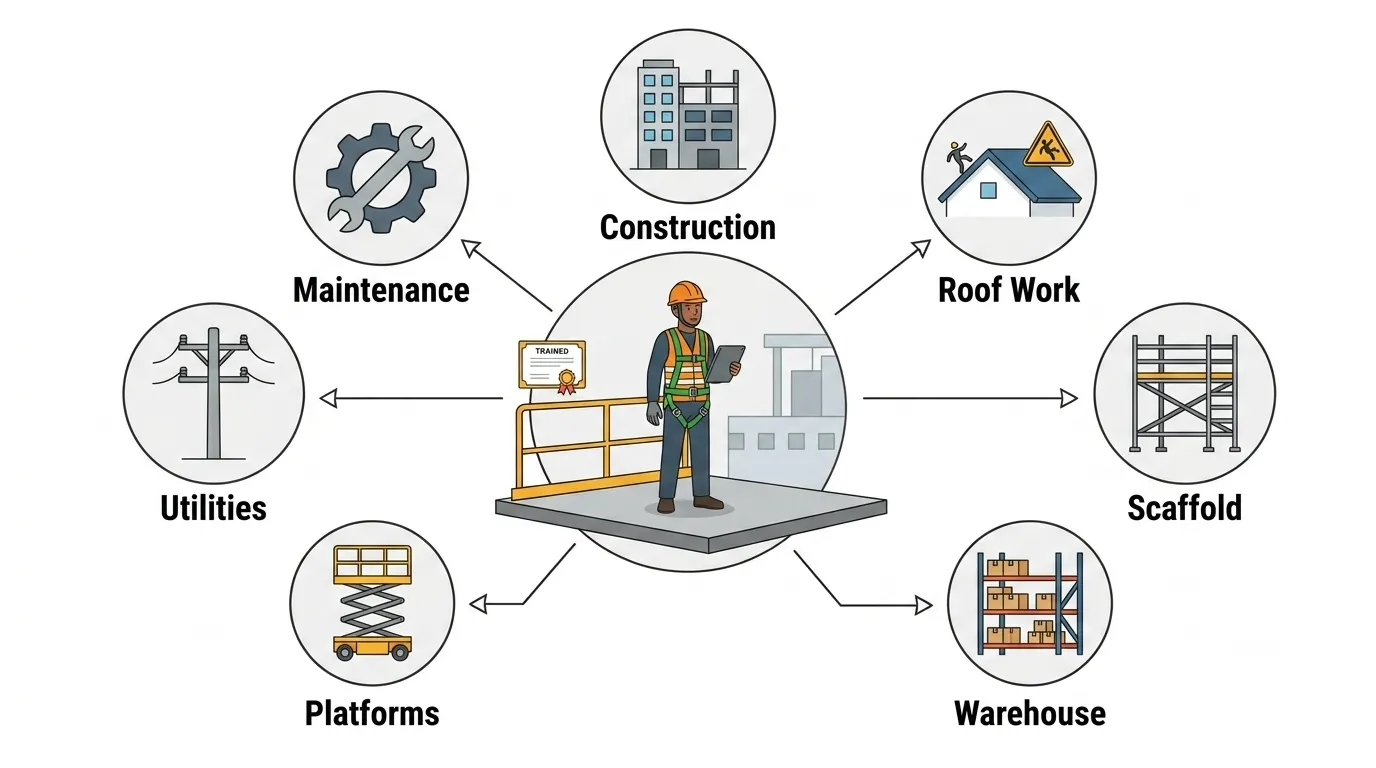
Common work at height scenarios include:
- Accessing elevated structures for inspection or maintenance.
- Installing or repairing equipment above ground level.
- Working on roofs or building surfaces.
- Using ladders, scaffolds, or access platforms.
- Operating mobile elevated work platforms (MEWPs).
- Carrying out construction activities on temporary structures.
- Maintaining industrial machinery or systems located at height.
Each scenario requires appropriate planning to identify hazards and select suitable safety measures.
Construction Work at Height Scenarios
The construction industry involves some of the most frequent and complex work at height activities. Construction projects often involve changing environments, multiple workers, temporary structures, and various access systems.
Common construction work at height activities include:
Building Construction
Workers may need to operate at height during:
- Structural steel installation.
- Concrete works.
- External wall construction.
- Installation of building components.
- Finishing and inspection activities.
These tasks may require scaffolding, mobile platforms, safety harnesses, and edge protection systems.
Roofing Activities
Roof work is a major area of concern because workers are often exposed to unprotected edges and fragile surfaces.
Examples include:
- Installing roof coverings.
- Repairing damaged roof areas.
- Inspecting roof conditions.
- Installing solar panels.
- Cleaning roof drainage systems.
Roof activities require careful assessment because weather conditions, surface conditions, and access limitations can increase risks.
Scaffolding Operations
Scaffolding provides temporary working platforms but requires proper planning and inspection.
Workers may use scaffolds for:
- Building construction.
- Painting and decoration.
- External maintenance.
- Structural repairs.
Safe scaffold use requires stable construction, secure access, protective barriers, and regular inspections.
Maintenance and Facilities Management Environments
Facilities management teams frequently perform tasks involving elevated work areas. These activities are often routine but can still create significant risks if proper controls are not applied.
Examples include:
- Replacing ceiling lights.
- Maintaining ventilation systems.
- Cleaning windows.
- Repairing building services.
- Inspecting electrical installations.
- Accessing equipment located above normal working levels.
Maintenance tasks often require portable ladders, access towers, or mobile platforms depending on the height and complexity of the activity.
Industrial and Manufacturing Environments
Industrial workplaces often contain machinery, storage systems, and production equipment that require workers to operate at height.
Examples include:
Machinery Maintenance
Workers may need elevated access for:
- Equipment inspection.
- Repairs.
- Lubrication activities.
- Component replacement.
Production Areas
Work at height may be required for:
- Monitoring production systems.
- Cleaning machinery.
- Adjusting equipment.
- Installing new components.
Industrial environments may involve additional hazards such as moving machinery, electrical systems, and restricted access areas.
Warehouse and Storage Environments
Warehouses commonly require employees to access elevated storage locations and equipment.
Typical scenarios include:
- Retrieving materials from high-level storage.
- Inspecting warehouse racking systems.
- Maintaining lighting systems.
- Repairing storage equipment.
- Using access platforms for inventory management.
Warehouse work at height requires proper equipment selection because unsuitable methods, such as climbing shelving units, can create serious risks.
Telecommunications and Utility Work
Workers in telecommunications and utility sectors frequently perform tasks at significant heights.
Examples include:
Telecommunications Towers
Workers may carry out:
- Antenna installation.
- Equipment inspection.
- Cable maintenance.
- Tower repairs.
These activities require specialised training, fall protection systems, and strict safety procedures.
Electrical and Utility Infrastructure
Work at height may involve:
- Power line maintenance.
- Street lighting repairs.
- Utility pole inspection.
- Cable installation.
Workers must consider additional hazards such as electricity, weather conditions, and difficult access locations.
Transportation and Aviation Environments
Transportation industries also involve work at height activities.
Examples include:
- Aircraft maintenance.
- Vehicle inspection from elevated platforms.
- Railway infrastructure maintenance.
- Bridge inspection.
These environments require careful coordination because workers may be exposed to moving equipment, traffic hazards, and complex operating conditions.
Emergency Response and Rescue Situations
Emergency services may also require working at height during:
- Rescue operations.
- Building access emergencies.
- Disaster response activities.
- Recovery operations.
These situations require specialised planning because workers may face unpredictable conditions and increased hazards.
Agricultural and Outdoor Work Environments
Work at height is also required in agricultural and outdoor environments.
Examples include:
- Tree maintenance.
- Farm building repairs.
- Equipment maintenance.
- Accessing elevated storage areas.
Outdoor conditions such as wind, rain, uneven ground, and poor visibility can increase the risk level.
Factors That Influence Work at Height Risks
The level of risk associated with a work at height activity depends on several factors, including:
Height and Fall Distance
Greater heights generally increase the potential severity of injury, but even lower-level falls can cause serious harm.
Working Environment
Conditions such as:
- Poor lighting.
- Limited space.
- Uneven surfaces.
- Weather exposure.
- Nearby hazards.
can increase the likelihood of accidents.
Type of Task
Different tasks create different risks. Activities involving tools, materials, movement, or long durations may require additional controls.
Equipment Used
The safety of the activity depends on selecting appropriate equipment and ensuring it is inspected and maintained.
Workplace Example: Identifying Work at Height Scenarios
A facilities maintenance team is required to inspect air-conditioning units installed on the roof of a commercial building. Before starting the work, the supervisor identifies that the activity involves roof access, potential fall hazards, and exposure to weather conditions.
The team completes a risk assessment, selects appropriate access equipment, checks personal protective equipment, and establishes safe working procedures. By recognising the scenario as work at height, the team can apply suitable controls and reduce the likelihood of accidents.
Importance of Recognising Different Work at Height Environments
Recognising where work at height occurs allows workers and organisations to take preventive action before accidents happen. Many incidents occur because workers fail to identify that a task involves fall risks.
Awareness helps workers to:
- Identify hazardous situations.
- Request appropriate equipment.
- Follow safe procedures.
- Communicate risks effectively.
- Support workplace safety standards.
For employers, understanding different work at height scenarios improves planning, supervision, training, and compliance management.
Conclusion
Working at height is required across a wide range of industries and workplace environments, including construction, maintenance, manufacturing, utilities, telecommunications, warehousing, transportation, and emergency services. Each environment presents unique hazards that must be carefully assessed and controlled.
For learners completing the ICTQual Level 1 Award in Work at Height, recognising different scenarios where elevated work is required provides the foundation for effective hazard identification and safe decision-making. Understanding these environments enables workers to select suitable safety measures, follow correct procedures, and contribute to preventing falls and workplace accidents.